Home Blog Page 619

Vibrant Gujarat Regional Conference North Gujarat kicks off in Mehsana

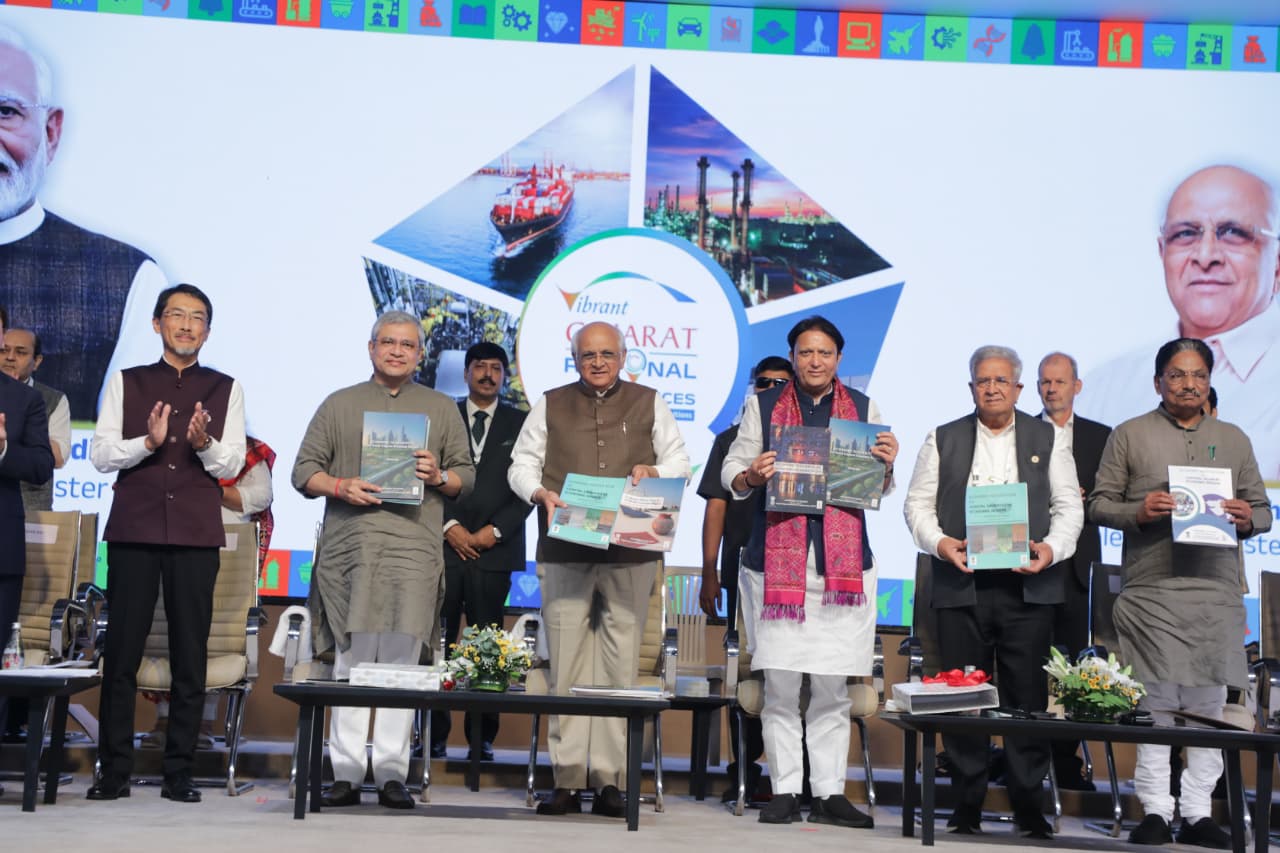
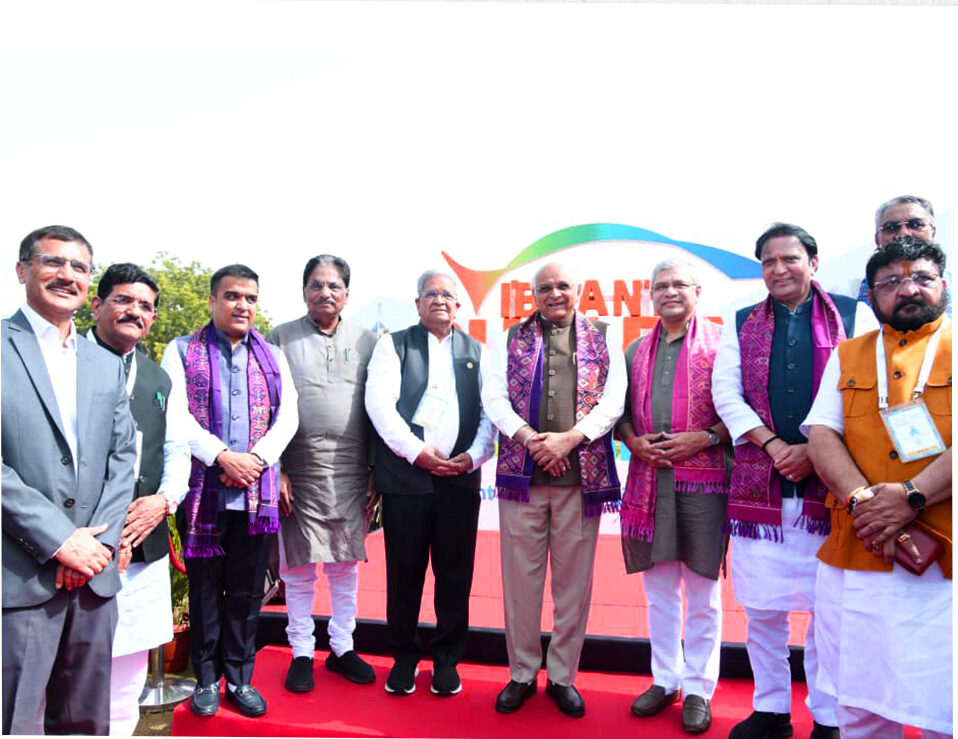
MEHSANA : The first-ever Vibrant Gujarat Regional Conference started on Thursday at Ganpat University in Mehsana of North Gujarat, with Chief Minister Shri Bhupendra Patel inaugurating the event in the presence of Railway Minister Shri Ashwini Vaishnaw.

Addressing the two-day conference, Union Minister Ashwini Vaishnaw said the event has showcased Gujarat’s holistic development to the world. “Gujarat is a land of entrepreneurs. The state operates with a spirit of solving problems, working in new ways, and always moving forward despite challenges. The rapid growth Gujarat has witnessed over the past twenty years has become a major example globally. The world studies the Gujarat model to understand how this growth was achieved, the vision behind it, and the focused execution led by PM Modi,” the Union Minister said.

Highlighting the state’s rapid strides in the technology sector, he noted Gujarat’s emergence as a semiconductor hub. “The semiconductor industry, a strategically critical sector, is powering Gujarat’s rise as a centre for electronics, AI, and clean energy. With investments worth ₹1.25 lakh crore and strong collaboration from Japanese companies, the state is building a complete value chain, advanced training programs, and a 5G lab to develop skilled talent. High-quality standards in semiconductors will also benefit key sectors such as pharmaceuticals and chemicals. With its expanding electronics manufacturing base and clean energy projects, Gujarat is becoming a pivotal hub for India’s technological and industrial growth,” he added.

Chief Minister Bhupendra Patel, outlining Gujarat’s development journey, said the Vibrant Regional Conference will accelerate North Gujarat’s growth and boost its industrial ecosystem.

The conference will spotlight key sectors including dairy and food processing, agriculture and agro-based industries, automobile components, engineering, renewable energy, and tourism. The initiative, launched under Prime Minister Shri Narendra Modi’s vision of Viksit Bharat @2047, aims to extend the success of the Vibrant Gujarat Summit to every region of the state.

The two-day event will feature 33 seminars, roundtable discussions, B2B and B2G meetings, and an MSME Conclave. Over 13,000 participants — including more than 200 international delegates — have registered. Partner countries such as Japan, South Korea, Vietnam, and the Netherlands, along with global organisations like JETRO, World Bank, Industrial and Commercial Bank of China, and the Russian Federation will participate.

A major attraction is the Regional Exhibition spread over 18,000 sq. m., showcasing North Gujarat’s strengths — from agro produce like cumin, fennel, and isabgol to dairy products and auto components. A Reverse Buyer-Seller Meet will bring international buyers from 40 countries, creating export opportunities for local entrepreneurs.

Delegates will also visit key industrial units and heritage sites, including Maruti Suzuki India Limited, Banas Dairy, Dudh Sagar Dairy, Modhera Solar Park, and cultural landmarks like Rani ki Vav and Vadnagar.

The Mehsana conference aims to showcase North Gujarat’s industrial potential while connecting local enterprises with global investors and markets.
Gujarat emerging as foundation pillar of India’s growth in semiconductors, logistics & electronics: Vaishnaw

AHMEDABAD : Union Minister for Railways, Information and Broadcasting, and Electronics & IT Ashwini Vaishnaw has said that Gujarat is becoming the foundation pillar of India’s development journey in semiconductors, electronics manufacturing, and modern logistics. Addressing the Vibrant Gujarat Regional Conference (VGRC) in Mehsana, the Minister emphasized that Gujarat’s progress and self-reliant spirit are powering India’s goal of becoming a developed nation by 2047.

The conference was inaugurated jointly by Gujarat Chief Minister Shri Bhupendra Patel and Ashwini Vaishnaw, marking another milestone in the state’s journey toward technological and industrial excellence.

Highlighting massive investments of ₹1.25 lakh crore in Gujarat’s semiconductor and electronics sector, the Minister mentioned key projects such as Tata Electronics’ plant in Dholera, Micron’s manufacturing unit in Sanand, and facilities by CG Power and KEC. He added that around 30 Japanese companies are setting up units in the state to supply ultra-pure chemicals and substrates required for semiconductor production — materials that will also elevate quality standards in other industries such as pharmaceuticals and chemicals.

Vaishnaw also revealed that proposals worth ₹1.15 lakh crore have been received under the Central Electronics Component Manufacturing Scheme, while training on advanced semiconductor tools and 5G technologies has commenced at Ganpat University and over a dozen other colleges — creating a full value chain from talent development to manufacturing.

Applauding Gujarat’s leadership in clean energy, the Minister pointed to the world’s largest green energy project at Khawada, Kutch, calling it a model for sustainable industrial growth.

Discussing Gujarat’s rail infrastructure transformation, Vaishnaw announced that the Mumbai–Ahmedabad Bullet Train will begin operations in August 2027. He informed that a total investment of ₹1.46 lakh crore has been made in Gujarat’s railway sector, with 2,764 km of new lines laid — equivalent to the entire rail network of Denmark. The Dedicated Freight Corridor has reduced container train travel time from 30 hours to just 10–11 hours, and 87 stations are being modernized along with 332 flyovers and underpasses.

Reaffirming the Prime Minister’s vision for “Developed India 2047,” Vaishnaw called on industry leaders, academia, and investors to collaborate with both central and state governments in realizing the roadmap for a self-reliant India.

Earlier in the day, the Minister and the Chief Minister inaugurated the VGRC Trade Show and Exhibition, featuring innovations and technologies from over 400 exhibitors across agriculture, renewable energy, MSMEs, and startups. Major corporates including Adani, NTPC, NHPC, INOX, Maruti Suzuki, Suzlon, and PowerGrid Corporation participated.

Ashwini Vaishnaw visits key construction sites of Mumbai–Ahmedabad high speed Rail Bullet Train projects in Ahmedabad

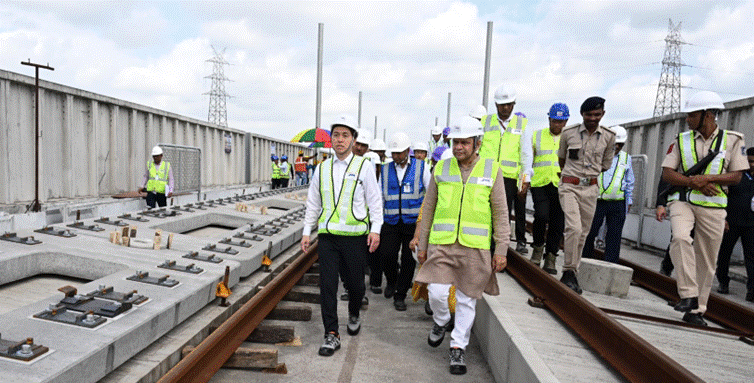
AHMEDABAD : Union Minister for Railways, Information & Broadcasting, and Electronics & Information Technology, Shri Ashwini Vaishnaw visited key construction sites of the Mumbai–Ahmedabad High Speed Rail (Bullet Train) project in Sabarmati, Ahmedabad on Thursday. The Minister reviewed ongoing works at the Sabarmati High Speed Rail (HSR) Station, the HSR Multimodal Transport Hub, and the Rolling Stock Depot.

Sabarmati HSR Station: The terminal station of the Mumbai–Ahmedabad Bullet Train corridor is inspired by Mahatma Gandhi’s Charkha at Sabarmati Ashram. The station is being built in a 45,000 sq. m. area.

Structural work up to the track floor has been completed. Interior, and Mechanical, Electrical, and Plumbing (MEP) works are in progress. The station will offer world-class passenger facilities—waiting lounges, rest rooms, nursery, retail and commercial spaces—and will be seamlessly connected to existing railway, metro, and BRTS networks.

Sabarmati HSR Multimodal Hub: It has been designed as a state-of-the-art facility ensuring smooth connectivity between the HSR station, Sabarmati railway station, Metro, and BRTS.

The front wall of the building depicts a stainless-steel mural of the Dandi March, honouring Sabarmati’s historic legacy. The hub includes office spaces, hotel facilities, and passenger amenities such as retail outlets and restaurants. It is equipped with parking for about 1,200 vehicles. The hub also features extensive green infrastructure including solar panels, landscaped terraces, and energy-efficient systems.

Sabarmati HSR Rolling Stock Depot: It is the largest of three depots being constructed under the project. The hub is spread over 84 hectares. The hub will support light and heavy maintenance of trainsets with inspection, stabling, and workshop lines.

Construction of the administration building, inspection sheds, and infrastructure for utilities and tracks is progressing rapidly. The depot will follow environmental sustainability norms. It will feature rainwater harvesting, solar provisions and zero liquid discharge treatment systems.

Mumbai-Ahmedabad Bullet Train project progress: Out of 508 km, 325 km of viaduct and 400 km of pier works have been completed. 17 river bridges, 5 PSC bridges, and 10 steel bridges have also been completed.

216 km of track bed has been laid. Over 4 lakh noise barriers have been installed along the track bed. Work on all stations in Gujarat is at an advanced stage. Rapid progress is being made at the Mumbai underground section.

The Railway Minister appreciated the pace of work and emphasized that the project is on track for timely completion. He remarked that the first bullet train project of the country represents PM Shri Narendra Modi Ji’s vision for world-class infrastructure and a ‘Viksit Bharat at 2047’.

ACAAI honoured by FIATA for Successfully Hosting 2025 RAP Meeting in New Delhi

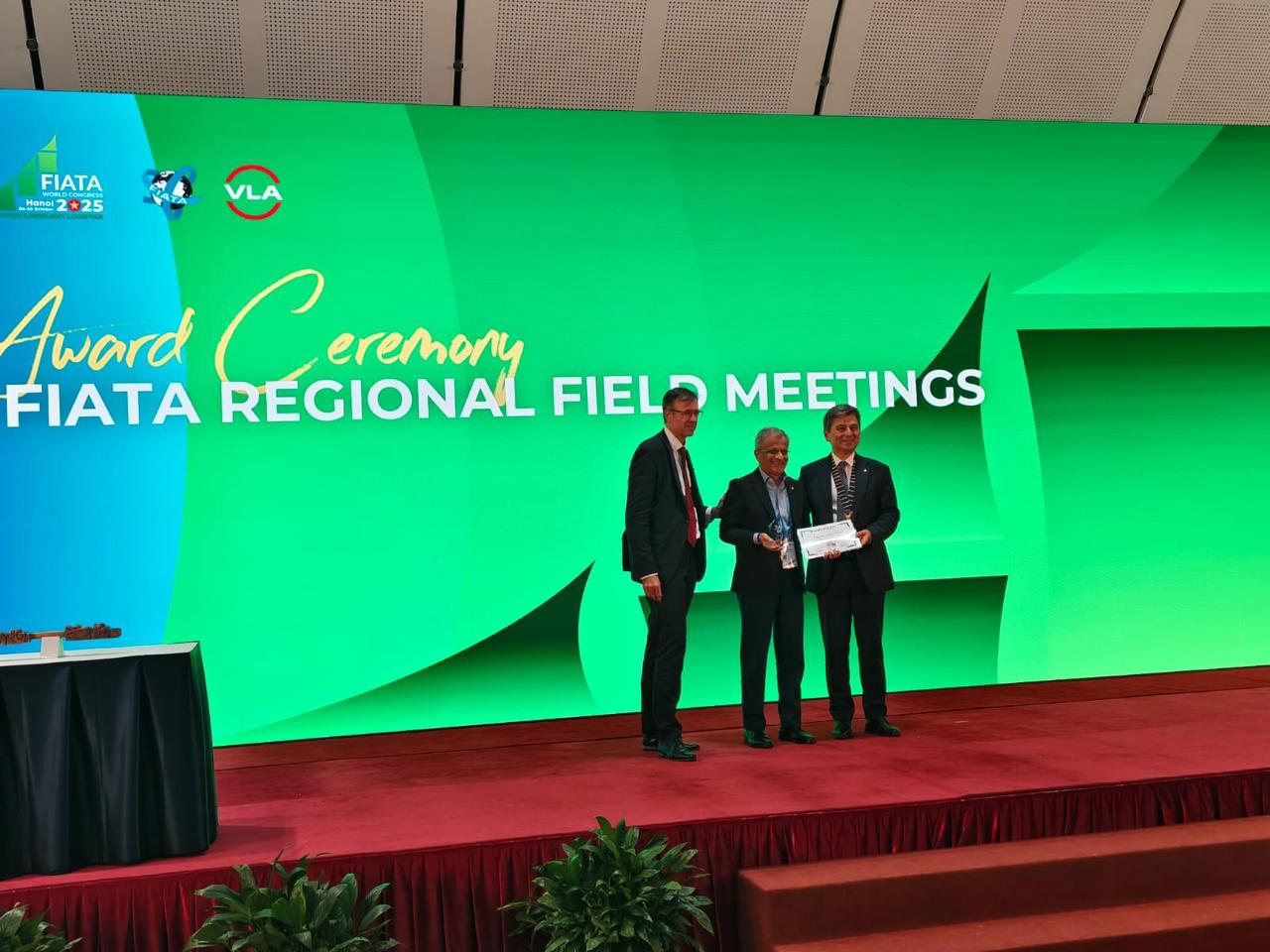
HANOI: The Air Cargo Agents Association of India (ACAAI) has been conferred an award by the International Federation of Freight Forwarders Associations (FIATA) in recognition of its successful conduct of the FIATA Region Asia-Pacific (RAP) meeting held in New Delhi in May 2025.

The award was presented by FIATA and received on behalf of ACAAI by Mr. Keshav Tanna, highlighting the association’s commitment to advancing collaboration and professional excellence in the air cargo and logistics sector.

The 2025 RAP meeting in Delhi brought together key stakeholders, industry leaders, and delegates from across the Asia-Pacific region to discuss emerging trends, regulatory developments, and opportunities in global logistics.

FIATA’s recognition underscores ACAAI’s pivotal role in strengthening India’s position as a key player in international freight forwarding and air cargo operations.

Lingjiao Li named YLP Global Winner at the 2025 FIATA World Congress

HANOI: FIATA International Federation of Freight Forwarders Associations, in partnership with TT Club, proudly announces the Global Winner of the 2025 Young Logistics Professionals (YLP) Award during the FIATA World Congress in Hanoi, Vietnam.

The YLP Award, now in its 27th year, continues to recognise and celebrate the ingenuity, dedication and talent of the new generation of freight forwarders. This prestigious competition brings together regional winners from across the globe, each presenting original dissertations and live case studies that showcase their problem-solving abilities, creativity, and understanding of international trade and logistics.

Lingjiao Li, representing the Region Asia-Pacific, has been awarded the title of 2025 Global Winner. Nominated by China International Freight Forwarders, CIFA, her dissertation “Multimodal Transport Challenges and Considerations for Oversized Cargo” clearly analysed the export shipment of an overweight and oversized power plant equipment from China to Bosnia Herzegovina and the import of fresh salmon from Chile to China. Her innovative approach and strong professional insight distinguished her from an outstanding group of finalists, earning them the recognition of this year’s jury.

Turgut Erkeskin, FIATA President, warmly congratulated Lingjiao Li emphasising that the competition “demonstrates the creativity, problem-solving skills and passion of young professionals who will lead the logistics industry into an innovative and connected future.”

Mike Yarwood, Managing Director for Loss Prevention at TT Club said: “We are once again proud to support the FIATA Young Logistics Professionals Award and extend our sincere thanks to all participants for their inspiring contributions, and to FIATA for its continued commitment to fostering professional growth among young logisticians. Investing in the next generation is not only essential for the sustainability of our sector, but also for driving the evolution of supply chain solutions worldwide.”

Hosting this year’s Award ceremony in Hanoi, within the vibrant context of the FIATA World Congress, offered a unique opportunity to highlight Vietnam’s growing role as a logistics hub in Asia and globally. With its dynamic economy, expanding infrastructure, and strategic geographic position, Vietnam embodies the transformation and connectivity that the freight forwarding sector represents. The Congress provided an inspiring stage to showcase the talent and vision of the young finalists before an international audience of industry leaders.

The YLP Award highlights FIATA’s and TT Club’s shared commitment to nurturing the skills and vision of young professionals, ensuring that the logistics and freight forwarding sector remains resilient, adaptive, and ready for the future.

About FIATA
FIATA International Federation of Freight Forwarders Associations is a non-governmental, membership-based organisation representing freight forwarders in some 150 territories. FIATA’s membership is composed of 113 Associations Members and more than 6,000 Individual Members, overall representing an industry of 40,000 freight forwarding and logistics firms worldwide. Based in Geneva, FIATA is ‘the global voice of freight logistics’.

India must shift to high-value, tech-intensive manufacturing to boost exports: Report

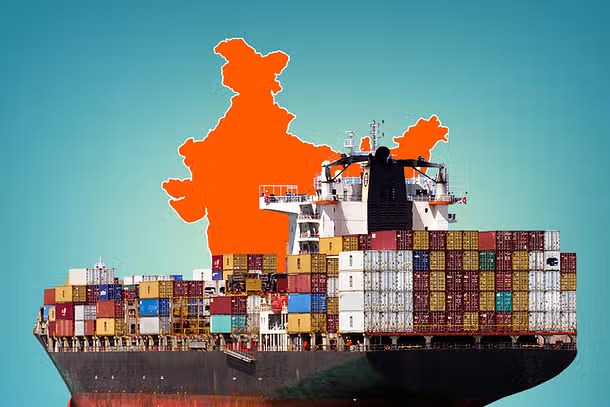
NEW DELHI: India must pivot toward high-value, technology-intensive manufacturing to sustain export growth and shield its economy from global demand shocks, according to a report by consulting firm Forvis Mazars India.

The report added that weakening demand in advanced economies, coupled with rising protectionism and fragmentation of global supply chains, poses formidable risks to India’s trade environment.

Commenting on the report, Rohit Chaturvedi, Partner, Transport and Logistics, Forvis Mazars in India, said, “The findings underscore that export growth cannot rely on GDP expansion alone. To make India’s merchandise exports more resilient and less sensitive to external demand shocks, a shift toward high-value, technology-intensive manufacturing is essential, supported by targeted policy incentives to deepen integration into advanced global value chains”.

Chaturvedi further added that sustained progress will also require appropriate capital formation and development of enabling logistics infrastructure to reduce bottlenecks and improve competitiveness.
India’s external sector is entering a decisive phase, noted the report, adding, “With merchandise exports targeted to reach USD 1 trillion by 2030 (and total exports of goods and services expected to cross USD 2 trillion), trade strategy has become central to the country’s growth planning.”

“Exports are no longer viewed merely as an outlet for surplus production, but as a mechanism for deepening integration with GVCs, attracting foreign investment, and sustaining long-term GDP expansion,” the report added.

According to the report, India’s merchandise exports have undergone a marked transformation over the past two decades, shifting from low-value primary commodities to a portfolio increasingly led by higher-value manufacturing and technology-intensive products.

Between FY18 and FY25, engineering goods, petroleum products, electronic goods, pharmaceuticals, gems and jewellery, and chemicals together accounted for about 70 per cent of merchandise export value.

Electronics stand out as the fastest-growing segment, expanding fivefold to USD 38.5 billion and increasing their share from 2 per cent to 9 per cent in this period, the report added.

Engineering goods have remained the largest contributor, driven by capital goods, automotive components, and industrial machinery, while traditional sectors such as textiles have steadily lost share, highlighting the broader pivot toward knowledge- and technology-driven exports.

Source: ANI

7th Board Meeting of the National Traders’ Welfare Board held in New Delhi

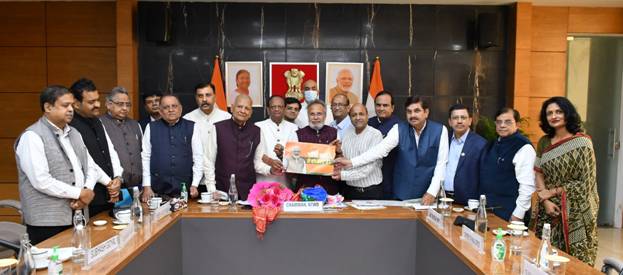
NEW DELHI : The 7th meeting of the National Traders’ Welfare Board (NTWB) was convened at Vanijya Bhawan, New Delhi, on Thursday under the Chairmanship of Chairman, NTWB, Shri Sunil J. Singhi.

In his welcome address, Joint Secretary, Department for Promotion of Industry and Internal Trade (DPIIT), Shri Sanjiv, extended greetings to Chairman, NTWB, Shri Sunil J. Singhi, on assuming his second term as Chairman of the Board. He also congratulated the Board members and appreciated their continued commitment towards advancing the interests of the trading community.

Addressing the gathering, Joint Secretary, DPIIT, Shri Sanjiv, underscored the pivotal role of the retail trade sector in the Indian economy and called upon the Board members to provide inclusive and practical suggestions for the formulation of the National Retail Trade Policy, with a focus on wider participation from grassroots-level traders.

A key focus of the meeting was the ‘Vocal for Local’ initiative aimed at strengthening indigenous industries and promoting locally manufactured goods. On the occasion, a poster titled ‘Garv Se Kaho, Ye Swadeshi Hai’ was released, reflecting the Prime Minister’s call to proudly promote Indian-made products. All members pledged to serve as ambassadors of the campaign to ensure its wider outreach across the country.

In his address, Chairman, NTWB, Shri Sunil J. Singhi, appreciated the recently implemented Next-Gen GST Reforms, which came into effect on 22nd September 2025. He highlighted that the nationwide traders-led campaign, celebrated as the ‘GST Bachat Utsav’, reflects the gratitude of the trading community towards Prime Minister, Shri Narendra Modi, for the transformative GST reforms that have generated substantial benefits and savings for both consumers and traders.

The Chairman noted that the new GST reforms will make a wide range of essential and consumer items more affordable. Small car buyers could save around ₹70,000, while reductions in GST on stationery, clothing, footwear, and medicines are expected to yield savings of 7–12%. Health and life insurance policies have been fully exempted, offering up to 18% savings, and the GST rate on tractors has been reduced from 12–18% to 5%, resulting in nearly ₹40,000 in savings. In total, 375 items, including groceries, agri-equipment, clothing, medicines, and automobiles, have become more affordable under the new GST regime.

Chairman, NTWB, Shri Sunil J. Singhi, reiterated the Government’s commitment to fostering a conducive business ecosystem through simplification of procedures, reduction in compliance burden, financial support, and infrastructure enhancement.

The Chairman further informed that representations received from trade associations and members have been referred to the concerned Ministries and Departments for appropriate action. He also invited further suggestions to enhance awareness and access to government welfare schemes for the retail and trading sectors.

Trezix launches Trezix One, a suite of AI assistants for smarter trade processes

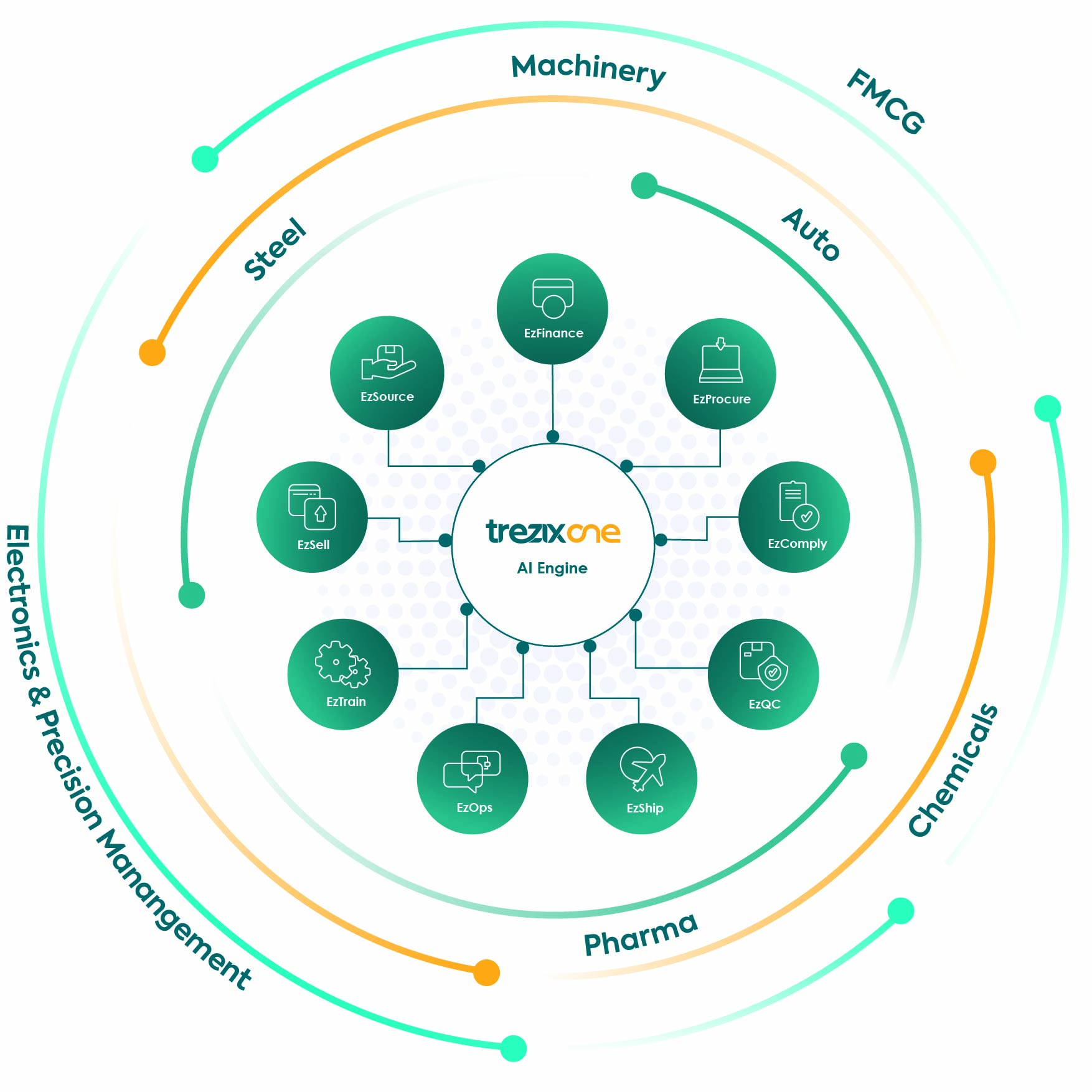
NEW DELHI: Trezix, a unified B2B SaaS platform for export and import operations, has launched Trezix One, a comprehensive suite of AI assistants that empowers trade professionals by automating and streamlining several steps the entire export-import (Exim) process. This tool ensures human is in loop and at the center of every decision. Guided by the product development framework of prevent, predict, and transform, Trezix One is an intelligent command center for international trade operations, making every decision faster, smarter, and backed by real-time global insights coupled with an organization’s own business information.

Trezix One unifies trade data, documents, and decisions into a single source. It includes dual compliance handling, rapid onboarding via pre-configured modules, verticalized compliance intelligence, real-time mapping, ERP integration, and audit and traceability by sector.

At the core of Trezix One is a suite of nine function-specific intelligent assistants, ezAgents, built to streamline every stage of cross-border trade while continuously evolving with data. These AI assistants focus on the entire spectrum of Exim operations, from procurement to compliance, logistics to finance. Every sector comes with unique challenges that require tailored solutions. Trezix One delivers purpose-built AI that provides real-time decision intelligence, process automation, and compliance predictability specifically engineered to solve complex, sector-specific complexity.

Haresh Calcuttawala, Co-Founder & Chief Executive Officer, Trezix, said, “Global trade has long been slowed by fragmented systems, manual processes, and shifting regulations. But the future is about intelligent assistants that will transform the lives of the people behind global trade. With Trezix One, we have built an AI-native orchestration engine for helping businesses prevent costly mistakes, predict risks before they hit, and unlock entirely new possibilities to transform cross-border trade. It understands context, adapts in real time, and keeps the human in the loop so that borderless trade becomes simple, compliant, and fast.”

Trezix is also collaborating with the International Trade Council to co-develop advanced Certificate of Origin traceability and quality certification validation solutions. These will help businesses proactively avoid trade sanctions, ensure FDA-aligned quality compliance, and maintain complete transparency in global supply chains.

In addition to this launch, Trezix has also introduced its book The Great Trade Reboot: Harnessing Agentic AI for Compliance and Growth, co-authored by its founders Sunil Kharbanda and Haresh Calcuttawala. The book, launched in partnership with the International Trade Council, is now available to Indian readers here. Through decades of trade-policy research and firsthand insight, the authors show how businesses and governments can use intelligent systems to anticipate shocks, automate compliance, and build adaptive supply chains. The book also delves into the shift from liberalization to multipolar blocs, trade-tech revolutions, and evolving regulatory landscapes.

About Trezix

Trezix Software Inc. is a new-age technology company redefining how businesses navigate global trade. Founded in 2020 and incorporated in 2022, Trezix was built with the vision to simplify trade complexity. Trezix creates AI-native trade orchestration solutions that empower enterprises to manage compliance, documentation, supply chain, and cross-border operations with precision, collaboration, and agility. Its platform delivers 100% end to end visibility across the value chain, up to 50-70% efficiency improvements, up to 30-40 savings across the Exim process, and real-time integration that leads to 100% audit proof traceability, enabling businesses to control, collaborate, and comply in their trade operations. With millions of trade transactions powered to date, Trezix is on a mission to become the world’s leading export-import platform. https://trezix.io

Global shipping industry reaffirms support for the IMO Net Zero Framework

LONDON: Leading international maritime associations and organisations reiterate their strong support for adoption by the world’s governments at the UN International Maritime Organization (IMO) of the “Net-Zero Framework” at the critical Extraordinary Session of the IMO Marine Environment Protection Committee next week (14-17 October).

The global industry remains fully committed to working collaboratively with IMO Member States to implement successfully this carefully balanced regulatory package for achieving net zero GHG emissions by or close to 2050, with necessary incentives to de-risk investment in new green marine fuels to accelerate the total decarbonisation of international shipping and to implement a just transition for the maritime workforce.

Only global rules will decarbonise a global industry. Without the Framework, shipping would risk a growing patchwork of unilateral regulations, increasing costs without effectively contributing to decarbonisation.

With the support of the industry, this is a unique and historic opportunity for governments to put in place a comprehensive global framework, which will be strictly enforced worldwide, to incentivise the shipping industry’s transition to net zero emissions whilst ensuring a level playing field.

The maritime transport sector, which moves 90% of global trade, is ready to play its important part in delivering a sustainable future. 

About ASA

The ASA is a voluntary organisation of the shipowners’ associations from ASEAN*, China, Cook Islands, Hong Kong, Japan and Korea, representing around 50% of the world merchant fleet.

*The Federation of ASEAN Shipowners’ Associations (FASA) consists of associations from Brunei, Indonesia, Malaysia, Philippines, Singapore, Thailand and Vietnam.

The ASA provides a major platform for Asian shipowners to build consensus on issues of concern to both the Asian and global maritime industries, which is also crucial to world trade, its supply chains and the prosperity of major Asian trading partners, including the U.S.

About European Shipowners | ECSA

European Shipowners | ECSA represents 22 national shipowners’ associations based in the EU and Norway. European shipowners control 35 % of the global commercial fleet, contribute 127.8 billion euros per year to the EU GDP and provide 1.4 million people with careers both on board and ashore. ECSA strives for a regulatory environment that fosters the international competitiveness of European shipping, to the benefit of the EU – www.ecsa.eu

About IAPH

Founded in 1955, the International Association of Ports and Harbors (IAPH) has developed into a global alliance of 201 port authorities as well as 175 port-related businesses. Comprised of over 94 different nationalities across the world’s continents, member ports handle over one third of the world’s sea-borne trade and well over 60% of the world container traffic. IAPH leads global port industry initiatives on decarbonisation and energy transition, risk and resilience management, and accelerating digitalisation in the maritime transport chain. The IAPH’s World Ports Sustainability Program has grown into the reference database of best practices of ports applying the UN Sustainable Development Goals and integrating them into their businesses – iaphworldports.org.

About IBIA

IBIA – The International Bunker Industry Association is the voice of the global bunker industry and represents all stakeholders across the industry value chain. Our membership includes ship owners and operators, bunker suppliers, traders, brokers, barging companies, storage companies, surveyors, port authorities, credit reporting companies, lawyers, P&I clubs, equipment manufacturers, shipping journalists and marine consultants. Established in 1993, today we have members in more than 70 countries. www.ibia.net

About ITF

The International Transport Workers’ Federation (ITF) is a democratic, affiliate-led federation recognised as the world’s leading transport authority. We fight passionately to improve workers’ lives, connecting more than 700 affiliated trade unions from 150 countries to secure rights, equality and justice for workers’ globally. We are the voice for nearly 16.5 million transport workers across the world. https://www.itfglobal.org/en

About ICS 

The International Chamber of Shipping (ICS) is the principal international trade association for merchant shipowners and operators, representing all sectors and trades and over 80% of the world merchant fleet – www.ics-shipping.org

About WSC

The World Shipping Council is the united voice of liner shipping, working with policymakers and stakeholder groups to shape the future growth of a socially responsible, environmentally sustainable, safe, and secure shipping industry. We are a non-profit trade association with offices in Brussels, London, Singapore and Washington, D.C. Read more at www.worldshipping.org.