Home Blog Page 638

IMO: The ocean takes centre stage on World Maritime Day 2025

Global maritime community celebrates “Our Ocean, Our Obligation, Our Opportunity”

LONDON: The international shipping industry, which carries over 80% of global trade and uses more ocean space than any other sector, is stepping up action to protect the ocean.

This year’s World Maritime Day, observed globally on 25 September, focuses on the sector’s impact on the marine environment, and what it can do to reduce pollution, curb greenhouse gas emissions and prevent biodiversity loss.

Secretary-General of the International Maritime Organization Mr. Arsenio Dominguez said:

“IMO has, for many decades, worked to strike the right balance to ensure that the shipping industry is not the problem but the solution. Whether it is through international regulations to protect the environment and support seafarers, technical support to Member States, or bringing together all the key stakeholders – governments, industry, academia, civil society – we always find a way to global solutions.”

Building momentum
Mr. Dominguez called for the maritime community to build on the momentum of recent global progress.

This includes the imminent entry into force of the Agreement under the United Nations Convention on the Law of the Sea (UNCLOS) on the Conservation and Sustainable Use of Marine Biological Diversity of Areas beyond National Jurisdiction (BBNJ Agreement, commonly known as the High Seas Treaty), as well as commitments made at the UN Ocean Conference held in Nice in June and ongoing negotiations for a global agreement on plastic pollution.

In his statement, United Nations Secretary-General Mr. António Guterres said:

“On this World Maritime Day, let us reaffirm our obligation to safeguard the ocean and those who depend on it. Let us deliver on the Nice outcome, invest in resilient maritime industries … and ensure that the blue economy is a driver of inclusive sustainable development.”

IMO action for the ocean
Under the theme “Our Ocean, Our Obligation, Our Opportunity”, IMO has highlighted actions and progress achieved this year, including among others:

Tackling marine plastic pollution: Adoption of the 2025 Action Plan to Address Marine Plastic Litter from Ships in April, aiming to reduce the contribution from shipping and fishing vessels to marine plastic litter.
Protecting biodiversity: In April, IMO initiated the development of a new legally binding global regulatory framework on biofouling management to combat the spread of invasive aquatic species that may be carried on ships.

Decarbonization: The draft IMO Net-Zero Framework was approved in April, including regulations for a new global fuel standard and GHG emissions pricing mechanism for ships. The measures are to be discussed for adoption in October 2025.

Air pollution: The Mediterranean Sea became an Emission Control Area (Med SOx ECA) under the MARPOL Annex VI treaty in May. The sulphur content in fuel oil for ships operating in the area is now limited to 0.1%, significantly reducing air pollution and delivering major benefits to both human health and the marine environment.

Ship recycling: The Hong Kong International Convention for the Safe and Environmentally Sound Recycling of Ships entered into force in June, aiming to ensure that ships at the end of their operational lives are recycled safely.

Underwater Radiated Noise (URN): Extension of the GloNoise Project to support Member States’ implementation of IMO’s revised guidelines for the reduction of URN as well as the action plan on preventing URN.

Engaging young people

This year, IMO partnered with the Universal Postal Union (UPU) and the United Nations Educational, Scientific and Cultural Organization (UNESCO) to inspire young writers worldwide to reflect on the importance of protecting our seas and oceans.

The theme for the 54th edition of the International Letter-Writing Competition for Young People encouraged young participants to give voice to the ocean, exploring its beauty, the challenges it faces and our collective responsibility for preserving it.

The 2025 winners were: Reyyan Demiriz (Türkiye) for first prize, with Phạm Đoàn Minh Khuê (Viet Nam) taking second place and Kanlanfe Ingrid Ouali (Burkina Faso) receiving third prize.  Read their letters here. 
Wilson Sons launches new facilities at its Training Centre, featuring a manoeuvre simulator, and at its Towage Operations Centre

SANTOS: With over 187 years of experience, Wilson Sons opened new facilities on Thursday (September 25th) at its Training Centre, now located at Edifício Palazzo, on Avenida Ana Costa in Santos (São Paulo), featuring an upgraded tugboat manoeuvre simulator. This simulator will train the company’s captains and maritime workers on safety procedures and cutting-edge technology for its fleet of over 80 tugboats, which operate in more than 25 ports along the Brazilian coast, supporting domestic and international trade, as well as the offshore energy industry.

Simulator training enhances operating safety and efficiency, and supports the analysis and improvement of manoeuvres of large ships (up to 366 meters), which reduces operating restrictions at Brazilian ports.

Another special feature of this technology is scenario analysis, where different environments are simulated, and solutions are tested and developed for different port challenges faced in Brazil, with customized simulations for each port.

“The technology behind the new manoeuvre simulator supports our innovation strategy. It is a tool that increases the safety and efficiency of our operations, supporting the growth of the Brazilian port industry and the competitiveness of the global logistics chain,” says Rodrigo Bastos, Director of Towage Operations at Wilson Sons.

The manoeuvre simulator can also be used, at the new address, by clients and other stakeholders in project analysis and testing activities. Wilson Sons’ Towage Operations Centre (COR) had been set in the same location, and in 2011, it began real-time monitoring of the company’s tugboat fleet.

Through a network of antennas distributed along the Brazilian coast, which capture AIS (Automatic Identification System) signals emitted by tugboats and ships, the COR is responsible for allocating tugboats to manoeuvre clients’ vessels by continuously tracking the fleet on a 24/7 basis.

“Continual tracking ensures maximum efficiency of our assets and adds an important layer of safety to the manoeuvres. Besides, by allocating the most suitable tugboat to meet client demands, at the right time and at the right speed, operations become more sustainable and with lower emissions,” says Pedro Lima, Fleet and Operations Manager at Wilson Sons.

In 2023, in collaboration with the startup Argonáutica, Wilson Sons implemented a new operating system, Artemis, in its Towage Operation Centre (COR). An advantage of the new system is the integration of vessel information collected by AIS antennas, external data sources, and meteoceanographic data, such as port weather conditions, tides, currents, and wind. All this can be viewed from any location.

With this, the COR develops operating strategies that increase operational safety and reduce fuel consumption and greenhouse gas emissions.

“Safe WS-Standard Manoeuvre” Project trains captains

Since April 2024, more than 150 company captains have been trained to improve operational safety. This is the “Safe WS-Standard Manoeuvre” project, which presents its foundations and aligns manoeuvring practices according to Wilson Sons’ quality standards. The topics covered include electronic navigation, use of equipment such as radars and GPS, and actual cases of manoeuvres, to prevent misbehaviour and unsafe conditions, avoiding incidents and accidents.

In the company admission training and evaluation process, workers complete simulated emergency drills on wire rope breakage, extreme sea and wind conditions, and low visibility. Additionally, the company offers ongoing training for professionals studying to become captains, which includes decision-making, use of navigation equipment, maritime and port legislation, documentation, levels of responsibility, and International Regulations for Preventing Collisions at Sea.

The latest workplace safety figures reported by the Wilson Sons Group in August on its income statement for the second quarter of 2025 attest to the company’s safety priority. In the 12 months ended June 30th, the rate of lost-time accidents was 0.47 incidents per million hours of work, consistently outperforming the global benchmark of 0.50.

Container Shipping: Demand bolstered by trade lanes not bound for the US

COPENHAGEN: “On the strength of demand in trade lanes not bound for the US, we have increased our ship demand growth forecast for 2025 to 4.5-5.5% while maintaining it at 2.5-3.5% for 2026. We now expect a balanced supply/demand development in 2026 while expecting average market conditions in 2025 to be worse than in 2024,” says Niels Rasmussen, Chief Shipping Analyst at BIMCO.

With few exceptions, the US tariff increases presented on “Liberation Day” are now implemented in full. In addition, several commodity specific tariff increases have increased.

Due to weaker US import volumes, volumes to North America have seen negative year-on-year growth since April. We expect that market conditions could be weaker rest-of-year and forecast that North America import volumes will be contract 2% in 2025 while returning to growth in 2026.

BIMCO 1 Container Shipping: Demand bolstered by trade lanes not bound for the US

“Cargo volume growth into most regions outside of North America has so far proven resilient and we expect that global volumes will grow 2.5-3.5% in both 2025 and 2026,” says Rasmussen.

In 2025, we expect ship demand to grow faster than cargo volumes as long head-haul trades are growing faster than the average. That is particularly true for Asian exports to Sub-Saharan Africa, South & Central America and Europe & Mediterranean regions.

However, it must be remembered that demand remains elevated due to Cape of Good Hope routings. Suez Canal transits remain 90% lower than before the Houthis began attacking ships in the Red Sea. Should conditions change and ships fully return to normal routings, we expect ship demand to end 10% lower than our forecast.

BIMCO Container Shipping Demand Supply Container Shipping: Demand bolstered by trade lanes not bound for the US

We have increased our supply growth estimate to 7.3% for 2025 while lowering it to 3.1% for 2026. Slow recycling activity has led us to increase the underling fleet growth estimate while a slight increase in sailing speeds also increase the 2025 supply estimate. The faster growth during 2025 has conversely caused the relative growth rate in 2026 to end lower than previously forecast.

“We expect that market conditions and freight rates could weaken further during the rest of 2025. So far, time charter rates and second-hand ship prices have been remarkably unaffected by the lower freight rates, but we expect that could change starting in the fourth quarter of 2025. As we forecast stable supply/demand growth, we expect that freight rates could stabilise in 2026,” says Rasmussen.
Source: BIMCO

Drewry’s World Container Index down by 8% last week

LONDON: Drewry’s World Container Index decreased 8% to $1,761 per 40ft container this week.

The Drewry World Container Index (WCI) fell 8% to $1,761 per 40ft container, marking the 15th consecutive week of decline with rates on major trade routes—Transpacific and Asia–Europe—also trending downwards.

Spot rates from Shanghai to Los Angeles decreased 10% to $2,311 per 40ft container, while those from Shanghai to New York decreased 8% to $3,278 per 40ft container. Despite a brief uptick in early September, the momentum from GRIs and blank sailings has now subsided, which has led to the reduction in rates.

Asia–Europe spot rates fell this week again, as rates declined 9% ($1,735 per 40ft container) on Shanghai–Rotterdam and 7% ($1,990 per 40ft container) on Shanghai–Genoa. Ocean carriers are reducing capacity to align with slowing demand ahead of China’s Golden Week holiday, when factories will be shut for eight days from 1 October. As a result, freight rates are expected to continue declining in the coming week.

Drewry’s Container Forecaster expects the supply-demand balance to weaken in the next few quarters, which will cause spot rates to contract.
Source: Drewry

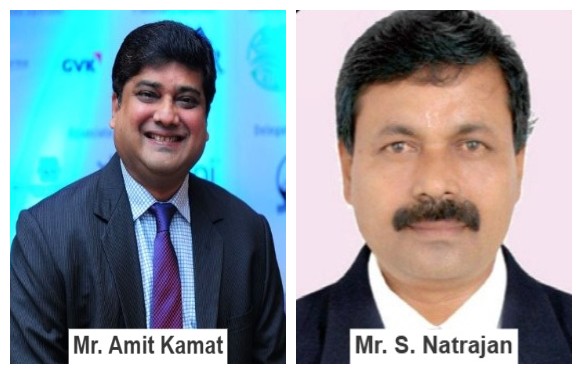
FFFAI 62nd AGM: Elects New Leadership for 2025–2027, Amit Kamat named as Chairman; S. Natarajan named Chairman-elect

MUMBAI: The Federation of Freight Forwarders Associations in India (FFFAI) held its 62nd Annual General Meeting (AGM) on Wednesday in Mumbai.

The AGM was graced by distinguished guests: Shri Vimal Kumar Srivastava, Chief Commissioner, Mumbai Customs Zone II (Nhava Sheva), who attended as the Guest of Honour, and Colonel Amanjeet Singh, Commandant, Embarkation Headquarters, Mumbai, who was the Chief Guest. Also present was Shri P.K. Agarwal, former Principal Chief Commissioner of Customs.

Mr. Amit Kamat has been appointed as the new Chairman, succeeding Mr. Dushyant Mulani, Past Chairman, whose tenure was widely acknowledged for his dedication and service to the industry. The AGM also elected Mr. S. Natarajan, President of the Chennai Customs Brokers Association, as Chairman-Elect for the 2025-27 term. Recognised for his experience and strong industry standing

New Elected Committee
Elections were conducted for the office bearers of the Federation for the 2025–2027 term. The newly elected leadership is as follows:
Chairman: Mr. Amit Kamat (Goa Custom House Agents’ Association)
Chairman Elect: Mr. S. Natarajan
Honorary Secretary: Mr. Sudip Dey
Treasurer: Dr. Nirav Thakkar
Vice Chairmen: Vinod Sharma, Rajesh Verma, Dinesh Gupta, S. Anil Kumar, Kartik Anant Pancholi, and Sudhir Agarwal

Call for Wider Participation
While congratulating the newly elected committee and thanking election officers and observers Mr. Vijay Dayal, Mr. Sudhir Kulkarni, Mr. Parekh, and Dr. Pramod Sant, Mr. Dushyant Mulani emphasized the importance of democratic participation in FFFAI.

He noted: “Democracy is the essence of any organisation. While we are grateful for the smooth conduct of elections, we would have been happier to see larger participation of candidates. We urge members from across India to actively take part in future AGMs and contest for more categories.”

With a new leadership team in place, FFFAI now looks ahead to strengthening its role in representing the freight forwarding and logistics community across India

India’s first fleet of EV Trucks with swappable batteries flagged off at JNPA by Sarbananda Sonowal

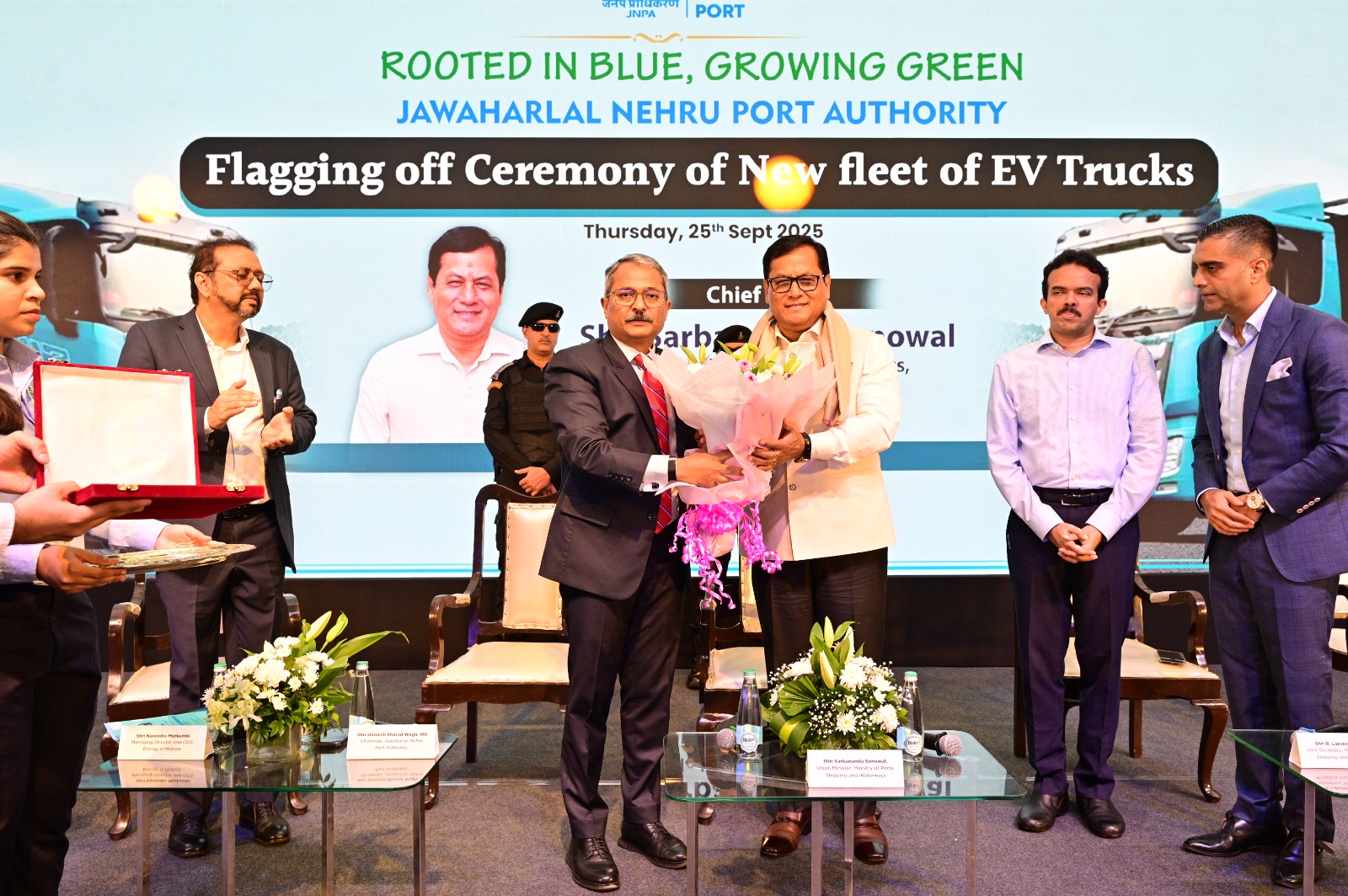
MUMBAI : The Union Minister of Ports, Shipping & Waterways (MoPSW), Sarbananda Sonowal flagged off India’s first fleet of electric heavy trucks with swappable batteries at the Nhava Sheva Distribution Terminal in Jawaharlal Nehru Port Authority (JNPA) on Thursday. This also made JNPA with the largest EV truck fleet in any of the India’s ports boosting sustainable logistics.

A heavy-duty battery swapping station was also commissioned. JNPA aims to convert 90% of its internal heavy truck fleet of about 600 vehicles by December 2026. During the event, an MoU was also signed between JNPA and Isaac Centre for Public Policy (ICPP), Ashoka University, Delhi. This MoU is to create a reference framework for port authorities to determine tariffs from both cost benchmarking and port benchmarking perspectives, across various cargo types and commodities.

Highlighting the government’s vision, Union Minister of Ports, Shipping and Waterways (MoPSW), Sarbananda Sonowal, stated, “Today, when JNPA takes a decisive step in electrifying its fleet of logistics vehicles, it sends a message far beyond port boundaries. It sends a message that India’s ports are ready to embrace the future, ready to pioneer practices that will set benchmarks for sustainability, efficiency, and innovation. Across India, ports are introducing solar and wind power projects, LNG and hydrogen fuel infrastructure, and electrification of cargo handling equipment. Under the visionary leadership of Prime Minister Shri Narendra Modi ji, we are ensuring that the Indian maritime sector not only keeps pace with global developments but also sets new benchmarks in sustainability and efficiency.”

This induction of state-of-the-art EV trucks marks another decisive stride in JNPA’s pursuit of decarbonisation and energy transition in the maritime and logistics ecosystem. The initiative reflects the Authority’s determination to align itself with global sustainability imperatives while also bolstering operational efficiency and reducing carbon footprints across cargo movement corridors. Today, a total of 50 trucks were flagged off, with the fleet expected to expand to 80 by the end of the year.

Sarbananda Sonowal further added, “In recent months, JNPA has consistently been in the news for the right reasons — be it ranking among the Top 25 Ports globally in the World Bank’s CPPI index, achieving records in container handling, or advancing key projects in the SEZ, digitalisation, and green energy. Today’s event adds another jewel to that crown of achievements.”R. Lakshmanan, IAS, Joint Secretary, MoPSW, and Unmesh Sharad Wagh, IRS, Chairperson, JNPA and CMD VPPL also joined the event with the Union Minister.

Speaking on the occasion, Unmesh Sharad Wagh, IRS, Chairperson, JNPA, and CMD, VPLL, said, “The launch of this new fleet of EV trucks represents not merely an incremental enhancement of our logistical arsenal, but a paradigmatic leap towards a cleaner, greener, and more resilient future for port operations. As custodians of India’s largest container port, it is incumbent upon us to embrace innovation that reconciles economic dynamism with ecological responsibility. This fleet of EV trucks will serve as harbingers of a new era, wherein sustainability is not an adjunct to growth but its very foundation.”
This initiative carries special significance as JNPA, handling nearly half of India’s container trade, sets the pace for sustainable logistics at a national scale. The deployment of EV trucks here serves as a proof point for India’s broader logistics transformation under PM Gati Shakti and the National Logistics Policy (NLP). By deploying EV trucks within port operations, JNPA will be :

  1. Demonstrating alignment with national energy transition goals, particularly India’s net-zero commitment by 2070.
  2. Supporting the National Electric Mobility Mission Plan (NEMMP), by showcasing commercial-scale EV adoption in high-throughput logistics.
  3. Reducing operational emissions, particulate pollution, and noise within the port ecosystem.
  4. Establishing a replicable benchmark for other major and non-major ports to follow in adopting EVs for cargo-handling and last-mile connectivity.
    The ceremony underscores JNPA’s steadfast commitment to the Government of India’s vision of reducing emissions in the maritime sector, as articulated under the Maritime India Vision 2030 and Green Ports initiative. With this initiative, JNPA continues to pioneer practices that integrate environmental stewardship with operational excellence, thereby reinforcing its position as a trailblazer in the nation’s port-led development.

JNPA flags off new fleet of electric trucks to propel sustainable port logistics

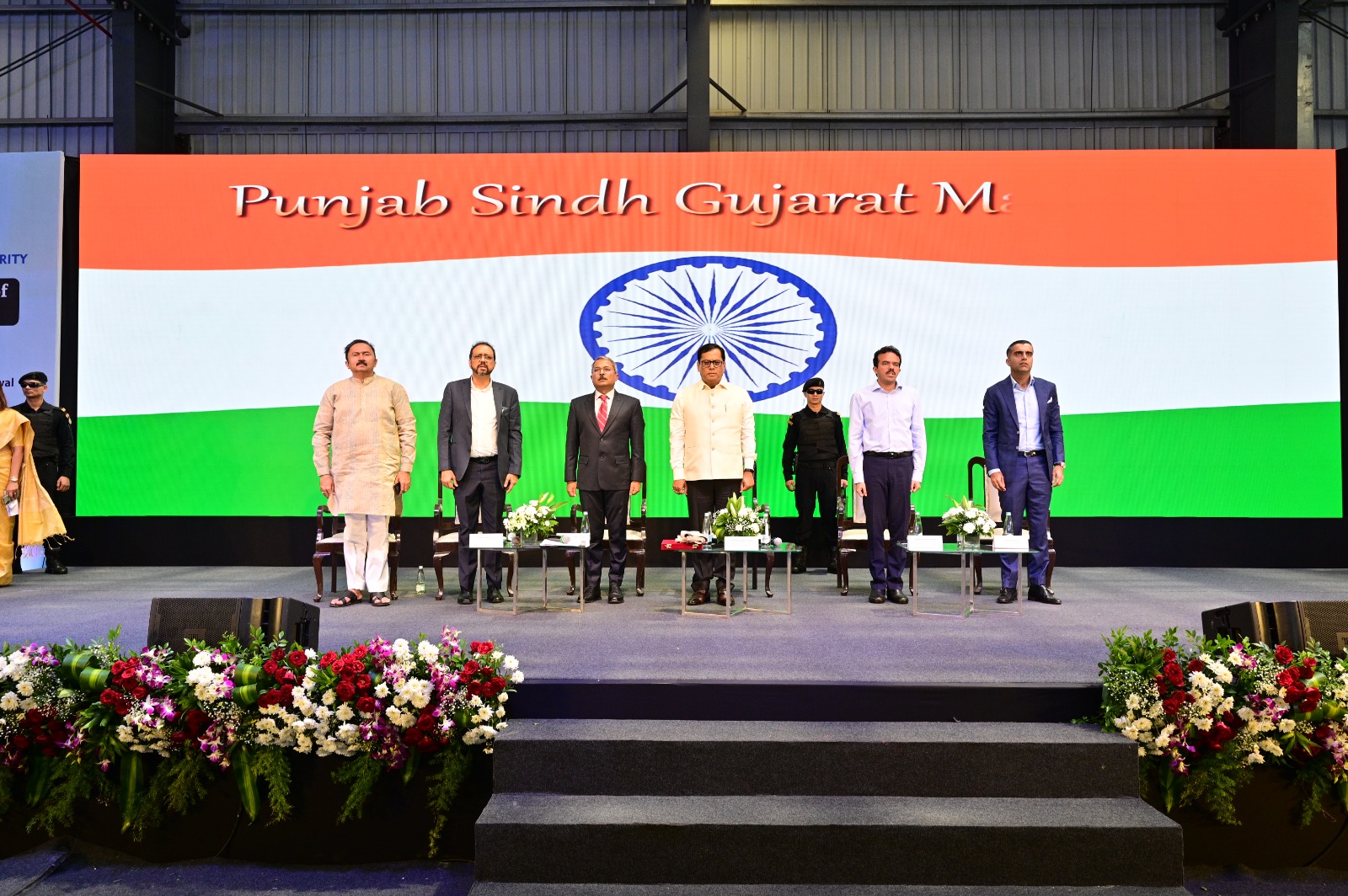
MUMBAI : Jawaharlal Nehru Port Authority (JNPA), India’s largest container port, on Thursday hosted the Flagging Off Ceremony of a new fleet of Electric Vehicle (EV) Trucks at the Nhava Sheva Distribution Terminal. The event was graced by the esteemed presence of Hon’ble Union Minister of Ports, Shipping and Waterways, Shri Sarbananda Sonowal, as Chief Guest, along with Shri R. Lakshmanan, IAS, Joint Secretary, MoPSW, Shri Mahesh Baldi, MLA, Uran Constituency, Shri Unmesh Sharad Wagh, IRS, Chairperson, JNPA and CMD VPPL, and Shri Dhruv Kotak, MD, JM Baxi Group.

This induction of state-of-the-art EV trucks marks another decisive stride in JNPA’s pursuit of decarbonisation and energy transition in the maritime and logistics ecosystem. The initiative reflects the Authority’s determination to align itself with global sustainability imperatives while also bolstering operational efficiency and reducing carbon footprints across cargo movement corridors.

During the event, an MoU was also signed between JNPA and Isaac Centre for Public Policy (ICPP), Ashoka University, Delhi. This MoU is signed to create the Logistics Cost Index – a reference framework for port authorities to determine tariffs from both cost benchmarking and port benchmarking perspectives, across various cargo types and commodities.

Highlighting the Ministry’s vision, Hon’ble Union Minister of Ports, Shipping and Waterways, Shri Sarbananda Sonowal, stated, “Today, when JNPA takes a decisive step in electrifying its fleet of logistics vehicles, it sends a message far beyond port boundaries. It sends a message that India’s ports are ready to embrace the future, ready to pioneer practices that will set benchmarks for sustainability, efficiency, and innovation. Across India, ports are introducing solar and wind power projects, LNG and hydrogen fuel infrastructure, and electrification of cargo handling equipment. Step by step, we are ensuring that the Indian maritime sector not only keeps pace with global developments but also sets new benchmarks.”
He added, “In recent months, JNPA has consistently been in the news for the right reasons — be it ranking among the Top 25 Ports globally in the World Bank’s CPPI index, achieving records in container handling, or advancing key projects in the SEZ, digitalisation, and green energy. Today’s event adds another jewel to that crown of achievements.”

Speaking on the occasion, Shri Unmesh Sharad Wagh, IRS, Chairperson, JNPA, and CMD, VPLL, said, “The launch of this new fleet of EV trucks represents not merely an incremental enhancement of our logistical arsenal, but a paradigmatic leap towards a cleaner, greener, and more resilient future for port operations. As custodians of India’s largest container port, it is incumbent upon us to embrace innovation that reconciles economic dynamism with ecological responsibility. These EV trucks will serve as harbingers of a new era, wherein sustainability is not an adjunct to growth but its very foundation.”

This initiative carries special significance as JNPA, handling nearly half of India’s container trade, sets the pace for sustainable logistics at a national scale. The deployment of EV trucks here serves as a proof point for India’s broader logistics transformation under PM Gati Shakti and the National Logistics Policy (NLP). By deploying EV trucks within port operations, JNPA will be:

  1. Demonstrating alignment with national energy transition goals, particularly India’s net-zero commitment by 2070.
  2. Supporting the National Electric Mobility Mission Plan (NEMMP), by showcasing commercial-scale EV adoption in high-throughput logistics.
  3. Reducing operational emissions, particulate pollution, and noise within the port ecosystem.
  4. Establishing a replicable benchmark for other major and non-major ports to follow in adopting EVs for cargo-handling and last-mile connectivity.
    The ceremony underscores JNPA’s steadfast commitment to the Government of India’s vision of reducing emissions in the maritime sector, as articulated under the Maritime India Vision 2030 and Green Ports initiative. With this initiative, JNPA continues to pioneer practices that integrate environmental stewardship with operational excellence, thereby reinforcing its position as a trailblazer in the nation’s port-led development.
    About JNPA:
    The Jawaharlal Nehru Port Authority (JNPA) is one of the premier container-handling ports in India. Since its inception on May 26, 1989, JNPA has transformed from a bulk cargo terminal into the premier container port in the country.
    Currently, JNPA operates five container terminals – NSFT, NSICT, NSIGT, BMCT and APMT. The Port also has a Shallow Water Berth for general cargo. A Liquid Cargo Terminal present at the JNPA Port is managed by the BPCL-IOCL consortium and the additional liquid cargo terminal developed by JNPA will be operated by M/s JSW – JNPT Liquid Terminal Pvt. Ltd. Additionally, the newly constructed coastal berth links other Indian ports and facilitates enhancing the traffic of coastal containers.
    Nestled across 277 hectares of land, JNPA also operates a meticulously designed multi-product SEZ, with state-of-the-art infrastructure, to boost export-oriented industries in India.

JNPA is also developing an all-weather, deep-draft, greenfield port at Vadhvan, the 13th Major Port of India in Maharashtra. It is poised to be among the top 10 ports globally and will be a 100% green port since its inception.

India must become self-reliant, Russia our time-tested partner: PM Modi

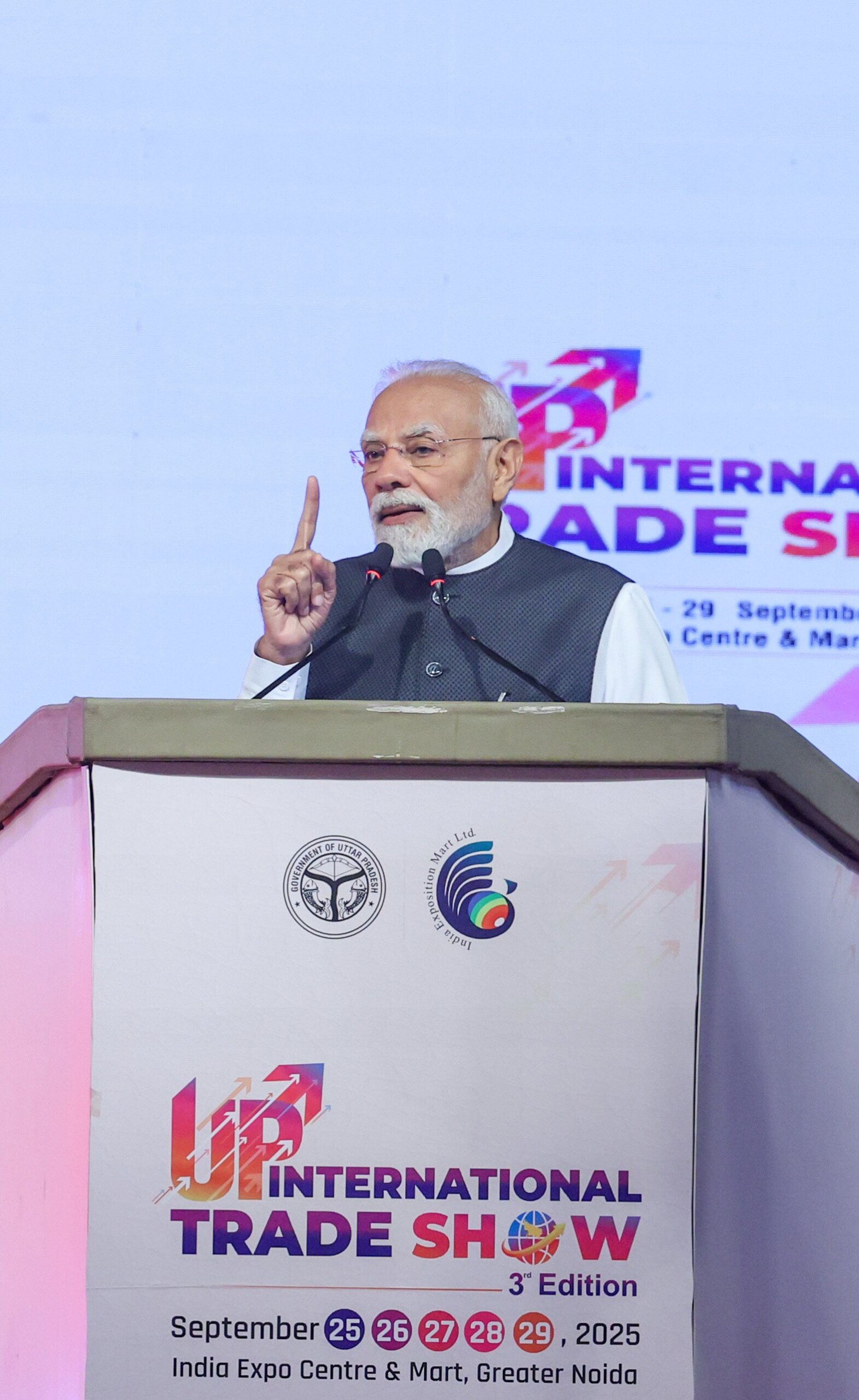
GREATER NOIDA : Stressing that the country must become self-reliant, Prime Minister Shri Narendra Modi on Thursday said that despite global uncertainties, India’s growth remains resilient and remarkable.

During his keynote address at the 3rd Uttar Pradesh International Trade Show 2025 here, PM Modi said that this time, the country partner of the trade show is Russia, which means “we are further strengthening this time-tested partnership”.

Stressing that the government is doubling down on its efforts towards the ‘Make in India’ initiative, PM Modi said that we aim to make ‘chips to ships’ in the country.

The Prime Minister also informed that the first, fully indigenous AK-203 assault rifles are set to be delivered to the Army soon.

The Indo-Russian Rifles Private Limited (IRRPL) is a joint venture company that has been established for the indigenous production of AK-203, named ‘Sher’ in India, in Uttar Pradesh’s Amethi. The AK-203 rifles are significantly more modern compared to the AK-47 and AK-56 rifles. They are one of the most lethal rifles in the Kalashnikov series.

PM Modi further stated that Indians now believe that swadeshi products are getting better, user-friendly and long-lasting. “Hence, there should be no compromise on quality,” the Prime Minister told the gathering, adding that the country must become self-reliant and every product that can be made in India should be made here.

As soon as the Prime Minister reached the venue to inaugurate the mega trade show, he took a tour of the exhibition area, where he witnessed next-generation innovations across the spectrum.

The third edition of the mega event — envisioned under the leadership of Chief Minister Yogi Adityanath — is taking place at the India Expo Centre and Mart from September 25 to 29 — showcasing the state’s industrial, agricultural, cultural, and innovation strengths on a global stage.

The event focuses on showcasing industrial progress, promoting trade collaborations, and attracting investments. Attendees will include business leaders, industry experts, startups, exporters, and government officials. Over 2,400 exhibitors and 1,25,000 B2B visitors are expected to participate in the trade show.

3rd Edition of UPITS opens with huge Global Participation facilitating diversification and de-risking: President, FIEO

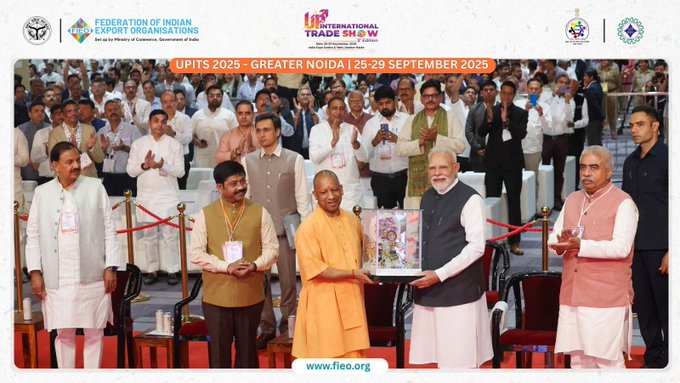
GREATER NOIDA : The 3rd edition of the Uttar Pradesh International Trade Show (UPITS 2025) commenced on Thursday with a grand inauguration by the Hon’ble Prime Minister of India, Shri Narendra Modi, in the presence of the Hon’ble Chief Minister of Uttar Pradesh, Shri Yogi Adityanath, along with Hon’ble Ministers and senior dignitaries from the Government of Uttar Pradesh. The event is being held at the India Expo Mart, Greater Noida from September 25-29, 2025.

Inaugurating the Trade Show, the Prime Minister underlined the robustness of India’s economic framework and said that self-reliance is not an option for India but it is a concept that will aid India attain its rightful place going forward. He also said that India’s growth remains attractive despite global disruptions and uncertainties. He further added that the government is putting a lot of effort into the ‘Make In India’ initiative and plans to manufacture from chip to ship within the country. Highlighting the success of India’s fintech revolution, the PM stressed that Unified Payments Interface (UPI) has transformed the way financial transactions are done in the country.

Emphasising on the steps taken by his government to enable businesses to operate smoothly he said: “Today, through the Government e Marketplace (GeM) portal, around 25 lakh sellers and service providers are providing supplies to the government. These are small shopkeepers and traders who can sell their products to the government. India is moving forward to achieve its goal of ‘Viksit Bharat’ by 2047.” “In today’s world, the fintech sector has become a prominent topic of discussion. One of its most remarkable contributions is its role in fostering inclusive development. India has developed innovative platforms that cater to everyone, ensuring equitable access to financial and digital services. Platforms like UPI, Aadhaar, DigiLocker, and ONDC are empowering individuals and providing opportunities for all. It means platform for all, progress for all,” added Shri Modi.

Speaking about the country’s growing clout in domestic production of key electronics, the Prime Minister highlighted: “Today, 55% of all mobile phones manufactured in India are produced in Uttar Pradesh. UP will now further strengthen India’s self-reliance in the semiconductor sector as well. The Prime Minister underscored the critical importance of research, stating that investment in this domain must increase manifold. He affirmed that the government has already taken necessary steps to support this expansion. Shri Modi emphasized that private investment in research is now imperative and must be actively pursued. He described this as a demand of the times and called for the creation of a comprehensive ecosystem for indigenous research, design, and development.

UP Chief Minister, Shri Yogi Adityanath addressing the august gathering during the inaugural of the trade show, thanked Prime Minister Narendra Modi for the implementation of the Goods and Services Tax (GST) reforms in the country. CM said that the GST reforms had brought a new kind of liveliness in the markets, which had also proved to be a new life for the ODOP sector industrialists. Giving insights into the event, the CM said that participation of more than 550 buyers from more than 85 countries was being witnessed, further stating that the event in itself was a big platform to showcase the state before the nation and the world.

B2B meetings with international buyers, during the show was inaugurated by Shri Nand Gopal Gupta ‘Nandi’, Cabinet Minister for Industrial Development, Export Promotion, NRI and Investment Promotion and Shri Rakesh Sachan, Cabinet Minister of MSME, Khadi, Village Industries, Sericulture, Textile, Government of Uttar Pradesh. Also present on the occasion were Dr Ajay Sahai, DG & CEO, FIEO, Mr Suvidh Shah, Addl DG, FIEO and Mr Rakesh Kumar, Chairman, IEML along with other dignitaries and senior officials from Govt of UP. Speaking after the inaugural of the B2B meeting, Mr Rakesh Sachan said that more than 2400 exhibitors from UP are showcasing diverse products from different sectors including textiles, handicrafts, khadi, garments, leather, food processing, ODOP & GI tag products, besides electronic goods, defence, medical and pharma products. He added that craftsmen and artisans will have the opportunity to directly connect with foreign buyers. In order to further promote ‘Black Salt Rice’ (Kala Namak Rice), sample of the same is being gifted as souvenir to all the foreign buyers. The 5-day event is expected to generate business to the tune of Rs 4000 Crores, added Shri Sachan.

Welcoming participants from across the globe, Shri S C Ralhan, President, Federation of Indian Export Organisations (FIEO), extended his compliments to the Government of Uttar Pradesh and the visionary leadership of the Hon’ble Chief Minister for organizing a truly world-class trade exhibition. He highlighted that the show has witnessed enthusiastic participation from over 500 foreign buyers representing 85+ countries, including major economies such as the USA, UK, Germany, France, Japan, Australia, South Korea, Brazil, and South Africa.

Shri Ralhan stated that the event is expected to be a catalyst for significant trade outcomes. More than 2,500 B2B meetings are scheduled over the five-day exhibition, enabling meaningful engagements between international buyers and over 2,000 sellers from across Uttar Pradesh.

With participation from over 2,400 exhibitors, UPITS 2025 showcases the vast industrial and artisanal strength of Uttar Pradesh. The exhibition features a diverse range of products and services—from traditional sectors like textiles, handicrafts, khadi, garments, leather, food processing, ODOP and GI-tagged products, to emerging sectors such as electronics, defence, machinery, medical equipment, and pharmaceuticals. Artisans and entrepreneurs from regions such as Varanasi, Agra, Moradabad, and Gorakhpur are demonstrating their craftsmanship to a global audience.

As a unique initiative to promote the state’s flagship One District One Product (ODOP) programme and its rich agricultural heritage, FIEO will be presenting Kala Namak Rice as a gift to foreign buyers at the event—symbolizing Uttar Pradesh’s commitment to quality, tradition, and export excellence.

Shri Ralhan emphasized that UPITS 2025 is not only a platform to explore export opportunities but also a strategic avenue to foster joint ventures, technology collaborations, and foreign direct investment (FDI). The trade show further cements Uttar Pradesh’s position as a leading investment and sourcing destination on the global map.

UNGA 80 : Dr. Jaishankar holds bilateral talks with counterparts from Mexico, Cyprus, Pacific nations

UNGA80 UNGA 80 : Dr. Jaishankar holds bilateral talks with counterparts from Mexico, Cyprus, Pacific nations

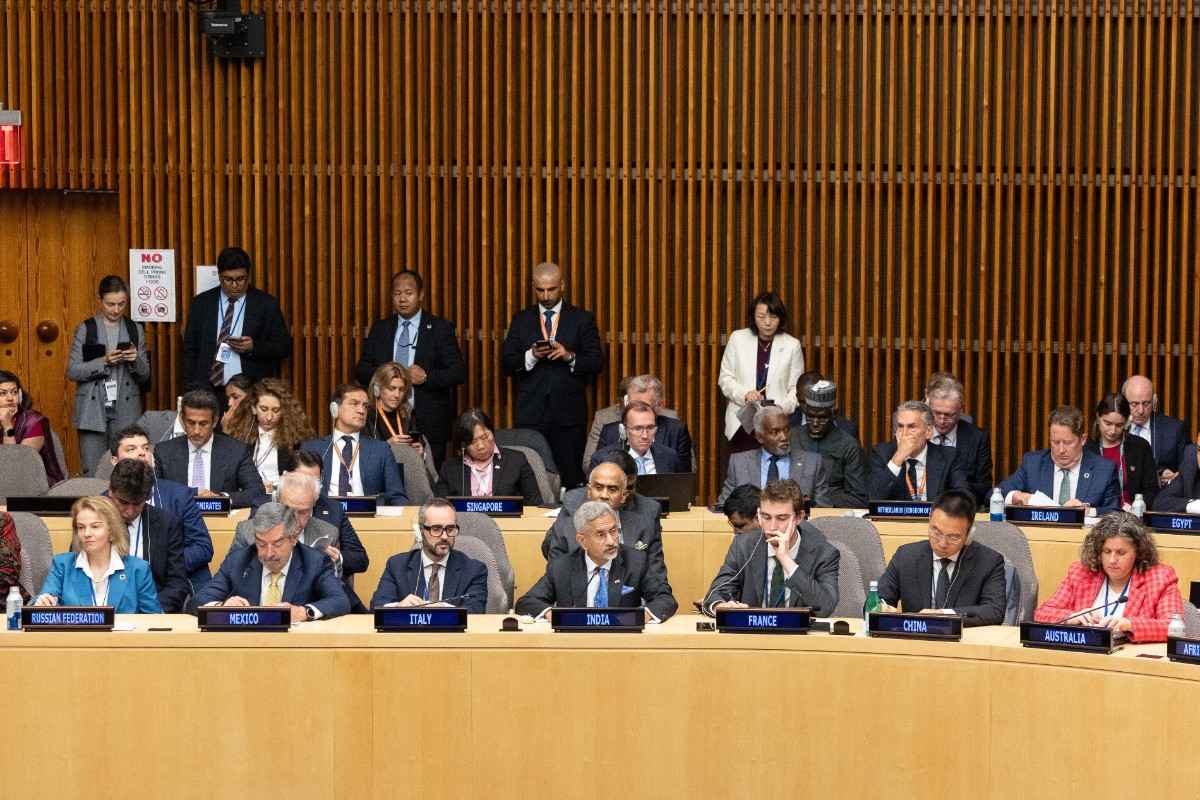
NEW DELHI : External Affairs Minister Dr. S Jaishankar held a series of bilateral meetings with his counterparts from Mexico, Cyprus, and several Pacific Island nations on the sidelines of the 80th session of the United Nations General Assembly, reaffirming India’s commitment to strengthening global partnerships.

Sharing about the meetings in a series of social media posts, Jaishankar said he met Juan Ramon de la Fuente, Secretary of Foreign Affairs of Mexico, on Wednesday (September 24, 2025) in New Delhi, and both sides agreed to “build on our recent exchanges and create a fresh roadmap” to enhance bilateral ties.

He also held talks with Cypriot Foreign Minister Constantinos Kombos during which the two leaders reviewed progress in bilateral relations since Prime Minister Shri Narendra Modi’s visit to the island nation earlier this year.

“Appreciate his insights on developments in Europe. Reaffirmed support for a comprehensive and lasting settlement of the Cyprus Question in accordance with the agreed UN framework and relevant UNSC resolutions,” Mr. Jaishankar said, adding that he looked forward to welcoming Kombos to India soon.

He met Foreign Minister Kalani Kaneko of the Marshall Islands, Foreign Minister Paulson Panapa of Tuvalu, and Minister of State Gustav Aitaro of Palau, holding warm exchanges and reaffirming India’s commitment to engagement with the Pacific region.

Mr. Jaishankar also held talks with Foreign Minister Peter Shanel Agovaka of the Solomon Islands, and had a “good conversation” with Prime Minister Dr Aisake Valu Eke of Tonga.