Home Blog Page 644

Sallaum Lines celebrates Launch of LNG Dual-Fuel Flagship Ocean Breeze in Antwerp

ANTWERP: Sallaum Lines has celebrated the European debut of its first LNG dual-fuel newbuilding, the Ocean Breeze, with a landmark ceremony in the port of Antwerp. The vessel’s launch underscores the company’s commitment to sustainability and marks an important step in its broader fleet expansion strategy.

Event highlights

Natalie Sallaum Sallaum Lines celebrates Launch of LNG Dual-Fuel Flagship Ocean Breeze in Antwerp

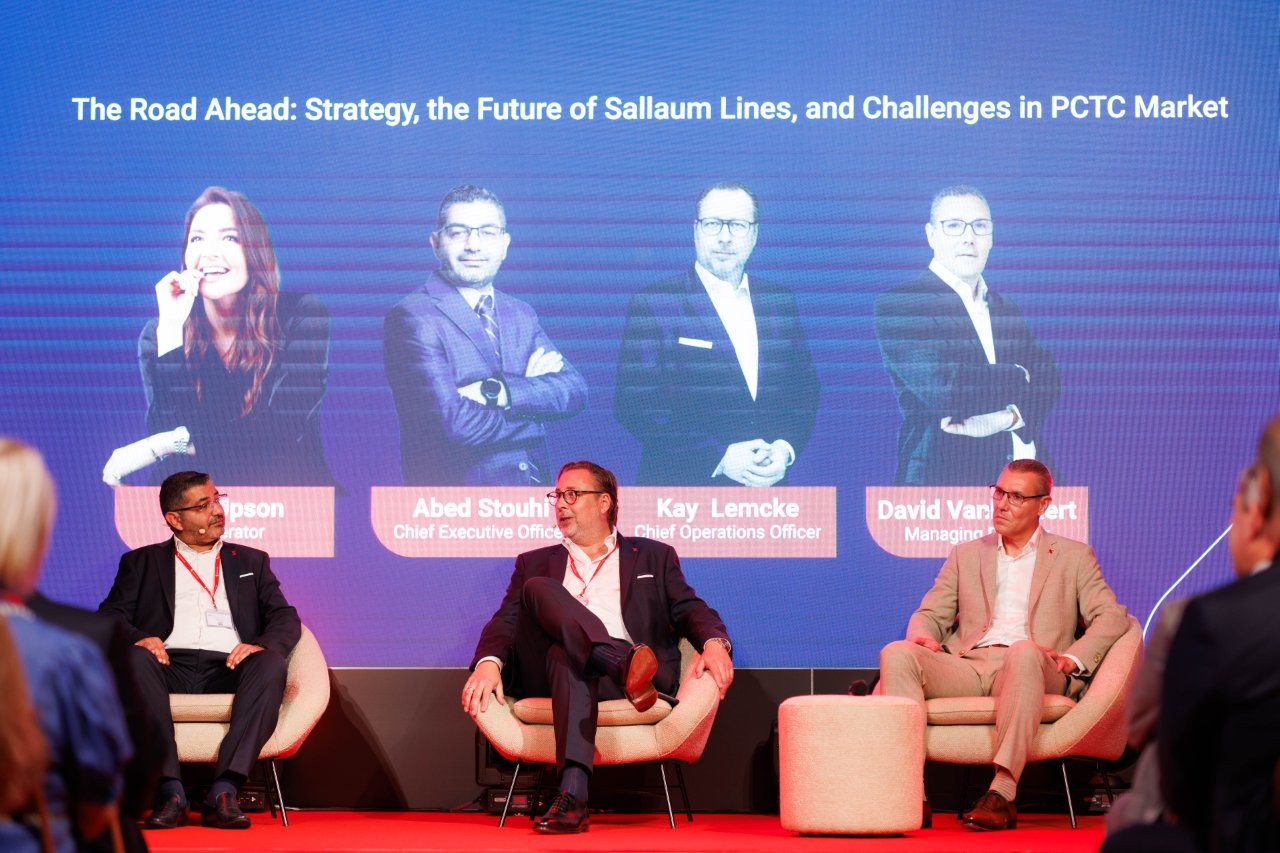
The milestone was marked on 19 September with a celebration at Sallaum Terminal, attended by international guests including government officials, OEM representatives, port executives, and industry partners. Guests toured the Ocean Breeze and the upgraded terminal facilities before joining a ceremony that featured keynote speeches by Ms. Natalie Sallaum and Mr. Johan Klaps, Deputy Mayor for Port and Economy, City of Antwerp. A panel discussion on the future of automotive logistics and an official ribbon-cutting underlined the significance of the occasion for both Sallaum Lines and the wider industry.

A more sustainable supply chain

The Ocean Breeze has capacity for 7,500 CEU and is powered by dual-fuel LNG engines. The vessel delivers substantial reductions in CO₂, NOₓ, and particulate emissions compared to conventional tonnage. An optimized hull design and energy-saving devices further increase efficiency.

“The Ocean Breeze is not just about capacity, but about shaping a cleaner, more resilient supply chain for the decades ahead,” said Chief Relationship Officer Natalie Sallaum of Sallaum Lines. “Our customers demand scale, sustainability, and reliability: the Ocean Breeze proves we can deliver all three. More than a vessel, it represents a new chapter in automotive logistics, preparing us for the next wave of vehicle flows between Asia, Europe, and beyond.”

Antwerp terminal expansion positions Sallaum Lines for growth

To accommodate its growing fleet, Sallaum Terminal Antwerp recently completed a €20 million expansion. Capacity has been increased from 10,000 to 17,000 CEU with a new multi-level Parkhouse and upgraded berth infrastructure, enabling four RoRo vessels to be handled simultaneously. Additional facilities for pre-delivery inspection, breakbulk handling, warehousing, and intermodal connections ensure faster and more reliable services for OEMs.

“The expansion turns Antwerp into the backbone of Sallaum’s European network,” said David Van Ballaert, Managing Director of Sallaum Terminal. “With greater capacity and faster processing, we are giving our partners unmatched efficiency at a time when the automotive supply chain is rapidly evolving.”

Looking ahead

The Ocean Breeze is the first of six LNG dual-fuel PCTCs to join the Sallaum Lines fleet by 2027, adding over 45,000 CEU in capacity and strengthening Sallaum Lines’ position among the top global RoRo carriers. Supported by the expanded Antwerp hub, these vessels are part of Sallaum’s global green logistics network. The company is also preparing to implement shore power connections and solar energy systems at its terminal, reinforcing its 2030 net-zero ambition.

Analysis: China exports shake off US tariff threat to power continued container trade growth

LONDON/SINGAPORE: New analysis by Maritime Strategies International cites emerging evidence that the demand side of the industry will prove better-insulated from tariffs than was expected earlier in the year, while a dynamic where Chinese exporters continue to export their manufactured goods surplus – above all to emerging economies – has significantly buoyed trade so far this year.

In its Q3 Market Report ‘Faltering Freight’, MSI, notes that global container trade trends started 2025 on a strong footing and following an estimated 4.9% year-on-year expansion in the first quarter, world container trade is estimated to have grown by 4.4% yoy in Q2. Further ahead, MSI believes there will be a degree of industrial sector retrenchment in China in the next several years, but for now this dynamic remains supportive of global container trade.

Q2 25 was another strong quarter for Mainlane container trade volumes and was followed by healthy data in July for the Asia-Europe and Transatlantic trades. At the same time, it has been a volatile period on the Transpacific trade, although even here volumes sat nearly 6% higher on a ytd basis through August.

Overall Mainlane headhaul volumes logged a 4.9% yoy expansion in Q2, following a 9.5% yoy expansion in Q1. This is very likely to be the strongest pace of expansion this group of trades will record for some time.

Long-distance non-Mainlane trades have been a key motor of overall containerised trade growth in recent years, and that continued over the first half of 2025. The Transpacific is the main driver of MSI’s forecast that Mainlane headhaul trade will contract in 2026, but slower Asia-Europe growth also contributes.

MSI has actually revised up its projections for next year on the basis of greater assumed resilience to tariffs, but our forecasts for next year come with notable downside risks. As with the Mainlane trades, MSI places fairly heavy emphasis on the competitiveness of Chinese exports here as a key driver.

The chart plots TEU import growth over the first seven months of 2025 in each of Latin America, the Middle East/Subcontinent, Sub-Saharan Africa and Oceania, and compares growth in imports from the Far East with imports from other regions (intra-regional trade is excluded). In each case, growth in imports from the Far East has comfortably outpaced growth in imports from other regions.

“While exports from South-East Asia, as opposed to China, could account for a growing share of this surge in Far East exports, wider evidence from Chinese customs data does suggest that it is China’s export powerhouse that is having an outsized impact,” explains MSI Director Daniel Richards. “Overall, MSI has made upward revisions to our forecast for key non-Mainlane trades in 2025, but otherwise our forecasts are stable and we expect a more muted pace of expansion in 2026.”

The Prime Minister has revived India’s maritime heritage by harnessing global trends, modern trade opportunities, and advanced technology: Gujarat CM

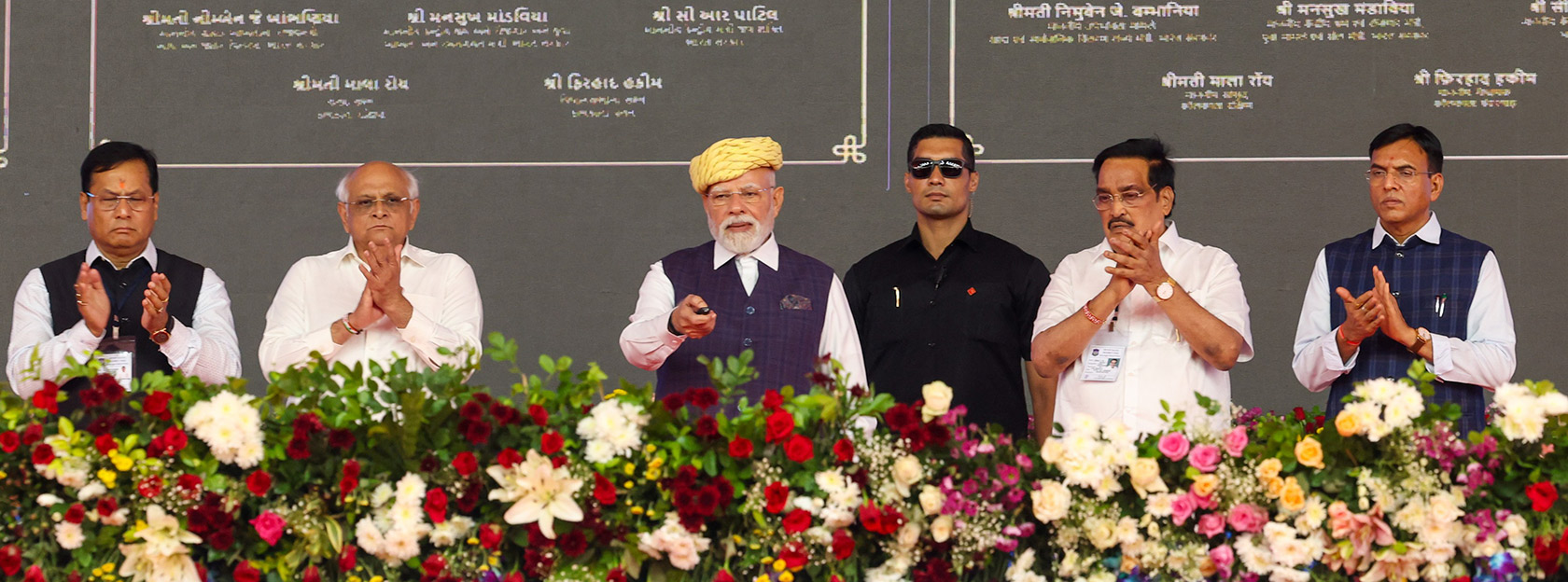
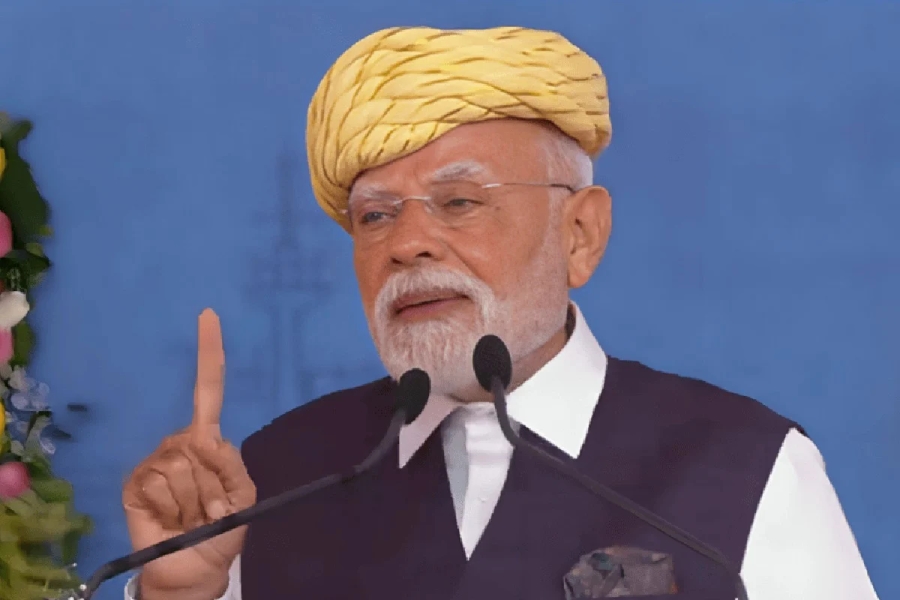
GANDHINAGAR: Prime Minister Shri Narendra Modi inaugurated and laid the foundation stone for development works worth over ₹33,600 crore at the “Samudra Se Samriddhi” programme in Bhavnagar, and dedicated several projects to the nation. He thanked the port and marine sector professionals for the MoU signed yesterday. The PM highlighted that India’s path to prosperity depends on self-reliance, especially through initiatives like “Chip to Ship”. Bhavnagar has now become a hub for turning the country’s maritime potential into growth.

The PM observed that self-reliance is central to the vision of Viksit Bharat 2047 and the solution to the nation’s challenges, with India’s coastline serving as a gateway to prosperity. The Government of India is implementing policy reforms in the marine sector to revive the country’s maritime heritage. The Prime Minister noted that India has no enemies; the real threat is dependence on other nations. Reliance on others weakens the country, while self-reliance ensures peace, stability, and progress. The future of 140 crore citizens must be safeguarded through a ‘Atmanirbhar Bharat’ and the spirit of global brotherhood. The Prime Minister mentioned that realising Atmanirbhar Bharat requires the citizens to embrace the motto Ek Bharat, Shreshtha Bharat. He urged Gujarat’s traders to display “Garv Thi Kaho, Aa Swadeshi che (promote and be proud of domestically made products) stickers to promote domestic products. He emphasised the inauguration of the Mumbai International Cruise Terminal to boost port-based industry and cruise tourism, alongside ongoing port development, shipbuilding, and recycling projects in Gujarat. The PM noted that building Atmanirbhar Bharat requires overcoming challenges and standing strong globally. After independence, restrictive policies forced India to rely on foreign ships, paying 75 billion (₹6 lakh crore) annually. This is changing with the construction of 40 indigenous vessels, including INS Vikrant, using domestic steel and materials, a true example of Atmanirbhar Bharat.

The government has introduced major reforms to reshape maritime trade, including five restructured laws set to transform the port sector. India’s heritage of building large ships is being revived, with large ships now granted infrastructure status, ensuring easier bank loans and interest relief to reduce the burden on shipping companies. The Prime Minister expressed gratitude for the birthday wishes and highlighted Gujarat’s Seva Pakhwada, which collected one lakh blood units and held 30,000 health camps. The recent GST reduction is expected to boost market activity ahead of Diwali. The PM wished citizens for Navratri, recalling Maharaja Krishnakumarsinhji’s legacy.  Highlighting shipbuilding, the Prime Minister called it the foundation of industries, supporting multiple sectors, generating employment, and playing a key role in India’s economic growth. Initiatives like Sagarmala have strengthened India’s maritime trade, with plans to triple its current volume. India is now among the top three global players in this sector. The maritime industry has a multiplier effect, where 100 shipping jobs create 600 related jobs. To build skilled manpower, an ecosystem connecting ITIs, Maritime Universities, the Navy, and NCC has been developed. Over the past 11 years, port capacity has doubled, ship turnaround time has been reduced to under a day, and a deepwater container transhipment port has been launched in Kerala. A new port is under construction in Maharashtra at a cost of ₹75,000 crore. The number of Indian sailors has risen from 1.25 lakh to 3 lakh, advancing the goal of tripling India’s maritime share. India’s rich maritime heritage is reflected in Lothal. Following the Statue of Unity model, the world’s largest maritime museum is being built in lothal to preserve and showcase India’s maritime legacy for future generations.

Chief Minister Shri Bhupendra Patel thanked the Prime Minister for presenting development works worth over ₹33,600 crore in a single day. He noted that when Gujarat became a separate state, its future seemed uncertain due to limited resources. Since Prime Minister Shri Narendra Modi took charge in 2001, Gujarat has made significant progress and emerged as a model for the entire nation. The PM has initiated the development of Gujarat’s coastlines, combining global trends, modern business opportunities, and advanced technology to revive the state’s maritime heritage. These efforts have created new industries near ports, improved import-export facilities, and attracted private investment. Policies like the innovative port policy and shipbuilding have enabled Gujarat to handle 39% of the country’s cargo. Maritime security, shipbuilding, and ship recycling have also progressed, while LNG and container terminals are operational, supported by enhanced road, rail, and logistics networks. Focusing on environmental protection and balanced growth, the PM has prioritised renewable energy. Starting with Charanka Solar Park, this initiative has expanded into the country’s largest Kutch Renewable Energy Park. Gujarat now produces over 60% of India’s renewable energy and leads the nation in wind energy and rooftop solar. In addition, various farmer-focused schemes are transforming the agricultural sector. In Dhordo, globally known for the Rann Utsav, all residential power connections are being solarised. With the new development works launched today, Gujarat is becoming a hub of ‘Ease of Living’ and a guide in building a new India. The Chief Minister urged people to follow the Prime Minister’s call of ‘Vocal for Local’ by adopting indigenous products during the upcoming festivals of Navratri and Diwali.

Union Cabinet Minister for Ports, Shipping and Waterways, Shri Sarbananda Sonowal, in his welcome address, mentioned that Gujarat has given the nation many great leaders. Under the Prime Minister’s leadership, water-based transport is connecting every part of the country, aligning with the mantra of “Sauno Saath, Sauno Vikas”. India has become a major global economy, with reforms and transparency bringing remarkable change in the shipping sector and opening new avenues for investment. He called for progress with the resolve of “Vikas Bhi, Virasat Bhi”.

Present on this occasion were Union Minister for Labour & Employment Dr Mansukh Mandaviya; Minister of State for Ports, Shipping and Waterways Shri Shantanu Thakur; and Minister of State for Food and Public Distribution Smt. Nimuben Bambhaniya; Finance Minister Shri Kanubhai Desai; Health Minister Shri Rushikeshbhai Patel; Agriculture Minister Shri Raghavjibhai Patel; Water Resources and Water Supply Minister Shri Kunvarjibhai Bavaliya; Social Justice and Empowerment Minister Smt. Bhanuben Babariya; Minister of State for Fisheries and Animal Husbandry, Shri Parshottambhai Solanki; MLAs Sushri Sejalben Pandya; Shri Jitubhai Vaghani; Shri Shambhuprasad Tundiya; Shri Shivabhai Gohil; Shri Bhikhabhai Baraiya; Shri Gautambhai Chauhan; Dr. Pradyuman Vaja; and other MLAs of Saurashtra. Also in attendance were Mayor Shri Bharatbhai Barad; District Panchayat President Sushri Raiyaben Miyani; Former MP Shri Rajendrasinh Rana; leaders Shri Digvijaysinh Gohil; Shri Kumarbhai Shah; Shri Rajubhai Rabadiya; Shri Rajivbhai Pandya; along with officials, citizens from across the state, and the people of Bhavnagar.

India pays around $75 billion or around Rs 6 lakh crores to foreign shipping companies as a rent: PM

BHAVNAGAR : Prime Minister Shri Narendra Modi highlighted a startling fact about India’s dependence on foreign shipping during his address at the ‘Samudra se Samriddhi’ event in Bhavnagar on Saturday. Speaking at the inauguration and foundation-laying of development projects worth over Rs 34,200 crore, he stressed the need for India to become self-reliant in the maritime sector.

Dependence costs nation dearly
PM Modi pointed out that India currently pays nearly $75 billion, or around Rs 6 lakh crore, every year to foreign shipping companies. “This amount is almost equal to India’s defence budget,” he said, emphasising that decades of reliance on foreign ships have not only drained national resources but also created millions of jobs abroad. The prime minister called this dependence a major obstacle to India’s growth and self-respect.

PM Modi traced India’s proud maritime history, noting that over fifty years ago, Indian ships handled over 40 per cent of the country’s trade. Misguided policies, he said, allowed this share to fall to just 5 per cent, while the rest of the trade relied on foreign vessels.

PM Modi announced that next-generation reforms are underway to revive shipbuilding, simplify port operations, and make India a major maritime power by 2047.

Major reforms to boost self-reliance
Under new initiatives, India is implementing ‘One Nation, One Document’ and ‘One Nation, One Port’ processes to streamline trade. Large ships have been given infrastructure status, easing financing and boosting domestic shipbuilding.

Over Rs 70,000 crore will be invested in schemes to modernise shipyards, enhance technology, and strengthen design capabilities. The prime minister underscored the “Mother of All Industries” effect, where shipbuilding fuels growth across steel, machinery, electronics, textiles, and IT sectors.

On the other hand, PM Modi inaugurated the Mumbai International Cruise Terminal and laid the foundation for multiple projects at major ports, including Paradip, Kandla, Chennai, and Ennore.

He also announced the construction of a world-class maritime museum at Lothal and highlighted Gujarat’s key role, with its ports handling 40 per cent of India’s sea cargo. These efforts, he said, will create millions of jobs and triple India’s share in global maritime trade by 2047.

Sinotrans and Abrao Group celebrates Two Years of Partnership in India with Industry Leaders in Chennai

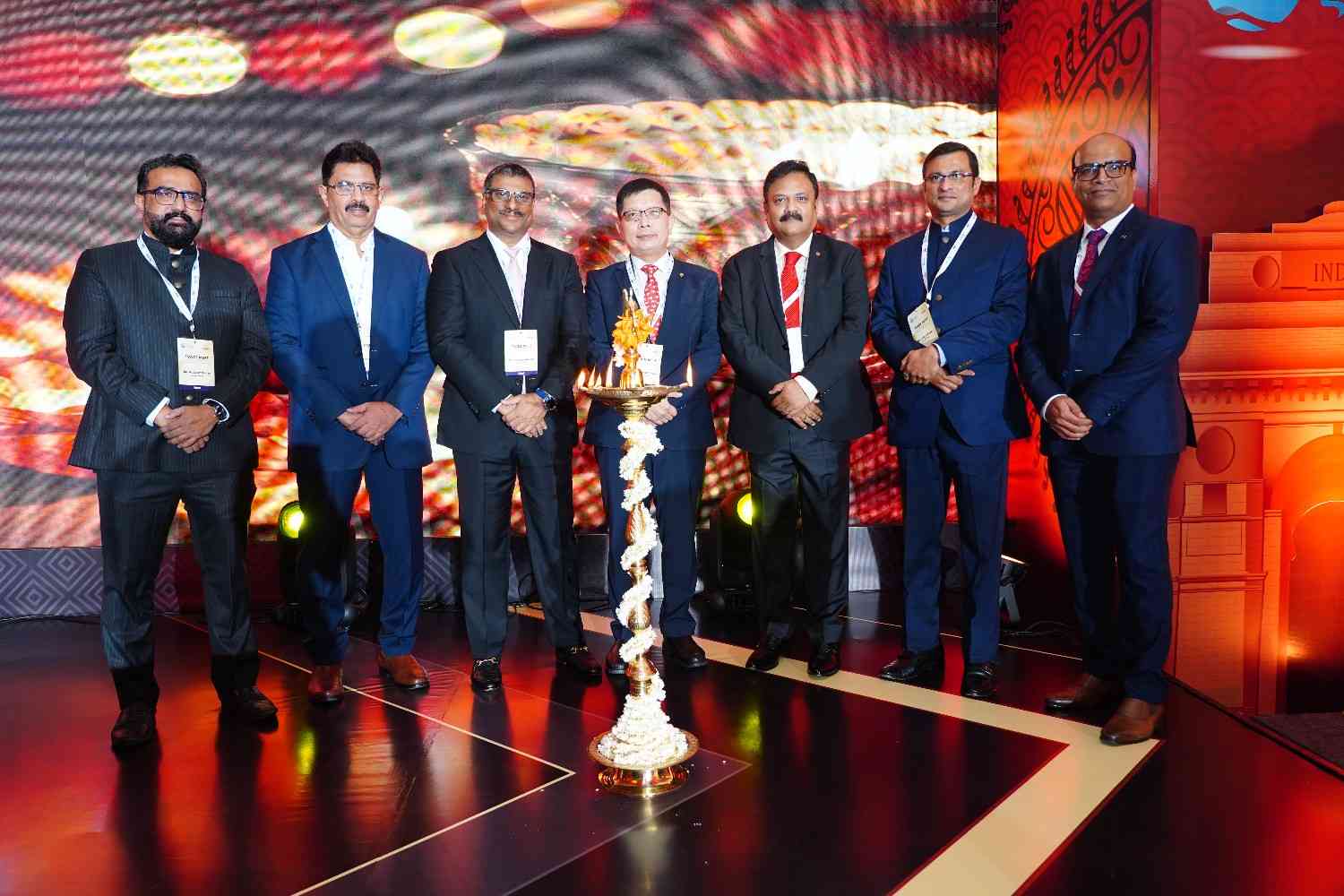
CHENNAI: The logistics industry gathered in strength as Sinolines (Sinotrans Container Lines), one of China’s leading integrated logistics providers, celebrated its second anniversary in India in partnership with Abrao Group, a company with nearly 89 years of legacy in Indian shipping.

The celebration, hosted in Chennai, drew more than 200 distinguished guests, including senior industry leaders, dignitaries, associations, and customers. The evening highlighted the growing significance of India-China trade and the role of trusted partnerships in shaping resilient supply chains for the future.

Mr. George Abrao and Mr. Lenny Abrao, who carry forward the Abrao Group’s legacy as one of the most respected names in Indian shipping, Mr. Patrick Chow, DGM Network Planning Dept of Sinolines & Mr. Devi Prasad Chief Owner’s Rep for India represented the global strength of Sinotrans, together reflected the spirit of collaboration between two organizations built on trust, expertise, and a shared vision for logistics excellence.

Speaking at the event, Mr. Lenny Abrao, Managing Director of Abrao Group, said:
“This milestone is more than a celebration of time. It showcases the journey of trust that connects our two companies, and the opportunities we are creating for customers across India. The bond between Sinotrans and Abrao Group reflects our belief that logistics is not just about movement of cargo, but about building futures.”

Mr. Patrick Chow added:
“Two years in India have shown us the strength of working hand in hand with Abrao Group. Together, we are closer to our customers and better prepared to serve the industries that are shaping tomorrow.”

Adding to Above Mr. Devi Prasad emphasised the growth of SINOLINES in South East of India over the past two years which has created a reliable brand in the trade.

CF 06666 1 Sinotrans and Abrao Group celebrates Two Years of Partnership in India with Industry Leaders in Chennai

The evening featured addresses, felicitation of distinguished guests, and cultural moments that celebrated the shared heritage of India and China. For the logistics fraternity, the event stood out as a reaffirmation that partnerships can define how supply chains evolve in one of the world’s most dynamic trade corridors.

As Sinotrans and Abrao Group step into the next chapter of their partnership, the industry looks forward to a future where reliability, speed, and collaboration drive growth for businesses across India and beyond.

About Abrao Group
Established nearly 89 years ago, Abrao Group is among India’s most trusted names in shipping and logistics. With deep expertise in agency representation, NVOCC, freight forwarding, and integrated logistics solutions, the Group has a strong presence in Indian shipping.

About Sinotrans
Sinotrans is one of China’s leading logistics companies with a global presence, offering shipping, freight forwarding, warehousing, and end-to-end supply chain management solutions. Sinolines is the container shipping division of Sinotrans.

Memoir of Maritime Legend Vaishnav Puri launched: Celebrating the Visionary Who Shaped India’s Shipping Industry and Global Trade Ties

MUMBAI: The Memoir of Maritime Legend Vaishnav Puri has been launched recently to make the readers travel through the personal & professional  journey of a  shipping doyen who molded India’s maritime scene while cementing the country’s international trade relations.

book 2 1 Memoir of Maritime Legend Vaishnav Puri launched: Celebrating the Visionary Who Shaped India’s Shipping Industry and Global Trade Ties

Mr. Puri is known globally for his achievements and contributions towards India’s maritime trade. He played a key role in reshaping the JNPT port, which was written off by the trade  in 1991 due to non acceptance by the importers & exporters. He was also instrumental in launching the first direct & the then fastest  liner service from India to the USA. At one stage during the early 2000s, he was responsible for handling the largest  container volumes in the country,(over 20 per cent of the total containerized traffic) under his able Leadership in India for some of the largest liner principals of the world .

Mr Puri also represented the government of Singapore in Mumbai for about 2 decades as their honorary trade representative and helped the trade grow phenomenally between both India and Singapore.
The biography is more than an  acknowledgment  of Vaishnav Puri’s achievements, underscoring as evidence of his vision, immense contribution to this  industry . His story showcases the rise of India’s shipping industry along with the power of integrity,  determination, hard work ,  family, and purpose in building a sustained legacy.

Chennai Port Authority to levy ₹30 per TEU parking charges at private terminals from October 1

CHENNAI : The Chennai Port Authority has directed the two private container terminals of the Chennai port to collect ₹30 per TEU (plus applicable GST) as parking charges from the shipping lines for all containers (excluding Transhipment Containers, Restow Containers & Rail-bound Containers) handled at the respective terminals from October 1.

The two private container terminals are Chennai Container Terminal Pvt Ltd of DP World, Dubai and Chennai International Terminal Pvt Ltd of PSA Singapore.

Port users/trade fraternity are requested to take note of the above and give wide publicity among their members. Co-operation from the trade is highly solicited to ensure seamless movement of trailers inside the port roads, says a notice issued by ChPA’s traffic manager.

VOC Port sets New Record with 20 Million Tonne Cargo Milestone

TUTICORIN: V.O. Chidambaranar (VOC) Port has reached a historic operational landmark by handling 20 million tonnes of cargo, achieving the feat on 21 September 2025—the fastest in the port’s history.

According to port officials, the achievement reflects a steady upward trajectory, with an overall growth of 0.61% in total cargo and a 6.93% increase in container traffic compared to the same period last year.

The record underscores VOC Port’s expanding infrastructure and improved operational systems, which have been instrumental in driving efficiency and capacity. Backed by robust support from the trade community and stakeholders, the port continues to strengthen its position as a key maritime gateway for southern India.

“With streamlined operations and continuous upgrades, VOC Port is setting new benchmarks in cargo handling and maritime excellence,” a port spokesperson said.

The milestone reaffirms the port’s role as a critical hub in India’s maritime network, enhancing connectivity for international trade and supporting the region’s economic growth.

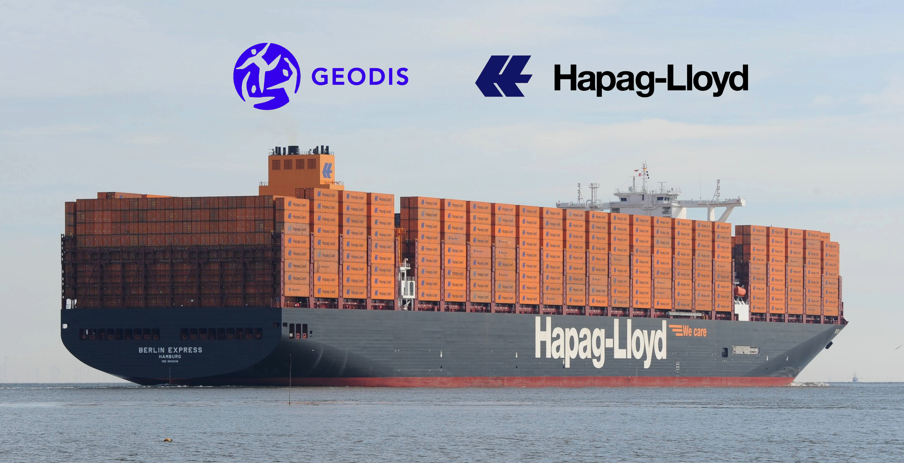
GEODIS and Hapag-Lloyd strengthen their digital collaboration with the deployment of a real-time solution for integrating their rates

LEVALLOIS PERRET : GEODIS, a global leader in transport and logistics, and Hapag-Lloyd, one of the world’s leading container shipping companies, announce a significant milestone in their joint digital integration, aimed at accelerating and securing the exchange of rates and service data between their two organizations.

At the core of this collaboration is a Contract API (Application Programming Interface) — a direct, system-to-system digital connection between Hapag-Lloyd’s pricing platform and GEODIS’ global rate database. This interface enables the fully automated and real-time transmission of contracted rates, surcharges, transit times, and service options.

Thanks to this new integration, GEODIS now benefits from instant access to over 75% more Hapag-Lloyd rates than before, significantly reducing manual input and improving operational accuracy. The transition from a processing time of up to five days to instant rate availability marks a major improvement in responsiveness and efficiency across the supply chain.

Commenting on this development, Jan Naumann, Head of Export Trade Europe, Global Ocean Freight at GEODIS, said: “This implementation is more than a technical success: it demonstrates how digital collaboration benefits our customers. We provide them with faster and more accurate data flows, as well as smoother operations, while enhancing our efficiency and responsiveness. It also reflects our shared ambition with Hapag-Lloyd to develop smarter, faster, and more transparent logistics processes through digital innovation.”

Arne Zass, Director Digital Transformation & Automation at Hapag-Lloyd added: “Hapag-Lloyd is delighted to recognize the GEODIS team for their outstanding collaboration on our recent API integration. Their fast execution, expertise, and visionary approach to digitalization have set a new standard for seamless connectivity and customer experience. We truly appreciate the commitment and positive energy the GEODIS team brings to advancing innovative and sustainable logistics solutions together.”

Piyush Goyal launches IPRS 3.0 to benchmark industrial parks and boost Make in India initiative

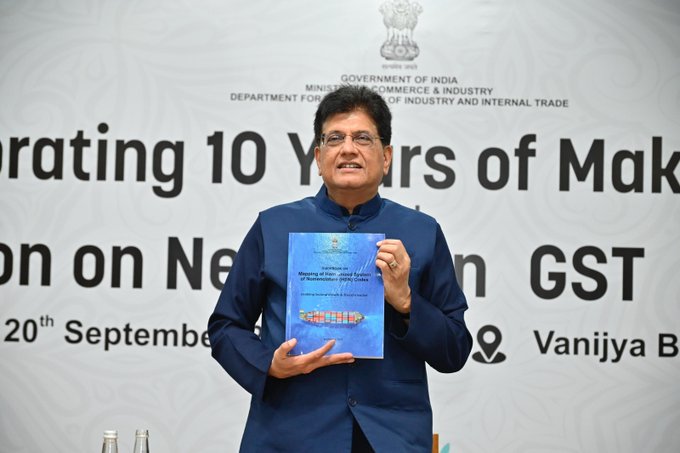
NEW DELHI : Union Minister of Commerce and Industry, Shri Piyush Goyal, launched the Industrial Park Rating System (IPRS) 3.0 in New Delhi to perform the decade-long celebrations of “Make in India”. Developed by the Department for Promotion of Industry and Internal Trade (DPIIT) with support from the Asian Development Bank (ADB), the initiative aims to further strengthen India’s industrial ecosystem and enhance the competitiveness of industrial infrastructure.

Shri Goyal highlighted that the Government is actively developing 20 plug-and-play industrial parks and smart cities under NICDC, with four already completed, four under active construction, and the remaining at various stages of bidding and tendering. He added that the launch of IPRS 3.0 will help assess and benchmark facilities, infrastructure, and competitiveness of industrial parks across the country. The initiative will provide stakeholders with reliable data, encourage best practices, and support the creation of world-class infrastructure, thereby strengthening the Make in India programme and enhancing India’s global competitiveness.

Building on the pilot phase in 2018 and IPRS 2.0 in 2021, the third edition introduces an expanded framework with new parameters, including sustainability, green infrastructure, logistics connectivity, digitalization, skill linkages, and enhanced tenant feedback.

Under IPRS 3.0, industrial parks will be benchmarked and categorized as Leaders, Challengers, and Aspirers based on their performance across key indicators. This will provide investors with transparent and credible information, foster healthy competition among States and Union Territories, and guide policymakers in designing targeted interventions.

For States and UTs, the initiative offers an opportunity to showcase best-performing parks, identify gaps for improvement, attract investments, generate employment, and strengthen their industrial ecosystem. The exercise is expected to make India a more sustainable, inclusive, and globally competitive investment destination.