Home Blog Page 665

COLP48 Day 1: Global Experts address Triple Planetary Crisis and Ocean Infrastructure Vulnerabilities

International Judges, Diplomats, and Scholars Examine Urgent Challenges Facing Indian Ocean Region

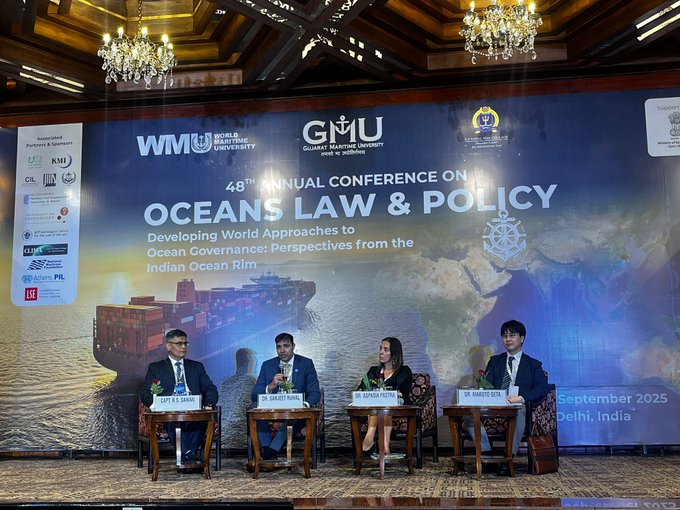
NEW DELHI : The 48th Annual Conference on Oceans Law & Policy (COLP48) entered its first day of technical deliberations on Wednesday at The Ashok Hotel, New Delhi. Hosted by Gujarat Maritime University (GMU), the academic sessions brought together international judges, diplomats, scholars, and young researchers to explore urgent challenges facing the Indian Ocean region under the conference theme “Developing World Approaches to Ocean Governance: Perspectives from the Indian Ocean Rim.“

48COLP4 1 COLP48 Day 1: Global Experts address Triple Planetary Crisis and Ocean Infrastructure Vulnerabilities

Opening Keynote and Context Setting

The day commenced with introductory remarks from Prof. Dr. Manoj Kumar Sinha, President, Indian Society of International Law, who provided historical context by recalling Arvid Pardo’s historic 1967 UN speech, noting that many of the same concerns—peace at sea, prevention of pollution, and protection of ocean resources—remain pressing yesterday.

Prof. Sinha traced the evolution of the law of the sea, from the 1958 Geneva Conventions and the 1971 seabed declaration to the landmark adoption of UNCLOS in 1982 after a decade of negotiations. He emphasized India’s strong commitment to implementing UNCLOS and its engagement with the recent Biodiversity Beyond National Jurisdiction (BBNJ) treaty.

Highlighting the developing world’s perspective, he underscored the BBNJ’s focus on establishing a just and equitable international economic order, South-South cooperation, and technology transfer. He stressed key principles including the polluter-pays rule, precautionary approach, equity, and the common heritage of mankind, which align with Indian judicial practice. Looking ahead, he urged greater investment in knowledge capital and academic capacity building in maritime law, covering areas such as seabed mining, marine technology, and artificial intelligence applications.

Judicial Perspective on BBNJ Agreement

Judge Neeru Chadha, Vice President of the International Tribunal for the Law of the Sea, delivered a keynote address virtually, reflecting on the significance of the recently adopted BBNJ Agreement. “The adoption of the BBNJ Agreement is a reminder that law must keep pace with science and global challenges. Forums like COLP help us interpret and implement these changes in ways that matter for people and nations,” she observed.

Triple Planetary Crisis Takes Centre Stage

The first plenary session focused on the triple planetary crisis of climate change, biodiversity loss, and marine pollution, setting the stage for wide-ranging discussions. A notable insight emerged from the deliberations: “The idea of a Blue Economy is not enough, we must now think in terms of Blue Resilience,” highlighting the need to adapt to rapidly changing oceanic realities

Critical Ocean Infrastructure Vulnerabilities Exposed

The session on Interests & Infrastructure in the Indian Ocean underscored growing vulnerabilities of critical ocean infrastructure, both visible and invisible:

Undersea Cable Security: Tomoyuki Yoshida highlighted the critical dependence of global communications on undersea cables, which carry 98% of internet traffic, and warned of increasing disruptions citing cases in Finland and Taiwan. He called for stronger domestic laws, a global convention against sabotage, and enhanced surveillance and resilience measures.

Energy Pipeline Protection: Jeonghee Lim addressed parallel risks to undersea cables and energy pipelines, noting the rise of “grey zone” strategies and hybrid threats. He urged greater international cooperation, legal development, and crisis preparedness to address these emerging security challenges.

Vessel Traffic Management: Sonali Mukherjee focused on Vessel Traffic Management Systems (VTMS), stressing their crucial role in navigation safety, accident prevention, and sustainability. She identified challenges including cyber risks, outdated technology, and skill shortages, advocating for modernization, AI integration, and enhanced global cooperation to secure India’s maritime domain.

International Trade and Shipping: Legal and Environmental Dimensions

The session on International Trade & Shipping brought together diverse perspectives on legal, scientific, and environmental aspects of ocean governance:

Legal Framework Foundation: Dr. James J. Nedumpara outlined the international legal framework, emphasizing UNCLOS as the foundation for agreements like BBNJ and fisheries subsidies.

He highlighted India’s perspective on challenges including IUU (Illegal, Unreported and Unregulated) fishing, marine pollution, and habitat loss, noting that sustainable ocean use requires balancing livelihood subsidies with conservation imperatives.

Marine Scientific Equipment Regulation: Dr. Eka Higuchi examined marine scientific facilities and equipment under the law of the sea, referencing recent Japanese cases involving buoys deployed in sensitive waters. She clarified how UNCLOS Articles 258-262 govern scientific installations, while noting legal and operational gaps in classification and regulation.

Shipping and Climate Nexus: Dr. Beatriz Martinez Romero focused on the intersection of shipping and climate change, underlining that shipping accounts for approximately 3% of global greenhouse gas emissions. She reviewed the IMO’s revised 2023 decarbonization strategy aiming for net zero emissions by mid-century. Drawing on ITLOS and ICJ advisory opinions, she stressed that marine GHG emissions constitute pollution, framing states’ obligations under international law and warning that weak shipping regulations could incur state responsibility.

Regional Cooperation and Strategic Balance
The day concluded with a keynote address by Charlie Garnjana-Goonchorn, Director of Legal Affairs, Ministry of Foreign Affairs of Thailand, who synthesized the day’s debates. “The Indian Ocean is not only a strategic space, but also a community of nations. It is through cooperation that we can balance security, development, and sustainability,” he emphasized.

Looking Ahead
With its combination of high-level insights and forward-looking debates, Day One of COLP48 highlighted the urgency of collective action in addressing ocean governance challenges. The sessions underscored the need for enhanced international cooperation, technological innovation, and adaptive governance frameworks to address the complex challenges facing the Indian Ocean region.

The conference continues on September 11 with additional technical sessions covering maritime boundaries, dispute settlement, and future ocean governance frameworks, culminating in a valedictory address by Hon’ble Minister Shri Sarbananda Sonowal, Ministry of Ports, Shipping and Waterways, Government of India.
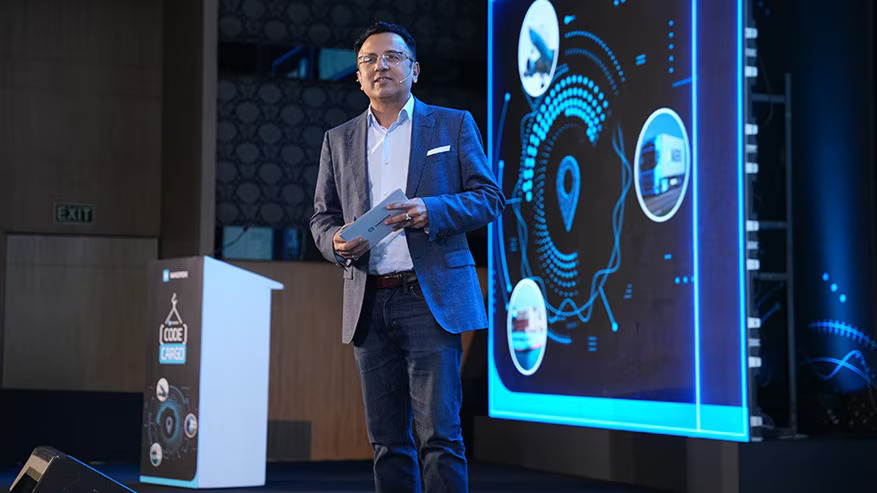
Maersk showcases innovations and technologies that are shaping the future of logistics at ‘Code Cargo 2025’

BENGALURU: A.P. Moller – Maersk (Maersk), an integrated logistics company, brought together its global technology leaders, engineers, and industry stakeholders on Wednesday at its flagship technology showcase, Code Cargo 2025, held in Bengaluru. The event offered a powerful demonstration of how Maersk is redefining global logistics through advanced technologies such as artificial intelligence, data science, and platform engineering, with India playing a central role in that transformation.

Maersk code cargo Maersk showcases innovations and technologies that are shaping the future of logistics at ‘Code Cargo 2025’

One of the key innovations on display at Code Cargo was Star Connect, Maersk’s AI-powered fleet energy efficiency platform. Built using edge computing, Star Connect processes over 2.5 billion IoT data points in real time to enable smarter, on-the-fly decision-making during voyages. By applying machine learning models at the edge, the platform forecasts fuel consumption, wind resistance on cargo, and risks like parametric roll, allowing operators to make informed course and speed adjustments within minutes. This enables greater operational safety, improves fuel efficiency, and plays a key role in monitoring emissions and supporting Maersk’s long-term decarbonisation ambitions.

“India is not just a growth market for Maersk; it is a vital part of the brain and backbone of our global digital transformation. So many of the innovations and technologies shaping the future of global trade are being coded in India. Our Technology Centre in Bengaluru, in particular, plays a pivotal role in designing the platforms, the algorithms, and the customer experiences that power supply chains across 130 countries we operate in,” said Navneet Kapoor, Executive Vice President and Chief Technology & Information Officer, A.P. Moller – Maersk.

Maersk employs over 20,000 Indians, the largest representation from any nationality within the company. This includes approximately 2,900 technology professionals based across the Maersk offices in Bengaluru, Pune, Mumbai, and Chennai. The Technology Centre, headquartered in Bengaluru, is the core innovation engine, delivering digital capabilities across software development, architecture, cybersecurity, data science, and AI, securing over 10+ Artificial Intelligence patents, and launching platforms that enable real-time cargo visibility and decision-making for global customers.

Maersk Resham Sahi Maersk showcases innovations and technologies that are shaping the future of logistics at ‘Code Cargo 2025’
 Ms. Resham Sahi, Senior Vice President – Technology, and Head of Maersk Technology Centre, Bengaluru

“Technology at Maersk is not just about building tools—it’s about building capabilities that can scale globally, simplify logistics for our customers and most importantly, create ways to address uncertainties and disruptions impacting global supply chains. From AI-led solutions to enterprise architecture, our teams in India are shaping the digital foundation of our business,” said Resham Sahi, Senior Vice President – Technology, and Head of Maersk Technology Centre, Bengaluru. “Almost half of our global tech talent is based in India. And we are proud that some of our most advanced solutions, whether in real-time visibility, smart warehousing, or customer automation, are being conceived, built, and scaled from India.”

Maersk’s robust integrated logistics network in India enables global trade in and out of the country. The company operates across 15 ports, 26 warehouses covering over 350,000 square metres, and reaches over 80% of India’s pin codes through its distribution network. Maersk handles nearly 1 million containers annually in and out of the country, executing over 7,000 rail moves per week. The company also operates customs facilities in 55 locations and provides air freight services from 10 airports. With a strong local presence, Maersk is working to reduce logistics costs for Indian businesses and support the country’s ambition to become a global manufacturing and export powerhouse.

With Code Cargo 2025, Maersk has once again underscored that the future of global trade will not just be moved, but also coded, engineered, and optimised by tech talent across India.

India is the world’s fastest growing large economy, committed to inclusive, sustainable and resilient growth: Piyush Goyal

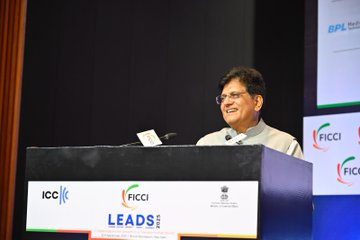
NEW DELHI : India’s remarkable journey as the world’s fastest growing large economy and reaffirmed the country’s commitment to inclusive, sustainable, and resilient growth, Union Minister of Commerce and Industry, Shri Piyush Goyal said while delivering the Keynote Address at FICCI Leads 2025 on Wednesday.

The Minister said it is very important that different countries come together, work together, stay together, and grow together. He lauded FICCI’s leadership in driving global dialogue on leadership, excellence, adaptability, diversity, and sustainability. He noted that sustainability lies at the centre of India’s development agenda and is intrinsic to the Indian way of life, perfectly aligned with the country’s aspirations of becoming a Viksit Bharat by 2047.

Shri Goyal emphasized that India’s growth story is built on three pillars. First, India has consistently turned crises into opportunities. From Y2K to the global financial crisis to COVID-19, India has shown resilience. During COVID-19, India overcame adversity, administered 2.5 billion vaccines, ensured no citizen died of starvation, and emerged as the fastest growing large economy.

Second, India’s growth is inclusive. In the last 10 years, 40 million families have received free homes by the Central government with water, electricity, digital connectivity, cooking gas, and road access. This has transformed lives and uplifted communities, with 250 million Indians lifted out of poverty. Rising aspirations, incomes, and access to infrastructure are powering inclusive growth.

Third, action-oriented leadership under Prime Minister Shri Narendra Modi has enabled India to engage with the world from a position of strength and self-confidence. India has successfully concluded Free Trade Agreements (FTAs) with Mauritius, the UAE, Australia and the EFTA nations. The FTA with the UAE was negotiated in record time, while the Australia agreement has already seen its first tranche implemented, with the second expected soon. The EFTA agreement commits member nations to invest USD 100 billion in India over the next 15 years, creating one million direct jobs.

India has also concluded a robust, fair and balanced FTA with the United Kingdom last month. Negotiations with the European Union are at an advanced stage, and agreements with Oman are expected to be finalised soon. Active dialogues are underway with the United States, New Zealand, Qatar, Chile, Peru and several other nations, which will be expedited in the coming months. Collectively, these agreements are expected to bring in at least USD 500 billion of investments, roughly equivalent to over 45 lakh crore rupees, across innovation, manufacturing and services.

The Minister highlighted that such agreements, combined with domestic reforms, are creating a dynamic ecosystem for growth, entrepreneurship and innovation. He noted that India’s stock markets have been among the best performing globally over the last two decades, reflecting global confidence in India’s economic fundamentals. He added that India’s investment in R&D and innovation, amounting to USD 12 billion, delivers outcomes comparable to over USD 100 billion worth of work in Europe or the UK, underscoring India’s cost efficiency and talent strength. These factors are attracting global partners to look towards India as a reliable, competitive and forward-looking investment destination.

Shri Goyal also stressed that sustainability is at the core of India’s ethos, not something adopted externally but ingrained in the nation’s cultural DNA. He recalled India’s reverence for rivers, forests, and mountains, noting that when this philosophy is combined with cutting-edge technologies like AI, quantum computing, and machine learning, it multiplies India’s growth potential.

Referring to India’s robust democratic framework, safe investment climate, and young aspirational population, Shri Goyal said that India is set to remain the world’s fastest growing large economy for decades to come. He added that India’s growth story is not only about domestic progress but also about contributing to global prosperity, free trade, and higher quality of life for people around the world.

Concluding his address, the Minister said that the future is ours to capture and lead, driven by resilience, inclusivity, and global partnerships. He expressed confidence that initiatives like FICCI Leads will continue to inspire collaboration and innovation for a better world.

AI Technology and innovation to drive India’s growth story: Piyush Goyal at 58th Convocation of IIFT

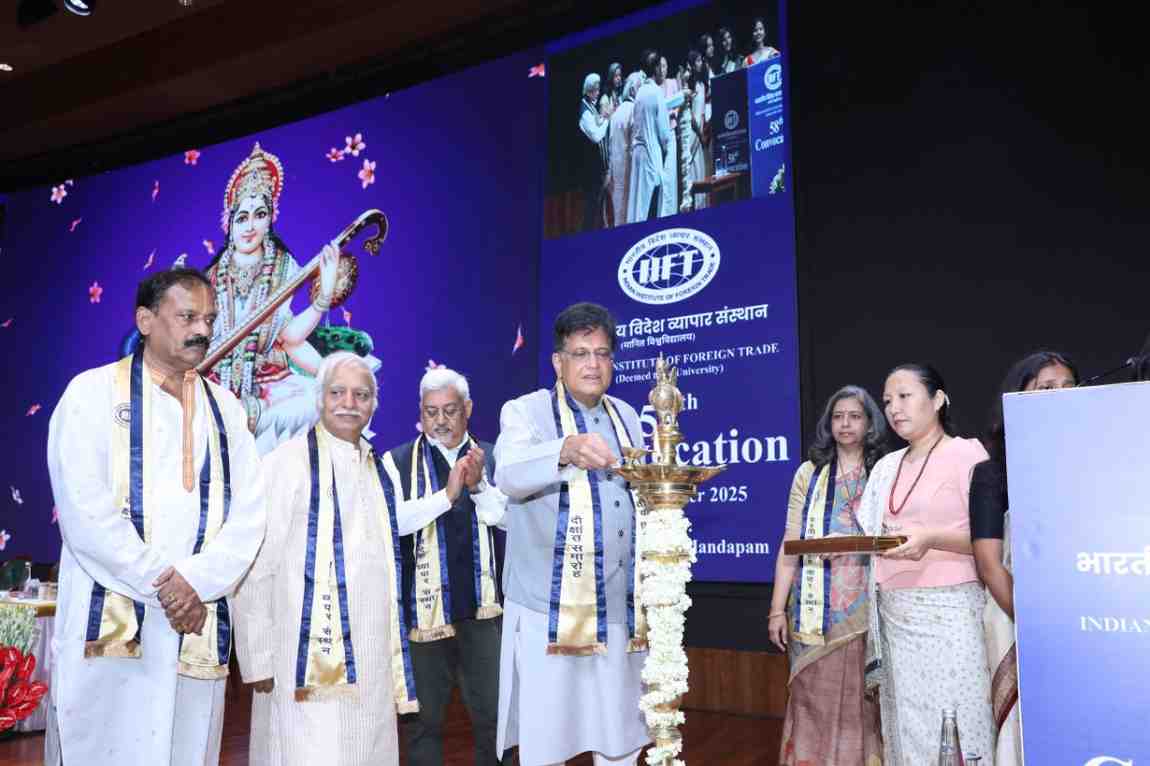
NEW DELHI : Artificial Intelligence, technology and innovation will be the driving forces of India’s growth story, said the Union Commerce and Industry Minister,Shri Piyush Goyal while addressing the 58th Convocation Ceremony of the Indian Institute of Foreign Trade (IIFT), here on Wednesday. Congratulating the graduating class of 2025, the Minister lauded their achievements and called upon them to harness their skills, agility, and vision to lead the country towards Viksit Bharat 2047.

India’s destiny lies in the capable hands of its youth, said the Commerce and Industry Minister. He described the occasion as a day of celebration, pride, and reflection, noting that graduation marks the moment when students step into the real world, facing challenges and opportunities beyond textbooks and theory.

The Minister said that the world today is witnessing volatility, uncertainty, complexity, and ambiguity — the “VUCA” times. He noted that India’s youth represent the nation’s ability to be bold, agile, visionary, and capable of execution, essential qualities to lead the country towards Viksit Bharat 2047.

Extending his congratulations to the 709 graduating students, the Minister said that while awards and honours are an encouragement, life offers everyone ample opportunities to prove their worth through hard work and excellence. He expressed confidence that every student graduating from IIFT would emerge as a winner in the real world.

Highlighting the economic vision of the Government under Prime Minister Shri Narendra Modi, the Minister said it is rooted in building a developed nation — a Viksit Bharat — ensuring prosperity for every child born in the country. The focus, he said, is on resilience, sustainability, inclusiveness, and innovation-driven growth, with an aim to improve quality of life, bridge the rural-urban divide, reduce poverty, and promote ease of doing business and ease of living.

Shri Goyal underlined the role of technology and artificial intelligence in driving India’s growth story, pointing out the transformative potential of AI, robotics, machine learning, quantum computing, and innovation across key sectors such as manufacturing, agriculture, healthcare, and education. Coupled with India’s large pool of 2.3 million STEM graduates every year, he said, these advancements can reduce dependence on foreign technology and empower industries and services while uplifting those at the bottom of the pyramid.

Recounting his experience of running a skill development centre in Mumbai with CII, NSDC, Kyndryl, and IBM, the Minister shared how students from modest backgrounds quickly adapted to new-age technologies such as cybersecurity, reflecting India’s innate ability to embrace knowledge and innovation. He emphasized that India’s youthful population — with an average age of 28.4 years — is its greatest strength in the journey from a $4 trillion economy to one worth $30–35 trillion.

Shri Goyal reiterated Prime Minister Shri Narendra Modi’s vision of self-reliance in technology — from operating systems to cybersecurity and deep tech to artificial intelligence. He said India must secure primacy in technology globally and make the nation proud.

Citing India’s strong macroeconomic fundamentals, low inflation, and fastest-growing large economy status, Shri Goyal highlighted the increasing global interest in India, with over 2,500 international companies already present in the country. He said this unprecedented opportunity places the destiny of the nation in the capable hands of the youth.

Encouraging the graduating students, the Minister urged them to continue learning, reskilling, and engaging with global megatrends, while nurturing the lifelong friendships built at IIFT. He called upon them to dream big, aspire beyond the ordinary, and work smart to capture opportunities.

The Minister concluded by asserting that the progress of each graduate would also mean progress for Bharat, ultimately leading the country to its rightful place in the global order. He assured the graduating class that there is no power on earth that can stop them from achieving their dreams and making their families, institute, and nation proud.

Chancellor, IIFT and Secretary, Department of Commerce, Shri Sunil Barthwal presided over the function. The Commerce Secretary, in his address, underlined IIFT’s pivotal role in nurturing leaders who are prepared to navigate the complexities of global trade and business in a rapidly changing world. He emphasized that resilience, adaptability, and ethical leadership will be the defining qualities that shape India’s continued success on the international stage. Speaking about the opportunities ahead, he urged students to align their aspirations with the nation’s larger goals, reminding them that every step forward they take in their careers adds to the progress of Bharat.

DGFT introduces correction facility for limited amendments in DFIAs such as measurement units, HS codes, and import values

NEW DELHI : The Directorate General of Foreign Trade ( DGFT ) has introduced a correction facility for certain limited amendments in Duty Free Import Authorisations (DFIAs).

The directorate, invoking powers under Paragraphs 1.03 and 2.04 of the Foreign Trade Policy (FTP), 2023, the DGFT has inserted a new provision, Para 4.53(e), into the Handbook of Procedures (HBP), 2023.

The new provision allows exporters holding unutilized and untransferred DFIAs to apply for system-related and corrective amendments through the online platform using ANF 4G. Such applications, however, will require approval from the Head of Office.

The facility’s design reduces issues and procedural delays by resolving genuine corrections that may occur during the documentation process.

As per the Public Notice, permissible corrections include changes in the unit of measurement, rectification of ITC HS codes of import items, and correction in the value of imported items. The public notice reads as follows:

“ In exercise of powers conferred under Paragraph 1.03 and 2.04 of the Foreign Trade Policy, 2023, as amended from time to time, the Director General of Foreign Trade hereby inserts an additional para as Para4.53 (e) of the Handbook ofProcedures 2023 for the purpose of ease of doing business by providing the correction facility in the online system:

4.53 (e) “An application for such amendments in unutilized and un-transferred DFIAs, which are system-related and corrective in nature, shall be filed in ANF 4G. Any such amendment would require approval of Head of Office.”

Auto retail sector key interface between consumers and industry: Piyush Goyal

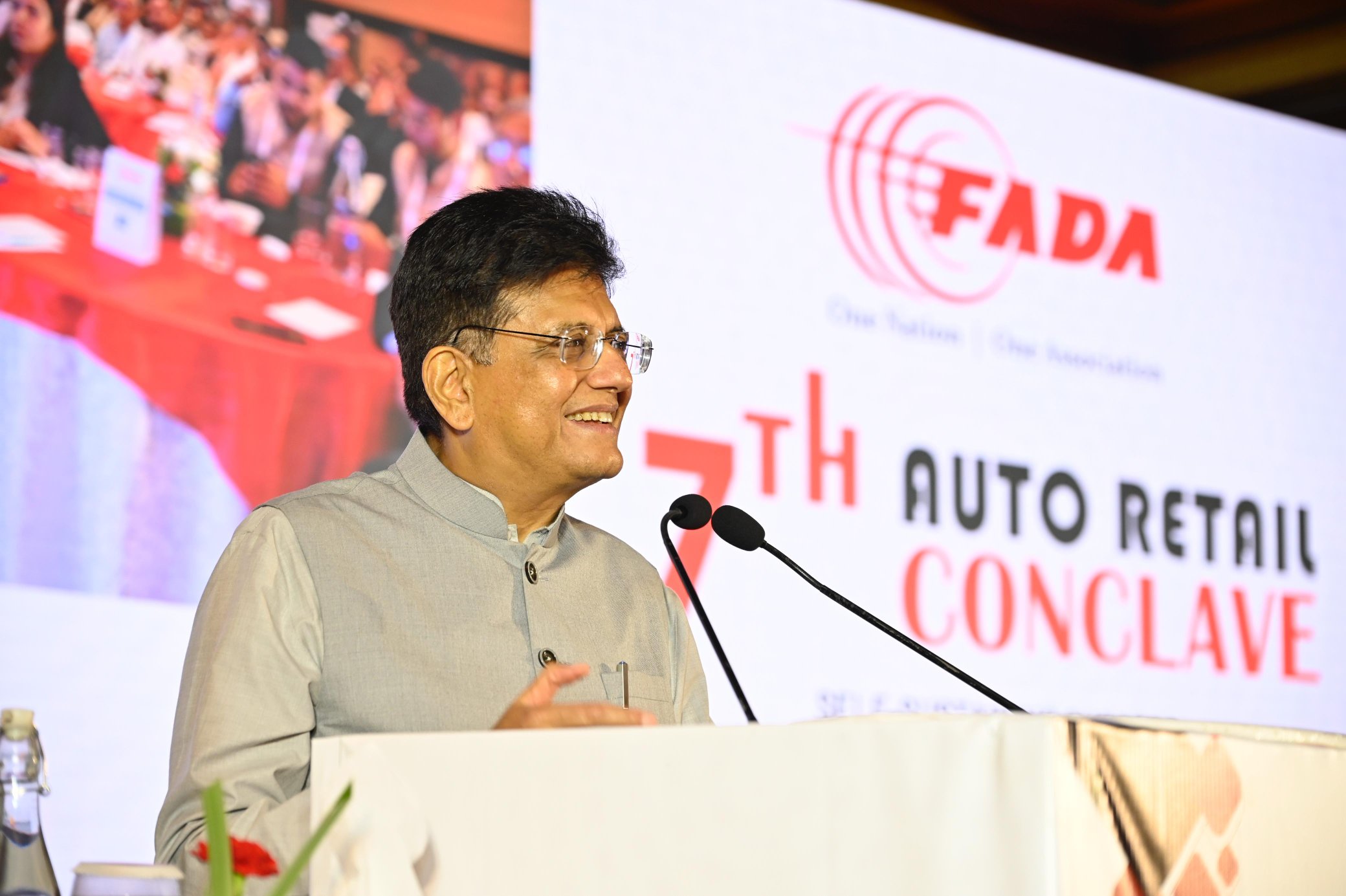
NEW DELHI : The automobile retail sector is the interface between consumers and the industry, responsible for ethical marketing, providing good quality service, fair financing and insurance terms, and smooth registration processes stated Union Minister of Commerce and Industry, Shri Piyush Goyal, at the inauguration of FADA’s 7th Auto Retail Conclave and 4th Finance & Insurance Summit on Wednesday. The Minister, the sector acts as a bridge between customers and automobile companies, and the credibility of the companies depends on how dealers operate and serve consumers.

He said that with automobiles becoming more affordable, the benefits of the GST reductions will be passed on to consumers from 22 September.

Shri Goyal underlined the critical importance of after-sales service, availability of spare parts, and continued support for customers, even in situations where companies decide to discontinue specific models or exit the Indian market entirely. He observed that there have been cases where companies set up operations in India, only to wind up and leave after some time, creating challenges for customers who had purchased their products. In such instances, the responsibility often falls on dealers to address consumer concerns. To prevent disruption and protect buyers, he suggested the creation of a framework or charter that would require all companies operating in India to commit to maintaining a local presence and providing after-sales support for a defined period before they are permitted to close operations. This, he emphasized, would ensure that customers are not left stranded and that the credibility and trustworthiness of the automobile sector are maintained.

He observed that India is negotiating Free Trade Agreements with several developed countries and attracting significant investment from global companies because of the size of the Indian market. While supporting domestic industry and manufacturers, he said there must also be fair competition, as competition improves efficiency, product quality, and consumer choice. He explained that growth in manufacturing will come when global companies test their products in the Indian market, leading to larger investments. The aim, he said, is to expand markets, strengthen supply chains, and build resilience, while ensuring domestic manufacturing remains strongly supported.

The Minister noted that the Government of India has undertaken significant and serious efforts to make it easier to do business in the country. This includes reducing unnecessary harassment, streamlining multiple government procedures, simplifying compliance requirements, and minimizing bureaucratic processes that can create obstacles for the sector. He invited industry stakeholders to compile and submit suggestions at the central, state, and local levels on how business operations could be further facilitated. These suggestions could relate to reducing compliance burdens, simplifying existing laws such as the Motor Vehicles Act, or decriminalising minor offences that currently create hurdles for companies. Shri Goyal assured the sector that all recommendations would be carefully reviewed and taken up with the relevant authorities across government, with the aim of creating a smoother, more efficient, and more supportive business environment for the automobile industry.

Shri Goyal highlighted that the Government of India’s focus remains on promoting the growth of the automobile industry, creating more employment opportunities, and expanding the size and reach of the market. He noted that with ongoing Free Trade Agreements, India is expected to see a wider variety of cars, models, and global companies entering the market, providing consumers with greater choice and encouraging competition. The Minister emphasized that ensuring complete customer satisfaction ultimately rests with the sector itself, as dealers and manufacturers play a critical role in delivering quality products, services, and after-sales support. He assured the industry that the Ministry of Heavy Industries and the Department for Promotion of Industry and Internal Trade (DPIIT) remain fully committed to supporting the sector’s growth, helping it overcome challenges, and enabling it to achieve its full potential in India’s evolving market.

Shri Goyal urged the sector to promote swadeshi and made-in-India products, and to encourage consumers to prefer them. He said that by strengthening Indian suppliers of parts and auto components, the sector can reduce dependence on imports, build resilient supply chains, and make India more self-sufficient.

Concluding his remarks, he said that the automobile industry is at an inflection point, driven by aspirational Indians, and has the potential to take off strongly in the coming years.

Exim Bank of India sees Central Asia as key growth market to soften US tariff hit

NEW DELHI : India’s trade with Central Asia has quadrupled over the past decade but vast untapped potential remains, Harsha Bangari, Managing Director of the Export-Import Bank of India (India Exim Bank), said on Wednesday, underscoring the need for stronger financial links to unlock this growth.

Speaking at a webinar titled ‘Bridging borders: role of trade finance in enhancing India-Central Asia trade’ on Wednesday, Bangari said Central Asia, with its strategic location and abundant natural resources, offered immense potential for Indian businesses. “At the same time, India’s growing capabilities in manufacturing and technology make it a natural partner for the region,” she said. Central Asia comprises Kazakhstan, Kyrgyzstan, Tajikistan, Turkmenistan, and Uzbekistan.

Diversification drive
To be sure, Indian exporters are scrambling to diversify into new markets after the US imposed a 50% tariff on Indian goods. The move has eroded competitiveness in several sectors, making it harder for exporters to sustain business in the US, one of India’s largest trading partners. Exporters are now stepping up efforts to tap opportunities in new markets such as Central Asia, Africa and Latin America to offset the potential loss of market share in the US.

Bilateral trade between India and Central Asia rose from under $500 million in 2014 to more than $2 billion in 2024, according to the International Trade Center. “Another $2 billion in untapped trade potential remains, contingent on easing the financing constraints that hinder small and medium-sized exporters in particular,” Bangari said.

Mind the gap
According to Asian Development Bank (ADB), the covid-19 pandemic, geopolitical strain, and tighter financial conditions have widened the global trade finance gap to $2.5 trillion, leaving many businesses without access to credit and risk-mitigation tools. Nearly 80% of all global trade relies on such financing instruments, she added.

Exim Bank is seeking to bridge that gap through its Trade Assistance Program, which links Indian commercial lenders with more than 100 banks overseas. Since its launch in 2022, the program has facilitated more than 1,200 export transactions worth over $3 billion across 52 countries, including Uzbekistan and Kazakhstan.

“The bank is also extending credit and guarantees to Indian firms executing infrastructure, energy, and technology projects in the region. It has financed power transmission projects in Kazakhstan and recently backed the supply of near-zero liquid discharge technology for a thermal plant in Uzbekistan,” Bangari said.

“Recognising that trade is increasingly tied to global investment flows, Exim Bank is supporting Indian companies expanding abroad through equity finance, loans, and advisory services. Investments backed by the bank include ventures in pharmaceuticals, healthcare, hospitality, and construction across Central Asia,” she added.

Opportunity knocks
Bangari also unveiled findings from a joint study with the Eurasian Development Bank, titled ‘Exploring trade and investment relations between India and Central Asia: Unlocking economic benefits’, which identifies opportunities to deepen cooperation in sectors ranging from natural resources to renewable energy.

Key policy recommendations in study include enhancing trade based on identified potential, cooperation in digital public infrastructure (DPI), facilitating market entry through joint ventures and technological collaboration, enhancing access to trade finance, improving transport and logistics, and facilitating trade and border crossings in the Central Asian republics.

“There are numerous areas where our expertise and resources can converge,” Bangari said. “The challenge now is to create the financial architecture that allows this partnership to realise its full potential.”

EU could absorb bulk of India’s US-bound exports if trade deal comes through

NEW DELHI : The European Union could shoulder much of India’s US-bound exports if a trade deal is finalised quickly, a Moneycontrol analysis shows. In 2024, India exported $79.4 billion worth of goods to the US, almost matching the $77.5 billion shipped to the EU-27. Of this, nearly $67.2 billion—about 85 percent—could find room in the European market, given the bloc’s large and diversified import appetite.

While Europe offers India a large alternative market and a buffer against US tariff shocks, the gains would depend on the fine print of the trade pact. Without deep tariff cuts, mutual recognition of standards and flexible rules of origin, exporters risk facing higher costs and slower turnaround times, diluting the opportunity.

Diamonds stand out as one of the biggest opportunities for India. While the US bought $4.8 billion worth of Indian diamonds last year, EU purchases were just $1.7 billion despite importing $7.3 billion overall.

“The FTA with EFTA nations comes into effect from October 1, around 20 days from now, the one with the UK awaits parliamentary approval, and with the EU, we are trying to speed up,” India’s Commerce and Industry Minister Shri Piyush Goyal said at an event on September 9.

That leaves a gap of $5.6 billion that India could, in principle, plug. Similar openings exist for medicaments and smartphones, where Europe sources tens of billions from other countries but relatively little from India. Though exempt from the current round of US tariffs, these categories represent future diversification avenues should levies widen.

Other areas with scope for redirection include jewellery, seafood and machinery parts. The EU’s recent listing of 102 new Indian fishery establishments for export is expected to boost shipments by nearly 20 percent.

Shrimp is a case in point: India sold $1.85 billion worth to the US in 2024 but only $493 million to Europe, even as the bloc imported $3.03 billion overall.

Not every sector offers relief. Carpets are a clear constraint—India exported $647 million to the US in 2024, but Europe’s total carpet imports were just $630 million, limiting substitution potential. Price sensitivity is another hurdle.

With per capita GDP at around $63,000—roughly 72 percent of US levels—the EU has the capacity but may not always match American willingness to pay. Pharmaceuticals and electronics, where regulatory compliance is rigorous, will also require sharper positioning on standards and pricing.

Source : Moneycontrol

Vizhinjam’s emergence as a viable transhipment port offers an existing alternative to Nicobar

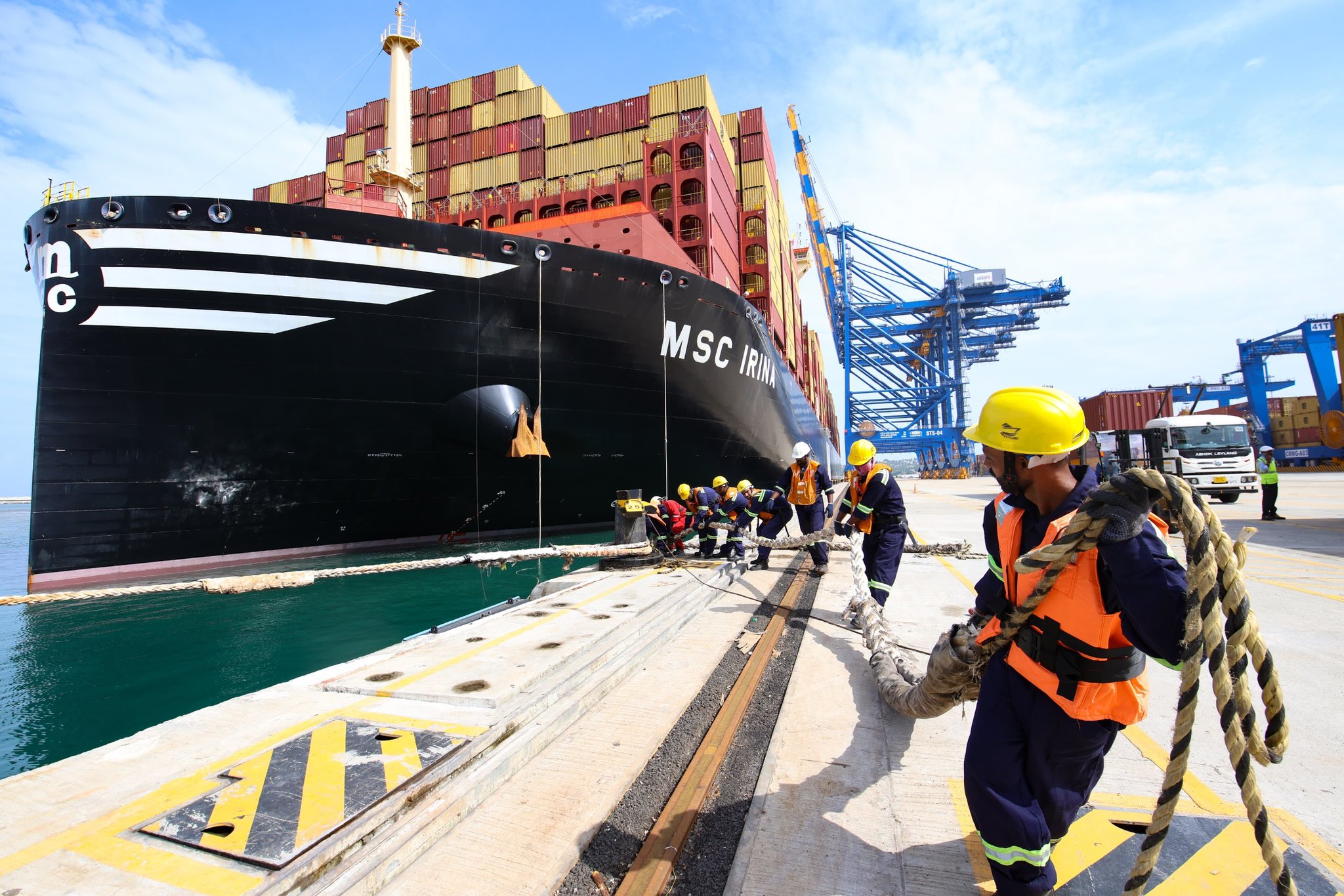
THIRUVANANTHAPURAM : In June, just over a month after the inauguration of Kerala’s Vizhinjam International Seaport, the facility achieved a significant milestone by welcoming the MSC Irina, among the world’s largest and most fuel-efficient container ships. This proved Vizhinjam’s operational viability as a deep-water transhipment hub, one of the main purposes for which the controversial Great Nicobar project has been proposed. With Vizhinjam now functioning as India’s first deep-water transhipment port, the Rs 72,000 crore Great Nicobar initiative appears increasingly redundant, especially considering its environmental and social challenges.

The debate on Kerala versus Nicobar has become more complex following two maritime accidents off Kerala’s coast. These incidents caused significant environmental damage and revealed gaps in safety oversight and regulatory enforcement at Vizhinjam. These lapses showed how even lower-risk projects can cause serious harm and disrupt coastal fisherfolk’s livelihoods, raising doubts about the consequences of a large-scale project in the far more fragile ecosystem of Great Nicobar.

The Great Nicobar project is being promoted as India’s gateway to becoming a global shipping hub. In March 2025, the Union tribal affairs minister, Jual Oram, said that local objections had not been received, a claim refuted by Barnabas Manju, the chairman of the Little and Great Nicobar Tribal Council, who confirmed formal objections had been submitted in 2022 but were ignored. The National Commission for Scheduled Tribes voiced concerns over the project’s impact on indigenous peoples, questioning its ethical and economic viability. The island’s delicate ecosystem, the presence of indigenous communities, and legal restrictions pose major hurdles. Nicobar’s indigenous governance adds to the complexity. Tribal councils under the Andaman and Nicobar Islands (Tribal Councils) Regulation, 2009 oversee local welfare. In November 2022, the Little and Great Nicobar Tribal Council had revoked the NOC granted three months earlier for forest diversion, raising questions about possible violations of the Forest Rights Act (2006) and the Shompen Protection Policy (2015), which mandates prioritising their welfare and consulting them before large projects.

The environmental cost of the Great Nicobar Project is staggering. Government estimates place tree felling at approximately 8.5 lakh, possibly rising to 9.64 lakh. Independent analyses suggest the loss could reach between 32 and 58 lakh, with some estimates nearing one crore, depending on forest density. The project threatens endangered species, including saltwater crocodiles, Nicobar megapode birds, and leatherback turtles, apart from the Nicobarese tribe and the Shompen. The port site lies within the Coastal Regulation Zone 1A where construction is banned. Yet, a National Green Tribunal High Powered Committee ruled that the port falls outside the Island Coastal Regulation Zone-IA, which prohibits ports. In contrast, Vizhinjam’s development caused less ecological disruption and no indigenous displacement.

Aspiring to make Nicobar the ‘Singapore of India’ ignores key realities. Singapore’s success stemmed from strategic location, a dense population, and urban infrastructure, conditions absent in Nicobar given its sparse population and fragile ecology.

With climate urgency rising, prioritising sustainable development over ecological destruction is both an environmental and practical necessity. Vizhinjam’s emergence as a viable transhipment port offers an existing alternative to Nicobar. India must pursue maritime infrastructure that safeguards heritage and honours indigenous rights.

Saudi Ports’ transshipment jumps 15% in August

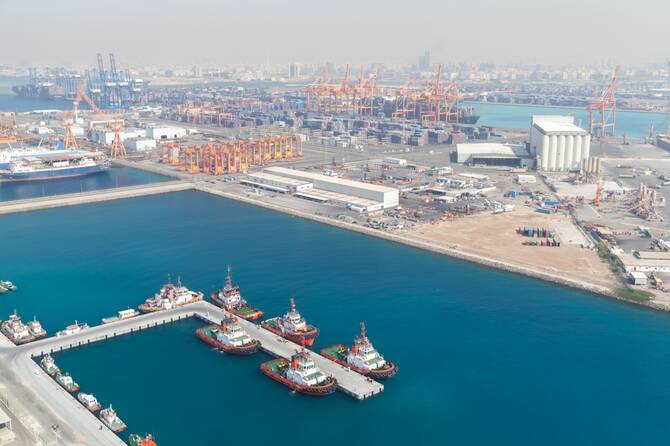
JEDDAH : Saudi Arabia’s ports handled a surge in transshipment activity in August, with volumes climbing 14.7 percent year on year to 189,407 twenty-foot equivalent units, underscoring the Kingdom’s rising role as a global trade hub.

Overall container throughput increased by 9.5 percent to 750,634 TEUs, the Saudi Ports Authority, known as Mawani, said in a press release.

Export containers advanced 7.95 percent to 279,550 TEUs, while imports grew 7.8 percent to 281,677 TEUs.

The boost supports Saudi Arabia’s National Transport and Logistics Strategy, a key pillar of Vision 2030 aimed at positioning the Kingdom as a leading logistics center linking Asia, Europe, and Africa.

Mawani said the rise in container throughput supports trade flows, maritime industries, tourism, supply chains, and food security, delivering broad economic benefits to the Kingdom.

“Maritime traffic also witnessed an increase of 13.16 percent, with 1,118 vessels received, compared to 988 vessels in the same month last year,” Mawani said.

Total cargo throughput fell 12.44 percent to 20.2 million tons. General cargo accounted for 1.08 million tons, dry bulk for 4.58 million tons, and liquid bulk for 14.54 million tons. The ports also received 494,950 head of cattle, a 17.2 percent increase from a year earlier.

Passenger numbers surged 70.1 percent to 85,636, up from 50,345 in the same month last year, while vehicles handled increased 4.27 percent to 107,826, compared with 103,411 a year earlier.

The August performance followed steady gains earlier this year. In July, Saudi ports handled 722,502 TEUs, up 12 percent year on year, driven by a 35 percent jump in transshipment volumes. In May, throughput rose 13 percent to 720,684 TEUs.

Earlier this month, Mawani announced the launch of the GS2/KMP shipping service by the Premier Alliance, comprising Hyundai Merchant Marine, Ocean Network Express, and Yang Ming, at King Abdulaziz Port in Dammam and Jubail Commercial Port.

The service connects Saudi Arabia with 18 international destinations, including Singapore, China’s Shanghai, South Korea’s Busan, Long Beach in California, and Jebel Ali in the UAE, with a total capacity of up to 16,000 TEUs.

In parallel, Mawani is strengthening regional partnerships to boost industrial growth. Its president, Suliman Mazroua, met with Hussein bin Yahya Fadli, CEO of Jazan City for Primary and Downstream Industries, to explore joint investment projects and enhance Jazan Port’s role as a leading industrial hub.

He also briefed Jazan’s Gov. Prince Mohammed bin Abdulaziz bin Mohammed on the role of ports in supporting global trade and reinforcing the national economy.