Home Blog Page 664

Support grows for India’s new maritime CCTV rules

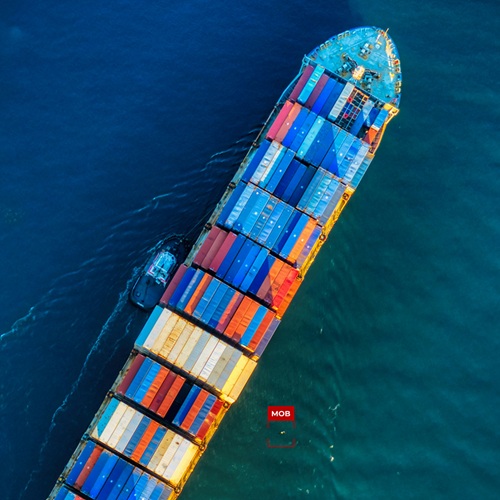
EDINBURG: Zelim is calling on international regulators and flag states to follow India’s lead on enhancing maritime safety and security, following the country’s introduction of new rules requiring the use of Closed-Circuit Television (CCTV) on domestic and international ships calling at Indian ports.

Zelim believes the integration of AI-powered monitoring technologies alongside these measures is critical to improving incident response, support search and rescue (SAR) operations, deter criminal activities, and provide evidence for investigations into incidents such as man-overboard situations.

The Edinburgh-based safety technology pioneer says the move represents a critical step forward in tackling growing challenges around ship and crew safety, and believes other IMO member states should consider adopting similar mandatory requirements.

India’s Directorate General of Shipping issued a Merchant Shipping Notice in February 2025 requiring CCTV installation on all newbuild and existing Indian flagged vessels of 500gt or more. It also recommends the installation of CCTV on all 500gt+ foreign-flagged ships calling at Indian ports. Mandated vessels must comply by 12 February 2028, or at their next classification renewal survey, whichever occurs later.

The ruling follows a series of high-profile incidents – including crew disappearances, man-overboard incidents, and collisions – where the absence of real-time situational awareness technologies has resulted in accidents or thwarted search and rescue efforts.

The Indian government cites several cases where limited visibility over shipboard activity delayed emergency response and SAR coordination and increased the likelihood of fatalities. It says the installation of CCTV is “recognised as a highly effective measure to enhance onboard safety and security”.

Sam Mayall, Chief Executive Officer of Zelim, said: “This is a landmark decision from India’s maritime authorities and signals a step change in maritime safety thinking. By mandating smarter monitoring systems, India is setting a powerful example that other maritime nations should follow.”

The Directorate General of Shipping recommends the adoption of AI-enabled software to enhance monitoring capabilities, specifying strategic CCTV placement around the ship’s main deck, forecastle, mooring and stern areas, bridge and superstructure.

Zelim’s own AI-powered camera technology extends these capabilities even further – helping crews and operators prevent accidents in real-time, while also providing critical forensic data during investigations.

Stewart Gregory, Zelim’s Chief Operating Officer, said: “India has raised the bar for ship and crew safety, not just by mandating CCTV but in setting out a comprehensive specification for camera coverage, night vision, resolution, placement, and data storage. This is about more than surveillance; it’s about smart, intelligent, AI-based detection, tracking and alerting technology fully integrated into a ship’s safety protocols. India’s regulation goes significantly beyond current IMO requirements.”

Zelim believes that voluntary best practice is no longer enough, and is urging consistent global standards to improve seafarer welfare and ship safety and security.

“The maritime industry has lagged behind sectors like aviation when it comes to adopting advanced safety technologies,” added Gregory. “With proven situational awareness technology already available – capable of improving both incident prevention and response – a global situational awareness standard is long overdue. India’s directive should act as a catalyst for other nations to adopt similar measures.”

Zelim is in direct contact with Indian authorities, including the Director General of Shipping, and the Ministry of Ports, Shipping and Waterways, and has offered technical support to ship owners and operators needing to meet the new specifications.

Zelim is showcasing its maritime safety and security solutions at INMEX SMM India this week, at the Bombay Exhibition Centre in Mumbai. Zelim is with its partner, Varya, at Booth E02-F02.
DP World opens Driver Welfare Facility at Southampton

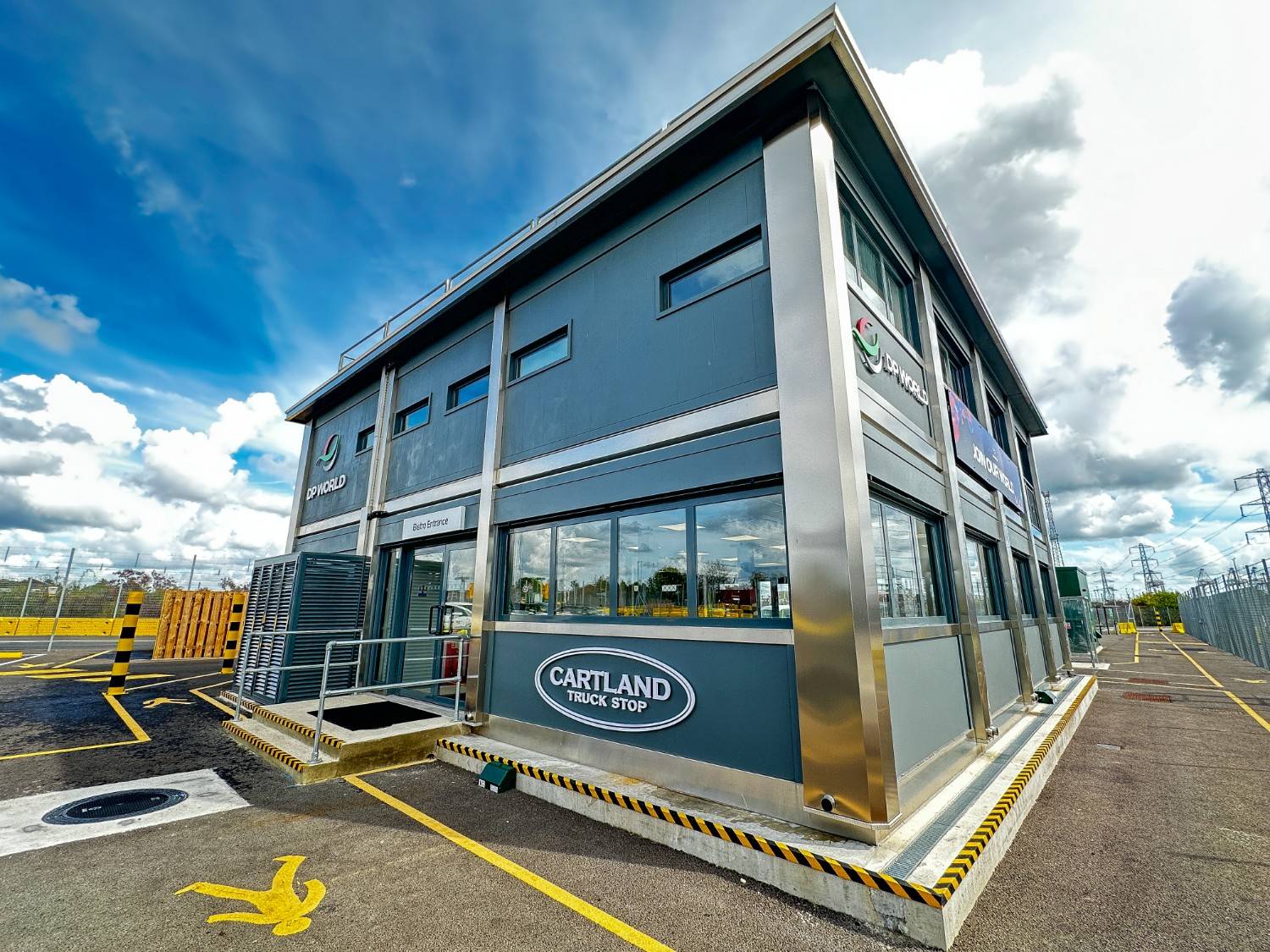
LONDON: DP World has opened a state-of-the-art new driver welfare facility at its Southampton container terminal and logistics hub.

The brand new 24,000 sq. m facility is the centrepiece of a £20 million modernisation project and contributes to efforts by industry and Government to deliver better working conditions for hauliers across the UK. Modelled on the successful Hireco Truck Park at DP World’s London Gateway Logistics Park, the new Southampton site continues DP World’s investment in best-in-class welfare facilities for drivers.

Following two years’ construction, the new facility will be operated by Cartland Truck Stop Ltd and offers a restaurant, café, bathrooms, showers and more than 130 secure parking spaces, alongside service bays for vehicles. To support the transition to low-carbon logistics, the facility also includes two twin EV charging points capable of fully charging a modern electric HGV in 1.5-2 hours.

In addition to improving welfare standards, the site features a new pre-gate entry system that reduces waiting times and eases traffic flow around the terminal, helping to further reduce the impact of congestion on the local community, key factors in securing Southampton City Council’s approval.

Ernst Schulze, DP World Ports & Terminals Lead for Northern Europe, said: “I am delighted with the opening of this exceptional new facility that puts driver welfare at the heart of our Southampton operation. This £20m investment is a clear statement of our commitment to drivers, who are a vital part of the UK supply chain. By providing modern, secure, and comfortable facilities alongside cutting-edge EV charging, we are working to future-proof UK logistics while ensuring the people who keep trade moving are well looked after.”

Satvir Kaur MP, Member of Parliament for Southampton Test, added: “The opening of this new facility by DP World is very welcome in Southampton. DP World’s recent investment into the Port has not only helped to ease local traffic flows for local residents and contribute towards tackling the climate crisis, but now also ensures that drivers are properly cared for. This project sets a strong national example of how greening our economy, can lead to additional benefits, from better welfare at work to less congestion on our roads. I wish it every success.”

The opening of the facility follows the launch of DP World’s Low Carbon Truck Programme (LCTP) at Southampton and London Gateway earlier this month, which will run for an initial two-year period and is designed to accelerate the decarbonisation of UK road freight by supplying participating hauliers with Hydrotreated Vegetable Oil (HVO) at the same cost as diesel. Alongside the opening of the driver welfare facility, the programme is part of a wider effort from DP World to support its haulier customers in the UK.  

2025 Customer Survey: GEODIS Reports Significant Increase in Customer Satisfaction Results

LEVALLOIS-PERRET: Each year, GEODIS surveys its customers to gather their feedback on satisfaction. The 2025 survey, conducted between April 24 and June 2, was available in 16 languages and sent to more than 60,000 customers worldwide. With over 9,000 completed questionnaires — a record response rate of 15% — GEODIS received 800 more responses than last year. This high level of participation enhances both the representativeness and the relevance of the insights obtained.

The results highlight a particularly high overall satisfaction level of 92%, illustrating the trust placed by customers in GEODIS and confirming the strength and quality of the relationship between GEODIS and its clients worldwide.

The Net Promoter Score (NPS) also shows a significant increase, rising from +36 last year to +39 in 2025, reflecting a greater willingness among customers to recommend GEODIS.

Furthermore, customers highlight a streamlined experience that allows them to save time and better manage their operations. GEODIS teams standout for their commitment to resolving issues quickly and efficiently as they arise.

The satisfaction level reached a record 94% in Commercial Relations, confirming the quality of interactions and the attention given to customers’ needs.

To ensure the reliability and independence of the results, GEODIS entrusted the execution of this survey to IPSOS, which also ensures full compliance with the General Data Protection Regulation (GDPR).

Inmarsat Maritime Safety Report warns: human element is key as information overload emerges as new risk

LONDON: The 2025 edition of the Future of Maritime Safety Report from Inmarsat Maritime, a Viasat (NASDAQ: VSAT) company, reveals that distress calls at sea remain high, underlining the vital role of human factors in safe shipping.

According to the report, the number of Global Maritime Distress and Safety System (GMDSS) distress calls registered on the Inmarsat Maritime network increased from 788 in 2023 to 801 in 2024, broadly in line with the 2018-2023 annual average of around 800 calls.

The report points to a turbulent year for international shipping, with geopolitical instability, conflict, severe weather events, piracy, and cyber-attacks all adding pressure on operators and crews. Alongside these risks, seafarers are facing welfare challenges linked to the pace and volume of new technologies. While digitalisation and decarbonisation are essential for the industry’s future, the rapid implementation of new systems and reporting requirements has created an information ‘overload challenge’ for seafarers, highlighting the need for new technologies to support, rather than strain, crew welfare.

The Future of Maritime Safety Report 2025 calls for the industry to acknowledge the fundamental role seafarer welfare plays in minimising the number of preventable incidents at sea. It recommends a ‘human factors’ approach to data that streamlines information, reduces duplication, and eliminates contradictory outputs.

Peter Broadhurst, Senior Vice President, Safety and Regulatory, Inmarsat Maritime, said: “Accurate data holds immense potential to transform shipping safety – from predictive maintenance to casualty and near-miss reporting and human-factor analysis. But data must empower crews, not overwhelm them. We need smarter systems to capture, evaluate, and utilise data more effectively without placing an extra burden on already overworked seafarers.”

Peter Broadhurst also emphasised the need for greater collaboration: “By sharing anonymised safety data, the industry can create a trusted ecosystem that strengthens standardisation and regulations, improves operations, and safeguards seafarer welfare. Together, we can create one of the most powerful maritime safety initiatives to navigate us through the pressures and changes impacting international shipping in the years to come.”

Inmarsat invites maritime professionals, policymakers, and stakeholders to explore the findings of the Future of Maritime Safety Report 2025 report and to support collective action in safeguarding life at sea.

Download the full report here.

Lloyd’s Register awards AiP for 174K LNG Carrier with Wind Challenger technology

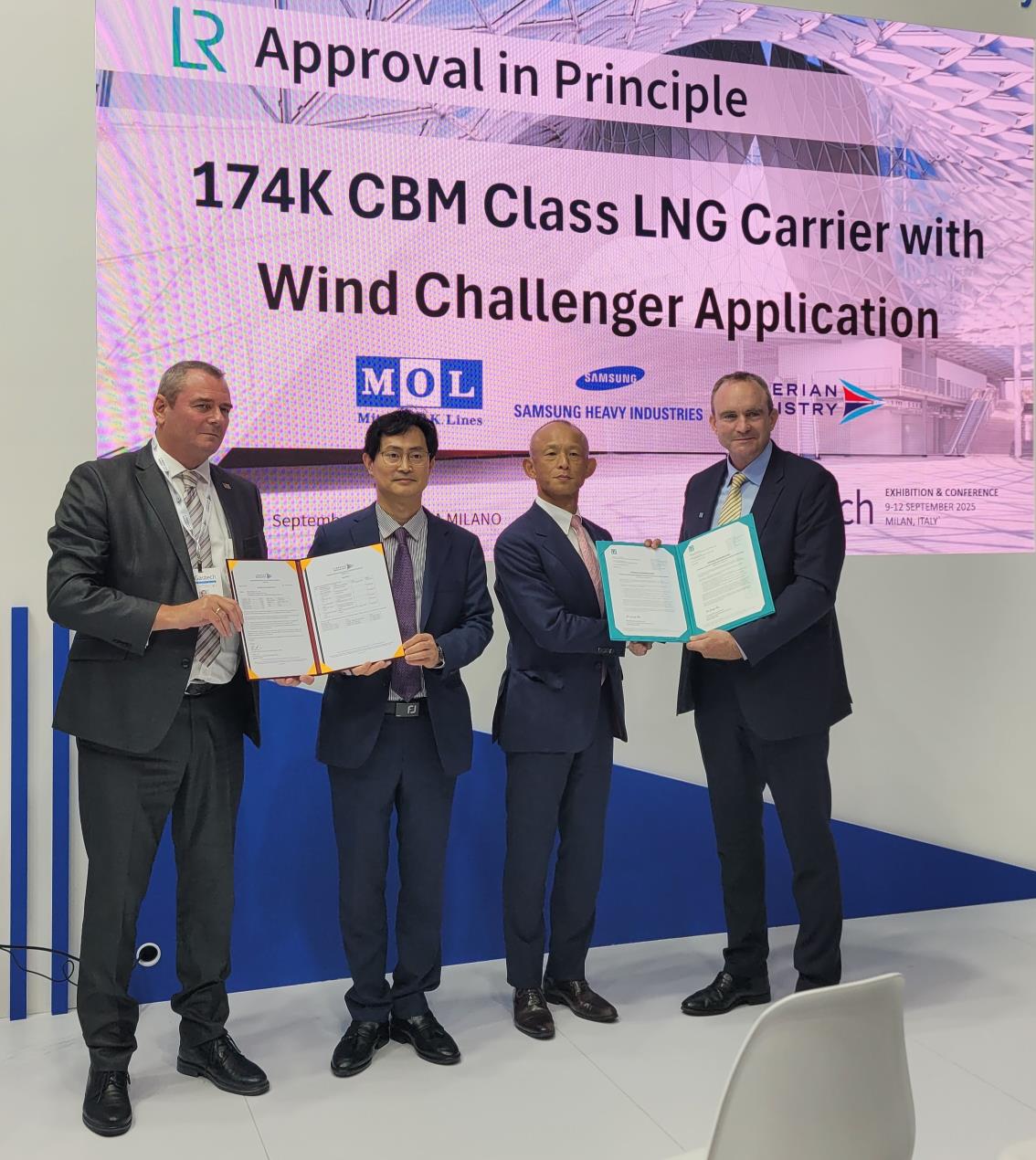
LONDON: Lloyd’s Register (LR) has granted Approval in Principle (AiP) to Samsung Heavy Industries (SHI) for the design of a 174,000m³ LNG carrier equipped with Wind Challenger, an innovative wind-assisted propulsion system (WAPS) developed by Mitsui O.S.K. Lines, Ltd. (MOL).  

The AiP was formally awarded during a ceremony at Gastech 2025. 

While LNG carriers already operate with comparatively lower carbon emissions than conventional oil-fuelled ships, the integration of the Wind Challenger demonstrates the potential to further reduce greenhouse gas (GHG) emissions by harnessing renewable wind energy.  

SHI led the vessel’s design, while LR carried out the independent design review in accordance with its rules and regulations. The Liberian International Ship and Corporate Registry (LISCR), acting as the flag administration, has supported the project throughout, ensuring regulatory compliance. Together, the partners have proven the feasibility, safety and performance of integrating a large-scale WAPS on an LNG carrier, paving the way for future adoption across the sector. 

Panos Mitrou, LR’s Global Gas Segment Director, said: “Wind-assisted propulsion technologies are emerging as an important part of the industry’s journey to decarbonisation. By working closely with our project partners, LR is proud to support the safe and effective integration of the Wind Challenger onto a large LNG carrier design.” 

Yoshihiko Sugimoto, Deputy Chief Technical Officer of MOL, said: “With the valued collaboration of Lloyd’s Register and the Republic of Liberia, we are delighted to receive this AiP for SHI’s next-generation LNG carrier design featuring MOL’s Wind Challenger technology. This milestone highlights our unwavering commitment to leading the decarbonisation of the maritime industry and accelerating progress toward our medium- to long-term target of achieving net zero GHG emissions by 2050.” 

KR Grants AIP to HD Hyundai’s LNG Boil-off Gas Treatment System

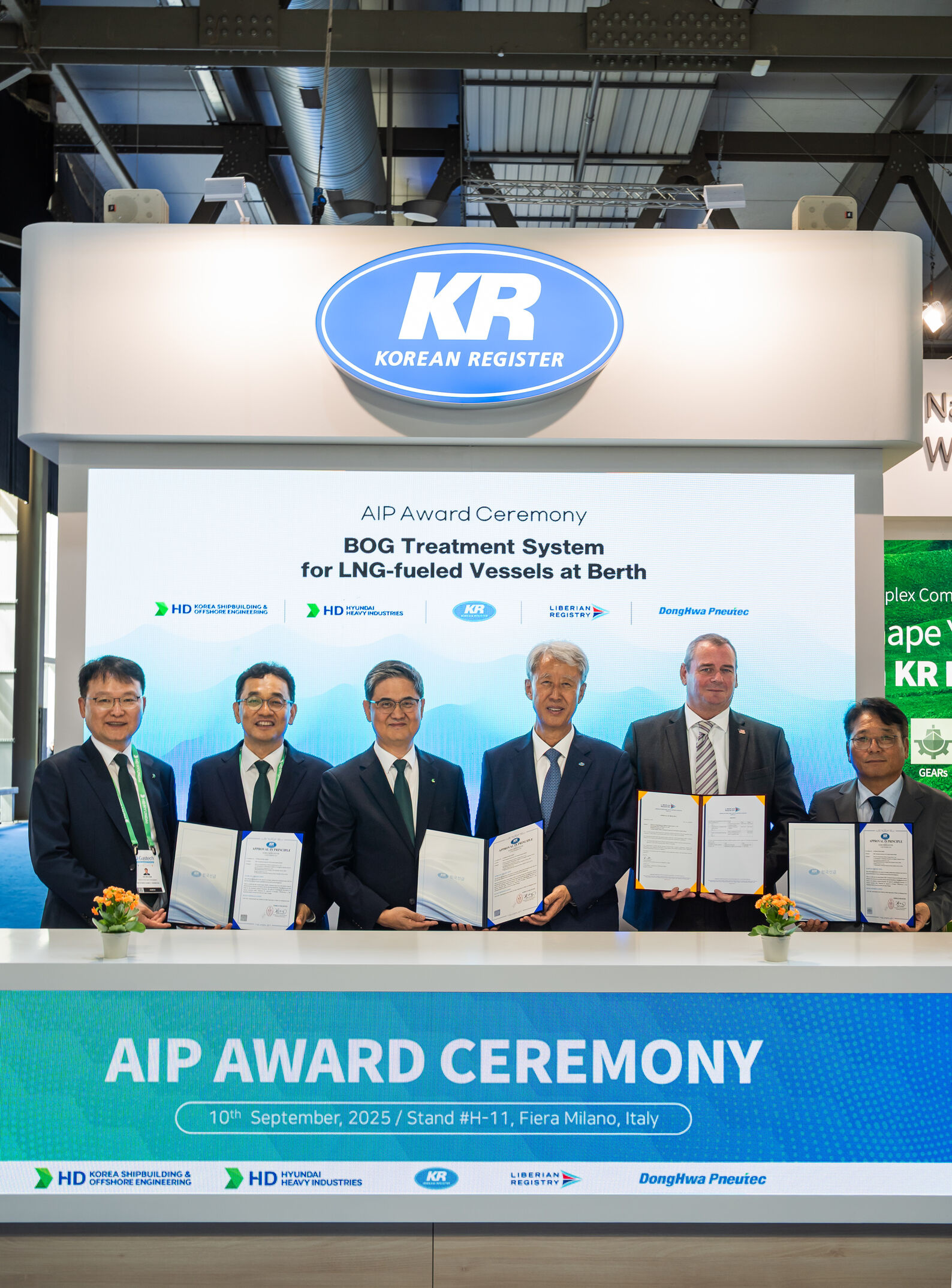
MILAN: KR (Korean Register) announced on September 10 at Gastech 2025 that it has granted an Approval in Principle (AIP) for an LNG Boil-off Gas (BOG) Treatment System jointly developed by HD Hyundai Heavy Industries (HD HHI) and Donghwa Pneutec. The AIP, awarded in cooperation with the Liberian Registry (LISCR), is based on a concept proposed by HD Korea Shipbuilding & Offshore Engineering (HD KSOE). 

The newly developed BOG treatment system is designed for installation and operation both onboard vessels and along quays during berth. It can process up to 0.5 tonne of BOG per hour, converting it into city gas for onshore energy use. 

This enables shipyards to recover BOG generated during vessel construction, thereby reducing both greenhouse gas emissions and fuel losses. Shipowners, in turn, can safely manage surplus gas during extended port stays or when Alternative Maritime Power (AMP) is required, ensuring compliance with increasingly stringent environmental regulations. 

The joint development project was completed through close cooperation between the shipyard, equipment manufacturer, classification society, and flag administration, building upon HD KSOE’s concept design. In June this year, the system was applied to an 8,000 TEU LNG dual-fueled containership under construction, where it successfully completed demonstration trials, verifying its performance. 

The system is a practical solution to reduce carbon emissions across the full lifecycle of LNG dual-fueled vessels and is expected to contribute significantly to the maritime industries’ decarbonization goals. 

An Official from HD Hyundai said: 

“This AIP marks the world’s first validation of LNG boil-off gas treatment technology, underscoring our commitment to advancing greener shipbuilding for LNG-fueled vessels and driving decarbonization across the maritime industry.” 

KWON Yungwoo, Vice Chairman & CEO of Donghwa Pneutec, noted: 

“This demonstration has once again validated the technological excellence of our LNG boil-off gas compressor. With AMP requirements expected to become mandatory, we anticipate this technology will see broader adoption across the industry.” 

Thomas Klenum, Executive Vice President of the Liberian Registry, added: 

“Built on a strong partnership, the successful completion of this project goes beyond a simple technological achievement. It provides an important foundation for advancing eco-friendly shipbuilding technologies from a full lifecycle perspective of LNG-fueled vessels.” 

LEE Hyungchul, Chairman & CEO of KR, concluded: 

“This AIP marks a meaningful achievement in reducing greenhouse gas emissions from LNG-fueled vessels, both during construction and while at berth. KR will continue to work closely with industry partners to ensure the smooth commercialization of new technologies and to drive a more sustainable maritime industry.” 

Prime Minister reaffirms the strength of India-US relations

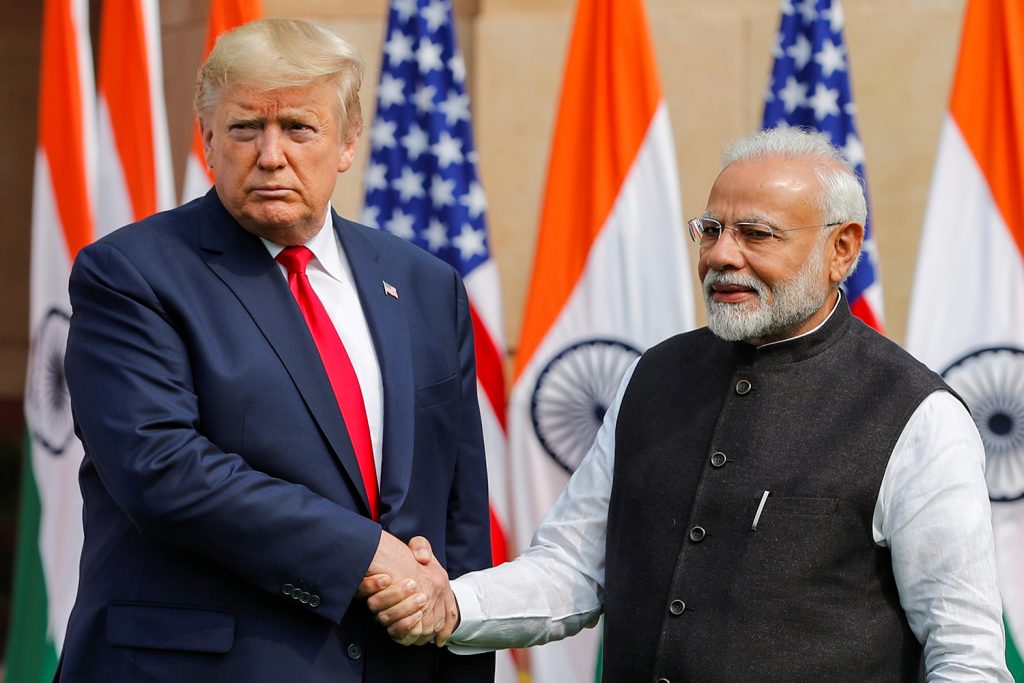
NEW DELHI : Prime Minister Shri Narendra Modi on Wednesday reaffirmed the strength of India-US relations and expressed confidence in the ongoing trade negotiations between the two nations. Shri Modi said both nations will work together to secure a brighter, more prosperous future for both our people.

Responding to a post by President of the US on X, Shri Modi said:

“India and the US are close friends and natural partners. I am confident that our trade negotiations will pave the way for unlocking the limitless potential of the India-US partnership. Our teams are working to conclude these discussions at the earliest. I am also looking forward to speaking with President Trump. We will work together to secure a brighter, more prosperous future for both our people.”

G0c0qq2XwAAF2Bj Prime Minister reaffirms the strength of India-US relations

MSC Ivana sets record at JNPA PSA Terminal with deepest draft vessel call

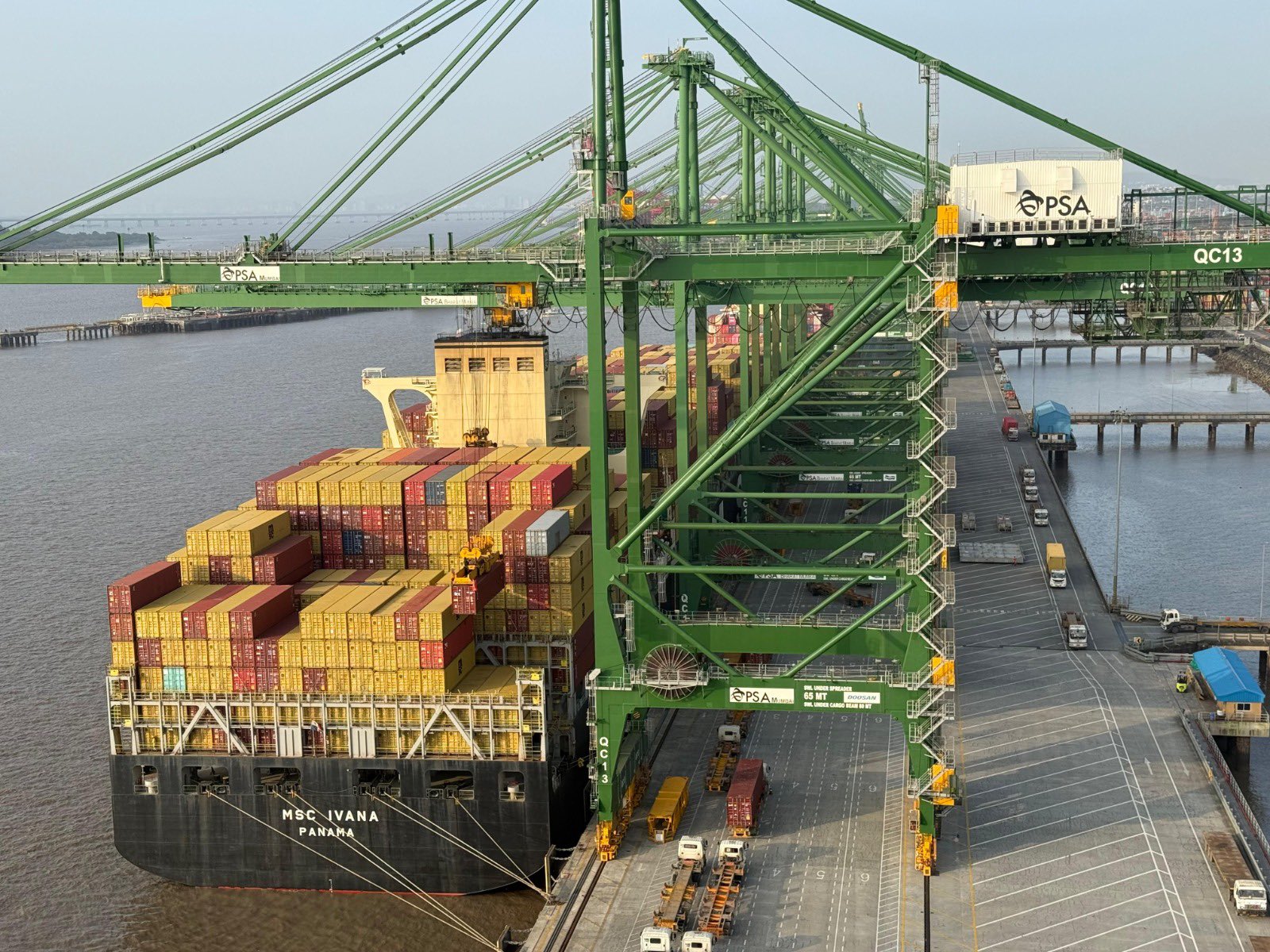
MUMBAI : Jawaharlal Nehru Port Authority (JNPA) achieved a major operational milestone with the successful berthing of container vessel MSC Ivana at PSA Mumbai’s Bharat Mumbai Container Terminals (BMCT). The vessel, with a maximum draft of 16.35 metres, is the deepest draft ship ever to call at JNPA.

The complex maneuver was skillfully helmed by Capt. Sudanshu Shekhar, ensuring a safe and efficient anchorage. This achievement underlines JNPA’s capability to handle some of the world’s largest container ships, reflecting its ongoing efforts to enhance port capacity, efficiency, and competitiveness in global maritime trade.

Officials highlighted that the record-setting berthing demonstrates JNPA’s continued commitment to strengthening India’s maritime infrastructure and its role as the country’s premier container handling gateway.

Dr. M. Ravichandran underscored Indian Ocean’s strategic importance, opportunities, and challenges at the 48th Annual Conference on Oceans Law & Policy (COLP48)

NEW DELHI : Dr. M. Ravichandran, Secretary of the Ministry of Earth Sciences, delivered a keynote address on Wednesday at the 48th Annual Conference on Oceans Law & Policy (COLP48). Held under the theme “Developing World Approaches to Ocean Governance: Perspectives from the Indian Ocean Rim”, this gathering assembled global stakeholders to explore pathways for sustainable and inclusive marine governance rooted in the developmental priorities of frontier nations.

This is the first time in the nearly five-decade history of COLP that the conference is being hosted in the Indian subcontinent, marking a milestone for India’s role in shaping global ocean governance.

Addressing distinguished delegates, scholars, policymakers, and practitioners from across the world, Dr. Ravichandran noted that the Indian Ocean holds unparalleled significance for the planet. He stated that the ocean regulates climate, supports biodiversity, sustains livelihoods, and serves as a hub for global trade and security. However, he cautioned that the region faces mounting threats due to climate change, sea-level rise, acidification, declining productivity, and intensifying cyclones.

The Secretary outlined the five priority areas for ocean governance from a developing world perspective:

  • Ensuring livelihood and food security through sustainable fisheries and mariculture.
  • Deepening regional cooperation rooted in South-South solidarity among Indian Ocean Rim nations.
  • Integrating traditional knowledge and participatory governance with modern science.
  • Promoting climate resilience and ecosystem-based approaches to safeguard biodiversity.
  • Mobilising innovative finance and building capacity for ocean research, technology, and governance.

He further stressed that achieving these goals requires robust laws, policies, and collective responsibility to shape a sustainable and inclusive blue economy.

Dr. Ravichandran emphasised the need to strengthen marine spatial planning, hazard mitigation frameworks, and indigenous technology development backed by innovative finance and technology-driven solutions to harness living and non-living resources such as renewable ocean energy, critical minerals, and eco-tourism in an equitable and sustainable manner.

Dr. Ravichandran said that despite covering 70% of the Earth’s surface, only 5% of the oceans have been fully explored, underscoring the urgency of enhanced research, observation networks, and international cooperation. He also called for greater engagement of Indian Ocean states in global governance forums under UNCLOS, the International Seabed Authority, and the BBNJ Agreement.

The Secretary highlighted the uniqueness of the Indian Ocean, noting that it is the only ocean in the world where currents and winds reverse direction every six months and lacks a northern outlet, causing heat accumulation and accelerated warming. He warned that the number of marine heatwave days in the region could rise from 20 days annually at present to 220 days per year by the end of the century, threatening coral reefs, fisheries, and coastal livelihoods.

He underlined that the Indian Ocean is India’s future in terms of food, water, energy, climate, and security, and therefore, policies must be evidence-based, collaborative, and forward-looking. He added: “A clean, healthy, resilient, and productive Indian Ocean is not just a regional priority but a global necessity. Collaboration is the key to ensure that the ocean continues to sustain generations to come.”

The conference is organised by the Stockton Center for International Law, U.S. Naval War College and the Gujarat Maritime University, with support from the Ministry of Earth Sciences, Government of India, and participation from eminent global institutions including the World Maritime University, Korea Maritime Institute, Japan Institute of International Affairs, National Maritime Foundation, University of Copenhagen, and IMO International Maritime Law Institute among others.

Historic 48th Annual Conference on Oceans Law & Policy inaugurated in New Delhi

First-ever Conference on Ocean Governance in Indian Subcontinent Focuses on Developing World Perspectives.

Hon’ble Minister Shri Sarbananda Sonowal, Ministry of Ports, Shipping and Waterways, to deliver the Valedictory Address today.

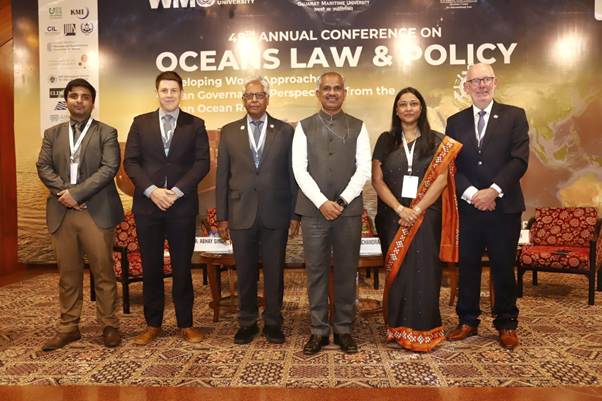
NEW DELHI: The 48th Annual Conference on Oceans Law & Policy (COLP48) was inaugurated Wednesday at The Ashok Hotel, New Delhi, marking a historic milestone as the first time this prestigious international conference is being held in the Indian subcontinent. The conference, themed “Developing World Approaches to Ocean Governance: Perspectives from the Indian Ocean Rim,” brings together distinguished experts, policymakers, and practitioners from across the globe.

Opening Ceremony Highlights
The inauguration ceremony was graced by Dr. M. Ravichandran, Secretary, Ministry of Earth Sciences, Government of India, who delivered the inaugural keynote address. Prof. Ronán Long, Director, WMU-Sasakawa Global Ocean Institute, also graced the inaugural ceremony and delivered concluding remarks. The ceremony also featured distinguished online addresses by Ambassador Hasanthi Dissanayake, Director General, Ocean Affairs, Environment and Climate Change, Ministry of Foreign Affairs, Sri Lanka, and Dato’ Monaliza binti Suhaimi, Chairman and Director General, Maritime Institute of Malaysia.

Keynote Addresses
Dr. M. Ravichandran, Secretary, Ministry of Earth Sciences, emphasised the Indian Ocean’s critical contribution to climate regulation, livelihoods, and security. He cautioned about the rising threats of marine heatwaves, sea-level rise, and over-exploitation, while stressing key priorities such as livelihood and food security, South-South cooperation, renewable ocean energy, sustainable blue economy growth, and marine spatial planning. “Ocean is our future—food, water, energy, health, climate, and security. Collaboration is the key,” he remarked.

Ambassador Hasanthi Dissanayake, Director General of Ocean Affairs, underlined the ocean as a “living entity” and called for regional frameworks, science-driven policy, and inclusive diplomacy. She recalled Sri Lanka’s historic 1971 UN proposal to declare the Indian Ocean a Zone of Peace, stressing that the region’s stability is critical for global prosperity.

Dato’ Monaliza binti Suhaimi, Director General of the Maritime Institute of Malaysia (MIMA), in a recorded message, reaffirmed COLP as a “premium platform for the Global South.” She highlighted the strategic importance of the Strait of Malacca, the role of the Indian Ocean Rim Association (IORA), and urged greater cooperation to tackle maritime crime, climate change, and marine pollution while reaffirming Malaysia’s commitment to UNCLOS and the Sustainable Development Goals.

Welcome Address
Dr. Abhay Singh, Director of the School of Maritime Law and Policy, Gujarat Maritime University, welcomed the delegates, describing the event as a “historic moment for the Indian subcontinent.” He highlighted the importance of addressing the triple planetary crisis—climate change, biodiversity loss, and pollution—through collaborative dialogue, and emphasised the Indian Ocean’s dual role as both a global trade highway and vital ecological system.

Concluding Remarks
Prof. Ronán Long, World Maritime University, praised India’s leadership and the strong international collaboration behind COLP48. He noted the conference’s impressive diversity, featuring 12 thematic panels and 11 global partner institutions, and underlined the critical importance of action-oriented outcomes for effective ocean governance.

About COLP48
As the oldest continuous multilateral gathering on oceans law and policy, COLP48 represents nearly five decades of scholarly dialogue and collaboration on maritime challenges. This year’s conference is being hosted by Gujarat Maritime University (GMU) in partnership with the U.S. Naval War College’s Stockton Center for International Law and the World Maritime University – Sasakawa Global Ocean Institute.

The conference brings together an impressive consortium of international partners, including the Japan Institute of International Affairs (JIIA), Centre for Climate Change Law and Governance (CLIMA) at the University of Copenhagen, Korea Maritime Institute (KMI), IMO-International Maritime Law Institute (IMLI), UiT Norwegian Centre for the Law of the Sea (NCLOS), NUS Centre for International Law (CIL), and the National Maritime Foundation (NMF).

Focus on Indian Ocean Rim
The conference addresses the unique challenges and opportunities facing the Indian Ocean Region, with particular emphasis on:
• Triple Planetary Crisis: Addressing biodiversity loss, climate change, and pollution in the Indian Ocean
• Maritime Security and Trade: Critical law of the sea challenges and international shipping
• Sustainable Development: Offshore resources, critical infrastructure, and the blue economy
• Emerging Technologies: AI applications, autonomous shipping, and new regulatory frameworks
• Resource Management: Seabed mineral mining and fisheries sustainability
• Legal Frameworks: Maritime boundaries and international dispute settlement

Distinguished Speakers
The conference features an exceptional lineup of speakers including:
• Judge Neeru Chadha, Vice President, International Tribunal for the Law of the Sea
• Prof. James Kraska, Chair, Stockton Centre for International Law
• Prof. Ronán Long, Director, WMU-Sasakawa Global Ocean Institute
• Prof. Maximo Q. Mejia, President, World Maritime University
• Dr. Kilaparti Ramakrishna, Director, Marine Policy Centre, Woods Hole Oceanographic Institute
• Ambassador Arif Havas Oegroseno, Vice-Minister, Foreign Affairs of the Republic of Indonesia

Government Support
The conference has received strong support from multiple ministries of the Government of India, including the Ministry of External Affairs, Ministry of Home Affairs, Ministry of Ports, Shipping and Waterways, and the Ministry of Earth Sciences. This multi-ministerial support underscores the significance of ocean governance for India’s maritime interests and regional leadership.

Conference Schedule
• 09 September: Inaugural ceremony and welcome reception
• 10-11 September: Academic conference sessions covering eight major themes
• 12 September: Delhi Darshan (Sightseeing for international delegates)

Valedictory Address:
The conference will culminate with a valedictory address by Hon’ble Minister Shri Sarbananda Sonowal, Ministry of Ports, Shipping and Waterways, Government of India, on 11 September 2025.

Academic Impact
The proceedings and findings of COLP48 will be published in an edited volume titled “Developing World Approaches to Ocean Governance: Perspectives from the Indian Ocean Rim,” edited by James Kraska, Ronán Long, and S. Shanthakumar, ensuring the conference’s contributions reach the broader academic and policy community.

Significance for India
Hosting COLP48 reinforces India’s growing role in ocean governance and maritime diplomacy. As a major Indian Ocean power, India’s perspectives on sustainable ocean management, maritime security, and blue economy development are crucial for regional and global maritime governance frameworks.

The conference provides an unprecedented platform for developing nations, particularly those in the Indian Ocean Rim, to contribute meaningfully to international discussions on ocean law and policy that have traditionally been dominated by developed nations.