Home Blog Page 679

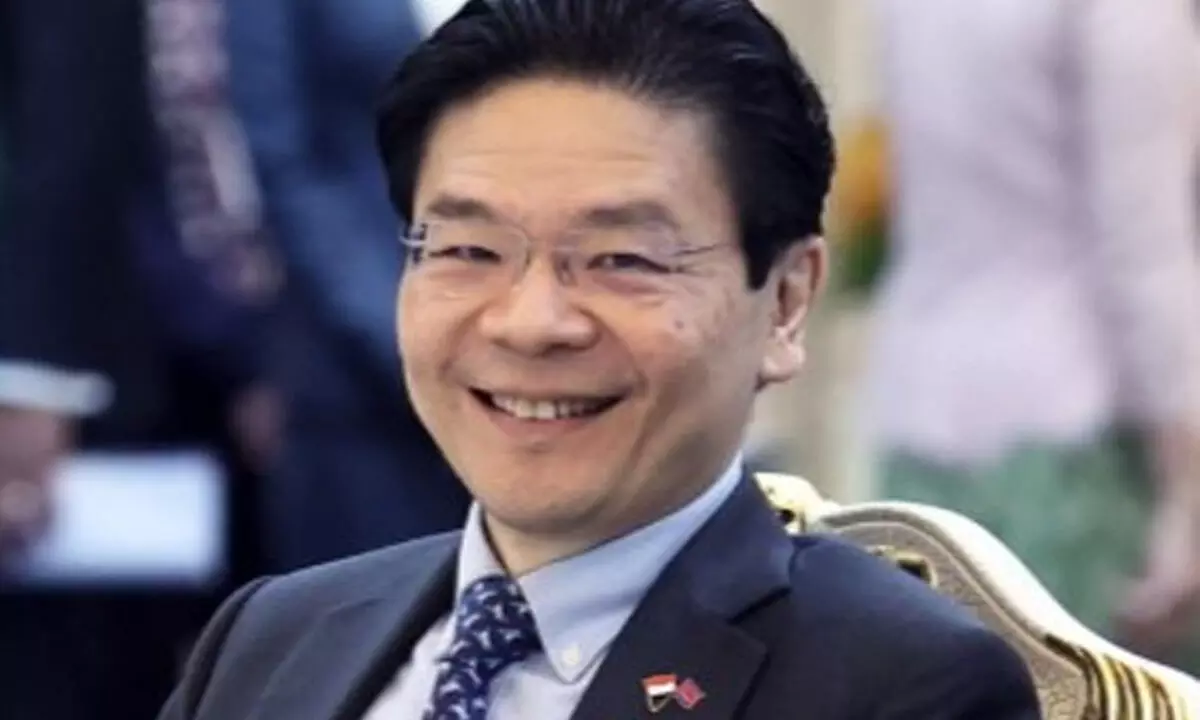
Singapore PM Lawrence Wong begins First India Visit to Mark 60 Years of Diplomatic Ties

NEW DELHI: Singapore’s Prime Minister Lawrence Wong will arrive in India on Tuesday for a three-day official visit from 02-04 September 2025, marking a significant milestone in deepening of the strategic partnership between the two nations.

The visit, which coincides with the 60th anniversary of diplomatic relations between India and Singapore, is expected to see the signing of several high-level agreements across sectors including finance, digital innovation, skill development, civil aviation, maritime cooperation, and space technology.

Wong will hold bilateral talks with Prime Minister Shri Narendra Modi in New Delhi, where the two leaders are expected to review regional and global developments and explore new avenues for collaboration.

Officials said that the visit is aimed at giving fresh momentum to the Comprehensive Strategic Partnership that was formally elevated during Prime Minister Modi’s visit to Singapore in September 2024. It also follows the third India-Singapore Ministerial Roundtable (ISMR), held earlier this month in New Delhi, where ministers from both sides reviewed cooperation across six key pillars: Advanced Manufacturing, Connectivity, Digitalisation, Healthcare and Medicine, Skill Development, and Sustainability.

India and Singapore share a robust bilateral relationship anchored in strong economic, defence, and cultural ties. In recent years, cooperation has expanded into emerging areas such as fintech, green energy, smart urban development, and cybersecurity. With growing trade and investment flows and stronger people-to-people exchanges through education and tourism, both sides have expressed a commitment to further institutionalise and future-proof their partnership in a rapidly evolving geopolitical landscape.

Singapore is India’s largest trading partner within ASEAN and is also the leading source of FDI, as well as one of the largest contributors of external commercial borrowings and foreign portfolio investments.
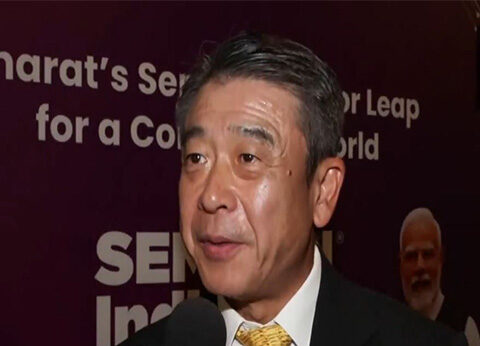
India a key market for semiconductor logistics, says Nippon Express executive

NEW DELHI: Katsuhito Kobayashi, Executive Officer & Regional General Manager of Nippon Express (South Asia and Oceania) PTE Ltd, emphasised India’s growing strategic importance in global semiconductor logistics.

Highlighting the industry’s highly sensitive supply chain needs, Kobayashi reaffirmed Nippon Express’s commitment to delivering high-quality logistics services in India — on par with global standards.
He expressed readiness to support the Make in India semiconductor mission, including potential hubs like Gujarat, positioning Nippon Express as a key enabler in India’s semiconductor ecosystem.

Speaking to ANI, on the sidelines of Semicon India 2025, Kobayashi said, , “… For our group, India is one of the most important markets.”

“And as we know, the semiconductor industry is one of the most important industry verticals. So, as I explained, logistics for semiconductors are very, very sensitive. Maybe we can try to deliver better service like we do in Japan or other countries, and we are happy to support Make in India semiconductor, maybe in Gujarat or any other place in India,” he added.

Speaking at the inaugural ceremony of India Semicon 2025, Prime Minister Shri Narendra Modi said that the day is not far when the smallest chips made in India will drive the biggest change in the world.
India has emerged as a major attraction for the semiconductor players. On August 28, a major milestone in India’s semiconductor journey was achieved with the launch of one of the country’s first end-to-end Outsourced Semiconductor Assembly and Test (OSAT) Pilot Line Facilities in Sanand, Gujarat.

Semiconductor company CG-Semi is expected to roll out the first ‘Made in India’ chip from this pilot facility.

The India Semiconductor Mission (ISM), launched with a Rs 76,000 crore outlay, is the Indian government’s comprehensive program approved by the Union Cabinet in December 2021 to build a robust semiconductor and display manufacturing ecosystem in the country, aiming to strengthen India’s position in global electronics value chains.

Source: ANI

Mitsui O.S.K Lines looking for shipbuilding tie-ups with Indian shipyards

TOKYO : Japanese shipping company Mitsui O.S.K. Lines (MOL) is in talks with the Indian government to build ships in partnership with local yards.

The company operates 13 ships of different sizes and categories in India, and is the fourth largest fleet operator in the country. It aspires to become the second-largest fleet operator, Anand Jayaraman, MOL (India) South Asia Middle East Region executive officer, said.

“Aligning with the government of India’s push, we are discussing with the government to build ships in India…Shipbuilding is a high capital-intensive business. We will work with shipyards,” he told reporters in New Delhi. He added that MOL is a ship-owning company and will collaborate with shipyards in India for its requirements of ships. Depending on the position of Indian shipyards to deliver ships, orders will be placed, Jayaraman said, adding that MOL India will soon place an order for medium-range ship tankers from Cochin Shipyard.

“We want to be a part of India’s maritime growth story…We want to be the leader in green shipping,” he said. Jayaraman also announced that MOL India will enter into railway logistics very soon, and some announcement in this regard may come this year or early next year.

The company also plans to pick up minority stakes in 3-4 startups and pursue acquisitions to bolster its air freight operations, particularly in northern India.

India’s ministry of ports, shipping and waterways is working on a set of initiatives to boost shipbuilding in the country. One plan is to develop at least three greenfield shipbuilding cluster on both sides of Indian coast while also developing a couple of projects under the brownfield route, Mint reported earlier.

As part of its shipbuilding plan, India is also talking to companies in Japan and Korea to explore setting up their manufacturing and ship repair facility in India.

Currently, India holds less than 1% of the global shipbuilding market, dominated by China, South Korea, and Japan.

SDHI & IMU sign MoU to launch maritime Centres of Excellence, specialized workforce training programmes

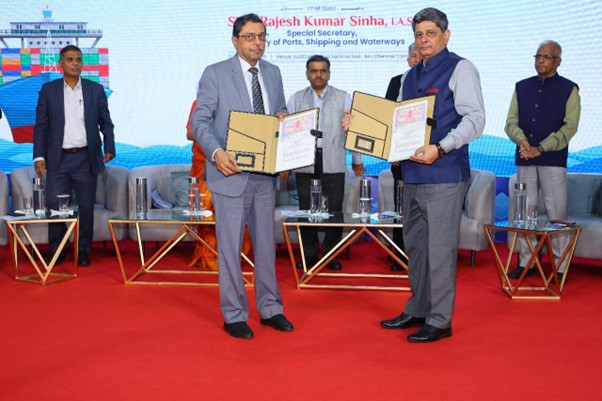
MUMBAI: Swan Defence and Heavy Industries Limited (SDHI), India’s largest shipbuilding and heavy fabrication company, announced the signing of a Memorandum of Understanding (MoU) with the Indian Maritime University (IMU), the country’s premier maritime academic institution. The partnership aims to accelerate maritime education, research, and skill development, and prepare the next generation of professionals for career opportunities across India’s growing shipbuilding and heavy fabrication sectors.  

The MoU was signed by Rajeev Nayyer, Advisor at SDHI, and Cmde. K. D. Joshi, Controller of Examinations at IMU, in the presence of Shri Rajesh Kumar Sinha, IAS, Special Secretary, Ministry of Ports, Shipping and Waterways (MoPSW), Dr. Malini V. Shankar, IAS (Retd.) Vice‑Chancellor of IMU, and other dignitaries. The ceremony took place during a thematic session hosted by IMU at its Chennai campus recently. The session served as a precursor to the mega global event India Maritime Week (IMW) 2025 by the Ministry of Ports, Shipping and Waterways.

This strategic partnership is aimed at strengthening India’s vision of becoming a global leader in the maritime sector while generating employment opportunities and fostering a highly skilled workforce. The collaboration aligns with SDHI’s commitment to advance indigenous shipbuilding capabilities and meet the evolving demands of the global maritime industry.

As part of the partnership, SDHI and IMU will set up and develop specialised Centres of Excellence covering training, research and innovation in shipbuilding and naval architecture sectors at India’s largest shipyard and IMU campuses. SDHI shall engage its shipyard to provide hands-on industrial training to students at the maritime university. To integrate academic excellence with practical industrial exposure, the partners will create industry-aligned training and research programmes. SDHI and IMU will also explore joint initiatives with educational institutes, vocational training providers, and government departments to advance skill development in line with India’s maritime vision.

On the signing of the MoU, Rajeev Nayyer, Advisor, Swan Defence and Heavy Industries, said, “We believe that India’s maritime future rests on a strong foundation of talent and technology.  This partnership combines IMU’s academic expertise with SDHI’s industrial strength to create world-class platforms for training, research, and innovation. Together, we aim to nurture the next generation of maritime and shipbuilding professionals who will drive India’s self-reliance and global competitiveness in this sector.”

About Swan Defence and Heavy Industries:

Swan Defence and Heavy Industries Limited (SDHI), formerly known as Reliance Naval and Engineering Limited, is a leading shipbuilding and heavy fabrication company in India. Strategically located on the west coast of India, the shipyard operates the country’s largest dry dock (662m x 65m) and has an impressive fabrication capacity of 144,000 tons per annum – providing an unmatched advantage in fulfilling India’s maritime and industrial ambitions. SDHI is committed to innovation, excellence, safety, and sustainability.

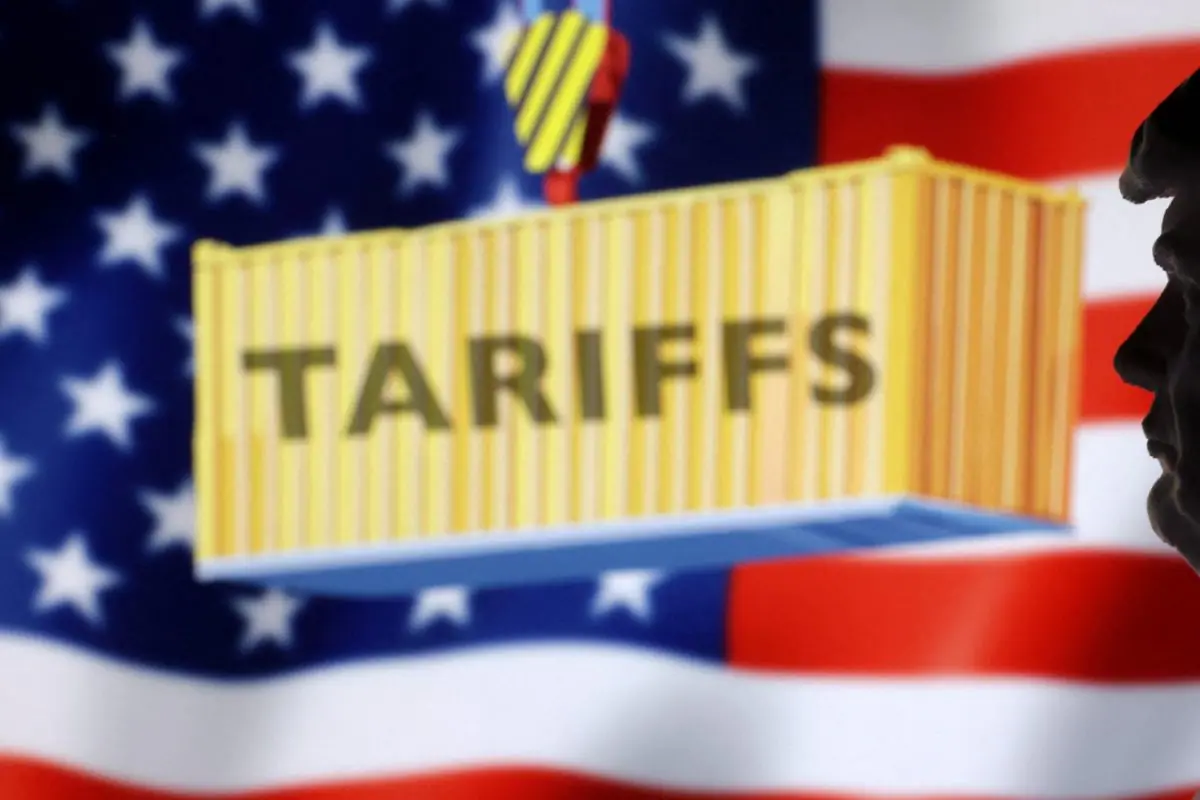
“We get along with India very well, but…”: Trump defends 50% tariff, calls ties “one sided”

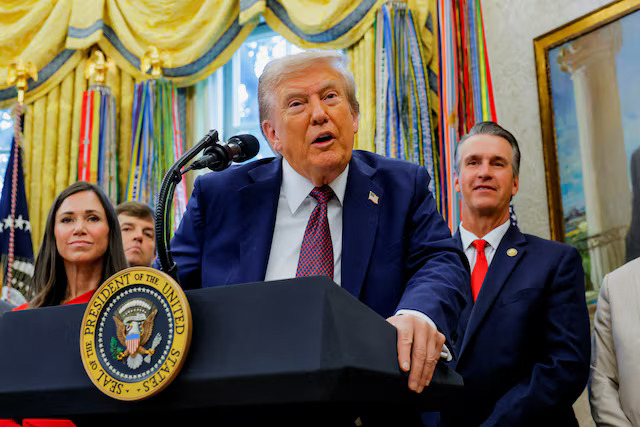
WASHINGTON D.C.: Days after US President Donald Trump justified the 50 percent tariffs imposed on Indian imports, claiming that the business ties between the two nations had been “totally one-sided” for many decades, the latter once again on Tuesday (local time) staunchly defended his position while stating that New Delhi was getting along with Washington “very well”.

Responding to queries about reconsidering the tariffs on India at the White House, Trump reiterated that the trade relationship with India had been “one-sided” for many years, claiming that New Delhi had been charging the US some of the highest tariffs in the world, creating an imbalanced trade scenario.

“We get along with India very well. But India, for many years, it was a one-sided relationship… India was charging us tremendous tariffs. They were the highest in the world… And we, therefore, were not doing business with India, but they were doing business with us because we weren’t charging them foolishly… So they sent in everything they made and poured it into the country… But we would not send in anything, as they were charging us with 100 per cent tariffs,” the US President said.

He gave the example of the American motorcycle company Harley Davidson, highlighting the challenges faced by it due to what he claimed was a 200 per cent tariff on motorcycles imported into India.

“Harley Davidson couldn’t sell in India, as there was a 200 per cent tariff on a motorcycle… Harley Davidson went to India and built a motorcycle plant, and now they don’t have to pay tariffs,” he added.

Trump also pointed out that thousands of companies, especially car manufacturers from China, Mexico, and Canada, are choosing to build their products in the US to avoid tariffs and benefit from protective policies.

“Now thousands of companies are coming into the US… Traditionally, car companies… They are coming from China, Mexico, Canada… They want to build here because, number one, they like to be here, and number two, the tariffs are protecting them. And number three, they want to avoid paying tariffs. When you build their cars here, you don’t have any tariffs,” he further stated.

Earlier in a post on Truth Social, the US President had claimed that the business relationship between India and the US for many decades has been “totally one-sided”, “one-sided disaster” and also that “they have now offered to cut their tariffs to nothing, but it’s getting late”.

He stated that India has charged the US “such high tariffs, the most of any country, that our businesses are unable to sell into India”.

“What few people understand is that we do very little business with India, but they do a tremendous amount of business with us. In other words, they sell us massive amounts of goods, their biggest “client,” but we sell them very little – Until now a totally one sided relationship, and it has been for many decades. The reason is that India has charged us, until now, such high Tariffs, the most of any country, that our businesses are unable to sell into India,” he said.

“It has been a totally one sided disaster! Also, India buys most of its oil and military products from Russia, very little from the U.S. They have now offered to cut their Tariffs to nothing, but it’s getting late. They should have done so years ago. Just some simple facts for people to ponder!!!” the post added.

New Delhi is facing global uncertainties due to heightened economic tensions following the US imposition of a 50 per cent tariff on Indian imports, which was supplemented by an additional 25 per cent due to its purchase of Russian crude oil.

Source: ANI

Trump says India offered to reduce tariffs on US goods to zero

WASHINGTON : U.S. President Donald Trump said on Monday that India has offered to reduce its tariffs on U.S. goods to zero, even as Indian Prime Minister Shri Narendra Modi was making public shows of solidarity with Chinese and Russian leaders in the face of trade pressure from Washington.
While calling the U.S. relationship with India “one sided,” Trump wrote on his Truth Social platform: “They have now offered to cut their Tariffs to nothing, but it’s getting late. They should have done so years ago.”

The Indian Embassy in Washington did not immediately respond to Trump’s comments, which follow the implementation of total duties as high as 50% on Indian goods that have raised questions about the future of the U.S.-India relationship.
Trump’s remark came as Modi was in China for a summit of more than 20 leaders of non-Western countries of the Shanghai Cooperation Organisation, a China-backed initiative given renewed impetus by Trump’s global tariff offensive. At the summit, Chinese President Xi Jinping pressed his vision for a new global security and economic order that prioritizes the “Global South,” in a direct challenge to the U.S.

The U.S.-India relationship has strengthened in recent years, including during Trump’s first term, given shared concerns about China’s growing power, but Trump threatened the tariffs on India after it refused to stop buying Russian oil in defiance of his efforts to end Moscow’s war in Ukraine.

In China, in an image designed to convey solidarity, Putin and Modi were shown holding hands as they walked jovially toward Xi before the summit opened. The three men stood shoulder-to-shoulder, laughing and surrounded by interpreters.

Beijing has used the summit to mend ties with New Delhi. Modi, visiting China for the first time in seven years, and Xi agreed on Sunday their countries are development partners, not rivals, and discussed ways to improve trade. The U.S. State Department and White House did not immediately respond to requests for comment on the meetings in China.

Freight operations on Dedicated Rail Corridors soar 47 % in 2024-25 with over 1.3 lakh train trips

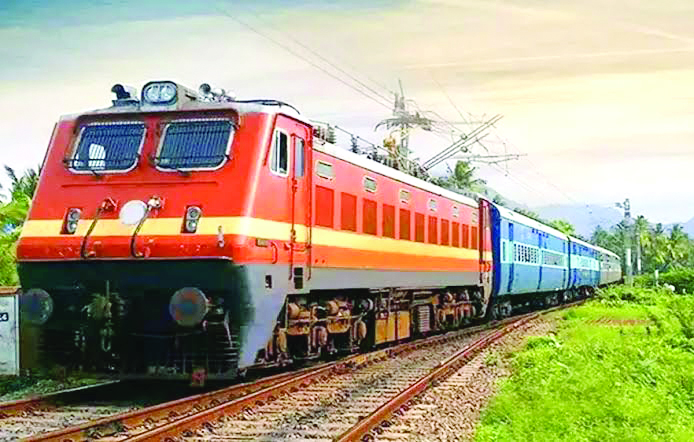
NEW DELHI : The Eastern and Western Dedicated Freight Corridors recorded a 47 percent rise in train operations in 2024-25, with the number of trips increasing from 88,225 in 2023-24 to 1,30,116, news agency PTI reported, citing officials.

Containers accounted for 24 per cent of the cargo, coal 19 per cent, and miscellaneous items 11 per cent.

Other commodities, including cement, iron and steel, foodgrains, fertiliser, and petroleum products, made up between 1 per cent and 4 per cent each.

The Dedicated Freight Corridor Corporation of India Limited (DFCCIL) credited the growth to new freight terminals and sidings under the Gati Shakti Cargo Terminals initiative.

The two corridors cover 2,843 km, of which 2,741 km is operational.

The remaining 102 km stretch between Vaitrana and Jawaharlal Nehru Port Trust (JNPT) is expected to be commissioned by December 2025. The Western Corridor runs 1,506 km from Dadri to JNPT, with 93.2 per cent operational, while the 1,337 km Eastern Corridor is fully functional.

Freight services have steadily risen since the first 331 km was opened in 2020.

“Today, over 350 trains operate daily on both corridors, and once the Western side is fully commissioned, we expect exponential growth,” a DFCCIL official was quoted as saying by PTI.

However, the officials reportedly added that the vacant train trips were about 34 per cent of the total trips in 2024-25.

They added that mostly coal and cement wagons return vacant as it is not possible to use these wagons for other products.

To reduce empty runs in cases where it is possible, the Railway Ministry is offering up to 20 per cent discounts on return trips and deploying multi-purpose wagons.

Officials also said DFCCIL has opened a public-private partnership model for new sidings and freight terminals at its 115 stations, allowing private players to participate in operations.

Source : PTI

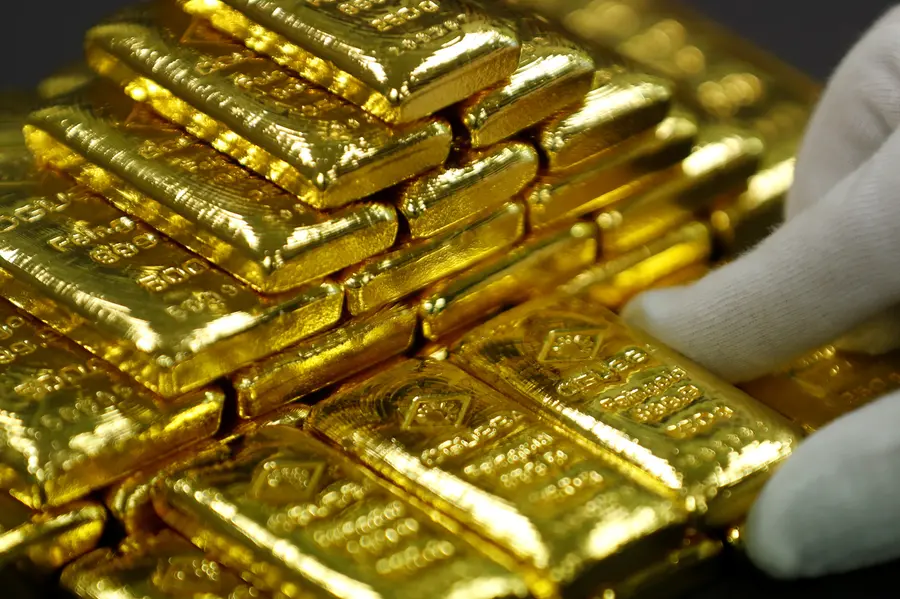
1,000-Crore gold export fraud at Chennai Airport, 5 Customs officials named

NEW DELHI : The Central Bureau of Investigation (CBI) has registered a First Information Report (FIR) in connection with a massive gold export fraud at Chennai Airport Cargo, where a nexus of Customs officials and jewellery traders allegedly defrauded the Union government of over Rs 1,000 crore annually between 2020 and 2022.

The FIR names 13 accused, including five Customs officials, a jewellery assessor, a customs agent, and four gold jewellery manufacturers.

Those booked include Customs Superintendents J. Sureshkumar, Alok Shukla, and P. Tulasiram, jewellery assessor N. Samuel, customs agent Mariyappan, and manufacturers Deepak Siroya, Santosh Kothari, Sunil Parmar, and Sunil Sharma.

According to investigators, the accused imported 24-carat gold bars under the Duty-Free Import Authorisation (DFIA) scheme, which mandated that the bars be converted into 22-carat ornaments for re-export.

Instead, they allegedly exported gold-plated brass and copper ornaments or substandard jewellery, pocketing the margins and causing massive losses to the exchequer.

The racket first surfaced in 2022 when the Central Revenue Intelligence (CRI) detected anomalies in bills of lading for consignments headed to Gulf countries. Physical inspections revealed fake or inferior ornaments instead of genuine gold jewellery.

CRI then recommended a CBI investigation, though sanctions to prosecute Customs officials delayed the case. The Union government recently granted permission, enabling the agency to move forward. Since registering the case, CBI teams have carried out searches at the Chennai Airport Customs Cargo Office, residences of Customs officials in Pallavaram, Alandur, Nanganallur, and Anna Nagar, as well as jewellery shops and manufacturers’ offices in Flower Bazaar, Sowcarpet, and Kondithope.

Officials also examined the XRF Spectrometer used to test gold purity at the cargo terminal and seized incriminating documents.

CBI sources said the case highlights systemic vulnerabilities in customs checks and misuse of trade facilitation schemes.

With evidence still being gathered, officials indicated that more individuals may be brought under the scanner and that the scam could emerge as one of the largest financial crimes linked to airport cargo operations in the country.

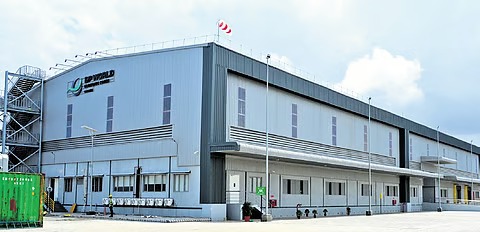
DP World’s Cochin FTWZ drives spice export growth with tech, infrastructure

KOCHI : Driven by supportive policies and expanding global market, DP World’s Cochin Free Trade Warehousing Zone (FTWZ) — which already handles a significant share of India’s spice trade, is poised for further growth with investments in temperature-controlled warehousing for sensitive commodities such as cardamom to create a resilient and future-ready hub for India’s growing spice trade, said Ranjit Ray, Senior Vice President – Economic Zones and Contract Logistics, MENA and India Subcontinent, DP World.

Over the past year, there has been a marked increase in demand from spice exporters, who benefited from using the FTWZ facility to enhance their export efficiency and competitiveness, thus reflecting the growing importance of Cochin as both a manufacturing and trading hub, he said.

While global challenges—such as tariff changes in the US—pose occasional headwinds, FTWZs provide a strategic buffer, ensuring cargo integrity and supply chain agility amid shifting trade dynamics. Freight rates, though variable, have not dampened the outlook for spices, a commodity with enduring global demand, he said in an email interaction.

Set for global leadership
He is confident that with infrastructure support, digital adoption and Kerala’s natural advantages, India’s spice sector is well-positioned to strengthen its leadership in the global market.

The Cochin FTWZ is uniquely equipped to serve the spice sector, offering over 67 value-added services, including fumigation, plant quarantine, labelling, repackaging, and quality inspections. These facilities safeguard product integrity while ensuring compliance with stringent global standards. For exporters, the benefits translate into faster access to international markets, optimised inventory management, and reduced spoilage—key to sustaining Kerala’s global reputation for premium spices.

The backbone of India’s spice trade is its network of MSMEs. For these businesses, digital platforms and integrated logistics are proving transformative. National initiatives, such as the Unified Logistics Interface Platform (ULIP), Open Network for Digital Commerce (ONDC), and National Logistics Portal (NLP), are simplifying exports by enhancing transparency, enabling real-time cargo tracking, and streamlining compliance.

Benefitting MSMEs
Within DP World’s ecosystem, technology-driven platforms like Cargo Flow further extend these benefits. With IoT-enabled tracking, digital documentation, and single-window customs clearance, exporters can cut lead times, reduce delays, and ensure reliable delivery schedules. For MSMEs, this levels the playing field, allowing them to scale their operations, meet international standards, and confidently compete with global players. With modern warehousing and logistics infrastructure, the state is evolving into a global sourcing hub.

Facilities such as moisture-controlled storage, pest-controlled handling, and sampling support at Cochin FTWZ not only preserve quality but also facilitate informed decision-making for international buyers, he said.

In FY 2024–25, India exported nearly 18 lakh tonnes of spices, valued at over $4.7 billion, a 17 per cent year-on-year growth, according to Spices Board figures. Much of this momentum is driven by Kerala’s premium produce, including pepper, cardamom, turmeric, nutmeg, and cloves. Yet, what is propelling this traditional sector into a modern global force is the synergy of Free Trade Warehousing Zones, digital innovation, and logistics support

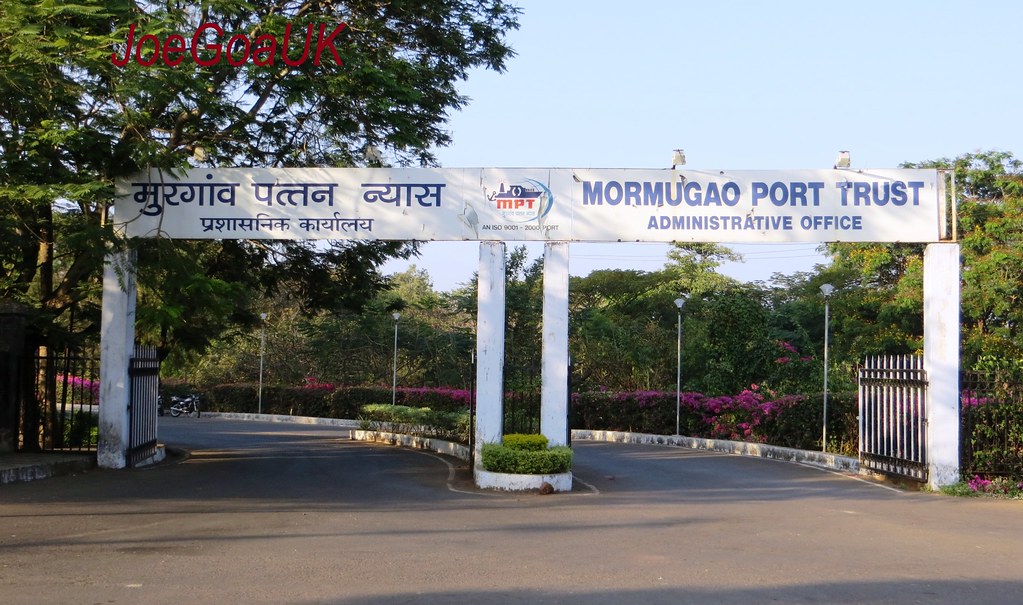
Mormugao Port’s berth 9 gets clearence for re-development

GOA : Mormugao Port Authority (MPA) getting ready with environmental clearances secured, to undertake a major dredging and redevelopment project aimed at transforming the port’s capacity and versatility.

The initiative, expected to span four years, will see the port’s approach channel deepened from its current 14.4 metres to nearly 20 metres, enabling it to accommodate Capesize vessels. “We have a plan to dredge our approach channel to 19.5m to bring the Capesize vessels. The Centre is keen to have deep-draft berths at major ports,” said MPA Vice-Chairman Vinayaka Rao. A consultant will soon be appointed to prepare the detailed project report, with government support sought to accelerate progress.

Alongside the dredging, MPA has also obtained clearance to redevelop Berth 9, once home to a mechanical ore handling plant, into a modern multi-cargo facility. A consultant is already engaged to design the berth “with a vision for the next 50 years,” Rao added.

Berth 9 represents the last unmonetised berth at MPA. A previous attempt to redevelop it, along with three barge jetties through the PPP route at an estimated cost of ₹842 crore, failed to materialise due to uncertainties surrounding the resumption of iron ore mining in Goa. Talks with Goa Shipyard Limited (GSL) on setting up a ship repair and refit facility also stalled after negotiations fell through.

The port is now offering 200–250 metres of waterfront area at Berth 9, which was earlier used for iron ore handling for three decades. “We need approvals from the Government of India and will be approaching the Centre in September. By December-January, we expect all approvals to be in place. The berth construction itself will take about 24 months, with the tendering process to be completed by year-end,” Rao said.

Together, the deepening of the channel and redevelopment of Berth 9 are expected to reposition Mormugao as a future-ready multi-cargo hub, strengthening its role in India’s maritime and trade network.