Home Blog Page 694

Analysis: Tendering in times of volatility – how can ocean container shippers achieve financial savings and supply chain resilience?

By Emily Stausbøll, Senior Shipping Analyst – Xeneta

If you are a business preparing a budget ahead of tendering for your next long term ocean container shipping contract, where do you start given the massive supply chain volatility during 2025 in the wake of US tariffs and trade wars?

In a hypothetical scenario where your current long term contract entered validity on 1 January 2025 following a tender in Q4 2024, you are likely facing a very different scenario ahead of negotiations in Q4 this year for your next agreement starting on 1 January 2026.

This blog will use this scenario to demonstrate the strategies shippers can adopt to identify opportunities – and risk – by assessing the contrasting landscape across four of the world’s ocean container trades:

  • Far East to North Europe
  • Far East to South America East Coast
  • Far East to US West Coast
  • North Europe to Far East

Compare your current rate with today’s market

A good starting point is to look at the current rate level in the long term market and compare it to your existing agreement, even if that means (for now) ignoring volatility in spot and long term rates in the intervening months. To be clear, the spot market will still be an important factor in your long term contract tender strategy, as this blog will demonstrate.

Once you have this direct comparison, you can begin to use data to understand how these rates are likely to develop ahead of your next tender and the reduction (or increase) you could expect compared to your current contract.

 Av. long term rate 1 Jan 2025
(USD per FEU)
Av. long term rate 19 Aug 2025
(USD per FEU)
Difference
Far East to North Europe28152180
-23%
Far East to South America East Coast40772420
-41%
Far East to US West Coast33072000
-40%
North Europe to Far East258152-41%

In the case of Far East to North Europe, a shipper is looking at a reduction of 23% compared to their existing agreement if they locked in at today’s long term market average.

Even in a conservative scenario with rates rising 10% from today to 1 January 2026, shippers would still be getting a 15% reduction in rates compared to 1 January this year.

On the other three trades, the decline is even steeper with long term rates down more than 40% compared to 1 January 2025. This doesn’t tell the whole story however, because while there may be opportunity for greater savings where long term rates have fallen harder, there can also be more risk.

Spot rates will impact long term market

The forecast for the remainder of 2025 across the world’s major trades is further decline in spot rates, which will put further downward pressure on long term rates. A declining spot market during negotiations in Q4 will impact market sentiment and make it more difficult for carriers to argue for higher long term rates.

 Av. spot rate 1 Jan 2025
(USD per FEU)
Av. spot rate 19 Aug 2025
(USD per FEU)
Difference
Far East to North Europe48443102-36%
Far East to South America East Coast60703982-34%
Far East to US West Coast58431920-67%
North Europe to Far East353265-25%

In the case of Far East to North Europe, a shipper may be looking for a reduction in the new contract rate even greater than 23% given the expected downward trend for the remainder of 2025. It is a similar story across the other two fronthaul trades, in particular the Far East to US West Coast where spot rates are already down 67% compared to 1 January.

In the case of the backhaul from North Europe to Far East, given average long term rates are already record low, there is limited room for more significant declines. This highlights the need to understand these dynamics across the trades a shipper uses.

Where there is opportunity there is also risk

It must be stressed, this blog comes with the heaviest of caveats given the geo-political climate and black swan events hitting global supply chains with increasing regularity.

During black swan events, carriers prioritize containers being moved on spiraling spot rates. This means some shippers risk being unable to move their goods against a long-term contract if their rates are at the bottom end of the market. If they want to keep supply chains moving during the black swan, they may be forced to pay elevated spot rates or hit with big surcharges.

The spread between the spot rate and long term rate becomes extremely important. The higher the spread, the greater the risk, particularly for shippers with rates at the bottom end of the long term market.

TradeSpot-long spread 19 Aug 2025
(USD per FEU)
Far East to North Europe922
Far East to South America East Coast1562
Far East to US West Coast-80 (spot lower than long)
North Europe to Far East113

The table above casts the situation in a different light, in particular the risk of pushing for even lower long term rates.

A shipper may look at the long term rate decline of 41% into the South America East Coast and view this as an even bigger opportunity than the trade into North Europe where long term rates have decreased a lesser 23%.

However, the spot-long spread into the South America East Coast is already at USD 1562 per FEU. Pushing for even lower long term rates would potentially open this spread further – and therefore increase risk.

Note: it is likely that the spot-long spread on the South America East Coast trade will narrow by 1 January 2026 due to further declines in spot rates, but it is something a shipper should still factor in their strategy.

In the case of the US West Coast, average long term rates are down 40% compared to 1 January. With average spot rates now falling below long term rates on this trade, shippers could be forgiven for pushing even harder during the next tender negotiation.

But they should be careful how low they go…

Shippers have been caught out before

This could be a case of history repeating if shippers are not wise to the risk of chasing the bottom dollar in the new long term contract.

For example, on 1 October 2023, spot rates fell to USD 1712 per FEU on the trade from Far East to US West Coast. This was USD 163 below the average long term rate on the same day at USD 1875 per FEU, meaning shippers were looking for reductions during new contract negotiations.

Sound familiar?

Then the Red Sea escalated in December 2023 and by July 2025 average spot rates spiraled to USD 8010 per FEU. The spread between spot and long term rates was a massive USD 5645 per FEU, meaning those shippers who chased the bottom dollar in long term contract negotiations were heavily exposed.

Understand differences across trades

This blog is intended to share strategies for approaching tenders, but all trades behave differently and shippers must tailor their approach accordingly.

The backhaul trade from North Europe to Far East is included for this reason. The current average long term rate on this trade is record-low at just USD 152 per FEU (when terminal handling charges are excluded the rate is negative). Clearly there is little room for rates to fall further, but shippers can still use the situation to their advantage.

While rates may be low, carriers still value backhaul volumes. A shipper should be able to use volumes on a backhaul trade to strike a better rate or service levels when running their global tender.

Looking ahead

There are plenty of opportunities – and risk – for shippers in the upcoming tender seasons, but it requires an approach that balances financial savings against supply chain resilience.

For this reason, many shippers are now linking their new long term contract to the Xeneta index. This index—linked contract tracks the market against agreed thresholds, meaning the shipper benefits from a softening market, but is also protected from a spiraling spot-long spread in the event of another black swan.

Author:

Emily Stausbøll, Senior Shipping Analyst – Xeneta

Source: XENETA

Asia-USWC container rates nearing pre-Red Sea diversion levels

LONDON: Rates for shipping containers from east Asia and China to the US continued to fall this week, with rates to the US West Coast nearing where they were when carriers began avoiding the Red Sea because of attacks by Houthi rebels.

The sudden move to avoid the Red Sea and Suez Canal in November 2023 forced carriers to use the much longer route around the southern tip of the African continent and sent rates soaring because the longer voyage tightened capacity.

Drewry WCI Asia-USWC container rates nearing pre-Red Sea diversion levels

Rates to the USWC from supply chain advisors Drewry fell by 3% this week, as shown in the following chart, and are now just about $75/FEU (40-foot equivalent unit) higher than in November 2023.

Container rates continue to fall as transpacific trade is experiencing a weak peak season after many retailers pulled forward volumes to get ahead of US tariffs, and capacity is ample even as carriers use blank sailings and other tools in efforts to support the falling rates.

Drewry expects rates to be less volatile in the coming weeks as shippers respond to a decelerating US economy and increased tariff costs by scaling back on procurement.

Drewry is still forecasting rates to fall further in the second half of the year as it anticipates the supply-demand balance to weaken further.

Rates from online freight shipping marketplace and platform provider Freightos fell by 8% to the West Coast and are about $140/FEU from where they were in November 2023.

Judah Levine, head of research at Freightos, said daily rates are level with where they were at the start of the Red Sea crisis.

The SCFI Shanghai-USWC rate fell 4% week on week to $1,759/FEU and is now down 69% since 1 June amid sluggish peak season demand, despite carrier efforts to curb capacity on the route.

Container ships and costs for shipping containers are relevant to the chemical industry because while most chemicals are liquids and are shipped in tankers, container ships transport polymers, such as polyethylene (PE) and polypropylene (PP), are shipped in pellets. Titanium dioxide (TiO2) is also shipped in containers.

They also transport liquid chemicals in isotanks.

LIQUID TANKER RATES STEADY-TO-LOWER
US chemical tanker freight rates assessed by ICIS were steady lower this week with rates on the transatlantic route edging lower on the high side as most trade lanes are facing downward pressure.

The route to NW Europe remains relatively inactive and a tighter position list has kept the rates firm. Several market participants were seen quoting styrene and methanol to the region. There have only been a few cargos fixed.

There continues to be downward pressure on rates along the USG-Asia trade lane as charterers are still in wait-and-see mode. Besides COA (contract) cargo there is very little seen in the market. Also, there are very few new spot enquiries, therefore the shorter tonnage list supports the rates. The usual spot cargoes of methanol from Jose to China are the only ones reported, leaving methanol requirements from the region active to Asia.

From the USG to Brazil, this trade lane remains unusually quiet and in turn rates seem to have steadied. Fewer fixtures were noted this week, and the lack of prompt availability seems to indicate supply is somewhat tight and therefore owners appear to be cautious about letting rates decline any further.

The USG to India route has not seen an uptick in inquiries over the last week with no confirmed fixtures, leading to lower rates along this trade lane. There was only one new inquiry for September dates. Along with the other regions, freight rates are widely viewed as softer.
Source: ICIS

Baltic Exchange’s Container Report – Week 34

LONDON: While we have seen China and the United States extend their tariff pause for a further 90 days from 12 August, we wait to see if they can reach a satisfactory trade deal for both sides, with tariffs currently set at 30% between the two countries.

Liner companies have continued to blank services to stabilise rates and this appears to be having the desired effect with the slowdown in rates coming off.

Across the FBX suite of routes, we have seen a downward trend in all rates ex China since the start of the month. FBX01 (China/East Asia – US West Coast) ended the week at $1,742/FEU, down $627/FEU from start of August. FBX03 (China/East Asia – US East Coast) ended the week at $2,726/FEU down $979 compared with start of the month. FBX11 (China/East Asia – North Europe) ended the week at $2,953/FEU down $504 on the start of the month and down $139 from last Friday. FBX13 (China/East Asia – Mediterranean) ended the week at $3,080/FEU down $47 from last Friday and down $126 from the start of August.
Source: Baltic Exchange

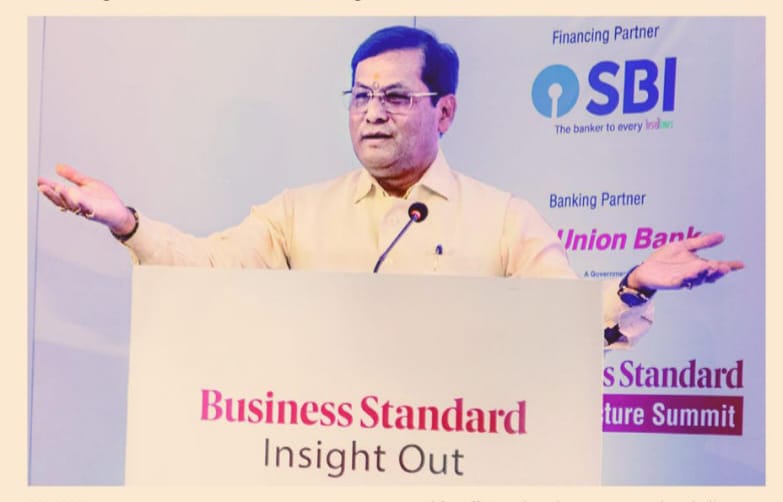
We are going to become world’s no 1 Economy by 2047 : Sonowal at BS Infra

NEW DELHI : Union Minister of Ports, Shipping and Waterways Shri Sarbananda Sonowal said that India is on track to become the world’s number one economy by 2047, backed by massive infrastructure expansion and maritime reforms.

Speaking at the Business Standard Infrastructure Summit, Sonowal said, “India will become world’s number one economy by 2047. Our target is very clear: by then, the cargo handling capacity of Indian ports will increase to 10,000 million metric tonnes. As a shipbuilding nation, we aim to be among the world’s top 10 by 2030 and top five by 2047.”

Sonowal underlined that Prime Minister Shri Narendra Modi has laid out a grand vision of making India a “Viksit Bharat“, a self-reliant economy worth $30 trillion by the time the country completes 100 years of Independence. 50 PPP projects worth over ₹60,000 crore identified – Modi Govt aims to raise share of private participation in Major Ports to 85% by 2030.

“A decade back, India was lingering at the 11th position in global ranking of economies. Within a short span of time, we have jumped to the fourth position, and very soon, we are going to be the third largest economy of the world,” he said.

The minister credited this rise to a clear strategy, good governance, reforms, and large-scale infrastructure development.

Massive boost in capital expenditure

Highlighting the government’s investment push, Sonowal said the Union Budget this year allocated ₹11.21 trillion for capital expenditure, compared to just ₹2 trillion in 2014. “Our government, under the dynamic leadership of Prime Minister Narendra Modi, has embarked on this ambitious journey to revolutionise the country’s infrastructure landscape, aiming to bolster economic growth while ensuring environmental balance,” he said.

Sonowal criticised the UPA regime, saying no meaningful reforms were made in the maritime sector between 2004 and 2014. “They sadly had no vision for the maritime sector. They were sea blind. It required the visionary leadership of our Prime Minister to revive the sector and restore its ancient glory,” he said, referring to initiatives such as Maritime India Vision 2030 and Maritime Amrit Kaal Vision 2047.

The government has scaled up investment in the sector to ₹80 trillion, focusing on port capacity expansion, digitalisation, automation, green hydrogen hubs, coastal tourism, and skill development, he said.

Legislative and policy overhaul

Sonowal said maritime infrastructure was stuck with outdated colonial-era laws. “Our nation was saddled with more than 1,500 legislations, many pre-constitutional. Who would have done business with such a nation?” he asked.

He added that while only one maritime law was enacted under UPA, the Modi government has brought in 11 new legislations in the past decade. Recently, five landmark laws were passed to align India’s maritime framework with global best practices.

The Indian Ports Bill 2025 now provides clear provisions for PPP and foreign investment, giving ports greater autonomy. The government has also identified 50 PPP projects worth over ₹60,000 crore to be taken up in coming years, with a target to raise private participation in major ports to 85 per cent by 2030.

Major projects and global competitiveness

Sonowal said nearly 840 projects worth ₹5.8 trillion are being implemented under the Sagarmala Programme, of which 272 have been completed.

The Greenfield port at Vadhavan in Maharashtra, with an investment of ₹76,000 crore, will become India’s largest port by capacity.

Indian ports, he added, are now globally competitive. “The average container dwell time for India has improved to only three days, compared to four days in UAE, seven in the US, and 10 in Germany. Our turnaround time of 0.9 days is better than advanced maritime nations such as the US, Australia, Belgium, Canada, Germany and Singapore.”

Currently, nine Indian ports feature in the world’s top 100 container ports, with Visakhapatnam Port ranked among the top 20 globally.

Jobs and growth opportunities

Sonowal further said that investments in maritime infrastructure, shipbuilding, and port-led industrialisation will generate millions of jobs in the country.

“Our ports must be seamlessly connected to railways and roadways, and industries meant for global markets should be located close to ports. This integrated approach will boost exports and growth,” he said.

Vijay Kumar appointed as the new Secretary of MoPSW

NEW DELHI : Shri Vijay Kumar has been named as Secretary, Ministry of Ports, Shipping and Waterways. He is currently the Chairman of the Inland Waterways Authority of India. Kumar has been appointed the Officer on Special Duty (OSD), Ministry of Ports, Shipping and Waterways. The officer will take over as the Secretary in the ministry after the superannuation of Shri T K Ramachandran on September 30, the order said.

The Appointments Committee of the Cabinet (ACC) on Friday cleared a major reshuffle of fourteen secretary-rank IAS officers across various ministries and departments.

The appointments, which include several officers on special duty (OSD) who will take charge upon the superannuation of the incumbents, are aimed at bringing new leadership to key positions in the Central government.

The Appointments Committee of the Cabinet, chaired by the Prime Minister,is a high-level panel within the Government of India responsible for appointing senior officials to key positions in the central government and public sector undertakings.

Auto sector will continue to grow, our exports go beyond US, says Nitin Gadkari as Trump tariff deadline looms

NEW DELHI : Union Roads, Highways and Transport Minister Shri Nitin Gadkari has said that India’s automobile sector is strong and will continue to grow, as it exports to many more countries than the United States.

The minister made these comments in an interview, with less than a week to go for the US’ additional 25 percent Russia oil penalty to kick in on Indian goods. The US is already levying an increased 25 percent tax on Indian imports, with the Russia levy, the duty will climb to 50 percent.

“Our automobile sector is strong and continues to grow … I am confident that the way we are working on alternate fuels, bio fuels, electric, ethanol, methanol, (and) biodiesel, we will be the number one automobile market in the world,” Gadkari told in an exclusive interview.

Tatas, Mahindra and Mahindra are making good electric vehicles and won’t be impacted by Tesla’s entry, the minister said, adding the future of auto industry looks “very good”. While India exports to the US, it also exports to other countries, Gadkari added.

While India’s auto exports rose 14 percent year-on-year in the first half of FY25 to 2,528,248 units, it doesn’t export much to the US. In 2024, India’s passenger car exports to the US were worth $8.9 million and auto parts $2.2 billion.

According to a report from the heavy industries ministry, India exported automobile and auto components worth $35 billion in FY25. Saudi Arabia, South Africa, Mexico and the United Arab Emirates are the top destinations for Indian autos.

“When I became minister of roads, transport and highways in 2014, we were at number 7 in the world. Now we are at number 3. America’s size of the market is Rs 78 lakh crore, China is Rs 49 lakh crore and we are a Rs 22 lakh crore automobile market,” he added.

When asked if the Indian EV sector was ready to face competition from EV giants like Elon Musk-led Tesla, Gadkari said, “Anyone who wants to come to the Indian market can. Indian EV makers like Tatas, Mahindra are making good models.”

In terms of design, quality, cost Indian automakers are making good models. “The Indian EV market is projected to reach over $110 billion by 2029 and is dominated by domestic players,” he said.

“Tesla is the latest entrant in the market and will be launching its imported Model Y SUV. However, the company faces high import duties that with lack of local manufacturing will make it prohibitively expensive for a majority of Indians.”

To a question if the government would extend more support to the EV sector, Gadkari said the segment was growing and does not need schemes or further support. “In the coming times, I see a bright future for the Indian automobile sector,” the minister said.

India agrees to deepen maritime relations and form joint working group with Saudi Arabia

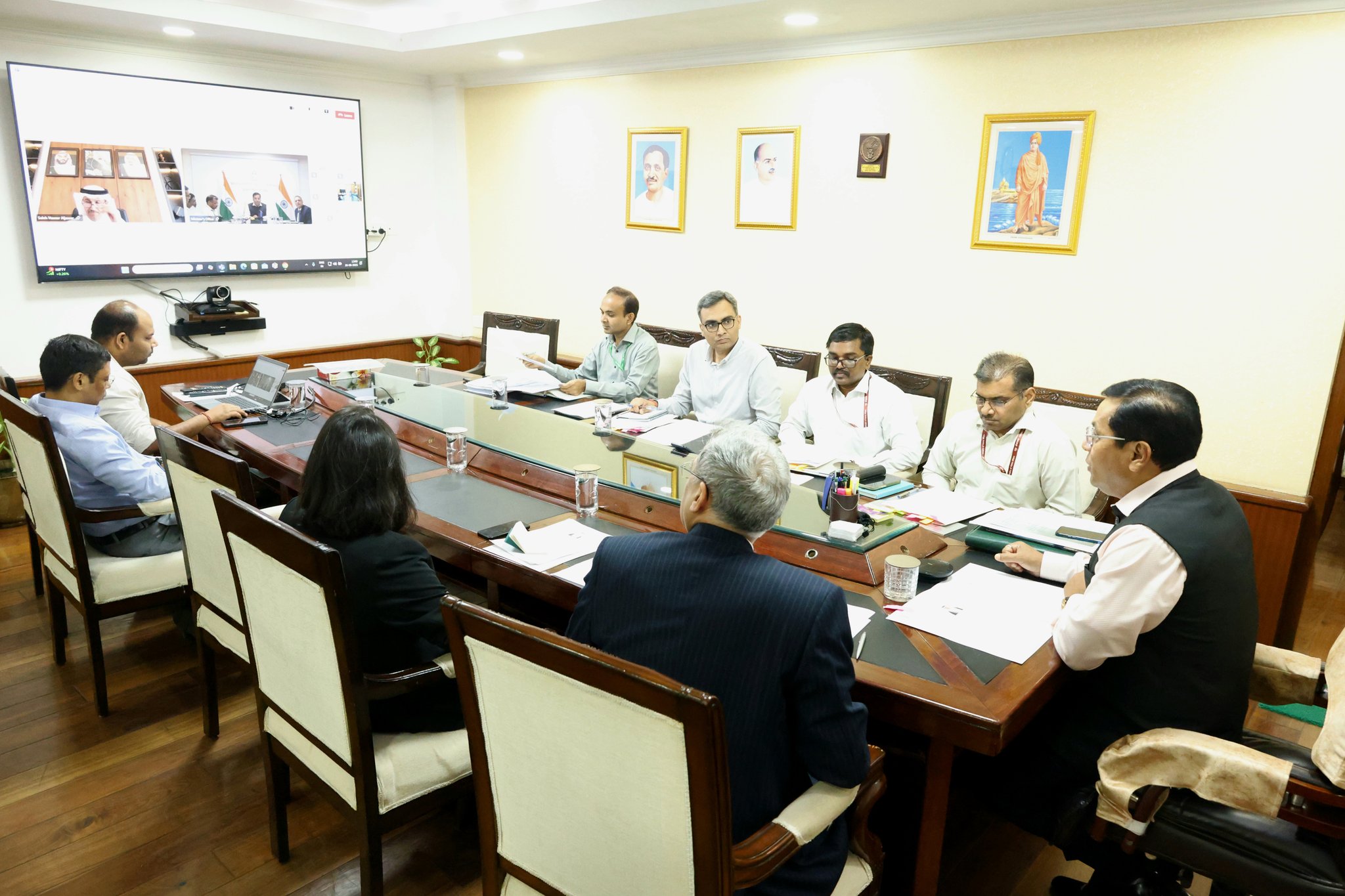
NEW DELHI : India and Saudi Arabia have agreed to deepen bilateral maritime relations, an official statement said recently. Both countries have formed a Joint Working Group (JWG) on maritime cooperation in the shipping and logistics sectors, marking a new chapter in the strategic partnership, the statement said.

This decision was taken during a high-level virtual meeting between Union Minister of Ports, Shipping and Waterways Shri Sarbananda Sonowal and Saudi Arabia’s Minister of Transport and Logistic Services Saleh bin Nasser Al-Jasser.

Shri Sonowal said: “Our Maritime India Vision 2030 and Amrit Kaal Vision 2047 align perfectly with Saudi Vision 2030, creating immense opportunities in ports, shipping & green hydrogen. We invite Saudi partners to explore the vast opportunities in India’s $1 trillion maritime investment landscape and look forward to welcoming a strong Saudi delegation to the India Maritime Week in October 2025.”

Why the Maritime Collaboration Matters
Historic and Economic Bonds
India and Saudi Arabia share centuries-old economic and socio-cultural links, which have evolved into a strategic partnership. With Saudi Arabia being India’s fifth-largest trading partner and India the second-largest for the Kingdom, the new maritime partnership aims to strengthen trade routes, reduce logistics costs, and create investment opportunities.

Current Bilateral Trade
India–Saudi trade volume (FY 2024–25): ~USD 42 billion

Key Features of the Maritime Agreement

  1. Formation of a Joint Working Group (JWG)
    Focuses on shipping and logistics cooperation
    Facilitates policy dialogue, investment planning, and project alignment
  2. Strategic Transport Corridors
    Highlighted project: Jeddah–Mundra/Nhava Sheva shipping route by Folk Maritime Services, expected to,
    Reduce transit times
    Lower trade costs
    Enhance connectivity between Indian and Saudi ports
  3. Digital Collaboration
    India proposed Saudi participation in the MAITRI digital platform
    Aims at harmonising maritime trade
    Supports paperless trade, cargo tracking, and logistics transparency
    Alignment of Strategic Visions
    India’s Vision
    Maritime India Vision 2030
    Amrit Kaal Vision 2047
    Saudi Arabia’s Vision
    Saudi Vision 2030
    These roadmaps prioritise:
    Port development
    Sustainable maritime logistics
    Private sector engagement
    Technology-driven maritime governance
    Key Indian Projects Open for Investment
    Vadhavan Port (Maharashtra) – major transshipment hub
    Outer Harbour Project at VO Chidambaranar Port (Tamil Nadu) – deep draft and cargo expansion potential
    India has invited Saudi Arabia to explore public-private partnerships in these mega projects.

Source : PTI

Piyush Goyal, reviews functioning of Plantation Boards

NEW DELHI: Union Minister of Commerce & Industry, Shri Piyush Goyal, reviewed the functioning of the Plantation Boards under the Department of Commerce – Spices Board, Tea Board, Rubber Board, Coffee Board and Turmeric Board. Senior officers of the Department of Commerce and the respective Boards attended the meeting.

Piyush Goyal 2 Piyush Goyal, reviews functioning of Plantation Boards

The Minister emphasized the need to expand export opportunities through market diversification, promotion of value-added products, maintenance of quality standards, and optimum utilization of the benefits available to India under various Free Trade Agreements (FTAs). He stressed on the promotion of brand ‘India’ by the Boards in collaboration with the India Brand Equity Foundation (IBEF), with each contributing equally. He suggested the establishment of a ‘Bharat Pavilion’ in all major international and domestic fairs to enable the Boards to collectively showcase their products. The Minister also directed that all Boards should promote their Geographical Indication (GI) products with ‘India’ incorporated as part of their logo.

Shri Goyal urged the Boards to ensure the welfare of growers, workers and their families through existing schemes. He underlined the need for skilling programmes for them and directed the Boards to coordinate with the Ministry of Skill Development and Entrepreneurship in this regard. He expressed satisfaction that capacity building and training programmes were already being undertaken to promote good agricultural practices, quality, and organic production. He further emphasized that all stakeholders of the Boards should be supported through ease of doing business measures, sensitization and outreach programmes.

The Minister also called upon the Boards to explore the creation of a common incubation centre, on the lines of the Atal Innovation Mission, to encourage research, innovation and start-ups.

Russia assures continuity in oil trade with India despite Trump tariffs

NEW DELHI : Russia on Wednesday dismissed apprehensions that sanctions and tariffs imposed by the United States and the European Union could disrupt its crude oil exports to India. Senior Russian officials emphasised that Moscow has devised a “special mechanism” to navigate punitive measures rolled out by the Donald Trump administration aimed at curbing Russian energy trade. They underlined that India remains a key strategic partner for Russia in the energy sector, and assured that oil flows will continue uninterrupted despite external pressures.

Russia continues to position itself as India’s “partner of choice” in the defence sector, with chargé d’affaires Roman Babushkin noting that recent hostilities between India and Pakistan in May had effectively served as a “successful battlefield test” for Russian military hardware, including the S-400 air defence system. Speaking at a media briefing, Babushkin reiterated Moscow’s commitment to deepening strategic cooperation with New Delhi, highlighting defence and energy as the twin pillars of the partnership. He also confirmed that President Vladimir Putin is scheduled to visit India later this year for the annual bilateral summit, though the exact dates are still being worked out.

India has emerged as the second-largest buyer of Russian crude after China, with Moscow now meeting nearly 40% of New Delhi’s energy requirements. Indian refiners sharply increased purchases of discounted Russian oil following Western sanctions imposed on Moscow in the wake of its 2022 invasion of Ukraine. However, Washington is preparing to impose a 25% punitive tariff on Indian exports starting August 28 in response to these energy imports, a move that will come on top of a 25% reciprocal duty, potentially escalating trade frictions between the two countries.

Babushkin and deputy trade commissioner Evgeny Griva, however, were confident that Russia would be able to circumvent pressure from the US and its Western allies over energy trade with India.

“Despite the political situation, we can predict that the level of crude oil imports would be approximately the same,” Griva said. “Definitely, there are some mechanisms to supply crude oil. We can’t discuss it because it’s really a very special mechanism.”

Babushkin added: “This is not the first time our trade and economic relations [have been] threatened by external factors. But each and every time, we have managed to succeed in finding ways to cooperate further based on our mutual national interests. We are quite certain that our cooperation will continue.”

The officials said oil supplies to Vadinar refinery in Gujarat, jointly owned by Russian energy giant Rosneft and an investment consortium, hadn’t been impacted after it was targeted under a EU sanctions package in July. The Vadinar facility, in which Rosneft has a 49.13% stake, is India’s second largest single-site refinery with an annual capacity of 20 million metric tonnes (MMT).

Russia has a mechanism to tackle shipping and insurance-related issues due to EU sanctions and crude is supplied directly to the refinery as it is a subsidiary of Rosneft, Griva said. “The recent package of sanctions against Russia from the EU would not have much impact on Russian oil trade because we have been able to significantly reduce our dependence on services the EU provides in recent years,” Babushkin added.

The officials, however, acknowledged that a 5% swing is possible in oil import prices amid the Western tariffs and sanctions, though this will be subject to negotiation. They also said India and Russia were on track to achieve the target of driving bilateral trade to $100 billion by 2030, thanks to a stable growth of about 10% annually.

Bilateral trade touched a record high of $68.7 billion in 2024-25, though India’s exports were worth only $4.88 billion, and Babushkin said Russia is working to address the trade imbalance. “We need to reduce the trade imbalance, which is currently about $60 billion. We will remove barriers to trade, facilitate interaction within business circles and give a new push to alternative logistics corridors. And we will further develop our payments and transactions mechanisms,” Babushkin said.

Against the backdrop of strident criticism of India’s purchases of Russian weaponry and military hardware by US President Donald Trump and senior American officials, Babushkin said Russia remains the “partner of choice for India” in defence and pointed to the joint development of the BrahMos supersonic cruise missile since 1998.

“We have dramatically expanded the programme of our joint engagements for co-production of various sophisticated weapons,” he said. “A Russian weapon is a natural choice for the Indian Army general. Operation Sindoor was a very successful battle test for the Russian systems and S-400 was one of them.”

India used both the BrahMos missile and the S-400 air defence system during Operation Sindoor, launched on May 7 to target terrorist infrastructure in Pakistan in retaliation for the Pahalgam terror attack, and the subsequent four days of hostilities between the two countries. The Russian-origin Su-30 combat jet was also used during the hostilities to fire the BrahMos missile, and a Pakistan surveillance aircraft was shot down at a distance of about 300 km by the S-400.

Babushkin said Russia is expected to be part of India’s plans to create a new long-range air defence shield called Sudarshan Chakra, which was unveiled by Prime Minister Narendra Modi during his Independence Day speech. The system, integrated with offensive weapons, is expected to be operational by 2035 to guard cities and vital infrastructure.

Babushkin noted that the S-400 is already part of India’s air defence system and said: “We proceed from the understanding that when it comes to the advancement of these systems, Russian equipment will be part of it.”

The Russian officials were speaking hours after external affairs minister S Jaishankar arrived in Moscow on Tuesday for talks with his counterpart Sergey Lavrov and to co-chair a meeting of the India-Russia Inter-Governmental Commission on Trade, Economic, Scientific, Technological and Cultural Cooperation (IRIGC-TEC) with deputy prime minister Denis Manturov.

Babushkin said these engagements are part of preparations for Putin’s planned visit later in the year for a summit with Modi. Putin also dialled Modi twice in the past fortnight to brief him on developments in Ukraine and his summit with Trump in Alaska.

The two sides are working on a comprehensive agenda for the annual summit that will include trade, investments, energy cooperation, infrastructure and nuclear power, including small and modular reactors, he said.

AP Maritime Board signs pact with APM Terminals for development of seaports

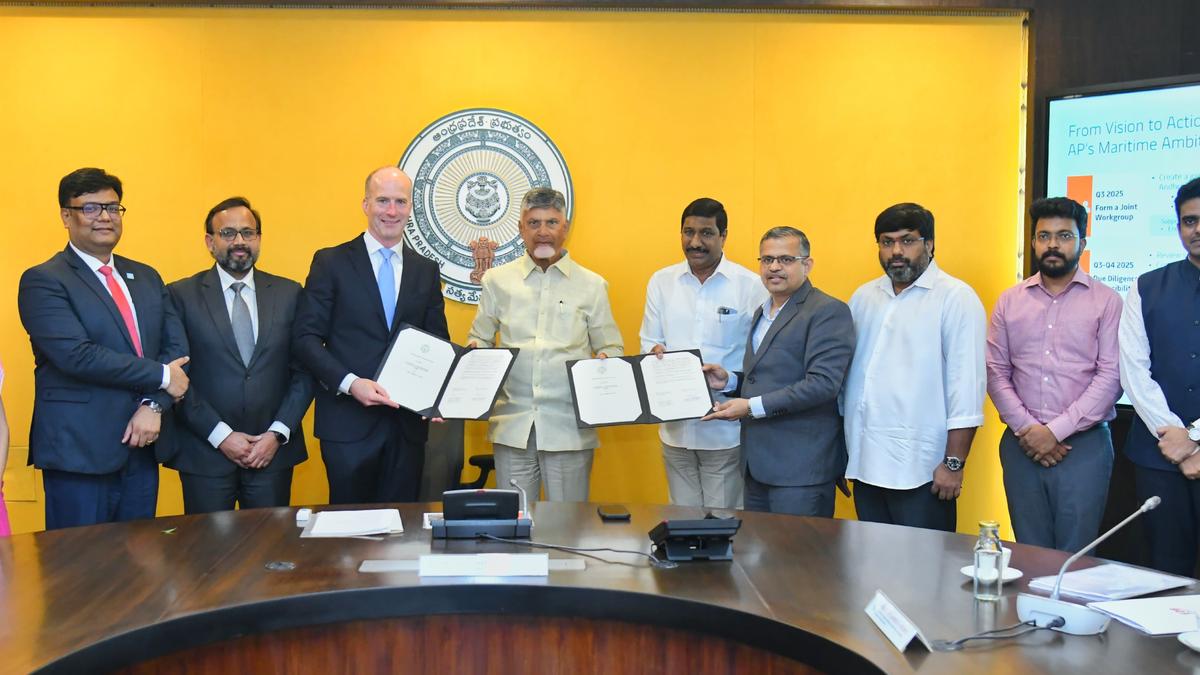
VIJAYWADA : The Andhra Pradesh Maritime Board (APMB) and APM Terminals, a subsidiary of the Netherlands-based A.P. Moller Maersk, have entered into an agreement for the development of ports and creation of port infrastructure in the State.

Senior executives of the APMB and APM Terminals signed the pact in the presence of Chief Minister Shri N. Chandrababu Naidu at the Secretariat on Thursday.

As part of the agreement, APM Terminals would create infrastructure (modern terminals, cargo handling facilities etc.) at and manage the upcomingRamayapatnam, Machilipatnam, and Mulapeta seaports, an official release said.

The Dutch maritime sector giant would invest around ₹9,000 crore in the infra development in the Andhra ports, creating employment and livelihood opportunities for nearly 10,000 people.

On the occasion, Mr. Naidu stressed the significance of creating an economic ecosystem driven by seaports which play a major role in development, and sought the support of APM Terminals for bringing about an integrated logistics framework that covered cargo transportation through railways, roads, inland waterways and by air.

The State should take advantage of the dependence of Telangana and parts of Chhattisgarh, Maharashtra, Karnataka, and Odisha on Andhra Pradesh for their businesses, he suggested.

Secretary (Industries) N. Yuvaraj and APM Terminals MD (Asia & Middle East) Jonathan R. Goldner signed the agreement.

Minister for Roads and Buildings and Infrastructure B.C. Janardhan Reddy, Maersk Group Head (Public Policy & Regulatory Affairs – India, Bangladesh & Sri Lanka Region) Vivek Sharma, and Manager (Public Policy) Deepali Negi, APMB Chairman Damacharla Satya and CEO Praveen Aditya, and Pipavav Port MD Girish Agarwal were present.