Home Blog Page 695

Mundra Port sets New Record in Rail Operations, Handles highest-ever Cargo volumes

MUNDRA: Mundra Port, India’s largest commercial port and a key gateway for containerized trade, has achieved a significant operational milestone by setting a new record in its rail cargo movement last month (July, 2025).

The port successfully handled 898 double stack container rakes, transporting 0.46 lakh TEUs, marking its highest-ever performance in terms of both rakes handled and cargo volumes moved via rail.

In a major highlight, Mundra also registered a new import record by moving 541 import double stack rakes, carrying 0.27 lakh TEUs — the highest-ever import throughput in a single month since the port’s inception.

With its advanced infrastructure, seamless connectivity, and focus on operational excellence, Mundra Port continues to strengthen its position as a critical logistics hub, driving efficiency and scale in India’s containerized cargo movement.

Adani Dhamra Port flags off first-ever Steel Slab Rake, marks Milestone in cargo handling

DHAMRA: Adani Dhamra Port achieved a significant operational milestone by successfully flagging off its first-ever steel slab rake, setting new benchmarks in efficiency, diversification, and cargo handling capabilities.

The operation involved the handling of 35,000 metric tonnes (MT) of premium steel slabs imported via M.V. HTK Neptune. Of this, 2,900+ MT comprising 133 slabs were meticulously loaded into 45 BFNS wagons and dispatched to Jindal Stainless Limited’s Kalinganagar plant.

Executed within the stipulated timeframe, this achievement underscores the port’s growing capacity to handle complex, large-scale cargo operations while maintaining industry-leading standards of speed, safety, and precision.

Speaking on the milestone, Adani Dhamra Port officials highlighted that this accomplishment reflects the dedication of the workforce, the trust of partners, and the port’s commitment to supporting India’s industrial growth.

With this successful operation, Adani Dhamra Port has further strengthened its position as a key gateway for diversified cargo movement, reinforcing its role in accelerating India’s manufacturing and export potential.

Titagarh Rail gets Rs 467-Cr order from GRSE

KOLKATA : Titagarh Rail Systems Ltd. received a letter of intent from Garden Reach Shipbuilders & Engineers Ltd. on Thursday for an order worth Rs 467.3 crore.

The order was for the construction of two vessels. The vessel will be used by the Geological Survey of India for coastal exploration, according to the exchange filing.

The main activities include offshore geological mapping, mineral exploration that includes dredging, ocean environment monitoring and research and shipboard data processing and sample analyses in modern, well-equipped scientific laboratories.

The vessels will be built under the classification regulations of Indian Register of Shipping. Additionally, the execution is scheduled to be completed within 28 months from the date of letter of intent.

According to the company, the order is worth Rs 445 crore and a GST of Rs 22.25 crore.

Q1 Performance
Titagarh Rail Systems’ consolidated net profit was down 54% in the first quarter of the current financial year as wagon dispatches fell on account of lower supply of wheelsets from Rail Wheel Factory. The railway parts manufacturer posted a bottom line of Rs 30.86 crore in the June quarter as compared to Rs 67.01 crore in the year-ago period.

The firm’s wagon dispatches were at 1,628 in quarter ended June, according to a press release from the company. This compares to 2,455 wagons in the previous quarter and 2,073 wagons in the first quarter of the last fiscal. The firm reported that this production hiccup has now been normalised.

Revenue decreased by 24.8% year-on-year for the three months ended June, reaching Rs 679.30 crore. Operating income, or earnings before interest, taxes, depreciation, and amortisation, fell 26% year-on-year to Rs 75.10 crore. The Ebitda margin contracted to 11.1%.

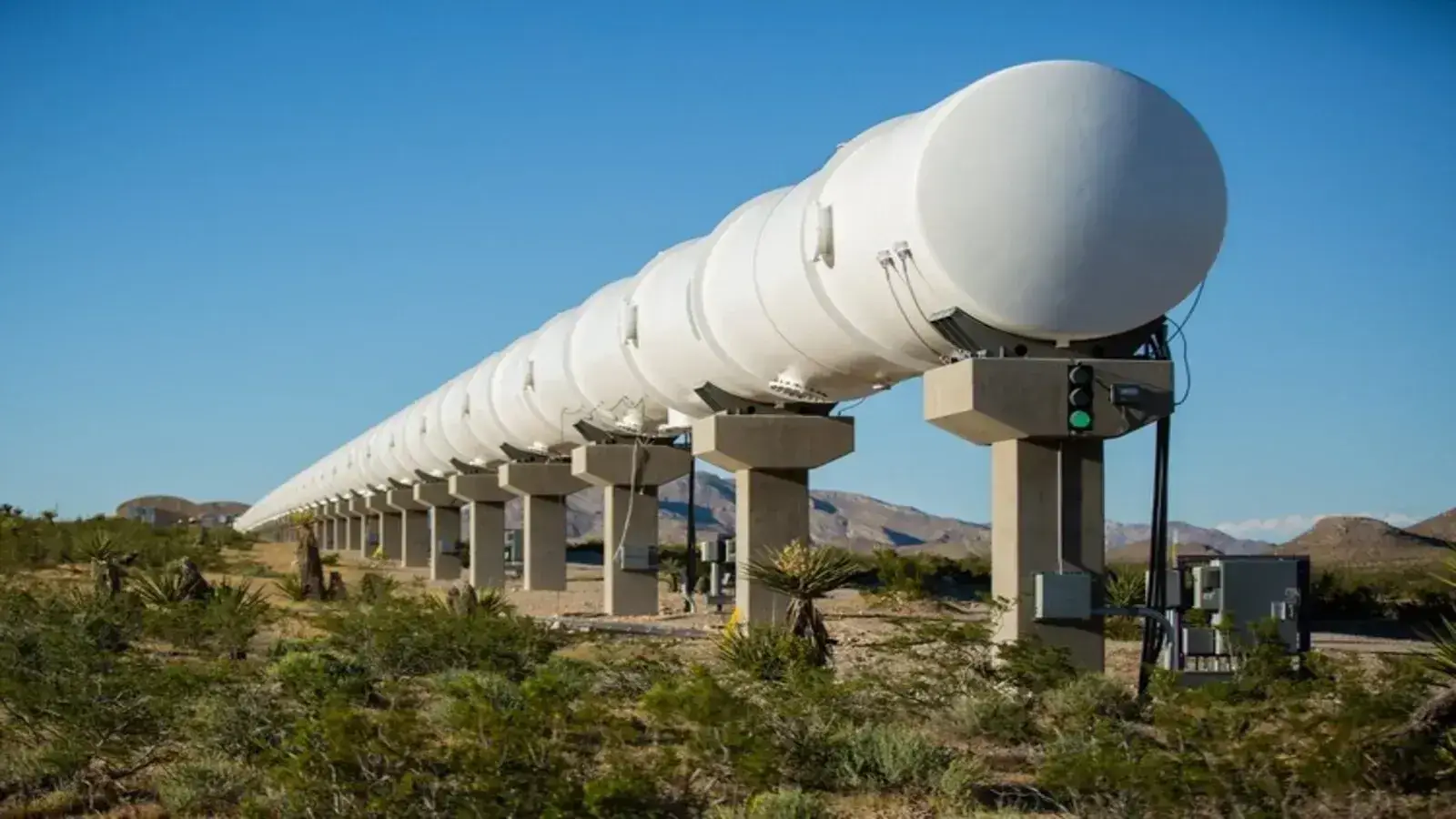
Maharashtra partners IIT-M Startup for Hyperloop Cargo Link between JNPT and Vadhavan Port

MUMBAI : Maharashtra is poised to be among the world’s first regions to pilot hyperloop technology beyond the lab, with a proposed high-speed cargo corridor linking Jawaharlal Nehru Port Trust (JNPT) in Navi Mumbai to the upcoming Vadhavan Port in Palghar.

On Tuesday (19 August), the Maharashtra government inked an agreement with TuTr Hyperloop Pvt Ltd, a startup incubated at IIT Madras, to build a Linear Induction Motor (LIM)-based hyperloop mobility system between JNPT and Vadhavan Port.

The announcement, made at Mantralaya in the presence of Chief Minister Devendra Fadnavis, was part of a broader investment drive under which the state signed 10 MoUs worth Rs 42,892 crore, expected to create nearly 26,000 jobs.

Calling the hyperloop agreement a landmark for futuristic infrastructure in the state, Chief Minister Fadnavis described hyperloop as a “disruptive idea” capable of reshaping logistics, mobility, and economic geography.

He highlighted that with support from IIT Bombay and IIT Madras, Maharashtra aims to spearhead India’s adoption of this new transport system.

Fadnavis further assured investors of “end-to-end support” from the state, framing the project as a step toward positioning Maharashtra as a leading centre for digital, green, and futuristic industries.

Conceptualised by Elon Musk in 2013, hyperloop is an ultra-fast transport model in which pods carrying passengers travel inside low-pressure tubes.

Using technologies such as magnetic levitation or Linear Induction Motors, the system seeks to achieve speeds of over 1,000 kmph while reducing energy consumption and emissions.

The agreement was signed at Mantralaya in the presence of Chief Minister Devendra Fadnavis, as part of a broader investment initiative under which Maharashtra signed 10 MoUs worth Rs 42,892 crore, expected to generate nearly 26,000 jobs. Fadnavis described hyperloop as a “disruptive idea” capable of reshaping logistics, mobility, and regional economic patterns. He highlighted the state’s commitment to providing end-to-end support for futuristic infrastructure, with technical backing from IIT Bombay and IIT Madras.

Hyperloop technology, conceptualized by Elon Musk in 2013, involves ultra-fast pods moving inside low-pressure tubes using magnetic levitation or Linear Induction Motors. Designed to reach speeds of over 1,000 kmph, the system reduces travel time, energy use, and emissions. While experimental tracks exist in the US, Europe, and the Gulf, commercial deployment is yet to be realized. Maharashtra’s collaboration with TuTr positions the state among the earliest governments worldwide to develop a functional hyperloop corridor.

Ports were chosen for the trial due to their high logistics demands. JNPT, India’s largest container port, handles over half the nation’s container traffic and has long faced congestion on road and rail networks. A hyperloop connection could significantly reduce cargo evacuation time, moving goods to logistics hubs in minutes instead of hours.

Vadhavan Port, under development as a deep-draft facility in Palghar, is expected to manage 250 million tonnes of cargo annually and accommodate the largest container ships. Integrating hyperloop from the outset could make it one of Asia’s most advanced maritime hubs.

TuTr Hyperloop, founded by IIT Madras researchers and engineers, is among the few Indian firms developing homegrown hyperloop solutions. This project represents TuTr’s first large-scale applied venture, showcasing India’s capacity for innovation in futuristic mobility. Both IIT Bombay and IIT Madras will provide technical guidance to ensure operational efficiency and adherence to international standards.

Over 90 percent of Russia-India trade now settled in Roubles and Rupees

MOSCOW/NEW DELHI : Russia and India have reported that over 90 percent of their bilateral trade payments are now conducted using their respective national currencies—the Russian rouble and the Indian rupee. This milestone, revealed by First Deputy Prime Minister of Russia Denis Manturov at the meeting of the Russian-Indian Intergovernmental Commission, marks a profound shift away from reliance on traditional international currencies such as the U.S. dollar and euro in their commercial dealings, underscoring a broader effort towards de-dollarization and enhanced financial sovereignty between the two nations.

“Providing for seamless mutual payments is a no less important task, especially in current realities. We have already managed to transfer more than 90 percent of payments between Russia and India to national currencies,” Manturov said.

The Russian Embassy highlighted this development as a crucial evolution in the financial dynamics of India-Russia trade relations. By using the rupee and rouble directly in payment settlements, both countries have drastically reduced their dependency on third-party currencies, which traditionally add layers of conversion costs and complexity. This change not only helps in potentially lowering transaction expenses but also strengthens bilateral economic ties by fostering a more direct, currency-based linkage between the trade partners.

Growth in trade turnover
Trade turnover between Russia and India has seen remarkable growth over recent years, nearly quintupling from approximately $13 billion in 2021 to $68 billion in 2024-25. India has emerged as one of Russia’s top three foreign trading partners, reflecting a deepening commercial relationship. This surge in volume has made the use of national currencies even more practical and desirable for streamlining payments and reducing exposure to currency fluctuations inherent in global currencies dominated by Western financial systems.

This strategy aligns with a broader global trend among some countries to move away from the dominance of the U.S. dollar, often termed de-dollarization. By shifting to national currency payments, Russia and India are paving the way for the adoption and integration of alternative payment systems that circumvent Western-controlled financial infrastructures. These efforts also come at a time when Russia faces comprehensive economic sanctions from Western countries, making the use of national currencies a tactical as well as economic imperative.

Challenges in currency management
However, while there are clear benefits to rupee-rouble trade settlements, challenges remain. Managing exchange rate volatility between the two currencies requires sophisticated financial instruments and risk management strategies. Both countries are working to align their banking systems and payment infrastructures to ensure seamless transactions and rapid settlement times—often within two hours, mirroring domestic payment speeds. Russia’s largest bank, Sber, for instance, has been actively supporting rupee transactions, opening rupee deposit accounts, and offering rupee-denominated loans to Russian businesses, signaling institutional backing for this financial shift.

The growing use of the rupee in Russia exemplifies how bilateral arrangements can build economic resilience. Sberbank reports that it processes up to 70 percent of Russia’s exports to India in rupees, evidencing a robust operational framework behind this currency cooperation. The bank’s expansion in India with offices in Delhi, Mumbai, and an IT center in Bengaluru further illustrates the practical commitment to this financial integration.

The increased use of national currencies in bilateral trade holds broader geopolitical implications as well. For India, this move is part of a strategic effort to diversify its international trade partners and reduce vulnerabilities linked to Western sanctions and tariff pressures, especially amid complex relations with the United States. Russia, on its part, benefits from a reliable trade partner willing to engage outside the global dollar-centric system while expanding its access to the Indian market—in sectors ranging from energy exports like oil and LNG to technology and nuclear cooperation.

Looking ahead, India and Russia plan to convene high-level summits and inter-governmental commissions to further solidify financial cooperation, including enhanced alignment of banking card systems and interbank networks. These developments aim to create a barrier-free financial environment that nurtures bilateral trade growth and economic partnership.

DTDC marks 35th Foundation Day with the launch of ‘Raftaar’ and India’s First Rapid Commerce White Paper with BCG

MUMBAI: DTDC Express Ltd., one of India’s first homegrown multinational logistics companies, marked its 35th Foundation Day with a bold stride into the future. Celebrating this milestone, DTDC announced the launch of Raftaar, a cutting‑edge rapid commerce vertical that promises superfast 4–6 hour deliveries through hyperlocal dark stores. The company also unveiled India’s first White Paper on Rapid Commerce, developed in collaboration with Boston Consulting Group (BCG), reinforcing its vision to shape the next era of logistics and delivery in India.

The report captures the transformational swing in Indian e-commerce, where delivery speed is becoming as critical as product and price.

Key findings include:

  • A $20+ Bn opportunity by 2030: Rapid commerce (4–6 hour deliveries) is projected to become a $20+ Bn GMV market, unlocking a parallel $2+ Bn logistics opportunity for infrastructure, fleets, and innovation.
  • Speed drives loyalty: Over 60% of online shoppers are willing to pay extra for same-day delivery, making delivery speed a key factor in conversions and repeat
  • Beyond metros – Bharat leads the charge: Tier 2 & 3 cities now account for 40%+ of online retail spending and are growing faster than metros in adopting same-day and rapid delivery models.
  • From groceries to gadgets: Non-grocery categories in quick commerce have surged from 20% to 30% in just six months, with beauty, electronics, fashion, gifting, and auto parts driving demand for faster delivery.
  • Smarter fulfilment, leaner costs:  By batching deliveries, shared dark store models reduce last-mile costs by 20-30% and enable even brands with lower order volumes to offer faster deliveries through their own channels in a cost-efficient manner.
  • Building for Speed: Success in rapid commerce will hinge on multi-speed fulfillment strategies and strong partnerships. Not every product needs 15-minute delivery; brands must align speed with category demand, while logistics players invest in shared, tech-enabled infrastructure to achieve scale and profitability.

Mr. Subhasish Chakraborty, Founder, Chairman & Managing Director, DTDC Express Ltd., added, “For 35 years, DTDC has built trust and reach across India. Today, that foundation positions us to lead the next big leap in logistics — speed at scale. Rapid commerce will redefine customer experience, supply chain efficiency, and market competitiveness. With Raftaar and our collaboration with BCG, we are setting the benchmark for how India will shop, sell, and deliver in the years ahead.”

Mr. Alpesh Shah, Managing Director and Senior Partner, Ex-BCG India System Head & APAC Head – CEO Advisory, shared, “Rapid commerce fills a critical whitespace in today’s delivery ecosystem. The opportunity is emerging to develop a bespoke model for India with the potential to contribute significantly to a truly Viksit Bharat.”

Speaking at the launch, Mr. Abhishek Chakraborty, CEO, DTDC Express Ltd., stated, “We are proud of our 35-year journey, but we aim for more than just celebration. India’s challenges require local solutions, and as the nation progresses, so do we. Rapid commerce isn’t just about faster deliveries; it’s a strategic shift in consumer engagement. The 4–6 hour delivery window is in the ‘Goldilocks zone’ — it’s quick enough to encourage conversions and build loyalty, yet sustainable enough to scale. With Raftaar, we’re evolving from Xpress to Xponential, leveraging DTDC’s reach and technology to make rapid delivery a standard across all categories, particularly in high-growth Tier 2 and Tier 3 markets.”

The event at Mumbai’s Jio Convention Centre convened industry leaders, investors, ecosystem partners, and leading D2C brands to engage in dialogue on the future of rapid commerce. At its core was the release of India’s first Rapid Commerce Report, The Emergence of Rapid Commerce in India, jointly unveiled by DTDC and BCG.

The 35th Foundation Day celebrations commenced with an inspiring keynote by Ms. Arpita C Mittra , CEO, DTDC Express Ltd., who reflected on the company’s legacy, transformation, and vision for leading India’s rapid commerce revolution. The event featured three thought-provoking panels — ‘Rewriting the Rules: Brands in the Age of the Empowered Consumer’, ‘Emergence of Rapid Commerce’, and ‘E-Commerce 2030: How Speed Will Reshape the Consumer Experience’. These discussions explored how digital-first consumers are reshaping expectations, the economic potential of rapid commerce, and how speed, personalization, and tech-enabled supply chains will define the next era of e-commerce in India.

The panels brought together voices such as Anwar Alvi (Head, Brands.com, Bestseller India), Anisa Virji (Head – E-commerce, Regal Shoes), Aniket Kumar Singh (Sr. Manager – E-commerce, Pepe Jeans India), Nina Lekhi (MD, Baggit), Abhiroop Medhekar ( Co- founder & CEO, Velocity) Sameer Rajani (CEO, Deodap), Lokesh Daga (CEO & MD, Nasher Miles), Sumit Shah (Co-founder & COO, BOHECO) Shashwat Jain (CCO, Hyphen – mCaffeine), Arjun Vaidya (Founder, V3 Ventures), Akash Valia (Founder, Secret Alchemist), Pooja Shirali (VP, DSG Consumer Partners), Ravi Saxena (CEO, Wonderchef), Akash Zaveri (Co – Founder & COO, Plix)  and Rahul Sanghvi (Managing Director & Partner, Boston Consulting Group), who collectively underscored that rapid commerce is no longer a niche but a mainstream expectation shaping the future of Indian e-commerce.

China to build maritime community with shared future in South China Sea with regional countries: Report

BEIJING: China stands ready to work with regional countries to build a maritime community with a shared future in the South China Sea, according to a think tank report issued early this June.

The report, titled “Making the South China Sea a Sea of Peace, Friendship and Cooperation: China’s Actions,” was released by Xinhua Institute, a think tank affiliated with Xinhua News Agency.

China and the coastal nations not only share immediate interests in peace and development and common aspirations for a better future, but also draw strength from their shared historical civilization, the report notes.

The report calls on regional countries to recognize the importance of building a maritime community with a shared future and transform the South China Sea into a true sea of peace, friendship, and cooperation through dialogue, economic integration, and multilateral engagement.

Coastal countries should enhance strategic communication and support each other on core interests and major concerns, so as to reinforce shared commitment to regional peace, stability, development, and prosperity, the report stresses.

This report is part of a series of three reports on the South China Sea issue released by Xinhua Institute.

The other two reports released on Thursday are titled “Incitement, Threats, and Lies — The Truth about External Forces Interfering in the South China Sea Issue,” and “Historical and Legal Basis of China’s Territorial Sovereignty and Maritime Rights in the South China Sea.”
Source: Xinhua

Orient Overseas (International) Limited announces 2025 Interim Results

HONG KONG: Orient Overseas (International) Limited (“OOIL”) Friday announced a profit attributable to equity holders of US$954.2 million for the six-month period ended 30th June 2025, compared to a profit of US$833.3 million for the same period in 2024.

• Group Revenue of US$4,876 million
• Group EBIT of US$985 million
• Group EBITDA of US$1,466 million
• Operating Cash Flow of US$1,125 million
• Profit Attributable to Equity Holders of US$954 million
• Dividend for the First Half of 2025 is approximately 50% of the Profit Attributable to Equity Holders at approximately US$475 million, with Interim Dividend of US$0.72 per ordinary share

Financial and Operational Highlights – First Half of 2025
• Container Transport and Logistics business reported EBIT of US$977 million, representing an EBIT margin of approximately 20.1%
• Liner liftings grew to 3.9 million TEU
• Ordered fourteen 18,500 TEU class methanol dual-fuel container vessels which are expected to be delivered between 2028 and 2029

The Board of Directors is pleased to announce that the dividend for the first half of 2025 is approximately 50% of the profit attributable to equity holders at approximately US$475 million, with an interim dividend of US$0.72 per ordinary share. The interim dividend will be payable in cash in US dollar or Hong Kong dollar (HK$5.616 converted at the exchange rate of US$1 to HK$7.8) or Renminbi (RMB5.138 converted at the exchange rate of US$1 to RMB7.1355, being the average of middle exchange rate between US dollar and Renminbi as announced by the People’s Bank of China for the 5 business days before and excluding the date of Board meeting for, among other matters, considering the payment of the interim dividend).

Geopolitical uncertainties still significantly influence the shipping market. If the situation in the Red Sea was a defining factor which contributed to the strong performance of the container shipping market in 2024, then the ongoing changes in tariff policies and trade disputes have undoubtedly played a decisive role in shaping market trends in the first half of 2025.

Both the International Monetary Fund (“IMF”) and the Organisation for Economic Co-operation and Development have lowered their forecasts for global economic growth in 2025 in the first half of this year, to 2.8% and 2.9% respectively. Then, at the end of July IMF raised its global growth forecast for 2025 to 3%, but the figure is still below the level it predicted at the beginning of the year and the one in 2023 and 2024. Frequent shifts in tariff policies have disrupted long-term planning, raised concerns among customers, and eroded both business and consumer confidence. This is especially evident on Trans-Pacific services, where freight rates have generally declined compared to the beginning of the year. While the 90-day tariff suspension between China and the U.S. led to a rapid recovery in freight rates from early-May lows, the rebound proved temporarily, with rates subsequently falling once more. Rapid capacity influx and the arrival of new competitors have significantly expanded overall capacity, while ongoing policy uncertainties have fuelled market concerns. As a result, many customers seem to have started to shift away from their precautious strategy of front-loading earlier this year to a more cautious, wait-and-see approach at present.

Despite the overall challenges facing the market, liftings in other trades have held up relatively well during this round of tariff changes. This resilience may be attributed to supply chain restructuring, varying economic conditions across regions, seasonalities, or port congestion. Additionally, the full impact of factors affecting Trans-Pacific routes may not yet have materialised. Regardless of the cause, the varied performance across different markets enables carriers to seize opportunities.

OOCL’s total liftings for the first half of 2025 increased by 7% and total liner revenues increased by 4% year on year. Despite being only a single digit improvement, the year-on-year performance is the best post-pandemic period in terms of both liftings and liner revenue.

In the first half of 2025, average bunker price of OOCL was approximately US$541 per ton, an 8% decrease compared to US$589 per ton in the same period of 2024. This decline contributed to a reduction in total bunker cost. However, fuel oil and diesel oil consumption rose by 2% in the first half of 2025 compared to the corresponding period in 2024 which was largely due to expansion of fleet operating capacity.

OOCL continue to strengthen their synergy with COSCO SHIPPING Lines in areas such as cost optimisation and risk diversification. This not only helps OOCL enhance its operational efficiency and market competitiveness, but also supports its global network deployment.

OOCL continues to grow its fleet in an orderly and rational manner, while optimising fleet composition. In the first half of 2025, we took delivery of five 16,828 TEU container vessels, marking an upgrade of our fleet on Trans-Pacific routes. We also placed an order for fourteen 18,500 TEU class methanol dual-fuel container vessels, once again demonstrating our Group’s commitment to building a green fleet and supporting global energy conservation and emissions reduction.

For the first half of 2025, OOCL Logistics demonstrated resilient performance across its operations, navigating a complex global landscape while laying foundations for future growth. The overall supply chain environment during the period continued to be shaped by evolving market dynamics, including certain ongoing geopolitical considerations and adjustments within global trade patterns. Despite these broader market conditions, OOCL Logistics maintained a steady performance. Our international business continued to show positive momentum, benefiting from sustained demand for integrated logistics solutions and our ongoing efforts to enhance service offerings.

OOCL is committed to furthering the development of an end-to-end intelligent and digitalised supply chain. By offering customised solutions for international orders, origin management, warehousing, and distribution services, we effectively enhance the supply chain. We further integrate AI into our network planning, internal processes, and container and vessel management, enhancing both management efficiency and capabilities. Together with GSBN, we are promoting a digital ecosystem that brings together ports, terminals, logistics providers, and other stakeholders across the supply chain to build a digitalised supply chain environment.

At the time of writing this report, our vessels sailing on major long-haul routes are nearly fully loaded, and this is expected to continue in the coming weeks.

The trends in the first half of the year remind us that the shipping industry is highly dynamic and anything is possible. Ongoing policy uncertainties, developments in the Red Sea, continued delivery of new vessels, changes in the global economy, and gradually tightening of environmental regulations could all have profound impacts on overall market development. The additional port charges levied by the U.S. on Chinese carriers will have a relatively large impact on the Group. On the other hand, as global trade patterns shift to becoming more regional, market divergence may occur, or there may be delayed or deferred responses due to extended or restructured supply chains, all of which may be potentially creating opportunities for shipping companies to refine their strategies in segmented markets.

The Group will continue to uphold an innovative and adaptive business strategy to effectively respond to market changes, actively seize development opportunities, and maintain its industry-leading position. Through effective cost control, efficient and large-scale vessel operations, and intelligent and diversified network construction, we are steadily promoting our end-to-end business. At the same time, the Group continues to work with partners to promote green shipping, offer high-quality services to customers, create sustainable value for shareholders, and to greenly and intelligently bridge world trade.

As at 30th June 2025, the Group had cash and bank balances of US$7,020.7 million compared with debt obligations of US$592.3 million repayable within one year. The Group remained at net cash position with a net cash to equity ratio of 0.42 : 1 as at 30th June 2025. The Group from time to time prepares and updates cashflow forecasts for asset acquisitions, to serve project development requirements, as well as working capital needs, from time to time with the objective of maintaining a proper balance between a conservative liquidity level and an effective investment of surplus funds.

OOIL owns one of the world’s largest international integrated container transport businesses which trades under the name “OOCL”. With over 430 offices in approximately 90 countries/regions, the Group is one of Hong Kong’s most international businesses. OOIL is listed on The Stock Exchange of Hong Kong Limited.

Cubo Maritime & Port completes three years of fast-tracked decarbonisation, AI, and business development in the port industry

SAO PAULO: Completing three years of operation, Cubo Maritime & Port — Cubo Itaú’s sector hub in collaboration with Wilson Sons, Port of Açu, and Hidrovias do Brasil — successfully fulfils its role as a catalyst for the maritime and port ecosystem. Thanks to the connection provided by Cubo, the oceanographic tracking solution delivered by HidroMares, a marine technology firm company that covers about 40% of the Brazilian coast, will go global and join SGS’s global portfolio of environmental services, illustrating how the hub converts collaboration into scalable business. The startup HidroMares was acquired by SGS after they met at Portos ao Cubo, the hub’s anchor event.

The event Portos ao Cubo was created to push new ideas and connect all links in the chain. Since its first edition, it has evolved into the industry’s main innovation arena, attracting over 400 people to discuss trends and insights annually.

VALUE GENERATED BY THE HUB

The story of HidroMares illustrates how the hub generates real value: by connecting the challenges faced by industry giants with cutting-edge solutions developed by startups, attracting investment, and fostering strategic M&As.

1 | Decarbonisation gains scale

Unprecedented test with HVO (Hydrotreated Vegetable Oil) — In a pioneering move in Latin America, Wilson Sons, Port of Açu, efen, and Vast conducted the first tugboat refuelling with HVO, a second-generation biofuel that can reduce CO₂ emissions by up to 90% compared to marine diesel.

About 30 m³ of HVO were required to test mechanical performance, consumption, and emissions in a real operation. The purpose is to validate the fuel for continuous use and migrate the entire tugboat fleet by 2026. The project takes Brazil to a benchmark position in port decarbonisation.

According to Eduardo Valença, Business Development Director at Wilson Sons, the company’s decarbonisation agenda focuses not only on building more efficient tugboats but also on reducing the environmental impact of its fleet of more than 80 vessels. “In this scenario, HVO presents a promising solution because it is a drop-in fuel that can be used without any equipment adaptations. It is a relevant alternative for advancing the energy transition in the port support industry,” he states.

Director of Port Administration at Port of Açu Vinicius Patel agrees with the executive. “Energy transition is a reality and represents a brilliant opportunity for Brazil, with our renewable energy mix. The port infrastructure of Açu, with operational liquid terminals and enough space for new plants to be set up, combined with a strategic location, places us at a unique position to meet the growing demand for sustainable solutions in the energy and logistics chains. We have a hub that is focused on low-carbon products projects, where we can set up HVO and other fuel plants in the future,” he says.

Another important initiative to leverage decarbonisation in the maritime and port industry is a combination of technology to capture carbon dioxide (CO2) directly from the air with technological solutions to convert this captured CO2 into fuel with a lower carbon footprint for vessels and aviation. This project aims to establish a cycle that not only mitigates CO2 emissions but also transforms this gas into renewable fuel, an essential resource for maritime and port operations. Initiated from a collaboration between Port of Açu and Repsol Sinopec Brasil, the DAC to SEA project stands out for its potential to promote significant advances in the field of decarbonisation and energy transition through research and development with application in a real environment.

2 | Artificial Intelligence & Automation

Hidrovias do Brasil employs Artificial Intelligence and Automation as the cornerstones of its Technological Plan, focusing on the practical application of technology to address operational challenges. The Company directs its investments towards initiatives that increase efficiency, support safety, and increase predictability in its waterway operations.

In this context, the Smart Shipping project was developed with Technomar, a naval engineering company that is part of the Cubo Maritime ecosystem. This project represents a significant step forward in Hidrovias do Brasil’s digital transformation journey, supporting the evolution of digital maturity and operating autonomy based on emerging technologies.

Powered by Artificial Intelligence and supported by a digital twin of the waterway setting, Smart Shipping’s mission is to transform river logistics through the intelligent, real-time integration of operational data. The solution connects shipping sensing and tracking systems to boost operating performance, ensure greater reliability, and maximise the availability of strategic assets.

The project receives investments from Finep, which is associated with the Ministry of Science, Technology, and Innovation. “We’ve competed with several other projects in Brazil. And we were selected because the project has the potential to impact the technological development of the maritime industry. The goal of Smart Shipping is to make navigation dynamics similar to those in the aviation industry, where decision-making is heavily assisted and automated to make captains’ lives easier,” adds Mariana Yoshioka, Director of Engineering and Innovation at Hidrovias do Brasil.

“Today, some shipping areas still operate as in the old times. And our goal is to take technology to the next level. Predictive capacity is crucial for optimal utilisation of cargo capacity, reducing logistics costs, and strengthening operating resilience, especially amidst climate instability,” Mariana says.

Pioneering use of drone technology in port operations — Wilson Sons, through its Shipping Agency, started its first tests with Speedbird Aero drones to carry out deliveries and collections from vessels, at the Port of Salvador, in January this year.  Considered a milestone of innovation in the Brazilian port industry, the drone operations are more efficient, safer, more agile, and sustainable, supporting industry-wide decarbonisation. 

3 | New digital businesses gaining momentum

Economic powerhouse of the ecosystem — With only three years of activity, Cubo Maritime & Port already connects 21 startups specialising in logistics, shipping, automation, traceability, and efficiency solutions. These startups generated revenues of more than R$213 million in 2024, validating the economic and technological potential of the ecosystem fostered by the hub.

Beyond the financial impact, these startups are creating new jobs, attracting foreign investment, and digitising operations in ports, vessels, and critical logistics chains, which is evidence of how open innovation has created market value.

About Cubo Maritime & Port

Launched in 2022 by Cubo Itaú in a collaboration with the Port of Açu, Hidrovias do Brasil, and Wilson Sons, the hub connects companies, investors, and academia with startups that are redesigning the maritime-port chain with a focus on AI, automation, clean fuels, and ESG.

About Hidrovias do Brasil

Hidrovias do Brasil (HBSA) is a multimodal logistics company guided by a long-term vision that connects Latin America to global markets. It operates along strategic corridors in South America, handling cargo via rivers and port terminals.

About the Port of Açu

Located in the North of Rio de Janeiro, the Port of Açu is a leading deep-water industrial port facility in Latin America. In operation since 2014, it is managed by Porto do Açu Operações, a collaboration between Prumo Logística, controlled by EIG, and the Port of Antwerp-Bruges International. It consists of 28 well-established companies, including clients and partners, several of which are world-class corporations. With established and developing mining and oil & gas activities, Açu plans to accelerate industrialization with a focus on low-carbon projects. It is recognized as the port of energy transition in Brazil.

About Wilson Sons

Recognized for its extensive experience of more than 187 years, Wilson Sons has a national reach and offers comprehensive solutions to over 5,000 clients, including shipping companies, importers and exporters, the offshore energy industry, renewable energy projects, the agribusiness sector, as well as other players across various economic segments. Learn more at: https://wilsonsons.com.br/en/

Lower capesize rates drag Baltic Index to over 1-month low

LONDON: The Baltic Exchange’s main sea freight index, which tracks rates for ships carrying dry bulk commodities, fell for the fourth-straight session on Thursday, hitting an over one-month low, because of dip in capesize vessel rates.

* The main index BBDI, which tracks rates for capesize, panamax and supramax shipping vessels, slipped 34 points, or 1.8%, to 1,893 points, reaching its lowest level since July 15.
* The capesize index (.BACI) fell 164 points, or 5.7%, to 2,703 points, its lowest point since July 16.
* Average daily earnings for capesize vessels (.BATCA), which typically transport 150,000-ton cargoes such as iron ore and coal, decreased by $1,360 to $22,418.
* Iron ore futures rebounded as a mandated production cut ahead of a military parade in China seemed to be less severe and shorter than expected, allaying demand concerns.
* Meanwhile, the panamax index (.BPNI) was up 54 points, or 3.2%, at 1,719.
* Average daily earnings for panamax vessels (.BPWT), which usually carry 60,000-70,000 tons of coal or grain, added $484 to $15,469.
* Among smaller vessels, the supramax index (.BSIS) gained 17 points, or 1.2%, to 1,405.
Source: Reuters