Home Blog Page 697

India Exim Bank signs $40 mn credit line agreement with ECOWAS Bank to boost trade with Africa

NEW DELHI : The Export-Import Bank of India (India Exim Bank) and ECOWAS Bank for Investment and Development (EBID) have signed a commercial credit line agreement of USD 40 million. The agreement will create new opportunities for Indian businesses to access the African markets, strengthening bilateral economic ties.

India Exim Bank has consistently fostered enduring trade and investment partnerships that connect Indian capabilities with the developmental priorities of African countries.
Collaborations with financial institutions in Africa form a vital pillar of these partnerships, particularly in light of the growing uncertainties and resultant challenges to trade.
Commenting on the development, Trupti Mhatre, General Manager, India Exim Bank, added that the facility will help meet the energy needs of Sierra Leone.
She highlighted that Exim Bank has been partnering with EBID since 2006, resulting in support for complex infrastructure and development projects in Africa.
“These projects address developmental needs in Africa, and also demonstrate the capabilities of Indian companies in delivering high-quality, cost-effective solutions,” Mhatre stated.

The President of EBID, Dr George Agyekum Donkor, commended India Exim Bank for its continued commitment to partnering with the ECOWAS sub-region for the realisation of development projects geared towards improving outcomes for vulnerable populations.
He underscored the need to expand investments in key sectors such as energy, health, transportation, agriculture and infrastructure, among others, to drive economic growth in West Africa while building resilience in an increasingly volatile global setting.
Speaking on the occasion, Vartia highlighted that the agreement will create new opportunities for Indian businesses to contribute to Africa’s growth story and strengthen bilateral economic ties.
He noted that the goods and services supplied by Indian companies for infrastructure projects in Africa are considered cost-effective and adaptable to the local conditions in Africa, creating win-win outcomes.
The Export-Import Bank of India (India Exim Bank) was established in 1981 for financing, facilitating and promoting India’s international trade and investments. The Bank also functions as the principal financial institution for coordinating the working of institutions engaged in financing the export and import of Indian goods and services.
The ECOWAS Bank for Investment and Development (EBID) is a leading regional Development Finance Institution, owned by the fifteen (15) ECOWAS Member States, namely, Benin, Burkina Faso, Cape Verde, Cote d’Ivoire, The Gambia, Ghana, Guinea, Guinea-Bissau, Liberia, Mali, Niger, Nigeria, Senegal, Sierra Leone and Togo.
Based in Lome, Togolese Republic, the Bank is committed to financing developmental projects and programs covering diverse initiatives from infrastructure and basic amenities, rural development and environment, industry, and social services sectors, through its private and public sector windows. (ANI)

Japan considering USD 68 billion investment target for India ahead of PM Modi’s visit: Report

TOKYO: Japan is considering announcing a 10 trillion yen (USD 68 billion) decade-long private investment target for India when Prime Minister Shri Narendra Modi visits later this month, Japan Wire of Kyodo News reported, citing government sources on Thursday.

The news platform stated that the new target–an update of a five-year 5 trillion yen investment goal rolled out in 2022–is intended to further spur investment at a time when the two countries are working closely to promote a “free and open Indo-Pacific” in the face of an assertive China.

The Japanese government may mention the target in an outcome document to be issued following summit talks between Japanese Prime Minister Shigeru Ishiba and Modi, the Japanese government sources said, according to Kyodo News.

PM Modi’s visit to Japan is scheduled for three days from August 29, the platform reported.
It will be PM’s first visit to Japan since May 2023, when he travelled to the Group of Seven summit in the western city of Hiroshima.

The Japanese government said in March 2022, at the time of a visit to India by then Prime Minister Fumio Kishida, that it would aim for 5 trillion yen of public and private investment and financing over five years.
The Indian and Japanese governments are also seeking to agree on a new framework to explore cooperation in economic security, such as for procuring stable supplies of critical goods, according to the news platform, citing sources.

The framework would designate semiconductors, essential minerals, communications, clean energy, artificial intelligence and pharmaceutical products as key areas for discussion.

The two sides are additionally arranging to announce what they call an AI cooperation initiative for the emerging technology and related startups, the news platform further added.

“We hope promoting cooperation between Japanese companies (and their Indian counterparts) in fields where Indian firms have strengths would contribute to the growth of the Japanese economy,” one of the sources said, quoted by the Japan Wire.

During his stay, PM Modi is likely to travel to Sendai, in Miyagi Prefecture in northeastern Japan, to view an experimental shinkansen bullet train car and visit a major Japanese manufacturer of chip-making equipment, according to the sources, stated the report.

Three Japanese firms join forces to build automobile trade corridor between India and Africa

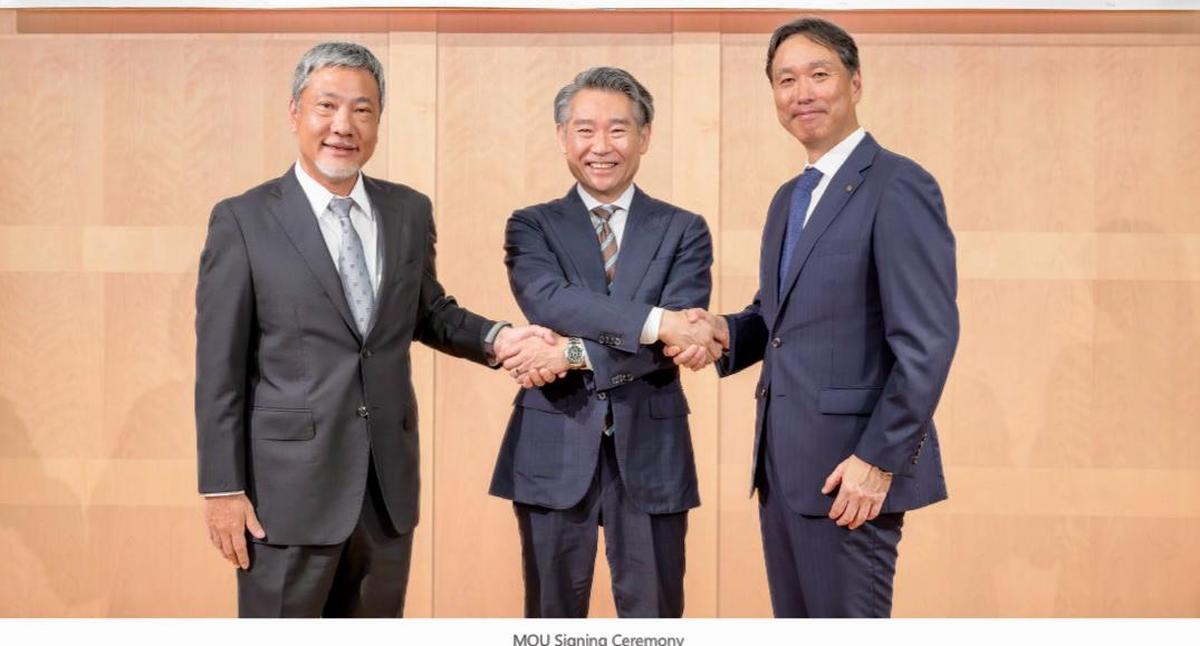
YOKOHAMA : Three Japanese companies — Mitsui O.S.K. Lines, Ltd, TradeWaltz Inc. and Suzuki Motor Corporation — have signed a Memorandum of Understanding (MOU) for cooperation on collaboration in automobile trade between India and Africa. This announcement was made at the 9th Tokyo International Conference on African Development (TICAD 9), held in Yokohama.

The three companies said they will cooperate in identifying current challenges in trade operations related to automobile transportation between India and Africa, and exploring potential solutions, including digitalisation and promoting decarbonisation.

Recognising the importance of the “Japan–India Cooperation Initiative for Sustainable Economic Development in Africa” launched at the Japan–India–Africa Business Forum held in February 2025, the three companies identified synergies between their respective businesses in India and Africa, and aim to contribute to the regions’ economic development together by leveraging their strengths, they said.

“Announcing this MOU on the occasion of TICAD 9 marks a concrete first step toward building a robust supply chain and enhancing the economic connectivity of the enormous, growing markets in India and Africa,” the three companies said in a joint statement.

The three companies will continue to embody the spirit of TICAD through their initiatives, working together to establish a robust automobile supply chain between India and Africa, and achieving shared growth together with India and Africa, they added.

“This partnership is an important step toward building a robust automobile trade corridor between India and Africa. By combining MOL’s expertise in safe, sustainable transport with the innovation of our partners, we aim to create a more digitalized, resilient, and future-ready supply chain that contributes to the growth of both regions,” said Capt. Anand Jayaraman, Executive Officer, MOL South Asia and Middle East Region.

The major challenge in the automobile trade between India and Africa is the manual processing of key documents like bills of lading. While TradeWaltz will address this, MOL, which is currently expanding automobile transport services from India to Africa, would deploy additional capacity to cater to the rapidly rising demand in this trade route.

Suzuki, on its part, is supporting the mobility of people in Africa through providing Indian-made compact cars and other products.

“The demand for fuel-efficient, durable and affordable compact vehicles from Africa’s middle class is shared by our Indian customers and the proximity of India and Africa is driving this business,” Suzuki said.

Source : The Hindu

Indian Economy likely grew 6.8-7% in Q1 FY26, higher than RBI’s estimate: SBI report

NEW DELHI : The Indian Economy may have registered a strong growth rate of around 6.8 per cent to 7 per cent in the first quarter of the current financial year, significantly higher than the Reserve Bank of India’s estimate of 6.5 per cent, according to a report by the State Bank of India (SBI).

The report noted that its analysis results show GDP growth at 6.9 per cent during the quarter, with Gross Value Added (GVA) estimated at 6.5 per cent. Based on this model, SBI obtained a nowcast of real GDP growth at 6.9 per cent year-on-year for the reference quarter.
It stated “Initial estimates showcase Q1 FY26 GDP could be at approx. 6.8 per cent-7.0 per cent.”

The report highlighted that this the forecast is statistically consistent with the trajectory observed in previous quarters, with factor dynamics providing persistence and smooth adjustment. This anchors the current projection within the medium-run growth path suggested by the model.
However, for the full financial year FY26, the report projected GDP growth at 6.3 per cent, which is lower than the RBI’s full-year target of 6.5 per cent. SBI noted that it has reduced the RBI’s projection for GDP growth by 0.2 percentage points for the second to the fourth quarter of FY26.
The report also discussed the narrowing gap between real and nominal GDP growth. In Q1 FY23, the gap was as large as 12 percentage points, but it fell sharply to 3.4 percentage points in Q4 FY25.
For Q1 FY26, the report suggested that this gap will narrow further, as inflation remains historically low. With the GDP deflator expected to reduce, the difference between real and nominal GDP growth is likely to shrink.
According to SBI, this narrowing of the gap could mask the current deceleration in growth momentum. As a result, nominal GDP could drop to 8 per cent in Q1 FY26, even though real GDP growth remains robust in the range of 6.8 per cent-7.0 per cent.

Source : ANI

New Budgam to Delhi cargo train to boost Kashmir exports

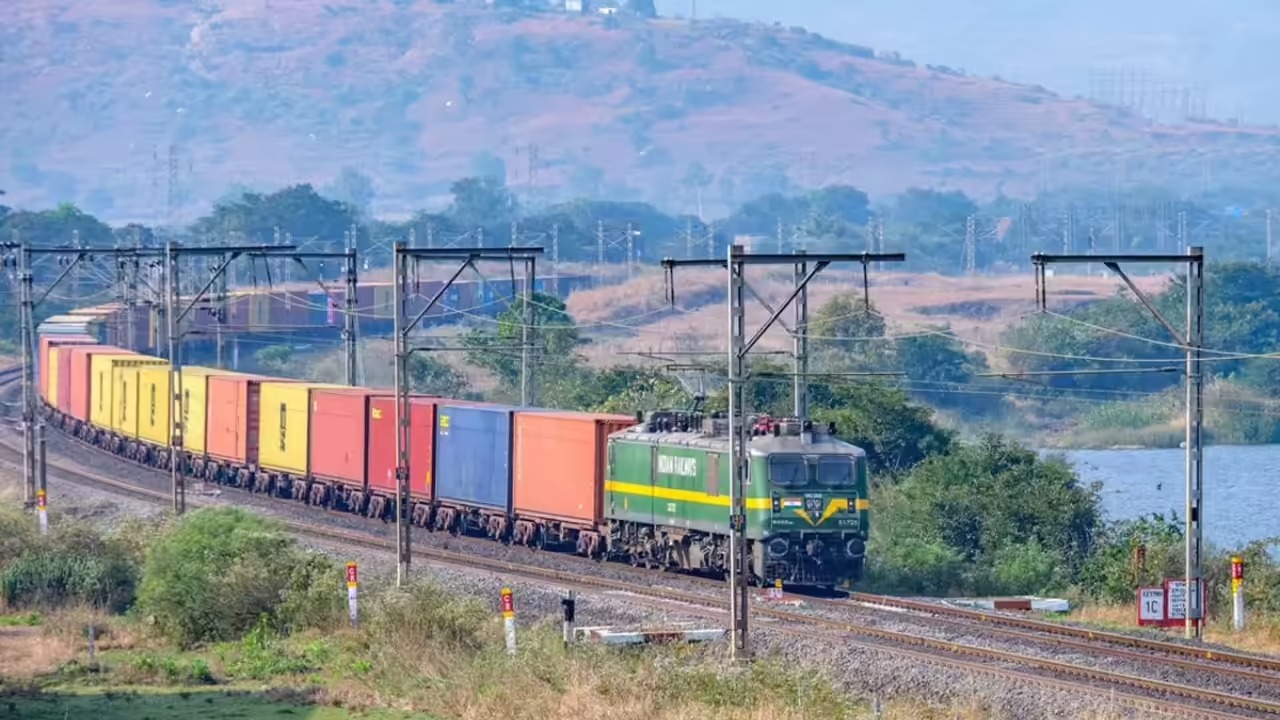
NEW DELHI : The Railway Board on Wednesday approved the Joint Parcel Product-Rapid Cargo (JPP-RCS) train from Kashmir to Delhi to provide a dependable alternative to fruit and handicraft dealers to showcase their produce across the country.

The train, having an SLR (Seating cum Luggage Rake) with eight parcel vans, will run daily from the Budgam Railway Station in Kashmir to Adarsh Nagar in Delhi, the Northern Railway’s Jammu division said in a statement. In its first year of operation, the cargo train will operate on a pilot basis, with security arrangements managed by the Jammu and Kashmir Police at both ends of the route.

Vivek Kumar, the Divisional Railway Manager for Jammu Division, said the goal of the JPP-RCS is to promote freight transportation through railways.

“It is a virtual aggregation platform, which will help in connecting the participation of railways in the private sector. This cargo train is being operated for the first time in the Jammu division,” he said.

Kumar also mentioned that the train service will commence soon and that the registration fee for bookings has been reduced.

Uchit Singhal, the Senior Commerce Divisional Manager, explained that the primary aim of operating this train is to benefit Kashmir’s traders and facilitate the delivery of goods, such as apples, saffron, walnuts, Pashmina shawls, carpets, and other handicrafts, to every corner of the country.

The train is expected to reach its destination in Delhi in approximately 23 hours, which is faster than road transport from Budgam.

Loading and unloading facilities for goods will be available at the Bari Brahmana station in Samba district.

“This initiative is aimed at increasing the share of railways in the courier business and to provide an efficient, reliable, and economical option to the customers,” the statement said.

Additionally, the main goal is to highlight unique products, including fresh and dried fruits and handicrafts, beyond the valley and encourage their marketing in India and abroad.

“With this facility, the business class can deliver their goods to their destination in a very short time…this will prove to be an economical option compared to road traffic. The economy of Jammu and Kashmir will benefit, and new sources of employment will also be generated,” the statement said.

Indian Govt suspends import duty on cotton

NEW DELHI : The Finance Ministry has removed the 11% import duty on cotton till September 30. In a notification issued on August 18, the Ministry said the Customs Duty will not be levied from August 19 to September 30 (including September 30) on cotton imports.

According to Nishant Asher, Secretary of the Indian Cotton Federation, India imported 39 lakh bales of cotton in the 2024-2025 cotton season (October to September). Nearly two lakh bales of cotton are expected to be in transit now and these will benefit from the removal of the import duty. The Government should extend the import duty exemption for cotton booked till September 30, he said.

The Global Trade Research Initiative said cotton imports surged 107.4%, rising from $579.2 million in FY 24 to $1.20 billion in FY 25. Major suppliers last year included Australia ($ 258.2 million), the US ($ 234.1 million), Brazil ($ 180.8 million), and Egypt ($ 116.3 million).

Since February 2021, imports were subject to 11% duty (5% Basic Customs Duty and 5% Agriculture Infrastructure & Development Cess). The waiver is expected to help mills face high input costs and support yarn and fabric exporters struggling with competitiveness. The measure is a time-bound stopgap to stabilise markets before the new crop arrives.

The Cotton Textiles Export Promotion Council Chairman Vijay Agarwal said the Government should consider institutionalising a regular policy framework to permit duty-free imports of cotton during July to October every year, coinciding with the southern hemisphere crop arrivals. This will enable textile mills to plan procurement well in advance and maintain India’s competitiveness in the global market.

ADNOC Logistics & Services joins LISW25 as Sector Partner – Innovation

ADNOC Logistics & Services (ADNOC L&S), the mari ADNOC Logistics & Services (ADNOC L&S), the maritime and logistics arm of ADNOC Group and a leading global energy maritime logistics company, has joined London International Shipping Week 2025 (LISW25) as Sector Partner – Innovation, reflecting its commitment to driving innovation, sustainability, and digital transformation across the global maritime industry.

Headquartered in the UAE, ADNOC L&S operates one of the most advanced and diversified fleets in the region, providing fully integrated, end-to-end services to ADNOC Group companies and more than 100 customers globally. With an international footprint spanning 19 offices across five continents, ADNOC L&S is well-positioned to lead the energy transition and set new standards in maritime logistics.

Capt. Abdulkareem Al Masabi, CEO of ADNOC Logistics & Services, said “As a rapidly growing global leader in integrated energy shipping, our participation at LISW provides a platform to showcase our advancements and dedication to innovation, sustainability, and operational excellence – key pillars in our long-term growth strategy.”

“This sponsorship reinforces ADNOC L&S commitment to forging strategic partnerships that accelerate a resilient, sustainable, and future-ready shipping industry. Importantly, with long-term revenue visibility and disciplined growth, ADNOC L&S is not only navigating market shifts but shaping the future of global trade.”

As Innovation Partner, ADNOC L&S will contribute to key discussions, focusing on shaping the future of global shipping, the role of AI, decarbonisation technologies, and integrated logistics.

“The event provides a platform to discuss alternative fuels and Artificial Intelligence (AI) – areas where ADNOC L&S is actively investing and innovating. It enable us to engage stakeholder and customers, and deepen partnerships that will propel the maritime, energy, and technology sectors.”

“One area we are keen to discuss is how digital transformation is driving efficiency and reducing emissions. Our AI-enabled Integrated Logistics Management System (ILMS) and deployment of SMARTi safety monitoring across our fleet demonstrate where ADNOC L&S are actively investing into advanced technologies.”
Welcoming ADNOC L&S as Innovation Partner, Llewellyn Bankes-Hughes, co-founder and joint CEO of LISW, said: “We are delighted to welcome ADNOC Logistics & Services as Sector Partner – Innovation for LISW25. Their leadership in AI-driven logistics, commitment to decarbonisation, and pioneering use of technology aligns perfectly with the innovation-driven vision of LISW25.”

During the week-long event (15–19 September 2025), ADNOC L&S will engage with global maritime leaders across various LISW forums and events to share insights, explore partnerships, and showcase its role in advancing innovation across the sector.

Drewry’s World Container Index decreased 4% to $2,250 per 40ft container this week

LONDON: For many years, World Container Index has been the go-to, independent, global reference for index-linked contracts. Drewry’s World Container Index decreased 4% to $2,250 per 40ft container this week. 

Drewry’s detailed assessment for Thursday, 21 Aug 2025.

  • Drewry’s World Container Index (WCI) declined for the tenth consecutive week and continued to stabilise after a volatile period. The unpredictability began after US tariffs were announced in April, which caused rates to surge from May through early June. Subsequently, the market saw a heavy decline until mid-July, after which the downward trend lost momentum and the rate of decrease slowed considerably.
  • Transpacific spot rates fell this week, as rates on Shanghai–Los Angeles fell 3% ($2,412/feu) and those on Shanghai–New York reduced 5% ($3,463/feu). The phase of accelerated purchasing by US retailers, which induced an early peak season, has ended. In response to a decelerating US economy and increased tariff costs, they are now scaling back on procurement. Hence, Drewry expects spot rates to be less volatile in the coming weeks.
  • Asia–Europe spot rates declined this week, as rates on Shanghai–Rotterdam fell 6% ($2,973/feu) and on Shanghai–Genoa also down 3% ($2,978/feu). Despite healthy demand and port delays in Europe, a growing surplus of vessel capacity has been pushing down spot rates on this trade lane. Hence, Drewry expects spot rates to continue to decrease in the coming weeks.
  • Drewry’s Container Forecaster expects the supply-demand balance to weaken again in 2H25, which will cause spot rates to contract. The volatility and timing of rate changes will depend on Trump’s future tariffs and on capacity changes related to the introduction of US penalties on Chinese ships, which are uncertain.

Strategic Marine in groundbreaking tie-up with US’ Eureka Naval Craft to build Next-Gen Modular Attack Surface Craft in Singapore

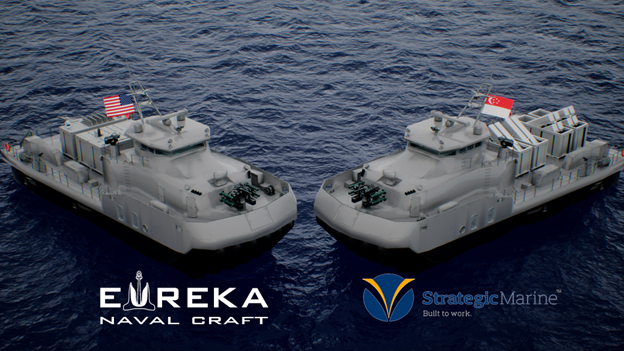
SINGAPORE: Premier Singapore-based shipbuilder Strategic Marine has signed a Memorandum of Understanding with US-based advanced naval innovation leader Eureka Naval Craft to collaborate on the construction of the first-ever Aircat Bengal MC Modular Attack Surface Craft.

The partnership will give a significant boost to the global maritime sector and brings together Eureka’s pioneering modular naval Surface Effect Ship (SES) design and Strategic Marine’s world-class shipbuilding expertise to deliver a new class of non-ITAR, dual-use vessels designed for both defence and civilian applications.

Non-ITAR vessels are not subject to the US’ International Traffic in Arms Regulations that control the export and import of defence-related equipment and have wide applicability.

“This partnership marks a new chapter in delivering next-generation, dual-use maritime solutions to the global market,” said Mr Bo Jardine, CEO for Eureka Naval Craft.

Mr Chan Eng Yew, CEO of Strategic Marine added: “We are proud to collaborate with Eureka on this groundbreaking project. Our Singapore shipyard is equipped with the latest technology and staffed by a highly experienced team, enabling us to deliver complex vessels quickly and at scale.”

The 36m modular platform Aircat Bengal MC is based on the proven Aircat Crewliner 35 SES, originally designed by ESNA AS in collaboration with Aircat Vessels and further developed by Eureka.

This advanced vessel platform is engineered to address the evolving operational needs of modern naval and maritime security forces as well as the demanding requirements of the offshore energy industry.

Through this MOU, both parties will collaborate closely on finalizing vessel design, construction details, and project milestones.

“By joining forces with Strategic Marine, we are combining American innovation with Singaporean shipbuilding excellence to meet the dynamic needs of defence and energy clients worldwide,” said Mr Jardine.

Modular Payload Capabilities for a Dynamic Threat Environment

A defining feature of the Aircat Bengal MC is its highly modular payload architecture. The vessel is designed to rapidly integrate and swap a wide array of mission modules and payloads, including advanced sensors, unmanned systems, weapons, communications suites, and specialized equipment for both defence and civilian operations.

This modularity enables operators to tailor the vessel’s capabilities to specific mission profiles, including for anti-surface warfare, mine countermeasures, intelligence, surveillance and reconnaissance (ISR), humanitarian assistance, or offshore energy support.

The Aircat Bengal MC’s modular payload system gives navies, coast guards, and energy operators the capability to reconfigure vessels quickly and cost-effectively.

In today’s rapidly evolving maritime threat environment, the ability to reconfigure a combatant vessel to stay ahead of emerging threats, respond to new operational requirements, and maximize fleet flexibility without the need for lengthy refits or new vessel acquisitions is a significant advantage.

This future-proof approach is especially relevant for Indo-Pacific, Red Sea, and allied forces seeking to maintain a technological edge and operational readiness in contested and unpredictable waters.

Versatility for Modern Maritime and Energy Challenges

Meanwhile, the Aircat Bengal MC’s design and modularity also make it exceptionally well-suited to address a broad spectrum of contemporary maritime challenges that coast guards and other maritime enforcement agencies may face.

Its rapid reconfiguration capability allows it to support humanitarian response operations such as delivering aid, medical support, and disaster relief supplies to affected areas with speed and efficiency.

For nations seeking to enforce their Exclusive Economic Zones (EEZ), the vessel’s advanced sensors, high speed, and endurance enable effective patrol, monitoring, and interdiction of illegal activities.

The platform is also a powerful asset in counter-smuggling and anti-piracy missions, able to deploy specialized boarding teams, unmanned aerial or surface vehicles, and non-lethal deterrence systems as needed.

A Game-Changer for Offshore Oil & Gas Logistics

Beyond defence and security, the Aircat Bengal MC’s large aft deck, substantial ~40-ton payload capacity, impressive range, and high speed make it a valuable asset for offshore oil and gas exploration and production logistics.

The expansive aft deck is ideal for transporting equipment, supplies, and personnel to and from offshore platforms, while the vessel’s stability and speed ensure safe and efficient operations even in challenging sea conditions.

Crucially, the Aircat Bengal MC enables the fast movement of time-critical items offshore, supporting urgent maintenance, repairs, or supply needs that are essential to maintaining production uptime. Its payload capacity allows for the rapid delivery of heavy or bulky cargo that would otherwise require multiple trips or specialized vessels.

Additionally, the vessel offers a fast and safe mode of personnel transfer offshore, providing a reliable alternative to helicopters in certain scenarios.

This capability not only enhances operational flexibility and safety but can also reduce costs and weather-related delays, making the Aircat Bengal MC an attractive solution for energy operators seeking to optimize logistics and personnel movement in dynamic offshore environments.

The Aircat Bengal MC’s modularity, speed, advanced autonomy, and operational versatility make it an ideal platform for a wide range of missions, from coastal defence and special operations to offshore energy support, humanitarian response, EEZ enforcement, counter-smuggling, and confronting hostile grey-zone forces.

Advanced Autonomy for the Modern Maritime Domain

Another key innovation is the integration of the Greenroom Robotics GAMA maritime autonomy solution, which is fully UMAA-compliant.

The Unmanned Maritime Autonomy Architecture (UMAA) initiative is driven by the US Navy to provide a comprehensive and unified approach to the operation and interoperability of unmanned surface vessels.

This cutting-edge system enables a spectrum of autonomous and remotely operated capabilities, supporting optionally manned and unmanned operations.

The GAMA solution enhances mission flexibility, operational safety, and efficiency – allowing the Aircat Bengal MC to perform complex tasks such as surveillance, interdiction, and rapid response with reduced crew requirements or in fully autonomous mode.

For Eureka and Strategic Marine, the adoption of Greenroom Robotics’ GAMA autonomy suite represents a significant leap forward in delivering future-ready vessels.

It positions their offering at the forefront of maritime innovation, providing end clients with a platform that is not only modular and high-performance, but also equipped for the rapidly evolving landscape of autonomous naval and commercial operations.

The UMAA-compliant architecture ensures interoperability and ease of integration with other autonomous systems, making the Aircat Bengal MC a compelling choice for navies, coast guards, and energy operators seeking to future-proof their fleets.

Supporting US DoD and US Navy Priorities in the Indo-Pacific

The vessel directly aligns with the US Department of Defense and US Navy’s strategic push to innovate and expand the capabilities of the US military, particularly in the Indo-Pacific region.

As a Modular Attack Surface Craft, the Aircat Bengal MC is capable of fulfilling both the US Navy’s and allied nations’ optionally manned combatant needs, offering advanced mission flexibility for a range of defence scenarios.

Its non-ITAR status and modular, dual-use design make it an ideal platform for rapid deployment, experimentation, and operational integration with US and partner forces.

The vessel’s advanced autonomy, high speed, shallow draft, and modular payload system are optimized for littoral environments, key to Indo-Pacific naval defence and maritime security.

A U.S.-Singapore Partnership: Strengthening Bilateral Innovation and Security

The collaboration between US-based Eureka and Singapore-based Strategic Marine exemplifies the power of international partnership in advancing maritime innovation and security.

By combining American technological leadership with Singaporean shipbuilding excellence, this alliance leverages the strengths of both nations to deliver world-class solutions for global clients.

The partnership not only supports the growth of high-value industries in both countries but also fosters knowledge exchange, workforce development, and the creation of resilient supply chains.

Mr Jardine said: “Our collaboration also demonstrates the value of US-Singapore cooperation in driving innovation, strengthening supply chains, and supporting regional security. We are proud to contribute to the US DoD and US Navy’s vision for a more innovative, autonomous, and collaborative maritime force.”

For the United States, this partnership extends the reach of American maritime technology and innovation into the Indo-Pacific, reinforcing its commitment to regional security, allied cooperation, and the US Navy’s vision for a more agile, autonomous, and collaborative maritime force.

For Singapore, it further solidifies the nation’s status as a premier hub for advanced shipbuilding and maritime technology, while opening up new opportunities for the local industry and talent. Together, Eureka and Strategic Marine are well-positioned to support the evolving needs of allied and partner nations, contributing to a safer and more secure maritime environment across the region.

Mr Chan said: “The Aircat Bengal MC, with its modular payload capabilities, large aft deck, and advanced autonomy, exemplifies the future of high-performance vessels for both defence and offshore energy logistics. This partnership not only benefits our companies but also contributes to the broader economic and security interests of both Singapore and the United States, while supporting allied and partner country collaboration in the Indo-Pacific.”

Proven Track Record: Delivering for Global Energy Leaders

Strategic Marine’s shipyard, located in the heart of one of the world’s most important maritime hubs, features modern facilities and a highly skilled workforce. The shipyard is equipped to handle complex, high-specification builds and is renowned for its efficiency, quality assurance, and adherence to international standards.

Notably, Strategic Marine has successfully delivered similar high-performance vessels to major global clients, which demonstrated its ability to meet the stringent requirements of the offshore energy sector. This proven track record underscores Strategic Marine’s capability to deliver reliable, mission-ready craft for both commercial and defence applications.

“Our proven track record of delivering vessels to the oil and gas, offshore renewables, maritime security, passenger ferry, and tourism markets demonstrates our ability to meet the highest standards of quality and reliability,” said Mr Chan.

Strategic Marine’s shipyard is not only capable of delivering individual vessels on schedule, but is also designed to scale up production to meet the needs of clients requiring multiple units or rapid fleet expansion.

With extensive experience in both civilian and military shipbuilding, Strategic Marine can quickly adapt its operations to accommodate increased demand, ensuring that end clients receive their vessels in a timely and cost-effective manner.

Eureka Naval Craft and Strategic Marine: Leaders in Innovation and Execution

Eureka Naval Craft is recognized for its focus on non-ITAR solutions, providing clients with advanced naval vessels, including design and engineering, construction supervision, training, maintenance, and vessel leasing. The company’s innovative SES technology enables the development of high-speed, stable, and adaptable craft that excel in both military and commercial environments.

Strategic Marine is globally respected for its expertise in building high-performance vessels for both civilian and defence markets. With a strong track record of delivering complex shipbuilding projects to the highest standards, Strategic Marine is ideally positioned to bring the Aircat Bengal MC to life, leveraging its state-of-the-art facilities and skilled workforce.

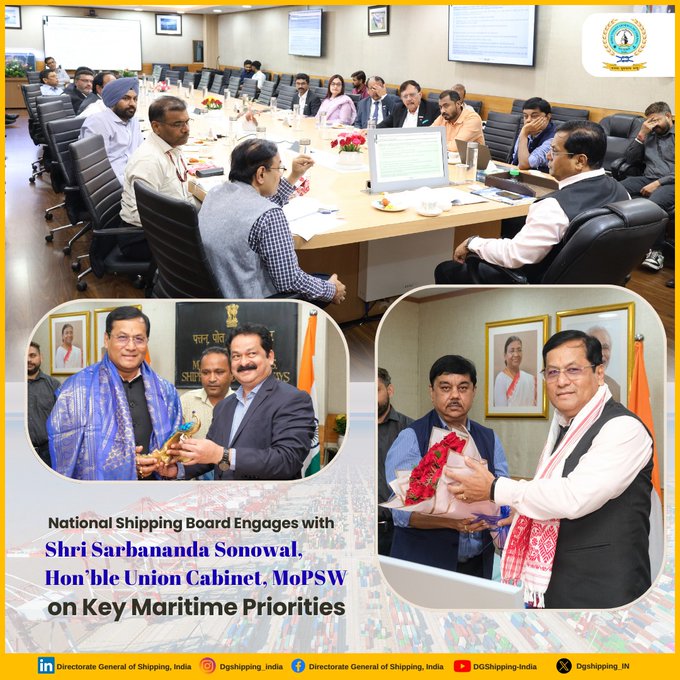
Sarbananda Sonowal meets National Shipping Board members

NEW DELHI : The members of the National Shipping Board (NSB) interacted with the Hon’ble Union Cabinet Minister of MoPSW, Shri Sarbananda Sonowal, on 20.08.2025, at the Ministry of PSW, Transport Bhawan, New Delhi. The meeting was deliberate on shaping the future of Coastal Shipping & Inland Waterways Transport. “Led by the vision of Hon’ble PM Shri Narendra Modiji, we are committed to further strengthening India’s maritime growth story“, Shri Sonowal said.

The meeting discussed various issues from NSB members on the following themes.

1. Increasing Indian Tonnage
2. Promoting Coastal Shipping & Inland Waterways
3. Developing World-Class Facilities for Seafarers at Ports
4. Strengthening Professional Maritime Services.

The principles of the meeting were to visualise the key maritime priorities in our country now and also deliberated on matters to be taken up with other Ministries and Departments.