Home Blog Page 699

India and Eurasian Economic Union sign Terms of Reference to launch FTA negotiations

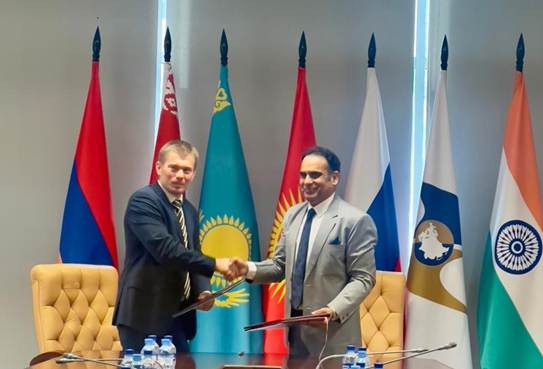
NEW DELHI: India and the Eurasian Economic Union (EAEU) comprising Armenia, Belarus, Kazakhstan, Kyrgyz Republic and the Russian Federation signed the Terms of Reference (ToR) to launch negotiations on a Free Trade Agreement (FTA) on Wednesday in Moscow. The ToR was signed by Additional Secretary, Department of Commerce, Government of India, Shri Ajay Bhadoo, and Deputy Director, Trade Policy Department, Eurasian Economic Commission (EEC), Mr. Mikhail Cherekaev.

During his visit, Additional Secretary, Department of Commerce, Government of India, Shri Ajay Bhadoo also called on Minister in charge of Trade, EEC, Mr. Andrei Slepnev. The heads of negotiation groups apprised the Minister about the milestone achieved with the signing of the ToR and discussed next steps to formally launch the negotiation process, including organizational aspects of the future trade deal.

Both sides noted the growing trade turnover between India and the EAEU, which stood at USD 69 billion in 2024, registering a 7 percent increase over 2023. With a combined GDP of USD 6.5 trillion, the proposed FTA is expected to expand market access for Indian exporters, support diversification into new sectors and geographies, enhance competitiveness against non-market economies, and deliver significant benefits to Micro, Small and Medium Enterprises (MSMEs).

The ToR provides the framework for negotiations and is expected to unlock untapped trade potential, increase investments and establish a stronger, durable India–EAEU economic partnership. Both sides reaffirmed their commitment to the early conclusion of the agreement and to building a long-term institutional framework for trade cooperation.

India’s MSME exports in Textiles, Diamonds & Chemicals to be hit most by US tariffs as they form major part of shipments to US: Crisil

NEW DELHI: Micro, small and medium enterprises (MSMEs) in sectors such as textiles, diamonds and chemicals, which together account for nearly 45 per cent of India’s total exports, are likely to be the most affected by the imposition of higher tariffs by the United States, according to a report by Crisil Intelligence.

The US currently levies an ad valorem duty of 25 per cent on Indian goods, but has announced an additional 25 per cent tariff that will take effect from August 27, raising the total duty to 50 per cent.
The report noted that this increase will significantly affect Indian exporters, especially MSMEs, which dominate key export sectors.

The textiles, gems and jewellery, and seafood industries, which together make up about 25 per cent of India’s total exports to the US, are likely to be hit the hardest.

MSMEs have more than 70 per cent share in these sectors. In the chemicals sector, where MSMEs account for about 40 per cent share, the higher tariffs will also hurt exporters.

Pushan Sharma, Director, Crisil Intelligence said, “Partial absorption of the increased product prices due to higher tariffs will put pressure on MSMEs, squeeze their already-slim margins and pose a material challenge to their competitiveness. For instance, those into readymade garments (RMG) are expected to lose ground in the US as the tariff increases to 61 per cent, including 50 per cent additional ad valorem duty, compared with peers in Bangladesh and Vietnam tariffed at 31 per cent. The Tirupur cluster, which accounts for over 30 per cent of India’s RMG exports, will be severely impacted as approx. 30 per cent of its exports are to the US.”

In the gems and jewellery sector, Surat’s diamond polishers, who dominate the country’s exports with over 80 per cent share, will also be severely affected.

Diamonds form over half of India’s total gems and jewellery exports, with the US being a major consumer, accounting for nearly a third of shipments. Similarly, seafood MSMEs will struggle to compete with Ecuador, which enjoys a lower 15 per cent tariff and is geographically closer to the US.

The chemical industry also faces stiff competition from Japan and South Korea, which face lower tariffs. Auto component MSMEs supplying gearbox and transmission equipment may also feel the heat as the US has a significant approx. 40 per cent exposure in this segment, though overall auto component exports to the US remain limited at 3.5 per cent of India’s production.

Overall, the US tariffs will affect about USD 19 billion worth of exports across textiles, chemicals, seafood and auto components.

To mitigate the impact, Crisil mentioned that India could boost exports to other destinations and leverage the India-UK free trade agreement.

Facing Trump tariffs, India’s shrimp farmers consider switching to other businesses

HYDERABAD : On India’s southern coast, V. Srinivas thrived for two decades by farming shrimp, as the country became the top supplier of the delicacy to the United States. Now, Donald Trump’s 50% tariff threat is forcing many to consider other ways of making money.
Andhra Pradesh state sends the most shrimp from India to the U.S. and farmers there have spent millions of rupees (hundreds of thousands of U.S. dollars) over the years to cultivate high-quality shrimp in saline ponds.

Now they are being hit hard as Indian exporters have slashed rates they offer farmers by almost 20% after the tariff shock, wiping out most of their profits. “I am contemplating if I should do fish farming,” said the 46-year-old from Veeravasaram village who has already mortgaged his family property and has $45,800 in outstanding loans.
“These prices will not help me get any profits and I will not be able to pay off my loan.”
The United States is the biggest market for India’s shrimp farmers and exporters, with clients including U.S. supermarket chains such as Walmart and Kroger. Last year, total seafood exports from India globally stood at $7.4 billion, with shrimp accounting for 40%.

But the industry is now in troubled waters with President Trump’s 25% tariff on imports from India already in place – the highest among major economies, and another 25% levy to kick in from August 27 to penalize New Delhi for buying Russian oil.

By comparison, Ecuador, India’s main rival for shrimp exports to the U.S., faces a much lower 15% tariff, heightening its competitive edge.

In Andhra, there are around 300,000 farmers engaged in shrimp farming, selling products to dozens of exporters who ship to America.

Pawan Kumar, head of the Seafood Exporters Association of India, said orders from U.S. clients have been paused in recent weeks as buyers aren’t willing to absorb the tariff, and neither can exporters, forcing the latter to cut prices they pay to farmers.

Although India also sells shrimp to other countries such as China, Japan and the UK, and likely will look to expand sales there and diversify into new markets, “that’s not going to happen overnight,” Kumar said.

The impact is yet another example of how Trump’s tariff threats are causing business disruptions across the world, especially in India, given it faces one of the steepest levies that have soured its relations with Washington.
In Andhra, six of 12 farmers Reuters interviewed said they were considering putting shrimp farming on hold and looking at fish farming, vegetable retailing or other local businesses to tide over the crisis. The other six are choosing to wait it out a bit. Each round of shrimp cultivation takes about 2 months or more.
While prices being offered for their shrimp are being slashed, the farmers said they still face loan payments and high operating costs for electricity, raw material and feed, as well as high land rentals.
“There’s hardly a 20-25% profit for us on good days, and if that’s getting eaten up, what else is left?,” said Gopinath Duggineni, the chief of a local union in Ongole city, adding the farmers plan to seek financial support from the state government.

Ecuador, meanwhile, is closely tracking tariffs on India to seize on business opportunities, but producers there will go slow on new investments amid uncertainty over whether India and the Trump administration could strike a tariff deal, said Jose Antonio Camposano, President of National Chamber of Aquaculture of Ecuador.

“India’s exports are highly concentrated in the United States … just as China is for us. So that is where we could gain ground if India withdraws,” he said.

Source : Reuters

EICI and KPMG in India unveil ‘Powering India’s Economy, Connecting Businesses and Markets Report’ on India’s Express Industry

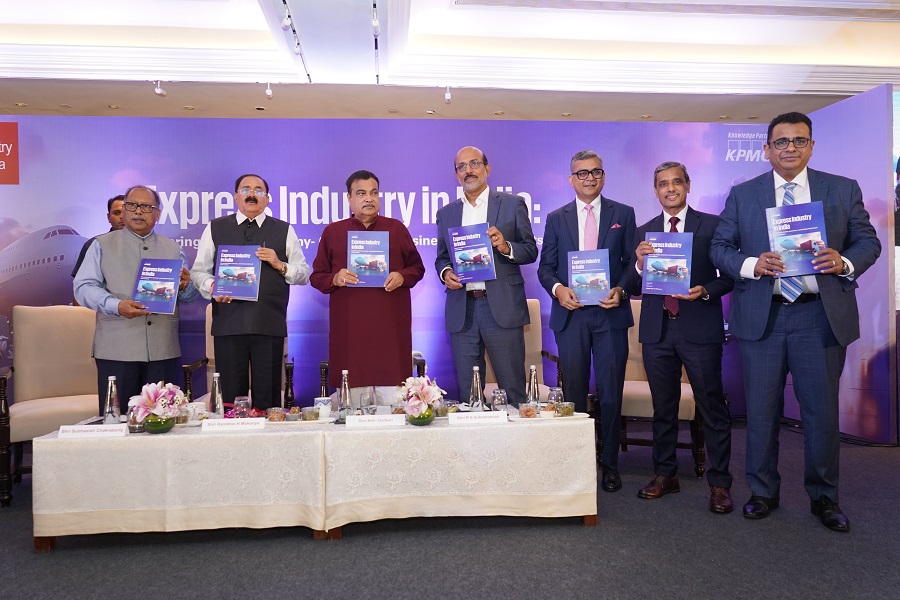
NEW DELHI: The Express Industry Council of India (EICI) unveiled its flagship report titled Express Industry in India 2025: Powering India’s Economy, Connecting Businesses and Markets, commissioned by EICI with KPMG in India as the knowledge partner. The report was launched by Shri Nitin Gadkari, Union Cabinet Minister for Road Transport and Highways, Government of India, along with senior government functionaries, industry leaders and other stakeholders in New Delhi.

The study highlights the sector’s expansion from USD 3 billion in FY17 to USD 9 billion in FY25, recording a compound annual growth rate of 12 to 15 per cent. It projects that the market will double to between USD 18 and 22 billion by FY30. By FY25, the express industry is expected to support between 2.8 and 3 million jobs, make a significant contribution to GST revenues of USD 1 to 1.5 billion and Customs revenues of USD 650 million, and act as a vital enabler for e-commerce, MSMEs and cross-border trade.

The report notes that the express industry has transformed from a logistics facilitator to an essential service provider, playing a critical role during the COVID-19 pandemic in supporting the world’s largest vaccination drive and ensuring priority delivery of essential goods. Post-pandemic growth is being driven by high internet and smartphone penetration, exponential growth of e-commerce, the rise of MSME output and significant infrastructure expansion into tier II and III cities.

Domestic express accounts for about 70 per cent of the total market, valued at USD 6.3 to 6.5 billion, with surface express contributing the largest share. The international express segment, with a share of around 30 per cent, handled 19.5 million shipments weighing approximately 1,52,300 tones in FY24, registering an average growth rate of 18 per cent between FY21 and FY24. Growth in this segment is being fueled by the increased global appetite for Made-in-India products, including handicrafts, ethnic wear, home furnishings, auto components and other manufactured goods.

Girish Nair Partner – Mobility and Logistics, National head- Aviation Sector, Global Lead-Airports, KPMG in India said ”India’s express logistics industry is undergoing rapid transformation to meet the growing demand for fast and reliable delivery solutions—not only through air, but also across road, rail, and coastal networks. Enhancing operational efficiency through digitization and automation, while exploring strategic growth opportunities such as positioning India as a transshipment hub, will further advance the sector and strengthen its global competitiveness. As consumer expectations evolve and cross-border commerce accelerates, the industry must embrace digital technologies, automation, and collaborative infrastructure development to deliver smarter, faster, and more dependable solutions. With robust policy support and a future-ready mindset, India could be well-positioned to emerge as a global benchmark for excellence in express delivery”

Chintan Patel, Partner- Deal Advisory (Transport and Logistics), KPMG in India said “India’s express industry is no longer just a logistics service—it’s a strategic engine of economic growth and innovation. With consolidation driving efficiency, technology setting new benchmarks, and multi-modal infrastructure paving the way for sustainable delivery, the sector is redefining speed, reliability, and scale in the digital age. As market demands evolve and commerce accelerates, the express industry stands poised to lead India into a new era of smart, connected logistics.”

Commenting on the report, Vijay Kumar, CEO, EICI, said: “The express industry has become a critical pillar of India’s economy, connecting businesses and markets with speed and reliability. From supporting the world’s largest vaccination drive to enabling e-commerce, MSMEs and exports, our sector has shown agility, resilience and innovation. Domestic express, which makes up around 70 per cent of the market, is led by surface transport growth, while international express is expanding rapidly with global demand for Made-in-India products.”

“Our priority now is to enhance efficiency, deepen customer centricity, adopt sustainable practices and leverage technology to serve a fast-changing market. With shifting consumer behavior, rapid digital adoption and growing domestic and international deliveries, the sector will be central to achieving India’s Viksit Bharat 2047 goals “

Key Trends Shaping the Express Industry

Consolidation: Companies are strengthening efficiency and market reach through mergers, acquisitions and strategic partnerships.
Agile business models: The sector is developing customized solutions to meet the growing demands of e-commerce, social commerce and quick commerce.
Digital transformation: Players are deploying advanced technologies such as blockchain, artificial intelligence, machine learning and automation to improve delivery speed and customer experience.
Sustainability: Industry leaders are committing to net zero targets and adopting greener operational practices to address environmental and social expectations.

The report further identifies five priority areas for unlocking future growth. These are agility and adaptability, efficiency improvements, customer centricity, a sustainable operating outlook and a robust policy and regulatory framework. It calls for targeted policy measures, infrastructure expansion and technology adoption, supported by initiatives such as PM Gati Shakti, the National Logistics Policy and Bharatmala Pariyojna.

About Express Industry Council of India (EICI):

The Express Industry Council of India (EICI), established in 1998 and based in Mumbai, is the leading industry body representing the express logistics and courier sector in India. It acts as the primary link between major international and domestic express companies and government authorities. Collectively, its members handle over one billion shipments annually, covering more than 80% of India’s express logistics market.

EICI plays a vital role in policy advocacy and regulatory reforms to improve the efficiency of time-sensitive shipments critical for trade, e-commerce, and MSMEs. The express logistics sector contributes over Rs. 700 billion to the economy, employs more than 3 million people, and is key to India’s growing global trade connectivity.

Tamil Nadu’s Southern Region gears up as key export growth centre

CHENNAI : Southern Tamil Nadu is rapidly positioning itself as South India’s next industrial and export powerhouse, fueled by large-scale investments and proactive state policies. The recent inauguration of Vietnamese Electric Vehicle major VinFast’s manufacturing facility in Thoothukudi has set the momentum, attracting fresh capital and industries to districts such as Tirunelveli, Thoothukudi, Kanniyakumari, Virudhunagar, Tenkasi, and Madurai. Officials describe this emerging cluster as a “significant economic corridor” shaping the state’s southern growth story.

For the southern region alone, the state has signed MoUs worth Rs 30,100 crore during a recent investors’ conference, promising 46,450 jobs. MSMEs have pledged an additional Rs 1,261 crore, with plans to create 1,000 jobs. Under the Naan Mudhalvan skill initiative, 350 people have been trained, with 250 of whom now working in training roles at VinFast.

Several big-ticket projects are in the pipeline. Singapore-based Royal Golden Eagle (RGE) is investing Rs 4,953 crore to set up a man-made fibre facility in Thoothukudi, while South Korea’s Hwaseung Enterprises will put Rs 1,720 crore into a large-scale non-leather footwear plant at Gangaikondan in Tirunelveli. Thoothukudi is also set to host a 250-acre space park, a shipbuilding department, a common facility centre for moringa exports worth Rs 5.59 crore, and a zonal unit of the Tamil Nadu Food Processing and Agri Export Promotion Corporation in Tirunelveli.

Industries Minister TRB Rajaa says the state’s decade-long logistics master plan will unlock the south’s trade potential through multi-modal logistics parks in Madurai and Thoothukudi, and an air cargo complex in Thoothukudi to accelerate high-value and time-sensitive cargo movement.

This industrial push is reshaping the region’s shipping landscape, with VOC Port in Thoothukudi and Adani Group’s transhipment hub at Vizhinjam, Kerala, both vying for the region’s growing cargo volumes.

ONE launches intermodal service in Saudi Arabia

SINGAPORE : Ocean Network Express (ONE) is launching inland logistics services in Saudi Arabia from the port of Damman on the Arabian Gulf.

The service called “Door Delivery” includes customs clearance with connections between Damman and the cities of Riyadh, Jubail, Jeddah and Neom, the latter two located on the Red Sea in the west of the country.

ONE said it plans to expand trucking to and from the Port of Damman to other locations.

Transit times are 24 – 48 hours after completion of customs clearance and based on delivery location.

Klaipėda Port Authority to develop Jurbarkas as a new inland cargo hub in Lithuania

KLAIPEDA: A contract has been signed between Klaipėda Port Authority and Jurbarkas District Municipality, under which the Port Authority becomes the operator of one of the quays. The agreement opens the way for the development of the inland cargo port in Jurbarkas. Shipping on the Nemunas River is a strategically important transport artery for the country and an environmentally friendly alternative for cargo transportation.

“Developing Jurbarkas Port will strengthen Lithuania’s logistics system and open up new opportunities to transport large volumes of cargo via inland waterways. For Jurbarkas Port, we are envisioning a future as a modern and sustainable inland waterway cargo hub,” says Algis Latakas, Director General of Klaipėda State Seaport Authority.

port 123 1 Klaipėda Port Authority to develop Jurbarkas as a new inland cargo hub in Lithuania

As the quay operator, Klaipėda Port Authority has identified opportunities not only for grain transportation but also for grain storage at Jurbarkas Port. An investment project for the development of Jurbarkas Port had already been prepared earlier.

Klaipėda Port Authority plans to make a multi-million-euro investment in the project in the coming years, with a commitment to invest at least €1 million within the first three years to prepare the necessary infrastructure and facilities for cargo handling.

Jurbarkas is located in Jurbarkas District, in western Lithuania, along the Nemunas River. The town has long-standing traditions of river transport and is strategically positioned to connect inland waterways with the country’s logistics network. Its location makes it an important point for the development of sustainable cargo transportation by inland water routes.

BIFA welcome Government’s pragmatic approach to border controls

LONDON : The British International Freight Association (BIFA) welcomes the UK Government’s decision to pause the implementation of additional import controls on EU and EFTA goods, announced in the wake of the UK-EU Summit held in May.

This move — part of ongoing negotiations towards a Sanitary and Phytosanitary (SPS) Agreement with the EU — signals a much-needed, pragmatic response to industry concerns. By postponing further checks on imports such as live animals and non-qualifying Northern Ireland goods, the government has demonstrated an understanding of the operational and economic challenges facing British freight forwarders, producers, and retailers.

BIFA Director General, Steve Parker, commented “We welcome the government’s decision to delay further Border Target Operating Model (BTOM) implementation and take a reasoned, phased approach while SPS Agreement details are finalised. This provides vital breathing space for our members and the wider supply chain, while reducing the risk of disruption and unnecessary costs. The freight and logistics sector has long called for clarity and stability — and this announcement reflects meaningful progress in that direction.”

Under the updated plans, existing checks on Rest of World imports via Border Control Posts (BCPs) will remain in place, and remote documentary and destination checks on EU and EFTA goods will continue. Current easements on certain medium-risk goods, including fruits and vegetables, will also be temporarily extended.

BIFA applauds the government’s commitment to protecting the UK’s biosecurity and public health while also engaging with stakeholders to ensure any future changes are clearly communicated.

Parker added “It is encouraging to see recognition of the importance of maintaining open trade flows with our largest market. As freight forwarders continue to navigate a complex global environment, we urge the government to keep working closely with industry, and to ensure that the eventual implementation of new controls — when necessary — is managed with transparency, sufficient notice, and operational support.”

BIFA will continue to monitor developments and keep its members informed as negotiations on the SPS Agreement progress.

Anglo-Eastern selects Inmarsat’s NexusWave for Hadley Shipping Group

LONDON: Inmarsat Maritime, a Viasat company, has announced that Anglo-Eastern will upgrade Hadley Shipping Group’s fleet to Inmarsat’s fully managed bonded connectivity solution, NexusWave.

Hadley Shipping Group is a long-standing Inmarsat Maritime user. Its transition to NexusWave represents a significant step forward in adopting a unified, bonded multi-orbit solution that will deliver enhanced performance, enterprise-grade cybersecurity, and a scalable platform for future operational needs and crew welfare.

Anglo-Eastern, a leader in technical ship management and a strong advocate of digital innovation at sea, began implementing its multi-orbit connectivity strategy in 2023. With NexusWave now being installed across a range of vessels under its management, Anglo-Eastern reinforces its mission to accelerate digital transformation, boost cyber-resilience, and provide seafarers with a reliable, home-like internet.

Torbjorn Dimblad, Chief Information Officer, Anglo-Eastern, said: “With NexusWave, we’re able to leverage secure, high-performance connectivity through a truly integrated multi-network approach. This solution aligns with our vision of a digitally advanced fleet, and we’re looking forward to the results of the ongoing trials as we continue to roll out NexusWave across our managed vessels.”

Sunit Das, Director of Operations, Hadley Shipping Group, said: “Unlimited data is a key benefit of Inmarsat’s NexusWave, but our decision to invest goes beyond just bandwidth. This upgrade supports our long-term goals for operational efficiency and crew wellbeing. With the built-in cybersecurity and our confidence in Inmarsat’s capabilities, NexusWave enables us to future-proof our fleet as maritime data and connectivity demands evolve.”

NexusWave combines high-speed connectivity, resilient bonded networks, and seamless global coverage to meet the growing requirements of modern shipping. Designed for scalability, it supports everything from smart vessel operations to enhanced crew welfare programmes.

Gert Jan Panken, Global Vice President, Inmarsat Maritime, said “This collaboration with Anglo-Eastern and Hadley Shipping Group reflects our shared commitment to building smarter, safer, and more connected operations at sea. NexusWave is engineered to meet the complex challenges of modern maritime operations, and we’re proud to support our customers as they embrace the future of connectivity.”

Chinese Foreign Minister Wang Yi calls-on PM Narendra Modi

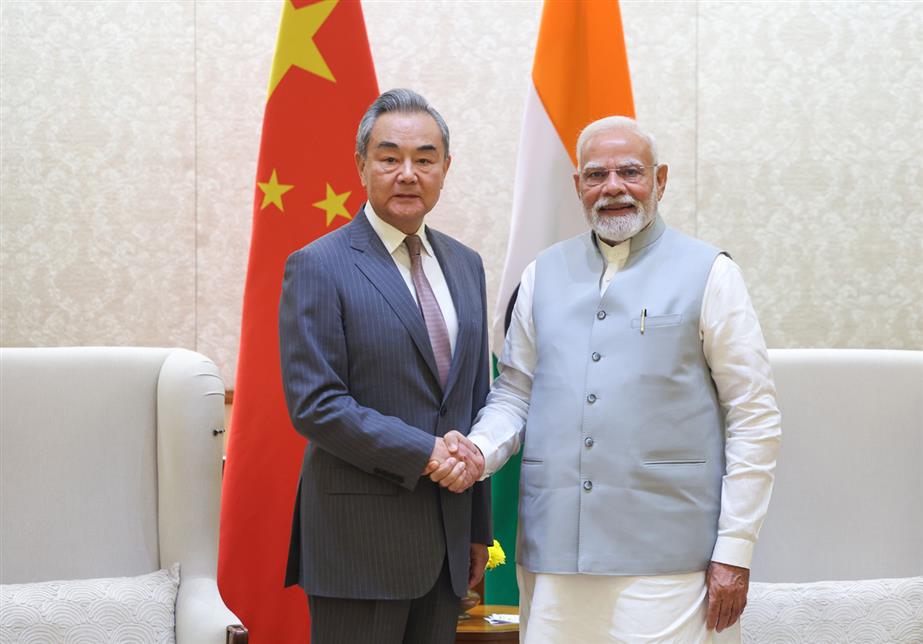
NEW DELHI : On Tuesday, Prime Minister Shri Narendra Modi received Mr Wang Yi, Member of the Politburo of the Communist Party and Foreign Minister of China.

Mr. Wang Yi handed over message and invitation from President Xi to Prime Minister for the SCO Summit being held in Tianjin. He also shared his positive assessment of bilateral meeting with EAM Dr. S. Jaishankar and 24th Meeting of the Special Representatives, which he co-chaired with NSA Shri Ajit Doval during his visit.

Prime Minister emphasised the importance of maintaining peace and tranquillity on the border, and reiterated India’s commitment to a fair, reasonable and mutually acceptable resolution of the boundary question.

Prime Minister welcomed the steady and positive progress in bilateral ties since his meeting with President Xi in Kazan last year, guided by mutual respect, mutual interest and mutual sensitivity, including the resumption of the Kailash Manasarovar Yatra.

Prime Minister thanked President Xi for the invitation to the SCO Summit and conveyed his acceptance. He expressed support for China’s Presidency of the SCO Summit and said that he looked forward to meeting President Xi in Tianjin. PM underlined that stable, predictable, and constructive ties between India and China will contribute significantly to regional and global peace and prosperity.