Home Blog Page 705

India’s 70% goods export exposed to Trump tariffs, ICRIER suggests negotiation and trade diversification

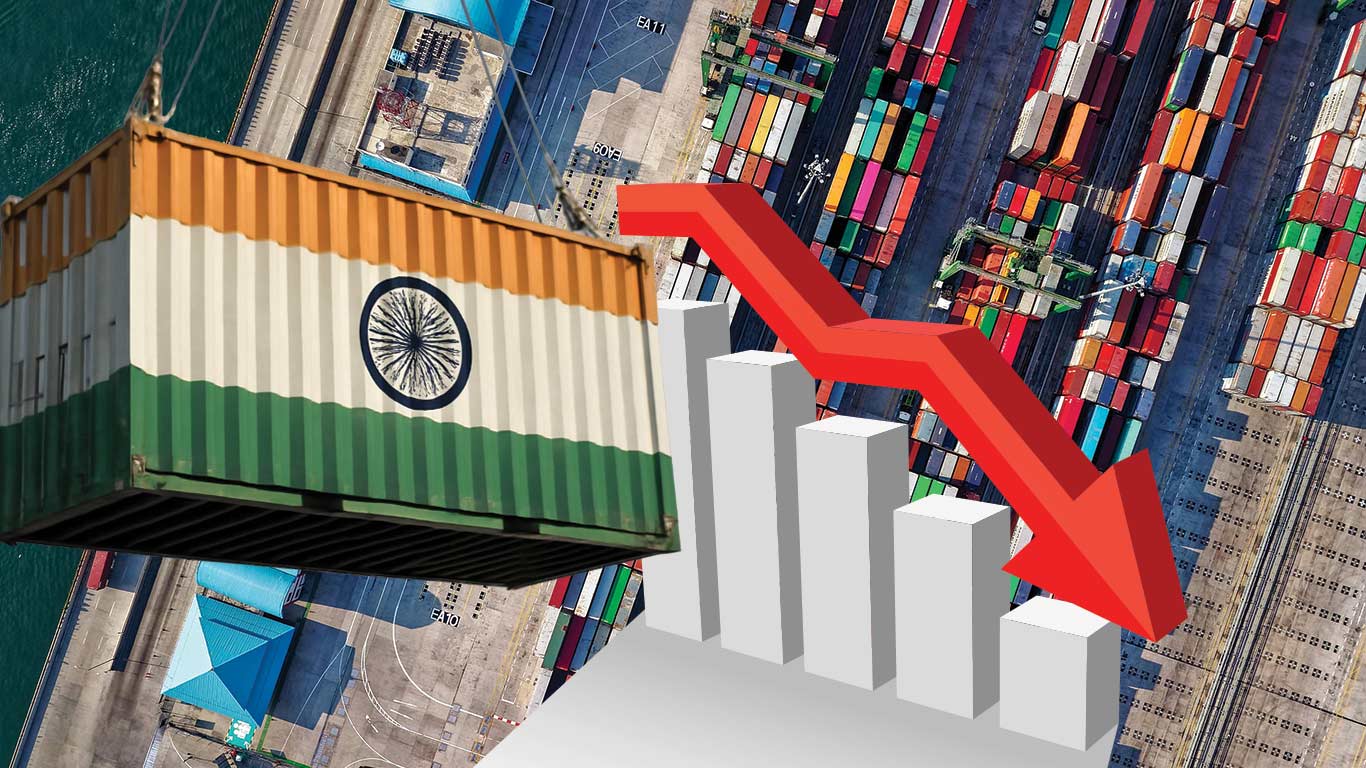
NEW DELHI : Around 70 per cent of India’s goods exports to the US, equivalent to USD 60.85 billion, are now exposed to the 50 per cent tariff imposed by the US administration, according to an analysis by ICRIER.

This represents just 1.56 per cent of GDP and 7.38 per cent of total exports, far from a catastrophe for a USD 3.9 trillion economy.

A report by the Indian Council for Research on International Economic Relations (ICRIER), titled ‘Navigating Trump’s Tariff Blow’ authored by Ashok Gulati, Sulakshana Rao, and Tanay Suntwal, argued that the impact is heavily concentrated in labour-intensive and high-value sectors such as textiles and apparel, gems and jewellery, auto parts and agricultural products, notably shrimp.

“These sectors not only anchor the merchandise exports to the US but also directly affect employment generation and the livelihoods of millions of workers and farmers,” the ICRIER report read.

The textiles and apparel sector faces a tariff disadvantage of over 30 percentage points compared with competitors like Bangladesh, Pakistan and Vietnam, threatening its competitive position in a key export market, the report noted.

Gems and jewellery exports, worth USD 11.9 billion, face similar challenges against suppliers such as Turkey, Vietnam, and Thailand.

Auto parts, which constitute 3 per cent of India’s exports to the US, are also vulnerable.

In agriculture, shrimp exports will be worst hit with 50 per cent tariffs higher than those applied to competitors like Ecuador, Indonesia, and Vietnam, in addition to the existing anti-dumping and countervailing duties India faces, the ICRIER authors argued.

“These are sectors where buyers can switch sourcing relatively quickly, which gives US importers bargaining power and weakens India’s negotiating position,” they supplemented.

Against this backdrop, ICRIER recommended a three-pronged strategic response.

“Firstly, smart negotiations with logic and rationality. Secondly, announce immediate and targeted relief support to hard hit sectors, and last on high priority, diversify our export markets,” it summarised its recommendations.

“The success of our leaders will be ensuring that short-term disruptions give way to long-term gains, reinforcing India’s position as a trusted and indispensable player in the global economy,” the abstract of the ICRIER report concluded.

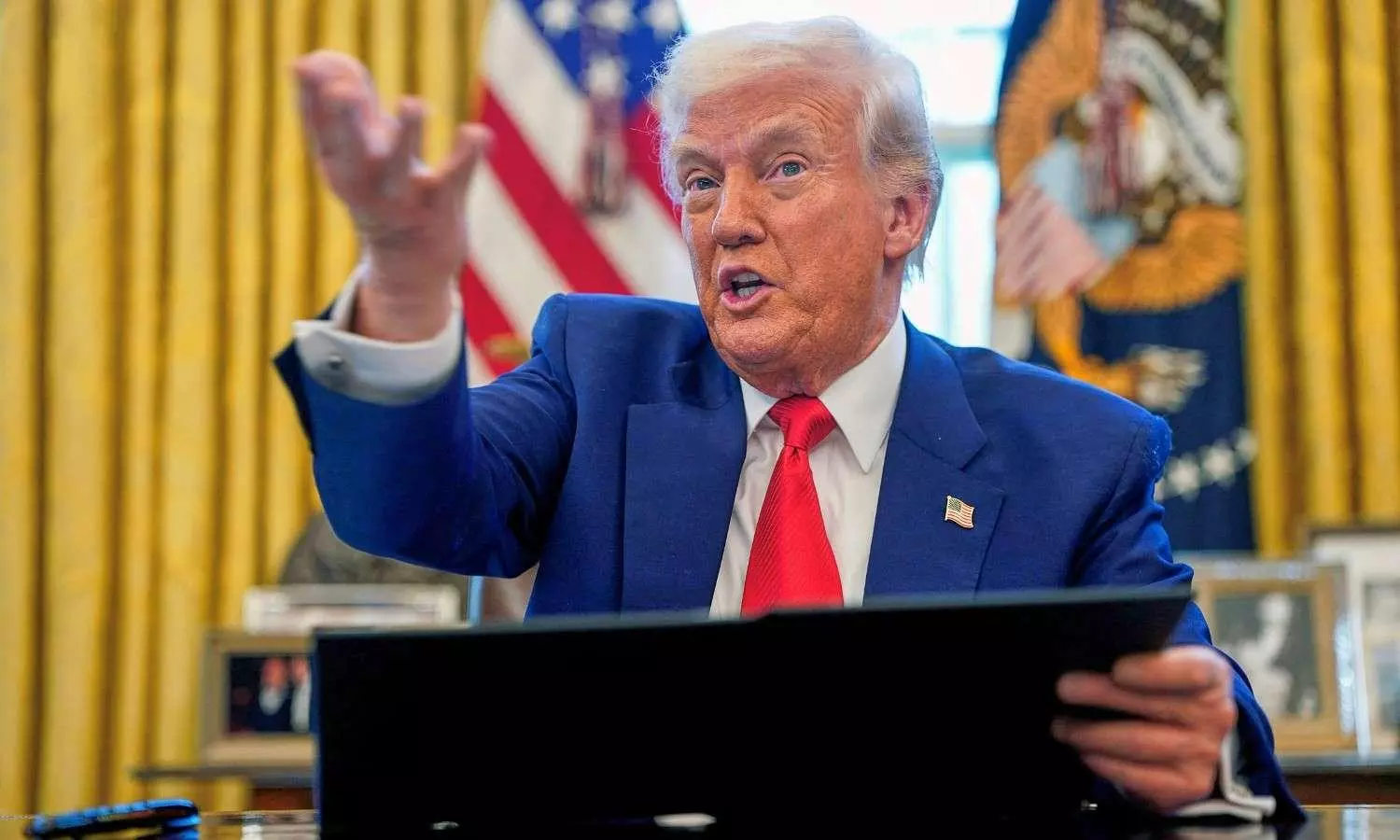
Initially, US President Donald Trump announced 25 per cent tariffs on Indian goods, even as there were hopes of an interim India-US trade deal that would have otherwise helped avoid elevated tariffs. A few days later, he imposed another 25 per cent tariff, taking the total to 50 per cent, citing India’s continued imports of Russian oil.

In contrast to India, competitors such as Vietnam (20 per cent), Bangladesh (18 per cent), Indonesia, Malaysia, and the Philippines (19 per cent), and Japan and South Korea (15 per cent) enjoy lower rates, as per reports.

However, the new US tariff regime excludes pharmaceuticals, energy products, critical minerals, and semiconductors.

Over the past few months, India and the US have been negotiating for an interim trade deal. Still, there are reservations from the Indian side on the US demand for opening up the agricultural and dairy sectors. Agriculture and dairy are critical for India as these two sectors provide livelihood opportunities to a large section of people.

India and the US initiated talks for a just, balanced, and mutually beneficial Bilateral Trade Agreement (BTA) in March this year, aiming to complete the first stage of the Agreement by October-November 2025.

US President Donald Trump had imposed reciprocal tariffs on dozens of countries with which the US has a trade deficit. Since assuming office for his second term, President Trump has reiterated his stance on tariff reciprocity, emphasising that his administration will match tariffs imposed by other countries, including India, to “ensure fair trade”.

On April 2, 2025, President Trump signed an executive order for reciprocal tariffs on various trade partners, imposing varied tariffs in the range of 10-50 per cent.

He subsequently kept the tariffs in abeyance for 90 days, while imposing a 10 per cent baseline tariff, providing time and space for making trade deals. The deadline was to end on July 9, and the US administration later pushed it to August 1.

Faced with tariffs, during the ongoing Monsoon session of Parliament, Commerce and Industry Minister Shri Piyush Goyal made a statement in both Houses, affirming that the government is examining the impact of tariffs and will take all necessary steps to safeguard the national interest.

On India’s import of Russian oil, the Ministry of External Affairs (MEA) also made its position clear, stating that India’s imports are meant to ensure predictable and affordable energy costs to the Indian consumer.
MEA said that the targeting of India is “unjustified and unreasonable”.

“Like any major economy, India will take all necessary measures to safeguard its national interests and economic security,” India made clear its stance yet again.

Gujarat issues new textile policy guidelines, extends incentives to GIDC areas

AHMEDABAD : The Gujarat Government has issued guidelines for industrial incentives under the Gujarat Textile Policy 2024, categorising talukas for benefits and extending the schemes to textile units located in GIDC-notified areas in cities. The move follows a demand from the Southern Gujarat Chamber of Commerce and Industry (SGCCI) to include units in such industrial zones.

Industries Minister Shri Balvantsinh Rajput announced the guidelines at the Valsad district collector’s office, in the presence of SGCCI vice president Ashok Jirawala, Valsad BJP MLA and Lok Sabha Whip Dhaval Patel, and other dignitaries.

SGCCI President Nikhil Madrasi said the guidelines recognised groups of at least 20 women as a Self Help Group for self-employment initiatives, with each member eligible for a monthly benefit of up to Rs. 5,000. He noted that the objective was to boost investment in the textile sector, promote women’s empowerment, and create new employment opportunities in both rural and urban areas.

SGCCI vice president Ashok Jirawala stated that textile units established in GIDC-notified urban areas would now be eligible for government incentive schemes. He added that the guidelines also covered composite units with processes from spinning to fabric production, a move expected to give a significant push to the state’s textile industry.

Reviving Heritage: GRSE breathes New Life into Kolkata’s iconic ghats

KOLKATA : As part of its Corporate Social Responsibility (CSR) initiatives and its continued efforts to maintain and promote the rich heritage of Kolkata, Garden Reach Shipbuilders and Engineers (GRSE) Ltd has undertaken the beautification of two iconic ghats on the banks of the River Hooghly- the culturally revered Mayer Ghat at Bagbazar. & the historic Suriname Ghat at Garden Reach.

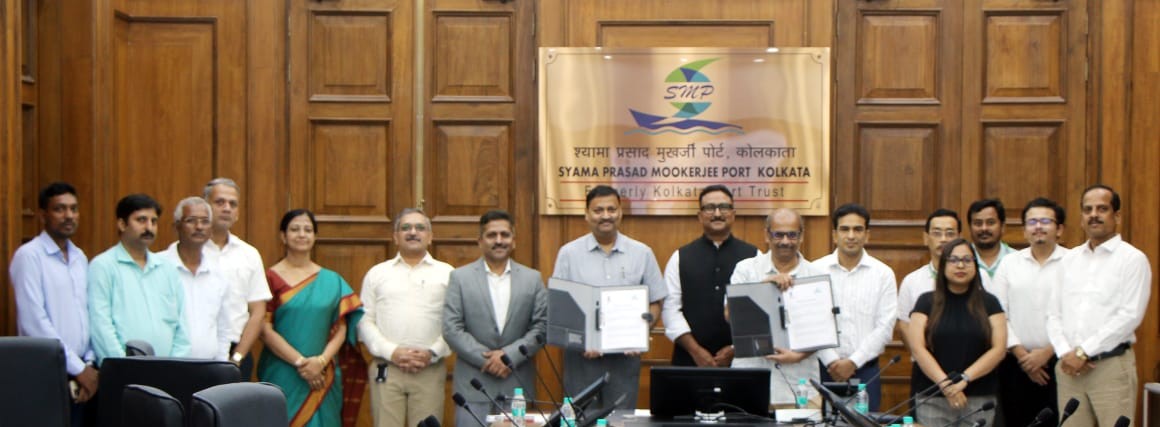
A Memorandum of Understanding (MoU) to this effect was signed on August 6, 2025, by Shri Rajeev Shrivastava, GM(HR&A), GRSE and Shri Santanu Mitra, Chief Engineer, SMPK, in the presence of Cmde PR Hari, IN (Retd.), Chairman & Managing Director, GRSE & Shri Rathendra Raman, Chairman, Syama Prasad Mukherjee Port Kolkata (SMPK). Capt (IN) P Sunilkumar (Retd.), Director (Corporate Planning & Personnel) and other senior officials from GRSE & SMPK were present on the occasion.

Mayer Ghat, located near Bagbazar in North Kolkata, is renowned for its spiritual and cultural significance. The ghat is historically associated with Ma Sarada, (the revered spiritual consort of Sri Ramakrishna Paramahamsa), who used the ghat during her stay at her residence, Udbodhan. The beautification initiative will preserve and enhance this revered landmark, ensuring its upkeep for future generations.
The Suriname Ghat has immense historical significance. It is from here that the sail ship Lalla departed on February 26, 1873, for the Dutch colony of Suriname, with 410 indentured labourers and their families. That was the start of what is today known as the Indian diaspora in the Republic of Suriname.

As many as 34,304 Indians are known to have reached Suriname in 63 more ships that left the Suriname Ghat till 1916. Today, there are over 175,000 people of Indian origin in Suriname, forming over 35% of the total population of the country.

The Mai Baap Memorial at the Ghat and the sculpture of a man and a woman carrying ‘potlis’ on their heads, is a symbol of resilience that India and Indians have displayed over ages. When they left India, the men were allowed to carry two dhotis and two kurtas and the women, two saris. Some of them carried religious texts such as the Ramayana and Mahabharata with them. At that time, they were paid 25-pence a week. Today their descendants have made it big in the worlds of business, arts, sports and politics.

GRSE is not new to the Caribbean, of which Suriname is a part. In 2023, the shipyard delivered the Ma Lisha, an ocean-going, passenger-cum-cargo ferry to the Cooperative Republic of Guyana that shares its border with Suriname. This ferry, the first built for that country in India, is the largest and fastest in Guyana. Indentured labourers also travelled to Guyana from Kolkata to work in the sugarcane plantations.

The restoration and beautification of Mayer Ghat and Suriname Ghat will not only preserve two significant heritage sites but also serve as a powerful reminder of important chapters in India’s history, attracting visitors and fostering awareness of the country’s cultural legacy.

Proud Moment for GRSE ahead of Independence Day: Hands Over its 113th Warship Survey Vessel (Large) ‘Ikshak’ to Indian Navy

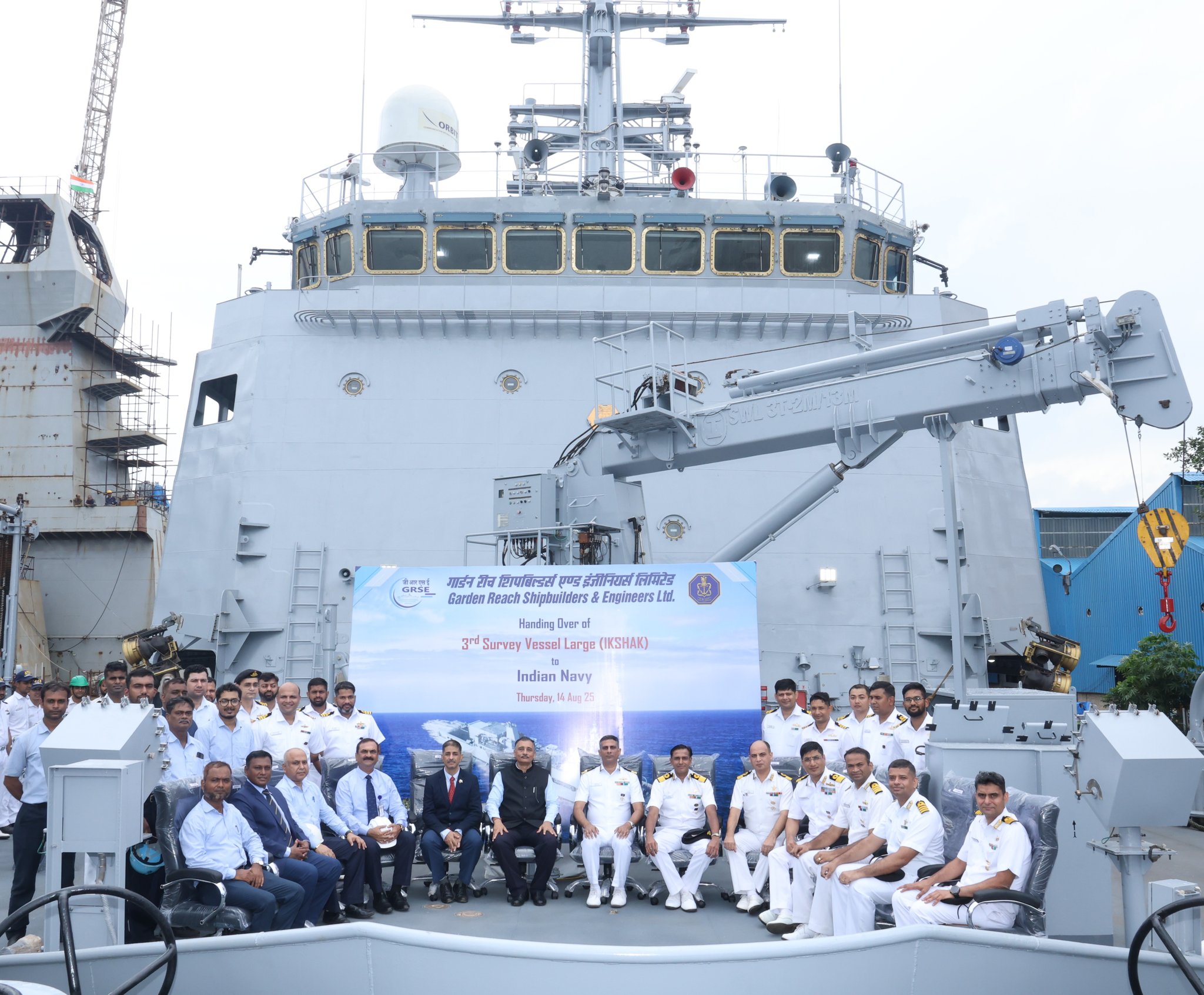
KOLKATA : In yet another achievement, showcasing the shipyard’s ability to build and deliver advanced warships, Garden Reach Shipbuilders and Engineers (GRSE) Ltd delivered the Ikshak to the Indian Navy on Thursday, August 14th, 2025.

‘Ikshak’ – the name stands for ‘Guide’ – is the third in a series of four Survey Vessels (Large) being built by GRSE. The second ship of this class, INS Nirdeshak, was delivered on October 8th, 2024, while the first one – INS Sandhayak was handed over to the Navy on December 4th, 2023.

This delivery comes less than a month after GRSE handed over the Advanced Guided Missile Frigate Himgiri to the Navy.

Incidentally, the Sandhayak-class of Survey Vessels (Large), or SVLs, including the Ikshak, are also the largest such platforms to be built in India and operated by the Navy.

The Ikshak is the 802nd ship and the 113th warship to be built by GRSE. It is the 75th warship to be delivered to the Navy. No other shipyard in India has achieved this feat.

The relationship between GRSE and the Navy goes back 64 years to 1961 when the shipyard delivered the first indigenous warship INS Ajay. Since then, 74 more warships have been added to the list, helping the Navy advance from a ‘buyer’ to a ‘builder’. This is in keeping with the Government’s Atmanirbharta policy.
The 110-metre-long Ikshak will join INS Sandhayak and INS Nirdeshak after being commissioned and keep the Navy supplied with vital survey data which is very crucial for operational purposes. The maps and charts prepared on the basis of this survey data are also used by commercial shipping.

This prestigious warship was accepted on behalf of Indian Navy by Cmde Arvind Chari, CSO (Tech) (South).

With advanced equipment on board, the SVLs of this class are capable of full-scale coastal and deep-water hydrographic survey of port and harbour approaches as well as the determination of navigation channels and routes. In addition, these Sandhayak-class of SVLs can undertake surveys of maritime limits and collect oceanographic and geographical data for defence applications, adding muscle to India’s maritime capabilities.

These ships can each carry a helicopter, participate in low-intensity combat and function as hospital ships. They can also be used for Humanitarian Assistance and Disaster Relief (HADR) operations.

Propelled by two marine diesel engines combined with fixed-pitch propellers and fitted with bow and stern thrusters to help the ships manoeuvre at low speeds during surveys, they are ideally suited to carry out their designated operations. Fully designed by GRSE to meet the requirements of the Indian Navy, Ikshak was built using ‘Integrated Construction’ technology. This was in compliance with applicable provisions and regulations of the Classification Society (IRS).

GRSE is now building 14 more warships for the Navy, including two P17A Advanced Guided Missile Frigates, one SVL, seven Anti-Submarine Warfare Shallow Water Crafts and four Next Generation Offshore Patrol Vessels.

GRSE Indian Navy 4 Proud Moment for GRSE ahead of Independence Day: Hands Over its 113th Warship Survey Vessel (Large) ‘Ikshak’ to Indian Navy

Hapag-Lloyd reports good growth and solid half-year results in a volatile market

HAMBURG : Hapag-Lloyd concluded the first half of 2025 with a Group EBITDA of USD 1.9 billion (EUR 1.8 billion). The Group EBIT decreased to USD 0.7 billion (EUR 0.6 billion) and the Group profit to USD 0.8 billion (EUR 0.7 billion). The frequent changes in trade policies of the US, in particular, led to volatile demand and freight rates. In addition, congested seaports and the tense security situation in the Red Sea impacted operations.

In the Liner Shipping segment, revenues increased to USD 10.4 billion (EUR 9.5 billion) in the first half of 2025. This was mainly due to an 11% increase in transport volumes, to 6.7 million TEU (H1 2024: 6.1 million TEU), primarily driven by growth in the East-West trades. At 1,400 USD/TEU (H1 2024: 1,391 USD/TEU), the average freight rate was similar to the prior-year level. The EBITDA decreased to USD 1.8 billion (EUR 1.7 billion) and the EBIT to USD 0.6 billion (EUR 0.6 billion) – in part due to start-up costs for the new Gemini network but also related to congestion and general inflation.

The Terminal & Infrastructure segment achieved an increase in sales and earnings in the first half of 2025. The EBITDA rose to USD 79 million (EUR 72 million) and the EBIT to USD 37 million (EUR 34 million). In addition, the terminal portfolio was further expanded in March 2025 with the acquisition of a majority stake in CNMP LH in Le Havre, France. 

“In a volatile market, we significantly increased our transport volume and ended the first half of the year on a solid note overall. We have gotten our Gemini network off to a very successful start and are setting new standards in our industry in terms of schedule reliability. In addition, we have made good progress in the further expansion of Hanseatic Global Terminals. In the second half of the year, we will keep our focus on quality and growth as well as operational and commercial performance while continuing to optimize our cost structure. At the same time, we will do everything in our power to help our customers navigate this volatile market environment, and we hope that more new trade agreements will make their supply chains more predictable,” said Rolf Habben Jansen, CEO of Hapag-Lloyd AG.

In view of the solid business performance in the first half of 2025, which was in line with expectations, the Executive Board has refined its earnings forecast for the 2025 financial year. The Group EBITDA is now expected to be in the range of USD 2.8 to 3.8 billion (EUR 2.5 to 3.4 billion) and the Group EBIT to be in the range of USD 0.25 to 1.25 billion (EUR 0.2 to 1.1 billion). Given the wide range of geopolitical challenges and volatile freight rates, the forecast remains subject to considerable uncertainty.

The financial report for the first half of 2025 is available here.

KEY FIGURES (USD)*

GroupH1 2025H1 2024H1 2025 vs. H1 2024
Revenues (USD million) 10,590 9,516 1,074
EBITDA (USD million) 1,924 1,969 -45 
EBIT (USD million) 677 879 -202 
EBITDA margin 18% 21% -3 Ppt 
EBIT margin 6% 9% -3 Ppt 
Group profit (USD million) 775 791 -16 
Liner Shipping SegmentH1 2025H1 2024H1 2025 vs. H1 2024
Transport volume (TTEU) 6,745 6,097 648 
Freight rate (USD/TEU) 1,400 1,391 9 
Revenues (USD million) 10,386 9,320 1,066 
EBITDA (USD million) 1,844 1,898 -54 
EBIT (USD million) 639 846 -207 
Terminal & Infrastructure SegmentH1 2025H1 2024H1 2025 vs. H1 2024
Revenues (USD million) 244 217 27 
EBITDA (USD million) 79 71 8 
EBIT (USD million) 37 33 4 

KEY FIGURES (EURO)*

GroupH1 2025H1 2024H1 2025 vs. H1 2024
Revenues (EUR million) 9,685 8,804 881 
EBITDA (EUR million) 1,759 1,822 -62 
EBIT (EUR million) 619 813 -194 
Group profit (EUR million) 709 732 -23 
Liner Service SegmentH1 2025H1 2024H1 2025 vs. H1 2024
Revenues (EUR million) 9,499 8,623 876 
EBITDA (EUR million) 1,686 1,756 -69 
EBIT (EUR million) 585 782 -198 
Terminal & Infrastructure SegmentH1 2025H1 2024H1 2025 vs H1 2024
Revenues (EUR million) 223 201 22 
EBITDA (EUR million) 72 66 6 
EBIT (EUR million) 34 31 3 

* In individual cases, rounding differences may occur in the tables for computational reasons.

HMM Records $910 Million Profit in First Half of 2025

SEOUL : Hyundai Merchant Marine (HMM) has reported robust earnings for the first half of 2025, posting revenue of KRW 5.48 trillion ($4.12 billion) and a net profit of KRW 1.21 trillion ($910 million). The company achieved an operating profit of KRW 847 billion ($636 million), translating into an operating margin of 15.5 per cent.

For the second quarter alone, HMM recorded revenue of KRW 2.62 trillion ($1.97 billion), net profit of KRW 471 billion ($354 million), and operating profit of KRW 233 billion ($175 million).

The Shanghai Containerized Freight Index (SCFI) averaged 1,701 points during the period, marking a 27 per cent year-on-year decline as freight rates weakened under the pressure of US tariffs and ongoing trade tensions.

Looking ahead, HMM expects continued market volatility as tariff grace periods expire and trade negotiations remain unsettled. The company also anticipates that shifts in regional demand will sustain supply chain congestion.

To navigate these challenges, HMM plans to maintain flexible fleet deployment, secure stable Contract of Affreightment (COA) revenues, and implement cost reductions through vessel efficiency improvements.

In June, the carrier launched its North China–Indonesia Service (NIS), connecting major ports in both regions to strengthen its regional network.

AD Ports Group delivers Strong Q2 2025 Results

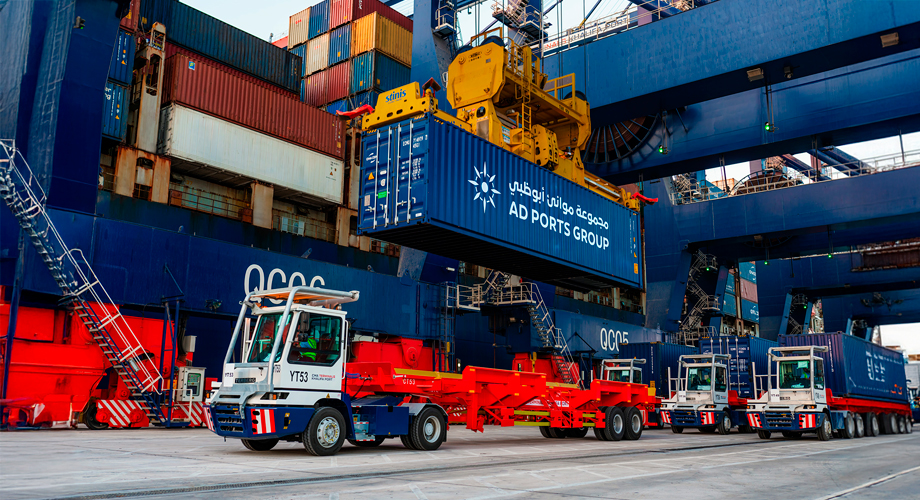
ABU DHABI : AD Ports Group, a global enabler of integrated trade, transport, industry, and logistics solutions, announced its financial results for the second quarter and first half of the year ending 30th June 2025. AD Ports Group’s growth story continued in the first half of 2025 with double-digit top-line growth recorded in both Q2 and H1 2025, driven by the Ports, Economic Cities & Free Zones (EC&FZ), and Maritime & Shipping clusters.

As supply chains continue to recalibrate, the Group’s integrated five-cluster ecosystem, anchored by a robust asset base and end-to-end service capabilities, continues to demonstrate both resilience and adaptability in volatile and disruptive times. This has enabled the Group to respond swiftly to shifting cargo flows and to capitalise on new trade opportunities across our strategic focus regions: the Middle East, Red Sea, Europe, Africa, Indian Subcontinent, Central Asia, and Southeast Asia.

The Group continues to focus on long-term investments in infrastructure assets through the Ports and Economic Cities & Free Zones clusters, while the Maritime & Shipping, Logistics, and Digital clusters provide critical support in creating a network effect, improving connectivity to the Group’s key markets, and adapting to evolving market dynamics.

While the Red Sea situation continues to pose a risk to global trade, the Group has been able to mitigate adverse impacts and, in fact, has capitalised on increased demand for both reliable passage through the Red Sea and alternative trade routes. Recent commercial progress in markets like Egypt and Central Asia shows the Group’s commitment to investing along existing and emerging trade routes. In parallel, ongoing policy shifts such as new US tariffs have added further complexity to global trade flows. The potential impact of US tariffs remains under close watch, though current announcements have not resulted in material effects as disclosed in the strong set of operational performance delivered year-to-date.

The Group’s underlying operational performance was strong across the Ports, Economic Cities & Free Zones (EC&FZ), and Maritime & Shipping clusters, which all together constituted over 90% of total Q2 2025 EBITDA. In Ports, quarterly container throughput soared 17% YoY while general cargo volumes increased 13% YoY. It is worth mentioning the impressive container throughput performance of the CMA Terminal in Khalifa Port, which started commercial operations just at the beginning of 2025, with a quarterly utilisation of 80% (62% year-to-date). In EC&FZ, another 600,000 m2 of land were leased in Q2 2025, bringing the total land leases year-to-date to 1.6 km2, while utilisation in the staff accommodation business, Sdeira Group, made another leap to 80% vs. 63% in Q2 2024, and 75% in Q1 2025. In the Maritime & Shipping cluster, container feeder shipping volumes rose 34% YoY, while the bulk, multipurpose, and Ro-Ro shipping vessel fleet reached 34 as of Q2 2025, up from 28 at the same period a year earlier. Marine services fleet also expanded meaningfully, with 74 vessels as of Q2 2025, up from 65 in Q2 2024.   

In Q2 2025, AD Ports Group further reinforced its ESG leadership through ongoing sustainability efforts. The Group signed a milestone collaboration agreement with Masdar, Advario, and CMA CGM Group to explore building an e‑methanol bunkering and export facility at Khalifa Port and KEZAD – an initiative key to accelerating the decarbonisation of global maritime transport through sustainable fuel infrastructure. The Group’s commitment to sustainable maritime operations was also reinforced with Noatum Maritime’s acquisition of the GCC’s first all-electric hydrofoil pilot boat, and the purchase of two fully electric tugboats. Additionally, the Group, together with New York University Abu Dhabi (NYUAD), completed a three-year coral conservation and research project, which explored global coral relocation case studies to develop best practices tailored to the Arabian Gulf’s unique environment.

Steady operating profit growth, stable balance sheet, declining capex intensity, and strong generation of cash flow from operations resulted in positive free cash flow to the firm for the quarter and year-to-date

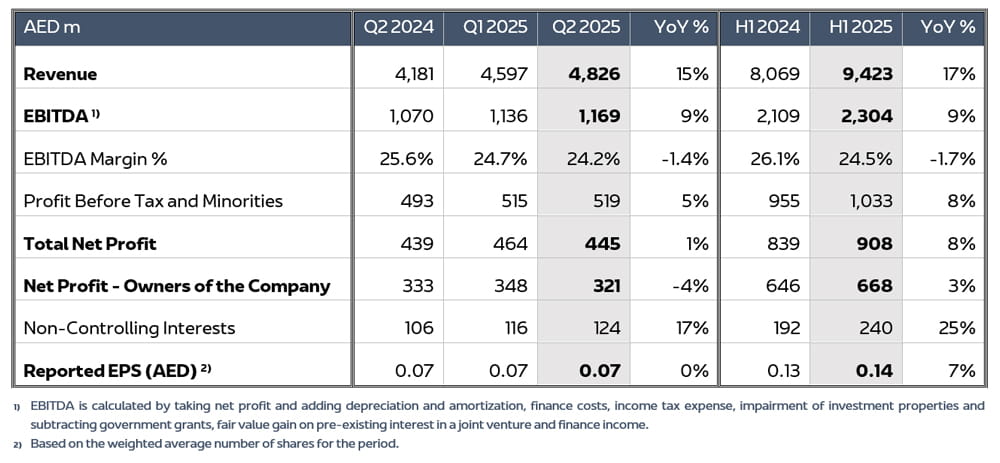
  • AD Ports Group’s Revenue surged 15% YoY (Year-on-Year) to AED 4.83 billion in Q2 2025, driven by the Ports, Economic Cities & Free Zones, and Maritime & Shipping clusters.
  • Quarterly Group EBITDA increased 9% YoY to AED 1.17 billion, with Group EBITDA Margin standing at 24.2% in Q2 2025.
  • Profit Before Tax reached AED 519 million, up 5% YoY, primarily due to the effect of higher depreciation and amortisation charges and finance costs while Total Net Profit was relatively flat at AED 445 million because of higher Income tax.
  • EPS for the quarter stood at AED 0.07, flat YoY.
  • With marginal increase in Net Debt and continued strong liquidity position, Net Debt/EBITDA has been relatively stable for the past three quarters at 4.1x, but improved significantly YoY from 4.9x in Q2 2024.
  • CapEx in Q2 2025 reached AED 928 million, with majority of cash outlays going into Maritime & Shipping, Economic Cities & Free Zones, and Ports assets. Capex intensity continued to decline, reaching 19% of Group revenue in Q2 2025, vs. 28% in Q2 2024.
  • Given the strong operating profit performance and with a cash conversion of 97% for the quarter, Operating Cash Flow reached AED 1.14 billion in Q2 2025, almost doubling from the same period a year earlier. As a result, Free Cash Flow to the Firm (FCFF) was positive for the quarter and year-to-date.

Q2 & H1 2025 Financial KPIs

ADPG Delivers Strong Q2 2025 Results EN

Captain Mohamed Juma Al Shamisi, Managing Director and Group CEO, said:

“The holistic core of AD Ports Group’s five-cluster business model delivered sustainable growth for its shareholders once again in a challenging macroeconomic and geopolitical environment, as strong results from our Ports, Economic Cities & Free Zones, and Maritime & Shipping clusters drove Q2 gains in overall Group revenue and operating profit. As global cargo flows continued to shift against a backdrop of regional conflicts and tariff volatility, the strategic flexibility of AD Ports Group’s synergistic business structure kept our value-enhancing international expansion on course, allowing us to mitigate adverse external factors, while capitalising on opportunities in dynamic regions such as the Red Sea, and along emerging alternative trade corridors we are developing such as in Central Asia. While reduced geopolitical and macroeconomic visibility is expected to continue in the second half of the year, so too is the long-term profitable nature of our value-enhancing internationalisation, which, in line with the vision of our wise leadership in the UAE, and despite all temporary obstacles, is positioning AD Ports Group as a leader in sustainable trade, transport, logistics, and economic development”.

Key Business Developments in Q2 2025

EC&FZ Developments:

  • Signed a 50-year renewable usufruct agreement with Suez Canal Economic Zone (SCZONE) to develop and operate a 20 km2 industrial and logistics park near the Egyptian coastal city of East Port Said on the Mediterranean Sea.
  • Signed a 50-year land lease with Broaden Energy for a 80K sqm facility to be used for designing and manufacturing Engineering, Procurement, and Construction (EPC) projects and turnkey solutions for hydrogen, solar and wind power projects with a customer investment of AED 455m.
  • Signed a 50-year land lease with Witthal Gulf Industries for a 15K m2 facility that will recycle end-of-phase batteries used in electric vehicles, solar farms, and other renewable energy systems, to recover valuable materials such as black mass, copper and aluminium, and produce sustainable alternatives, with a customer investment of AED 40m.
  • Signed a 50-year land lease with Axione Development and Stock Space for a 14K m2 facility that will provide prime quality warehousing space and operations catering to the F&B and FMCG industries, with a customer investment of AED 50m.
  • Signed a 50-year land lease with Sing Auto for a 100K m2 facility that will focus on green logistics solutions such as intelligent refrigerated vehicles designed to enhance the efficiency of cold chain logistics in the region, with a customer investment of AED 100m.
  • Announced the development of KEZAD Business District, a mixed-use commercial hub spanning over 3 km2 that will include office space, sport facilities and F&B retail outlets.

Central Asia Developments:

  • Started operations at Tbilisi Intermodal Hub in Georgia, which serves as a key multimodal logistics hub for the Group in Central Asia.
  • Announced the commencement of the Central Asian logistics JV Gulf Link, 51% percent owned by AD Ports Group, and 49% by KTZ Express JSC, a multimodal transport and logistics subsidiary of Kazakhstan Railways. Through Gulf Link, AD Ports Group and KTZ Express are offering connectivity through Central Asia, and globally, through Pakistan, Türkiye, the Arabian Gulf, and the Indian subcontinent.
  • Expanded the Group’s presence in Kazakhstan, by signing preliminary agreements to develop a Multipurpose Terminal at Kuryk Seaport on the Caspian Sea and to expand the current oil tanker fleet as well as commission up to four new shallow-draft container ships designed for use in the Caspian Sea.

Maritime & Shipping Developments:

  • Noatum Maritime and The Arab Shipbuilding and Repair Yard Company (ASRY) marked the operational commencement of their JV to provide integrated marine services in Bahrain. AD Ports Group and ASRY also signed preliminary agreements to enhance dry-docking and ship building capabilities within the GCC and explore opportunities in the broader region, and to create a green ship recycling facility with JM Baxi in their effort to reduce carbon emissions.

Post-Quarter Events:

  • AD Ports Group signed an agreement with China’s Ningbo Zhoushan Port Group to establish an auto logistics ecosystem by connecting Chinese OEMs with Middle East, Central Asian, and African markets through terminal operations, dedicated fleet services, and multimodal transport solutions. Plans include to use United Global Ro-Ro, Noatum Maritime’s JV with Türkiye’s Erkport, as the designated Ro-Ro carrier.
  • Noatum Maritime opened its first office in China – Shanghai, dedicated to its agency and marine services business.
  • Noatum Logistics officially launched its first international office in China – Beijing, allowing the cluster to swiftly respond to emerging trade and logistics opportunities.
  • AD Ports Group signed a 50-year land lease agreement at Khalifa Port’s South Quay for a 100K m2 storage facility, including silos, with Emirates Food Industries.

Trump holds off secondary sanctions for China, claims India no longer buying Russian oil

NEW DELHI : India on August 16, welcomed the Summit between U.S. President Donald Trump and Russian President Vladimir Putin in Alaska and appreciated the “progress made” on a path to ending the Ukraine conflict. Although the meeting ended without any concrete announcements, Ukraine President Volodymyr Zelenskyy indicated that it would lead to a trilateral summit including him soon.

While the cordial nature of the summit could mean some relief for India, which faces 50% U.S. tariffs on its exports to the U.S., including 25% penalty tariffs for the import of Russian oil, Mr. Trump did not make a categorical statement that these would now be reconsidered.

In a statement, the Ministry of External Affairs (MEA) said the U.S. and Russian Presidents’ “leadership in the pursuit of peace is highly commendable”.

“The way forward can only be through dialogue and diplomacy. The world wants to see an early end to the conflict in Ukraine,” the MEA added. However, the Ministry declined to comment on Mr. Trump’s claims that India had stopped being an “oil client” for Russia. Mr. Trump also repeated earlier comments, which India has denied, on his role in mediating the India-Pakistan ceasefire in May this year.

In an interview to US’s Fox News after the talks, Mr. Trump said that he would consider the question of the penalty tariffs on Russian oil in “two or three weeks”, possibly indicating the August 27 deadline could pass for India without an implementation of punitive 25% tariffs over and above the 25% reciprocal tariffs.

When asked specifically about tariffs on China which imports even more oil than India, Mr. Trump said that “because of what happened today, I think I don’t have to think about that now,” adding, “I think you know, the meeting [with Putin] went very well”. Speaking earlier, Mr. Trump claimed that India had already agreed to drop purchases of Russian oil.

Well, he (Putin) lost an oil client, so to speak, which is India, which is doing about 40% of the oil; China, as you know, is doing a lot, and there are a few other countries,” Mr. Trump told Fox News in an interview prior to the talks on Friday (August 15, 2025). “If I did what’s called a secondary sanction or a secondary tariff, it would be devastating from their (Russia’s) standpoint. If I have to do it, I will do it; maybe I won’t have to do it,” he added.

India continues to purchase Russian oil
Indian oil refining PSUs, however, have continued to purchase up to 2 million bpd (barrels per day) of Russian oil, and said that they had no instructions from the government to “buy or not to buy” from Russia, even after the U.S. tariffs were announced.

Ahead of the Trump-Putin talks, which the Ministry had welcomed and “endorsed”, officials were understood to be watching the developments in Alaska for separate indicators — whether the U.S. would lift objections to India’s purchase of Russian oil and whether the U.S. President would roll back his tariffs. A meeting of Indian and U.S. trade negotiators earlier set for August 25 is also due to be confirmed.

Trump insists he brokered India-Pakistan peace
Mr. Trump did not, however, change his position on his involvement in the India-Pakistan conflict after the Pahalgam attack, suggesting that whether he brokers a peace deal in Ukraine or not, he deserves the Nobel Peace Prize for his role in a number of conflicts, including Operation Sindoor.

“Take a look at India and Pakistan. They were shooting down aeroplanes already, and that would have been maybe nuclear. I would have said it was going to go nuclear, and I was able to get (a ceasefire) done,” Mr. Trump said.

Both India and Pakistan have claimed to have shot down each other’s fighter jets during the May 7–May 10 conflict. In addition, Indian Air Chief Marshall A.P. Singh said that India had also damaged a number of US-made F-16 planes stationed at Pakistan’s Jacobabad airbase. The government has not clarified about India’s aircraft losses thus far, with a number of officials saying publicly that this was “not the time” to speak about exact losses.

Mr. Trump also said that he dealt with India and Pakistan using trade as a leverage. “I deal with all of the countries for trade… So if there’s a war going on, and if we’re doing trade with one or both of them, I say we’re not going to do a deal unless you make peace,” Mr. Trump said.

US strongly opposes India, China-backed Net-Zero Framework in Shipping sector

WASHINGTON : Amid rising tariff tensions, comes another point of contention between the United States and others.

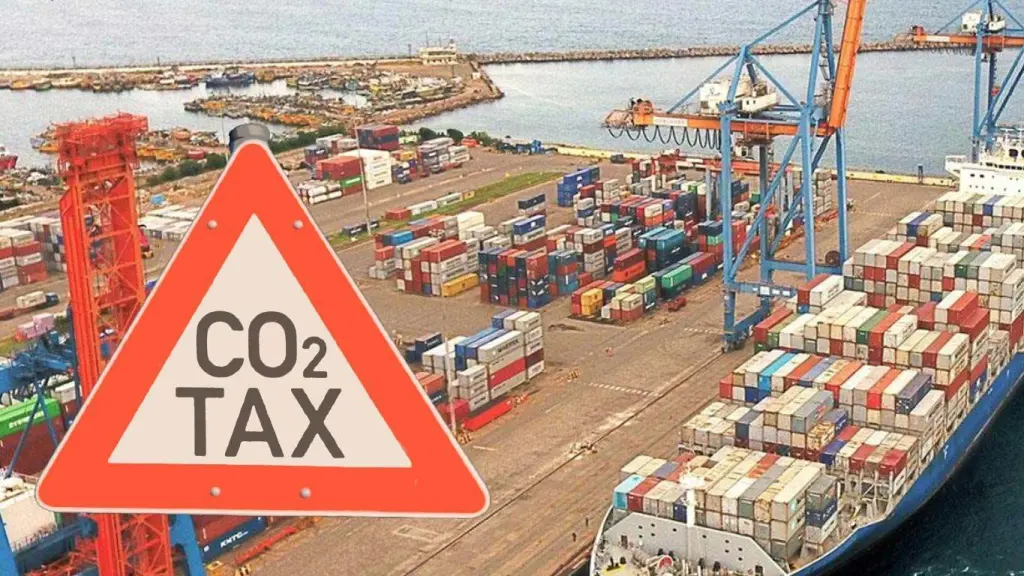
The US on last Tuesday strongly opposed the Net-Zero Framework (aka Global Carbon Tax) imposed by the shipping industry, which has been supported by India, China and other countries. The US in a statement said it would not accept any international environmental agreement that “unduly or unfairly burdens the country or harms the interests of the American people.”

This October, members of the International Maritime Organization (IMO) are poised to consider the adoption of a so-called “Net-Zero Framework,” aimed at reducing global greenhouse gas emissions from the international shipping sector.

“Our fellow IMO members should be on notice that we will look for their support against this action and not hesitate to retaliate or explore remedies for our citizens should this endeavor fail,” the US said in a strongly-worded statement by the US Department of Energy.

In April, India and 62 other countries voted in favour of the world’s first-ever global carbon tax imposed on the shipping industry by the United Nations’ shipping agency. The tax could generate up to $40 billion by 2030. However, all the funds will be used exclusively to cut emissions in the shipping industry and not for supporting climate action in developing countries, industry reports note. India, China and Brazil are among countries supporting it, but it is opposed by oil-rich nations like Saudi Arabia, the UAE, Russia and Venezuela. The US delegation did not participate in negotiations and was absent during voting in April.

“The US has announced that they are rejecting the IMO proposal to place a tax on fossil fuels as they see it harming the interests of the American people. This position is not surprising as the US already voiced it back at the MEPC meeting in April of this year whereafter they simply left the meeting without participating in the negotiations,” said container shipping expert Lars Jensen in the social media.

The US Department of Energy’s statement said: “Whatever its stated goals, the proposed framework is effectively a global carbon tax on Americans levied by an unaccountable UN organization. These fuel standards would conveniently benefit China by requiring the use of expensive fuels unavailable at global scale. These standards would also preclude the use of proven technologies that fuel global shipping fleets, including lower emissions options where US industry leads such as liquified natural gas (LNG) and biofuels.”

IMO’s move marks the first time a global carbon tax has been imposed on an entire industry. Starting 2028, ships will either have to shift to lower-emission fuels or pay a fee for the pollution they generate.

Wilson Sons advances Sustainability Goals with First Scope 3 Emissions Report and Fifth Consecutive Gold Seal in GHG Protocol

RIO DE JANEIRO : With over 187 years of experience, Wilson Sons takes another step forward in its sustainability journey: for the first time, it has released its Scope 3 Greenhouse Gas (GHG) emissions inventory, based on 2024 data. This publication is in line with the Brazilian GHG Protocol Program guidelines. It increases the company’s transparency and reinforces its commitment to increasingly more strategic and comprehensive climate management.

Recognized for the fifth consecutive year with the Gold Seal of the GHG Protocol Program, Wilson Sons has solid maturity in the management of its direct and indirect emissions (Scopes 1 and 2). This certification is a recognition for corporations that transparently report their independently audited emission sources. It is an important step towards combating climate change. The inclusion of Scope 3, which considers emissions throughout the value chain, including suppliers, clients, distribution, and leased assets, represents a necessary evolution to tackle the challenges of transitioning to a low-carbon economy.

Wilson Sons’ decision to map out and report emissions throughout its value chain voluntarily is in line with the best global practices, such as Net Zero targets (GHG emissions from international shipping by 2050) and Science-Based Targets Initiative (SBTi). The result demonstrated that Scope 3 represents the largest portion of Wilson Sons’ total emissions, highlighting the importance of its integration into the company’s decarbonization strategy.

To ensure assertiveness and focus, this first inventory focused on businesses with the greatest impact, and the analyses prioritized relevant categories, namely:

●     Category 1 – Purchase of goods and services: inputs used in daily operations;

●     Category 2 – Capital goods: assets incorporated into equity;

●     Category 3 – Activities related to energy and fuel: emissions from the production and transport of purchased energy and fuel;

●     Category 11 – Use of goods and services sold: with the greatest weight in the inventory, it includes the consumption of diesel by client-owned vessels in towing and port operations;

●     Category 13 – Leased assets: fuel consumption on support vessels leased for offshore activities.

By including Scope 3 in its emissions inventory, Wilson Sons reinforces its climate leadership role in the logistics and port industry. In a national context that is still developing in terms of measuring these emissions, the company takes on a leading role, promotes transparency, and boosts good practices across the industry.

“More than merely passing a technical milestone, it demonstrates Wilson Sons’ firm commitment to the sustainable transformation of the value chain and the development of Brazil’s port and logistics industry, promoting Brazilian foreign trade and competitiveness in the global market,” says João David Santos, Sustainability Manager at Wilson Sons.

Decarbonisation actions

Over the past few years, the company has conducted various studies to implement innovations to reduce fuel and electricity consumption in its operations. The new technologies and equipment used in Wilson Sons’ business units, such as the Towage division and the container terminals in Salvador (BA) and Rio Grande (RS), which are capable of operating the largest vessels in the world, make operations safer, more efficient and with lower emissions, supporting the decarbonisation of port and maritime logistics in Brazil.

Between 2022 and 2024, the company built six tugboats with more sustainable technology at its shipyard in Guarujá (SP), in the Santos port complex, renewing its fleet of more than 80 vessels that operate along the Brazilian coast. Their innovative hull design leads to reduced greenhouse gas emissions and an estimated decrease of 14% in the consumption of fossil fuels, supporting the improvement of air quality in the ports where they operate. In 2025, Wilson Sons started building a new range of three super powerful tugboats with sustainable technology at its shipyard in Guarujá.

Other actions include: the use of shore power in tugboats (prioritising the consumption of renewable energy) and biofuels; tracking the tugboat fleet at the Operations Centre in Santos (SP), which optimises travel speeds; and, at container terminals, the acquisition of 100% renewable electricity (Rio Grande Container Terminal) and the replacement of diesel-powered with electric equipment (Rio Grande and Salvador Container Terminals). Pioneering tests with drones were also initiated at the Port of Salvador for onboard cargo delivery and collection, which further reinforces its leadership in port innovation.

About Wilson Sons

Recognized for its extensive experience of more than 187 years, Wilson Sons has a national reach and offers comprehensive solutions to over 5,000 clients, including shipping companies, importers and exporters, the offshore energy industry, renewable energy projects, the agribusiness sector, as well as other players across various economic segments