Home Blog Page 710

Final testing underway at Rijeka Gateway ahead of terminal opening

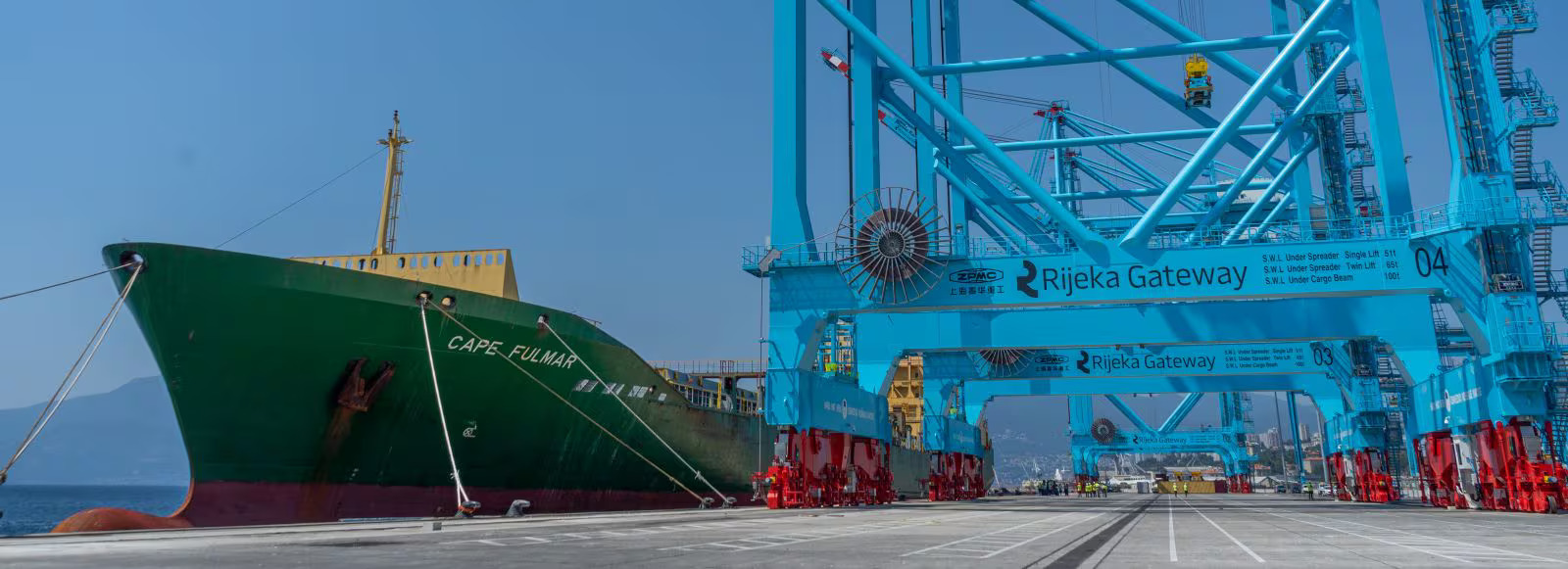
RIJEKA (CROATIA) : Rijeka Gateway, the region’s most technologically advanced container terminal, has entered its final testing phase with the arrival of its first container vessel – the M/V Cape Fulmar – and first test train – operated by ENNA Logic.

The M/V Cape Fulmar will remain docked at Rijeka Gateway for four weeks, serving as a platform for comprehensive training and testing of operational processes under real conditions. Having arrived from Port Said, Egypt, the vessel measures 170 meters in length, 25 meters in width, and has a capacity of approximately 1,440 TEU. Training and testing will include planning, loading and unloading of various container types, cargo securing, and coordination of movements using terminal vehicles.

Complementing the vessel’s arrival, the terminal also welcomed its first test train operated by ENNA Logic. The 500-meter train, split into two compositions across two tracks, delivered empty containers for RMG crane testing.

These milestones reflect Rijeka Gateway’s high level of readiness and strong coordination across teams, emphasizing the terminal’s commitment to multimodal transport as a cornerstone of future operations. The first trucks and trains with export cargo are expected in early September, ahead of the first commercial vessel’s arrival on September 12, 2025. Initially, vessels will call every Friday, with frequency increasing shortly thereafter.

The team now numbers over 220 employees. Alongside technical preparations, significant focus has been placed on recruitment and training, with more than 45,000 hours invested in staff development in 2025 alone – underscoring the company’s dedication to building a skilled and resilient workforce.

“Two years after construction began, our terminal is now fully equipped and ready for trial operations. The arrival of the test vessel and train marks the beginning of a critical, yet exciting phase, and our talented and diligent team is fully engaged in putting systems and processes into practice” said Peter Corfitsen, CEO of Rijeka Gateway.

Rijeka Gateway is the largest private logistics investment in Croatia – a joint venture between APM Terminals and ENNA Group. With a Phase One capacity of 650,000 TEU and the ability to accommodate vessels up to 18,000 TEU, the terminal positions Rijeka as a strategic entry point for goods bound for Central and Western Europe.
Samksip joins DCSA+ to champion standardization and shape the future of digital logistics

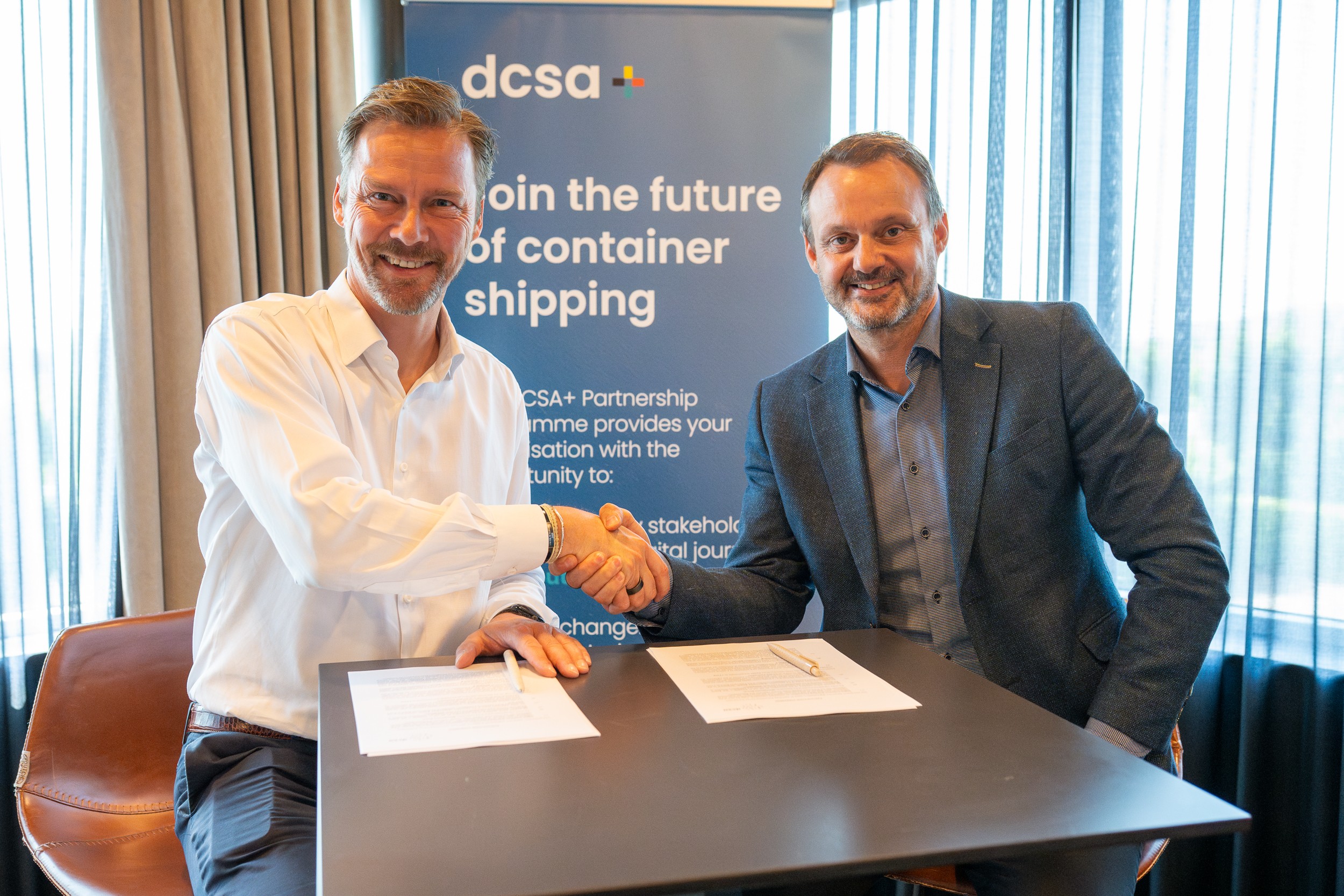
ROTTERDAM : Samskip, one of Europe’s leading logistics service providers, has officially joined the DCSA+ partnership program, reinforcing its commitment to digital innovation, interoperability, and the evolution of global logistics standards.

By becoming part of this influential network, Samskip takes a leading role in shaping the digital frameworks that will power tomorrow’s logistics, frameworks built on openness, collaboration, and efficiency.

“We believe the future of logistics relies not just on smart systems, but on a shared digital language,” said Ragnar Thor Ragnarsson, Chief Information Officer at Samskip. “By joining the DCSA+ Partner Program, we have the opportunity to help shape future industry standards that enhance not only our own multimodal operations but also the entire logistics ecosystem. Stronger standards lead to greater reliability, efficiency, and service quality for everyone.”

As a multimodal pioneer operating across shortsea, rail, road, and inland waterways, Samskip brings a unique perspective to the DCSA+ community. Its participation bridges the gap between ocean container carriers and inland transport operators, contributing critical insight into aligning systems, reducing fragmentation, and streamlining data flow across complex supply chains.

The DCSA+ program was launched to accelerate the adoption of open digital standards by including all key logistics stakeholders from ports and tech providers to shortsea operators and forwarders. It aims to:

• Connect industry partners with proven standards,
• Accelerate real-world implementation,
• and Contribute to the evolution of new, practical solutions.

Samskip’s involvement ensures that multimodal inland transport, often overlooked in ocean-focused frameworks, has a seat at the table in shaping a truly end-to-end digital transformation. Through the collaboration, Samskip gains early access to API (application programming interface) and messaging standards, increased interoperability with customers and partners, and the opportunity to streamline internal processes while helping push the entire industry forward. This initiative complements Samskip’s ongoing collaboration with SMDG, further reinforcing its dedication to modernizing digital communication through both traditional EDIFACT formats and cutting-edge APIs.

“Through DCSA+ and SMDG, we are doubling down on our commitment to reliable, visible, and simplified transport while showing what’s possible when we listen, align, and innovate together,” added Ragnarsson.

About Samskip
Samskip offers pan-European, environmentally responsible combined transport services via shortsea, road, rail and inland waterway routes. We are committed to cost-effectiveness, operational excellence and best practice in sustainable transport. High frequency services connect destinations across Europe, the Baltic States, Iceland and Faroes Island, both door-to-door (including collection) and quay-to-quay, transported using a wide range of owned vessels, containers, trucks and trailers.

About DCSA
Digital Container Shipping Association (DCSA) is a neutral, non-profit organization founded by major ocean carriers to digitize and standardize the container shipping industry. With the mission of leading the industry towards systematic collaboration, DCSA drives initiatives to make container transportation services transparent, reliable, easy to use, secure, and environmentally friendly. DCSA’s open-source standards are developed based on input from DCSA member carriers, industry stakeholders, and technology experts from other industries. DCSA member carriers include MSC, Maersk, CMA CGM, Hapag-Lloyd, ONE, Evergreen, Yang Ming, HMM, ZIM and PIL.

ABB integrates multi-megawatt marine fuel cell system for the world’s first hydrogen fuel-cell superyacht

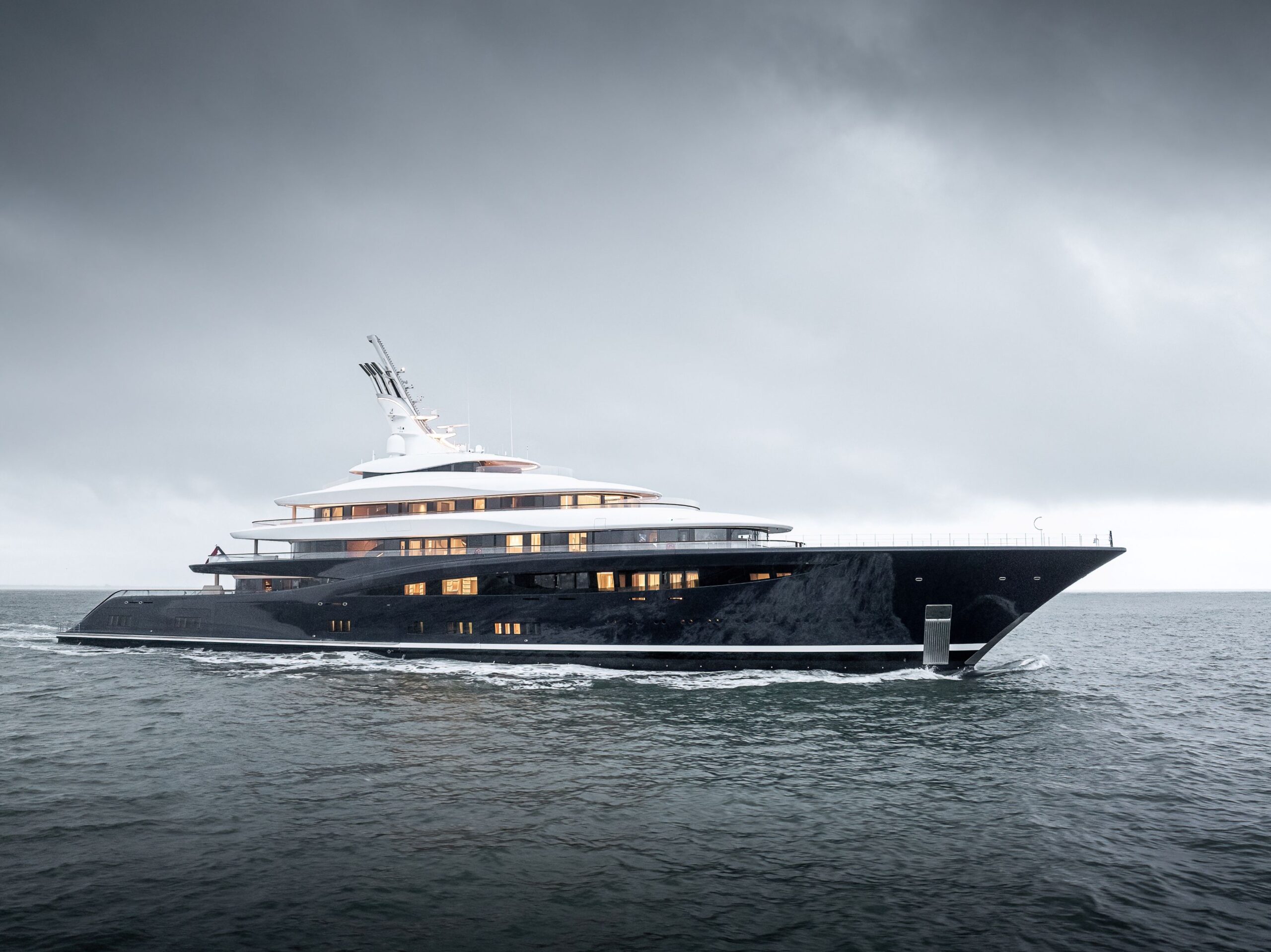
HELSINKI : ABB has integrated a comprehensive scope of technologies onboard Feadship Breakthrough. The vessel was constructed by Dutch high-end yacht builder Feadship. Launched in May 2025, the privately-owned 118.8-meter yacht will be among the first vessels in the world to feature multi-megawatt fuel cell technology.

ABB’s scope of supply comprises the Onboard DC Grid™ power system platform and two 3.2MW Azipod® electric propulsion units, which minimize noise and vibrations on board. ABB’s Power and Energy Management System PEMS™ optimizes energy use on board, while the ABB Ability™ Marine Pilot Control digital solution enables seamless transition between joystick operations and dynamic positioning, simplifying docking. As part of the integrated scope, ABB has also provided shipside shore connection technology and Remote Diagnostic Services.

The 3MW hydrogen fuel cell system onboard Breakthrough can generate sufficient energy to operate the yacht’s hotel load and amenities with emission-free power from hydrogen. Moreover, it can provide enough power for up to a week of silent operations at anchor or emission-free navigation at 10 knots while leaving harbors or cruising in protected marine zones.

“Breakthrough perfectly demonstrates how passenger comfort and environmental protection can go hand in hand on board the world’s biggest superyachts,” said Jan-Bart Verkuyl, Feadship Director / CEO Royal Van Lent Shipyard. “We are grateful to ABB whose extensive technical expertise and dedicated support have been crucial in bringing this project to fruition.”

“For ABB, this order represents a breakthrough in the integration of marine fuel cells with propulsion systems,” said Riccardo Repetto, Global Vessel Type Responsible, Yachts, ABB Marine & Ports. “More broadly, Feadship Breakthrough showcases the potential of hydrogen fuel cells as a feasible alternative to conventional energy sources in shipping, helping to encourage their adoption among a wider range of vessel types. We are proud of our key role in this innovative project.”

ABB is a global technology leader in electrification and automation, enabling a more sustainable and resource-efficient future. By connecting its engineering and digitalization expertise, ABB helps industries run at high performance, while becoming more efficient, productive and sustainable so they outperform. At ABB, we call this ‘Engineered to Outrun’. The company has over 140 years of history and around 110,000 employees worldwide. ABB’s shares are listed on the SIX Swiss Exchange (ABBN) and Nasdaq Stockholm (ABB).

ABB’s Process Automation business automates, electrifies and digitalizes industrial operations that address a wide range of essential needs – from supplying energy, water and materials, to producing goods and transporting them to market. With its ~20,000 employees, leading technology and service expertise, ABB Process Automation helps process, hybrid and maritime industries outrun – leaner and cleaner.

Baltic Index falls as larger vessel rates dip

LONDON : The Baltic Exchange’s main sea freight index, which measures rates for ships carrying dry bulk commodities, edged lower on Tuesday, as rates declined across capesize and panamax vessel segments.

  • The main index BBDI, which tracks rates for capesize, panamax and supramax shipping vessels, fell 21 points, or 1%, to 2,017 points.
  • The capesize index (.BACI) was down 56 points, or 1.7%, at 3,261.
  • Average daily earnings for capesize vessels (.BATCA), which typically transport 150,000-ton cargoes such as iron ore and coal, fell $458 to $27,048.
  • Iron ore futures rose after steel mills in Chinese production hub Tangshan were ordered to halt operations to improve air quality ahead of a major military parade, while lower shipments also lent support to prices.
  • Among smaller vessels, the supramax index (.BSIS) added 4 points, or 0.3%, to 1,329. The index registered its eighth straight session of gains.
  • The panamax index (.BPNI) extended losses for the third straight session and was down 19 points, or 1.2%, at 1,595. The index was at its lowest level since July 8.
  • Average daily earnings for panamax vessels (.BPWT), which usually carry 60,000-70,000 tons of coal or grain, fell $170 to $14,359.
  • Elsewhere, a Liberian-flagged oil tanker that had been detained by Iraq’s navy has been released and is en route to the United Arab Emirates, two sources familiar with the matter told Reuters.

Source: Reuters

MoPSW achieves historic first with four key Maritime Reform Bills passed in ongoing Parliament session : Sarbananda Sonowal

NEW DELHI : The Parliament passed the Merchant Shipping Bill, 2025 on Monday as the Rajya Sabha approved it. The bill is a landmark legislation aimed at modernising India’s maritime framework, aligning domestic laws with international best practices & International Maritime Organisation (IMO) conventions, ensuring that India’s maritime sector remains equipped, ready and relevant to the contemporary and future challenges. The bill was presented for consideration by the Union Minister of Ports, Shipping & Waterways (MoPSW), Shri Sarbananda Sonowal in the Rajya Sabha, as the bill was passed by the Lok Sabha on August 6 during the ongoing session.

The Union Minister Shri Sarbananda Sonowal called the Bill “a decisive step towards positioning India as a trusted maritime trade hub. This Bill marks a transformative shift from a regulatory-heavy approach to an enabling policy environment that will boost investor confidence, enhance safety standards, protect our marine ecosystem, and strengthen India’s position as a maritime power,”Shri Sonowal said. “It incorporates global best practices, reduces compliance burdens, and ensures comprehensive adoption of our international commitments — all of which will catalyse growth and sustainability in the sector. Led by the vision of PM Shri Narendra Modi Ji, this Bill replaces an outdated, bulky framework with a progressive, streamlined law that will boost India’s bankability as a maritime hub, increase tonnage under our flag, reduce compliance burden & secure our coastline”

The Ministry of Ports, Shipping and Waterways (MoPSW) has set a new benchmark in legislative reform, steering through a record number of maritime sector legislations in a single Parliament session. The historic feat underscores the government’s commitment to transforming India into a global maritime leader and building a robust foundation for a Viksit Bharat.

Replacing the bulky and outdated Merchant Shipping Act, 1958, which had 561 sections, the new Bill offers a streamlined framework of 16 parts and 325 clauses. It ensures comprehensive adoption of India’s obligations under major international conventions, reduces compliance burdens to improve ease of doing business, enhances safety in navigation and life at sea, safeguards the marine environment, strengthens emergency preparedness and salvage operations, boosts tonnage under the Indian flag, and protects India’s coastline and maritime interests.

“Under the dynamic leadership of PM Shri Narendra Modi ji, India’s maritime sector is being empowered with a forward-looking, enabling policy framework and future ready that is geared to make the nation a leading maritime power in the world,” Shri Sarbananda Sonowal added. “Our ports, shipping, and waterways are now poised to shoulder a much greater share of global trade, driving economic growth, generating employment, and contributing directly to the vision of a Viksit Bharat.”

The Ministry has emphasised that the focus is shifting from mere regulation to enablement, thereby increasing India’s “bankability” as a maritime jurisdiction. This approach is designed to attract greater global investment, generate employment, and create an environment for sustainable growth.

The legislative drive — the most comprehensive in the Ministry’s history — complements India’s emergence as one of the world’s largest suppliers of seafarers and a key player in global shipping routes. “With these reforms, India is not just keeping pace with global maritime standards; we are setting the stage for our ports, shipping, and waterways to play a central role in India’s journey towards becoming a developed nation,” Shri Sarbananda Sonowal said.

India and Norway explore Deep Sea Fishing Collaboration to boost Blue Economy

NEW DELHI : Union Minister of Ports, Shipping & Waterways Shri Sarbananda Sonowal co-chaired a high-level meeting with Union Minister Shri Lalan Singh and representatives from Norwegian firm Proteios to explore opportunities for advancing deep sea fishing in India. MoPSW Secretary Shri T.K. Ramachandran along with other industrial dignataries were present in the meeting here.

The discussions centred on increasing financing for deep sea fishing vessels and encouraging their adoption among fishing communities across India’s coastal states. Officials noted that India, the world’s second-largest fish food producer, is making significant progress in the sector under the leadership of Prime Minister Shri Narendra Modi.

The recently concluded India–UK Free Trade Agreement (FTA) was highlighted as a key indicator of the sector’s growing importance in global trade. The meeting also underscored the commitment to harnessing global expertise, promoting sustainable fishing practices, and unlocking the vast potential of India’s Blue Economy.

Leaders’ Dialogue to Spotlight Green & Digital Maritime Corridors ahead of India Maritime Week 2025

NAVI MUMBAI : In a significant step towards shaping India’s sustainable and technology-driven maritime future, the Leaders’ Dialogue on Green & Digital Maritime Corridors will convene today at Jawaharlal Nehru Port Authority (JNPA), Navi Mumbai.

Organised by the Indian Ports Association and JNPA under the aegis of the Ministry of Ports, Shipping and Waterways, the event serves as a high-profile precursor to India Maritime Week 2025. It will bring together policymakers, industry captains, and innovators to deliberate on strategies that will steer the nation’s maritime sector into the future.

Key focus areas include:
⚓ Advancing sustainable, low-carbon shipping to meet environmental targets.
⚓ Accelerating port digitalisation and smart logistics for greater efficiency and competitiveness.
⚓ Driving progress towards Maritime Amrit Kaal 2047, aligning with India’s long-term growth vision.

With ASSOCHAM as Industry Partner and Grant Thornton as Knowledge Partner, the dialogue promises rich exchanges on transformative ideas and collaborative pathways.

As the countdown to India Maritime Week 2025 begins, the buzz is unmistakable—Navi Mumbai is set to be the epicentre of maritime innovation and policy vision.

DG Shipping commences 75th anniversary celebrations with first knowledge sharing event; signs landmark MoUs to strengthen maritime safety and security

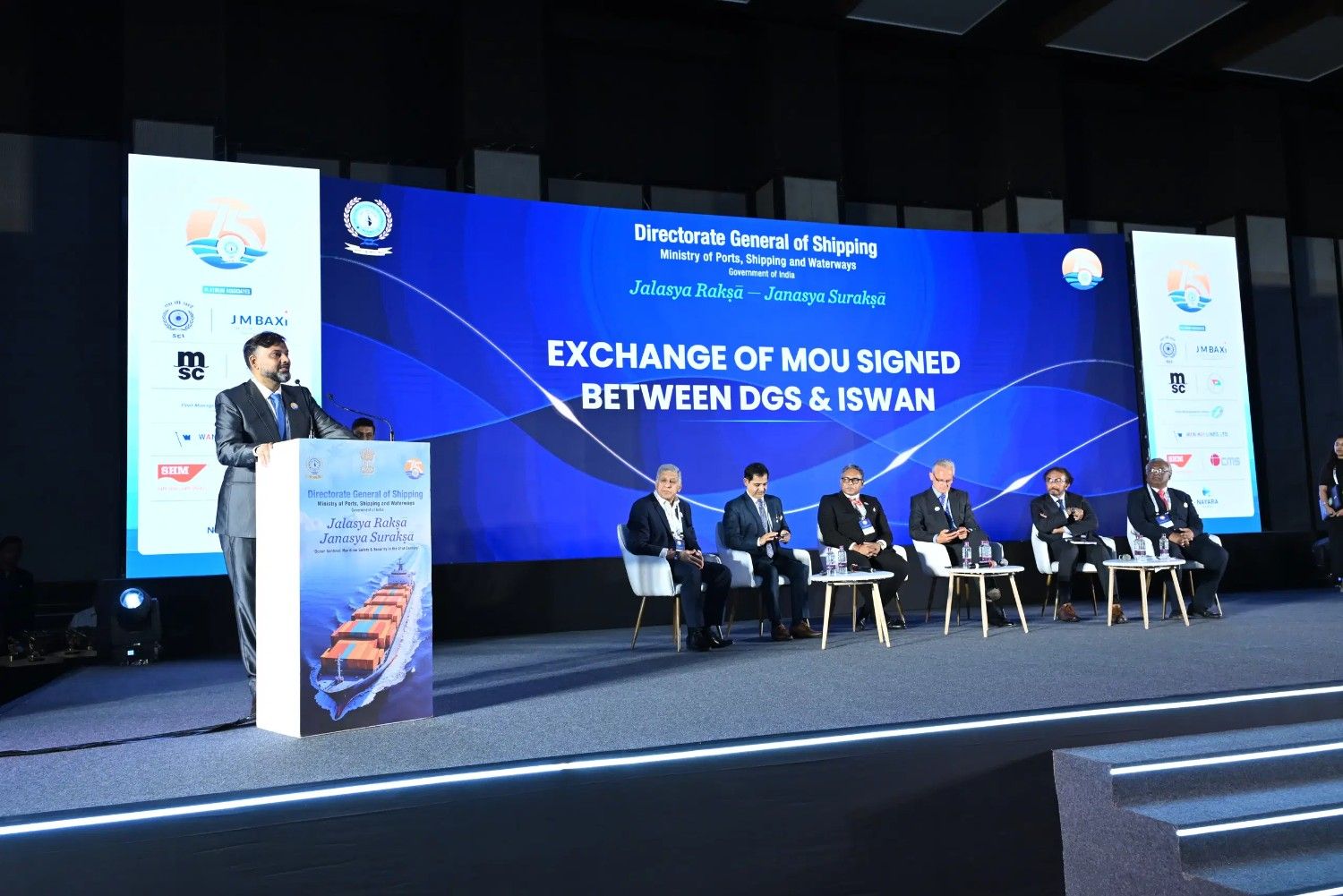
MUMBAI : The Directorate General of Shipping (DGS), Ministry of Ports, Shipping and Waterways, Government of India, marked its 75th anniversary with a commemorative conference celebrating the Directorate General of Shipping’s legacy of service to the maritime sector, held under the theme “Jalasya Rakṣā, Janasya Surakṣā – Ocean Sentinel: Maritime Safety & Security in the 21st Century”. This flagship event is the first in a series of Knowledge Sharing Events planned throughout the year, bringing together prominent maritime leaders, policymakers, insurers, legal experts, and seafarer welfare advocates from across the globe.

This commemorative conference reflects India’s continued leadership in global maritime governance and its commitment to fostering collaboration for safer and more secure seas.

Formalising Global Maritime Collaboration

As part of the celebrations, the DGS signed two significant Memorandums of Understanding-one with the International Group of P&I Clubs (IGP&I), represented by Mr. Nick Shaw, Chief Executive Officer, and another with the International Seafarers’ Welfare and Assistance Network (ISWAN), represented by Mr. Chirag Bahri, International Operations Manager. These agreements aim to enhance maritime safety, strengthen risk management, and promote seafarer welfare worldwide.

Distinguished Dignitaries and Addresses

The inaugural session was led by Capt. S.I. Abul Kalam Azad, Nautical Advisor (I/c), DGS, and attended by:

  1. Chief Guest: Mr. Nick Shaw, CEO, International Group of P&I Clubs
  2. Guest of Honour: Capt. B.K. Tyagi, Chairman & Managing Director, Shipping Corporation of India Ltd.
  3. Keynote Address: Shri. Shyam Jagannathan, IAS, Director General of Shipping
  4. Special Address: Shri. Deepak Shetty, IRS, Former Secretary to Govt. of India & Former Director General of Shipping

The session also saw the release of the Marine Safety Investigation Report 2024 and the Maritime Security Review 2024.

Knowledge Sessions and Expert Participation

Session 1 – Indian Maritime Safety Priorities

Theme: “Resilient Oceans: Strengthening India’s Maritime Safety through Risk Awareness, Compliance, and Lessons from Casualties”

  1. Moderator: Capt. Savraj Mehta, Chief Commercial Officer, NorthStandard P&I
  2. Speakers: Capt. Harinder Singh (Nautical Surveyor, DGS), Mr. Jeroen Mooij (Operations Manager, SMIT Salvage, Singapore), Shri. Mukund Gujar (DIG, Indian Coast Guard), Capt. Prashant S. Widge (Head of ESG & Public Affairs, S. Asia, A.P. Moller–Maersk)

Session 2 – Maritime Safety Risk, Liability, and Industry Alignment

Theme: “Collaborative Accountability and the Pursuit of Excellence”

  1. Moderator: Capt. Anish Joseph, Deputy Nautical Advisor, DGS
  2. Speakers: Mr. Nick Shaw (CEO, IGP&I), Mr. Amitava Majumdar (Managing Partner, Bose & Mitra & Co., India), Smt. Leena Mody (Proprietor, Leena Mody & Associates), Capt. B.K. Tyagi (CMD, SCI Ltd.)

Session 3 – Maritime Security Challenges and Regional Cooperation

Theme: “Interoperability, Intelligence, and Innovation”

  1. Moderator: Shri. Deepak Shetty, IRS (Former DG Shipping)
  2. Speakers: Shri. Mukund Gujar (DIG, Indian Coast Guard), Capt. Sachin Singh (Director, IFC IOR), Mr. Elfian Harun (INTERTANKO, Singapore), Capt. Himadri Das, IN (Senior Defence Specialist, NSCS), Mr. Chirag Bahri (ISWAN)

Session 4 – Integrated Maritime Security Architecture

Theme: “Threat Scenarios and India’s Response Architecture”

  1. Moderator: Capt. Anish Joseph, Deputy Nautical Advisor, DGS
  2. Speakers: Mr. Joshua Hutchinson (Managing Director – Intelligence & Risk, Ambrey, UK), Prof. Manimuthu Gandhi (Vice President, Indian Society of International Law), Capt. Prashant Mani (Captain – Naval Operations, Indian Navy), Capt. Tarun Puri (Group Security Director, OSM Thome)

Quote from the Director General of Shipping, Shri Shyam Jagannathan, IAS:

“India’s maritime sector is not just navigating its own course, but shaping global currents. Through partnerships such as those signed today, we are building stronger safety frameworks, advancing security measures, and ensuring that our seafarers and our oceans are protected for generations to come.”

The event concluded with a vote of thanks by Capt. Harinder Singh and a networking high tea, setting the stage for a year-long series of thought leadership forums under the 75th Anniversary celebrations.

Deendayal Port Authority seeks Bids for India’s First Port-Integrated Bio-Methanol Plant

GANDHIDHAM : In a crucial step toward sustainable maritime infrastructure, the Deendayal Port Authority (DPA), Kandla, has rolled out a tender inviting bids for India’s first port-integrated bio-methanol production facility. The plant, planned to deliver over 15,000 metric tonnes per annum, is set to employ biomass gasification technology—covering the entire gamut from design and procurement to construction and commissioning. ( You can take some additional details from the following link https://dpatender.nprocure.com/view-nit-home or deendayalport.gov.in.)

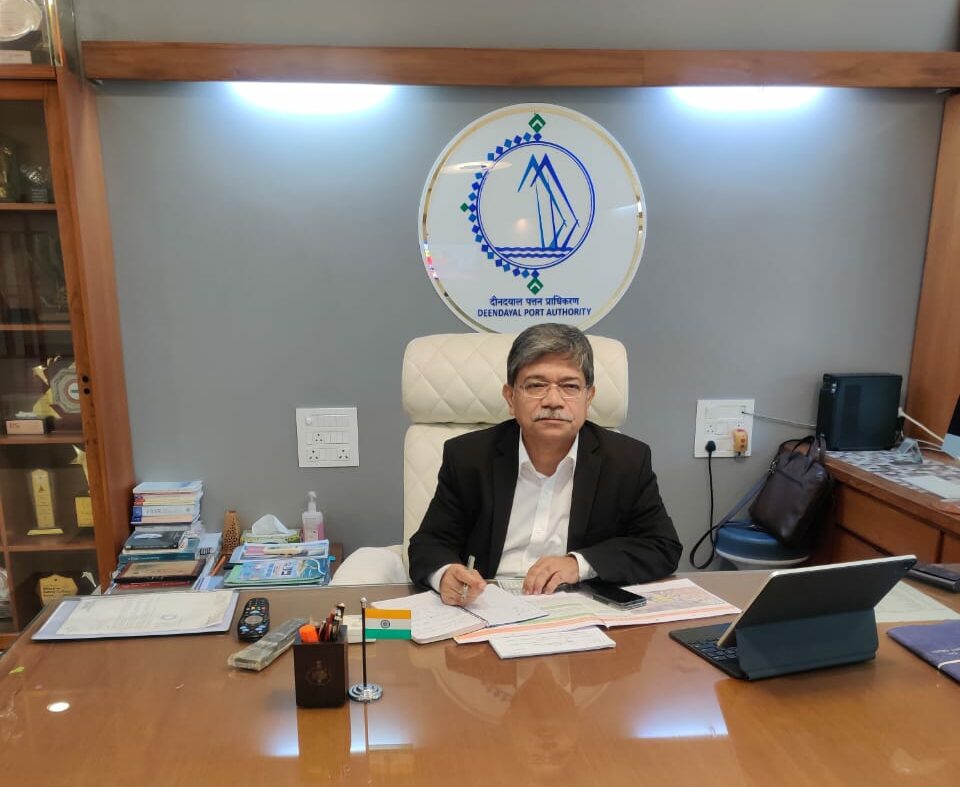
Shri Sushil Kumar Singh, Chairman, Deendayal Port Authority in a post invited industry to participate of this Green initiative. He wrote “In yet another “First-in-Sector” move, DPA, Kandla invites bids for setting up Bio-Methanol production plant on EPC mode at Kandla !!
Inviting industry to participate @ Be a part of this Green initiative.”

This initiative follows DPA’s February 2025 memorandum of understanding with Bapu’s Shipping (Jamnagar) Pvt. Ltd., which paves the way for India’s inaugural bio-methanol bunkering facility, complete with a dedicated bunker barge at Kandla Port.

Further bolstering its green credentials, DPA recently joined the Methanol Institute, signaling its intent to lead local efforts in marine fuel decarbonisation. The port is also advancing infrastructure and logistics for bio-methanol bunkering, formulating SOPs in partnership with DNV, and establishing a Centre of Excellence for Green Maritime Fuels.

Authorities underline that the project will significantly cut greenhouse gas emissions, uphold global maritime decarbonisation standards—such as those from the IMO and FuelEU Maritime—and elevate Kandla as a pioneering green shipping hub in India.

DPA has encouraged industry players to embrace this “transformative green initiative for India’s shipping and energy sectors.”

State-run SCI to buy 26 local vessels in $2 bn deal

MUMBAI : State-owned Shipping Corp. of India, the country’s largest shipping line, is working on a plan to purchase 26 India-made ships for ₹19,820 crore ($2.3 billion) as part of a government initiative to boost the domestic shipbuilding industry, according to people familiar with the matter. 

The ships will have cumulative internal volume of 1.18 million gross tonnes, and delivery will be staggered over several years as they are completed, said the people, who weren’t authorised to speak publicly.

It comes amid a wave of orders from other buyers in India’s petroleum and natural gas, steel and fertilizer sectors, who along with SCI plan to procure a grand total of 207 ships valued at nearly ₹1.5 trillion, the people said. This plan is part of an existing initiative to purchase 112 crude carriers through 2040, as the world’s third-biggest importer of oil seeks to build out its tonnage, Bloomberg News reported earlier.

The deal will significantly bolster SCI’s fleet, which currently consists of 55 ships including tankers, bulk carriers, liners and offshore supply ships.

SCI, India’s shipping ministry and the government’s Press Information Bureau did not immediately respond to emails seeking comments. Prime Minister Shri Narendra Modi’s government earlier this year announced a ₹25,000 crore fund to support the country’s maritime sector, with one of its goals being to eventually reduce reliance on foreign-built vessels and bolster indigenous shipbuilding capacity.

India aims to raise the share of locally built tankers to 7 per cent by 2030 from 5 per cent today, the people familiar said, with an eye toward increasing it to close to 70 per cent by 2047 — the deadline the country has set for graduating to a developed nation. The government’s effort is designed to spur captive demand for ships, aiding India’s still-nascent shipbuilding industry and attracting investment from global shipbuilders, including those in Japan and South Korea.