Home Blog Page 716

Two Landmark Maritime Bills are passed in the Parliament in a single day, first time for Shipping Ministry

NEW DELHI : In a historic development, Parliament on Wednesday passed two landmark maritime bills — a first for the Ministry of Ports, Shipping and Waterways (MoPSW) — paving the way for a modern, efficient and globally aligned maritime policy framework in India. The Lok Sabha cleared the ‘Merchant Shipping Bill, 2025’, aimed at streamlining maritime governance with a modern and internationally compliant approach. Meanwhile, the Rajya Sabha passed the ‘Carriage of Goods by Sea Bill, 2025’, replacing a century-old colonial-era law with updated legislation designed to promote ease of doing business and make India’s shipping sector future-ready.

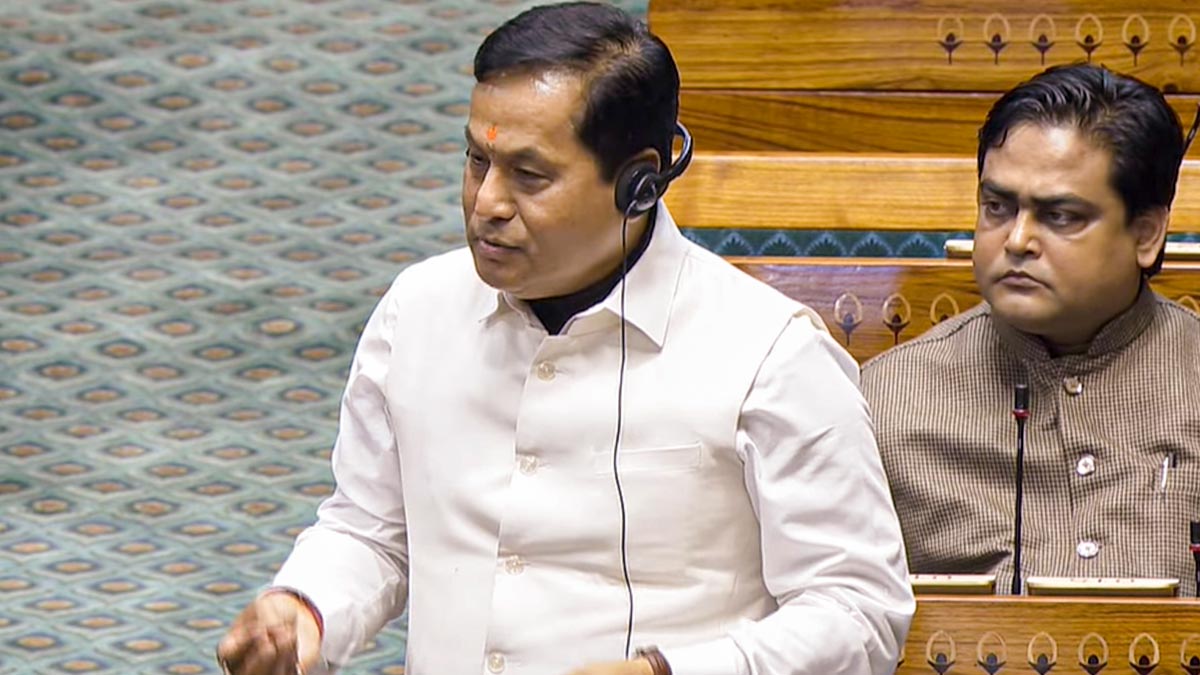
Speaking on the occasion, the Union Minister of Ports, Shipping & Waterways (MoPSW), Shri Sarbananda Sonowal said, “Today is a historic day for all of us at the Ministry. The parliament passed two important legislations — the Merchant Shipping Bill, 2025 and the Carriage of Goods Sea Bill, 2025 — effectively endorsing PM Shri Narendra Modi ji’s vision to modernise India’s maritime sector, both policy wise and action wise. Today, with the passage of the bills, the Modi government’s push for India’s modern shipping gets double endorsement from the Parliament.”

The Merchant Shipping Bill, 2025 — a progressive, future-ready legislation that replaces the outdated Merchant Shipping Act of 1958. The Bill marks a significant step towards aligning India’s maritime legal framework with global standards and strengthening the country’s position as a trusted maritime trade hub.

Introducing the Merchant Shipping Bill, 2025 in the Lok Sabha, the Union Minister, Shri Sarbananda Sonowal said, “This Bill represents a decisive step towards positioning India as a global leader in maritime trade and governance. It is a progressive and advanced legislation, up to date with international maritime conventions and informed by the best practices of leading maritime nations.”

The Bill is part of a series of major legal reforms undertaken over the past 11 years under the leadership of PM Shri Narendra Modi, aimed at enabling robust growth in the shipping and maritime sectors. These reforms have significantly enhanced efficiency, transparency, and global competitiveness. Highlighting the need for an updated framework, the Minister noted that the Merchant Shipping Act, 1958 had become bulky, fragmented, and outdated with 561 sections, failing to address contemporary maritime challenges or fully implement India’s obligations under several key International Maritime Organization (IMO) conventions.

“The Merchant Shipping Bill, 2025, with 16 Parts and 325 clauses, modernises India’s maritime legal framework by aligning with international conventions, enhancing safety at sea, improving emergency response, and ensuring environmental protection. It reduces compliance burdens, promotes Indian tonnage, and prioritises seafarer welfare and ship safety. The Bill aims to make India a globally respected maritime jurisdiction and unlock sustainable growth, investment, and innovation in the sector,” Shri Sarbananda Sonowal further said.

On the other hand, in Rajya Sabha, the Carriage of Goods by Sea Bill, 2025, was passed that repealed a century-old Indian Carriage of Goods by Sea Act, 1925. The new legislation is part of the government’s broader effort to modernise India’s legal framework by eliminating outdated colonial-era laws and aligning with global best practices to improve ease of doing business.

The bill adopts the Hague-Visby Rules, a globally accepted maritime standard also followed by countries like the United Kingdom. By replacing complexity with clarity, the legislation is expected to simplify maritime trade laws, reduce litigation risks, and enhance transparency and commercial efficiency in cargo movement by sea. The bill was introduced by Shri Shantanu Thakur, the Union Minister of State for Ports, Shipping & Waterways (MoPSW) in the Rajya Sabha.

Speaking on the occasion, the Union Minister of State, Shri Shantanu Thakur said, “The repeal of this pre-Constitution era legislation and its replacement with a new legislation is a part of the greater initiative of this Government to rid ourselves of all vestiges of colonial mindset and to ensure ease of understanding and ease of doing business through simple and rationalised laws. This Bill is not merely a statutory reform—it reflects a broader philosophy of governance led by our Prime Minister Shri Narendra Modi ji: to replace complexity with clarity, outdated norms with modern standards, and colonial remnants with forward-looking laws that serve the interests of a resurgent India.”

The bill is a key step in making India’s maritime trade laws future-ready and compatible with international trade agreements, including the Comprehensive Economic and Trade Agreement (CETA) with the U.K. The legislation was passed by the Lok Sabha on March 28 this year. During the Rajya Sabha discussion, members raised issues including maritime security and smuggling risks, which the government assured were being addressed through statutory and operational safeguards. The bill received broad bipartisan support in both Houses of Parliament.

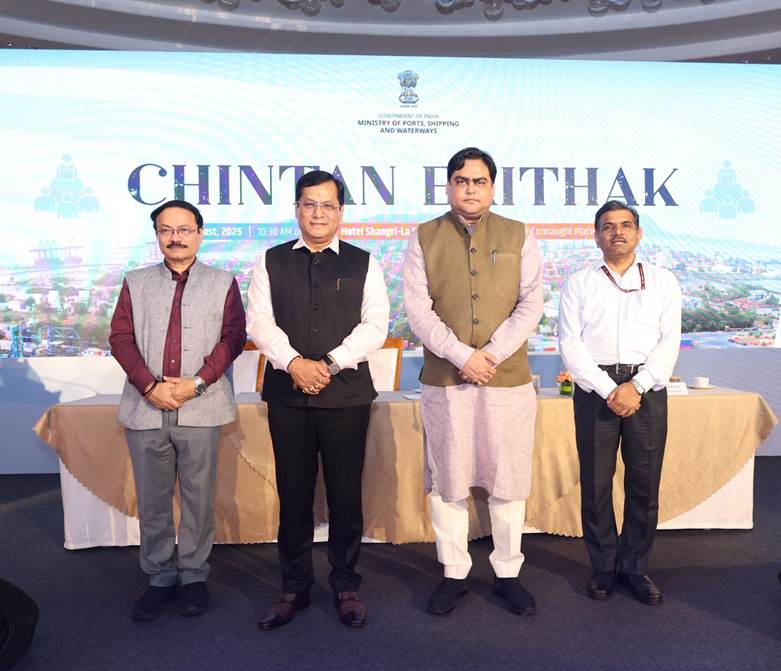
Sarbananda Sonowal urges innovation & imagination to repurpose maritime ecosystem for Viksit Bharat at Chintan Baithak

NEW DELHI : The Union Minister of Ports, Shipping & Waterways (MoPSW), Shri Sarbananda Sonowal delivered an address at the Chintan Baithak of the Ministry here on Wednesday. The Union Minister called on officials to lead with purpose, innovation and reform-driven thinking to drive India’s maritime transformation and repurpose the Maritime Ecosystem for Viksit Bharat by 2047.

“This Baithak reminds us that reform begins not with a directive, but with dialogue,” Shri Sarbananda Sonowal said, urging all departments to align their work with the spirit of national ambition.

Over the past decade, the Ministry has led significant developments across India’s maritime sector. Under the Sagarmala Programme, more than 800 projects have been identified to reduce logistics costs and unlock port-led growth. The implementation of the Major Port Authorities Act, 2021 has provided ports with greater financial and operational autonomy, enhancing global competitiveness.

“The visionary leadership of Prime Minister Shri Narendra Modi ji has inspired us to reimagine and reform India’s maritime sector by replacing archaic, colonial-era policies with a modern, future-ready framework,” said Union Minister Shri Sarbananda Sonowal. “Through our Ministry’s sustained efforts, we are aligning our maritime governance with global standards, enabling efficiency, sustainability, and strategic growth. These reforms are not just policy updates—they are bold steps towards building an Atmanirbhar Bharat and realising the larger national vision of Viksit Bharat.”

Cruise tourism has gained momentum. Inland waterway operations under the Jal Marg Vikas Project are also progressing, offering multimodal transport alternatives to traditional road and rail routes. India is also making strides in sustainable shipping. Initiatives such as shore power, LNG bunkering and energy-efficient vessels reflect the country’s commitment to global decarbonisation. International outreach has expanded through India’s active role in the Global Maritime India Summit (GMIS), Indian Maritime Week (IMW) and the International Maritime Organization (IMO).

The Minister stressed the need to strengthen institutional capacity. Key focus areas include digitising clearances, modernising human resources, expediting port corporatization and improving dispute resolution mechanisms. “Aligning India’s maritime standards with global benchmarks remains a priority,” Shri Sonowal underlined.

Calling the Baithak a forum for open exchange, the Minister encouraged officers to share field-level insights, challenges and solutions. “India’s maritime resurgence is no longer a vision—it is a movement,” Shri Sonowal said. “Every official, every decision, contributes to our national progress. Lead not by precedent, but by purpose. Let us be the Ministry that sets benchmarks—not only for infrastructure, but for imagination,” Shri Sonowal urged the officials of the ministry.

Trump doubles tariff on India to 50%: Full text of order

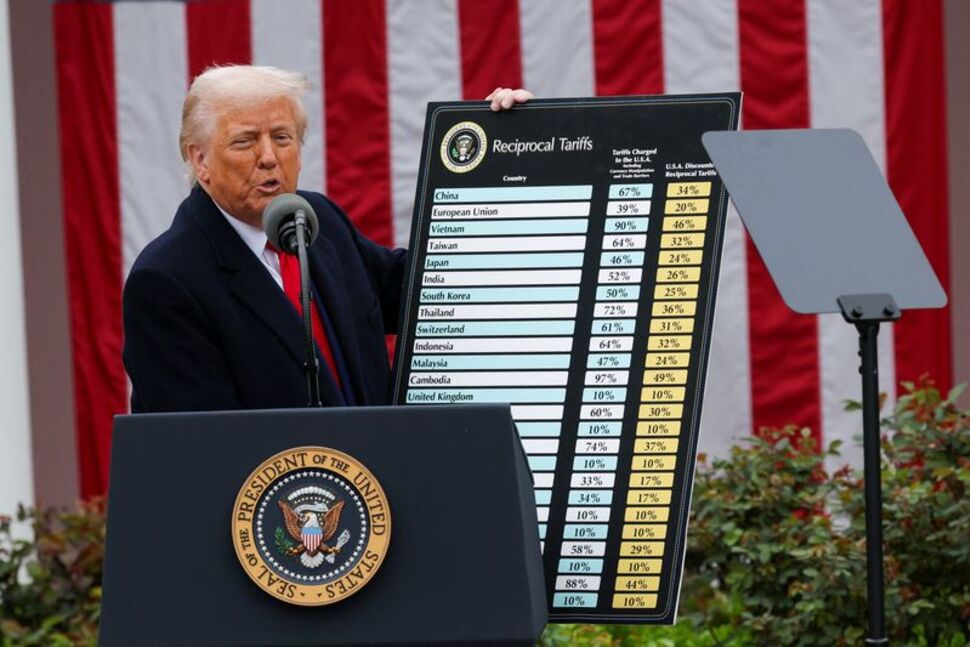
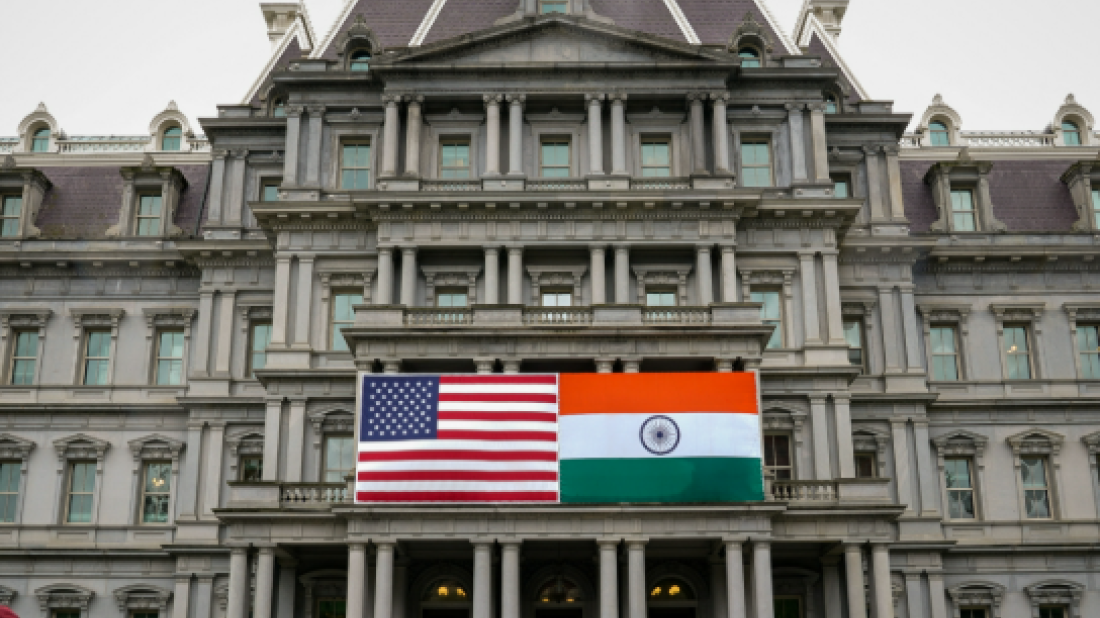
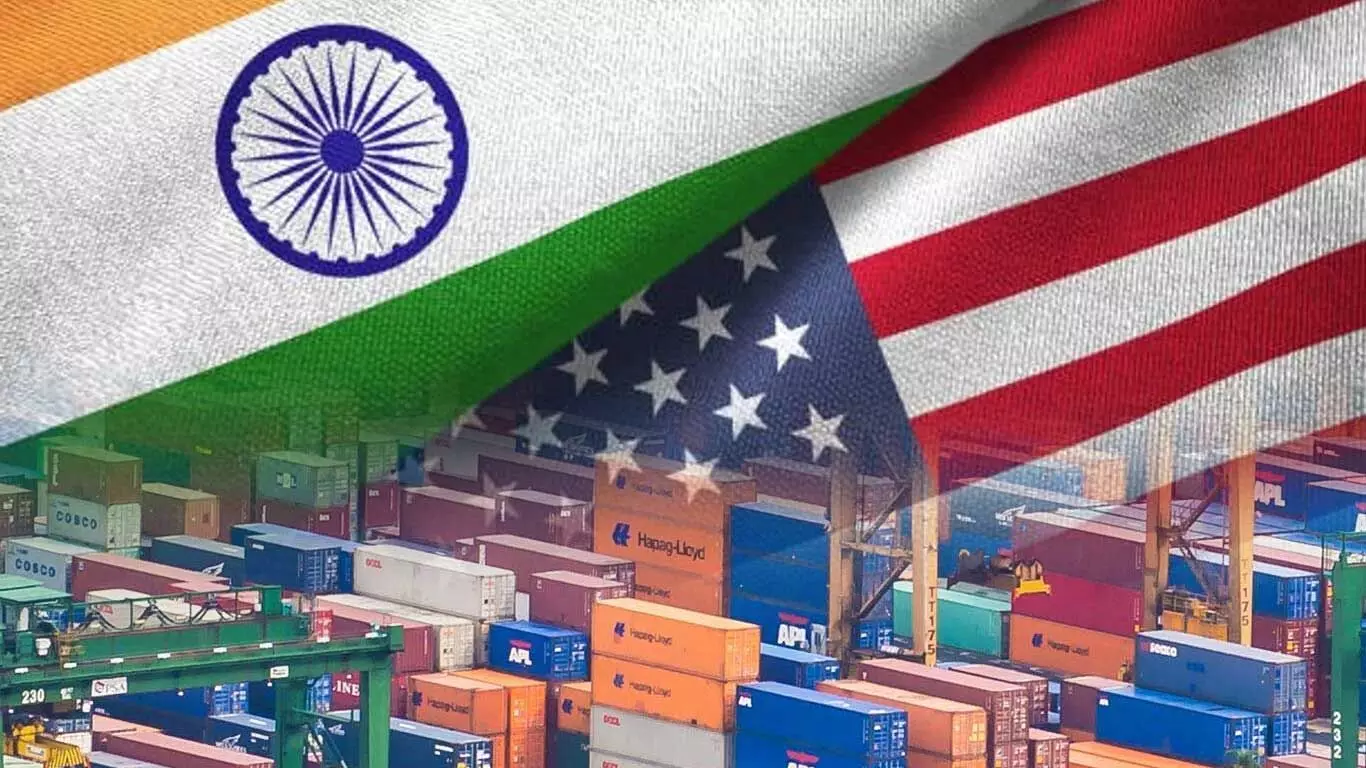
WASHINGTON : US President Donald Trump on Wednesday issued an executive order imposing an additional 25 percent tariff on goods from India, days after he issued a threat to New Delhi over its purchase of oil from Russia. Indian goods will now face tariffs upto 50 percent after Trump’s latest move.

The White House said the decision is aimed at strengthening measures taken under earlier sanctions against Russia following its actions in Ukraine. The US President had announced a 25 per cent tariff on India last week.

Trump Doubles Tariff On India To 50%: Full Text Of OrderThe White House said the decision is aimed at strengthening measures taken under earlier sanctions against Russia following its actions in Ukraine. The US President had announced a 25 per cent tariff on India last week.

Full Text of Order
Indian goods will now face tariffs upto 50 percent after Trump’s latest move.
US President Donald Trump today issued an executive order imposing an additional 25 percent tariff on goods from India, days after he issued a threat to New Delhi over its purchase of oil from Russia.
Indian goods will now face tariffs upto 50 percent after Trump’s latest move.

The White House said the decision is aimed at strengthening measures taken under earlier sanctions against Russia following its actions in Ukraine. The US President had announced a 25 per cent tariff on India last week.

By the authority vested in me as President by the Constitution and the laws of the United States of America, including the International Emergency Economic Powers Act (50 U.S.C. 1701 et seq.) (IEEPA), the National Emergencies Act (50 U.S.C. 1601 et seq.), section 604 of the Trade Act of 1974, as amended (19 U.S.C. 2483), and section 301 of title 3, United States Code, I hereby determine and order:

Section 1. Background. Executive Order 14066 of March 8, 2022 (Prohibiting Certain Imports and New Investments With Respect to Continued Russian Federation Efforts To Undermine the Sovereignty and Territorial Integrity of Ukraine), expanded the scope of the national emergency declared in Executive Order 14024 of April 15, 2021 (Blocking Property With Respect To Specified Harmful Foreign Activities of the Government of the Russian Federation), to include the actions taken against Ukraine by the Government of the Russian Federation. To address that unusual and extraordinary threat to the national security and foreign policy of the United States, Executive Order 14066 prohibited, among other things, the importation into the United States of certain products of Russian Federation origin, including crude oil; petroleum; and petroleum fuels, oils, and products of their distillation.

I have received additional information from various senior officials on, among other things, the actions of the Government of the Russian Federation with respect to the situation in Ukraine. After considering this additional information, among other things, I find that the national emergency described in Executive Order 14066 continues and that the actions and policies of the Government of the Russian Federation continue to pose an unusual and extraordinary threat to the national security and foreign policy of the United States.

To deal with the national emergency described in Executive Order 14066, I determine that it is necessary and appropriate to impose an additional ad valorem duty on imports of articles of India, which is directly or indirectly importing Russian Federation oil. In my judgment, imposing tariffs, as described below, in addition to maintaining the other measures taken to address the national emergency described in Executive Order 14066, will more effectively deal with the national emergency described in Executive Order 14066.

Sec. 2. Imposition of Tariffs. (a) I find that the Government of India is currently directly or indirectly importing Russian Federation oil.

(b) Accordingly, and as consistent with applicable law, articles of India imported into the customs territory of the United States shall be subject to an additional ad valorem rate of duty of 25 percent. Subject to section 3 of this order, this rate of duty shall be effective with respect to goods entered for consumption, or withdrawn from warehouse for consumption, on or after 12:01 a.m. eastern daylight time 21 days after the date of this order, except for goods that (1) were loaded onto a vessel at the port of loading and in transit on the final mode of transit prior to entry into the United States before 12:01 a.m. eastern daylight time 21 days after the date of this order; and (2) are entered for consumption, or withdrawn from warehouse for consumption, before 12:01 a.m. eastern daylight time on September 17, 2025.

Sec. 3. Scope of Duties and Stacking. (a) The ad valorem duty imposed in section 2 of this order shall be in addition to any other duties, fees, taxes, exactions, and charges applicable to such imports, unless subject to existing or future actions under section 232 of the Trade Expansion Act of 1962, in which case the ad valorem duty imposed in this order shall not apply.

(b) The ad valorem duty imposed in section 2 of this order shall not apply to articles that are excepted by 50 U.S.C. 1702(b).

(c) The ad valorem duty imposed in section 2 of this order shall not apply to articles that are set forth in Annex II to Executive Order 14257 of April 2, 2025 (Regulating Imports With a Reciprocal Tariff To Rectify Trade Practices That Contribute to Large and Persistent Annual United States Goods Trade Deficits), as amended.

(d) The ad valorem duty imposed in Executive Order 14257 of April 2, 2025, as amended, shall apply in addition to the ad valorem duty imposed in section 2 of this order, when applicable pursuant to the terms of Executive Order 14257.

(e) Except for those articles that are eligible for admission under “domestic status” as defined in 19 CFR 146.43, articles that are subject to the duty imposed in section 2 of this order and are admitted into a foreign trade zone on or after 12:01 a.m. eastern daylight time 21 days after the date of this order must be admitted as “privileged foreign status” as defined in 19 CFR 146.41.

Sec. 4. Modification Authority. (a) To ensure that the emergency described in section 1 of this order is dealt with, I may modify this order, including in light of additional information, recommendations from senior officials, or changed circumstances.

(b) Should a foreign country retaliate against the United States in response to this action, I may modify this order to ensure the efficacy of the actions herein ordered.

(c) Should the Government of the Russian Federation or a foreign country impacted by this order take significant steps to address the national emergency described in section 1 of this order and align sufficiently with the United States on national security, foreign policy, and economic matters, I may further modify this order.

Sec. 5. Monitoring and Recommendations. (a) The Secretary of Commerce, in coordination with the Secretary of State, the Secretary of the Treasury, and any other senior official the Secretary of Commerce deems appropriate, shall determine whether any other country is directly or indirectly importing Russian Federation oil. If the Secretary of Commerce finds that a country is directly or indirectly importing Russian Federation oil, the Secretary of State, in consultation with the Secretary of the Treasury, the Secretary of Commerce, the Secretary of Homeland Security, the United States Trade Representative, the Assistant to the President for National Security Affairs, the Assistant to the President for Economic Policy, and the Assistant to the President and Senior Counselor for Trade and Manufacturing, shall recommend whether and to what extent I should take action as to that country, including whether I should impose an additional ad valorem rate of duty of 25 percent on imports of articles of that country.

(b) The Secretary of State shall monitor and regularly consult with any senior official the Secretary of State deems appropriate on the emergency described in section 1 of this order.

(c) The Secretary of State, in consultation with the Secretary of the Treasury, the Secretary of Commerce, the Secretary of Homeland Security, the United States Trade Representative, the Assistant to the President for National Security Affairs, the Assistant to the President for Economic Policy, and the Assistant to the President and Senior Counselor for Trade and Manufacturing, shall recommend to me additional action, if necessary, if the actions in this order are not effective in resolving the emergency described in section 1 of this order or should the Government of the Russian Federation or another foreign country retaliate against the United States in response to the actions taken in this order or any subsequent order issued to address the emergency described in section 1 of this order.

Sec. 6. Delegation. (a) The Secretary of State, in consultation with the Secretary of the Treasury, the Secretary of Commerce, the Secretary of Homeland Security, the United States Trade Representative, the Assistant to the President for National Security Affairs, the Assistant to the President for Economic Policy, and the Assistant to the President and Senior Counselor for Trade and Manufacturing, is hereby authorized to take such actions, including adopting rules and regulations, and to employ all powers granted to the President by IEEPA as may be necessary to implement this order. The Secretary of State may, consistent with applicable law, redelegate any of these functions within the Department of State. Each executive department and agency shall take all appropriate measures within its authority to carry out this order.

(b) The Secretary of Homeland Security, in consultation with the United States International Trade Commission, shall determine whether modifications to the Harmonized Tariff Schedule of the United States are necessary to effectuate this order and may make such modifications through notice in the Federal Register.

(c) U.S. Customs and Border Protection may take any necessary or appropriate measure to administer a duty imposed by this order or any action taken pursuant to this order.

Sec. 7. Definitions. For the purposes of this order:

(a) The term “Russian Federation oil” means crude oil or petroleum products extracted, refined, or exported from the Russian Federation, regardless of the nationality of the entity involved in the production or sale of such crude oil or petroleum products.

(b) The term “indirectly importing” includes purchasing Russian Federation oil through intermediaries or third countries where the origin of the oil can reasonably be traced to Russia, as determined by the Secretary of Commerce in consultation with the Secretary of State and the Secretary of the Treasury.

Sec. 8. Severability. If any provision of this order or the application of any provision of this order to any individual or circumstance is held to be invalid, the remainder of this order and the application of its provisions to any other individuals or circumstances shall not be affected.

Sec. 9. General Provisions. (a) Nothing in this order shall be construed to impair or otherwise affect:

(i) the authority granted by law to an executive

department or agency, or the head thereof; or

(ii) the functions of the Director of the Office of Management and Budget relating to budgetary, administrative, or legislative proposals.

(b) This order shall be implemented consistently with applicable law and subject to the availability of appropriations.

(c) This order is not intended to, and does not, create any right or benefit, substantive or procedural, enforceable at law or in equity by any party against the United States, its departments, agencies, or entities, its officers, employees, or agents, or any other person.

PM Modi to visit China for SCO Summit, first trip since 2019

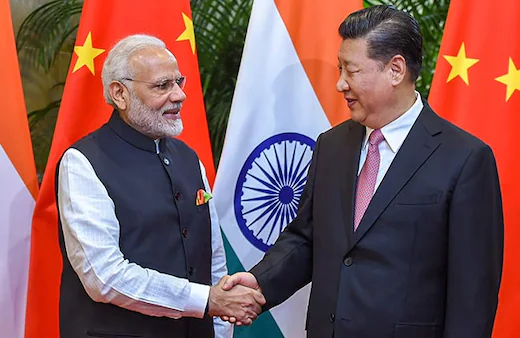
NEW DELHI : Prime Minister Shri Narendra Modi is scheduled to visit Tianjin, China, to attend the Shanghai Cooperation Organisation (SCO) Summit from August 31 to September 1. This will also be his first visit to China since the Galwan Valley clash in 2020. His last visit to China was in 2019.

Before attending the SCO Summit, PM Modi is scheduled to visit Japan on August 30, where he will participate in the annual India-Japan Summit with Japanese Prime Minister Fumio Kishida. From there, he will head to China, according to sources.

Ahead of PM Modi’s visit, Defence Minister Shri Rajnath Singh and National Security Advisor Ajit Doval travelled to China for a series of SCO meetings, followed by External Affairs Minister Dr. S. Jaishankar‘s visit to Beijing, where he met Chinese President Xi.

PM Modi’s visit also comes at a time when Donald Trump has targeted the Brics nations for buying oil from Russia and for what the US President claims is a grouping that challenges the hegemony of the dollar. Russia, which is also an SCO member state, will be sending its representatives to Tianjin. Although it’s not yet clear if Russian President Vladimir Putin will be attending the Summit, scheduled for later this month.

While China was at the forefront of the US tariff war, with duty rates reaching triple digits, the Trump administration has rolled back most of them, bringing the current rate down to 30 per cent amid ongoing discussions. On the other hand, Trump has also cracked down on another Brics nation, India, over its trade with Russia, imposing a 25 per cent tariff and threatening to levy even more.

In June, Defence Minister Rajnath Singh attended the Defence Ministers’ meeting of the SCO in Qingdao, China, where he refused to sign a document that, as per sources, would have diluted India’s stand on terrorism and the Pahalgam terror attack, which left 26 dead. Due to divergence on the issue of terrorism, the SCO decided not to issue a joint statement.

According to sources, China, which holds the SCO chair, and its “all-weather friend” Pakistan tried to divert the attention from terrorism in the SCO document, skipping any mention of the Pahalgam attack. However, the document mentioned Balochistan, a veiled attempt to accuse India of creating unrest in the Pakistani province.

However, in July, China “strongly” condemned the Pahalgam terror attacks following the US’s decision to designate The Resistance Front as a Foreign Terrorist Organisation.

“China firmly opposes all forms of terrorism and strongly condemns the terrorist attack that occurred on April 22… China calls on regional countries to enhance counterterrorism cooperation and jointly maintain regional security and stability,” said Foreign Ministry spokesperson Lin Jian.

SCO has nine member states, namely, China, India, Kazakhstan, Kyrgyzstan, Russia, Pakistan, Tajikistan, Iran, and Uzbekistan.

Philippines-India CEO Roundtable held to boost bilateral trade, investments

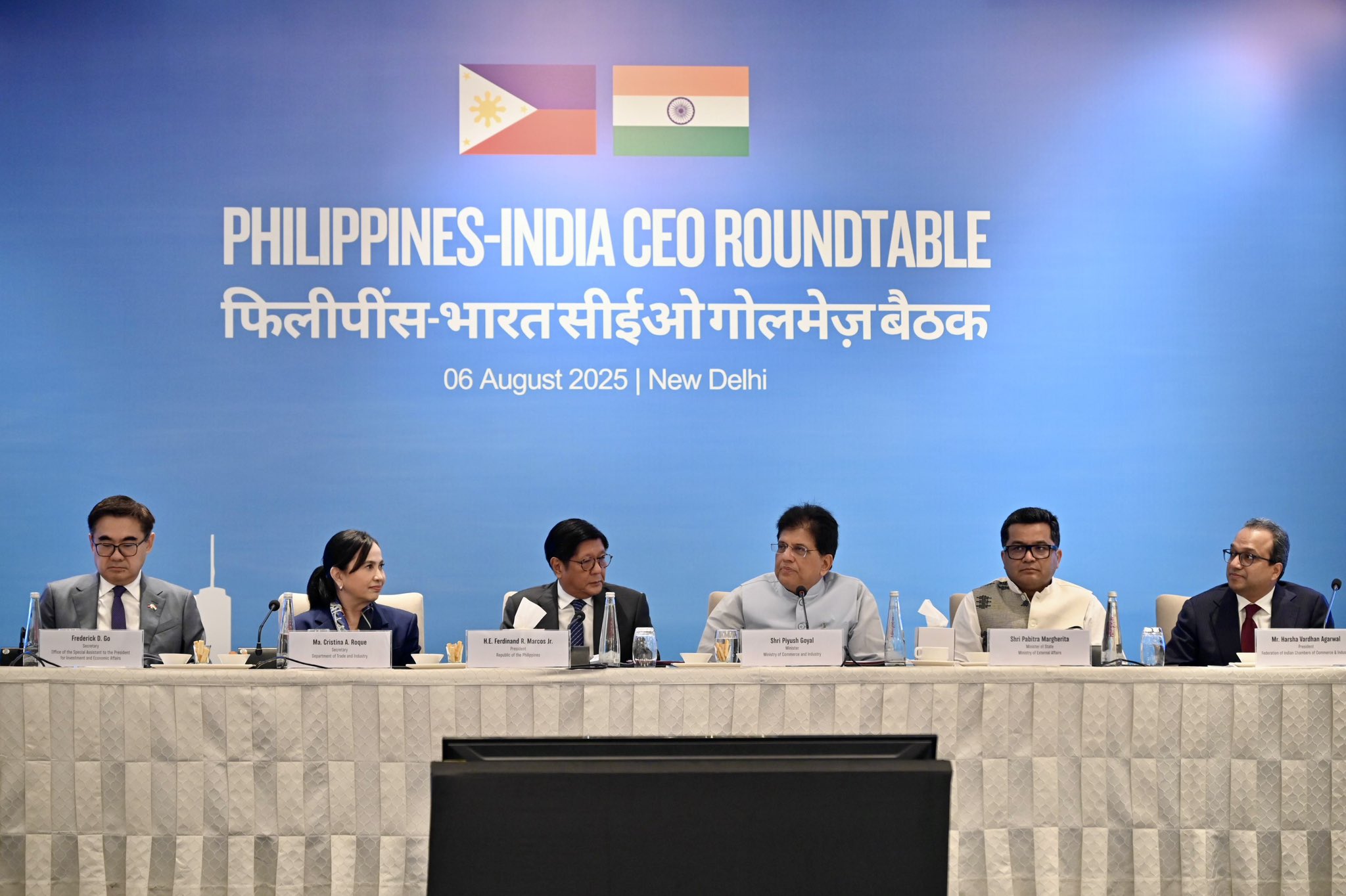
NEW DELHI : A Philippines-India CEO Roundtable was held on Wednesday here in the national capital, where businesses from both sides participated to discuss bilateral trade.

Commerce Minister Shri Piyush Goyal and MoS External Affairs Shri Pabitra Margherita also participated in the roundtable. Philippines President Ferdinand R. Marcos, on a five-day state visit to India, was also part of the meeting.

Philippines India CEO Roundtable 2 Philippines-India CEO Roundtable held to boost bilateral trade, investments

“Discussions focused on promoting bilateral trade, boosting investments, and enhancing the Ease of Doing Business. We also emphasised on key sectors of collaboration, including health, pharma, IT, science & innovation, education, and agriculture,” Shri Piyush Goyal wrote on X after the roundtable.

India and the Philippines on Tuesday decided to elevate their ties to a Strategic Partnership with Prime Minister Shri Narendra Modi and Philippines President Ferdinand R. Marcos Jr agreeing for expeditious conclusion of the negotiations of the Preferential Trade Agreement (PTA) between India and the Philippines for further promotion of mutual trade.

The two countries agreed to enhance defence cooperation, with President Marcos thanking PM Modi for cooperation in the area of defence industry and export of platforms, including the BrahMos.

The Diplomatic Relationship between the two countries was established in November 1949. Both countries are now celebrating the 75th anniversary of the establishment of Diplomatic relations.

Economic and commercial engagement is an important aspect of the India-Philippines bilateral relationship. Bilateral trade between India and the Philippines reached 3.5 billion USD in 2023-24. There is a notable presence of Indian companies in the Philippines, in the areas of IT and ITES, health-care and pharmaceuticals, textiles, infrastructure, FMCG, chemicals, automobiles, agriculture, among others.

India is the largest exporter of pharmaceuticals to the Philippines. Pharma exports from India to the Philippines have grown from 290 million USD in 2020- 21 to USD 460 million in 2024-25.

For greater mobility between, both countries have eased visa norms.

Prime Minister Narendra Modi on Tuesday announced that India will be offering free e-visas to Filipino tourists, in a reciprocal move following the Philippines’ decision to grant visa-free entry to Indian nationals.

The Philippines has made visa-free entry possible for Indian tourists for up to 14 days.

The Ministry of External Affairs later announced direct flights from Delhi to Manila, expected to commence operations from October 1 this year, in a significant step towards enhancing regional connectivity between India and the Philippines.

Gujarat tops as the exporting states of India with strong export gains in FY25 amid headwinds : FIEO

NEW DELHI : Amid global trade turbulence, three of India’s key industrial states—Gujarat, Uttar Pradesh, and Madhya Pradesh—posted strong export performances in 2024-25, signalling a deepening resilience and diversification in the country’s outbound trade, said a report.

Gujarat retained its position as the country’s top exporting state for the fifth straight year, with outbound shipments totalling ₹9.83 trillion, or 26.6% of India’s overall exports, said the report released by the Federation of Indian Export Organizations (FIEO) on Tuesday.

While exports dipped slightly from the previous year, the report noted the state’s continued dominance across a broad range of sectors, led by traditional strengths and new growth areas.

The US, the Netherlands, and the United Arab Emirates remained Gujarat’s top markets, while newer sectors such as aerospace and shipbuilding registered triple-digit growth, signalling a strategic shift toward high-value, innovation-driven exports, it added.

Uttar Pradesh climbed to the fifth spot among Indian exporting states, notching a record ₹1.86 trillion in overseas shipments.

The growth, the FIEO noted, was both deep and wide, cutting across electronics, garments, handicrafts, and emerging sectors such as aerospace and silk. The report highlighted Gautam Buddha Nagar, home to electronics and software manufacturing clusters, as the state’s export engine, contributing more than half of the total.

Government initiatives like one district one product (ODOP) were credited for supporting both modern industrial hubs and traditional artisan economies. The US, UK, and Germany emerged as the state’s leading export destinations.

Madhya Pradesh, meanwhile, posted its highest-ever exports at ₹66,218 crore, rising to 11th place nationally, its best ranking to date.

Pharmaceutical products, engineering goods, and agricultural exports, particularly soybean-based animal feed, powered the surge. Indore and Dhar emerged as key districts, supported by robust industrial ecosystems and expanding special economic zones. The report also flagged strong performances in rubber, starch, and textiles, indicating a broadening export portfolio.

The US, Bangladesh, and France ranked among the state’s largest markets.

Evolving export geography
The current analysis by the FIEO covers Gujarat, Uttar Pradesh, and Madhya Pradesh, with a broader review of other major exporting states expected in the coming days.

The FIEO said the gains by these states underscored India’s evolving export geography, marked by a growing role for interior regions and a shift toward diversified, innovation-led trade growth.

To be sure, India’s merchandise trade deficit widened to $282.8 billion in 2024-25, as imports rose to $720.24 billion while exports held steady at $437.42 billion.

In comparison, the trade gap stood at $241.14 billion in 2023-24, with exports at $437.07 billion and imports at $678.22 billion.

The FIEO report, based on data from the Directorate General of Commercial Intelligence and Statistics (DGCIS), ranks Gujarat, Maharashtra, Tamil Nadu, Karnataka, and Uttar Pradesh among India’s top exporting states in 2024-25.

“This distribution reflects not only the industrial strength of coastal and urban Gujarat but also the growing role of interior districts in value-added exports,” it said.

CONCOR Q1 results: Profit rises 3% YoY to ₹267 crore; declares interim dividend

NEW DELHI : Container Corporation of India Ltd (CONCOR), the state-run logistics and multimodal transport company, reported a steady financial performance for the first quarter of financial year 2025–26, with net profit rising 3.2% year-on-year (YoY) to ₹266.5 crore, compared to ₹258.1 crore in the same period last year.

Revenue from operations during the June quarter stood at ₹2,153.6 crore, marking a 2.4% YoY increase over ₹2,103.1 crore reported in Q1 FY25.

Operating profit, however, saw a marginal decline of 2.1% to ₹432.4 crore as against ₹441.7 crore in the year-ago quarter. The company’s EBITDA margin came in at 20%, slightly lower than the 21% reported in the corresponding period last year.

In a shareholder-friendly move, the Board of Directors declared an interim dividend of ₹1.60 per equity share of face value ₹5 each, amounting to ₹121.86 crore.

Allcargo Gati delivers 116 bps increase in EBITDA margin over Q4FY25

MUMBAI : Allcargo Gati Limited one of India’s leading premier Express Distribution and Supply Chain Management company, has reported its audited financial results for the quarter ended 30th June 2025.

Financial Highlights for Express Business

  • Gross Margin: Gross margin improved 171 bps as compared to Q4FY25
  • EBITDA: Operating cost continues to get optimized to bring about future growth in EBITDA. For Q1FY26 EBITDA stood at Rs. 14 cr, up 18% as compared to Q4FY25

Our express business is housed under Gati Express and Supply Chain Pvt. Limited. (GESCPL)

Particulars (in ₹ Crs)Q1FY26Q1FY25Y-o-YQ4FY25Q-o-Q
Revenue357358-0.3%385-7%
Gross Margin8898-10%89-0.4%
EBITDA1420-26%1218%
Mr.KetanKulkarni ManagingDirectorandChiefExecutiveOfficer Allcargo Gati delivers 116 bps increase in EBITDA margin over Q4FY25
Mr. Ketan Kulkarni, Managing Director and Chief Executive Officer of Allcargo Gati Ltd. and GESCPL

Commenting on the results Mr. Ketan Kulkarni, Managing Director and Chief Executive Officer of Allcargo Gati and GESCPL said: “We are pleased to deliver a strong EBITDA performance in Q1FY26, demonstrating disciplined execution of our strategic priorities—customer-centricity, digital integration, and operational excellence. Our EBIDTA stood at Rs. 14 cr up 18% as compared to Q4FY25.

During the quarter, we onboarded larger enterprise clients across diverse sectors. In addition, we continued serving our existing clients while also strengthening our sector-specific capabilities. Our tech-enabled platforms like HubEye and Gate Scan are driving real-time visibility and measurable productivity gains across our network. The upcoming hubs in Lucknow, Hyderabad, and the recently launched consultative logistics facility in Chennai will further deepen our operational footprint and fortify our service delivery capabilities.

We remain committed to building a future-ready logistics ecosystem that delivers cost efficiency, agility, and differentiated value to our customers. As India’s logistics landscape evolves, our focus on structural simplification, data-driven decision-making, and consultative logistics solutions uniquely positions us to lead in both ground express and end-to-end supply chain services. With a strong start to FY26, we are confident of sustaining momentum and accelerating long-term value creation for our stakeholders”

US did not accept India’s request for consultations at WTO over import tariffs

NEW DELHI : The US did not accept India’s request for consultations under an agreement of the World Trade Organisation (WTO) concerning American tariffs on steel, aluminium, and related derivative products, Parliament was informed on Tuesday.

The US has maintained that these measures were introduced on the grounds of national security, Minister of State for Commerce and Industry Shri Jitin Prasada said in a written reply to the Lok Sabha.

India, however, considers these measures to be safeguard actions that should have been notified and subjected to consultations under the WTO’s Agreement on Safeguards (AoS).

“India has accordingly reserved its right to suspend substantially equivalent concessions (right to impose equal trade measures in response) due to the US’s non-compliance with its obligations under the AoS,” he said.

In a separate reply, the minister said India is actively involved in the discussions with the US on the Bilateral Trade Agreement (BTA) with the aim to expand trade and investment.

India-US bilateral trade agreement negotiations were launched in March 2025. Five rounds of negotiations have been held, the last being from July 14-18th, 2025, at Washington, USA.

“To safeguard the interests of farmers and the domestic industry, international trade negotiations allow for the inclusion of sensitive, negative, or exclusion lists — categories of goods on which limited or no tariff concessions are granted,” he said.

In addition, in case of surge in imports and injury to the domestic industry, a country is allowed to take recourse to trade remedial measures such as anti-dumping and safeguards on imports.

In another reply, the minister said India has not taken any decision to suspend or restrict trade or tourism activities with Turkey and Azerbaijan.

However, the import from Turkey has declined from USD 3.78 billion in 2023-24 to USD 2.99 billion in 2024-25.

The major items imported from Turkey during 2024-25 include Petroleum Crude, Gold, Inorganic Chemicals, Granite, Natural Stones and Aircraft & Spacecraft parts.

The major items of import from Azerbaijan during 2024-25 include Finished Leather, Medical and Scientific Instruments, Raw Hides and Skins, Fruits/Vegetables Seeds and Hand Tools, Cutting Tools of Metals.

India plans US $ 2.27 billion Export Promotion Mission to cushion US tariff impact

NEW DELHI : By September, India hopes to present a long-term plan of Rs. 20,000 crore (US $ 2.27 billion) to protect its exporters against the uncertainties and volatility of international commerce, officials said.

The newly established Export Promotion Mission is planning a number of initiatives to address non-tariff barriers in foreign markets and make it easier to obtain export credit.

Given that the ministry of Commerce and Industry is advising exporters to develop and market domestic brands in order to deal with the 25% tariff imposed by the United States, the government’s program takes on significant importance.

The Ministries of Finance, Micro, Small and Medium-sized Businesses (MSME) and Commerce and Industry are working together to advance the mission.

The strategy also calls for establishing districts as export hubs, promoting the establishment of e-commerce hubs and promoting Brand India on the international scene in a manner similar to that of Korea, Japan and Switzerland.

The mission will be divided into five parts: trade finance, non-trade finance that deals with standards, regulations and market access; e-commerce hubs and warehousing; improved brand memory for Brand India; and trade facilitation. With a cap on individual exporters and based on their credit history, the objective is to provide entirely or partially collateral-free loans to MSME exporters.