Home Blog Page 731

DPIIT signs MoU with Ather Energy to strengthen EV manufacturing and clean mobility ecosystem

NEW DELHI : The Department for Promotion of Industry and Internal Trade (DPIIT), Ministry of Commerce and Industry, signed a Memorandum of Understanding (MoU) with Ather Energy Limited, an Indian electric vehicle manufacturer, to accelerate the growth of India’s clean mobility and advanced manufacturing sectors. The collaboration is being undertaken as part of the Build in Bharat initiative led by the Startup Policy Forum (SPF), a coalition of over 50 innovation-focused startups.

The MoU outlines a comprehensive partnership between DPIIT and Ather Energy that will focus on strategic mentorship for deep-tech startups, infrastructure support for startups in the EV value chain, joint innovation programs such as the Bharat Startup Grand Challenge, co-hosted talent and skill development initiatives, and participation in events like Startup Mahakumbh along with on-ground exposure visits.

The MoU was signed in the presence of Joint Secretary, DPIIT, Shri Sanjiv Singh, and Co-founder and CEO, Ather Energy, Tarun Mehta. The initiative is expected to support India’s transition towards sustainable transport and create a more enabling environment for manufacturing-oriented startups.

Speaking at the signing ceremony, Joint Secretary, DPIIT, Shri Sanjiv Singh said, “The electric mobility sector in India is entering a transformative phase. Through this partnership with Ather Energy, we aim to catalyse the development of an enabling environment where startups can contribute meaningfully to EV manufacturing, battery innovation, and clean energy solutions.”

Co-founder and CEO, Ather Energy, Tarun Mehta said, “We are happy to collaborate with DPIIT to strengthen support systems for hardware and deep-tech startups. With policy support and stronger industry participation, this initiative can help founders tackle core technology challenges and scale high-quality products from India.”

President and CEO, Startup Policy Forum, Shweta Rajpal Kohli said, “This partnership between DPIIT and Ather Energy brings to life the Startup Policy Forum’s Build in Bharat initiative. Unlocking the potential of India’s manufacturing sector through collaboration is key to building a globally competitive innovation ecosystem.”

This collaboration is expected to provide new opportunities for startups in the EV and manufacturing space, contributing to a future-ready and self-reliant startup ecosystem aligned with India’s climate and industrial goals.

Admiral Dinesh K Tripathi, Chief of the Naval staff embarks on an official visit to Japan

NEW DELHI : Adm Dinesh K Tripathi, Chief of the Naval Staff, has proceeded on a four-day official visit to Japan from 30 Jul to 02 Aug 2025. This visit is part of the ongoing efforts to consolidate bilateral defence relations between India and Japan, in line with the deepening ‘Special Strategic and Global Partnership’, with a focus on enhancing maritime cooperation.

During the visit, the CNS is scheduled to hold bilateral discussions with senior Japanese government officials including Minister of Defense, Mr. NAKATANI Gen, Vice-Minister of Defense, MASUDA Kazuo, and a meeting with Adm SAITO Akira, Chief of Staff, Japan Maritime Self-Defense Force (JMSDF).

Discussions are expected to encompass a broad spectrum of defence cooperation areas, with particular emphasis on maritime security, technological collaboration, and identifying new avenues to strengthen naval synergy and interoperability. The CNS will also visit JMSDF units and interact with the Commander-in-Chief, Self Defense Fleet, at Funakoshi JMSDF Base.

Adm Dinesh K Tripathi’s engagements in Japan are poised to further deepen the bonds of friendship and defence cooperation, paving the way for enhanced mutual understanding in key areas of shared strategic and maritime interest. The visit reaffirms the time-tested India-Japan friendship anchored in mutual respect, maritime trust, and a shared vision for peace and stability in the Indo-Pacific.

Goa Shipyard launches ICGS ATAL Fast Patrol Vessel for Indian Coast Guard

GOA : Reinforcing India’s Indigenous Maritime power and Aatmanirbharta in shipbuilding, Goa Shipyard Limited (GSL) launched ICGS ATAL ( Yard 1275) Fast Patrol Vessel (FPV) for the Indian Coast Guard (ICG) in a ceremony held at Vasco-da-Gama, Goa on 29 July, 2025. It is the sixth in a series of eight state-of-the-art indigenously designed FPVs being constructed for ICG by GSL, the premier Defence Public Sector Undertaking under the Ministry of Defence.

The FPVs, designed in-house at GSL, are 52 metres in length, with an 8-metre beam and 320-tonne displacement. These high-speed boats are equipped to conduct coastal patrols, island security missions, and offshore asset protection, significantly augmenting India’s maritime domain awareness and national security. The vessel shall also perform anti-smuggling, anti-piracy and search & rescue operations.

Speaking on the occasion, Shri Brajesh Kumar Upadhyay, Chairman & Managing Director, GSL said: “The launch of ICGS Atal reflects the indomitable spirit of Team GSL and its unwavering commitment to indigenisation, innovation, and excellence in shipbuilding, even amidst global supply chain challenges.” Shri Rozy Agarwal, Principal Internal Financial Advisor (PIFA), Coast Guard Headquarters who was also the chief Guest, lauded GSL’s robust execution capabilities and its pivotal role in advancing the nation’s maritime security.

Senior dignitaries from the Indian Coast Guard, Indian Navy, Ministry of Defence, strategic industry partners, and GSL officials took part in the event.

Houthis say they hold 10 crew from Greek-operated ship they sank off Yemen

SANNA : Yemen’s Iran-aligned Houthis said on Monday they had rescued 10 seafarers from the Greek-operated cargo ship Eternity C, which they attacked and sank in the Red Sea earlier this month.

The Liberia-flagged Eternity C was the second ship to sink off Yemen this month after repeated attacks by Houthi militants with sea drones and rocket-propelled grenades. Another Greek-operated vessel, the Magic Seas, had gone down days earlier.

The Philippine government confirmed on Tuesday nine of the rescued seafarers were Filipinos.

Migrant workers minister Hans Cacdac said the sailors were in “good physical condition” based on accounts from their families, and that the government was working to secure their release and safe return.

The strikes on the two vessels marked a revival of attacks on shipping by the Houthis, who hit more than 100 ships between November 2023 and December 2024 in what they said was a show of solidarity with the Palestinians in the war in Gaza.

The Eternity C crew and three armed guards were forced to abandon the ship following the attacks. Ten people were rescued by a privately-led mission, while five more are feared dead mainly due to the attacks.

A further 10 people were believed to be held by Houthis, maritime security sources had told Reuters.

On Monday, the Houthis group released a six-minute video showing pictures of the 10 seafarers with some of them contacting their families. They also showed testimonies saying that the crew members were not aware of a maritime ban by Houthis against vessels sailing to Israeli ports. They said the vessel was heading to Israel’s Eilat Port to load fertilizers.

Reuters could not independently verify the footage.

In what they called phase four of their military operations, the Houthis said on Sunday they would target any ships belonging to companies that do business with Israeli ports, regardless of their nationalities.

Following the recent attacks, Greece said it would deploy a salvage vessel in the Red Sea to assist in maritime accidents and protect seafarers and global shipping.

Source: Reuters

Port of Klaipėda announces Call for Expressions of Interest in Klaipėda Southport Development Project

KLAIPEDA : The Port of Klaipėda has officially announced a request for expressions of interest (EOI) in the Klaipėda Southport Development Project – the most extensive expansion in the port’s history. This landmark project aims to significantly increase Klaipėda’s cargo handling capacity and create new opportunities for advanced industrial and logistics operations.

“The Southport Development Project is a transformative step for the Port of Klaipėda and for Lithuania’s maritime economy. We are opening the door for world-class terminal operators and industrial companies to establish operations in a strategically advantageous location. This is a unique opportunity to invest in the future of Baltic maritime trade,” comments Algis Latakas, CEO of the Port of Klaipėda Authority.

The Port of Klaipėda is inviting qualified international and domestic port terminal operators, industrial developers, and investors to submit expressions of interest. The request outlines the anticipated commercial framework and the proposed public-private partnership structure.

The Klaipėda Southport Development Project involves reclaiming approximately 100 hectares of new port territory and constructing 1.3 kilometers of new quays. The development is designed to host state-of-the-art port terminals, manufacturing facilities, and other high-value industrial activities, reinforcing Klaipėda’s position as the largest and most dynamic port in the Baltic States.

Preparatory work is well underway, with the technical feasibility study, navigational study, environmental impact assessment, geotechnical investigations, and commercial structuring progressing on schedule. The construction permit is expected by the end of 2025, ensuring that the project remains aligned with its planned timeline.

More information and the EOI documentation are available on Klaipėda Port’s website: https://portofklaipeda.lt/en/port-authority/projects/southern-port-development/

Paradip Port achieves fastest-ever 50 MMT cargo throughput in FY 2025–26

PARADIP : Paradip Port Authority achieved fastest-ever 50 MMT cargo throughput in FY 2025–26, milestone reached on July 27 — four days ahead of previous year; YoY growth at 2.84%. PPA is grateful to Hon’ble Union Minister Shri Sarbananda Sonowal ji & MoS Shri Shantanu Thakur ji for their visionary support.

In a significant operational milestone, Paradip Port Authority (PPA) has achieved cargo throughput of 50 million metric tonnes (MMT) in record time during the current fiscal year 2025–26. The landmark was reached on 27th July 2025, four days ahead of the corresponding achievement last year, demonstrating the port’s growing efficiency and robust cargo handling capabilities.

According to official data, the port registered a year-on-year (YoY) growth of 2.84%, underscoring steady performance across major cargo categories.

Cargo Growth Highlights:
Coal: 22.06 MMT (+0.53% YoY)

Crude Oil: 11.36 MMT (+14.97% YoY)

Containers: +27.80% YoY — marking a significant leap in containerized cargo movement

Fertilizer Raw Material: +8.41% YoY

These figures reflect both growing demand and improved handling efficiencies across various cargo streams. The surge in crude oil and container volumes has especially contributed to accelerating throughput at the port.

Commenting on the achievement, Shri P.L. Haranadh, Chairman of Paradip Port Authority, said: “with collective effort, Paradip Port continues to script maritime success stories. This record performance highlights our team’s commitment to operational excellence, customer satisfaction, and the port’s growing role in India’s logistics and energy infrastructure.”

Paradip Port has consistently ranked among India’s top-performing major ports and is playing a vital role in meeting the country’s growing trade and energy needs. The port’s strategic initiatives — including digital transformation, enhanced berth productivity, and multimodal connectivity — continue to support its upward growth trajectory.

Commerce Ministry holds meeting with stakeholders of textiles, leather and footwear industry on India-UK CETA

NEW DELHI : The Department of Commerce, Ministry of Commerce and Industry, held an industry interaction with stakeholders from the textiles, leather and footwear sector in New Delhi to discuss the opportunities created by India-UK Comprehensive Economic and Trade Agreement (CETA).

In a message to the meeting, Union Minister of Commerce and Industry, Shri Piyush Goyal, conveyed that the agreement is a transformative opportunity for India’s textiles, leather, and footwear industries. He highlighted that the historic agreement opens a world of opportunities for these sectors. Shri Goyal noted that the landmark India–UK CETA has positioned India’s textile sector for a significant surge in exports.

Secretary, Department of Commerce, Shri Sunil Barthwal, emphasised that eliminating tariffs and empowering MSMEs would promote inclusive growth and generate employment. He added that the agreement is also expected to enhance global recognition for Indian artisans and manufacturers.

As part of the stakeholder engagement, industry and institutional invitees to the meeting included the Council for Leather Exports (CLE), Confederation of Indian Industry (CII), Confederation of Indian Footwear Industry (CIFI), Indian Footwear Components Manufacturers Association (IFCOMA), the Footwear Design and Development Institute (FDDI), Central Leather Research Institute (CLRI), Leather Sector Skill Council (LSSC), various Textile Export Promotion Councils, Industry Associations and textile exporters.Key government departments, including the Ministry of Textiles, Bureau of Indian Standards (BIS), Directorate General of Foreign Trade (DGFT), Department of Revenue, Department for Promotion of Industry and Internal Trade (DPIIT), as well as senior officials from the Department of Commerce, also attended the meeting to deliberate on opportunities and sectoral preparedness arising from the agreement.

The agreement provides Indian textile & clothing products with duty free access to UK market and addresses the duty disadvantages (of upto 12%) that the Indian textiles sector faced in UK vis a vis some key competing countries like Bangladesh, Cambodia and Pakistan. The zero-duty market access will benefit segments such as Ready-Made Garments, Home Textiles, Carpets and Handicrafts and set the tone for a sharp surge in exports.

The agreement will help in increasing demand of Indian Textiles and benefit all major textile clusters such as Tirupur, Jaipur, Surat, Ludhiana, Panipat, Bhadohi, Moradabad. The CETA is expected to have a positive impact across the textiles value chain, benefiting various stakeholders and boosting employment generation in this labour intensive sector.

CETA eliminates UK’s import duties for Indian products, which till now are ranging from 2% to 8% for leather goods, 4.5% for leather footwear, and 11.9% for non-leather footwear. This levels the playing field for Indian exporters against competitors such as Bangladesh, Cambodia, and Vietnam, who have enjoyed preferential access to the UK market.

The tariff elimination is expected to nearly double India’s leather and footwear exports to the UK—from USD 494 million in 2024 to USD 1 billion within three years. Key manufacturing hubs across the country are set to benefit significantly, with a projected surge in demand expected to generate thousands of new jobs, particularly among MSMEs, artisans, women entrepreneurs, and youth-led enterprises.

The agreement also simplifies customs procedures, aligns technical standards, and ensures protection of Indian Geographical Indications (GI) such as Kolhapuri footwear and Mojari, allowing Indian products to gain enhanced visibility in the UK’s USD 8.7 billion leather and footwear market.

By facilitating duty-free access and regulatory ease, the India-UK CETA enhances pricing power and global visibility for Indian manufacturers, especially in high-quality leather and fashion products that are in strong demand in the UK.

CETA also promotes sustainable production practices and encourages MSMEs to adopt digital tools, integrate with global value chains, and expand their e-commerce footprint.

Government initiatives like the Indian Footwear and Leather Development Programme (IFLDP), with an outlay of INR 1,700 crore, and the proposed Focus Product Scheme for the footwear and leather sector support capacity expansion, technology upgrades, creation of mega clusters and design studios, and international brand promotion.

The India-UK CETA is a catalyst and a game changer for transforming the leather and footwear industry into a global powerhouse, driving economic growth, sustainability, and inclusive development for India’s MSMEs and artisans.

The representatives of various Export Promotion Councils and Industry associations welcomed the India–UK CETA and mentioned that the duty-free access will make Indian products more competitive and provide a level playing field to Indian Textile exporters.During the interactions, the need for follow up steps to be taken by the textiles industry to effectively utilize the benefits provided by the FTA was also emphasized.

More sector based stakeholder consultations and workshops are slated to be held in the next few days to prepare the Industry to convert the potential opportunities created under CETA to actual gains. The Ministry will also reach out to the manufacturing clusters in states to prepare them for benefiting from the provisions of the landmark agreement.

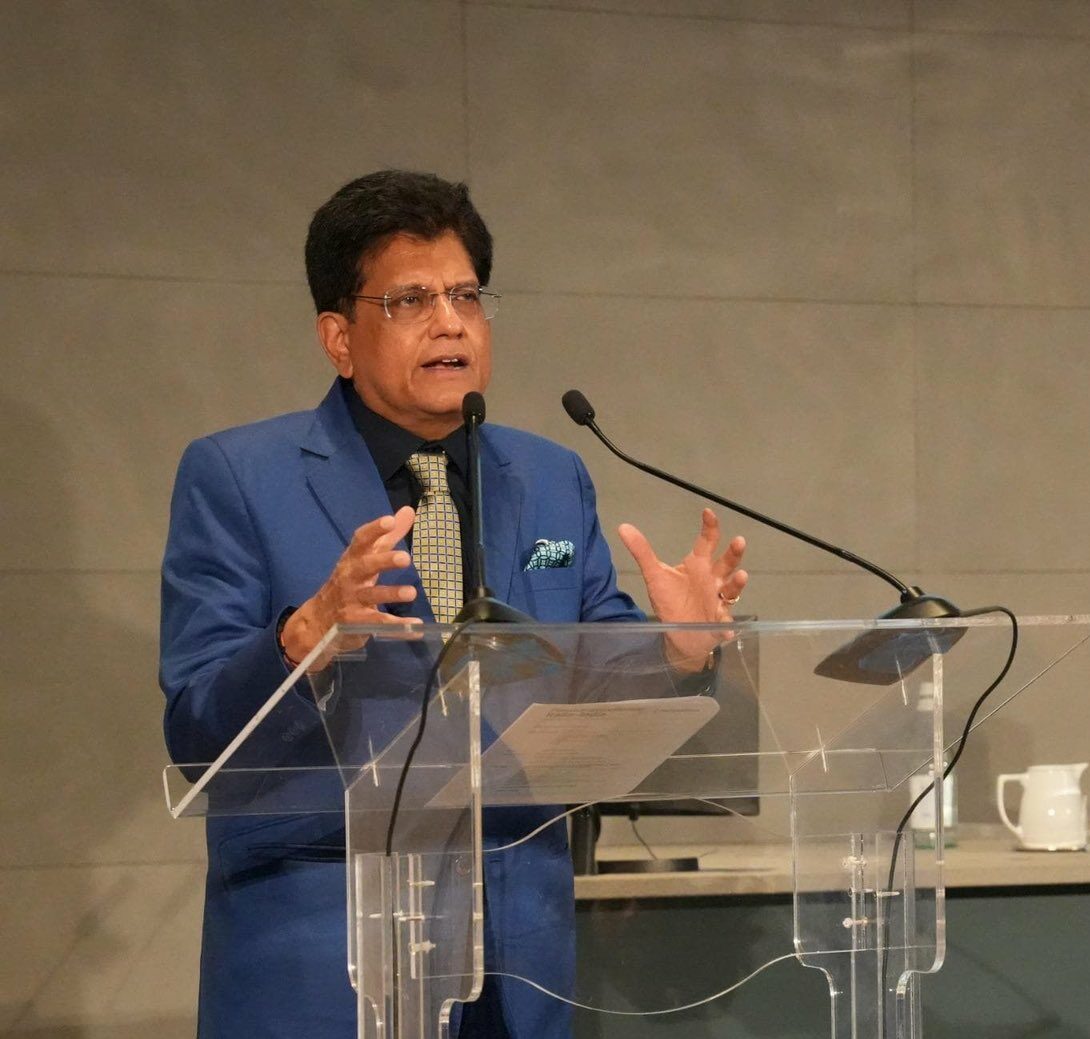
India’s trade talks with US, Oman and EU at an advanced stage : Piyush Goyal

NEW DELHI : India’s trade talks are in a “very advanced” stage with the US, Oman and the European Union, Commerce and Industry Minister Shri Piyush Goyal said on Saturday, while underlining that every free trade agreement has its own dynamics. India is also negotiating FTAs with Chile, Peru and New Zealand, he further said.

Addressing reporters on Saturday, the minister said that the FTA with Oman is “almost finalised”, while negotiations with the EU and the US are “making fast progress”.

His comments come in the wake of the signing of the landmark Comprehensive Economic Trade Agreement between India and the UK on July 24. However, there remains uncertainty on whether India will be able to clinch an interim trade deal with the US ahead of the proposed levy of reciprocal tariffs from August 1.

Official sources indicated that there continues to remain uncertainty around the reciprocal tariffs with the US. A team of officials from the US are set to visit India in the middle of August to take forward the negotiations, sources explained.

Meanwhile, elaborating on the India-UK trade deal, Goyal said the government is now focussing on trade deals with developed nations and countries that do not threaten India but rather whose goods and services complement ours.

While the Indian Cabinet has already approved the FTA, its operationalisation could take some time as it also has to be approved by the UK Parliament. Noting that the FTA had bipartisan support in the UK, the minister said that ratification by the British Parliament could take a few months or upto one year.

He also underlined that India will respond if the UK levies Carbon Border Adjustment Tax (CBAM) on Indian exports. The CBAM or carbon tax is not part of the FTA as it is yet to be implemented by the UK. However, the minister underlined that India will take appropriate steps if such a tax is levied on Indian exports.

He further noted that even in the European Union there is a lot of opposition to the CBAM and rethinking taking place as it will increase the cost of living there and eventually also hurt their trade.

“The sufferer will be the EU and not India. We will convert every challenge into an opportunity,” the minister said. The India-UK FTA also has a clause for review after five years, when provisions that do not suit either of the countries can be taken up for review.

Indian Railways rapidly emerging as a Global exporter of bogies, coaches, locomotives & propulsion systems under ‘Make in India, Make for the World’ Vision : Ashwini Vaishnaw

VADODARA : Union Minister for Railways Shri Ashwini Vaishnaw visited Alstom’s Savli facility in Vadodara, Gujarat, a key manufacturing hub for railway rolling stock in India. He reviewed Alstom’s operations at Savli facility, with a focused assessment of maintenance practices. He appreciated Alstom’s practice of designing customised solutions for each order – an innovation Indian Railways could emulate – and proposed developing a joint training programme with Gati Shakti Vishwavidyalaya through a creative and collaborative framework. He also suggested that General Managers of all PUs undertake training and exposure visits to Alstom’s Savli unit. Discussions also included the use of sensors and artificial intelligence for preventive maintenance.

Savli facility is producing state-of-the-art commuter and transit train cars, with a strong commitment to the Government of India’s Make in India and Aatmanirbhar Bharat initiatives. With a strong focus on innovation and manufacturing excellence, over 3,400 engineers from India are actively collaborating with 21 Alstom sites worldwide. Since 2016, India has successfully exported 1,002 rail cars for various international projects, reinforcing the country’s position as a trusted supplier of modern rail systems. 450 rail cars were manufactured at Savli and exported to Australia for the Queensland Metro project.

Export Of Critical Rail Components

Savli Unit has successfully exported over 3,800 bogies to countries including Germany, Egypt, Sweden, Australia, and Brazil, along with more than 4,000 flatpacks (modules) supplied to Vienna, Austria. Maneja Unit has made a significant contribution by exporting over 5,000 propulsion systems to various global projects.

Designed in India, Installed in Many Countries

India is currently leading 27 international signalling projects and providing support for an additional 40 projects worldwide. Bangalore’s Digital Experience Centre driving innovation through supporting 120+ projects worldwide, focusing on next-gen signalling using IoT, AI, blockchain, and cybersecurity.

Rising export of India’s Rail Products as part of the vision “Design, Develop, and Deliver from India to the world”

Metro Coaches: Exported to Australia, Canada
Bogies: Shipped to UK, Saudi Arabia, France, and Australia
Propulsion Systems: Supplied to France, Mexico, Romania, Spain, Germany, and Italy
Passenger Coaches: Delivered to Mozambique, Bangladesh, and Sri Lanka
Locomotives: Exported to Mozambique, Senegal, Sri Lanka, Myanmar, Bangladesh, and the Republic of Guinea

Boost to Local Economy

A strong network of leading suppliers supports the manufacturing ecosystem near Savli. Prominent players include Integra, Anovi, Hind Rectifier, Hitachi Energy, and ABB, specializing in fabrication, interiors, and electrical systems.

Speaking to the media, the Union Minister of Railways stated that the impact of the “Make in India and Make for the World” initiatives is clearly visible in the Indian Railways manufacturing sector. He highlighted that the export of railway components to multiple countries is creating significant employment opportunities in India. The Minister further added that Indian engineers and workers are now gaining expertise in international standards, which he described as a major success of the Make in India mission

Private sector investment hasn’t kept pace with public expenditure : FM

NEW DELHI : Both India and China feel there is a need for more access and interaction with each other for exploring windows of economic cooperation, Finance Minister Smt Nirmala Sitharaman said on Saturday, adding that such a relationship would have to be built with caution.

Speaking at the launch of a book titled, A World in Flux: India’s Economic Priorities, in Delhi, she emphasised that growth is the top priority, overlapping with job creation and value addition. Reprioritisation of domestic economic aspirations and resources mobilisation, and the need for India to be a dynamic player in global institutions and redefine its role in the global South are other top priorities, she said.

Ties with China
Responding to a question on India’s evolving relationship with China on the economic front, particularly in the context of recent developments like relaxation of visa norms, Sitharaman said: “There is some kind of a beginning.”

“As to how far it will go, it is something we’ll have to wait and see. It might help the economy; however, much a sense of caution would have to be built,” she added.

Last week, Foreign Minister Shri Subrahmanyam Jaishankar travelled to China for talks. Jaishankar said India and China must resolve friction along their border, pull back troops and avoid restrictive trade measures to normalise their relationship.

“If I can use that expression… we need more access, and we need to have a lot more interaction, and possibly opening some windows, and that’s not just from our side. Even Chinese, I think, have been approaching through the ministry of external affairs,” she said.

India imposed restrictions on investment from China, particularly through Press Note 3, to curb potential ‘opportunistic takeovers’ of Indian companies during the Covid-19 pandemic and to address national security concerns related to border tensions after Galwan clash. This policy change, enacted in April 2020, requires prior government approval for all investments from countries sharing a land border with India, including China.

Bilateral trade takes centre stage
Talking about the current global trade scenario, she said it is bilateral trade that is taking priority over multilateral trade. “On the bilateral trade front we are moving forward and we have seen bilateral agreements signed in the past four-five years with Australia, UAE and the UK. Negotiations are progressing well with the United States as well as the European Union,” she said.

She said the government is making sure the policy on FDI is friendly enough and attractive enough, to be able to get more and more investments into India.