Home Blog Page 735

AVG Logistics solutions provider secured term loan facilities to cater to working capital and capex requirements

MUMBAI : AVG Logistics Limited has successfully secured a term loan facility of Rs 20 crore from a leading Non-Banking Financial Company (NBFC). This crucial funding will be strategically utilised to bolster the company’s working capital and facilitate significant capital expenditure, particularly for the import of ISO tank containers and fleet expansion. This move marks a pivotal moment for AVG Logistics as it embarks on a new venture into the specialised and rapidly expanding sector of liquid chemical transportation within the Indian logistics industry. The acquisition of these ISO tank containers is set to enhance AVG Logistics’ operational capabilities and broaden its service offerings, enabling it to cater more effectively to the needs of large-scale businesses across India.

This strategic expansion into liquid logistics through ISO tank containers, especially when integrated with rail-based logistics, aligns with AVG Logistics’ vision of providing sustainable and reliable solutions. This initiative is expected to significantly contribute to reducing carbon emissions and promoting environmentally responsible supply chain practices, fostering a greener and more efficient transportation system. The foray into this niche yet vital segment is anticipated to unlock new growth opportunities, positioning AVG Logistics as a key player in the transportation of chemicals, oils, gaseous and other liquid commodities, thereby complementing its existing robust infrastructure and end-to-end logistics solutions.

APEDA refutes unfounded allegations in Organic Cotton Certification

NEW DELHI : The National Programme for Organic Production (NPOP) was launched in 2001 by the Department of Commerce, Ministry of Commerce & Industry, Govt of India for exports of Organic products and APEDA acts as the Secretariat for the implementation of the NPOP. The system of grower group certification was launched in 2005, as it was felt necessary to cater to small and marginal farmers.

Third party certification is a mandatory requirement for export of organic products. The NPOP standards for crop production have been recognized by the European Commission and Switzerland as equivalent to their country’s standards and are also accepted by Great Britain. There is an MRA for organic products with Taiwan.

The system for Organic Certification under NPOP involves a third-party certification system of organic processes and organic produce, which is certified across the supply chain by a certification body (Govt. or private). The accredited Certification Bodies certify organic operators as per their scope of accreditation. At present, there are 37 active Certification Bodies operating in India, which include 14 State Certification Bodies.

Herein, it is clarified that APEDA or the Department of Commerce does not extend any subsidy to farmers taking up Organic cultivation under the NPOP. The figure of Rs. 50,000 per hectare and the further wrongly imputed calculations have no basis.

Organic certification under NPOP is not limited only to Madhya Pradesh but is spread across 31 States/UTs. As per latest records (as on 19.07.2025), there are 4712 active Organic grower groups covering around 19,29,243 farmers certified by the accredited certification bodies under NPOP. These grower groups are involved in production of a wide range of crops including cereals, pulses, oilseeds, tea, coffee, spices and not only cotton.

Thus, the number of Organic grower groups as mentioned in the briefing is incorrect along with the number of farmers, it is also misleading to infer that all the Organic grower groups of India are based in Madhya Pradesh and are producing only Cotton.

It is pertinent to mention that cotton is covered under NPOP only till production level. Thereafter, the post production including ginning, processing etc is done under private certification.

Under NPOP, ICS can be self-managed or managed through a service provider/mandator. As per the NPOP standards, it is mandatory for ICS to carry out internal inspections of all farmers twice annually. Apart from that, the Certification Body (CB) conducts annual audit of each ICS which includes Office audit and farm audits based on a sampling plan. The sampling plan is primarily based on the size of the holdings, number of farmers in the ICS and risk assessment. Certification bodies can carry additional inspections wherever deemed necessary.

In addition to the above, there is a third level of check on the CB by the NAB through APEDA, by undertaking unannounced audits of operators including grower groups (ICS) based on risk assessment/ complaints received, which is conducted by an evaluation committee constituted by the NAB and coordinated by APEDA.

Despite the above stated checks and balances established in the system, there have been reported incidences of malpractices and misuse of Grower Group Certification. These kinds of non-compliances are not unique to India or NPOP but apply to any regulatory system. In this regard the following actions have been taken by the authorities:

Stringent action has been taken against the cases of willful violation and severe non-conformities of Certification Bodies with the NPOP Standards.
The NPOP regulations have been revised bringing in more stricter norms in terms of legal entity of grower groups, close monitoring through ICS office in the vicinity of the grower group, and inspection of grower groups through mobile app is going to be started shortly.
New procedures have been formulated for additional checks for certification of organic cotton production. The procedure also limits the zone of the certification bodies certifying cotton to have a closer monitoring and oversight.
The process of unannounced inspections has increased many folds. Stringent action has been taken against the grower groups and the defaulting certification bodies.
APEDA is committed to ensure that the Organic certification system under the NPOP is credible, transparent and clear. Wherever credible evidence of non compliances/ wilful violation of organic standards have been brought to light, APEDA had undertaken extensive investigation and taken concrete measures. All such matters are subjected to structured investigation following principles of natural justice. Any Certification Body or operator found violating norms is penalized as per NPOP regulation.

It may be mentioned that in a press briefing by an opposition leader yesterday, unfounded, unsubstantiated and misleading aspersions are being cast against the Organic Certification programme, the National Programme of Organic Production (NPOP).

Generalised allegations against a robust regulatory system of the Country for a particular crop/ region/ group of operators only serve to undermine the credibility of legitimate regulatory institutions and the broader organic movement in India.

Department of Posts and NPCI International Payments Limited sign agreement to revolutionize inward remittances to India

NEW DELHI : The Department of Posts (DoP), Ministry of Communications, Government of India, and NPCI International Payments Limited (NIPL), the international arm of National Payments Corporation of India, on Friday announced the signing of a Non-Disclosure Agreement (NDA) to collaborate on a groundbreaking initiative that aims to transform inward remittances to India. This partnership will leverage the power of the Unified Payments Interface (UPI) and the Universal Postal Union (UPU) Interconnection Platform (IP) to create a seamless, secure, and affordable remittance channel for the Indian diaspora worldwide.

This collaboration marks a significant step towards modernizing cross-border payment services and enhancing financial inclusion for millions of Indians. By integrating UPI with the postal network, this initiative aims to provide a convenient and accessible alternative to traditional remittance methods, reducing costs and improving efficiency for senders and beneficiaries.

Key benefits of this collaboration include :

Affordable Remittances: The UPI-UPU-IP integration is expected to significantly reduce remittance costs, making it more affordable for Indian workers abroad to send money home.
Secure Transactions: Leveraging the robust security features of UPI and the trusted reputation of the postal network, this service ensures secure and reliable transactions for both senders and beneficiaries.
Wider Reach and Accessibility: By utilizing the global postal network, this initiative extends the reach of UPI-enabled remittances to regions where traditional banking services may be limited, promoting financial inclusion for a broader segment of the Indian diaspora.
Real-Time Transfers: Through the efficient payment processing driven by the Real-time system using technology transfers would happen in real time thus benefiting the families back home.
“We are thrilled to partner with NIPL on this innovative project,” said Mr LK Dash, Deputy Director General, International Relations and Global Business, Department of Posts. “This collaboration aligns with our commitment to providing accessible and affordable financial services to all citizens, including the Indian diaspora. By leveraging the UPU Interconnection Platform and the UPI network, we are confident that we can create a truly transformative remittance solution.”

Mr. Ritesh Shukla , CEO – NPCI International Payments Limited (NIPL), added, “NIPL is committed to expanding the reach of UPI globally and enabling seamless cross-border payments. We believe that this partnership with the Department of Posts will unlock significant opportunities for financial inclusion and enhance the remittance experience for millions of Indians worldwide.”

Telangana raises manufacturing zone, textile clusters for Taiwanese firms

TELENGANA : Telangana will consider setting up a dedicated manufacturing zone and exclusive textile clusters in the State for Taiwanese firms, IT and Industries Minister D. Sridhar Babu said on Friday.

“If Taiwanese investors come forward, the government would explore setting up a dedicated Telangana–Taiwan Manufacturing Zone and exclusive textile clusters,” he told a 11-member Taiwanese textile delegation led by Taiwan Textile Federation President Justin Huang that met him at the Secretariat here.

Inviting industrialists from Taiwan to invest in the State’s thriving textile sector, the Minister highlighted the abundant opportunities in Telangana compared to other Indian states. The State had rapidly emerged as a formidable player in the textile industry.

“Within a short span, Telangana has made significant strides in the textile sector, positioning itself on par with other leading States. The Gross State Value Added (GSVA) from industries for 2024-25 stood at ₹2.77 lakh crore, with textiles playing a key role. Telangana produces some of the finest quality cotton in India,” he said.

A release from the Minister’s office said Mr. Sridhar Babu sought to underscore how the Kakatiya Mega Textile Park (KMTP), developed with a special focus by the State government, has become a game-changer. “KMTP offers integrated world-class infrastructure, from ginning, spinning, weaving, processing to garmenting. Leading companies like Youngone, Kitex and Ganesha Ecosphere have invested in the park, which is strategically connected to the Hyderabad–Nagpur–Vijayawada Industrial Corridor. It benefits from excellent logistics and transport infrastructure,” he said.

Assuring the visiting delegation of Telangana government’s commitment to drive industrial growth through global partnerships, he cited the vast opportunities for investment in areas like functional textiles, eco-friendly dyeing and textile recycling.

“We offer customised land parcels, plug-and-play facilities, a skilled workforce, effective leadership, a stable government and strategic geographic advantage,” the Minister said.

Sectors such as technical textiles, electronics system design and manufacturing (ESDM), sustainable manufacturing, innovation and research and development are ideal for collaboration with Taiwanese enterprises.

Maersk begins operations at Milazzo Port, Sicily

SICILY : Maersk has officially commenced operations at the Port of Milazzo, further strengthening its network connectivity in Southern Italy. Strategically located near the Strait of Messina, Milazzo offers enhanced access to both Sicily and Calabria, making it a competitive addition to the Maersk network.

maersk Milazzo Port Sicily Maersk begins operations at Milazzo Port, Sicily

The new service was inaugurated with the maiden call of the m/n Sider London on 17th July 2025, arriving via the Cagliari hub. Vessels will be handled at the Duferco Terminal Mediterraneo (DTM)—Sicily’s first private container and multipurpose terminal—located in the Giammoro industrial zone.

The service supports dry standard, refrigerated, IMO (excluding classes 1 and 7), and out-of-gauge containers, and integrates seamlessly with Maersk’s inland transport solutions for end-to-end efficiency.

Transshipment is the new dirty word of trade

LONDON : Where is it from? It’s one of the top questions customs officials must ask of every shipment, alongside what it is and how much it is worth. Donald Trump’s trade war could turn this inquiry on the origin of $3.3 trillion of U.S. goods imports into a quagmire.

The dizzying spread of tariffs the U.S. president is imposing on American trading partners – ranging from a baseline duty of 10% secured by the United Kingdom to the threat of a punitive 50% charge on imports from Brazil – opens up a large arbitrage. Exporters, particularly in China, have a big incentive to misrepresent where their goods are from.

The president is attempting to counter this risk by saying goods that are “transshipped” through lower-tariff countries will face higher charges. For example, the U.S. has imposed a 20% import duty on products originating in Vietnam, but will charge double that figure for goods routed via the Southeast Asian country.

Transshipment is not a new word or concept. In trade, it simply means moving goods between vehicles such as airplanes, trains and lorries. Trump, however, is using it as a shorthand for tariff evasion or fraud.

He has good reasons to be concerned. Just look at what happened when the president slapped duties on China in 2018. The share of U.S. imports arriving from the People’s Republic fell by 8 percentage points to 13.4% between 2017 and 2024. However, China’s total share of total global merchandise exports rose about 1.5 percentage points to 14.2% over a similar period. One reason is that some Chinese manufacturers dodged U.S. duties by re-routing everything from electronics to footwear through other countries, in particular Mexico and Vietnam.

UPSIDE DOWN
The exact size of the problem is a subject of intense debate and study among economists. Trump’s new trade regime makes it even more complicated. The existing global trading system is based on applying a standard tariff on imports, and then granting goods from certain countries, or groups of countries, preferential access.

Under Trump’s new system, however, the U.S. will no longer have a standard non-preferential tariff, nor one of the world’s lowest tariff regimes. Instead, the charges on goods arriving from different countries could vary by as much as 40 percentage points, depending on where U.S. tariffs end up. Separate levies that Washington intends to apply on semiconductors and pharmaceuticals will add further complexity.

This raises the stakes for customs officials trying to determine where a product is from. So-called “rules of origin” were first introduced to help countries collect statistical data, and have proliferated over the past 30 years to support bilateral and regional free trade agreements. These rules are also supposed to help countries implement other policies, such as anti-dumping measures.

The classic rule of origin is based on the concept of “last substantial transformation”. This means the correct tariff depends on the country where the character of the product was last changed.

This principle sounds simple but is anything but. Take clothing. Say a company sends a Chinese-made shirt to Hanoi, adds a “Made in Vietnam” label, and then ships it to the United States while paying the lower Vietnamese tariff. Most trade lawyers would agree that is fraud. But what if brands making clothing in Vietnam like Nike NKE, Lululemon Athletica LULU and Fast Retailing’s 9983 Uniqlo, use dye, cotton, buttons or zips from China? Determining a product’s true origin becomes a complex and ever-changing mystery.

The U.S. Department of Commerce tries to clarify the difference using the example of mixed frozen vegetables and cookies. Vegetables which are grown in various places and taken to another country to be mixed and frozen were not substantially transformed, so the mixture must be labelled with the origin of each ingredient. But if sugar, dairy products, and nuts from different countries are made into a cookie, the country of origin is the location where the ingredients are baked or processed.

Today’s supply chains are much more globalised and complicated. For motor vehicles produced by Ford Motor F, General Motors GM and Stellantis STLAM, origin depends on the value of the contents. To qualify for the United States-Mexico-Canada Agreement, for example, at least 70% of a vehicle producer’s steel and aluminum purchases must originate in North America.

Tariffs can also vary depending on a product’s American content. U.S. Customs and Border Protection says for imports where at least 20% of the value is from the United States, the reciprocal tariff will not apply to the U.S. components.

Verifying the origin of goods requires cooperation. U.S. customs officials will get some help from countries including Malaysia, Thailand and South Korea, which are stepping up their effort to crack down on blatant re-labelling of goods. This is in their interest because cheap Chinese products are threatening to hollow out local industries.

Support for the U.S. measures will drop, however, if Trump is serious about trying to squeeze China out of supply chains. The People’s Republic accounts for nearly 29% of value added in U.S. imports from Cambodia, and almost 19% of those originating in Vietnam, according to research by Sonal Varma and Si Ying Toh at Nomura. Chinese investors are also big owners of factories across Southeast Asia.

OWN GOAL
Despite the proliferation of rules of origin, the World Trade Organization estimates that 74% of global trade still flows under its “most favoured nation” terms, a principle whereby member countries treat imports equally regardless of their origin. For now, it looks like other economies are moving in the opposite direction from the United States. The European Union and Indonesia are moving ahead on finalising a free trade deal; China has extended zero-tariff treatment to 53 African countries; while talks over an EU-India trade pact are slated to continue in September.

Trump could have satisfied some of his stated goals of reducing U.S. trade deficits, raising money and isolating China by imposing high duties on the world’s second-largest economy, and a single lower tariff on the rest of the world. Indeed, that may yet be where the president’s tariffs end up: On Wednesday, he said he would send letters to more than 150 “smaller” countries notifying them their tariff rates could be 10% or 15%. But that would still potentially leave more than 40 countries facing wildly diverging rates.

Expect the new dirty word in trade – transshipment – to be used much more often in future.

Source: Reuters

PM Modi in Maldives highlights: India announces ₹4,850 crore Line of Credit to Maldives

MALE (MALDIVES) : India and Maldives on Friday (July 25, 2025) announced the initiation of negotiations for the launch of a Free Trade Agreement (IMFTA). Maldivian President Mohamed Muizzu, on Friday (July 25, 2025), announced the beginning of negotiations for a Free Trade Agreement between the two countries during a joint press conference in Male with Prime Minister Shri Narendra Modi.

Prime Minister Shri Narendra Modi on Friday (July 25, 2025) held wide-ranging talks with Maldivian President Mohamed Muizzu, focusing on consolidating cooperation in areas of trade, defence and infrastructure, marking a major turnaround in the ties after a spell of unease.

India extended the Line of Credit (LoC) of ₹4,850 crores to Maldives. India reduced annual debt repayment obligations of Maldives on Gol-funded LoCs.

“Confident” of India-US trade deal : Piyush Goyal amid tariff deadline

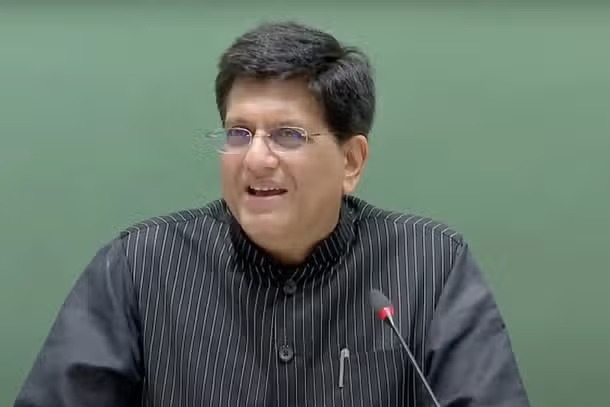
NEW DELHI : Indian Commerce Minister Shri Piyush Goyal said he was optimistic that his country could reach an agreement with the US ahead of an Aug. 1 deadline to avert threatened tariffs of 26%.

“I’m always confident,” Mr Goyal said in an interview Thursday with Bloomberg TV in London, when asked how he was feeling about the prospects for a pact.

“I’ve had some wonderful engagement with my friend and colleague from the US,” he said, calling US Commerce Secretary Howard Lutnick and US Trade Representative Jamieson Greer “very dear friends.”

Mr Goyal insisted there weren’t any sticking points in the US-India relationship or in current trade talks, and clarified that immigration rules – including those around H-1B visas for skilled workers – had not come up in this year’s talks.

Still, the two countries have been locked in negotiations for an interim trade agreement for months already, having made a commitment to reach a bilateral deal by the fall of this year.

Both sides have signaled an agreement is close. New Delhi has recently toughened its stance in negotiations, while President Donald Trump has threatened to hit countries like India and China with secondary sanctions for buying oil from Russia.

Negotiators remain stuck on a few key issues, including US demands for greater access to India’s agricultural and dairy sectors. India has been pushing for exemptions from Trump’s sectoral tariffs, mainly for pharmaceuticals and automobile components.

Mr Goyal was in the UK with Prime Minister Shri Narendra Modi on Thursday to sign a free trade agreement with that country that eliminates tariffs on a range of products including cars and alcohol, a major milestone for the Asian nation.

“We have very robust negotiations going on with several countries,” including with the US, EU, New Zealand, Peru, and Chile, Mr Goyal said Thursday.

India is one of the largest economies locked in negotiations ahead of a US-imposed Aug. 1 deadline, when Trump’s latest threatened tariffs are set to take effect. This week, the White House has announced agreements with the Philippines and Japan, and more details on an agreement previously announced with Indonesia.

2nd round of India-New Zealand FTA negotiations concludes

NEW DELHI : The Second Round of negotiations for the India-New Zealand Free Trade Agreement (FTA) concluded successfully on Friday here, further advancing the shared objective of strengthening bilateral trade and economic partnerships.

This development catalyses the shared commitment to deepen economic ties and guidance given by the Prime Minister of India, Shri Narendra Modi during the visit of the Right Hon’ble Christopher Luxon, Prime Minister of New Zealand in March 2025. The FTA was launched during the meeting between Union Minister of Commerce and Industry, Shri Piyush Goyal and Hon’ble Mr. Todd McClay, Minister for Trade and Investment, Government of New Zealand on March 16, 2025.

Second Round of negotiations for the India New Zealand Free Trade Agreement FTA1 2nd round of India-New Zealand FTA negotiations concludes

Continuing the momentum generated during the first round held in May 2025 in New Delhi, the second round of negotiations were held from 14th to 25th July 2025. This Round accomplished significant advancement in multiple areas, including Trade in Goods and Services, Investment, Rules of Origin, Customs Procedures and Trade Facilitation, Technical Barriers to Trade, Sanitary and Phytosanitary Measures, and Economic Cooperation. Discussions were marked by mutual interest in achieving early convergence on several texts. Both sides reaffirmed their commitment to concluding a balanced, comprehensive, and forward-looking agreement.

The Third Round of negotiations is scheduled to be held in New Zealand in September 2025. The intersessional virtual meetings will maintain the forward trajectory set in the second round.

India’s bilateral merchandise trade with New Zealand reached USD 1.3 billion in FY 2024-25, recording a growth of 48.6% over the previous financial year, signaling the growing potential of the economic partnership. The FTA is expected to enhance trade flows, support investment linkages, promote supply chain resilience, and establish a predictable and enabling environment for businesses in both countries.

India-UK FTA to open export avenues for several sectors; footwear, textiles, gems-jewellery among them: Commerce Secretary Sunil Barthwal

NEW DELHI : The landmark India-UK Free Trade Agreement will benefit several sector, including leather and footwear industry; gem and jewellery; textiles and clothing; base metals; agricultural goods, among others, Union Commerce Secretary Shri Sunil Barthwal said on Friday.

In a briefing, the Commerce Secretary said exports of leather and footwear to UK are expected to double in the next two to three years to USD 1 billion. The manufacturers and exporters from many states such as Uttar Pradesh, Tamil Nadu, West Bengal and Delhi NCR stand to gain substantially.

Import of leathers as also footwear components have been placed under 0 per cent duty which will help in reducing input cost for importers to manufacture and export value added products from India.

Zero duty on leather and footwear products also make India’s exports price-competitive compared to major supplier’s like China, Vietnam, Cambodia, Bangladesh, Indonesia, and several other countries as this neutralizes the lower duty GSP disadvantage Indian exporters faced vis-a-vis exporters of Indonesia, Cambodia, Bangladesh etc. and lower priced exports from China.

Total exports of leather and lootwear from India are more than USD 5 billion. Curent Indian export to UK is USD 440 million. India-UK trade deal opens up USD 8.5 billion leather and footwear export market for Indian exporters.

Zero duty has been granted tor export from India to UK for Leather, Leather and Synthetic Products, Fur and fur products and Footwear and Footwear Components. Products in this calegory earlier faced duties of up to 16 per cent. Removal of duties benefits in the range of 2 per cent to 8 per cent for leather products, 4.5 per cent for leather footwear and 11.9 per cent for non-leather footwear.

In gems and gewellery sector, exports are expected to surge to USD 2.5 billion within next 3 years, said the commerce secretary.

Duties have been eliminated for Indian exports in all lines giving India benefit of upto 4 per cent.
India’s total gems and jewellery exports to UK was USD 941 millon in 2024, with USD 400 million from Jewellery

This FTA opens up huge market as UK imports USD 3.5 billion worth of Jewellery annually
Indla is poised to gain edge over its competitors like China, Thailand, Hong Kong, UAE and USA that are facing tariff between 1-4 per cent.

Wlith improved market access and India’s strength in jewellery making including handmade jewelery, the increased exports, generate substantial employment opportunities in Gujarat, Maharashtra, Rajasthan and West Bengal.

Also, India’s textile export to UK is expected to double from 6 to 12 percent, the Commerce Ministry said.
India’s total export to the world is 37 USD billion and total import of textiles in the UK is USD 27 billion. India’s export is 6.6 per cent of UK’s imports.

Under the FTA, zero duty market access was agreed upon for the textiles and clothing sector, which were earlier subjected to up to 12 per cent import duty.

“It will increase our exports and share in UK’s textiles import,” the Secretary said.

Production hubs such as Tirupur, Surat, Ludhiana, Bhadohi and Moradabad will benefit from increased demand, fostering job creation and economic growth. India will get competitive edge against China/Bangladesh/Vietnam/Cambodia.

Further, farmers in India are among the major winners as they are set to get preferential access to UK’s agricultural market with the signing of the landmark India-UK Free Trade (FTA) Agreement.

The FTA will help Indian agriculture sector transition from focus on high volume to high value products, and from catering to local markets to expanding globally.

India has also ensured that the FTA fully protects sensitive sectors like dairy, vegetables, apples, cooking oils, oats. There will be no tariff concessions on these commodities.

Further, in what could be termed as a “big catch” for Indian fish farmers, the USD 5.4 billion UK market also got opened up for marine exports as UK import duty on marine products are set to fall to zero from up to 20 per cent.

The much-awaited landmark India-UK Free Trade Agreement was signed on Thursday, in the presence of Prime Minister Shri Narendra Modi and his British counterpart Keir Starmer, as PM Modi was on a two-day visit to the UK.

On May 6, Prime Minister Modi and PM Starmer had announced the successful conclusion of a mutually beneficial India-UK Free Trade Agreement (FTA). This forward-looking Agreement is aligned with India’s vision of Viksit Bharat 2047 and complements the growth aspirations of both countries.

Both nations desire to increase their trade to USD 120 billion by 2030.

On Thursday, the UK government said that India’s average tariff on UK products will drop from 15 per cent to 3 per cent under India-UK FTA.