Home Blog Page 736

India–UK sign historic FTA to double Bilateral Trade to $120 Billion by 2030: FIEO President

NEW DELHI : In a landmark moment for global trade, India and the United Kingdom have formally signed a Free Trade Agreement (FTA) during Prime Minister Shri Narendra Modi’s visit to the UK, in the presence of UK Prime Minister Keir Starmer. This historic pact is set to double bilateral trade to $120 billion by 2030, up from the current ~$60 billion.

Welcoming the agreement, Mr S C Ralhan, President of the Federation of Indian Export Organisations (FIEO), said that this is a transformational moment for Indian exporters. The India–UK FTA opens unprecedented opportunities across key sectors, especially for MSMEs and labour-intensive industries. It not only reduces tariffs but also eases regulatory barriers for services and investments.

Signed by Union Commerce and Industry Minister, Mr Piyush Goyal and UK Secretary of State for Business and Trade Mr Jonathan Reynolds, the FTA is the culmination of years of negotiations and reflects a new era in India–UK economic cooperation.

Key Highlights of the FTA:

  1. 99% of Indian exports will enjoy duty-free access to the UK market.
  2. Significant tariff reductions for Indian sectors such as textiles, footwear, leather, gems & jewellery, toys, sports goods, marine, processed food and garments.
  3. UK whisky tariffs to be reduced from 150% to 75% immediately, and eventually to 40% over 10 years.
  4. Automobile import duties from the UK to be lowered from 100%+ to 10%, under specific quotas.
  5. Enhanced market access for Indian services professionals, including IT experts, chefs, yoga instructors, musicians, and intra-corporate transferees.
  6. A finalized Social Security Agreement to eliminate dual contributions for Indian professionals working in the UK.

Mr Ralhan emphasized that this FTA will greatly boost India’s manufacturing and services exports, and attract UK investments into key growth sectors.

“Our exporters will now compete more effectively in a high-value market, and our service professionals will benefit from smoother mobility and reduced compliance hurdles,” he noted.

The agreement also delivers a significant win for India’s agriculture sector. Products like turmeric, cardamom, pepper, mango pulp, pickles, and pulses will now enjoy duty-free access to the UK, enhancing farmers’ market reach and profitability.

In FY 2024–25, India’s exports to the UK grew by 12.6% to $14.6 billion, while imports increased 2.3% to $8.6 billion, taking total goods trade to $23.2 billion.

“This FTA lays the foundation for a more resilient, equitable, and mutually beneficial economic partnership between India and the UK,” Mr Ralhan concluded.

Reliance Industries acquires additional 9.9% stake in Nauyaan Shipyard for ₹54.70 Crore

MUMBAI : Reliance Industries Limited has expanded its maritime sector presence through its subsidiary’s acquisition of an additional stake in Nauyaan Shipyard Private Limited. The transaction, completed on July 23, 2025, represents a strategic move to strengthen the conglomerate’s shipbuilding capabilities.

Reliance Subsidiary Acquires Additional Nauyaan Shipyard Stake
Nauyaan Tradings Private Limited (NTPL), a step-down wholly owned subsidiary of Reliance Industries, acquired a further 9.9% equity stake in Nauyaan Shipyard Private Limited (NSPL) from Welspun Corp Limited. The transaction was completed for an aggregate consideration of ₹54.70 crore, subject to adjustments for expenses and net current assets.

Following this acquisition, Reliance Industries strengthened its position in Nauyaan Shipyard, which is currently an 84% step-down subsidiary of the oil to telecom conglomerate.

Transaction Structure and Regulatory Compliance
The disclosure was made under Regulation 30 of the Securities and Exchange Board of India (Listing Obligations and Disclosure Requirements) Regulations, 2015. Reliance Industries received intimation from NTPL on July 23, 2025, at 4:48 p.m. (IST) regarding the completion of this transaction.

The company clarified that this transaction is not a related party transaction, and none of Reliance’s promoter, promoter group, or other group companies have any interest in the above transaction.

Furthermore, the exchange filing detailed that Reliance Industries’ subsidiary company has bought the additional stake from Welspun Corp. The additional stake purchase in Nauyaan Shipyard takes the total shareholding of Reliance Industries group to 93.9 per cent, as the group already has an 84 per cent shareholding in the company.

Strategic importance of Nuayaan Shipyard for RIL
Incorporated in July 2021, Nuayaan Shipyard has an enterprise value of Rs 643 crore. Located in Dahej, Gujarat, Nuayaan Shipyard has 138 acres of land under lease situated near the manufacturing plant of Reliance Industries. The acquisition of Nuayaan Shipyard by Reliance Group gives the company the right to use the land for company operations.

As Reliance Industries is looking to expand its shipyard operations, the acquisition of Nuayaan Shipyard is going to have strategic importance for the company. Reliance Industries has already rebranded Reliance Naval and Engineering Ltd to Swan Defence and Heavy Industries, with a goal to become one of the top 5 companies in heavy fabrication in naval and defence.

RIL is looking to utilise the 138 acres of land under Nuayaan Shipyard for hydrogen electrolyser manufacturing, brine preparation, storage, and engineering fabrication.

ICD Dahej achieves milestone by handling First Export Container

DAHEJ : The GCT MMLP Inland Container Depot (ICD) Dahej (INDAH6), a joint initiative between the Gujarat Industrial Development Corporation (GIDC) and Container Corporation of India Ltd (CONCOR), marked a significant operational milestone by successfully handling its first export container on July 17, 2025.

The container, cleared by Customs at ICD Dahej, was transported by road to Adani Hazira Port, signaling the commencement of full-fledged export operations from the strategically located facility.

ICD Dahej First Export Container 2 ICD Dahej achieves milestone by handling First Export Container

The first export consignment was facilitated by Deepak Nitrite Ltd., with MSC as the shipping line. Tulsi Logistics Pvt. Ltd. handled both the customs brokerage and transportation services.

The operation was carried out in the presence of key Customs officials, including:

  • Shri Niranjan Singh, Assistant Commissioner, Customs
  • Shri Sudeesh M.C., Superintendent, Customs
  • Shri Dheerendra Kr Singh, Inspector, Customs

Representatives from the trade and logistics community who supported the milestone event included:

Mr. Sudhakar Sen, Mr. Venkatesh Rajulu, and Mr. Pradeep Bhatt – CONCOR

Mr. Sachin Singh – Deepak Nitrite Ltd.

Ms Jyoti Makwana – MSC Shipping Line

Mr. Haresh Shah, Mr. Daxesh Parikh, and Mr. Kevin Shah – Tulsi Logistics Pvt. Ltd.

The successful handling of this first export container marks a major step forward in positioning ICD Dahej as a pivotal logistics hub for industries in and around the Dahej industrial belt. The facility is expected to play a key role in enhancing multimodal connectivity and promoting efficient export-import operations in Gujarat.

Gujarat statewide Logistics Master Plan nears completion for economic boost

GANDHINAGAR : Gujarat is poised to unveil a transformative statewide Logistics Master Plan, encompassing dedicated strategies for its eight key urban centres. This ambitious initiative aims to significantly optimise industrial transport, streamline goods movement, and catalyse the development of future-ready infrastructure projects. The plan is a pivotal step towards reducing operational costs for businesses and enhancing the state’s industrial competitiveness, while subtly laying the groundwork for more sustainable urban ecosystems.
The comprehensive blueprint, nearing its finalisation, is designed to meticulously identify and address the nuanced industrial transport requirements across the state. By fostering optimised goods movement, the plan is expected to yield substantial reductions in carbon emissions and traffic congestion, directly contributing to Gujarat’s commitment to eco-friendly urbanisation. This strategic foresight positions the state at the forefront of sustainable supply chain management, a critical factor for global economic resilience.
Acting as the pivotal nodal agency, the Gujarat Infrastructure Development Board (GIDB) is instrumental in facilitating and expediting the resolution of complex issues associated with large-scale infrastructure projects. This proactive approach ensures seamless integration with national infrastructure objectives, including rigorous monitoring of projects exceeding ₹500 crore. Such integrated planning is vital for creating equitable access to resources and opportunities, fostering a more inclusive urban environment for all citizens.
The emphasis on accelerating City Logistics Master Plans for Ahmedabad, Gandhinagar, Vadodara, Surat, Rajkot, Bhavnagar, Jamnagar, and Junagadh underscores a granular approach to urban development. Furthermore, the directive to establish a Unified Logistics Interface Platform (ULIP) database signifies a crucial move towards digital integration of logistics information across agencies and stakeholders. This digital backbone promises enhanced transparency and operational efficiency, translating into fairer economic benefits and reduced logistical hurdles.
Maintaining a competitive stance in the national LEADS (Logistics Ease Across Different States) rankings remains a key objective, driving continuous proactive efforts to fortify Gujarat’s logistics ecosystem. This strategic thrust aligns seamlessly with the broader national vision of “Viksit Bharat@2047,” aiming to realise comprehensive developmental goals. The state is charting a course towards a robust, resilient, and environmentally conscious urban future, ensuring economic progress is intrinsically linked with societal well-being and ecological balance.

IIT Bombay launches 6-month course on Supply Chain Analytics with AI & ML

MUMBAI : IIT Bombay has announced the launch of a six-month Certificate in Supply Chain Analytics with AI and ML Applications, developed by its Department of Industrial Engineering and Operations Research (IEOR).

The course, set to begin in October 2025, is being delivered in collaboration with the edtech platform Great Learning, and enrolments are now open.

Course offer

Tailored for working professionals in logistics, procurement, inventory management, and operations, the programme brings together five key modules. These cover areas such as demand forecasting, inventory planning, supply chain network optimisation, transportation risk, and the use of artificial intelligence and machine learning in decision-making. Importantly, the course will go beyond theory, focusing heavily on real-world applications through case studies, hands-on projects, and scenario-based learning. Participants will also explore newer technologies like Generative AI (GenAI) for planning and forecasting challenges in uncertain markets.

“The certificate course is our effort to prepare professionals to lead in a world where supply chains are increasingly complex and data-driven,” said Prof. Usha Ananthakumar, IIT Bombay’s Dean of Educational Outreach. “By embedding AI and ML into the curriculum, we are not just teaching tools—we’re helping learners reimagine the future of supply chain operations.”

The course is open to applicants who hold a Bachelor’s degree from a recognised university with a minimum of 50% marks or an equivalent CGPA.

According to Mohan Lakhamraju, Founder and CEO of Great Learning, the course is timely. “As global trade becomes more interconnected, companies need professionals who can go beyond managing day-to-day operations. They need innovators who can use AI and data to transform supply networks,” he said.

EU Sanctions start to disrupt Clean Product Exports from Nayara’s Vadinar Refinery

LONDON : The European Union’s latest sanctions on Nayara Energy, India’s Rosneft-linked refiner, are beginning to impact clean product flows out of the Vadinar terminal visibly. Oil flows voyages tracking India-origin seaborne shipments show that the Naraya Vadinar Refinery handles roughly 10.5% of total Indian clean exports.

Vadinar 1 EU Sanctions start to disrupt Clean Product Exports from Nayara’s Vadinar Refinery

A closer examination of India’s monthly clean oil exports shows a sharp peak in March, followed by a marked decline through April and May. This trend coincides with the typical second-quarter maintenance season at major Indian refineries, most notably at Reliance’s Jamnagar complex, the world’s largest refining hub and a critical source of clean product exports. In April, media reports confirmed that Reliance shut down one crude distillation unit along with several secondary units at Jamnagar for a planned 21-day maintenance. The export slowdown appears to have primarily affected middle distillates, which comprised nearly 79% of all clean cargoes shipped during the period.

Vadinar 2 EU Sanctions start to disrupt Clean Product Exports from Nayara’s Vadinar Refinery

Additional pressure on flows may stem from early reticence among charterers and traders anticipating tighter scrutiny of Russian-linked product supplies. Compounding this backdrop, early signs of disruption have emerged, including the withdrawal of a scheduled naphtha export tender and the tightening of payment terms for product cargoes.

Recent Vessel Diversions from Vadinar Reflect Sanctions Exposure AIS tracking around the Vadinar terminal reveals a pattern of emerging disruptions tied to cargoes associated with Russian-origin crude. The clearest signal of Western disengagement came when a BP-chartered vessel bound from Vadinar toward East or Southern Africa had its voyage canceled, prompting a full U-turn and diversion toward the Arabian Gulf. This mid-voyage U-turn highlights a deliberate operational decision by a major Western oil company to distance itself from product flows linked to Russian supply chains.

Vadinar 3 EU Sanctions start to disrupt Clean Product Exports from Nayara’s Vadinar Refinery

AIS tracking also shows several cases of altered routing or delayed operations involving tankers at or near Vadinar. One vessel initially signaled Vadinar for discharging Russian-origin crude but later changed her AIS destination to Mundra, suggesting a shift away from the politically sensitive terminal.

Another vessel changed her declared discharge destination from Port Louis to Dubai after loading at Vadinar, reflecting possible post-loading commercial or logistical adjustments.

A separate tanker remained anchored off Vadinar for seven days, significantly longer than the usual operating time of around two days, indicating potential complications with cargo readiness or clearance. In addition, a planned voyage chartered by a Chinese company was canceled before loading commenced. Overall, the recent operational disruptions, evident in vessel diversions, delayed departures, and destination changes, reflect a growing sensitivity among market participants to the reputational and compliance risks linked to Russian-affiliated product flows.

Looking ahead

While naphtha accounts for just 3% of India’s clean product exports, growing concern now surrounds higher-volume segments such as gasoil (30%), jet fuel (29%), and diesel (18%), all regularly exported from Vadinar via MR2 and Panamax vessels. The EU’s latest measures specifically target Nayara’s processing of Russian-origin crude, which is viewed as central to enforcing the G7 price cap mechanism. Although India has not adopted these sanctions, Nayara’s 49% ownership by Rosneft places it under increasing scrutiny from Western-linked trading, financing, and shipping networks.

Vadinar 4 EU Sanctions start to disrupt Clean Product Exports from Nayara’s Vadinar Refinery

Outside Asia, key destinations for these products include the UAE (22%), South Africa (16%), Malaysia (13%), and the UK (6%), typically reached through hubs like Fujairah, Jebel Ali, and Durban. As export tenders are withdrawn and counterparties grow more cautious, buyers in these regions face the risk of declining spot availability. For petrochemical-dependent economies like Malaysia and the UAE, reduced access to naphtha feedstock could prompt refiners to modify operations in the near term.

Although Nayara accounts for only 10.5% of India’s seaborne clean product exports, the impact of sanctions on its Vadinar refinery suggests that Russian-linked barrels, even if legal under Indian law now, carry heightened reputational and logistical risks. Buyers exposed to Europe-linked shipping, insurance, or financial systems are likely to shift their focus toward alternative suppliers in the Middle East and Southeast Asia, intensifying competition and potentially reducing prompt product availability across key markets.

Source : Signal Ocean

MoPSW informs Inland Water Transport development in Uttar Pradesh

NEW DELHI : Union Minister of Port, Shipping and Waterways, Shri Sarbananda Sonowal informed in written reply to the Lok Sabha that, the details of sanctioned projects in Uttar Pradesh under Inland Water Transport (IWT) development by IWAI with status & economic impact are given below. The economic impact includes creation of supplementary mode of transport, reduced logistic cost, boost river cruise tourism and lower carbon emission.

IWT Projects in Uttar Pradesh

Projects completed in Uttar Pradesh

Sl. No.Name of Sub ProjectCost (Rs. Cr.)
1.Development of Multimodal Terminal at Varanasi182.33
2.Development of 11 Community Jetties in Varanasi, Chandauli, Ghazipur and Ballia in Uttar Pradesh17
32 Jetties Installed at Ayodhya, UP on NW-40 (Ghaghara River)4
42 Electric Catamarans deployed at Varanasi and Ayodhya25.6
51 Hydrogen Fuel Cell Vessel at Varanasi22.62
 Sub Total251.55

Projects on-going in Uttar Pradesh

Sl. No.Name of Sub ProjectCost (Rs. Cr.)
1.Fairway Development Majhauwa – Ghazipur78.64
2Development of 4 Nos Steel Community Jetties in Ballia and Ghazipur, UP7.82
3Fairway Development from Ghazipur to Varanasi, Uttar Pradesh102.98
4.Development of IWT Jetties (6-installed; 2-work in progress) at Mathura in Yamuna12.00
5.Ayodhya& Mathura Projects – Quantity based dredgingbetween Guptarghat (NW-40) and Nayaghat&Jugal Kishoreghat –Gokul Barrage (NW-110)8.45
6.Development of River Cruise Terminal at Varanasi200
7.Development of Regional Centre of Excellence at Varanasi150
8.Development of Ship Repair facility

The major challenge faced in Inland Water Transport relates to availability of fairway and terminal infrastructure, which has been addressed by the Government through dredging/bandalling and construction of jetties.

IWAI has acquired 75 acres of land in Chandauli district of Uttar Pradesh for development of a logistics hub i.e. freight village, adjacent to the Varanasi multi-modal terminal. The freight village offers numerous benefits including employment generation in logistics and allied sectors, support for local MSMEs and farmers through better storage and transport, reduced city road congestion.

MoPSW updates on Cruise Bharat Mission

NEW DELHI : The Union Minister of Port, Shipping and Waterways, Shri Sarbananda Sonowal informed in written reply to the Lok Sabha that, in FY 2024 – 25, there were 272 cruise calls and 4.92 lakh passengers as compared to increase from 253 cruise calls and 4.7 lakh passengers in FY – 2023-24.

Several regulatory reforms have been introduced; such as introduction of Cruise QR Code clearance system for passengers by Immigration, digitized customs procedures for ships by customs (CBIC advisory 26/2024, dated 08.11.2024) and change of advance remittance for lease payment for ships by RBI {RBI Circular No. RBI/2025-26/55 A.P. (DIR Series) Circular No. 07 dated 13 June 2025}. Puducherry Port has been recently operationalized for cruise services, with Empress of Cordelia Cruises making its inaugural call on 04 July 2025.

Cruise ports are located at Mumbai (Maharashtra), Murmugao (Goa), Kochi (Kerela), Chennai (Tamil Nadu), New Mangalore (Karnataka), and Visakhapatnam (Andhra Pradesh), with cruise calls also at Puducherry (Union Territory), Lakshadweep (Union Territory), and Sri Vijayapuram (Andaman and Nicobar Islands). Further, as of FY 2024–25, 29 National Waterways (NWs) are operational across 11 states, including 3 NWs exclusively dedicated to cruise movement.

As per the Key Performance Indicators of the Cruise Bharat Mission, the initiative aims to generate approximately 0.4 million jobs.

No special framework is under preparation for urban water transport system. However, Inland Waterways Authority of India (IWAI) provides fairway, aids to navigation, terminals for berthing of vessels, pilotage assistance for smooth plying of vessels on NW2 in North Eastern Region (NER).

IWAI constructed four Jetties in Bihar

NEW DELHI : The Inland Waterways Authority of India (IWAI), an autonomous body under the Ministry of Ports, Shipping and Waterways, has constructed four (4) Pontoon Jetties, one (1) each at Kahalgaon & Tintanga and two (2) at Sultanganj in Bhagalpur District of Bihar at a cost of Rs. 5.61 crore. In addition, onshore facilities are also being constructed at Sultanganj, Kahalgaon and Bateshwarstan at an estimated cost of Rs. 2.80 crore.

This information was given by the Union Minister of Port, Shipping and Waterways, Shri Sarbananda Sonowal in written reply to the Lok Sabha.

Network Planning Group reviews Kanalus – Okha railway line doubling project in Gujarat

AHMEDABAD : The 97th meeting of the Network Planning Group (NPG) convened on Friday to evaluate significant infrastructure projects from the Ministry of Road Transport & Highways (MoRTH) and the Ministry of Railways (MoR). The meeting focused on enhancing multimodal connectivity and logistics efficiency, aligning with the core principles of the PM GatiShakti National Master Plan (PMGS NMP)

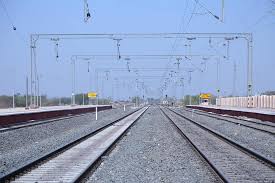
The NPG evaluated a total of five projects, including one railway project from Gujarat related to the doubling of the railway track between Kanalus and Okha stations.

As per the official statement by the Union Government, “This proposal involves doubling the existing 141.117 km railway line between Kanalus Junction and Okha in Gujarat. This strategically significant alignment passes through culturally and historically important regions, aiming to bolster connectivity to key religious destinations like Dwarkadhish Temple and Okha Port, which witness substantial pilgrim influx. The doubling will significantly improve passenger movement, ensuring safer, faster, and more efficient travel. From a strategic standpoint, its proximity to India’s western maritime borders makes it vital for defense logistics and operational efficiency. The route is also a critical freight corridor, connecting major industrial hubs and facilitating seamless freight movement across Gujarat and beyond.”

Furthermore, each project was assessed for its conformity to PM GatiShakti’s principles of integrated multimodal infrastructure, last-mile connectivity to economic and social nodes, and inter-departmental coordination. These initiatives are poised to significantly boost logistics efficiency, reduce travel times, and deliver substantial socio-economic benefits across the regions they serve.