Home Blog Page 737

National Maritime Seminar by CENJOWS and MAKAIAS concludes

NEW DELHI : The two-day National Seminar ( 24–25 July 2025) on ‘India’s Maritime Vision’, jointly hosted by the Centre for Joint Warfare Studies (CENJOWS) and the Maulana Abul Kalam Azad Institute of Asian Studies (MAKAIAS), Ministry of Culture, concluded on July 25, 2025 here. The participants called for Collaborative Maritime Vision Towards Viksit Bharat 2047, aligned with the Chief of Defence Staff’s Whole-of-Nation Approach and the national vision of Viksit Bharat 2047

The seminar brought together distinguished voices across sectors to reaffirm India’s maritime heritage and underscore the country’s strategic and cultural ambitions in the maritime domain. The event marked a critical convergence of defence strategy, civil maritime policy, academia, and cultural heritage.The seminar witnessed active participation from senior serving officers of the Indian Navy and Indian Coast Guard, as well as eminent academicians and maritime scholars from institutions across India and abroad. Panels and plenary sessions included robust dialogues on India’s ancient maritime roots, evolving geopolitical imperatives in the Indo-Pacific and emerging opportunities within the blue economy.

Prominent among the discussions was the call for greater inter-agency collaboration, with experts highlighting the need for synergy between maritime security agencies, developmental institutions and cultural bodies. Such interactions, it was emphasised, are vital for shaping a comprehensive maritime doctrine rooted in both strategic foresight and civilizational values

Indian Navy’s Eastern Fleet ships arrive at Da Nang, Vietnam – deepening maritime ties and advancing maritime co-operation in the Indo-Pacific

NEW DELHI : As part of Indian Navy’s ongoing Operational Deployment to South East Asia, Indian Naval Ships Delhi, Shakti, and Kiltan of the Eastern Fleet, under the Command of RAdm Susheel Menon, Flag Officer Commanding Eastern Fleet (FOCEF), arrived at Vietnam on 24 July 2025. The ships were accorded a ceremonial welcome by the Vietnam People’s Navy (VPN), and People’s Committee of Vietnam reflecting the warmth and growing India-Vietnam bilateral relationship.

During the visit, RAdm Susheel Menon will hold bilateral meetings with senior officials of Military Region 5, Vietnam People’s Army, Da Nang People’s Committee and Naval Region 3 Vietnam People’s Navy. These engagements will offer a valuable platform for exchanging perspectives on maritime cooperation, regional security challenges, and enhancing defence collaboration particularly in the naval domain.

Personnel from both navies will take part in a broad spectrum of professional interactions, including operational planning discussions and onboard briefings, aimed at strengthening interoperability and mutual understanding. Additionally, the visit will feature several community and cultural outreach activities, friendly sports fixtures and guided ship tours.

This deployment aligns with India’s vision of ‘MAHASAGAR’ and underscores the Indian Navy’s commitment to being a preferred partner. The visit to Vietnam will mark another milestone in strengthening the India-Vietnam strategic partnership and advancing a rules-based, inclusive maritime order in the Indo-Pacific.

CMA CGM adding the Shipping Service “LRX” to Jeddah Islamic Port

RIYADH : The Saudi Ports Authority (Mawani) has announced the addition of the new shipping service LRX, operated by CMA CGM, to Jeddah Islamic Port. This step contributes to enhancing the competitiveness of Saudi ports, facilitating global trade, opening new business opportunities, and improving operational efficiency at the port.

The new service connects Jeddah Islamic Port with four regional and international ports: Latakia in Syria, Iskenderun and Mersin in Turkey, and Beirut in Lebanon, with a capacity of up to 2,826 TEUs.

This initiative aligns with Mawani’s ongoing efforts to improve the Kingdom’s ranking in global performance indicators and support the flow of national exports, in line with the objectives of the National Transport and Logistics Strategy. It aims to solidify the Kingdom’s position as a global logistics hub connecting three continents.

It is worth noting that Jeddah Islamic Port ranks first among Red Sea ports due to its strategic location and its 62 multi-purpose berths. The port holds a pivotal regional and global status and plays a vital role in strengthening the Kingdom’s leadership in the maritime sector.

2M Logistics and Gallozzi Group enter into strategic business partnership

ROTTERDAM : 2M Logistics Holding B.V. (NL) and the internationally operating Gallozzi Group (Italy) have entered into a strategic partnership. As business partners, both parties will collaborate closely on commercial initiatives, with 2M Logistics assuming the representation of GFLogisticsNL in the Benelux region.

Through this partnership, 2M (which started operations in February 2024 and immediately undertook a serries strategic acquisitions in the transport industry) gains direct access to the Gallozzi Group’s extensive global network, with logistics hubs in Southern Europe (such as the Salerno Container Terminal), the Middle East, and North America, among others. The collaboration marks a significant step in 2M’s international growth strategy and strengthens the commercial capabilities of both organizations.

“This partnership with the Gallozzi Group aligns perfectly with our international ambitions,” says Marcel Hulsker, CEO of 2M Logistics. “As business partners, we are combining our commercial strengths and expanding our reach together – globally, to be precise.”

Joint location

As part of the collaboration, GFLogisticsNL — a subsidiary of the Gallozzi Group — will establish its management and operations within the facilities of 2M Logistics in the Netherlands. From this location, both parties will work closely together on joint sales initiatives and strategic customer development.

The partnership is formally confirmed on Wednesday, July 23, 2025, with the signing of the agreement by Frans Vroegop on behalf of the GFLogisticsNL and Marcel Hulsker on behalf of 2M Logistics Holding B.V.

“This step underscores the mutual trust and our shared long-term vision,” adds Frans Vroegop, Managing Director GFLogisticsNL in the Netherlands. “We look forward to developing new markets and expanding our customer base alongside 2M.”

Drewry: World Container Index drops further last week

LONDON : Drewry’s World Container Index decreased 3% to $2,517 per 40ft container this week.

Drewry’s detailed assessment for Thursday, 24 Jul 2025

  • Drewry’s World Container Index (WCI) fell 3.3% this week, marking its sixth consecutive weekly decline. This ongoing downturn follows an earlier period of volatility triggered by higher US tariffs announced in April. The market reaction to the tariffs was delayed by one month, with rates beginning to climb in May and surging through the first week of June. However, this trend has since reversed, with rates falling consistently since mid-June, indicating that the tariff’s initial market impact was not sustained.
  • Transpacific spot rates fell this week, with those on Shanghai–Los Angeles down 5% ($2,675/feu) and those on Shanghai–New York down 7% ($4,210/feu). With a temporary halt on higher US tariffs for Chinese products ending in mid-August, shipping lines are cutting back on services across the Pacific by cancelling more sailings. Since the big rush to ship cargo before the tariff increase is now over, Drewry expects spot rates on this trade lane to continue declining next week.
  • Drewry’s Container Forecaster expects the supply-demand balance to weaken again in 2H25, which will cause spot rates to decline. The volatility and timing of rate changes will depend on Trump’s future tariffs and on capacity changes related to the introduction of US penalties on Chinese ships, which are uncertain.
    Source: Drewry

India and UK sign landmark trade deal : How CETA could benefit different sections of society

LONDON : India and the United Kingdom have inked a landmark Comprehensive Economic and Trade Agreement (CETA), aimed at boosting bilateral trade and investment. The deal is expected to bring substantial benefits across various segments of Indian society.

By promoting greater market access, technology exchange and investment flows, the agreement would create inclusive and sustainable growth opportunities.

The CETA document outlines targeted advantages for farmers, fisherfolk, tribal communities, informal and formal workers, women entrepreneurs, youth, MSMEs and professionals.

It emphasizes trade facilitation, skill development, value chain integration and enhanced mobility. CETA would act as a vehicle for equitable growth, rural upliftment and greater global integration of India’s diverse economic stakeholders.

Indian farming communities stand to gain from easier access to the UK market and more opportunities to sell their produce due to tariff elimination.

ind uk ceta India and UK sign landmark trade deal : How CETA could benefit different sections of society

Among other concessions, the UK will liberalise access, effective from the date of implementation, for a range of Indian agricultural and food products, including meats, dairy, tea, coffee, spices, fruits, vegetables, fruit juices, and processed foods. By unlocking preferential access to the UK’s USD 63.4 billion agricultural market, the Comprehensive Economic and Trade Agreement (CETA) gives Indian farmers a direct route to a high-value global customer base and achieve better returns for their goods.

The CETA agreement takes fully into account the interests of Indian producers of sensitive agricultural products like dairy products, vegetables, apples, edible oils, oats, etc. by keeping those tariff lines under a sensitive list.

The agricultural sector also benefits from the non-application of safeguard duties on Indian exports. Farmers will also benefit from commitments taken under the CETA to acknowledge traditional knowledge, especially in the patent process for genetic resources.

The immediate removal of duties on Indian products from labour-intensive sectors such as gems and jewellery, textiles, leather and footwear, and food processing will not only boost employment but also directly benefit Indian workers in these industries.

The CETA marks a significant step forward in advancing opportunities for women and youth across both nations. It includes progressive provisions designed to break down barriers and promote greater participation in international trade, digital innovation, and government procurement for women, youth, and under-represented groups.

By fostering cooperation on gender-responsive standards, sharing best practices in financial services, and improving digital inclusion, the CETA ensures that women business owners, entrepreneurs, and young professionals can access new markets, acquire valuable information, and participate equitably in global, regional, and domestic economies.

India’s youth, aged 15 to 29 and comprising approximately 27.3% of the population, are at the forefront of the country’s social and economic transformation. The CETA is poised to expand high-quality employment pathways for Indian youth by easing services market access, securing mutual recognition of professional qualifications and facilitating short-term mobility for talent in IT, healthcare, finance, and creative sectors.

Lower tariffs on inputs and advanced manufacturing equipment can spur MSME supply-chain integration, creating skilled vocational jobs beyond metros. By fostering access to global value chains and enhancing competitiveness, CETA will empower Indian youth with essential skills and pathways to participate in international markets and future growth.

SMEs are a vital part of India’s economy, contributing around 30.1% of India’s GDP in 2022-23 and 45.8% in India’s total export in 2024-25.

SMEs benefit from various provisions of the CETA, including through provisions on faster processing at customs, agreements to recognise and facilitate digital systems and paperless trade, and a dedicated chapter to help SMEs. A contact point for SMEs will be established under the ambit of the CETA, facilitating communication and coordination benefiting SMEs.

Indian businesses will gain a lot from this CETA. Other than lower tariffs and market access for Indian goods and services, the CETA offers ease of doing business with the UK through simplified and streamlined customs and trade facilitation processes from established systems like a Single Window and Authorised Economic Operator.

Non-discriminatory treatment to Indian businesses and exporters when it comes to goods, services and government procurement, benefits Indian businesses in the UK market.

Qualified professionals such as architects, engineers and medical professionals will be able to take advantage of the enhanced market access under the CETA and provide services in the UK. This is expected to create direct and indirect jobs through the expansion of service sectors.

CETA also provides professionals with better mobility access to the UK. Independent professionals providing services such as R&D and computer services will be able to take advantage of these mobility commitments and provide their services in the UK. This will directly lead to job creation and better opportunities for a wide range of professionals, thereby increasing the quality of life.

The CETA ensures comprehensive market access for goods across most sectors, fully addressing India’s export interests. India stands to benefit from the duty elimination of tariffs on approximately 99% of tariff lines, covering nearly 100% of the trade value.

This opens up significant opportunities to boost bilateral trade between India and the UK.

In key labor-intensive sectors, duties have been reduced to zero from previously high levels- up to 20% on marine products, 12% on textiles and clothing, 8% on chemicals, and 10% on base metals. Notably, in the processed food sector, tariffs on 99.7% of lines have been slashed from as high as 70% to zero, offering a major boost for Indian exporters.

Source : DD News

India and UK sign Comprehensive Economic and Trade Agreement (CETA)

LONDON : India and the United Kingdom have taken a major step in building a stronger economic partnership with the signing of the Comprehensive Economic and Trade Agreement (CETA) on Thursday under the visionary leadership of Prime Minister Shri Narendra Modi. The agreement was signed by Commerce and Industry Minister, Shri Piyush Goyal and Secretary of State for Business and Trade, Mr. Jonathan Reynolds in the presence of the two Prime Ministers.

This FTA marks a significant milestone in India’s engagement with major developed economies and reflects a shared commitment to strengthening economic integration. As the world’s fourth and sixth largest economies respectively, India and the UK’s bilateral engagement holds global economic significance. The signing of the India-UK CETA follows the successful conclusion of negotiations announced on 6th May 2025. The bilateral trade between the two countries stand at nearly USD 56 billion, with a joint goal to double this figure by 2030.

CETA secures unprecedented duty-free access for 99% of India’s exports to the UK, covering nearly the entire trade basket. This is expected to open new opportunities for labour-intensive industries such as textiles, marine products, leather, footwear, sports goods, toys, and gems and jewellery, alongside fast-growing sectors like engineering goods, auto components, and organic chemicals.

The services sector, a strong driver of India’s economy, will also see wide-ranging benefits. The agreement provides greater market access in IT and IT-enabled services, financial and legal services, professional and educational services, and digital trade. Indian professionals, including those deployed by companies to work in UK across all services sectors, professionals deployed on contracts such as architects, engineers, chefs, yoga instructors, and musicians, will benefit from simplified visa procedures and liberalised entry categories, making it easier for talent to work in the UK.

Union Minister for Commerce and Industry, Shri Piyush Goyal, conveyed profound gratitude to the Prime Minister Shri Narendra Modi for his visionary leadership and resolute commitment, which have been instrumental in achieving this historic agreement. He stated:

“This CETA marks a milestone in the trade relations between two major economies, setting an ambitious and balanced framework. It unlocks tariff-free access on 99% of Indian exports to the UK, covering nearly 100% of trade value- including labour-intensive sectors advancing the ‘Make in India’ initiative and setting the stage for bilateral trade to double by 2030. It includes ambitious commitments in goods and services, covering various sectors, while enhancing mobility for Indian professionals by simplifying access for contractual service providers, business visitors, and independent professionals. The innovative Double Contribution Convention will exempt Indian workers and their employers from UK social security contributions for three years, boosting competitiveness and earnings. This FTA will serve as a catalyst for inclusive growth, benefiting farmers, artisans, workers, MSMEs, startups, and innovators while safeguarding India’s core interests and accelerating our journey towards becoming a global economic powerhouse.”

India has also secured an agreement on the Double Contribution Convention. This will exempt Indian professionals and their employers from social security payments in the UK for up to three years, improving the cost competitiveness of Indian talent.

The agreement has been designed to make trade more inclusive. Women and youth entrepreneurs, farmers, fishermen, startups, and MSMEs will gain new access to global value chains, supported by provisions that encourage innovation, promote sustainable practices, and reduce non-tariff barriers.

CETA is expected to boost trade volumes significantly in the coming years, creating jobs, expanding exports, and supporting a deeper, more resilient economic relationship between India and the United Kingdom.

Maritime Financing Summit 2025 : India opens 100% FDI in shipping launches MDF and digital financial reforms to drive MAKV 2047

NEW DELHI : The Ministry of Ports, Shipping & Waterways successfully hosted the Maritime Financing Summit 2025 on Thursday here, bringing together senior policymakers, industry leaders, global investors and domain experts to deliberate on transformative financial strategies for India’s maritime future. The summit aligns with the Maritime Amrit Kaal Vision (MAKV) 2047, which seeks to position India among the world’s leading maritime powers by strengthening shipbuilding, port infrastructure and financial resilience.

The keynote address was delivered by Shri Sarbananda Sonowal, Union Minister of Ports, Shipping and Waterways after the event was commenced with an opening address by Shri T.K. Ramachandran, Secretary, MoPSW, followed by a special address from Shri Shantanu Thakur, Minister of State for Ports, Shipping and Waterways.

Delivering the keynote address, Union Minister Sarbananda Sonowal said: “India, as a maritime nation, is undergoing a transformative shift backed by strong policy support and growing investment momentum. Under the dynamic leadership of Hon’ble Prime Minister Shri Narendra Modi ji, we are pursuing the vision of a developed India by 2047 Viksit Bharat with the maritime sector playing a pivotal role. Our ports have significantly improved operational efficiency, with the average turnaround time reduced from 4 days to less than 1 day, outperforming many advanced nations. Container capacity at major ports has grown by over 70%, and cargo volumes through coastal and inland waterways have multiplied. With 100% FDI permitted in shipping under the automatic route, simplified customs clearance and the strategic advantage of GIFT City IFSC, India now offers one of the most attractive investment ecosystems in the maritime domain. Our goal is clear to make India a global maritime hub not just in trade, but also in finance, shipbuilding and green maritime infrastructure.”

In his address, Minister of State Shri Shantanu Thakur added, “India’s maritime ambitions cannot be fulfilled without reliable, long-term financial foundations. Today’s summit is not just about sharing ideas, it’s about building trust between industry and institutions. We are committed to ensuring that enabling policies, business-friendly reforms and international partnerships create an environment where Indian shipping can grow and lead. Our coastline is a gateway to opportunity, and through shared vision and effort, India will emerge as a global maritime leader.”

Another key announcement was the proposed Maritime Development Fund (MDF), a dedicated blended finance vehicle aimed at lowering capital costs and attracting long-term investment into shipyards, coastal infrastructure and inland waterways. The MDF has been developed through wide-ranging consultations with over 100 stakeholders, including global investors, shipowners, insurance companies and financial institutions.

Maritime Financing Summit 20252 Maritime Financing Summit 2025 : India opens 100% FDI in shipping launches MDF and digital financial reforms to drive MAKV 2047

Policy measures such as recognising large vessels as infrastructure assets, extending the Shipbuilding Financial Assistance Scheme (SBFAS) to overcome the cost disadvantage and provide a long term visibility on the financial incentives available in the sector and enabling ship leasing through GIFT City IFSC were discussed as transformative steps to enhance India’s global competitiveness in the maritime and shipbuilding sectors. It was highlighted that policy initiatives such as the Merchant Shipping Bill and the Coastal Shipping Bill are being pursued to support Indian-flagged tonnage. Parliament passed Bills of Lading Bill 2025 which aims to simplify legal framework for shipping documents.

Capital support for greenfield capacity expansion involving the creation of new shipbuilding clusters and brownfield expansion to enhance existing shipyards’ capacity through a coordinated approach between the Centre and States, is envisioned.

The summit featured discussions focused on innovative financing mechanisms, digital maturity of port operations, regulatory frameworks for ship leasing and ownership, insurance innovation, and sustainable shipbuilding and recycling. A major highlight was the launch of the Financial Digital Maturity Matrix (FDMM), a comprehensive framework to evaluate and elevate digital financial capabilities at major ports, enabling investor-ready, high-performance infrastructure.

Shri T.K. Ramachandran, Secretary, MoPSW, stated: “The India Maritime Financing Summit marks a defining moment in our efforts to create a self-reliant and globally competitive maritime economy. Over the past year, we have collaborated closely with stakeholders to co-develop a four-pillar strategy focused on financing, capacity-building, demand generation and skills enhancement. As we now move toward execution, coordinated public-private cooperation will be the key. This summit represents a significant stride in turning vision into action.”

The event witnessed broad-based participation around 250 stakeholders across the maritime ecosystem. Financial institutions formed the largest group of attendees, followed by shipyards, consultants and shippers. There was also notable representation from shipping companies, foreign embassies, and industry associations, demonstrating a well-rounded presence across the maritime value chain, from component manufacturers to academic experts.

Eminent representatives spanned across embassies from countries including Norway, Italy, Greece, Singapore, Netherlands, Japan, Germany, Denmark, Australia and Cyprus; state maritime boards (with key officials from Gujarat, Maharashtra, and Andhra Pradesh); and leading shipbuilding firms such as Cochin Shipyard, Damen, Chowgule & Co. and Swan Defence. Prominent shipowners included SCI, AP Moller-Maersk, CMA CGM, and San Maritime. The summit also hosted executives from component manufacturing firms like BEML and Marine Electricals, ship management players like Union Marine, classification societies such as DNV, Lloyd’s Register, and IRS, and top financial institutions and funds including NaBFID, NIIF, IIFCL, NEO and Climate Fund Managers.

The summit also benefited from the insights of key dignitaries and experts, including Shri R. Lakshmanan, Joint Secretary, Ports; Shri Venkatesapathy S., Joint Secretary, Shipping; and CEOs of State Maritime Boards Shri Rajkumar Beniwal, Gujarat, Shri Pradeep P., Maharashtra and Shri Praveen Adithya, Andhra Pradesh. Thematic sessions were enriched by contributions from banks, insurance firms, IFSCA and the Sagarmala Finance Corporation.

The event concluded with closing remarks from Shri Rajesh Kumar Sinha, Special Secretary, MoPSW, who reaffirmed the Ministry’s focus on financial innovation, institutional capability and aligned policy frameworks to drive forward the Maritime Amrit Kaal Vision 2047.

India’s Ports now turn around ships in less than 1 day : Sarbananda Sonowal

NEW DELHI : Shri Sarbananda Sonowal, Union Minister of Ports, Shipping and Waterways said in the Maritime Financing Summit 2025 that, “India, as a maritime nation, is undergoing a transformative shift backed by strong policy support and growing investment momentum. Under the dynamic leadership of Hon’ble Prime Minister Shri Narendra Modi ji, we are pursuing the vision of a developed India by 2047 Viksit Bharat with the maritime sector playing a pivotal role. “

“Our ports have significantly improved operational efficiency, with the average turnaround time reduced from 4 days to less than 1 day, outperforming many advanced nations. Container capacity at major ports has grown by over 70%, and cargo volumes through coastal and inland waterways have multiplied. With 100% FDI permitted in shipping under the automatic route, simplified customs clearance and the strategic advantage of GIFT City IFSC, India now offers one of the most attractive investment ecosystems in the maritime domain. Our goal is clear to make India a global maritime hub not just in trade, but also in finance, shipbuilding and green maritime infrastructure,” he added.

The Summit highlighted –bringing together senior policymakers, industry leaders, global investors and domain experts to deliberate on transformative financial strategies for India’s maritime future. The summit aligns with the Maritime Amrit Kaal Vision (MAKV) 2047, which seeks to position India among the world’s leading maritime powers by strengthening shipbuilding, port infrastructure and financial resilience.

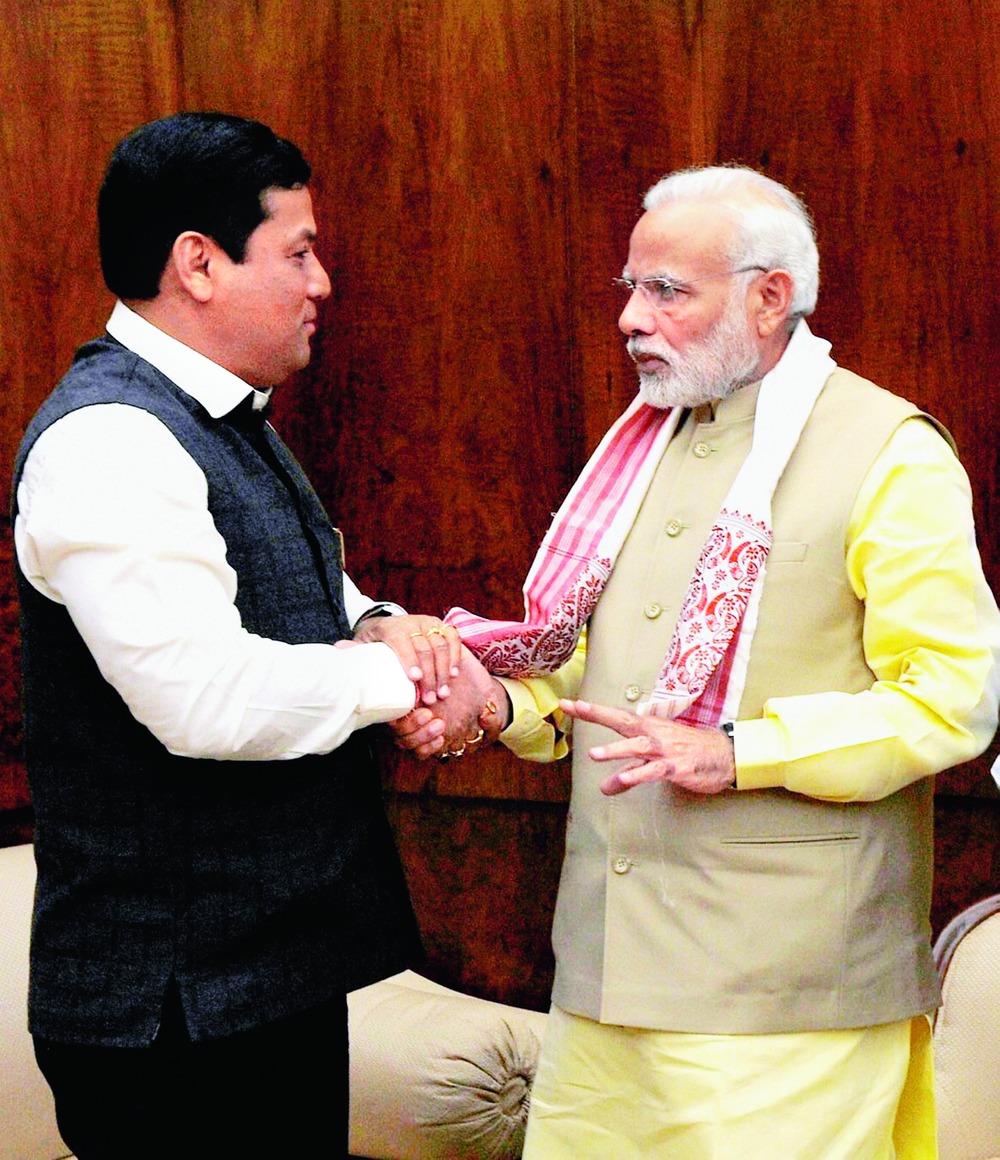
PM Modi shares an article on evolution of India’s ports into global commerce hubs

LONDON : The Prime Minister Shri Narendra Modi on Thursday shared an article that highlights how India’s ports are evolving into global commerce hubs through expansion, mechanisation, digitisation and Ease of Doing Business.

Responding to a post by Union Minister Shri Sarbananda Sonowal on X, Shri Modi said:

“Union Minister Shri Sarbananda Sonowal highlights how India’s ports are evolving into global commerce hubs through expansion, mechanisation, digitisation and Ease of Doing Business. Major shipbuilding companies are now partnering with Indian firms, paving the way for more jobs and investment.”

Gwl4MfDbEAAeAMq PM Modi shares an article on evolution of India's ports into global commerce hubs