Home Blog Page 753

India loses global market share as apparel exports fall over seven years

NEW DELHI : Despite notable growth in recent months, India remains the only major textile-exporting country to have seen a decline in apparel exports over the past seven years. During this period, India has also lost significant share in the global apparel market.

Apparel exports rose 10 per cent in FY25 to $15.9 billion, supported by strong demand from the US and Europe. Slower shipments from Bangladesh also helped Indian apparel exporters gain some ground. According to World Trade Organization (WTO) data, India’s exports grew 6.5 per cent to $16.36 billion in calendar year 2024. In the first two months of the current fiscal, apparel exports registered a 12.8 per cent rise.

However, among the top nine apparel-exporting nations, India is the only one to have recorded a decline in shipments compared to 2017. That year, India’s apparel exports stood at $18.41 billion, which dropped to $16.36 billion in 2024. Exports had slumped to $12.97 billion by 2020 and have been gradually recovering since then.

Meanwhile, global textile exports increased from $454 billion in 2017 to $557 billion in 2024. Competitor countries such as China, Bangladesh, Vietnam, Turkey, Cambodia, and Indonesia have all expanded their apparel exports during this period.

“India has posted a negative CAGR in apparel exports during the period, while the rest of the major textile exporters have improved their shipments,” said Sanjay Jain, Chair of the ICC National Textiles Committee. India’s share in the global apparel market fell from 4.05 per cent in 2017 to 2.94 per cent in 2024.

China, which has been gradually moving away from labour-intensive textile manufacturing due to rising labour costs, saw its apparel export share drop from 34.86 per cent to 29.64 per cent in the same period. This shift presented an opportunity for others to fill the gap.

However, India failed to capitalise on that space. Countries that successfully increased their market share during this time include Bangladesh, Vietnam, Cambodia, and Pakistan.

India’s trade deficit narrows sharply to USD 3.51 bn from USD 7.30 bn in June 2025 (YoY)

NEW DELHI : India’s overall trade deficit (merchandise and services) narrowed significantly to USD 3.51 billion in June 2025, down from USD 7.30 billion in June 2024, as exports outpaced imports on a year-on-year basis, government data showed on Tuesday.

The decline in the trade deficit reflects stronger export performance, aided by resilient demand in key global markets and robust service sector growth.

The data suggests that overall exports (merchandise and services) rose to USD 67.98 billion in June 2025, compared to USD 63.83 billion in the same month last year, with a jump of nearly 6.5 per cent.

Meanwhile, overall imports also saw a marginal rise, reaching USD 71.50 billion in June 2025 compared to USD 71.14 billion in same period of the last year, indicating stable domestic demand and softening global commodity prices.

The improved trade balance is a positive sign for India’s current account position and broader economic fundamentals.

The country’s trade deficit in May had also narrowed to USD 6.62 billion from USD 9.35 billion same month last year.

In May 2025, India’s overall exports, merchandise and services combined, were reported at USD 71.12 billion, marking a 2.77 per cent rise on a yearly basis. The total exports in May 2024 were pegged at USD 69.20 billion.

Among various steps the government took to increase exports include the Production Linked Incentive (PLI) scheme in 14 sectors, including electronic goods, telecom, EVs battery to name a few.

The production linked incentive (PLI) scheme of the government has helped India’s export growth and make Indian manufacturers globally competitive, attract investments, enhance exports, integrate India into the global supply chain and reduce dependency on imports.

The government has set a target of USD 1 trillion of exports in the current financial year 2025-26.
The free trade agreements (FTA) signed and under negotiations with various countries will boost exports. The most recent FTA was signed with the United Kingdom and the UAE.

Commerce and Industry Secretary Shri Sunil Barthwal had on Monday said at an Industry summit highlighted the importance of FTAs, Barthwal noted that the “India-UK” FTA has a special chapter on Innovation, thereby strengthening innovation corridors between partner countries.

He further added that FTAs ensure regulatory practices and institutional mechanisms between two sets of partners that can be harmonized and sustained.

India’s exports to remain unchanged in key product categories despite US tariffs: NITI Aayog Report

NEW DELHI : India’s export status is expected to remain unchanged, as the trade data indicates strong growth opportunities in selected key product categories, according to the quarterly trade watch by government think tank, NITI Aayog.

“The data suggests strong growth opportunities in targeted product categories while highlighting areas where India’s export status is expected to remain unchanged,” the report added.

NITI Aayog further stated that India stands to gain a significant edge in the US export market, which highlights strong growth potential in key product categories and a favourable trade environment vis-a-vis China.

The trade report reveals that India maintains a relatively strong and competitive position in the US market, despite facing slightly higher tariffs. More notably, India enjoys a distinct advantage over China in several critical sectors. The average tariff differential between Indian and Chinese exports stands at a significant 20.5 per cent in India’s favour.

The Think Tank stated that India maintains a relatively strong and competitive position in the US market despite facing marginally higher tariffs.

NITI Aayog stated that analysing the top 30 product categories at the HS 2 level reveals insights into India’s tariff positioning in the US market. Tariffs on the competitors are higher than India’s in 22 out of these top 30 products.

In 6 of the top 30 categories, India faces slightly higher average tariffs, up to 3 per cent, than other leading exporters, with the majority of them with marginally higher tariffs between 0 and 2 per cent.

These specific product categories account for over 12 per cent of total US imports, underscoring the scale of opportunity available for Indian exporters.

“Additionally, these differences are modest and present a strategic opportunity for India to engage in targeted negotiations with the United States,” the report added.

It further added that the lower tariff burden presents India with a unique opportunity to gain market share, especially in categories where China is losing its competitive footing.

The findings come amid shifting global trade dynamics, where businesses are looking to diversify supply chains away from China–a trend often referred to as “China+1”.

Earlier US President Donald Trump on April 2 of the current year announced reciprocal tariffs on trading partners, which were designed to address trade imbalances and implement “fair and balanced” trade relationships, as termed by the US President.

Trump on Saturday announced a 30 per cent tariff on goods from Mexico and the European Union starting August 1, intensifying trade tensions with two of the country’s top economic partners.

This week, Trump has posted multiple letters on the social media platform Truth Social, warning more than a dozen countries that he plans to impose steep tariffs on their imports starting August 1. The Hill highlighted that these tariffs were originally proposed in April but were paused for 90 days to allow for negotiation.

India is negotiating a free trade agreement with the US, and talks are going on between the trade representatives of both nations in US

Special Economic Zone (SEZ) amendment Bill may be taken up in monsoon session of Parliament

NEW DELHI : The long-awaited Special Economic Zone (SEZ) Amendment Bill is expected to be introduced in the upcoming Monsoon Session of Parliament, marking a major overhaul of the existing SEZ Act, 2005. The Union Cabinet’s approval is expected shortly before the Bill is tabled.

Why Is the Amendment Needed?

The current SEZ law, enacted in 2005, has not met expectations in attracting investment in manufacturing.
The reforms aim to align India’s SEZ framework with global trade realities, improve ease of doing business, and boost local manufacturing and employment.
Key Proposed Changes

  1. Duty Forgone on Raw Materials for Domestic Sales

Current Rule: SEZ units must pay full customs duty on the finished product sold in the Domestic Tariff Area (DTA).
Proposed Change: Duty to be charged only on raw materials, not on the finished goods.
Expected Impact: Makes SEZ-to-DTA sales less costly, encouraging domestic linkages and higher capacity utilisation.

  1. Introduction of Reverse Job Work

What It Means: SEZ units can now carry out partial manufacturing for companies in the domestic area.
Current Restriction: Manufacturing only allowed for exports.
Expected Impact:
Helps manage seasonality in exports.
Reduces idle capacity.
Improves employment generation and technology sharing.

  1. Payment in Indian Currency for SEZ Services

Current Rule: Services from SEZs must be paid in foreign exchange.
Proposed Change: Indian Rupee payments to be permitted.
Expected Impact: Brings parity between services and manufacturing sectors within SEZs, promotes greater domestic service demand.

What Are SEZs?
SEZs are special enclaves deemed foreign territory for trade and tax purposes, offering incentives to promote exports and foreign investment.

However, over the years, the model has seen limited success in attracting major manufacturing investments.

Source : BS

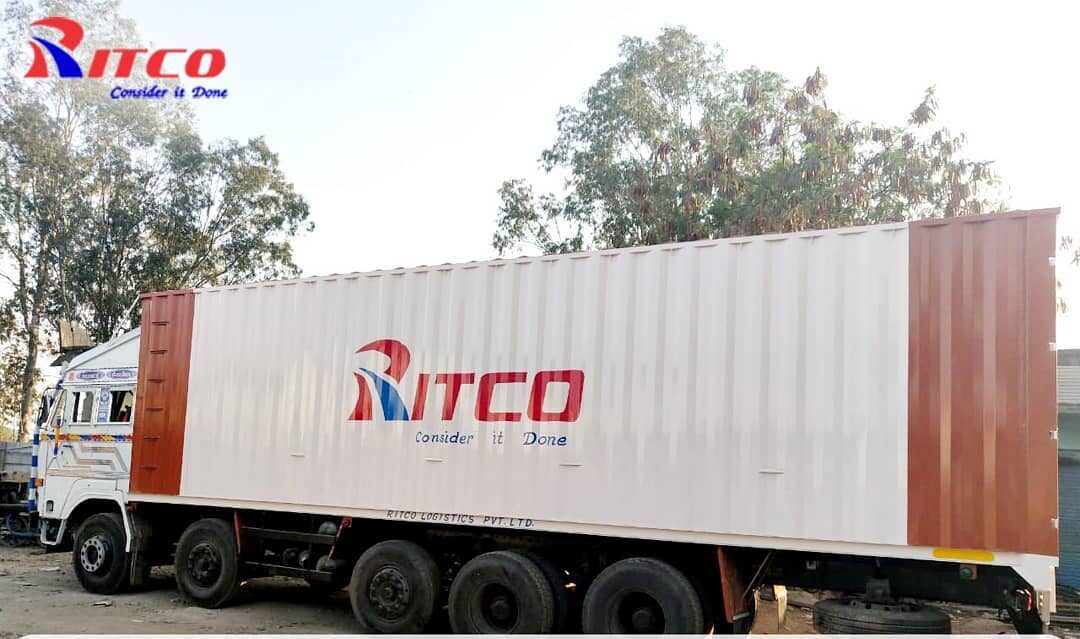
Ritco Logistics ties up with CONCOR for Pan-India logistics push

NEW DELHI : Ritco Logistics Limited has entered into a strategic partnership with Container Corporation of India Ltd. (CONCOR) to become an official Business Associate of CONCOR, marking a major advancement in its mission to provide customized, single-window logistics solutions across India. The collaboration will significantly strengthen Ritco’s multimodal capabilities and enhance its service offerings for clients across industries.

With access to CONCOR’s 70 strategic multimodal logistics hubs, Ritco is now equipped to scale its operations across key trade corridors and underserved regions. This expansion is set to improve cargo movement efficiency, reduce transit times, and bring greater flexibility to customer supply chains.

Speaking on the development, Mr. Surya Narayan Singh, Vice President (Multimodal), Ritco Logistics, said, “This is a transformative moment for Ritco. With the support of CONCOR’s infrastructure and our multimodal expertise, we are confident of a major turnaround in the logistics industry. This step empowers us to offer faster, cost-effective, and integrated logistics solutions to our clients while expanding our footprint in niche markets.”

Ritco currently operates over 60 branches nationwide and caters to diverse sectors including polymers, steel, cement, tyres, FMCG, and finished goods. The company is known for its reliability, long-standing client relationships, and a strong workforce—many of whom have been part of Ritco’s journey for over two decades. As a full-spectrum Third-Party Logistics (3PL) provider, Ritco offers services such as warehousing with capital expenditure, manpower supply, inventory management, dispatch, and Full Truck Load (FTL) transport via both road and rail.

Bombay High Court stays CBI probe against TCE over ₹800 crore JNPA scam

MUMBAI : The Bombay High Court on Tuesday stayed an investigation against Tata Consulting Engineers (TCE) in a case registered by the Central Bureau of Investigation (CBI) in connection with the alleged ₹800 crore scam in the Jawaharlal Nehru Port Authority’s (JNPA) capital dredging project.

A Bench of Justice AS Gadkari and Justice Rajesh Patil stayed the investigation after noting serious lapses in the search and seizure memo. The case pertained to a 2003 project meant to expand the navigational channel shared between JNPA and Mumbai Port to accommodate larger cargo vessels.

However, a first information report (FIR) lodged by the CBI alleged that key officials at JNPA and TCE were involved in a criminal conspiracy that led to significant financial losses during both phases of the project.

According to the CBI, overpayments of ₹365.90 crore in Phase I and ₹438 crore in Phase II were made on the basis of manipulated project data, including false over-dredging claims and tampered survey records.

Raids conducted at multiple premises in Mumbai and Chennai recovered technical documents, digital evidence and records of questionable investments allegedly linked to public officials involved in the project.

The Court was initially inclined to keep the matter for hearing after two weeks. However, it stayed the order after taking note of a glaring illegality.

The Court observed that the memo that documented the articles seized during the CBI’s search and seizure also disclosed the password to access the laptop of Devdut Bose, the then project manager of the TCE, in violation of the Information Technology Act.

“You cannot do it.. How can you publish the password of someone? This is contrary to the basis of the IT Act.. How can you do it? You have caused damage to someone … You (CBI) can’t publish someone else’s password in public no … N number of advocates have seen it … you have seen it. See Sections 3,4 of the IT Act. This is a very sensitive matter … This involves tampering. This in itself is mandatory grounds for discharge,” said Justice Gadkari.

The Court also suggested that the password could have been published with malafide intention in order to aid the competitors. The Court will next hear TCE’s petition seeking quashing of the FIR after two weeks.

Meanwhile, the CBI counsel has been asked to take instructions on the particulars of the FIR, including on whose information it was filed and the allegation that even the Attorney General for India and the Jawaharlal Nehru Port Trust’s Board of Trustees had examined the issue and found no criminality in it.

Source : Bar & Bench

CBI FIRs NR and NER officials for corruption in Gati Shakti project

NEW DELHI : The CBI has registered an FIR against senior officials of Northern Railways (NR) and North Eastern Railway (NER) posted in Lucknow and Varanasi for allowing the unhindered passage of irregular bills from a PM Gati Shakti project contractor in exchange for bribes, officials said on Tuesday.

The central probe agency has cited instances of alleged corruption in the Lucknow and Varanasi offices of the Railways in the centre’s flagship project, Gati Shakti, in Bhadohi, granted to Praveen Kumar Singh of Tangent Infratech Pvt Limited and Sikander Ali, they said.

The project was conducted under the supervision of Vivek Kushwaha, Deputy Chief Engineer of Gati Shakti, who is posted in Northern Railways, Lucknow.

The CBI has alleged that Kushwaha approved inflated bills in exchange for bribes, to profit the private contractor and himself.

Besides Kushwaha and Singh, the CBI has also booked the New Delhi-based company Tangent Infratech Pvt Limited and an employee, Jimmy Singh, who was allegedly involved in one of the multiple bribe transactions listed by the CBI in its FIR.

The probe agency has named several officers of NER, including Senior Divisional Engineer Rakesh Ranjan, Office Superintendent in the DRM office, Manish, Senior Section Engineer (Works) Abhishek Gupta, Accounts Section Head Yogesh Gupta, and Senior Clerk in the office of Assistant Engineer, Sushil Kumar Rai.

The CBI FIR registered on ”source information” outlines a pattern of corruption in the two railway departments. The agency has flagged a bribe payment of Rs 2 lakh to Ranjan in June this year, which was delivered by Jimmy Singh, Rs 50,000 to Gupta in April, routine payments to Manish, Gupta and Rai, the senior clerk for expediting the passing of bills.

Source : PTI

Port of Antwerp: Container growth softens impact of declining bulk traffic and congestion in first half of 2025

ANTWERP: In the first six months of 2025, the total throughput of Port of Antwerp-Bruges was 137.2 million tonnes, a decrease of 4.3% compared to the same period last year. While container and RoRo traffic saw growth, both dry and liquid bulk volumes declined. Congestion at terminals, driven by a mix of logistical challenges and market developments, remains a persistent issue across Northwest Europe. A standout trend is the continuing surge in trade with the United States, reinforcing Port of Antwerp-Bruges’ robust position on transatlantic routes.

Container growth vs capacity constraints

Container traffic held up well, increasing by 3.6% in tonnage (to 77 million tonnes) and 3.7% in TEUs (6.91 million TEUs) compared to H1 2024. However, persistent congestion puts terminal capacity under heavy strain; a challenge felt across Northwest Europe.

Several factors are contributing to the current congestion. Container ship arrivals remain irregular due to disruptions dating back to the Covid crisis, further exacerbated by rerouting around the Cape of Good Hope to avoid the Red Sea. The recent reshuffling of container alliances has temporarily led to simultaneous vessel calls and high cargo volumes. Poor schedule reliability is complicating terminal planning: containers remain on site longer, and vessels are arriving with increasingly large loads. As a result, average dwell times have increased to 7–8 days, compared to the usual 5 days. Overcrowded terminals require additional container movements, placing extra strain on personnel and equipment. On top of this, national union actions have added further operational pressure.

While waterside congestion and the associated waiting times for vessels remains currently relatively limited, the landside impact on terminals is critical. Therefore, additional space for container handling is necessary. The Extra Container Capacity Antwerp (ECA) project will address this, through the construction of a new dock and more efficient use of existing space.

Mixed picture in other segments

Liquid bulk throughput fell by 17.1% in H1 2025, mainly due to sharp declines in fuels, naphtha, and LNG. Geopolitical tensions, EU sanctions, and market overcapacity were key factors. Only LPG and kerosene showed growth. Chemical product throughput saw a rise of 8.9%, driven by biofuels. Without that component, volumes remained flat, reflecting ongoing pressure in Europe’s chemical sector. Dry bulk throughput fell by 11%, due to lower coal and construction material volumes. In contrast, there was a sharp increase in fertilizer imports. These opposing trends are linked to EU sanctions against Russia, as imports of Russian coal are completely banned, and planned additional import duties on Russian fertilizers are prompting exporters to increase their shipments.

The impact on non-containerised general cargo segments remained more limited. Conventional general cargo was less affected overall, but still declined by 4.3%, particularly due to weaker steel and iron traffic. Tightened European import restrictions on cheap foreign steel and China’s planned reduction of steel overcapacity may stabilise the European steel market in the longer term. RoRo traffic edged up by 1.4%. Although fewer new cars were shipped, this was offset by growth in truck, high & heavy equipment, and second-hand vehicle volumes. Unaccompanied freight throughput slipped by 1%, with regional variations.

US volumes on the rise, car exports under pressure

In the first half of 2025, traffic with the United States grew by 17.2% to 16.4 million tonnes. This confirms the US as Port of Antwerp-Bruges’ second most important trading partner, after the United Kingdom. At the same time, the port remains the largest European export port to the US.

Imports from the US increased by 13.1% to 9.7 million tonnes, with higher volumes in both containers and liquid bulk, including LNG and other energy gases. Exports to the US rose by 23.5% to 6.7 million tonnes, mainly driven by fuels and dry bulk. At the same time, a clear decline in vehicle exports has been noticeable since May. In the first six months of the year, 15.9% fewer new passenger cars and vans (76,089 units) and 31.5% fewer trucks and High & Heavy vehicles (11,751 units) were exported. This reflects the impact of US import tariffs.

Port of Antwerp Bruges Jan Jun 2025 Graph Port of Antwerp: Container growth softens impact of declining bulk traffic and congestion in first half of 2025

Container exports remained stable at 303,000 TEU, while container imports rose by 12.6% – possibly indicating some level of anticipation. The outlook for the second half of 2025 remains uncertain. Much will depend on a potential trade agreement between the EU and the US by August 1st, which could restore greater certainty and predictability in the supply chain.

Jacques Vandermeiren, CEO Port of Antwerp-Bruges: “‘’In a challenging economic climate, we continue to demonstrate our resilience as a port. The growth in container traffic proves the strong foundations of Port of Antwerp-Bruges, even as bulk traffic comes under pressure and congestion is felt across North-West Europe. Our consistently strong trade relationship with the United States confirms our role as a transatlantic gateway to Europe. At the same time, current capacity pressures and operational challenges highlight the need for additional container infrastructure. With the ECA project, we are focused on building for the future so that we can continue to support sustainable growth.”

Source: Port of Antwerp-Bruges

IMO : 2026-27 World Maritime Day theme to take policy to practice

LONDON : IMO’s Two-year theme to focus on putting instruments into action, backed by technical support.

‘From Policy to Practice: Powering Maritime Excellence’ has been selected as the International Maritime Organization’s World Maritime Day theme for 2026 and 2027, culminating in the annual celebration on the final Thursday of September each year.

Meeting in London for its 134th session (7-11 July), the IMO Council endorsed a proposal from Secretary-General Arsenio Dominguez to keep the theme for a two-year period.

The theme highlights the Organization’s clear commitment to develop Member States’s capacity to put policies into practice, by providing technical assistance, training and other essential services.

Secretary-General Dominguez said: “The theme transmits a clear message of our commitment to ensuring regulations are put into action and providing the necessary technical assistance for implementation to Member States. This ultimately strengthens the confidence that global rules agreed at IMO can lead to safer, more secure and environmentally sound shipping worldwide.”

Turning regulations into tangible results

“From Policy to Practice” in the theme underscores IMO’s core mission of ensuring that the global regulatory framework it develops is not merely adopted in principle but translated into concrete national legislation, enforcement and day-to-day operations across the maritime sector.

 “Powering” signals the momentum and targeted support through capacity-building, technical cooperation and knowledge sharing which IMO, together with its partners, provides to drive this transition. 

“Maritime Excellence” conveys the ultimate objective: a consistently safe, secure, efficient and environmentally sustainable shipping industry, operating to the highest international standards and continually striving for improvement. 

Together, the theme conveys a holistic, action-oriented commitment: turning collective regulatory decisions into real-world results that deliver tangible benefits for all.

70 years of regulatory action

For over 70 years, the IMO has worked to develop a comprehensive framework of international maritime conventions, with associated codes, guidelines and recommendations. The full benefits of this framework can only be realized through ratification, effective implementation and constant enforcement. The IMO Member State Audit Scheme (IMSAS) has reported gaps in national legislation and enforcement, indicating a need to improve regulatory effectiveness.

Global attention on the theme in 2026–2027 could accelerate the national action towards implementation of all IMO instruments.

The theme supports the United Nations 2030 Agenda for Sustainable Development and the Sustainable Development Goals (SDGs), in particular:

  • SDG 9 on industry, innovation and infrastructure;
  • SDG 13 on climate action;
  • SDG 14 on life below water; and
  • SDG 17 on partnerships.

The theme highlights the IMO’s continued contribution to broader global efforts, as well as the importance of cross-cutting and effective maritime governance in sustainable development.

Merchandise trade posts strong growth in Q1 ahead of tariff hikes : WTO

GENEVA : The new tariffs announced by the United States on 2 April at the start of the second quarter were widely anticipated, allowing importers to move purchases forward to avoid paying higher duties at a later date. Trade volume growth in the first quarter was above projections issued in the WTO’s Global Trade Outlook and Statistics report on 16 April, both for the Secretariat’s baseline forecast of 2.7% for 2025, which assumed a continuation of policies in place at the start of the year, and the adjusted forecast of ‑0.2% assuming policies in place on 16 April.

Since then, a variety of trade agreements and trade measures have nudged the adjusted forecast up and down slightly, but as of mid-June merchandise trade growth for the year was still expected to be basically flat at 0.1%.

WTO 1 Merchandise trade posts strong growth in Q1 ahead of tariff hikes : WTO

Meanwhile, the US dollar value of world merchandise trade — as measured by non-seasonally-adjusted exports — was up 4% year-on-year in the first quarter of 2025, reflecting strong growth in volume terms and declining prices (Chart 1). The value of trade in the first quarter was down compared to the previous quarter due to regular seasonal variation, but seasonally-adjusted figures continued to rise.

There were significant disparities across regions in merchandise trade volume growth in the first quarter, especially on the import side (Chart 2). North America recorded the strongest quarter-on-quarter import growth of any region by far at 13.4%, followed by Africa at 5.1%, South and Central America and the Caribbean at 3.6%, the Middle East at 3.0%, Europe at 1.3%, and Asia at 1.1%. The Commonwealth of Independent States (CIS), including certain associate and former member states, was the only region to record a decline in the first quarter at -0.5%. On the export side, the Middle East recorded the strongest quarter-on-quarter growth at 6.3%, followed by Asia at 5.6%, South America at 3.2%, Africa at 2.5%, Europe at 1.9% and North America at 1.8%. The CIS region also registered an export decline of -1.0% in the first quarter.

WTO 2 Merchandise trade posts strong growth in Q1 ahead of tariff hikes : WTO

Merchandise trade developments in value terms during the first quarter of 2025

Chart 3 shows year-on-year growth in the US dollar value of world merchandise trade by broad product category in the first quarter.1 The strongest performance was in office and telecom equipment (+16% year-on-year), followed by chemicals (+12%) and clothing (+7%). Among the product categories shown, only automotive products (-4%), fuels and mining products (-4%; of which: fuels -7%) and iron and steel (-3%) decreased in value terms. While fuel prices changed little compared with the same quarter in the previous year, prices for metals and minerals (excluding gold & silver) were 8% higher.

WTO 3 Merchandise trade posts strong growth in Q1 ahead of tariff hikes : WTO

Africa had the strongest merchandise export growth of any region in value terms in the first quarter, up 9% year-on-year (Chart 4). The increase was led by gold, ores, cocoa, and copper, while fuel shipments declined. It was followed by Asia (up 5%, led by precious metals and machinery) and South and Central America (up 4%, with increases in precious metals, ores and coffee/tea, and declines in fuels, oil seeds, and cereals). Among WTO regions, only the Commonwealth of Independent States (CIS)2 saw its exports decline (-6%).

WTO 4 Merchandise trade posts strong growth in Q1 ahead of tariff hikes : WTO

On the import side, strong year-on-year increases were observed in North America (+19%) and South America (+12%). Regarding North America, imports of machinery, precious metals and pharmaceuticals showed marked increases, while vehicle imports dropped slightly. South America saw particularly strong imports of machinery, articles of iron and steel, and vehicles, while imports of fuel fell. Asia’s first quarter merchandise imports increased the least amongst the regions (1%), apart from the 0.1% decline in the CIS region. Asia saw strong import growth for gold and iron ore while imports of vehicles fell. In line with the world trend, Asian imports of fuels also declined year-on-year, while imports of integrated circuits rose.

WTO 5 Merchandise trade posts strong growth in Q1 ahead of tariff hikes : WTO

Monthly merchandise trade developments

Monthly merchandise trade statistics in value terms are available for many countries into the second quarter of 2025. These data show evidence of import demand starting to slow after the first quarter surge. This is illustrated by Chart 5, which shows year-on-year growth in the US dollar value of merchandise exports and imports in 2025 for selected economies in the first quarter, plus partial data for the second quarter (April-May or the latest available month).

For example, imports of the United States were up 25% in the first quarter but only 1% in the first two months of the second quarter. For the year to date (Jan-May), US imports were up 15%. On the export side, shipments from China were up 6% year-on-year in both Q1 and Q2, but other Asian economies saw export growth accelerate (e.g. India, down 4% year-on-year in Q1 but up 9% in April).

Source: World Trade Organization