Home Blog Page 752

Klaipėda Port leads Baltic States in cargo growth

KLAIPEDA : In the first six months of this year, nearly 19 million tons of cargo were handled at Klaipėda Port. Compared to the same period last year, this marks an increase of 16%. Positive trends are observed in most cargo segments.

“The decision not to back down during challenging times, not to freeze vital projects, and to continue investing in port modernization is paying off. Cargo volumes at Klaipėda Port continue to grow. The first half of this year saw a 16% increase over the same period last year. Looking ahead to the second half of the year, there’s probably no doubt that we will remain among the ports reaching the 1 million TEU threshold. We’re also anticipating the peak of the grain shipping season,” says Algis Latakas, CEO of Klaipėda State Seaport Authority.

The increase in cargo during the first half of this year was primarily driven by a significant rise in containerized cargo, stable ro-ro and oil product flows, and marked growth in the liquefied natural gas (LNG), mineral, and construction material segments.

TOP 5 1 Klaipėda Port leads Baltic States in cargo growth

Containerized cargo volumes through Klaipėda Port grew by 38% – 6.5 million tons were handled. Nearly 700,000 TEUs were processed in the first half of the year. It is therefore likely that the port will surpass the 1 million TEU mark this year. TEU cargo statistics show a balanced distribution between exports and imports – 40% and 41%, respectively. The share of transshipment operations grew this year to nearly one-fifth of total container volumes.

The most notable growth – 48% – occurred in the mineral and construction materials segment, with 1 million tons handled. This increase reflects intensive road and railway construction projects in Lithuania.

Compared to last year, liquefied natural gas (LNG) volumes grew by 47%, reaching 1.1 million tons. In May last year, the FSRU Independence was taken to a dry dock for inspection, suspending cargo operations for a month – an impact clearly reflected in last year’s statistics.

The growth was marked in the ro-ro and oil product segments. Ro-ro cargo volumes grew by 6% to 3.2 million tons in the first half of the year. Oil product handling increased by 4%, slightly exceeding 2 million tons.

The number of passengers arriving and departing through the port also increased. Port services were used by 164,000 passengers – a 20% increase from last year. The number of cruise passengers grew by 66%.

During 2025, two ships were built and 35 repaired at Klaipėda Port shipbuilding and repair companies.

Scrap metal volumes dropped by a quarter compared to the first half of last year. Grain shipments reached 1.4 million tons – 14% lower than during the same period in 2024. Timber cargo also declined slightly: 354,000 tons were handled in the first half of the year, which is 11% less than last year. Fertilizer cargo volumes fell by 4% to 783,000 tons.

Total cargo volumes at all Baltic Sea ports reached 46.4 million tons in the first half of this year – a 5% increase.

Among the Baltic States, Klaipėda Port performed the best, achieving the highest growth rate at 16%. Klaipėda Port also increased its market share: Lithuania’s only seaport now holds 40.8% of the Baltic States’ market, up from 37.1% a year ago.

In the first half of 2025, Klaipėda Port maintained trade shipping connections with 56 countries. The largest cargo flows were to and from Germany, Sweden, Poland, the United States, and the Netherlands.
ClassNK launches ‘ClassNK Fleet Cost Simulation’ Service

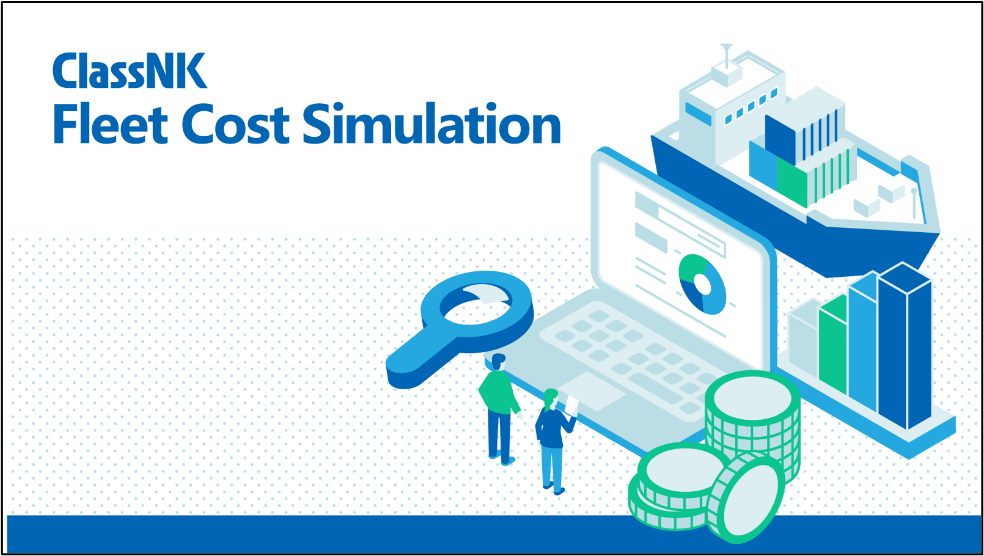
TOKYO : ClassNK has launched a new service, ‘ClassNK Fleet Cost Simulation’, as part of its ‘ClassNK Transition Support Services’, which aims to facilitate the maritime industry’s transition to decarbonized fuels. This new service estimates the cost impact of GHG emission reduction regulations including IMO‘s mid-term measures, EU-ETS, and FuelEU Maritime on behalf of clients.

This service provides the ‘ClassNK Fleet Cost Calculator’, a calculation tool that simulates future cost fluctuations due to fuel conversion, along with a ‘Cost Estimation Report’ that summarizes the total cost outlook for the entire fleet through graphs and tables. This service significantly reduces workload for cost estimation and documentation, enabling clients to obtain reliable cost data for use in business planning

The ‘ClassNK Fleet Cost Simulation’ service includes the following two offerings:

  • ClassNK Fleet Cost Calculator (Excel format)
    1. Covers three major environmental regulations: IMO GHG Fuel Intensity (GFI), EU-ETS, and FuelEU Maritime. (Updates will be provided to reflect regulatory changes. *1)
    2. Allows flexible customization of assumptions, including not only ship prices and fuel prices but also vessel replacement timing, fuel efficiency improvement rates, GHG emission factors, etc.
Class NK Fleet Cost ClassNK launches ‘ClassNK Fleet Cost Simulation’ Service
  • Cost Estimation Report (PowerPoint format)
    1. Provides a report summarizing cost projections up to 2050 in graphs and tables, based on actual fuel consumption data.
    2. Comprehensively reflects cost factors that affect business including shipbuilding, fuel, and regulatory compliance.
    3. Delivered in PowerPoint format, ready for direct use in internal presentations and reporting for management.
    4. [Additional Service] Upon request, we offer an advanced version of the report, which simulates and analyzes the timing and effects of fuel conversion for cost optimization.
Class NK Cost Estimation Report ClassNK launches ‘ClassNK Fleet Cost Simulation’ Service

ClassNK will continue to comprehensively support our clients’ decarbonization efforts through further enhancements to the ‘ClassNK Transition Support Service.’
 
Details of the ‘ClassNK Fleet Cost Simulation’ are available on the following page of our website:
Home > Information Services > ClassNK Transition Support Services
https://www.classnk.or.jp/hp/en/info_service/ghg/

Baltic Dry Index hits One-Month High on Capesize Strength

LONDON : The Baltic Exchange’s main sea freight index, which measures rates for ships carrying dry bulk commodities, rose on Wednesday to a one-month high, supported by a strong uptick in capesize vessel rates.

The main index, which tracks rates for capesize, panamax and supramax shipping vessels, gained 40 points, or 2.1%, to 1,906 points, its highest level since June 17.

The capesize index rose 109 points, or 4.3%, to 2,642.

Average daily earnings for capesize vessels, which typically transport 150,000-ton cargoes such as iron ore and coal, increased $905 to $21,908.

Iron ore futures climbed, buoyed by strengthening ties between top producer Australia and leading consumer China, though gains were capped by concerns over persistent weakness in China’s property sector.

The panamax index fell 23 points, or 1.2%, to 1,967. The contract snapped a nine session winning streak.

Average daily earnings for panamax vessels, which usually carry 60,000-70,000 tons of coal or grain, lost $214 to $17,700.

Among smaller vessels, the supramax index added 28 points, or 2.2%, to 1,315.
Source: Reuters

Sarbananda Sonowal applauds HSL’s infrastructure augmentation to double India’s shipbuilding capacity

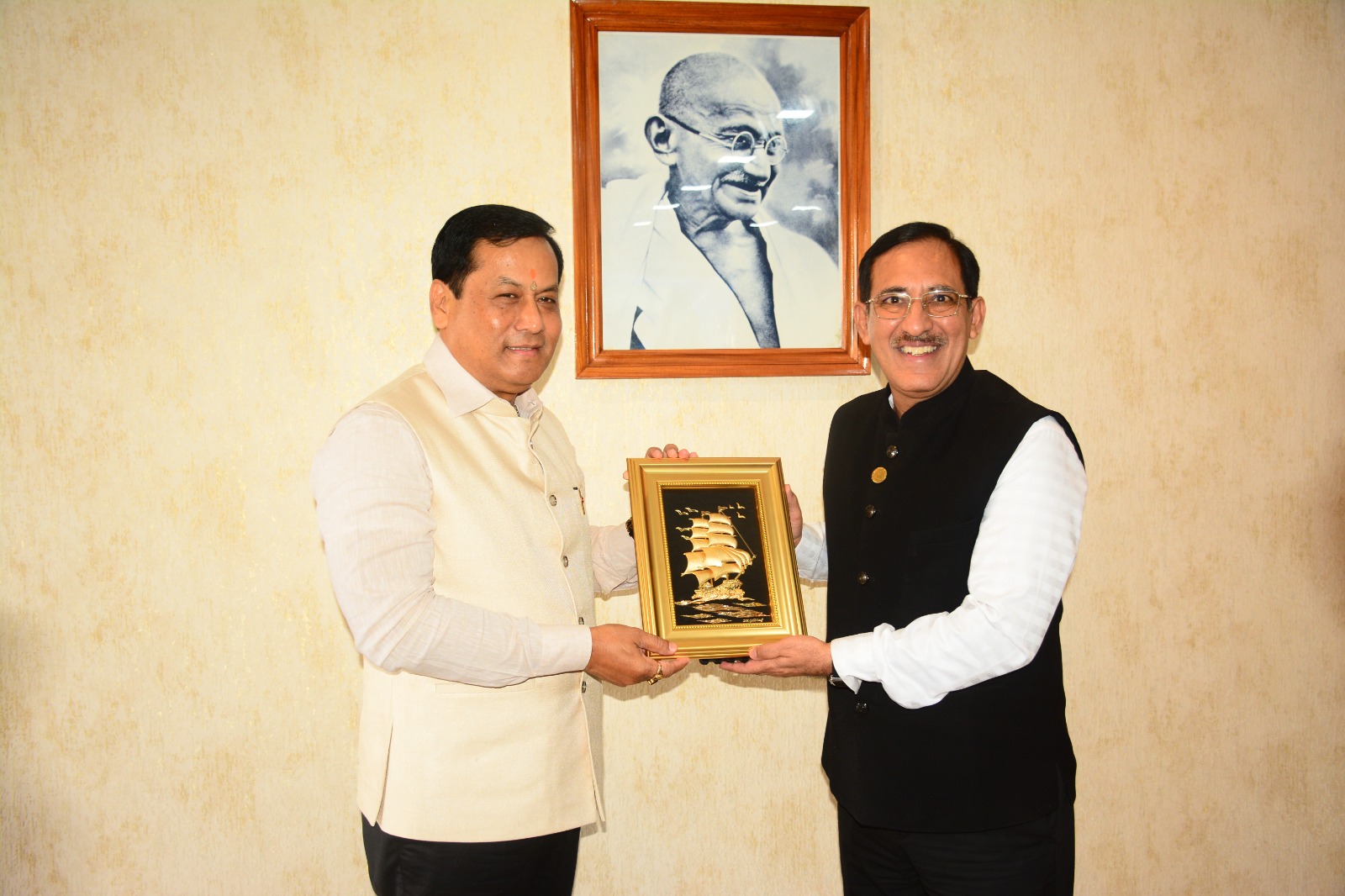
VISAKHAPATNAM : In a strong endorsement of India’s shipbuilding ambitions under the Maritime India Vision 2030, Union Minister for Ports, Shipping and Waterways, Shri Sarbananda Sonowal, visited Hindustan Shipyard Limited (HSL) on July 15 during the Second BIMSTEC Ports Conclave 2025 here.

Accompanied by Dr. Madhaiyaan Angamuthu (IAS), Chairman of the Visakhapatnam Port Authority (VPA), the Minister was apprised of HSL’s strategic advancements and infrastructure augmentation aimed at doubling India’s shipbuilding capacity. Cmde Hemant Khatri (Retd), Chairman and Managing Director of HSL, presented an overview of the shipyard’s 85-year legacy and its evolving role in bolstering India’s maritime sector.

During the briefing, HSL showcased its readiness to lead in next-generation shipbuilding with key initiatives such as the development of green tugs, hydrogen fuel cell-powered vessels, and mid-range (MR) tankers and platform supply vessels, aligning with global demands and sustainability goals.

Impressed by the progress, Sonowal said, “HSL is doing a remarkable job for the nation,” and lauded the shipyard’s consistent contribution to India’s maritime growth. He expressed strong support for HSL’s hydrogen tug project under the ‘Make in India’ initiative, urging the team to set global benchmarks in operational excellence and competitiveness.

“Put your ability, potential, and possibilities into the right perspective so that the nation can grow faster and be counted as a leading shipbuilding nation,” the Minister asserted, calling upon HSL to further accelerate innovation and infrastructure development.

The visit underscored HSL’s strategic importance in the BIMSTEC framework and the broader Bay of Bengal region, reaffirming India’s commitment to maritime cooperation, sustainability, and regional leadership in shipbuilding.

DP World, Deendayal Port Authority, and Nevomo sign MoU to explore autonomous magnetic rail freight in India

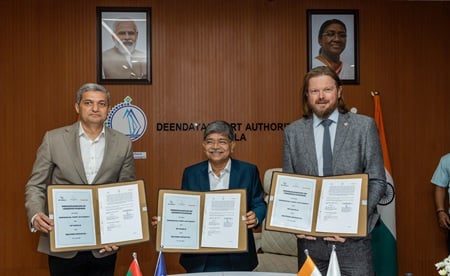
GANDHIDHAM : A Memorandum of Understanding (MoU) was signed between DP World, Deendayal Port Authority (DPA), and Nevomo to explore potential opportunities in autonomous magnetic rail freight movement in India.

This collaboration aims to revolutionise cargo transportation within port ecosystems by implementing Nevomo’s proprietary MagRail technology.

The initiative will see a 750-meter pilot project of MagRail technology at Deendayal Port in Kandla, Gujarat.

This will be the first time such a self-propelled freight movement system is demonstrated in a live port environment in India.

The MagRail solution utilises autonomous, electric-powered wagons with linear motor technology on existing rail tracks. The goal is to significantly enhance capacity, efficiency, and speed for both containerised and bulk cargo, while simultaneously reducing operational costs and CO2 emissions, making logistics systems greener and more interoperable.

This strategic move aligns perfectly with India’s National Logistics Policy and PM Gati Shakti agenda, both of which focus on modernising and integrating the country’s logistics infrastructure.

DP World, a leader in global supply chain solutions, is spearheading efforts to introduce this advanced freight technology. DPA, a crucial multi-cargo port under the Government of India, is facilitating the exploration of this futuristic system to assess its feasibility and impact.

Photo13 DP World, Deendayal Port Authority, and Nevomo sign MoU to explore autonomous magnetic rail freight in India

The MoU was formally signed by Shri Sushil Kumar Singh, Chairman of Deendayal Port Authority, Mr. Rizwan Soomar, CEO & Managing Director, Middle East, North Africa, India Subcontinent, DP World, and Mr. Przemek (Ben) Paczek, CEO of Nevomo Group BV.

The partners emphasised the transformative potential of this collaboration. Shri Sushil Kumar Singh highlighted that, “This collaboration is a strategic advancement in port infrastructure, enhancing capacity and operational efficiency to support growing cargo demands. DP World, as trusted partner, plays a crucial role in enabling this initiative, which aligns with our commitment to strengthening India’s logistics framework and ensuring seamless trade facilitation.”

Sultan Ahmed bin Sulayem, Group Chairman & CEO of DP World, reiterated DP World’s commitment to adopting innovative technologies for enhanced speed, efficiency, and sustainability.

He said, “Our commitment goes beyond individual projects–we are partnering to accelerate India’s ambition to further expand and integrate port-led logistics ecosystems and achieve carbon neutrality by leveraging technology effectively in infrastructure solutions.”

Przemek Paczek expressed pride in showcasing MagRail’s real-world potential in boosting freight efficiency.

This landmark project is set to demonstrate how MagRail can automate short-haul cargo transfers, reduce reliance on diesel vehicles, and improve yard efficiency, ultimately setting new benchmarks in port efficiency and sustainability.

Photo3 DP World, Deendayal Port Authority, and Nevomo sign MoU to explore autonomous magnetic rail freight in India

CONCOR & RHS sign MoU to explore opportunities in the overseas shipping and logistics sector

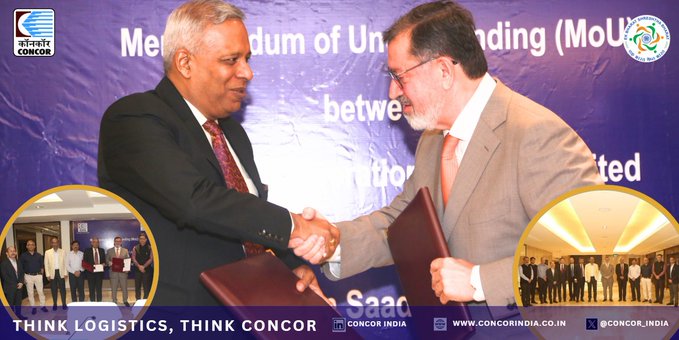
NEW DELHI : Container Corporation of India Ltd. (CONCOR) and M/s. Rais Hassan Saadi Group (RHS), Dubai, have signed an Memorandum of Understanding (MoU) on 14th July, 2025 to explore opportunities in the overseas shipping and logistics sector. The partnership aims to offer integrated, seamless, and cost-effective end-to-end logistics solutions to customers, informs a communique.

The event was graced by Shri Sanjay Swarup, CMD/ CONCOR, Mr. Saadi Al Rais, Chairman of RHS Group, along with Directors and senior officials from both organizations.

This MoU marks a strategic collaboration aimed at leveraging CONCOR’s logistics infrastructure and RHS Group’s global expertise to develop a unified single-window platform, with a focus on strengthening overseas shipping capabilities and international multimodal logistics.

APSEZ eyes strategic Trucking Alliances as Vizhinjam Port gears up for Direct EXIM Cargo Handling

THIRUVANANTHPURAM : As Vizhinjam International Seaport prepares to launch full-fledged export-import (EXIM) operations by year-end, Adani Ports is actively exploring partnerships with nearly a dozen companies for road-based cargo transportation. These talks mark a significant shift for businesses currently dependent on feeder vessels via Colombo or Vizhinjam to reach ports along India’s eastern and western coasts.

With the new plan, direct cargo movement from Vizhinjam to Europe is on the horizon — a development that is particularly promising for industries such as automotive, textiles, retail, and general manufacturing. These sectors, which have long endured lengthy transshipment times, could soon benefit from faster, more streamlined logistics.

Once the port’s road connectivity to the national highway is completed — projected within three to four months — trucks will be able to transport containers directly from mother vessels to industrial zones across India. This infrastructure milestone is expected to significantly cut down transit times from the current 40–50 days to just 25 days or less for consignments bound for Europe or China.

In addition to saving valuable time, this direct routing could substantially lower logistics costs, especially for shipments of raw materials, components, and chemicals. The shift from feeder routes to road transport will also reduce cargo handling at intermediary ports, enhancing operational efficiency.

Industrial clusters in southern India are closely watching these developments, anticipating improved logistics and quicker turnaround times. While road infrastructure is nearing completion, the port’s rail connectivity is expected to take up to three more years. In the interim, Adani Ports estimates that 10–20% of Vizhinjam’s cargo could be EXIM-focused within the next three years.

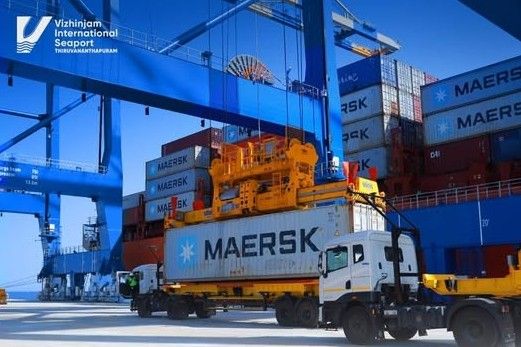
Since the arrival of its first container vessel, San Fernando, on July 11, 2024, Vizhinjam Port has already handled 392 ships — including 23 ultra-large vessels — and processed 8.3 lakh containers. The port is currently capable of managing up to 10 lakh containers annually, with a long-term capacity goal of 62 lakh containers once future development phases are realized. Phase 2 expansion is scheduled to commence shortly, reinforcing the port’s role as a rising hub for international trade.

Sanjay Kaul appointed as MD & CEO of GIFT City

GANDHINAGAR : The Gujarat Government recently appointed 2001-batch IAS officer from Kerala, Sanjay Kaul as the Managing Director and Chief Executive Officer of GIFT City Company Ltd in Gandhinagar. He will serve on deputation for a period of three years, or until further orders. He will succeed Tapan Ray.

Kaul is currently serving as joint secretary ministry of culture. Originally from Gujarat, he served as MD of Tourism Corporation of Gujarat Ltd and of Kerala Tourism Corporation.

Bilateral trade talks “progressing as per the decisions of leaders” of India-US, says officials

NEW DELHI : The ongoing bilateral trade talks (BTA) negotiations by India and the United States (US) are progressing as per the decisions of Prime Minister Shri Narendra Modi and US President Donald Trump, said the government officials on Tuesday.

“Our team is back in the US for carrying out the fifth round of negotiations on the bilateral trade agreement, so that agreement is progressing as per the decisions of our leaders and as per the terms of reference decided between the two countries,” the government officials told ANI.

The officials stated, “We have held our narrative from day one that the joint statement on 13th February 2025, between the leaders, provided that both countries will negotiate a bilateral trade agreement, the first tranche of which will be by fall of 2025 in that quest, we have started trade negotiations.”

The first round of negotiations took place when the US team visited India in the last week of March.

The officials asserted that they had finalised the terms of reference (ToR) thereafter, and the negotiations have been going on. Two rounds of discussions were held during India’s visit to the US in April, May, and June.

“Again, the United States team came to India, and we had a fourth round of discussions and negotiations on the bilateral trade agreement,” the officials stated.

Meanwhile, on tariffs, sources stated that while global tariff concerns have been widely discussed, actual implementation remains at the announcement stage, with no new tariffs coming into effect yet, except in the case of China.

As a result, the relative competitive position of Indian exports has not shifted significantly, the sources said.

They further added that despite the uncertainty, India’s export performance continues to improve, indicating that government policies are having a positive impact.

However, once differential tariffs are enforced, they may create varying effects across sectors, prompting the government and industry to remain in a wait-and-watch mode for now, the sources further added.

A high-level team from India’s Commerce and Industry Ministry is in Washington DC, to take forward crucial negotiations for a Bilateral Trade Agreement (BTA) with the United States. This round of negotiations will continue for four days, an official told ANI on July 14.

Mr. Rajesh Aggarwal, Chief Negotiator and Special Secretary of the Commerce Ministry, will join the scheduled discussions on Wednesday.

India and the United States have agreed to expand bilateral trade to reach USD 500 billion by 2030, including through the conclusion of a Bilateral Trade Agreement.

By far, representatives of India’s Department of Commerce and the Office of the U.S. Trade Representative have held several rounds of talks to conclude a trade agreement.

Source : ANI

India’s total exports(merchandise & services) rise by nearly 6% in April-June 2025; Electronic goods lead growth

NEW DELHI : India’s total exports (Merchandise and Services combined) for June 2025* is estimated at US$ 67.98 Billion, registering a positive growth of 6.50 percent vis-à-vis June 2024. Total imports (Merchandise and Services combined) for June 2025* is estimated at US$ 71.50 Billion, registering a positive growth of 0.50 percent vis-à-vis June 2024.

The cumulative value of merchandise exports stood at USD 112.17 billion, marking a growth of 1.92 per cent over USD 110.06 billion recorded during April-June 2024. Notably, non-petroleum exports grew by nearly 6 per cent to reach USD 94.77 billion during the same period.

Key drivers of growth include robust performances by sectors such as Electronic Goods, Drugs and Pharmaceuticals, Engineering Goods, Marine Products and Meat, Dairy and Poultry Products.

Electronic Goods emerged as a standout performer, with exports jumping by 46.93 per cent to USD 4.15 billion in June 2025, up from USD 2.82 billion in June 2024. Exports of Drugs and Pharmaceuticals rose by 5.95 per cent to USD 2.62 billion, while Engineering Goods exports recorded a modest growth of 1.35 per cent to USD 9.50 billion.

Exports of Marine Products rose by 13.33 per cent, while Meat, Dairy and Poultry Products witnessed a rise of 19.7 per cent.

Merchandise and Services Trade

During June 2025, India’s overall exports were estimated at USD 67.98 billion, reflecting a 6.5 per cent increase compared to June 2024. Total imports stood at USD 71.50 billion, registering a marginal rise of 0.50 per cent.

Merchandise exports during June 2025 remained stable at USD 35.14 billion compared to USD 35.16 billion in June last year, while imports fell slightly to USD 53.92 billion from USD 56 billion a year ago.

In the services sector, exports for June 2025 were estimated at USD 32.84 billion, up from USD 28.67 billion in June 2024, while imports rose to USD 17.58 billion from USD 15.14 billion.

Trade Deficit Narrows

India’s overall trade deficit narrowed to USD 3.51 billion in June 2025, compared to USD 7.30 billion in the same month last year. The merchandise trade deficit for April-June 2025 widened to USD 67.26 billion as against USD 62.10 billion a year ago, but the services trade surplus increased to USD 46.95 billion from USD 39.68 billion during April-June 2024.

Non-Petroleum and Non-Gems & Jewellery Trade

Exports excluding petroleum and gems & jewellery rose to USD 28.74 billion in June 2025 from USD 27.43 billion in June 2024. Imports in the same category remained stable at USD 36.57 billion compared to USD 36.55 billion a year ago.

For the April-June quarter, non-petroleum and non-gems & jewellery exports stood at USD 88.10 billion, marking an increase from USD 82.16 billion in the same period last year.

Key Commodities and Destinations

Among commodities, Electronic Goods, Tea, Jute Manufacturing including Floor Coverings, Other Cereals, Cereal Preparations, Fruits & Vegetables, Plastics, Carpet, Chemicals, Textiles and Rice posted positive growth during June 2025.

On the other hand, imports of Pulses, Newsprint, Gold, Transport Equipment, Coal, Pearls and Precious Stones, Project Goods and Iron & Steel recorded a decline during the month.

The United States, China, Kenya, France and Brazil emerged as the top five export destinations showing positive growth in June 2025 compared to June 2024. Ireland, Hong Kong, Singapore, Thailand and China were among the top sources registering growth in imports during the month.

For the quarter, the United States, China, Kenya, Germany and Australia led growth in export destinations, while China, UAE, Ireland, the United States and Hong Kong were the top sources for imports.

Services Exports Surge

Services exports grew by 10.93 per cent during April-June 2025, reaching USD 98.13 billion compared to USD 88.46 billion a year earlier. Services imports also rose to USD 51.18 billion from USD 48.78 billion.