Home Blog Page 784

IMF fears on DG Shipping order of premature retirement of 700 vessels causing more than 20,000 seafarers jobless

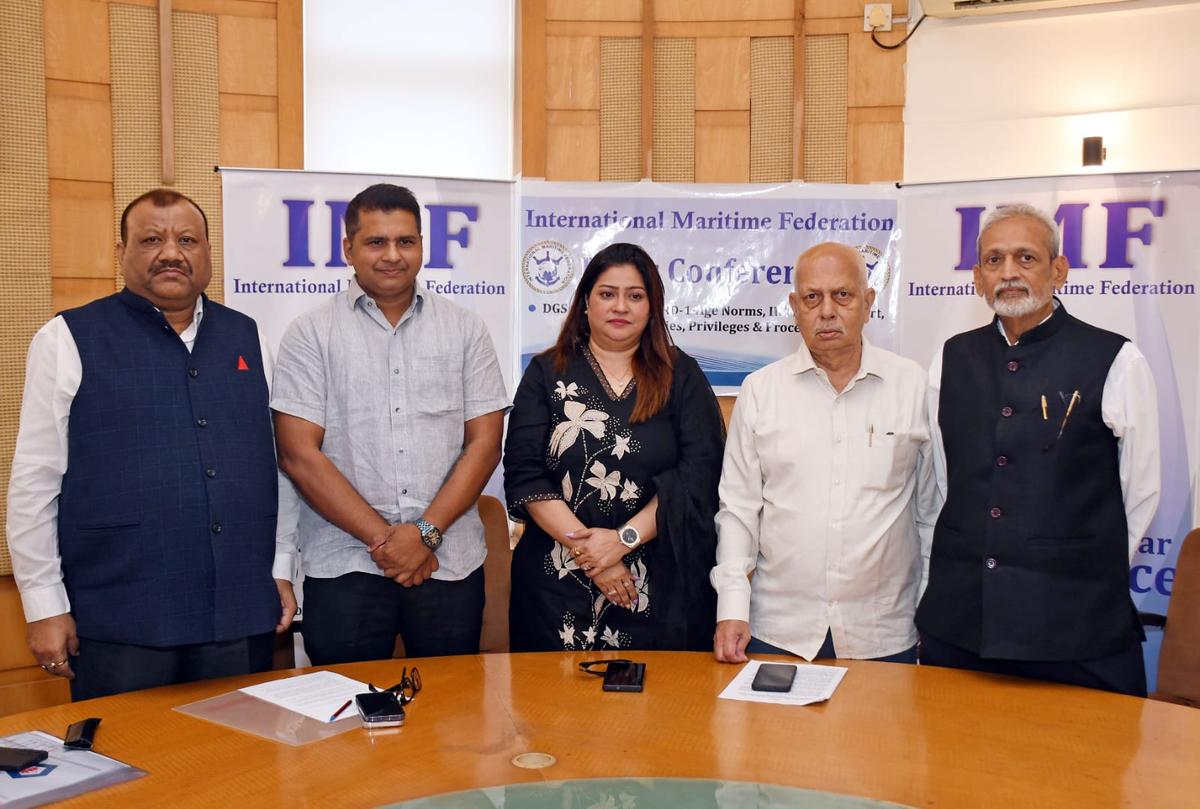
MUMBAI : Over 700 Indian-flagged vessels, many serving coastal and near-shore routes, could be retired prematurely due to age-based restrictions imposed by the Directorate General of Shipping (DG Shipping), threatening the jobs of more than 20,000 seafarers, according to the International Maritime Federation (IMF).

The move would render over 20,000 seafarers jobless and impact the livelihood of more than one lakh people, they said. Shipping industry leaders, seafarer advocates, shipowners, policy experts, and technology officers under the banner of IMF on Tuesday called for urgent policy reforms for the survival of the sector.

They were objecting DG Shipping’s Order 6/2023 on vessel-age norms and the penalty mechanisms imposed on Recruitment and Placement Services Licence (RPSL) companies.

According to IMF officials, as per the DG Shipping Order, 20-year-old ships will be scrapped. “The blanket ban on age of the ship and disproportionate RPSL penalties are not just operational hurdles, they are existential threats to India’s maritime ecosystem” said Capt. Nalin Pandey, CMD-Pentagon Marine.

IMF officials said a comprehensive global dataset of over 1,30,000 commercial vessels and 3,70,000 inspections found that older vessels, especially those that have operated safely for over 25 years, often demonstrate better safety records than newer ships.

“This is attributed to rigorous maintenance practices and survivorship bias, older ships that are still operational tend to be inherently more robust and better maintained,” they added.

Capt. Ramji S. Krishnan, a Sloan Fellow from London Business School, said “The world does not sail by age, it sails by condition. If our classification societies and safety inspections say a ship is fit, then who are we to call it unfit just because it is old?”

Officials said if age norms threaten the vessels, DG Shipping’s RPSL penalty framework threatens the recruiters who connect Indian seafarers to ships.

Capt. Raj Sinha, Chairman, Marine Solutions also Ex Chairman (IMF) said instead of a consultative mechanism, RPSL companies are penalised, blocked on portals, and fined heavily, often without the opportunity for appeal.

IMF officials said the phasing out of over 700 older vessels would create a capacity vacuum that cannot be filled quickly or cheaply and foreign flagged vessels will fill the gap.

The IMF has called for replacement of age norms with safety and maintenance-based standards, withdrawal of revision of Order 6/2023, pending transparent consultation, introduction of a 3-strike graded penalty system for RPSL firms and creation of a centralized grievance redressal and appeals mechanism among others.

Source: The Hindu
India’s digital leap: SEPC and IAMAI join forces for global expansion

NEW DELHI : The Services Export Promotion Council (SEPC) and the Internet and Mobile Association of India (IAMAI) have officially entered into a memorandum of understanding (MoU) aimed at bolstering India’s position in the global digital services market. This strategic partnership seeks to enhance international market access for Indian digital businesses, according to a statement released on Wednesday.

The collaboration will address policy challenges related to trade and build export readiness for emerging digital sectors in India. A key focus is on aligning institutional efforts to strengthen India’s leadership in global digital trade, the statement highlighted.

The MoU includes the establishment of joint working groups to work alongside government ministries and relevant regulators, tackling bottlenecks faced by digital services exporters. The initiative highlights the substantial potential of India’s digital sector in the global economy, with areas such as AdTech, FinTech, HealthTech, SaaS, and more set for significant international growth.

Danish Shipping Line Maersk to disconnect from companies linked to Israeli settlements

COPENHAGEN : Maersk will cut ties with companies linked to illegal Israeli settlements on the occupied West Bank, the Danish shipping giant has said. The decision follows months-long pressure by activists on Maersk on issues related to Palestine.

Its shipments have come under scrutiny as part of an international campaign led by the Palestinian Youth Movement (PYM), a grassroots organisation. The group has focused mainly on Maersk’s shipments of US foreign military sales, but PYM has also researched the transport of cargo from companies tied to settlements.

A statement on the Maersk website, dated June, 2025, said, “Following a recent review of transports related to the West Bank, we further strengthened our screening procedures in relation to Israeli settlements, including aligning our screening process with the OHCHR database of enterprises involved in activities in the settlements.”

The Office of the United Nations High Commissioner for Human Rights (OHCHR) database includes businesses involved in various activities related to the settlements, such as providing services, equipment, or financial operations that support the illegal settlements.

When asked for further details on its decision, Maersk pointed Al Jazeera to the statement on its website. It is unclear which or how many businesses Maersk had links to.

Israel has built more than 100 settlements across the occupied West Bank that are home to some 500,000 settlers. These settlements, illegal under international law, range from small outposts to larger communities with modern infrastructure.

“This sends a clear message to the global shipping industry: compliance with international law and basic human rights is not optional. Doing business with Israel’s illegal settlements is no longer viable, and the world is watching to see who follows next,” said PYM’s Aisha Nizar.

But she called for further action, arguing that Maersk still transports goods for the Israeli military, including components of its F-35 fighter planes.

“Maersk continues to profit from the genocide of our people – regularly shipping F-35 components used to bomb and massacre Palestinians,” Nizar said. “We will continue to build pressure and mobilise people power until Maersk cuts all ties to genocide and ends the transport of weapons and weapons components to Israel.”

Last year, Spain banned Maersk ships transporting military goods to Israel from using its ports.

Earlier this month, PYM revealed how Maersk was using the port of Rotterdam as an essential link in what it called a “supply chain of death”.

Despite a Dutch court ruling that prohibited the Netherlands from exporting F-35 parts to Israel, Rotterdam still played a role in Israel’s F-35 programme, the report showed.

In response to those findings, Maersk told Al Jazeera that it upholds a strict policy of not shipping weapons or ammunition to active conflict zones and that it conducts due diligence, particularly in regions affected by active conflicts, including Israel and Gaza, and adapts this due diligence to the changing context.

It confirmed, however, that its US subsidiary, Maersk Line Limited, was one of “many companies supporting the global F-35 supply chain” with transport services.

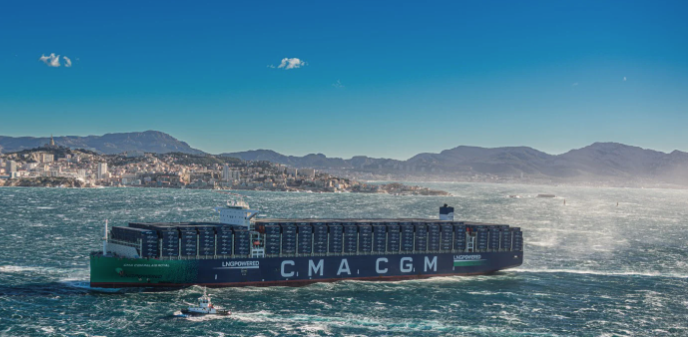
CMA CGM launches new Levant–Red Sea Route connecting East Mediterranean Ports

MARSEILLE : French container shipping major CMA CGM launches Levant Red Sea Express to Strengthen Regional Connectivity. CMA CGM has unveiled a new regional service — the Levant Red Sea Express (LRX) — set to begin operations next month. The service aims to bolster trade links between key East Mediterranean ports and major gateways in the Red Sea, marking a strategic move by the world’s third-largest container carrier to deepen its presence in this fast-growing trade corridor.

The LRX will operate with three vessels, each offering a capacity of approximately 2,500 TEUs. The service will provide consistent and reliable sailings across a loop that includes Istanbul (Ambarli), Mersin, Iskenderun, Beirut, East Port Said, and Jeddah, before returning to Istanbul. By enhancing intra-regional connectivity, the new service is expected to support exporters and streamline cargo flows along the route.

This LRX service underscores CMA CGM’s continued investment in flexible and scalable regional offerings amid shifting cargo patterns, port congestion in key hubs, and evolving geopolitical challenges. It also aligns with broader efforts by global carriers to reinforce alternative trade corridors and improve service reliability across secondary but strategic port networks.

In a related development, the Suez Canal Authority reported the successful northbound and southbound transits of two of CMA CGM’s largest vessels: CMA CGM JULES VERNE and CMA CGM ADONIS. These transits further highlight the French carrier’s strong presence in the region and its continued reliance on the Suez Canal as a primary artery in its global routes.

The CMA CGM JULES VERNE, sailing under the Maltese flag, led the northbound convoy en route from Malta to Jeddah. Measuring 396 meters in length and 53.6 meters in beam, with a draft of 11.5 meters, the vessel was carrying a total of 180,000 tons of cargo.

Simultaneously, the CMA CGM ADONIS, also transiting the Canal under the Maltese flag, led the southbound convoy on its voyage from Singapore to Alexandria. The vessel spans 366 meters in length and 51 meters in width, with a draft of 53 feet and a total cargo load of 164,000 tons.

Container Shipping: BIMCO forecasts Stable demand outlook despite US trade policies

LONDON : “We forecast a stable demand outlook for the container shipping sector in line with our previous report despite the uncertainties introduced by new US trade policies. We expect the supply/demand balance to weaken only slightly in 2025 and 2026, as our ship demand growth forecast now excludes a return to normal Red Sea and Suez Canal routings,” says Niels Rasmussen, Chief Shipping Analyst at BIMCO.

The macroeconomic environment remains uncertain, with significant trade policy changes and geopolitical tensions affecting market conditions. In April, the IMF reduced its global economic growth forecast to 2.8% for 2025 and 3.0% for 2026, a decrease of 0.5 and 0.3 percentage points, respectively.

Particularly the growth outlook for North America has been lowered due to the increase of US import tariffs.

“Despite the weaker economic outlook, cargo volumes during the first four months of the year have been strong and grown 5.1% YoY,” says Rasmussen.

Front-loading of cargo to the US to avoid the higher import tariffs threatened for later in the year has contributed to this growth. However, cargo volumes to four out of seven regions have grown even faster.

BIMCO Chart Container Shipping: BIMCO forecasts Stable demand outlook despite US trade policies

For the rest of the year, we have lowered the North America import cargo volume growth forecast as we expect the second half of 2025 to be weaker due to the front-loading of cargo during the first half of the year. We now forecast an average annual growth rate for North American imports of 1.6% during 2025-2026, the lowest among all regions.

On the other hand, we have lifted our 2025 growth forecast for volumes into the Europe & Mediterranean region. Volumes to the region have grown 7.3% during the first four months of the year and economic conditions are improving. Lower inflation, lower interest rates, lower unemployment than before COVID and a stronger euro are all contributing to a brighter outlook.

“Overall, the container shipping market is navigating through a complex landscape of trade policies, economic conditions, and geopolitical tensions. Significant demand uncertainties therefore still exist. As an example, we estimate that a return to normal routings through the Red Sea and Suez Canal would lower ship demand by 10%. In our base case, we expect weakening of the supply/demand balance during the second half of 2025 and expect freight rates to retreat accordingly. In 2026, we anticipate a further, albeit less pronounced, weakening of freight rates and the supply/demand balance,” says Rasmussen.

Source: BIMCO

Asia-US container rates plunge as June hikes fail to stick

LONDON : Rates for shipping containers from Asia to the US are plummeting this week as general rate increases (GRIs) that took effect on 1 June failed to hold.

Market intelligence group Linerlytica said rates collapsed under the weight of excess capacity.

“Freight rates to the US West Coast have recorded their largest weekly losses in the last two weeks as their failure to retain any of their 1 June rate hikes have also put the peak season surcharge for contract customers at risk,” Linerlytica said in a Week 25 market update. “The early end to the transpacific peak season has not yet dragged down rates on the secondary routes that remain supported by buoyant cargo volumes, while charter rates also remain firm with very limited open tonnage.”

Carriers pulled excess capacity out of the Asia-US trade lane in May after US President Donald Trump imposed exorbitant tariffs on China and have rushed to bring back capacity once the two nations reached agreement on a new trade deal.

Rates on the global Shanghai Containerized Freight Index (SCFI) have given back all the increases from the past three weeks, with rates to the US West Coast falling by 20% week on week and rates to the US East Coast down by 7.5% from the previous week.

Container ships and costs for shipping containers are relevant to the chemical industry because while most chemicals are liquids and are shipped in tankers, container ships transport polymers, such as polyethylene (PE) and polypropylene (PP), which are shipped in pellets.

They also transport liquid chemicals in isotanks.

STRAIT OF HORMUZ

Global shipping concerns surrounding the Strait of Hormuz in the Middle East have eased amid a ceasefire between Israel and Iran.

Lars Jensen, President of consultant Vespucci Maritime, said in a LinkedIn post on Tuesday that the strait remains fully open and operational, adding that global container shipping major Hapag-Lloyd is continuing operations through the strait per normal.

Carriers continue to avoid the Red Sea and Suez Canal because of threats of attacks from Yemen-backed Houthi rebels.

Jensen said the Houthis likely will no longer feel bound by the ceasefire they made with the US in early May regarding not attacking US vessels in the Southern Red Sea and in the Gulf of Aden following the US bombing of nuclear facilities in Iran.

The Houthis said previously that US ships in the Red Sea will be targeted if US launched any military attack against Iran.

Source : ICIS

Lehmann Marine launches water-cooled 2C LFP battery system AQUBE

HAMBURG : Lehmann Marine has launched their latest product development, the AQUBE battery system. This new water-cooled, high-power energy storage solution features a continuous 2C charge/discharge rate.

Lehmann anticipate highly positive market feedback, with numerous potential projects emerging in a maritime industry that is rapidly transitioning toward sustainability. Following our merger with the Greek Sunlight Group, we are well-positioned to scale up our production capacity to up to 300 MWh per year. Additionally, our customers benefit from Sunlight Group’s global service network, comprising over 200 field engineers, which ensures worldwide support for our products.

AQUBE combines the compact and flexible design of our best-selling CUBE with advanced water-cooling technology derived from our proven COBRA battery system. This combination resulted in the high-power energy storage solution AQUBE, which features safe lithium-iron-phosphate (LFP) cell chemistry with a continuous 2C charge/discharge capability.

Enhanced safety is a key advantage of LFP cells. Compared to traditional nickel-manganese-cobalt (NMC) batteries, LFP batteries are significantly safer. Even in extreme situations where thermal runaway could occur, LFP batteries are not prone to fires. In such cases, only gas is released and vented outside. This makes LFP battery systems a particularly sustainable and safe choice for the maritime industry.

Like all of our product solutions, the AQUBE battery system has another advantage: its modular and flexible design. The compact system concept allows for the easy adaptation of batteries to meet the individual needs of various vessels with limited space. This flexibility, along with easy maintenance provided by small and readily accessible battery modules, offers customers exceptional efficiency and reliability.

AQUBE is designed to meet DNV and ESTRIN standards, making it suitable for a wide range of applications and vessel types. High-power propulsion systems of larger vessels, such as ferries, container feeders, or OSVs, can now utilise our safe and compact LFP battery technology. Short turnaround cycles of vessels will no longer pose an obstacle when considering fully electric or electric hybrid propulsion.

Any scale of energy storage is available by freely configuring modular units in strings of up to 1,000 VDC. The battery system features an integrated battery management system (BMS), pre-charge functionality, customised racking, and a newly developed switch unit. AQUBE is designed for easy connection to the vessel‘s water cooling system, ensuring safe and reliable operation.

Our portfolio of safe and compact battery systems is well established in the maritime industry. The best-selling CUBE is type-approved by BV, DNV, LR, and RINA. Fully electric ferries, fish farm support vessels, river cruise ships and crew transfer vessels are just a few recently commissioned references utilising CUBE power. Marine battery systems are in high demand in the shipping industry, and we are on track to meet this demand by adding AQUBE to our product range. Delivery of the first systems is scheduled for mid-2026.

ClassNK opens new survey office in Jacksonville, U.S.A.

TOKYO : ClassNK has opened a new exclusive survey office in Jacksonville, U.S.A.

Located in northeastern Florida, Jacksonville serves as the state’s largest container port and ranks among the nation’s leading vehicle-handling ports, playing a vital role as a logistics hub. ClassNK has taken the initiative to open its newest office, aiming to provide more streamlined service. 

ClassNK remains committed to enhancing its worldwide network of survey offices to meet its clients’ requests and offer timely and high-quality services.

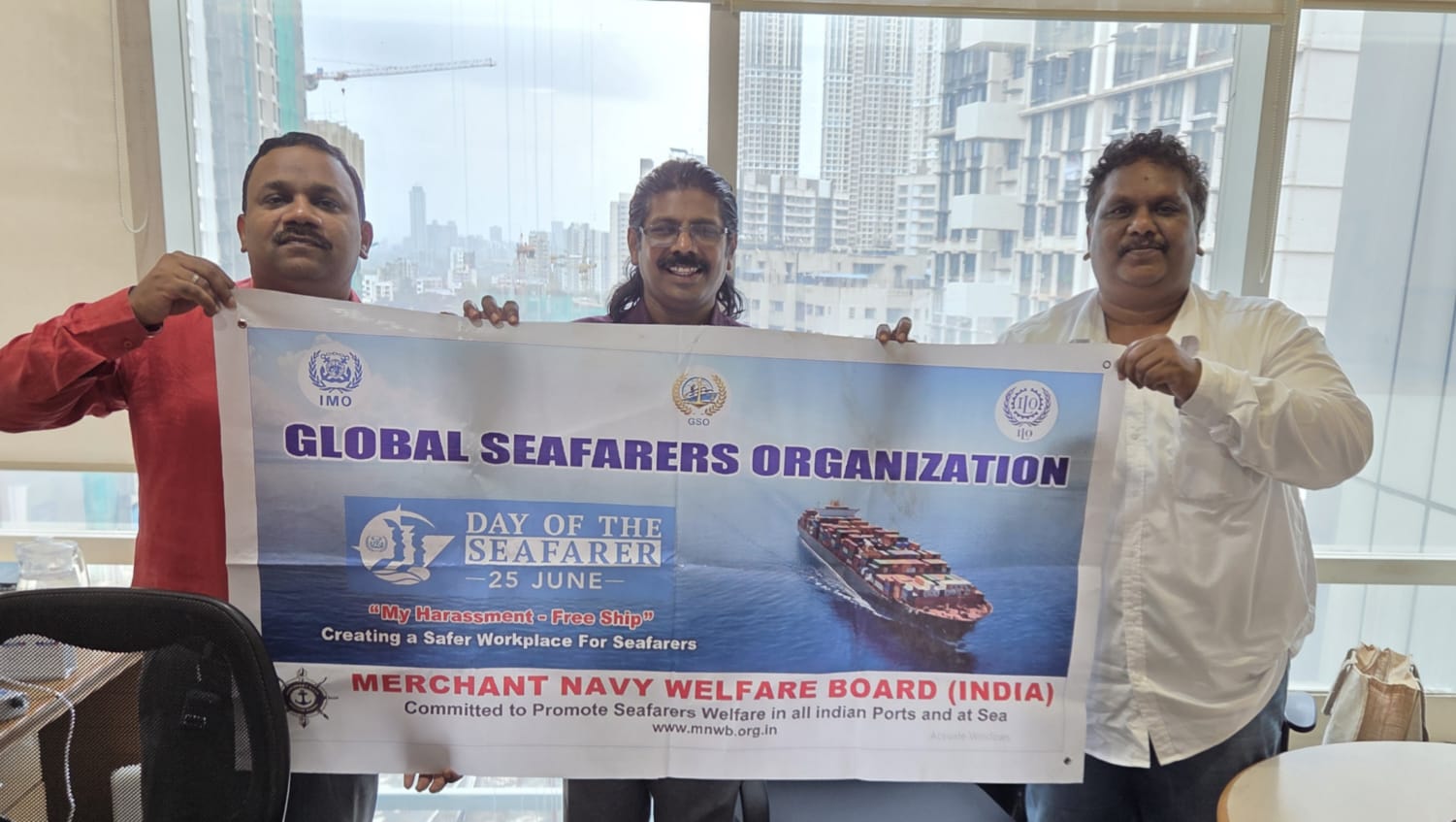
Merchant Navy Welfare Board (India) and Global Seafarers Organisation launch Nationwide Campaign – “My Harassment-Free Ship”

KAKINADA : In a landmark move to promote seafarer dignity and workplace safety, the Merchant Navy Welfare Board (India) and the Global Seafarers Organisation (GSWO) Joint Action Committee have officially launched the IMO Day of the Seafarer 2025 campaign titled “My Harassment-Free Ship” across all Indian ports.

This campaign aligns with the global theme initiated by the International Maritime Organization (IMO) to create a harassment-free working environment at sea. IMO Secretary-General Mr. Arsenio Dominguez urged maritime welfare organizations to actively support seafarers’ rights—a call which MNWB and GSWO have embraced with a coordinated national rollout.

Welfare officers from the MNWB-GSWO Joint Action Committee are visiting vessels, educating seafarers about their rights, sensitizing crew and management, and advocating for zero tolerance to harassment at sea. Port Welfare Committees, State Maritime Boards, and Port Authorities have been invited to fully implement and enforce the IMO campaign at all ports.

Dr. N. Reuben Paul, Chairman of the Merchant Navy Welfare Board (India) launched the initiative at Indian ports and engaged with port officials to ensure regional implementation. At Kakinada Port, the campaign was inaugurated by Capt. Dharma Sastha, Port Officer, AP Maritime Board, who reiterated the port’s strong commitment to crew safety and welfare.

In a key development, Dr. N. Reuben Paul met with Shri Ajith Kumar Sukumaran, Chief Surveyor & Addl. Director General of Shipping, and Capt. Dr. Daniel Joseph, Deputy Director General of Shipping, Government of India. The campaign was officially launched at the national level, followed by substantive discussions on regulatory enforcement and seafarers’ welfare.

Dr. N. Reuben Paul called upon the Directorate General of Shipping to direct Port State Control (PSC) officers to:

  1. Conduct targeted inspections focusing on harassment-related violations.
  2. Enforce full compliance with MLC anti-harassment provisions.
  3. Ensure seafarers are aware of their rights and can report issues confidentially.
  4. Hold company leadership, DPAs, and Crew Managers accountable in cases of negligence.

MNWB’s helpline data indicates many seafarers hesitate to report abuse due to fear of blacklisting or job loss, with some suffering psychological trauma or leaving their careers altogether. This campaign aims to end such patterns by reinforcing systemic accountability.

Capt. Daniel Joseph emphasized:“In alignment with this year’s IMO theme, every vessel—whether in India or globally—must enforce a strict no-harassment policy with zero tolerance. Seafarer welfare is a shared responsibility and a global maritime priority.”

Dr. N. Reuben Paul extended his gratitude to the Directorate General of Shipping for its continued support, underlining the importance of collaboration between regulatory bodies and welfare organizations.

This united effort reinforces India’s leadership in the global movement for the protection, safety, and dignity of seafarers, and contributes meaningfully to building a more inclusive and just maritime industry.

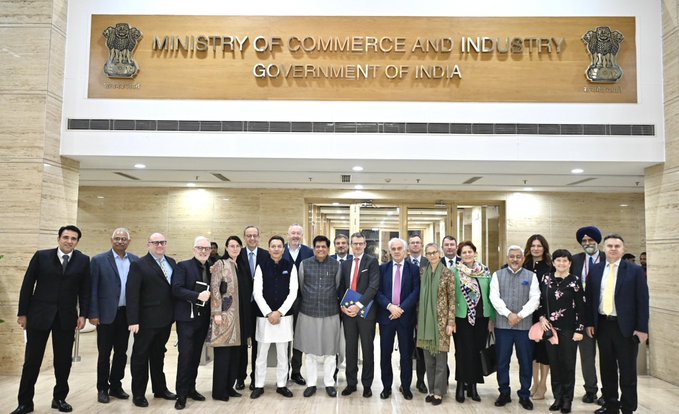
India charting new road with record export, free trade agreements : Piyush Goyal

NEW DELHI : India is charting a new road to economic prosperity with record export figures and multiple free trade agreements, Commerce Minister Shri Piyush Goyal said on Monday, highlighting the Vanijya Bhawan’s efficient infrastructure, effective support systems and positive work environment that was created three years ago.

Union minister of commerce and industry Piyush Goyal addresses the gathering during the 3rd year anniversary celebration of Vanijya Bhawan, in New Delhi on Monday. “Supported by a robust digital ecosystem, processes are being streamlined and made quick and more transparent,” the minister said, emphasizing that the Vanijya Bhawan personifies the spirit of optimism and resilience that helped the government to achieve record exports of $825 billion in 2024-25 against all odds. Vanijya Bhawan houses the commerce and industry ministry.

Despite global headwinds and adverse geopolitical situations, India has been able to register record export growth year-after-year, which is as per the Prime Minister Shri Narendra Modi’s vision that it is a major growth engine, an official said referring to PM inaugurating the modern administrative building of the commerce ministry on June 23, 2022.

“Exports play a key role in the transition of a country from developing to developed status,” Prime Minister said that day. The Union budget for FY26 acknowledged exports as one of the four growth engines for the Indian economy with agriculture as the first engine followed by micro, small and medium enterprises (MSMEs) and investments.

Vanijya Bhawan, which is a symbol of “new thinking”, is now India’s centre of major trade negotiations, including the recently concluded bilateral trade deal with the United Kingdom and two major ongoing free trade negotiations with the United States and the European Union, the official mentioned above said. “In all likelihood, an FTA negotiation with Canada is expected to be resumed soon even as we are engaged with similar bilateral trade deals with Peru, Chile and New Zealand. Our hands are full,” he said.

“Vanijya Bhawan has been envisioned as a modern, efficient, integrated and dedicated hub for India’s fast-growing commerce and industry ecosystem,” Goyal said in a series of posts on X. “In the 3 years since its inauguration by Prime Minister @NarendraModi ji, several milestones have been achieved and new benchmarks set in the way India does business,” Goyal said in the post.

This has been made possible by the commitment of our employees. From senior officials to the cleanliness staff, each individual working here is helping script the memorable story of India’s trade and commerce, he said. “I would like to thank each and every member of the Vanijya Bhawan Parivar,” he added.

The achievements of the last three years remind us of the power of planning, dedication and execution, the minister said. “Let us commit once again to engage further with our industry and global partners to realise the goal of Viksit Bharat 2047,” he said.

“Development of state-of-the-art futuristic infrastructure has been another highlight. The focus is squarely on empowering businesses and attracting greater investments. Enhancing stakeholder consultations, reducing compliance burden and improving Ease of Doing Business have resulted in empowerment of small businesses, increased investor confidence and a more competitive trade environment,” the minister said.

The Prime Minister on June 22, 2018 laid the foundation stone of the Vanijya Bhawan. The building has been completed in less than the budgeted cost of 226 crore. On the day of its inauguration three years ago, Goyal said that the Vanijya Bhawan would be made completely digital and would become a symbol of India’s growing power on the global platform.