Home Blog Page 800

GEODIS publishes its 2024 activity and sustainability report

LEVALLOIS-PERRET : GEODIS announces the publication of its activity and sustainability report for the year 2024. The voluntary report is structured into three parts:

  • The first part presents information about the Group’s activity in 2024, including its key figures, value creation model, Ambition 2027 strategic plan, and CSR roadmap.
  • The central part focuses on GEODIS’s corporate social responsibility policy, outlining the objectives set by the Group and the key elements of 2024 regarding environmental, social, and ethical themes.
  • The last part summarizes the performance indicators as well as the concordance table with the European Sustainability Reporting Standards (ESRS) of the Corporate Sustainability Reporting Directive (CSRD).

“With our Ambition 2027 plan, we place innovation, performance, and responsibility at the heart of our strategy. In 2024, the validation of our decarbonization goals by the Science Based Targets initiative marked a major milestone: we aim for a 42% reduction in emissions from our direct activities by 2030, in line with the Paris Agreement. It is by combining operational excellence and environmental commitments that we build sustainable logistics, serving our clients and the planet,” said Marie-Christine Lombard, Chief Executive Officer of GEODIS.

The Group engaged the independent firm EY for the verification of data published under the CSRD framework.

To discover the full report, click here.

Pacific Basin enhances fleet operations and crew welfare with Inmarsat NexusWave

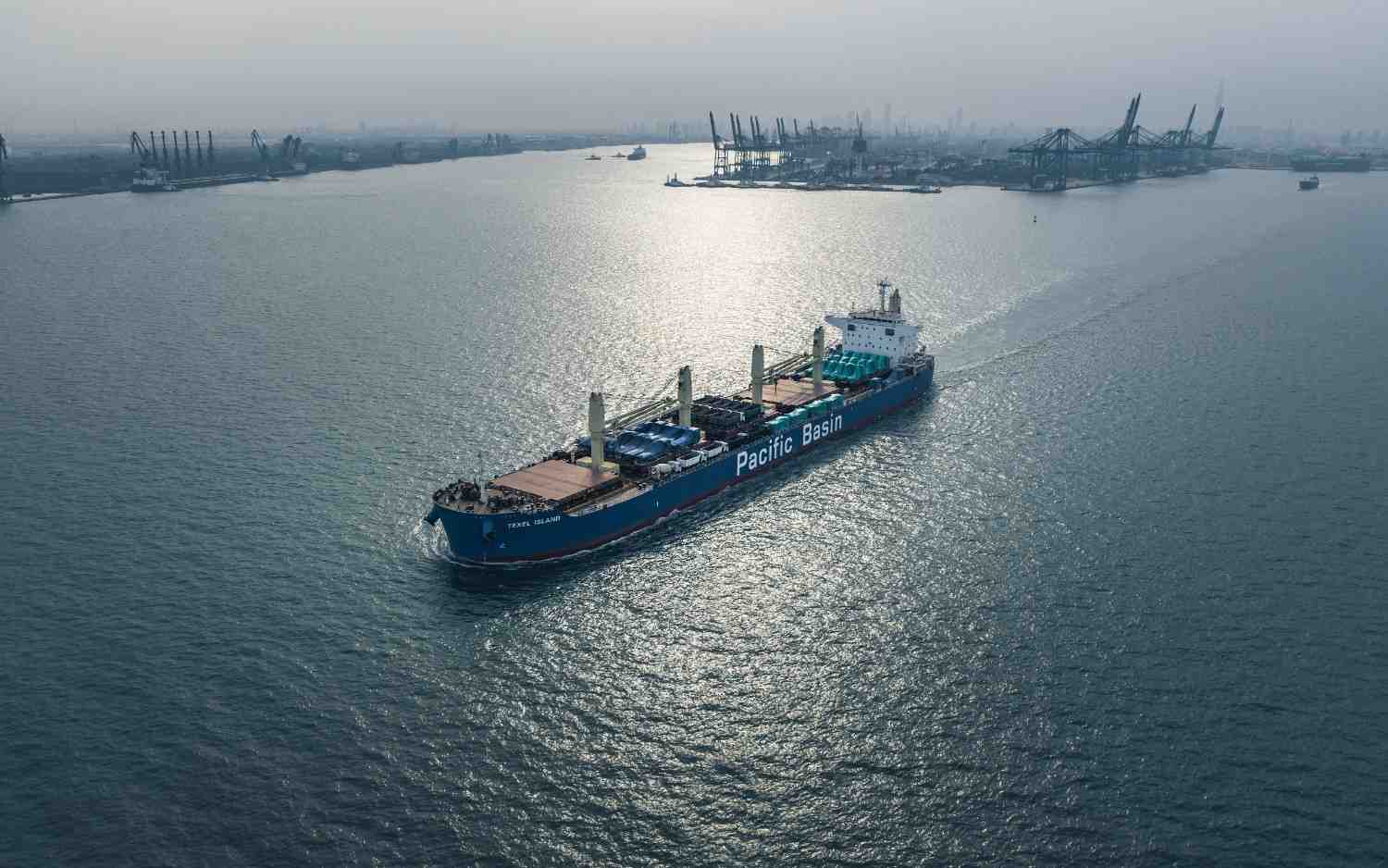
LONDON : Inmarsat Maritime, a Viasat company, has signed an agreement with Pacific Basin Shipping Limited, one of the world’s leading dry bulk carrier owners, to install NexusWave fully managed bonded connectivity service on board an initial five ships.

Hong Kong-based Pacific Basin is prioritising enhancements to both crew and business communications aboard its growing fleet of geared Handysize and Supramax bulk carriers, as part of a connectivity and digitalisation strategy that also supports fuel efficiency and emissions reporting.

Through its unique network bonding technology, NexusWave ensures crew and business applications are always connected with the solution dynamically adjusting traffic routing to maintain a seamless experience. Pacific Basin will leverage the unparalleled speeds, unlimited data, and global coverage of NexusWave to enable uninterrupted ship–shore audio and video conferencing while providing seafarers with a consistent, home-like internet connection.

With unlimited data and the upcoming integration of the ViaSat-3 network, NexusWave provides confidence in enabling Pacific Basin’s ambitious digitalisation strategy well into the future, supported by cost certainty. 

Samar Das, Head of Technical Procurement, Pacific Basin Shipping (HK) Ltd, commented: “We are excited to be among the first operators in dry bulk shipping to equip our ships with Inmarsat NexusWave. Our seafarers’ wellbeing is a top priority, and this service will optimise communications channels to secure the fastest available connection to their loved ones ashore. The capabilities of NexusWave also align closely with our expanding use of digital applications across our fleet for better decision-making and efficiencies.”

Recent real-world tests saw the fully managed service achieve download speeds of up to 330–340 megabits per second and upload speeds of up to 70–80 Mbps, while network availability on vessels exceeded 99.9%.

Justin Yi, Regional Director APAC Sales, Inmarsat Maritime, said: “Pacific Basin is a global force in dry bulk shipping and their commitment to NexusWave underscores their forward-thinking approach. By enhancing both crew and business communications, they are ultimately transforming their vessels into floating homes and offices. With NexusWave, operators like Pacific Basin can enjoy complete connected confidence, enabled by high speeds and availability, unlimited data, global coverage, and robust enterprise-grade security – all from a single, trusted maritime connectivity provider.”

Nominations open for TMS Awards 2025

DUBAI : The Maritime Standard has announced that nominations for the TMS Awards 2025 are now officially open. One of the highlights of the maritime calendar, the glittering and glamorous event will take place on Wednesday 29th October at The Atlantis, The Palm, Dubai.

Details of the event, and the categories that are available to nominate for, can be found on the website: https://www.tmsawards.com/. Now in its 12th year, the TMS Awards are well-established as the market leader in terms of the number of companies that nominate, the quality of nominations received and the strength of partner companies and organisations which support the Awards.

Altogether there will be around 30 Awards presented on the night. This includes two new Awards – the Digital Transformation Award and Heavylift/Project Cargo Company of the Year. The majority of these Awards will be selected by an elite, independent judging panel, made up of industry experts and leaders. There will also be a number of individual awards selected by the TMS team for special achievements.

TMS Managing Director, Trevor Pereira, says, “This is always an exciting time when we raise the flag and start the race towards Awards night. We are expecting a record breaking field this year and only the best of the best will cross the winning post ahead of the rest.”

The deadline for nominations this year will be 1st August 2025. The shortlist of finalists will be announced on 15th September 2025.

Clive Woodbridge, Chair of Judges, adds, “While we have announced the start of nominations in good time, there is always a last minute rush to get entries in, and this year we cannot guarantee that we will be able to extend the nomination date. So, my strong advice is to start preparing entries now and give yourself the best chance of success.”

Hidden dangers of fire initiating cargoes explained

LONDON : Following its identification of ‘cargoes of concern’*, the Cargo Integrity Group (the Group) now focuses on the issues that may commonly compromise safety by initiating or proliferating fire under certain conditions.

It is recognized that many of the cargoes in this category, labelled ‘reactive hazards’ already fall within the scope of Dangerous Goods regulations. These regulations start from the premise that the transport of Dangerous Goods is prohibited – except in accordance with the details of the regulations.

However, incidents still occur too frequently; as the judge in one casualty litigation explained, disasters are only infrequent due to a “lack of a similar perfect storm of events, and simple good fortune”. All that is required is an alignment of mistakes, oversights, or failed controls. The Group is at pains to explain the dangers associated with these cargoes and emphasize strongly that only reliance on robust diligence or precise emergency response prevents many minor incidents becoming major casualties.

Furthermore, the Group is generating greater awareness overall and urges attention to the need for stringent compliance with mandatory regulations, such as the IMDG Code, and adoption of industry good practices, such as found in the CTU Code.

Such cargoes with reactive hazards include:

Calcium Hypochlorite, a powerful oxidiser, prone to rapid decomposition. In low concentrations, the chlorine content is used as a water cleanser and disinfectant, such as household bleach and swimming pool maintenance. Decomposition – taking place constantly at a very slow rate – is accelerated by higher temperatures and by contamination. The latter can be unpredictable since it necessitates rigorous controls over the raw materials used and the entire manufacturing process.

Charcoal concerns include among others charcoal that is intended for burning on barbecues, shisha pipes etc – sometimes having been treated with accelerants to assist ignition. There has been lengthy debate at IMO to fashion a revised safety framework for transport by sea, that will become mandatory from January 2026. This will remove an unreliable test regime and require that charcoal is always declared as DG.

Cotton and Wool, Fishmeal and Krill and Seed cake are perhaps less in the public eye, but also prone to self-heating and fire, where integrity and care are required both to ensure compliance and maintain safety during transport.

Lithium ion battery hazards are becoming known, but many are emergent, not least as science advances global energy transition. Many incidents to date have involved new batteries; the hazards will only multiply with age and deteriorating condition. While this will challenge the recycling industry, the reality is that all these products, whether new, used, in use, damaged or end of life, will impact the transport and storage industries for decades to come.

The Group calls for continued and thorough research into all the hazards presented by lithium ion batteries and dependent devices. Apart from fire, incidents have revealed risks from toxic gases and vapour cloud explosions that can be critical in transport and storage.

About the Cargo Integrity Group

The Cargo Integrity Group brings together international freight transport and cargo handling organisations with different roles in the supply chain and a shared dedication to improving safety, security and environmental performance throughout the logistics supply chain. The Bureau International des Containers, the Container Owners Association, FIATA, the Global Shippers Forum, ICHCA, TT Club and the World Shipping Council are co-operating on a range of activities to further the adoption and implementation of crucial safety practices and regulations.

“Gateway to Europe, mutual trade reached USD 150 million, real potential…is much more than this :” PM Modi at India-Cyprus CEO Forum

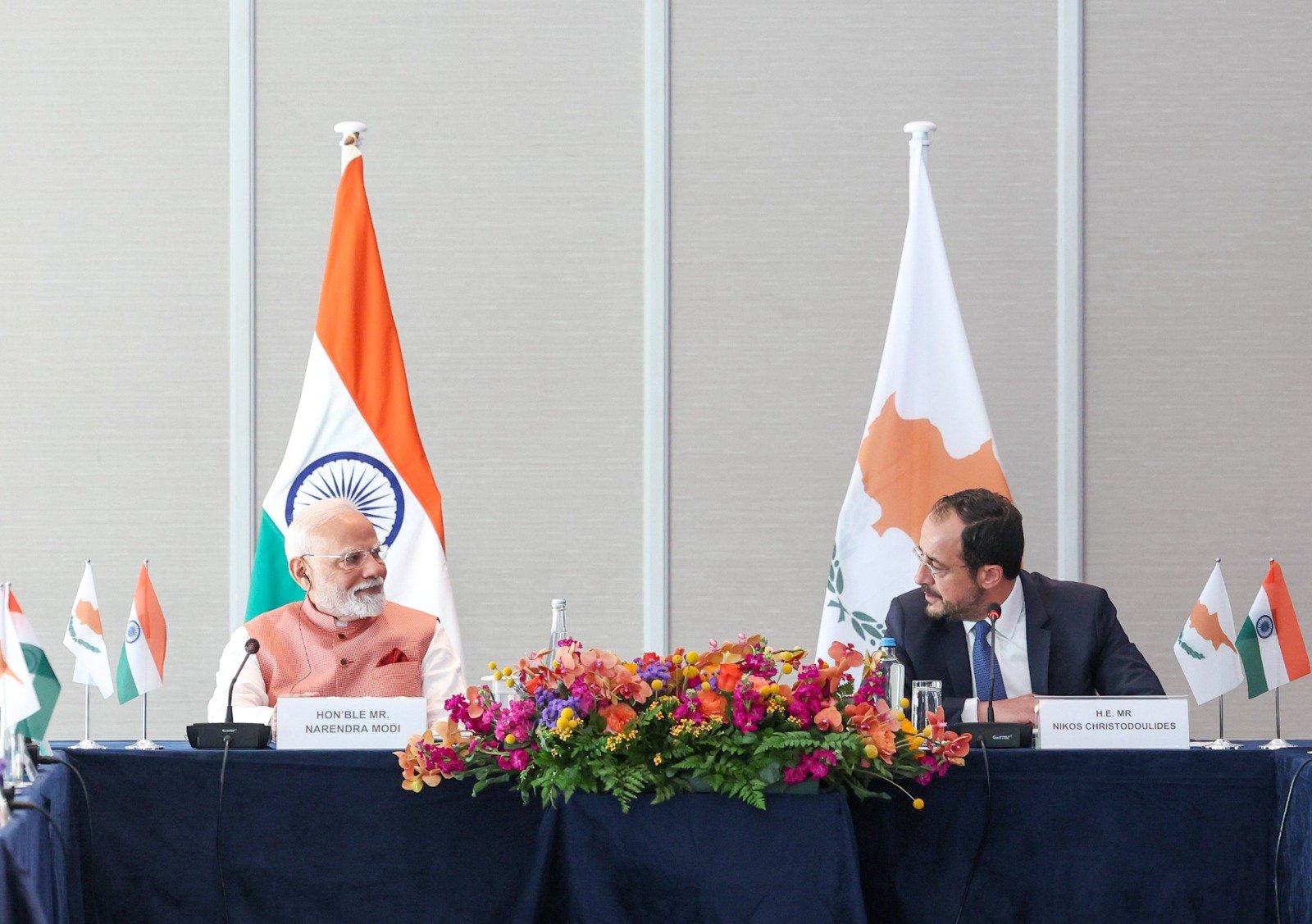
LIMASSOL : Prime Minister Shri Narendra Modi on Sunday emphasised India’s significant progress and economic strengths, while addressing the India-Cyprus CEO Forum. PM Modi said that Cyprus has been a trusted partner for India and has made significant investments in the country. Many Indian companies have also established a presence in Cyprus, which is seen as a gateway to Europe.

The mutual trade between India and Cyprus has reached USD 150 million, but PM Modi believes there is much more potential for growth and cooperation.” Cyprus has been our trusted partner for a long time and there has been significant investment from here in India. Many Indian companies have also come to Cyprus; in a way, Cyprus is seen as a gateway to Europe. Today, the mutual trade has reached 150 million dollars, but the real potential of our relations is much more than this…,” said PM Modi.

He highlighted India’s growing economic prowess, with the country set to become the third-largest economy in the world in the near future. Addressing the India-Cyprus CEO Forum, PM Modi emphasised India’s rapid growth and its potential for collaboration with Cyprus. PM Modi said, “…In the last one decade, India has become the fifth largest economy of the world and in the very near future, we are moving very fast towards becoming the third largest economy of the world. Today, India is one of the fastest-growing emerging economies in the world… Today, India has a clear policy…”

PM Modi added a “digital revolution” over the past decade, following his government’s third consecutive election win, citing that “50 per cent of the world’s digital transactions take place in India through Unified Payments Interface i.e. UPI.” “It has happened after 6 decades that the same government has been elected for the third consecutive time. There has been a digital revolution in the last 10 years. Financial inclusion has become an example of this. Today, 50 per cent of the world’s digital transactions take place in India through Unified Payments Interface i.e. UPI,” said PM Modi.

The Prime Minister welcomed talks to include Cyprus in UPI, similar to France and said, “Many countries, like France, are associated with it. Talks are going on to include Cyprus in this and I welcome it.” He highlighted India’s growing economic strength and its focus on futuristic infrastructure development. PM Modi also detailed focus areas, including the new Manufacturing Mission, maritime and port development, shipbuilding, and a rapidly expanding civil aviation sector.

“We are investing more than a hundred billion dollars annually in the development of futuristic infrastructure in India. In this year’s budget, we have started the Manufacturing Mission. Our focus is on maritime and port development. We are also giving priority to shipbuilding and shipbreaking. A new policy is also being brought for this. The civil aviation sector is also moving forward rapidly. Innovation has become a strong pillar of India’s economic strength. Our more than 1 lakh startups sell solutions, not just dreams…,” said PM Modi.

PM Modi also divulged that the Cyprus Stock Exchange and the National Stock Exchange (NSE) have agreed to cooperate in Gujarat International Finance Tec-City (GIFT City), promoting economic collaboration and investment opportunities.

“I am happy that Cyprus Stock Exchange and NSE (National Stock Exchange) have agreed on cooperation in GIFT City in my home state, Gujarat…,” added PM Modi. The Prime Minister stated that India is committed to concluding a Free Trade Agreement (FTA) with the EU by the end of the year, building on the momentum gained in negotiations and following the ambitious FTA agreed upon with the UK last month.

PM Modi welcomed the establishment of the India, Cyprus, and Greece Business and Investment Council, which can serve as an important platform for economic cooperation and growth. “Last month, an ambitious FTA was agreed between India and the UK. We are committed to concluding a free trade agreement between India and the EU by the end of this year. There is momentum in its negotiation. I welcome the establishment of the India, Cyprus, and Greece Business and Investment Council. This is a very good initiative and can become an important platform for economic cooperation. My team has noted everyone’s ideas and suggestions. We will follow these by making an action plan. I also invite you to visit India…,” said PM Modi.

PM Modi also thanked Cyprus President Nikos Christodoulides for receiving him at the airport.
“I want to express my gratitude to the President for today, he came to receive me at the airport. He organised a bigger round table with the business leaders. I also sincerely thank you for the positive thoughts they have given me and our partnership,” he said.
PM Modi is visiting Cyprus from June 15-16, at the invitation of President Christodoulides, the first by an Indian prime minister in over 20 years.

Source : ANI

PM Modi’s Cyprus visit to boost economic ties, business bigwigs say

LIMMASOL : Several bigwigs from India and Cyprus expressed hope for increased trade between the two countries as Prime Minister Narendra Modi visited the country.

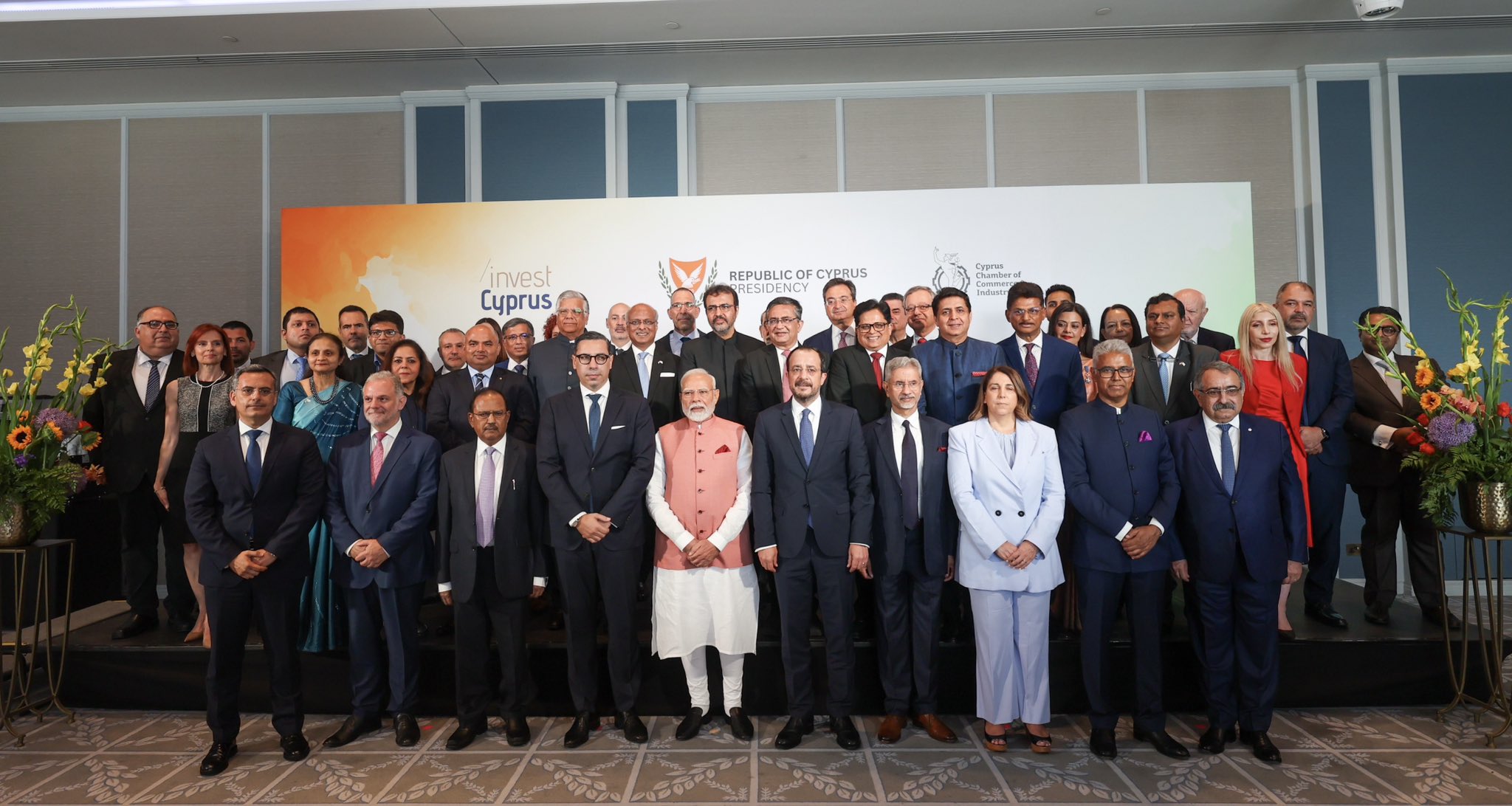
A business roundtable event was held in Limassol, Cyprus, where PM Modi and President Nikos Christodoulides witnessed the signing of several Memoranda of Understanding (MoUs) between Indian and Cypriot businesses.

Several MoUs were signed between Indian and Cypriot businesses, including between the National Stock Exchange (NSE) and the Cyprus Stock Exchange, and between the Bombay Chamber of Commerce and the Cyprus Chamber of Commerce and Industries.

The event highlighted the potential for investment and trade between India and Cyprus, with a focus on sectors such as fintech, technology, and renewable energy.

Marina Zevedeou, President of Women’s Indian Chamber of Commerce and Industry (WICCI) – Cyprus and CEO of the Aspen Trust Group told ANI that they identified two very important business sectors of cooperation – the filming industry and the high tech industry in both countries.

“We have been servicing Indian clients on their inbound and outbound investment for many, many decades…We have identified two very important business sectors of cooperation – the filming industry and the high tech industry and we are currently advising business people to take advantage of the IP box in Cyprus and also the filming industry incentives in Cyprus,” she said.

She added that they feel like they have been added to India’s big business plan.

“We feel that we have been included in the big business plan of India and Cyprus to cooperate together to bring prosperity and also changes in the business world and his presence here has reinforced our commitment to business cooperation and success,” she said.

Chairman of Invest Cyprus, Evgeniou welcomed PM Modi’s visit, saying it will boost economic, business, and investment relations between the two countries.

Evgeniou said, “Today is a great day for us in Cyprus, a great honor to have welcomed Prime Minister Modi and we truly look forward that his visit will add a lot of momentum to the economic, business and investment relations between India and Cyprus…PM Modi’s visit will add momentum to this strong bilateral relationship for the benefit of India, Cyprus and the European Union…”

Ameya Prabhu, Founder and CEO of Managing Director of NAFA Capital told ANI, “When I was the President of the Indian Chamber of Commerce, we had signed with Europe Bank in West Cyprus and to create the IGC, the Indo-Greek Business Council and which we launched earlier this year and so now that we are also seeing support from our Prime Minister and we are very excited as PM Modi is taking the India-Cyprus relationship forward…The trade between the two nations will increase…I signed an MoU on behalf of the Indian Chamber of Commerce and now the European Bank will set up a bank in India.”

Viraj Kulkarni, Honorary Consul of the Republic of Cyprus in Mumbai, said that the most important MoU is between GIFT City in Gujarat and the Cyprus Stock Exchange. The Cyprus Stock Exchange and GIFT City in Gujarat have agreed to cooperate on dual listing, research, and outreach programs, creating new opportunities for investors and businesses.

He said, “We have signed four MoUs. The most important MoU is between GIFT City in Gujarat and the Cyprus Stock Exchange, which is the first of its kind in Europe by India. This will open up a lot of investment opportunities for investors coming from Europe. Similarly, we have MoUs between the Bombay Chamber of Commerce and the Cyprus Chamber of Commerce and some others. 32 opportunities have been identified in several sectors between institutions, including the Maharashtra Government, the Gujarat Government, and the Chamber of Commerce.”

Frixos Savvides, member of the board of Advent International Cyprus Limited, praised the visit of PM Modi, saying it will add momentum to the economic and business relations between India and Cyprus.

He said, “It is a big honour to have Prime Minister Narendra Modi here in Cyprus…We have been investing in India for the last 10-15 years…The basis of our investment is the quality of the people, the quality of the skills that we find in India and it is definitely a place to invest for the future on global investments… We are happy to be in India and I told the Prime Minister I love India. I love the people of India and Indian food. I will be in India for a week at the end of this month.”

Savvides said that the foundation was laid between India and Cyprus for increased cooperation with the exchange of MoUs.

He said, “The foundations have been laid today for the new cooperation between our two countries…We have the honour and the pleasure of hosting your Prime Minister today, which shows the importance and is due to the efforts of our President Nikos Christodoulides, who is creating the opportunities for such events… We are very proud to be in this event and we are very proud to see our collaboration extending further into new areas.”

President of the Bombay Chamber of Commerce and Industry and also serves as the Chief Financial Officer (CFO) for Aditya Birla Capital Limited, Pinky Mehta told ANI, “We (Bombay Chamber of Commerce) have signed an MoU with the Cyprus Chamber of Commerce and Industries to promote the trade and investment between both the countries. PM Modi is keen to promote trade between these two countries.”

Fokion C Karavias, CEO of Eurobank highlighted the potential for business cooperation between India and Cyprus, citing the bank’s MoU with the National Payments Corporation of India (NPCI) to bring UPI payments to Cyprus and Greece.

He said, “We are very excited with the visit of Prime Minister Narendra Modi here in Cyprus. This is an excellent opportunity to promote further business between the two countries…Cyprus offers a number of opportunities for Indian companies. We have established a Business Council together with the Indian Chamber of Commerce to promote this idea, and as a bank, we have also signed an MoU with National Payments Corporation of India (NPCI) to bring UPI payments to Cyprus and also to Greece. So overall we believe there is plenty of opportunity for business.”

Ashish Kumar Chauhan, MD & CEO of the National Stock Exchange (NSE) said, “Today, under the leadership of PM Narendra Modi, several MoUs have been signed between Indian businesses and Cypriot businesses. One of the most important MoUs was signed between NSE International Exchange at GIFT City, Gandhinagar, which is India’s face to the world, and Cyprus Stock Exchange, to do dual listing as well as research and outreach programmes on various financial instruments to create collaboration between European companies and GIFT City, Gandhinagar. This is going to open a new chapter in Cyprus-India relations going forward.”

The event highlighted the potential for cooperation in fintech and technology, with several Indian and Cypriot businesses exploring opportunities in these sectors.

Alakh Verma, Founder and CEO of Silicon Valley-based software company BCentriqe AI, said, “We are coming to Cyprus to set up a subsidiary in Nicosia, and we have centres in Hyderabad and Pune. So this is a tri-national collaboration that we wanted to set up in Cyprus… I feel very proud and privileged to be here before our Prime Minister, Narendra Modi, and the President of Cyprus, announcing joint relations and collaborative efforts to build a strong, vibrant economy…”

The two countries also discussed cooperation in renewable energy, with Indian companies looking to invest in Cyprus’ growing renewable energy sector.

Ajay Popat, President of Ion Exchange India Ltd said, “…It was fantastic to be invited here and interact with our Prime Minister, Narendra Modi and the purpose for me being here is to solve the problems of water in Cyprus. The situation Cyprus is facing is very grave…They have faced three successive droughts. The dam which stores water, is now at just 25 per cent capacity and we want to extend our technologies and our experience to convert seawater into portable water and also convert the municipal sewage which is generated by the community, into reusable water..Looking forward to interacting with all the stakeholders related to water in Cyprus through this event…”

PM Modi is visiting Cyprus from June 15-16, at the invitation of President Nikos Christodoulides, the first by an Indian prime minister in over 20 years.

Source : ANI

CMA CGM deepens Maritime Partnership with India; Hosts First Raisina Dialogue in Europe at Marseille HQ

MARSEILLE : CMA CGM, a global leader in shipping and logistics, has reaffirmed its commitment to India as a strategic maritime partner by hosting the first-ever European edition of the Raisina Dialogue at its innovation and training hub, TANGRAM, in Marseille.

The high-level event—co-organized with the Observer Research Foundation (ORF) and supported by the Ministry of External Affairs of India and France’s Ministry for Europe and Foreign Affairs—signals a new phase of maritime and geopolitical collaboration between India and France, with CMA CGM at the helm.

Rodolphe Saadé, Chairman and CEO of CMA CGM, highlighted the Group’s expanding engagement with India, stating: “Since Prime Minister Narendra Modi’s visit to our headquarters earlier this year, our cooperation has gained new momentum. We are now working together on concrete initiatives in shipbuilding, port infrastructure, and the training of Indian seafarers—key pillars of our maritime strategy.”

The event also spotlighted the growing relevance of the India-Middle East-Europe Economic Corridor (IMEC), envisioned as a transformative trade artery connecting major markets. Saadé reiterated CMA CGM’s commitment to supporting IMEC’s development “by sea, by land, and by air,” positioning Marseille as a strategic European gateway in this emerging corridor.

As the maritime industry continues to evolve amid shifting trade dynamics and geopolitical realignments, CMA CGM’s proactive engagement with India underscores its role in shaping future-ready, sustainable shipping networks.

CONCOR strengthening Ties with Shipping Lines

MUMBAI : CMD, CONCOR Shri Sanjay Swarup, along with Director Intl Mktg., Area Heads and other senior officers of CONCOR, interacted with shipping lines in a high level meeting held at Mumbai on Friday organised in collaboration with Container Shipping Line Association (CSLA).

During the meeting, CONCOR showcased their vast nation wide networks and wide range of services to provide seamless end to end Logistics solutions to customers. Heads of all Clusters of CONCOR were also present at the event that saw participation of a very large number of shipping lines.

DG Shipping issues Advisory for Indian Seafarer and Indian-flagged vessels operating in Iranian Ports amid Iran-Israel conflicts

MUMBAI : The Directorate General of Shipping issues advisory in reference to the alert from the Embassy of India, Tehran, Ministry of External Affairs, dated 13th June 2025 in view of the ongoing escalation of Iran-Israel conflict.

All Indian Seafarers and Indian-flagged vessels operating in Iranian ports or transiting through the Strait of Hormuz are advised to exercise due caution. Seafarers should remain vigilant, avoid unnecessary movement, and follow local safety protocols.

Shipping companies, RPSL agencies, and maritime stakeholders (INSA, FOSMA, MASSA) are requested to actively monitor crew safety and stay updated via official channels. DG Shipping Communication Centre (MMDAC): Email: dgcommcentre-dgs@nic.in WhatsApp: +91 8657549760 Helpline: +91 22 22613606 / +91 8657549760 / +91 8657549752

DG Shipping Circular.png DG Shipping issues Advisory for Indian Seafarer and Indian-flagged vessels operating in Iranian Ports amid Iran-Israel conflicts

Iran-Israel conflict may affect Indian trade

NEW DELHI : Amid the ongoing military confrontations and the likelihood of an all-out war between Israel and Iran, the global markets, including the Indian market, are expected to experience major trade disruptions. Early signs of the conflict’s impact on the Indian market became visible after Sensex closed 573 points lower on Friday (13th June). Considering that India has trade relations with both the countries, the impact of their conflict will be seen in India.

Surge in oil prices and resultant hike in the cost of exports
Following the first two rounds of Israel’s attack on Friday, the international oil market witnessed a spike of nine percent. Prices of Brent crude oil also rose by over $6 to cross a five-month high of $78 per barrel. Though, India does not import large quantities of crude oil from Iran, but the supply chain being affected, exports might become expensive. A rise in crude oil prices threatens to weaken the Indian rupee resulting in inflation.

According to a report of Emkay Global, Iran produces around 3.3 million barrels per day (mbpd) of crude oil, which accounts for around 3% of global production. It exports around 1.5 mbpd to different countries, with China being its biggest importer (80%) followed by Turkey.

Iran lies on the northern side of the Strait of Hormuz/Persian Gulf, which is a key passage through which 20–25 per cent of global oil supply transits, as well as a critical corridor for Liquefied Natural Gas (LNG) shipments from the UAE and Qatar, which is among the top LNG suppliers to India. Iran, in the past, warned to block this route. If it chooses to do so as a result of its ongoing conflict with Israel, the global oil supply is bound to take a hit. With a higher-than-expected production hike for July, the oil markets are reportedly expected to survive any possible cuts in Iranian oil supply for some time. However, if the conflict drags for too long, it can cause disruptions in the oil market.

Air space diversions
After Israel began its airstrikes on Iran on Thursday (12th June), the Iranian airspace witnessed mass diversions of passenger jets flying between Europe and Asia. As Iranian as well as Israeli airspaces were occupied by projectiles being fired from both sides, the international commercial aviation felt its ripple effects. The flights had to take longer routes resulting in delays and increased fuel costs. With Pakistan’s airspace already being closed for India, a shut down of the Iranian irspace will force Indian flights to take longer routes. As per reports, an Air India Mumbai-London flight returned after three hours in the air.

Freight rates might go up
The conflict between the West Asian countries will also negatively impact trade via sea route. Shipments, including export shipments from India, started resuming the Red Sea route in May this year, after the route faced security concerns throughout the last year due to recurring attacks by Houthis in Yemen. However, with direct confrontations started between Israel and Iran, the vessel might have to take the longer Cape of Good Hope route. This detour will result in increased freight charges as the voyage time increases by 10-14 days. Longer sea routes also lead to reduced availability of vessels further contributing to the rise in freight rates.

Other adverse effects of the conflict
India’s imports from the Middle East include, LPG, LNG, petrochemicals, and fertilisers. The diversion in the sea route could lead to enhanced prices and well shipping risks. Any disruptions in the LPG or fertiliser supply would disturb the supply chain in rural Indian households and agriculture sector. An increased cost of fertiliser would further affect the price of food.
Manufacturing sector including aviation, chemicals, paints, tyres, cement, and logistics make use of petroleum-based components and fuels. If the prices of the raw materials like jet fuel, gasoil, or naphtha increase, the profit margins will be reduced.

India’s trade relations with Israel and Iran
During the current financial year, India exported goods worth $2.1 billion to Israel and imported goods worth $1.6 billion. India’s exports to Iran stood at $1.2 billion while it imported goods worth $441.9 million from Iran. India’s cumulative trade with both Israel and Iran amounts to about $5 billion.

The items exported by India to Israel include, polished diamonds, jewellery, consumer electronics and engineering goods. Israel, on the other hand, exports large quantities of military weapons to India. The country is India’s 32nd largest trading partner and a major defence supplier. According to a report of Stockholm International Peace Research Institute, India has imported military hardware worth about $3 billion from Israel, including radars, surveillance and combat drones and missiles, in the past 10 years. India also imports pearls, precious stones, electrical, electronics equipment, fertilizers, chemical products from Israel.

Apart from crude oil, India imports dry fruits, chemicals and glass utensils from Iran and exports several items including Basmati rice, tea, coffee and sugar.