Home Blog Page 913

NMPT sets all-time record in cargo handling

MANGALURU : New Mangalore Port, the maritime gateway of Karnataka, has set a new all-time record by handling 46.01 MMT of cargo in FY 2024-25. Achieving this remarkable milestone during the Port’s Golden Jubilee year makes the feat all the more special.

NMPA, recently awarded the second-best port in container handling (<0.5 M TEUs segment) by the Ministry of Ports, Shipping and Waterways, has consistently demonstrated growth in its cargo throughput. The previous best of 45.7 MMT in FY 2023-24 is a testament to the Port’s continuous pursuit of operational excellence. “The Port has also reported a provisional Profit Before Tax (PBT) of ₹600.00 Cr for FY 2024-25 – a 5.2% Year-on-Year increase, and a healthy operating ratio of 34.87% reflecting its strong financial position and operational efficiency.”

This achievement comes despite facing several challenges – delays in post-monsoon dredging due to priority docking of aircraft carrier at Cochin Shipyard, global shipping delays from the Red Sea crisis, reduced containerized cashew imports following crop failure in West Africa, and weak steel demand affecting iron ore exports.

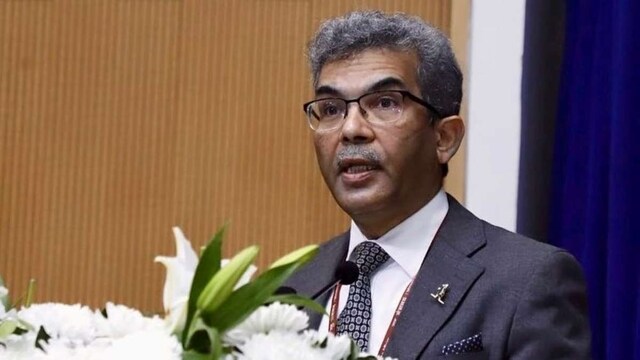
“Despite various macro-economic and operational adversities – including the delays in the four-laning of NH-75, the Port took proactive measures to diversify its cargo focus, offered multiple targeted commercial and operational inducements, and undertook focused trade engagement efforts to attract additional volumes”, said NMPA Chairman Dr. Venkata Ramana Akkaraju. “The projects inaugurated by Hon’ble Prime Minister in FY 2022-23 were operationalised during the year and contributed to the overall throughput”, he added.

NMPA implemented several operational upgrades such as fixed window berthing, integrated yard management, automated weighbridges, and dynamic storage solutions – all of which enhanced efficiency and contributed to this milestone. To support long-term growth, NMPA is undertaking key infrastructure projects including a new deep-draft general cargo berth, Phase II mechanisation of the container terminal, and refurbishment of POL Berth No. 9. These align with the Port’s Vision 2047 Master Plan, which aims to position NMPA as a 100+ MMT port and boost Karnataka’s economic growth.

NMPA extends its sincere gratitude to all port users, stakeholders, and trade partners whose continued support made this record possible.
Union Commerce and Industry Minister Piyush Goyal to inaugurate Startup Mahakumbh

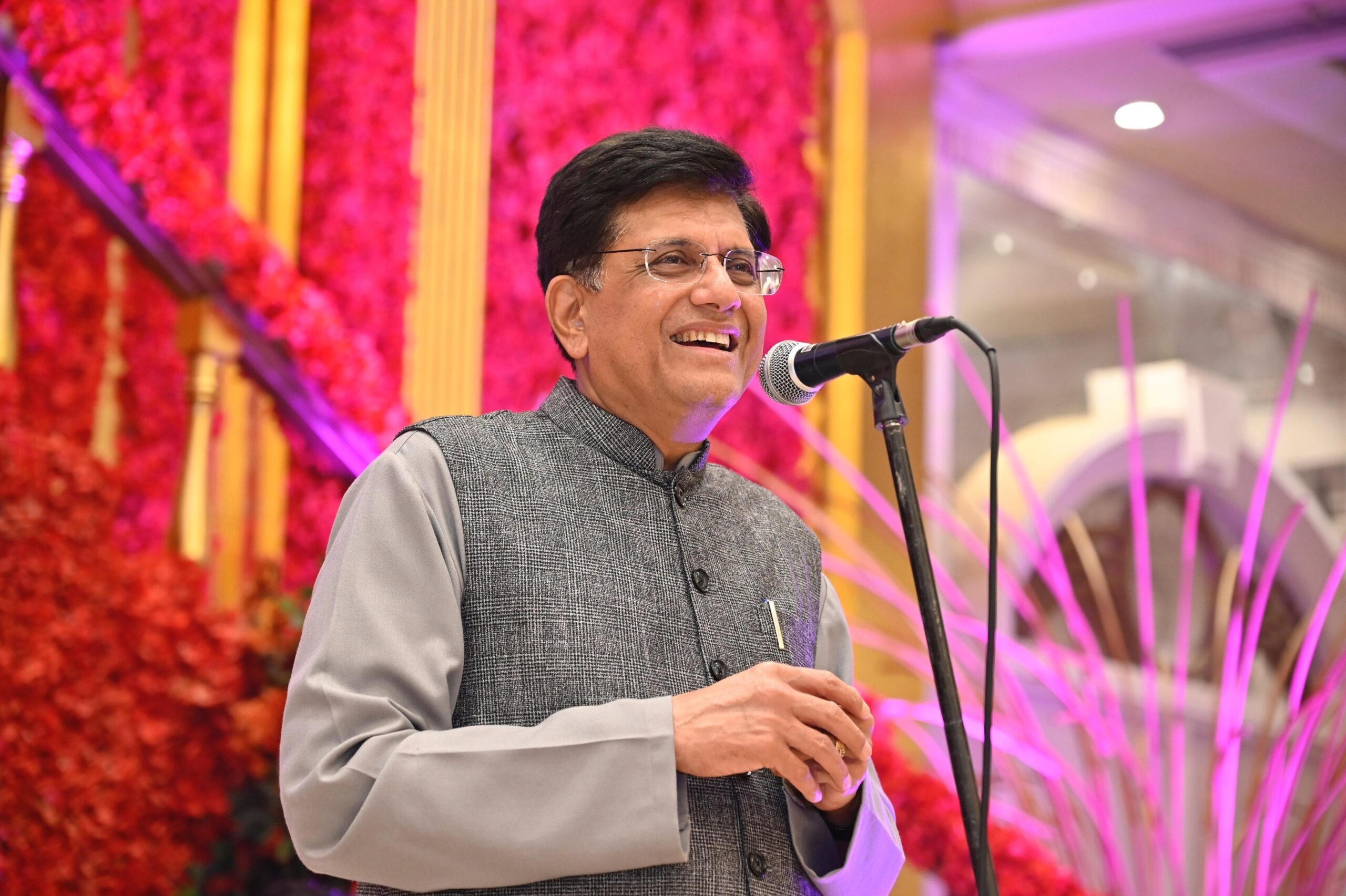
NEW DELHI : Union Commerce and Industry Minister Shri Piyush Goyal will inaugurate the second edition of Startup Mahakumbh, set to take place at Bharat Mandapam from April 3-5, 2025.The event  aims to contribute further to India’s economic growth and showcase to the world the unfolding story of Bharat. Minister of State, Ministry of Commerce & Industry and Ministry of Electronics & Information Technology,Shri Jitin Prasada, will deliver a special address during the inaugural event.

The event’s unmatched scale and diversity of participants will provide an invaluable platform for entrepreneurs, investors, and thought leaders to come together, share ideas, and create lasting connections. With a strong focus on fostering innovation and collaboration, Startup Mahakumbh will lay the foundation for the next wave of entrepreneurial success. During this year’s edition Tribal entrepreneurs are also set to take the stage with participation from 45+ startups including those incubated at IIM Calcutta, IIM Kashipur, and IIT Bhilai.

Explaining the theme of the event, Shri Sanjiv, Joint Secretary, DPIIT, said, “Startup Mahakumbh will be a true ‘sangam’ of startup and industry ‘MahaRathis’ from across the Indian districts and the world – Jile se Jagat tak. With representation from multiple districts of India and 50 countries, the event will be a great opportunity to connect and collaborate. While at one end we will have a flying taxi made in India on display, at the other we have countries like Korea setting up a pavilion of 11 startups and Nepal putting up the largest pavilion with one of its startups showcasing a 2-stage rocket powered by sustainable hybrid propulsion rocket engines. I am really excited and looking forward to the next three days of some pathbreaking ideas and enriching discussions.”

The first edition of the flagship startup event attracted over 48,581 business visitors engaging with 1306 exhibitors including finest startups, soonicorns, and unicorns, from 26+ states and 14+ countries. It also hosted 300+ incubators and accelerators and 200+ leading angel investors, VCs, and family offices.

Startup Mahakumbh brings together the entire startup ecosystem of India including entrepreneurs, investors, incubators and accelerators, and industry leaders from several sectors. The event is led by FICCI, ASSOCHAM, IVCA and Bootstrap Advisory & Foundation; and supported by SIDBI, GEM, ECGC, Meity and DPIIT Startup India.

For more information, visit www.startupmahakumbh.org.

S C Ralhan takes over as FIEO President, commits to strengthening India’s export competitiveness amid global challenges

NEW DELHI : The Federation of Indian Export Organisations (FIEO) is proud to announce that Mr S C Ralhan has assumed the role of President, bringing with him decades of expertise and a strategic vision to strengthen India’s position in global trade. Mr. Ravikant Kapur has also taken charge as Vice President, marking the beginning of a dynamic leadership tenure from April 1, 2025, to March 31, 2027.

Mr Ralhan, a stalwart in India’s international trade sector, has over 50 years of experience in exports, particularly in the engineering and hand tools industry. As Managing Director of Sri Tools Industries Private Ltd, his deep industry insights and global market understanding will be instrumental in guiding Indian exporters through the ever-evolving international trade landscape.

GncrNQfbkAAvrGd S C Ralhan takes over as FIEO President, commits to strengthening India’s export competitiveness amid global challenges

A distinguished leader, Mr Ralhan has previously served in several pivotal roles, including Regional Chairman, FIEO & EEPC; President, Ludhiana Hand Tools Association; Board Member, ECGC; and Chairman, Board of Governors, NIT Jalandhar. His contributions to trade policy formulation and industry development have earned him widespread recognition.

Upon taking charge, Mr Ralhan emphasized his commitment to tackling the ongoing tariff wars and trade barriers that have impacted Indian exporters. He outlined a proactive strategy that includes: engaging with global trade bodies and policymakers to negotiate favourable tariff structures and reduce trade restrictions.; promoting export diversification to mitigate risks associated with over-dependence on specific markets: strengthening FIEO’s role as a bridge between exporters and the government; ensuring swift policy interventions to counter unfair trade practices and enhancing global competitiveness by advocating for incentives, technology-driven exports, and supply chain resilience. “At a time when global trade dynamics are shifting rapidly, Indian exporters must be equipped with the right policies, strategies, and support to compete effectively. I am committed to working closely with the government and industry stakeholders to ensure a fair and favourable trade environment for our exporters,” said Mr Ralhan.

Joining him in this journey, Mr Ravikant Kapur, an industry veteran with vast expertise in textiles, assumes office as FIEO Vice President. As the owner of Group GR and a leader in multiple trade associations, his insights will be crucial in expanding India’s textile exports and fostering innovation in the sector.

Mr Kapur expressed his enthusiasm, stating, “I look forward to working with Mr. Ralhan and the FIEO team to address the key challenges faced by exporters. Together, we will drive policies that enhance India’s footprint in global trade and strengthen our position in international markets.”

FIEO extends its sincere gratitude to outgoing President Mr Ashwani Kumar and Vice President Mr Israr Ahmed for their exemplary leadership and contributions to India’s export growth.

With Mr Ralhan at the helm, supported by Mr Kapur and Dr Ajay Sahai, FIEO is set to champion Indian exporters, foster global trade expansion, and contribute significantly to the nation’s economic growth in the years ahead.

Ind-Aus ECTA and Trade Agreement celebrates 3rd Anniversary of signing

NEW DELHI : The India-Australia Economic Cooperation and Trade Agreement (Ind-Aus ECTA) marks its third anniversary of signing on Wednesday, a landmark achievement that has enhanced the economic partnership between India and Australia. Since the agreement’s signing on 2nd April 2022, it has created pathways for robust trade, offering new avenues for businesses, entrepreneurs, and employment across both nations.

With the signing of the ECTA, India and Australia have fostered new economic opportunities, underlining the complementary strengths of both economies. Following the signing and implementation of the agreement, total bilateral trade reached USD 24 billion in 2023-24, marking an impressive 14% growth in India’s exports to Australia as compared to 2022-23. This positive momentum continues in the current fiscal year, with India’s exports to Australia having increased by 4.4% during April 2024-February 2025 as compared to the same period in April 2023-February 2024.

The ECTA has brought tangible benefits across several sectors, notably textiles, pharmaceuticals, chemicals, and agriculture. Exports on new lines, such as Calcined Petroleum Coke, High-Capacity Diesel Generating Sets, and Air Liquefaction Machinery, demonstrate the expanding trade opportunities facilitated by the agreement. Sectors like electronics and engineering hold significant potential for future exports, offering promising prospects for further growth and innovation.

Imports of key raw materials, such as metalliferous ores, cotton, wood and wood products have supported the growth of Indian industries, solidifying the mutually beneficial and complementary nature of the partnership.

The India-Australia partnership is poised for even greater growth. As the ECTA celebrates its third anniversary, India and Australia reaffirm their commitment to deepening their economic ties, driving mutual prosperity, and contributing to a stronger and more resilient global economy.

Road logistics sector of India set to grow 10–12% in FY2025: ICRA

NEW DELHI : The Indian road logistics sector is expected to post a robust revenue growth of 10–12 per cent year-on-year in fiscal 2025 (FY2025), according to the latest outlook from ICRA. Although the sector experienced some disruption in first quarter due to the general elections, a combination of favourable monsoons, strong festive demand, and sustained government focus on capital formation supported business recovery and growth.

ICRA forecasts a moderated but steady revenue growth of 6–9 per cent in fiscal 2026 (FY2026). This anticipated growth is expected to be driven by stability in economic activities, an uptick in capital expenditure (capex), and increased consumer spending, bolstered by government-led tax and interest rate cuts.

ICRA projects aggregate operating profit margins to remain in the 10–12 per cent range over the two fiscal years—slightly down from ~12 per cent in fiscal 2023 but largely stable compared to ~11 per cent in fiscal 2024 (FY2024).

Despite this positive outlook, the sector remains sensitive to global demand trends and inflation levels, given its strong correlation with overall economic activity. Operators continue to face margin pressures due to high operating costs—particularly from sticky retail diesel prices—and a limited ability to raise freight rates amid intense competition. Their capacity to implement commensurate rate hikes remains a key monitorable, ICRA said in a report.

Debt coverage metrics saw marginal moderation in FY2024, primarily due to rising non-fuel operating expenses and increased borrowings to support capex in fleet expansion, warehousing, and technology upgrades. Lease liabilities have also risen as logistics firms expand their branch networks.

Nevertheless, the sector’s outlook remains stable. Continued demand from e-commerce, retail, chemicals, pharmaceuticals, and industrial goods, along with targeted government measures to boost consumer sentiment, is expected to sustain the sector’s momentum.

Reciprocal tariffs could be withdrawn if India-US conclude trade deal : Former CBIC Chairman

NEW DELHI : The imposition of reciprocal tariffs by the United States from April 2 is likely to emerge as a critical concern for Indian exporters, adding uncertainty to trade relations between the two nations. As discussions over a potential bilateral trade agreement progress, former Chairman of the Central Board of Indirect Taxes and Customs (CBIC) Vivek Johri says that there is a need for a balanced outcome that safeguards India’s key interests while ensuring market access for Indian goods in the US.

Reciprocal tariffs appear to be a starting point, pushing India and the US toward deeper trade negotiations. “If the two countries are able to conclude a trade deal that the US sees as beneficial to its interests, reciprocal tariffs may even be withdrawn,” the former CBIC chairman and senior advisor at KPMG told Moneycontrol.

The US, which has long sought to address its trade deficit, may expect India to provide concessions in areas of American interest. “We would also need to give concessions in areas of interest to the US, especially since there is an imperative to correct the trade imbalance between the two countries,” the former CBIC Chairman added.

Protecting Domestic Interests

For India, the challenge is to ensure a balanced trade agreement that protects its key sectors, including agriculture, micro, small and medium enterprises (MSMEs), and food security. At the same time, there is an opportunity to negotiate better access for Indian exports, particularly in pharmaceuticals, gems and jewellery, marine products, leather and footwear, automobile parts, electronic hardware, and electrical machinery.

“Our strategy should be to secure better market access for these or at least ensure a standstill so that these sectors are not worse off,” he emphasised.

Both countries have expressed their commitment to increasing bilateral trade to $500 billion over time, and a trade deal is viewed as a mechanism to achieve this goal. However, in the immediate future, Indian exporters may face turbulence, with supply chain reconfiguration and market diversification emerging as medium-term strategies, he added.

Uncertainty in Tariff Structure

There remains considerable ambiguity over how the US will structure the reciprocal tariffs. The method of imposition—whether based on an overall trade-weighted average, separate industrial and agricultural categories, or at a more granular tariff-line level—could significantly alter its impact on Indian exports.

“The impact would obviously also be a function of the competitiveness of the affected industry. In the sectors where Indian manufacturers are highly competitive, the impact of tariffs alone may be less severe compared to others,” the former CBIC Chairman noted.

Exploring Alternative Markets

As Indian exporters brace for challenges in the US market, the conclusion of Free Trade Agreement (FTA) negotiations with the European Union and the United Kingdom could offer compensatory market access opportunities. “In the meanwhile, one of the things that could help them is the early conclusion of ongoing Free Trade Agreement negotiations with two other major trading partners, namely the European Union and UK,” he added.

In the long run, and more generally, both Indian industry and policy-makers should view this as an opportunity to further improve the global competitiveness of our merchandise through improvements in factor productivity, cost-cutting and scaling up, Johri said.

On the policy front, CBIC could play a role in minimising trade friction by reducing transaction and compliance costs at the border. “CBIC should focus on enabling further reduction in transaction and compliance costs at the border by shrinking dwell time of export-import cargo and expediting the disbursement of export incentives and drawback,” he suggested.

He cautions against viewing trade imbalances solely as a function of tariff and non-tariff barriers. “On the face of it, the US side has a concern that its economy faces a huge trade deficit vis-a-vis its major trading partners. In their analysis, this stems solely from trade restrictions that US goods face when entering these markets. Such a stance misses the possibility that there could be other contributory factors, such as constraints in the US domestic economy itself,” the former CBIC Chairman said.

Source : Moneycontrol

KPMG’s The Great Reset: Emerging Trends on the Future of Infrastructure and Transport 2025

 NEW DELHI : KPMG’s latest report, The Great Reset: Emerging Trends in Infrastructure and Transport 2025 edition, sheds light on the profound changes transforming the global infrastructure landscape. As industries adapt to the challenges posed by climate change, economic pressures, and technological advancements, the report identifies key trends and provides actionable insights for leaders in infrastructure and transport sectors.

“In today’s interconnected world, the lack of standardized supply chain practices is not just an operational challenge—it’s an environmental and economic one. We’re witnessing how unstandardized processes, infrastructure, and regulations are driving up costs and carbon emissions. As industry leaders, it is imperative we address these inefficiencies and move towards unified standards to unlock more sustainable and resilient global supply chains.” Said Chintan Patel, Partner- Deal Advisory- Transport and Logistics, KPMG in India.

Key Insights from The Great Reset Report:

  • Digital Twins Power Up Infrastructure

KPMG’s research highlights the growing role of digital twins in infrastructure. These digital replicas are rapidly becoming integral to infrastructure decision-making, allowing organizations to improve operational efficiency, predictive maintenance, and long-term planning. KPMG predicts that digital twins will become a cornerstone of business operations in the next three years.

  • Solving Construction’s Talent Crisis

A significant talent gap continues to plague the construction and infrastructure sectors. The report highlights the need for a workforce capable of driving innovation and adapting to new technologies. Many companies are struggling to attract digitally-savvy talent and will need to invest in training programs to meet growing demand.

  • Future-Proofing Our Infrastructure

KPMG forecasts significant changes to infrastructure systems, driven by a combination of climate change, evolving economic conditions, and rapid technological innovation. The report urges infrastructure leaders to adopt bold, risk-taking strategies and rethink traditional practices in order to thrive in a world of uncertainty.

  • Fixing the Fragmented Supply Chain

Attention must also be given to inefficiencies caused by fragmented global supply chains. The report stresses the need for standardized processes, infrastructure, and regulations to reduce costs, minimize environmental impact, and improve efficiency across the global supply chain.

  • Unlocking Bold Infrastructure Funding

As global infrastructure funding gaps continue to widen, the report anticipates a significant shift towards privatization. Despite lingering concerns around service quality and accessibility, KPMG advocates for asset monetization and the use of innovative funding mechanisms to address the increasing demand for resilient infrastructure.

  • Navigating the Next Frontier in the Energy Transition

The energy transition is at a crossroads. While solar and wind technologies have gained significant momentum, more complex sectors remain difficult to decarbonize. The report emphasizes the need for pragmatic solutions that balance economic feasibility with environmental impact. Blended finance models are expected to play a crucial role in supporting these initiatives.

  • Building Infrastructure That Withstands the Storm

With extreme weather events becoming more frequent, infrastructure resilience is critical. The report calls for asset owners to proactively manage risk and modernize aging infrastructure portfolios to prevent failures, ensuring both public safety and business continuity.

  • Navigating the Waves of Shipping Disruption

The shipping industry is entering a period of disruption, with growing volatility in shipping rates driven by trade wars, tariffs, and shifting global trade dynamics. KPMG’s report forecasts a more challenging market for shipping lines, urging executives to embrace innovation, sustainability, and collaboration to maintain competitive advantage.

  • Turning Infrastructure Sustainability into Action

Sustainability has evolved from a principle to a key business priority. The report highlights the “missing middle” between ambition and action, urging companies to align their sustainability efforts with measurable outcomes. KPMG predicts a growing emphasis on sustainable procurement, construction, and operational practices across industries.

APM Terminals acquires Panama Canal Railway Company

PANAMA : APM Terminals has acquired the Panama Canal Railway Company (PCRC) from Canadian Pacific Kansas City Limited and the Lanco Group/Mi‑Jack. PCRC operates a 76-km (47-mile) single-line railway adjacent to the Panama Canal that mainly facilitates cargo movement between the Atlantic and Pacific Oceans. In 2024, the PCRC generated revenue of USD 77 million and USD 36 million in EBITDA.

“The Panama Canal Railway Company represents an attractive infrastructure investment in the region aligned to our core services of intermodal container movement,” said Keith Svendsen, CEO, APM Terminals. “The company is highly regarded for its operational excellence and will provide a significant opportunity for us to offer a broader range of services to the global shipping customers we serve.”

“We are pleased to have completed this transaction with APM Terminals, a part of A.P. Moller – Maersk, a key strategic partner of CPKC’s and major customer of the Panama Canal Railway Company,” said Keith Creel, CPKC President and Chief Executive Officer. “The sale of this non-core asset creates value for our shareholders and reflects our commitment to optimize our assets as we focus on growing our core North American rail business through our unrivalled three-nation network connecting Canada, the United States and Mexico.”

KR releases KR-CON 23: Enhanced Digital Database with latest IMO updates

BUSAN : KR (Korean Register) has released the latest edition of KR-CON, version 23, a comprehensive digital database encompassing nearly all International Maritime Organization (IMO) instruments.

KR-CON has been widely used by maritime professionals and government agencies worldwide since its launch in 2000, providing easy access to IMO documents on both PC and mobile devices. Its widespread adoption highlights its convenience and technological excellence as one of KR’s flagship services.

The 23rd edition of KR-CON incorporates amendments adopted at the 108th session of the IMO’s Maritime Safety Committee (MSC) and the 82nd session of the Marine Environment Protection Committee (MEPC) held in 2024. These updates include revisions to the International Convention for the Safety of Life at Sea (SOLAS) and the International Convention for the Prevention of Pollution from Ships (MARPOL). Future amendments and new documents will continue to be updated accordingly.

LEE Jungkun, General Manager of KR’s Convention & Legislation Service Team who spearheaded the development of KR-CON, stated, “In this latest web installation version of KR-CON, we have enhanced user convenience by clearly displaying update dates, version information, and recently added documents. Additionally, starting in June, we plan to introduce a beta version of an AI chatbot, marking the beginning of ongoing AI-driven enhancements to KR-CON.”

KR-CON is now accessible via multiple platforms including a website, a mobile application, USB, and web installation version. It offers a wealth of resources such as IMO instruments, codes, resolutions, and circulars.

Marlink creates dedicated cyber company to meet customer demand for security and compliance

OSLO : Marlink, a leader in managed services for business-critical IT solutions, has created Marlink Cyber, a dedicated cyber security company to address growth of cyber threats and the increasing need for compliance.

Marlink Cyber combines legacy expertise within Marlink with the skills, resources and geographic presence gained with the acquisition of Diverto and Port-IT. Some 150 experts will focus on developing and delivering the services and solutions customers need to address emerging cyber challenges.

The new company provides multiple customer benefits, including:

  • Multiple Security Operations Centres in strategic global locations – including the original maritime SOC – provide proactive services to help customers understand and adapt their security posture;
  • Marlink solutions and professional services support customers in demonstrating compliance with tightening regulatory regimes around the world;
  • Cross-functional resources provide a co-ordinated approach, sharing intelligence for comprehensive cyber security protection across any business segment.

Remote operators in energy, maritime and humanitarian market sectors face multiple challenges in understanding security vulnerabilities, levels of safety, anticipated threats and their position relative to best industry practice. Drawing on the established NIST framework of ‘Identify, Protect, Detect, Respond, Recover, Govern’ Marlink Cyber will help them build operational resilience, comply with regulations and invest for greatest impact.

Marlink Cyber will deliver services and solutions across three principal areas of operation. Together, Cyber Security Professional Services, Infrastructure and Endpoint Security and Cyber Security Defence Centre will  provide a complete portfolio of managed cybersecurity  solutions,  detection and response services, vulnerability assessments, penetration testing, phishing and awareness programs, compliance and gap assessments and risk management.

“With more and more industries embracing digitalisation, Marlink Cyber answers a critical need for proactive cyber security that can help our customers address emerging threats,” said Nicolas Furge, President, Marlink Cyber. “By combining our resources into a single dedicated entity, we can ease our customers’ pain points and support their strategies with highly effective managed solutions and services.”

To learn more about Marlink Cyber please click here.