Home Blog Page 915

Hapag-Lloyd launches China-Philippines feeder service

HAMBURG : Hapag-Lloyd inaugurated its new China-Philippines Feeder service with its first ever call to the Philippines.

The vessel Tokyo Express berthed at the International Container Terminal Services, Inc.’s (ICTSI) Manila flagship operation on 17 March.

The China-Philippines Feeder (CPF) service establishes a direct link between Nansha, Tanjung Pelepas, Singapore and key Philippine ports.

The service enhances trade connectivity for Philippine importers and exporters by providing a reliable link to major transhipment hubs, allowing for improved access to markets in the region.

The China-Philippines Feeder (CPF) service rotates through the ports of Nansha in China, Tanjung Pelepas in Malaysia, Singapore, Batangas, Manila, and Subic Bay in the Philippines, before sailing back to Nansha. 

Aside from the Tokyo Express, Hapag-Lloyd also deployed the vessel Seoul Express to the CPF service.

Kohima set to join India’s rail network with new Shokhuvi-Molvom line

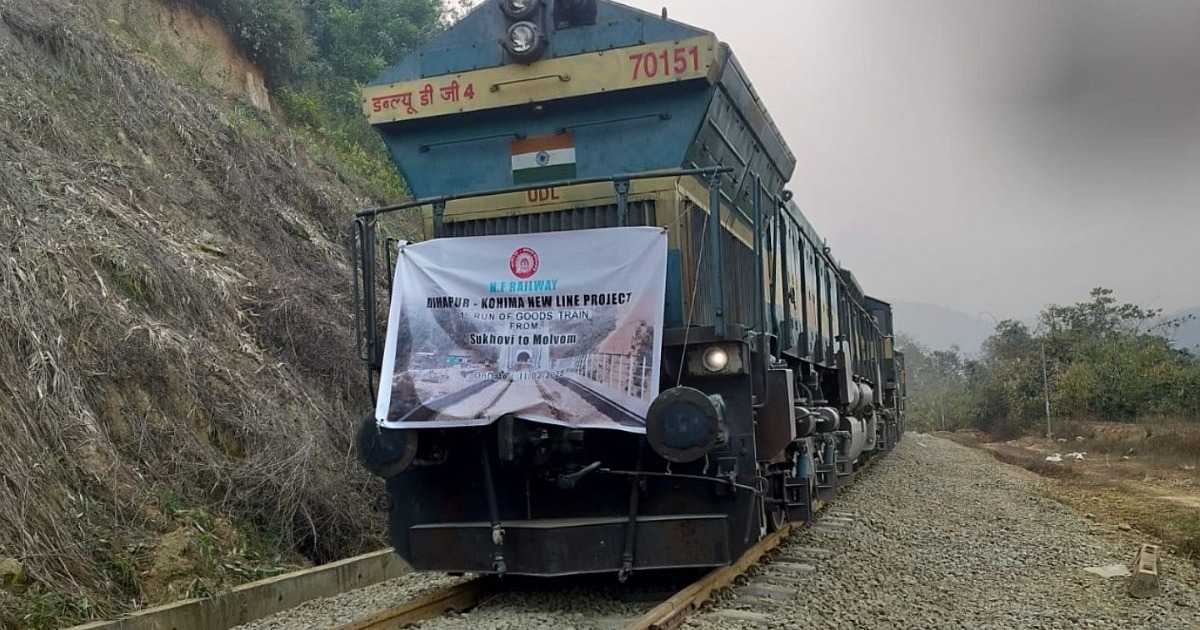
GUWAHATI : In a significant step toward bridging connectivity gaps in Northeast India by the Narendra Modi Government, the Commissioner of Railway Safety (CRS), Sumeet Singhal, has greenlit train operations on the newly constructed 14.64-kilometer Shokhuvi-Molvom broad gauge (BG) railway section in Nagaland. The authorization, granted on March 27 and 28, 2025, follows a meticulous statutory inspection of the line, which forms a crucial segment of the ambitious 82.50-kilometer Dimapur-Kohima Railway Project.

The Dimapur-Kohima rail line, stretching from Dhansiri station in Assam to Zubza in Kohima, Nagaland, spans 2.75 kilometers in Assam and 79.75 kilometers in Nagaland. Once fully operational, it promises to integrate the state capital of Nagaland with the rest of the country, boosting economic growth, tourism, and accessibility. The project features eight new stations—Dhansiri, Dhansiripar, Shokhuvi, Molvom, Pherima, Piphema, Menguzuma, and Zubza—along with an impressive engineering feat: 27 major bridges, 149 minor bridges, five road overbridges, 15 road underbridges, and 20 tunnels totaling 31 kilometers in length.

The Shokhuvi-Molvom section marks the latest milestone in this transformative infrastructure endeavor. A 16.5-kilometer stretch from Dhansiri to Shokhuvi was commissioned in October 2021, enabling passenger train services from Shokhuvi to Naharlagun in Arunachal Pradesh and Mendipathar in Meghalaya. With the CRS’s approval, trains can now operate on the Shokhuvi-Molvom section at a maximum speed of 90 kilometers per hour, following successful inspections and speed trials.

During the inspection, Singhal was joined by key officials from Northeast Frontier Railway (NFR), including Anjani Kumar, Chief Administrative Officer (Construction-2), Ashutosh Kumar Mishra, Chief Engineer (Construction) for the Nagaland Project, and Vikas Singh, Deputy Chief Engineer (Construction) based in Dimapur. Their leadership has been instrumental in driving the project’s progress.

A Gateway to growth

The newly laid Shokhuvi-Molvom line is poised to unlock a wealth of opportunities for Nagaland. Enhanced rail connectivity is expected to facilitate the movement of freight and passengers, fostering the growth of small-scale industries and invigorating the state’s tourism sector. For a hilly region long challenged by logistical constraints, the railway promises to slash transportation costs for goods and materials, ensuring a steady supply of essentials and significantly reducing travel times.

“This is a game-changer for Nagaland,” said a local official, speaking on condition of anonymity. “The rail link will not only connect us to neighboring states but also provide long-distance access across India. It’s a lifeline for our economy and our people.”

The Dimapur-Kohima rail project is part of a broader push to expand railway infrastructure across Northeast India, a region historically underserved by such networks. With monumental projects underway, experts predict a paradigm shift in trade and commerce by 2030, positioning the Northeast as a key player in India’s economic landscape.

Connecting the Northeast

The completion of the Shokhuvi-Molvom section brings Nagaland closer to realizing the full potential of the Dimapur-Kohima line. Once the entire 82.50-kilometer stretch is operational, residents of the state capital and surrounding areas will enjoy seamless connectivity with Assam and beyond. The project’s scale—spanning tunnels, bridges, and rugged terrain—underscores the engineering prowess and determination driving this initiative.

For now, the focus remains on completing the remaining sections, with railway officials optimistic about meeting future deadlines. As Northeast India’s rail network continues its rapid expansion, the Shokhuvi-Molvom line stands as a testament to the region’s evolving infrastructure and its promise of a more connected, prosperous future.

Enhancing the Global Competitiveness of Japan’s Maritime Industry

OSAKA : The University of Osaka (President: Atsushi Kumanogoh), in collaboration with Imabari Shipbuilding Co., Ltd. (President: Yukito Higaki, ‘Imabari Shipbuilding’), Japan Marine United Corporation (President: Takashi Hirose, ‘JMU’), Nippon Kaiji Kyokai (President & CEO: Hayato Suga, ‘ClassNK’), and MTI Co., Ltd. (President: Hideki Suzuki, ‘MTI’) will establish the Open Collaboration Laboratory for Enabling Advanced Marine Systems (OCEANS) at the Techno Alliance Building within the Graduate School of Engineering at The University of Osaka in April 2025. In addition, Nihon Shipyard Co., Ltd. (President: Kiyoshi Higaki, hereinafter referred to as ‘NSY’), a sales and design company owned by Imabari Shipbuilding and Japan Marine United Corporation (JMU), will also cooperate with this program. NSY will actively participate in the design and engineering research activities led by OCEANS.
 
This initiative aims to promote the global competitiveness of Japan’s maritime industry. Your attention to the OCEANS initiative is greatly appreciated.

Background and Objectives of Collaboration

In an era of unprecedented change, driven by rising geopolitical risks, growing awareness of economic security, climate change, the rapid development of technologies such as AI and their social impact, and the aging population in developed countries, the Japanese maritime industry is being called upon to make revolutionary transformation. A major revolution in design and manufacturing processes is needed to quickly supply high-performance next-generation ships that embody innovative functions, excellent environmental performance and safety features, to customers.

This collaboration, established under the ‘Industry on Campus’ program promoted by The University of Osaka, integrates diverse engineering fields such as ship hydro and structural dynamics, propulsion, electrical systems, and control systems. Leveraging advanced systems engineering and cutting-edge AI technologies, this initiative also serves as a hub for education and training of the next generation of talent.

For Japan, which is surrounded by sea, the maritime industry, that supplies and operates ships for marine transportation is fundamental for social and economic stability and people’s living. Japan’s shipbuilding industry is highly regarded worldwide for its design and construction technologies. The shipping industry has one of the world’s largest fleets and excellent safe and efficient transportation technologies. The classification society develops classification rules and conducts certification services for safe and efficient marine transportation, and the number of ships certified by it is one of the highest in the world.

The Graduate School of Engineering at The University of Osaka, particularly its Department of Naval Architecture and Ocean Engineering, has achieved global recognition for its research on ships and marine structures. The department has contributed significantly to international maritime safety standards and criteria, collaborating with leading companies and fostering interdisciplinary, advanced research.

International shipping has set a goal to achieve net-zero greenhouse gas (GHG) emissions by around 2050, with Japan’s maritime industry expected to play a crucial role in achieving this target. In addition to the essential transition to alternative fuels for GHG reduction, advancements in ship automation technologies are anticipated to progress further. This will undoubtedly lead to increased complexity in the processes of design, construction, certification, and operation. To address these challenges, innovative systems engineering leveraging cutting-edge technologies such as AI will be indispensable for the future of the maritime industry. This research laboratory will undertake these studies, contributing to the enhancement of the global competitiveness of Japan’s maritime industry.

This collaborative research program leverages the strengths of Japan’s world-renowned maritime industry cluster, including shipbuilding, shipping, and ship classification. By deepening industry-academia collaboration, it aims to enhance international competitiveness, advance world-class research, and foster talent development. The ultimate goal is to establish itself as a leading research and educational hub that drives the global maritime industry forward.

Overview of the Laboratory

Name: Open Collaboration Laboratory for Enabling Advanced Marine Systems (OCEANS)
Duration: April 1, 2025 – March 31, 2030 (5 years)
Location: Techno Alliance Building A 804-806, The University of Osaka

Faculty and Research Team (As of April 1, 2025)

  • Full-Time Faculty: Specially Appointed Assoc. Prof. Yasuo Ichinose, Specially Appointed Asst. Prof. Kouki Wakita
  • Part-Time Faculty: Prof. Atsuo Maki, Prof. Kazuhiro Iijima, Prof. Munehiko Minoura, Prof. Naoki Osawa, Assoc. Prof. Akira Tatsumi, Assoc. Prof. Masahiro Sakai, Asst. Prof. Takayuki Takeuchi
  • Visiting Faculty: Visiting Prof. (currently being selected), Visiting Assoc. Prof. (currently being selected)
  • Researchers from participating companies: Approximately 10 researchers

Research Focus Areas

  1. Basic research on innovative systems engineering and design automation
  1. Resilience of supply chain for stable marine transportation
  2. Application of AI in ship basic design, function design and certification
  3. Production design and digital shipyards
  4. Digital twin technologies in ship operation and maintenance
  1. Individual studies on design, construction, operation, and certification, including both open and closed research projects
  2. Education and training for the next generation of maritime industry experts

Contact Information

For inquiries regarding the research activities of OCEANS, please contact
Professor Atsuo Maki, Graduate School of Engineering, The University of Osaka
Email: maki@naoe.eng.osaka-u.ac.jp 

China hit by record number of WTO trade disputes as global backlash to export surge grows

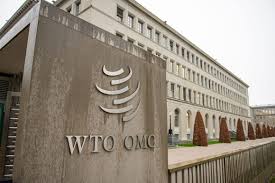
BEIJING : China faced a record number of WTO trade disputes in 2024 as its export surge fuelled global backlash, with both developing and advanced economies challenging its overproduction.

China faced a historic surge in trade disputes at the World Trade Organization last year as its flood of low-cost exports overwhelmed global markets, triggering widespread backlash from trading partners across the world. In 2024, Beijing was the subject of 198 WTO trade investigation cases — double the figure from the previous year — accounting for nearly half of all complaints lodged at the global trade body, according to data compiled by Peking University economist Lu Feng, according to the Financial Times.

Export reliance fuels global tension amid domestic weakness

China’s rising export dependence has become central to sustaining its economic growth as domestic demand remains sluggish amid a prolonged property sector downturn. The country’s global trade surplus soared to nearly $1 trillion in 2024, a record high that has intensified concerns about China’s imbalanced growth model and its impact on global trade.

“If China’s economy can become more balanced for her own interests, it may also improve relations with other countries,” Lu said.

But the imbalance is not just a domestic challenge. Analysts say that China’s overcapacity — particularly in sectors like steel, autos, chemicals and consumer goods — is spilling over into global markets, straining trade relations and inviting retaliatory action.

Trump’s tariffs push Chinese goods into alternative markets

Trade tensions have been further heightened by US President Donald Trump’s trade policy. Since taking office in January, Trump has imposed a 20 percent tariff on all Chinese imports and is expected to announce reciprocal tariffs on other US trading partners by April 2. In response, China has slapped retaliatory duties on $36 billion worth of American exports, including agricultural products, vehicles, and energy supplies.

François Chimits, economist at the Mercator Institute for China Studies, said US and Japanese trade barriers have shifted the burden of China’s excess output onto other markets. “The more barriers the US and Japan put up, the more the EU has to digest of Chinese excess production,” he said.

The European Commission launched 21 trade investigations into Chinese goods in 2024 — up from nine the previous year — targeting a wide range of products including plywood, candles, steel cylinders and decorative paper.

Developing countries drive surge in WTO complaints

More than half of last year’s WTO trade cases against China came not from the West, but from emerging economies. In total, 117 disputes were filed by developing nations, including 37 by India, 19 by Brazil, and nine by Turkey. The breadth of complaints underscores how China’s export-driven strategy is under growing pressure not only from wealthy countries, but also from its supposed economic allies.

China’s export dominance has even begun to upset close strategic partners. Russia, still facing Western sanctions, recently imposed “recycling fees” to slow a surge in Chinese car imports that now make up nearly two-thirds of its auto market. Meanwhile, Pakistan — a major recipient of Chinese infrastructure aid — filed five trade cases last year over rising imports of printing paper, tape, and chemicals.

Still, Pakistan’s finance minister Muhammad Aurangzeb played down the disputes, telling the Financial Times that “our relationship goes well beyond trade” and that China continues to support special economic zones aimed at boosting Pakistan’s exports. However, many Chinese-backed megaprojects in the country have faced cost overruns and lengthy delays.

Structural imbalances prompt internal calls for reform

Experts say that much of China’s trade friction stems from a deeper imbalance in its growth model — one that still prioritises production and investment over domestic consumption. Chinese leader Xi Jinping has made industrial upgrading a centerpiece of his economic agenda, particularly in high-tech sectors, but this has only sharpened concerns among trade partners about sustained global overcapacity.

“When you’re as big as China, you have to care what your imbalances mean for the rest of the world,” Chimits said.

Former officials inside China are increasingly echoing those concerns. Peng Sen, a former top planner at the National Development and Reform Commission, said at a recent forum in Hainan that consumption has long been sidelined in Chinese policy thinking.

“For a long time, we have prioritised production over living and emphasised investment over consumption,” Peng said. “Our traditional policies and systems have not been very friendly to consumption, resulting in a state of suppressed consumption.”

SEA-CARE working group to look beyond ‘top-level’ data for more holistic understanding of maritime safety

LONDON : The SEA-CARE working group concluded its third session in February by confirming commitments to share key data to secure common objectives.

Highlighting a need to look beyond ‘top-level’ data to pinpoint the root causes of casualties, attendees discussed specific datasets that could enrich findings drawn from Inmarsat’s Global Maritime Distress and Safety System (GMDSS) distress alert data. Crew welfare surveys, for example, offered a precious resource for developing a more holistic understanding of maritime safety, members agreed.

SEA-CARE is an industry working group launched last year by Maritime London and Inmarsat Maritime, a Viasat company, to improve safety standards across global shipping,

“If we look at safety data as a pyramid, what we report on at the top is the number of distress calls, but when we come down the pyramid, we get to the root causes of those top-level issues,” commented Peter Broadhurst, co-chair of SEA-CARE and Vice President of Safety & Regulatory at Inmarsat Maritime. “Using other datasets to derive a more complete picture of what’s behind the problems at the top could be key to effecting real change and reducing the frequency of serious incidents at sea.”

Several participants agreed to share data from their own organisations – including Andrew Bell, a member of the CHIRP Maritime Advisory Board; Steven Jones, founder of the Seafarers Happiness Index; and Lydia Ferrad, International Transport Workers’ Federation (ITF) Accredited Representative to the IMO.

CHIRP – Confidential Human Factors Incident Reporting Programme – owns and operates a reporting system for incident and near-miss data that participants agreed could help to determine the underlying safety deficiencies behind the consistently high distress call figures reported by Inmarsat. There was also consensus that data from the Seafarers Happiness Index and surveys conducted by ITF would provide invaluable insight into the crew welfare-related issues that may influence the frequency of marine casualties.

“It has long been Inmarsat’s ambition to gather more datasets outside of pure GMDSS data to supplement its reports and create a more holistic outlook of safety in the maritime sector,” said Jos Standerwick, co-chair of SEA-CARE and CEO of Maritime London. “If we combine the data that Inmarsat receives regarding distress calls with information on the nature of casualties from CHIRP and on seafarers’ lived experience from the Seafarers Happiness Index and ITF surveys, it could go a long way to helping us achieve our common goal.”

DPA Kandla creates history as the Best Performer amongst all Major Ports

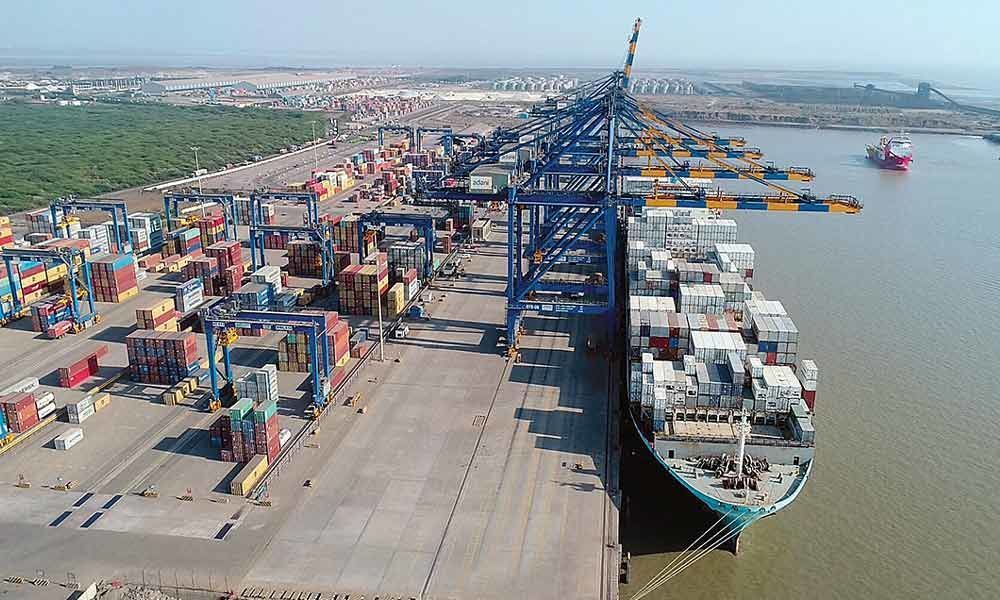
GANDHIDHAM : Deendayal Port Authority, Kandla crosses the historic 150 MMT mark in cargo handling for FY 2024-25 by achieving the highest-ever cargo volume in history.

With this achievement DPA Kandla is now the Best Performer amongst all Major Ports in the country.

Union Minister of Port, Shipping and Waterways Shri Sarbananda Sonowal congratulated Deendayal Port Authority on this achievement. In a post on X he wrote “Congratulations Team @Deendayal_Port! Our efforts in port modernisation have yielded impressive results, significantly enhancing port efficiency and operations. Together, we will build a Viksit Maritime sector for Viksit Bharat.”

Pollution India’s biggest challenge, transport sector key contributor: Gadkari

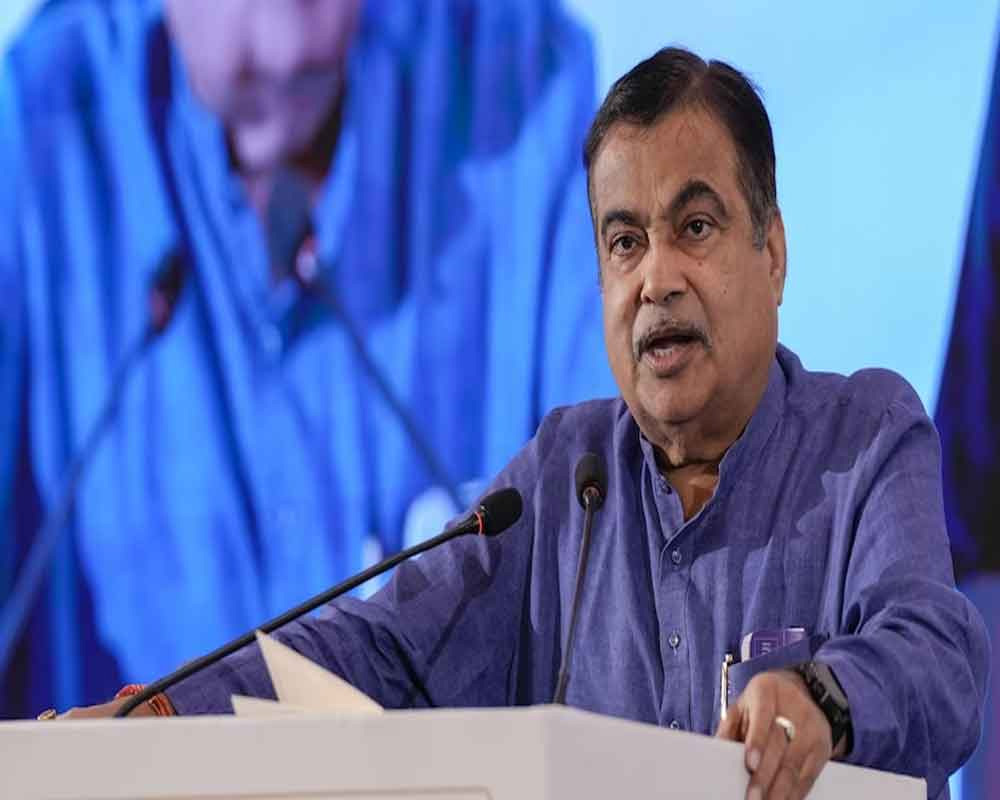
NEW DELHI : Pollution is India’s biggest challenge and the transport sector is a major contributor, Union Minister Shri Nitin Gadkari said on Monday, stressing the urgent need to transition from fossil fuels to alternative energy sources.

He said India’s dependence on fossil fuels is both an economic burden as Rs 22 trillion is spent annually on fuel imports and an environmental hazard, making clean energy adoption crucial for the nation’s progress.

Speaking at the launch of an eco-friendly electric cycle in Thane, the Road Transport & Highways Minister said cycling needs to be promoted as a sustainable urban transport option in view of increasing urbanisation.

Gadkari said the rapid growth of India’s automobile sector has surpassed Japan to become the third-largest globally since 2014.

He said by 2030, India will be the world leader in electric vehicle (EV) production, significantly impacting the global auto market.

He credited the sharp decline in lithium-ion battery prices (now at USD 100 per kWh) for making EVs more affordable and bringing them closer to price parity with traditional fuel-powered vehicles.

“Pollution is our country’s biggest challenge, and a major part of it comes from the transport sector,” Gadkari said, adding that the shift to electric and alternative fuels is not just an environmental necessity but also an economic imperative.

The minister said India’s young engineering talent is the driving force behind innovations in EV technology and alternative fuels. He noted that startups are making significant breakthroughs, propelling India to the forefront of the green energy revolution.

He also stressed the growing international demand for Indian-made electric two-wheelers which is a strong export opportunity that could boost the economy and improve India’s trade balance.

“Another key area of focus is biofuels,” Gadkari said.

He referred to the government’s initiatives in converting agricultural waste into biofuels, including bio-CNG and bio-aviation fuel, thereby transforming farmers into energy providers.

This shift would not only enhance rural incomes but also reduce pollution and decrease fuel import costs, he added.

“Farmers will no longer be just food providers- they will be energy providers too,” he said, highlighting ongoing biofuel projects aimed at reducing reliance on traditional fuels.

The minister called for promoting cycling as a sustainable urban transport option.

“With increasing urbanisation, dedicated cycling infrastructure is needed to encourage environmentally friendly travel while improving road safety and decongesting cities,” he added.

Gadkari further said the proactive government policies since 2014 have accelerated India’s automobile sector’s growth.

“By creating a supportive ecosystem for innovation and competition, India has become an attractive hub for EV manufacturing, alternative fuels, and green mobility solutions,” he added.

Gadkari said India is committed to reducing pollution, lowering import costs, and fostering economic growth through green technologies.

“With a strong push for electric vehicles, biofuels, and urban cycling infrastructure, India is poised to lead the global transition to sustainable transport solutions.

“The combination of cutting-edge technology, young engineering talent, and agricultural innovation will ensure that India remains competitive in the evolving global landscape,” he added.

Source : PTI

Freight Revenue rises by ₹54,805 Cr in 4 years from ₹1.13 Lakh Cr in 2019-20 to ₹1.68 Lakh Cr in 2023-24

NEW DELHI : Union Minister of Railways, Information & Broadcasting and Electronics & Information Technology Shri Ashwini Vaishnaw informed in a written reply to Rajya Sabha that the Revenue generated by Indian Railways from Freight and Passenger operations during the last five years is as under: –

Financial YearRevenue (₹ in Cr)
Freight
2019-201,13,48850,669
2020-21*1,17,23215,248
2021-22*1,41,09639,214
2022-231,62,26363,417
2023-241,68,29370,693

* COVID years.

Revenue earned by Indian Railways on account of flexi fare, tatkal and premium tatkal during 2019-20 to 2023-24 is approximately 5.7% of the total revenue earned from passenger services. Amount credited on account of Cancellation of tickets is not maintained separately.

As on 01.04.24, there are about 79,000 coaches being utilized for running train services. The details are as under:

ClassNo. of coachesNo. of seats
General and non-AC Sleeper~56,000(70% of total) ~51 lakhs
AC Coaches~ 23,000~14 lakhs
Total~ 79,000~ 65 lakhs

Details of passenger seats and revenue during the period 2019-20 to 2023-24 is as below:

ClassAvg %share of total seats during
 2019-20 to 2023-24
Avg % share of total passenger revenue during2019-20 to 2023-24
Non-AC coaches (General / Sleeper etc.)~ 82%~  53%
AC Coaches~ 18%~  47%

FM to launch “NITI NCAER States Economic Forum” portal on 1st April, 2025 in New Delhi

NEW DELHI : NITI Aayog, in collaboration with the National Council of Applied Economic Research (NCAER), has developed a portal which is a comprehensive repository of data on social, economic and fiscal parameters, research reports, papers, and expert commentary on State Finances for a period of about 30 years (i.e 1990-91 to 2022-23). Hon’ble Finance Minister Ms. Nirmala Sitharaman will launch the “NITI NCAER States Economic Forum” Portal on 1st April, 2025 in New Delhi. 

The portal has four main components, namely: 

  1. State Reports – summarising the macro and fiscal landscape of 28 Indian States, structured around indicators on demography, economic structure, socio-economic and fiscal indicators. 
  2. Data Repository – offering direct access to the complete database categorised across five verticals viz. Demography; Economic Structure; Fiscal; Health and Education. 
  3. State Fiscal and Economic Dashboard – showcasing graphical representations of key economic variables over time and provide quick access to raw data through a data appendix or additional information through summary tables. 
  4. Research and Commentary – draws on extensive research on State finances and critical aspects of fiscal policy and financial management at the State and national levels.

The portal will facilitate an understanding of macro, fiscal, demographic, and socio-economic trends; easily accessible data and user-friendly format and will also address the ongoing need for consolidated sectoral data in one place. It will further help in benchmarking the data of each state against that of other States and the national figures. It will also provide a forum to policymakers, researchers, and others interested in alluding to the data for informed debates and discussions.

The portal will serve as a comprehensive research hub, offering a wealth of data and analytical tools for in-depth research studies. It will act as a central repository of information, providing access to an extensive database of social, economic, and fiscal indicators spanning the past 30 years. By leveraging historical trends and real-time analytics, users will be able to track progress, identify emerging patterns, and formulate evidence-based policies for development.

Kutch region ports will be less impacted by US Tariffs

BHUJ : The impact of tariffs imposed by US President Donald Trump is being evaluated globally. However, the ports in the Kutch region in Gujarat are not likely to get affected by it. The tariffs of 25 per cent will be effective from April 2.

Adani Group spokesperson Jaideep Shah said that the tariffs imposed by the Trump administration are affecting the entire world. However, Trump’s policies will have minimal impact on India’s cargo volumes at Adani Ports and SEZ (APSEZ), as it is said to be doing small mergers and acquisitions both upstream and downstream for its logistics business.

At the recent HSBC Global Investment Summit, the management told analysts that US-bound cargos are only a small part of India’s trade, so the impact of tariffs would be minimal. According to analysts, even if India’s exports to the US decrease due to tariffs, India can compensate for it from other countries. Especially on APSEZ, its impact will be more limited.

A comprehensive announcement of reciprocal tariffs to reduce the trade deficit is also expected on April 2. However, some trading partners may receive concessions or reductions in tariffs.

According to the information received from the Deendayala Port Authority of Kutch, Kandla port, which exports a large quantity of goods, will see the impact of the 25 percent US tariff. However, the magnitude of the impact is difficult to gauge as India does not export large quantities of goods to the US.

Mainly, medical sector goods, electronics items, textile-related goods and automotive parts are exported from the port. If the tariff increases, then the exports will also decrease which will decrease the income of the port authority, affecting the overall business.

Source : ETV Bharat