Home Blog Page 929

Inland waterways transport infrastructure in state is set to get a major boost

0

The inland waterways transport infrastructure in the state is all set for a major boost with the Transport department executing the “Inland Waterways Transport Logistics and Spatial Development Project”.

The World Bank has recently signed an agreement with the central government and the state government to provide a loan of $105 million against the project which is aimed at facilitating both passenger and freight movement in five densely populated districts of south Bengal that covers the Kolkata Metropolitan Area (KMA) where one third of the state population resides.

The five year project has already taken off with the feasibility and socio-environmental impact study already over.

“The other important aspects of the project will involve institution strengthening and best business practices, integrated strategic development plan, safety study, linkage of water connectivity with city’s logistics, development of jetties and promotion of vessels that includes both passenger and cargo,” an official in the state Transport department said.

KMA covers four municipal corporations and 37 municipalities with Kolkata, parts of North 24-Parganas, South 24-Parganas, Howrah, Nadia and Hooghly within its jurisdiction.

The riverine route along the bank of river passing adjacent to Kolkata, Baranagar, Barrackpore, Chandannagore, Serampore, Uluberia, Budge Budge, Maheshtala, Pujali etc come under its aegis.

“The development of the jetties have already started. 48 jetties have suffered damages due to the severe cyclonic storm Amphan that hit the state on May 20 last year. Smart ticketing gates will be developed at 103 places across 40 locations,” the official said.

The development of a robust system for streamlining issuance of permits, controlling ferry movement along the river route and ushering in the best practices for efficient management is a major challenge for the department. “The promotion of vessels for cargo as well as passengers is a very important aspect and the department is holding talks for providing incentives for players so that they can invest in this area,” the official added.

The existing ferry system, operational for decades, caters to less than 2 per cent of the passenger traffic and a small portion of the freight movement.

This project will not only help improve the river transport infrastructure in Bengal and help in the economic development of the state by connecting the hinterland with markets and job centres in KMA.

Sources in the department said that some powerful middlemen had tried to disrupt the execution of this project under the patronage of a former minister who had joined BJP.

However, the intervention of the Chief Minister’s Office ensured the maintenance of transparency and now the project is on track.

Budget 2021: Share in Merchandise Exports must be raised from 1.67% to 5% : CII

wc100006CII Budget 2021: Share in Merchandise Exports must be raised from 1.67% to 5% : CII

NEW DELHI: Considering that exports have emerged as a significant growth driver and have the potential to boost economic recovery, the country’s share in world merchandise exports needs to be raised to five percent by 2025 from the current 1.67 percent, industry body Confederation of Indian Industry (CII) said in its Pre-Budget Memorandum 2021-22.

CII suggested that greater participation in global value chains (GVC), enhancing trade infrastructure, exporting good and not taxes, as well as reducing the cost of export credits are some measures which can raise India’s share in world merchandise export.

Global Value Chains:
In order to improve the country’s participation in the global value chain, CII suggested that it is important to bring down import tariffs, which have been raised in the past few years, as a high tariff rate creates policy uncertainty and prevents the country from becoming a part of the global value chain. An open and facilitative import environment is also vital to attract global companies and to ensure competitive access to intermediate goods.

Budget 2021 could announce setting up a task force may be in the Department of Commerce, in order to identify and strategize the country’s participation in such global value chain opportunities in consultation with the industry. The task force could also identify the key global value chain opportunities and announce policies targeted at attracting investments, both domestic and foreign investments, in those areas.

Reducing the Cost of Export Credit:
The average lending rates in the country are higher than those in other emerging economies. Due to this, Indian exports are often left uncompetitive in the international market. In order to mitigate the problem, the government offers an interest rate equalisation scheme to the MSMEs through which it provides an interest rate subsidy of five per cent on pre and post-shipment credit. The aim is to provide MSME exporters credit at globally competitive rates.

However, the buyers in the international markets do not differentiate between MSME exporters or large exporters, but go by quality, cost as well as credibility. CII suggests that the same scheme should be extended to all exporters instead of confining it to the MSMEs.

Additionally, the subsidy should be linked to global rates, instead of a fixed five per cent subsidy. The definition of exporter should also include manufacturers who sell to export houses. The scheme should also be extended for another two years after March 2021 for the exporters and manufacturer-exporters. The overall allocation to the scheme should also be increased to enable more enterprises to access the funds.

China’s suspension of the import, Kerala seafood exporters lose crores, seek govt help

China’s suspension of the import of Indian seafood products has added to the woes of exporters in Kerala already hit by the Covid pandemic. According to the Seafood Exporters Association of India (SEAI), China has rejected Indian fish consignments alleging detection of Covid traces in them during the past two months. The move followed India’s ban on 267 Chinese mobile apps in the aftermath of the border standoff, said SEAI Kerala chapter president Alex K Ninan.

“It has been a tough time for the seafood export sector after the restrictions on export due to Covid restrictions. The Chinese companies have been rejecting our consignments for the past two months. The allegations of Covid traces in consignments are just excuses.

We feel it is a reaction to the ban on Chinese apps. Exporters in Gujarat alone have incurred a loss of Rs 1,200 crore due to the rejection and the non-payment of dues,” he said. Sources said many exporters in Kerala are on the brink of bankruptcy due to issues including Covid restrictions, blockade of consignments in Colombo Transhipment Port and the China standoff.

Chinese market alone accounts for around 25% of Kerala’s seafood exports. The export to Europe too has been affected due to the stringent restrictions triggered by the second wave of Covid-19. There has been a decline in exports to the USA as well.

“Though South Asian countries are open, the companies are being forced to reduce the price due to the slump in market,” said Alex. Seafood products from Kerala, particularly Indian shrimp and ribbon fish, are in high demand in China. However, the companies are not keen to import Indian products due to the deterioration in relationship between the two countries, he said.

Many firms in major crisis: Export body
“Many export firms are in deep crisis. The banks are sending recovery notices. We need government support to tide over the crisis, but there has not been any response to the representation given to the Union government,” said Seafood Exporters Association of India (SEAI) Kerala chapter president Alex K Ninan.

Meanwhile, All Kerala Fishing Boat Operators Association has written to the Prime Minister seeking his intervention to revive the sector.

According to general secretary Joseph Xavier Kalappurackal, the livelihood of the fishing community has been severely affected due to Covid restrictions. The fishermen and boat workers have been pushed to penury as they could venture into the sea only for 45 days in 2020, he said.

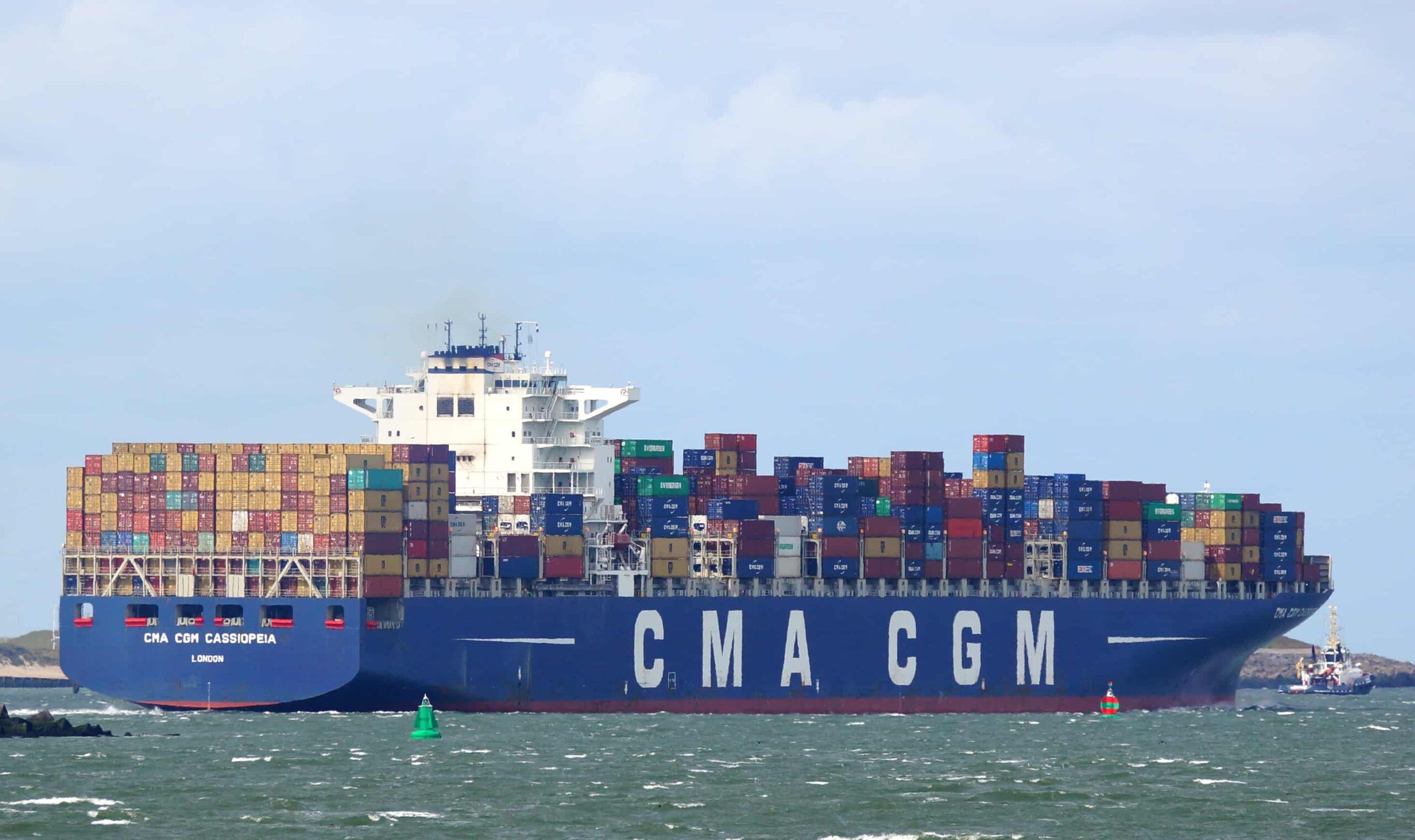
CMA CGM strengthens its Customer offer

wc100001cma cgm logo CMA CGM strengthens its Customer offer

MARSEILLE: The CMA CGM Group is pursuing its commitment towards its customers by increasing capacities in order to accompany them during these unprecedented times.

CMA CGM mobilized to offer its customers the best experience
CMA CGM customers will benefit from the Group’s high value-added services across all services, including:
• CMA CGM+, a complete package of 19 products and services designed to protect cargo and expand the business of the Group’s customers.
• Act with CMA CGM +, a range of 4 services enabling the Group’s customers to analyze their environmental footprint, choose cleaner alternative energy sources and to offset the emissions generated during the transport of their goods.

Committed to the energy transition of maritime transportation, CMA CGM will deploy by the end of the year 18 LNG-powered containerships, of which 9 23,000-TEU vessels will sail on the French Asia Line (FAL) between Asia and Northern Europe.

In addition, the Group will offer its customers a complete door-to-door offering of inland and logistics solutions including road, rail and inland waterway options.

A strengthened, optimized and highly competitive offer
With the signing of Ocean Alliance Day 5 Product, the CMA CGM Group will be providing, as of April 2021, even more effective solutions to answer its customers’ needs, with additional port calls, more direct links and shorter transit times. The Group’s customers will enjoy an optimized and highly competitive offer based on:

• The use of 333 containerships, 113 of which will be operated by the CMA CGM Group, which continues to play a major role in Ocean Alliance
• 39 services
• An estimated capacity of around 4.1 million TEUs (Twenty-foot Equivalent Units)

This evolution highlights CMA CGM’s commitment to serve its customers even more effectively, with:
• a comprehensive offer for Transpacific trade through 20 services
• a game-changing service offer between Asia and Europe with 7 services
• a substantial offer between Asia and the Mediterranean with 4 services
• 2 Transatlantic services connecting northern Europe with the East coast of the United States and the Gulf of Mexico
• the only alliance offering 4 dedicated services between Asia and the Middle East
• 2 Asia-Red Sea services

Launched in 2017, Ocean Alliance is the world’s largest operational collaboration between shipping companies.

India delivers 1st batch of heavy cranes to bolster operations at Chabahar port

India has delivered a consignment of heavy equipment, including cranes, for further development of Iran’s Chabahar port, signalling New Delhi’s commitment to the strategic connectivity project that can provide access to markets in Central Asia.

The consignment included two mobile harbour cranes of 140 tonnes, which were acquired from the Italian firm Italgru S.r.l. under a deal for a total of six cranes, people familiar with developments said on condition of anonymity.

“The first shipment of strategic loading and unloading equipment worth $8.5 million has arrived in Chabahar port to mark the activation of the contract between the Ports and Maritime Organization (PMO) and the Indian side,” said Behrouz Aghaei, director-general of the ports and maritime department of Iran’s Sistan-Baluchestan province.

Aghaei told Tehran Times that the heavy equipment will be installed at Shahid Beheshti terminal at Chabahar port, which is operated by India.

Reported last month that the cranes were set to be delivered in January, months after India cancelled a $30-million contract with Shanghai Zhenhua Heavy Industries for heavy cranes because of delays by the Chinese company in supplying the equipment ordered in 2017.

In May 2016, India Ports Global and Iran’s Aria Banader Iranian Port and Marine Services Company signed a deal to equip and operate the Shahid Behesti terminal, with a capital investment of $85.21 million and annual revenue expenditure of $22.95 million, on a 10-year lease.

Despite the Chabahar port being granted a waiver from US sanctions on Iran, India has faced problems in acquiring heavy equipment from foreign countries, mainly because of the reluctance of foreign banks to open letters of credit (LoCs) for a project within Iran.

A special process was adopted to acquire the cranes from Italy that sidestepped the sanctions issue, the people cited above said. The cranes were shipped to India before being transported to Chabahar, they added.

Aghaei said the Indian side will operate Shahid Beheshti terminal under a build-operate-transfer (BOT) contract and this was the first time such a deal is being implemented in an Iranian port with 100 per cent foreign investment.

Grain suckers, gate cranes and gantry cranes were installed at Shahid Beheshti terminal last year, but the lack of heavy cranes has hampered the loading and unloading of cargo from ships.

“India is the only foreign country that is currently participating in a major development project in Iran despite the US sanctions,” Tehran Times noted. The project is the “anchor for the expansion of economic relations” between the two sides, it added.

The Iranian side has requested the Indian government for railway equipment, including locomotives, signalling gear and equipment for railway stations, to bolster operations on the Chabahar-Zahedan and Khaf-Herat railway lines to give a further boost to Chabahar port. Iran has suggested this equipment can be provided by India under a $150 line of credit proposed some years ago.

India, Iran and Uzbekistan held their first trilateral meeting focused on Chabahar port in December 14 and this body is expected to meet every three months to push the joint use of the trade and transit facility on the Gulf of Oman. Afghanistan will be invited to the next meeting of this body.

With 2 big ports, Gujarat sets off race for Tesla plant

Jostling has started to host the assembling or production plant of Tesla Inc, after the Elon Musk-led electric car-maker opened a research and development unit in Bengaluru ahead of hitting the road in India.

With India’s biggest ports — Kandla and Mundra — in Gujarat, the State is pitching for the Tesla unit.

The first indication that Gujarat will pursue Tesla aggressively came from SK Mehta, Chairman of Centre-owned Deendayal Port Trust (formerly Kandla Port Trust).

“The Smart Industrial Port City that Deendayal Port Trust is developing on more than 800 acres could be ideal for Tesla,” Mehta told. According to industry sources, Gujarat is on Tesla’s radar as the State has established itself as a manufacturing powerhouse for auto and auto components, which Tesla can leverage.

With a plant near a port, the electric vehicle company will to save on logistics costs. This will also fit in well with Prime Minister Narendra Modi’s vision of port-led development model

Mansukh Mandaviya, Shipping Minister, whose ministry controls Deendayal Port, is an added factor in hard selling the port.

“Tesla will have huge import and assembling requirements. So, locating the plant next to a port, than in the hinterland, will save a lot on logistics costs,” said S Sittarasu, business development team leader at Deendayal Port Trust.

Located at Gandhidham on the Gulf of Kutch, a potential plant at Deendayal could also be the Asia manufacturing hub for Tesla from where it can tap the Gulf markets including Dubai at lower logistics costs given the short sailing distance to these places.

Tesla can take advantage of the Production-Linked Incentive (PLI) scheme of the Central government, the benefits accruing from GST as well as other benefits extended by the Gujarat government in line with the incentives offered to the automotive hub in Sanand.

“All these 5-6 parameters boil down to Kandla emerging as the ideal destination for Tesla whether it want to import, assemble, manufacture or export cars,” Sittarasu said, adding that Deendayal Port will soon make a pitch to the US-based car maker to house the project.

Deendayal, though, is expected to face stiff competition from nearby Mundra Port, India’s biggest port by volumes handled and run by Adani Ports and Special Economic Zone Ltd (APSEZ).

Mundra’s advantages, aside the land availability, are its deep draft and freedom to set rates being a private port. Plus, it will be linked to the Dedicated Freight Corridor (DFC).

Centre-owned Jawaharlal Nehru Port Trust (JNPT), which had pursued Tesla to lease land in its Free Trade Warehousing Zone, has slipped behind other contenders such as Karnataka, Andhra Pradesh and Haryana for the project.

DP World donates PPE kits & Masks to Mumbai Police

0

MUMBAI: Global logistics company, DP World has donated 5000 Personal Protective Equipment (PPE) Kits and 33,000 W95 Masks to Mumbai Police as part of COVID-19 relief efforts. The PPE kits include body suit, face mask, face shield, head cap, gloves, shoe cover & waste carry bag. The distribution of PPE kits and face masks was done by Mr. Rizwan Soomar, CEO & MD, Subcontinent, DP World in the presence of Ms. Arundhati Rane, Assistant Commissioner of Police, Mumbai.

In the fight against the COVID-19 pandemic, our frontline warriors have been relentlessly going beyond their call of duty throughout the lockdown and bravely risking their lives to protect others. Throughout the pandemic, DP World’s facilities have been operational 24×7 with its employees diligently ensuring constant flow of critical and essential goods like Vaccines, Medicines, Raw Materials for face masks / sanitizers, rice, wheat, pulses, fruits, and other cargo. To honour frontline warriors across India, DP World has taken several initiatives including contributing PPE kits and medical equipment. DP World also recently donated 34 new portable medical ventilators to various hospitals across India.

Rizwan Soomar, CEO & MD, Subcontinent, DP World, said “DP World honours all frontline heroes across the world who have been fighting the dangerous coronavirus to keep others safe. We are committed to constantly find ways to support our communities to stay safe and importantly assisting our frontline warriors in carrying out their duties safely.

We are grateful to the Mumbai Police for their relentless efforts to protect our citizens despite many adversities including the ongoing pandemic.”

wc41738dp world vector logo DP World donates PPE kits & Masks to Mumbai Police

Essar Ports growth trajectory continues in Q3 FY 21

0
wc77447essar log Essar Ports growth trajectory continues in Q3 FY 21

MUMBAI: Essar Ports, a leading private port infrastructure company, today said it had clocked a cumulative revenue for 36.5 million tonnes (MT) of cargo handling for the nine months ending December 2020, led by demand in power and steel industries and as the economy finds green shoots ahead of the world’s largest ever vaccination drive to fight the C-19 pandemic

167992essar Essar Ports growth trajectory continues in Q3 FY 21

For the three months ending December 2020, the company has sustained revenues for 12.7 MT, same as the previous quarter, as it tries to overcome challenges posed due to the C-19 pandemic era.

“Essar Ports’ growth trajectory has continued despite facing several challenges during the entire year. Our cargo handling performance over the nine months is a testament of how Ports play a pivotal role to keep economic engines running and their key role for an “Atmanirbhar Bharat”. We now look forward to a post Covid era now that India embarks upon one of the largest vaccination drives of the world. We expect a bounce back in the economy and revival of demand in next few months,” said Mr. Rajiv Agarwal, CEO & MD, Essar Ports Ltd.

Exports show signs of revival, order booking position improved: FIEO President

Reacting to December 2020 export figures, Federation of Indian Export Organisation (FIEO) President, Sharad Kumar Saraf said that the monthly exports have moved towards positive territory as major export products show signs of further revival as expected.

”Marginal increase of 0.14 per cent with 27.15 billion dollars of exports is showing signs of revival as order booking positions have continuously improved besides more new orders in the offing,” added Saraf.

He reiterated that the New Year 2021 has brought a ray of hope and optimism for all from the worst of Covid-19 and effective vaccines are expected to bring both life and economy back on growth trajectory with a v-shaped recovery in world trade.

‘Arrival of vaccines have also helped in boosting the business sentiments for the sector as a whole, which can be further seen from the positive figures of the upcoming months,” said Saraf.

FIEO President also added that December exports also signals that our traditional and labour-intensive sectors of exports have passed the most challenging and testing times as both Christmas and New Year Season sales have shown positive trends with further improvement in coming months.

Going ahead by this trend, we expect our inventories to be liquidated, adding further to the overall demand, observed Saraf.

FIEO Chief said that the exports of other cereals along with oil meals, iron-ore, cereal preparations and miscellaneous processed items, jute mfg. including floor covering, handicrafts excl. hand-made carpet, carpet, ceramic products and glassware, drugs and pharmaceuticals, spices, electronic goods, fruits and vegetables, organic and inorganic chemicals, cotton yarn/fabrics/made-ups, handloom products etc., rice, meat, dairy and poultry products, gems and jewellery, mica, coal and other ores, minerals including process, tea and engineering goods showed either a very high or impressive growth or were in positive territory showing signs of further revival.

Exports of 20 out of the 30 major product categories were positive during the month, he said.

Saraf also said that reduction in exports of major products including petroleum products, oil seeds, leather and leather manufactures, coffee, RMG of all textiles, man-made yarn/fabrics/made-ups etc., marine products, cashew, plastic and linoleum and tobacco and which are major constituents in India’s export basket and related to labour-intensive sector of exports have also been of key concern during the month. However, increase in imports during December 2020 by 7.56 per cent to 42.59 billion dollars compared to the same period during the previous fiscal led to a trade deficit of 15.44 billion dollars with a substantial increase of over 25 per cent during the month.

FIEO Chief also said that the operationalization of the new RoDTEP effective from January 1, 2021 will remove uncertainty from the minds of the trade and industry and being WTO compatible, the same would provide complete rebating of Indian exports by refunding the taxes including embedded taxes, not rebated through any other mechanism. However notification of the rates is the need of the hour.

Saraf also urged the government to address some of the key issues including adequate availability of containers, softening of freight charges, release of the required MEIS benefits and clarity on SEIS benefits, resolving risky exporters issues, introduction of NIRVIK Scheme, long pending demand for the creation of an Export Development Fund for marketing of Brand India products and various other infrastructure bottlenecks with regard to customs and port clearances, which will further help in giving boost to our exports not only in FY’ 2020-21 but also for the upcoming new fiscal.

Indian Ports Association transforming Ports using technology

NEW DELHI: Sea ports play a vital role in the export-import trade and thereby in the economic development of a country. To become globally competitive, due importance needs to be given to the development of infrastructure in general and port sector in particular, as ports play vital role in the overall economic development of the country. In India, more than 90% in terms of volume and 70% in terms of value of foreign trade involve sea leg. Therefore, the ports ought to be efficient and effective to enhance the competitive edge of India’s foreign trade.

In India, at present, there are 12 major ports, six on the west and six on the east coast each and about 69 operational non-major ports/private ports contributing to the maritime trade. These ports are spread along the country’s long coastline of around 7517 km on the western and eastern shelves of the mainland and also along the islands.

Understanding the key importance of technology, the Indian Ports Association, has already taken a series of initiatives to transform Indian ports. It has leveraged ERP to connect all the major ports to decrease the turnaround time, and bring about ease of doing business.

Another major initiative taken by the Indian Ports Association is the Port Community System (PCS), which aims to be the centralized hub for the electronic flow of trade related information for all ports and ports related entities.

Explains Sudhir Kanvinde, Executive Director-IT, Indian Ports Association, “As a part of Electronic Commerce/Electronic Data Interchange(EC/EDI) for Trade, Port Community System (PCS) project was envisaged, which intended the electronic flow of trade related information/document and function as the centralized hub for all the ports of India and other stake holders (like Shipping lines/Agents, Surveyors, Stevedores, Banks, Container Freight Stations, Customs House agents, Importers, Exporters, Railways/CONCOR, Government regulatory agencies, etc. for exchanging electronic messages in a secure manner. During the Covid -19 situation, the eBL solution, which works on Block chain (Ethereum) Technology, was integrated with PCS 1x in record time.“

The PCS is a centralized web application that acts as a single window for port community members and stakeholders to exchange messages electronically in a secure fashion. The objective is to achieve a paperless regime in the paper sector and reduce time and cost in the ports sector. There are also plans to implement an e-commerce portal for the port community.

Understanding the critical importance of the Port Community System (PCS) and its impact, the Government recently conferred the Digital India Award on December 30th 2020 under the ‘Exemplary Product’ category. The IPA received the award in the presence of the honourable President of India, Ram Nath Kovind

In addition to the above, the Executive Director (IT) Sudhir Kanvinde, under the leadership of the MD, IPA is also working on The Enterprise Business Solution (EBS) initiative. It aims to build capabilities across Information and Communication Technology (ICT) infrastructure and software delivery platforms and promote IT skill sets. “The initiative targets to create digital infrastructure and ensure seamless integration and availability of services in real time from online and mobile platforms. An initiative of this size and complexity is a significant undertaking for any organization. EBS will be rolled out at the five major Indian Ports and eventually at other ports. The IPA IT team is also working on implementing Digital Twin and getting ready for Digitalisation of the port sector,” explains Sudhir.