


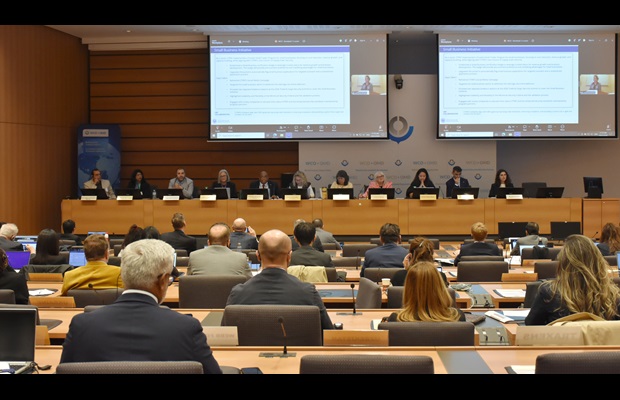
BRUSSELS: The World Customs Organization (WCO) held the 33rd Meeting of its SAFE Working Group (SWG) from 21 to 23 October 2026, marking an important milestone with the launch of the first-ever annual Micro, Small and Medium-sized Enterprises (MSME) Spotlight, while advancing several strategic initiatives aimed at strengthening global supply chain security, facilitating legitimate trade and promoting more inclusive participation in international trade.
Giving smaller businesses a voice: the first-ever WCO MSME Spotlight
A key highlight of the meeting was the successful launch of the MSME Spotlight, a new initiative developed in continued partnership with the World Trade Organization (WTO) and the International Chamber of Commerce (ICC). The SWG brought together Customs administrations and their own SME and MSME Authorized Economic Operator (AEO) partners to share their experiences directly with the international Customs community, building on the best practices in the 2025 joint WCO-WTO-ICC “Study Report on Integration of MSMEs into AEO Programmes”.
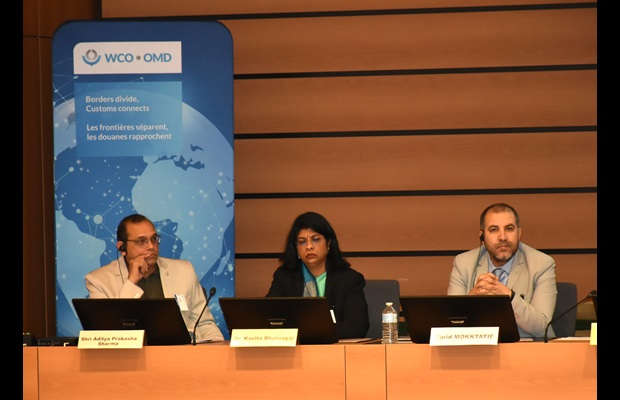
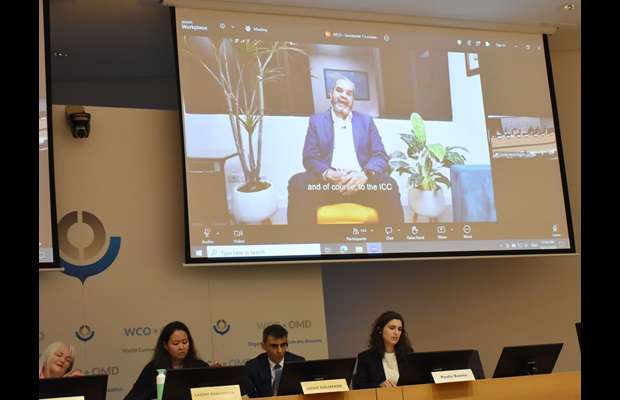
The inaugural Spotlight featured contributions from the United States, Morocco and India, together with participating smaller businesses. Through the ICC, participants also heard from a young logistics company from Panama, established only three years ago, which had already successfully obtained AEO certification.
This initiative represents an important step towards ensuring that smaller businesses, whose perspectives have traditionally been less visible in international Customs discussions, have a dedicated platform to share not only their achievements but also the practical challenges they face in participating in AEO programmes.
The discussions reinforced the importance of making AEO programmes more accessible and responsive to the realities of smaller businesses, while preserving the security and compliance standards underpinning the SAFE Framework of Standards.
The WTO and ICC also provided updates on their respective MSME-related initiatives, contributing to a broader exchange on supporting smaller businesses in international trade.
The MSME Spotlight will become a recurring feature of the SAFE Working Group, providing a sustained platform for dialogue between Customs administrations and smaller economic operators.
Towards a centralized global repository of Advance Cargo Information requirements
Another significant outcome of the meeting was the SWG’s agreement to advance the development of a centralized WCO repository of Members’ Advance Cargo Information (ACI) requirements.
This initiative responds to a longstanding practical need expressed by international trade and transport stakeholders for a single, reliable point of reference for ACI requirements across different countries and modes of transport.
The envisaged repository would bring together information on national ACI requirements, including relevant legal frameworks, submission timelines, responsible parties and other key operational elements.
By progressively consolidating this information in one accessible location, the WCO aims to facilitate compliance, enhance transparency and support more efficient information exchange between Customs administrations and industry.
The initiative is particularly relevant to stakeholders across all modes of transport, including the aviation, maritime, road and rail sectors, and has the potential to position the WCO as a central global reference point for ACI-related information.
Expanding AEO programmes to cross-border e-commerce
The SWG also considered the first draft of the Guidelines on Expanding AEO Programmes to Cross-Border E-Commerce, an important step towards adapting the AEO concept to evolving international trade business models.
The draft Guidelines explore how different e-commerce stakeholders could be integrated into AEO programmes, taking into account their diverse roles, operational characteristics and compliance responsibilities. Particular attention was given to practical approaches for eligibility, validation, benefits and participation opportunities for smaller businesses.
The discussions provided valuable direction for the further development of the Guidelines, with a view to ensuring that AEO programmes remain relevant, inclusive and responsive to the changing global trading environment.
Measuring the real impact of AEO programmes and Mutual Recognition Arrangements
Recognizing the importance of demonstrating tangible results, the SWG further discussed ongoing work to develop methodologies and supporting materials for assessing the practical benefits of AEO programmes and Mutual Recognition Arrangements (MRAs).
The work seeks to move beyond the number of certified operators or signed arrangements and examine how these instruments deliver measurable benefits in practice, including improved predictability, reduced delays, enhanced facilitation and more effective cross-border cooperation.
Such efforts will help Customs administrations and businesses better understand the actual value of AEO programmes and MRAs, while identifying opportunities for further improvements.
Can Smart Security Devices transform Customs vigilance?
The meeting also featured an interactive roundtable entitled “Can Smart Security Devices Transform Customs Vigilance?”, bringing together perspectives from the United Kingdom, the Smart Container Alliance and the Eurasian Economic Commission.
Moving beyond traditional presentations, the roundtable adopted a practical, scenario-based approach to explore the potential applications, benefits and limitations of Smart Security Devices (SSDs) in international supply chains.
Discussions examined how information generated by such technologies, including geolocation, electronic seal integrity, tamper detection and shipment routing data, could support Customs risk management and controls.
The exchanges also considered practical challenges relating to data reliability, evidentiary value, interoperability and the appropriate use of technology in Customs decision-making. The format encouraged dialogue between different stakeholders and helped identify areas where further technical exchanges and cooperation could add value.
The 33rd SWG Meeting demonstrated the continued relevance of the SAFE Framework of Standards as a cornerstone of global supply chain security and trade facilitation.
By combining new initiatives on digital transparency and emerging technologies with practical work on AEO implementation, impact measurement and greater MSME participation, the SWG continues to translate international standards into concrete solutions for Customs administrations and businesses.