Home Blog Page 106

South Coast Railway reviews freight infrastructure at Krishnapatnam Port

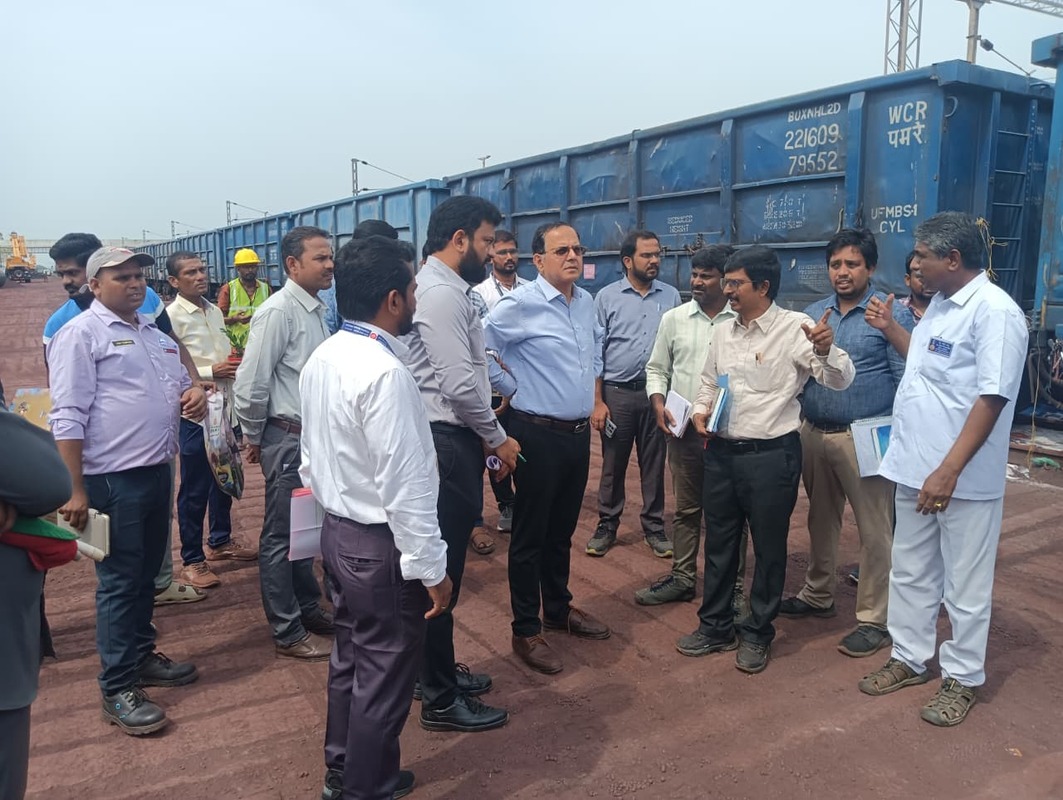
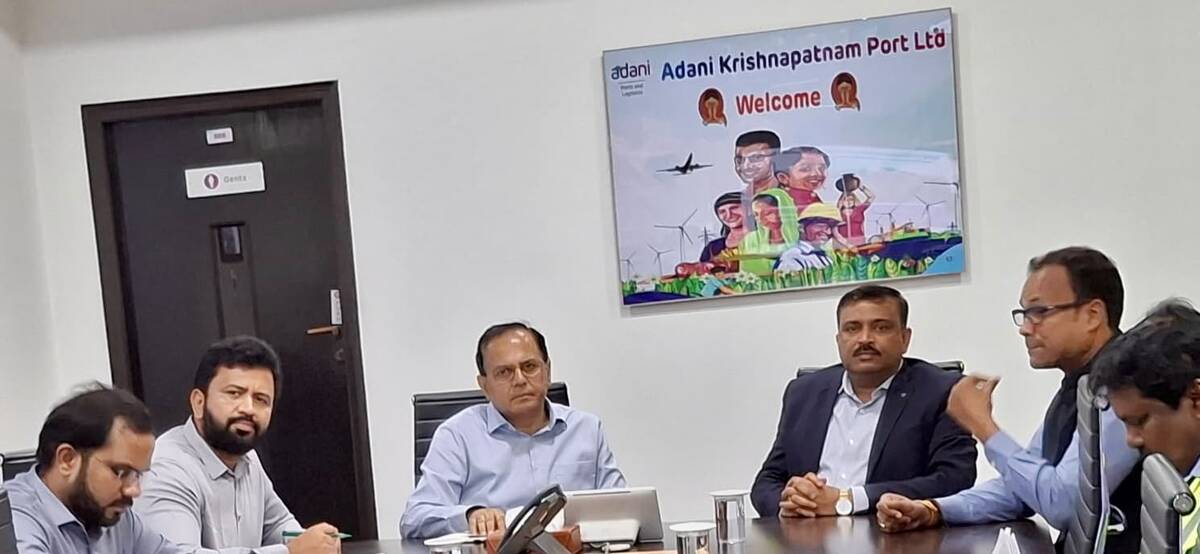
NELLORE: Principal Chief Operations Manager of South Coast Railway (SCoR) Mr. Vineet Kumar visited Adani Krishnapatnam Port Limited and key railway stations and reviewed infrastructure development and freight handling capacity.

Mr. Kumar held discussions with Port CEO Jagadeesh Patil on strengthening rail infrastructure and enhancing the port’s freight handling capacity.

South Coast Railway reviews freight infrastructure at Krishnapatnam Port 2 1 South Coast Railway reviews freight infrastructure at Krishnapatnam Port

Krishnapatnam Port has augmented its silo-loading infrastructure by adding a feeding conveyor, enabling two silos to operate simultaneously and improving loading efficiency.

With the addition of a mechanised berth, the port now has six mechanised berths and is capable of handling Capesize vessels, each of which can carry more than one lakh tonnes of cargo.

The port has set a target of loading 25 million tonnes of freight by rail during the current financial year, against 22.7 million tonnes achieved in the previous financial year, SCoR officials said in a release on Saturday.

Mr. Kumar also conducted a field inspection of Manubolu, Krishnapatnam, Rapur and Niduguntapalem railway stations and goods sheds. He reviewed operational safety, efficiency and the progress of ongoing development works.

Senior Divisional Operations Manager A. Suresh Reddy, Divisional Commercial Manager G. Mohana Krishna and other officials accompanied Mr. Kumar.

Modinagar ICD Flags Off First Reefer Train to Mundra Port, Strengthening NCR–West Coast EXIM Connectivity

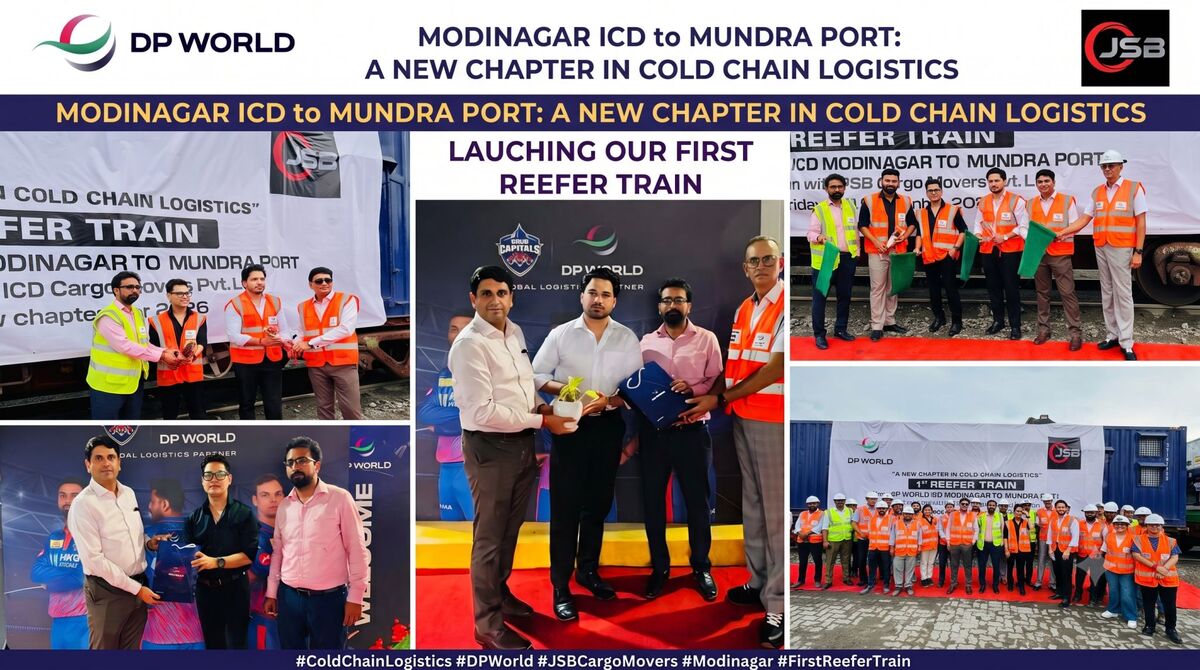
MODINAGAR (UP): In a significant milestone for India’s cold chain and EXIM logistics sector, Modinagar Inland Container Depot (ICD) has successfully flagged off its first refrigerated (reefer) train to Mundra Port, opening a new rail-based logistics link for temperature-sensitive cargo between the National Capital Region (NCR) and the West Coast.

The milestone has been achieved through the collaboration of DP World, serving as the Container Train Operator, and JSB Cargo Movers Pvt. Ltd., acting as the Freight Forwarder, along with customers, rail partners, operations and commercial teams and other stakeholders across the logistics ecosystem.

The launch marks an important development in strengthening integrated EXIM connectivity from the NCR to Mundra Port, one of India’s key maritime gateways on the West Coast. The new reefer rail service is expected to provide customers handling temperature-sensitive and perishable commodities with an additional, reliable and efficient transportation solution.

The first reefer train movement is the culmination of sustained engagement, persistent follow-through and close coordination among the stakeholders involved. Bringing a specialised rail service from the planning stage to actual execution required considerable alignment across commercial, operational and rail-related functions.

For DP World, the milestone reinforces its role as a Container Train Operator in facilitating rail-led cargo connectivity and supporting integrated supply chains. Meanwhile, JSB Cargo Movers Pvt. Ltd., as the Freight Forwarder, played an important role in facilitating the movement and connecting customer requirements with the new logistics solution.

The commencement of reefer rail services from Modinagar is particularly significant for cargo that requires controlled-temperature transportation. By connecting the NCR directly with the West Coast’s maritime gateway, the service can contribute to more streamlined movement of temperature-sensitive EXIM cargo and enhance the overall cold chain logistics proposition for customers.

Beyond the movement of the first train, the milestone demonstrates the value of long-term stakeholder engagement, collaboration and determination in developing specialised logistics solutions. The successful launch reflects coordinated efforts involving customers, rail partners, DP World’s operations and commercial teams, JSB Cargo Movers and the wider logistics ecosystem.

The development also underlines the growing importance of rail-based transportation in India’s integrated EXIM and cold chain network, offering an alternative to road-based movement while strengthening the connection between inland logistics hubs and major ports.

With the first reefer train now successfully departing from Modinagar ICD for Mundra Port, the initiative marks a new chapter in cold chain logistics connectivity between North India and the West Coast, while creating opportunities for more efficient and integrated movement of temperature-sensitive cargo.

No signed Hormuz deal expected yet from Oman meeting on Monday, Iranian official says

OMAN: A meeting between Iran and Gulf states planned for Monday in Oman will be a chance to discuss issues including ​the Strait of Hormuz, but is not expected to ‌yield a signed agreement over the blockaded waterway, a senior Iranian official said on Saturday.

Iran has been negotiating for months with Oman, which controls ​the opposite bank of the strait, over a deal that ​would govern transport through it. Oman has long said ⁠its negotiations are supported by other Arab countries in the ​Gulf.

Tehran announced on Friday that it was planning to attend a ​meeting with Gulf countries in Oman on Monday. Oman has not officially announced the meeting and other regional states have so far remained silent. Bahrain ​said on Saturday it would not attend meetings with Iran.

The Iranian ​official, who discussed the plans on condition of anonymity, said Monday’s meeting was ‌called ⁠at Oman’s initiative, and would provide a forum to discuss other regional issues as well as Hormuz.

According to the Iranian official, Iran still wants an agreement that would allow it to collect ​fees from ships ​that use the ⁠strait, which Oman rejects.

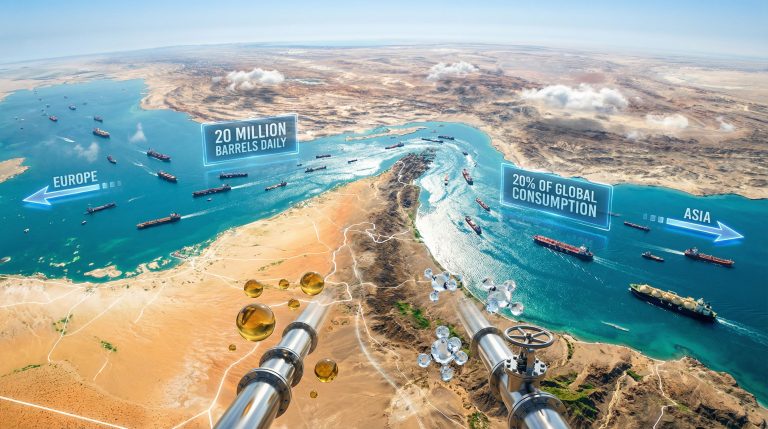
Around a fifth of global oil supplies transited the strait before the United ​States and Israel attacked Iran in February, launching ​the war.

Global oil ⁠prices have surged over the past week after the United States and Iran both fired on tankers in the strait, and Iran’s Houthi ⁠allies ​in Yemen advanced near another crucial Middle ​East conduit for oil, the Bab el-Mandeb Strait on the opposite side of the ​Arabian Peninsula.

Source: Reuters

World Shipping Council Urges Action on Undeclared Small Lithium-Ion Battery Cargoes

WASHINGTON D.C.: The World Shipping Council is pressing governments to close a regulatory gap that allows large volumes of small lithium-ion batteries to travel in containers without carriers being told what is inside, as per Reports. The industry body argues that the exemption, which permits compliant shipments of small batteries to go undeclared, leaves operators unable to manage a fire risk that has already produced serious incidents.

Lithium-ion batteries carry well-known fire hazards and rank among the cargoes that container lines and roll-on/roll-off operators watch most closely. Shipments that are improperly declared and moved outside the rules of the International Maritime Dangerous Goods Code present a substantial danger. Under the current framework, however, a shipper may pack an unlimited number of small batteries into a standard container without notifying the carrier, a practice the council describes as a fully compliant loophole.

Estimates from the International Energy Agency cited in the report put the growth in lithium-ion batteries in circulation at six times the level of five years earlier, with demand projected to double by the end of the decade. Clean-energy transport, utility-scale grid storage, personal electronics and a wide range of industrial and commercial uses have all contributed to rising demand for the technology, which is valued for durability and high energy density. When such batteries short out or overheat, they can ignite and release toxic, flammable gases rapidly, and the resulting fire is hard to put out. Aboard a vessel, the hazard has to be controlled through safe-stowage practices.

The IMDG Code sets out specific requirements for declaring and stowing dangerous goods, including large lithium-ion battery packs. Smaller batteries can fall under an exception known as SP188 when they satisfy certain testing criteria, meaning they need not be disclosed or shipped with the same precautions even when many are packed together.

The council illustrates the scale of the issue with a consumer-electronics example: a standard 40-foot container might hold as many as 4,200 laptops, whose combined battery capacity could match that of three to four electric vehicles. Electric vehicle battery packs are a recognized and regulated fire risk that can be reduced to an acceptable level when handled properly. The equivalent battery content in a laptop shipment could be delivered by a shipper without the container line knowing, making proper management impossible. The council says this has led to known incidents and must change.

Joe Kramek, President and CEO of the World Shipping Council, said that hazards which remain invisible can produce serious consequences. He noted that batteries shipped under the exemption have caused significant container fires, endangering people, ports, ships and the marine environment, and said that as battery shipments keep growing a better solution is needed so these cargoes become visible and their risks can be managed properly.

The report recounts an earlier case in which a 40-foot container filled with battery-powered flashlights caught fire on the deck of the boxship X-Press Godavari in September 2020 and burned for more than three days, continuing even after it was moved onto the pier. The container had likely overheated during transport as deck cargo in 86 F conditions, a situation probably worsened by direct sunlight at its stowage position. The ambient temperature was already at the upper storage limit recommended by the original equipment manufacturer, and the extended sun exposure went against the manufacturer’s guidance. The roughly 7,000-kilogram combined mass of lithium-ion batteries in the cargo likely ignited as a result. The shipment complied with SP188 and was not declared as dangerous goods, as the IMDG Code exception permits. Had the operator been informed, the container would likely have been stowed appropriately and the fire might not have happened.

To tackle the problem, the council has submitted a proposal to the International Maritime Organization that would cap the maximum weight or capacity of batteries allowed in a single container under the SP188 exemption. Beyond that threshold, battery packs would have to be declared. The proposal is scheduled for review next week at the next meeting of the Sub-Committee on Carriage of Cargoes and Containers.

IMO Net-Zero Framework: FMC Oversight and Shipping Act Implications for U.S. Maritime Trade

LONDON : The International Maritime Organization’s (IMO) proposed Net-Zero Framework (NZF) represents an ambitious international effort to decarbonize the maritime sector. The initiative establishes a target of achieving net-zero greenhouse gas (GHG) emissions from international shipping by or around 2050. The NZF is the first in the world to combine mandatory emissions limits and GHG pricing across an entire industry sector. For example, under the proposed system, fleets failing to meet the base target would pay Tier 2 penalties set at $380 per tonne of carbon dioxide (CO₂) equivalent, while those meeting the base target but not the more ambitious direct compliance target would pay a Tier 1 price of $100 per tonne of CO₂ equivalent. Depending on their design, fuel mandates could affect supply chains and shipping costs. Stakeholders have noted that such effects may raise questions under the Shipping Act’s prohibition on unjust and unreasonable practices affecting U.S. commerce.

The Federal Maritime Commission (FMC or Commission) plays an important role in protecting U.S. importers and exporters from unjust practices, and international environmental mandates that impact shipping costs and service availability may warrant the Commission’s oversight. The Ocean Shipping Reform Act (OSRA 2022) enhanced the Commission’s ability to address carrier conduct that affects American exporters and importers, reinforcing its role as a safeguard for fair and efficient maritime trade.

IMO NZF: Commercial Impact of Fuel Regulation
Though the environmental objectives are significant, the framework’s current structure presents questions regarding implementation feasibility and commercial impact that stakeholders on all sides of the debate continue to assess.

A central point of discussion involves the framework’s approach to fuel regulation. Certain proposals within the NZF would establish prescriptive requirements that could limit the fuel options available to vessel operators in the near term. This approach – transitioning from established petroleum infrastructure through regulatory mandate – may affect a supply system that currently derives resilience from multiple suppliers, refining capacity and distribution networks. Proponents of the framework argue that clear mandates are necessary to drive the capital investment and infrastructure development required for decarbonization at scale.

Implications Under the Shipping Act
The Shipping Act of 1984, as amended by OSRA 2022, prohibits common carriers from engaging in unjust or unreasonable practices in connection with the receipt, handling, storage or delivery of cargo. The statute also bars carriers from implementing practices that result in unreasonable increases in transportation costs or unreasonable decreases in service.

International environmental mandates that significantly increase operational costs or constrain service availability may implicate these statutory standards when their effects are passed through to shippers engaged in U.S. foreign commerce. If fuel-related requirements lead to cost increases borne by American exporters and importers, affected parties may seek to challenge related carrier practices before the FMC.

Additionally, proposals that would mandate adoption of fuels before they reach demonstrated commercial viability raise questions about realistic availability, affordability and scalability. Stakeholders continue to debate whether implementation timelines should be tied to verifiable fuel readiness metrics or whether firm deadlines are necessary to accelerate investment and adoption.

FMC Authority and Expanding Regulatory Reach
The FMC has demonstrated a strong commitment to protecting U.S. ocean commerce in recent years. OSRA 2022 enhanced the Commission’s ability to address carrier conduct that affects American exporters and importers, reinforcing its role as a safeguard for fair and efficient maritime trade. As international regulatory frameworks such as the NZF gain traction, the FMC is well positioned in its statutory authority to ensure that carriers implement compliance strategies in ways that remain fair to U.S. shippers. The Commission’s oversight helps ensure that surcharges, service modifications and operational changes affecting ocean transportation remain reasonable and transparent.

Chairman DiBella has commented on the proposed fund at the heart of the framework, stating: “In the end, it’s inflationary. It’s going to hit us in our pockets.” She also questioned whether a global IMO regime would replace existing regional carbon pricing mechanisms such as the European Union Emissions Trading System (EU ETS), stating: “If anything were to be adopted, we want all fuels. We absolutely positively want no fund. And the EU ETS needs to go.” Though Chairman DiBella was careful to distinguish her own assessment from a formal position of the FMC or the wider U.S. administration, her comments reflect the ongoing policy discussion in Washington, D.C., regarding the economic structure of the current proposal.

Most notably, Chairman DiBella has publicly stated that the NZF could become the subject of a FMC investigation. Though she has not said the FMC has plans to open proceedings against any specific country, she has placed the FMC’s seldom-used Section 19 authority squarely within the international climate policy discussion. Under 46 U.S.C. §§ 42101–42109 and the Commission’s implementing regulations, the FMC may open an investigation on its own motion or in response to a petition when a foreign government’s laws, regulations or practices (or even the competitive methods, pricing practices or other practices of foreign vessel owners and operators) create or could create conditions unfavorable to shipping in U.S. foreign trade. Potential triggers include differential fees or requirements, unfair or discriminatory effects on carriers, shippers, importers, exporters or ports, increased operating or cargo costs, burdens on maritime activities, or other conditions detrimental to U.S. foreign commerce or the public interest.

Thus, implementation of the framework by flag states or carrier practices used to recover its costs could attract FMC scrutiny if the resulting charges or restrictions produce such conditions. A Commission finding would be required per 46 C.F.R. Part 550 before relief is imposed, but the available remedies are significant: equalizing fees, limits on sailings or cargo, suspension of tariffs or service contracts, fees of up to $1 million per voyage and, in appropriate circumstances, a request that vessels be denied entry to U.S. ports.

The FMC’s oversight extends to environmental compliance costs incorporated into carrier tariffs and service contracts. The intersection of international environmental regulation and domestic maritime oversight underscores the Commission’s continued relevance in monitoring conditions affecting American trade.

Recommendations for Industry Stakeholders
Shippers, carriers and other maritime industry participants should closely monitor developments at the IMO as the NZF advances. Key considerations include : assessing potential exposure to increased transportation costs resulting from fuel mandates and developing strategies for cost management and allocation in service contracts monitoring the evolving U.S. regulatory posture and any retaliatory trade measures the U.S. may pursue against flag states supporting the framework engaging with policymakers and industry associations to advocate for NZF provisions that recognize commercially viable alternative fuels preparing for regulatory fragmentation, as the continued delay in NZF adoption may result in an expanding patchwork of regional carbon pricing systems imposing varying compliance obligations depending on trading routes evaluating service contracts and tariff provisions in light of potential environmental surcharges and compliance cost pass-throughs leveraging the FMC’s protective oversight to address carrier practices that may raise concerns under the Shipping Act.

Looking Ahead
With the industry awaiting global GHG reduction regulations, delegates are under pressure to chart a path forward without further delay. A central sticking point remains whether the framework should retain financial penalties on vessels reliant on conventional fuels, with those payments directed to an IMO-administered fund.

A central question emerging from this debate may not be climate language – it may be whether Washington views a global shipping levy as a trade policy matter. Chairman DiBella has raised this point directly, noting that the U.S. is not obligated to accept a multilateral framework that imposes costs on American cargo. With the Commission’s Section 19 authority now part of the international climate policy discussion, an adopted framework that produces conditions deemed unfavorable to U.S. foreign commerce could shift from a diplomatic outcome to an FMC regulatory matter.

Several near-term milestones will shape this trajectory: whether fuel alternatives remain on the table at the current London session, developments at the November intersessional and IMO Marine Environment Protection Committee, and the resumed extraordinary session now penciled for December 4, 2026. Industry participants should monitor these developments, including Chair DiBella’s statements and the broader U.S. posture, as negotiations continue.

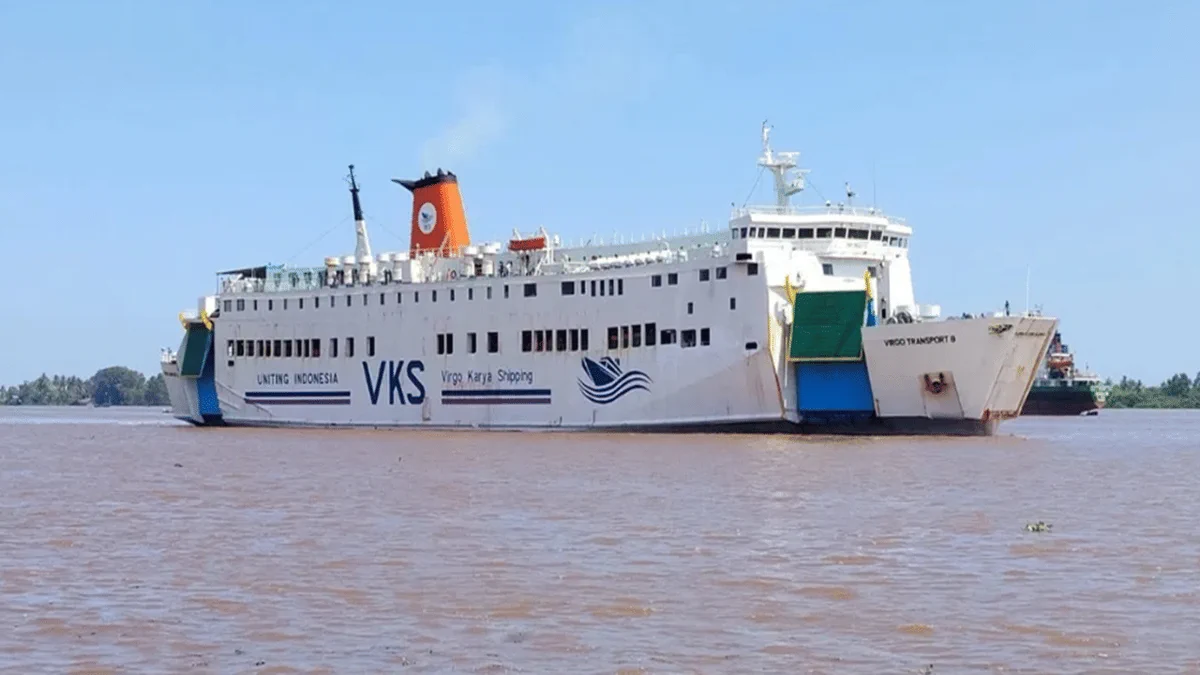
Indonesian Ship with Over 240 Passengers loses contact in Java Sea, Search and Rescue on

JAKARTA: Indonesian rescuers launched a search operation Sunday after authorities lost contact with a passenger ship carrying more than 240 people in the Java Sea while traveling from East Java to South Kalimantan province, officials said.

The Search and Rescue Office in the city of Banjarmasin in South Kalimantan, which is located on Borneo island, said it received a report two hours after contact was lost with the Virgo Transport 8 at about 2 am Sunday. The ship had departed from Surabaya, Indonesia’s second largest city in East Java province, en route to Banjarmasin.

“The ship’s operator reported the incident to authorities after receiving information that the vessel had encountered bad weather,” said I Putu Sudayana, who heads the Search and Rescue Office, in a video briefing.

Initial information indicated the vessel’s last known position was in the Java Sea, about 148 kilometers (92 miles) from a pier in Banjarmasin. The ship’s manifest said it was carrying 241 passengers.

There were no immediate reports of casualties.

The vessel’s operator, PT Virgo Yoel Rihi, reported the loss of contact and said the ship departed Surabaya on Saturday at 10:13 am local time.

In response, a rescue team was dispatched to Banjarmasin’s Basirih Search and Rescue pier, and a rescue ship was headed to the Virgo Transport 8’s estimated last known position.

Sudayana, who is coordinating the search, said authorities were mobilising all available personnel and assets because the vessel was carrying a large number of passengers and crew.

He said the agency was coordinating with maritime authorities and other relevant agencies in the search, while closely monitoring weather conditions in the area.

PM Modi calls for removal of top 10 trade barriers, 1,000 new business partnerships across BRICS

NEW DELHI: Prime Minister Shri Narendra Modi has called for a more practical and business-oriented BRICS economic agenda, urging the BRICS Business Council to identify and work towards removing the top 10 trade barriers among member countries, support 100 startups annually in expanding into BRICS markets and facilitate 1,000 new business partnerships every year.

Addressing the Leaders’ Session of the BRICS Business Forum in New Delhi on Friday, PM Modi said that at a time when trade barriers are increasing globally, India is building “economic bridges” and expanding opportunities for businesses. He noted that India has entered into free trade agreements with nearly 40 countries since 2014.

The Prime Minister also placed secure maritime connectivity at the centre of global trade, stressing the importance of secure sea lanes, open supply routes and the safety of seafarers for uninterrupted international commerce.

He highlighted India’s efforts to build resilient and diversified supply chains and identified strategic sectors such as shipbuilding, semiconductors, critical minerals, quantum technology and biotechnology as areas with significant potential for future cooperation.

The Prime Minister further highlighted India’s digital infrastructure and UPI as examples of innovation at population scale, while pointing to new BRICS cooperation initiatives in agriculture, healthcare, skills and smart grids, along with the BRICS Incubator Network, MSME Portal and Startup Innovation Fund.

BRICS at an important economic crossroads

The discussions in New Delhi come as BRICS has expanded into a larger grouping of emerging and developing economies, representing a substantial share of the global population, economic output and trade. The bloc’s expanded membership has also brought greater economic opportunities as well as the challenge of coordinating countries with different economic structures and geopolitical interests.

The 18th BRICS Leaders’ Summit will now take place on September 12–13 at Bharat Mandapam, where leaders are expected to take forward these economic discussions alongside deliberations on global governance, international peace and security, development and the future direction of BRICS cooperation.

India’s BRICS 2026 message is increasingly clear: from dialogue to delivery — fewer trade barriers, stronger supply chains, deeper business partnerships and a more connected Global South.

Prime Minister meets with UN Secretary-General on the sidelines of the BRICS Summit

NEW DELHI: Prime Minister Shri Narendra Modi Friday met with the UN Secretary-General, H.E. Mr. António Guterres, on the sidelines of the BRICS Summit in New Delhi.

UNSG Guterres congratulated PM Modi for India’s chairship of the BRICS for the fourth time. Both leaders underscored the significance of multipolarity and the need to reform multilateral institutions, including the UN Security Council, to reflect contemporary realities.

They also held discussions on various issues, including ongoing conflicts and freedom of navigation, sustainable development, human-centric AI, progress in renewable energy, and global food security.

PM Modi wished UNSG Guterres the very best for the remainder of his tenure.

Prime Minister meets with the President of Iran on the sidelines of BRICS Summit

NEW DELHI: Prime Minister Shri Narendra Modi Friday met with the President of the Islamic Republic of Iran, H.E. Dr. Masoud Pezeshkian, on the sidelines of the BRICS Summit in New Delhi. This was the second meeting between the two leaders in under two weeks. They had met earlier on the sidelines of the SCO Summit in Bishkek on 31 August.

The two leaders discussed various aspects of the bilateral relationship. Prime Minister thanked Iran for its regular, high-level participation in BRICS-related meetings despite the challenging circumstances. He noted the potential for BRICS in building the spirit of resilience, innovation, cooperation and sustainability among countries in the Global South. He also thanked President Pezeshkian for his participation in the Leaders’ Session of the BRICS Business Forum.

The two leaders exchanged views on recent developments in West Asia. Prime Minister reiterated India’s consistent position that all issues must be resolved through dialogue and diplomacy. He also underscored the need for continued efforts to ensure lasting peace and stability in the region, safeguarding freedom of navigation and commerce, and the safety and well-being of seafarers.

Prime Minister appreciated the continued cooperation between the two sides on issues of mutual interest in multilateral organizations, including BRICS.

Sarbananda Sonowal chairs 2nd Governing Council meeting of National Maritime Heritage Complex Society, reviews progress at Lothal, Gujarat

NEW DELHI: The Union Minister of Ports, Shipping & Waterways, Sarbananda Sonowal, chaired the 2nd Governing Council Meeting of the National Maritime Heritage Complex (NMHC) Society, reviewing the progress of the ambitious project coming up at Lothal, Gujarat, that seeks to revive and showcase India’s maritime legacy spanning over five millennia.

Calling NMHC one of the most significant cultural and maritime initiatives undertaken by the Government of India, Sonowal said the project aims to establish Lothal as a globally renowned centre of maritime heritage, knowledge, education and tourism. “NMHC at Lothal is one of the most significant cultural and maritime initiatives undertaken by the Government of India,” Sonowal said, recalling that the Governing Council had laid down a clear vision and direction when it first met in June 2025.

S Sonowal at 2nd Governing Council Meeting of NMHC Lothal 2 Sarbananda Sonowal chairs 2nd Governing Council meeting of National Maritime Heritage Complex Society, reviews progress at Lothal, Gujarat

The Union Minister noted that the Society has since completed key statutory registrations, including income tax exemption, CSR and Darpan registrations, strengthening its institutional framework for future resource mobilisation. He was particularly encouraged by the international response the project has received, with 13 countries, including Portugal, the UAE, Vietnam, Thailand, the Netherlands, Denmark, Oman, Israel, Germany, the Republic of Korea, Italy, New Zealand and Singapore, having signed MoUs for collaboration, with discussions underway with several more nations towards a proposed pipeline of 35-plus partnerships. “These partnerships are enabling exchange of artefacts, replicas, ship models, research collaboration and cultural engagement, making NMHC a powerful instrument of maritime diplomacy,” Sonowal said.

On construction progress, the Council was informed that Phase 1A has reached approximately 82 percent physical completion. The Minister urged implementing agencies to maintain strict supervision to meet the revised completion target of 31 October 2026, flagging components such as Galleries 4 and 6, Lothal Town and Aquatic Theming that remain to be completed. He also drew attention to 1,492 artefacts already readied for installation, calling for expedited approvals so exhibits can be commissioned in time for visitor operations.

Looking beyond the museum, the Council reviewed plans for Phase 1B and Phase 2, which will add further galleries, a 5D Dome Theatre, Coastal States Pavilion, a Lighthouse Museum planned in collaboration with the Directorate General of Lighthouses and Lightships (DGLL), a Maritime Research Institute (MRI) being developed with the Indian Maritime University (IMU), a Museotel and an Eco Resort. The proposed Lighthouse Museum, the Minister noted, has the potential to become the world’s tallest lighthouse museum.

The Governing Council also took note of progress on external infrastructure, including the completed Dholera Expressway, a finalised plan for the high-speed rail corridor, and ongoing excavation at Lothal, now at 70 percent, being carried out by the Archaeological Survey of India (ASI), alongside continued support from the Government of Gujarat on connectivity, power, water and visitor amenities. The Council additionally considered and approved the proposed NMHC Bye-laws, providing a governance framework for the Society’s transition into a fully operational institution.

Union Minister Sarbananda Sonowal attributed the momentum behind the project to the vision of Prime Minister Shri Narendra Modi, under whose leadership India’s maritime heritage has been placed at the centre of national policy. “Under the dynamic leadership of Prime Minister Modi, we are not just building a museum at Lothal, we are reviving five thousand years of India’s maritime civilisation and presenting it to the world,” Sonowal said.

Sonowal thanked the NMHC team, IPRCL, the Government of Gujarat, the Indian Navy, IMU, major ports and partner ministries for their contribution, expressing confidence that with continued momentum, NMHC would emerge as a global landmark celebrating India’s maritime legacy and future aspirations. “With collective effort, coordinated action and continued guidance from this Governing Council, I am confident that the National Maritime Heritage Complex will emerge as a global landmark,” he said.