Home Blog Page 122

Piyush Goyal calls upon auto component industry to go Global

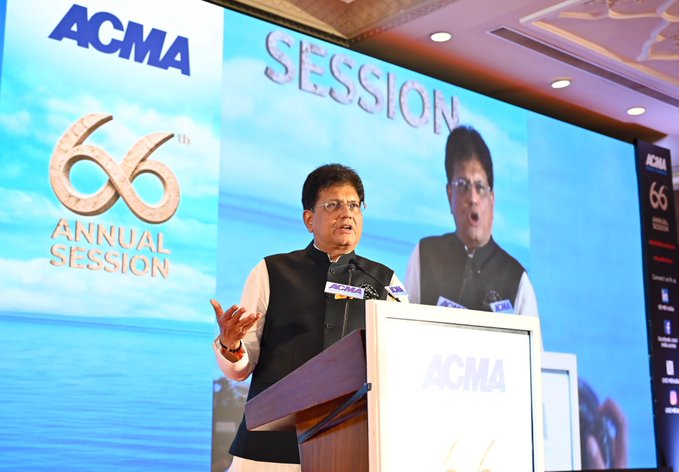
NEW DELHI: Addressing the 66th Annual Session of the Automotive Component Manufacturers Association (ACMA) in New Delhi, Union Minister of Commerce & Industry Shri Piyush Goyal on Wednesday called upon the auto component industry to transform local businesses into global businesses, expand manufacturing footprints across developed countries, strengthen supply-chain resilience and move up the value chain as India seeks to deepen its integration with global markets.

Shri Goyal said the industry’s international trade was nearly USD 50 billion, evenly divided between imports and exports. He said business prospers when it looks globally and imports can also play an important role in the economic progress of a country, while clarifying that this should not be taken as an encouragement to increase imports.

He said there had been a commitment to widen the gap between imports and exports, but this had not yet started, and called for much greater international investment and international business emerging from ACMA and its membership in the years ahead.

The Minister said the industry had benefited from collaborations over the years and had established the ability to produce quality goods in India at globally competitive price points. He called upon the industry to now expand its manufacturing footprint across the world and establish a presence in developed countries.

Shri Goyal highlighted India’s growing market access through nine trade agreements finalised in the last four to five years under the leadership of Hon’ble Prime Minister Shri Narendra Modi. He said these agreements covered 38 developed countries, collectively representing a GDP of USD 60 trillion. He said the Free Trade Agreements concluded prior to 2014 collectively accounted for a GDP of USD 10 trillion at today’s value, while the nine agreements concluded under the present Government in the last four and a half years provide two-way market access to economies representing a USD 60 trillion GDP.

He said these agreements covered prosperous countries with high GDPs and high per capita GDPs, offering less competition and greater complementarity with Indian industry. Shri Goyal also acknowledged ACMA’s role in India’s Free Trade Agreement negotiations, saying that the organisation had consistently sought zero-duty access for the Indian auto component sector while also seeking reciprocal opening of the Indian market. He said the industry was capable of taking on the best in the world and was ready to meet global competition.

Referring to the theme of the session, “Beyond Resilience, managing uncertainty to creating new avenues, deeper supply chains”, Shri Goyal said it was particularly relevant in a world marked by uncertainties, challenges and considerable churn.

The Minister said that amid global turmoil, India had continued to stay the course and remained the fastest-growing among the large economies of the world. “The naysayers can say what they want, but 7.8% growth is a reality,” he said.

Highlighting the growth across sectors, Shri Goyal pointed out that ACMA was growing at a scorching double-digit rate and the auto sector was growing at a high double-digit rate. He said five million passenger cars were expected to be sold this year. The Minister said the cars were being bought and were not merely being stocked. He also referred to electric vehicles, noting that some electric vehicles now had a six-month waiting period.

He pointed out that the steel sector was also growing at a scorching pace and India was importing more steel than it exported because domestic demand was so high. He said the auto component industry was contributing significantly to this demand.

Shri Goyal highlighted various Government programmes aimed at strengthening industrial capacity and supply-chain resilience. He said the support provided to the auto component industry to achieve scale and to speciality steel manufacturing to produce in India the steels required by the sector directly related to the industry.

He also highlighted the relevance of the technical textile PLI for the auto component industry, given its requirement for technical textiles, and said support to the semiconductor industry was intended to bring resilience to auto component supply chains.

The Minister said the Government was creating new industrial parks, with 20 smart cities and industrial cities already underway. He invited the industry to participate in these opportunities and also invited countries to consider establishing enclaves in these parks. “Maybe we should have one of these parks dedicated to a US-India partnership. Maybe we can have two or three, five parks, which will be for auto components only. And I can create a plug and play infrastructure to suit you,” he said.

Shri Goyal said the cycle of reforms and further reforms could only move ahead at speed with the support of industry. “We need your ideas. We need your inputs. We need your demands. We need to know what’s challenging you, what’s troubling you, how we can help you more,” he said. “We are a listening government. We want you to be talking,” he said, calling for continued dialogue between industry and Government.

Shri Goyal referred to his recent three-hour engagement with the data centre industry, comprising largely companies from the United States coming into India in a big way. He said India and the United States were trusted partners who could support each other in making everything more competitive.

Shri Goyal said India would soon have a GCC and Israel FTA once the situation stabilised there. He said India would also have FTAs with other countries around the world to secure greater access to critical minerals, which are needed for resilient supply chains.

He highlighted that the United States and India were working together as partners in a critical mineral partnership. He also referred to the Pax Sillica initiative launched by the United States, under which like-minded, democratic, well-meaning and fair-play countries could work together to ensure that no single geography could weaponise trade.

Shri Goyal said these developments would help the auto component industry become a global player as it moved towards its USD 500 billion industry target.

Before concluding, Shri Goyal outlined specific priorities for the industry. He called upon the industry to convert local businesses into global businesses and, for products where greater supply-chain resilience was still required, establish an active indigenisation programme to insulate and protect itself from future black swan events.

He called upon the industry to move up the value chain and begin delivering integrated, very high-value solutions, including products that are designed, built and supplied to the world at top quality.

Shri Goyal also called for greater focus on safety. He said the industry should not leave safety concerns entirely to the Government.

The Minister said technology needed to play a greater role in the auto component sector, including artificial intelligence for better quality control and better assessment of customer needs. He also referred to customised vehicles, which were gaining increasing traction in the United States and Europe, and called for better safety features.

On vehicle scrappage Shri Goyal said that the industry and Government needed to make the scrappage of old vehicles a profitable and valuable proposition for new vehicle buyers.

He emphasised that this could only be achieved through a shared effort by the Government and the private sector. The Minister said the Government had attempted to provide value and incentives from its side and called upon industry to come forward and offer fair value when vehicles were scrapped, so that a greater market could be created for new-age vehicles.

Addressing the event U.S. Ambassador to the Republic of India H.E. Sergio Gor highlighted the deepening U.S.-India cooperation in the automotive sector and said that the relationship stands at a “historic high point”. He said the two countries are “co-designing the future of mobility together” and noted India’s auto component industry as a reliable and increasingly sophisticated partner in strengthening supply chain resilience. He said both governments are working towards a fair, reciprocal and mutually beneficial trade relationship and highlighted the progress made, including the trade understanding reached between the two governments. He also said that Union Minister for Commerce and Industry Shri Piyush Goyal will travel to the United States at the end of the month as the United States hosts the G20 talks.

Mr. Gor highlighted cooperation across pharmaceuticals, military sales and exercises, IT, data centres and space, and described the Pax Silica Declaration as a landmark step towards a pro-innovation regulatory framework, noting that India was among the first countries invited to join. He highlighted the presence of U.S. companies in India’s automotive ecosystem and Indian companies in the United States, including Bharat Forge, Sundaram Clayton and Mahindra. He invited Indian auto component manufacturers to explore investment in the United States through greenfield assembly, R&D centres and distribution networks, and noted that the U.S. Embassy in India came first among embassies globally, with $24 billion in new investment into the United States.

In his address, Trade Commissioner for South Asia and British Deputy High Commissioner for Western India Harjinder Kang highlighted the strengthening India-UK relationship and said automotive and future mobility are central to the UK’s advanced manufacturing capabilities. He highlighted the India-UK Vision 2035, the UK’s modern industrial strategy and the India-UK CETA, which came into force on 15 July 2026. He said 99% of UK tariff lines and 90% of Indian tariff lines have been reduced to zero or very low duties, with streamlined customs and border processes to facilitate trade and business.

He said CETA will deepen supply chains and enable joint ventures and partnerships, with automotive component manufacturers gaining tariff-free access to each other’s markets. He highlighted the UK’s strengths in advanced engineering, innovation and zero-emission vehicle technologies, including electric motors, batteries, hydrogen solutions, lightweight composites and software-defined vehicle systems.
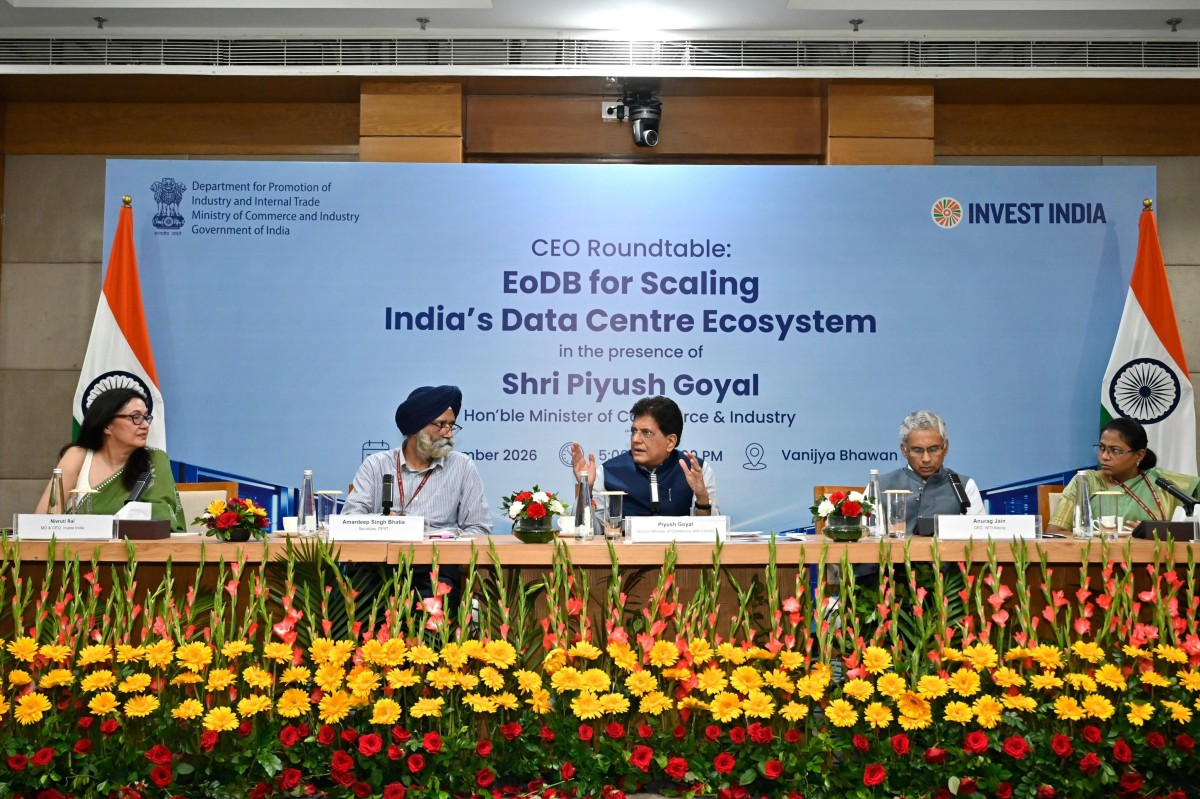
Piyush Goyal chairs CEO Roundtable on EoDB for scaling India’s data centre ecosystem

NEW DELHI: India is the world’s best location for setting up data centres, said Union Minister of Commerce & Industry, Shri Piyush Goyal, at the CEO Roundtable on “Ease of Doing Business (EoDB) for Scaling India’s Data Centre Ecosystem” at Vanijya Bhawan, New Delhi. While Chairing the meeting the Minister said the roundtable provided an engaging and fruitful platform for discussions with stakeholders from the data centre industry on further promoting the sector and enhancing ease of doing business in India.

Shri Goyal expressed confidence in India’s growth prospects amid global uncertainty and volatility and highlighted the country’s 7.8% growth in Q1. He complimented the people of India and Prime Minister Shri Narendra Modi for his decisive leadership and for instilling confidence among every Indian to contribute towards Amrit Kaal and the vision of Viksit Bharat 2047.

The Minister highlighted the potential of the data centre and semiconductor industries, India’s growing presence in AI and its expanding manufacturing base for global quality products, noting that these sectors would power India’s growth in the coming years and contribute towards achieving a USD 30 trillion economy by 2047. He said the interaction with stakeholders was marked by positivity and that discussions between different Departments of the Government of India and States had already helped resolve several issues. He said it was satisfying to see the industry geared up, with investments of around USD 200 billion potentially coming into the data centre industry. Shri Goyal said the meeting provided valuable insights and ideas on how India could become the data centre of the world.

The roundtable was convened as a follow-up to the inaugural CEO Roundtable to further strengthen the enabling ecosystem for the rapid and sustainable expansion of India’s data centre sector. Discussions focused on Ease of Doing Business and faster deployment of data centre infrastructure, particularly in the areas of power, land, regulatory and fiscal issues.

The discussions highlighted the rapidly increasing demand arising from cloud and Artificial Intelligence (AI) workloads. Hyperscalers accounted for more than 80 per cent of data centre absorption in the first half of 2026, underscoring India’s emergence as an AI infrastructure destination. The Government expects investments in the data centre sector to reach around USD 200 billion, reflecting the scale of the opportunity created by India’s rapidly growing digital economy and AI ecosystem.

Stakeholders discussed measures to ensure adequate and reliable power availability, including cluster-based transmission and substation planning, Day-1 sanctioned load, dual power feeders and facilitation of renewable energy procurement across State boundaries. The need for DC-ready land banks and pre-identified power-ready parcels was also highlighted.

The roundtable also reviewed regulatory measures aimed at reducing project timelines and improving investment certainty, including streamlined single-window approvals and appropriate building regulations for data centres.

The discussions noted significant progress since the previous roundtable. The National Building Code 2026 now specifically recognises data centres under Group E, with a dedicated Annex on requirements for data centres, including fire-risk assessment and data-centre-specific performance indicators.

The roundtable brought together representatives from the Central and State Governments, CEOs and senior representatives of global hyperscalers, data centre developers and operators, investors, infrastructure providers and other key stakeholders.

Senior representatives from the Governments of Andhra Pradesh, Gujarat, Haryana, Karnataka, Maharashtra, Tamil Nadu, Telangana and Uttar Pradesh, along with representatives from around 46 data centre companies, participated in the roundtable.

The dialogue will serve as a foundation for actionable, time-bound and high-impact reforms aimed at accelerating investment and innovation, strengthening India’s digital infrastructure and positioning the country as a trusted global data centre hub.

18th Meeting of heads of IP offices of BRICS countries held in New Delhi

NEW DELHI : The Second day of the 18th Meeting of the Heads of Intellectual Property (IP) Offices of BRICS countries was held in New Delhi, September 2, 2026. The three-day meeting, hosted by the Office of the Controller General of Patents, Designs and Trade Marks (O/o CGPDTM), DPIIT, Ministry of Commerce and Industry, Government of India, is being held from September 1 to 3, 2026. Around 35 delegates participated in the meeting through virtual and physical formats. Delegates from Russia, Iran and Ethiopia joined online, while the remaining Member Offices participated physically. The Heads of IP Offices of BRICS Member Countries reaffirmed their shared commitment to enhancing multilateral cooperation in intellectual property as a pivotal driver of global innovation, creativity and economic development.

The deliberations were aligned with the theme of India’s BRICS Chairship, “Building for Resilience, Innovation, Cooperation and Sustainability”, highlighting how IP frameworks foster technological resilience and sustainable economic growth.

As a major outcome of the ongoing deliberations of IP BRICS, the Meeting adopted the Updated Operational Guidelines to guide result-oriented cooperation, promote cross-border innovation and strengthen joint efforts in shaping global IP standards.

The Heads of IP BRICS Offices recognised the importance of traditional knowledge and traditional systems of medicine as part of shared cultural and intellectual heritage, as well as the need to protect and preserve them. The Meeting also noted progress under the Study on Reinforced Patent Examination Cooperation in BRICS to streamline processes, reduce backlogs and improve the exchange of search results. It further highlighted the role of IP BRICS Offices in supporting technological development through patent analytics and landscape studies, and acknowledged findings on Patent Analytics and Geographical Indications (GIs) to improve efficiency and strengthen the protection and commercialisation of GI products across BRICS markets.

The Meeting concluded deliberations on new projects to further deepen institutional engagement, including the BRICS Intellectual Property Awareness Series, IP BRICS FinTech Innovation Monitor, BRICS Industrial Property Commercialisation Forum and Best Practices Repository, initiatives on IP policies for public health and development, Research on Design Systems of BRICS, and the Manual of Patent Documentation and Information Resources of BRICS Countries.

The Heads of IP BRICS Offices emphasised the importance of coordination mechanisms and periodic review of progress to ensure effective implementation of projects and continuity of cooperation in the IP BRICS grouping.The participating delegates, including the Heads of the IP BRICS Offices, expressed appreciation to the Office of the Controller General of Patents, Designs and Trade Marks, Ministry of Commerce and Industry, Government of India, for successfully organising the Meeting. Reflecting the expanding global IP footprint of India, the hosting of this annual meeting under the Chairship of India in 2026 was a matter of immense pride for the O/o CGPDTM.

GIFT IFSC emerges as a strong and vibrant international banking hub, mobilises over $52.8 billion under RBI’s FCNR(B) Swap Facility, $11.62 bn in ECBs and $11.12 bn in bond listings by banks in IFSC exchanges

GANDHINAGAR : The International Financial Services Centres Authority (IFSCA) on Wednesday highlighted the strong and growing role of GIFT City IFSC in supporting India’s foreign currency mobilisation and external financing requirements, with IFSC Banking Units (IBUs) demonstrating significant scale and momentum across key international banking activities.

As on 31 August 2026, 20 IBUs have sanctioned USD 54.02 billion under the Reserve Bank of India’s special swap facility for FCNR(B) deposits, of which approximately USD 52.82 billion has already been disbursed. The scale-up has been particularly rapid in recent weeks, with aggregate sanctions increasing from USD 28.60 billion on August 14 to USD 37.26 billion on August 21 and further to USD 54.02 billion by August 31, 2026.

The broad-based participation of domestic and international banks underscores the depth and capability of the banking ecosystem at GIFT-IFSC. The 20 participating IBUs include leading Indian banks as well as foreign banks, with individual IBUs recording substantial sanctions and disbursements under the facility.

The performance of the IBUs under the FCNR(B) swap facility represents a significant demonstration of the ability of GIFT-IFSC to connect IBUs with global sources of foreign currency liquidity and efficiently channel international capital towards India.

The development follows the recent direction of the Hon’ble Union Finance Minister to the MDs & CEOs of Public Sector Banks to leverage the financial services ecosystem and institutional infrastructure available at GIFT-IFSC for effective implementation of the RBI’s swap facilities for FCNR(B) deposits and External Commercial Borrowings (ECBs). Hon’ble Finance Minister had also emphasised greater utilisation of GIFT City IFSC’s financial services and institutional infrastructure for mobilisation of funds from global jurisdictions.

The momentum at GIFT-IFSC extends beyond the FCNR(B) swap facility. During April to August 2026, IBUs at GIFT-IFSC disbursed USD 11.62 billion of ECBs. Monthly ECB disbursements increased from USD 1.54 billion in April to USD 3.54 billion in August 2026, demonstrating the growing role of GIFT-IFSC as a platform for cross-border financing.

In addition, Indian Banks have raised USD 11.12 billion through bond listings on IFSC exchanges during April to August 2026, of which bonds totalling to USD 9.17 bn were listed in July-Aug 2026, further reflecting the expanding role of GIFT-IFSC in facilitating international capital market access for financial institutions in IFSC.

The increasing scale of activity across FCNR(B) mobilisation, ECB financing and international bond issuances demonstrates the emergence of GIFT-IFSC as a deep, diversified and increasingly integrated international banking ecosystem.

The strong response also reflects the ability of the GIFT-IFSC ecosystem to facilitate engagement with international markets and overseas investors, complementing India’s broader efforts to strengthen foreign exchange inflows. It is observed that IBUs at GIFT-IFSC are being utilised to leverage fund mobilisation from multiple jurisdictions, including the United Kingdom, United States, Mexico, West Asia, Hong Kong, Singapore and certain African countries.

Shri K. Rajaraman, Chairperson, IFSCA, said that “The rapid scale-up of banking activity at GIFT-IFSC is a strong testament to the depth, capability and growing international orientation of India’s GIFT City International Financial Services Centre. The mobilisation and deployment of over USD 52 billion under the FCNR(B) swap facility, alongside strong ECB activity by IBUs in GIFT IFSC and international bond listings at IFSC Exchanges, demonstrate that GIFT-IFSC is increasingly serving as an effective bridge between global pools of capital and India’s financing needs.

IFSCA remains committed to fostering a competitive, well-regulated and globally connected financial ecosystem at GIFT-IFSC. The strong participation of banks and the scale of business being undertaken through the IFSC reinforce its position as an important platform for international banking and cross-border financial services.”

The IFSCA is the unified regulatory authority established by the Government of India under an Act of Parliament, IFSCA Act, 2019 for the development and regulation of financial products, financial services and financial institutions in the International Financial Services Centres (IFSC) in India. GIFT-IFSC is a strategic project of the Government of India and is being developed as a leading international financial hub connecting India with global markets and global investors with India opportunities. The GIFT IFSC is working towards strategic initiatives supporting VikasitBharat@2047 agenda envisioned by the Hon’ble Prime Minister.

Maersk in breakthrough rotor sail on a container ship

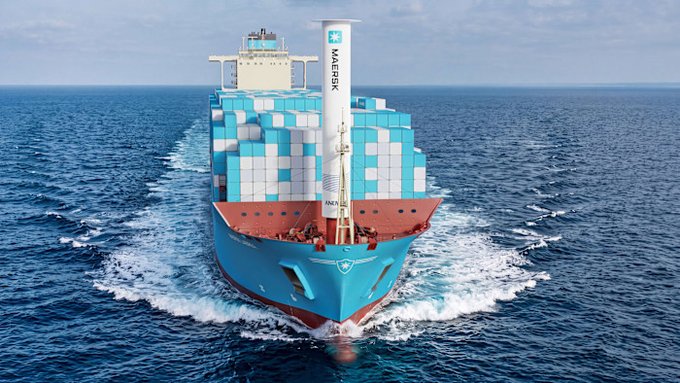
COPENHAGEN: The container sector is set to see its first vessel fitted with a rotor sails with an Anemoi unit fitted on a Maersk vessel. Anemoi will install a five-metre diameter and 35 high fixed rotor sail which will be integrated into existing onboard systems.

While rotor sails have been growing in popularity as a propulsion method to reduce fuel consumption on dry bulk carriers and tankers the container sector has until now not taken up the solution due to a lack of deck space to install the cylindrical sails.

An artist impression of the Anemoi rotor sail fitted on a Maersk container ship shows a single unit fitted on the bow of the vessel, unlike tanker and bulker installations which have multiple sails along the deck of the vessel.

Ole Graa Jakobsen, Head of Fleet Technology, Maersk, said, “Wind-assisted propulsion is one of several promising maritime solutions with the potential to improve vessel efficiency and reduce emissions. It has already been tested in other parts of the shipping sector, and we see this pilot with Anemoi as a valuable opportunity to build practical experience and assess its relevance for our fleet and for container shipping more broadly.”

The rotor sail is due to be installed in mid-2027.

Pink Corridor project to explore safety requirements of nuclear-powered transatlantic container shipping route

Lloyd’s Register, A.P. Moller – Maersk (Maersk) and the ports of Charleston and Felixstowe will examine the security and safeguarding requirements for the theoretical deployment of a nuclear-powered containership route between the UK and US.

LONDON: Lloyd’s Register (LR), A.P. Moller – Maersk (Maersk), the Port of Charleston on the US east coast and the Port of Felixstowe, the largest container port in the UK, have announced a partnership to establish a Pink Corridor project, to identify and address the operational, security and safeguarding requirements for a theoretical nuclear-powered containership trading between the two ports.

The project will focus on the security and safeguard considerations needed to inform future regulation and support the safe, secure and responsible adoption of nuclear power for trans-Atlantic commercial shipping

Centred on a conceptual nuclear-powered container ship, the Pink Corridor will examine the requirements for theoretical port access on the specified route. Key areas of focus will include ship security, safeguards, cyber resilience, emergency response, insurance regimes and alignment between maritime and nuclear regulatory expectations.

The work is expected to support broader maritime development under the US-UK Technology Prosperity Deal and its bilateral commitment to explore civil maritime nuclear applications, including the potential creation of a shipping corridor between the two nations.

The Pink Corridor aims to provide a structured basis for collaboration, helping stakeholders understand the practical requirements, gaps and future work needed before any potential nuclear maritime corridor could be considered.

Nick Gross, Global Containerships Segment Director, LR said: “The Pink Corridor joint development programme is an important step for the application of nuclear technology in merchant shipping.

“By taking a practical, collaborative approach, the project will examine the security and safeguards that would need to be addressed for safe operations. The partnership brings together industry-leading players across shipping, ports and classification, reflecting the growing interest in nuclear technology as a route to more sustainable maritime operations.”

Adam Ramsey, Commercial Director, Port of Felixstowe, said: “As the UK’s largest and busiest container port, the Port of Felixstowe is well-positioned to support the Pink Corridor and contribute practical insight to this important early-stage work.

“We are committed to improving the efficiency and resilience of our own operations, while supporting the wider industry as it explores sustainable, long-term propulsion options for global trade.”

Tom Boyle, SC Ports’ Director of Vessel Operations and Carrier Sales, said: “As a major U.S. East Coast port, Charleston is always looking for innovative, cost effective and sustainable ways to move freight. The conceptual Pink Corridor project allows for the study of the possibility of a nuclear-powered maritime corridor.” 

The collaboration builds on LR and CORE POWER’s 2024 regulatory assessment study, which was formalised with Maersk through a joint development project exploring the safety, operational and regulatory requirements for applying advanced nuclear power to container shipping.

The outcomes of the initial phase of the Pink Corridor project will inform the scope of a potential second phase, including areas requiring further study across engineering, regulatory, legislative, security and safeguards frameworks for nuclear merchant ships.

Davies Turner celebrates summer of success 
with top ranking recognition and industry award wins

Leading logistics provider climbs to seventh in CILT Top 30 while securing Multimodal 3PL Award and sixth consecutive RoSPA Gold

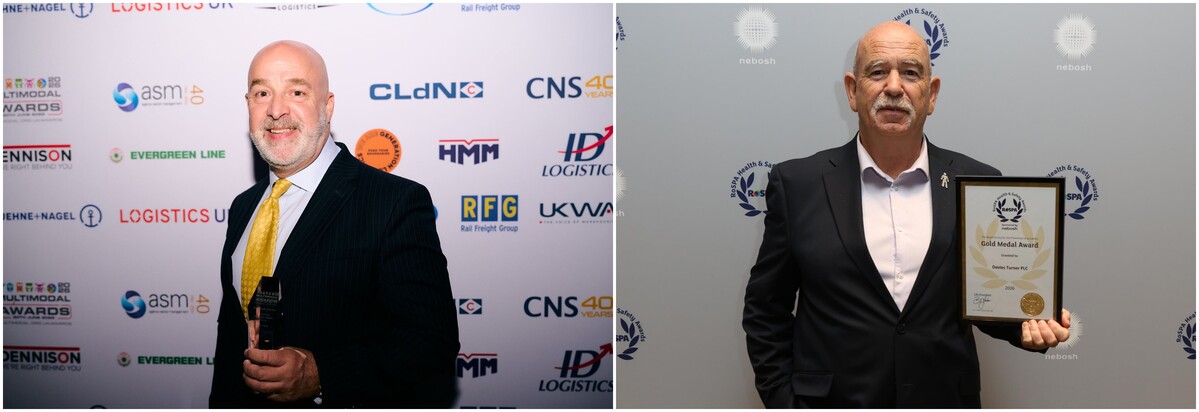
Davies Turner is celebrating a standout summer of recognition after climbing to seventh place in the Chartered Institute of Logistics and Transport (CILT) Top 30 logistics companies ranking, winning the 3PL category at the Multimodal Awards 2026, and achieving a sixth consecutive Gold Award from the Royal Society for the Prevention of Accidents (RoSPA).

Adding to a strong run of success, Davies Turner has risen to seventh place in the prestigious CILT Top 30 logistics companies chart, reflecting its growing influence and reputation within the UK logistics sector.

The company has climbed 13 places from 20th last year, having entered the rankings at 29th in 2023. Today, Davies Turner stands out in a field dominated by multinational logistics providers and sector specialists.

Compiled annually by CILT, the Top 30 is widely recognised as a benchmark of excellence within the logistics industry. Rankings are based on an in-depth assessment of publicly available information, including company financial performance, operational capability, accreditations, environmental, social and governance (ESG) policies, gender pay equity and compliance with modern slavery legislation.

Company Director Alan Williams said: “Climbing the table once again is a clear reflection of the strategic investments we’ve made in our IT systems, distribution centres, services and, most importantly, our people. Our consistent financial performance is driven by our commitment to meeting our customers’ evolving needs while maintaining the highest standards across every part of the business.”

The company’s upward trajectory has been further reinforced by success at the Multimodal Awards 2026, where Davies Turner won the 3PL Company of the Year award, recognising its continued commitment to delivering innovative, reliable and high-quality logistics solutions across the UK and internationally.

Alan Williams added: “Being recognised as the 3PL Company of the Year in such a competitive awards programme, while competing against major multinational operators, is a significant achievement. It demonstrates just how far Davies Turner Logistics has come since being established as a standalone trading company within the Davies Turner Group three years ago.”

The awards success was complemented by another important milestone in the company’s long-standing commitment to workplace safety, with Davies Turner receiving a sixth consecutive RoSPA Gold Award.

Presented through the UK’s longest-running occupational health and safety awards programme, the internationally recognised RoSPA Gold Award acknowledges organisations that demonstrate not only compliance but a sustained and measurable commitment to improving health and safety performance.

Carl Inman, Davies Turner Group’s Health, Safety, Insurance and Environmental Manager, said: “The RoSPA Gold Award is one of the most respected benchmarks in our industry. Achieving Gold for the sixth consecutive year demonstrates that health and safety is not simply a priority but is embedded in our culture and in the way we operate every day.”

Alan Williams concluded: “Together, these achievements demonstrate our ongoing commitment to operational excellence, safety and delivering outstanding value for our customers. We are proud to be recognised by such respected industry organisations and will continue investing in our people, technology and processes to support our customers’ supply chains.”

Lloyd’s Register launches RouteFlex to provide unprecedented stowage flexibility for container operators

New LR RouteFlex application leverages metocean data to empower operators with more flexible, dynamic, voyage-based stowage optimisation.

LONDON: Lloyd’s Register (LR) has launched LR RouteFlex, a new application that helps containership operators increase operational flexibility and cargo capacity by applying weather-dependent factors to any given route.

It has been developed in response to growing operational uncertainty in container shipping, where weather disruption, geopolitical events, route diversions and changing trading patterns increasingly challenge traditional voyage planning. As operators strive to maintain schedule reliability while maximising vessel utilisation, building flexibility into stowage planning has become essential for modern fleet operations.

LR RouteFlex addresses this challenge by enabling dynamic, route-based stowage optimisation through a revised methodology that uses metocean datasets across the trading regions, allowing operators to optimise stowage stack by stack and leg by leg for a voyage.

For decades, stowage optimisation has largely been focused on maximising carrying capacity for a predefined route. However, today’s operating environment demands a different approach. Route deviations caused by security concerns, port congestion, extreme weather or unexpected events can quickly render original assumptions obsolete, forcing operators to reassess cargo arrangements under new conditions.

LR RouteFlex enables operators to quickly recalculate weather-dependent factors when voyages change and assess the impact on stowage arrangements. Its route deviation capability supports rapid reassessment after diversions, while route splitting functionality allows each route leg to be optimised independently, improving vessel utilisation across complex trading patterns.

The result is greater operational flexibility at a time when flexibility has become a critical commercial advantage. Rather than viewing route changes as a disruption to planned loading arrangements, operators can validate stowage plans via LR RouteFlex application to maintain safety margins and to identify opportunities to improve cargo utilisation on a route leg basis.

Nick Gross, Global Containerships Segment Director, Lloyd’s Register, said: “Optimal stowage is no longer just about maximising capacity. It is about flexibility, resilience and the ability to adapt safely when conditions change.

“In today’s operating environment, route changes can occur with little warning. LR RouteFlex allows operators to understand the implications of those changes immediately, helping them make informed decisions while ensuring cargo remains within safe operational limits. The application moves stowage planning beyond static assumptions and closer to the realities of modern container shipping.”

LR RouteFlex can be used as a standalone application, through LR’s LashRightUX software or integrated directly into approved third-party lashing software. The application also supports both online and offline operation, ensuring crews and shore-based teams can continue using it regardless of connectivity.

“Consideration of weather dependent factors in combination with Route Splitting and Route Deviation features brought about by an operator-friendly application offers an unprecedented flexibility in stowage planning. Instead of relying on worst-case weather assumptions for an entire route, operators can now optimise the stowage for each leg unlocking hidden cargo capacity and transforming unavoidable route diversions into a distinct operational advantage,” said Hasan Ocakli, Global Head of Technology – Hull Structures, Lloyd’s Register.

Download the full report to explore how dynamic stowage optimisation can support safe and more efficient operations.

LR RouteFlex is part of LR’s advanced suite of container stowage solutions, offering shipowners new tools to  help  reduce  container  loss, maximise utilisation, and boost operational performance while keeping cargo safe. 

GMI awards eCap Marine contract for two additional hydrogen-powered bulk carriers

HAMBURG: eCap Marine has secured another contract for the supply of hydrogen-based energy systems for the maritime industry. The Company will equip two additional hydrogen-powered bulk carriers for GMI with integrated hydrogen energy power systems called eCap H2EPS.

The new contract follows the ongoing projects and further strengthens the collaboration between the two companies in the field of zero-emission shipping.

The two newbuild vessels, each with a deadweight capacity of approximately 3,000 DWT, will be constructed by Chowgule Shipyards Ltd. in India and are scheduled to enter service in 2029. The vessels will primarily operate in Norwegian coastal waters.

As part of the project, eCap Marine will supply the complete hydrogen system solution for both vessels. The scope of supply includes compressed hydrogen storage systems, PEM fuel cell technology with an output of 1.2 MW per vessel, as well as the required power management, control and safety systems for maritime applications.

With these newbuilds, GMI continues its commitment towards more sustainable coastal shipping. In Norway in particular, zero-emission propulsion technologies are becoming increasingly important in reducing environmental impacts in sensitive coastal and fjord regions.

“Our ambition is to become a leading owner of hydrogen-powered vessels. These newbuilds are another important step in that direction, and we are pleased to continue this journey with eCap Marine,” said Torstein Holvik, CEO of GMI.

“The renewed order from GMI demonstrates the growing confidence in hydrogen as a viable solution for maritime applications,” said Lars Ravens, Managing Director of eCap Marine. “We are pleased to support GMI’s ambition and bring our experience from previous projects into these new vessels.”

About eCap Marine

eCap Marine, based in South of Hamburg, Germany, provides innovative customised solutions for emission-free shipping by covering propulsion or specific loads on board. With in-house experts in naval architecture, electrical engineering, and hydrogen-based fuels, the company offers comprehensive services ranging from feasibility studies and subsidy support to technical design and handling of hydrogen and its derivatives, ensuring all necessary approvals from relevant authorities until delivering these solutions to their customers.

eCap Marine specialises in both mobile and containerised power generation solutions, as well as fixed installations under deck, utilising, for example, hydrogen and batteries. Starting with mobile power solutions for cold ironing, the company has evolved into a leading provider of hydrogen-based maritime propulsion systems, serving a growing range of vessel types and applications.

PM Modi participates in the 26th SCO Summit in Bishkek, Kyrgyz Republic

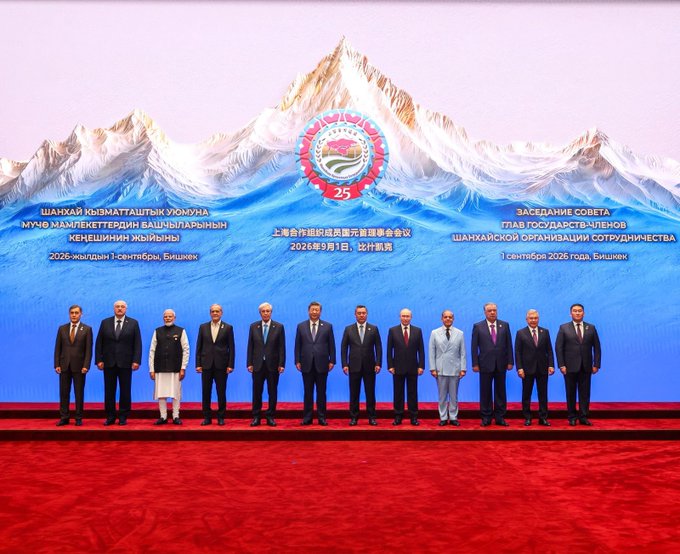
BISHKEK : Prime Minister Shri Narendra Modi on Monday participated in the 26th Meeting of the Council of Heads of State of the Shanghai Cooperation Organization (SCO), held in Bishkek, Kyrgyz Republic, between August 31 – September 01, 2026.

This year marks SCO’s 25th anniversary. On this occasion, the leaders took stock of the progress and exchanged views on furthering SCO’s role for peace, security, stability and prosperity in the region.

Prime Minister began his address by thanking the President of the Kyrgyz Republic, H.E. Mr. Sadyr Zhaparov for his warmth and hospitality. He noted that the 25th anniversary of the Summit was an opportune time to lay the roadmap for the next 25 years, building upon the strong tradition of dialogue and cooperation developed by SCO. He stated that in the last Summit, India had shared its vision of Security, Connectivity and Opportunity, and now the group must work to realise concrete outcomes in these three pillars of joint work. He reiterated India’s position that conflicts cannot be resolved on the battlefield and dialogue and diplomacy are the only way forward. Highlighting that terrorism was a grave threat to humanity, he called for committed action to dismantle the terror ecosystem. He specifically stressed that there should be no double standards whatsoever in fight against terrorism. Noting that security in the Eurasia region was closely linked to peace and stability in Afghanistan, he highlighted India’s development and humanitarian assistance to the country.

Prime Minister further stated that strong and trusted connectivity initiatives were important for the group’s shared progress and prosperity. Underlining that India supports connectivity efforts that link markets, enhance trade and open new opportunities for development, he reiterated that such efforts should respect sovereignty and territorial integrity of nations. He further elaborated that technology, entrepreneurship, innovation, start-ups and people-to-people initiatives open immense opportunities for people in the SCO countries. In this regard, he appreciated the focus on youth engagement under Kyrgyzstan’s presidency. Prime Minister underscored that India would be delighted to host the first edition of the SCO Civilisation Dialogue Forum, later this year. This has been India’s flagship initiative seeking to forge civilisational exchanges among the member states.

Besides the Bishkek Declaration, four MoUs, and over twenty decisions and statements were adopted at the Summit in fields ranging from climate, nuclear safety, energy conservation, and combating drug addiction.

India led and supported several initiatives which find place in the Bishkek Declaration, such as English in SCO Charter as the Official Language; Civilization Dialogue Forum; Young Scientist Forum; and Young Author’s Conclave.

Prime Minister thanked President H.E. Sadyr Jhaparov for the successful organization of the Summit. He expressed India’s commitment to work with the SCO family for shared progress and prosperity.