Home Blog Page 139

CONCOR strengthens domestic rail network with new Chennai–Mysuru Rail Service

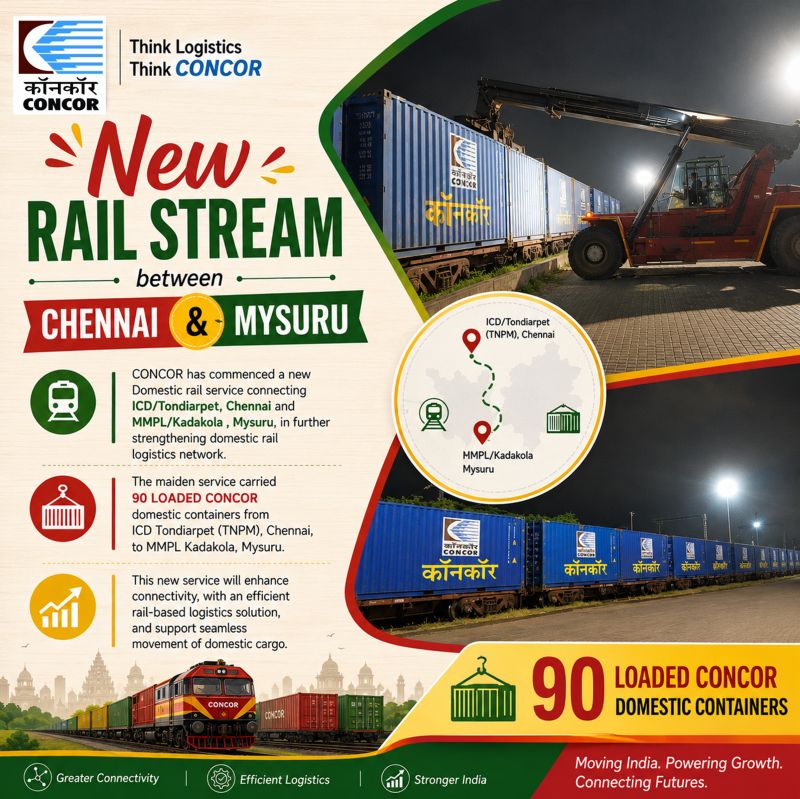
CHENNAI : Container Corporation of India Limited (CONCOR) has commenced a new domestic rail service connecting ICD/Tondiarpet (TNPM), Chennai, with MMLP/Kadakola, Mysuru, further strengthening its domestic rail logistics network and enhancing rail-based connectivity between the two key industrial regions.

The maiden service carried 90 loaded CONCOR domestic containers from ICD Tondiarpet in Chennai to MMLP Kadakola in Mysuru, marking the commencement of a new rail logistics link designed to facilitate the efficient movement of domestic cargo.

The new service is expected to provide businesses with a reliable and efficient rail-based logistics solution, supporting seamless cargo movement while offering an alternative to road transportation for domestic supply chains.

The Chennai–Mysuru connection will further improve access to CONCOR’s multimodal logistics network and support the movement of cargo between manufacturing, consumption and distribution centres in Tamil Nadu and Karnataka.

The initiative also reinforces CONCOR’s continued focus on expanding domestic rail services, strengthening multimodal connectivity and providing customers with efficient, dependable and sustainable logistics solutions.

With the addition of this new rail stream, CONCOR continues to enhance its domestic logistics footprint and promote greater use of rail for seamless and efficient cargo transportation across India.

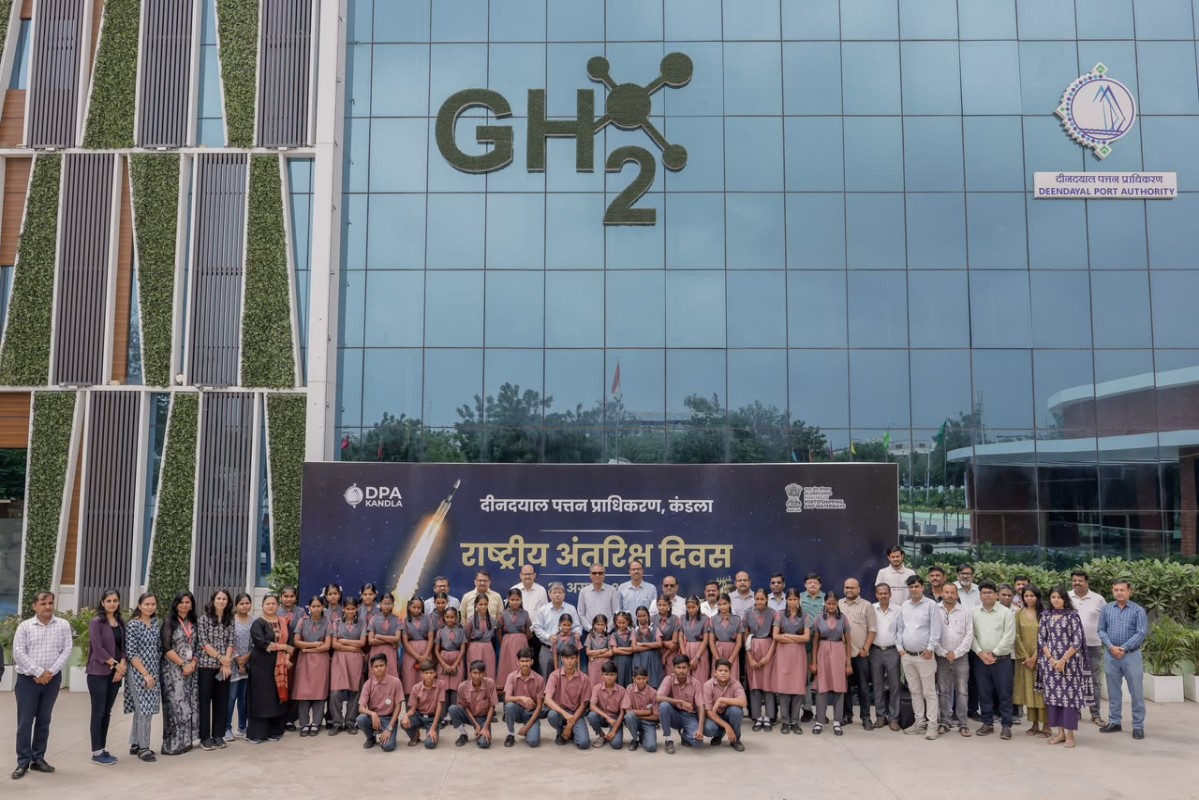
DPA Kandla welcomes School students as parts of ‘National Space Day 2026’

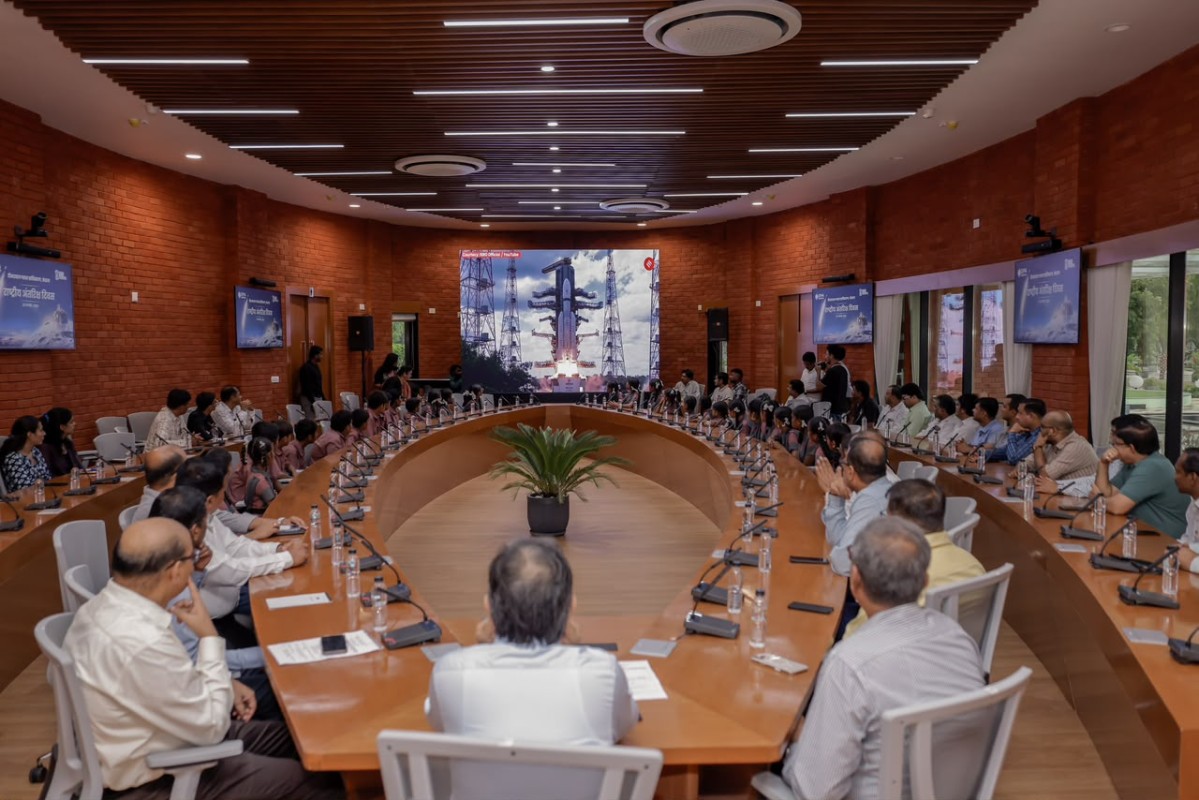
GANDHIDHAM: As part of ‘National Space Day 2026‘, Deendayal Port Authority, Kandla welcomed school students for an interactive and insightful visit, sparking curiosity about the fascinating world of space exploration, science and innovation.

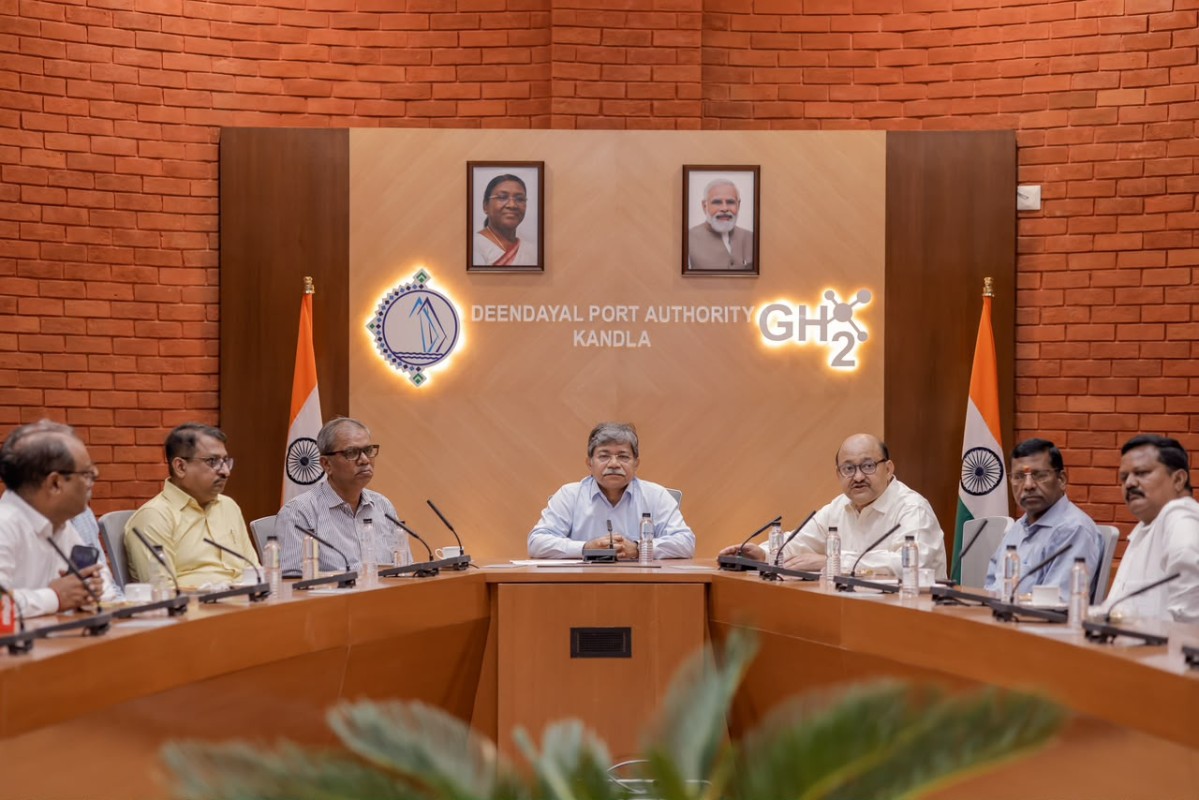
Shri Sushil Kumar Singh, IRSME, Chairman, DPA, interacted with the students and encouraged them to dream big, stay curious and embrace science & technology for shaping the future

India joins China and South Korea in push for Arctic shipping routes

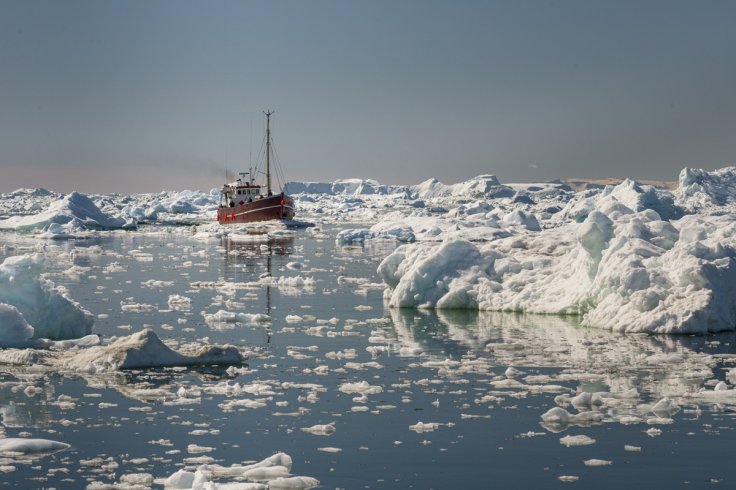
NEW DELHI: Climate change and conflict are conspiring to open up the Arctic to Asian commercial shipping, with China, South Korea and India all eyeing the icy short cut to Europe.

Last Saturday, Chinese shipping company Sea Legend launched the first scheduled weekly container service across the top of the world, marking the realisation of Beijing’s long-held ambition to build a “Polar Silk Road”. It will not sail alone for long, however. This Sunday, South Korea’s PanStar Group plans to send its own pilot vessel from Busan through Russia’s Northern Sea Route (NSR) towards ports in the UK, the Netherlands and Poland.

India is also preparing to dispatch its first cargo ship along the same corridor next year.

“In 2027, we are planning to have the first pilot vessel running through the Northern Sea Route. We are seeing huge possibilities,” S. Venkatesapathy, a Joint Secretary in India’s shipping ministry, reportedly told the Arctic-Regions Forum in Arkhangelsk, Russia, on August 13.

Two crises are pushing Asian shippers north. The first is climate change: warming sea temperatures mean that the Arctic ice pack is no longer impassable in summer, opening a navigable window running roughly from July to October.

The second is geopolitics. Threats to shipping in the Red Sea, layered atop the near-total closure of the Strait of Hormuz amid the Iran war, have forced many shippers to divert around southern Africa, adding mounting costs and up to two weeks to journeys that once ran through the Suez Canal without incident.

The NSR promises to slash transit times between Asia and northern Europe by roughly two weeks compared to the Suez run, shortening shipping distances by up to 40 per cent.

Sea Legend says it can make the journey from Ningbo, China, to Felixstowe in the UK in around 20 days vs about 40 days via Suez.

“The NSR and the related Northeast Passage have great potential to connect Asia and Europe faster and more easily, and this potential is gradually starting to be realised,” said Ivan Lidarev, an Asian security expert at the Institute of South Asian Studies in Singapore.

“Significantly, it will also help transit more Russian energy resources to Asia.”

A route European explorers searched for and failed to conquer from the 1500s onwards is now the subject of serious commercial planning.

More than a short cut
For China, whose two-way goods trade with Europe reached €759 billion (US$887 billion) last year, according to European Union statistics, the advantages are obvious.

“China will be the main beneficiary,” Lidarev said. “The route will greatly facilitate its trade with Europe, a crucial trading partner amid tensions with Washington, and avoid US-controlled sea lanes and chokepoints.”

India’s interest in the NSR was as much about signalling as logistics, according to Cedomir Nestorovic, a geopolitics professor at ESSEC Business School who said using the route would advertise New Delhi’s “strategic autonomy” to Washington while also opening up a new channel to access Russian oil, gas and minerals.

Not only could the route shave weeks off India’s shipping times to Europe, Lidarev said it also offered Delhi leverage in talks on a long-awaited free-trade agreement with the United States.

Equally important was the enhanced connectivity to Russia’s far east that using the NSR could offer, said Uday Chandra, a political-science professor at India’s Ashoka University, pointing to Delhi’s parallel push to increase links between Vladivostok and Indian port cities such as Chennai, Visakhapatnam and Paradip.

China’s head start dated back to 2013, Chandra noted, when the first commercial transit of an Arctic shipping route by a Chinese merchant ship took place, five years before Beijing formalised its Polar Silk Road ambitions in a 2018 policy paper.
South Korea, meanwhile, plans to use Sunday’s trial voyage to test the commercial viability of the NSR, with its vice-minister of oceans and fisheries Nam Jae-hon recently proclaiming that the Arctic passage was “bound to become an alternative to Middle Eastern routes”.

The government-funded Korea Institute for Economic Policy think tank has estimated that travelling through the Arctic could cut journey times to Europe by about 10 days, shaving some 7,000km off the distance travelled.

In addition to South Korea, Lidarev said Japan had also shown an interest in the route, with Southeast Asian states such as Singapore set to follow, should the geopolitics align.
“Over the long term, if climate trends further extend the navigable window, East Asian economies will inevitably utilise the corridor to optimise seasonal trade,” Nestorovic said.

No Hormuz replacement
Despite the growing interest, traffic through the NSR remains modest. Last year, Norwegian non-profit research foundation the Centre for High North Logistics tracked 88 vessels making 103 transits, up from 97 in 2024 and just 43 in 2022.

Tanker shipments carrying Russian crude oil and petroleum products accounted for the bulk of the traffic last year, according to an analysis by the Eurasian Rail Alliance Index, alongside dry bulk carriers likely transporting coal eastward.

The route has its limits, however, offering no relief for energy flows restricted by chokepoints in the Middle East, which historically accounts for roughly half of China and India’s oil imports.

“The NSR cannot replace the Strait of Hormuz or the Strait of Malacca for Asia’s energy security,” Nestorovic said.

“The Arctic route connects northern Europe and Russian energy fields to East Asia, but it is geographically irrelevant for Middle Eastern energy flows.”

Then there are the practical challenges. Navigable without icebreaker support for only three to four months a year, the NSR is also unpredictable due to the shifting Arctic ice floes and shallow waters that prevent the passage of mega-ships, according to Nestorovic.

Add to that sparse search-and-rescue coverage, steep insurance costs and environmental rules limiting commercial scale, and he said the route should be considered a supplementary seasonal corridor rather than a wholesale replacement for existing maritime arteries.

Environmental groups see other trade-offs. The non-profit Clean Arctic Alliance and Norwegian Bellona Foundation NGO have warned that the soot emitted by ships’ exhausts settles on Arctic snow and ice, increasing heat absorption and speeding up the melting of polar ice caps that opened up the route in the first place, exacerbating the effects of climate change.

Those trade-offs do not appear to be slowing Asia down, however, and a sea passage explorers gave up on centuries ago is now, for a brief window each summer, open for business.

NUSI Reaffirms ‘Seafarers First’ Commitment amid continuing Strait of Hormuz Crisis

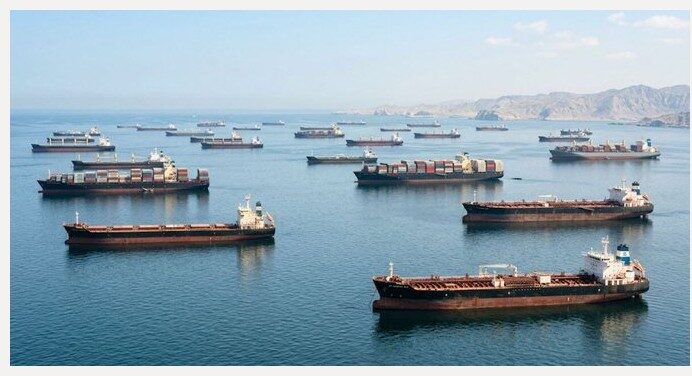
MUMBAI: Amid continuing instability in the Middle East and heightened security concerns in and around the Strait of Hormuz, the National Union of Seafarers of India (NUSI) has reiterated that the safety, security and wellbeing of Indian seafarers remain its highest priority.

In a statement, NUSI said the ongoing situation in the region continues to pose serious challenges for the global maritime community, with thousands of seafarers affected by the security crisis. The International Maritime Organization (IMO) has been closely monitoring developments and has undertaken efforts to facilitate the safe evacuation of seafarers and vessels stranded in the Gulf region.

According to the IMO, its temporary evacuation framework enabled 136 vessels carrying approximately 2,900 seafarers to safely leave the region between 23 and 26 June 2026. The operation was conducted through alternative routes after the normal Traffic Separation Scheme could not be used because of security risks, including the reported presence of sea mines. The evacuation process was subsequently paused when the safety of vessels and crews could no longer be assured.

NUSI has welcomed the IMO’s leadership and continued efforts to protect seafarers during the crisis. The union stressed that Indian seafarers and their families should know that they are not alone, with the Government of India, Ministry of Ports, Shipping and Waterways, Indian maritime administration, IMO, International Transport Workers’ Federation (ITF) and NUSI continuing to remain actively engaged on seafarer safety and welfare.

The union said it has consistently raised the concerns of Indian seafarers at national and international forums, particularly on issues relating to safe navigation, evacuation and repatriation, protection of crews operating in conflict zones, abandonment, access to essential supplies and assistance for seafarers and their families.

The IMO has also continued to seek assurances that vessels can safely use alternative routes out of the Strait of Hormuz. In July, IMO Secretary-General Arsenio Dominguez said approximately 6,000 seafarers remained stranded in the region, while efforts continued to secure conditions that would allow the evacuation framework to resume safely.

NUSI has issued a strong appeal to all Indian seafarers operating in or around the Strait of Hormuz and other high-risk areas to remain vigilant, strictly follow official safety advisories and immediately report any circumstances that could threaten their safety or wellbeing.

The union emphasised that while seafarers are essential to keeping global trade and supply chains moving, no cargo, commercial interest or voyage can take precedence over the life and safety of a seafarer.

Reaffirming its commitment to the Indian maritime workforce, NUSI said it will continue working closely with the Government of India, Ministry of Ports, Shipping and Waterways, IMO, ITF and the wider maritime community towards ensuring the safety and welfare of Indian seafarers.

The union concluded its message with a clear commitment that captures the priority at the heart of its efforts:

“SAFETY FIRST. SEAFARERS FIRST. ALWAYS.”

Jai Hind. Jai Navik. Jai NUSI.

Indian Merchant Navy Captain arrested in UK over Russian oil tanker; wife calls him ‘scapegoat’

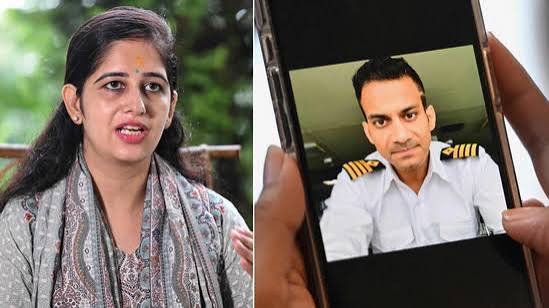
LONDON : An Indian merchant Navy captain was held in the United Kingdom over an alleged violation of Russian oil sanctions, with his wife terming him a “scapegoat”. The 38-year-old captain, Ajay Pant, who is a resident of Ramnagar in Uttarakhand, was arrested after the British authorities intercepted the oil tanker, which he was captaining, in the English Channel.

According to AFP, the arrest took place in June, and Pant has been charged with sanctions offences that carry a maximum prison sentence of 10 years. The report suggested that the trial in the case will begin on December 15. “My husband just became the scapegoat,” his wife Ritu Pant, 36, told AFP. “He was at the wrong place at the wrong time.”

The remarks came right after the British prosecutors accused the Indian merchant navy captain of directly or indirectly supplying or delivering prohibited Russian oil or oil products by ship to a third country. However, Pant has denied any wrongdoing. As per British law, Pant has the right to a fair trial, but his lawyers warn that there is a wrong road ahead.

How it went down

On June 14, the British commander intercepted the Smyrtos in the English Channel. The authorities alleged that the vessel was part of Russia’s shadow fleet, which is a network of ships with unclear ownership and insurance that Moscow uses to evade oil sanctions imposed after it invaded Ukraine in 2022, AFP reported.

According to data, the Smyrtos had left the Russian port of Ust-Luga on June 5 and was heading towards Egypt’s Port Said before it was intercepted. As per the report, the tanker was carrying about 98,000 tonnes of oil.

India extends support

Meanwhile, the Indian Ministry of External Affairs has maintained that consular officials had visited Pant to check on his well-being, according to AFP. It is pertinent to note that Pant was the only sailor among the crew to be charged. Most of the other 24 crew members have since returned home, while the vessel remains anchored off England’s southern coast.

Earlier, the Indian High Commission in London said that it was monitoring Pant’s case. In June, the High Commission told the Uttarakhand government that Pant was in judicial custody at HMP Winchester. Indian officials spoke to him on June 19, when Pant said he was in good health, was receiving medical care and was regularly in touch with his wife, PTI reported.

Source: Firstpost

WCAworld joins FIATA as newest Platinum partner

GENEVA : WCAworld has officially entered a three-year strategic partnership with the International Federation of Freight Forwarders Associations (FIATA), joining as a Platinum Partner—the highest tier within FIATA’s Partnership Programme.

The new partnership reflects a shared commitment to supporting freight forwarders through industry collaboration, professional development, digital transformation and the promotion of high standards across global logistics operations. It also provides a framework for enhanced engagement across FIATA initiatives, events and industry programmes.

“FIATA is delighted to welcome WCAworld as a Platinum Partner,” said Dr Stéphane Graber. “Building on our collaboration over the years, this partnership reinforces FIATA’s global role as the voice of the freight forwarding industry and its commitment to advocating for a regulatory environment that supports efficient, resilient and sustainable supply chains. It brings together two organisations with a strong international presence, extensive industry reach, and a common objective of supporting freight forwarders in an increasingly complex trading environment. We look forward to working closely with WCAworld to promote initiatives and strengthen engagement across the wider logistics industry”.

“Partnering with FIATA as a Platinum Partner marks a significant milestone for WCAworld, especially during FIATA’s centenary year,” said David Yokeum, Chair of WCAworld. “For a century, FIATA has stood as the trusted voice of the freight forwarding industry, and this collaboration brings our members closer to the leadership and expertise that define it. We look forward to working alongside FIATA to elevate industry standards, support the professional development of freight forwarders, and keep global trade moving forward together in the years ahead.”

As supply chains continue to evolve, collaboration between industry associations and global logistics networks is becoming increasingly important. FIATA and WCAworld remain committed to fostering partnerships that strengthen the freight forwarding profession and support efficient, secure and sustainable international trade.

GAIL,DPA and DNV signed partnership on setting up LNG bunkering facility at Kandla Port

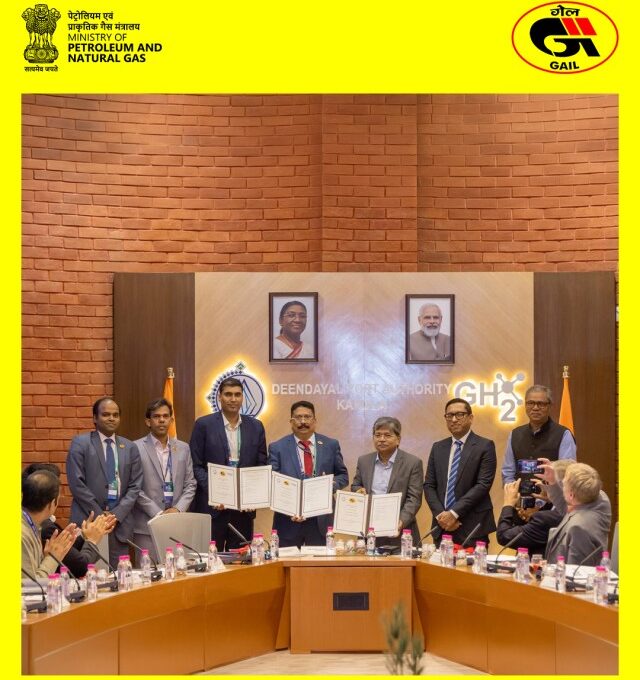
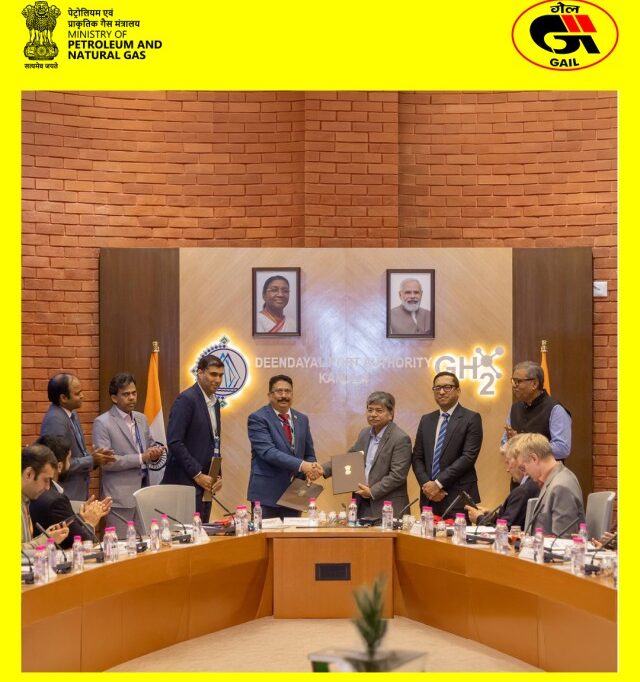
GANDHIDHAM : GAIL (India) Limited, Deendayal Port Authority (DPA) and DNV (DET NORSKE VERITAS) signed a Tripartite Cooperation Agreement at Kandla for collaboration on setting up LNG bunkering facility at Kandla Port.

dpa dnv gail edited GAIL,DPA and DNV signed partnership on setting up LNG bunkering facility at Kandla Port

The partnership brings together GAIL’s LNG expertise, DPA’s strategic port infrastructure and DNV’s global technical expertise in maritime safety and LNG bunkering.

The initiative will explore the development of LNG bunkering infrastructure, supply chain, safety framework and operational ecosystem at Kandla, supporting the adoption of cleaner marine fuels and India’s vision for greener and more sustainable shipping.

The agreement was signed by Shri Sushil Kumar, Chairman Deendayal Port Authority, Shri Anant Khobragade, ZCGM, Gujarat Zonal Office and Ajay Kumar Singh, Business Lead, Marine Advisory, DNV India.

A proud milestone towards building a cleaner maritime future for India.

Sarbananda Sonowal inaugurates ₹427.80 Crore projects at Paradip Port, marks 18.5-metre deep-draft capability

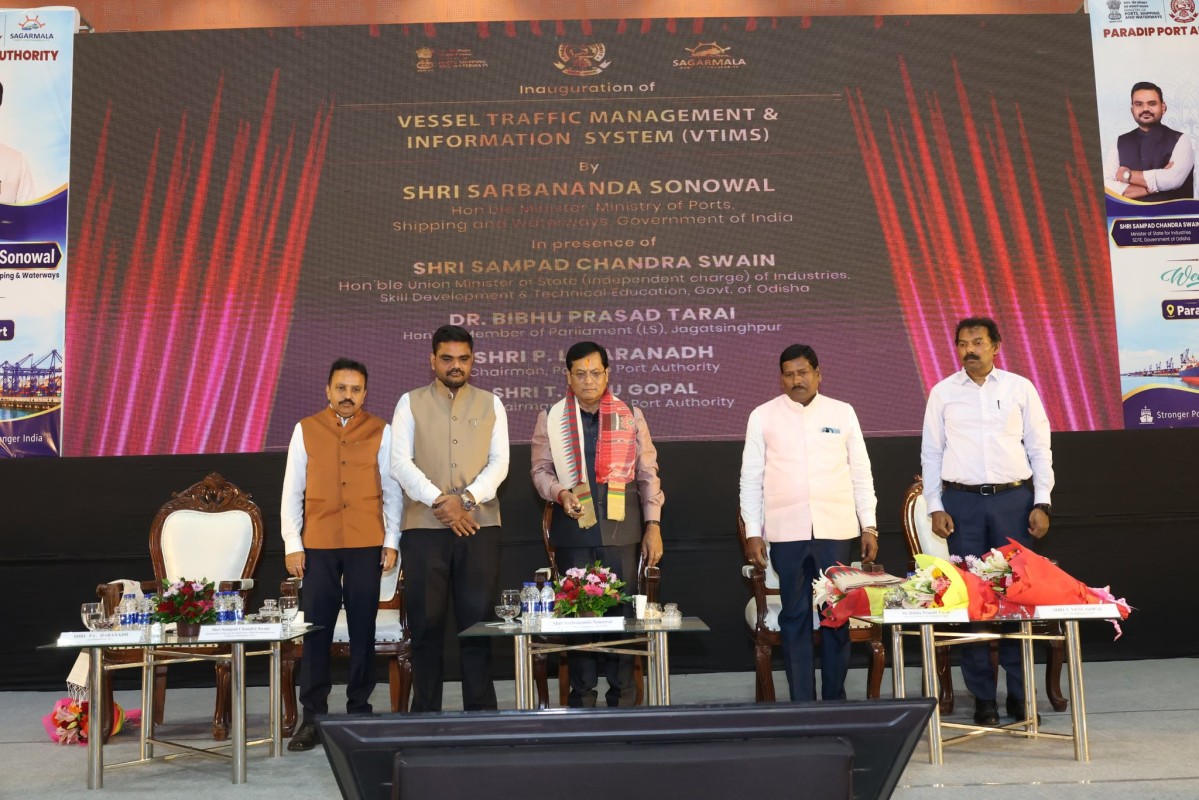
PARADIP: Union Minister for Ports, Shipping and Waterways (MoPSW), Shri Sarbananda Sonowal inaugurated seven major infrastructure projects worth ₹427.80 crore at Paradip Port Authority (PPA) in Paradip, Odisha, marking the port’s 18.5-metre deep-draft capability and its one-millionth tree milestone, while also witnessing the signing of concession agreements for three mechanisation projects worth ₹1,580.36 crore aimed at further strengthening Paradip’s capacity, efficiency and cargo-handling capabilities.

The projects span navigation, connectivity, safety, sustainability, residential infrastructure and community development, while the mechanisation projects are aimed at improving cargo handling and reducing vessel turnaround time.

The Union Minister was joined by Odisha Minister of State (Independent Charge), Department of Industries, Skill Development and Technical Education, Sampad Chandra Swain; Jagatsinghpur MP Bibhu Prasad Tarai; Paradip Port Authority Chairman P. L. Haranadh, IRTS; Deputy Chairman T. Venu Gopal; senior officials, stakeholders and members of the Paradip Port community.

Union Minister Sarbananda Sonowal said the investments would strengthen Paradip’s position as a major maritime gateway and create wider economic opportunities across the eastern region.

“The expansion of Paradip Port’s capacity is not only about strengthening one port; it is about creating a growth multiplier for eastern India. With deeper drafts, modern cargo-handling infrastructure, improved connectivity and greater mechanisation, Paradip is well positioned to drive trade, logistics, industry and employment across the region and contribute to India’s emergence as a globally competitive maritime economy,” Sarbananda Sonowal said.

SEVEN PROJECTS WORTH ₹427.80 CRORE

The ₹427.80 crore project package includes:

18.5-metre deep-draft capability: ₹352 crore: Capital dredging will enable Paradip Port to handle fully laden Capesize vessels in its inner harbour, improving economies of scale and helping reduce vessel turnaround and logistics costs.
Atharbanki Second New Bridge: ₹24.89 crore: The 500-metre, three-lane bridge, with footpaths and a dedicated pipeline corridor across Atharbanki Creek, is expected to ease congestion along a route used by nearly 3,000 trucks daily.
Sports Hostel: ₹2.10 crore: The facility will provide accommodation and amenities for aspiring athletes, supporting youth development.
Administrative Office Building façade upgrade: ₹12.18 crore: The redevelopment of the 1980s-era building and its surroundings, executed by NBCC (India) Ltd., includes improved parking and circulation facilities.
Piped Natural Gas supply to residential quarters: ₹20 crore: Developed in partnership with Bharat Petroleum Corp. Ltd., the first phase will extend PNG connectivity to 546 residential quarters in Madhuban. The facility is expected to reduce household gas expenses by up to 40% and make Paradip the first major port to provide PNG to its residential township.
Advanced Vessel Traffic Management and Information System: ₹15.50 crore: Developed with the National Technology Centre for Ports, Waterways and Coasts at IIT Madras, the system integrates solid-state radar, artificial intelligence, AIS, CCTV, oil-spill monitoring and 3D visualisation to monitor vessel movement up to 20 nautical miles from a modern ATC-style signal station.
One-millionth tree: Sonowal planted Paradip Port’s one-millionth tree, marking a milestone in the port’s plantation and green-cover initiatives.

The green milestone builds on plantation drives initiated after the 1999 Super Cyclone, with the Authority intensifying plantation activities over the past four years. PPA said nearly one lakh trees have been planted annually during this period, with employees, stakeholders and local communities contributing to the effort. The port said the initiative is aimed at expanding green cover, supporting biodiversity and strengthening environmental sustainability.

₹1,580.36 CRORE MECHANISATION PROJECTS

PPA also signed concession agreements for three projects, with an investment of ₹1,580.36 crore, as part of its plan to achieve 100% berth mechanisation by 2030, compared with the current level of 80%. They will support faster, safer and cleaner cargo handling while reducing vessel turnaround times and logistics costs.

The agreements cover the 5 MTPA South Quay mechanisation project, awarded to M/s Yogayatan Paradip SQB Terminal Pvt. Ltd. at an estimated investment of ₹498.69 crore on a Build-Operate-Transfer (BOT) basis; the 8 MTPA Multipurpose Berth mechanisation project, awarded to M/s Kalinga Bulk Terminal Paradip Pvt. Ltd. at ₹630.67 crore, also on a BOT basis; and the 10 MTPA captive CQ-III mechanisation project, awarded to M/s AMNS Paradip Logistics Pvt. Ltd. at an estimated ₹451 crore.

Union Minister Sarbananda Sonowal said the development of Paradip is part of the wider transformation underway in India’s maritime sector. “Under the dynamic leadership of Prime Minister Shri Narendra Modi, India has embarked on an unprecedented phase of maritime modernisation. Over the past 12 years, we have fundamentally strengthened our ports, waterways, shipping and maritime capabilities, making the sector a powerful engine of growth and the anchor of an Atmanirbhar Bharat and our journey towards Viksit Bharat 2047,” Sonowal said.

CSR INITIATIVES

PPA also highlighted the outcomes of two CSR-funded skill-development initiatives undertaken during 2025-26. The Authority provided financial assistance to the Centre of Excellence in Maritime and Shipbuilding (CEMS), Visakhapatnam, under the Ministry of Ports, Shipping and Waterways, for placement-linked training of 168 unemployed youth from Odisha in Bhubaneswar. Training covered roles including inventory clerk, courier associate operations and supply chain executive, with the trained candidates subsequently placed across various companies.

PPA also supported the Marine Products Export Development Authority (MPEDA) under the Ministry of Commerce and Industry in conducting skill-development programmes for Odisha’s fishing communities, particularly around Paradip Fishing Harbour. The programmes covered fish quality and hygienic handling, responsible fishing practices, distribution of square-mesh cod-ends and bio-toilets, and awareness on turtle excluder devices and sustainable fisheries.

The initiatives are aimed at improving hygiene and safety in fishing operations while supporting sustainable fisheries and alternative livelihood opportunities for fishing communities.

Gujarat CM Bhupendra Patel holds High-Level Meeting with World Bank in Washington

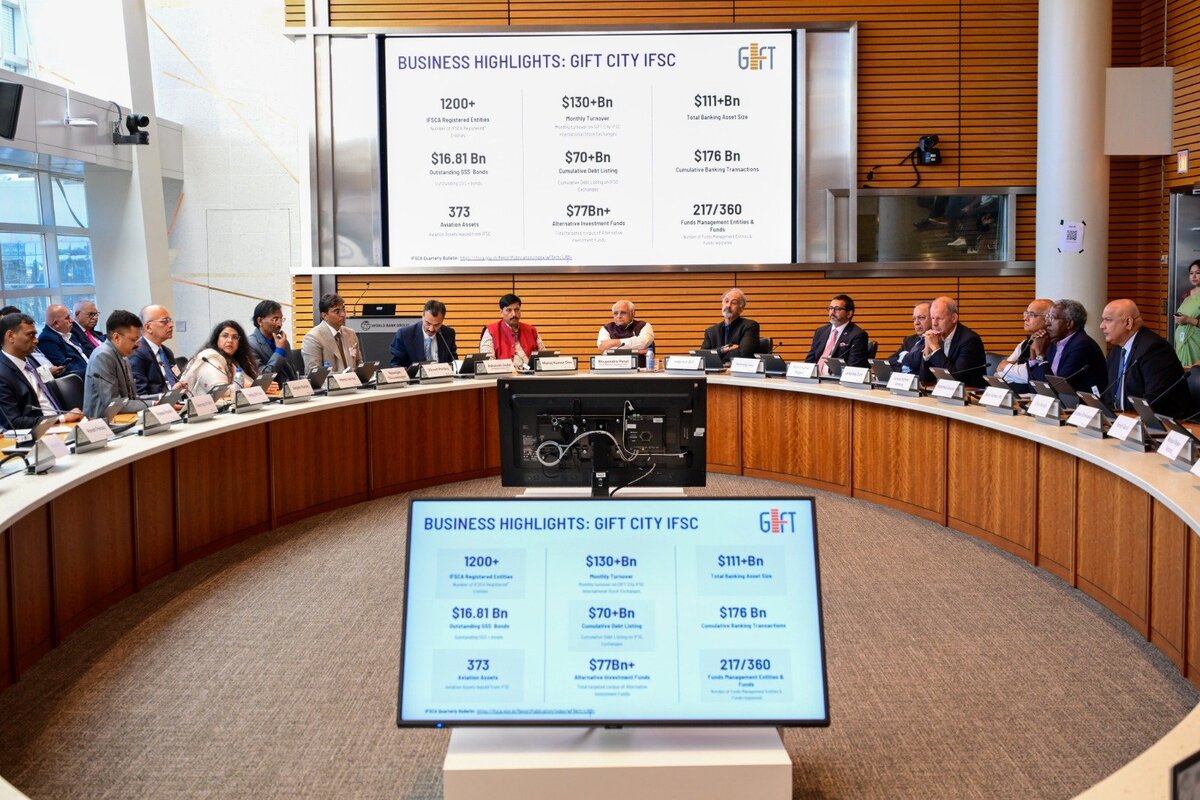
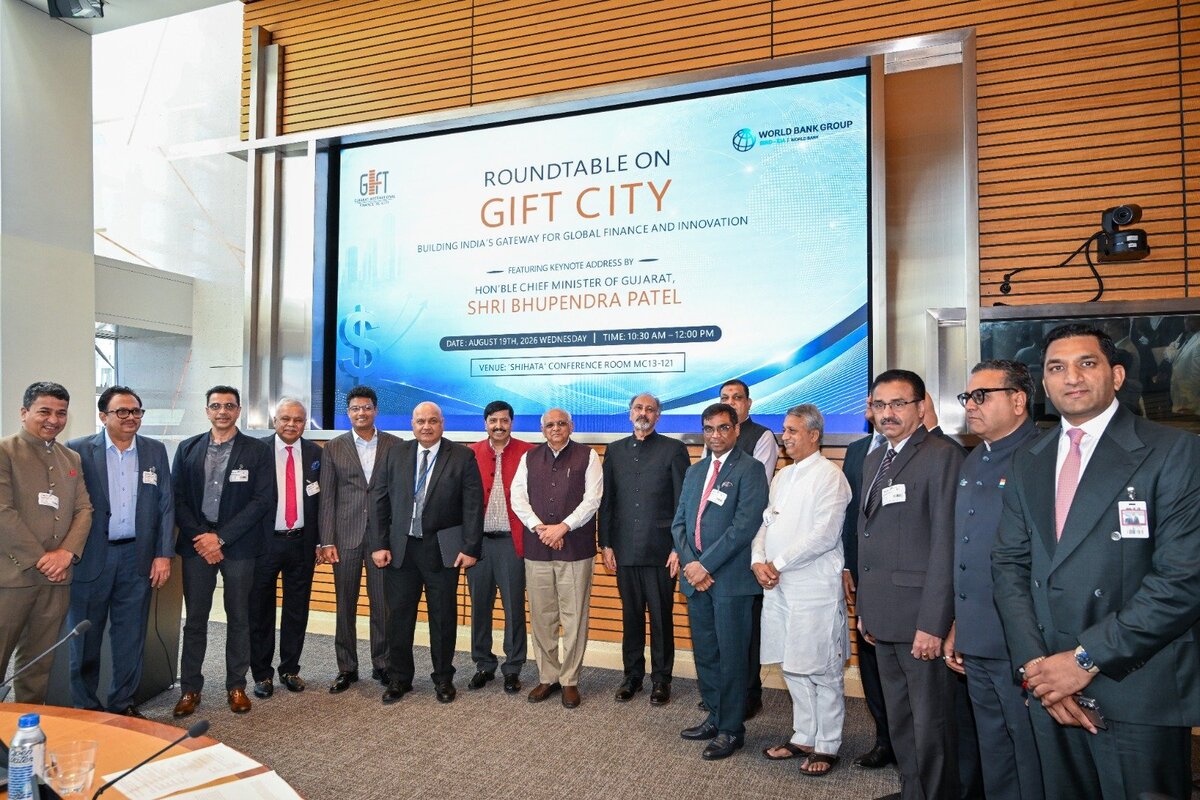
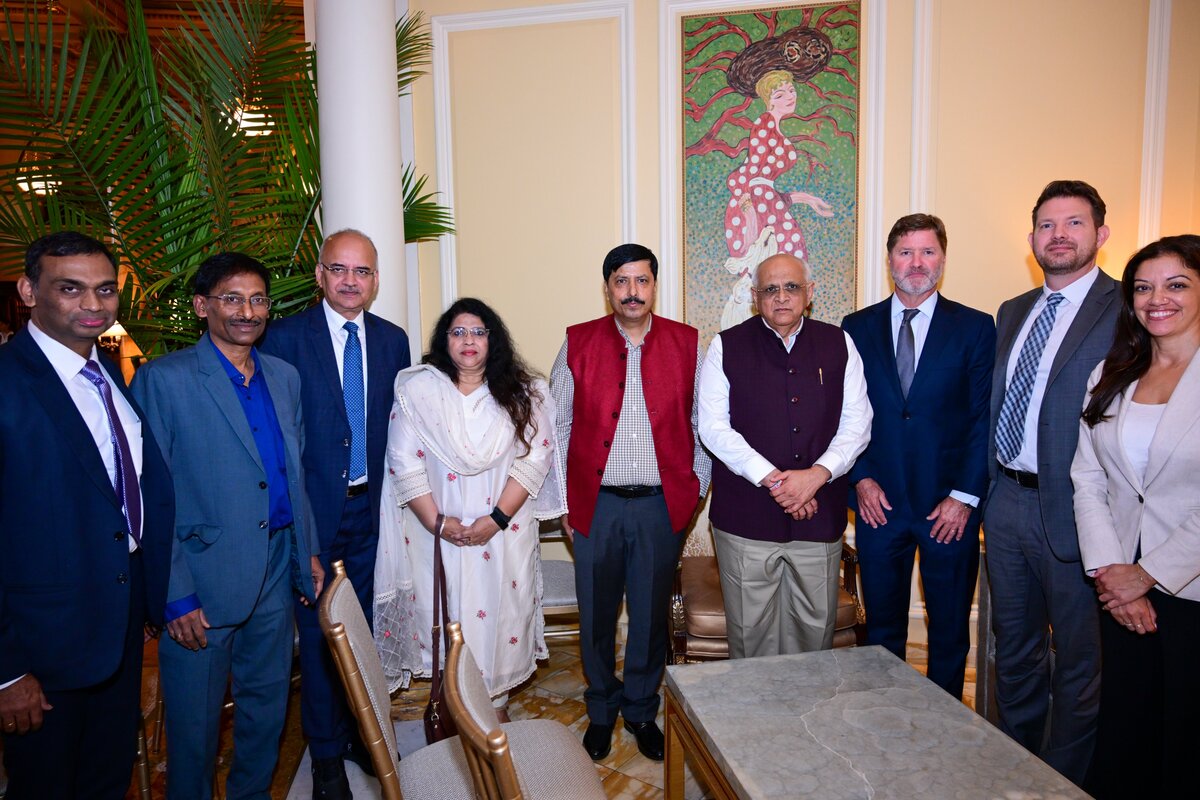
WASHINGTON: During his visit to the US, Gujarat Chief Minister Shri Bhupendra Patel presented the State Government’s vision to develop Gujarat as a global hub for Artificial Intelligence (AI), financial services, advanced technology and global capital at a high-level round table meeting  held at the World Bank in Washington. He briefed the World Bank on the development and progress of GIFT City.

CM stated that the Government of Gujarat is ready to embrace AI and is committed to its rapid adoption across key sectors, including administration, education, health and agriculture.

The meeting also focused on the use of AI for development. CM highlighted that AI is more than just technology—it can be a powerful tool for driving development and accelerating India’s growth. Predictive AI and similar technologies can help improve development outcomes.

CM said that Gujarat is working to turn this potential into tangible results by expanding the use of AI beyond the IT sector to government administration, education, health, agriculture and public services.

Emphasising Gujarat’s strong financial discipline, CM urged World Bank officials to explore possibilities for concessional financing for development-oriented projects in the State.

He further stated that under the leadership of Prime Minister Shri Narendra Modi, Gujarat has built a strong tradition of balancing financial discipline with development. CM was confident that the World Bank would consider extending special financing benefits for development projects to states that maintain fiscal discipline.

Gujarat CM World Bank Round Table 1 Gujarat CM Bhupendra Patel holds High-Level Meeting with World Bank in Washington

During the meeting with the World Bank, CM outlined to the participants that the ecosystem for attracting global capital to India through GIFT City is rapidly developing.

He further added that the Government of Gujarat is working to develop GIFT City in its next phase not just as an International Financial Services Centre, but as an integrated global ecosystem for finance, technology, fintech, AI, data and innovation.

CM also provided detailed insights about the well-developed ecosystem in GIFT City for banking, capital markets, fund management, insurance, aircraft leasing, ship leasing and other global financial services.

Gujarat Chief Secretary Shri M. K. Das, MD and Group CEO GIFT City Shri Sanjay Kaul, World Bank Vice President for South Asia Johannes Zutt, IFC Regional Vice President for Asia-Pacific  Riccardo Puliti, MIGA Vice President Junaid Kamal Ahmad, IMF Director of the Asia and Pacific Department Shri Krishna Srinivasan, and Senior Advisor to the World Bank Executive Director representing India Shri Hemang Jani and senior officials were present at the high-level round table meeting.

Gujarat CM holds One-to-One Meeting with Walmart Executive Vice President Dan Bryant in Washington, D.C.

WASHINGTON D.C.: Gujarat Chief Minister Shri Bhupendra Patel arrived in Washington, D.C. on Wednesday after successfully completing his visit to San Francisco as part of his week-long U.S.-Canada visit along with the Gujarat delegation. As part of the Chief Minister’s one-to-one meetings in Washington, D.C., he held a meeting with Walmart Executive Vice President and Global Public Policy and Government Affairs, Mr. Dan Bryant.

In the context of Gujarat having a large number of MSME industries, during the meeting with Chief Minister Shri Bhupendra Patel and Mr. Bryant discussed sensitising the state’s vast MSME pool and increasing export opportunities through quality improvement.

Mr. Bryant apprised the Chief Minister that under Walmart’s Vriddhi programm, more than 1.15 lakh MSMEs have been trained since 2019, and the company has set a target of providing training to 1.70 lakh MSMEs by 2028.

Chief Minister also discussed organising workshops jointly with Walmart and the concerned departments of the State Government to identify the sectoral potential of MSMEs.

Discussions were held on how the State Government and Walmart could collaborate over the next 3 to 4 months to explore potential global opportunities for MSMEs and small artisans. Chief Minister Shri Bhupendra Patel, Mr. Bryant and the delegation also held fruitful discussion on announcing a clear roadmap in this regard at the upcoming Vibrant Summit-2027.

Chief Secretary Shri M.K. Das, Additional Chief Secretary, Finance Department, Shri T. Natarajan, Additional Chief Secretary, Industries Department, Smt. Mamta Verma, and Principal Secretary to the Chief Minister, Shri Sanjeev Kumar, were also present at the one-to-one meeting.