Home Blog Page 140

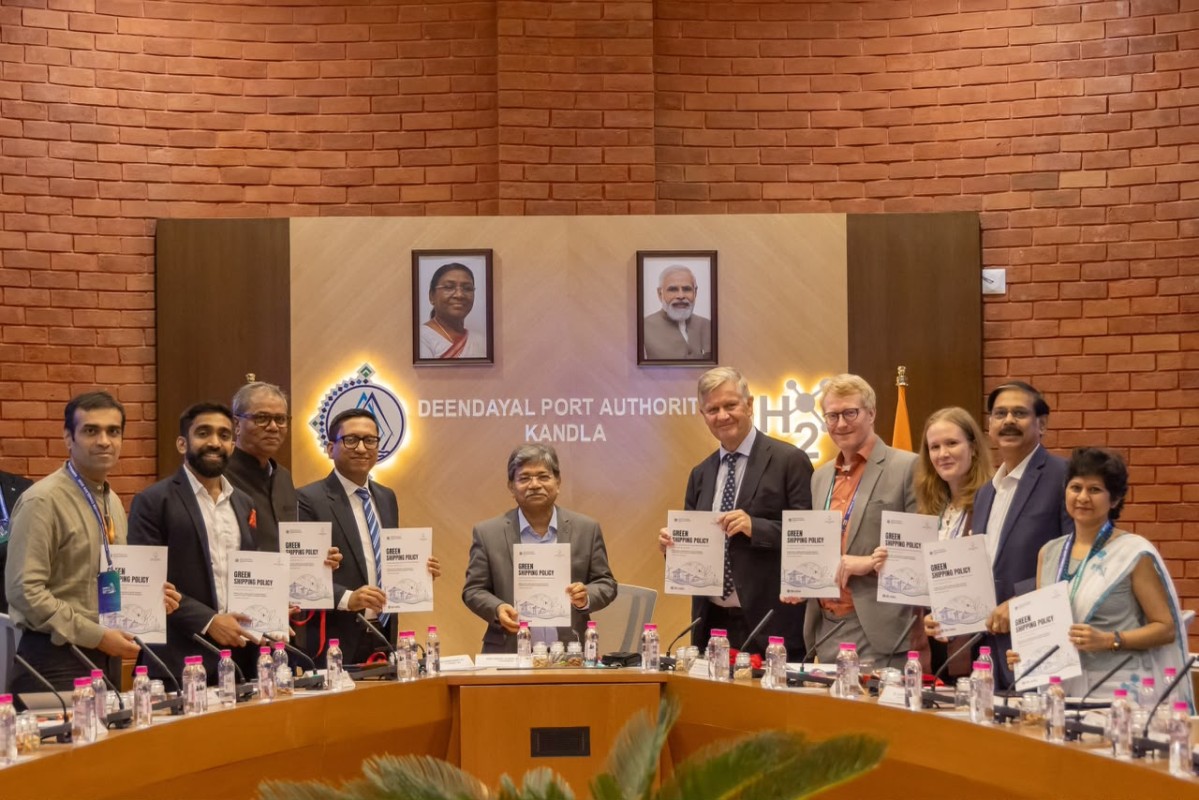
DPA Kandla organises Kandla Green Hydrogen Conclave 2026

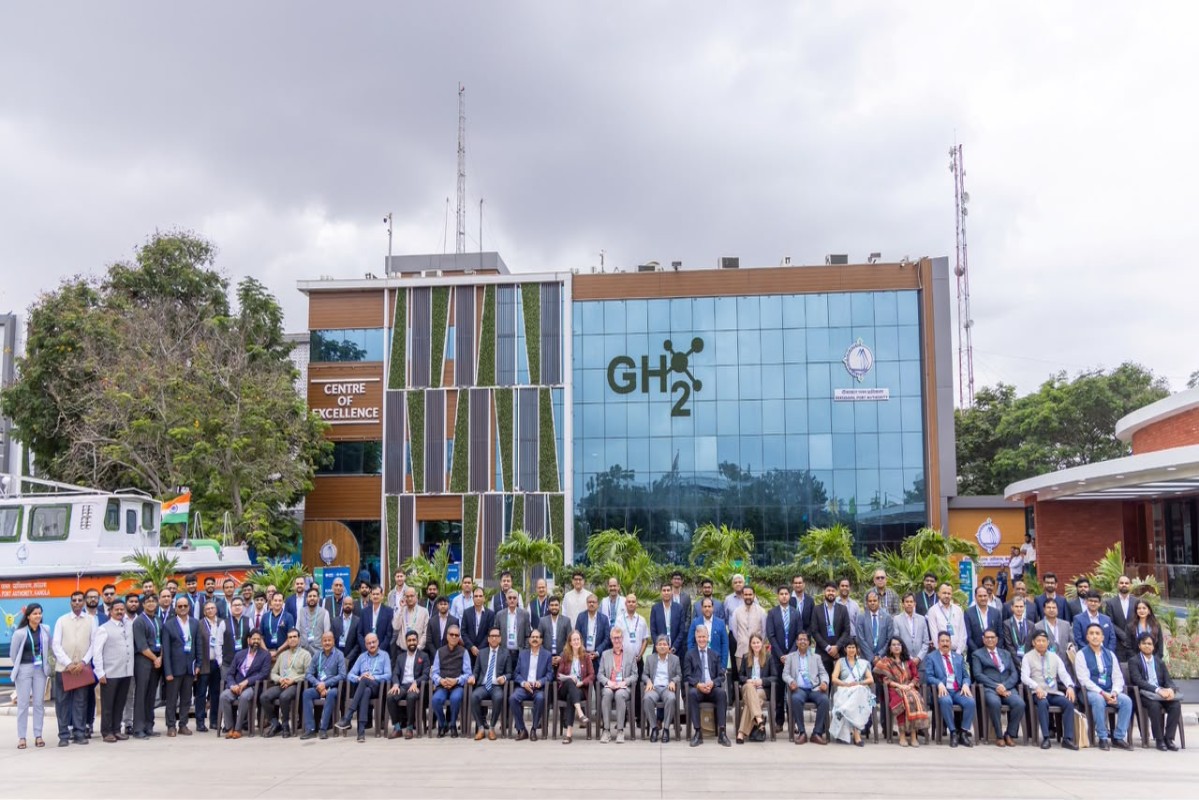
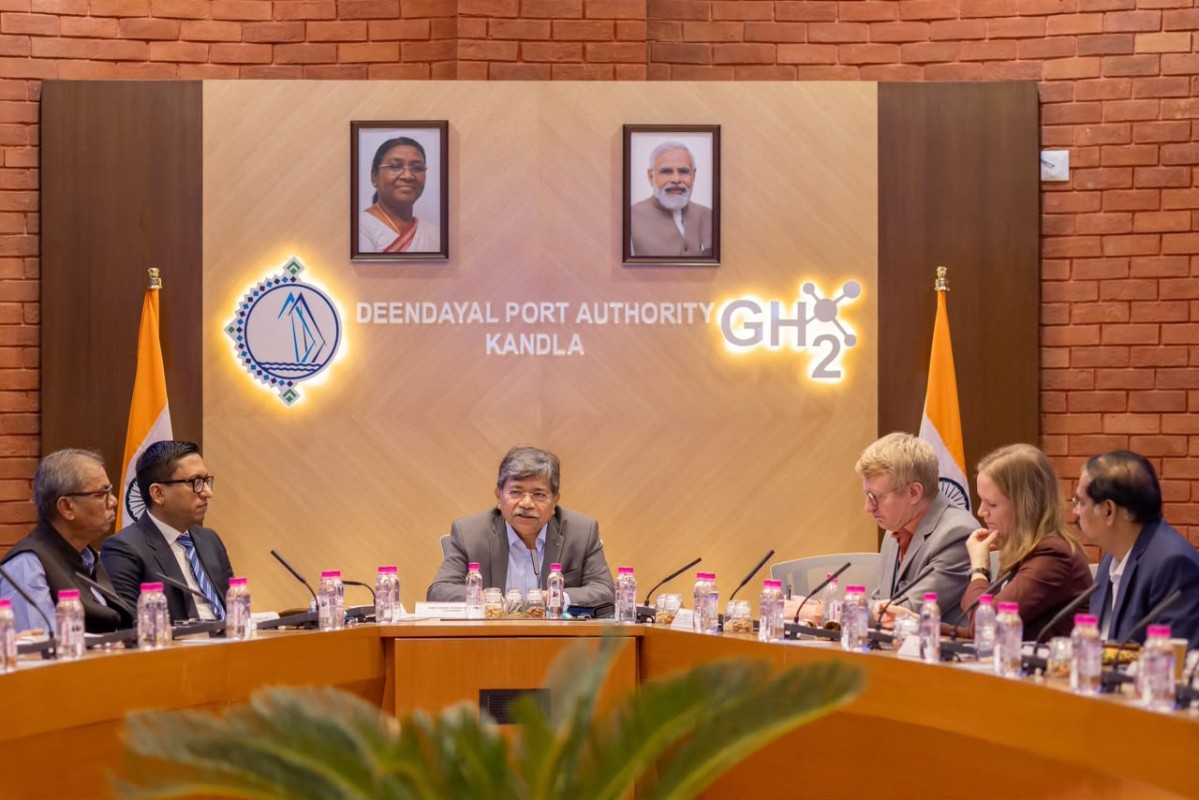
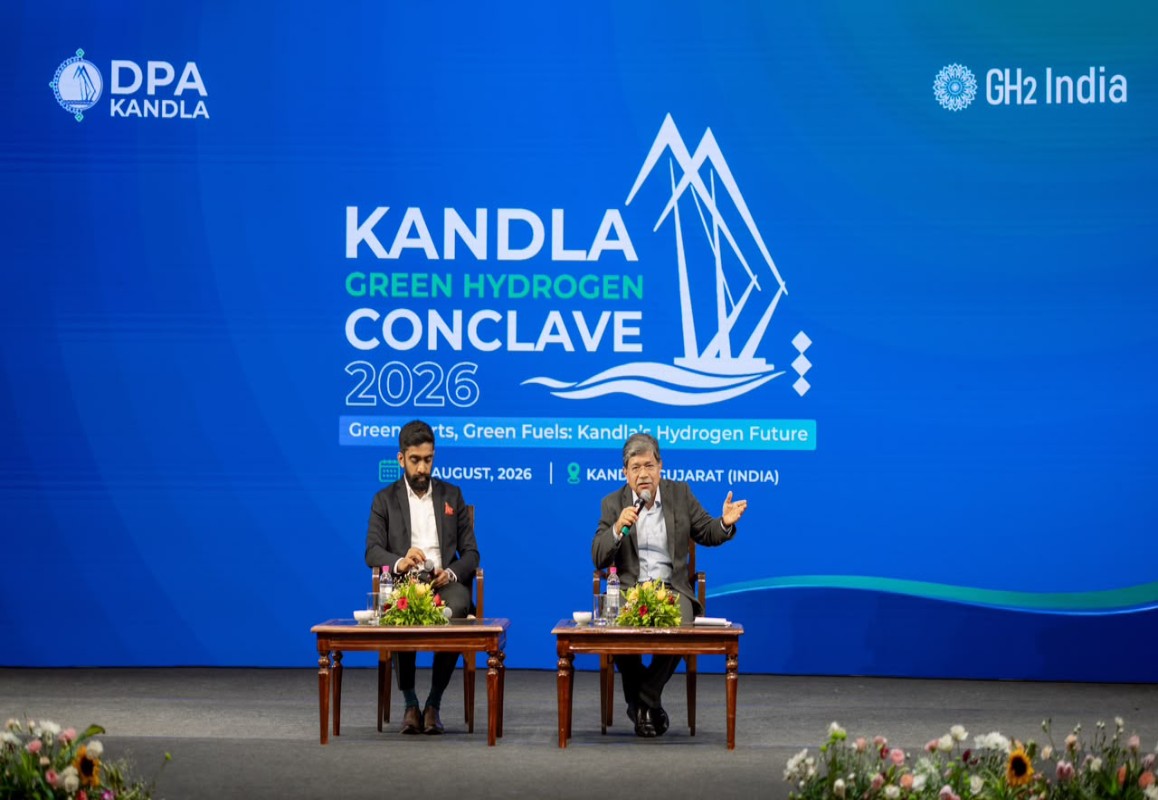
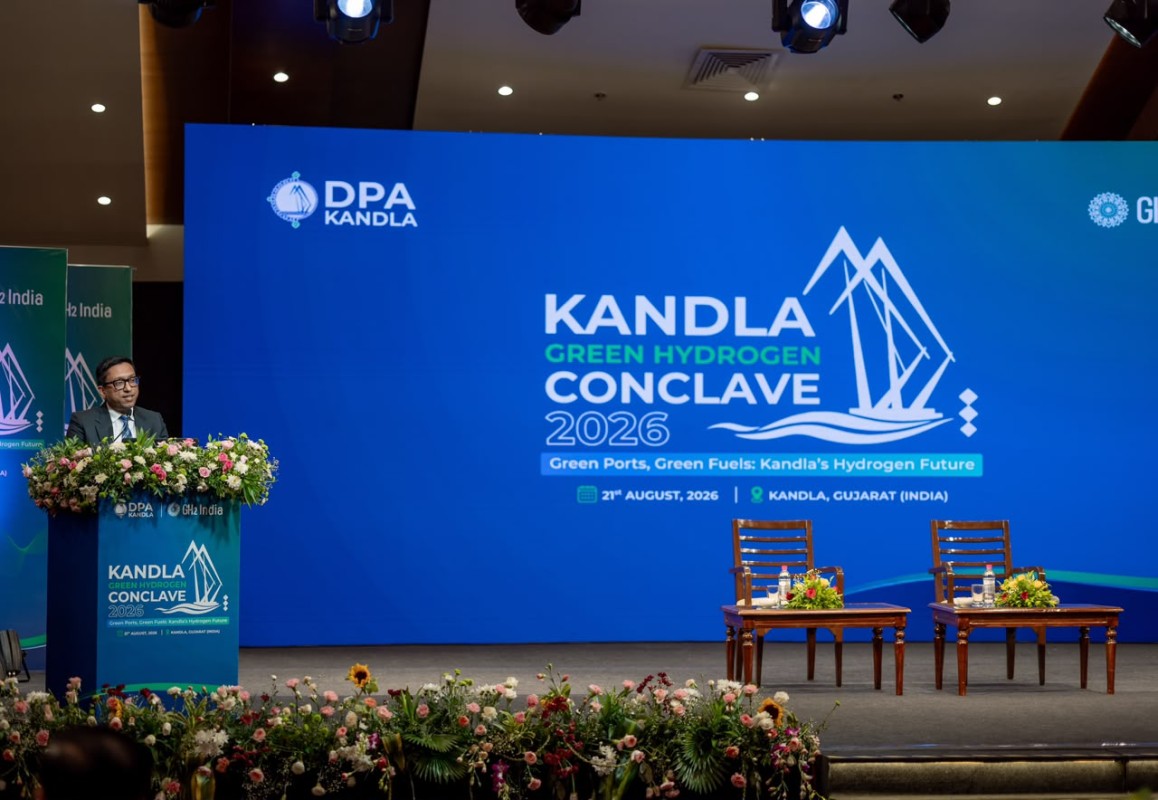
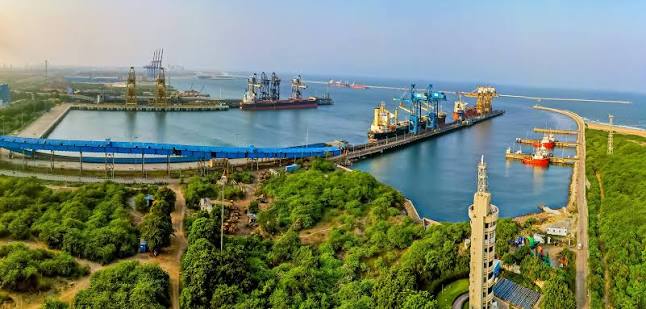
GANDHIDHAM : Deendayal Port Authority, Kandla organised the Kandla Green Hydrogen Conclave 2026 on Friday at its Administrative Office Building, Gandhidham, bringing together thought leaders, industry experts and delegates from across the globe.

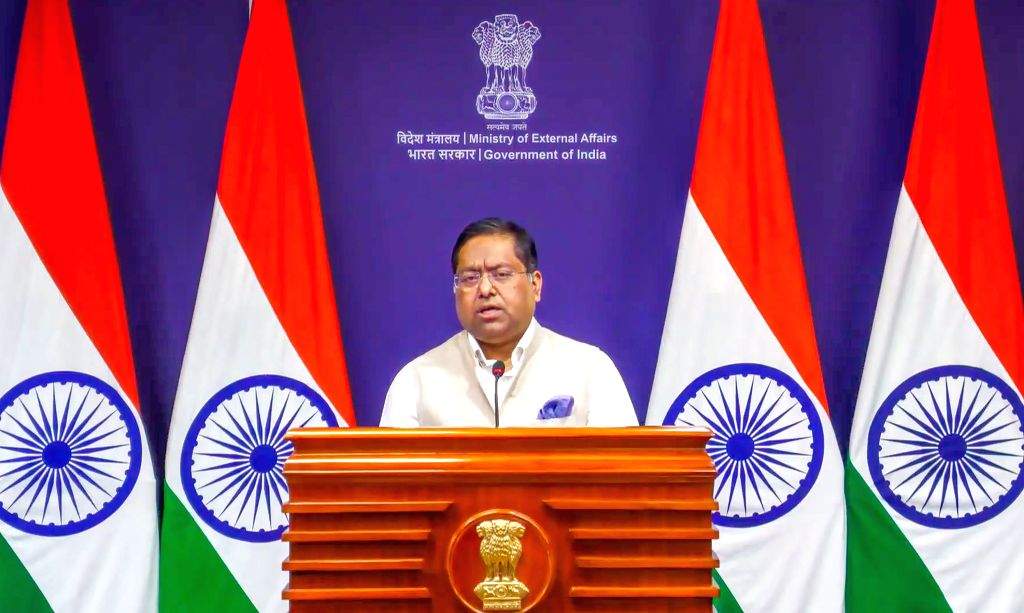
The Conclave commenced with a virtual video message by Shri Sarbananda Sonowal, Hon’ble Union Minister Port, Shipping & Waterways.

The Conclave was held in the august presence of Shri Sushil Kumar Singh, IRSME, Chairman, DPA; Mr. Erik Solheim, former Minister, Kingdom of Norway & President, International Advisory Board (GH2 India) and other dignitaries.

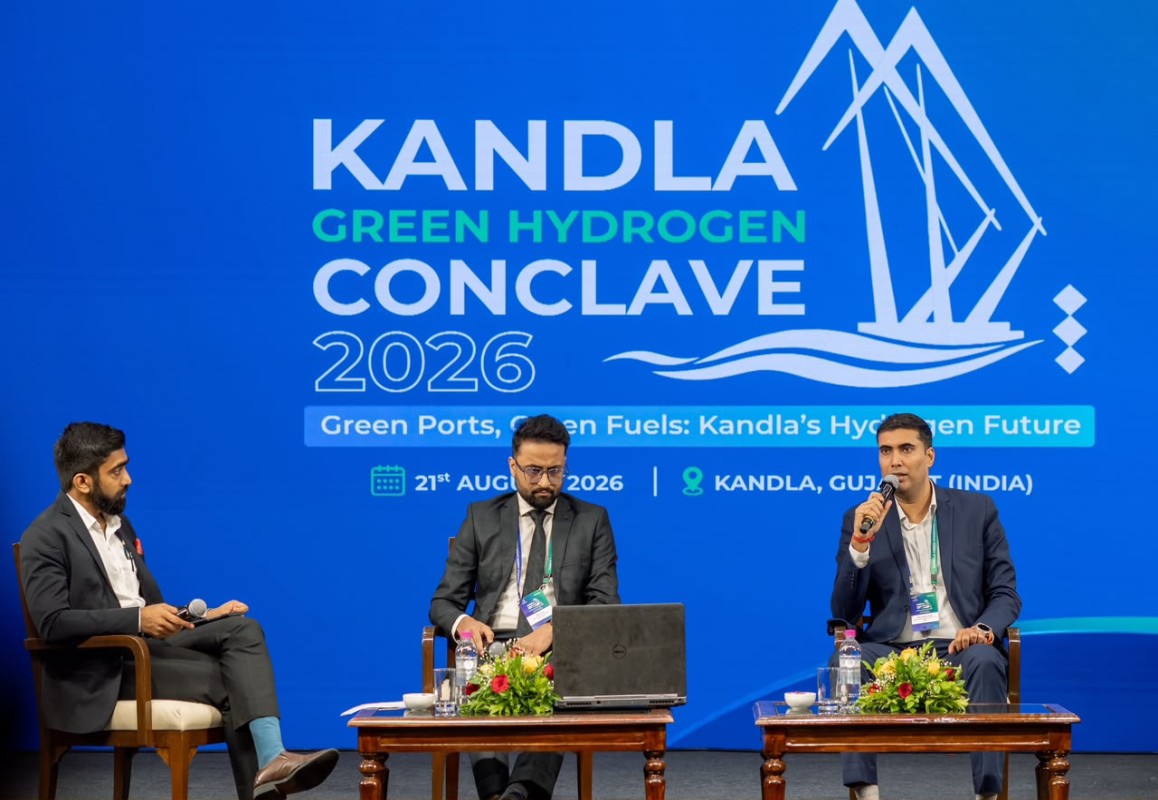
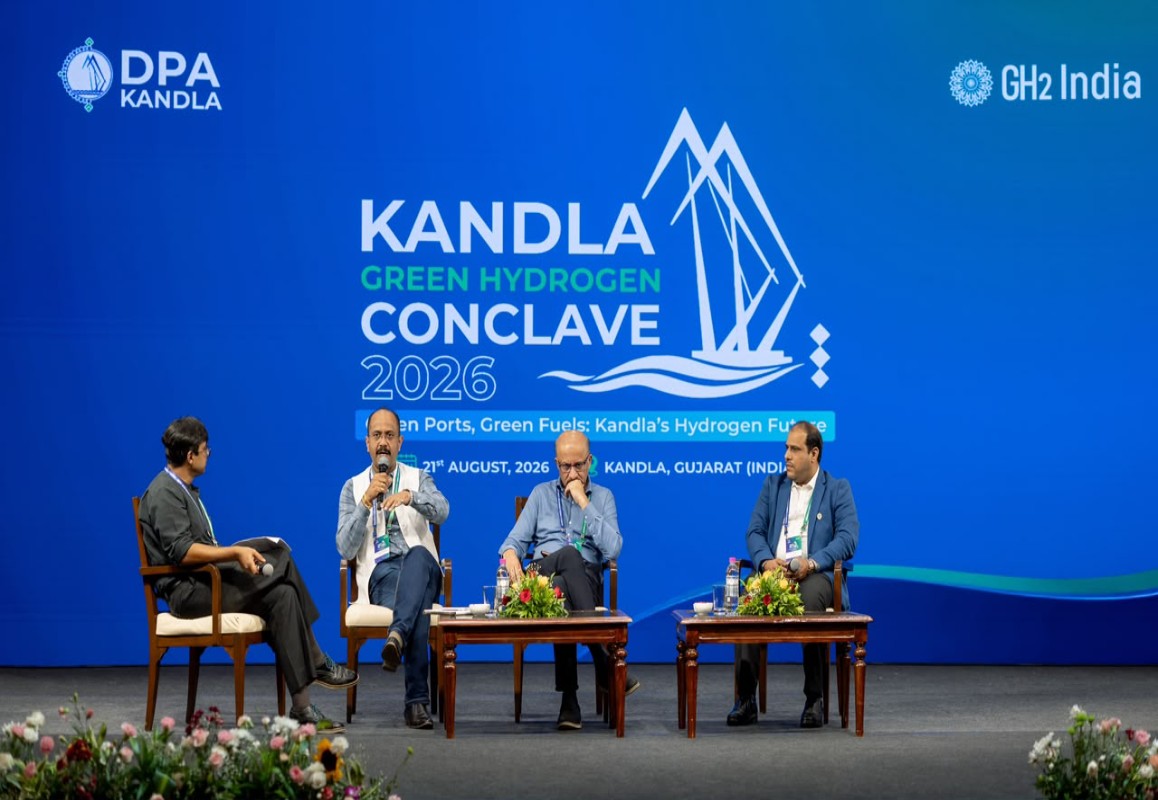
The Conclave witnessed insightful discussions and deliberations on Green Hydrogen, clean energy transition, sustainable port development and emerging green technologies, fostering global collaboration and exchange of ideas towards accelerating India’s green maritime ambitions.

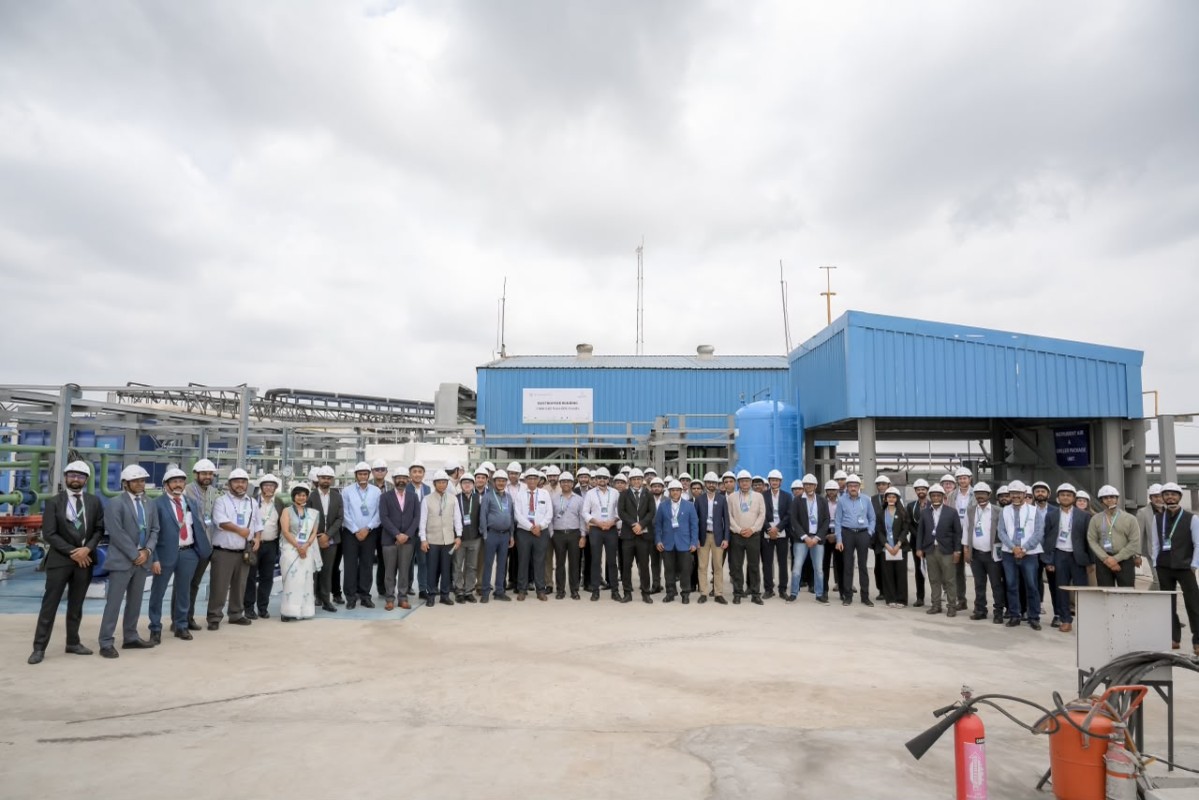
As part of the Kandla Green Hydrogen Conclave 2026, the GH2 delegation visited India’s first Make-in-India 1-MW Green Hydrogen Plant, at Kandla.

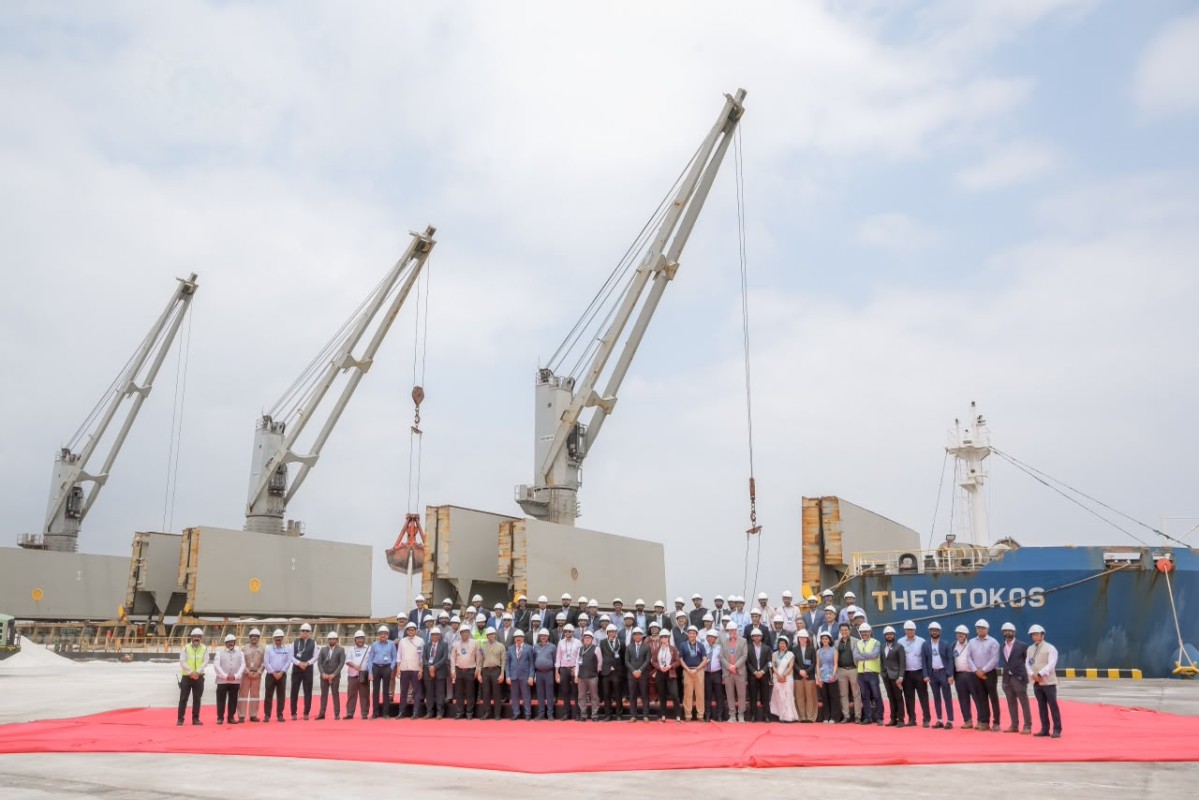
The delegation also toured key Port facilities, gaining valuable insights into DPA’s robust infrastructure, operational capabilities and its growing focus on green energy and sustainable maritime development

As part of the Kandla Green Hydrogen Conclave 2026, the GH2 delegation visited India’s first Make-in-India 1-MW Green Hydrogen Plant, at Kandla. The delegation also toured key Port facilities, gaining valuable insights into DPA’s robust infrastructure, operational capabilities and its growing focus on green energy and sustainable maritime development.

A series of insightful sessions brought together experts and industry leaders to deliberate on key dimensions of the green maritime transition.

Discussions ranged from FuelEU Maritime & the IMO Net-Zero Regime and Green Shipping Corridors between India & the EU to Water, Desalination & Environmental Safeguards – fostering exchange of ideas, global perspectives and innovative pathways towards a cleaner and sustainable maritime future

Kamarajar Port issues tender for ₹4,288-crore second Container Terminal

CHENNAI: Kamarajar Port Limited (KPL) on Thursday issued a tender to develop its second container terminal, with an estimated project cost of ₹4,288 crore, under the public-private partnership (PPP) model. The first container terminal is operated by Adani Ennore Container Terminal Pvt. Ltd. (AECTPL) under the DBFOT model.

In light of increasing future demand for container handling facilities at KPL and as per the Maritime Amrit Kaal Vision (MAKV) 2047, it is envisaged and proposed to undertake the Development, Operation & Maintenance of the Second Container Terminal under Public-Private Partnership (PPP) mode to handle vessels up to 24,000 TEUs with a maximum LOA of 400 m, says the project feasibility report.

The terminal will be developed on a Design, Build, Finance, Operate, and Transfer (DBFOT) basis with a 40-year concession period. The project aims to meet growing export-import (EXIM) and transhipment demand and strengthen Kamarajar Port’s position as a container-handling hub.

GMU signs MoU with IRS– IRCLASS Academy

GANDHINAGAR : Gujarat Maritime University (GMU) announced the signing of a Memorandum of Understanding (MoU) with Indian Register of Shipping (IRS) – IRCLASS Academy, marking another significant milestone in strengthening industry–academia collaboration in the maritime sector. The MoU was signed by Prof. Dr. Sanjeevi Shanthakumar, Provost, Gujarat Maritime University; Mr. Praveen M. Managing Director, Indian Register of Shipping; and Mr. Amit Bhatnagar, Head, IRCLASS Academy, Indian Register of Shipping.

The MoU aims to foster academic, scholarly and professional collaboration through joint programmes, initiatives, knowledge exchange and mutually beneficial activities. By bringing together GMU’s academic expertise in maritime education, law, policy and management with the extensive industry knowledge and professional expertise of IRS–IRCLASS Academy, the partnership will create valuable opportunities for knowledge sharing, capacity building, research, professional development and greater interaction between academia and maritime professionals, contributing to the development of skilled and industry-ready maritime professionals.

The signing ceremony, held in the presence of representatives and officials from both institutions, reaffirmed their shared commitment to building a sustained and productive partnership. Through such strategic collaborations, Gujarat Maritime University continues to strengthen its engagement with leading maritime institutions and industry stakeholders, contributing to the advancement of maritime education, research and professional capacity in India

3rd Edition of the CII Gujarat Export Conclave 2026 highlights New Pathways for Export Growth through FTAs, Trusted Partnerships and Emerging Markets

AHMEDABAD: The Confederation of Indian Industry (CII) Gujarat successfully hosted the 3rd Edition of the CII Gujarat Export Conclave 2026 at Ahmedabad, bringing together exporters, importers, policymakers, industry leaders, trade experts and representatives from Australia, the United Kingdom and Oman to deliberate on the theme “Navigating the New World Order: Leveraging FTAs, Trusted Partnerships and Future Supply Chains”, with a focus on “Trade, Technology and Trust for Gujarat’s Global Growth.”

The inaugural session, titled “India’s Road to US$2 Trillion Exports: Unlocking New Opportunities for Gujarat in the New Global Trade Order,” set the strategic tone for the day, bringing together industry leaders and government officials to discuss how Gujarat can capitalise on shifting global trade dynamics and help accelerate India’s export growth aspirations.

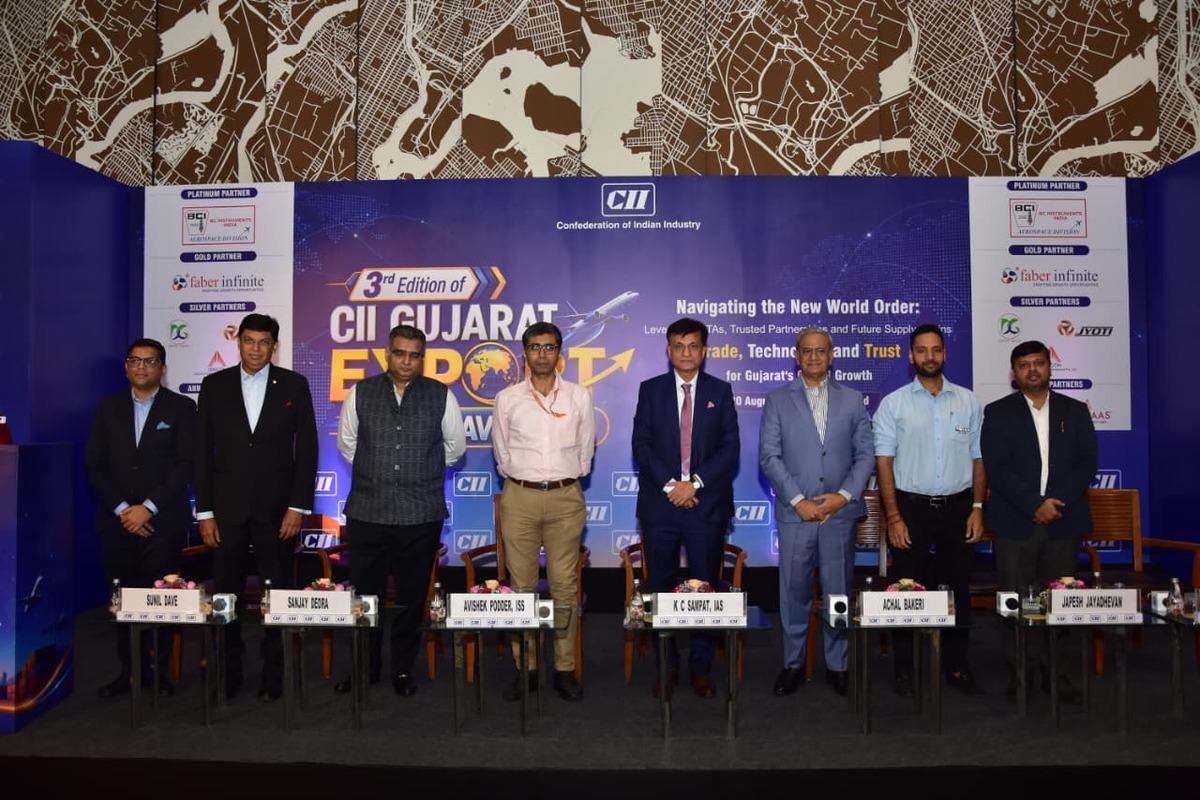
Mr K C Sampat, IAS, Managing Director, iNDEXTb, Government of Gujarat, delivered the keynote address, highlighting that Indian exports reached approx $863 billion despite the geopolitical tensions. He also mentioned that the Vibrant Gujarat Regional Conferences in Rajkot, Vadodara, Surat and Mehsana hosted Reverse Buyer-Seller Meets and saw participation from around 230 international buyers and 4250 domestic sellers through 10800 business meetings and business inquiries worth 1680 crore.

MD, iNDEXTb noted that the Upcoming Vibrant Gujarat Global Investor Summit will host a dedicated FTA session every day for various countries.  

Addressing the evolving trade landscape, Mr Avishek Podder, ISS, Director, Directorate General of Commercial Intelligence and Statistics (DGCIS), Ministry of Commerce, Government of India, shared insights into India’s export performance, diversification trends and opportunities emerging from global supply chain realignment.

Mr Podder noted that Gujarat accounts for 1/4th of India’s exports. Describing the recent trends, he observed that India needs to now move from Export Promotion to Export Intelligence.

Mr Achal Bakeri, Chairman, CII Gujarat State Council and Chairman & Managing Director, Symphony Ltd, highlighted Gujarat’s continued leadership in India’s export landscape. He noted that Gujarat recorded exports worth USD 110.63 billion in FY 2025-26, accounting for 25.6 per cent of India’s total exports, while India achieved a record USD 863.1 billion in overall exports, underscoring the country’s growing competitiveness in global markets.

Mr Japesh Jayadhevan, Chief Executive Officer, Hocco Foods Pvt Ltd, highlighted the growing opportunity for Indian brands to establish a stronger presence internationally through innovation, consumer trust and product excellence.

Delivering the industry address, Mr Sanjay Deora, Chief Executive Officer, Nandan Terry Ltd, emphasised the importance of value-added manufacturing, quality and competitiveness in strengthening India’s export presence across global markets. He emphasised Trade, Technology, & Trust as the cornerstone for creating value in a competitive environment. 

Summing up the session, Mr Sunil Dave, Convenor, CII Gujarat ITEC Panel and Managing Director, BC Instruments India Pvt Ltd, reflected, “What began three years ago as a conversation has today evolved into a marketplace of trust. This Conclave continues to connect industry’s ground realities with the policy and institutional support required to scale them, while creating meaningful pathways for global partnerships and business growth.”

The first panel discussion, Navigating Global Value Chains: Industrial Corridors, FTAs and Market Access Strategies, examined the changing dynamics of international trade and the factors that will determine export competitiveness in the coming decade.

CII 3 3rd Edition of the CII Gujarat Export Conclave 2026 highlights New Pathways for Export Growth through FTAs, Trusted Partnerships and Emerging Markets

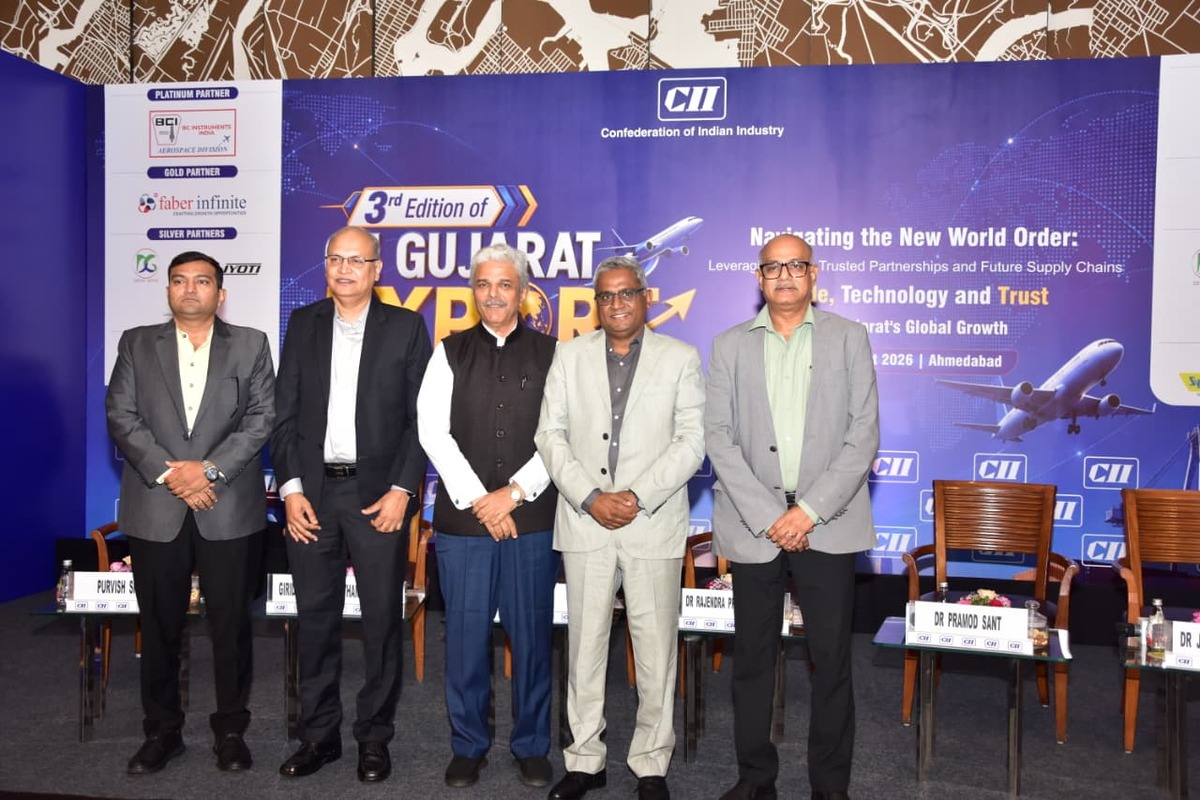
Moderated by Dr Rajendra Prasad Sharma, Campus Head, Indian Institute of Foreign Trade (IIFT), GIFT City Campus, the session featured Dr Pramod Sant, Director General, Federation of Freight Forwarders’ Associations in India (FFFAI); Mr Samir J. Shah, National President, ACAAI; Convenor, CII Gujarat Logistics Panel and Director, JBS Group; Mr Giridhar Jambunathan, Vice Chairman, CII Central Gujarat Zonal Council and Director & CEO, Hilti Manufacturing India Pvt Ltd; Dr James J. Nedumpara, Professor & Head, Centre for Trade and Investment Law (CTIL); & Mr Purvish Shah, Director, Gopal Glass Works Ltd.

The panel explored how exporters can leverage FTAs beyond headline tariff reductions and highlighted the importance of understanding rules of origin, localisation requirements, sourcing strategies and market-access conditions.

The second panel discussion, “Africa, Indo-Pacific and Emerging Markets: Building Gujarat’s Next Export Frontier,” focused on opportunities arising from rapidly growing economies across Africa, ASEAN, the Gulf region, Central Asia and the broader Indo-Pacific.

CII 4 3rd Edition of the CII Gujarat Export Conclave 2026 highlights New Pathways for Export Growth through FTAs, Trusted Partnerships and Emerging Markets

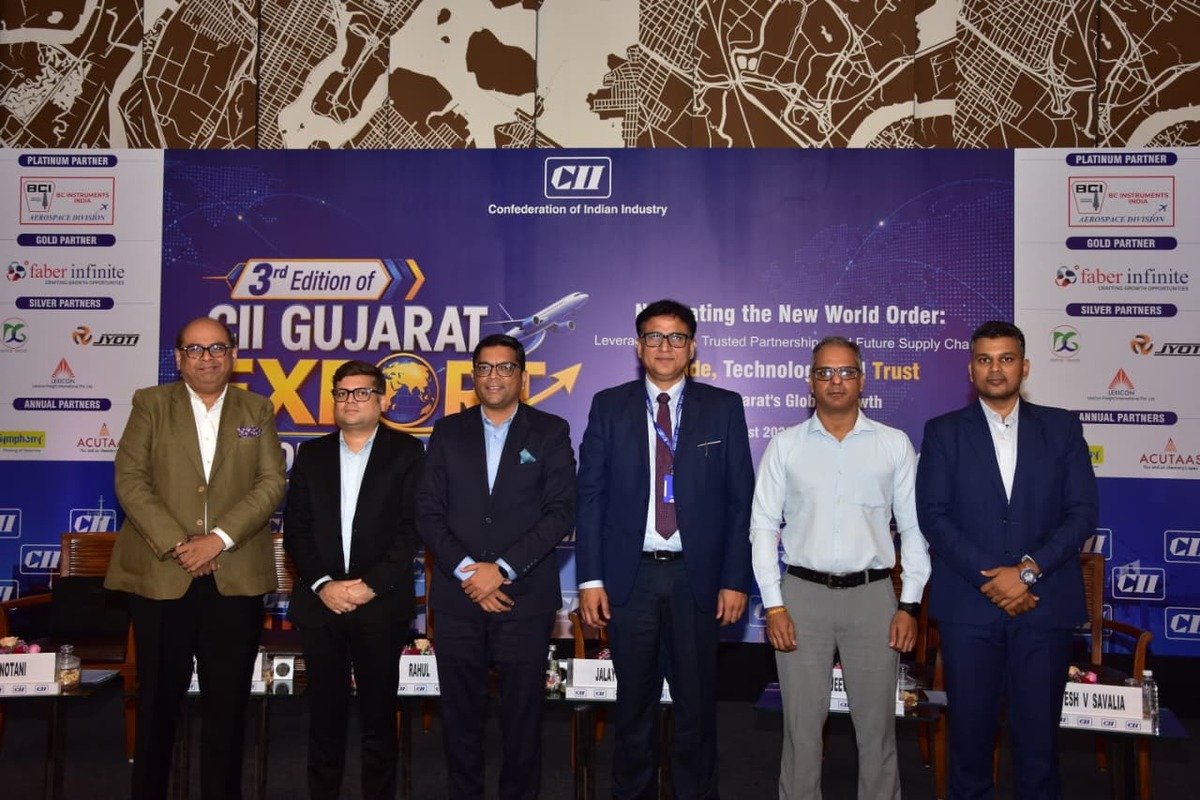
Moderated by Mr Jalay Pandya, Co-Convenor, CII Gujarat ITEC Panel and Co-Founder & Director, Faber Infinite Consulting, the panel featured Mr Rahul, Deputy General Manager & Regional Manager (Western Region), ECGC; Mr Pulkit Bakliwal, Director, Pavit Ceramics Pvt Ltd; Dr Rutesh Savalia, Director, Paragon Fine and Speciality Chemical Ltd; Mr Sanjay Notani, Senior Partner & Head, International Trade, Customs & Sustainability Practice, Economic Laws Practice; Dr Rajeev Sharma, Associate Professor, Entrepreneurship Development Institute of India (EDII).

Opening the discussion, panellists highlighted that future export success will increasingly depend on compliance readiness, local partnerships, market understanding and risk mitigation, in addition to competitive pricing and product quality. The session concluded with three key messages: the significant opportunity available in emerging markets, the growing importance of compliance and risk management, and Gujarat’s strong positioning to benefit from ongoing global supply-chain diversification.

The session on “Gujarat-Australia: Accelerating Business Growth through Trade, Innovation & Trusted Partnerships” featured Mr Christian Jack, Deputy Consul-General, Australian Consulate General in Mumbai, who highlighted opportunities arising from growing India-Australia economic engagement and the India-Australia Economic Cooperation and Trade Agreement (ECTA).

Mr Jack noted that “Australia and India are strategic partners in a changing world. In the past five years, while India’s exports to the world grew by 40%, exports to Australia surged by 200%. The ECTA has unlocked full market access; 100% of Indian exports to Australia are now tariff-free, driving two-way trade past AUD 50 billion and deepening complementarity across critical minerals, education, renewables and defence.”

CII 5 3rd Edition of the CII Gujarat Export Conclave 2026 highlights New Pathways for Export Growth through FTAs, Trusted Partnerships and Emerging Markets

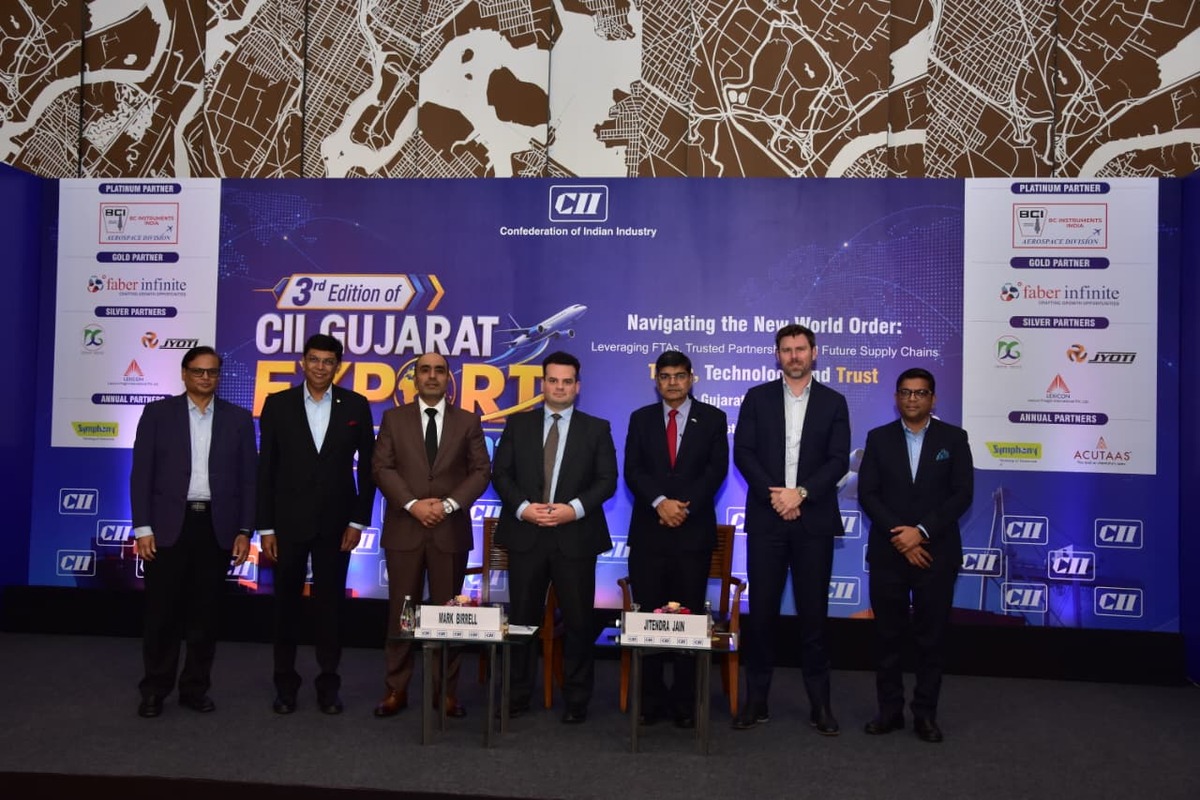
The United Kingdom Business Opportunity Briefing, titled “Gujarat-United Kingdom: Accelerating Business Growth through Trade, Logistics & Strategic Partnerships,” featured Mr Mark Birrell, Trade Counsellor, South Asia, UK Department for Business, Innovation, Science and Trade, British Deputy High Commission, Mumbai, along with Mr Jitendra Jain, Sector Head – Chemicals, who shared insights into expanding commercial opportunities between Gujarat and the United Kingdom.

The presentation highlighted that under the India–UK Free Trade Agreement  (CETA), customs authorities in both India (CBIC) and the United Kingdom (HMRC) have committed to a legally binding target to clear fully compliant cargo shipments within 48 hours.

Beyond tariff reductions across chemical and manufacturing sectors under Staging Category A, the India–UK CETA framework includes the Double Contribution Convention (DCC). This provision exempts eligible Indian professionals on temporary UK assignments from host-country social security contributions for up to five years. By mitigating double taxation, the agreement significantly reduces cross-border operating overheads and boosts talent mobility for Indian companies operating in the UK.

The session on “Gujarat-Oman: Accelerating Business Growth through Trade, Logistics & Strategic Partnerships” featured H.E. Mahboob Issa Al Raisi, Consul General, Consulate General of the Sultanate of Oman, who outlined opportunities for enhanced bilateral trade, investment and logistics collaboration between Gujarat and Oman.

His Excellency stressed that the Sultanate of Oman is pivoting its economic relationship with India from traditional buyer-seller transactions to an integrated strategic partnership, leveraging its ports, free zones, and logistics infrastructure to serve as a manufacturing, distribution, and value-addition gateway for Indian businesses expanding into the Gulf and East Africa. Supported by the Oman-India Comprehensive Economic Partnership Agreement (CEPA), this initiative specifically aligns Gujarat’s manufacturing strengths in sectors like engineering, chemicals, pharmaceuticals, and renewables with Oman’s Vision 2040 diversification strategy.

Delivering the Vote of Thanks, Mr Madhu Mohan, Co-Convenor, CII Gujarat ITEC Panel and Vice President – International Business, Symphony Ltd, noted that the conclave had successfully connected policy discussions, industry expertise and international business opportunities on a single platform.

The day-long deliberations successfully transformed policy conversations into actionable business opportunities and encouraged delegates to leverage the curated B2B meetings that followed the formal sessions.

Government notifies Rs 62,500-crore mobile scheme, eyes more Apple production and Google exports from India

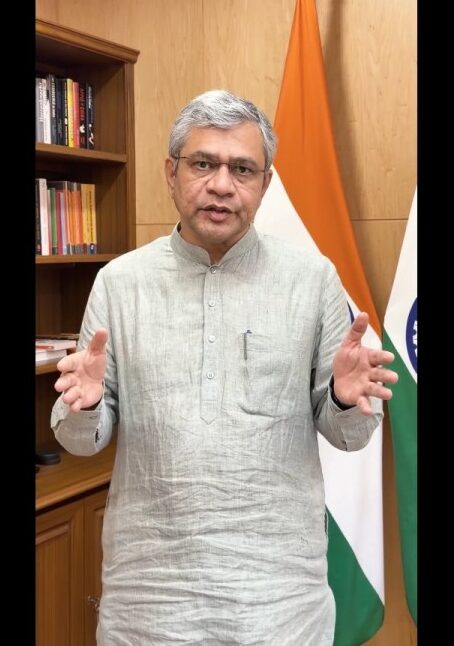
NEW DELHI : The government expects Apple to manufacture products beyond the iPhone in India and Google to move most of its export-oriented production out of China and to the country, Electronics and IT Minister Shri Ashwini Vaishnaw said on Friday as the Centre notified a Rs 62,500-crore scheme to extend incentives for mobile phone manufacturing.

Asked whether Apple could make more than iPhones in the country, Vaishnaw replied “yes”, and said the government was in talks with the company to broaden the range of products it assembles in India. On Google, he said India is expected to take a large share of the output the company currently routes through China for overseas markets.

Vaishnaw put the scale of the shift in numbers. “Mobile phone production, cumulative, which was about 22 lakh crore, will be doubling in this period. It will go up to 40 lakh crore,” he said. “That’s a big, big thing.”

On smartphones, which he noted were the country’s largest single export last year, Vaishnaw said: “…that position will be retained, that position will be further strengthened”, and electronics, now the third-largest export category, would keep its ranking.

The government is separately working with three Indian companies that could grow into smartphone brands over the next 10-14 months, the minister said. The three have been asked to draw up best-in-segment designs and pick the product categories they intend to compete in, he said, adding that each firm’s intellectual property and design would be assessed before any support was cleared.

The Mobile Phone Manufacturing Scheme (MPMS), cleared by the Cabinet in July, runs from 2026-27 to 2030-31. It picks up from the production-linked incentive (PLI) scheme for large-scale electronics manufacturing that closed on 31 March, and tilts the policy towards components and higher domestic value addition, after the earlier round rewarded manufacturers mainly for building volume.

Payouts under the scheme range from 2.25 to 5 per cent of eligible mobile phone sales. Firms can earn up to 1.5 per cent more for sourcing components and sub-assemblies at home—display and camera modules, enclosures, batteries and USB cables—provided they localise those parts for at least a quarter of the handsets they sell in a year.

The scheme splits into two tracks. One is open to manufacturers, including contract manufacturers, that booked at least Rs 10,000 crore in turnover in 2025-26. The second is reserved for Indian brands and adds a 3 per cent incentive for design and R&D done in the country. To count as an Indian brand, a company must keep its trademark and IP in India, be controlled by Indian citizens holding more than 51 per cent of the entity, and run its own design and research here. Such brands face no minimum sales bar and will be picked by an inter-ministerial committee chaired by the MeitY Secretary.

Apple has assembled iPhones in India since 2017 and has scaled up through suppliers such as Foxconn and the Tata Group. Counterpoint Research estimates, cited by Reuters, put India’s share of global iPhone output at roughly 26 per cent this year, and much of the Foxconn plants’ Indian output is shipped to the United States. The company also makes some components locally alongside final assembly.

Google said in October 2023 that it would build Pixel phones in India, starting with the Pixel 8, using partners including Dixon Technologies. This week, reports said the company intends to end production of Pixel phones, watches and earbuds in China from 2027 and shift it to India and Vietnam. Google has not confirmed the move.

By the government’s count, 99.2 per cent of the phones used in India are now made in the country, and domestic value addition in the sector touched 23 per cent in 2023-24. Figures shown at the briefing traced a 33-fold rise in mobile phone production and a 166-fold jump in exports since 2014-15, taking India to second place worldwide in handset output by volume.

Smartphones, absent from India’s 100 biggest export items a decade ago, topped the list in 2025-26. Over the same stretch, the government said, mobile phones’ share of electronics manufacturing climbed to 48 per cent from about 10 per cent, and their share of electronics exports to 61 per cent from around 4 per cent.

The outlay is capped and will be divided between the two tracks according to demand, with companies allowed to file claims every quarter. Detailed guidelines will follow separately from the Ministry of Electronics and IT.

“Safety of our seafaring community high priority”: MEA after FSUI releases video claiming attack by IRGC

NEW DELHI: The Ministry of External Affairs said on Friday that it is closely monitoring incidents involving Indian sailors in high-risk maritime zones, including the Strait of Hormuz and the coasts of Yemen and Somalia.

During a media briefing, MEA spokesperson Randhir Jaiswal addressed growing safety concerns regarding Indian mariners operating in volatile waters, reiterating New Delhi’s commitment to prioritising the welfare of its seafaring community.

Responding to questions regarding a video released by the Forward Seamen’s Union of India (FSUI) from an incident dated April 22 on Thursday, which claims Indian sailors were being harassed by forces identified as the Islamic Revolutionary Guard Corps (IRGC) Navy, Jaiswal affirmed that safety issues are routinely raised with relevant international authorities.

“As we have said time and again, the welfare and safety of our seafaring community is a matter which we take very seriously and we attach very high priority to this subject,” Jaiswal said. “Whenever there’s an issue with our seafarer community, with our seamen, we take it up with the relevant authorities. In this particular case, let me come back to you as to what has been the progress.”

Jaiswal also addressed reports regarding two foreign-flagged commercial ships recently seized by armed pirates in the Gulf of Aden and off the Somali coast, confirming that 22 Indian nationals are among the captive crew.

“There are two ships. Both of these ships are foreign-flagged–meaning they fly the flag of another country. There are 22 Indian citizens/sailors on them: 16 in one and 6 in the other,” Jaiswal stated.

Assuring that all Indian seafarers are currently unharmed, the spokesperson added, “What we have learned so far is that those 22 citizens, our sailors, are safe. We are in touch with the relevant officials regarding this matter so that we can ensure the safety and well-being of our people. I will provide more specific information as it becomes available.”

The MEA’s response comes after the Forward Seamen’s Union of India (FSUI) released footage documenting an attack by Iranian naval forces on a commercial vessel in the Strait of Hormuz, using the incident to demand direct naval escort and physical protection for mariners navigating high-risk conflict zones.

The footage, captured on April 22, 2026, depicts a Panama-flagged vessel carrying 22 crew members, 21 of whom are Indian nationals, being surrounded by small armed craft. Through the video, FSUI claimed that the small boats encircling the merchant vessel belonged to the IRGC, that a Rocket-Propelled Grenade (RPG) was used, and that crew members took shelter in interior corridors to survive the assault.

“On 22 April, in the Strait of Hormuz, a vessel carrying 22 crew members, of whom 21 were Indian, faced a deeply distressing situation. These were not pirates. They were naval forces of the IRGC. Videos show several small boats surrounding the vessel, the intensity of the confrontation, an RPG being fired, and the seafarers taking cover in the alleyways simply to protect their lives,” FSUI wrote in a post on X.

“This is the reality, beyond explanations. This kind of fear and danger continues. Advisories and guidelines alone cannot ensure safety. Innocent seafarers need the assured presence of naval forces to truly protect them,” it added.

This comes amid heightened security risks for commercial shipping in the Persian Gulf and the Horn of Africa, with Indian authorities actively engaging diplomatic and maritime channels to safeguard citizen safety.

Govt allows duty-free imports of 10 lakh metric tonnes of raw sugar until 31st October

NEW DELHI : The government has allowed duty-free imports of up to 10 lakh metric tonnes of raw sugar until 31st of October this year. The Directorate General of Foreign Trade (DGFT), in a notification issued today, said imports of raw sugar will be allowed without duty under a tariff rate quota (TRQ) of 10 lakh metric tonnes, subject to specified conditions.

The move comes ahead of the festival season, when sugar demand typically increases, and follows concerns over supplies in the domestic market. India is the world’s second-largest sugar producer.

Amazon India expands Indian Railways partnership, launches operations on Western Dedicated Freight Corridor

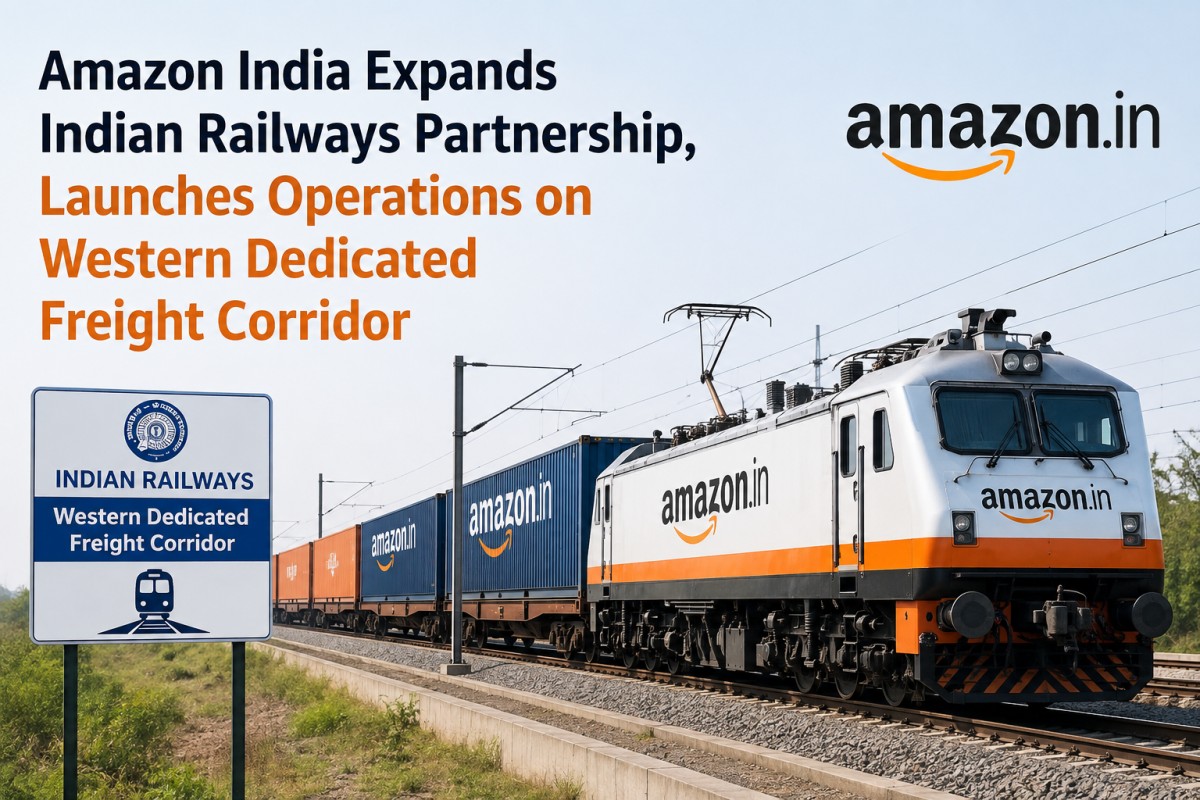
BENGALURU : Amazon India has expanded its partnership with Indian Railways by starting operations on the Western Dedicated Freight Corridor (WDFC), extending its rail logistics network across northern and western India ahead of the festive season. The company has become the first e-commerce company to operate on the corridor’s inaugural Joint Parcel Product–Rapid Cargo Service (JPP-RCS) train.

The daily rail service will operate with over 10 Van Parcels and link Amazon’s network across Delhi, Ahmedabad and Surat, with onward connectivity to Pune, Mumbai and Goa. On 18th August, 2026, Dr Manoj Singh, Member (Operations and Business Development), Railway Board and Kishore Lanka, Director-Operations, Amazon India, flagged off the train at New Dadri Railway Station.

Amazon India expands rail operations on Western Dedicated Freight Corridor
The expansion, done in conjunction with the Dedicated Freight Corridor Corporation of India Limited (DFCCIL), will move shipments from surface transport to rail. The service aims to support Amazon’s multimodal transportation network and enable shipments to move through northern and western India.

Kishore Lanka, Director-Operations, Amazon India, said, “The partnership between Indian Railways and Amazon India sits at the intersection of India’s freight modernization ambitions and our shared focus on strengthening the country’s logistics infrastructure — aligned with the Government of India’s vision of ‘Viksit Bharat, Viksit Rail’. By expanding our use of dedicated freight infrastructure, we are increasing multimodality across our transportation network and leveraging rail as an economical, reliable, and sustainable mode of transportation. We look forward to further deepening our collaboration with Indian Railways and DFCCIL to strengthen our logistics network, improve operational efficiency, and support the evolving needs of our customers across India.”


Amazon India and Indian Railways partnership began in 2019
Amazon India’s association with Indian Railways began in 2019, when the company entered into an operational engagement to use the railway network for express parcel movement. The service used parcel wagons attached to Rajdhani Express trains on the Mumbai-Delhi route.

In 2023, Amazon expanded its use of railway infrastructure by starting operations on the 659-kilometre Rewari–Palanpur section of the Western Dedicated Freight Corridor.

Since then, Amazon India’s rail network has expanded from a single train in 2019 to more than 140 trains operating across 130 intercity routes and connecting more than 100 destination cities.

The latest WDFC operation extends that network further into western India and adds the JPP-RCS service to Amazon’s existing rail logistics operations.

29 FDI investments worth ₹4,895.65 crore reported under revised framework

NEW DELHI : A total of 29 FDI investments have been reported under the revised framework up to 20 August 2026, involving proposed FDI of ₹4,895.65 crore. These investments span a range of sectors, including Information Technology, Artificial Intelligence, Information & Communication, Manufacturing, Pharmaceuticals, Data Centres and Transport Services, among others.

The 29 investments have been reported by investors/entities based in jurisdictions including Mauritius, the United States, the Republic of Korea, Japan, Singapore, Luxembourg and the Cayman Islands.

The revised framework facilitates and expedites the flow of foreign investment into India by removing the requirement of prior Government approval in cases involving non-controlling Land Bordering Countries (LBC) ownership of up to 10%. The reform provides greater certainty to investors, reduces transaction time and further strengthens the ease of doing business in India.

With Press Note 2 of 2026 and the consequent amendment to the Foreign Exchange Management (Non-debt Instruments) Rules, 2019, notified on 1 May 2026, the beneficial ownership test is now applied at the level of the investor entity. Investors with non-controlling LBC ownership of up to 10% can invest through the automatic route, subject to applicable sectoral caps, entry routes and other conditions. The investor entity can proceed with the investment without obtaining any other approval, after reporting the relevant information to the Government.

Earlier, foreign investors with beneficial ownership from LBCs of India were required to obtain prior Government approval under Press Note 3 of 2020, even where such LBC ownership was very small. This had been a long-standing concern among investors seeking greater clarity and ease of investment.

Zim profit rises on Q2 revenue of $1.78 billion

HAIFA : Zim Integrated Shipping Services reported second-quarter net income of $64 million, up from $24 million a year earlier, as higher freight rates and increased volume lifted revenue 9% to $1.78 billion.

The Haifa-based container carrier in a release said it moved 922,000 container units in the three months ended June 30, a 3% increase from 895,000 units in the second quarter of 2025. Average freight revenue reached $1,590 per unit, up 8% year on year from $1,479 per unit.

Diluted earnings per share were $.53, compared with $.19 in the prior-year quarter. Adjusted net income was $77 million, versus $24 million a year earlier, after adjusting for costs related to the pending transaction with Hapag-Lloyd.

Adjusted earnings before interest, taxes, depreciation and amortization (EBITDA) rose 4% year-on-year to $491 million. Operating income slipped to $144 million from $149 million in the 2025 second quarter. Zim generated $386 million in free cash flow during the quarter.

The company attributed the revenue increase principally to higher freight rates and larger volumes. Its second-quarter results were supported by its trans-Pacific exposure, commercial approach and cost structure, Zim said.

“Since assuming my role in July, my focus has been clear: to capitalize fully on current market opportunities while deploying the company’s resources with discipline and efficiency,” Zim President and Chief Executive Chen Lichtenstein said in the release, who joined the company in July. “We remain committed to preserving the agility that allows us to respond quickly to changing market conditions, strengthening our competitiveness, and creating sustainable value.”

For the first six months of 2026, Zim reported revenue of $3.18 billion, down from $3.64 billion in the first half of 2025. Volume declined to 1.788 million units from 1.839 million units, while average freight revenue fell to $1,455 per unit from $1,632 per unit.

First-half operating income totaled $126 million, compared with $613 million a year earlier, and the company recorded a $38 million loss before income tax, versus a $430 million profit before tax in the corresponding 2025 period.

Zim’s net debt, consisting predominantly of lease liabilities less cash, was $2.77 billion at June 30, down from $2.93 billion at the end of the first quarter. Net leverage stood at 1.6 times, compared with 1.7 times three months earlier. The company reported a net cash position – cash less financial debt excluding lease liabilities – of $2.46 billion.

The company reaffirmed full-year 2026 guidance for adjusted EBITDA of $2 billion to $2.4 billion and adjusted EBIT of $700 million to $1.1 billion. It said a dividend to shareholders is expected based on 2026 results.

The proposed Hapag-Lloyd transaction remains subject to closing conditions, including regulatory approvals, ZIM said. The carrier did not hold an earnings conference call because of the pending merger transaction, which has been opposed by several Israeli government agencies over security concerns.