Home Blog Page 146

TGS selects Speedcast to power fleet’s digital operations with high-speed, all-LEO satellite connectivity

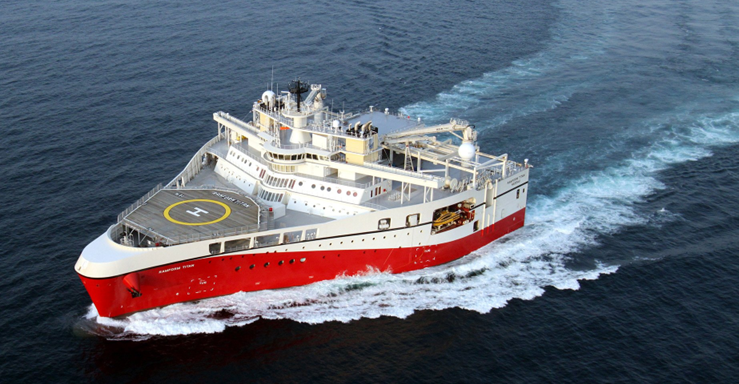
HOUSTON: Speedcast, a global communications and IT services provider and the world’s largest Starlink Authorized Reseller, announced the implementation of an all-LEO solution across the fleet of TGS, a leading global provider of data and intelligence to the energy industry.

Speedcast’s all-LEO solution is being deployed across TGS’ global fleet of high-capacity, multi-sensory streamer vessels and Ocean Bottom Node (OBN) operations designed to capture data from seismic surveys. The connectivity solution centers on Starlink’s new Dedicated Service, designed to deliver superior performance for high-bandwidth use cases, including the highest tier of prioritization and even lower latency, jitter and packet loss. Eutelsat OneWeb and other LEO resilience WANs are all orchestrated by Speedcast’s SIGMA intelligent edge compute platform Elite version.

The new Speedcast solution enables the near real-time transmission and remote cloud processing of a full integrity seismic data set of up to 10 terabytes a day at sustained upload speeds of 1Gbit/s, replacing the traditional method of transporting physical media from the vessel.

This reduces the need for significant amounts of High-Performance Computing (HPC) onboard, along with the corresponding support model. Additionally, highly qualified, experienced processing geophysicists can now perform the processing onshore instead of working shift patterns on an offshore rotation of several weeks. Access to new onshore cloud processing through this new all-LEO system dramatically speeds up the availability of data for TGS clients.

Starlink Dedicated Service offers the highest throughput options, lowest packet loss, and most stable performance compared to Priority plans. Dedicated beam allocation significantly increases the ability to sustain speeds.

During live testing of eight Starlink Performance kits on the Dedicated Service, Speedcast achieved peak upload speeds of 950 Mbps. Starlink Dedicated Service resulted in three to four times performance increase versus normal bonded Starlink Global Priority.

“Digitalization at TGS is measured at the vessel, not in the strategy deck. The constraint has never been the data we can record; it’s the data we can move,” said Jérôme Cousin, Vice President Enterprise IT at TGS. “Speedcast’s all-LEO solution and our cloud-first operating model work together: The combination of high-performance connectivity and our cloud operating model allows us to securely manage and process ever-larger seismic datasets at unprecedented speed, reducing reliance on physical media and enabling near real-time data delivery. By creating a global communications platform across our fleet, we can simplify  operations, centralize specialist expertise, and accelerate the delivery of high-quality insights to our clients wherever they operate. That’s how we deliver critical intelligence to energy customers worldwide, faster,” Cousin concluded.

“Speedcast is pleased to partner with TGS to power their global fleet with ultra-high-speed connectivity,” said James Trevelyan, EVP Global Sales at Speedcast. “The new, all-LEO system dramatically speeds up the availability of data for TGS clients without compromising operational reliability in these challenging environments. We look forward to our continued partnership ensuring TGS’ success.”

Speedcast is independently positioned as the world’s leading integrator of LEO technologies. The company is recognized as Starlink’s largest Enterprise account in terms of airtime spend, active sites, and local accounts in over 40 countries.
Adani Vizhinjam International Seaport begins EXIM Operations, marking new chapter in India’s global trade connectivity

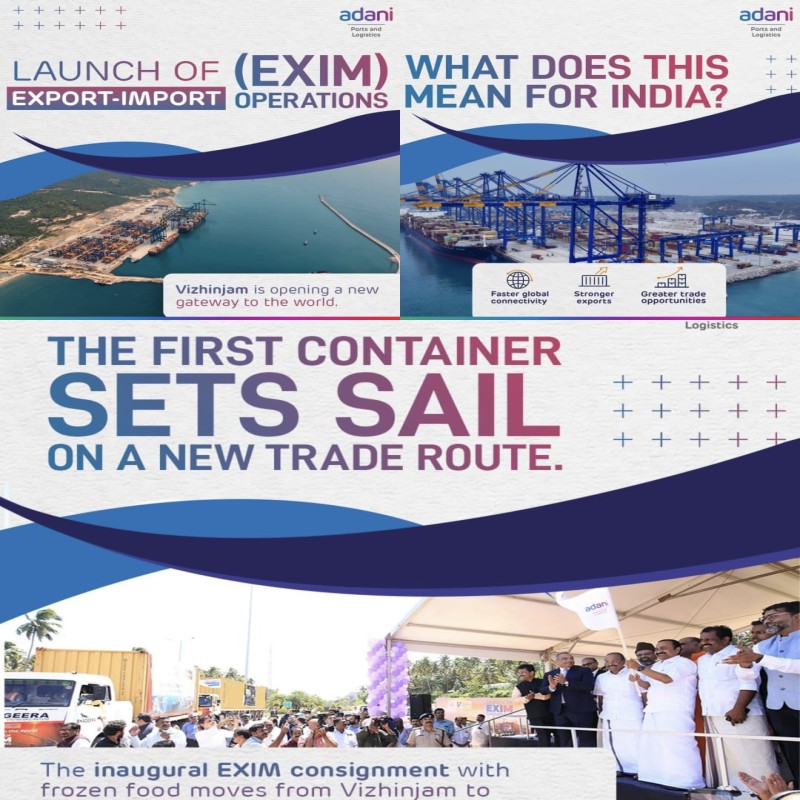
THIRUVANANTHAPURAM : Adani Ports and Special Economic Zone Limited (APSEZ) marked a significant milestone at Vizhinjam International Seaport with the commencement of Export-Import (EXIM) operations, marking the port’s transition into a full-fledged gateway for international trade.

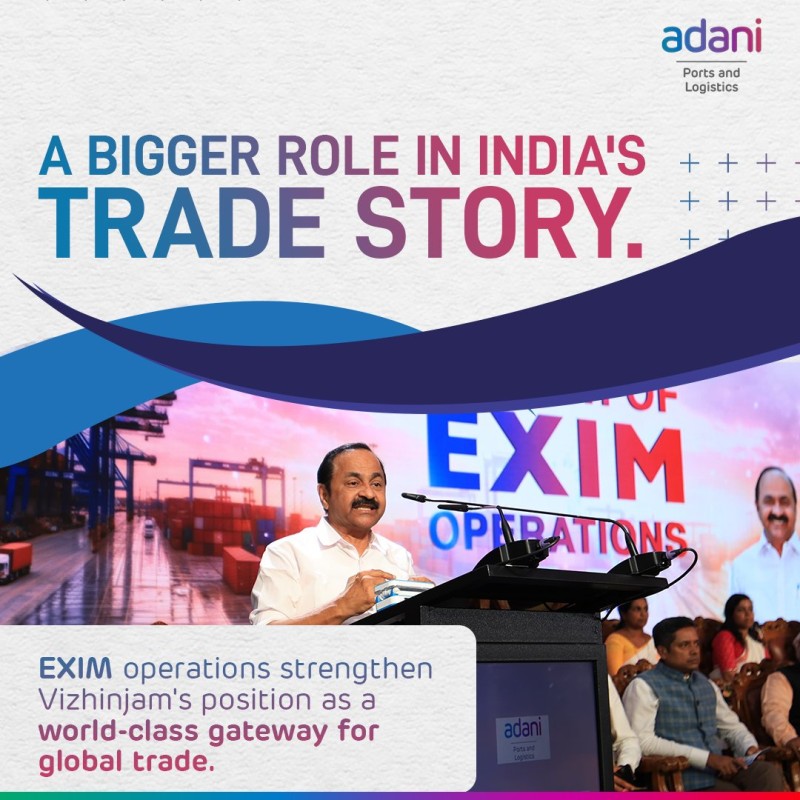
The EXIM operations were inaugurated by the Hon’ble Chief Minister of Kerala, Shri V. D. Satheesan, in the presence of the Hon’ble Minister for Industries, Information Technology and Commerce, Shri P. K. Kunhalikutty.

adani vizjam port Adani Vizhinjam International Seaport begins EXIM Operations, marking new chapter in India’s global trade connectivity

The commencement of direct EXIM operations marks a new chapter in Adani Ports’ Vizhinjam journey and strengthens the port’s role in connecting Indian cargo with global markets. With export and import operations now underway, Vizhinjam is positioned to emerge as an important gateway for international trade and maritime connectivity.

Strategically located close to major international shipping routes, Vizhinjam International Seaport, operated by Adani Ports, offers deep-water capabilities and significant potential to serve as a key maritime gateway for India. The commencement of EXIM operations is expected to provide exporters and importers with enhanced access to global shipping networks and facilitate more efficient cargo movement.

The development also reinforces Adani Ports’ commitment to strengthening India’s maritime infrastructure and global trade connectivity, while supporting the growth of Kerala as an important hub for international commerce.

With direct EXIM operations now commencing, Vizhinjam is set to further strengthen India’s connection with global markets, unlock new trade opportunities and contribute to the country’s maritime growth story.

From India to the world, and the world to India.

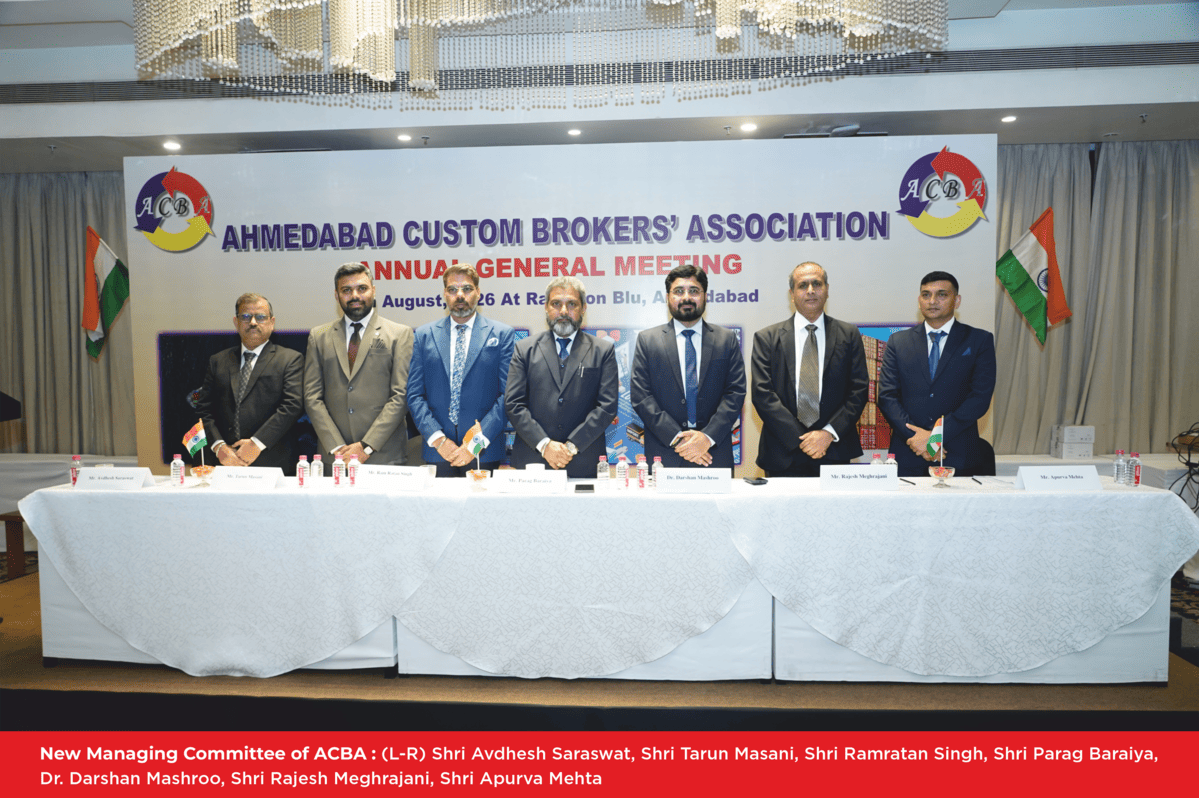
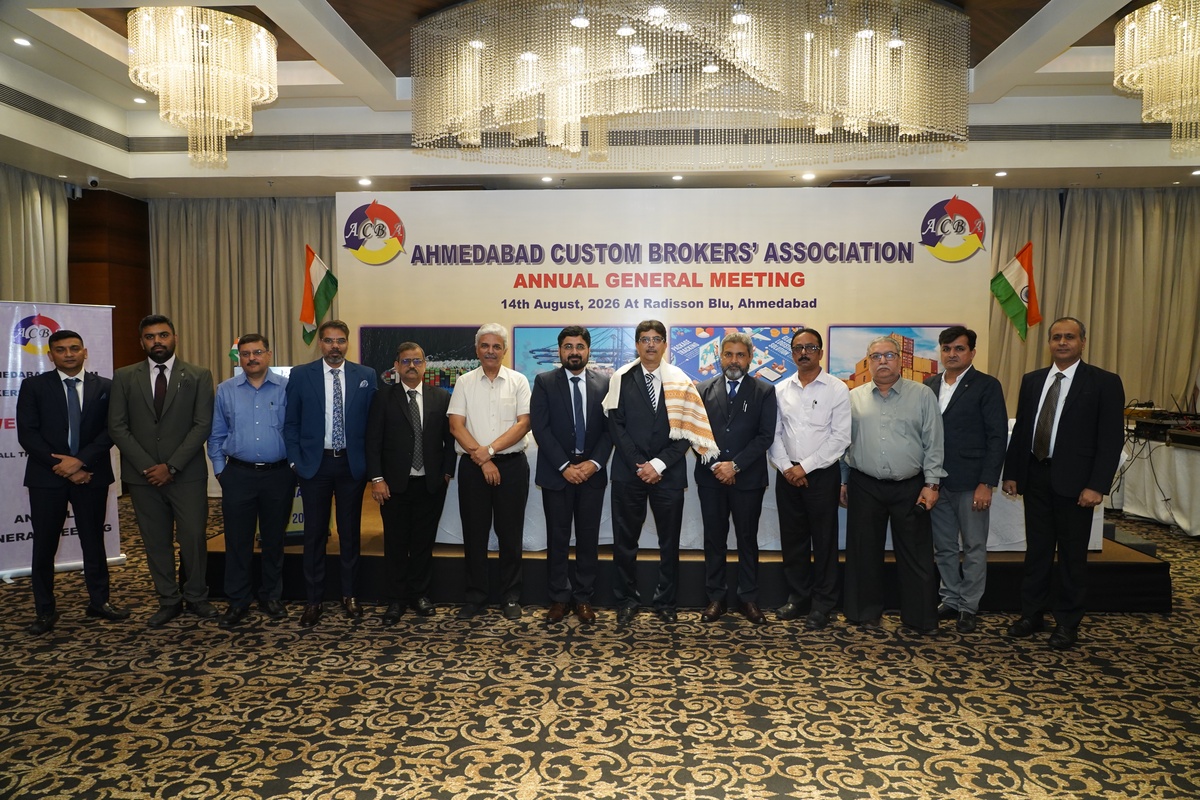
Ahmedabad Custom Brokers’ Association holds 31st Annual General Meeting; New Committee takes charge for 2026–28

AHMEDABAD: The 31st Annual General Meeting of the Ahmedabad Custom Brokers’ Association (ACBA) was successfully held on 14 August 2026 at Radisson Blu Hotel, Ahmedabad, marking an important milestone in the Association’s journey and the formal transition to its new leadership for the term 2026–28.

Welcome Address and Presentation of Accounts

The AGM commenced with a welcome address by Shri Parag Baraiya, President, ACBA, who welcomed all members and expressed his appreciation for their continued support, participation and commitment to the Association.

Hon. Treasurer Shri Ramratan Singh presented the books of accounts and financial statements of the Association before the members.

Appreciation to Outgoing Leadership

ACBA 31st AGM 1 Ahmedabad Custom Brokers’ Association holds 31st Annual General Meeting; New Committee takes charge for 2026–28

Shri Devang Joshi, Chairman, ACBA, addressed the AGM and expressed his heartfelt gratitude to the members and the entire Customs Broker fraternity for their support, guidance and cooperation during his long association of nearly three decades with ACBA. Shri Joshi stated that he was honoured to have had the opportunity to serve the Association and the trade. He expressed his gratitude to the Managing Committee, senior members, mentors, colleagues and the wider fraternity, including members of FFFAI, for their continuous encouragement and support. He formally handed over the responsibility to the new team led by Chairman Shri Parag Baraiya, President Dr. Darshan Mashroo, and the newly elected Managing Committee. He expressed confidence in the new leadership and assured the Association that he would continue to contribute in his new role as Advisor, ACBA.

Hon. Secretary Shri Harbhajan Singh also expressed his sincere thanks to the members for their support and cooperation during his tenure and conveyed his best wishes to the incoming committee.

Shri Avdhesh Saraswat, Director, ACBA, delivered an engaging address and sharing his thoughts and appreciation for the Association and its members.

The AGM proceedings concluded with a vote of thanks by Dr. Darshan Mashroo, Vice President, ACBA, who expressed his gratitude to the outgoing leadership, senior members, mentors and all members for their valuable contribution to the Association.

Election Report and Announcement of New Committee

During the AGM, the Returning Officer submitted the official election report and formally announced the newly elected Managing Committee for the term 2026–28, following the successful election conducted on 12 August 2026.

The newly elected office bearers are:

  • Chairman: Shri Parag Baraiya – Dawn Dusk Cargo Movers Pvt. Ltd.
  • President: Dr. Darshan Mashroo – EPT Exim Services Pvt. Ltd.
  • Vice President: Shri Ramratan Singh – Safesea ASL Logistics Hub
  • Hon. Secretary: Shri Rajesh Meghrajani – Realtime Shipping LLP
  • Hon. Joint Secretary: Shri Avdhesh Saraswat – D.P. Logistics
  • Hon. Treasurer: Shri Tarun Masani – Premji Kanji Masani Pvt. Ltd.
  • Director: Shri Apurva Mehta – Guru Prakash Enterprise

The newly elected committee formally took charge of the Association, marking the beginning of its tenure for 2026–28.

New Leadership: One Association – One Team – One Vision

Following the AGM, Chairman Shri Parag Baraiya once again welcomed all members and thanked them for attending the first Managing Committee meeting of the term 2026–28.

At the first Managing Committee meeting of the new term, Dr. Mashroo presented the vision:“One Association – One Team – One Vision.” The new leadership will focus on trade facilitation, knowledge and skill development, member support, technology adoption, youth participation, professional development and effective representation of the Customs Broker fraternity.

Dr. Mashroo acknowledged the valuable contributions of Advisors, past Chairmen, Presidents, senior members and mentors who have played an important role in strengthening ACBA over the years. Emphasising the principle of “Service Before Self,” Dr. Mashroo assured members that the new committee would work with fairness, transparency and accountability to further strengthen ACBA as a united, professional and progressive organisation.

Best Wishes from Senior Advisors

Shri Samir J. Shah and Shri Kartik A. Pancholi, Advisors, ACBA, conveyed their best wishes to the newly elected Managing Committee and expressed their confidence in the new leadership. They reaffirmed their continued support and guidance for the Association and its members.

Hon. Secretary Shri Rajesh Meghrajani thanked all members for their valuable time and for joining the meeting.

The AGM and subsequent first Managing Committee meeting concluded on a positive and forward-looking note, with the new leadership reiterating its commitment to unity, service, professionalism and progress for the benefit of ACBA members and the larger EXIM community.

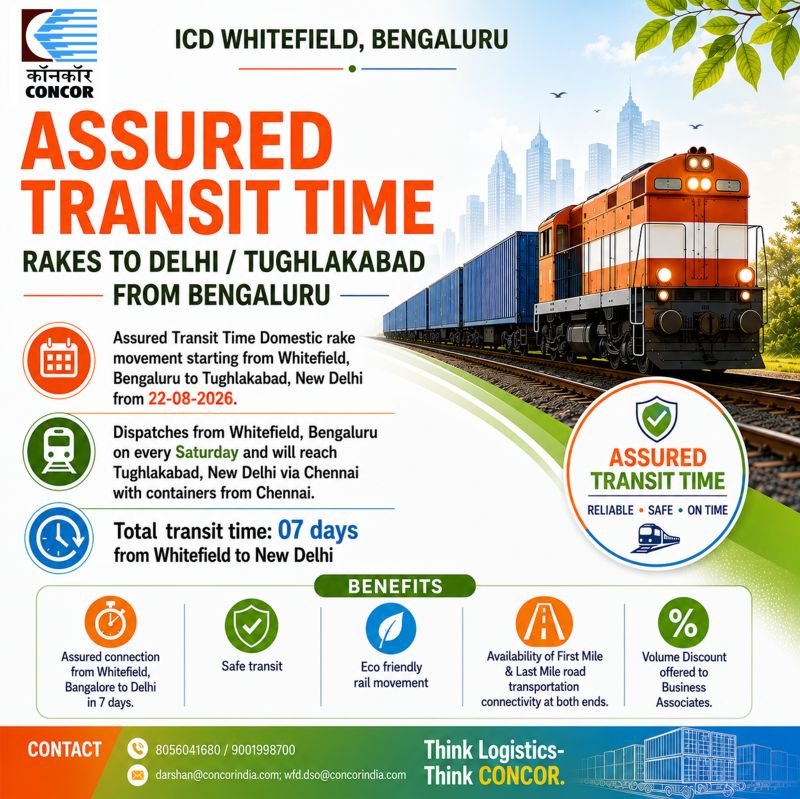
CONCOR launches “Assured Transit Time” Domestic Rail Service from Bengaluru to Delhi

BENGALURU: The Container Corporation of India Limited (CONCOR) is set to commence its “Assured Transit Time” domestic container train service from ICD-Whitefield (WFD), Bengaluru, to ICD-Tughlakabad, Delhi, effective 22 August 2026, strengthening reliable and time-bound rail connectivity between South India and the National Capital Region.

Under the new service, a domestic container rake will be dispatched from ICD-Whitefield every Saturday and moved to ICD-Tondiarpet (TNPM), Chennai. At Chennai, the containers will connect with the onward domestic rail service operating from Chennai to ICD-Tughlakabad, Delhi.

The service will offer customers a total assured transit time of 7 days from Whitefield, Bengaluru, to Tughlakabad, Delhi, providing a dependable and predictable rail transportation solution for domestic cargo movement.

The initiative is aimed at enhancing supply-chain efficiency by offering customers greater certainty in transit schedules, while promoting the use of rail for long-distance domestic container transportation.

With the introduction of the service, CONCOR continues to strengthen its integrated rail logistics network and provide customers with efficient, reliable and time-bound transportation solutions connecting major production and consumption centres across the country.

Think Logistics, Think CONCOR.

DFCCIL strengthens freight connectivity with enabling investment & driving industrial growth in UP

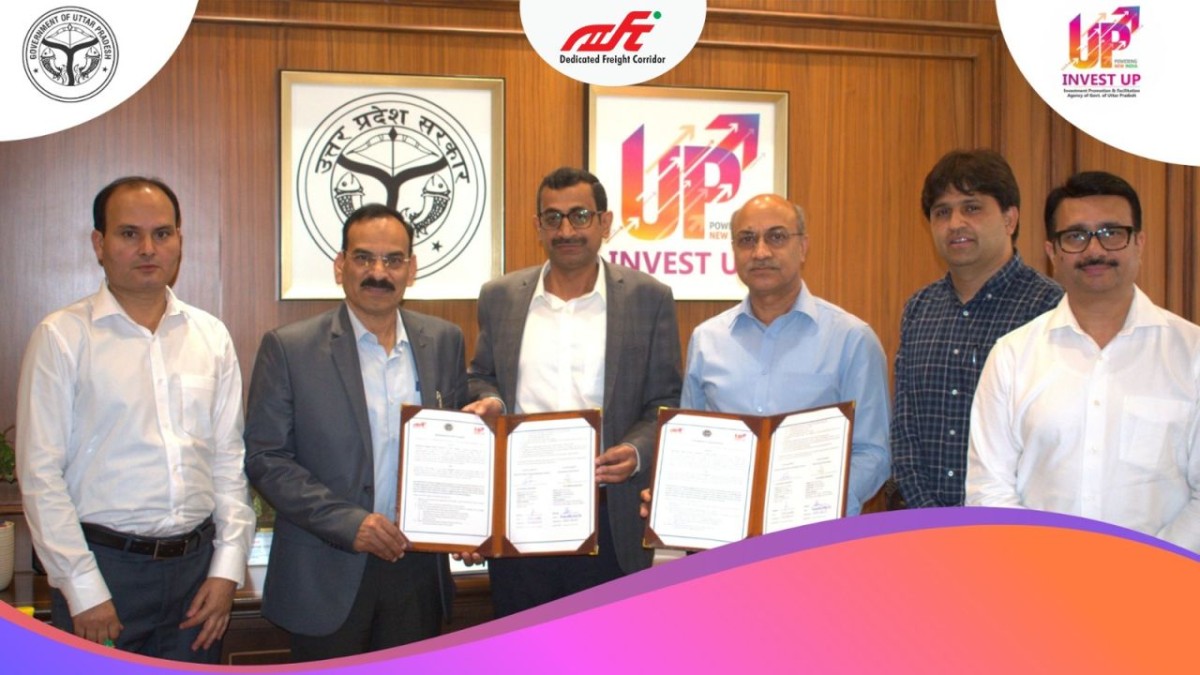
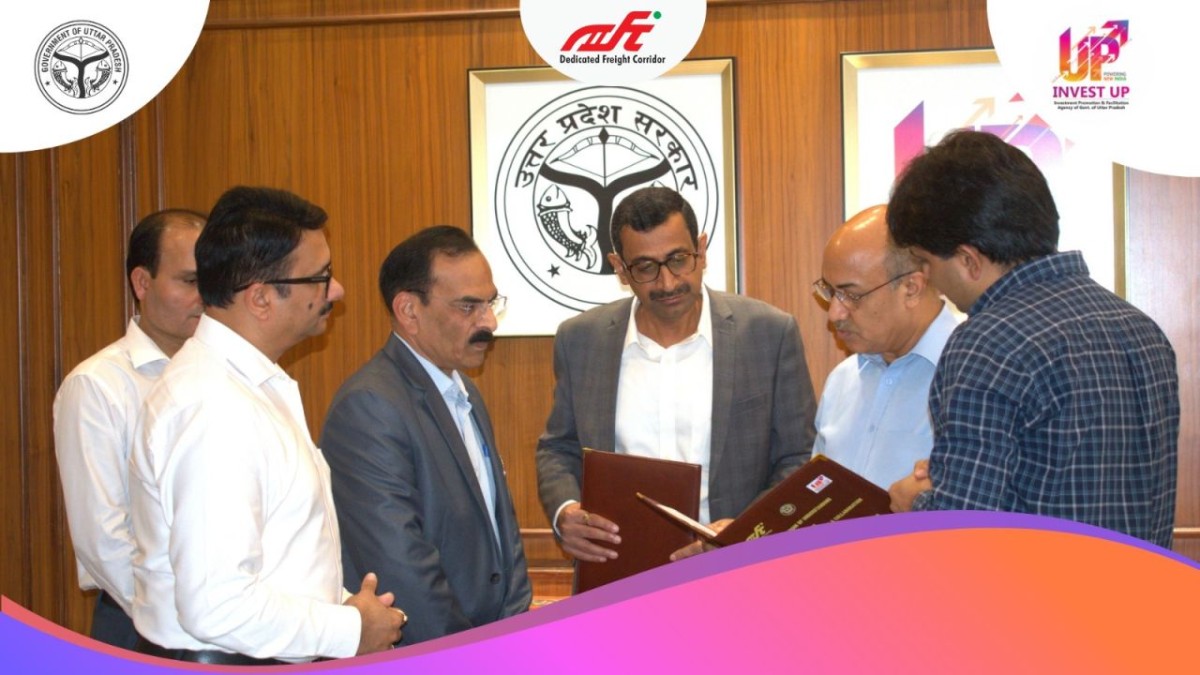
LUCKNOW : A Memorandum of Understanding (MoU) was signed between Dedicated Freight Corridor Corporation of India Limited (DFCCIL) and Invest UP on 17 August 2026, marking a significant step towards strengthening the interface between freight infrastructure, logistics and industrial investment in Uttar Pradesh.

The MoU was signed by Sh. Sandesh Shrivastava, ED/Project, DFCCIL, and Sh. Vijay Kiran Anand, CEO, Invest UP, in the presence of Sh. Pawan K. Rai, Director/Project Planning, DFCCIL, Sh. Deepak Kumar, Infrastructure & Industrial Development Commissioner, Invest UP.

mou dfccil invest up DFCCIL strengthens freight connectivity with enabling investment & driving industrial growth in UP

Through this collaboration, DFCCIL will facilitate greater engagement with industries and business entities by promoting the development of Gati Shakti Multimodal Cargo Terminals (GCTs) on railway and non-railway land. The collaboration will also facilitate road connectivity to GCTs, enabling seamless first- and last-mile movement and strengthening end-to-end multimodal logistics.

The Government of Uttar Pradesh, through Invest UP, will facilitate engagement with prospective investors and support the establishment of business units in the State, including assistance in land acquisition.

The partnership brings together world-class freight infrastructure and investment facilitation, creating new opportunities for industrial development, logistics growth, multimodal connectivity and a stronger supply chain ecosystem across Uttar Pradesh.

Piyush Goyal invites Japanese businesses to deepen investments and partnerships in India

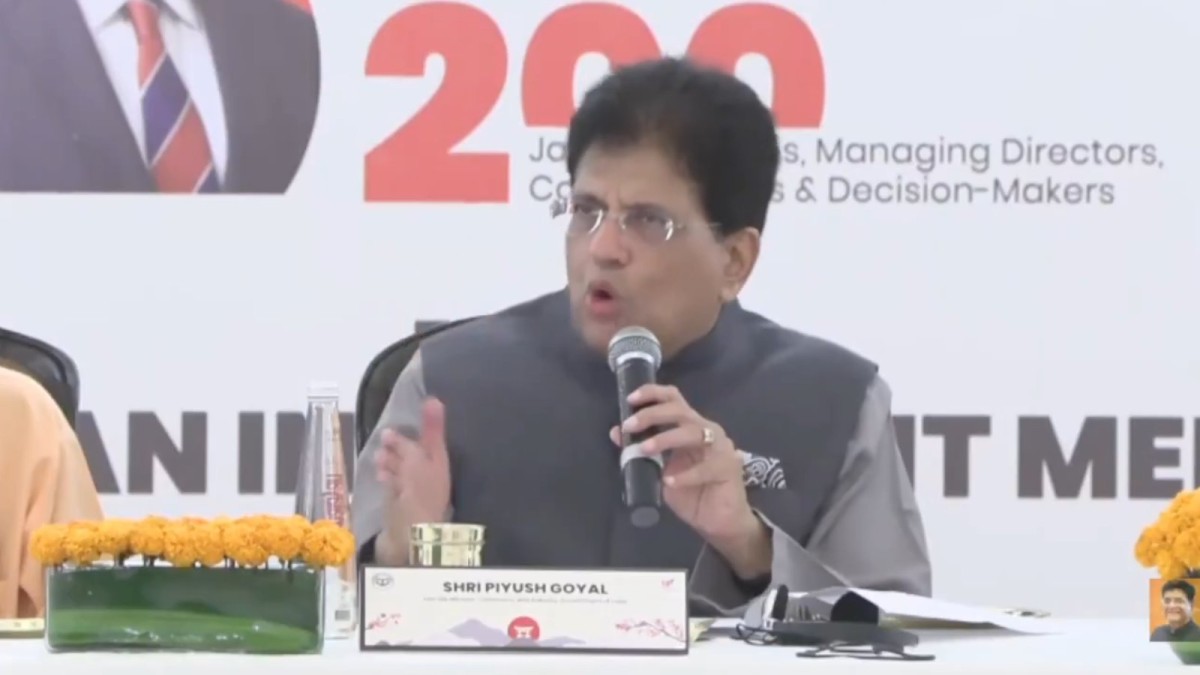
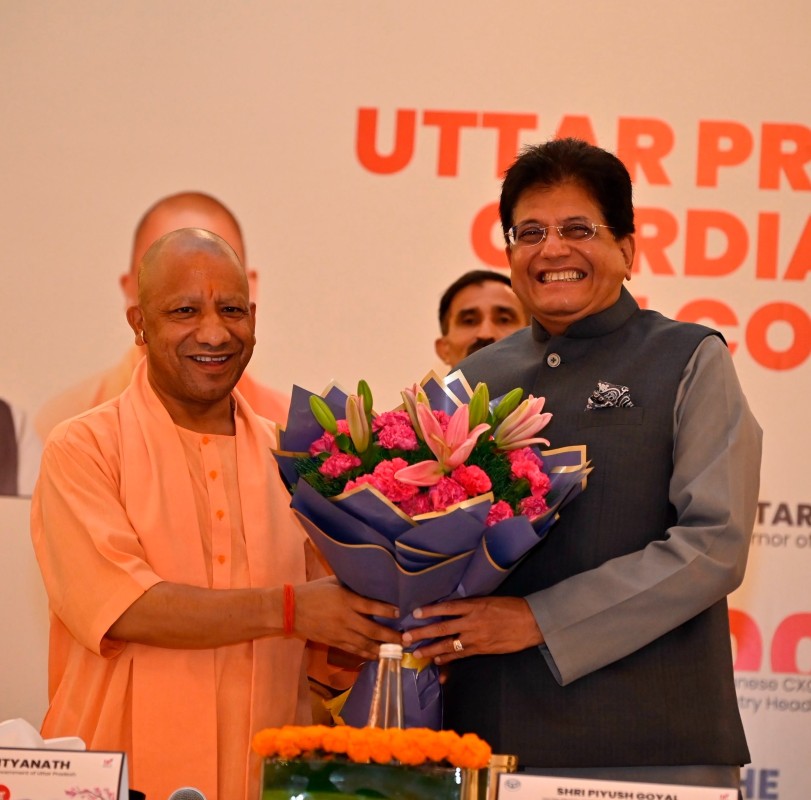
NEW DELHI : Union Minister for Commerce and Industry Shri Piyush Goyal highlighted the growing depth and strategic importance of the India-Japan Partnership and invited Japanese businesses to deepen their investments and partnerships in India. Shri Goyal was addressing a dinner hosted by the Government of Uttar Pradesh for a Japanese delegation, in the presence of Uttar Pradesh Chief Minister Shri Yogi Adityanath in New Delhi on Tuesday.

Addressing the gathering, Shri Goyal said that India and Japan share a close and enduring partnership rooted in common aspirations for peace, progress and prosperity in the Indo-Pacific. He noted that the presence of the delegation from Yamanashi Prefecture reflects the growing reach of the bilateral partnership into India’s States and regions.

piyush goyal yogi adityanath 1 Piyush Goyal invites Japanese businesses to deepen investments and partnerships in India

Shri Goyal said that the seven streams of national transformation outlined by Prime Minister Shri Narendra Modi—manufacturing, agriculture, technology, infrastructure, energy and defence, green and blue economy, and India’s civilisational soft power—represent areas where the strengths of India and Japan complement each other. He said the partnership goes beyond economic growth and reflects a shared commitment to becoming trusted partners in global progress.

Highlighting Uttar Pradesh’s growing economic potential, Shri Goyal said the State, under the leadership of Chief Minister Shri Yogi Adityanath, is working towards its ambition of becoming a USD 1 trillion economy. He said Uttar Pradesh’s large and aspirational population, improving connectivity, industrial momentum and skilled workforce provide a strong platform for Japanese technology and expertise to complement India’s young workforce and expanding market.

Referring to the 16th India-Japan Annual Summit held in Delhi in July 2026, Shri Goyal highlighted the strategic ambition underpinning the relationship, including Japan’s target of investing 10 trillion yen in India over the next decade. He said investments in areas such as artificial intelligence, semiconductors, critical minerals, batteries, energy and next-generation mobility would play an important role in shaping the future of both economies.

Shri Goyal said the growing India-Japan partnership is already visible on the ground, citing the Mumbai-Ahmedabad High-Speed Rail project, Japanese-assisted metro systems in Delhi, Ahmedabad, Bengaluru and Chennai, and 11 Japanese industrial townships across eight States. He noted that more than 1,400 Japanese companies are today operating in India, with household names such as Suzuki, Toyota and Honda in mobility, Sony in electronics, and Hitachi and Mitsubishi in engineering. He said bilateral trade stood at around USD 27.5 billion in FY 2025-26, while Japan is now India’s fifth-largest source of FDI, reflecting the strong foundation for further expansion of economic ties.

Drawing on the Japanese philosophy of ‘Kaizen’, Shri Goyal said India’s reform journey reflects a similar spirit of continuous improvement. He highlighted reforms in ease of doing business, infrastructure, digital public infrastructure, multimodal logistics and expanding Japanese language capabilities as part of India’s efforts to create a more enabling environment for investment and growth.

Shri Goyal said Uttar Pradesh, India’s third-largest State economy, has more than 9 million MSMEs and is the fifth-largest State exporter. He noted that enterprises such as Escorts Kubota and Seiko Advance are already contributing to the State’s manufacturing ecosystem.

He further highlighted the Jewar International Airport, Yamuna Expressway and the JICA-supported Western Dedicated Freight Corridor, along with 27 industrial clusters and ecosystems in sectors including defence, semiconductors and electronics, as key strengths that position Uttar Pradesh as a promising destination for deeper Japanese partnerships.

Shri Goyal said he would be visiting Japan from 24 to 27 August 2026 to take forward these conversations at the highest levels of government and industry and further strengthen the Special Strategic and Global Partnership between India and Japan.

Emphasising the civilisational ties between the two countries, Shri Goyal recalled the historical connection between India and Japan through the teachings of Buddha. He invited Japanese businesses to make India, and Uttar Pradesh in particular, a centre of their growth and a hub for Japanese innovation serving the Indo-Pacific and the world.

India–Hessen strengthen economic partnership with focus on AI, Clean Energy and Advanced Manufacturing

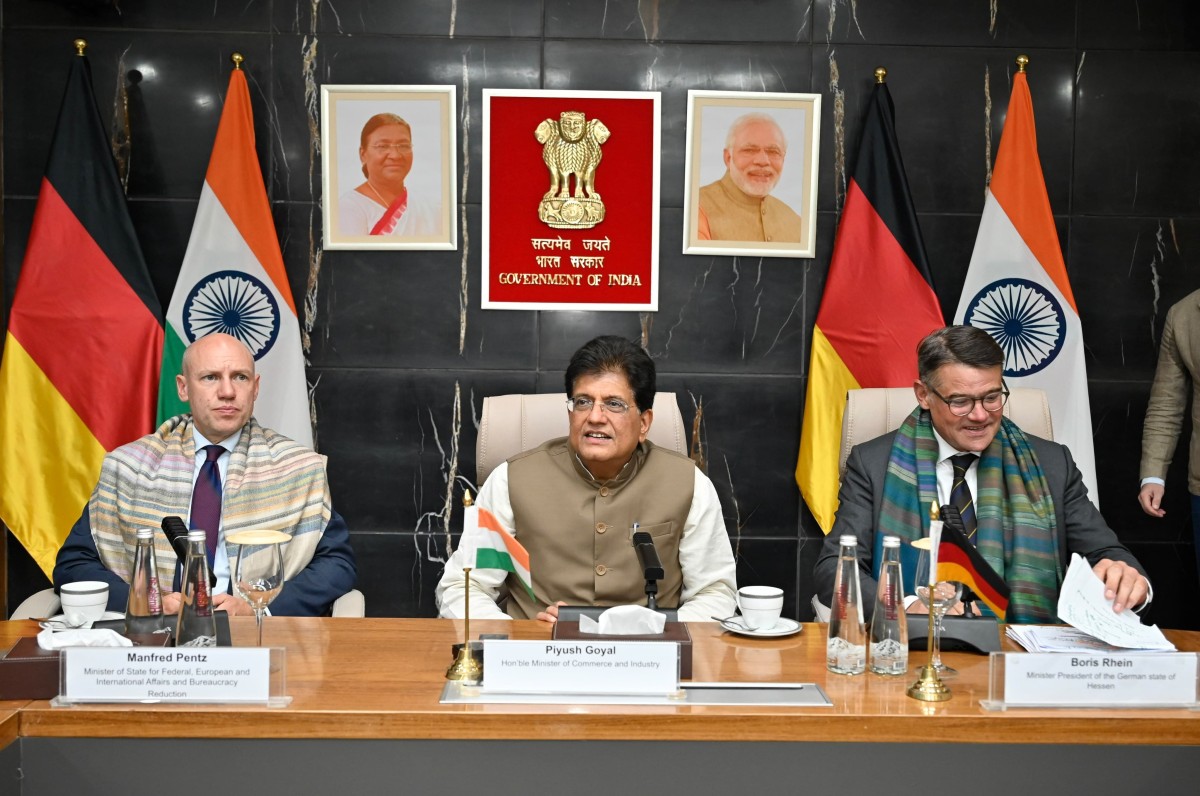
NEW DELHI : Union Minister for Commerce and Industry Shri Piyush Goyal held high-level discussions with Mr. Boris Rhein, Minister-President of Hessen, Germany, and Mr. Manfred Pentz, Minister for Federal and European Affairs, International Affairs and Debureaucratisation, along with a delegation representing leading German businesses, to explore new avenues for strengthening economic and technological cooperation between India and the German state of Hessen.

The discussions focused on expanding collaboration across a broad range of emerging and high-growth sectors, including Artificial Intelligence (AI), clean energy, research and development, data centres, Global Capability Centres (GCCs), pharmaceuticals, chemicals, advanced manufacturing, fintech, deep-tech and skilling.

Highlighting the growing strategic complementarities between India and Hessen, Shri Goyal said that the two sides have significant opportunities to build deeper partnerships in trade, technology, investment, innovation and industrial cooperation. He emphasised that stronger engagement between Indian and German businesses can unlock new opportunities across technology-intensive and knowledge-driven sectors.

Hessen offers a particularly strong ecosystem for such cooperation, with Frankfurt serving as a major European financial and digital hub and the Rhine-Main region emerging as a key centre for data infrastructure. More than half of Germany’s large-scale data centres are located in the Rhine-Main region, while Frankfurt is home to the DE-CIX internet exchange.

The state is also strengthening its capabilities in AI, quantum computing and deep-tech. In May 2026, Hessen inaugurated an AI and Quantum Computing Application Centre in Frankfurt aimed at connecting companies, research institutions and start-ups and accelerating the translation of advanced technologies into market-ready applications.

The discussions also highlighted opportunities in the pharmaceutical and chemical sectors, where Hessen has a strong industrial base and hosts numerous international companies. The sector is one of the state’s key industrial strengths, supported by substantial R&D capabilities and a highly skilled workforce.

Clean energy and future technologies emerged as another important area of potential cooperation. Hessen is currently advancing major initiatives in next-generation energy technologies, including laser-based nuclear fusion research, reinforcing its ambition to become a leading European location for cutting-edge energy innovation.

The meeting assumes added significance in the context of the India–EU Free Trade Agreement, which is expected to create new avenues for businesses on both sides by improving market access and strengthening the framework for trade and investment. The agreement can provide an important platform for Indian and Hessian companies to expand partnerships, integrate into global value chains and explore new investment opportunities.

The engagement also underlined the potential for greater cooperation in Global Capability Centres, digital technologies, fintech, semiconductor and deep-tech ecosystems, advanced manufacturing, R&D and talent development. With India’s expanding technology and manufacturing capabilities and Hessen’s strengths in finance, research, industry and digital infrastructure, the two economies can complement each other across multiple emerging sectors.

The discussions reaffirmed the shared objective of translating the strong India–Germany relationship into greater business-to-business engagement, technology partnerships, investment flows and innovation-led growth.

Shri Goyal said India looks forward to working closely with Hessen and its business community to leverage the new opportunities emerging from the India–EU FTA and build a stronger, more resilient and future-ready economic partnership.

India and Hessen are poised to deepen their partnership across trade, technology and investment—creating new opportunities for businesses, strengthening innovation ecosystems and advancing shared economic growth.

NICDIT Apex Meeting reviews industrial corridors, accelerates BHAVYA and manufacturing push

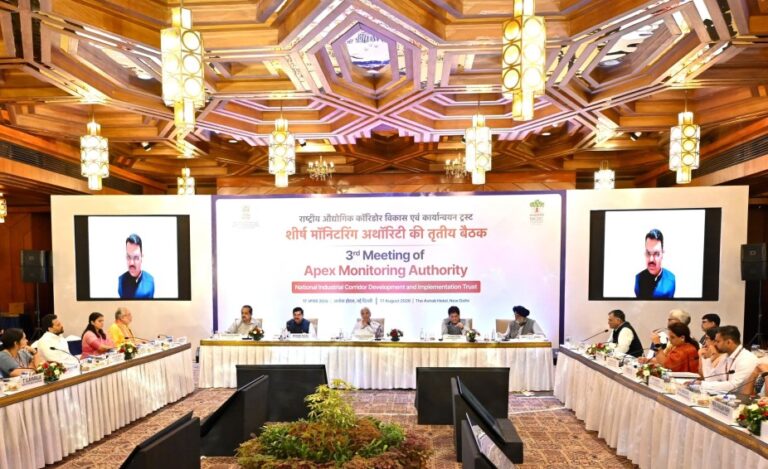
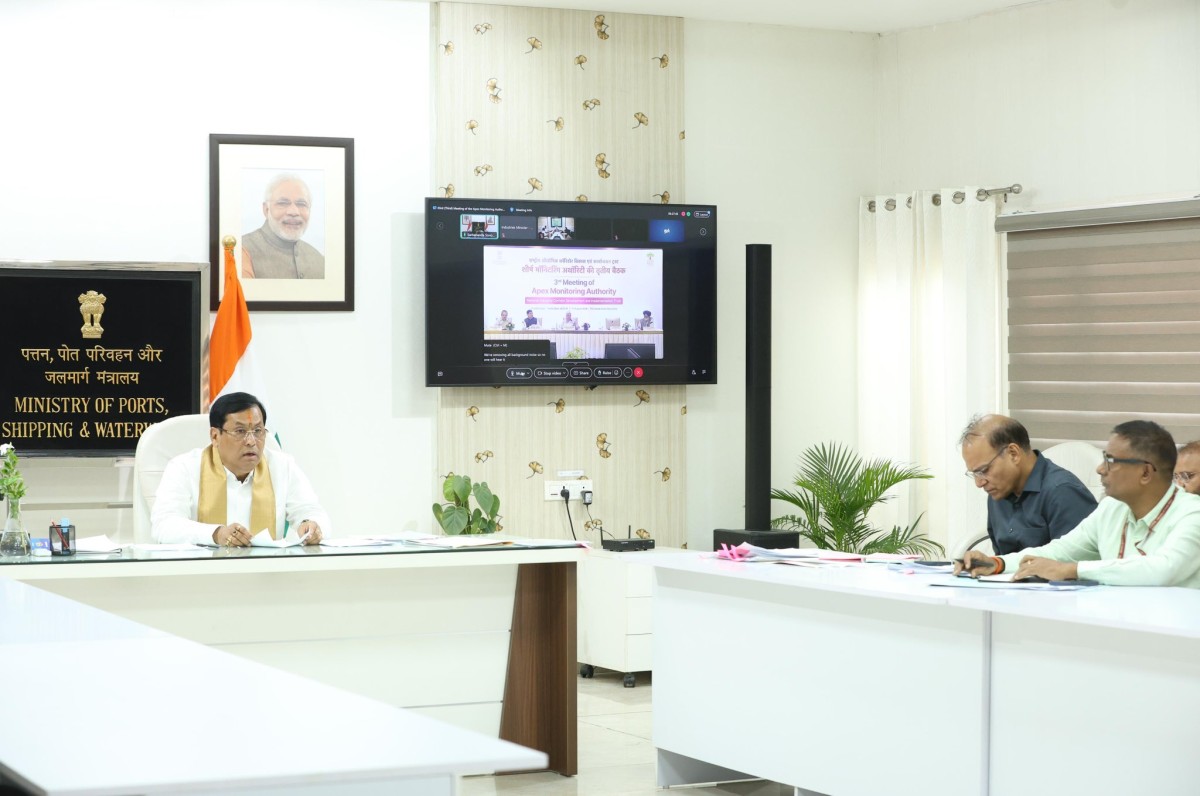
NEW DELHI : Union Minister for Commerce and Industry Shri Piyush Goyal participated in the 3rd Meeting of the Apex Monitoring Authority of the National Industrial Corridor Development and Implementation Trust (NICDIT), chaired by Union Minister for Finance and Corporate Affairs Smt. Nirmala Sitharaman.

Union Minister for Ports, Shipping and Waterways Shri Sarbananda Sonowal, along with Chief Ministers, Deputy Chief Ministers and Ministers from participating States, also took part in the deliberations and shared valuable inputs on accelerating industrial development and strengthening investment ecosystems across the country.

SONOWAL VC APEX NICDIT Apex Meeting reviews industrial corridors, accelerates BHAVYA and manufacturing push

The meeting reviewed the progress of projects under the National Industrial Corridor Development Programme (NICDP) and deliberated on implementation priorities for the next phase of industrial corridor development. Discussions focused on translating approvals into faster execution, timely completion of infrastructure, land allotment, investment mobilisation and commencement of production.

Focus on Faster Industrial Corridor Development

The Apex Authority emphasised that industrial corridors must evolve into globally competitive, investment-ready manufacturing ecosystems, supported by high-quality infrastructure, multimodal connectivity and efficient logistics.

Smt. Sitharaman stressed that the next pipeline of industrial land and infrastructure should be developed well ahead of the exhaustion of existing industrial land inventory. She also called for resolving bottlenecks relating to land, connectivity, utilities, statutory clearances and the powers of project Special Purpose Vehicles (SPVs) to ensure timely implementation.

The meeting further highlighted the importance of pursuing industrial corridor development in the spirit of ‘Team India’, with greater convergence between Freight, Industrial Development, Railways and Expressways—an integrated approach described as the FIRE Corridors.

BHAVYA to Accelerate Investment-Ready Industrial Infrastructure

A major focus of the discussions was the rollout of the Bharat Audyogik Vikas Yojana (BHAVYA), the Government’s flagship initiative to develop 100 plug-and-play industrial parks across the country.

BHAVYA has a financial outlay of ₹33,660 crore over six years, from FY 2026-27 to FY 2031-32. The scheme is designed to create investment-ready, world-class industrial infrastructure that enables investors to establish manufacturing operations with greater speed and ease, thereby expanding India’s manufacturing capacity.

The scheme places emphasis on plug-and-play infrastructure, integrated planning, investment promotion and efficient project implementation, with States and project entities playing a critical role in providing land, external infrastructure, utilities and other enabling facilities.

PM GatiShakti and Integrated Industrial Planning

The meeting also underlined the importance of PM GatiShakti in ensuring integrated planning of industrial corridors and supporting infrastructure.

Industrial development is increasingly being planned around multimodal connectivity, enabling seamless movement of raw materials and finished goods while strengthening India’s logistics competitiveness. The Government’s broader National Industrial Corridor Development Programme aims to develop futuristic industrial cities with plug-and-play infrastructure and multimodal connectivity capable of competing with leading global manufacturing and investment destinations.

Shri Piyush Goyal called for faster and outcome-oriented implementation of industrial corridor projects, with greater emphasis on timely investment and operationalisation. He also stressed that BHAVYA and future industrial developments should be aligned with PM GatiShakti and pursued through an integrated area-development approach.

Strengthening India’s Global Manufacturing Position

The deliberations assume significance as India seeks to strengthen its position as a globally competitive manufacturing and investment destination. Modern industrial corridors, world-class infrastructure, efficient logistics and ready-to-use industrial land are expected to help attract domestic and global investors while enabling industries to integrate more deeply with global value chains.

Beyond physical infrastructure, the industrial corridor ecosystem is also being positioned around skilling, worker housing, healthcare, public transport and other social amenities, ensuring that industrial growth is supported by a sustainable and inclusive development framework.

The meeting reaffirmed the Government’s commitment to creating an enabling environment for manufacturing-led growth, investment generation, employment creation and technological advancement.

The coordinated efforts of the Centre and participating States are expected to provide further momentum to India’s industrial corridor programme and accelerate the development of new manufacturing clusters and investment destinations.

With the rollout of BHAVYA, continued implementation of NICDP projects and greater integration through PM GatiShakti, the Government is seeking to build a future-ready industrial ecosystem that can attract large-scale investment, generate quality employment and enhance India’s competitiveness in global manufacturing.

The deliberations reaffirmed the Modi Government’s commitment to building a globally competitive manufacturing ecosystem and advancing India’s journey towards a prosperous and self-reliant Viksit Bharat.

India-US Trade Deal likely to retain safeguard to modify commitments if tariffs change

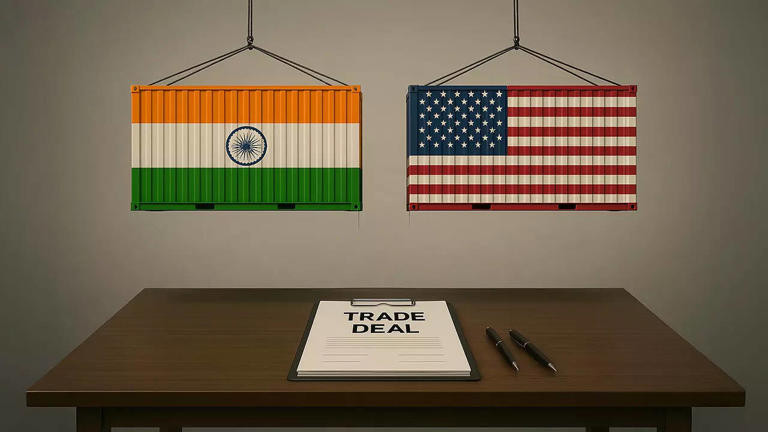
NEW DELHI : The proposed trade deal between India and the United States is likely to retain a tariff safeguard agreed as part of the February framework, ensuring that New Delhi’s concessions do not remain open-ended if the US subsequently changes the agreed duty structure, a government official said.

The framework announced on February 6 already included a provision allowing either side to respond if the agreed tariff terms are changed.

The joint statement says that “in the event of any changes to the agreed upon tariffs of either country, the United States and India agree that the other country may modify its commitments.”

According to the official, this provision is likely to continue in the final agreement.

“The provision was already agreed in February and that the two sides recognise that there cannot be a final deal if one side’s commitments remain open-ended,” the official added.

To be sure, the provision, does not itself amount to a blanket prohibition on future tariff changes; rather, it provides for the other country to modify its commitments if agreed duties are changed.

The framework for an interim agreement, envisaged India reducing or eliminating tariffs on US industrial and a wide range of agricultural products, while Washington agreed to an 18 percent reciprocal tariff rate on originating Indian goods, with further tariff relief for specified products subject to the successful conclusion of the trade deal.

However, subsequent changes in US tariff policy have required both sides to revisit elements of the arrangement.

The safeguard assumes significance as the US continues to pursue multiple avenues for additional tariffs on global exports.

Most Indian goods currently face a 10 percent additional tariff imposed under the US Section 301 action related to forced-labour practices, while Washington is separately conducting a Section 301 investigation into structural excess capacity that could lead to further duties.

India also faces uncertainty from the Russia sanctions legislation that cleared the US Senate earlier this month and could give the president powers to impose tariffs of up to 100 percent on countries continuing to buy Russian energy.

In pharmaceuticals, the US has also announced a phased tariff plan under which generic drug imports would remain tariff-free for two years, before facing a 100 percent tariff for one year and 200 percent thereafter.

India and the United States remain engaged in talks to finalise their trade deal, with Commerce Secretary Shri Rajesh Agrawal recently saying both sides are committed to moving ahead with the framework agreed in February even as Washington’s tariff actions and investigations continue to create uncertainty.

As per the latest available data, Indian exports to the US rose nearly 13 percent to $9.02 billion in July 2026, while imports rose faster at 18.1 percent to $5.5 billion.

India challenges US tariffs on quartz products at WTO, fourth such trade dispute

NEW DELHI : India has sought consultations with the United States at the World Trade Organization (WTO) over Washington’s tariff-rate quota on imports of quartz surface products, marking the fourth recent instance of New Delhi challenging US trade measures under the WTO’s safeguards framework.

India has proposed that the consultations be held virtually at a mutually convenient time, according to its communication to the WTO. The latest move follows similar consultations sought by India over US measures affecting steel and aluminium, automobiles and auto components, and copper products. US imposes tariff-rate quota on quartz products

US President Donald Trump on July 31 signed an order imposing a tariff-rate quota (TRQ) on imports of quartz surface products from several countries, including India, Spain, Thailand and Vietnam. The measure is slated to remain in place until August 2030.

Under a tariff-rate quota, imports up to a specified quantity face one tariff rate, while shipments above that threshold attract a higher duty. In the case of quartz surface products, tariffs on imports exceeding the quota can rise to as much as 50%.

The measure followed a determination by the US International Trade Commission that increased imports of quartz surface products were a substantial cause of serious injury to the domestic industry. India has significant exposure to the US market in this category, having exported around $700 million worth of quartz surface products to the country in FY26.

Latest friction in India-US trade ties

The quartz dispute adds to a growing list of trade issues between India and the US even as the two countries continue efforts to negotiate a trade agreement.

The US has imposed a 10% tariff on imports from India and 59 other countries following a Section 301 investigation. Washington is also considering legislation that could impose tariffs of as much as 100% on countries that continue to import Russian crude oil.

Trade tensions have also widened beyond tariffs. A White House report released on August 13 named India among countries allegedly being used to route Chinese goods into the US to avoid higher tariffs.

The 25-page report, titled The Great Transshipment Scam: Rise, Scope, and Costs, was prepared by the White House Office of Trade and Manufacturing Policy, headed by Peter Navarro.

It argues that Section 301 tariffs imposed on China since 2018 reduced direct Chinese exports to the US but also encouraged the development of what the report calls a “Shadow Transshipment Network.”

According to the report, Chinese goods are allegedly being relabelled, repackaged, re-invoiced or subjected to limited processing in lower-tariff countries before being exported to the US under a different country of origin.

The report cites estimates of annual transshipment or related exposure ranging from $40 billion, according to Goldman Sachs, to as much as $303 billion, according to supply-chain intelligence company Altana.

India’s decision to seek WTO consultations over quartz products therefore adds another point of contention to an increasingly complicated trade relationship, even as New Delhi and Washington continue negotiations aimed at reaching a broader trade deal.

Source : CNBCTV18