Home Blog Page 148

Maritime industry turns Corruption Data into Operational Intelligence

The Danish Maritime Fund-supported initiative transforms more than 70,000 corruption reports into practical tools for shipping companies and vessel crews worldwide

COPENHAGEN: For more than a decade, the Maritime Anti-Corruption Network (MACN) has collected reports of corruption demands, delays, coercion, and other integrity challenges faced by vessels around the world.

With support from The Danish Maritime Fund, MACN has now transformed that data into practical intelligence tools designed to support decision-making both ashore and at sea.

The resulting Global Port Integrity Platform (GPIP) combines more than 70,000 reported incidents from over 1,350 ports worldwide into a suite of tools that helps shipping companies assess risk, prepare crews before arrival, and integrate corruption intelligence directly into operational workflows. More than 75 organisations are already using the platform’s dashboard tools, while over 350 shipping companies receive corruption risk information through MACN’s pre-arrival communication systems.

While the maritime industry has long relied on professional judgement, experience, and local knowledge to understand corruption risks, GPIP complements that expertise with structured industry data. The platform enables users to identify patterns, compare ports, and access real-world incident intelligence in a consistent and scalable way.

“Shipping generates enormous amounts of operational data, but historically there has been very limited structured data available to help companies understand and manage corruption risks at the ports where they operate,” said Cecilia Müller Torbrand, CEO of MACN. “This initiative demonstrates how maritime data can be transformed into practical intelligence that supports better decisions, protects crews, and strengthens integrity across the industry.”

Supported by The Danish Maritime Fund, the project brought together maritime professionals, technology specialists, and academic partners to explore how decades of corruption reporting could be transformed into practical decision-support tools. The result is one of the world’s largest structured datasets focused specifically on maritime corruption risk, creating new opportunities for data-driven and AI-enabled approaches to integrity management in shipping.

One of the platform’s most practical applications is the delivery of port-specific intelligence directly to vessel crews. Through a low-bandwidth automated communication system, captains and crews receive relevant corruption risk information before arriving at port, helping them understand common challenges, prepare appropriate responses, and navigate situations with greater confidence. Thousands of these intelligence notifications have already been delivered through operational vessel workflows.

The project has also helped create the foundations for future AI applications within the maritime sector.

“The API integration with MACN’s corruption incidents database opens new possibilities for us. We’re exploring how to transform this real maritime data into actionable intelligence that flows directly to our vessels. It demonstrates how data collaboration can drive meaningful innovation in our industry.”

–Uriel Chareca, Head of Group Data & AI, TORM

While AI has already become part of discussions around vessel performance, routing, maintenance, and safety, applications related to integrity and corruption prevention remain at an early stage. By transforming years of incident reporting into structured and accessible intelligence, the platform provides a foundation for future innovation in this area.

For The Danish Maritime Fund, the initiative demonstrates how targeted investment in digital innovation can support both Danish maritime leadership and practical solutions for a global industry. Beyond the tools themselves, the project has shown how trusted industry data can be transformed into operational intelligence that reaches decision-makers ashore and crews at sea.

The completion of the project marks an important milestone, but MACN sees it primarily as the beginning of a broader effort to make corruption risk information more accessible and useful. By transforming one of the world’s largest maritime corruption datasets into practical operational tools, the Global Port Integrity Platform demonstrates how industry data can be used to support better decisions, strengthen integrity, and improve conditions for crews around the world.

About the Global Port Integrity Platform

The Global Port Integrity Platform (GPIP) is a data-driven intelligence platform developed by the Maritime Anti-Corruption Network (MACN) with support from The Danish Maritime Fund. The platform combines more than 70,000 verified corruption incident reports covering over 1,350 ports worldwide and delivers corruption risk intelligence through interactive dashboards, API integrations, and automated vessel communications.

About the Maritime Anti-Corruption Network (MACN)

The Maritime Anti-Corruption Network (MACN) is a global business network working towards the vision of a maritime industry free of corruption. Established in 2011, MACN brings together companies, governments, civil society organisations, and international institutions to promote integrity and tackle corruption across the maritime sector.

About The Danish Maritime Fund

The Danish Maritime Fund is a commercial fund supporting initiatives that strengthen Denmark’s maritime sector and contribute to its development and competitiveness. The Fund supports projects across education, research, innovation, sustainability, safety, and industry development, with the aim of creating long-term value for Danish shipping and the wider maritime ecosystem.
ClassNK releases revised edition of ‘Guidelines for Ships Using Alternative Fuels’

TOKYO: ClassNK has revised the safety requirements for ships using methanol/ethanol and hydrogen as fuel within the ‘Guidelines for Ships Using Alternative Fuels (Edition 3.1).’

In Part D, covering hydrogen-fueled ships, the revision incorporates the ‘Interim Guidelines for the Safety of Ships Using Hydrogen as Fuel (MSC.1/Circ.1701)’ issued by the IMO this year, and additionally introduces a hydrogen leak frequency table that can be used for the safety assessments required under the IMO guidelines. In Part A, covering methanol/ethanol-fueled ships, new structural strength requirements for methanol/ethanol fuel tanks—which are not addressed in the IMO guidelines—have been established. Through this revision, shipyards, designers, and shipowners can carry out design and safety assessments in line with the latest international standards, and by utilizing ClassNK’s own leak frequency estimates and the relevant requirements, they can proceed the development of alternative-fueled ships in a more rationally.

Background

As the building of alternative-fueled ships advances in response to the global challenge of reducing GHG emissions, ClassNK has comprehensively compiled the safety requirements for ships using methanol, ethanol, LPG, ammonia, and hydrogen—fuels regarded as promising alternatives—and has issued the guidelines. Taking into account the risks that the use of alternative fuels poses to the environment, seafarers, and ships, the guidelines set out requirements for equipment, controls, and safety devices to minimize such risks. With the issuance of the IMO guidelines for hydrogen-fueled ships (MSC.1/Circ.1701), ClassNK has fully incorporated the IMO guidelines to make the guidelines more user-friendly for shipyards, designers, and shipowners, while also enhancing the requirements serving as design and assessment guidance for other alternative fuels. In the development of the IMO guidelines, now reflected in Part D, ClassNK participated as a member of the Japanese delegation to the IMO Sub-Committee CCC 11*¹ and contributed to the discussions.

Examples of Revisions

  • Hydrogen-fueled ships (Part D): The relevant IMO guidelines (MSC.1/Circ.1701) have been incorporated, and a full-scale revision has been carried out. In addition, as with the estimation of ammonia leak frequency*², a Bayesian method*³ was applied to derive estimated hydrogen leak frequencies for ships, which have been added as Appendix 2 to Part D. These enable ship designs and their safety assessments—required for administration approval of alternative-fueled ships—to be conducted in a more rational and reliable manner.
  • Methanol/ethanol-fueled ships (Part A): Based on ClassNK’s experience in the design review of such ships, structural strength requirements for methanol/ethanol fuel tanks—which were not specifically stipulated in the relevant IMO guidelines (MSC.1/Circ.1621)*⁴—have been developed and standardized. This enables the efficient implementation of tank design assessments.

As a third-party certification body, ClassNK will continue to support your efforts to address environmental challenges through the development of standards, certification, and the provision of information.

How to access the guidelines

The guidelines can be viewed under “Guidelines” on My Page by registering as a user on the ClassNK website (URL: www.classnk.or.jp). My Page can be accessed here.

*1 Sub-Committee on Carriage of Cargoes and Containers

At CCC 11, the 11th session of the Sub-Committee of IMO held in September 2025, the Interim Guidelines for the Safety of Ships Using Hydrogen as Fuel (MSC.1/Circ.1701) were finalized.

*2 Related press release: ClassNK releases ‘Guidelines for Ships Using Alternative Fuels (Edition2.0)’ -adding specific safety requirements for ammonia-fueled ships-

https://www.classnk.or.jp/hp/en/news.aspx?id=8242&layout=1&type=p

*3 A statistical method that combines the likelihood of newly observed data with known information (the prior distribution) to update and infer a target probability as a probability distribution (the posterior distribution).

*4 Guidelines for the safety of ships using methanol/ethanol as fuel, issued by the IMO in 2020.

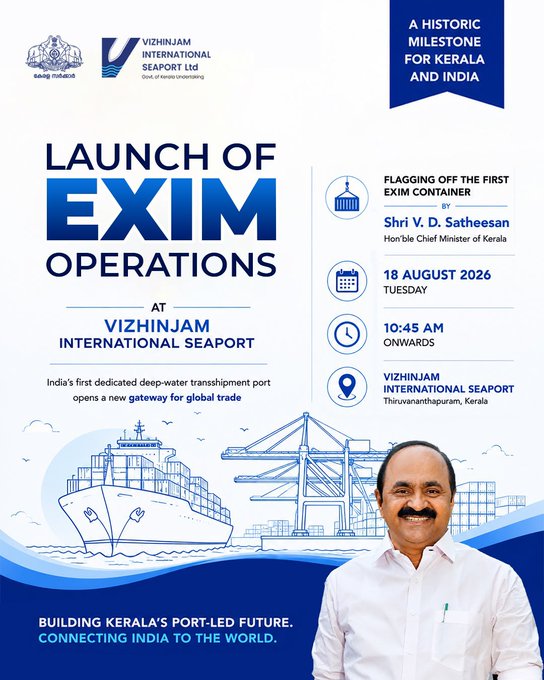
Vizhinjam International Seaport to launch Gateway EXIM Operations today

THIRUVANANTHAPURAM : Kerala’s Vizhinjam International Seaport will commence Export-Import Operations Today, 18 August after receiving final clearance from the CBIC.

A new chapter in India’s maritime journey is set to begin today at Vizhinjam International Seaport, with the launch of Gateway EXIM operations and the flagging off of the port’s first Export-Import (EXIM) container. The landmark development is set to strengthen Kerala’s direct maritime connectivity with global markets and further enhance India’s position on the international shipping map.

At a ceremony scheduled for 10:45 AM today, Shri V. D. Satheesan will flag off the first export container, formally marking the commencement of gateway cargo operations at the Adani-operated deep-water port.

The maiden export shipment will carry Kerala food products, including jackfruit chips and Marayoor jaggery, destined for Valencia, Spain, aboard the MSC MARIE LESLIE. The movement of locally produced Kerala products to an international market will symbolise the opening of a new and more direct trade gateway for exporters from the State and the wider southern Indian region.

The launch marks a significant evolution in Vizhinjam’s role within India’s maritime logistics ecosystem. Until now, the port has primarily handled transshipment operations, facilitating the movement of containers between large mother vessels and feeder ships. With the commencement of Gateway EXIM operations, Vizhinjam will add direct export-import cargo handling to its growing portfolio, connecting the Indian hinterland more directly with international shipping routes.

The new gateway operations are expected to provide exporters with greater connectivity, improved supply-chain efficiency and more competitive transit times, while reducing dependence on alternative regional gateways for certain international shipments.

A key advantage of the new service will be its connectivity with European and other international markets. Shipments from Vizhinjam are expected to reach Europe in around 22 days, compared with approximately 40 days through some alternative regional routes, while journeys to North America are expected to take around 35 days. Faster and more predictable transit times could provide significant benefits to exporters of time-sensitive and high-value products.

MSC has announced two services supporting exports from Vizhinjam. The Himalaya Express will connect the port with destinations including Portugal, Valencia, Barcelona and Italy, while the India-Africa Service will provide connectivity to countries in southwestern Africa.

These services are expected to expand the international market access available to exporters through Vizhinjam and strengthen Kerala’s integration with global trade corridors.

The commencement of gateway EXIM operations is particularly significant for Kerala’s agricultural, food-processing and manufacturing sectors. The first shipment, carrying traditional and value-added food products, highlights the potential for local enterprises and exporters to leverage the port’s global connectivity to reach new markets.

Vizhinjam’s strategic location, deep-water capabilities and ability to accommodate large container vessels give it considerable potential to emerge as a major hub in the Indian Ocean maritime network. The addition of gateway EXIM operations, alongside its transshipment capabilities, is expected to further strengthen the port’s strategic importance.

The development could also generate wider economic benefits for Kerala by supporting export growth, strengthening logistics networks, attracting investment and creating new opportunities for businesses connected to maritime trade.

The launch of Gateway EXIM operations at Vizhinjam therefore represents more than the movement of the first export container. It marks the beginning of a new phase in the port’s development—one that is expected to provide Indian exporters, particularly those in Kerala and southern India, with faster and more direct access to global markets.

With the first EXIM container set to sail today, Vizhinjam is poised to open a new gateway to global trade and take its place as an important pillar of India’s emerging maritime and logistics network.

From Kerala’s local products to global markets, Vizhinjam begins a new chapter in India’s maritime journey today.

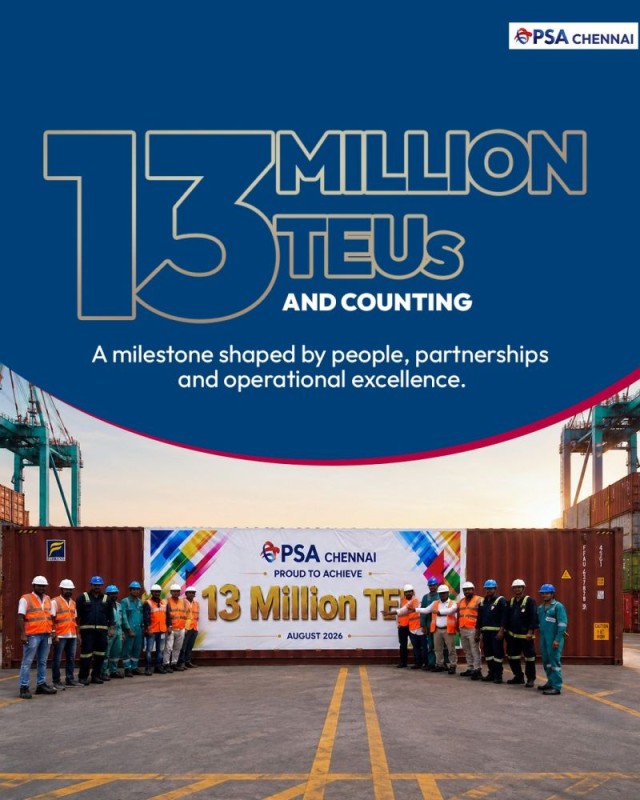
PSA Chennai crosses 13 million TEUs, marking major milestone in operational excellence

CHENNAI : PSA Chennai has achieved a significant operational milestone by crossing 13 million TEUs (Twenty-Foot Equivalent Units), reaffirming its position as a key gateway supporting India’s growing trade and strengthening connectivity along the country’s east coast.

The milestone reflects years of operational excellence, strong customer and industry partnerships, and the unwavering commitment of PSA Chennai’s workforce, whose efforts ensure the seamless and efficient movement of cargo every day.

As an important gateway for India’s eastern and southern hinterland, PSA Chennai plays a vital role in facilitating international trade by connecting businesses and supply chains with global markets. The terminal’s continued focus on operational efficiency and reliable cargo handling is contributing to improved supply chain performance and supporting the evolving requirements of exporters, importers and other stakeholders.

Crossing the 13 million TEU mark is a testament to the terminal’s sustained performance and the confidence placed in PSA Chennai by its customers and partners. The achievement also highlights the importance of efficient port infrastructure in enabling smoother trade flows and enhancing India’s competitiveness in global commerce.

Looking ahead, PSA Chennai remains committed to supporting the next phase of India’s trade growth by pursuing greater operational efficiency, strengthening connectivity and delivering reliable services to customers.

The milestone underscores PSA Chennai’s continuing role in facilitating trade, strengthening supply-chain networks and contributing to the growth of India’s maritime and logistics ecosystem.

NSFT sets new all-time productivity benchmark with 145 MPH berth and 156 MPH ship productivity

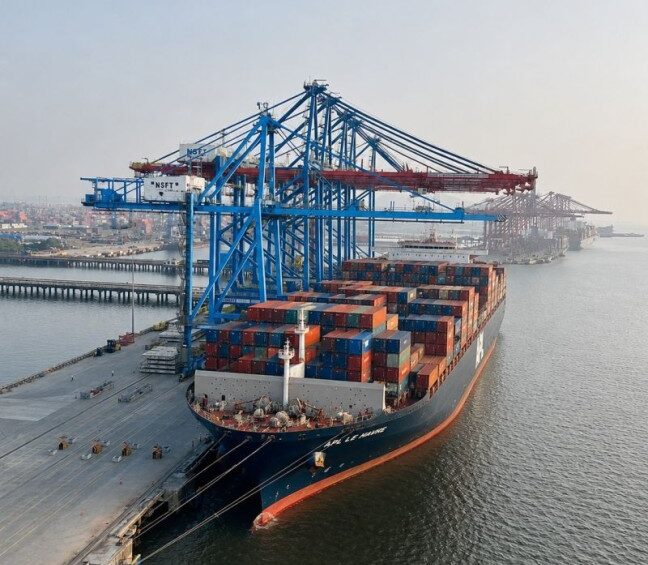
MUMBAI : Nhava Sheva Freeport Terminal (NSFT) has achieved a new all-time operational productivity benchmark, recording its highest-ever Berth Productivity of 145 moves per hour (MPH) and Ship Productivity of 156 moves per hour, further strengthening its position as a high-performance container terminal at Jawaharlal Nehru Port.

The milestone was achieved during operations on APL LE HAVRE, operated by CMA CGM under the INDAMEX Service, which sailed on 17 August 2026 after completing a substantial 5,643 TEU move exchange.

The latest performance represents a significant improvement over NSFT’s previous productivity records of 134 MPH for Berth Productivity and 146 MPH for Ship Productivity. The new benchmarks demonstrate the terminal’s continued focus on improving vessel turnaround, cargo-handling efficiency and operational reliability.

Record Productivity Achieved

145 MPH – Highest-ever Berth Productivity at NSFT
156 MPH – Highest-ever Ship Productivity at NSFT
5,643 TEUs – Move exchange handled on APL LE HAVRE
17 August 2026 – Vessel sailing and record operation

The achievement is the result of precise vessel planning, efficient resource deployment, seamless coordination among operational teams, equipment performance and disciplined execution throughout the vessel-handling cycle.

High berth and ship productivity are critical indicators of terminal efficiency, as faster and more consistent cargo handling can contribute to reduced vessel turnaround times and improved schedule reliability for shipping lines and cargo owners. The latest performance therefore highlights NSFT’s ability to handle substantial container volumes while maintaining a strong focus on operational precision.

The successful operation on APL LE HAVRE also reflects the importance of close coordination between the terminal and its shipping-line partners. Effective planning and synchronised execution enabled NSFT to maximise operational efficiency during the vessel’s port call.

The new record further underscores NSFT’s commitment to continuous improvement, technology-enabled operations, equipment optimisation and operational excellence. By consistently raising productivity benchmarks, the terminal aims to deliver greater efficiency and reliability to customers while supporting the growing requirements of India’s containerised trade.

The milestone comes as another significant achievement in NSFT’s operational journey and reinforces its contribution to the efficiency and competitiveness of India’s maritime logistics ecosystem.

Another benchmark raised. Another step forward in operational excellence at Nhava Sheva Freeport Terminal.

MoPSW holds Stakeholder Meeting to facilitate Agricultural Exports and Strengthen Port Logistics

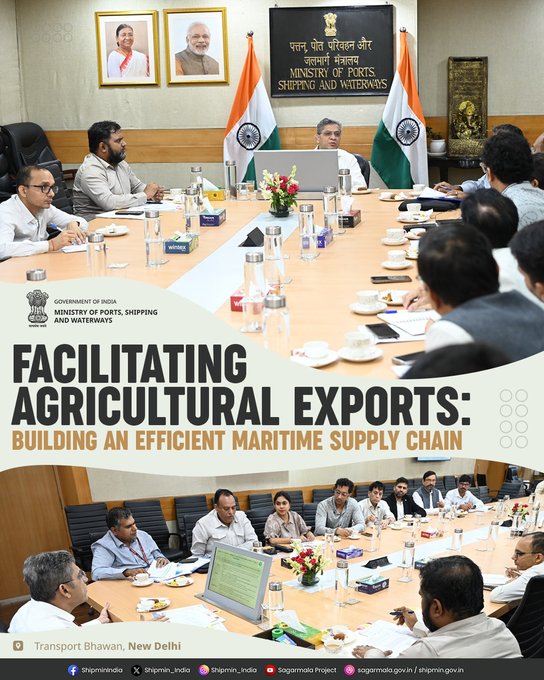
NEW DELHI : The Ministry of Ports, Shipping and Waterways (MoPSW) convened a high-level meeting on “Facilitation of Agricultural Exports and Future Planning” on 14 August 2026, with a focus on strengthening the movement of agricultural commodities through Indian ports and enhancing the efficiency of the country’s export logistics ecosystem.

The meeting was chaired by Shri Vijay Kumar, IAS, Secretary, Ministry of Ports, Shipping and Waterways, and brought together key stakeholders from across the agricultural export and maritime logistics ecosystem, including representatives from APEDA, DG Shipping/DGMA, DGFT, CBIC, major ports and agricultural exporters.

The discussions focused on identifying and addressing operational and logistical challenges faced in the movement and export of agricultural commodities through Indian ports. Participants deliberated on measures to improve port efficiency, cargo handling, logistics coordination and overall export facilitation, with the objective of ensuring smoother and more predictable movement of agricultural products from farm and production centres to international markets.

Particular emphasis was placed on strengthening stakeholder coordination and inter-agency collaboration, recognising the importance of seamless cooperation among regulatory authorities, ports, logistics providers, exporters and other stakeholders in reducing bottlenecks and improving the efficiency of agricultural supply chains.

The meeting also explored future planning and potential measures to make agricultural export operations faster, more reliable and responsive to the requirements of exporters and global markets. Improving processes at maritime gateways is expected to contribute to reduced logistics constraints, better cargo turnaround and enhanced competitiveness for India’s agricultural exports.

With agricultural commodities often requiring time-sensitive handling and efficient logistics, the discussions underscored the need for coordinated, end-to-end export solutions that can support the movement of cargo while maintaining quality and operational efficiency.

The initiative reflects the Ministry’s continued focus on strengthening India’s maritime logistics infrastructure and facilitating Ease of Doing Business for exporters. By bringing together key government agencies, ports and industry representatives, the meeting provided an important platform for identifying practical solutions and developing a coordinated roadmap for the future.

The deliberations are expected to support efforts towards building a more efficient, integrated and export-oriented port ecosystem, strengthening India’s position in global agricultural trade and contributing to the Government’s broader vision of enhancing the country’s logistics competitiveness.

The meeting reaffirmed the importance of sustained collaboration among all stakeholders to ensure that Indian agricultural products reach international markets smoothly, swiftly and reliably.

MoPSW approves ₹334.89 crore internal flyover at Visakhapatnam Port

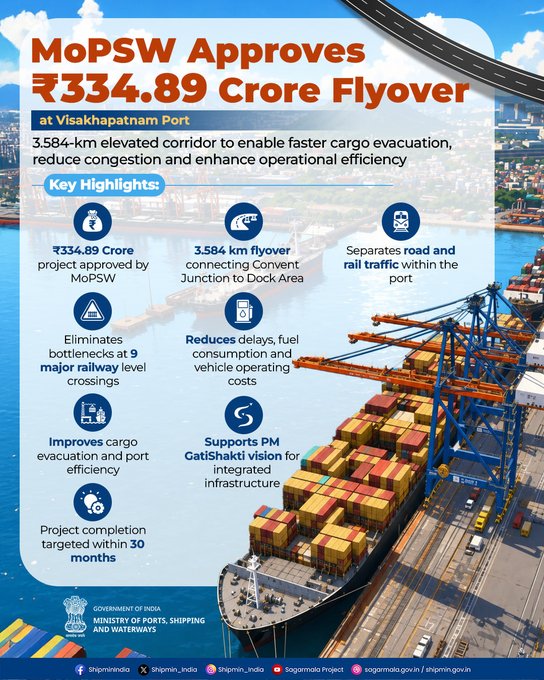
NEW DELHI : The Ministry of Ports, Shipping & Waterways (MoPSW) has approved an investment of ₹334.89 crore for the construction of a 3.584-km internal elevated flyover at Visakhapatnam Port Authority (VPA), marking a major step towards strengthening port connectivity, improving cargo evacuation and enhancing overall operational efficiency. The project was approved by the Union Minister for Ports, Shipping and Waterways, Shri Sarbananda Sonowal, and was appraised by the Investment Board led by the Secretary of the Ministry.

The proposed elevated corridor is designed to address one of the key challenges associated with movement of cargo within the port by separating road and rail traffic and reducing congestion at critical railway crossings. The project is expected to streamline the movement of cargo vehicles and improve the efficiency of internal port transportation.

With Visakhapatnam Port handling significant volumes of bulk and other cargo, efficient internal connectivity is essential for maintaining smooth cargo flows between berths, storage areas, railway facilities and evacuation points. The proposed flyover is therefore expected to help reduce bottlenecks and facilitate faster and more predictable cargo evacuation.

The 3.584-km elevated corridor will provide a dedicated and smoother route for vehicular movement, helping minimise conflicts between road-based cargo traffic and railway operations. By addressing congestion at key railway crossings, the project is expected to improve traffic flow and reduce delays within the port premises.

The initiative is also expected to contribute to improved logistics efficiency and port productivity, enabling cargo to move more seamlessly from handling facilities towards rail and road networks. Better internal connectivity can further support faster turnaround of cargo and improve the overall utilisation of port infrastructure.

The project assumes added significance in the context of India’s growing trade and logistics requirements. Efficient port infrastructure and seamless hinterland connectivity are critical to reducing logistics costs, improving supply-chain reliability and strengthening the competitiveness of Indian ports.

The proposed flyover will also complement broader efforts to develop integrated multimodal connectivity around major ports, enabling smoother coordination between maritime, road and rail transportation systems.

The investment reflects the Government’s continued focus on modernising port infrastructure and removing logistical bottlenecks under its broader vision of building efficient, technology-enabled and globally competitive ports.

For Visakhapatnam Port Authority, the project is expected to strengthen its ability to handle growing cargo volumes while supporting faster evacuation and improving the experience of port users, logistics operators and other stakeholders.

Once implemented, the internal elevated corridor is expected to emerge as an important component of VPA’s infrastructure network, contributing to reduced congestion, smoother cargo movement, enhanced operational efficiency and stronger port-hinterland connectivity.

The ₹334.89 crore project reinforces Visakhapatnam Port’s strategic role in India’s eastern maritime gateway network and supports the country’s larger objective of creating a more efficient, resilient and competitive logistics ecosystem.

CONCOR commences new containerised rail freight service from Morbi to Mumbai

NEW DELHI : Container Corporation of India Limited (CONCOR) has commenced a new containerised cargo movement service from GCT/Rafaleshwar, Morbi, Gujarat, to CONCOR/Turbhe, Mumbai, in association with M/s TCI CONCOR, marking another important step towards strengthening rail-based logistics connectivity for the industrial and manufacturing sector.

The new business stream is expected to provide a reliable, efficient and sustainable rail logistics gateway for the movement of ceramic tiles and other cargo originating from the Morbi industrial region, one of India’s prominent manufacturing and ceramic production hubs. By connecting Morbi with Mumbai through an organised containerised rail service, the initiative is poised to facilitate smoother movement of goods towards major consumption centres, distribution networks and gateways for domestic and international trade.

The service offers an effective alternative to conventional road transportation, enabling businesses to benefit from the advantages of rail-based freight movement, including improved connectivity, operational efficiency and the potential for reduced logistics-related costs and environmental impact.

The commencement of the service also reinforces CONCOR’s commitment to developing end-to-end multimodal logistics solutions that connect production centres with markets through an integrated network of terminals, rail corridors and road linkages.

The Morbi–Turbhe service is particularly significant for the region’s ceramic industry, as efficient logistics connectivity is critical for the movement of high-volume manufactured products to markets across India. The new rail link can help provide greater predictability in cargo movement while expanding logistics options available to manufacturers, exporters, traders and other businesses in the region.

The initiative aligns with the Government of India’s broader vision under PM GatiShakti, which seeks to promote integrated and coordinated multimodal transportation infrastructure, reduce logistics bottlenecks and enhance the overall efficiency of India’s supply chains.

With the addition of this new business stream, CONCOR continues to expand its service portfolio and strengthen rail-led logistics solutions for emerging industrial clusters across the country.

The initiative further demonstrates CONCOR’s focus on strengthening end-to-end logistics, enabling greater Ease of Doing Business and supporting the transition towards a more efficient and sustainable multimodal freight ecosystem.

Think Logistics. Think CONCOR!

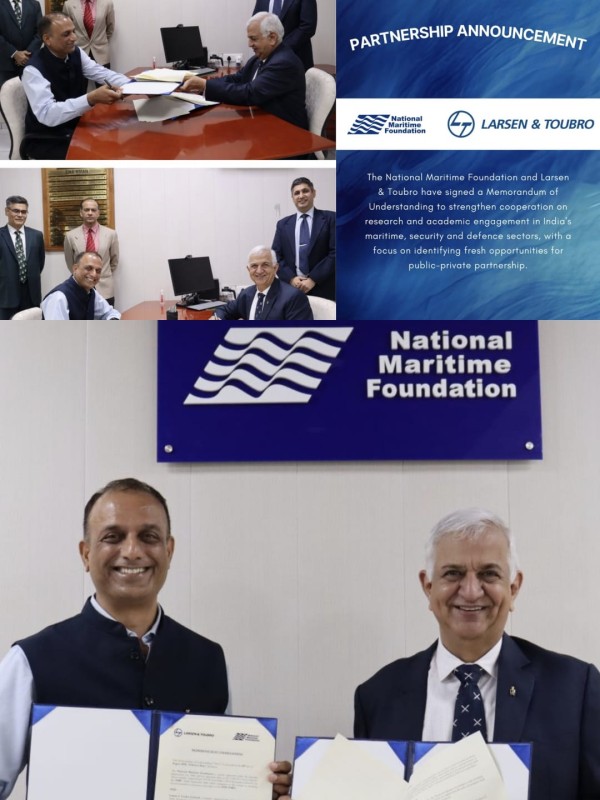
National Maritime Foundation and L&T sign MoU to advance research on PPP in maritime, security and defence

NEW DELHI : The National Maritime Foundation (NMF) has signed a Memorandum of Understanding (MoU) with Larsen & Toubro (L&T) to promote research and policy-oriented collaboration on Public-Private Partnerships (PPP) in India’s maritime, security and defence sectors.

The MoU was signed by Vice Admiral Pradeep Chauhan, AVSM & Bar, VSM (Retd), Director-General, National Maritime Foundation, and Mr. Pankaj Chadha, ndc, Executive Vice President & Head, Marine Platform, Equipment & Systems (MPES), L&T Precision Engineering & Systems.

The partnership brings together NMF’s expertise in maritime affairs, strategic studies and policy research with L&T’s extensive capabilities in engineering, defence manufacturing, marine platforms and advanced technological solutions.

The collaboration is aimed at facilitating research, knowledge exchange and informed policy dialogue on the evolving role of private enterprise in strengthening India’s maritime and national security ecosystem. It will examine opportunities and challenges associated with greater private-sector participation in strategic maritime and defence domains.

The partnership is particularly relevant as India continues to strengthen its domestic maritime and defence capabilities, promote indigenous manufacturing and build a more resilient ecosystem involving government institutions, public-sector organisations, academia and private industry.

Through joint research and engagement, the two organisations will seek to develop policy-relevant insights and recommendations that can contribute to strengthening Public-Private Partnership frameworks and encouraging greater industry participation in critical maritime and defence initiatives.

The MoU reflects a shared commitment to advancing India’s maritime interests while fostering closer cooperation between strategic research institutions and private industry. It also underscores the importance of collaborative approaches in addressing emerging challenges at the intersection of maritime security, defence, technology and industrial capability.

The partnership is expected to contribute to a deeper understanding of how effective public-private collaboration can support India’s aspirations for a strong, self-reliant and globally competitive maritime and defence ecosystem.

The MoU marks another step towards strengthening the interface between research, policymaking and private enterprise, supporting the development of innovative and sustainable approaches to India’s maritime security and defence requirements.

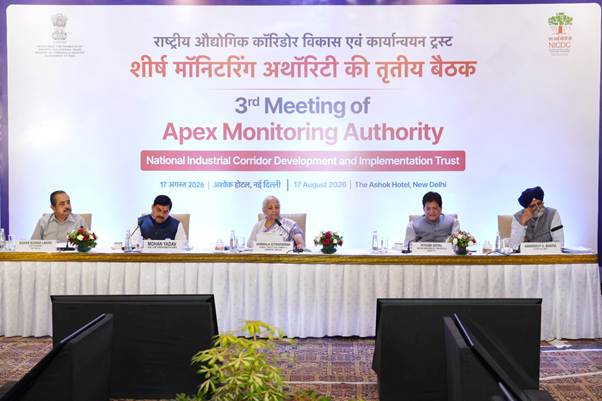
Nirmala Sitharaman chairs 3rd Meeting of Apex Monitoring Authority of NICDIT and reviews the progress of projects under NICDP

NEW DELHI : Union Minister for Finance and Corporate Affairs, Smt. Nirmala Sitharaman, chaired the 3rd Meeting of the Apex Monitoring Authority of the National Industrial Corridor Development and Implementation Trust (NICDIT). The meeting reviewed the progress of projects under the National Industrial Corridor Development Programme (NICDP) and deliberated on priorities for the next phase of industrial corridor development.

The meeting was attended by Union Minister for Commerce and Industry, Shri Piyush Goyal; Chief Minister of Madhya Pradesh, Dr. Mohan Yadav; and Vice-Chairman, NITI Aayog, Shri Ashok Kumar Lahiri.

Chairing the meeting, Smt. Nirmala Sitharaman appreciated the progress made under NICDP and said that the encouraging results on the ground indicate growing investor demand. She emphasised that the next pipeline of industrial land and infrastructure should be prepared well before the existing inventory is exhausted.

Smt. Sitharaman stated that Industrial Corridors are an important pillar of the Government of India’s strategy to expand manufacturing, strengthen logistics competitiveness and create globally competitive industrial ecosystems.

Recalling the emphasis placed at the previous Apex meeting, she said that Industrial Corridor development should be taken forward in the spirit of ‘Team India’. She also underlined the importance of convergence of Freight, Industrial Development, Railways and Expressways, the FIRE Corridors, for the success of the programme.

The Finance Minister stressed that the focus must now move beyond project approvals towards timely completion of infrastructure, land allotment, investment and commencement of production. She urged States to resolve bottlenecks relating to land, connectivity, utilities, statutory clearances and the powers of project Special Purpose Vehicles (SPVs).

She further stressed the need for integrated planning through PM GatiShakti and continued use of investor-friendly land allotment mechanisms. Worker housing, healthcare, skilling, public transport and other social amenities, she said, should form an integral part of industrial development.

Smt. Sitharaman also highlighted the Government of India’s support for infrastructure and manufacturing through enhanced public capital expenditure, support to States under SASCI, improved credit support for manufacturing MSMEs, and tax and customs measures aimed at strengthening domestic manufacturing and supply chains.

Union Minister for Commerce and Industry, Shri Piyush Goyal, called for faster and outcome-oriented implementation of Industrial Corridor projects, with greater focus on timely investment and operationalisation.

Shri Goyal stated that BHAVYA and future industrial developments should be aligned with PM GatiShakti and planned through an integrated area-development approach.

He called for focused investor outreach and stronger marketing of industrial nodes, including leveraging opportunities arising from India’s Free Trade Agreements and exploring country- and sector-specific industrial enclaves.

The Minister emphasised the need to match investor requirements with suitable locations and develop ready-to-use industrial ecosystems with plug-and-play infrastructure, flatted factories, worker housing and supporting economic and social infrastructure. Such an approach, he said, would facilitate faster investment and commencement of operations.

The National Industrial Corridor Development Programme now covers 20 approved projects across 13 States and 7 Industrial Corridors.

Four industrial smart cities — Dholera, Shendra-Bidkin, Greater Noida and Vikram Udyogpuri — have entered the production stage.

The 12 projects approved in August 2024 are also progressing, with infrastructure development, land allotment and investor engagement increasingly being undertaken in parallel.

So far, 469 plots covering approximately 5,348 acres have been allotted, with an estimated investment potential of around ₹2.21 lakh crore and employment potential of approximately 1.29 lakh persons. 134 units are already in production, while another 95 units are under construction.

Union Minister for Ports, Shipping and Waterways, Shri Sarbananda Sonowal, emphasised the integration of national waterways with Industrial Corridors and suggested examining waterways as a potential spine for corridor development.

He also stressed the need to develop industrial infrastructure in the North-Eastern States to broaden the country’s industrial base, particularly at locations offering strong connectivity, land availability, local resource advantages and market potential.

Vice-Chairman, NITI Aayog, Shri Ashok Kumar Lahiri, urged State Governments to give greater priority to empowering project SPVs with adequate planning, development and municipal powers, in line with the approved institutional and legal framework of the Industrial Corridor Programme.

He emphasised that effective delegation of these powers would enable SPVs to take timely decisions, reduce dependence on multiple State agencies and facilitate more coordinated, efficient and investor-friendly development.

The meeting commenced with the welcome address by Secretary, DPIIT and Chairman, NICDIT, Shri Amardeep Singh Bhatia, who outlined the progress since the previous Apex meeting and key implementation issues before the Authority.

This was followed by a presentation by CEO, NICDIT, Shri Rajat Kumar Saini, on the current status of Industrial Corridor projects, including progress in implementation, land allotment and investor mobilisation, as well as project-specific issues requiring coordination with States.

Representatives from participating States shared project-wise progress, key implementation challenges and areas requiring coordinated support. The discussions provided a platform for focused Centre-State engagement to resolve project-specific issues and accelerate implementation.

The Apex Authority underlined that the next measure of progress would be the speed at which completed and ongoing projects translate into active manufacturing centres, investment and employment.

The Apex Authority also reviewed the rollout of the Bharat Audyogik Vikas Yojana (BHAVYA), which envisages the development of 100 investment-ready, plug-and-play industrial parks across the country.

Against up to 20 projects proposed for approval in the first round, 87 applications have been received from States, reflecting strong interest in the scheme across the country.

It was emphasised that the planning and appraisal of BHAVYA projects should be fully aligned with PM GatiShakti, with infrastructure in and around industrial areas being planned as an integral part of industrial development.

BHAVYA will build on the experience gained from Industrial Corridor projects. The appraisal of proposals will focus on factors including availability of ready land, credible industrial demand, strong connectivity, assured utilities, realistic phasing and the ability to attract investors at an early stage.

The discussions at the meeting underlined a clear direction for the next phase of industrial infrastructure development: progress will be measured not only by the infrastructure created, but also by how quickly projects attract investment, commence production and generate economic activity and employment.

The meeting was also attended virtually by Union Minister for Ports, Shipping and Waterways, Shri Sarbananda Sonowal; Chief Minister of Maharashtra, Shri Devendra Fadnavis; Chief Minister of Bihar, Shri Samrat Choudhary; Chief Minister of Haryana, Shri Nayab Singh Saini; Chief Minister of Kerala, Shri V. D. Satheesan; Chief Minister of Uttarakhand, Shri Pushkar Singh Dhami; Ministers from participating States; senior officials of the Government of India and State Governments; and other stakeholders.

About NICDIT

The National Industrial Corridor Development and Implementation Trust (NICDIT) is a Trust constituted by the Government of India for the coordinated and unified development of Industrial Corridors across the country. It functions under the administrative control of the Department for Promotion of Industry and Internal Trade (DPIIT), Ministry of Commerce & Industry, and supports the development of trunk infrastructure in industrial nodes under the approved framework of the National Industrial Corridor Development Programme. Under BHAVYA, Government of India participation in project SPVs and equity support is routed through NICDIT.

About NICDC

National Industrial Corridor Development Corporation Limited (NICDC) is a Special Purpose Vehicle under the administrative control of DPIIT, Ministry of Commerce & Industry. NICDC undertakes project development activities and coordinates implementation of Industrial Corridor projects under the National Industrial Corridor Development Programme, working with State Governments and project SPVs to develop investment-ready industrial areas and smart industrial cities. Under BHAVYA, NICDC has been designated as the Project Management Agency for implementation and monitoring of the Scheme.