Home Blog Page 149

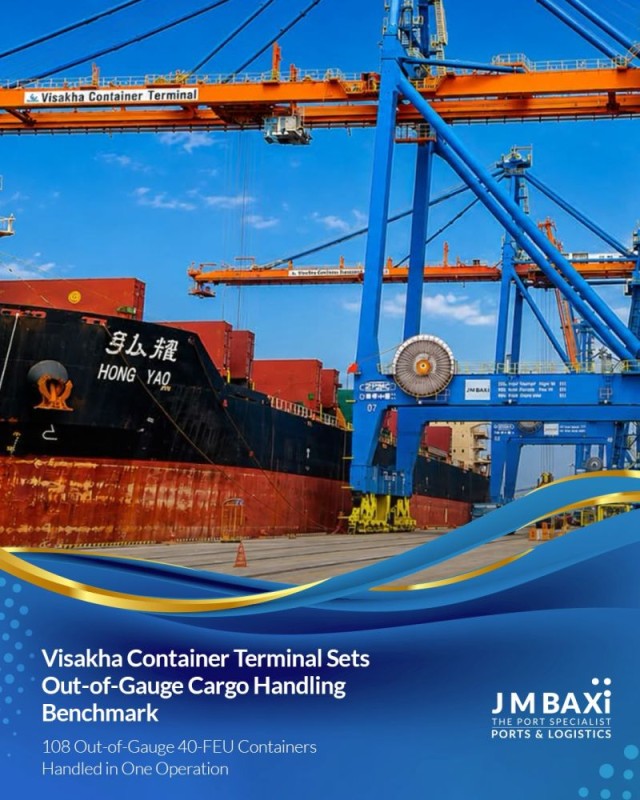
J M Baxi highlights record OOG Cargo Operation at Visakha Container Terminal

VISAKHAPATNAM : J M Baxi, a leading integrated logistics and maritime services group, has highlighted a major operational milestone achieved at Visakha Container Terminal, with the terminal successfully handling its highest-ever volume of Out-of-Gauge (OOG) cargo in a single vessel operation.

The record-setting operation involved the safe discharge of 108 Out-of-Gauge 40-FEU containers from the breakbulk vessel M.V. Hong Yao, carrying specialised cargo for M/s. Saatvik Solar’s Gopalpur plant project.

The achievement marks a significant advancement in the terminal’s project cargo handling capabilities, demonstrating its ability to efficiently manage high-volume, oversized and specialised cargo associated with major industrial projects.

According to J M Baxi, the successful operation was made possible through meticulous planning, close inter-departmental coordination and precise execution. The seamless handling of such a substantial volume of OOG cargo required careful operational planning and a strong focus on safety at every stage of the discharge process.

The milestone is particularly significant as specialised and project cargo often involves complex dimensions, handling requirements and operational considerations. The successful execution of the M.V. Hong Yao operation demonstrates the terminal’s preparedness and expertise in managing such demanding cargo movements.

The operation also highlights the important role of Visakha Container Terminal in supporting the logistics requirements of major industrial and renewable energy projects in the region. Efficient port handling and reliable cargo connectivity are critical to ensuring the timely movement of project equipment and materials from maritime gateways to manufacturing and infrastructure destinations.

J M Baxi’s achievement further reinforces the capabilities of Visakha Container Terminal as a strategic logistics gateway on India’s eastern coast, with growing expertise in handling specialised, project and OOG cargo.

The milestone reflects the collective efforts of the terminal’s teams and operational partners and underscores J M Baxi’s continued focus on safety, efficiency, operational excellence and customer-centric logistics solutions.

With 108 OOG 40-FEU containers handled in a single vessel operation, Visakha Container Terminal has set a new benchmark in its project cargo handling journey—strengthening its ability to support India’s evolving industrial and logistics requirements.

A record operation. A stronger project cargo capability. Another milestone in operational excellence.
RCL confirms MV NAWATA BHUM successfully refloated and resumes service following Hooghly River incident

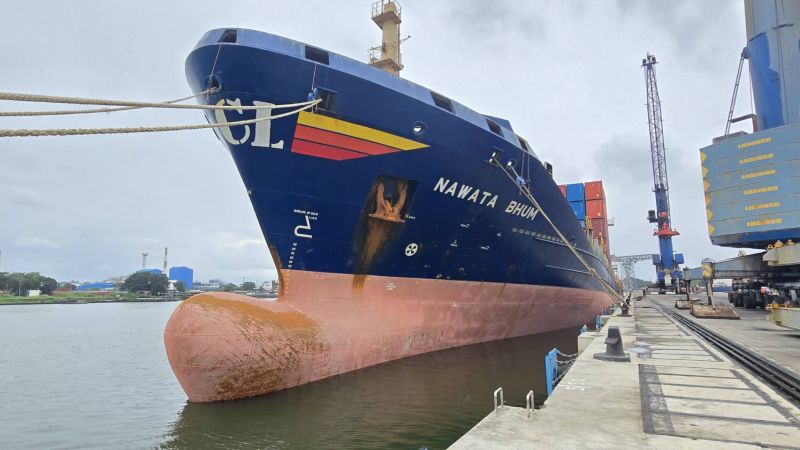
KOLKATA : Regional Container Lines (RCL) has provided a further update on the MV NAWATA BHUM, following the incident involving the vessel on the Hooghly River, India, on 12 August 2026.

RCL has confirmed that the vessel was successfully refloated on 13 August 2026 following the necessary operational procedures and subsequently resumed her scheduled voyage.

The company has also confirmed that all crew members onboard are safe and no injuries have been reported. Importantly, there has been no damage to the cargo onboard, ensuring that the integrity of the vessel’s cargo has remained intact throughout the incident and recovery process.

Following the refloating operation, the vessel underwent the necessary inspections, assessments and safety checks to determine her condition and readiness to continue the voyage. Upon completion of these assessments, MV NAWATA BHUM was cleared to resume service.

The successful refloating and return to service reflect the coordinated efforts of the vessel’s crew, operational teams and relevant maritime stakeholders involved in responding to the incident and ensuring the vessel could safely continue her voyage.

RCL said that the company’s primary focus throughout the incident and subsequent recovery operations remained the safety and wellbeing of its crew, the security of the vessel and the protection of cargo.

The company continues to monitor the vessel’s voyage and remains committed to maintaining safe, reliable and efficient container shipping services for its customers.

The incident and subsequent recovery also underscore the importance of careful navigation, effective maritime coordination and adherence to established safety procedures in the operation of vessels navigating busy and complex waterways such as the Hooghly River.

With MV NAWATA BHUM now successfully refloated and back in service, RCL has reaffirmed its commitment to operational safety, cargo integrity and dependable service continuity.

All crew safe. Cargo secure. Vessel successfully refloated and back in service.

DTDC redefines last-mile delivery with Vallam Express, bringing doorstep deliveries to Kerala’s water-bound communities

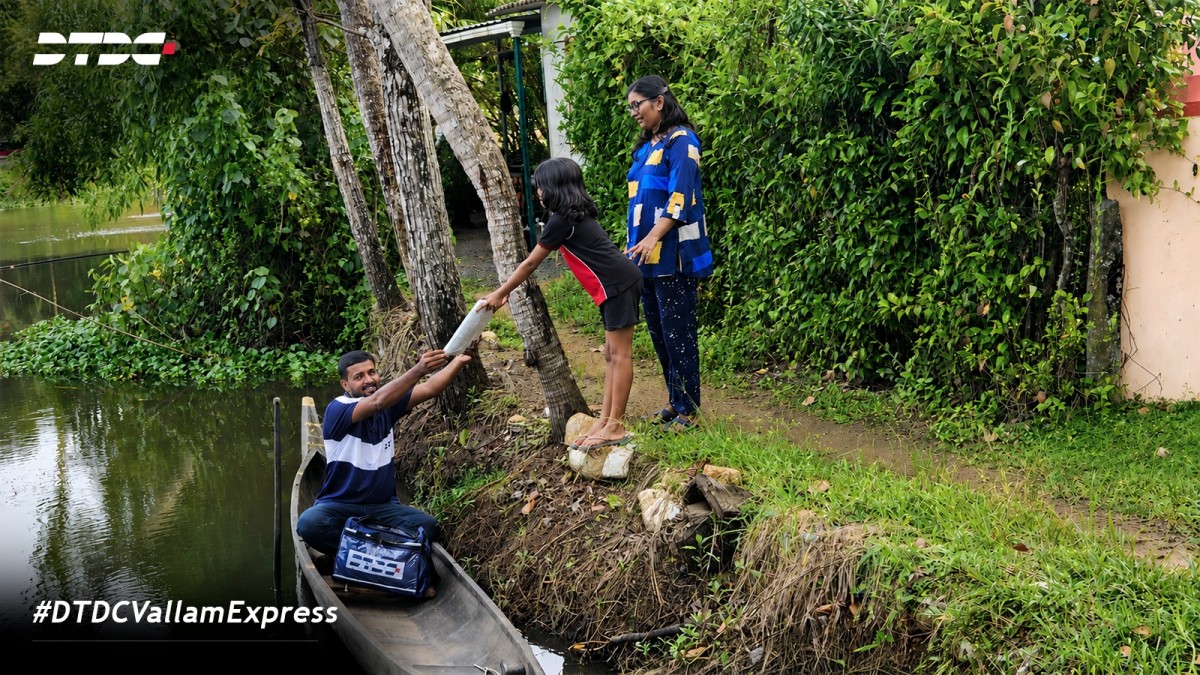
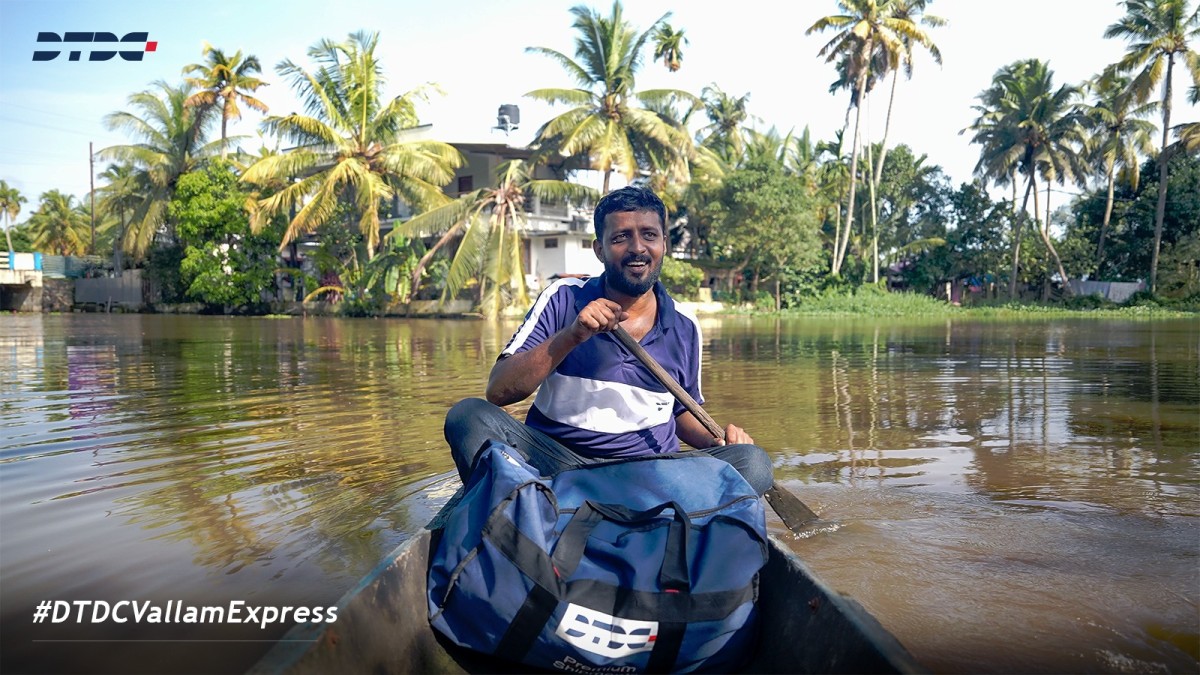
NEW DELHI : In a significant step towards making logistics more inclusive and accessible, DTDC Express Ltd., one of India’s leading homegrown multinational logistics companies, announced the launch of “DTDC Vallam Express”, a waterway-based last-mile delivery service that extends doorstep parcel deliveries to Kerala’s water-bound communities.

dtdc vallarpadam DTDC redefines last-mile delivery with Vallam Express, bringing doorstep deliveries to Kerala's water-bound communities

The service draws its name and inspiration from Kerala’s iconic Vallam Kali, the traditional snake boat race known for its speed and spirit of teamwork, with “Express” reflecting the pace and dynamism that DTDC brings to last-mile delivery.
For years, customers living across Kerala’s backwaters had to travel by boat to collect their parcels from the nearest courier collection point, as conventional last-mile delivery networks ended where the roads did. With Vallam Express, DTDC is bridging this long-standing accessibility gap by extending deliveries directly to customers’ doorsteps, making direct delivery a reality for communities where waterways are the primary mode of transport.

At the heart of Vallam Express is a unique collaboration between DTDC’s delivery professionals and Kerala’s traditional oarsmen, whose deep understanding of the region’s waterways enables seamless navigation through routes inaccessible by road. By integrating generations of local expertise into its delivery network, DTDC is not only strengthening last-mile connectivity but also creating meaningful livelihood opportunities while demonstrating how traditional knowledge can power modern logistics.

To mark the launch during the Onam season, DTDC has also unveiled a brand film #DTDCVallamExpress, featuring Kerala’s iconic snake boats. The film embodies the spirit of teamwork, resilience, and togetherness that these boats represent. Serving as the creative expression of Vallam Express, the campaign celebrates Kerala’s rich cultural heritage while showcasing the people and waterways that make this unique delivery model possible. Anchored by the thought “When Roads End, We Ride on Water”, the campaign film brings together operational solutions and emotionally rooted storytelling.

Commenting on the launch, Abhishek Chakraborty, CEO, DTDC Express Ltd., said, “More than a new delivery service, ‘Vallam Express’ reflects DTDC’s philosophy of building logistics solutions that are shaped by local realities and customer needs. By reimagining the last mile through a region-specific delivery model, we continue to strengthen our position as a customer-first logistics brand that develops meaningful solutions for every community it serves.”

The service is currently introduced in Kuttanad, a sub-district of Alappuzha comprising 14 villages and serving a population of approximately 2 lakh people. This service is intended as a long-term delivery solution rather than a seasonal initiative. As the service scales, DTDC expects this service to facilitate over 5,000 deliveries in the coming year.
Shri S.D. Venukumar, a prominent local figure in Alappuzha, Kerala, who served as the Chairman of the Publicity Committee and President of the Alappuzha Press Club, commented, “Vallam Express is a remarkable initiative by DTDC that reflects inclusivity and a strong commitment to last-mile connectivity. For people living in Kerala’s remote backwater communities, where road connectivity is limited, collecting parcels often means travelling to the mainland and waiting several days. By introducing delivery through boats, DTDC is bridging this geographical gap and bringing essential logistics services closer to these communities. I would like to congratulate DTDC on introducing such a thoughtful initiative that not only makes deliveries more accessible and convenient but also sets a strong example of how businesses can create meaningful impact through pioneering last-mile solutions.”

As India continues to witness rapid transformation in logistics and commerce, DTDC remains focused on developing effective, customer-centric solutions that address unique regional challenges while strengthening last-mile connectivity. Vallam Express represents another milestone in the company’s journey towards building an inclusive and future-ready logistics network, one that ensures no customer is beyond reach, regardless of geography.

The #DTDCVallamExpress brand film will be shared across DTDC’s digital platforms as part of the campaign’s broader outreach.

Trump won’t extend Iran ceasefire, threatens to ‘bomb’ Oman if it ‘gets in the way’

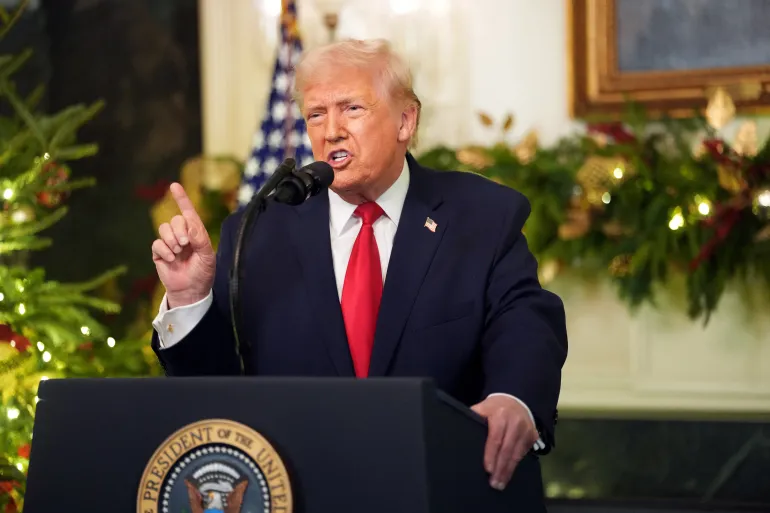
WASHINGTON DC: President Donald Trump on Monday said the U.S. would “bomb the s— out of” Oman if the Gulf nation “gets in the way,” as Washington’s 60-day ceasefire with Iran expires with no official negotiations or deal in sight.

Trump also claimed that informal talks are taking place with Iran’s Revolutionary Guard, but said he is “not in a hurry” to make a deal.

“They’re good poker players, but they’re dying,” Trump said in a Fox News interview.

Trump doubled down on his claims hours later, telling reporters in the Oval Office he’s not looking to extend the U.S. ceasefire deal with Iran, which was signed in mid-June and is set to lapse Monday.

“No,” Trump said when asked if he would seek an extension of that temporary truce.

When asked again about Oman, Trump said the longtime U.S. strategic ally hasn’t “behaved very well.”

“But we’d handle them very easily, just like we do other things,” Trump added.

The 60-day memorandum of understanding with Iran was initially touted as a major step toward reopening the Strait of Hormuz and clearing a path to finalizing a long-term deal on Tehran’s nuclear ambitions.

But the agreement was largely disregarded within weeks, as each side repeatedly accused the other of violating its terms. Military operations resumed in the region soon after; in mid-July, Trump declared the ceasefire over.

Since then, Trump has repeatedly insisted Iran wants to make a peace agreement with the U.S.

“They want to make a deal, but they’re not going to make the kind of a deal that I feel is necessary,” Trump said in the Oval Office on Monday when asked if the two sides are making any progress.

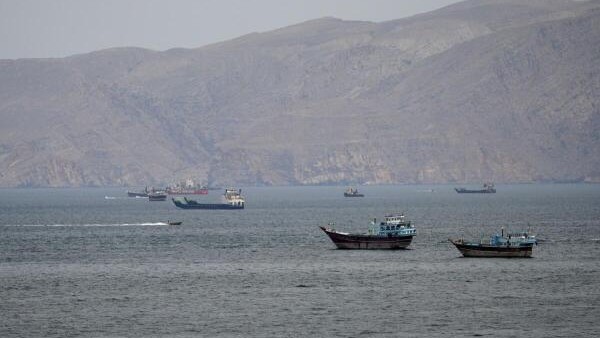
But Tehran has denied that negotiations with the U.S. are underway. Rather, Iran says it is in active talks with Oman over a deal to reopen the Hormuz Strait. The waterway has been largely blocked to commercial transit compared to prewar levels, when 20% of the world’s oil trade would pass through it.

In a Truth Social post Monday morning, Trump reiterated the U.S. stance that Iran must agree to give up on possessing nuclear weapons.

“The number one Goal is, and always will be, that Iran cannot have, in any way, shape, or form, a Nuclear Weapon,” Trump wrote.

Jared Kushner, Trump’s son-in-law and senior aide, told Fox on Monday that Iran currently is “not showing any interest” in a deal that the U.S. would consider.

Hormuz traffic grinds to a halt
The president’s latest remarks came after shipping traffic through the strait slowed nearly to a halt over the weekend.

Only three ships passed through the critical oil passage Sunday, according to data from Kpler. The five-day average for transits stands at 12. Around 130 vessels crossed Hormuz daily before the war started on Feb. 28.

Iran threatens to go on Offensive in Hormuz if diplomacy with US fails

TEHRAN:  Iran has decided to shift its policy from defensive to “fully offensive” due to the deadlock in efforts to agree a permanent end to its war with the United States, a senior Iranian official told Reuters on Monday.

Progress towards peace talks and a resumption of oil tanker traffic through the strategic Strait of Hormuz has ground to a halt, with no sign that the warring parties are moving towards ending the conflict that the US and Israel launched on February 28.

“Iranian entities must be prepared to escalate tensions in the Strait of Hormuz and wider region, as Iran will be ready to make decisions and take action on difficult decisions,” the Iranian official said, adding that Tehran would conduct a “timely and precise” military attack to break the US naval blockade if diplomacy failed. 

Monday marked the day by which Iran and the United States were expected to reach a final deal under a memorandum of understanding agreed in June and aimed at ending the war.

Signed on June 17, the MoU set out a 60-day timeframe, extendable by mutual consent, by which Washington and Tehran should reach an agreement that would cover broader issues such as the fate of Iran’s nuclear programme.

The MoU, which declared the immediate and permanent cessation of military operations on all fronts, quickly unravelled, however, due to a dispute over control of the Strait of Hormuz.

Nine workers killed in toxic gas leak at Sitakunda shipbreaking yard in Bangladesh

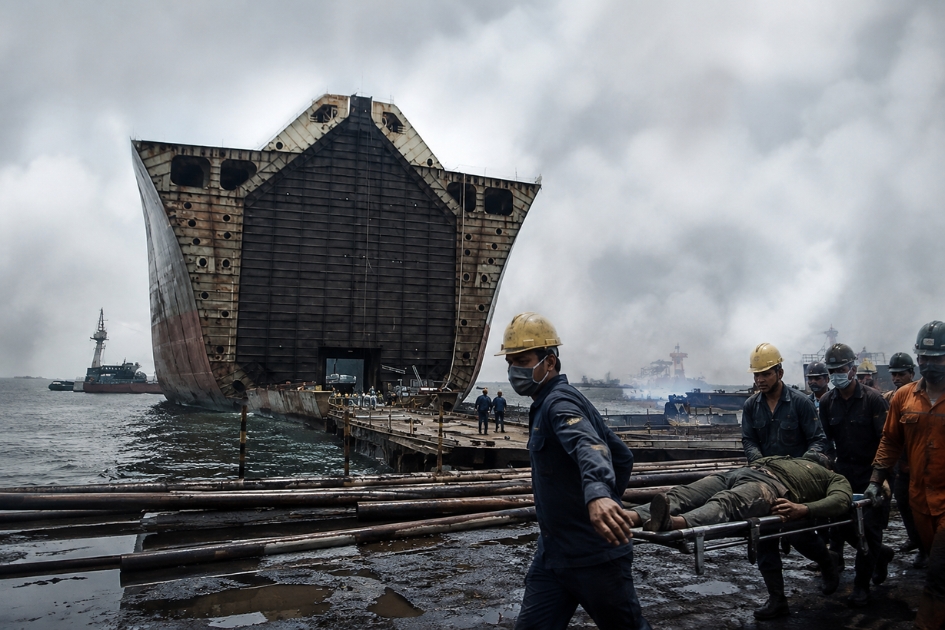
CHATTOGRAM: Nine shipbreaking workers and employees died after being exposed to toxic gas inside a scrap vessel at a shipbreaking yard in Sitakunda’s Bhatiari of Chattogram on 14th August.

The incident happened around 9:00am inside an LNG-carrier MT Rasi,(IMO 9176008) at Ferdous Steel Shipyard on the Station Road of Bhatiari. Among those killed was a 17-year-old. Several other workers were injured.

Firefighters rescued the workers from the vessel which was anchored adjacent to Ferdous Steel Shipyard in the morning.

The death toll increased to nine after another injured worker, Motiur Rahaman, 17, son of Md Hanif, of Sitakunda’s Sonaichhari, died at a private hospital in Chattogram.

The other victims are Palash Das and Sunny Das — from Bhatiari; Mohammad Khokon Mia, of Gaibandha; and Mohammad Mansur, Abdul Alim Sujon, Md Rana, Nasir Uddin and Md Hanif — all from Sonaichari in Mirsarai.

Toxic gas in ship’s tank’
Safety experts today said the deaths were caused by an accumulation of toxic gas inside a confined tank onboard the vessel. Fishermen operating in the Bay of Bengal reported smelling the gas from half a kilometre away.

Muhammad Ali Shahin, a shipbreaking expert and head of advocacy at the non-profit organisation YPSA, described the incident as unprecedented. “I have never seen such massive casualties in a shipbreaking yard,” Shahin said, pointing to severe negligence by the yard authority.

“Toxic gas had accumulated in the ship’s tank,” Shahin explained. “Instead of slowly venting and cleaning the tank with proper precautionary measures, the yard management sent workers inside to extract the gas quickly.

The workers opened the tank in a confined space and inhaled the lethal fumes. Although this yard received Hong Kong Convention (HKC) Green Yard certification, they failed to comply with its safety guidelines.”

The incident comes despite the Hong Kong International Convention for the Safe and Environmentally Sound Recycling of Ships coming into force globally on June 26, 2025.

Established by the International Maritime Organization (IMO), the treaty mandates strict guidelines, including an Inventory of Hazardous Materials (IHM), regulator-approved Ship Recycling Plans (SRP), and rigorous occupational health and safety protocols.

“The technology and safety protocols to reduce these risks exist, but the challenge is ensuring consistent implementation rather than keeping them on paper,” Shahin added.

The tragedy occurred at a yard certified as compliant with the Hong Kong Convention (HKC). Only one month earlier, Bangladesh’s Department of Inspection for Factories and Establishments had taken legal action against Ferdous Steel following repeated occupational safety failures. Following the deaths, the Bangladesh Environmental Lawyers Association (BELA) issued a notice demanding an independent investigation and the shutdown of the yard.

The scale of this tragedy is shocking, but fatal and serious accidents in the sector are far from exceptional. According to The Daily Star, 84 accidents have occurred at Bangladeshi yards since the HKC entered into force in June 2025, leaving 15 workers dead and 81 injured.

These figures expose the gap between certification on paper and conditions on the ground. They also underline the limits of the HKC itself. The Convention establishes a weaker global baseline than the obligations of the Basel Convention, which is designed to prevent hazardous waste from being exported to countries unable to manage it in an environmentally sound manner.

“Hazardous end-of-life ships should not be exported for recycling where environmentally sound management cannot be guaranteed. Yet, due to weak enforcement, vessels continue to be sent to South Asian beaches despite recurring deaths, pollution, and serious deficiencies in hazardous waste management. Certifications must not become a licence to continue business as usual,” says Ingvild Jenssen, Executive Director of the NGO Shipbreaking Platform.

Accountability does not stop at the yard gate. Shipowners and cash buyers decide where vessels are dismantled and must bear responsibility for those choices.

The RASI is the former HL RAS LAFFAN, owned by South Korean H-Line Shipping and linked by shipping databases to cash buyer GMS. In March 2025, the Platform specifically warned that H-Line was preparing to retire the vessel, while denouncing the company’s continued disposal of end-of-life ships on South Asian shores.

The Platform calls on Bangladeshi authorities to ensure an independent and transparent investigation into the nine deaths, hold those responsible to account, schedule regular unannounced inspections, and enforce safety and environmental requirements.

The tragedy should also serve as yet another warning to regulators elsewhere. As the European Commission considers approving shipbreaking facilities that continue to dismantle vessels directly on beaches, the costs of accepting certification in place of genuinely safe and contained recycling infrastructure could not be clearer.

CMA CGM North America appoints Natasha Griffin as CEO

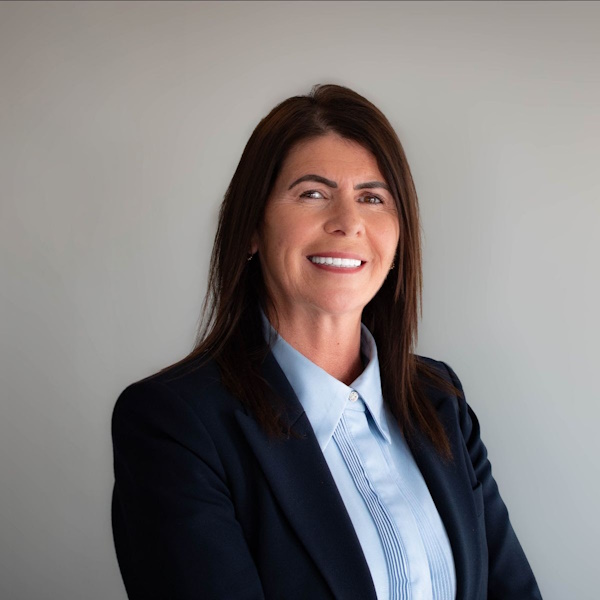
MARSEILLE: The CMA CGM Group, a global leader in sea, land, air, and logistics solutions, today announced the appointment of Ms. Natasha Griffin as Chief Executive Officer of CMA CGM North America.

Based in Norfolk, Virginia, Ms. Griffin will lead CMA CGM’s operations and strategic development across North America, overseeing the Group’s shipping, logistics, intermodal, and supply chain activities. She will be responsible for driving the Group’s strategy in a key growth market, strengthening customer partnerships, accelerating business development, and supporting continued investment in America’s maritime transportation and logistics infrastructure.

“North America is a strategic market for CMA CGM and a key pillar of our long-term growth strategy,” said Natasha Griffin, CEO of CMA CGM North America. “I am honored to lead our organization at this important moment. We will continue delivering exceptional service to our customers while supporting the development of America’s maritime and logistics capabilities. I look forward to building on CMA CGM’s longstanding commitment to the United States and Canada and contributing to the continued growth of our business and our partnerships across the region.”

The Group operates throughout the United States and Canada, employing more than 10,000 people. As a leading trade partner in North America, CMA CGM transports over 5 million TEUs to and from the region each year. CMA CGM operates 38 services, with 25 ports of calls.

About Natasha Griffin

Natasha Griffin has more than 30 years of experience in the shipping and logistics industry.

She began her career in customer service before moving on to senior commercial and management positions within the global shipping and logistics industry. Since joining CMA CGM Group in June 2025 as Managing Director of CMA CGM UK, she has successfully led the Group’s activities in one of its key European markets, driving commercial performance, strengthening customer relationships, and supporting the company’s growth ambitions.

Her extensive commercial expertise, operational knowledge, and leadership experience make her exceptionally well positioned to lead CMA CGM North America as the Group continues to expand its presence and investments in the United States and Canada.

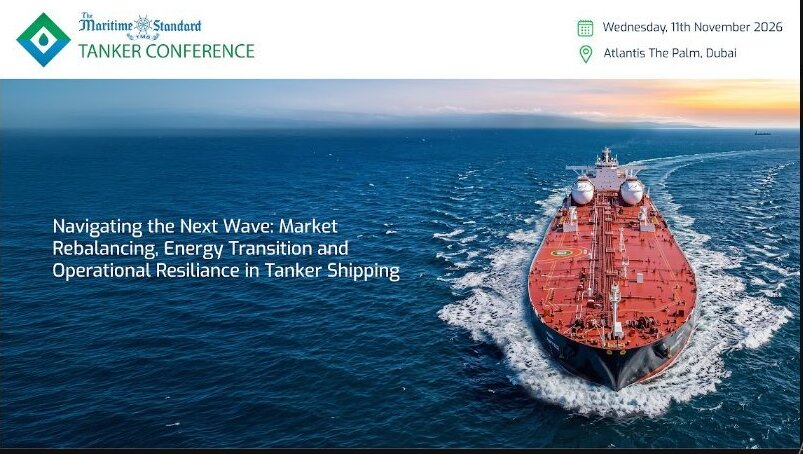
The Maritime Standard announces TMS Tanker Conference 2026

DUBAI: The Maritime Standard (TMS) has announced the launch of the TMS Tanker Conference 2026, which will take place on 11th November 2026 at Atlantis, The Palm, Dubai. The conference will bring together senior industry leaders, tanker owners, operators, charterers, regulators, technology providers, classification societies, and other key stakeholders to discuss the challenges and opportunities shaping the future of tanker shipping.

Held under the theme “Navigating the Next Wave: Market Rebalancing, Energy Transition, and Operational Resilience in Tanker Shipping,” the conference will examine how the industry is recalibrating strategies in response to changing market conditions, evolving trade patterns, geopolitical developments, regulatory pressures, and the accelerating pace of energy transition. As tanker shipping continues to operate in an increasingly complex global environment, the event will provide a platform for informed discussion, knowledge sharing, and strategic dialogue among industry decision-makers.

The conference programme has been designed to address both the commercial and operational dimensions of the tanker sector. Discussions will focus on how market rebalancing, shifting cargo flows, sanctions, regulatory frameworks, and broader geopolitical developments are influencing fleet deployment, investment decisions, and long-term competitiveness. At the same time, delegates will explore how tanker operators are strengthening operational resilience through digitalisation, innovation, sustainability initiatives, cybersecurity, and improved risk management practices.

Commenting on the launch of the event, Trevor Pereira, Managing Director of The Maritime Standard, said: “The tanker shipping sector is undergoing a period of significant transformation. Changing trade patterns, geopolitical uncertainty, evolving regulations, and energy transition pressures are creating both challenges and opportunities for industry stakeholders. The TMS Tanker Conference 2026 has been developed to provide a high-level forum where industry leaders can exchange ideas, assess market developments, and explore practical strategies for maintaining competitiveness, resilience, and sustainable growth in a rapidly changing environment.”

The conference will feature expert presentations and panel discussions across two dedicated sessions. The first session, Market Rebalancing and Strategic Positioning in a Changing Landscape, will examine the commercial and strategic forces reshaping tanker markets, including trade flows, supply and demand dynamics, fleet optimisation, investment trends, and the impact of energy transition on tanker shipping. The second session, Operational Resilience and Innovation in the Energy Transition Era, will focus on the technologies, operational strategies, and collaborative approaches that are helping tanker operators improve efficiency, strengthen resilience, enhance safety, and meet evolving environmental expectations.

The TMS Tanker Conference 2026 will bring together senior executives and decision-makers from across the global tanker shipping value chain, with opportunities for delegates to exchange industry perspectives and engage with peers during the event.

Registration and sponsorship enquiries are currently open. Further information about the conference programme and participation is available at https://tmstankerconference.com/.

Panama Canal Marks 112 Years of Operations with a Forward-Looking Vision

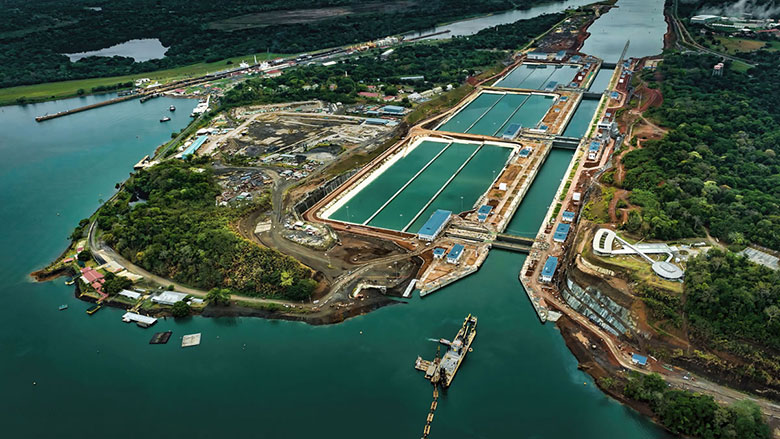
PANAMA CITY: The Panama Canal marked 112 years of operations this past weekend while maintaining a forward-looking vision aimed at strengthening its strategic role in global trade, ensuring sustainability, and generating benefits for the people of Panama. As a key artery of world commerce, the Panama Canal handles approximately 3% of global maritime trade.

The interoceanic waterway, inaugurated on August 15, 1914, and expanded in 2016 with the addition of the Neopanamax locks, connects 180 trade routes and 1,920 ports in 170 countries by facilitating the movement of cargo with an estimated annual trade value of USD 444 billion.

To enhance the Panama Canal’s competitiveness, increase the value generated by the route, and to create greater revenue opportunities for Panama, the canal is advancing its 2025–2035 Vision through a portfolio of strategic projects aimed at transforming the waterway from a maritime transit route into a world-class logistics, energy, and services platform.

Among these initiatives are the Corozal container transshipment terminal on the Pacific side and the Telfers terminal on the Atlantic side. Both projects are intended to expand Panama’s container transshipment capacity and strengthen its international connectivity. The portfolio also includes the Energy Corridor, which envisions an approximately 76-kilometer pipeline connecting terminals situated on both oceans for the transportation of propane, butane, and ethane.

Operational Results

As these strategic projects move forward, the Panama Canal continues to provide positive operational results, reflecting growing demand for its services.

Between October 2025 and July 2026, the Panama Canal recorded 10,623 transits by deep-draft vessels, a 6.12% increase compared with the 10,010 transits recorded during the same period of fiscal year (FY) 2025. This represents 613 additional transits and demonstrates stronger demand for the interoceanic route during the first ten months of FY2026.

Among the deep-draft vessels that transited the canal during this period, 2,990 were Neopanamax vessels and 7,633 were Panamax vessels. These figures underscore the Panama Canal’s sustained level of activity and its capacity to meet the evolving needs of the maritime industry.

El Niño

This year, the Panama Canal is also addressing the challenges posed by climate variability associated with the El Niño phenomenon through the implementation of operational water-saving measures as well as adjustments to the maximum authorized draft for Neopanamax vessels.

Responsible water management remains a strategic priority for the Panama Canal. Accordingly, the canal continues to closely monitor evolving climate conditions amid a significant increase in the likelihood that the effects of El Niño will intensify in the coming months.

The Panama Canal recently began implementing the necessary measures early to protect water resources and to ensure the continuity of operations.

As part of this proactive strategy, the Panama Canal began implementing water-saving measures at its locks in late 2025 and took advantage of relatively favorable conditions during this year’s dry season to strengthen water reserves in the Gatun and Alhajuela reservoirs.

Adjustments have also been made to the maximum authorized draft for vessels transiting the Neopanamax locks. The maximum draft will be reduced to 48 feet (14.63 meters) effective August 26 and further to 47.5 feet (14.48 meters) as of September 3.

These adjustments are based on current water levels and projections for Gatun Lake over the coming weeks and are part of the Panama Canal’s broader water and operational management strategy to ensure the long-term sustainability of its operations.

In addition, the canal continuously monitors lake levels and makes planned operational adjustments to ensure safe navigation and maintain reliable service.

PM Modi urges MSMEs to leverage FTAs, take Indian products to global markets

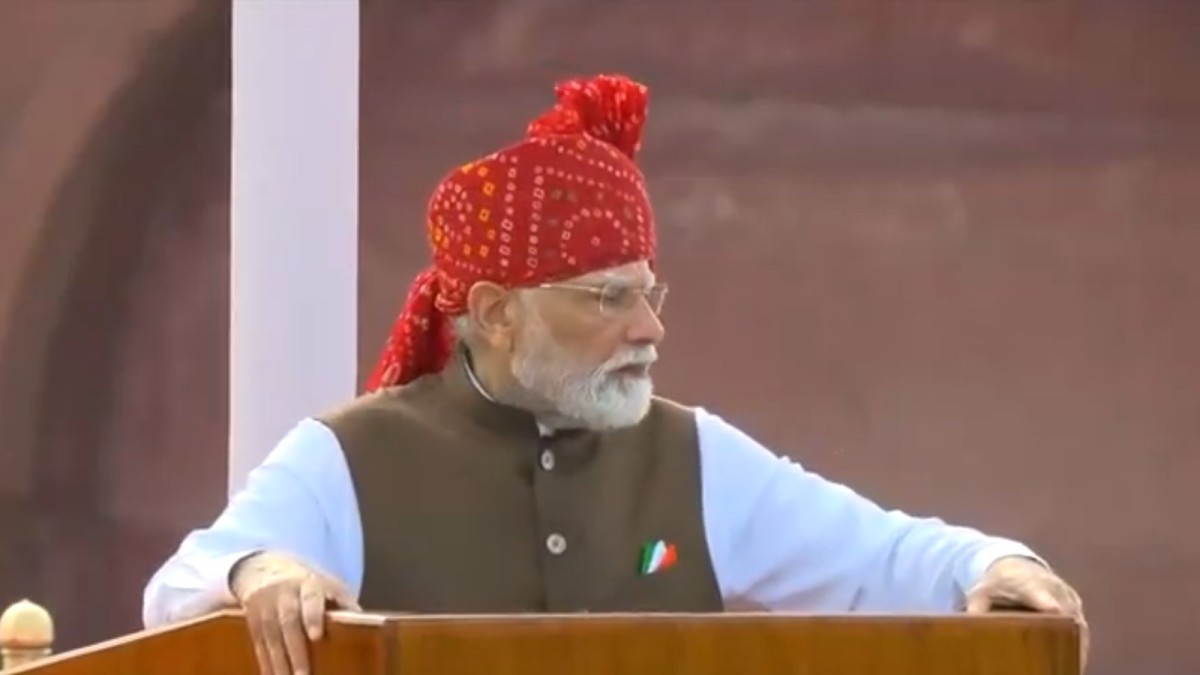
NEW DELHI : India‘s micro, small and medium enterprises (MSMEs) should seize opportunities created by the country’s free trade agreements (FTAs) and ensure that Indian products, including textiles, machinery, medicines and seafood, reach global markets, said Prime Minister Shri Narendra Modi on Saturday, while addressing the nation on the occasion of India’s 80th Independence Day.

PM Modi said India’s growing global standing and the FTAs signed with around 40 countries since 2014 have created a major opportunity for domestic businesses, particularly MSMEs. He called on them not to miss the opportunity and stressed the need for Indian products to meet global standards.

“We have to reach the world. Everything that India produces should reach the world market,” PM Modi said, adding that sectors such as textiles, machinery and pharmaceuticals have significant potential to expand their global footprint.
He said India’s textile industry, from Ludhiana in Punjab to Tirupur in Tamil Nadu, could expand its presence globally, while the country’s fisheries and seafood sector could also benefit from greater export opportunities created by FTAs.
PM Modi, however, said Indian businesses would have to meet global parameters and deliver products of the highest quality to compete internationally.

The Prime Minister also called for India to set more ambitious goals for building globally competitive companies and brands, arguing that the country’s economic rise should translate into greater representation among the world’s leading businesses.

“Why shouldn’t India have 50 companies” in the Fortune 500 in the coming decade, he asked, while also setting out ambitions for an Indian bank to feature among the world’s top five banks. He said India should also aim to have one or more pharmaceutical companies among the world’s top five and develop globally leading firms in areas such as law, ratings, consulting and accounting.

PM Modi said India has the talent, capabilities, linguistic strength and a long history to compete globally, and urged businesses to leverage these strengths to build internationally recognised brands. “India’s technology companies should be a scoreboard in the world,” he said, stressing that creating global brands should be a national goal.

He also highlighted India’s stable political mandate, vibrant democracy, strong judicial system and constitutional framework, saying these factors have contributed to the country’s growing recognition and respect globally.

Source: ANI