Home Blog Page 157

All India Seafarer Union raises concern over C1/D Visa Refusals, seeks fair consideration for Indian Seafarers

NEW DELHI: The All India Seafarer Union has raised concerns over the growing number of C1/D visa refusals faced by Indian seafarers seeking employment aboard cruise ships, urging Embassies and Consular Authorities to ensure that genuine seafarers and legitimate maritime employers receive fair and thorough consideration during the visa process.

The Union said it has been receiving a large number of queries from both newly qualified and experienced Indian seafarers who have secured or pursued cruise ship employment but subsequently faced refusal of their C1/D visas. According to the Union, such refusals can have consequences extending well beyond a single employment opportunity, potentially affecting a seafarer’s future career prospects.

India is among the world’s largest suppliers of qualified seafarers to the global maritime industry, with thousands of Indian maritime professionals serving on vessels across international waters. For seafarers seeking employment with cruise companies, obtaining the appropriate C1/D visa is an important component of the process, particularly when their duties require them to join vessels in foreign ports.

The Union highlighted that a visa refusal may become part of an applicant’s visa history and could create difficulties when the seafarer subsequently applies for employment with other cruise companies. This, it said, can place qualified maritime professionals in a difficult position even when the refusal does not necessarily reflect their professional competence or genuine employment intentions.

Call for Thorough Verification

In its appeal, the All India Seafarer Union has urged concerned Embassies and Consular Authorities to carefully verify genuine employment offers, cruise company documentation and recruitment-related documents before arriving at a decision on a seafarer’s visa application.

The Union has also called for applicants to be asked relevant questions concerning their proposed employment, vessel, position, joining arrangements, employer and purpose of travel. It believes that a more detailed understanding of the applicant’s employment circumstances could help distinguish genuine seafarers from cases involving incomplete or questionable documentation.

The Union further appealed that, wherever appropriate, candidates should be given a fair opportunity during the visa interview to explain their employment, supporting documents and travel arrangements.

Protecting Legitimate Maritime Careers

The Union stressed that a genuine seafarer should not be unnecessarily prevented from pursuing future international employment opportunities because of a visa refusal that may not accurately reflect the individual’s professional qualifications or genuine employment intentions.

“Seafarers are essential workers,” the Union noted, emphasising that their careers and livelihoods are closely linked to international employment opportunities and the ability to join vessels at designated ports around the world.

The issue assumes added significance as India’s maritime workforce continues to play a major role in meeting the global demand for skilled seafarers. Any disruption in the ability of qualified Indian professionals to access legitimate overseas employment can have implications not only for individual careers and families but also for India’s contribution to the international maritime workforce.

Balancing Security with Fair Opportunity

While raising its concerns, the All India Seafarer Union acknowledged and respected the authority of Embassies and Consular Officers to make visa decisions in accordance with applicable immigration laws, regulations and security procedures.

At the same time, it appealed for a balanced approach in which genuine Indian seafarers and legitimate maritime employers receive appropriate scrutiny and fair consideration. The Union’s appeal seeks to ensure that immigration compliance and security requirements remain fully protected while genuine maritime professionals are not unnecessarily deprived of legitimate employment opportunities.

The Union concluded its appeal with a broader call to safeguard employment opportunities for Indian seafarers while maintaining the highest standards of immigration compliance and security.

The issue highlights the importance of a transparent, thorough and employment-focused visa assessment process for maritime professionals, particularly at a time when Indian seafarers continue to remain an important component of the global shipping and cruise industry.
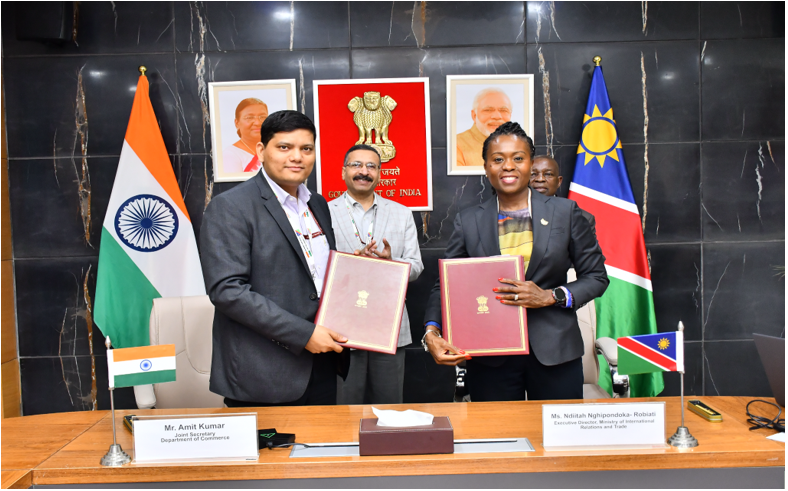

Fourth session of the India-Namibia Joint Trade Committee held in New Delhi

NEW DELHI : The Fourth Session of the India-Namibia Joint Trade Committee (JTC) was held in New Delhi on 10 and 11 August 2026. The Indian delegation was led by Shri Amit Kumar, Joint Secretary, Department of Commerce, Ministry of Commerce and Industry, and the Namibian delegation by Ms. Ndiitah Nghipondoka-Robiati, Executive Director, Ministry of International Relations and Trade, Government of the Republic of Namibia. The Agreed Minutes of the Session were signed by the two Co-Chairs on 11 August 2026. The inaugural address was delivered by Shri Yashvir Singh, Additional Secretary, Department of Commerce.

Both sides underlined the need to move bilateral trade beyond a raw-material-based composition towards value addition within Namibia, and to translate discussions into concrete mechanisms with defined timelines and assigned responsibilities.

Key Highlights

Trade performance: Bilateral merchandise trade rose to USD 592.94 million in 2025-26 from USD 568.40 million in 2024-25, with India’s exports at USD 349.09 million and imports at USD 243.85 million. Trade in services grew by 7.34 per cent to USD 380 million in calendar year 2024.
Sectoral growth: India’s engineering exports grew by 124.06 per cent to USD 30.24 million, led by motor vehicles and components. Exports of pharmaceuticals and medical devices reached USD 36.50 million, India being Namibia’s second-largest pharmaceutical source with a 16.4 per cent share.
Investment focal points: Invest India and the Namibia Investment Promotion and Development Board designated as JTC investment focal points, with a named official on each side.
Services Working Group: A dedicated Services Working Group to be constituted, meeting no later than February 2027 and submitting its work plan to the JTC.
Health and pharmaceuticals: First Joint Working Group under the Memorandum of Understanding on Cooperation in the Field of Health and Medicine to be convened by December 2026; the Janaushadhi cooperation agreement with HLL Lifecare Limited at an advanced stage of finalisation.
Critical minerals: Structured cooperation identified across exploration, offtake, processing and downstream beneficiation in lithium, graphite, copper, cobalt and rare earth elements, in line with Namibia’s priorities of value addition and local employment creation.
Gems and jewellery: Namibian participation invited in India’s Special Notified Zones at Surat and Mumbai and in the India Rough Gemstones Sourcing Show, together with training support in diamond cutting, polishing and jewellery design.
Digital cooperation: Continued rollout of the instant payment system built on India’s Unified Payments Interface, unveiled in Namibia as “WayaMe” on 15 June 2026, with proposals for a FinTech Cooperation Framework between the Reserve Bank of India and the Bank of Namibia.
Energy and infrastructure: Cooperation identified in railways and rolling stock, solar and wind power, battery storage, transmission, green hydrogen, biofuels and desalination.
India-SACU PTA: Terms of Reference finalised and scheduled for signature on 12 August 2026, with negotiations to commence within one month of signature and to conclude within one year.
The Joint Trade Committee is the principal bilateral institutional mechanism for reviewing trade, investment and economic cooperation between the two countries. Cooperation was also taken forward at the Session in agriculture and food security, MSMEs, textiles, tourism and sports. The discussions were held in a friendly and cordial atmosphere, reflecting the traditional bonds of friendship between the two countries. The Fifth Session of the JTC will be held in Namibia in 2028 on dates to be mutually agreed through diplomatic channels.

GeM strengthens participation of MSMEs, startups, women entrepreneurs and SHGs

NEW DELHI : The number of MSMEs, start-ups, women entrepreneurs and Self-Help Groups (SHGs) registered on the Government e-Marketplace (GeM), category-wise, as on 30th July, 2026, is as below:

Seller GroupAll IndiaKarnatakaBengaluru
MSMEs11,75,00155,05316,091
Startups37,7582,7721,951
Women Entrepreneurs2,17,15510,8963,052
SHGs3,78426609

Yes, procurement from MSMEs through GeM has increased during the last five years. The details of procurement from MSMEs through GeM during the last five financial years are as under:

FYTotal Order Value (₹ in Cr)MSME Order Value (₹ in Cr)Proportion of Procurement
FY21-221,06,59759,0330.554
FY22-232,01,31797,3320.483
FY23-244,03,5691,90,4850.472
FY24-255,41,6021,95,9760.362
FY25-265,02,7762,37,2350.472

GeM has started utilising AI/ML based analytical models to identify suspicious procurement patterns, including potential buyer-seller collusion, abnormal pricing and repeated participation patterns. These models help in identifying cases pertaining to Order Splitting, suspected Buyer Seller Collusion based on the similar digital footprints, Bidder’s qualification ratio, procurement prices vis-a-vis product median prices etc. The cases flagged through these analytical tools are made accessible to the concerned authorities within the buyer organizations for further review and necessary action.

GeM tries to leverage upon the Competition Commission of India (CCI) toolkit to identify any suspected cartels, based on the bidder’s digital footprints, like IP address, bid pricing, submission timings etc. GeM has established an Incident Management framework under which violations relating to submission of false documents, fraudulent practices, collusive behaviour and other misconduct are examined and appropriate administrative action, including suspension, and other measures as per GeM policies, are regularly taken.

The number of sellers suspended during the last three financial years and are as under:

FYIncident RaisedSeller Suspended
2023-241,96,79372,902
2024-251,96,80362,091
2025-261,81,03555,772

The main reasons for suspension include:

Listing the products/services in wrong category or with wrong specifications.
Unreasonable offer price
Delay in Delivery as per contract
Refuses to supply products/services after placement of contract.
GeM has implemented multiple safeguards to strengthen vendor verification and procurement integrity, including the following:

GeM has a fully online vendor registration process.
GeM has deployed advanced analytics tools to detect procurement anomalies such as order splitting, suspicious bidding, abnormal pricing and potential collusion, with flagged cases reflected on primary buyer’s dashboards for action.
Anti-competitive behaviour or cartel formation is classified as a Severe/Grave deviation under GeM’s Incident Management framework, with proven cases attracting suspension of up to 365 days.

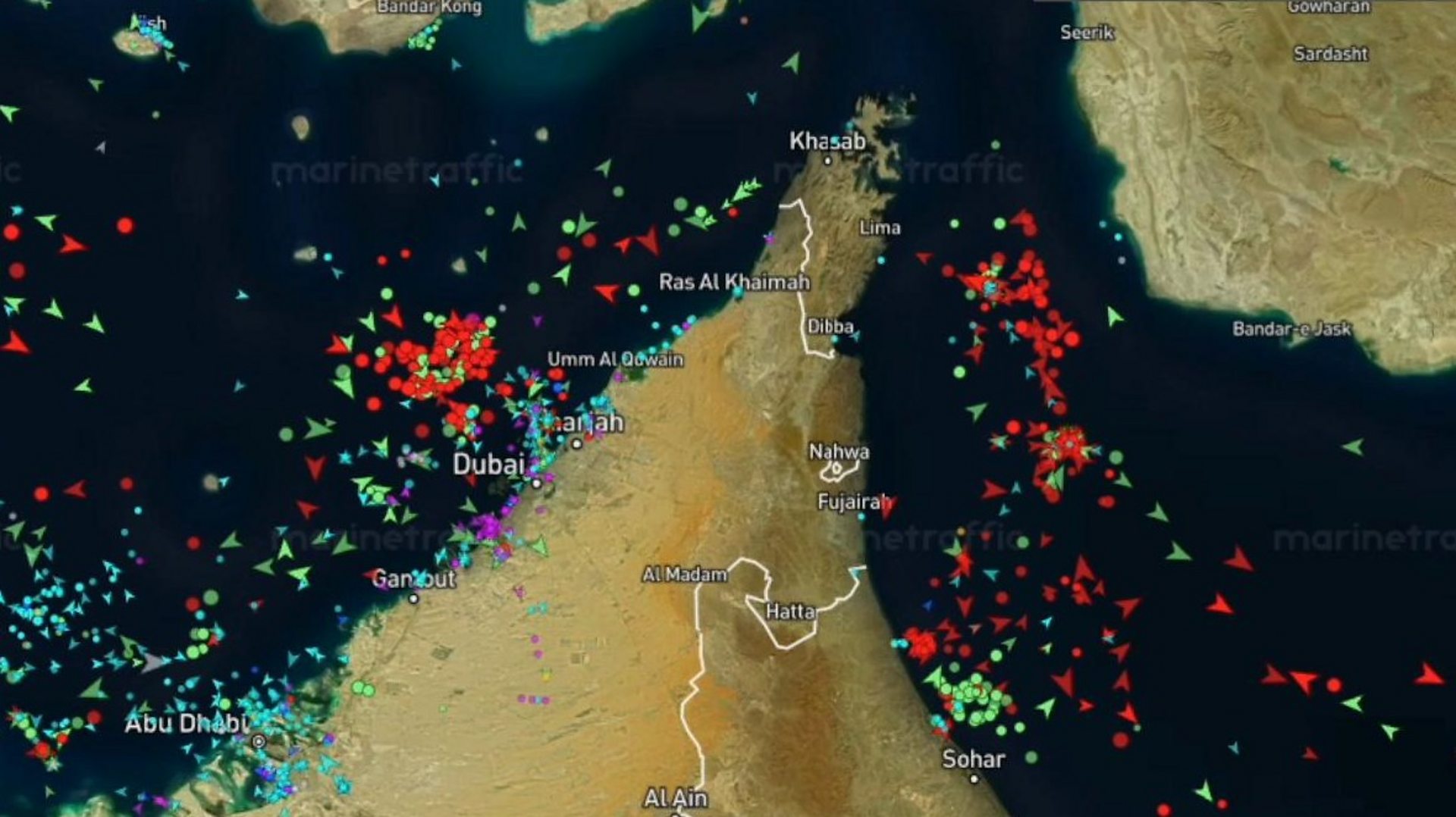
6 Ships cross Hormuz, down from 140 in pre-war days amid US-Iran deadlock

LONDON : Shipping traffic through the Strait of Hormuz fell to six on Monday, compared with a 10-day average of about 11 vessels, shipping data showed, amid fading hopes of a peace deal between the US and Iran.

Four commodity vessels, including two empty oil product tankers, entered the waterway, data from Kpler showed on Tuesday as of 0420 GMT. Two vessels – a small tanker laden with liquefied petroleum gas and another carrying residual fuels – exited the Strait, the data showed.

In pre-war days, about 130 to 140 ships typically transited the strait.

On Monday, 25 vessels transited the Bab el-Mandeb strait on the Red Sea, broadly unchanged when compared with the 10-day average of nearly 24 ships, Kpler data showed.

US President Donald Trump on Monday responded to Iran’s conditions for a peace deal by laying out his own demands that Iran pay compensation for people killed in wars, attacks and protests.

6 Ships Cross Hormuz, Down From 140 In Pre-War Days Amid US-Iran DeadlockFour commodity vessels, including two empty oil product tankers, entered the waterway, data from Kpler showed on Tuesday as of 0420 GMT.

Shipping traffic through the Strait of Hormuz fell to six on Monday, compared with a 10-day average of about 11 vessels, shipping data showed, amid fading hopes of a peace deal between the US and Iran.

Four commodity vessels, including two empty oil product tankers, entered the waterway, data from Kpler showed on Tuesday as of 0420 GMT. Two vessels – a small tanker laden with liquefied petroleum gas and another carrying residual fuels – exited the Strait, the data showed.

The proposal was a response to Tehran’s demands for compensation and an end to sanctions. The Iranian demands were largely in line with the terms of a preliminary peace deal signed in June, which has since broken down.

Since the war began in February, Trump has repeatedly swung between threats of escalation and assertions that a peace deal is close.

Source: Reuters

Yemen claims 6 killed in Houthi “double-tap” strike on ship in Red Sea’s Bab al-Mandeb Strait

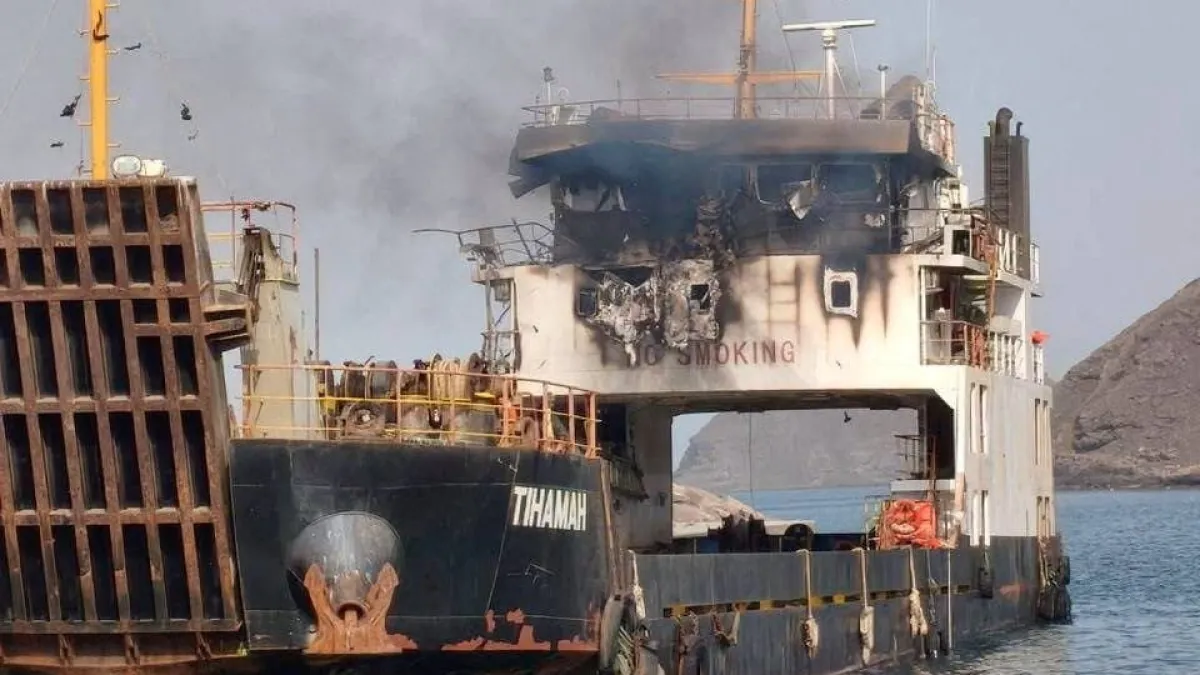
ADEN: Atleast six people were killed in a “double-tap” missile strike on a commercial vessel in the Red Sea’s Bab al-Mandeb Strait, the Yemeni government said, blaming Iran-backed Houthi rebels for the attack, CNN reported.

According to the Ministry of Transport of Yemen‘s internationally recognised government, the Houthis fired three ballistic missiles at the Tihamah, a small cargo ship transporting food.

The strikes sparked a fire that killed four crew members, three Pakistanis and one Indonesian and injured four other crew members and one rescue worker, the ministry said, CNN reported.

It added that the Houthis struck the vessel a second time after a search and rescue operation began, in what it described as an attempt to “endanger the lives of all onboard, including the rescue teams”.

The Yemeni Coast Guard later confirmed that two of the dead were rescue workers.

There was initial confusion over the ship’s ownership. Yemeni officials and marine intelligence group Marisks first reported a Saudi-owned vessel was hit. However, data from MarineTraffic shows the Tihamah is sailing under the Tanzanian flag and is owned by companies registered in Egypt and Yemen.

Meanwhile, the newly announced Mecca Joint Defence Agreement between Pakistan, Turkiye and Saudi Arabia appears to have failed its first major test after the Iran-backed Houthi rebels from Yemen struck an Aramco refinery in Jazan, with the newly formed alliance offering no visible military response or threat to the attack, said an analysis written in the Jerusalem Post.

The fire at the Aramco refinery in Jazan began on Sunday morning, with Houthi military spokesman Yahya Saree stating that the group had targeted the facility with a drone in retaliation for Saudi drone operations over Saada and Hajjah governorates.

Saudi Arabia’s Energy Ministry later confirmed the fire and said it had been extinguished.

Source: ANI

Houthis claim attacks on Saudi oil facility and Yemeni Port

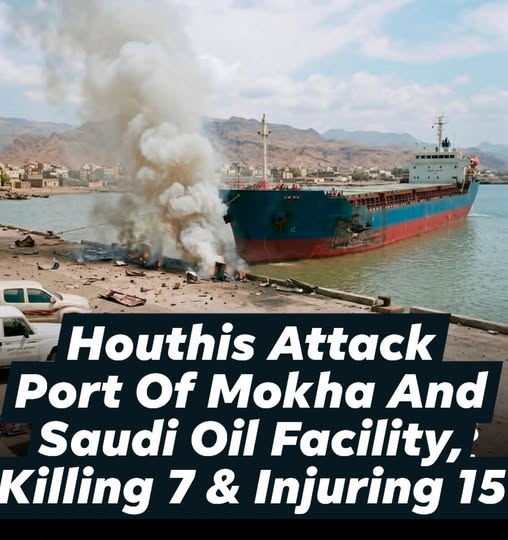
SANAA : Yemen’s Houthis attacked a crucial port on the Red Sea, killing people and further escalating the conflict over strategic waterways in the Middle East. They also said they attacked an oil facility on Sunday in southwestern Saudi Arabia, the latest attack by the Iranian-backed rebels on the kingdom.

Meanwhile, Iran has made new demands about the restart of negotiations and the reopening of the Strait of Hormuz, the Pentagon is pressing the US defence industry to accelerate production of weapons, and Israel is insisting it won’t withdraw from Gaza until Hamas disarms.

The National Resistance Forces, a Yemeni government-allied force, said at least seven people four troops and three civilians were killed, and 15 civilians were injured in the Houthis’ attacks Sunday on Mokha, a crucial port on the Red Sea.

Fayed al-Noman, assistant undersecretary of the information ministry, said the Houthis fired missiles and drones on the port, severely damaging its buildings and pier as well as commercial goods and food supplies at the facility.

Mokha is one of the main ports under Yemen’s internationally recognised government, renovated in recent years to handle shipping that avoids the Houthi-held ports in Hodeida.

The Houthis later claimed the attack, saying they fired “a large number of ballistic missiles and drones” that targeted military enforcement and warehouses in the area.

Yahya Saree, a military spokesperson for the Houthis, said they also targeted an Aramco refinery in the city of Jazan with a drone. The attack was in response to Saudi drones’ breaching Yemen’s airspace over the provinces of Hajjah and Saada, he said.

Early on Sunday, the Saudi Energy Ministry reported a fire at a facility belonging to the Aramco refinery without casualties. The ministry said the fire was extinguished, but it didn’t describe its cause.

Sunday’s Houthi attack is the latest in a series of missile and drone attacks that have targeted Saudi Arabia and its shipping in the Red Sea.

The escalation threatens to reignite Yemen’s civil war more than four years after a 2022 truce stopped major fighting in the impoverished Arab country.

The Houthis claimed responsibility for the attack, saying they had fired a large number of ballistic missiles and drones at military forces and warehouses.

Mokha is one of the main ports controlled by Yemen’s internationally recognised government. The port has been renovated to handle shipping that avoids the Houthi-controlled port of Hodeida.

The Houthis said they were targeting Saudi-backed troops and military equipment near the city.

The attack comes more than four years after a 2022 truce brought major fighting in Yemen to an end.

Mokha’s location on the Red Sea also gives the attack significance for maritime security. Yemen lies near the Bab el-Mandeb Strait, an important route connecting the Red Sea with the Gulf of Aden.

Houthi military spokesperson Yahya Saree said the group also targeted an Aramco refinery in the Saudi city of Jazan with a drone.

Saree said the attack was carried out in response to Saudi drones allegedly entering Yemen’s airspace over the provinces of Hajjah and Saada.

Saudi Arabia’s Energy Ministry reported a fire at a facility belonging to the Aramco refinery early on Sunday.The ministry said the fire was extinguished and that there were no casualties. It did not say what caused the fire.

The Houthi attack on the Saudi facility took place on the same day as the missile and drone attack on Mokha.

Mokha has been renovated to handle vessels avoiding Hodeida, which is under Houthi control. Damage to its buildings, pier and cargo could affect the port’s operations, although the supplied information does not give details of any vessel diversions or wider commercial losses following Sunday’s attack.

The Houthis have also sought to control shipping around the Bab el-Mandeb Strait, adding to concerns over the movement of oil and other cargo through the region. Iran’s Foreign Minister Abbas Araghchi said negotiations with Oman about “new maritime routes” through the Strait of Hormuz were “in the final stages.”

“This, however, does not mean that the Strait of Hormuz will reopen,” Araghchi told reporters in Tehran on Sunday. “An agreement on the routes may be reached, but reopening the strait is subject to a number of other conditions, which have been conveyed through intermediaries.”

Iran’s powerful Supreme National Security Council has said the Strait of Hormuz will not open until the US “corrects its behaviour,” issuing new demands that could shake up talks on a deal to manage the waterway.

The demands include the US never threatening Iran again, a permanent end to the war with Iran and its armed allies in the region, a lifting of the naval blockade of Iranian ports and a withdrawal of its military from the area, according to the statement by the supreme council’s secretary, Mohammad Bagher Zolghadr, published by Iran’s state broadcaster.

According to the US Central Command, the blockade has redirected 53 commercial vessels, disabled two, and boarded two through Saturday.

About overall negotiations, Araghchi said that an “exchange of messages through intermediaries” is continuing with the United States, but that doesn’t constitute negotiations.

“From our perspective, negotiations cannot resume until the violations of the memorandum of understanding have ended and the United States has remedied the provisions of the memorandum that it violated,” he said.

Davies Turner offers express container service between China and the UK via Northern Sea Route

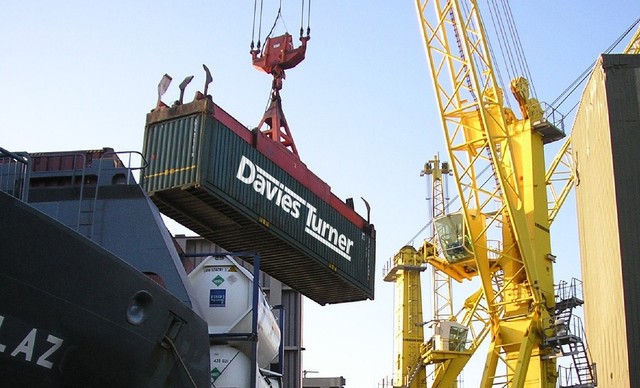
LONDON: Davies Turner, one of the UK’s largest independent freight and logistics providers, is offering a new seasonal Full Container Load (FCL) shipping service between China and the UK via the Northern Sea Route, utilising the sailings provided by the Sea Legend shipping company.

Operating between August and October 2026, Davies Turner’s new Polar Silk Road service will provide importers with an alternative to conventional ocean, rail and air freight. 

Operating to an almost weekly frequency, the service will offer a transit time of just 21 days from Ningbo to Felixstowe, significantly reducing lead times compared with traditional ocean freight while remaining more cost-effective than rail and air services.

The seasonal programme has been developed to help businesses improve supply chain agility during the peak shipping season by providing a faster ocean solution without the premium cost associated with air freight.

The service will see Davies Turner consolidates cargo from six major Chinese ports, including Dalian, Fuzhou, Nansha, Qingdao, Shanghai and Taicang at Ningbo before sailing directly to Felixstowe. From there, containers can be distributed efficiently to destinations throughout the UK and Europe via Davies Turner’s extensive logistics network.

Unlike conventional Far East-Europe services that transit the Suez Canal or route around the Cape of Good Hope, the Polar Silk Road travels via the Northern Sea Route, dramatically shortening the sailing distance and reducing overall transit times during the Arctic navigation season.

“Global supply chains continue to demand greater flexibility and resilience,” said Tony Cole, head of ocean for Davies Turner. 

“By offering this seasonal Northern Sea Route service, we are expanding the multimodal options available to our customers. The Polar Silk Road provides an excellent solution for time-sensitive shipments that need to arrive faster than conventional ocean freight but without the higher costs associated with air transport.”

The launch forms part of Davies Turner’s ongoing investment in its China origin network and reinforces the company’s commitment to providing innovative, multimodal freight solutions that enable customers to optimise both transit times and transport costs.

The Polar Silk Road service will operate on an eight-week sailing programme during the Arctic shipping season from August through October 2026.

DHL Express launches direct Shanghai-Bangkok flight to support growing trade flows across China and Indochina

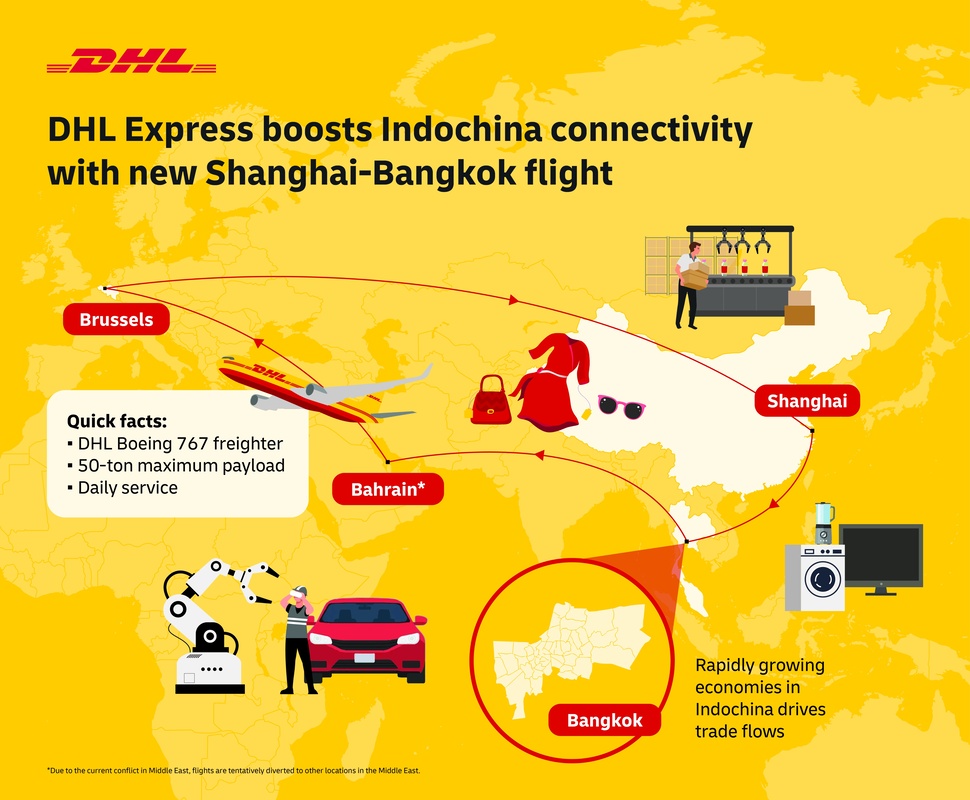
SINGAPORE: DHL Express has added a new direct flight between Shanghai and Bangkok, increasing capacity on a trade lane linking China and the rapidly growing economies of Indochina. The new flight route, Shanghai-Bangkok-Bahrain*-Brussels-Shanghai, significantly enhances connectivity among manufacturing, sourcing, and consumption markets across Asia, the Middle East, and Europe.

Operated by a DHL Boeing 767 freighter with a maximum payload of 50 tons, the new daily service demonstrates DHL Express’s ongoing investments in network capacity and infrastructure to strengthen connectivity for customers in high-growth markets. Equally, it also reflects DHL’s constant review of evolving trade patterns and swift action to adapt to those changes.

“This route is a direct response to how trade flows in Asia are shifting,” said Peter Bardens, Senior Vice President for Network Operations & Aviation – Asia Pacific, DHL Express. “We’re seeing increasing movement of goods between China and Southeast Asia, alongside continued demand from customers in Europe and the Middle East for products manufactured across the region. This new route boosts our network where customers need it most, providing additional capacity and more direct connections between key production and consumption markets.”

Bangkok serves as a strategic gateway to the Indochina region, while Bahrain and Brussels are key DHL Express hubs. The introduction of the Shanghai-Bangkok route enables DHL Express to efficiently consolidate shipments originating from China and Southeast Asia before connecting them to destinations across Europe and the Middle East.

The direct flight comes at a time when manufacturers and traders in markets such as Thailand, Vietnam, Cambodia and Laos are sourcing more from China. For many customers, those shipments are part of production chains that stretch across multiple countries. As trade links between China and Southeast Asia deepen, DHL Express is improving speed, flexibility and network resilience for customers moving materials, components and finished products across Asia and onward to global markets. Last month, DHL Express also expanded its Shenzhen gateway, located at Shenzhen Bao’an International Airport. The facility can handle 900 tons of cargo daily – approximately three times the original throughput – as it supports booming cross-border trade and e-commerce shipments in China.

At the same time, businesses in Europe and the Middle East continue to trade heavily with their peers in China and Southeast Asia for a wide range of products, from electronics and industrial components to consumer goods. As international business activity remains highly dispersed across global markets rather than concentrating within regions, the new route opens more trading opportunities for businesses while strengthening access for both regions.

As both intra-Asia and global trade flows continue to show resilience, DHL remains focused on investing in its dedicated air network. Another recent example includes the introduction of a new transpacific service by DHL Global Forwarding that connects Southeast Asia and the United States. These expansions seek to better connect businesses to global markets as well as build more agile supply chains.

Lloyd’s Register strengthens offshore energy capabilities with senior APAC appointment

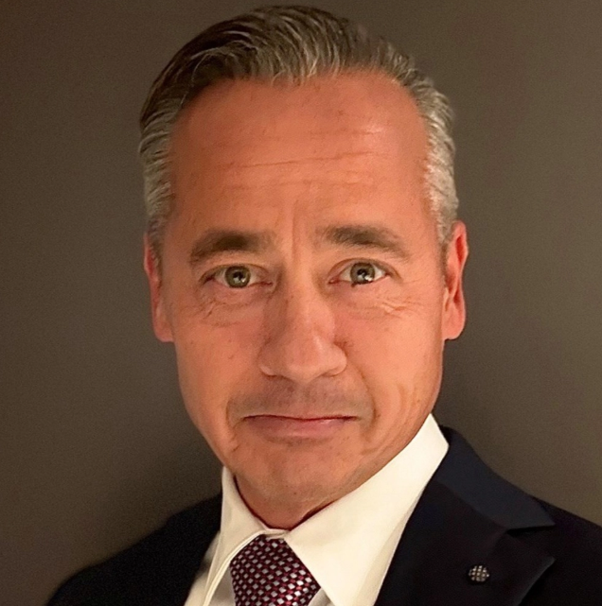
LONDON: Lloyd’s Register (LR) has appointed Wouter Pattynama (Pic above) as Executive Client Solutions Manager, Offshore, strengthening its offshore energy expertise and expanding support for clients across Australia, New Zealand and the wider Asia-Pacific region.

Based in Perth Western Australia, Wouter brings nearly 30 years of international experience spanning maritime, offshore energy, and oil and gas. His appointment reinforces LR’s commitment to clients operating across offshore oil and gas, renewables, carbon capture and storage (CCS), and other emerging energy sectors.

Wouter joins LR from Australia’s offshore regulator, the National Offshore Petroleum Safety and Environmental Management Authority (NOPSEMA), where he held senior executive leadership roles overseeing offshore safety, environmental management and regulatory assurance. Over his career he developed deep expertise across the vessel lifecycle, from design to extension and eventual decommissioning.

Wouter will deliver assurance, compliance, risk management and technical advisory services to help clients improve safety, reliability and operational performance.

Offshore operators face tightening international regulation and the challenges of ageing assets while delivering digital transformation and decarbonisation initiatives. Wouter’s technical, operational and regulatory experience will help clients manage these evolving challenges safely.

Ian Crehan, LR’s Global Head of Energy Solutions, said: “Wouter’s appointment represents an important investment in our offshore energy capabilities across Australia, New Zealand and the wider APAC region. His unique combination of operator, technical and regulatory experience is rare within the industry and will bring significant value to our clients.

“As the energy sector evolves, organisations need trusted partners who understand both operations and how regulation affects operations. Wouter’s experience will help clients safely manage their risks and improve asset performance.”

Wouter Pattynama, LR Executive Client Solutions Manager, Offshore, said: “I join LR at an important time for the offshore energy industry. Across the region, operators must balance excellent operations against growing safety, sustainability and energy transition expectations.

“The energy industry recognises LR’s reputation for technical excellence, independent assurance and collaborative partnership, and I look forward to working closely with clients and stakeholders to help address their challenges, support innovation and deliver safe, reliable and sustainable outcomes across the offshore energy sector.”

The appointment supports LR’s strategy to expand its presence in key energy markets and offer clients the technical expertise, regulatory insight and independent assurance needed to succeed in a rapidly changing environment.

Lloyd’s Register launches industry-first framework for digital 3D model approval

New Guidance Notes give shipyards and designers a practical route to use intelligent 3D models during class approval

LONDON: Lloyd’s Register (LR) has published what it believes is the maritime industry’s first dedicated guidance for using digital 3D models in support of classification approval, marking a significant step towards digital-first ship design and review processes.

The new LR-GN-066 Guidance Notes for Digital 3D Models provide shipyards, designers and owners with a practical and structured framework for using intelligent 3D models in lieu of traditional 2D plans during the early stages of structural plan approval.

The publication reflects the growing use of digital design environments in modern shipbuilding, with 3D models becoming the primary source of engineering information across design, construction and manufacturing workflows.

While standards for 2D shipbuilding plans are well established, comparable guidance for the use of 3D models in classification approval has been largely absent. LR’s new Guidance Notes aim to bridge that gap, helping clients make greater use of digital assets they already create and maintain throughout a vessel’s lifecycle.

The guidance sets out how 3D models can be used to support the structural plan approval process and defines the characteristics such models should possess. It covers file formats, model organisation, metadata requirements, levels of structural detail, revision control and submission requirements, providing a consistent framework for both designers and class reviewers.

For shipyards and design offices already working in 3D environments, the Guidance Notes provide a clearer route for integrating those models into the approval process. Rather than creating additional digital assets solely for class review, the framework encourages the use of models that are already embedded within established design and manufacturing workflows, helping to reduce duplication and improve consistency between design, production and approval activities.

Use of the Guidance Notes is voluntary and non-prescriptive. Whilst the framework is intended to be applicable across a variety of software ecosystems, LR recognises that shipyards, designers and software providers may develop alternative methods, workflows and technologies capable of delivering equivalent or enhanced outcomes.

As maritime digitalisation advances, LR will continue to collaborate with shipyards, designers and software providers to test and adopt new digital approaches that improve the approval process while maintaining confidence in safety, quality and compliance.

João Estevens, Senior Specialist, Lloyd’s Register, said: “For many projects, the most complete representation of a vessel now exists in a digital model. By defining what information should be included, how it should be structured and how it can be reviewed, we are giving clients greater clarity on how to use those digital assets to support class approval and maximise the value of the work they are already doing.”

The publication forms part of LR’s work to support maritime digitalisation and gives shipyards and designers a clearer pathway to align classification activities with modern design and manufacturing practices. Models submitted under the framework can also be reviewed and managed through LR’s Digital Workbench platform.

The new Guidance Notes have been published as LR-GN-066 Guidance Notes for Digital 3D Models, July 2026 and are available through Regs4ships.