Home Blog Page 156

MoPSW approves ₹334.89 crore flyover at Visakhapatnam Port to ease cargo movement

NEW DELHI : The Ministry of Ports, Shipping and Waterways (MoPSW) has approved a ₹334.89-crore internal flyover at Visakhapatnam Port Authority to improve cargo evacuation, reduce traffic congestion and streamline movement within the port premises.

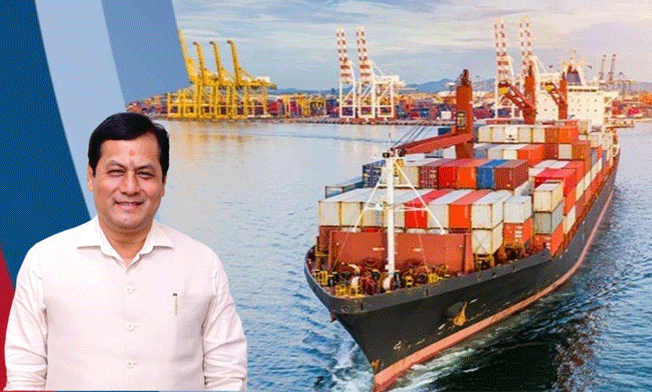
The project, approved by Union Minister for Ports, Shipping and Waterways Shri Sarbananda Sonowal, was appraised by the Delegated Investment Board (DIB) chaired by the Secretary, Ministry of Ports, Shipping and Waterways.

On the occasion, Sarbananda Sonowal said, “This project will remove a critical bottleneck at Visakhapatnam Port, enabling faster cargo movement and improving overall operational efficiency. We are committed to building modern, seamless and globally competitive port infrastructure under the leadership of Prime Minister Shri Narendra Modi.”

The proposed 3.584-km elevated corridor, connecting Convent Junction with the Dock Area, will separate road and rail traffic within the port. The project is aimed at addressing delays at nine major railway level crossings, which currently see about 18 gate closures a day due to high train exchange volumes.

The frequent closures contribute to congestion, longer vehicle waiting times, higher fuel consumption and increased vehicle operating costs, affecting the efficiency of cargo evacuation. By providing an elevated road corridor, the project will enable smoother movement of vehicles and cargo while reducing conflicts between road and rail traffic. The project will include associated civil and electrical works, utility shifting, safety installations and five years of maintenance. Construction will be planned to minimise disruption to ongoing port operations, particularly in critical dock areas.

Speaking on the occasion, Sarbananda Sonowal said, “Prime Minister Narendra Modi has transformed India’s maritime sector into a key driver of economic growth, self-reliance and national development. With stronger infrastructure, progressive reforms, modern technology and greater investment in our maritime capabilities, we are building a globally competitive and self-reliant maritime ecosystem that will power India’s journey towards an Atmanirbhar Bharat and a Viksit Bharat 2047.”

The investment is aligned with the Government’s broader focus on integrated infrastructure planning under the PM GatiShakti framework. By improving last-mile connectivity within the port and facilitating faster cargo evacuation, the elevated corridor is expected to strengthen Visakhapatnam Port’s role in India’s maritime logistics and trade network.

The project is scheduled for completion within 30 months of commencement.
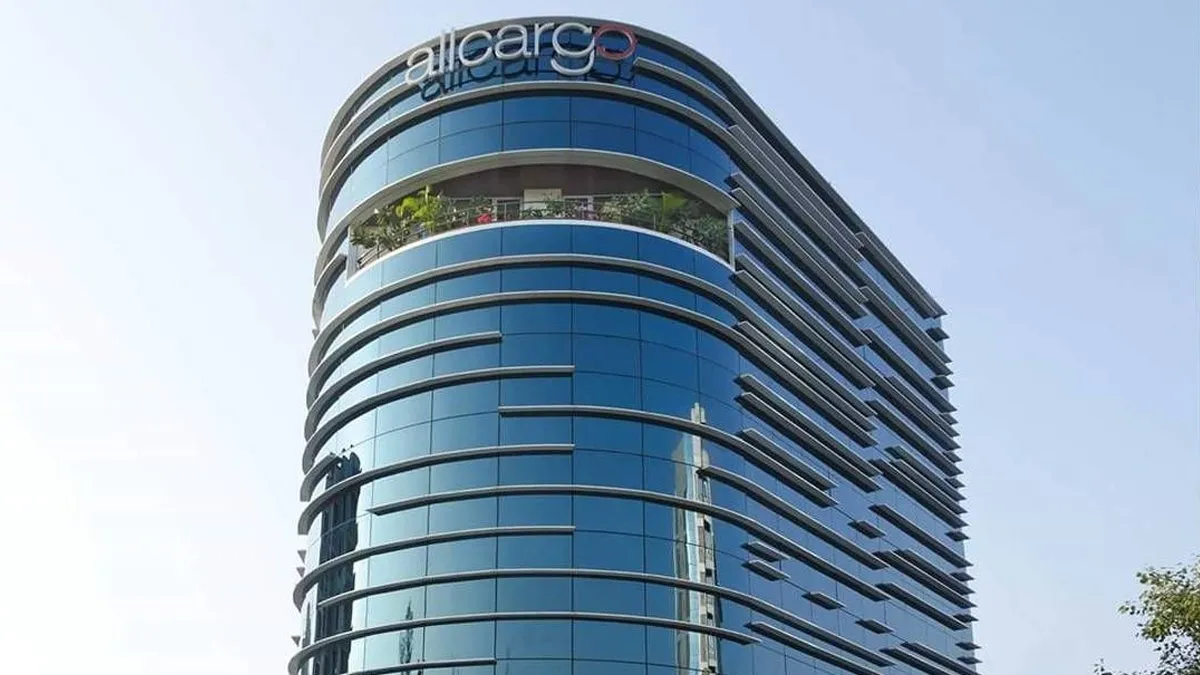
Allcargo enters New Governance Era as Shashi Kiran Shetty steps down; Dinesh Kumar Lal named Chairman

MUMBAI: Allcargo Group has reached a significant milestone in its multi-year corporate restructuring programme with the completion of the listing of Allcargo Global, paving the way for four independently listed companies with separate Boards and leadership structures.

The latest development marks the culmination of a restructuring exercise aimed at unlocking greater value from the Group’s diverse businesses while enabling each company to pursue a more focused strategic and operational agenda.

As part of the transition, Shashi Kiran Shetty, Founder and Chairman of Allcargo Logistics, has stepped down from the Board of Allcargo Logistics with effect from August 5, 2026. The company has appointed Dinesh Kumar Lal as Chairman of Allcargo Logistics, marking an important leadership transition as the company moves into its next phase of growth.

According to the company’s regulatory disclosure, Shetty’s resignation from the positions of Director and Chairman was attributed to “other commitments”. His departure from the Allcargo Logistics Board follows the successful completion of the Group’s restructuring and the listing of Allcargo Global.

The listing of Allcargo Global on the BSE and NSE on July 3, 2026, completed the Group’s transformation into four separately listed businesses. The restructured entities comprise Allcargo Global, focused on international supply-chain operations; Allcargo Logistics, focused on domestic supply-chain businesses; Allcargo Terminals, comprising container freight stations and inland container depots; and TransIndia Real Estate, which houses the Group’s real estate and logistics infrastructure interests.

The new structure is designed to give each business greater strategic independence, clearer accountability and dedicated leadership, while allowing management teams to concentrate on their respective markets and growth opportunities.

The appointment of Dinesh Kumar Lal as Chairman of Allcargo Logistics further strengthens the company’s independent governance framework. Lal, who was already associated with the company as a Non-Executive Independent Director, will now lead the Board at a time when Allcargo Logistics is seeking to build on its core domestic supply-chain businesses.

The leadership transition also comes at a significant operational juncture. Allcargo Logistics recently reported an improvement in its financial performance, with consolidated revenue from operations for the first quarter of FY2026-27 rising to approximately ₹546 crore from ₹491 crore in the corresponding quarter of the previous year. The company also moved into profit during the quarter compared with a loss in the year-ago period.

From Founder-Led Structure to Independent Businesses

The completion of the four-way restructuring represents a major evolution in the corporate architecture of the Allcargo Group.

For years, the Group built a diversified logistics and supply-chain platform spanning international freight forwarding, domestic logistics, container infrastructure and related real estate assets. The demerger and subsequent independent listings have now created a structure under which each business can operate with greater strategic clarity and access capital markets independently.

The move is expected to enable sharper decision-making, greater transparency and more focused capital allocation across the individual businesses.

The latest Board changes are therefore more than a leadership reshuffle. They reflect the next stage of Allcargo’s transformation—from a diversified group operating under a common corporate structure to a portfolio of independently governed listed companies, each with its own strategic priorities.

While Shashi Kiran Shetty has stepped down from the Board of Allcargo Logistics, the transition does not mark an exit from the broader Allcargo Group. The Group’s corporate profile continues to identify Shetty as Group Chairman, underlining the distinction between his position at the Group level and his former role at Allcargo Logistics.

With the four businesses now operating as independent listed entities and a new Chairman at the helm of Allcargo Logistics, the Group enters a new chapter focused on governance, accountability, operational performance and long-term value creation.

Allcargo Terminals posts Strong Q1FY27 Results

MUMBAI: Allcargo Terminals Limited (ATL) has announced its financial results for the quarter ended June 30, 2026. The company reported consolidated revenue of ₹214 crore in Q1 FY27, up 14.5% year-on-year from Q1 FY26. EBITDA rose to ₹47 crore, registering a 37.2% year-on-year growth. Volume has witnessed a healthy 7% year-on-year growth.

Summary of Consolidated Financial Results.

                                                                                                                                           (₹ in Cr)

Particulars(in ₹Crs)Q1FY27Q1FY26Y-o-Y(%)Q4FY26Q-o-Q(%)
Revenue21418714.5%2083.1%
EBITDA473537.2%447.8%
Profit Before Tax (PBT)1414–1035%

Suresh Kumar R, Managing Director, Allcargo Terminals Limited, said: “We have delivered a resilient performance in Q1 FY27, with EBITDA rising 37.2% and year-on-year revenue growing 14.5%. Our continued focus on yield management and operational efficiency across our CFS and ICD operations drove this growth. Despite the Middle East conflict, we achieved a healthy 7% rise in volumes.

Our capacity expansion plan remains firmly on track. The Farukhnagar PFT-ICD project remains on course, while other capacity expansion initiatives are progressing well in line with our three-year growth plan.

As India’s EXIM trade continues to gather pace, we remain committed to strengthening our infrastructure, further enhancing customer confidence, and playing an enabling role in the country’s evolving logistics ecosystem.”

About ALLCARGO TERMINALS LIMITED

Allcargo Terminals Limited (ATL) demerged from Allcargo Logistics, an India-born global leader in multimodal logistics solutions and is an independent entity listed in the Indian stock exchanges in August 2023. ATL offers India’s widest CFS networks and specializes in Container Freight Stations (CFS) and Inland Container Depots (ICD), operates at the strategic locations of Nhava Sheva JNPT, Mundra, Chennai, and Kolkata. Its best-in-class digital app and portal, myCFS enables contact-less CFS services. ATL adheres to unparalleled safety and security standards, including OHSAS, ISO and GSV (C-TPAT-compliant). ATL is dedicated to meeting diverse logistical needs and is well positioned to explore opportunities in terminals, including multimodal logistics parks and other ventures. Allcargo Terminals Ltd listed on the BSE Limited (Scrip Code- 543954) and The National Stock Exchange of India Limited (Scrip Code- ATL).

Haldia Dock Complex sets new Container Handling record with 2,612 TEUs on Single Vessel

HALDIA: Haldia Dock Complex (HDC) of Syama Prasad Mookerjee Port, Kolkata (SMPK) has achieved another significant milestone in container operations, setting a new record for the highest container interchange handled on a single vessel.

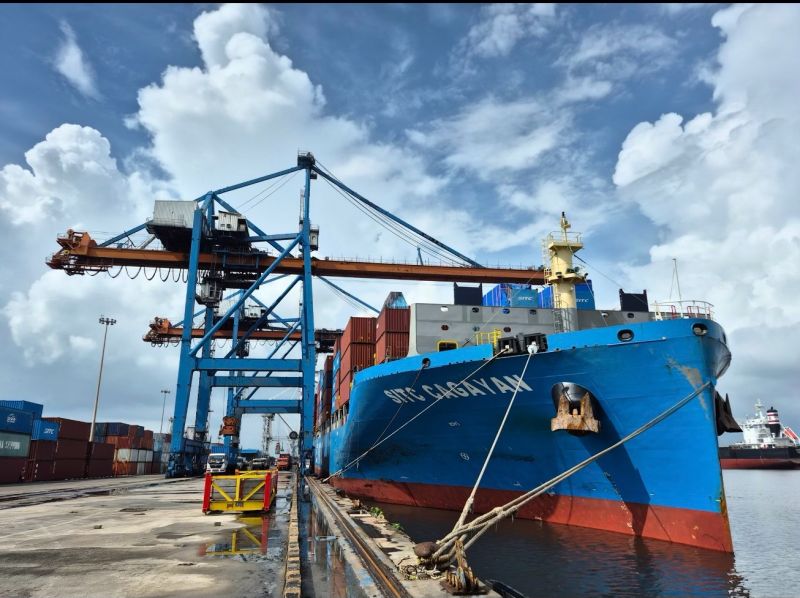
The latest record was achieved with SITC Cagayan (Voy. 2612S), which successfully interchanged an impressive 2,612 TEUs during its recent call at Haldia Dock Complex. The vessel sailed from HDC on August 12, 2026.

The achievement comes just days after HDC had set its previous benchmark of 2,583 TEUs, achieved on board SITC Makassar (Voy. 2612S) during its call at the complex on July 28–29, 2026.

With the latest performance, HDC has raised the benchmark from 2,583 TEUs to 2,612 TEUs—an increase of 29 TEUs in a single vessel call.

The back-to-back records underscore the growing operational efficiency and preparedness of Haldia Dock Complex, while highlighting the seamless coordination among the port team, terminal operator, shipping line and other stakeholders involved in the vessel handling operation.

The consistent ability to handle larger container parcels efficiently is also a positive indicator of HDC’s expanding capabilities in container operations and its growing importance in supporting the container trade in the region.

The achievement further strengthens confidence among shipping lines and cargo stakeholders in Haldia’s ability to deliver efficient and reliable vessel-handling services.

While individual records represent important milestones, the rapid succession of new benchmarks demonstrates a sustained improvement in operational performance. The latest achievement therefore marks more than just a new record—it reflects Haldia Dock Complex’s continued efforts to enhance productivity, optimise operations and strengthen its position in India’s maritime and logistics network.

With 2,612 TEUs now established as the new single-vessel container interchange benchmark, HDC has once again demonstrated its ability to push operational boundaries and set higher standards for the future.

Chennai Port inroduces Promotional Concession to boost Outer Anchorage Maritime Services

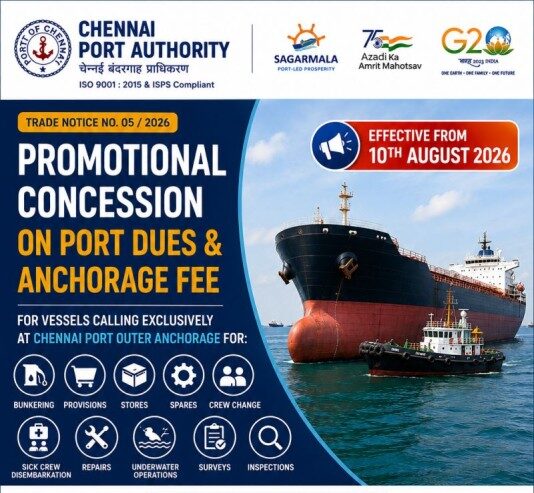
CHENNAI : Chennai Port Authority has introduced a major Promotional Concession Scheme on Port Dues and Anchorage Fee for vessels calling exclusively at Chennai Port Outer Anchorage for bunkering and other eligible maritime services. Effective from 10 August 2026, the initiative is aimed at positioning Chennai Port Outer Anchorage as an Integrated Offshore Maritime Services Hub, offering vessels a cost-effective and efficient alternative for essential maritime support services.

Under the new scheme, vessels calling exclusively at the Outer Anchorage for eligible services will be entitled to substantial concessions on applicable Port Dues and Anchorage Fee:

85% concession for vessels up to 50,000 GRT
90% concession for vessels above 50,000 GRT

The concession is designed to encourage more vessels to utilise Chennai Port Outer Anchorage for a wide range of ship-support and maritime services without requiring a conventional cargo-handling call.

Wide Range of Maritime Services Covered

The promotional initiative covers several essential services required by vessels during their voyages and port operations. These include bunkering, supply of provisions, stores and spares, crew changes, sick crew disembarkation, ship repairs, underwater operations, surveys and inspections, among other eligible maritime activities.

By facilitating these services at the Outer Anchorage, Chennai Port Authority seeks to strengthen the port’s role not only as a cargo gateway but also as a comprehensive maritime service destination for vessels operating along the East Coast and in the wider Indian Ocean region.

Strengthening Chennai as an Offshore Maritime Services Hub

The initiative is expected to enhance the attractiveness of Chennai Port Outer Anchorage for shipping lines, vessel operators, bunker suppliers, marine service providers and other maritime stakeholders. The substantial reduction in applicable Port Dues and Anchorage Fee can help lower the overall cost of obtaining essential ship services while enabling vessels to optimise operational schedules.

The development of an integrated offshore maritime services ecosystem can also create opportunities for greater participation by ancillary maritime service providers, supporting the growth of associated activities such as marine repairs, underwater inspection, ship surveys, technical support, crew services and vessel provisioning.

The scheme is particularly significant in the context of India’s growing maritime trade and the increasing demand for efficient, reliable and cost-competitive ship-support infrastructure. A well-developed offshore services hub can help improve vessel turnaround efficiency, support regional shipping operations and enhance the competitiveness of Chennai as a maritime destination.

With the promotional concessions now in effect, Chennai Port Authority is taking a strategic step towards expanding the range of services available to the shipping community and unlocking the potential of Chennai Port Outer Anchorage as a specialised offshore maritime services centre.

The initiative reinforces Chennai Port’s broader commitment to facilitating business-friendly maritime services, improving operational efficiency and strengthening the port’s contribution to India’s evolving maritime and logistics ecosystem.

V.O.C Port Authority joins “Har Ghar Tiranga” campaign, inspires maritime community to celebrate national pride

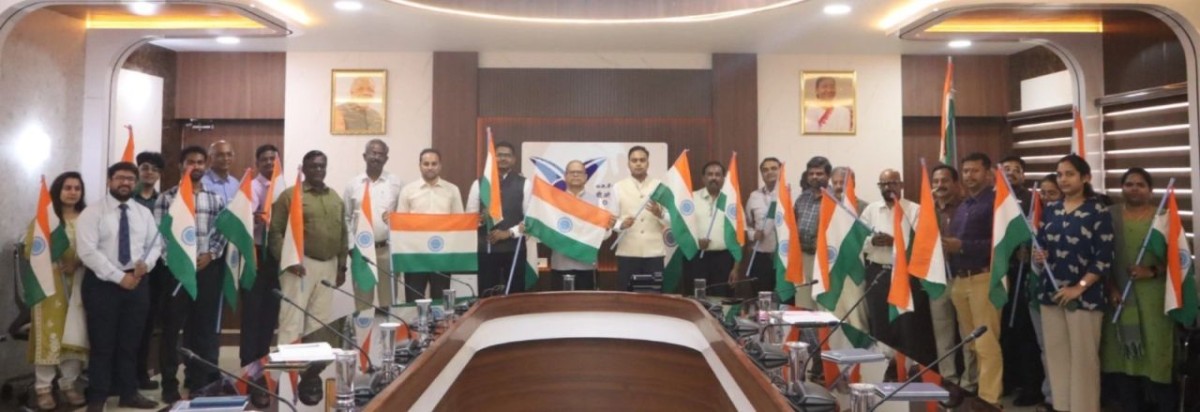
TUTICORIN : V.O. Chidambaranar Port Authority (VOCPA) enthusiastically participated in the “Har Ghar Tiranga” campaign, reaffirming its commitment to the spirit of patriotism, national unity and collective pride. As part of the initiative, the National Flag was distributed among senior officials and staff members across the Port, encouraging them to proudly display the Tiranga at their homes.

Chairperson, Shri Susanta Kumar Purohit, IRSEE, personally handed over the National Flags to officers and employees and urged everyone to participate wholeheartedly in the campaign. He emphasised the importance of the Tiranga as a powerful symbol of India’s unity, sovereignty and shared national identity.

The initiative seeks to encourage citizens to bring the National Flag into their homes and celebrate their connection with the nation. For the VOCPA community, the campaign provided an opportunity for officers and employees to come together beyond their professional responsibilities and express their shared commitment to the values represented by the National Flag.

The Har Ghar Tiranga campaign was launched by the Government of India under the broader Azadi Ka Amrit Mahotsav initiative to invoke a deeper sense of patriotism and collective belonging among citizens. Over the years, the campaign has evolved into a nationwide expression of respect for the Tiranga and the ideals of a united India.

VOCPA’s participation reflects the Port Authority’s commitment to nurturing national values, civic responsibility and a strong sense of belonging among its employees, while continuing to play an important role in India’s maritime and economic development.

The initiative also carries a special message for the wider Port community: every Tiranga displayed at a home represents a shared commitment to the nation, its unity and its future.

As the flags were handed over to officers and staff, the message was clear — one nation, one identity and one Tiranga, inspiring the VOCPA family to celebrate India’s national spirit with pride and unity.

India opens 75 lighthouses to tourism, blending Maritime Heritage with new cultural and educational experiences

NEW DELHI : Lighthouses primarily serve as Marine Aids to Navigation for ensuring safe and efficient maritime navigation. In addition to this core function, the Government is actively promoting Lighthouse Tourism which is in line with its vision of preserving India’s maritime heritage and promoting educational, cultural and tourism purposes under Section 23 of the Marine Aids to Navigation Act, 2021.

This information was given by the Union Minister of Ports, Shipping and Waterways, Shri Sarbananda Sonowal, in a written reply to the Rajya Sabha.

As part of this initiative, Lighthouse Museums have been established at Chennai, Mahabalipuram, Alappuzha, Kannur, Muttom, Dwarka and Gopnath to showcase the evolution of lighthouse technology and India’s maritime heritage. Under this initiative, tourism facilities have been developed at 75 lighthouses across the country as part of the Government’s vision to preserve their historical and architectural significance. Tourist facilities such as cafeterias, landscaped gardens, gazebos, children’s play areas, light and sound show, internal pathways, public toilet blocks, drinking water facilities, amphitheatres and lifts have been developed at identified lighthouses. List of lighthouses with tourism facilities is attached as Annexure.

State-wise list of 75 Lighthouses developed for tourism purposes

S. No.State/ UTName of Lighthouse 
1GujaratMandvi Lighthouse, Rawalpir Lighthouse, Samiyani Lighthouse, Okha Lighthouse, Kachchhigadh Lighthouse, Porbandar Lighthouse, Mangrol Lighthouse, Jaffrabad Lighthouse, Jegri Lighthouse, Alang Lighthouse, Ghogha Lighthouse, Hazira Lighthouse, Valsad Khadi Lighthouse, Gopnath Lighthouse, Veraval Lighthouse, Dwarka Lighthouse, Umargaon Lighthouse.
2GoaAguada Lighthouse,
3KarnatakaTadri Lighthouse, Bhatkal Lighthouse, Kaup Lighthouse, Surathkal Lighthouse, Kundapur Lighthouse.
4KeralaKannur Lighthouse, Ponnani Lighthouse, Chetwai Lighthouse, Vypin Lighthouse, Alappuzha Lighthouse, Valiyazhikal Lighthouse, Thangasseri Lighthouse, Anjengo Lighthouse, Vizhinjam Lighthouse, Azhikode Lighthouse, Kadalur Point Lighthouse.
5Tamil NaduKanniyakumari Lighthouse, Kuthenkuli Lighthouse, Manappad Lighthouse, Kilakkarai Lighthouse, Dhanushkodi Lighthouse, Pamban Lighthouse, Karaikal Lighthouse, Mallipattinam Lighthouse, Kodikkarai Lighthouse, Nagapattinam Lighthouse, Poompuhar Lighthouse, Pulicat Lighthouse, Muttom Point Lighthouse, Mahabalipuram Lighthouse, Chennai Lighthouse.
6Andhra PradeshRamayapatnam Lighthouse, Machilipatnam Lighthouse, Antervedi Lighthouse, Sacramento Lighthouse, Vakalapudi Lighthouse, Santapalli Lighthouse, Kalingapatnam Lighthouse, Baruva Lighthouse, Vodarevu Lighthouse, Pudimadaka Lighthouse.
7Odisha Gopalpur Lighthouse, Puri Lighthouse, Chandrabhaga Lighthouse, Paradip Lighthouse, False Point Lighthouse 
8WestBengalTajpur Lighthouse, Dariapur Lighthouse, Sagar Island Lighthouse
9MaharashtraUttan Point Lighthouse, Korlai Fort Lighthouse, Jaigarh Lighthouse, Ratnagiri Lighthouse, Vengurla Point Lighthouse, Kelshi Lighthouse
10Andaman and Nicobar IslandsNorth Point Lighthouse, Keating Point Lighthouse.

Sagarmala, NW and Coastal Shipping gain fresh momentum as Govt pushes multimodal connectivity and private investment

NEW DELHI ; The Union Minister of Ports, Shipping and Waterways, Shri Sarbananda Sonowal, informed, in a written reply to the Rajya Sabha that, At the end of the 15th financial cycle, an independent third-party impact evaluation of the projects under the Sagarmala Scheme was done by the National Productivity Council (NPC). These projects are under various pillars of Sagarmala scheme including port modernization, port connectivity, coastal community development and coastal shipping and inland waterways development. No project has been sanctioned for financial assistance under the port led industrialization pillar of Sagarmala scheme.

During financial year (FY) 2025-26, total cargo movement recorded on National Waterways (NWs) was 218 million metric tons. To promote the cargo traffic on National Waterways, a scheme (Jalvahak) for providing 35% incentive to cargo owners and introduction of scheduled service on NW-1 (Ganga-Bhagirathi-Hooghly River System) and NW-2 (river Brahmaputra) and NW-16 (river Barak) via Indo Bangladesh Protocol by Inland & Coastal Shipping Limited (ICSL) has been approved by the Government.

The average turnaround time of Major Ports has improved to 48.84 hours in 2025-26 from 52.87 hours in FY 2021-22. The Container Port Performance Index (CPPI) published by the World Bank provides an objective and comparable assessment of container port performance based on the time vessels spend in port. As per the CPPI 2025, Jawaharlal Nehru Port ranked 22nd, comparable with Hong Kong (9th), Singapore (21st), and Shanghai (23rd).

The policy initiatives taken by the Government to attract private investment in coastal shipping and inland water transport are under:

Coastal-shipping infrastructure is strengthened under Sagarmala scheme through coastal berths, Ro-Ro/Ro-Pax and passenger jetties, port-connectivity projects.

In the Union Budget 2026-27, a Coastal Cargo Promotion Scheme has been announced to incentivize modal shift of cargo from road and rail to coastal shipping and inland waterways, with the objective of increasing their combined modal share from 6 per cent to 12 per cent by 2047. The scheme is expected to expand the addressable cargo base and generate opportunities for private investment in vessels, terminals, ship repair, cargo handling and multimodal logistics.

Development of National Waterway-5 (NW-5) in Odisha to connect the mineral-rich regions of Talcher and Angul with industrial centers such as Kalinga Nagar and with the ports of Paradip and Dhamra has been announced in the Union Budget 2026-27.

A scheme for providing 35% incentive to promote the utilization of inland waterways transport sector by cargo owners and for scheduled service for cargo movement on NW-1 and NW-2 and NW-16 via Indo Bangladesh Protocol by Inland & Coastal Shipping Limited (ICSL) has been approved by the Government.

An extension of the tonnage tax scheme to inland vessels registered under the Indian Vessels Act, 2021 was announced in the Union budget 2025-26 which has benefitted the Inland vessels operating on National Waterways, rivers, and canals.

The National Waterways (Construction of Jetties / Terminals) Regulations 2025 have been notified, allowing private companies to invest in and operate Inland Waterways terminals by providing a clear regulatory framework to attract private sector investment for facilitating the growth of inland waterways sector.

PM GatiShakti National Master Plan enables Integrated and Coordinated Infrastructure Planning

NEW DELHI : PM GatiShakti National Master Plan (PMGS NMP), launched in October 2021, is a transformative “Whole of Government” approach to bring together various Central Ministries/Departments and States/UTs to ensure integrated planning and coordinated execution of infrastructure projects. PMGS NMP aims to facilitate Ministries/States in data driven decision making by utilizing geospatial data, satellite imagery and API integration to monitor, plan, and optimize infrastructure development. The PMGS NMP is facilitating Ministries/States in planning of their respective infrastructure projects, including social infrastructure projects, in integrated, synchronized and coordinated manner to provide seamless and efficient connectivity for the movement of people, goods, and services across various modes of transport, thereby enhancing last-mile connectivity and reducing travel time.

PM GatiShakti provides an integrated planning framework; the approval and implementation of the projects are undertaken by the respective central Ministries/Departments and States/UTs under their plans, schemes, procedures and budgetary/funding provisions. Hence, no quantified targets or expenditure requirements have been set under PM GatiShakti initiative.

The Network Planning Group (NPG), constituted under the PM GatiShakti framework, evaluates the critical infrastructure projects of the central Government to ensure integrated planning, multimodality, inter-modality, synchronization of efforts, last mile connectivity, comprehensive development in and around the project location, data driven decision makings, etc at the planning stage. As on date, 396 infrastructure projects with total estimated cost of about ₹ 18.66 Lakh Crore have been evaluated through the NPG mechanism. Out of these 396 projects, 256 projects have been sanctioned – out of which, 198 projects are under implementation. Ministry-wise details are given at Annexure-A.

Government carries out assessment of its initiatives/schemes from time to time through various studies, surveys, etc. Apart from these, there are several studies by universities and research scholars in this respect. As per these assessments, the integrated planning initiatives like, PM GatiShakti, National Logistics Policy, PRAGATI, Sagarmala, development of connectivity infrastructure (expressways/ national highways/ dedicated rail freight corridors and rail tracks, industrial corridors/hubs), etc. have shaped the vision of connected and competitive India and have improved logistics efficiency, turn-around time, ease of doing business, industrial growth and reduced logistics cost in country. An assessment of logistic cost has been carried out by DPIIT in the year 2025 in collaboration with National Council of Applied Economic Research (NCAER). As per the assessment, the logistics cost in India is estimated at 7.9% of the GDP, which is at par with the advanced economies in the world. The Economic Survey 2023-24 highlighted that these measures have improved domestic manufacturing and export competitiveness. A study by Indian Institute of Management, Bangalore on impact of development of National Highway projects underlines that every-one rupee expenditure in National Highways development leads to a ₹3.2 increase in Gross Domestic Product (GDP).

So far 58 Central Ministries/Departments and all 36 States/UTs have been onboarded on the PMGS NMP, covering all infrastructure sectors like road, rail, ports & waterways, power, petroleum & natural gas, civil aviation, telecommunications, industrial corridors, etc. Further, PM GatiShakti public platform (url: ugi.pmgatishakti.gov.in) has been launched in September 2025, which provided access of PM GatiShakti data analytics to private entities and general public. Through this Query based mechanism, public and private entities are able to plan their projects by obtaining data analytic reports from the PMGS-NMP Portal through a simple query-based mechanism. The States have been encouraged to expand the use of PM GatiShakti for district level planning. About 1800 data layers have been integrated and over 65 software modules/tools and more than 100 mobile/web applications have been developed and integrated on the platform for the use of stakeholders. Further expansion of the PM GatiShakti initiative is a continuous process – mapping/integration of more data layers, development and integration of additional features, software modules/tools for planning and analysis modules/tools, mobile/ web applications, etc. to be continue further as per the requirements of the Ministries/Departments, States/UTs and other stakeholders.

GRSE adds new milestone in Indigenous Warship Building with the launching of Shruti’

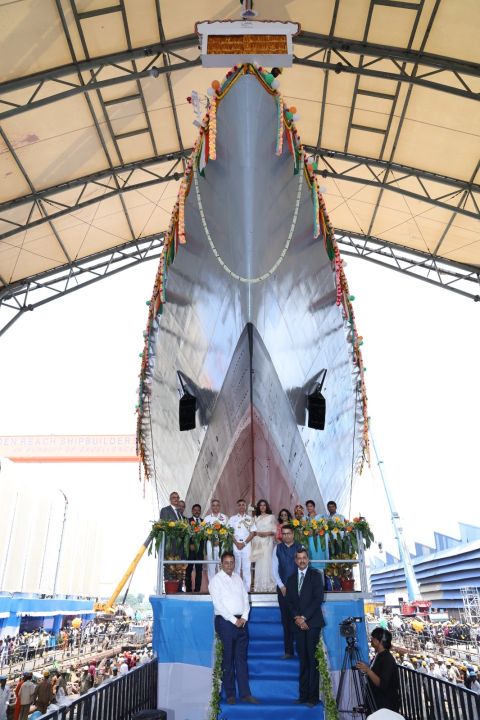
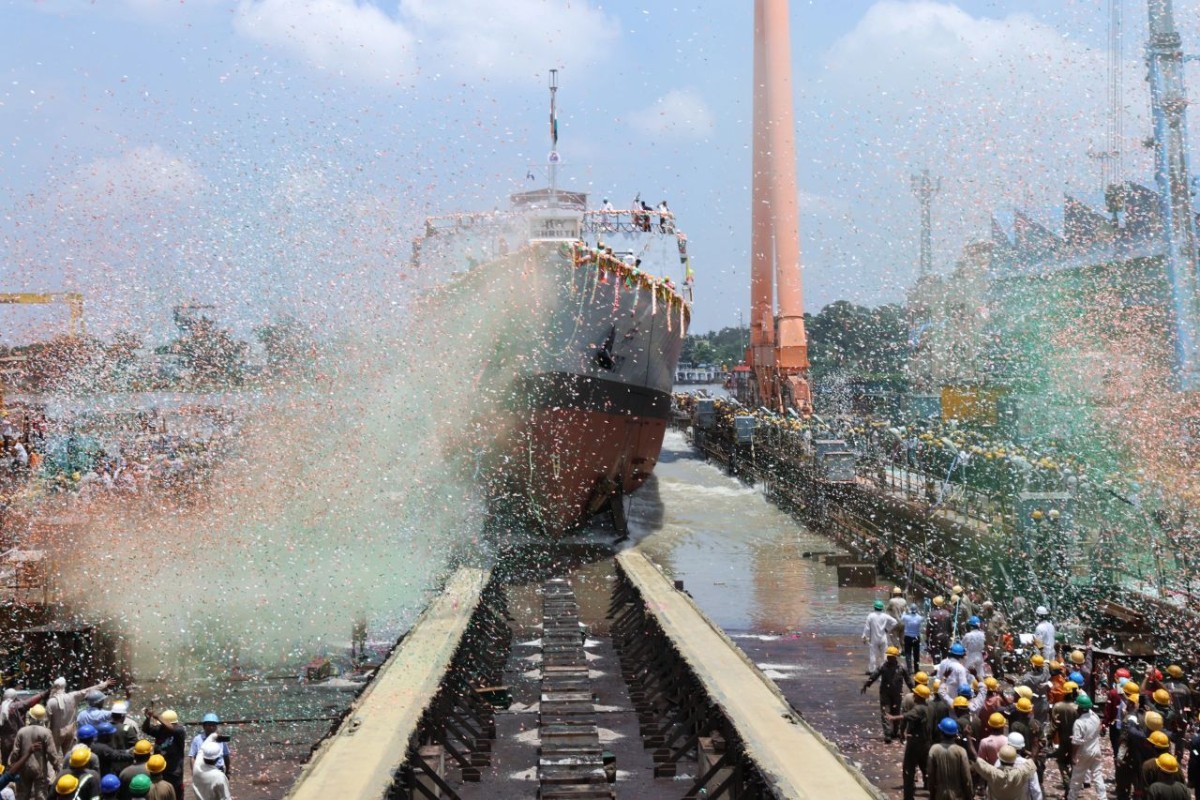
KOLKATA : Garden Reach Shipbuilders & Engineers Ltd. (GRSE), a Navratna Defence Public Sector Undertaking under the Ministry of Defence, Government of India, added another milestone to its distinguished shipbuilding legacy with the launch of ‘Shruti’, the second Next Generation Offshore Patrol Vessel (NGOPV) being built by the shipyard for the Indian Navy, on 11 Aug 26.

Coming less than three months after the launch of Sanghmitra, the first NGOPV from GRSE, on 20 May 26, the occasion reflects the steady momentum achieved by GRSE in executing this prestigious programme.

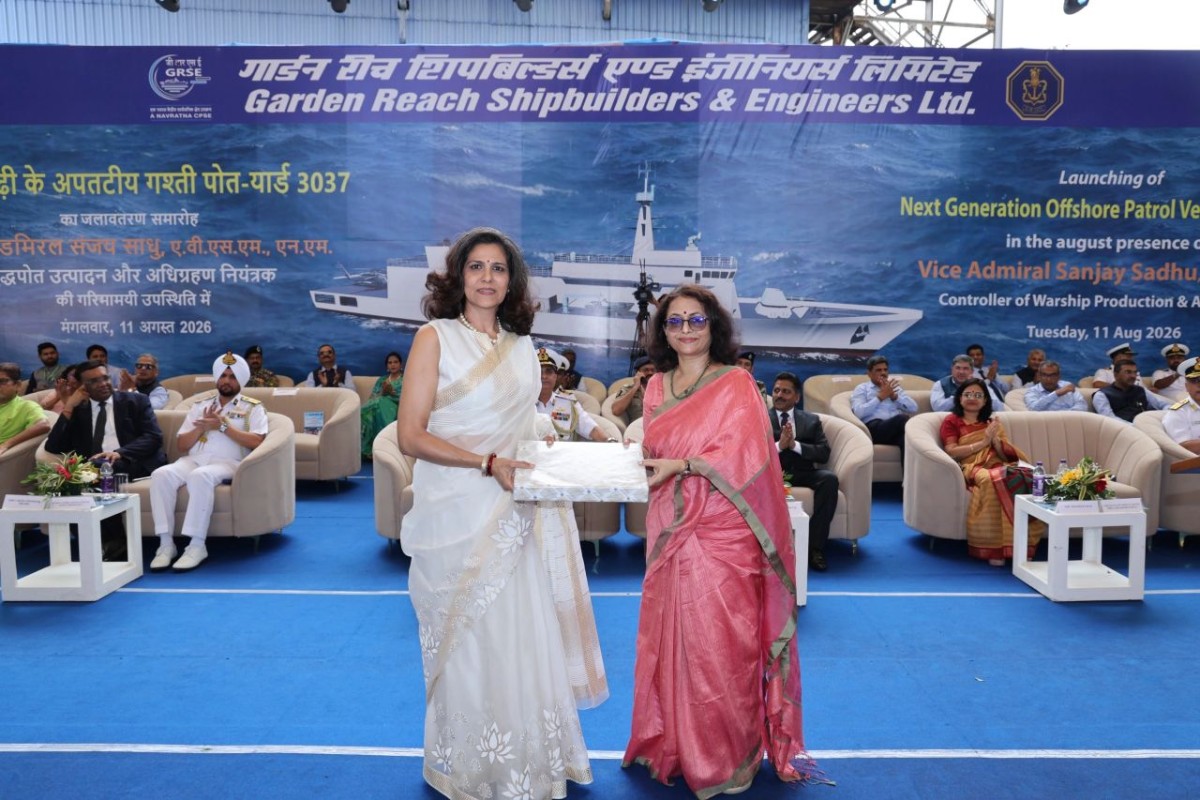
GRSE is constructing four NGOPVs as part of the Indian Navy’s 11-ship NGOPV programme. The newly launched warship, named ‘Shruti’, was formally launched by Smt. Manika Sadhu, wife of Vice Admiral Sanjay Sadhu, AVSM, NM, Controller of Warship Production & Acquisition (CWP&A), Indian Navy, amidst traditional rituals and the chanting of Vedic shlokas. Vice Admiral Sanjay Sadhu graced the occasion as the Chief Guest.

The others present at the occasion were Cmde PR Hari, IN (Retd), Chairman and Managing Director, GRSE along with Cdr Shantanu Bose, IN(Retd.), Director (Shipbuilding), Capt (IN) P Sunilkumar, (Retd.), Director (Corporate Planning & Personnel), Shri Niranjan Bhalerao, Director (Finance), Shri Abhishek Ranjan, IOFS, CVO and other senior officials of Indian Navy and GRSE.

The name ‘Shruti’ means “that which is heard”. In the Indian tradition, the term ‘Shruti’ is used to refer to the four Vedas, the ancient scriptures that have been preserved through oral tradition over generations and occupy a central place in India’s cultural and spiritual heritage.

Vice Admiral Sadhu mentioned, “GRSE has occupied a very, very special place. In 1961, GRSE delivered INS Ajay to us. It was the first indigenously built platform. Since then, over the last several decades, the Indian Navy has received more than 110 warships from GRSE, while GRSE has built over 800 ships and platforms. The launch of Shruti today is yet another reflection of the professionalism, competence and commitment of Team GRSE.”