Home Blog Page 166

TMS TACCC 2026 to examine the practical pathways to net-zero transport amid regulatory, geopolitical and infrastructure shifts

DUBAI: The Maritime Standard Transportation & Climate Change Conference (TMS TACCC) 2026 will bring together senior industry leaders, policymakers, shipowners, port authorities, financiers, technology providers, sustainability professionals and legal experts to examine the practical challenges and opportunities shaping the transition towards a sustainable, secure and resilient global transport ecosystem.

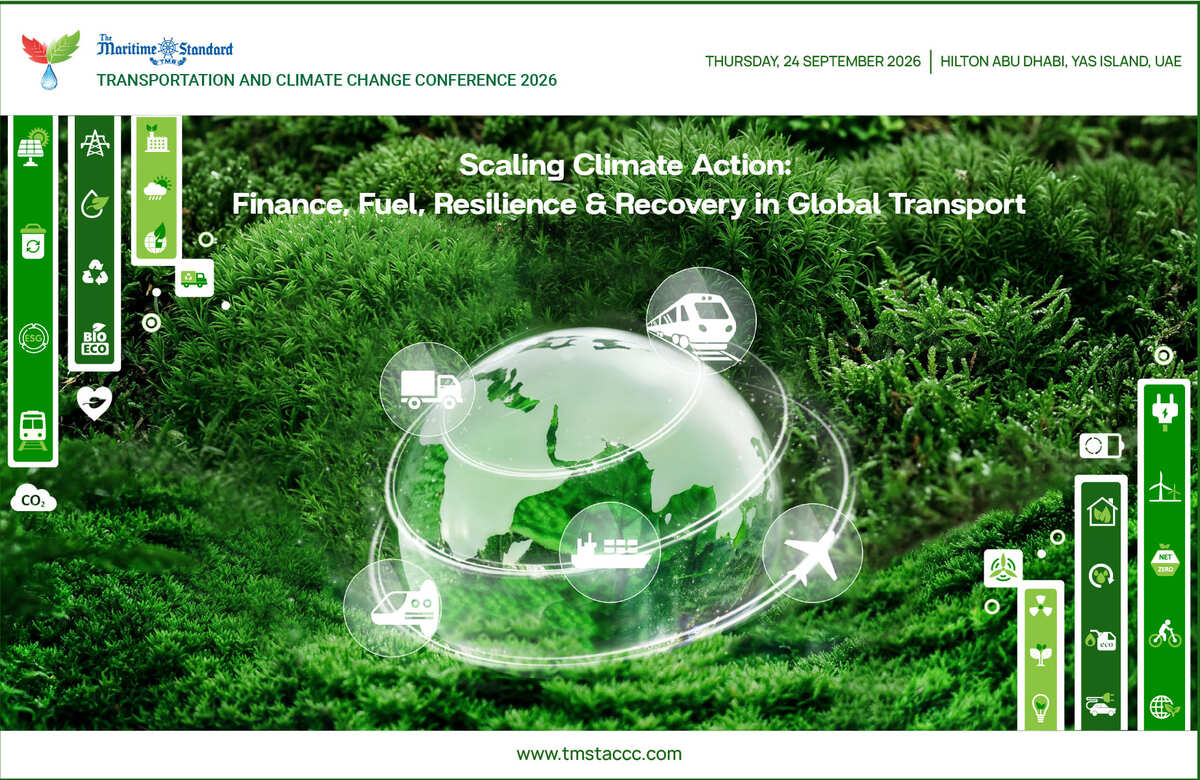
Taking place on 24 September 2026 at Hilton Yas Island, Abu Dhabi, UAE, the fourth edition of TMS TACCC will be held under the overarching theme “Scaling Climate Action: Finance, Fuel, Resilience & Recovery in Global Transport.”

The 2026 programme has been developed against a rapidly changing global backdrop, with evolving regulatory frameworks, increasing carbon pricing pressures, alternative fuel development, geopolitical disruption and growing concerns around energy security and supply chain resilience influencing investment and strategic decision-making across the transport sector.

The conference will examine how the industry can move from climate ambition towards real-world implementation by bringing together perspectives from across the maritime, transport, energy, infrastructure, finance and technology sectors.

The first session, “Delivering Net-Zero Maritime: Regulation, Markets & Investment Readiness,” will focus on the regulatory, financial and commercial forces shaping maritime decarbonisation.

Discussions will examine the latest developments in the IMO’s global GHG regulatory framework, including the proposed fuel standard, GHG pricing mechanism, lifecycle emissions, chain of custody and compliance requirements. The session will also assess the implications of regional regulatory frameworks such as EU ETS and FuelEU Maritime, as well as the growing complexity created by overlapping international and regional climate policies.

With climate policy continuing to evolve across major markets, the session will explore the implications of regulatory divergence for competitiveness, investment certainty and long-term industry strategy. Speakers will also consider how carbon pricing is moving from regulatory mechanisms towards commercial reality, with potential implications for freight economics, chartering, ship values, fleet investment and cargo owners.

The financing of maritime decarbonisation will form another key area of discussion, with attention to green and transition finance, blended finance, insurance, public-private partnerships and multilateral support. The session will consider how these mechanisms can help mobilise capital while addressing technology risk, stranded assets, geopolitical exposure and the rising cost of the transition.

The programme will also take a practical look at alternative fuels, examining the availability, cost, infrastructure requirements, lifecycle emissions, safety and scalability of ammonia, methanol, LNG, hydrogen and biofuels.

The session will conclude by examining geopolitics, energy security and maritime resilience, exploring how disruption around critical maritime chokepoints is affecting energy flows, shipping routes, freight economics, insurance costs, emissions, infrastructure priorities and long-term investment strategies.

The second session, “Technology & Infrastructure: Scaling Decarbonized Transport Ecosystems,” will turn its focus towards the technologies, infrastructure and integrated systems required to move decarbonisation from pilot projects to large-scale implementation.

The session will explore how advanced analytics, automation and digital tools can improve routing, reduce emissions and enhance operational performance across fleets and ports. It will also examine the role of digital measurement, reporting and verification systems, blockchain and transparent carbon accounting in strengthening emissions tracking, compliance and accountability.

The transformation of ports will be another central theme, with discussions focusing on the development of Green Ports as integrated energy hubs equipped with shore power, alternative fuel bunkering, storage and grid connectivity. The session will consider how infrastructure can be modernised to support emerging and recovering regions while enabling more resilient and connected transport networks.

As the availability of alternative fuels remains a key challenge for the transition, the programme will examine the requirements for industrial-scale fuel production and logistics, including global distribution networks, certification frameworks and cross-border collaboration to bridge the gap between supply and demand.

Attention will further turn to the decarbonisation of existing fleets through carbon capture, retrofitting technologies and energy efficiency measures, assessing their potential to reduce emissions from current assets while supporting a pragmatic transition.

The programme will conclude with a focus on the wider ecosystem required to deliver the transition, highlighting the role of engineering companies, classification societies, shipyards, technology providers and logistics stakeholders in advancing innovation, compliance, vessel design and integrated system development.

Through its two core sessions, TMS TACCC 2026 will provide a platform for senior stakeholders to examine the intersection of regulation, finance, fuel, technology, infrastructure, energy security and resilience. The conference aims to support a practical and commercially focused dialogue on how the global transport sector can accelerate decarbonisation while responding to geopolitical uncertainty, evolving market conditions and the infrastructure demands of a rapidly changing energy landscape.

BIFA appoints Amanda Francis as PR and Media Manager

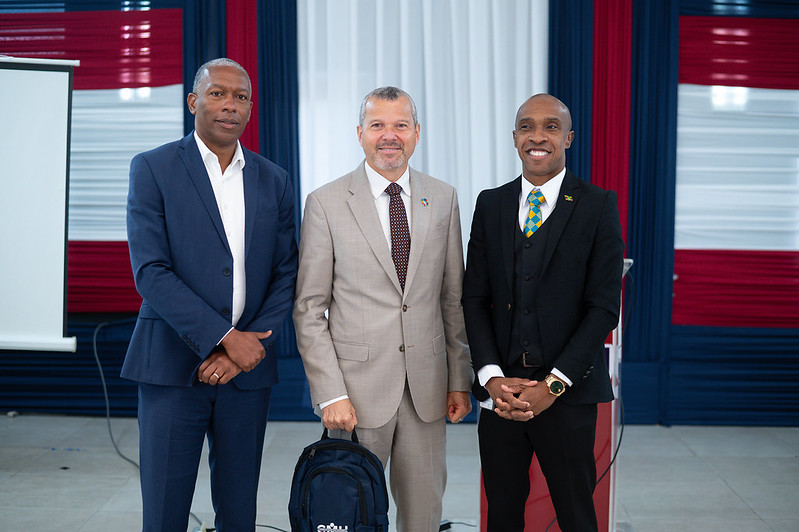
LONDON: The British International Freight Association (BIFA) has appointed Amanda Francis (In Pic above) as PR and Media Manager.

With 15 years’ experience leading strategic communications across public and private sectors, Amanda will develop and execute a national, regional and trade PR strategy. She will work closely with senior stakeholders to support policy communications, raise BIFA’s profile and present BIFA TV to members.

Amanda’s career experience includes developing thought leadership campaigns, managing high-profile reputational issues and delivering integrated PR and communications strategies.

Amanda’s appointment coincides with Ian Matheson’s move towards semi-retirement after 20 years as BIFA’s PR Consultant. BIFA thanks Ian for his longstanding contribution in raising the organisation’s profile and supporting its communications activity over two decades.

In the role, Amanda will be responsible for output across all communications activity, working closely with cross-functional teams across PR, digital and creative to deliver integrated and impactful campaigns.

Steve Parker, Director General of BIFA, said: “Amanda’s work building strategic storytelling across notable brands makes her a great fit for BIFA. We look forward to her presenting BIFA TV and leading a PR strategy to elevate our story to members and media.”

Dawn White, Events and Communications Director at BIFA said, “Amanda’s appointment marks an exciting step in strengthening how we communicate BIFA’s work and the value we deliver for members. Her experience will help us tell more of the stories that matter, raise BIFA’s profile and engage members and stakeholders through compelling communications.”

Amanda Francis, PR and Media Manager at BIFA, said: “I’m proud to be joining BIFA at such an important time for the freight and logistics sector. Freight forwarding sits at the heart of international trade, and I’m looking forward to working with members and the media to showcase BIFA’s expertise and the vital role the industry plays in keeping global commerce moving.”

IMO relies on Jamaica’s expertise as global seafarer training rules face overhaul

LONDON: Jamaica’s seafarer training expertise is helping to shape the overhaul of global rules governing the maritime workforce, International Maritime Organization (IMO) Secretary-General Mr Arsenio Dominguez has said during an official visit to the country.

Addressing cadets and maritime professionals at the Caribbean Maritime University’s (CMU) main campus at Palisadoes Park on Tuesday, 28 July, Mr Dominguez recognised Jamaica’s active contribution to the comprehensive review of the International Convention on Standards of Training, Certification and Watchkeeping for Seafarers and its accompanying STCW Code.

Phase one of the review identified more than 400 gaps in the existing framework. The work addresses the impact of digitalisation, automation and emerging technologies on shipboard operations, alongside cybersecurity, mental health, psychological safety, violence and harassment, and gender and cultural diversity.

Mr Dominguez’s wider programme in Jamaica from 26 to 30 July includes attendance at the 31st Session of the International Seabed Authority Assembly, engagement with seafarers, visits to Kingston Wharves Limited and Kingston Freeport Terminal Limited, and a reception marking the 25th anniversary of the Maritime Authority of Jamaica (MAJ), the focal point of the IMO and the 30th anniversary of the Caribbean Memorandum of Understanding on Port State Control.

The visit takes place as Jamaica marks 50 years of IMO membership and reflects the country’s continuing contribution to international maritime regulation and the representation of the interests of Caribbean and Small Island Developing States.

IMO Secretary-General Mr Arsenio Dominguez said: “Jamaica is very active in the STCW review. You have a great deal of experience and expertise that IMO is aware of and relies on. Technology outpaces the way that we regulate. By the time we finish, if we are too specific about particular technologies, they may already be outdated.”

Mr Bertrand Smith, Director General of the MAJ, added: “The Secretary-General’s recognition of Jamaica’s expertise is especially meaningful as we mark 50 years of IMO membership. It demonstrates that sustained technical engagement enables Small Island Developing States to influence the rules governing international shipping. The Maritime Authority of Jamaica will remain actively involved in the STCW review, helping to ensure the revised framework keeps pace with technological change while keeping seafarers at the heart of shipping.”

Summer vacation at sea: 35 “Summer Seafarers” aboard Hapag-Lloyd ships

HAMBURG: Cast off for the next generation of seafarers: Hapag-Lloyd is participating again this year in the Association of German Shipowners’ (VDR) summer seafaring program and has once again filled all 35 available spots. This gives students from all over Germany the opportunity to spend several weeks aboard a Hapag-Lloyd container ship during their summer vacation, experiencing daily life at sea.

Several participants will set sail from Hamburg this summer. On the “Santos Express” three summer seafarers are boarding the ship together. Their 333-meter-long container ship, with capacity for 11,519 TEU, operates on a Northern Europe–South America route, taking them from Hamburg across the Atlantic to Callao, Peru. A highlight of the voyage will certainly be the passage through the Panama Canal.

The 16-year-old Lias Denecke from Sylt, Schleswig-Holstein, knows exactly why he’s signing on as a summer seafarer with Hapag-Lloyd, the world’s fifth-largest container shipping line: “I want to experience something you can’t see in an explanatory video. I’m interested in navigation and technology, and I want to understand what everyday life is really like on board. It’s not about taking a vacation; it’s about helping out and learning as much as possible”.

“For many young people, the summer seafaring program is their first real exposure to maritime shipping. It’s precisely this direct insight that’s crucial for sparking interest in maritime careers and nurturing talent early on,” says Erik Hirsch, Head of Maritime Training at Hapag-Lloyd. “The fact that we were able to fill 35 spots this year shows just how great the interest is in living and working on board.”

On board, the young people experience ship operations under realistic conditions. They accompany the crew in their daily routines, learn about procedures on the bridge, on deck, and in the engine room, and get a feel for what teamwork at sea means. The program is aimed at young people aged 16 and older who are still in school and want to explore whether a nautical apprenticeship, a technical career on board, or a maritime degree is right for them. In fact, 50% of all summer seafarers later decide to pursue a seafarer apprenticeship at Hapag-Lloyd.

“The summer seafaring program was my first real step into the world of maritime shipping. On board the ‘Cordillera Express,’ under the command of Capt. Schmidt-Grunert, I experienced during a summer 1979 voyage around the U.S. Gulf Coast just how demanding, international, and responsible this profession is – and that’s exactly what convinced me to continue my career at Hapag-Lloyd. A single summer on board can turn into a maritime career,’ says Wolfram Guntermann, now Director of Regulatory Affairs at Hapag-Lloyd and a former captain with the company.

The VDR’s summer seafaring program has been introducing young people to maritime shipping since the 1960s. Hapag-Lloyd has been a partner of the program for many years and supports it as an important contribution to recruiting the next generation of talent for Germany’s maritime sector.

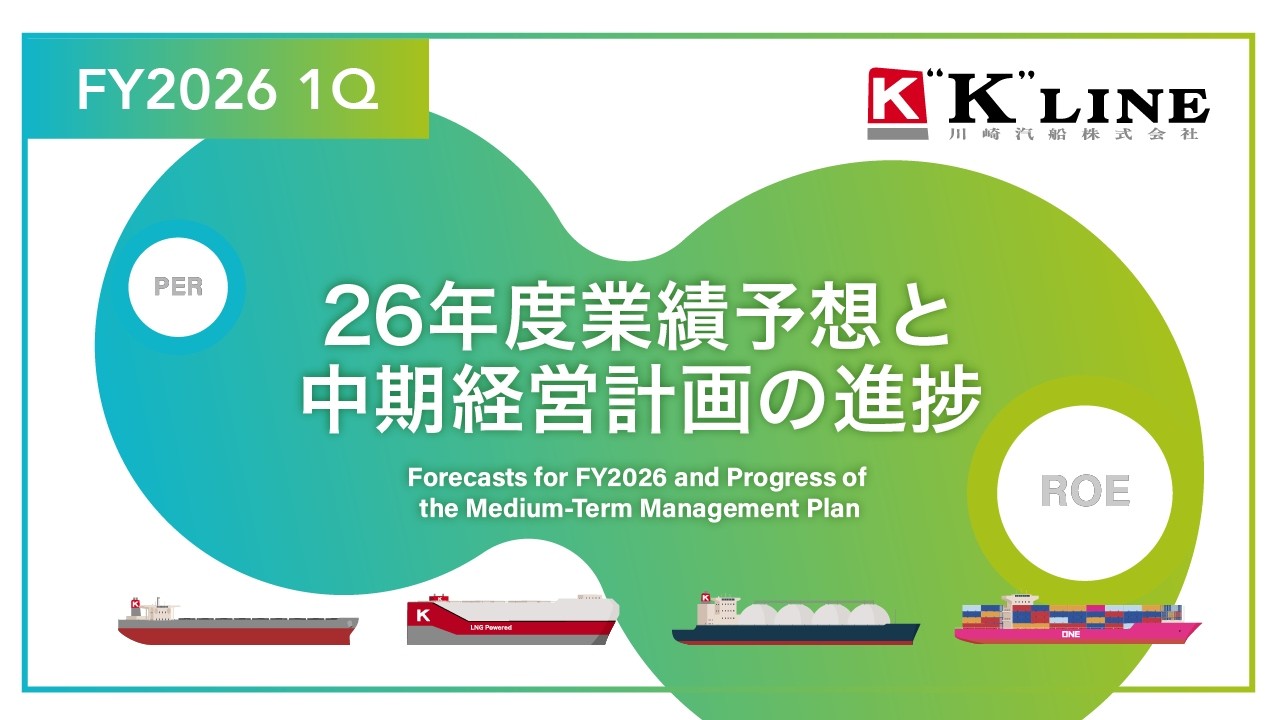
“K” LINE Releases Video Update on Forecasts for FY2026 and Progress of the Medium-Term Management Plan

TOKYO: Kawasaki Kisen Kaisha, Ltd. (“K” LINE) has released a video on its official website explaining its forecasts for FY2026 and progress of its Medium-Term Management Plan. Initially shared on  “K” LINE With, the Group’s internal video communication platform, the video is now available to a broader audience.

The video provides a review of the current Medium-Term Management Plan and our policy initiatives for the next Medium-Term Management Plan, taking into account the financial results announced in May 2026. To enhance corporate value, we have set the achievement of “sustained PBR above 1.0x” as a key objective and will raise our target ROE from the current Medium-Term Management Plan target of over 10% to “15% or more”, a level well above the industry average. In order to achieve this objective, this video also outlines a growth strategy for “K” LINE’s own businesses, initiatives for addressing challenges in the Containership Business, and our capital policy.

“K” LINE With details the progress of the Medium-Term Management Plan on a quarterly basis by providing explanations of the latest forecasts. It also focuses on initiatives based on the three important points of the Medium-Term Management Plan, specifically, the capital policy, the business strategy and the functional strategy.

This initiative aims to deepen understanding of the Medium-Term Management Plan among business sites on land and sea within the Group, globally promote internal communication and facilitate information sharing. In doing so, “K” LINE seeks to foster a sense of solidarity as a source of the Group’s strength, and reinforce the foundation of its business operations. In addition, “K” LINE has made the video available to the public in addition to the “K” LINE With platform, aiming to make a broader range of stakeholders beyond those inside the Group aware of the Company’s initiatives, while offering an in-depth understanding of “K” LINE’s activities.

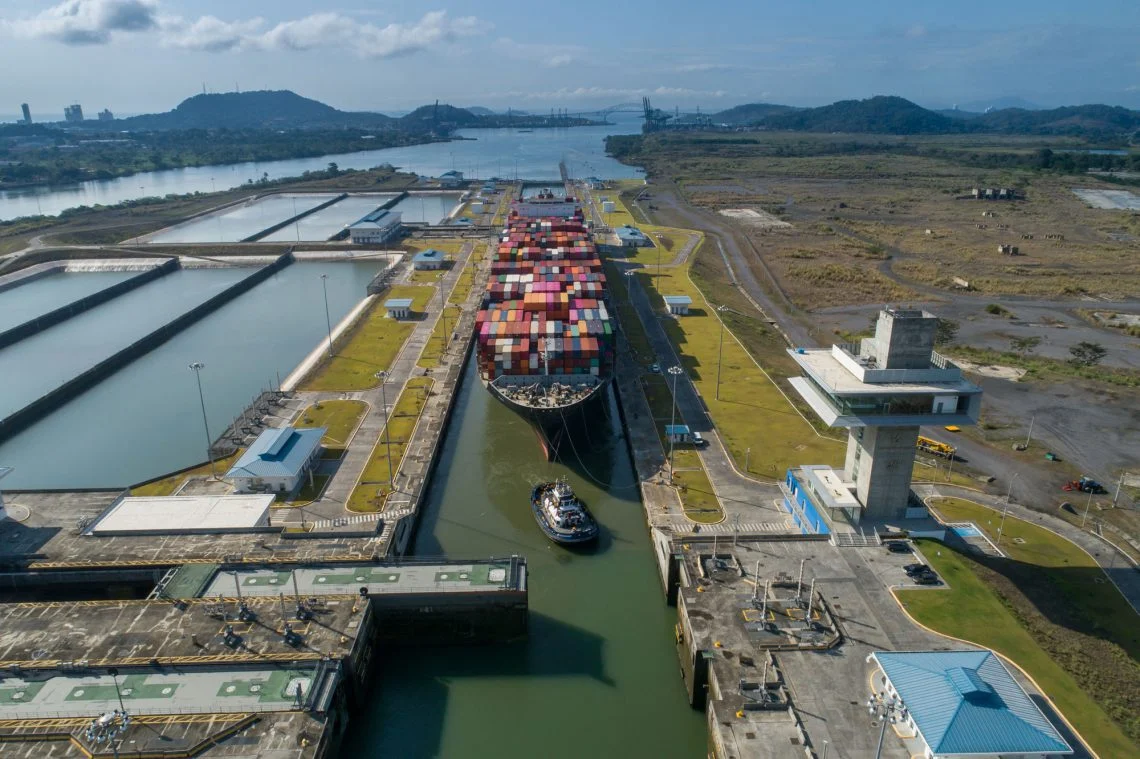
Panama Canal announces reduction of draft for Neopanamax Locks

PANAMA CITY: The Panama Canal Authority announced, through a notice to shipping companies, that effective August 26, 2026, the maximum authorized draft for vessels transiting the Neopanamax locks will be reduced to 48 feet (14.63 meters). A further adjustment will take effect on September 3, lowering the maximum draft to 47.5 feet (14.48 meters).

The measure is based on current water levels and projected conditions for the upcoming weeks in Gatun Lake. It is part of the canal’s ongoing water management and operational strategy aimed at ensuring the long-term sustainability of its operations.

The draft adjustment will not affect the number of daily vessel transits. Instead, it reflects water conservation and resource management measures that have been in place since December 2025 as part of preparations for the 2026 dry season.

These reductions represent the fourth and fifth draft adjustments announced by the Panama Canal Authority. The measures result from operational planning informed by lessons learned during the 2023–2024 period, as well as hydrological analyses and historical data that support the canal’s operational decision-making process.

Canal specialists continue to closely monitor weather conditions and produce technical forecasts that enable a more accurate assessment of the potential impacts of the El Niño phenomenon. This allows the Panama Canal Authority to determine and communicate any additional operational or water management measures that may be required in the coming months.

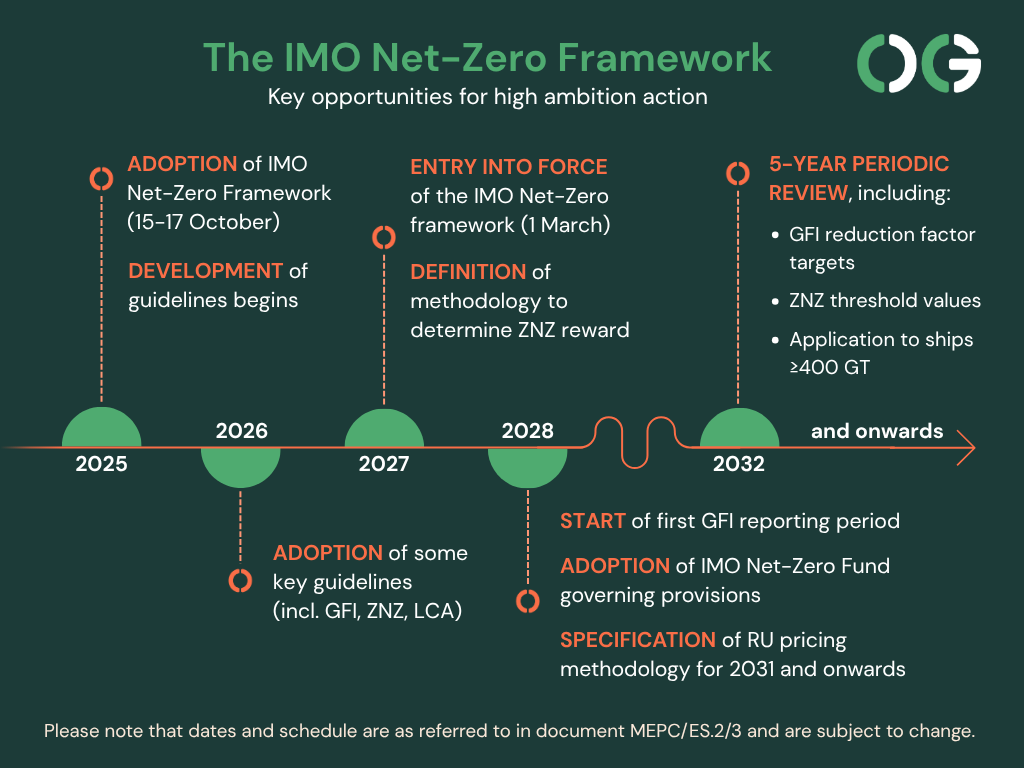
Governments urged to back IMO Net-Zero Framework, Reject proposals that could weaken Global Shipping Climate goals

LONDON: As preparations gather pace for the next round of negotiations at the International Maritime Organization (IMO) in September, governments are being urged to uphold the existing IMO Net-Zero Framework (NZF) and resist proposals that could dilute its effectiveness in driving the decarbonisation of international shipping.

According to climate advocacy organisation Opportunity Green, recently circulated legal proposals seeking amendments to the Framework could undermine the landmark agreement reached by IMO Member States by weakening the economic incentives needed to accelerate the transition to zero-emission fuels. The organisation warns that such changes could also significantly reduce contributions to the Net-Zero Fund, designed to assist developing countries in achieving a fair and equitable transition away from fossil fuels.

The Net-Zero Framework, which emerged from years of complex negotiations, is widely regarded as a carefully balanced compromise between ambitious climate action and political practicality. Opportunity Green cautions that reopening the agreed text risks upsetting the consensus painstakingly achieved by governments.

Among the proposals under discussion is an amendment submitted by Liberia, which would replace mandatory remedial payments with greater reliance on a market-based Surplus Unit trading system. Opportunity Green argues that this approach would weaken the Framework’s ability to reduce greenhouse gas emissions while eliminating a reliable source of climate finance intended to strengthen resilience, build capacity, and support maritime decarbonisation efforts in developing nations.

The organisation further highlights that without clear and predictable financial incentives, investments may continue flowing towards higher-emitting fuel options such as fossil-based liquefied natural gas (LNG) and certain biofuels instead of accelerating the production and adoption of genuinely zero-emission marine fuels. Such a shift, it says, could hinder the achievement of the IMO’s 2023 Greenhouse Gas Strategy, undermine efforts to keep global warming within the 1.5°C target of the Paris Agreement, and make it more difficult for countries to meet their international climate commitments.

Opportunity Green maintains that preserving the Net-Zero Framework in its current form would provide the regulatory certainty necessary to unlock investments, expand the availability of zero-emission fuels, and create a stable platform for future climate ambition. In contrast, reopening the Framework’s core provisions could prolong policy uncertainty, weaken investor confidence, and delay the shipping industry’s transition to cleaner energy.

In a recent briefing issued to IMO Member States, Opportunity Green called on governments to support adoption of the Net-Zero Framework as originally approved, describing it as an important milestone rather than the final destination for shipping decarbonisation. While acknowledging that additional measures and deeper emissions reductions will be required in the future, the organisation stressed that the Framework provides a strong foundation for further climate action while establishing an important new source of climate finance for developing countries.

Sapphire Ross, Policy Officer at Opportunity Green, said the Net-Zero Framework represents a landmark achievement in multilateral climate negotiations and an important step towards implementing the “polluter pays” principle in international shipping. She noted that the Framework ensures those responsible for emissions contribute towards supporting developing countries that have contributed the least to climate change but are among the most vulnerable to its impacts. Ross urged governments to safeguard the agreement and reject attempts to weaken its core economic mechanisms.

Em Fenton, Senior Director at Opportunity Green, described the Net-Zero Framework as the only credible proposal currently available that fully aligns with the IMO’s 2023 climate strategy. Fenton warned that adopting a diluted alternative would undermine support for climate-vulnerable nations and weaken the spirit of international cooperation that underpins multilateral climate action. She called on governments to demonstrate the same commitment shown when the Framework was originally agreed and to support its formal adoption later this year.

The outcome of the September IMO negotiations is expected to play a significant role in shaping the future of global maritime decarbonisation and determining how the international shipping sector contributes to achieving global climate goals.

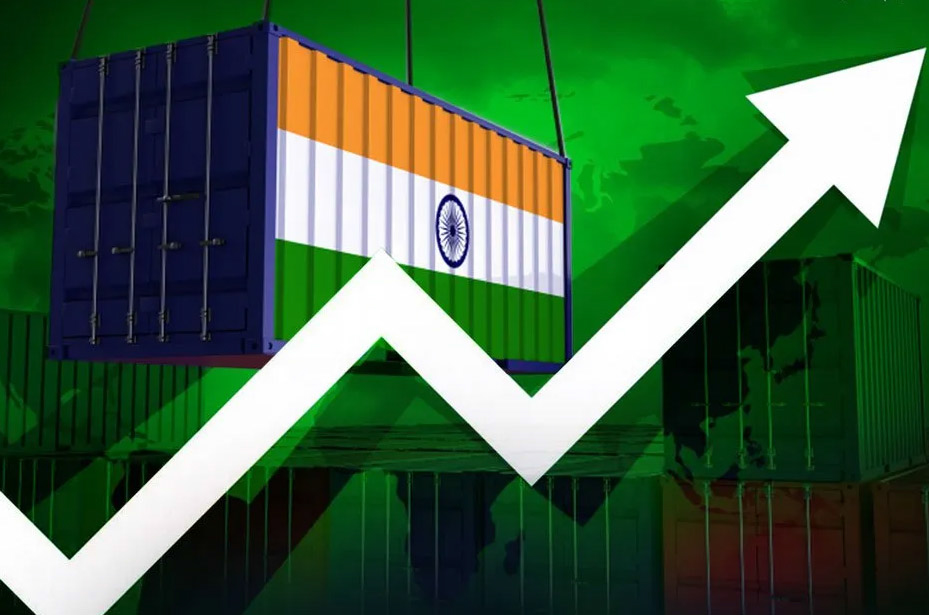
India’s exports scale record US$ 863.1 Billion in FY 2025–26, driven by strong trade with UAE, UK and Australia

NEW DELHI : India recorded highest-ever exports in FY 2025-26 reaching a record US$ 863.1 billion, with merchandise exports reaching US$ 441.8 billion and services exports expanding further to US$ 421.3 billion, reflecting the combined strength of India’s merchandise and services sectors in driving export growth. Destination-wise data is available for merchandise exports and FTA wise India’s merchandise exports during FY 2025-26 is given below in Table 1.

Table 1: India’s Merchandise Exports to FTA partners in FY 2025-26 (US$ Mn)

Free Trade Agreements Date of ImplementationsMerchandise Exports in FY 2025-26 (US$ Mn)
India-Australia Economic Cooperation and Trade Agreement (ECTA)29th December 20227284.17
India–Bhutan Agreement on Trade, Commerce and Transit29th July 2006and renewed with effect from 29 July 2017 1252.86
India–Japan Comprehensive Economic Partnership Agreement (CEPA)1st August, 20116039.5
India–Republic of Korea Comprehensive Economic Partnership Agreement (CEPA)1st January, 20106012.03
India–Malaysia Comprehensive Economic Cooperation Agreement (CECA)1st July, 2011 6825.55
India–Mauritius Comprehensive Economic Cooperation and Partnership Agreement (CECPA)1st April, 2021 473.64
India–Nepal Treaty of Trade27-10-20097447.11
India–New Zealand Free Trade Agreement (FTA)Signed, yet to be effective566.51
India–Oman Comprehensive Economic Partnership Agreement (CEPA)01st June 2026 4021.48
India–Singapore ComprehensiveEconomic Cooperation Agreement (CECA)1st August, 2005 11863.66
India–Sri Lanka Free Trade Agreement (ISFTA)1st March, 20005516.83
India–Thailand Free Trade Agreement (Early Harvest Scheme)1st September, 20045058.6
India–United Arab Emirates Comprehensive Economic Partnership Agreement (CEPA)1st May 202237359.11
India-UK Comprehensive Economic and Trade Agreement (CETA)15th July 202613444.19
         ASEAN–India Trade in Goods, Services and Investment Agreement (AIFTA)Goods1st January 2010 in respect of India and Malaysia, Singapore, Thailand.1st June 2010 in respect of India and Vietnam.1st September 2010 in respect of India and Myanmar.1st October 2010 in respect of India and Indonesia.1st      November                  2010    in respect of India and Brunei. 24th                     January            2011           in respect of India and Laos. 1st June 2011 in respect of India and the Philippines.1st August, 2011 in respect of India and Cambodia.Services and Investment1st July, 2015          38416.33
 South Asian Free Trade Area (SAFTA) Agreement1st January 2006(Tariff concessions implemented from 1st July, 2006) 25774.68

The Government monitors utilisation of preferential tariff benefits under newly operationalised trade agreements (signed post 2021) through Certificates of Origin and partner-country trade data.

India-UAE Comprehensive Economic Partnership Agreement (CEPA): Since its entry into force on 1st May 2022, 4.45 lakh Certificates of Origin have been issued, reflecting robust utilisation of tariff concessions by Indian exporters. Further, the number of tariff lines at the HS 8-digit level exported to the UAE increased from 7,546 in FY 2021-22 (pre-CEPA) to 8,053 in FY 2025-26, with exports across these tariff lines valued at US$ 37.3 billion. This represents an increase of 507 tariff lines (6.7%), indicating greater export diversification and deeper market penetration in the UAE market following the implementation of CEPA.

India-Australia Economic Cooperation and Trade Agreement (ECTA): Since its entry into force in December 2022, 2.73 lakh Certificates of Origin have been issued. Prior to ECTA, only 1,482 Certificate of Origin were issued in FY 2020-21. Following implementation of the Agreement, Certificate of Origin issuance increased significantly, with an average of approximately 45,527 Certificate of Origin issued annually. In FY 2021-22, 5396 tariff lines at HS 8 level and after FTA in FY 2025-26, 5668 tariff lines at HS 8 level valuing US$ 7.2 Bn. This represents an increase of 272 tariff lines, indicating greater export diversification and expanded market access following the implementation of ECTA.

India-Mauritius Comprehensive Economic Cooperation and Partnership Agreement (CECPA): The CECPA entered into force on 1 April 2021. The Agreement provides preferential market access for 310 Indian product lines in Mauritius and covers goods, services, Rules of Origin, customs procedures and economic cooperation. Indian exporters have availed preferential tariff benefits through the issuance of 1,956 Certificates of Origin under the Agreement. Further, the number of tariff lines at the HS 8-digit level exported to Mauritius increased from 3,593 in FY 2021-22 (pre-CECPA) to 4,345 in FY 2025-26, with exports across these tariff lines valued at approximately US$ 473 million. This represents an increase of 752 tariff lines (20.9%), indicating greater export diversification and expanded market access following the implementation of CECPA.

India–Oman Comprehensive Economic Partnership Agreement (CEPA): CEPA grants duty-free access to 99.38% of India’s exports to Oman by value, covering 98.08% of Oman’s tariff lines, making it one of India’s most comprehensive market access outcomes in the Gulf region. Since its entry into force on 1 June 2026, 783 Certificates of Origin have been issued. Further, the number of tariff lines at the HS 8-digit level exported to Oman increased from 2,879 in May 2026 to 3,371 in June 2026. Exports across these tariff lines stood at US$ 622.8 million in June 2026, compared to US$ 402.7 million in May 2026 (month-on-month growth of 54.7%) and US$ 215.1 million in June 2025 (year-on-year growth of 189.6%), indicating enhanced market access and export diversification following the implementation of the Agreement.

India EFTA-TEPA: Under TEPA, EFTA has offered 92.2% of tariff lines encompassing 99.6% of India’s exports. Includes 100% of non-agricultural products and tariff concessions on Processed Agricultural Products (PAP). Since its entry into force in October 2025, 7885 Certificates of Origin have been issued reflecting impressive utilisation of tariff concessions by Indian exporters.

The labour-intensive sectors have remained a key priority in India’s recent FTA negotiations. Agreements concluded with the UAE, Australia, the United Kingdom, Oman, New Zealand and EFTA have secured improved market access while adopting a calibrated approach to safeguard sensitive domestic sectors. Collectively, these agreements provide preferential access to a substantial share of partner-country tariff lines, for instance, 99% of Indian exports to the UK, 97% of EU tariff lines covering about 99.5% of bilateral trade value, 100% duty-free access for Indian exports to New Zealand, 98% of Oman’s tariff lines, and 99.6% of tariff lines under the India–EFTA TEPA. These agreements provide significant export opportunities for labour-intensive sectors such as textiles & apparel, leather & footwear, gems & jewellery, marine products, carpets, handicrafts and agricultural products, while preserving adequate policy space for sensitive domestic sectors through calibrated tariff liberalisation and transition arrangements. This balanced approach seeks to promote employment-intensive exports, strengthen domestic manufacturing competitiveness and deepen India’s integration into global value chains.

The Government has established a comprehensive framework to monitor export performance across sectors, including labor-intensive segments, through a whole-of-Government approach involving all stakeholders – the Department of Commerce, Directorate General of Foreign Trade (DGFT), Export Promotion Councils (EPCs), Commodity Boards, line Ministries, State Governments including districts and Indian Missions abroad.

The Department of Commerce has also significantly strengthened trade facilitation and trade intelligence platforms such as Trade e-Connect and the Trade Intelligence and Analytics (TIA) Portal. Trade e-Connect serves as a comprehensive exporter facilitation platform, integrating market intelligence, tariff information, non-tariff barriers, Rules of Origin guidance, buyer-seller information, trade events, country and product guides, and FTA-related advisory services to help exporters identify opportunities and effectively utilise preferential market access under India’s FTAs. The platform also facilitates engagement between exporters, Indian Missions abroad and relevant government agencies, thereby reducing information asymmetries and improving access to international markets. The TIA Portal complements these efforts by providing extensive trade analytics, commodity-level data, partner-country information and interactive dashboards to support data-driven policymaking and real-time monitoring of export performance.

Donald Trump’s India tariff faces legal challenge from 25 Democratic Party-led states

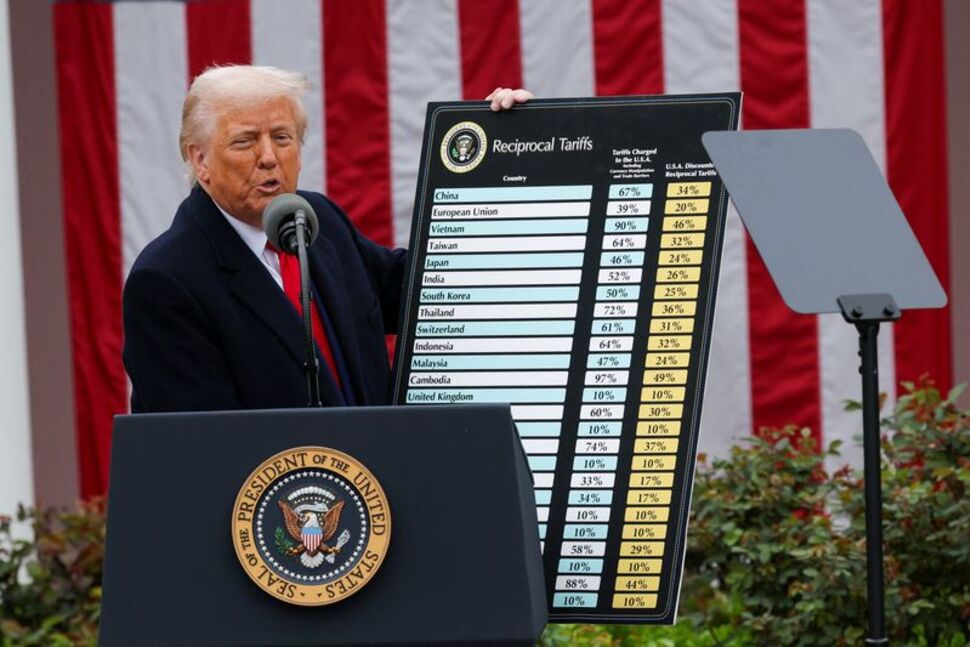
WASHINGTON D.C. : US President Donald Trump faces a fresh internal challenge as 25 democratic-ruled states have moved a court against the decision to impose tariffs on 60 economies that account for 99.4 per cent of American imports. India is currently subject to a 10 per cent tariff under the Section 301 measures, while the outcome of another investigation that could lead to additional tariffs is still pending.

This comes as Trump imposed a fresh round of tariffs ranging from 10 per cent to 12.5 per cent on 60 countries last month, citing failure on the issue of forced labour. The new levy replaced the 10 per cent global duties that expired on July 24.

The 25 states have moved the US Court of International Trade on Monday against the Trump administration for once again implementing tariffs on several countries, contending that it will raise costs for consumers and businesses nationwide.

New York Attorney General Letitia James, Governor Kathy Hochul and the coalition of the Democratic states are seeking to deem the tariffs illegal.

“After losing at the Supreme Court, the administration is once again trying to illegally raise taxes on families and businesses with a new round of tariffs,” James said in a statement.

India, along with 16 other countries, faces a 10 per cent tariff. Earlier, the US had proposed a 12.5 per cent tariff rate for India. The reduction cam after New Delhi amended its foreign trade policy on June 14 to ban imports of goods made with forced labour.

The Trump administration claims to be using section 301 of the Trade Act of 1974 to combat forced labour in global trade. However, the lawsuit argues that this is a pretext for imposing the same sweeping tariffs the administration has repeatedly tried and failed to enact, the statement said.

It added that the administration has violated the law by failing to follow section 301 requirements for imposing tariffs and implementing new tariffs without any clear connection to their stated goal of combating forced-labour practices.

“No matter how the administration tries to justify it, the law and our Constitution are clear that the president does not have the power to impose sweeping tariffs on whatever countries he wants,” the New York attorney general said.

“Tariffs are taxes, and the American people cannot and should not shoulder the extra costs that come from the President’s failed and illegal economic policy — no matter how much the President wants them to,” California Attorney General Rob Bonta said in a statement.

The lawsuit further details how tariffs are being arbitrarily imposed with little connection to the stated goal of combating forced labour, adding that they contain product exemption that undermines the desired results.

The administration’s report on its investigation identified just three products made with forced labour to justify tariffs on dozens of countries.

The lawsuit explains that the Office of the United States Trade Representative (USTR) failed to engage with testimony from countries and comments submitted during the shortened development of these tariffs, which overwhelmingly contradicted the administration’s claims that the tariffs would address the harms of forced labour.

PSA Mumbai inaugurates 16 new entry gates and Hypotenuse Road

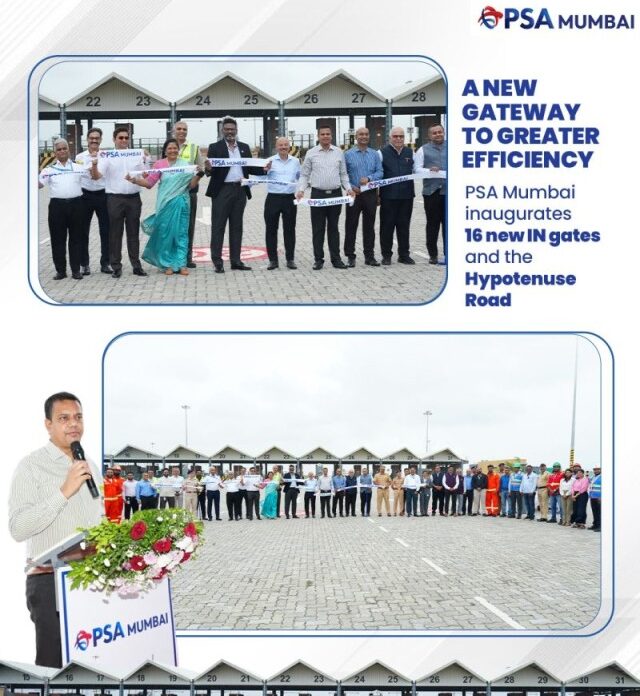
NAVI MUMBAI : PSA Mumbai has further enhanced its terminal infrastructure with the inauguration of 16 new IN gates and the Hypotenuse Road, marking another significant milestone in its ongoing efforts to improve operational efficiency and facilitate seamless cargo movement.

The infrastructure was formally inaugurated in the presence of Shri Gaurav Dayal, IAS, Chairman, Jawaharlal Nehru Port Authority (JNPA), along with senior officials from PSA Mumbai, industry stakeholders, logistics partners, and members of the port community.

The newly commissioned entry gates are designed to significantly enhance truck handling capacity by streamlining vehicle entry into the terminal. Combined with the newly developed Hypotenuse Road, the expansion is expected to improve traffic circulation within the terminal, reduce congestion at entry points, shorten truck turnaround times, and ensure faster, more efficient movement of export cargo.

The upgraded infrastructure will also support growing cargo volumes while enhancing overall supply chain efficiency, enabling transporters and exporters to benefit from quicker gate processing and improved terminal accessibility. These improvements are aligned with PSA Mumbai’s commitment to providing world-class port services through continuous infrastructure development and technology-driven operational excellence.

Speaking on the occasion, officials highlighted that the project reflects PSA Mumbai’s customer-centric approach to delivering faster, safer, and more reliable logistics solutions while strengthening the competitiveness of the Jawaharlal Nehru Port as India’s premier container gateway.

The inauguration underscores the strong collaboration between PSA Mumbai and JNPA in developing modern port infrastructure capable of supporting India’s expanding trade and logistics ecosystem. By continuously investing in capacity enhancement and process optimization, PSA Mumbai remains focused on delivering superior service standards and reinforcing its position as one of the country’s leading container terminals.