Home Blog Page 176

Saudi Arabia, 13 countries establish multinational maritime defense coalition for Bab al-Mandab

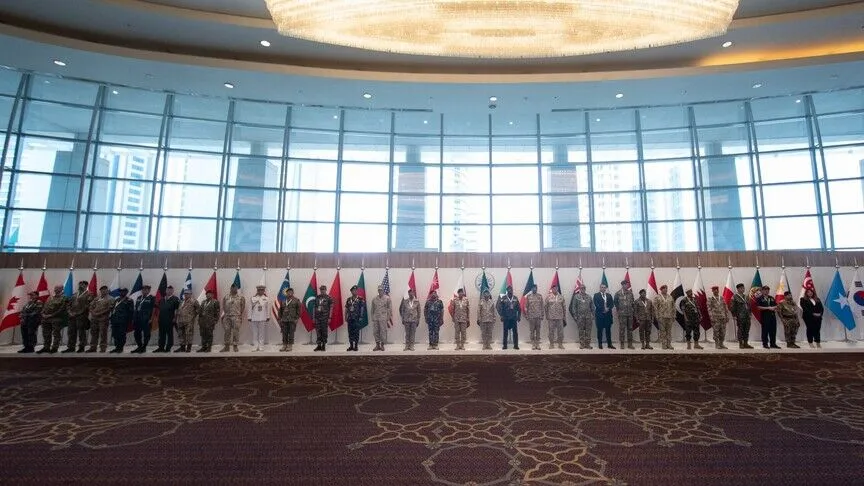
ISTANBUL : Saudi Arabia and 13 other countries announced the creation on Thursday of a multinational maritime defense coalition aimed at safeguarding freedom of navigation, international trade and energy supply routes in the Bab al-Mandab Strait, the Red Sea and the Gulf of Aden.

The announcement came in a joint statement issued at the conclusion of an international meeting hosted by by Riyadh, where chiefs of staff and representatives from 43 countries, as well as a delegation from the European Union, took part to discuss ways of enhancing the security of international maritime routes and countering threats to global navigation and trade.

The founding states said participation in the coalition’s activities would remain a sovereign decision for each member state, stressing that the alliance is “purely defensive in nature, does not target any state, alliance or international organization, and will conduct all its activities in full compliance with international law while respecting state sovereignty and protecting freedom of navigation.”

The statement also designated Saudi Arabia as the coalition’s founding and leading state and permanent headquarters, with the Joint Operations Coordination Center, the Joint Maritime Operations Center and the General Secretariat to be based in the kingdom.

The joint statement said the coalition was established as a “framework for maritime defense cooperation” aimed at enhancing maritime security, protecting freedom of navigation, securing international trade and energy supply routes, and safeguarding maritime interests in the Bab al-Mandab Strait, the Red Sea and the Gulf of Aden in accordance with international law, UN conventions and internationally recognized norms.

The statement said participating states would continue completing their domestic procedures necessary for formally acceding to the coalition’s charter. It also called for strengthening cooperation in maritime security, intelligence and information sharing, operational planning, joint exercises, exchange of lessons learned, training, capacity building and joint maritime operations in accordance with the coalition’s charter.

The Saudi Defense Ministry said Thursday’s meeting addressed the growing threats to maritime security, including the security of commercial vessels, oil tankers, and maritime infrastructure. It also explored ways to strengthen multilateral defense cooperation to protect supply chains and the global economy.

Participants also discussed the draft alliance charter, its organizational structure, command and control arrangements, and future operational mechanisms, the ministry said.

“This aims to establish an effective institutional framework for cooperation in confronting shared maritime threats in areas including the Bab al-Mandab Strait, the Red Sea, and the Gulf of Aden,” it added.

The ministry said participants reached understandings on finalizing the establishment procedures, including the final draft of the alliance charter and completing the necessary organizational structures and technical arrangements, paving the way for the alliance’s launch and the commencement of its operations.

It said the alliance represents an international defense initiative open to all countries wishing to join, and aims to protect freedom of navigation and global trade, and to enhance regional and international security and stability in the face of threats targeting international maritime routes.

According to the ministry, 14 countries issued a joint statement at the conclusion of the meeting backing the creation of the maritime coalition, including Saudi Arabia, Türkiye, Kuwait, Bahrain, Qatar, Jordan, Egypt, Pakistan, Djibouti, Somalia, Bangladesh, Yemen and the Comoros.

“The door remains open for other countries to accede to the coalition’s charter after completing their national procedures,” the ministry said.

The move comes amid escalating threats to commercial shipping in the Red Sea after Yemen’s Iran-backed Houthi group declared what it called a maritime blockade on Saudi Arabia on July 20 and subsequently claimed attacks on Saudi-linked vessels. Riyadh has vowed to protect maritime traffic and respond to threats against international navigation.
Malaysian Authorities detain Tanker for unauthorized Anchoring off Selangor Coast

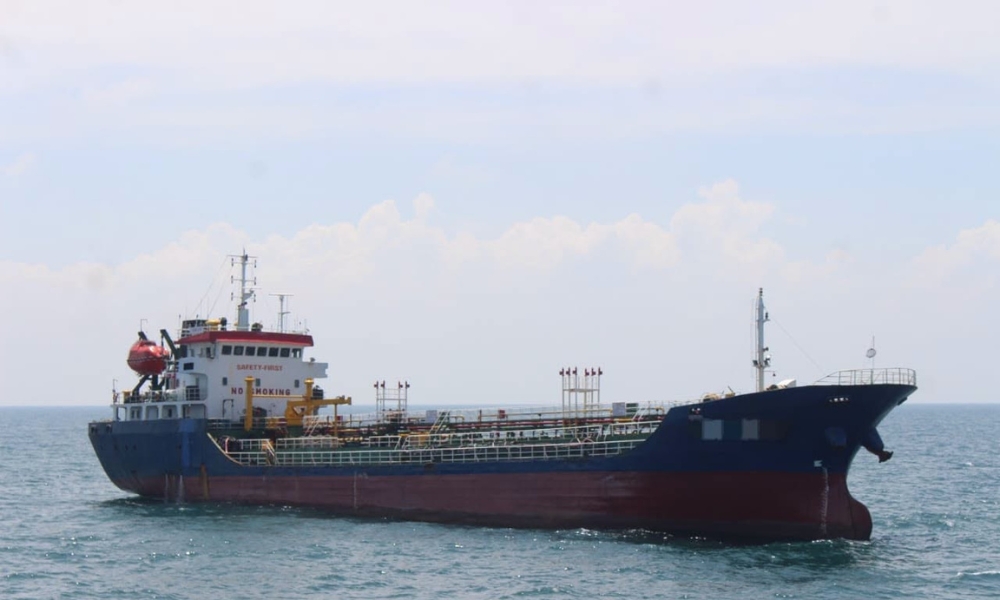
SELANGOR (MALAYSIA): Malaysian maritime authorities have detained a tanker for allegedly anchoring without the required authorization in the waters off Selangor during a routine enforcement operation conducted by the Malaysian Maritime Enforcement Agency (MMEA).

According to the MMEA, the vessel was intercepted approximately 8.8 nautical miles southwest of Sekinchan while maritime enforcement officers were carrying out a scheduled patrol in the area. Preliminary investigations found that the tanker was under the command of a 60-year-old Vietnamese captain and carried a crew of 13 members, including 12 Vietnamese nationals and one Myanmar national aged between 20 and 51 years. Authorities confirmed that all crew members possessed valid travel documents.

Officials stated that the vessel’s captain was unable to produce a valid anchoring permit issued by the Malaysian Marine Department. As a result, the tanker is suspected of violating provisions of the Merchant Shipping Ordinance 1952, which regulates anchoring activities within Malaysian territorial waters.

Following the inspection, enforcement authorities issued a detention order for the vessel. The captain and the ship’s chief engineer have been taken in for questioning and are cooperating with investigators as the inquiry continues.

The MMEA reaffirmed its commitment to strict enforcement of Malaysia’s maritime laws, emphasizing that violations involving unauthorized anchoring and other regulatory breaches will be dealt with firmly to safeguard navigational safety, maritime security, and orderly operations within the country’s waters.

The agency also urged shipowners, operators, and vessel masters to obtain the necessary approvals from the Malaysian Marine Department before anchoring in Malaysian waters, warning that failure to comply with statutory requirements could result in enforcement action and legal penalties.

PM leads high-level security meeting in Parliament with top Ministers

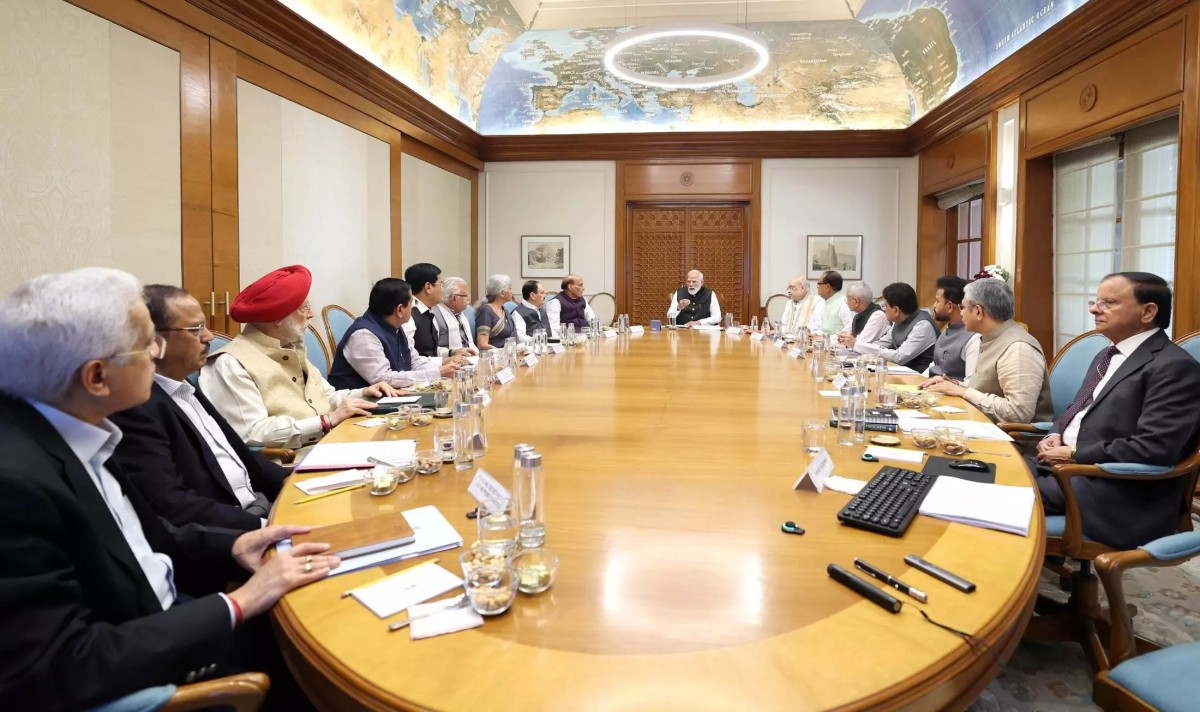
NEW DELHI : A high-level meeting of the Cabinet Committee on Security (CCS), chaired by Prime Minister Shri Narendra Modi, was held in the Parliament, with the country’s top ministers and security officials in attendance. The meeting reviewed the evolving situation in West Asia crisis and its implications for India’s energy security and fuel supplies, sources said.

Among those attending the meeting were Defence Minister Shri Rajnath Singh, Finance Minister Smt. Nirmala Sitharaman, External Affairs Minister Dr. S Jaishankar and Union ministers- Shri Piyush Goyal, Shri Kiren Rijiju and Shri JP Nadda. Petroleum and Natural Gas Minister Shri Hardeep Singh Puri and Ports, Shipping and Waterways Minister Shri Sarbananda Sonowal were also present.

National Security Adviser Shri Ajit Doval also attended the meeting, along with other senior government and security officials.

According to sources, the discussions were focused on the rapidly evolving situation in West Asia and its potential impact on India’s imports of crude oil, petroleum products, liquefied petroleum gas (LPG) and other critical energy supplies.

The security meeting also reviewed the country’s energy preparedness and contingency measures to ensure uninterrupted supplies in the event of any further escalation in the region.

The presence of the country’s top security, diplomatic, economic and energy leadership underscores the seriousness with which New Delhi is monitoring developments in West Asia, a region that accounts for a significant share of India’s crude oil and liquefied natural gas (LNG) imports.

India expedites maritime capacity expansion as Govt pushes Viksit Bharat 2047 goals

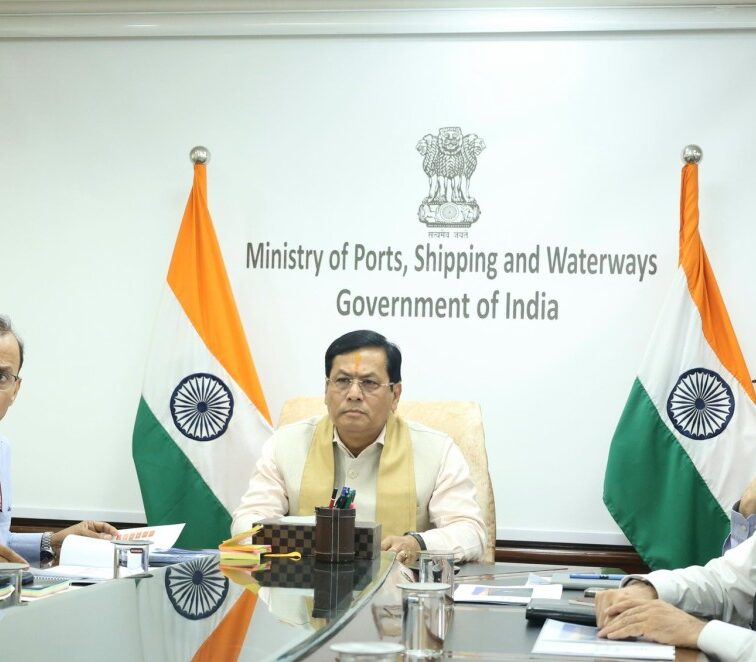
NEW DELHI : India is accelerating investments across ports, inland waterways and shipbuilding as the Ministry of Ports, Shipping and Waterways (MoPSW) advances its roadmap towards Viksit Bharat 2047, with a sharp focus on capacity creation, private investment, digitisation and maritime manufacturing.

Chairing a high-level review of the Ministry’s Viksit Bharat targets, Union Minister for Ports, Shipping & Waterways Shri Sarbananda Sonowal directed officials to accelerate implementation of flagship projects while maintaining strict adherence to timelines. Sonowal urged officials across the Ministry, major ports and the Inland Waterways Authority of India (IWAI) to work with a unified approach to achieve India’s long-term maritime ambitions.

The review comes as the Ministry reports significant progress across multiple performance indicators. India has consolidated its position as the world’s largest ship recycling nation, while inland waterways cargo has already crossed 200 million tonnes, achieving the Maritime India Vision (MIV) 2030 target several years ahead of schedule.

“These achievements demonstrate what India can accomplish when policy, execution and teamwork move together. Under the visionary leadership of Prime Minister Shri Narendra Modi, the maritime sector has emerged as one of the strongest pillars of India’s economic transformation. We must continue to work with the same sense of purpose, uphold the Prime Minister’s mantra of ‘Speed and Scale’, and ensure that every milestone under ‘Viksit Bharat 2047’ is delivered on time,” Sarbananda Sonowal said.

The Minister also called on officials to strengthen institutional resilience by incorporating lessons from global disruptions into future planning.”The evolving geopolitical situation has shown that resilience is as important as growth. Every challenge offers an opportunity to build stronger systems, enhance capacity and prepare India for the future. Our planning must anticipate global uncertainties while keeping India’s growth trajectory firmly on course,” Sonowal said.

700 MTPA Capacity Addition by 2030

The Ministry is pursuing one of the country’s largest maritime infrastructure expansion programmes, targeting more than 700 million tonnes per annum (MTPA) of additional port capacity by 2030. Among the flagship projects are the Vadhavan Port, which will add 164 MTPA of capacity by 2030-31, the Tuticorin Outer Harbour project with 39 MTPA, and the Kandla Tuna Tekra Terminal, expected to contribute 33 MTPA by 2027-28.

Overall, the Ministry plans to create an additional 682 MTPA of capacity by 2030 through a combination of new infrastructure, mechanisation and private investment. This includes 306 MTPA at major ports, 193 MTPA at key non-major ports and another 183 MTPA through mechanisation, operational efficiency improvements, public-private partnerships and capacity augmentation at emerging non-major ports.

Mechanisation, PPP to Drive Efficiency

The Ministry aims to increase cargo handling mechanisation across ports from 76% in FY 2025-26 to 93% by 2030, significantly improving operational efficiency and reducing turnaround time. Private sector participation is also expected to expand substantially. Cargo handled through public-private partnership (PPP) projects is projected to rise from 44% in 2013-14 to 85% by 2030-31, reflecting the Government’s continued emphasis on private capital and operational expertise in port development. The Ministry has also set a target of achieving 100% digitisation across the maritime sector by 2030, with integrated digital platforms expected to improve logistics efficiency, transparency and service delivery.

Shipbuilding Push Gains Momentum

India’s shipbuilding sector also recorded strong momentum during the review period. Domestic shipbuilding output increased 41%, rising from 40,923 gross tonnes (GT) in 2024 to 57,637 GT in 2025. To support long-term manufacturing growth, the Government has granted in-principle approvals for greenfield shipbuilding clusters in Tamil Nadu, Andhra Pradesh and Gujarat, each with a planned capacity of 1.2 million GT. Similar approvals for Maharashtra and Odisha are expected by August-September 2026.

A tripartite Memorandum of Understanding has also been signed with HD Hyundai-KSOE for developing a shipbuilding cluster in Tamil Nadu, while extending 100% financial support for common maritime infrastructure required for these industrial ecosystems. The review noted a sharp improvement in the value of vessels being built domestically. The average contract value per vessel has increased more than fivefold to ₹212 crore, compared with ₹41 crore previously, indicating India’s growing capability to manufacture larger and technologically advanced ships.

The Union Minister underlined the Ministry’s roadmap under Viksit Bharat 2047 to position India among the world’s leading maritime economies by strengthening infrastructure, expanding logistics capacity, boosting domestic manufacturing and enhancing global competitiveness.

GCCI held AGM and Installtion Ceremony of the Office Bearer for 2026-27

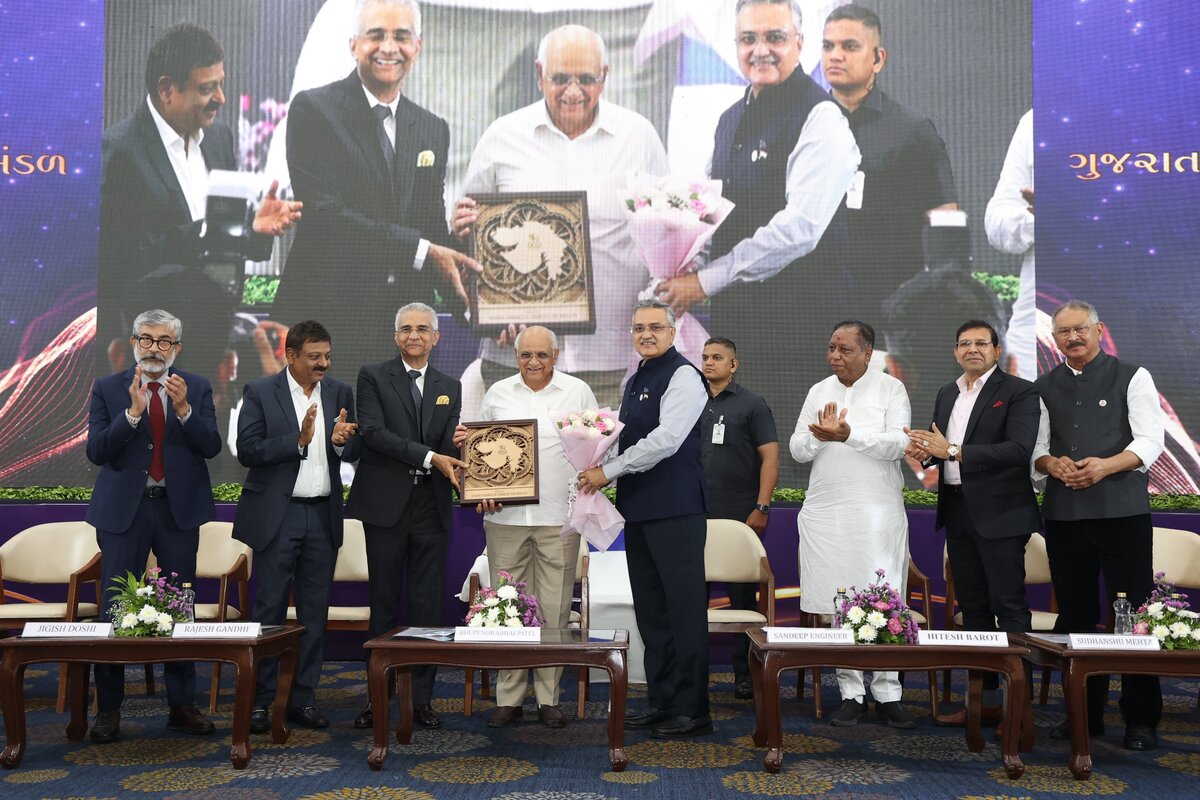
AHMEDABAD: Gujarat Chamber of Commerce & Industry (GCCI) successfully hosted its Annual General Meeting and Installation Ceremony of the Office Bearers for 2026–27 at Karnavati Club,Ahmedabad.

The ceremony was graced by Hon’ble Chief Minister of Gujarat Shri Bhupendra Patel as the Chief Guest. Shri Rajesh Gandhi, President, Shri Jigish Doshi, Sr. Vice President, and Shri Hiten Vasant, Vice President, officially took charge as the new Office Bearers of GCCI. The event was also attended by Shri Hiteshbhai Barot, Mayor of Ahmedabad, Ms. Mamta Verma (IAS), Additional Chief Secretary, Industries and Mines Department, Government of Gujarat, Imm. Past President Shri Sandeep Engineer, former GCCI Presidents, Executive Committee members, GCCI members, and distinguished guests from trade and industry.

In his address, Hon’ble Chief Minister Shri Bhupendra Patel highlighted Gujarat’s emergence as India’s leading investment destination under the visionary leadership of Hon’ble Prime Minister Shri Narendrabhai Modi and encouraged industries, particularly MSMEs, to leverage the opportunities offered by the Gujarat Industrial Policy 2026.

GCCI President Shri Rajesh Gandhi shared his vision for a stronger, future-ready Chamber, reaffirmed GCCI’s commitment to supporting the Government of Gujarat and the VGRC 2027, and emphasized innovation, MSME growth, sustainability, and proactive policy advocacy to further strengthen Gujarat’s industrial ecosystem.

The ceremony marked the beginning of a new chapter of leadership, reinforcing GCCI’s commitment to advancing trade, industry, innovation, and economic development in Gujarat.

NMPA wins First Prize under ‘Rajbhasha Shield Scheme 2024–25 for Excellence’ in official language implementation

MANGALURU : New Mangalore Port Authority (NMPA) has been conferred the First Prize under the ‘Rajbhasha Shield Scheme 2024–25’ in recognition of its exemplary implementation and promotion of Rajbhasha (Hindi) in official work. The prestigious award acknowledges NMPA’s sustained commitment to strengthening the use of Hindi in administrative functioning, official correspondence, and day-to-day governance while ensuring effective communication across all levels of the organization.

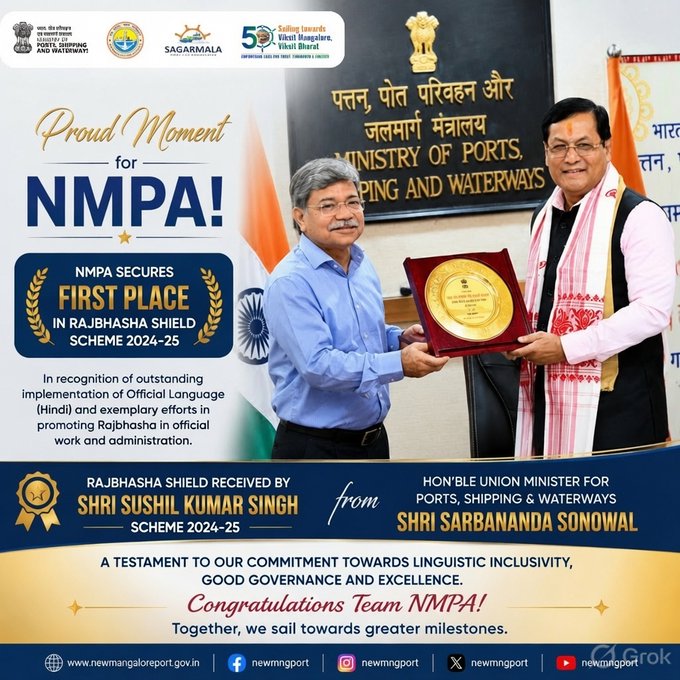
The prestigious Rajbhasha Shield was presented by the Hon’ble Union Minister of Ports, Shipping & Waterways, Shri Sarbananda Sonowal, at a ceremony held in New Delhi. The award was received by Shri Sushil Kumar Singh, Chairman, New Mangalore Port Authority, on behalf of the organization.

The recognition reflects NMPA’s consistent efforts in promoting the progressive use of Hindi through various official initiatives, capacity-building programmes, Hindi workshops, bilingual publications, digital communication, and the effective implementation of the Official Language Policy prescribed by the Government of India. The port has continuously encouraged the wider adoption of Hindi in official correspondence, meetings, documentation, and public interface, thereby fostering greater linguistic inclusivity and administrative efficiency.

Receiving the award, Shri Sushil Kumar Singh expressed gratitude to the Ministry of Ports, Shipping & Waterways and congratulated the officers and employees of NMPA for their collective contribution towards achieving this distinction. He stated that the honour is a reflection of the dedication, teamwork, and unwavering commitment of the entire NMPA family in promoting the Official Language while maintaining the highest standards of governance and operational excellence.

The First Prize under the Rajbhasha Shield Scheme reinforces NMPA’s position as one of India’s leading major ports committed not only to operational excellence but also to the effective implementation of the Government’s Official Language policy. The achievement further strengthens the port’s resolve to continue promoting Hindi as an important medium of administration while supporting transparent, inclusive, and citizen-centric governance.

The award stands as a proud milestone for New Mangalore Port Authority and reflects its continued pursuit of excellence in institutional development, administrative innovation, and the promotion of India’s linguistic heritage.

Nashik: Niphad Dry Port set to emerge as major Multi-Modal Logistics Hub

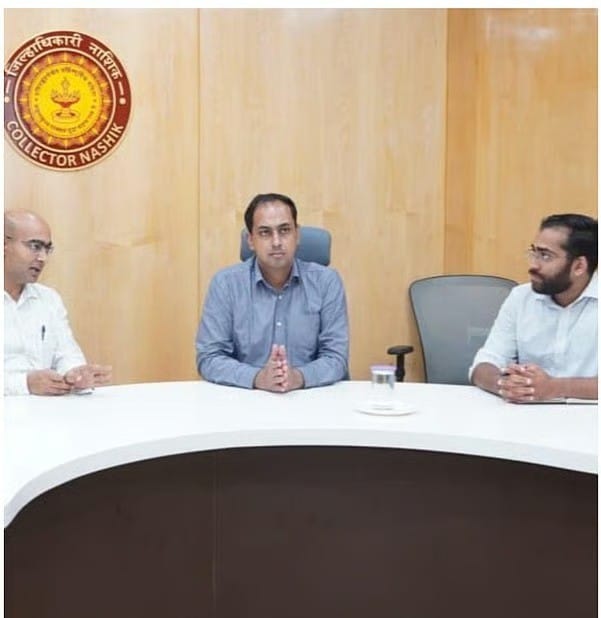
NASHIK : A significant meeting was held at the Nashik Collector’s office between District Collector Ayush Prasad and JNPT Vice Chairman Ravish Kumar Singh to discuss the development of the proposed Multi-Modal Logistics Park (MMLP) at Niphad, aimed at enhancing the district’s logistics and export capabilities.

During the meeting, it was clarified that the MMLP will be developed not only as an EXIM (Export-Import) cargo hub but also as an integrated domestic logistics park. The project is expected to strengthen the district’s transportation, warehousing and distribution infrastructure.

The proposed Niphad Dry Port will benefit from excellent multi-modal connectivity through the Nashik–Chennai Highway, Nashik Ring Road, Samruddhi Mahamarg, Ozar Airport, and the railway network, providing a major boost to trade and industrial growth.

To enhance agricultural exports, the District Collector proposed connecting the Lasalgaon and Pimpalgaon Baswant Agricultural Produce Market Committees (APMCs) with the dry port, with plans to integrate other APMCs across the district in later phases. He also suggested linking the Centre’s world’s largest grain storage scheme with the Niphad Dry Port to improve storage infrastructure, strengthen the food supply chain, and provide direct benefits to farmers and traders.

JNPT Vice Chairman Ravish Kumar Singh informed the meeting that the district’s Economic Development Cell has been connected with JNPT’s main transport office to simplify export procedures for local industries and exporters. He also announced that JNPT will participate as a key stakeholder in the District Export Promotion Committee meeting scheduled for August 4, 2026.

According to the district administration, the proposed Multi-Modal Logistics Park at Niphad, supported by robust multi-modal connectivity and JNPT’s collaboration, is expected to emerge as a key driver of Nashik’s economic growth. The project is set to significantly boost agricultural exports, trade, industry and employment, while positioning Nashik prominently on India’s national logistics and export map, said District Collector Ayush Prasad.

Source : FPJ

NHAI opens 27.1-km Deogarh-Gujarat border stretch on Amritsar-Jamnagar corridor

NEW DELHI : The National Highways Authority of India (NHAI) has opened the 27.1-km-long, six-lane Deogarh (near Dhandhaniya)-Rajasthan/Gujarat border section on the Amritsar-Jamnagar Economic Corridor, giving a major push to road connectivity between northern India and Gujarat’s key ports. The project is expected to reduce freight transit time, improve logistics and strengthen trade by offering faster access to industrial centres and refinery hubs.

BETTER CONNECTIVITY TO MAJOR PORTS

According to NHAI, the newly opened stretch creates a direct link between industrial hubs in northern India and Kandla Port and Mundra Port in Gujarat.

The improved connectivity is expected to make cargo movement faster and more efficient, benefiting industries that rely on road transport for moving goods to and from the ports.

FASTER FREIGHT MOVEMENT

One of the biggest advantages of the new highway section is the reduction in freight transit time. The Amritsar-Jamnagar Economic Corridor is one of the country’s key infrastructure projects aimed at improving connectivity between industrial regions and major ports, helping create a more integrated national transport network.

NHAI said the newly operational stretch is another step towards building a faster, more efficient highway network to support economic growth and trade across the country.

India’s first Vande Bharat Freight Train hits 145 km/h: RDSO initiates Speed & Safety Trials in Kota

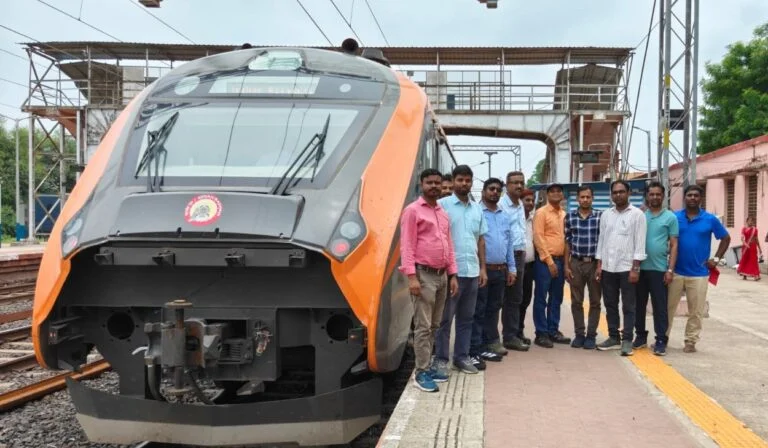
KOTA : Trials of India’s first Vande Bharat Freight EMU prototype officially, manufactured at Chennai’s Integral Coach Factory (ICF), commenced its trial run in Rajasthan’s Kota on Wednesday to evaluate its speed, braking and load capacity, an official said.

Ananjay Mishra, Director (Testing) at the Research Designs and Standards Organisation (RDSO), the Lucknow-based research arm of the Indian Railways, said the trial run commenced recently in Kota. “The train is being operated under load conditions on the Down line between Kota and Mahidpur on the Delhi-Mumbai route. Assessment would be done in both empty and loaded conditions, covering traction, braking, speed, safety, and electrical systems,” he said.

According to Mishra, the Vande Bharat Cargo train has a maximum operational speed of 160 kmph. During the trials, it is being tested at a speed of up to 140 kmph, with a comprehensive evaluation of all systems, including braking, he said. “The 16-wagon train will undergo trials at progressive speeds of 120, 130, 135, and 145 kmph. These trials will be conducted continuously on the Delhi-Mumbai railway track, covering both ‘up’ and ‘down’ lines between Sawai Madhopur, Kota, and Nagda,” he said.

The total payload load capacity is 395 tonnes with 14 of the 16 wagons having 25-tonne capacity each and remaining two are ‘driver-trailer’ wagons with 20-tonne capacity each. Like the Vande Bharat trains, the Cargo train also features automatic plug doors, Mishra said.

Compared to existing cargo trains that cover 60-70 km per hour, the Vande Bharat Freight train has an average operating speed of 80-90 km per hour along with plying at a high speed of 130 km/h.

“The train has been designed specifically for the e-commerce sector, given the current high demand for freight transportation. Large volumes of parcels are transported between cities, often relying heavily on road transport; Vande Bharat Cargo train will facilitate rapid delivery of parcels via rail. It targets enabling the immediate shipment of high-value equipment, including electronics, pharmaceuticals, and temperature-sensitive devices,” a railway official said.

Ministry of Tourism signs MoU with IndiGo to promote India as a Global Tourism Destination

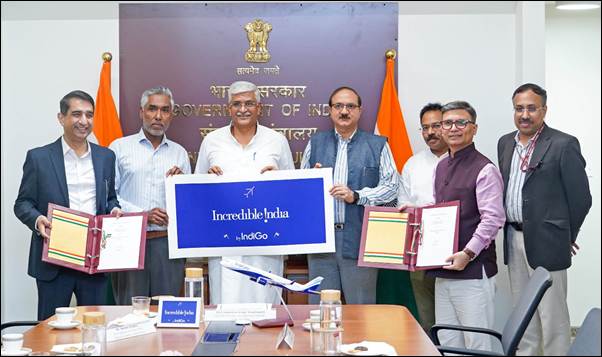
NEW DELHI : The Ministry of Tourism, Government of India, on Thursday in New Delhi, signed a Memorandum of Understanding (MoU) with InterGlobe Aviation Limited (IndiGo) to promote India as a preferred global tourism destination through a strategic, non-exclusive and non-financial collaboration.

The MoU was exchanged in the presence of Shri Gajendra Singh Shekhawat, Union Minister for Tourism and Culture. The event was attended by Shri Bhuvnesh Kumar, Secretary, Ministry of Tourism; Shri Suman Billa, Additional Secretary and Director General (Tourism); Shri Harikishore S, Joint Secretary and other senior officials of the Ministry of Tourism; and Shri Neetan Chopra, Chief Digital and Information Officer, and Shri V. Sunil, Creative Director, IndiGo, along with senior representatives of IndiGo.

Speaking on the occasion, Shri Gajendra Singh Shekhawat said that the partnership will strengthen India’s tourism promotion by combining the Ministry’s flagship Incredible India brand with IndiGo’s extensive domestic and international network. He noted that collaborative initiatives such as this will help take India’s tourism message to wider audiences and reinforce the country’s position as one of the world’s most compelling travel destinations.

Under the MoU, the Ministry of Tourism and IndiGo will jointly undertake a global communication initiative titled “Incredible India by IndiGo.” The campaign will showcase India’s rich and diverse tourism offerings, including cultural heritage, natural landscapes, spiritual destinations, wellness, adventure, wildlife and other experiential tourism products.

The campaign will be promoted through digital and print media, airport branding, in-flight platforms, social media, international travel exhibitions and other promotional channels. The Ministry of Tourism will provide access to Incredible India brand assets and promotional content, while facilitating coordination with relevant stakeholders, wherever feasible, to support campaign activities.

IndiGo will create destination-focused content and amplify India’s tourism messaging across its customer engagement platforms. The collaboration also envisages joint participation in tourism promotion initiatives, destination-focused campaigns and other mutually agreed activities aimed at enhancing the visibility of India’s tourism offerings in key domestic and international markets.

The MoU will remain valid for an initial period of two years. The partnership reflects the shared commitment of the Ministry of Tourism and IndiGo to promote India’s tourism potential, enhance international tourist arrivals and position India as a leading global tourism destination.