Home Blog Page 189

NICDC organises cross-learning site visit to AURIC Smart City to strengthen industrial corridor development

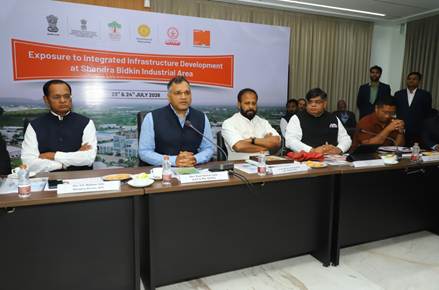
National Industrial Corridor Development Corporation (NICDC), in collaboration with Maharashtra Industrial Township Limited (MITL), commenced a two-day cross-learning site visit to the Shendra-Bidkin Industrial Area (AURIC Smart City), Chhatrapati Sambhajinagar, Maharashtra, on 23 July 2026.

The programme has brought together senior officials from State Governments, Special Purpose Vehicles (SPVs), Programme Managers for New Cities (PMNCs), EPC contractors and other stakeholders associated with Industrial Corridor projects across the country to facilitate knowledge exchange, strengthen institutional capacities and showcase best practices in the planning, implementation and operation of Greenfield Industrial Smart Cities.

Addressing the participants, Chief Executive Officer & Managing Director, NICDC, Shri Rajat Kumar Saini, highlighted that AURIC has emerged as a model for integrated industrial city development under the National Industrial Corridor Development Programme (NICDP). He emphasised that the project demonstrates the importance of world-class infrastructure, investor-centric planning, technology-enabled governance and multimodal connectivity in creating globally competitive manufacturing ecosystems. He also underlined the importance of empowering Special Purpose Vehicles with greater planning flexibility to enable efficient land utilisation, infrastructure optimisation and future expansion. Shri Saini noted that cross-learning initiatives play an important role in replicating successful implementation practices across industrial corridor projects.

The first day of the programme provided participants with first-hand exposure to AURIC’s planning approach and integrated infrastructure. The visit included presentations on the development of the Shendra-Bidkin Industrial Area, demonstrations of digital planning and monitoring systems, and visits to operational industrial units and key infrastructure facilities, including utility systems, connectivity infrastructure and industrial development sites.

The programme also provided a platform for discussions on integrated master planning, project implementation, land utilisation, investor facilitation, digital governance and project monitoring. Participants exchanged experiences on strengthening coordination among implementing agencies and adopting best practices to accelerate infrastructure development across Industrial Corridor projects.

The visit also included discussions on the implementation framework of the Bharat Audyogik Vikas Yojana (BHAVYA), a flagship initiative being implemented by NICDC to develop world-class plug-and-play industrial parks across the country. Participants deliberated on how the experience gained from AURIC’s integrated planning, utility infrastructure, digital governance and investor facilitation mechanisms could support implementation of industrial parks under the BHAVYA Scheme. States and implementing agencies were encouraged to actively participate in the first round of applications under the scheme, with submissions open until 31 July 2026.

The discussions highlighted the role of plug-and-play infrastructure, integrated utility networks, technology-enabled urban management and multimodal connectivity in attracting investments, improving ease of doing business and strengthening India’s manufacturing ecosystem. Participants also exchanged views on sustainable infrastructure, digital land management systems, investor-friendly approval mechanisms and future-ready industrial ecosystems that could be adapted across other Industrial Corridor projects.

The programme will continue on 24 July 2026 with technical presentations on project implementation, infrastructure development, challenges and best practices, followed by an interactive cross-learning session among participating States and project stakeholders. The deliberations are expected to further strengthen institutional collaboration and facilitate adoption of best practices across Industrial Corridor projects being developed under the National Industrial Corridor Development Programme (NICDP).
NISAA felicitates CONCOR CMD Sanjay Swarup ahead of his retirement

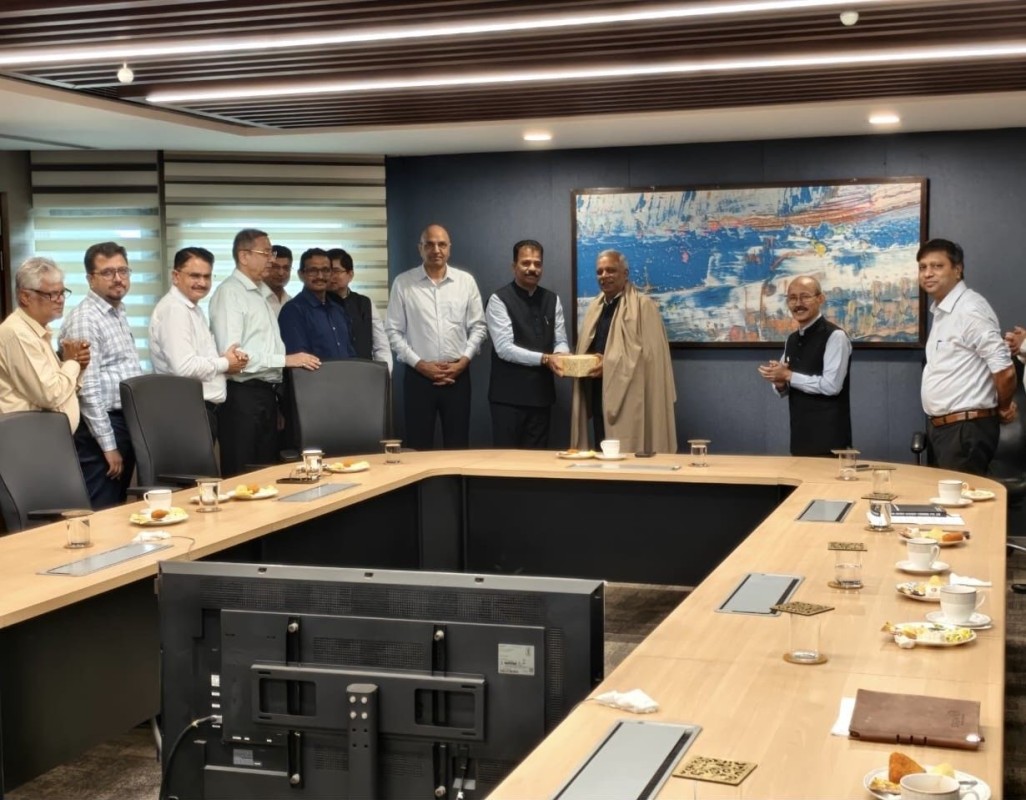
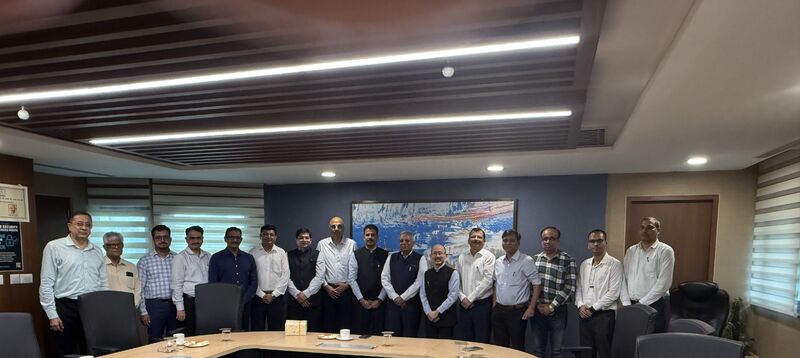
NEW DELHI : The Executive Committee of the National Inland Shippers Association of India (NISAA) paid a courtesy visit to Shri Sanjay Swarup, Chairman and Managing Director (CMD), Container Corporation of India Ltd. (CONCOR), at the CONCOR Corporate Office on 22 July 2026 to express its sincere appreciation for his distinguished leadership and remarkable contribution to India’s logistics and container transportation sector.

During the meeting, the NISAA delegation felicitated Shri Swarup and conveyed its heartfelt gratitude for his dedicated service, visionary leadership, and unwavering commitment to strengthening the country’s multimodal logistics ecosystem. The association acknowledged his pivotal role in enhancing CONCOR’s operational efficiency, expanding multimodal connectivity, promoting sustainable logistics solutions, and supporting India’s growing EXIM trade through modern container transportation services.

The delegation lauded Shri Swarup’s efforts in driving customer-centric initiatives, improving logistics infrastructure, and fostering closer collaboration with trade, industry, and supply chain stakeholders. His tenure has been marked by several significant milestones that have contributed to strengthening CONCOR’s position as India’s leading multimodal logistics service provider.

On the occasion, members of NISAA extended their best wishes to Shri Swarup as he embarks on a new chapter following his retirement, wishing him good health, happiness, and continued success in all his future endeavours.

Senior officials and dignitaries from CONCOR were also present during the interaction, making the occasion a memorable farewell and a fitting tribute to Shri Swarup’s enduring contribution to the logistics and container transportation industry.

The meeting reflected the strong partnership between CONCOR and the trade community, while recognising the leadership that has played an important role in advancing India’s logistics sector and facilitating efficient cargo movement across the country.

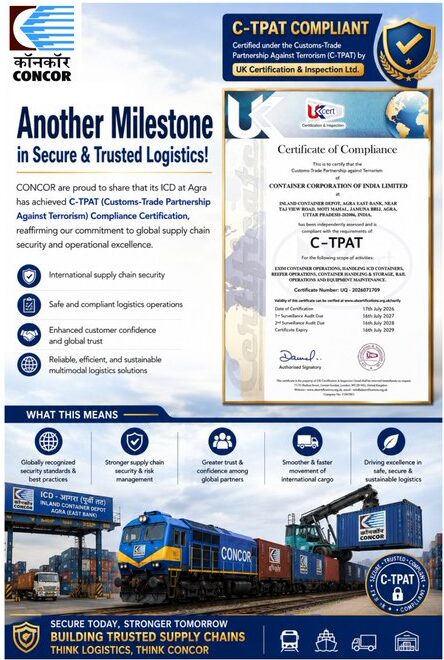
CONCOR ICD Agra reinforces Global Supply Chain Security through C-TPAT Compliance

AGRA : Container Corporation of India Ltd. (CONCOR) has reaffirmed its commitment to secure and efficient international trade with the implementation of Customs Trade Partnership Against Terrorism (C-TPAT) Compliance at its Inland Container Depot (ICD) in Agra.

The C-TPAT compliance programme underscores CONCOR ICD Agra’s focus on strengthening supply chain security, enhancing operational efficiency, and aligning its logistics operations with globally recognised security standards. By adopting international best practices, the depot aims to provide customers with secure, reliable, and seamless logistics solutions for international cargo movement.

As part of its commitment to supply chain resilience, CONCOR ICD Agra has strengthened cargo protection through comprehensive risk management measures and secure logistics processes. The initiative is expected to enhance confidence among global customers, trade partners, and stakeholders by ensuring high standards of security and compliance throughout the logistics chain.

C-TPAT compliance also contributes to faster and more efficient cargo movement by facilitating streamlined logistics processes while maintaining stringent security protocols. The certification reinforces CONCOR’s role in supporting India’s international trade ecosystem through world-class logistics infrastructure and globally accepted operational practices.

The initiative reflects CONCOR’s continued emphasis on safety, security, regulatory compliance, and sustainability across its operations. By integrating internationally recognised security measures into its logistics framework, CONCOR ICD Agra is further strengthening its position as a trusted logistics partner for exporters and importers engaged in global trade.

With C-TPAT-compliant operations, every shipment handled through CONCOR ICD Agra benefits from enhanced security, greater reliability, and adherence to international trade security standards, supporting seamless cross-border cargo movement and reinforcing India’s growing presence in global supply chains.

CWC launches Heavy-Duty EV Fleet to promote sustainable logistics

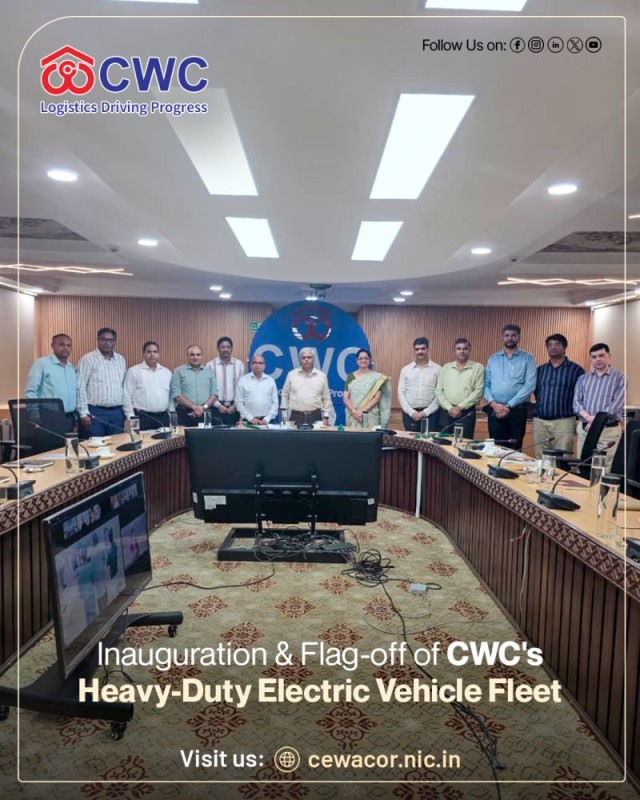
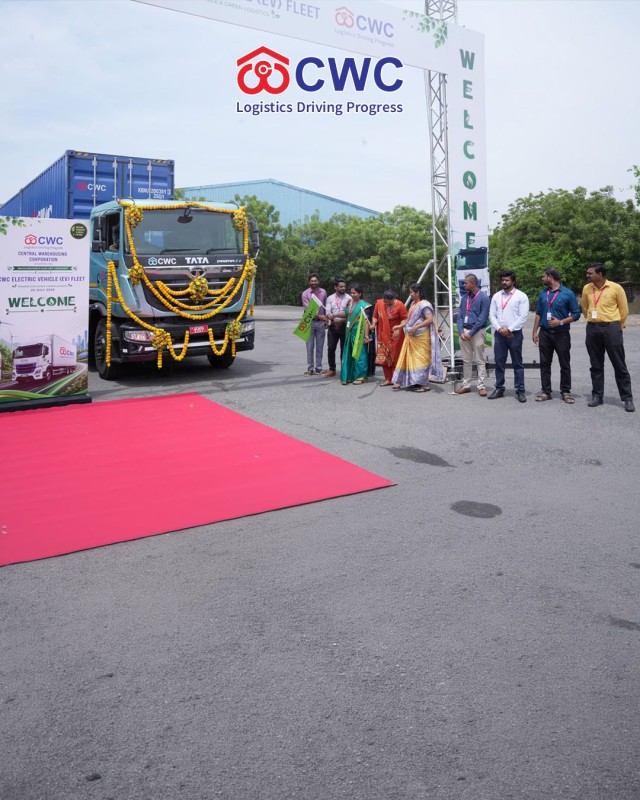
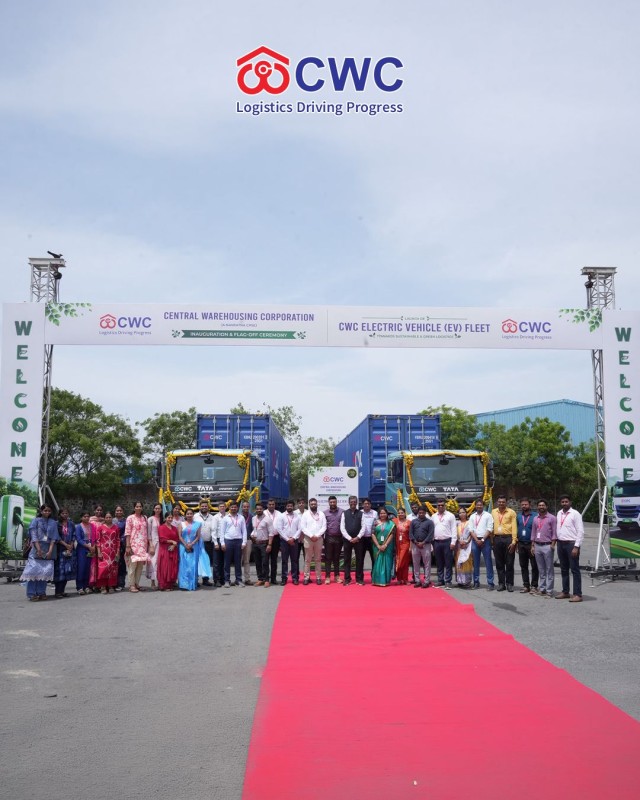
CHENNAI : Central Warehousing Corporation (CWC) marked a significant milestone in its green logistics journey with the inauguration and flagging off of its Heavy-Duty Electric Vehicle (EV) Fleet for commercial operations, reinforcing its commitment to sustainable, energy-efficient and environmentally responsible logistics solutions.

The programme was conducted through coordinated arrangements at the Integral Coach Factory (ICF), Chennai, and DPE, Tiruvottiyur, Chennai, with seamless live audio-visual connectivity between both locations, ensuring synchronized participation by officials and stakeholders.

The inauguration ceremony was attended by Shri U. Subba Rao, General Manager, Integral Coach Factory (ICF), Chennai; Shri Senthil Kumar, Principal Chief Commercial Manager (PCCM), Southern Railway; Shri N. Sitaram Prasad, Principal Chief Mechanical Engineer (PCME), ICF; Shri Samuel Praveen Kumar, Director (Marketing & Corporate Planning), CWC; and Shri J. Navukkarasu, Regional Manager, CWC Regional Office, Chennai.

The flag-off ceremony was virtually joined via video conference by Shri Santosh Sinha, Managing Director, CWC, Smt. Sangeeta Ramrakhyani, Director (HR), CWC, along with other senior officials of the Corporation, who highlighted the importance of adopting clean mobility solutions to build a sustainable logistics ecosystem.

The induction of heavy-duty electric vehicles into CWC’s commercial fleet represents a major step towards reducing carbon emissions, improving energy efficiency, and supporting India’s transition to cleaner freight transportation. The initiative aligns with the Government of India’s vision of promoting electric mobility and achieving net-zero emission goals while enhancing the efficiency of the country’s logistics sector.

By integrating electric vehicles into its operations, CWC aims to lower its environmental footprint, reduce operating costs over the long term, and provide customers with greener logistics solutions without compromising operational efficiency. The move is expected to strengthen last-mile connectivity and contribute to the development of a modern, technology-driven warehousing and logistics network.

The launch of the Heavy-Duty EV Fleet reflects CWC’s continued focus on innovation, sustainability, and operational excellence, reaffirming its commitment to supporting India’s evolving supply chain and logistics landscape through environmentally responsible initiatives.

Allcargo Logistics strengthens Supply Chains for India’s Specialised MSME Clusters

MUMBAI: Allcargo Logistics, an integrated logistics provider through its Domestic Supply Chain, Express Distribution and Consultative Logistics businesses, is enabling MSMEs across India’s specialised manufacturing and artisan clusters with integrated, technology-enabled logistics solutions. By connecting production hubs with consumption markets across the country, the company is helping businesses improve supply chain efficiency, expand market reach, enhance delivery reliability and scale operations with greater confidence in an increasingly competitive marketplace.

Over the past year, Allcargo Logistics has supported businesses across these specialised clusters through its integrated logistics network. From Chikankari garments in Lucknow and carpets in Bhadohi, to rubber footwear and slippers in Kanpur and dry fruits from Jammu & Kashmir, the company is enabling businesses to strengthen market access and improve distribution efficiency across India. Supported by multimodal transportation, nationwide distribution infrastructure and real-time shipment visibility, businesses are benefiting from faster movement of goods, improved planning and more reliable deliveries, enhanced supply chain visibility and greater access to customers across metropolitan as well as Tier II, Tier III and Tier IV markets.

Commenting on the role of logistics in strengthening India’s MSME ecosystem, Mr. Ketan Kulkarni, Managing Director & CEO, Allcargo Logistics, said, “India’s specialised MSME clusters are driving regional economic growth while preserving the country’s rich manufacturing and artisanal heritage. As these businesses expand into new markets, efficient and technology-enabled logistics become essential for ensuring speed, visibility and reliability across the supply chain. At Allcargo Logistics, we are committed to helping MSMEs scale confidently through integrated logistics solutions that strengthen competitiveness, improve market accessibility, and support sustainable growth. By combining nationwide reach, digital visibility and consultative logistics expertise, we are enabling businesses across India’s specialised clusters to build more agile, resilient and future-ready supply chains.“

India’s specialised MSME clusters including Lucknow’s Chikankari apparel, Bhadohi’s carpet industry, Kanpur’s footwear manufacturing ecosystem and Jammu & Kashmir’s dry fruit sector play an important role in employment generation, exports and regional economic development. As demand continues to grow across domestic and international markets, businesses increasingly require integrated logistics solutions that offer seamless connectivity, shipment visibility and dependable distribution to improve customer service levels and respond faster to changing market demand.

To support this growth, Allcargo Logistics has significantly expanded its nationwide network. The company has increased its transshipment centres from 21 to 71 and strengthened its Allcargo Extended Reach (AER) network to cover 100% of India’s serviceable PIN codes. Mapped PIN codes have grown from 21,000 to over 32,000, while direct serviceable PIN codes have more than doubled from 4,900 to over 10,000 through Allcargo Distribution Centres. This extensive network enables MSMEs to connect efficiently with metropolitan markets as well as Tier II, Tier III and Tier IV cities, helping them improve service levels, reduce transit times, and unlock new growth opportunities.

Additionally, Allcargo Logistics is helping businesses optimise transportation through better route planning, load consolidation and enhanced supply chain visibility, enabling customers to reduce inefficiencies while building more resilient and sustainable supply chains. Backed by its integrated logistics capabilities, nationwide infrastructure and technology-led operations, the company continues to support MSMEs in building scalable supply chains that are equipped for long-term growth.

SCI expands Structured Onboard Training Programme with second batch of GP Rating & CCMC Trainees on MV Swaraj Dweep

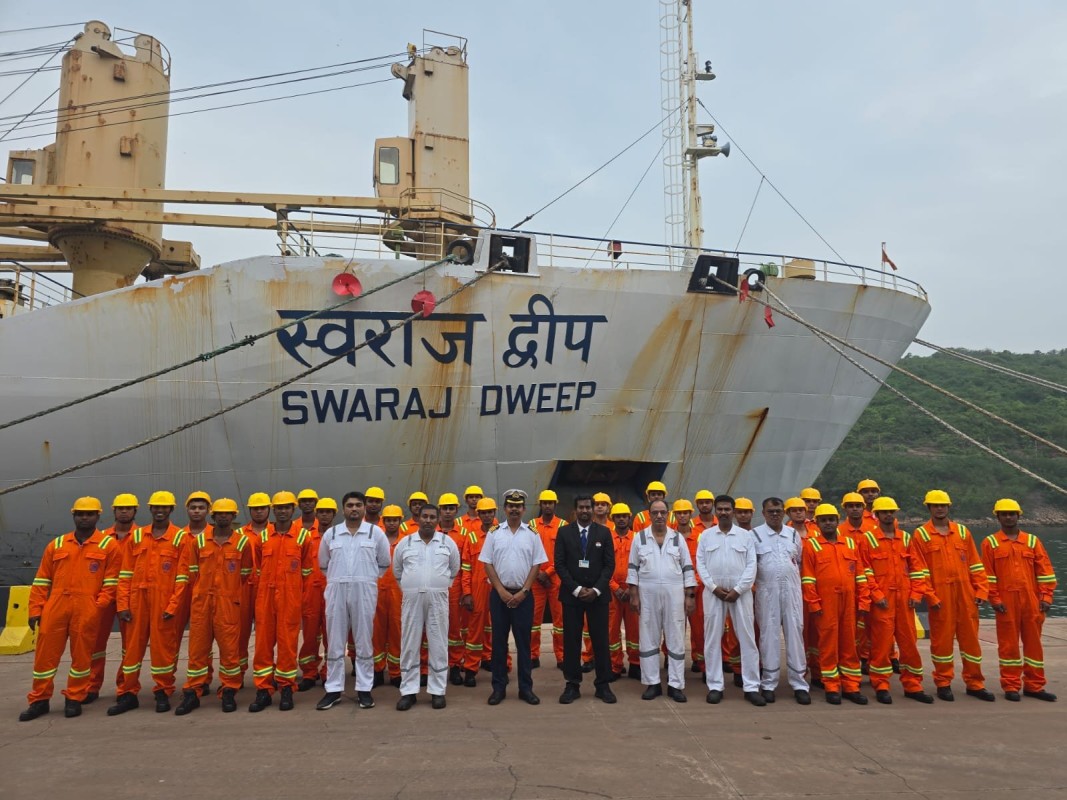
MUMBAI : The Shipping Corporation of India Ltd. (SCI), India’s premier national shipping company, has further strengthened its commitment to developing a highly skilled maritime workforce by onboarding the second batch of 24 GP Rating and Certificate Course in Maritime Catering (CCMC) trainees onboard MV Swaraj Dweep on 21 July 2026 under the Structured Onboard Training Programme of the Ministry of Ports, Shipping and Waterways (MoPSW).

swaraj deep sci ship SCI expands Structured Onboard Training Programme with second batch of GP Rating & CCMC Trainees on MV Swaraj Dweep

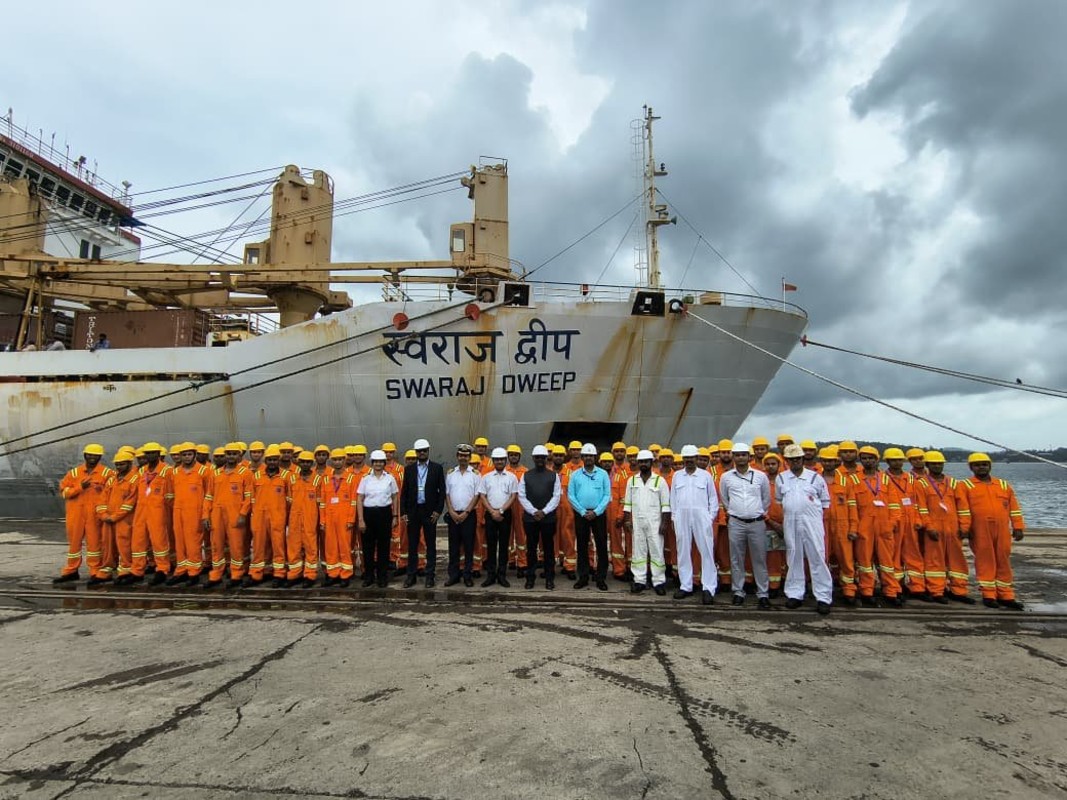
The development follows the successful commencement of the programme with the first batch of 30 GP Rating and CCMC trainees, who began their mandatory onboard training on 15 July 2026. With the induction of the second batch, a total of 54 trainees have now joined the programme onboard MV Swaraj Dweep, marking steady progress in implementing the Government of India’s initiative to strengthen practical maritime training.

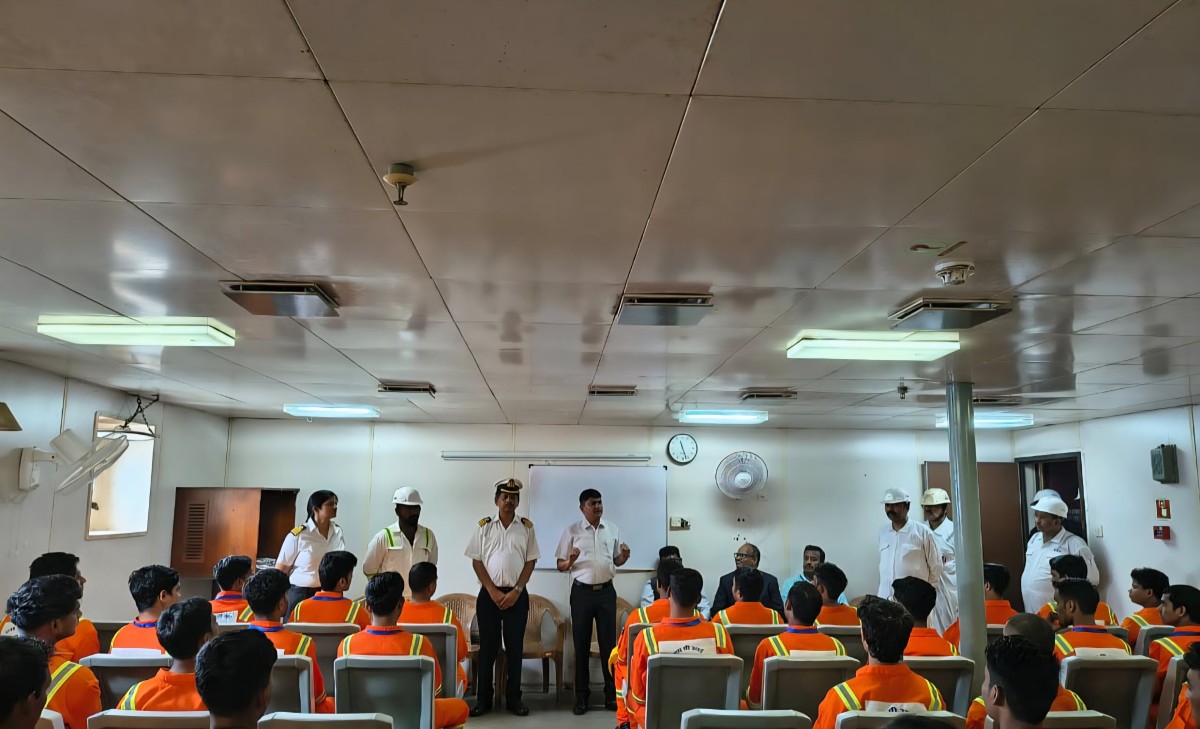
The onboarding ceremony was attended by Cdr. Vijaya Kumar from the Directorate of Shipping Services (DSS), Mr. C. Gopikrishna, Deputy Director General, Directorate General of Maritime Administration (DGMA), Mr. V. Azhaghuvel, Regional Deputy General Manager, SCI (Sri Vijaya Puram), and Capt. Kaustuv Dutta, Master of MV Swaraj Dweep, underscoring the collaborative efforts of all stakeholders in nurturing the next generation of Indian seafarers.

swaraj deep vessel sci SCI expands Structured Onboard Training Programme with second batch of GP Rating & CCMC Trainees on MV Swaraj Dweep

The Structured Onboard Training Programme has been introduced by MoPSW to facilitate mandatory shipboard training for GP Rating and CCMC candidates, enabling them to gain hands-on operational experience in a real shipboard environment. The programme addresses one of the critical requirements for certification while enhancing the employability of aspiring seafarers and preparing them for careers in both the domestic and international maritime sectors.

During their training, the cadets will receive structured practical exposure to shipboard operations, safety procedures, emergency response drills, maintenance practices, cargo and passenger handling, hospitality services, and maritime regulations under the supervision and mentorship of experienced officers and crew. The programme aims to bridge the gap between classroom learning and operational competence, ensuring trainees develop the skills and confidence required for professional service at sea.

SCI has been playing a pivotal role in supporting national maritime capacity-building initiatives by providing quality onboard training opportunities across its fleet. Through this continued collaboration with the Directorate of Shipping Services (DSS), the Directorate General of Maritime Administration (DGMA) and the Ministry of Ports, Shipping and Waterways, SCI is contributing significantly to the creation of a competent, globally competitive and future-ready maritime workforce.

The initiative aligns with the objectives of Maritime India Vision 2030, which seeks to position India as a leading global supplier of skilled seafarers by strengthening maritime education, enhancing practical training infrastructure, and expanding employment opportunities for Indian youth in the global shipping industry.

By steadily increasing onboard training capacity, SCI continues to reinforce its role in advancing India’s maritime ecosystem while supporting the Government’s vision of creating a robust talent pipeline for the nation’s growing blue economy.

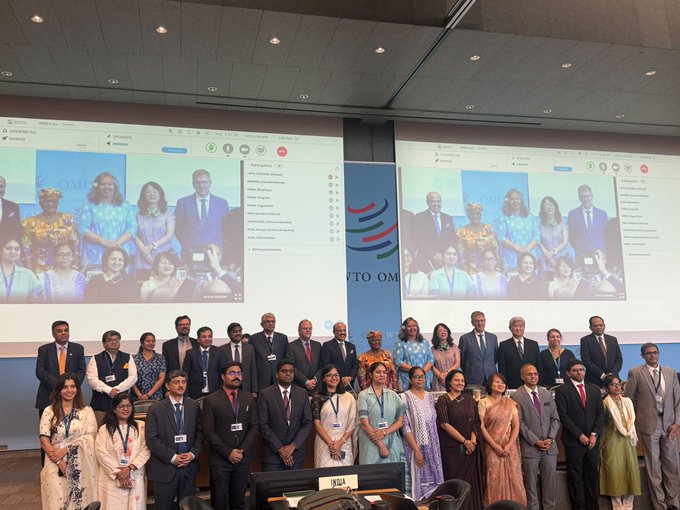
India concludes Eighth Trade Policy Review at WTO in Geneva

GENEVA : The second and final session of India’s Eighth Trade Policy Review (TPR) concluded on Thursday at the World Trade Organization (WTO) in Geneva. The Trade Policy Review is a key transparency and monitoring mechanism of the WTO under which Members’ trade and related policies are periodically examined to enhance transparency, strengthen adherence to WTO rules and facilitate constructive dialogue among Members.

India’s official delegation for the Eighth Trade Policy Review was led by Commerce Secretary Shri Rajesh Agarwal. In his closing statement to the WTO Membership, the Commerce Secretary thanked Members for their active participation and the keen interest shown in India’s trade policies. He reaffirmed that reform is a continuous process and highlighted India’s commitment to an open, transparent and predictable trade and investment regime. He underlined that India’s tariff reforms, customs simplification measures and ambitious Free Trade Agreement (FTA) strategy have steadily strengthened the country’s integration with the global economy while supporting domestic development objectives. He also emphasized that India remains a major engine of global demand.

Responding to the issues raised by Members, the Commerce Secretary reiterated that India’s trade policies are guided by WTO-consistent principles while balancing the developmental needs of a large developing economy. He emphasized that India’s agricultural tariff structure is designed to safeguard the livelihoods of millions of small, low-income and resource-poor farmers, ensuring fairness and equity, while industrial tariffs support supply chain resilience, diversification and domestic manufacturing capabilities in an evolving global economic environment.

During the review, India received 1,094 written questions from 44 WTO Members. During the two review sessions held on 21 and 23 July 2026, 68 WTO Members made interventions, reflecting growing global interest in India’s economic transformation and its role in the multilateral trading system. Several Members recalled the value of their trade and economic relationship with India and broadly appreciated India’s constructive engagement in the multilateral trading system and its strong economic resilience. Members also highlighted India’s achievements in Digital Public Infrastructure, customs and trade facilitation modernization, innovation and startup initiatives, expansion of regional trade agreements, and efforts to integrate MSMEs into global value chains. They also welcomed India’s acceptance of the WTO Agreement on Fisheries Subsidies.

On sanitary and phytosanitary measures, technical regulations and trade remedies, the Commerce Secretary reaffirmed India’s commitment to transparency, stakeholder consultations and adherence to WTO rules. He noted that India’s Quality Control Orders are intended to achieve legitimate public policy objectives, while trade remedy investigations are conducted transparently, based on objective evidence, due process and judicial oversight. He further highlighted that the overall trade coverage of India’s trade remedy measures remains limited and that India continues to apply the Lesser Duty Rule in its anti-dumping framework.

The Commerce Secretary also highlighted India’s continued efforts to promote sustainable development, women’s economic empowerment, digital public infrastructure, intellectual property reforms, services trade, investment facilitation and Ease of Doing Business. He noted India’s significant progress in financial inclusion, digital commerce, logistics modernization and environmental sustainability, while reaffirming India’s commitment to an inclusive and innovation-driven growth model.

On WTO reform, the Commerce Secretary reiterated India’s strong commitment to an open, inclusive, transparent and rules-based multilateral trading system. He emphasized that WTO reform should remain development-oriented, preserve policy space for developing countries, strengthen the Organization’s credibility and deliver on existing mandates. India also reaffirmed its commitment to engaging constructively with all Members to strengthen the multilateral trading system while preserving the foundational principles of the WTO.

The Commerce Secretary expressed his gratitude to the Chair of the Trade Policy Review Body, Ambassador Nella Pepe Tavita-Levy of Samoa, and the Discussant, Ambassador Guilherme de Aguiar Patriota of Brazil, for their leadership and valuable contributions during the review process. He also thanked the WTO Secretariat, WTO Members, and the Indian teams in Geneva and New Delhi for their dedicated efforts in ensuring the successful conclusion of India’s Eighth Trade Policy Review.

Concluding the review, the Commerce Secretary reaffirmed India’s unwavering commitment to transparency, dialogue and constructive engagement within the WTO. Recalling the Indian philosophy of “Vasudhaiva Kutumbakam”—the world is one family—he emphasized that India will continue to work with all Members to strengthen the multilateral trading system so that international trade remains a force for shared prosperity, inclusive growth and sustainable development.

In his closing remarks, the Discussant, H.E. Mr. Guilherme de Aguiar Patriota (Brazil, in his personal capacity), observed that at a time of heightened global uncertainty, many Members expressed the expectation that India would continue to act as a bridge-builder by promoting dialogue, fostering consensus and strengthening a rules-based, inclusive and resilient multilateral trading system. He underscored India’s unique position as a leading voice of the Global South and its important role in bridging differences among Members to advance collective action within the WTO.

In her concluding remarks, the Chair of the Trade Policy Review Body, Ambassador Nella Pepe Tavita-Levy of Samoa, noted that WTO Members widely acknowledged India’s growing importance in the global economy and recognized its expanding role as a driver of global growth and trade. She also referred to the concerns raised by Members and expressed the hope that India would address them appropriately.

Overall, India’s Eighth Trade Policy Review concluded on a positive note, underscoring the country’s growing importance in the multilateral trading system and Members’ expectation that India will continue to play a central role in strengthening and shaping the future of the rules-based global trading system.

DP World to expand UAE Gateway Network with new Fujairah Terminals

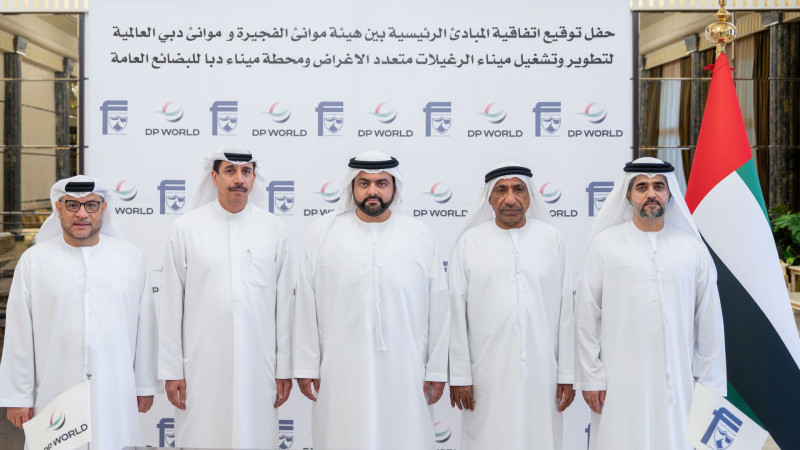
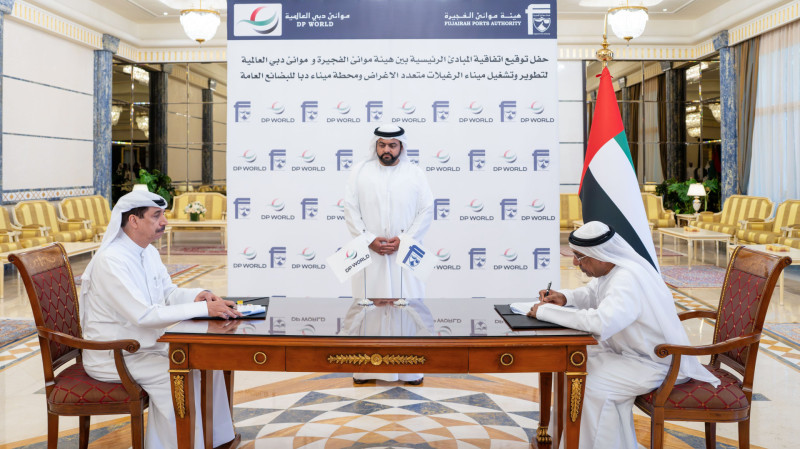
DUBAI : DP World has reached an agreement in principle with the Fujairah Ports Authority under a 50-year concession to develop two new terminals on the UAE’s east coast — the Al Rugaylat container and multi-purpose terminal, and the Dibba General Cargo terminal. The development will expand DP World’s UAE capacity and gateway network, giving customers greater choice, flexibility, and connectivity across regional and global trade routes.

The project will establish a new deep-water trade gateway on the UAE’s east coast, capable of handling the latest generation of Ultra Large Container Vessels. Al Rugaylat is designed to handle up to 2.5 million TEUs annually, alongside 1.7 million tonnes of general cargo and 190,000 Car Equivalent Units (CEUs), while Dibba will add up to 3.6 million tonnes of annual general cargo capacity.

The new terminals build on Fujairah’s growing role as a global maritime hub. Positioned on the Gulf of Oman, Fujairah is poised to become a leading centre for maritime services, and the development of ports and logistics zone will bring further investment, employment and long-term economic opportunity to the emirate.

Once operational, the development will increase DP World’s total container handling capacity in the UAE from 19.4 million TEUs to almost 22 million TEUs, while significantly expanding general cargo and Ro-Ro capability.

800 signing1 DP World to expand UAE Gateway Network with new Fujairah Terminals

Connected to Jebel Ali through DP World’s inland logistics network, the new terminals will be integrated with Jafza, extending DP World’s end-to-end supply chain across the UAE and enabling customers to move cargo more efficiently between ports, logistics hubs and end markets. Development will be delivered in phases, with construction expected to take approximately 24 to 30 months from commencement.

H.H. Sheikh Saleh Bin Mohamed Al Sharqi, Chairman, Fujairah Ports Authority, said: “The partnership with DP World marks an important milestone in Fujairah’s continued development as one of the region’s most important maritime gateways. The Al Rugaylat and Dibba terminals will bring world-class operating capability, expanded capacity and new investment to the emirate. We look forward to working with DP World to deliver a project that will benefit customers, communities and the UAE’s wider economy.”

H.E. Essa Kazim, Chairman, DP World, said: “The UAE has been at the heart of DP World’s story for more than four decades, and this investment reflects our confidence in its future as one of the world’s leading trade and logistics hubs. Building on the strength of Jebel Ali, this development deepens our commitment to the UAE and reinforces the country’s strategic role in global trade.”

Yuvraj Narayan, Group Chief Executive Officer, DP World, said: “Fujairah strengthens what Jebel Ali already delivers — a single, global integrated platform for moving goods across global supply chains and within the UAE and beyond. With Jebel Ali operating at high utilisation, this development provides the additional capacity to support long-term growth. For cargo owners, it means greater flexibility, more choice and stronger supply chain resilience.”

H.E. Capt Mousa Murad, Managing Director, Fujairah Ports Authority, said: “This development will add significant new capability to Fujairah’s port infrastructure and enhance the range and quality of services we can offer to cargo owners and logistics customers. By combining Fujairah’s strategic location with DP World’s operating expertise, we aim to deliver modern, efficient terminals that support regional trade flows, strengthen connectivity and meet the highest international standards.”

France, Qatar condemn Houthi strikes on Saudi vessels, warn of threat to maritime security

PARIS: France and Qatar on Thursday strongly condemned the Houthi strikes on Saudi vessels in the Red Sea, warning that the strikes threaten maritime security, regional stability and global energy supplies.

As reported by France 24, France called on the Iran-backed Houthis to halt their offensive operations, calling the strikes “irresponsible and a serious escalation.”

“Houthi attacks on Saudi tankers are irresponsible and a serious escalation,” a spokesperson for the French Foreign Ministry said at a press conference, urging the group to stop targeting commercial shipping.

The condemnation came after Yemen’s Houthi rebel group on Wednesday (local time) claimed responsibility for an attack on two Saudi oil tankers in the Red Sea, days after Saudi forces carried out strikes on Sanaa airport, escalating tensions between Riyadh and the Iran-backed group.

Qatar also denounced the strike, calling it “a serious violation of international maritime safety, a direct threat to global energy security, and a clear and blatant breach of international law.”

In a statement, Qatar’s Ministry of Foreign Affairs warned that “the continuation of these rejected attacks represents a dangerous escalation that threatens the security and stability of the region and undermines efforts to consolidate regional security and stability.”

The ministry called on the international community to implement relevant UN Security Council resolutions, including Resolution 2216 on Yemen and Resolution 2722 on freedom of navigation in the Red Sea, stressing that “freedom of navigation in international waterways is a fundamental principle of international law.”

Qatar reaffirmed its “full solidarity with the Kingdom of Saudi Arabia” and support for “all measures taken by the Kingdom to preserve its sovereignty, security, and interests,” adding that Saudi Arabia’s security “is an integral part of the security of the State of Qatar and the Gulf Cooperation Council (GCC) states.”

The ministry also expressed appreciation for Oman’s mediation efforts aimed at reviving the political process in Yemen and achieving regional security and stability.

Earlier, US President Donald Trump issued a stern warning to Tehran, stating that Washington will hold Iran directly accountable if the Houthi movement executes further attacks on maritime vessels.

In a statement posted on Truth Social, Trump highlighted that the United States had previously carried out a powerful military strike against the Houthis a year ago after the group disrupted global commerce and trade by targeting shipping lanes.

“A year ago the United States of America attacked, very powerfully, the Houthis, for their interference with commerce and trade, by shooting at ships. Since that time, and during our conflict with Iran, they have acted very responsibly,” Trump said.

He warned that any continuation of such maritime assaults would result in “major military punishment” directed at both Tehran and the Yemen-based movement.

“Major military punishment will be inflicted upon Iran and, of course, the Houthis themselves,” Trump stated.

Meanwhile, on Wednesday, Brigadier General Yahya Saree Qasim Saree, the official spokesperson for the Houthis, claimed in a statement on Telegram that the group’s forces targeted two Saudi oil tankers identified as “ENCELIA” and “LAYLA”.

“Within the context of breaking the unjust and oppressive siege imposed by the Saudi enemy on our dear people for twelve years, and in affirmation of the equation of ‘siege for a siege,’ and in confirmation of the right of our great people to confront Saudi-American injustice and tyranny and to reclaim their wealth and legitimate rights,” Saree said.

He claimed that the rebel group carried out a “qualitative military operation” targeting the two vessels, which he alleged had violated a blockade imposed by the group in the Red Sea.

“The operation was carried out by a number of ballistic and cruise missiles, as well as drones. The strikes were precise, thanks to Allah’s grace and assistance, and resulted in a large fire that broke out on both vessels,” the statement read.

Source: ANI

Global trade faces fresh test as Panama Canal curbs bookings

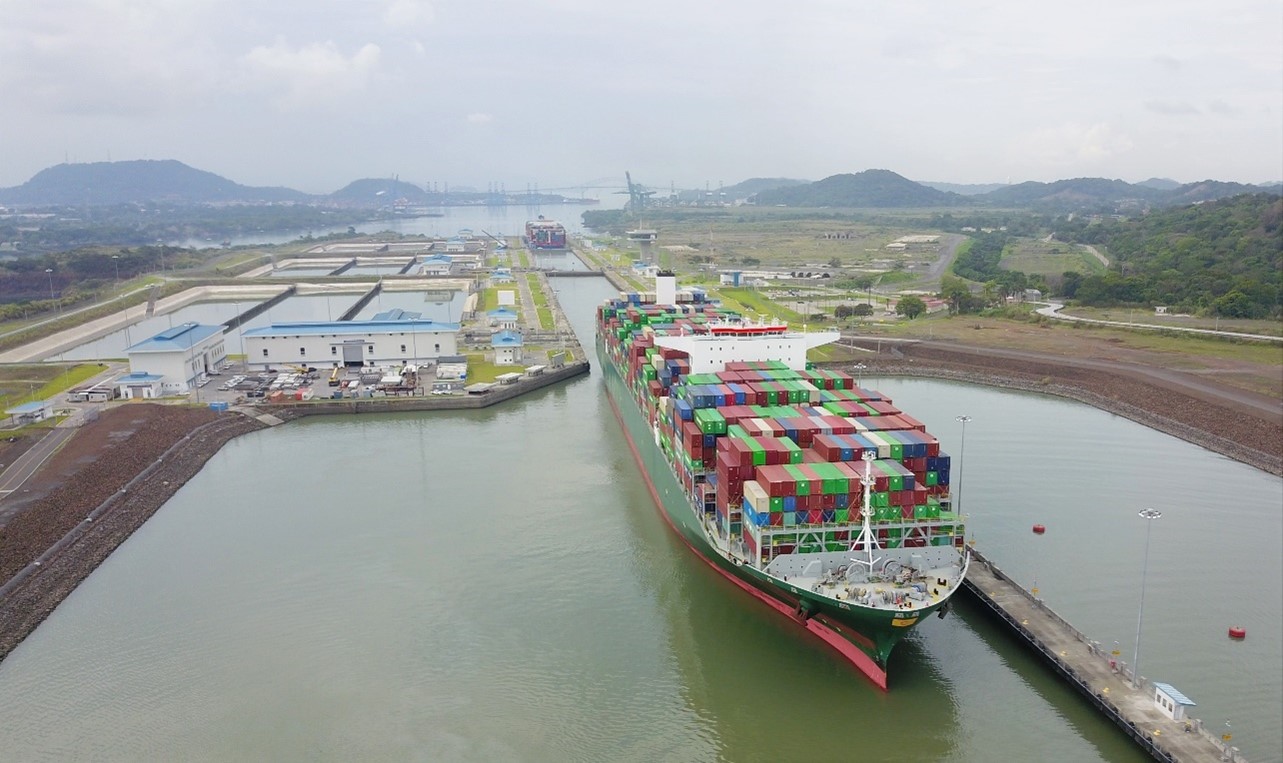
PANAMA : Global trade faces a fresh headache on top of the months-long snarls in the Middle East that have roiled flows, with the Panama Canal moving to curtail some vessel-booking slots because of water-supply challenges.

The Panama Canal Authority will temporarily suspend part of the booking system for ships seeking to use the waterway linking the Pacific and Atlantic Oceans, according to shipping agent Norton Lilly. Among the reasons is that a weather-altering El Niño may hit, curbing vital water flows, it said.

The tighter access to the Panama conduit comes as other global chokepoints have faced disruptions, slowing trade and boosting costs. In the Middle East, the Iran-US war has brought traffic through the Strait of Hormuz to a near-halt after vessel attacks. Elsewhere, Yemen’s Iran-backed Houthi militant group has threatened shipping via the Bab el-Mandeb Strait in the Red Sea.

The Panama Canal Authority didn’t immediately respond to calls and emails seeking comment outside working hours.

Daily auctions in so-called period three for the canal’s Panamax-class locks will be halted from July 25 until further notice given present and projected water levels at Gatun Lake, Norton Lilly said in a notice on its website. As a result, daily booking capacity will be cut from 36 to 34 vessels, it said.

The suspension is being introduced based on current hydrological conditions, as well as the potential development of an El Niño weather pattern, it said, citing the authority. Previous El Niños have dried up freshwater lakes supplying the canal, causing the authority to impose daily transit restrictions.

The Panama suspension would mean fewer opportunities to get slots; more competition for openings in periods one and two; and potentially “greater challenges” for ships without confirmed bookings, Norton Lilly said.

Gatun Lake, which sits above the waterway and feeds the locks below, currently has a depth of 84.6 feet (25.8 meters), tracking just below the five-year July average of 84.7 feet, according to the Panama Canal Authority. Water levels are projected to keep declining in the coming months, falling to 83.8 feet by late September, 1.4 feet below the five-year average.

During the last El Niño of 2023-2024, monthly vessel traffic through the canal plunged from a pre-El Niño peak of 1,523 in December 2022 to a low of 1,054 in February 2024, according to data provided by Weathernews Inc.

In recent months, forecasters have warned that this year’s El Niño may be particularly severe, raising the prospect of significant disruption. Earlier this month, the US Climate Prediction Center said the pattern had continued to build and would likely be one of the strongest in more than 75 years.

El Niños typically lead to drier-than-normal conditions over Central America. Panama has already seen significantly below-average rainfall over the past seven weeks, according to the US Climate Prediction Center.

That dryness is expected to persist: the latest seasonal outlooks from the European Centre for Medium-Range Weather Forecasts indicate there is at least a 70% chance that the area around the Panama Canal will see rainfall levels in the bottom third of historical norms from August through November.

In June, the Panama Canal Authority said it was stepping up efforts to brace for El Niño-fueled extremes by drafting a plan that avoided limiting the type of vessel restrictions that hampered shipping three years ago.