Home Blog Page 203

Ashwini Vaishnaw commends ‘Made in India’ railway products for leading global exports

NEW DELHI : The journey which began with the “Made in India” initiative has now transformed to “Make for World”. The prime example of this is India’s railway ecosystem which was earlier dependent heavily on other countries for railway technology and components has now entered the overseas market as an exporter of the same.

Shri Ashwini Vaishnaw, the Union Minister for Railways, said that India is becoming a major manufacturer and exporter of railway products. Vaishnaw made this remark on Sunday (July 11), during his visit to Medha Bogies Factory in Hyderabad with Union Minister for Coals and Mines G. Kishan Reddy.

He said that India is manufacturing many of the railway products domestically. Above all, the complicated electronic and propulsion system, which are the most important equipment of any railway system, are now designed indigenously in India. These are then exported to countries such as France, Germany, Switzerland, Italy, Poland, the United States and now even Japan.

The minister called it a great achievement for the country and praised the quality of the components for being world-class. Further, he noted that it is the only way to establish our country in the global market.

Speaking about the working of the industry, he said that we are working by making sure that the focus is on design and quality, and the alignment of the supply chain should be according to the quality goals. He referred to the world-class quality of the domestic products, emphasising that we can orient our high quality produce towards the developed country’s markets.

In recent years, the Indian manufacturing industry has done commendable work. They are working on various projects related to railway technology and making indigenous manufacturing units. They are exploring areas such as high speed rail and even hyperloop projects, giving way to faster and advanced mobility.

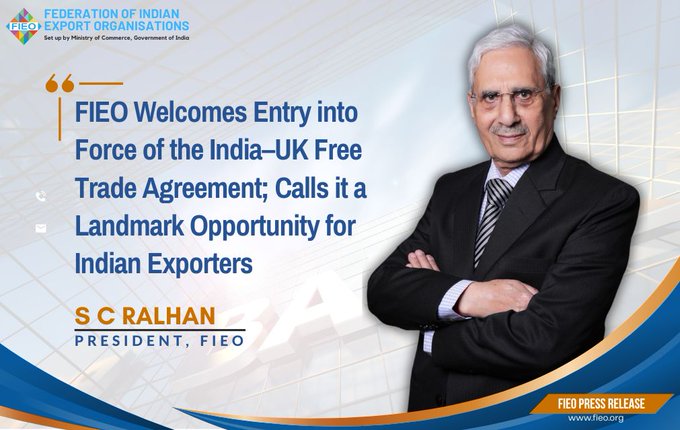
FIEO welcomes entry into force of the India–UK FTA; Calls it a landmark opportunity for Indian exporters : President, FIEO

NEW DELHI : The Federation of Indian Export Organisations (FIEO) has warmly welcomed the coming into force of the India–United Kingdom Free Trade Agreement (India–UK FTA), describing it as a transformational milestone that will significantly deepen bilateral trade, enhance India’s export competitiveness, and create new opportunities for exporters across sectors. Welcoming the development, Mr S C Ralhan, President, FIEO, said that the coming into force of the India–UK Free Trade Agreement marks a historic milestone in India’s export journey. It opens a new chapter in our economic partnership with one of India’s most important trading partners and provides Indian exporters with preferential market access, greater certainty, and enhanced competitiveness in the UK market. This agreement will particularly benefit our MSMEs, labour-intensive industries, farmers, artisans, craftsmen, women entrepreneurs, and the services sector, creating new avenues for sustainable export growth and employment generation.

Mr Ralhan stated that the FTA is expected to provide a significant boost to India’s merchandise and services exports by reducing tariff barriers, improving market access, simplifying trade procedures, and encouraging greater investments and technology partnerships between the two countries. He observed that labour-intensive sectors stand to gain substantially from the agreement, particularly textiles and apparel, garments, leather and footwear, carpets, handicrafts, gems and jewellery, furniture, engineering goods, sports goods, marine products, processed foods, tea, coffee, spices, agricultural products, pharmaceuticals, chemicals, and auto components.

“The India–UK FTA is expected to enhance the global competitiveness of Indian products by enabling exporters to access the UK market on more favourable terms. It will strengthen the position of India’s labour-intensive sectors, many of which are dominated by MSMEs, thereby supporting employment, rural livelihoods, and inclusive economic development,” Mr Ralhan added. Highlighting the opportunities for India’s agricultural community, he said the agreement would create improved export prospects for rice, tea, coffee, spices, fruits, vegetables, processed foods, marine products, and other value-added agricultural products, helping farmers integrate more effectively into global value chains and realise better value for their produce.

Mr Ralhan further noted that India’s traditional sectors—including handlooms, handicrafts, carpets, artisanal products, and handmade goods—would benefit from enhanced market access among UK consumers who increasingly value sustainable, ethically produced, and premium-quality products. Emphasising the importance of the services sector, he said that the agreement also opens exciting opportunities for India’s globally competitive services sector, including information technology, professional services, financial services, education, healthcare, architecture, engineering, consulting, creative industries, and digital services. Greater mobility, enhanced business collaboration, and stronger commercial partnerships will further reinforce India’s position as a trusted global services provider.

FIEO believes that the agreement will also encourage greater participation of startups, women-led enterprises, and first-time exporters, while strengthening integration with global value chains and promoting innovation-led exports. Mr Ralhan further emphasised that the successful implementation of the agreement would require sustained awareness, capacity building, and handholding support for exporters.

“FIEO is fully committed to working closely with the Government of India, the Department of Commerce, DGFT, Export Promotion Councils, industry associations, and all stakeholders to help exporters fully utilise the opportunities created under the India–UK Free Trade Agreement. We will organise awareness programmes, training sessions, buyer-seller interactions, and market outreach initiatives to ensure that exporters—particularly MSMEs—are well-equipped to maximise the benefits of this landmark agreement.” He expressed confidence that the India–UK FTA would contribute significantly towards India’s vision of becoming a leading global trading nation and achieving the country’s long-term export growth objectives and above all the Hon’ble Prime Minister’s vision of Viksit Bharat by 2047.

India exports $140 million worth of goods duty-free to UK on Day 1 of FTA

NEW DELHI : India exported goods worth $140 million to the United Kingdom at zero duty on the first day of the India-UK Comprehensive Economic and Trade Agreement (CETA), which came into effect on Wednesday, marking the formal rollout of one of New Delhi’s most ambitious trade deals.

Commerce Secretary Rajesh Agrawal said the agreement between the two complementary economies would deepen bilateral economic ties and open new opportunities for Indian exporters.

Calling CETA one of India’s most aspirational trade agreements, Agrawal said more than 800 technical sessions spread over 14 rounds of negotiations were held before the pact was finalised.

On the first day of implementation, over 50 export consignments valued at more than $140 million were dispatched from over 20 ports, airports, Inland Container Depots (ICDs), Special Economic Zones (SEZs) and manufacturing facilities across the country. The shipments included electronics, pharmaceuticals, gems and jewellery, and other products exported through key hubs such as Mundra, Nhava Sheva, Chennai, Mumbai, Kolkata and Hyderabad.

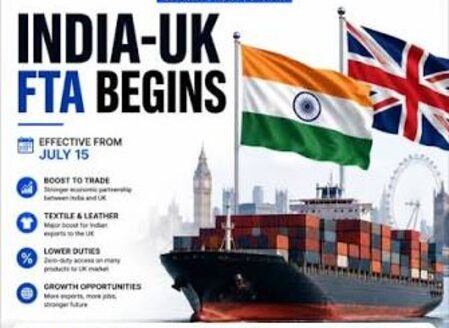
Under the agreement, nearly 99 per cent of Indian exports receive duty-free access to the UK market, benefiting sectors including leather, footwear, textiles, engineering goods, plastics, base metals, marine products and gems and jewellery, which previously faced tariffs ranging from 2 to 16 per cent. The agreement says, Indian exporters will receive duty-free access for 99.5% of the value of India’s exports to the UK, covering 98.8% of tariff lines, effectively eliminating duties across a wide range of labour-intensive and manufacturing sectors. India, in turn, has offered preferential market access covering 89.4% of the value of UK exports, with tariff reductions being phased in for sensitive products.

PM Shri Narendra Modi hailed the operationalisation of the trade pact as a significant moment in the India-UK partnership. “With the coming into force of the Comprehensive Economic and Trade Agreement and the Agreement on Social Security, our economic linkages are going to get even deeper. Together, these agreements translate our shared ambition into tangible opportunities for our people,” Modi wrote on X.

Fresh momentum

PM added that the CETA will give fresh momentum to India’s farmers, entrepreneurs and MSMEs. Several vibrant sectors will gain stronger access to the UK market. The trade agreement will also deepen cooperation in technology, professional services and innovation, while supporting greater mobility for skilled Indian talent.

“The social security agreement will provide invaluable support to Indian professionals working temporarily in the UK and strengthen the competitiveness of Indian enterprises,” he added.

Meanwhile, Commerce Secretary Rajesh Agarwal said that rules of origin certificates are being issued and customs facilitation is being provided to ensure the smooth operationalisation of the trade pact.

Speaking on the occasion, Lindy Cameron, British High Commissioner to India, said the agreement is expected to increase bilateral trade by over 25 billion pounds annually over the long term and contribute nearly 5 billion pounds annually to the GDP of both the UK and India.

Highlighting the strength of bilateral ties, Cameron noted that India was the UK’s eleventh-largest trading partner in 2025, with bilateral trade approaching £48 billion annually. She also observed that the investment relationship between the two countries supports more than 700,000 jobs.

She said that the agreement provides a framework that will enable businesses in both countries to trade more, invest more, innovate more and grow together. She described it as a decisive step towards a broader, more ambitious and future-focused partnership.

Referring to its long-term economic impact, Cameron said the agreement is expected to boost bilateral trade by over £25 billion annually in the long term and add nearly £5 billion a year to the GDPs of both the UK and India.

S.C. Ralhan, President, Federation of Indian Export Organisations (FIEO), said that the coming into force of the India–UK free trade agreement marks a historic milestone in India’s export journey.

“The India–UK FTA is expected to enhance the global competitiveness of Indian products by enabling exporters to access the UK market on more favourable terms. It will strengthen the position of India’s labour-intensive sectors, many of which are dominated by MSMEs, thereby supporting employment, rural livelihoods, and inclusive economic development,” Ralhan added.

More than a pact

Chandrajit Banerjee, Director General, Confederation of Indian Industry (CII), said that the operationalization of the India-UK CETA is more than the commencement of a trade agreement. It is a strategic step towards strengthening India’s global competitiveness, expanding economic opportunities and supporting the country’s vision of Viksit Bharat 2047. For Indian industry, the CETA opens a new era of opportunities. Zero-duty access for 99% of India’s exports to the UK will significantly enhance the competitiveness of labour-intensive sectors such as textiles and apparel, leather and footwear, gems and jewellery, marine products and processed foods, while also creating new opportunities for engineering goods, auto components, chemicals and other value-added manufacturing sectors,” he added.

“What truly distinguishes this landmark agreement is its depth and ambition as it transcends the traditional boundaries of tariff liberalization and establishes a modern, future-ready framework for cooperation across trade in goods and services, intellectual property, digital trade, financial services, telecommunications, and government procurement – the latter being a groundbreaking achievement,” Said Anil Talreja, partner and leader – trade corridor, Deloitte South Asia.

Maj Gen (Retd) Rajesh Chopra, director general of Indian Malt Whisky Association, welcomed implementation of the India-UK trade pact.

“The phased reduction of duties on Scotch whisky, from 150% to 75% now and further to 40% over ten years, is a calibrated and sensible approach. It gives Indian consumers access to world-class spirits at fairer prices while providing domestic producers a clear and predictable runway. Indian single malts today stand shoulder to shoulder with the finest in the world, and we are confident this agreement will only deepen the appreciation for quality whisky in India, expanding the premium category for all players,” he said.

India–UK CETA and Agreement on Social Security Enter into Force

NEW DELHI : The India–United Kingdom Comprehensive Economic and Trade Agreement (CETA), along with the Agreement on Social Security, also known as the Double Contribution Convention (DCC), formally entered into force from 15th July, marking a major milestone in the economic partnership between the two countries.

A formal inauguration event to mark the entry into force of CETA was held at Vanijya Bhawan, New Delhi. The function was attended by Her Excellency Ms. Lindy Cameron, British High Commissioner to India, Commerce Secretary Shri Rajesh Agrawal, Director General of Foreign Trade, representatives of Industry Export Promotion Councils, industry associations and several exporters.

In a post on X, Union Minister of Commerce and Industry Shri Piyush Goyal said that the entry into force of the India–UK Comprehensive Economic and Trade Agreement (CETA) and the Agreement on Social Security marks a defining milestone in India–UK relations. Under the leadership of Prime Minister Shri Narendra Modi, the Agreements have come into force, providing zero-duty market access for nearly 99 per cent of India’s exports and covering almost 100 per cent of trade value.

The Minister noted that the Agreement creates unprecedented opportunities for sectors including textiles, leather, gems and jewellery, engineering goods, marine products, chemicals and processed foods, while benefiting MSMEs, farmers and manufacturers. He further observed that the Agreement opens new opportunities for India’s IT, professional, financial, education and business services sectors and expands mobility for Indian talent.

Shri Goyal underscored that the Agreement on Social Security strengthens the partnership by exempting Indian professionals on temporary assignments in the United Kingdom from double social security contributions for up to five years, thereby enhancing the global competitiveness of India’s workforce. He also expressed appreciation to his UK counterpart and both negotiating teams for their commitment in bringing the transformational agreement to fruition and reaffirmed the shared commitment of both countries to building a resilient, innovation-driven partnership that promotes growth, investment and shared prosperity.

Addressing the gathering, Commerce Secretary Shri Rajesh Agrawal described the entry into force of CETA as a pivotal milestone in the deepening India–UK relationship and one of the most significant achievements in the journey of the Department of Commerce. He stated that the Agreement is fully aligned with the vision of Prime Minister Shri Narendra Modi for strengthening the India–UK partnership and acknowledged the leadership of Union Commerce and Industry Minister Shri Piyush Goyal in steering the negotiations to a successful conclusion.

The Commerce Secretary highlighted the scale and complexity of the negotiations, noting that more than 800 technical sessions were conducted across 14 formal rounds of negotiations before the Agreement was finalised. He commended the negotiating teams on both sides for their sustained efforts over several years in achieving the outcome.

Shri Agrawal observed that the Agreement is between two major and complementary economies and goes beyond India’s previous free trade agreement precedents in terms of both width and depth of coverage. He stated that while the Agreement creates substantial market access opportunities in goods trade, it also provides significant gains in services trade. Given that services account for more than 50 per cent of India’s GDP and over 70 per cent of the United Kingdom’s GDP, he noted that the commitments and predictability offered through the Agreement would provide a strong impetus to bilateral services trade in the years ahead.

Emphasising the importance of implementation, Shri Agrawal stated that the real success of the Agreement would be measured by its impact on the lives of people in both countries through the creation of jobs, livelihoods and economic opportunities. He called upon industry stakeholders to convert the opportunities created by the Agreement into tangible outcomes and assured that the Department of Commerce would work closely with Export Promotion Councils and industry clusters across the country to communicate the benefits of the Agreement at the sectoral, product and cluster levels.

The Commerce Secretary informed that the decision to operationalise the Agreement on 15 July 2026 was taken by the leaders of both countries during their meeting on the sidelines of the G7 Summit in France thirty days earlier. He stated that all pending issues had been resolved within the stipulated timeline and that all requisite notifications had been issued by both sides. Necessary trade facilitation measures, including arrangements relating to Rules of Origin certification and customs preparedness, had also been put in place to ensure that stakeholders could begin availing the benefits of the Agreement from the very first day.

He noted that more than USD 140 million worth of goods were being exported to the United Kingdom on the first day of implementation under the India–UK CETA. He expressed confidence that sustained utilisation of the Agreement would strengthen India–UK trade and encourage the pursuit of other trade initiatives currently under consideration.

To commemorate the entry into force of the Agreement, events were held across the country to flag off the first export consignments under the India–UK CETA preferential tariff regime. During the day, over 50 export consignments valued at more than USD 140 million were flagged off from more than 20 ports, airports, Inland Container Depots (ICDs), Special Economic Zones (SEZs) and factories across India. The consignments covered a wide range of products including electronics, pharmaceuticals and gems and jewellery, and were dispatched from locations including the seaports of Mundra, Nhava Sheva and Chennai, as well as air cargo complexes at Mumbai (Sahar), Kolkata and Hyderabad.

Speaking on the occasion, Her Excellency Ms. Lindy Cameron, British High Commissioner to India, described the entry into force of the Agreement as a historic milestone and a testament to the elevated UK–India bilateral relationship.

Highlighting the strength of bilateral ties, she noted that India was the United Kingdom’s eleventh-largest trading partner in 2025, with bilateral trade approaching £48 billion annually. She also observed that the investment relationship between the two countries supports more than 700,000 jobs.

Ms. Cameron stated that the Agreement provides a framework that will enable businesses in both countries to trade more, invest more, innovate more and grow together. She described it as a decisive step towards a broader, more ambitious and future-focused partnership.

Referring to its long-term economic impact, she noted that the Agreement is expected to increase bilateral trade by over £25 billion annually over the long term and contribute nearly £5 billion annually to both UK GDP and Indian GDP. She stated that the Agreement would make trade simpler, quicker and more cost-effective for businesses in both countries.

She further observed that the Agreement would provide Indian businesses duty-free access on around 99 per cent of tariff lines covering nearly all Indian exports to the UK, while UK businesses would benefit from tariff reductions or eliminations on 90 per cent of tariff lines covering 92 per cent of current UK exports to India.

The High Commissioner highlighted that the Agreement extends beyond goods trade and strengthens cooperation in customs, digital trade, financial services, telecommunications, intellectual property, professional services, transparency and regulation. She noted that the Agreement would create significant opportunities across sectors including advanced manufacturing, food and drink, life sciences, energy, consumer goods, textiles, apparel, engineering goods, marine products and chemicals.

She also emphasised the benefits for small and medium enterprises and consumers, stating that the Agreement would help SMEs expand their reach while offering consumers greater choice, stronger competition and better value.

Noting that the Agreement had now moved from negotiation and signature to implementation, Ms. Cameron observed that goods were already moving between the two countries under the new framework and stressed that successful implementation would be critical in ensuring that businesses, workers and consumers realise its full benefits.

As part of the entry into force of CETA, the first Certificates of Origin under the Agreement were distributed to exporters. The certificates were issued through the eCoO 2.0 platform on a self-certification basis. The digital, self-certified issuance of Certificates of Origin on Day One marks a significant step towards reducing compliance burdens and transaction costs, particularly for MSMEs.

Representatives of industry associations, Export Promotion Councils and exporters welcomed the entry into force of the Agreement and noted that duty-free access, coupled with simplified certification procedures and business-friendly Rules of Origin, would significantly enhance the competitiveness of Indian products in the UK market.

Industry representatives expressed confidence that the Agreement would contribute meaningfully to the vision of Viksit Bharat by providing Indian goods with enhanced access to one of the world’s most advanced markets. They noted that the Agreement would place Indian exporters on a level playing field vis-à-vis competitors from other countries and elevate the economic partnership between India and the United Kingdom.

Industry leaders further highlighted that by boosting labour-intensive sectors, the Agreement would create new opportunities for women entrepreneurs, MSMEs, youth and students, thereby generating quality employment and supporting inclusive growth.

In Mumbai, the Government of Maharashtra organised a ceremonial inauguration of the India–UK CETA in the presence of Chief Minister of Maharashtra Shri Devendra Fadnavis. To mark the commencement of preferential trade under the Agreement, the Chief Minister of Maharashtra and the Deputy High Commissioner of the United Kingdom ceremonially exchanged cargo placed on trolleys containing curated boxes of products representing bilateral trade between India and the United Kingdom.

UK-India trade deal opens new route to growth for Indian exporters, says Europa Air & Sea

DELHI: As the UK-India Free Trade Agreement comes into force, specialist air and sea freight operator, Europa Air & Sea in Delhi says Indian exporters are entering a stronger trading environment with one of the world’s largest consumer markets.

Marking a pivotal moment in bilateral trade, the agreement is expected to eliminate duties on a vast majority of Indian goods and provides instant access to the UK market.

Europa says the opportunity for Indian manufacturers and exporters goes beyond price. Businesses that can offer reliable supply, clear communication and strong UK delivery capability will be best placed to win and retain customers.

A stronger route into the UK market

For many Indian exporters, the UK represents a major growth opportunity. The new agreement strengthens that opportunity by improving market access and supporting demand across sectors including textiles, garments, manufacturing and automotive products.

But entering the UK market successfully depends on more than moving freight from port to port. Exporters need customs support, warehousing, distribution and local service that reflects the expectations of UK customers.

Europa Air & Sea is part of one of the UK’s largest independent logistics operators, Europa Worldwide Group and established its Delhi office in 2023, offering an expert local team for Indian exporters.

Mr. Puneet Mathur, Country Head-India, Europa Air & Sea commented: “The trade agreement gives Indian businesses a stronger platform to grow in the UK. Reduced tariffs can make products more competitive, but logistics will still play a major role in whether customers receive the service they expect.”

“Europa gives exporters one connected organisation across India and the UK. That means better communication, clear visibility and more control over the full journey.”

From origin to the UK customer’s door

Europa Air & Sea supports Indian exporters from collection at origin through to customs clearance, warehousing and final delivery in the UK.

The company’s UK infrastructure is a key part of the offer. Through its robust IT infrastructure, Indian businesses can access Europa’s customs expertise, warehousing capability, branch network and distribution services through one logistics partner.

This helps exporters keep control of their products after arrival in the UK, rather than handing the customer experience over to multiple providers.

A platform for long-term UK growth

Europa Air & Sea provides Indian exporters with:

  • Air and sea freight between India and the UK
  • Local support from Europa teams in India
  • UK customs clearance
  • Warehousing and storage options
  • Distribution throughout the UK
  • Support for onward European logistics where required
  • Shipment visibility through connected systems

As more businesses review how to make the most of the new agreement, Europa believes exporters with strong, transparent supply chains will have a clear advantage.

“The UK market offers real potential for Indian exporters, especially for businesses that want to build long-term customer relationships.” Mathur added.

“Our role is to help remove the uncertainty around international logistics, so exporters can focus on growing their customer base and delivering the right experience for their UK customers.”

Between 2022 and 2024, Europa Air & Sea opened sites in the UAE, Shanghai, Shenzhen and Delhi, bringing its confidence, visibility and innovative services closer to local markets.

About Europa Worldwide Group

Europa Worldwide Group is a leading independent logistics provider, founded in 1966. With an annual turnover of £300m, the group provides end-to-end logistics services across air, sea, road and warehousing for customers in more than 160 countries.

New mobile scheme will strengthen component ecosystem, boost exports: Industry

NEW DELHI : The Rs 62,500-crore Mobile Phone Manufacturing Scheme (MPMS) will offer long-term policy stability, strengthen local supply chains and sustain India’s momentum in smartphone production and exports, manufacturers have said.

The Cabinet on July 15 approved MPMS, a successor to the Production Linked Incentive (PLI) Scheme, for a five-year period from FY27 to FY31.

The scheme offers incentives ranging from 2.25 percent to 5 on eligible mobile phone sales. Manufacturers can earn an additional bonus of up to 1.5 percent by sourcing key components domestically. A further 3 percent incentive will be offered to Indian brands investing in product design and research and development (R&D).

The India Cellular and Electronics Association (ICEA), which counts Apple, Foxconn, Dixon Technologies, Bhagwati Products, Oppo and Vivo as it members, said the new scheme builds on the gains made under the PLI programme. It will help India move into the next phase of electronics manufacturing.

Growth push

“Today’s announcement of the Mobile Phone Manufacturing Scheme (MPMS) of Rs 62,500 crore marks an important step in sustaining India’s momentum in mobile phone manufacturing and providing the predictability required for the next phase of growth,” ICEA Chairman Pankaj Mohindroo told Moneycontrol.

The PLI scheme for large scale electronics manufacturing (the PLI-LSEM) helped India achieve manufacturing scale, attract global companies, expand exports and emerge as the world’s second-largest mobile phone manufacturer, he said.

PLI-LSEM, which ended on March 31, It also enabled global and domestic manufacturers to expand production for international brands, he said. He cited examples of Apple partnering Foxconn and Tata Electronics to scale iPhone manufacturing and exports and Dixon Technologies expanding smartphone production for brands including Motorola.

MPMS builds on this foundation by enabling large-scale mobile phone production with deepening of the domestic value chain and a stronger component ecosystem, he said.

“Our vision is to have India’s share of global mobile phone production rise to 35-40 percent, and this policy will be a step towards that,” Mohindroo said.

Ashok Gupta, Chairman, Optiemus Electronics Limited (OEL), said the scheme’s strong focus on domestic value addition, component sourcing, design-led manufacturing and Indian brands will deepen the electronics ecosystem, strengthen supply chain resilience and enhance export competitiveness.

“It provides the long-term policy certainty needed to attract fresh investments, foster indigenous technology development and position India as a preferred global destination for advanced mobile phone manufacturing,” he said.

Optiemus makes smartphones for London-based Nothing and homebred handset brand AI+.

Rahul Sharma, founder of Bhagwati Products and MiPhi, said the twin schemes would enable original design manufacturers (ODMs) to move beyond contract manufacturing by investing in innovation, developing indigenous intellectual property and building end-to-end technology capabilities, thereby enhancing India’s competitiveness across the electronics value chain.

Moving up the value chain

Higher production volumes would strengthen India’s position in global value chains while creating advanced capabilities, engineering expertise and supplier networks.

The government expects the scheme to generate cumulative mobile phone production of around Rs 39 lakh crore alongside a significant increase in exports and the creation of nearly 60,000 direct jobs.

PLI-LSEM is widely credited with helping India emerge as the world’s second-largest mobile phone producer by volume, with nearly all phones sold domestically now being made in the country.

MPMS is a timely intervention. Recent supply chain disruptions have highlighted the importance of building domestic manufacturing capabilities, said Faisal Kawoosa, chief analyst and founder of TechArc.

By incentivising local value addition, the scheme encourages companies to move deeper into the supply chain and expand design-led manufacturing in India.

“The additional 3 percent incentive for Indian brands is a game changer, as India now needs to focus not just on manufacturing for global brands but also on creating globally competitive homegrown brands and technologies,” he said.

Current local value addition is 20 percent and can go up to 45 percent with this scheme, Tarun Pathak, research director for devices and ecosystems at Counterpoint Research said.

Navkendar Singh, AVP, Devices Research, IDC India, South Asia & ANZ, said that with incentives reaching 5%, plus a 1.5% bonus for local component sourcing, it directly tackles India’s persistent gap in component manufacturing despite leading in device assembly.

“For Apple, this reinforces India’s case as a primary production and export base beyond China, with sourcing incentives easing pressure on its supply chain partners to localize further,” he said.

For Indian brands, the explicit R&D and design push is the more significant shift, offering a real chance to move up the value chain rather than remain contract manufacturers for global OEMs, Singh said. “Coming right after PLI-LSEM’s conclusion, MPMS ensures policy continuity, strengthening India’s position as smartphones become its top export category amid ongoing global supply chain diversification.”

Industry executives have long argued that while India has become a major assembly hub, the next phase of growth depends on developing a competitive components ecosystem and increasing local value addition.

The new incentives for domestic sourcing are expected to encourage investments in components, sub-assemblies and supplier ecosystems, while making India more competitive as a global manufacturing base for smartphones and other electronics products.

Saudi Port developer plans up to $1bn investment in Bangladesh logistics

DHAKA : Saudi developer Red Sea Gateway Terminal has announced plans to invest up to $1 billion in Bangladesh’s logistics sector, as it launched full-capacity operations at the country’s largest port in Chittagong.

Chittagong Port is the main gateway for Bangladesh’s ocean cargo import and export, and the busiest container port on the Bay of Bengal.

RSGT has been running the port’s Patenga Container Terminal since June 2024, under a 22-year agreement with the Chittagong Port Authority.

After two years preparing the site’s infrastructure with an investment of $170 million, the company last month installed the final major pieces of equipment needed to scale up its presence.

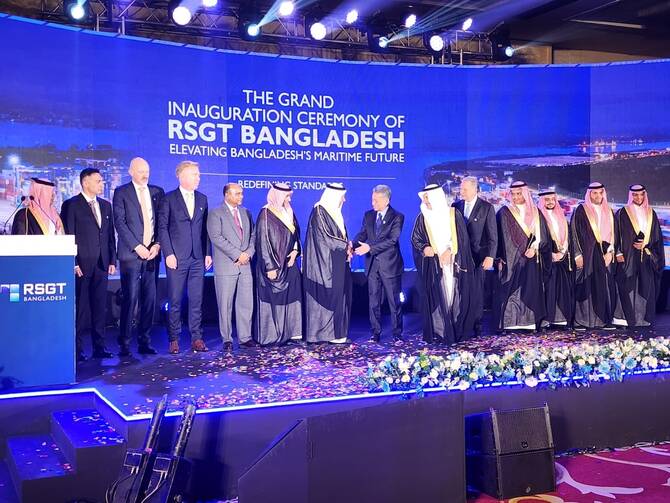
“This project reflects a strong belief in Bangladesh’s continued growth and the strategic importance of the regional and global trade. Our investment of $170 million demonstrates our commitment to supporting the country’s maritime infrastructure, improving operational efficiency and enhancing Bangladesh competitiveness as a regional logistic gateway to the world,” Lars Vang Christensen, group CEO and chairman of RSGT Bangladesh, said during the RSGT Bangladesh Terminal opening ceremony in Dhaka on Tuesday evening.

“Building on the confidence that we have gained to our partnership with Bangladesh, we aspire to invest up to $1 billion in the country’s port and logistics sector.”

The Saudi developer is the first foreign company operating at Bangladeshi ports and this year plans to handle 400,000 TEU (20-foot equivalent units) — about 12 percent of total container operations in Chittagong.

Next year, it is expected to exceed 500,000 TEUs, or 17 percent of the port’s traffic.

It is also increasing the number of Bangladeshi employees.

“When Red Sea Gateway Terminal decided to invest in Bangladesh, we did that with clear conviction that this country possesses enormous economic potential and a bright future. Through a period of market and global uncertainty and challenging economic conditions, our confidence in Bangladesh remained unwavering,” RSGT Executive Chairman Aamer Abdullah Zainal Alireza said during the ceremony, which was attended by Bangladesh’s Finance Minister Amir Khasru Mahmud Chowdhury and Dr. Rumaih bin Mohammed Al-Rumaih, Saudi Arabia’s deputy minister of transport.

“We remain committed to investing in modern infrastructure, advanced logistic solutions, sustainable technologies, and operational excellence to create employment opportunities and generate long-term value for Bangladesh and its people.”

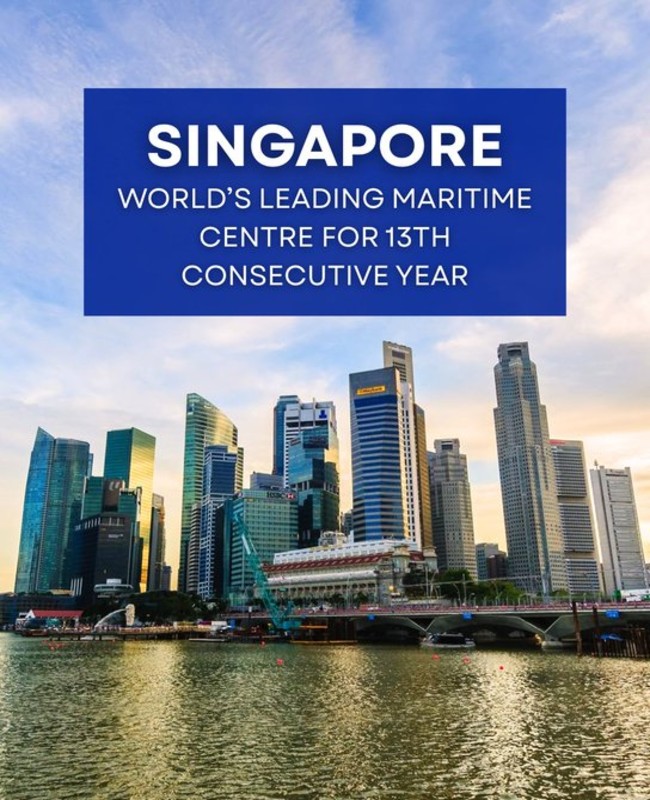
Singapore retains position as World’s Leading Maritime Centre for 13th Consecutive Year

SINGAPORE : Singapore retained its position as the world’s leading maritime centre in the 2026 Xinhua-Baltic International Shipping Centre Development (ISCD) Index for the 13th consecutive year.

This recognition is significant as the Maritime and Port Authority of Singapore (MPA) marks its 30th anniversary this year. It reflects three decades of close partnership between MPA and the maritime community to strengthen Maritime Singapore’s ecosystem, underpinned by strong connectivity, a comprehensive range of maritime services, and Singapore’s role as a trusted platform for the global maritime community to connect and collaborate.

Jointly published by the Baltic Exchange and China’s Xinhua News Agency, the Xinhua-Baltic ISCD Index is an internationally recognised benchmark of leading maritime centres. The Index assesses maritime hubs across a range of indicators, including port performance, maritime business services, and the overall business environment.

In 2025, the Port of Singapore handled a record 44.66 million Twenty-Foot Equivalent Units (TEUs) in container throughput and 3.22 billion gross tonnage in vessel arrivals. The Port of Singapore also remained the world’s largest bunkering port, supplying a record 56.77 million tonnes of marine fuel, including growing volumes of alternative marine fuels. Today, Singapore is connected to more than 600 ports worldwide and is home to over 200 international shipping groups.

Mr Ang Wee Keong, Chief Executive of the Maritime and Port Authority of Singapore, said, “We are honoured that Singapore has once again been recognised as the world’s leading maritime centre. This reflects the strong commitment and collective efforts of our industry partners and the wider maritime community. As the industry continues to evolve, we will continue working closely with our partners to strengthen Maritime Singapore’s competitiveness and create value for the global maritime community.”

“K”LINE – Newbuilding LNG vessel for QatarEnergy Named “Halwan”

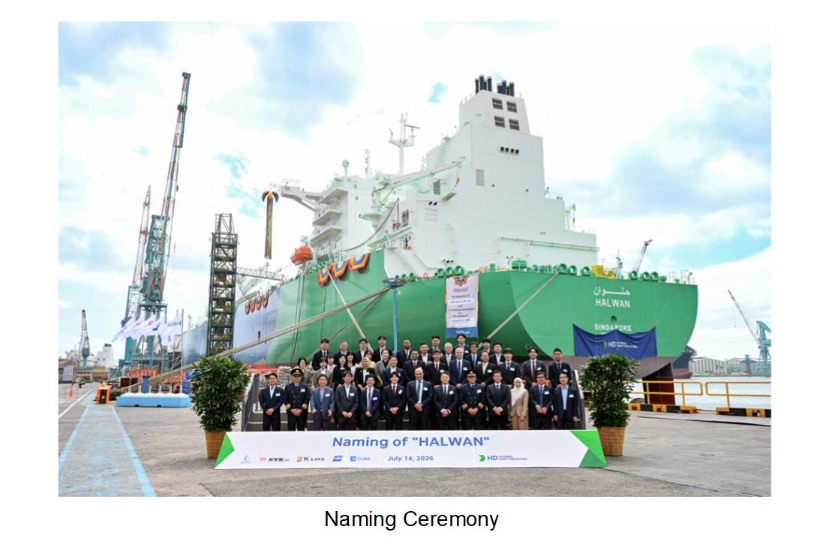
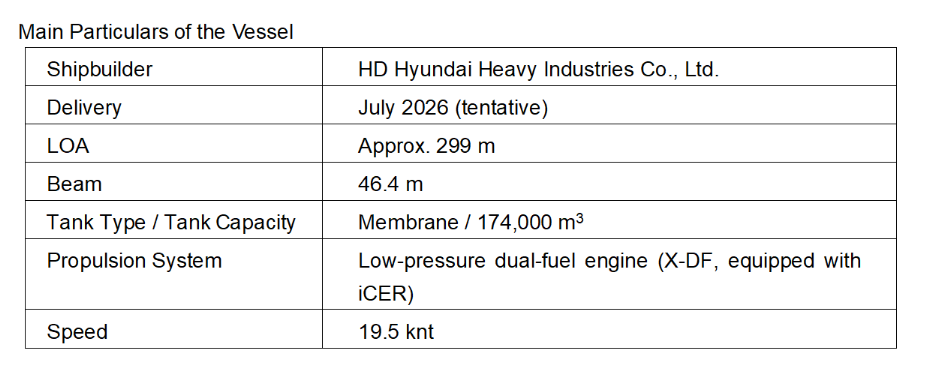
TOKYO: Kawasaki Kisen Kaisha, Ltd. (“K” LINE) is pleased to announce that a joint venture1 held a naming ceremony for a 174,000 m3 LNG vessel for QatarEnergy2 at a HD Hyundai Heavy Industries Co., Ltd. facility on July 14. The vessel was named HALWAN after a source of water in Qatar.

The vessel is the ninth in a series of 12 LNG vessels that the joint venture has been building for QatarEnergy, and it is the second of three vessels for which “K” LINE group is responsible for ship management. QatarEnergy is the world’s largest LNG provider and will assign the vessel to the global transport of LNG. The vessel is equipped with X-DF 2.1 iCER3 and an Air Lubrication System4 which will contribute to the reduction of GHG emissions and environmental impact by lowering fuel consumption in operation.

In its Medium-Term Management Plan published in May 2022,*5 “K” LINE has positioned the LNG business as a top priority area in its future investments. “K” LINE will continue to respond to the diverse needs of its customers to expand its long-term contracts and accommodate the growing demand for energy.

image "K"LINE - Newbuilding LNG vessel for QatarEnergy Named "Halwan"

Geodis renews certification of Mass Balance mechanism

PARIS: GEODIS’s Mass Balance mechanism has been recertified by DEKRA CERTIFICATION following a comprehensive audit. This certification confirms the reliability and traceability of the mechanism, which enables customers to receive an allocation of CO₂ emission reductions based on a certified carbon accounting methodology.

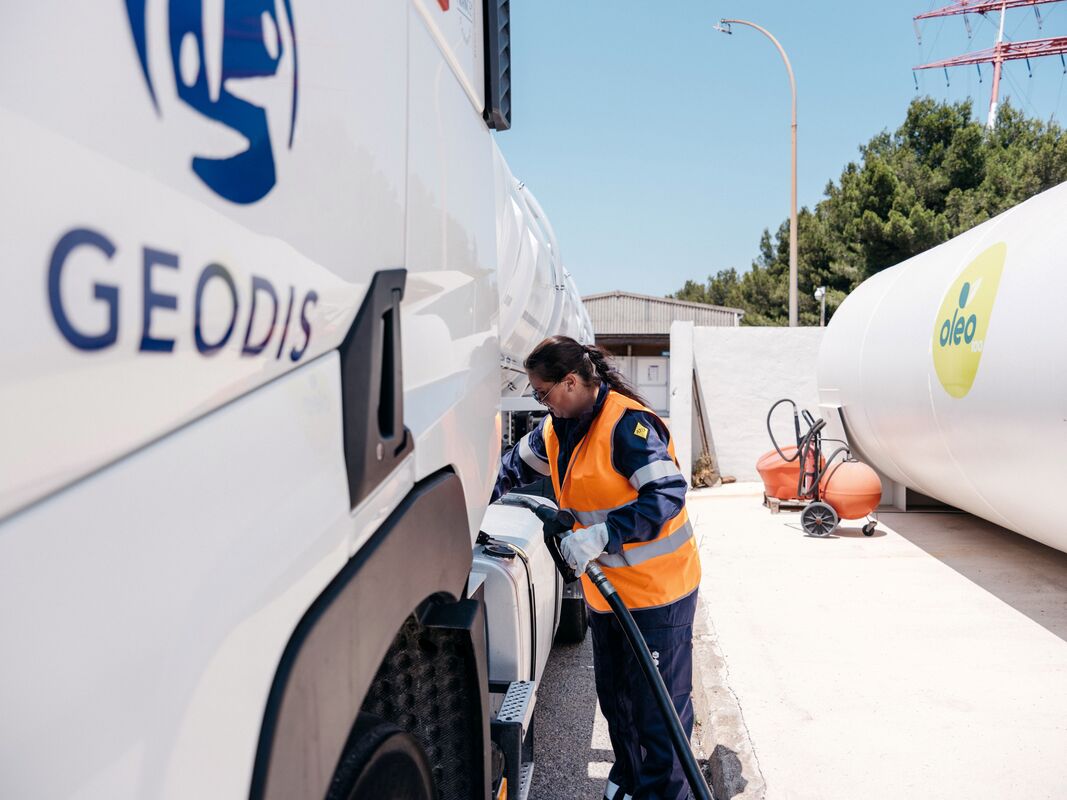
Since 2024, GEODIS has implemented the Mass Balance mechanism across its European Road Network Line of Business. The mechanism enables customers to support the deployment of alternative energies within GEODIS’s network and receive an allocation of the corresponding CO₂ emission reductions. It can also be applied when the direct use of alternative energies for a customer’s shipments is not operationally feasible due to constraints such as long transport distances without refueling infrastructure, regulatory limitations, or limited charging availability. Through this mechanism, GEODIS leverages for the use of alternative energy sources across its network – including HVO, B100 and electricity – and allocates the corresponding CO₂ emission reductions to customers subscribing to the Mass Balance offering.

Following its audit, DEKRA CERTIFICATION renewed the certification of the mechanism, confirming the robustness of GEODIS’s Mass Balance mechanism. The mechanism is an essential lever for supporting customers with an additional option to support their greenhouse gas emissions reduction objectives while supporting the deployment of alternative energy solutions across GEODIS’s road transport network.

How the Mass Balance mechanism works

The Mass Balance mechanism enables customers who are unable to decarbonize specific transport flows directly to support the use of alternative energy vehicles elsewhere within GEODIS’s network. In return, customers receive an allocation of the corresponding CO₂ emission reductions based on the reduction level selected:

  • – 60%
  • – 82%
  • – 90% compared with a diesel reference scenario

This flexibility is made possible by GEODIS’s diversified fleet, which relies on three alternatives to conventional diesel:

– HVO (Hydrotreated Vegetable Oil), a renewable diesel substitute

– B100, a fuel made entirely from vegetable-based feedstock

– Electricity, a key driver of GEODIS’s road transport decarbonization strategy

The mechanism provides full traceability of the alternative energy used and ensures that CO₂ emission reductions are allocated in accordance with the certified Mass Balance mechanism.

The methodology and carbon accounting process are independently verified each year by DEKRA CERTIFICATION to ensure transparency and credibility.

Flexibility for customers

The Mass Balance mechanism offers customers:

– The ability to choose the level of allocated CO₂ emission reductions that best aligns with their decarbonization objectives

– Operational continuity without constraints related to transport distance, charging infrastructure or alternative fuel availability

– Reporting detailing the CO₂ emission reductions allocated under the certified Mass Balance mechanism

The possibility of activating the mechanism at any time, without operational impact

“The renewal of this certification confirms the robustness of our Mass Balance mechanism and reflects GEODIS’s commitment to providing practical and innovative solutions that support the decarbonization of road transport. The mechanism is an important component of GEODIS’s decarbonization strategy and will contribute to achieve the Group’s Science Based Targets initiative (SBTi)-validated objectives: reducing greenhouse gas emissions from its owned fleet by 42% by 2030 and reducing the carbon intensity of subcontracted transport operations by 25%” said Marc Vollet, EVP of European Road Networks at GEODIS.

GEODIS’s Mass Balance mechanism recently received the “Jury’s Favourite” award at L’Oréal’s Spread the Green Vibes 2026 event. The award recognizes initiatives related to transport decarbonization and highlights the certified, documented and traceable nature of GEODIS’s mechanism.