Home Blog Page 209

Adani Logistics launches first block train service from ICD Kishangarh to Mundra Port

KISHANGARH : Adani Logistics has commenced its first dedicated block train service from ICD Kishangarh to Mundra Port, marking another significant milestone in strengthening India’s multimodal logistics network and export supply chains.

The service has been launched in collaboration with Gold Star Line and Shree Patni Logistics, and is designed to provide exporters with faster, reliable and cost-effective rail connectivity to one of India’s largest gateway ports.

The new block train service is expected to significantly improve cargo evacuation from the industrial hub of Kishangarh, enabling seamless movement of export containers to Mundra Port for onward shipment to international markets. By offering scheduled rail services, the initiative will help reduce transit time, enhance supply chain predictability and optimise logistics costs for exporters.

The service is expected to particularly benefit Rajasthan’s export-oriented industries, including marble, granite, ceramics, engineered stone and solar equipment, by providing efficient hinterland connectivity and uninterrupted access to global shipping services. The improved logistics corridor is also expected to support the growing manufacturing and renewable energy sectors in the region.

Leveraging the advantages of rail-based freight movement, the block train service will contribute to reducing road congestion, lowering carbon emissions and promoting sustainable logistics in line with India’s green transportation objectives. The initiative also complements the Government of India’s focus on enhancing multimodal connectivity through programmes such as PM Gati Shakti and the National Logistics Policy.

The collaboration between Adani Logistics, Gold Star Line and Shree Patni Logistics integrates inland container logistics with international liner connectivity, enabling exporters to benefit from streamlined cargo handling, improved schedule reliability and seamless end-to-end transportation solutions.

The launch of the ICD Kishangarh–Mundra block train further reinforces Adani Logistics’ commitment to developing integrated logistics infrastructure, strengthening port-hinterland connectivity and supporting India’s export competitiveness through efficient, technology-driven and sustainable supply chain solutions.

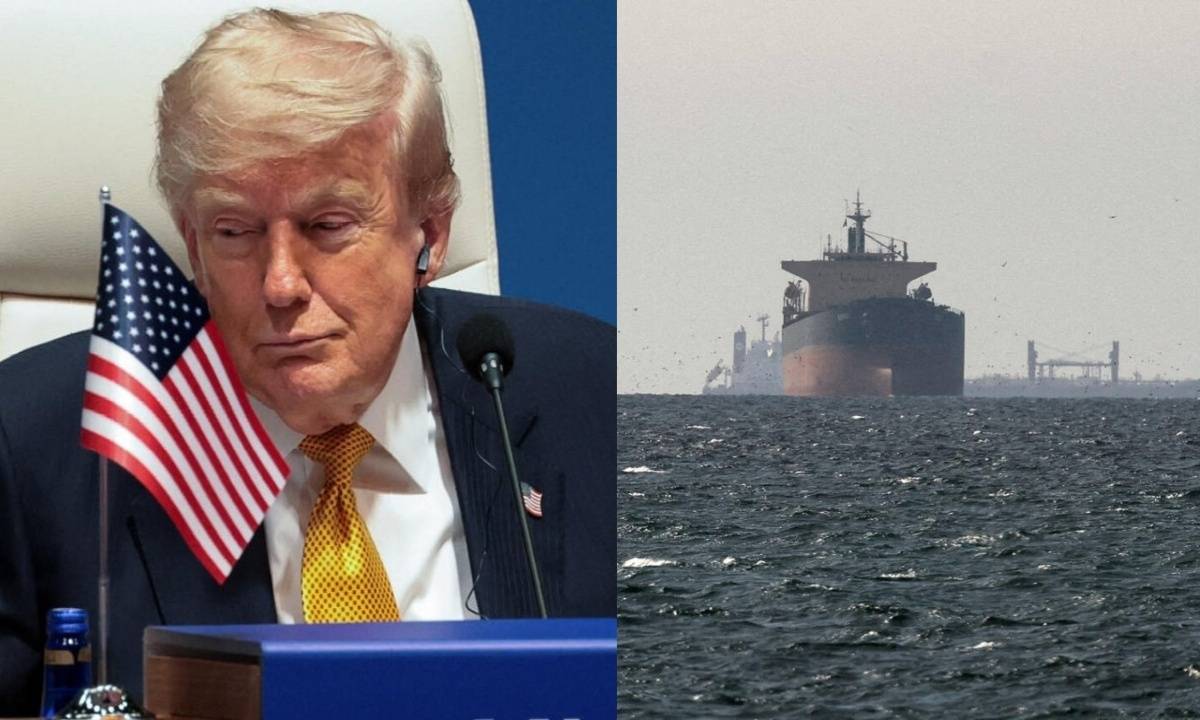
Trump rejects Iran’s strait of Hormuz closure claim as battle for control continues

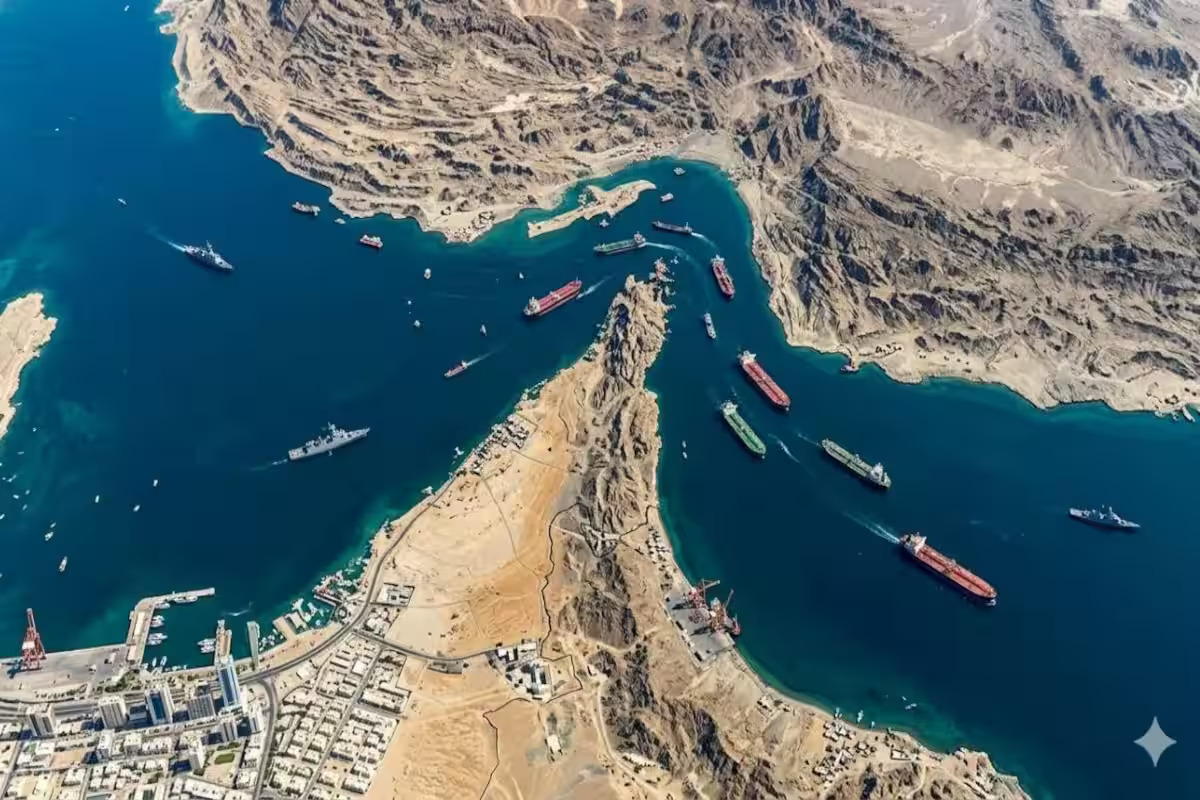
WASHINGTON DC: US President Donald Trump has rejected Iranian claims to have closed off the strait of Hormuz, as both sides battled for control over the waterway, leaving a ceasefire agreed last month at the point of collapse.

US forces said they had attacked 140 targets in Iran on Saturday night and Sunday morning, after Tehran struck and disabled a container ship in the strait, whose transit it said had not been approved. In a statement, US Central Command said its targets had included missile and drone sites, naval facilities, ammunition depots, communication networks and surveillance locations.

Iran on Sunday struck back with drone and missile attacks which it said were aimed at US interests across the Gulf, with reports of aerial attacks in the United Arab Emirates, Qatar, Jordan, Bahrain and Oman.

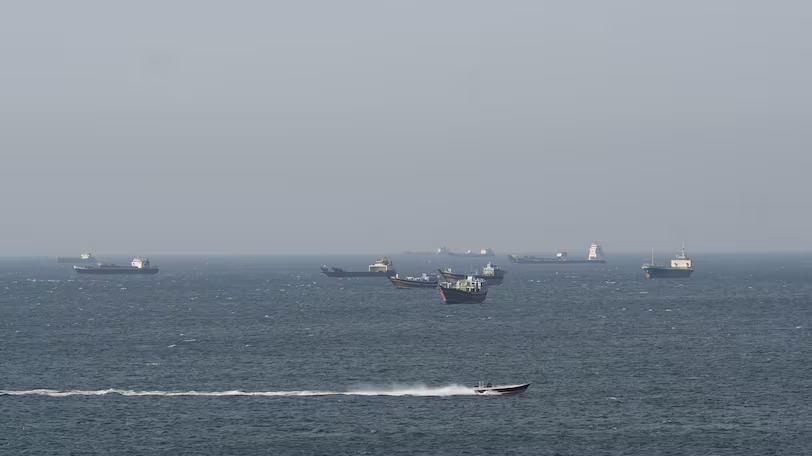
The Islamic Revolutionary Guard Corps (IRGC) issued a statement declaring the Strait of Hormuz closed, although US Central Command said some ships were continuing to cross the waterway.

“Iran does not control the strait. Traffic is flowing,” the Command headquarters, which oversees US forces in the Middle East, said on X.

Later in the day, Trump insisted that US forces were keeping the strait open by force.

“It’s open. We bombed the hell out of them last night,” Trump said on the NBC programme Meet the Press on Sunday. “They’re very, very evil and sick people. We had meetings with them. They agreed to a deal yesterday, a perfect deal for us. No nuclear, no this, no that, no nothing. They gave up everything. And then after that, they left the room. And then within an hour, they launched a drone at a ship.”

The US-run Joint Maritime Information Center said that traffic was transiting the strait at “reduced levels”. The White House did not provide any more details of Trump’s claimed deal on Saturday, and Iran did not refer to any talks.

A US-Iranian memorandum of understanding (MoU) signed on 17 June extended a ceasefire in the war by 60 days to allow the restoration of trade through the strait and create breathing space for talks on Tehran’s nuclear programme and sanctions relief, the main points of contention between Iran and the west.

Apart from some indirect technical talks, those negotiations have failed to materialise, and fighting has continued between Israel and Hezbollah in Lebanon, which was supposed to be covered by the agreement.

The MoU started to unravel when Iran attacked three commercial vessels on Monday night as they were crossing the strait along a southern route next to the Omani coast that the Iranians said they had not approved. This drew US missile attacks in response, beginning almost a week of tit-for-tat exchanges.

Tehran is determined that any long-term settlement in the region recognises its control over the strait, which it seized soon after the US-Israel attack on Iran in February.

On Sunday, Mohsen Rezaee, a senior adviser to Iran’s supreme leader, Mojtaba Khamenei, was quoted in state media as saying: “This strategic passage is more important than dozens of atomic bombs, and the Islamic Republic of Iran will protect it.”

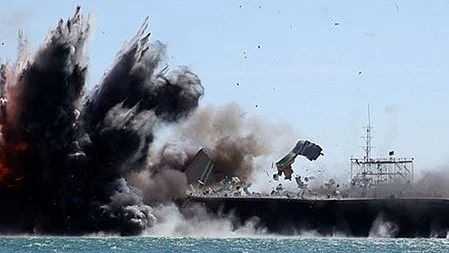
In the latest round of strikes, Iran hit a container ship, the Cypriot-flagged ‘GFS Galaxy’, ​which was travelling through the​ strait on a southerly route along the Omani shoreline, according to the UK Maritime Trade Operations centre, a British military body​. The vessel was struck, disabled and its crew forced to take to lifeboats. The Indian government said 10 of its nationals from the ship had been rescued but that one remained missing.

In response, Centcom said on Saturday night its forces had struck 140 Iranian military targets “to degrade Iran’s ability to attack civilian mariners and commercial vessels freely transiting the ​strait”.

Iran’s retaliatory drone and missile attacks across the region were apparently aimed at US bases in neighbouring Arab countries.

The IRGC claimed to have destroyed “the logistical support centres for naval vessels and the refuelling facilities for US aircraft carriers at the port of Duqm in Oman”. Without confirming details on the damage, Oman condemned the attack, which came just hours after the sultanate hosted an Iranian delegation for talks on security in the strait.

Referring to the strait of Hormuz, the IRGC said several vessels had “disregarded our warnings and instructions to correct their course and proceed along the approved route”. One of them “was struck by a warning shot and brought to a stop”, it added.

The strait would remain closed until the “end of US interference”, the IRGC said, adding that it would consider targeting “additional enemy bases in the region” if it faced more American attacks.

The return of hostilities has rattled global markets, though the price for Brent crude oil was $75 a barrel going into the weekend, well down from wartime highs of more than $120 and close to its prewar average . The latest price appears to reflect traders’ belief that the US and Iran want to avoid a return to full-scale war, and that the global economy is adapting to the prolonged uncertainty over the strait of Hormuz.


IRGC announces closure of Hormuz “until further notice” due to US “interference” in West Asia

TEHRAN: Iran’s Islamic Revolutionary Guard Corps (IRGC) on Saturday (local time) announced the closure of the Strait of Hormuz “until further notice,” stating that the strategic waterway would remain shut until the United States ends its “interference” in the West Asia region, Press TV reported.

According to an IRGC statement cited by Press TV, the decision was taken “in light of the security situation resulting from the unlawful intervention of foreign powers.”

“The Strait of Hormuz has been closed until further notice and will remain closed until the United States ends its intervention in the region. No vessel will be permitted to transit the strait,” the statement said, as quoted by Press TV.

The IRGC Navy also warned against any further military action against Iran under the pretext of the waterway’s closure, saying such actions would draw a strong response.

“Should the aggressor enemy exploit this development, which it, itself, has caused, as a pretext for committing another act of aggression against us, it will be met with a forceful response, and additional enemy bases in the region will be targeted,” the statement added.

The IRGC further said that responsibility for any consequences arising from the situation would rest with the United States, Israel, and countries hosting military facilities allegedly used for operations against Iran, Press TV reported.

These developments come as Qatari negotiators travel to Iran in an effort to ease tensions and create conditions for the resumption of US-Iran talks following recent military escalations.

Earlier, Iranian Foreign Minister Seyyed Abbas Araqchi held talks with his Omani counterpart, Seyyed Badr Al-Busaidi, in Muscat on Saturday, focusing on strengthening bilateral relations, regional developments, and maritime security in the Strait of Hormuz.

In a post on his official Telegram channel, Araghchi stated that the two diplomats discussed bilateral relations between Tehran and Muscat in various fields, alongside broader regional developments.

According to Iran’s Foreign Ministry, the two sides also discussed mechanisms to ensure the safe passage of ships in line with Article 5 of the Islamabad Memorandum of Understanding, while Oman reiterated its support for diplomacy to ease regional tensions.

Meanwhile, US President Donald Trump on Friday stated that Washington has agreed to continue talks with the Islamic Republic following Tehran’s request, but reiterated that the US still considers the previous ceasefire between the two sides to be “over.”

US launches fresh strikes on Iran, says attacks aim to protect transit in Strait of Hormuz

WASHINGTON DC: The United States launched a fresh round of military strikes against Iran on Sunday (local time), with US Central Command saying the operation is intended to further degrade Tehran’s ability to target civilian mariners and commercial vessels transiting the Strait of Hormuz.

In a post on X, CENTCOM said the strikes were carried out on the direction of the Commander in Chief to hold Iranian forces accountable.
“At 5 p.m. ET today, U.S. Central Command forces began launching more strikes against Iran to continue degrading their ability to attack civilian mariners and commercial ships freely transiting the Strait of Hormuz. The Commander in Chief has directed the strikes to hold Iranian forces accountable,” CENTCOM said.

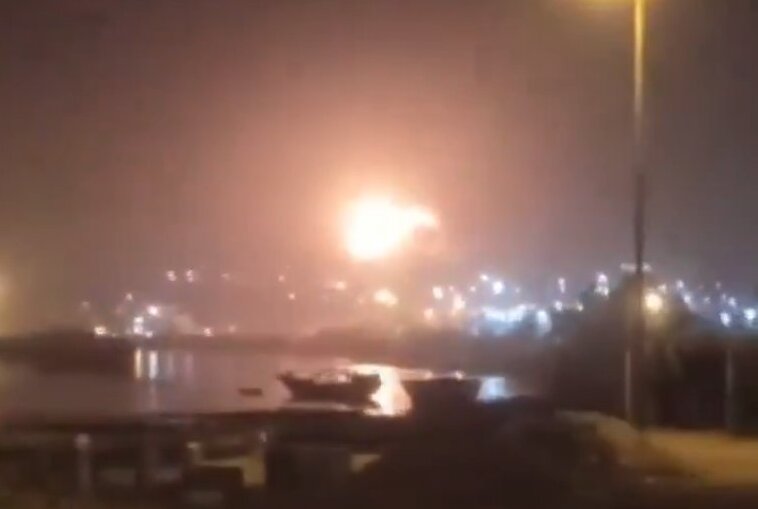
The latest strikes came amid heightened tensions in the Gulf region. According to Iran’s Press TV, three explosions were heard in the southern Iranian cities of Jask, Bandar Abbas and Sirik following the US operation.

Reacting to the escalating conflict, UN Secretary-General Antonio Guterres expressed deep concern over the renewed military confrontations involving Iran and the United States, warning of severe regional and global consequences.

“I am deeply concerned by the serious escalation and renewed military confrontations in the Gulf, including the Iranian attacks on ships in the Strait of Hormuz, the attacks by the US on Iran, and the attacks by Iran on targets in the neighbouring countries. These attacks must all stop,” Guterres said in a post on X.

He warned that a return to full-scale hostilities would have “catastrophic consequences” for the people of the region, international peace and security, and the global economy.

The UN chief urged both Washington and Tehran to resume negotiations and resolve outstanding issues through diplomacy.

“I urge Iran and the US to urgently resume negotiations and to address outstanding issues through diplomacy,” he added.

This come as the US Central Command (CENTCOM) on Saturday (local time) completed a third round of strikes this week against Iran, saying they were holding Iranian forces accountable for attacking another commercial ship in the Strait of Hormuz, an official statement by CENTCOM said.

US forces hit approximately 140 Iranian military targets with precision munitions launched by land- and sea-based fighter aircraft, drones, and naval vessels. Targets included Iranian missile and drone sites, naval capabilities, ammunition storage facilities, communication networks, and coastal surveillance locations.

Meanwhile, US President Donald Trump asserted on Sunday that the Strait of Hormuz remains open to commercial traffic, dismissing Iranian claims of control following a series of intense US military strikes in the region.

In an interview on NBC’s Meet the Press, the President signalled a complete collapse of recent diplomatic efforts with Iran, revealing that a tentative agreement with Tehran had been shattered by alleged Iranian military strike against commercial vessel.

Addressing the status of the vital maritime chokepoint, President Trump confirmed that the US had responded to the renewed Iranian aggression with significant military force.

“It’s open,” the President said regarding the Strait of Hormuz. “We bombed the hell out of them last night,” he added.

Iran’s Chabahar Port damaged following recent US Strike

TEHRAN: Iran’s strategic Chabahar Port sustained damage to its maritime traffic control tower following a US airstrike targeting the country’s southern coastal infrastructure.

On July 9, Mohammad Saeed Arbabi, Managing Director of the Chabahar Free Zone Organization, confirmed the strike, saying that “during the US attack on Chabahar, the maritime traffic control tower of the Chabahar Free Zone was targeted and damaged.”

The report follows explosions in several strategic port cities and coastal locations on July 8–9, including Bandar Abbas, Jask, Sirik, Chabahar, Isfahan, Abu Musa Island, and parts of Bushehr Province.

Situated on the Gulf of Oman, Chabahar is one of Iran’s most important maritime gateways. The port is also a strategic asset for India, providing access to Afghanistan and Central Asia while bypassing Pakistan. In addition, it serves as a key hub for the International North-South Transport Corridor, linking India with Russia and Europe via Iran.

Although India signed a 10-year agreement to develop the port in 2024, it no longer directly operates the facility after temporarily transferring its stake in the Chabahar Free Zone to an Iranian entity following the reimposition of US sanctions. The move was intended to protect India’s approximately $120 million investment while preserving the possibility of resuming direct involvement if geopolitical conditions improve.

The US strikes on Iranian rail and coastal infrastructure have also placed Central Asia’s southern transport corridors under renewed pressure. Kazakhstan and Turkmenistan have spent years developing routes through Iran to reach the Persian Gulf, the Gulf of Oman, and international markets while reducing reliance on routes through Russia.

On July 9, US cruise missiles reportedly struck the Aq Taqeh Khan railway bridge in Aq Qala County, causing structural damage but no casualties. The bridge is located on the Gorgan–Incheh Borun railway line, a key overland trade corridor linking Iran with Turkmenistan and Kazakhstan and providing onward connections to Russia and China.

The Gorgan-Incheh Borun railway was inaugurated in December 2014, linking Iran with Turkmenistan and Kazakhstan along the eastern coast of the Caspian Sea. The broader Uzen-Bereket-Gorgan route extends more than 900 kilometers from western Kazakhstan through Turkmenistan into northern Iran, connecting the rail networks of the two countries with Iran’s ports on the Persian Gulf and beyond.

The US military has described the latest strikes as a response to Iranian attacks on commercial shipping. US Central Command (CENTCOM) said on July 8 that its forces had struck about 90 Iranian military targets, including air defense systems, coastal surveillance assets, missile and drone storage sites, naval capabilities, and military logistics infrastructure along Iran’s coastline. According to CENTCOM, the operation was intended “to further degrade Iran’s ability to attack commercial shipping and innocent civilian mariners in the Strait of Hormuz.”

Indian crew member missing after Iran attacks container ship in Strait of Hormuz

Tensions in the Gulf have sharply escalated after a Cyprus-flagged container ship was allegedly attacked and set ablaze in the Strait of Hormuz, prompting India to condemn the incident and the United States to launch a fresh round of retaliatory strikes on Iranian targets

NEW DELHI: India on Sunday condemned the attack on a Cyprus-flagged commercial vessel off the coast of Oman in which one Indian crew member went missing, even as the United States launched a fresh round of strikes against Iran over the incident that has further heightened tensions in the Gulf.

India’s Response and Rescue Efforts

The Ministry of External Affairs (MEA) said 10 of the 11 Indian nationals on board the container vessel GFS Galaxy have been rescued, while the whereabouts of one Indian crew member remain unknown.

“We condemn the attack on the commercial vessel MV GFS Galaxy off the coast of Oman. Of the 11 Indian nationals on board, 10 have been rescued so far, while one Indian national is reportedly missing,” the MEA said.

It said the Indian Embassy in Oman is closely monitoring the situation and coordinating with Omani authorities involved in the ongoing search and rescue operation.

The ministry described the repeated attacks on commercial shipping in the region as ‘deeply worrisome’ and called for an immediate de-escalation of tensions.

It also urged the conclusion of ongoing diplomatic negotiations and stressed that attacks on commercial shipping and civilian infrastructure must end, while free and unimpeded navigation through international waterways should be restored in accordance with international law.

US Retaliatory Strikes and Regional Tensions

Earlier, the US Central Command (CENTCOM) alleged that Iran’s Islamic Revolutionary Guard Corps (IRGC) attacked the MV GFS Galaxy while it was transiting the Strait of Hormuz.

CENTCOM said the vessel suffered a major onboard fire and ‘significant engine room damage’, leaving it unable to continue its voyage.

The United Kingdom Maritime Trade Operations (UKMTO), overseen by the British military, said the crew abandoned the burning ship after the attack.

The vessel had been sailing along a route close to the Omani coastline commonly used by commercial ships to avoid Iranian territorial waters.

The US military said it launched its third round of strikes against Iran this week, targeting around 140 sites, including missile and drone launch facilities, ammunition depots and communication infrastructure, in response to the attack.

Iran’s Revolutionary Guard claimed some vessels had ignored its warnings and said one ship was struck after failing to alter its course.

Tehran also announced the closure of the Strait of Hormuz ‘until further notice’, while retaliatory attacks triggered missile alerts across several Gulf countries, raising fresh concerns over maritime security and global energy supplies.

Iran reports new attacks on military targets on its largest island near the Strait of Hormuz

DUBAI/United Arab Emirates (AP) : The United States attacked Iran on Sunday over an Iranian strike on a container ship in the Strait of Hormuz that set it ablaze and left a crew member missing. Iran responded with attacks on countries including Bahrain, Kuwait, Qatar, Jordan and Oman — the nation on the other side of the strait that Tehran has pressed to join in managing shipping traffic.

The U.S. struck again later Sunday. Iran’s state-run IRNA news agency cited the governor of Qeshm island near the strait as saying projectiles had been fired at military targets, with no casualties. IRNA said explosions were also heard in the coastal city of Bandar Abbas and Hajiabad city to the north.

A U.S. official, speaking on condition of anonymity because they were not authorized to publicly discuss military operations, said a few strikes were conducted on missile and air defense systems, as well as small boats of the paramilitary Revolutionary Guard at a couple of locations around the strait to further degrade Iran’s ability to attack commercial shipping.

Iran and the U.S. are nearly at the midway point of the 60-day period of their interim deal aimed at reaching a permanent end to the war. The strait, a key route for the global supply of oil and natural gas and long considered an international waterway, has become a sticking point in negotiations that seem in danger of collapse.

The United Nations secretary-general, António Guterres, was “deeply concerned by the serious escalation,” according to a statement.

Iran says the strait is closed and the US disagrees

The U.S. military’s Central Command said earlier Sunday that it hit some 140 targets, including missile and drone launch sites, ammunition dumps, communication equipment and other sites. It said the attacks, heavier than in recent days, would weaken Iran’s ability to threaten shipping.

“We bombed the hell out of them last night,” President Donald Trump told NBC’s “Meet the Press.”

Govt’s Chintan Shivir highlights roadmap to achieve $150 billion electronics exports by 2030

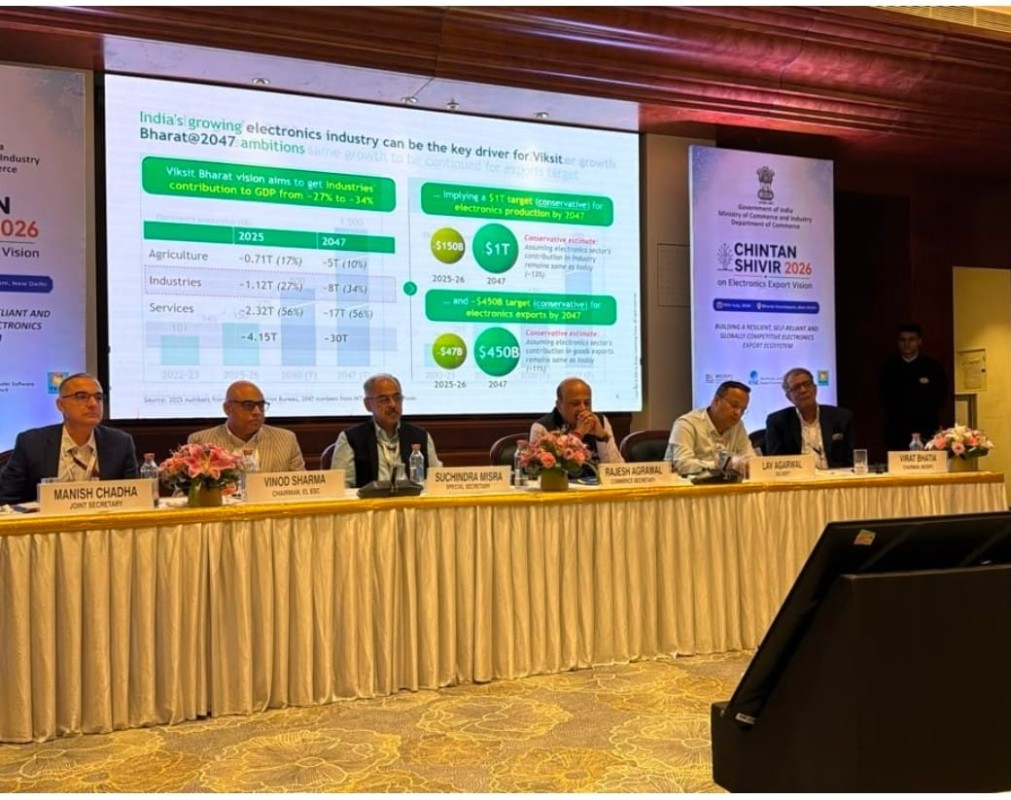
NEW DELHI ; The Department of Commerce, Ministry of Commerce & Industry, in collaboration with the Mobile and Electronic Devices Export Promotion Council (MEDEPC), the Electronics and Computer Software Export Promotion Council (ESC), and the Telecom Equipment and Services Export Promotion Council (TEPC), organised a Chintan Shivir in New Delhi to deliberate on India’s evolving electronics manufacturing landscape and strategies to strengthen the country’s global competitiveness.

With the global electronics industry increasingly being driven by global value chains, Commerce Secretary Rajesh Agrawal indicated that India’s policy framework must provide the predictability and stability required for these value chains to expand their presence in the country.

Is India ready for an ageing population amid a silent demographic shift

He observed that policy approaches for production aimed at the domestic market may differ from those needed to promote export-oriented manufacturing, calling for tangible, balanced and actionable policy recommendations equitable for all stakeholders to strengthen India’s position as a globally competitive electronics manufacturing and export hub.

Industry participants across the electronics value chain included Apple, Samsung, Amber Enterprises, Dixon Technologies, Micromax, Tata Electronics, Syrma SGS Technology, Bora Exim, Aequs, Foxconn, boAt, and several other manufacturers, exporters and industry associations.

The Chintan Shivir featured presentations on India’s roadmap to achieving $150 billion in electronics exports by 2030 and on strengthening the country’s semiconductor and electronics components.

He observed that policy approaches for production aimed at the domestic market may differ from those needed to promote export-oriented manufacturing, calling for tangible, balanced and actionable policy recommendations equitable for all stakeholders to strengthen India’s position as a globally competitive electronics manufacturing and export hub.

Industry participants across the electronics value chain included Apple, Samsung, Amber Enterprises, Dixon Technologies, Micromax, Tata Electronics, Syrma SGS Technology, Bora Exim, Aequs, Foxconn, boAt, and several other manufacturers, exporters and industry associations.

The Chintan Shivir featured presentations on India’s roadmap to achieving $150 billion in electronics exports by 2030 and on strengthening the country’s semiconductor and electronics components ecosystem.

India’s electronics exports clocked nearly $48 billion in FY 2025-26, 24.7% higher than the previous fiscal. The presentations highlighted sector-specific export opportunities across smartphones, servers, speciality electronics and components, while outlining the role of global value chains (GVCs), supply chain resilience and targeted policy interventions in positioning India as a globally competitive electronics manufacturing and export hub.

Participants emphasised on the importance of integrating MSMEs into global value chains, which account for nearly 90% of global electronics trade, to enable them to scale as suppliers to large manufacturers.

Deliberations also focused on the harmonisation of HS Codes and closer coordination with Customs authorities to minimise product misclassification and facilitate smoother exports. The discussions identified priority areas for policy interventions to strengthen India’s export competitiveness.

The Department of Commerce indicated that sustaining India’s export momentum in electronics would require competitive manufacturing along with focused marketing efforts to build visibility and acceptance of Indian products in strategic overseas markets, recommending that the Indian Institute of Foreign Trade (IIFT) develops training programmes for exporters, adding that industry feedback would be invaluable in refining the curriculum to strengthen understanding of trade agreements, market access opportunities and evolving demand patterns across global markets.

Government intervenes as shipping shocks expose container vulnerability

NEW DELHI: In a normal year, Iran buys almost 4.5 million tonnes of basmati rice from India. “It is difficult for the ships to pass through the Strait of Hormuz now. Availability of vessels from Kandla or Mumbai to Iran is very poor,” says Prem Garg, president of the Indian Rice Exporters Federation. A 20-foot container carrying 26.5 tonnes of rice now costs about $5,000 to book. “But we never know when a vessel will be available,” he says.

The uncertainty carries a steep price. R. Rajeshkumar, President of the Custom Broker and Shipping Agents Association, Coimbatore, recalls a customer who booked a container from Kochi to Iraq for $1,500. With the West Asia conflict stranding empty containers at major ports, procuring an empty container eventually cost $50,000.

Coffee exporters face similar disruption. Most Indian coffee containers now travel around the Cape of Good Hope instead of through the Red Sea and Suez Canal, says Ramesh Rajah, President of the Coffee Exporters Association of India. The diversion adds 10 to 22 sailing days and several thousand nautical miles. Freight per container has climbed from about $1,200 before the crisis to $3,800 because of the detour, while international buyers continue insisting on pre-contracted freight rates.

Across sectors, exporters are grappling with container shortages, fewer mother vessels and soaring freight costs. Large container ships that once called at Thoothukudi and Kochi have steadily declined since Covid. Instead, vessels carrying up to 20,000 containers now mostly dock at Nhava Sheva.

“The freight cost from Nhava Sheva is almost 50% less compared with the ports in the south, and the time taken is also less,” says P. Subramaniam, former Coimbatore President of the Customs Broker Association. As a result, more than 40% of cargo that once moved through Thoothukudi or Kochi has shifted to Nhava Sheva.

Infra constraints
Infrastructure constraints have compounded the problem. Vallarpadam is still some years away from becoming fully operational. Thoothukudi will be able to handle larger mother vessels only after completion of its ₹15,000 crore Outer Harbour Project. Vizhinjam, meanwhile, remains focused largely on EXIM cargo because of connectivity limitations. Freight rates continue to surge. Shipping a container from Kochi to Jebel Ali has risen from $1,000-1,500 to nearly $7,000, increasing by roughly $500 in just the last three days. Rajeshkumar says Chinese exporters secure containers more easily because of stronger demand, while Indian exporters pay heavily to book containers or recover empty ones stranded at hubs such as Dubai, Khor Fakkan and Sohar.

The problem is structural, says Amitabh Kumar, former Director General of Shipping. India has weathered five major shipping disruptions this decade — COVID, the Suez Canal blockage, the Ukraine war, Houthi attacks in the Red Sea and now tensions around the Strait of Hormuz.

Container shipping operates on fixed schedules. When routes become unsafe, ships divert, often around the Cape of Good Hope, adding 10 to 12 days to voyages. Shipping lines also prioritise their busiest routes, particularly China-Europe and China-U.S. services.

“India has lots of trade here but these are not popular ports for container ships,” Mr. Kumar says, referring to routes serving Africa, Iran and Eastern Europe. Even a modest reduction in shipping capacity can clog Indian ports, delay container turnaround and push freight rates higher. Perishable exports such as prawns are among the first casualties, while agricultural and chemical exports also suffer as shipping capacity shrinks. “We don’t have the tonnage in India to substitute for foreign container ships skipping ours,” Mr. Kumar says. Foreign shipping lines carry 90-95% of India’s cargo, leaving India vulnerable whenever global operators redeploy vessels elsewhere. Container shortages worsen as turnaround times lengthen.

Domestic production
Domestic container production also remains modest, restricting options for exporters. According to a Lok Sabha reply in March, India manufactured around 24,000 TEUs in FY24 compared with China’s output running into several million annually.

The government has unveiled two initiatives to reduce this dependence — one to expand container manufacturing and another to build an Indian container shipping line.

The ₹10,000-crore container manufacturing scheme announced in the Union Budget 2026-27 aims to increase domestic production tenfold. Its first outcome came on July 3, when an India-made EXIM container built by DCM Shriram Group was unveiled at Dadri for Maersk, which has placed a follow-on order for another 1,000 containers. Location is a crucial factor, Kumar says. Indian-made containers cost roughly 20% more than Chinese ones because Chinese containers often arrive in India already loaded with cargo, allowing transport costs to be absorbed into freight. Indian-made containers must first be transported empty to loading points, increasing costs. Manufacturing closer to ports such as Dadri can reduce this disadvantage.

The challenge, Kumar argues, is less about manufacturing capability than closing this cost gap through policy support.

The second initiative focuses on shipping ownership. In February, the Shipping Corporation of India, Container Corporation of India and the port authorities of Jawaharlal Nehru, Tuticorin and Chennai signed an MoU to establish the Bharat Container Shipping Line, India’s first national container carrier. A shipping industry observer welcomed the move but cautioned that substantial work remains before BCSL becomes operational, including identifying trade routes, recruiting experienced liner-shipping personnel, appointing agents, acquiring vessels and managing a fleet.

Source: Business Line

India accelerates Domestic Steel Container Manufacturing to Reduce China Dependence

NEW DELHI: India is stepping up efforts to establish a robust domestic steel shipping container manufacturing ecosystem, marking a significant move towards reducing its long-standing reliance on imports from China and strengthening the country’s logistics infrastructure.

Steel shipping containers are the backbone of global trade, enabling the seamless movement of cargo across ports, railways and road transport networks. The supply chain disruptions witnessed in recent years exposed India’s heavy dependence on Chinese-manufactured containers, resulting in acute shortages and soaring freight costs that adversely impacted exporters and logistics operators.

In line with the Government’s Atmanirbhar Bharat vision, India is now actively promoting indigenous manufacturing of steel containers to enhance supply chain resilience and ensure the uninterrupted availability of containers for international trade. The initiative is expected to create new business opportunities for domestic steel manufacturers, fabrication companies and allied logistics industries, while strengthening the country’s manufacturing capabilities.

Despite the promising outlook, the industry faces several challenges, including high raw material costs, the need for advanced manufacturing technology, large-scale production capabilities and intense competition from well-established Chinese manufacturers. Nevertheless, with continued policy support and growing interest from global shipping and logistics stakeholders, India’s push for domestic steel container manufacturing is poised to become a key pillar in enhancing trade competitiveness, industrial self-reliance and long-term supply chain security.