Home Blog Page 208

QodeNext strengthens Industry Readiness for GS1 Sunrise 2027 through End-to-End 2D Barcode Solutions

NEW DELHI: As GS1 Sunrise 2027 approaches, the global move from traditional 1D barcodes to data-rich 2D barcodes is set to transform product identification, traceability, and supply chain visibility across industries. QodeNext, one of India’s fastest-growing supply chain traceability and automation service providers, views this transition as a crucial step toward smarter and more transparent supply chains. In these supply chains, products can be accurately identified, authenticated, and tracked throughout their lifecycle.

Unlike 1D barcodes, 2D codes such as GS1 DataMatrix and QR Codes can store detailed product information including batch numbers, serial numbers, manufacturing, and expiry dates. This richer data enables improved inventory management, targeted product recalls, counterfeit prevention, and greater consumer trust.

Having supported manufacturers and brands for years with integrated coding, printing, scanning, machine vision, RFID, and automation solutions, QodeNext emphasizes that this shift requires businesses to modernize their entire product identification ecosystem rather than just replacing barcodes.

Commenting on the same, Mr. S R Srinivasan, CEO, QodeNext, said, “GS1 Sunrise 2027 marks a significant shift toward connected supply chains powered by detailed product level data. To fully prepare for this transition, companies must ensure that every stage of their operations from production and warehousing to logistics and retail is equipped to generate, capture, and effectively use 2D barcode data. This comprehensive readiness is essential to unlocking the full potential of smarter, more transparent, and responsive supply chains.”

The shift comes at a time when regulatory and sustainability initiatives are placing greater emphasis on product traceability. While serialization has become a key requirement in the pharmaceutical sector, industries such as FMCG, agrochemicals and home appliances are increasingly adopting digital identification to improve product visibility and compliance. Several state excise departments have also rolled out barcode- and QR code-based track-and-trace systems for liquor, while the emergence of Deposit Return Systems (DRS) is creating new demand for standardized, data-rich product identification across the value chain.

Preparing for this transition requires businesses to upgrade printing systems capable of generating high-quality 2D codes, ensure scanners and POS systems can process richer datasets, and deploy machine vision technologies to verify barcode quality before products enter the market. As global traceability standards continue to evolve alongside regulatory and sustainability initiatives, organisations are increasingly investing in technologies that enable accurate product identification, targeted recalls, expiry management and counterfeit prevention. With years of expertise in coding, printing, scanning, RFID and automation, QodeNext continues to help businesses build connected and future-ready supply chains.

Lloyd’s Register targets ageing feeder fleet with retrofit and renewal push

LONDON: Lloyd’s Register (LR) is responding to growing pressure in the feeder sector, where ageing vessels, tighter regulation and rising operating costs are forcing owners to make tougher fleet renewal decisions.

The ‘Powering the next generation of feeder vessels’ campaign brings together LR’s classification, advisory and digital expertise to support operators as they assess fleet renewal, evaluate retrofit options, improve operational performance and prepare for future fuel transition.

Feeder vessels, critical to regional and short-sea container trades, are now under strain from ageing assets, stricter emissions rules, rising fuel costs and shifting trade patterns, forcing owners to reassess long-term fleet strategies.

Unlike larger deep-sea vessel segments, feeder operators often face unique operational constraints. Routes are typically shorter, port calls more frequent and commercial flexibility more limited.

The result is a growing need for owners to make informed decisions about vessel life extension, efficiency upgrades, retrofit opportunities and future fleet renewal programmes.

The campaign is designed to meet that challenge with a combination of technical assurance, operational insight and digital support. Drawing on experience across vessel design, operation and lifecycle management, it focuses on the areas where feeder operators face the greatest pressure including newbuild specification and technical assurance, retrofit and life-extension planning, vessel and voyage performance, emissions and compliance management, future fuel readiness and stowage optimisation.

A key differentiator is LR’s ability to support decisions throughout the entire asset lifecycle. From concept design and newbuild projects to fleet optimisation, retrofits and life extension programmes, the campaign brings together specialists from multiple disciplines to provide a single lifecycle proposition.

Alongside its class and advisory support, LR is also highlighting digital solutions that help operators strengthen compliance oversight, improve visibility across fleet performance and make faster operational decisions.

These include voyage planning and optimisation tools through OneOcean, as well as connected stowage solutions such as BoxMax, LashRightUX, RollRight and RDA, which support safer loading, better cargo decisions and stronger vessel performance.

Nick Gross, LR’s Global Container Ships Segment Director (Pic above), said: “Feeder owners and operators are having to make tougher decisions, faster. They are balancing ageing fleets, tighter regulation, fuel transition, operational efficiency and long-term investment risk, often all at the same time. What owners need now is practical support that helps them act with confidence, not more complexity.

“Whether a client is assessing a newbuild, extending vessel life, planning a retrofit or improving voyage performance, our role is to help reduce risk, improve efficiency and support a more resilient fleet strategy.”

Fleet Wide Rollout of CMT Fuel and Lube Test Kits increase as Shipmanagers look to reduce costs

HAMBURG: CM Technologies (CMT) has supplied its integrated onboard fuel/oil testing and analysis kits to a fleet of 300 containerships and bulk carriers managed by one of Germany’s leading independent shipmanagement companies.

Implemented progressively over the past decade, the fleet-wide rollout has established a common testing platform for the unnamed shipowner, enabling consistent fuel and lubricating oil analysis across its fleet regardless of vessel type, trade route or operating profile.

The rollout is claimed to represent a significant shift in the way shipmanagers and owners carry out onboard engine condition monitoring across large fleets.

“Rather than being treated solely as a vessel-level engineering function, fuel and oil analysis is becoming part of a broader operational control framework that supports fleet-wide decision-making, maintenance planning and risk management,” said CMT Managing Director Uwe Krüger. “Shipping companies are looking for solutions that provide immediate results onboard. They want monitoring consistency across their fleets.”

According to CMT the trend for standardised diesel engine performance monitoring followed the increased use of very low sulphur fuel oils (VLSFO) and other blended fuels after the IMO 2020 rules.

“This created new challenges for ship operators in terms of fuel stability, compatibility and contamination, which are becoming more frequent,” said Krüger.

Traditionally, operators have relied on shore-based laboratories to analyse fuel and oil samples. But while laboratory analysis remains an important part of machinery condition monitoring, the time required to obtain results limits the ability to respond effectively to developing issues.

“More and more shipping companies are equipping their vessels with our onboard fuel and lube test cabinets to make day-to-day fuel and lube analysis easier for crews,” Krüger said. “Regular testing is now the norm, routinely testing for water content, cat fines, viscosity, density, iron wear, and lubricating oil conditions.”

Water contamination, if undetected, promotes corrosion in engine components. Cat fines (catalytic particles of aluminium and silicon from the refining process) can pass through fuel treatment systems and cause rapid wear in pumps, injectors and cylinder liners.  Viscosity and density checks at delivery give operators independent verification of bunker quality rather than reliance on supplier paperwork. And iron content analysis in cylinder drain oil tracks wear rates over time, flagging deterioration before it becomes a serious problem.

“Testing is such an important consideration it is now being built into daily operations onboard rather than carried out periodically or outsourced. A key benefit of the standardised approach is the ability to compare results directly between vessels,” said Krüger.

“Because measurements are generated using the same equipment and procedures, technical teams can benchmark performance across sister ships, identify abnormal trends and investigate any deviations. This has transformed onboard testing into a fleet-wide intelligence tool.”

More recently, the shipmanager has upgraded its testing programme with the replacement of traditional wet chemical iron test kits with CMT’s ferrous wear measurement device. The change has reduced dependence on reagents while improving repeatability and consistency in wear monitoring.

“Earlier identification of abnormal wear gives crews and technical managers more time to investigate and address problems before they develop into catastrophic engine failure and costly disruption. A single testing platform also cuts procurement complexity and ensures consistent training and data interpretation across the fleet,” he said.

Details of the company’s fleet wide roll out were revealed in CMT case study, published on its website. The case study is available at https://www.cmtechnologies.de/en/about-cmt/downloads-en/case-stories-en.html

Sierra Leone Flag moves closer to Paris MoU White List in latest rankings

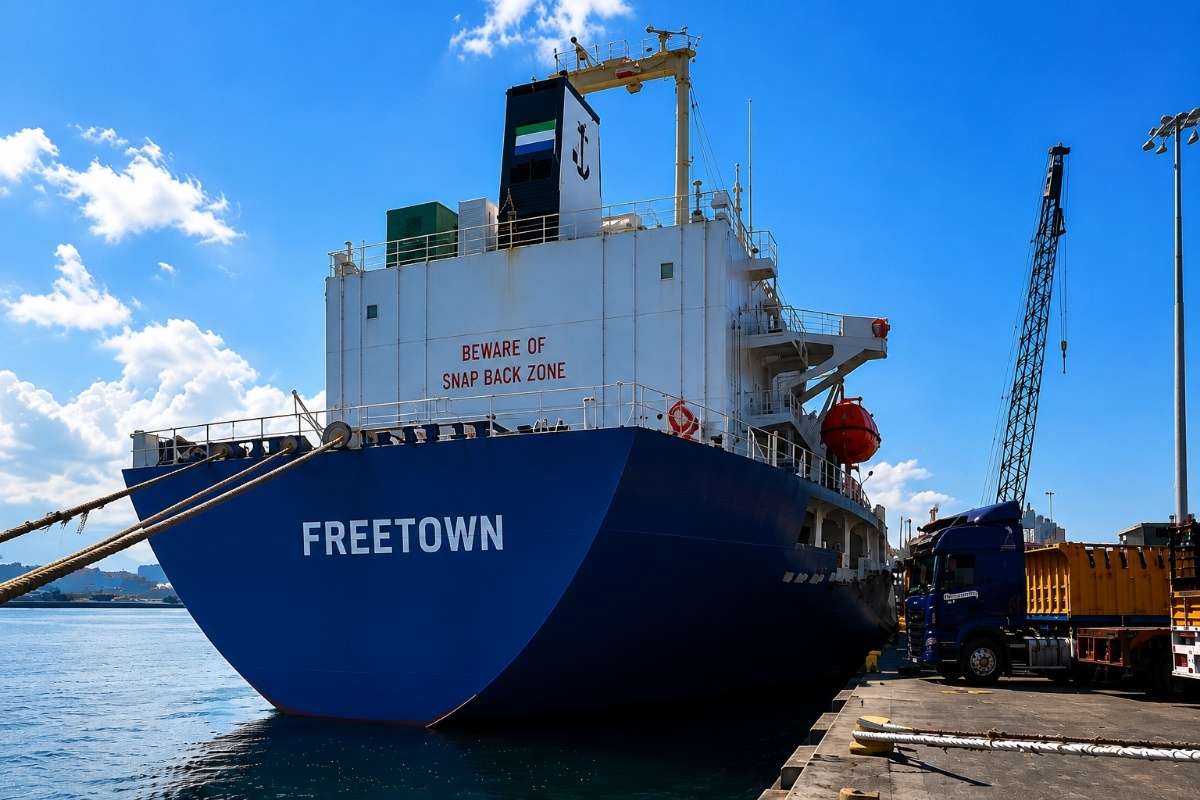
FREETOWN (SIERRALEONE): The Sierra Leone Maritime Administration (SLMARAD) has recorded its strongest performance to date in the latest Paris Memorandum of Understanding (Paris MoU) Flag Performance List, moving the Registry closer to White List status. The rankings are based on Port State Control inspections and detentions carried out during the 2023–2025 assessment period and came into effect on 1 July 2026.

The Paris MoU White, Grey and Black Lists are among the shipping industry’s most closely watched indicators of Flag State performance. They classify flag administrations according to their safety and compliance record, based on the total number of inspections and detentions across the Paris MoU region over a three-year rolling period. Shipowners, managers, charterers and insurers use the rankings to assess fleet quality and regulatory oversight.

During the 2023–2025 assessment period, the Sierra Leone Flag recorded 172 Port State Control inspections and just 10 detentions, resulting in an Excess Factor of 0.33. These results reflect a sustained improvement in fleet quality, regulatory oversight and compliance with international standards.

Compared with the previous assessment period, Sierra Leone reduced vessel detentions while maintaining a similar inspection volume, bringing the Registry closer to White List status.

The latest results place Sierra Leone ahead of several established registries on the Paris MoU Grey List, including Thailand, the Philippines, Egypt and Saint Vincent and the Grenadines. Under the Paris MoU methodology, reducing the total number of detentions by four over the three-year assessment period would have placed Sierra Leone on the White List, highlighting the progress made by the Registry in recent years.

“Improving Port State Control performance is not something that happens overnight,” said Mr. Alexandros Stylianou, Technical Manager of SLMARAD “It requires consistent technical oversight, disciplined fleet management and a long-term commitment to quality. These results demonstrate that the measures we have introduced are delivering measurable improvements and reinforcing confidence in the Sierra Leone Flag.”

Over recent years, SLMARAD has continued to strengthen its technical oversight through enhanced fleet monitoring, compliance verification and a continued focus on quality. These initiatives form part of the Administration’s strategy to improve fleet performance while supporting shipowners with a professionally managed and responsive flag administration.

“While we are proud of this milestone, our ambition extends beyond improving our ranking,” added SLMARAD’s Business Development Manager, “Our objective is to provide shipowners with a reliable, efficient flag administration that supports safe operations and full compliance with international maritime regulations. We will continue building on this momentum as we work towards achieving White List status.”

About the Sierra Leone Maritime Administration

The Sierra Leone Maritime Administration is responsible for the registration and regulation of ships flying the Sierra Leone Flag. The Administration promotes compliance with international maritime conventions while supporting safe, secure and environmentally responsible shipping through professional flag state services and technical oversight while continuing to invest in lower-emission transportation. For us, sustainability and commercial growth are not separate ambitions; they must move forward together.” 

Heerema and Amphitrite Shorten Sleipnir’s Atlantic Transit by 2.5 Days

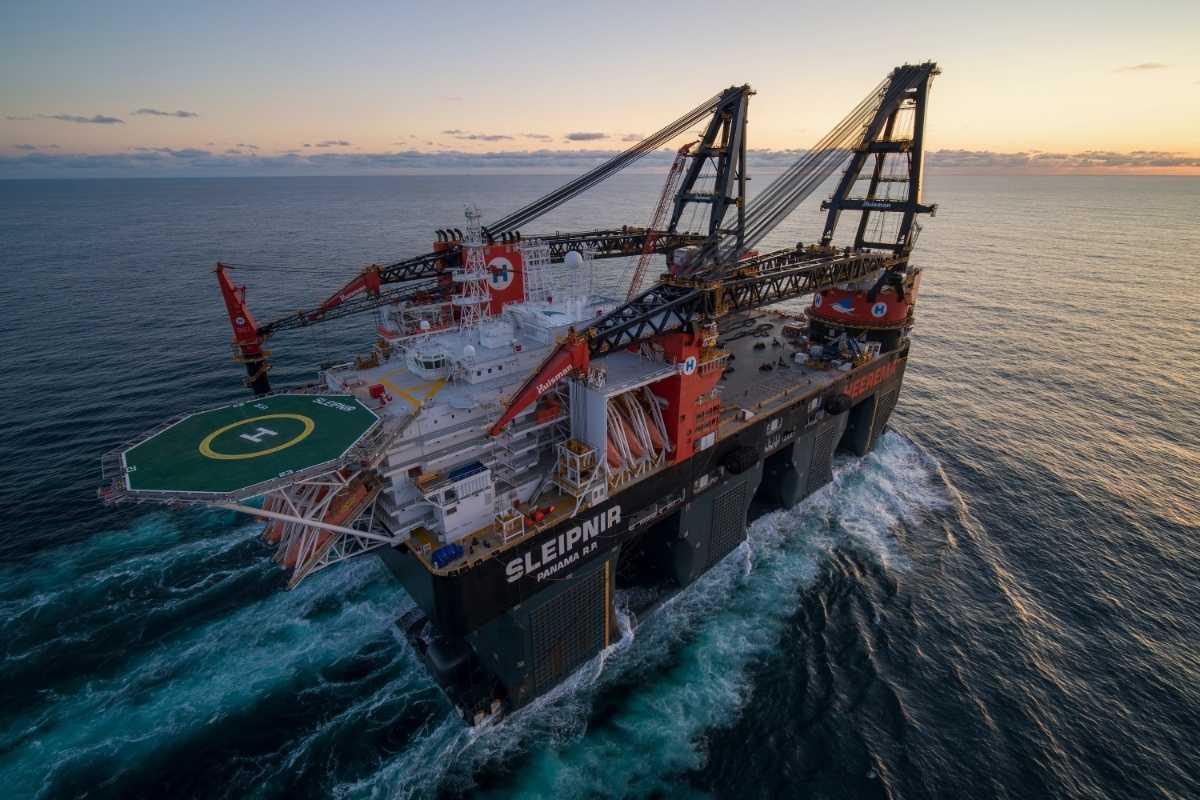
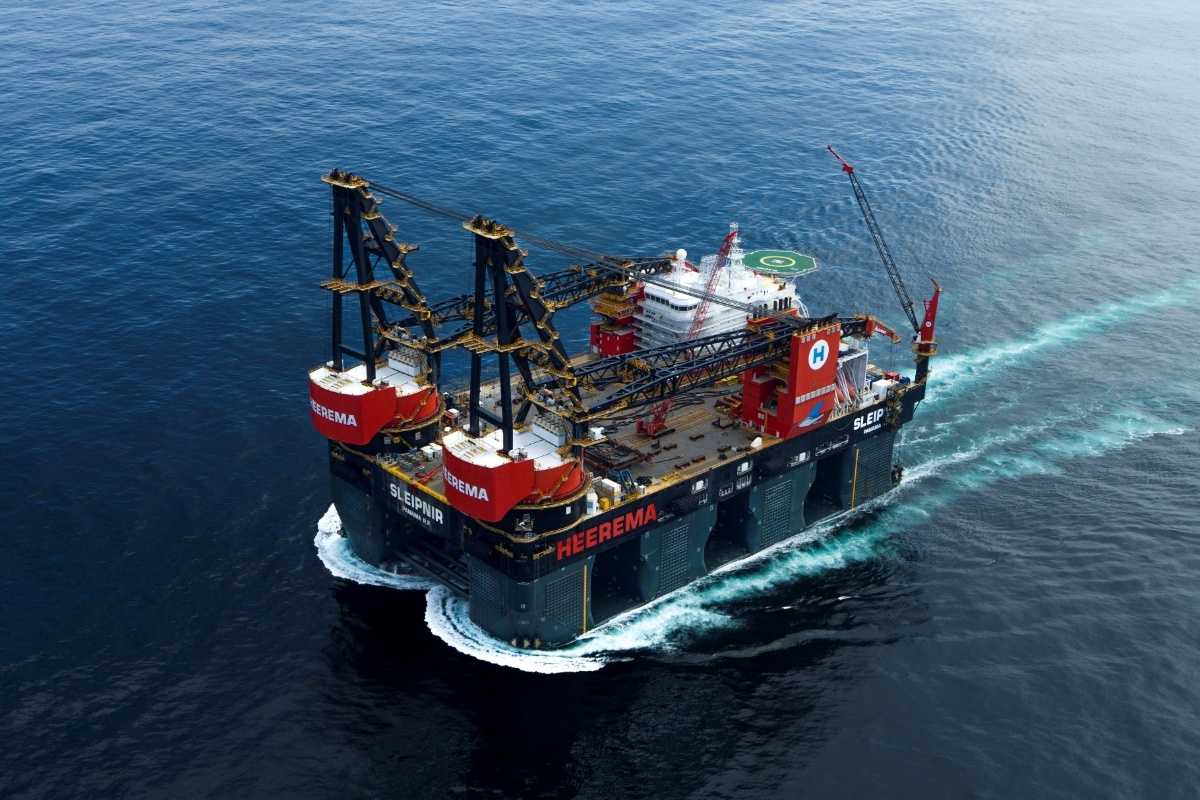
PARIS: Heerema Marine Contractors has shortened the North Atlantic transit of its semi-submersible crane vessel Sleipnir by 2.5 days using a data-driven voyage optimization pilot with French ocean intelligence company Amphitrite. The optimized crossing reduced the sailing distance by 240 nautical miles and cut CO₂ emissions by up to 18%, while maintaining higher average speeds without increasing fuel consumption.

The pilot combined Heerema’s offshore expertise with Amphitrite’s vessel-specific voyage optimization platform, using five years of operational data supplied by Heerema to develop a model that predicts Sleipnir’s speed and power consumption under changing weather, wave and ocean current conditions. Unlike generic weather routing, Amphitrite’s approach combines vessel-specific performance modelling with high-resolution ocean current, wave and weather intelligence.

Heerema and Amphitrite Shorten Sleipnirs Atlantic Transit by 2.5 Days 1 Heerema and Amphitrite Shorten Sleipnir's Atlantic Transit by 2.5 Days

Sleipnir, world’s largest semi-submersible crane vessels, was mobilizing from Rotterdam to New York to install an offshore wind substation. North Atlantic winter conditions put the vessel to the test, with rapidly changing winds, waves and ocean currents providing a demanding proving ground for the routing model.

Shortly after departure, the system identified the optimal sailing window to benefit from tidal currents in the English Channel. As the crossing progressed, it recommended a more northerly route around a developing storm, allowing Sleipnir to make use of favourable tailwinds while remaining close to the great-circle route.

The return crossing demonstrated another advantage of dynamic voyage optimization. Rather than following the shortest route, the model directed Sleipnir towards the Gulf Stream. Although the vessel covered a greater distance, favourable currents increased its speed over ground to 14.6 knots, reducing the overall transit time despite the longer route.

The collaboration forms part of Heerema’s wider use of Amphitrite’s Ocean Bulletin, supporting crews and operational teams with ocean intelligence for voyage planning and offshore project preparation across its fleet.

Beyond the operational gains, the pilot also gave Heerema new insights into how Sleipnir performs during transit. “Improving fleet efficiency is fundamental to our decarbonization strategy,” said Alejandro Velez Isaza, Decarbonization Engineer at Heerema Marine Contractors. “Working with Amphitrite not only demonstrated the value of vessel-specific voyage optimization, but also gave us a better understanding of how Sleipnir behaves during transit. Those insights create further opportunities to optimize fuel consumption during one of the most energy-intensive phases of our operations.”

For Amphitrite, the project demonstrates how vessel-specific modelling helps offshore operators and shipping companies unlock meaningful efficiency gains. Thomas Joyce, Head of Business Development at Amphitrite, said: “This collaboration with Heerema shows the value of combining vessel-specific models with high-resolution ocean intelligence. Offshore vessels such as Sleipnir operate in highly dynamic environments, where currents, waves and weather can materially affect performance. By bringing these factors into routing decisions, we can help crews and operators make better-informed choices that reduce transit time, fuel consumption and emissions.”

The pilot demonstrates that vessel-specific voyage optimization can deliver measurable operational and environmental benefits for complex offshore assets. For Heerema and Amphitrite, it also shows how data-driven routing can translate directly into shorter transits, lower emissions and more efficient offshore vessel mobilizations.

About Amphitrite

Amphitrite is a French ocean intelligence company developing AI-powered solutions for voyage optimization, offshore planning and maritime operations. Originating from research at CNRS and École Polytechnique, Amphitrite combines satellite data, in-situ observations, ocean modelling and vessel-specific machine learning to help shipping and offshore operators improve efficiency, reduce fuel consumption and support operational decision-making at sea.

About Heerema Marine Contractors Heerema Marine Contractors is a global expert in offshore energy solutions. With over 60 years of experience, the company specializes in the engineering, transport, installation, and removal of offshore structures for the offshore energy sectors. Heerema’s mission is to be the leading marine contractor creating sustainable value for clients and stakeholders. The company manages the full scope of project execution, delivering safe, innovative, and efficient solutions tailored to client needs. The company operates four of the world’s largest crane vessels, including record-breaker Sleipnir, which has a 20,000 metric tons lifting capacity.

India-UK Double Contribution Convention to protect EPF savings of Indian workers: Piyush Goyal

MUMBAI: Union Commerce and Industry Minister Shri Piyush Goyal on Sunday said the India-UK Free Trade Agreement (FTA) will come into effect on July 15, eliminating import duty on Indian goods entering the United Kingdom and bringing social security benefits for Indian professionals working there for up to five years.

“Only two days remain; today is the 12th. From the 15th, any goods exported from India to the United Kingdom will be welcomed there at zero import duty. This UK-India free trade deal brings new opportunities and immense possibilities for us all,” Goyal told reporters.

The minister also highlighted the implementation of the Double Contribution Convention Agreement from July 15, saying it would benefit Indian professionals temporarily working in the UK.

“Regarding our young men and women who go there to work–often for two, three, or five years… previously, about 25 per cent of their salary was effectively wasted; the local government would take it, and the worker received no benefit from it. Now, we have finalised a ‘Double Contribution Convention Agreement’ that will also come into effect on the 15th,” he said.

According to Goyal, Indians going to the UK for work for up to five years will no longer lose that contribution.

“For Indians going there to work in the services sector or other jobs for up to five years, the 25 per cent of their salary that was previously taken by the local government will now be deposited into their Provident Fund accounts in India. That money will belong to them; it earns 8.25 per cent tax-free interest and serves as a support for their old age, ensuring social security for their families,” he said.

Calling the agreement a major achievement, Goyal said it goes beyond merchandise trade.

“I believe it is a testament to Prime Minister Narendra Modi’s able leadership that the UK-India Free Trade Agreement not only addresses merchandise and goods and boosts the services sector, but also brings a significant gift for the thousands of people working and providing services there,” he said.

The India-UK Free Trade Agreement is aimed at expanding bilateral trade by reducing or eliminating tariffs on a wide range of goods while also improving market access for services. The agreement is expected to benefit key Indian export sectors such as textiles, apparel, engineering goods, gems and jewellery, marine products and auto components, while also strengthening economic ties between the two countries.

The accompanying Double Contribution Convention is designed to prevent Indian professionals on short-term assignments in the UK from making social security contributions in both countries, reducing their employment costs and improving their long-term retirement savings.

India strengthens Global Maritime Leadership at 137th IMO Council Session in London

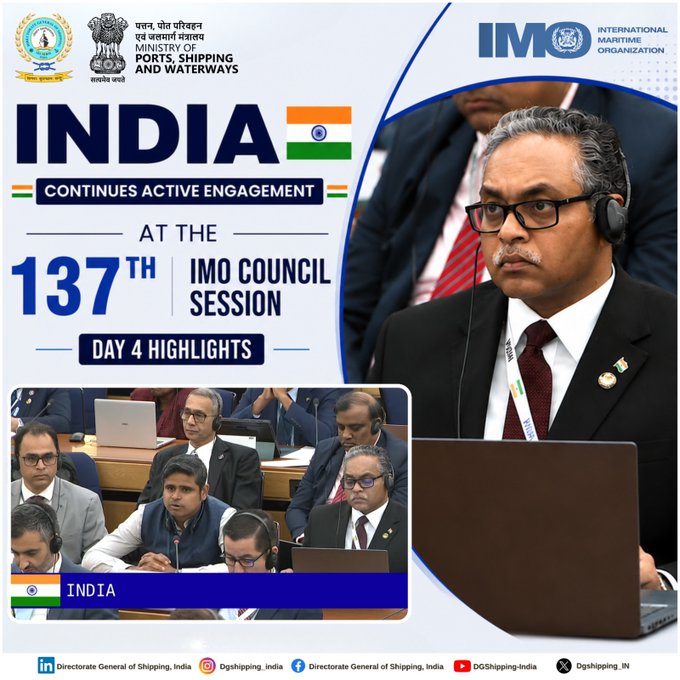
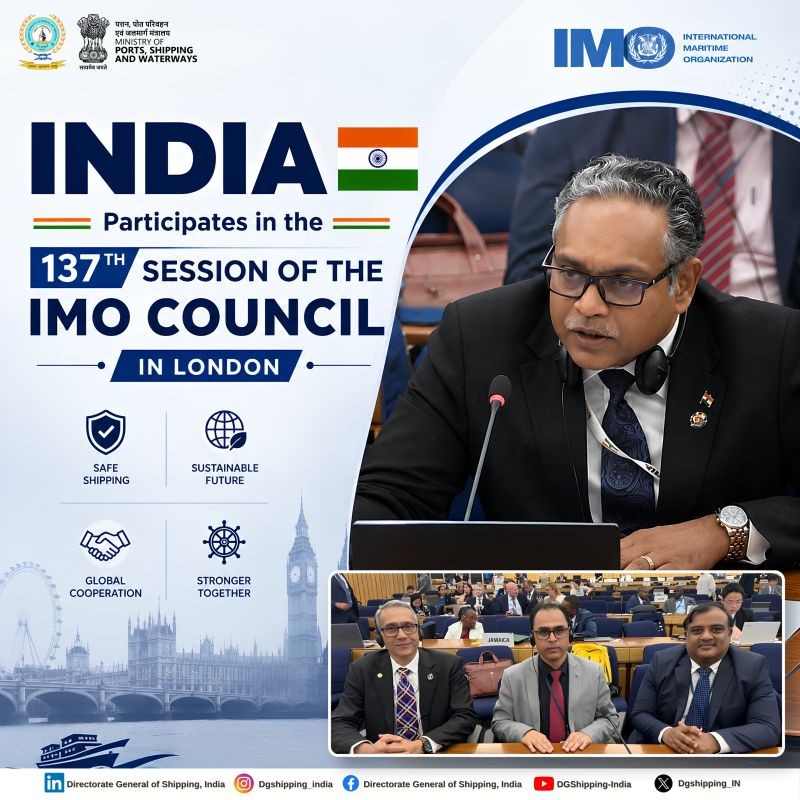
LONDON : India reaffirmed its commitment to global maritime governance, seafarer welfare and sustainable shipping during the 137th Session of the International Maritime Organization (IMO) Council, held in London from 6–10 July 2026. The Indian delegation, led by Shri Shyam Jagannathan, IAS, Director General of Maritime Administration, and Shri Ash Mohomad, Deputy Director General of Maritime Administration, along with representatives from the Indian maritime industry, actively participated in deliberations and held a series of high-level bilateral engagements.

Throughout the four-day session, India made substantive interventions on key policy issues, advocated reforms to strengthen international maritime governance, and highlighted its ongoing efforts to improve seafarer welfare through digital transformation and international cooperation.

HM4l1WYbYAAj84X India strengthens Global Maritime Leadership at 137th IMO Council Session in London

India Calls for Consensus-Based IMO Reforms

On the opening day, India participated in discussions on proposed amendments to the IMO Rules of Procedure, advocating greater clarity, accessibility and consistency while stressing that any reforms should preserve the consensus-driven and technical nature of the Organization.

India also raised concerns regarding the interpretation of Effective Implementation (EI) percentages and the limited public disclosure of IMO Member State Audit Scheme (IMSAS) outcomes. The delegation emphasized that audit indicators should be accompanied by appropriate contextual information and should not lead to unintended comparisons or rankings among Member States. India reiterated that the Audit Scheme must continue to serve its developmental and cooperative objectives.

DGC IMO LONDON India strengthens Global Maritime Leadership at 137th IMO Council Session in London

Strong Focus on Seafarer Welfare

India reiterated its commitment to safeguarding the rights and welfare of seafarers by calling for enhanced international cooperation, timely repatriation, robust financial security mechanisms and effective implementation of the Maritime Labour Convention (MLC).

The delegation highlighted several institutional initiatives undertaken by the Directorate General of Maritime Administration (DGMA), including the launch of the 24×7 e-Navik Seafarer Assistance Portal and an integrated crisis response mechanism to provide timely support, coordination and grievance redressal for Indian seafarers worldwide.

HMxsfSYboAAV cF 1 India strengthens Global Maritime Leadership at 137th IMO Council Session in London

Meeting with IMO Secretary-General

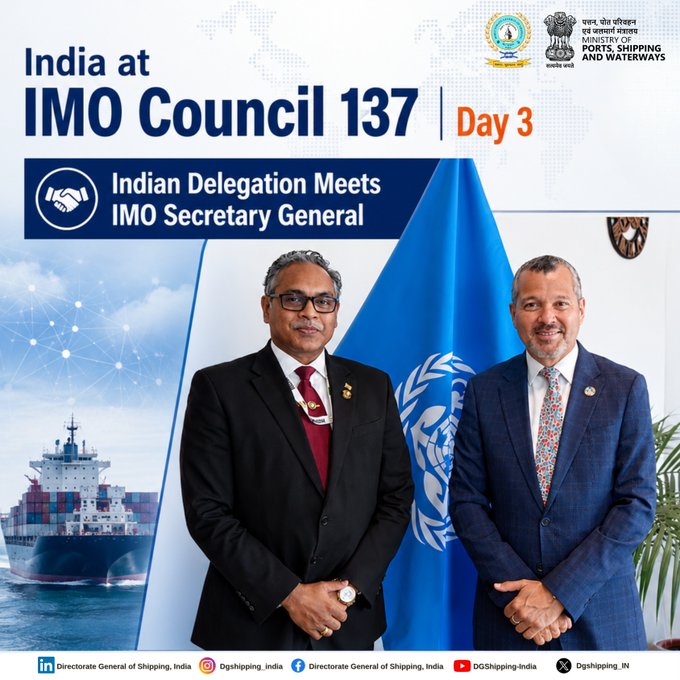
A key highlight of the session was the meeting between the Indian delegation and IMO Secretary-General H.E. Arsenio Dominguez. During the discussions, India raised critical issues affecting Indian seafarers and the country’s maritime interests, including the criminalisation of the Master of MV Smyrtos, the significant reduction in seafarer abandonment cases, sponsorship of the C.P. Srivastava Chair at the World Maritime University (WMU), and India’s continued efforts relating to maritime security in the Strait of Hormuz.

The Secretary-General expressed condolences over the loss of Indian seafarers in recent regional conflicts and assured the IMO’s support wherever feasible. India also extended an invitation to the Secretary-General to participate in INMARCO 2026 in Mumbai, which was graciously acknowledged.

The discussions further covered the proposal for posting a Deputy Director General-rank technical representative from DGMA at the IMO, sponsorship of Senior and Junior Professional Officers, strengthening India’s engagement with the World Maritime University, and collaborative efforts with the India Maritime Centre, London, to address seafarer abandonment and improve global awareness of these issues.

HM9T3lZa8AAzk62 India strengthens Global Maritime Leadership at 137th IMO Council Session in London

Engagement with the Indian High Commission

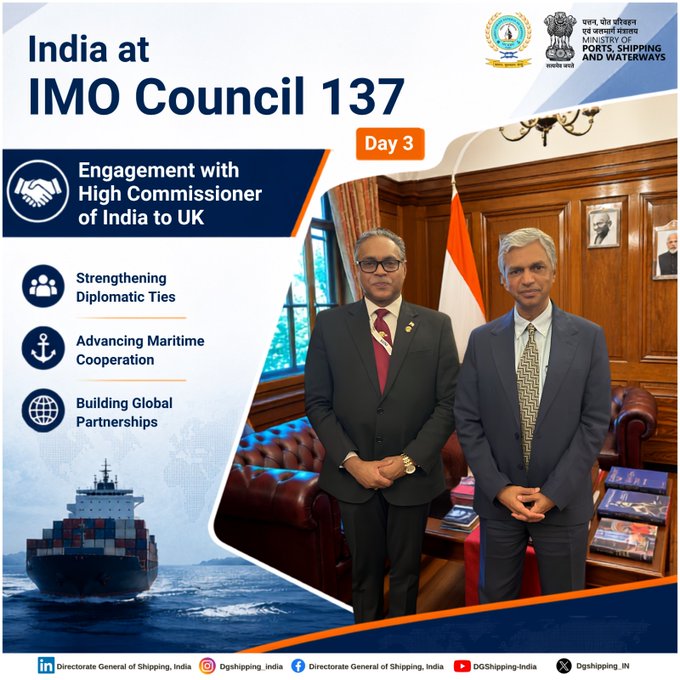
The delegation also met the High Commissioner of India to the United Kingdom, discussing matters relating to Indian seafarers overseas, maritime diplomacy and strategies to further enhance India’s global maritime profile.

India strengthens Global Maritime Leadership at 137th IMO Council Session in London

Digital Maritime Governance with ICS

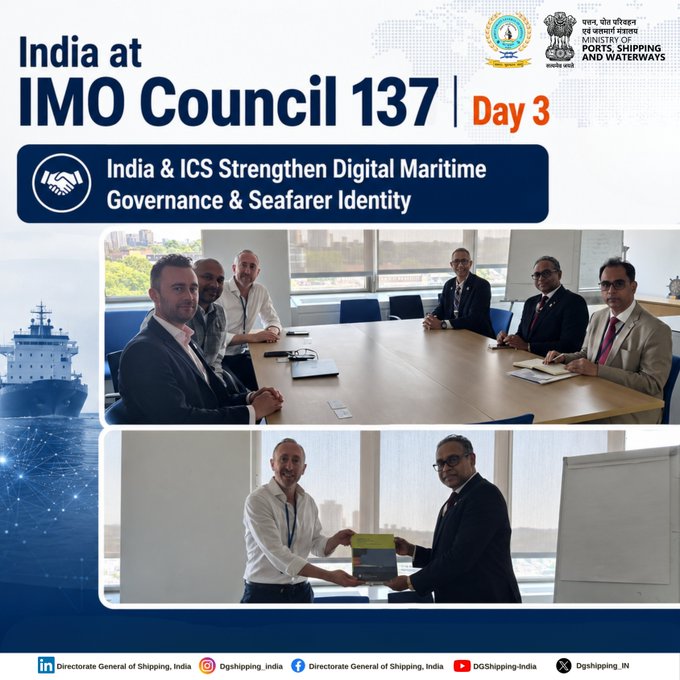
India held productive discussions with the International Chamber of Shipping (ICS) on strengthening digital maritime governance and advancing global standards for seafarer welfare.

The meeting focused on the International Seafarers Validation Platform and finalisation of a Memorandum of Understanding to ensure compliance with digital data protection requirements for Maritime Labour Convention inspections under Port State Control and Flag State regimes.

The delegation showcased India’s comprehensive e-governance initiatives, including upgraded Recruitment and Placement Services Licence (RPSL) and Maritime Training Institute (MTI) modules, strengthened measures against fraudulent crewing practices, and complete digitalisation of Certificates of Competency, reinforcing the credibility and global recognition of Indian seafarers.

India strengthens Global Maritime Leadership at 137th IMO Council Session in London

Constructive Dialogue with ITF

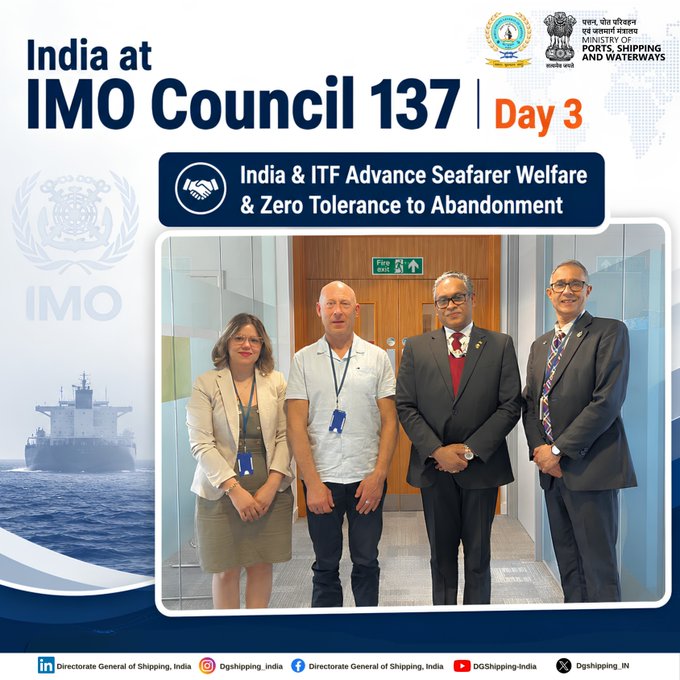
India also met representatives of the International Transport Workers’ Federation (ITF) to review progress on seafarer welfare and abandonment cases.

The delegation highlighted the reduction in abandonment cases to 56 vessels involving 449 seafarers, supported by institutional initiatives such as the 24×7 grievance redressal helpline, ITF-MILAAP coordination mechanism, welfare assistance to families of affected seafarers and a zero-tolerance approach towards corrupt crewing practices.

Both sides also discussed concerns relating to diluted Certificate of Competency standards issued by certain flag administrations and the criminalisation of seafarers. India invited the ITF to undertake an independent evaluation of the Indian Flag Administration.

India’s Intervention on the West Asia Situation

During discussions on developments in West Asia, India welcomed the understanding reached among concerned parties aimed at ending the conflict and expressed hope that peace efforts would continue despite recent tensions.

The delegation underscored the severe impact of the conflict on global maritime trade, including disruptions to shipping, economic losses and the tragic loss of seafarers’ lives. India stressed the importance of restoring peace and stability to ensure safe, secure and uninterrupted navigation through the Strait of Hormuz.

Reaffirming its longstanding position, India called for all disputes to be resolved through dialogue and diplomacy while conveying its deepest sympathies to the families of seafarers who lost their lives during the conflict.

HM4pc3raYAA0A1I India strengthens Global Maritime Leadership at 137th IMO Council Session in London

Bilateral Cooperation with Kenya

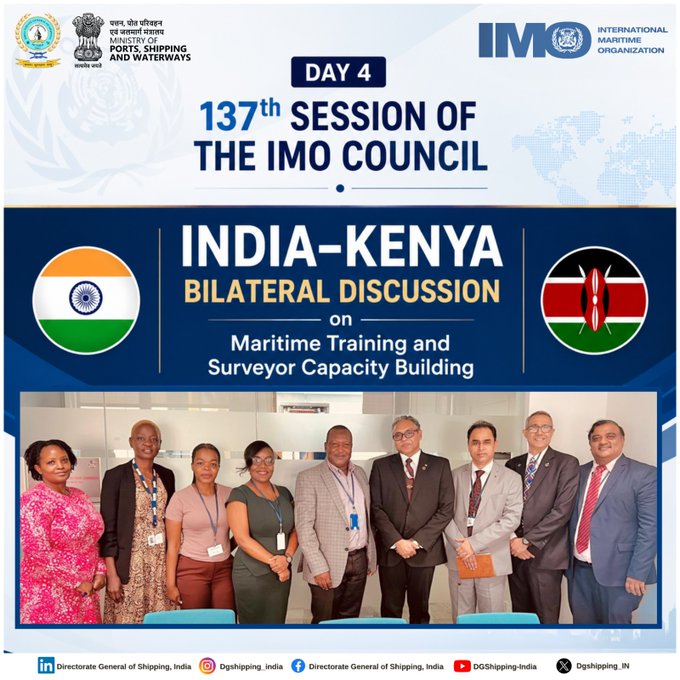
On the sidelines of the Council session, India held bilateral discussions with the Kenyan delegation to explore enhanced cooperation in maritime education, training and capacity building.

The talks covered training support for Kenyan surveyors, opportunities for Indian maritime professionals in Kenya and broader collaboration aimed at strengthening maritime skills, institutional capacity and technical cooperation between the two countries.

Reinforcing India’s Maritime Vision

India’s active participation at the 137th IMO Council Session reflected its growing role in shaping international maritime policy and promoting collaborative solutions to global maritime challenges. Through constructive interventions, digital governance initiatives and sustained focus on seafarer welfare, India reaffirmed its commitment to advancing safe, secure, sustainable and efficient international shipping while strengthening its leadership within the global maritime community.

India–UK FTA expected to boost exports across diverse sectors

NEW DELHI : Indian exporters are eyeing significant opportunities as the India-UK Comprehensive Economic & Trade Agreement (CETA) comes into force on July 15, with a report by the Global Trade Research Institute (GTRI) identifying garments, automobiles, textiles, processed foods and seafood among the sectors likely to benefit the most.

The report notes that India remains a relatively small supplier to the UK despite strong manufacturing capabilities. In 2025, the UK imported goods worth $928.9 billion globally, but only $15.2 billion, or 1.6%, came from India. Likewise, the UK accounted for just 3.4% of India’s $445 billion global merchandise exports.

High export potential

According to GTRI, the biggest opportunities lie in sectors where India has strong export capacity, the UK has sizeable import demand and CETA removes a meaningful tariff disadvantage.

Garments top the list. India supplied $1.3 billion, or 6.1%, of the UK’s garment imports in 2025. The UK already accounts for 8% of India’s global garment exports, providing an established customer base.

Textiles, leather and footwear also feature prominently, with India accounting for 7.8% of UK textile imports, 7.3% of leather products and 4.8% of footwear imports. The UK already buys over 10% of India’s global footwear exports.

Among food products, processed foods, including ready-to-eat meals, bakery products, sauces and ethnic foods, offer strong growth potential as tariff reductions coincide with India’s relatively low 1.1% share of the UK’s $33.4 billion processed food import market.

The report also highlights opportunities in cereals, vegetables, fruits, spices and seafood, although exporters will need to comply with stringent UK sanitary and phytosanitary (SPS) norms, traceability requirements and food safety standards.

Automobiles, motorcycles and auto components present a sizeable long-term opportunity. Despite the UK importing $92.2 billion worth of vehicles and components annually, India currently commands just a 0.4% market share, leaving significant room for expansion as tariffs fall.

Similarly, machinery, electronics and fabricated metal products could benefit from deeper supply-chain integration, although future growth will depend more on technology, certification and quality standards than tariff reductions alone.

Medium and low-potential sectors

GTRI categorises chemicals, pharmaceuticals, plastics, rubber products, precious metals, paper, wood products and transport equipment as medium-potential sectors, noting that regulatory compliance, sustainability requirements and procurement practices will play a bigger role than tariffs.

Meanwhile, iron and steel, ores and petroleum, alcoholic beverages and tobacco products are seen as having relatively limited upside, with structural barriers such as safeguard measures, carbon-related costs, weak brand presence and declining demand likely to outweigh the benefits of tariff reductions.

GTRI Founder Ajay Srivastava said the biggest gains are likely in sectors where India’s export strengths align with strong UK demand and meaningful tariff reductions under CETA.

“The biggest gains are likely where India’s strong export capacity, the UK’s substantial demand and the removal of a meaningful tariff disadvantage by the CETA come together,” he said, pointing to garments, textiles, leather, footwear, processed foods, seafood and selected agricultural products.

Srivastava added that automobiles represent a significant long-term opportunity given India’s minimal presence in the UK market, while machinery and electronics exports can expand if companies strengthen certification, technology and supply-chain integration.

He also called for a sector-specific export strategy, stressing that CETA creates market access, not guaranteed exports. “Without parallel work on standards, certification, logistics, regulatory approvals and buyer networks, much of the opportunity will remain on paper,” he said.

Piyush Goyal to lead high-level business delegation to Spain, Belgium and Finland from 13–17 July 2026

SPAIN : Union Minister of Commerce & Industry, Shri Piyush Goyal, will lead a high-level Indian business delegation to Spain, Belgium and Finland from 13 to 17 July 2026. The visit underscores India’s commitment to strengthening economic partnerships across Europe, with a focus on trade, investment, technology, innovation and sustainability.

The delegation comprises leading Indian companies from sectors including advanced manufacturing, clean energy, digital technologies, gems and jewellery, food processing, healthcare and design.

During the visit to Spain on 13 July, Shri Goyal will focus on advancing bilateral trade and investment and leveraging opportunities arising from the proposed India-European Union Free Trade Agreement (FTA). He will hold bilateral meetings with H.E. Mr. Carlos Cuerpo Caballero, First Vice President of the Government of Spain and Minister of Economy, Trade and Business; H.E. Mr. Jordi Hereu Boher, Minister of Industry and Tourism; and H.E. Mr. José Manuel Albares Bueno, Minister of Foreign Affairs, European Union and Cooperation. He will also chair an India-Spain Business Roundtable with leading Spanish companies and industry associations to showcase India’s investment opportunities and encourage greater business-to-business partnerships.

Shri Goyal will participate in a Business Roundtable with the Chamber of Commerce of Spain, CEOE and ICEX Spain Trade & Investment. The session will bring together Indian and Spanish industry leaders to explore opportunities in automotive, renewable energy, railways, artificial intelligence, semiconductors, food processing and tourism.

Spanish companies such as Iberdrola, Acciona, CAF, Talgo, Gestamp and Indra already have a strong presence in India, while Indian companies including TCS, Infosys, Wipro, Tech Mahindra and L&T are expanding their operations in Spain to support digitalisation and Industry 4.0. The visit also coincides with the Spain-India Dual Year 2026, commemorating 70 years of diplomatic relations, with a special emphasis on strengthening business-to-business partnerships.

In Belgium on 14 and 15 July, Shri Goyal will undertake site visits to the Port of Antwerp and the Antwerp World Diamond Centre. The visit to the Port of Antwerp will provide insights into Europe’s leading logistics hub and showcase best practices in multimodal connectivity, green logistics and resilient supply chains. The visit to the Antwerp World Diamond Centre will highlight the global diamond value chain, certification, responsible sourcing and opportunities for India’s gems and jewellery sector.

The Minister will also hold CEO-level meetings with Mr. Alain Queverin of Thales Group and Mr. Jean-Christophe Bogaert of Silox Group. Thales is a global leader in aerospace, defence, cybersecurity and digital identity with significant partnerships in India, while Silox is a specialty chemicals and recycling group with major operations in Gujarat and collaborations in battery recycling and sustainable manufacturing.

The India-EU Business Roundtable and the Trade and Technology Council (TTC) Plenary will focus on foreign direct investment opportunities, trade facilitation, sustainable technologies and resilient supply chains.

During his visit to Brussels, Shri Goyal will co-chair the 3rd India-EU Trade and Technology Council (TTC) Ministerial Meeting alongside the External Affairs Minister and the Minister of State for Electronics & Information Technology. The India-EU TTC serves as the highest institutional mechanism for cooperation on trade, trusted technology and economic security.

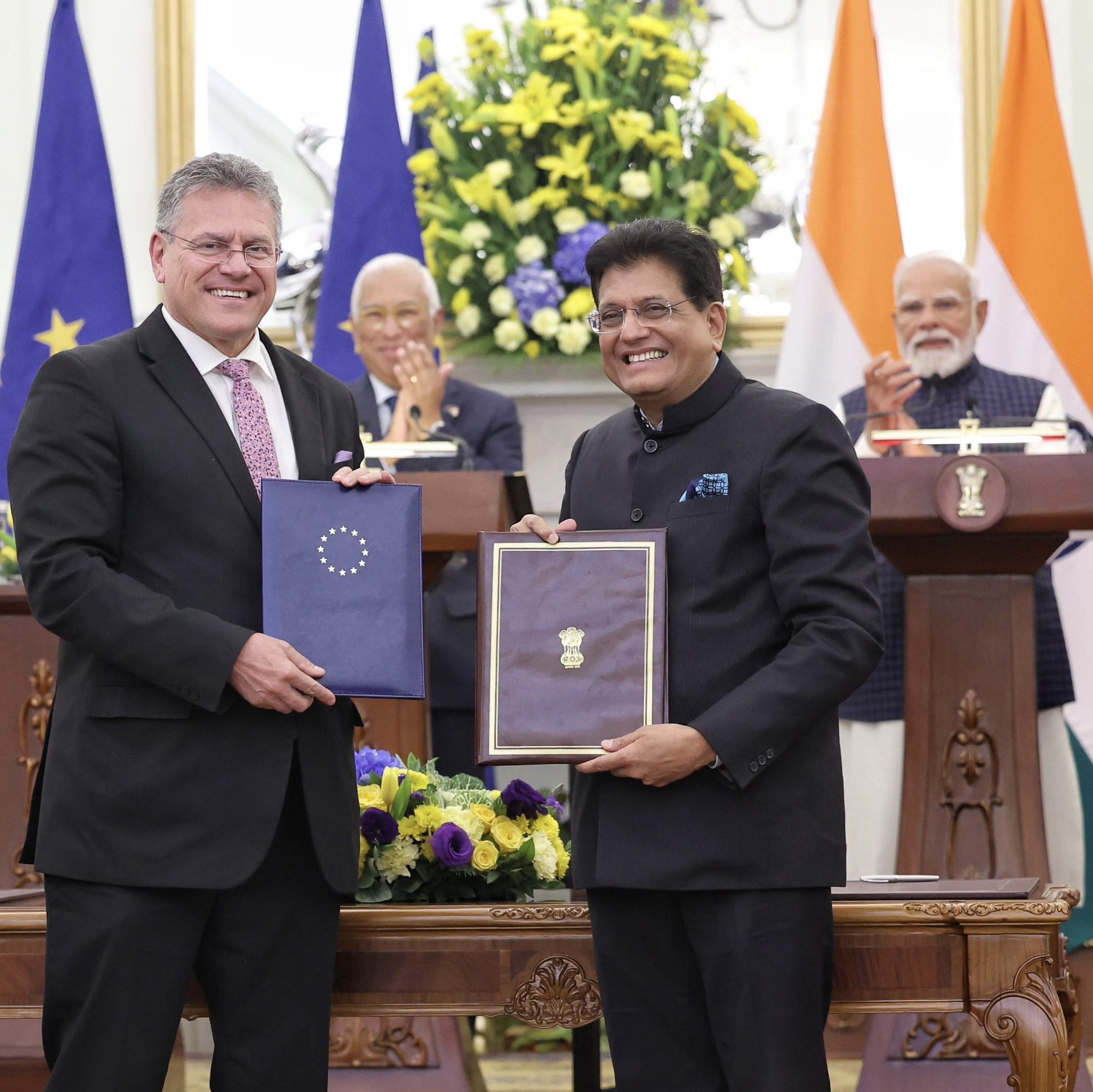
On the sidelines of the TTC, the Minister is expected to hold meetings with senior leaders of the European Union, including the President of the European Commission, the President of the European Council and the Prime Minister of Belgium. He will also hold bilateral meetings with H.E. Mr. David Clarinval, Deputy Prime Minister and Minister of Employment, Economy and Agriculture of Belgium, and H.E. Mr. Maroš Šefčovič, European Commissioner for Trade and Economic Security. Shri Goyal will further engage with industry leaders through the India-Belgium Business Roundtable and interactions with leading European companies.

In Finland on 16 and 17 July, Shri Goyal will visit the country at the invitation of the Prime Minister of Finland. The visit will focus on strengthening cooperation in innovation, advanced manufacturing, clean energy, digital technologies and industrial research.

The Minister is scheduled to hold a bilateral meeting with H.E. Dr. Sakari Puisto, Minister of Economic Affairs of Finland, and participate in the India-Finland Business Roundtable with Finnish companies engaged in digitalisation, clean energy, advanced manufacturing and the circular economy. An MoU between CII and Business Finland will also be signed to strengthen institutional collaboration.

Shri Goyal will visit leading Finnish companies and innovation institutions, including Nokia Corporation, VTT Research Centre, KONE Corporation and the Kemppi Group, to explore opportunities for collaboration in telecom infrastructure, 6G research, smart mobility, advanced manufacturing, industrial machinery, EV charging infrastructure, frontier technologies, sustainable mobility, industrial innovation and investment.

The Indian business delegation will include companies such as Borosil Renewables, Motherson Group, Trivitron Healthcare, Hari Krishna Exports and Nekkanti Seafoods, representing sectors ranging from AI and clean technology to gems and jewellery, food processing, healthcare and design.

Across Spain, Belgium and Finland, the visit will highlight key themes of advanced manufacturing, clean energy and sustainability, digital and frontier technologies, gems and jewellery, and food and consumer industries.

The visit comes at a significant juncture in India-EU relations, with both sides committed to strengthening economic cooperation and working towards the early implementation of the India-EU Free Trade Agreement. In this context, Shri Goyal’s visit marks an important step in translating this shared vision into concrete outcomes. It reflects India’s steadfast commitment to deepening its engagement with the European Union, one of its largest trading partners, and to advancing an ambitious, balanced and mutually beneficial agreement that contributes to resilient supply chains, sustainable growth and a rules-based global trading system.

The visit is also expected to impart fresh momentum to India’s engagement with Europe by promoting trade and investment, strengthening collaboration in emerging technologies, clean energy, innovation and advanced manufacturing, fostering closer partnerships between businesses and innovation ecosystems, and reinforcing India’s position as a trusted global partner for innovation, manufacturing and sustainability.

Nitin Gadkari calls for stronger BRICS Cooperation to build sustainable, resilient and future-Ready Transport Systems

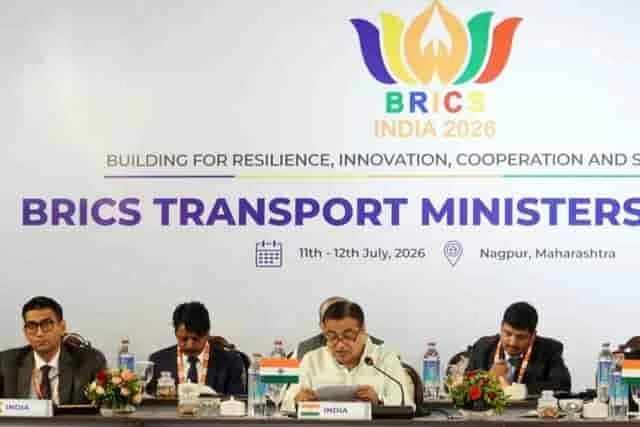
NEW DELHI : Union Minister for Road Transport and Highways Shri Nitin Gadkari on 11th July called for deeper cooperation among BRICS nations to build transport systems that are sustainable, resilient, inclusive and future-ready, stating that the collective strength of the grouping presents a unique opportunity to shape the future of global mobility through innovation, partnership and shared responsibility.

Delivering the opening address at the Third BRICS Transport Ministers’ Meeting under India’s BRICS Chairship, Gadkari welcomed transport ministers, heads of delegation, senior officials and delegates from BRICS member countries to Nagpur and described the meeting as a significant step towards strengthening transport cooperation among emerging economies.

The Union Minister said India’s BRICS Chairship, guided by the theme “Building for Resilience, Innovation, Cooperation and Sustainability”, reflects a people-centric, “Humanity First” approach inspired by the timeless philosophy of ‘Vasudhaiva Kutumbakam’—the World is One Family.

He said BRICS, representing nearly half of the world’s population, is uniquely positioned to lead the development of transport systems that are cleaner, safer, smarter and more efficient while advancing sustainable economic growth and regional connectivity.

Emphasising that transport is the backbone of economic development, Gadkari highlighted India’s rapid transformation across the road, rail, maritime and aviation sectors.

He noted that India has developed the world’s second-largest road network while significantly expanding access-controlled expressways and multimodal connectivity.

Referring to projects such as the Delhi-Dehradun Economic Corridor, the Sonamarg Tunnel and over 10,000 kilometres of Greenfield Expressways, he said these initiatives demonstrate India’s commitment to combining infrastructure development with environmental sustainability and technological innovation.

He also highlighted the Hybrid Annuity Model as a successful framework for mobilising private investment in infrastructure.

Gadkari said India’s railways have undergone unprecedented modernisation through near-complete electrification of the broad-gauge network, expansion of Vande Bharat services, progress on the Mumbai-Ahmedabad High-Speed Rail Corridor and landmark engineering achievements such as the new Pamban Bridge.

Highlighting India’s commitment to sustainable mobility, Gadkari referred to the deployment of electric buses, the Green Urban Mobility Scheme and the success of the UDAN initiative in improving regional air connectivity.

He said the PM Gati Shakti National Master Plan has transformed infrastructure planning through integrated multimodal development, reducing logistics costs and accelerating project implementation.

The Union Minister underlined that safety and sustainability remain central to India’s transport strategy.

He highlighted initiatives such as the PM-RAHAT scheme for cashless treatment of road accident victims and the use of recycled plastic waste, municipal waste, fly ash, steel slag, bamboo crash barriers and end-of-life tyres in road construction as examples of environmentally responsible infrastructure development.

Calling for stronger BRICS collaboration, Gadkari said common challenges relating to infrastructure financing, congestion, emissions, road safety and last-mile connectivity require collective solutions.

He reaffirmed India’s readiness to deepen cooperation through knowledge sharing, capacity building, technological collaboration and joint research in green hydrogen, electric mobility, alternative fuels, digital transport systems and sustainable multimodal infrastructure.

He called upon BRICS nations to work together to build transport systems that promote inclusive growth, strengthen regional connectivity, protect the environment and contribute to a more sustainable and prosperous future for all.