Home Blog Page 222

Allcargo Global Starts Trading on NSE and BSE, after Demerger from Allcargo Logistics Limited

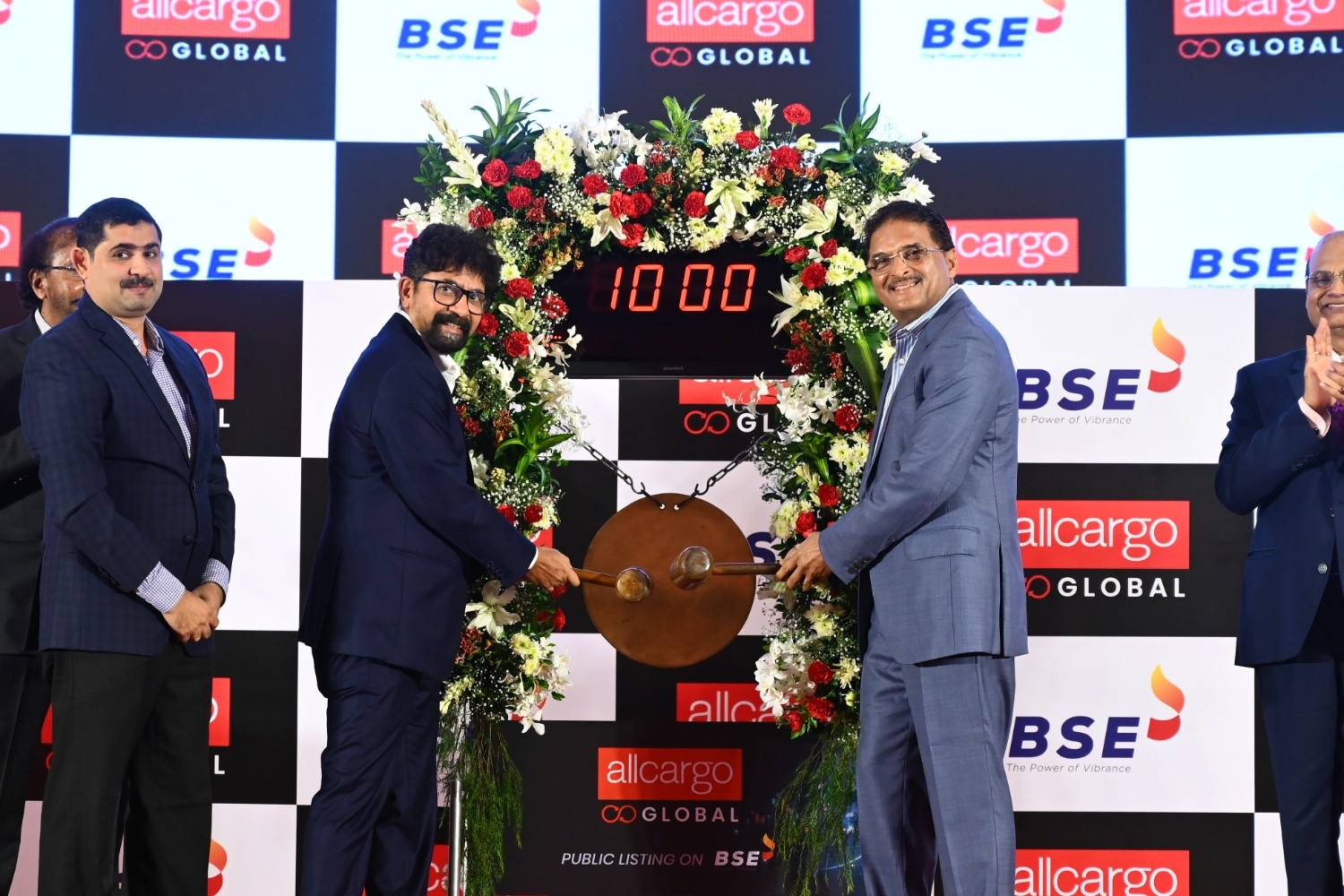
MUMBAI: Allcargo Global Limited (AGL) (NSE: AGL) (BSE: 544602), an independent entity demerged from Allcargo Logistics Limited, has successfully listed its shares on the National Stock Exchange & Bombay Stock Exchange (BSE) under the ticker symbol “AGL”. The landmark listing marks the completion of the Allcargo Group’s demerger and restructuring initiated four years ago to create sharper corporate structures and enhance operational focus.

With the listing of Allcargo Global, Allcargo Group now has four strategically focused listed entities – Allcargo Global, which houses the international supply chain operations; Allcargo Logistics Limited, focused on domestic supply chain logistics; Allcargo Terminals Limited, which operates container freight stations and inland container depots; and TransIndia Real Estate Limited, which develops real estate and logistics infrastructure assets. The strategic reorganisation underscores the Group’s commitment to building focused businesses capable of delivering sustainable growth and long-term stakeholder value. Allcargo Global Limited begins trading today alongside other three entities.

Commenting on the occasion, Shashi Kiran Shetty, Founder and Chairman, Allcargo Group said, “Four decades ago, we began this journey with a single vision – to connect Indian trade with the world. today, that vision stands realised in four independent, technology-driven businesses, each free to chart its own course and create its own value. As Allcargo Global strengthens its leadership in LCL global consolidation, FCL, Air Freight and door-to-door services, amid a rapidly evolving global trade landscape, it carries forward that same ambition – and   reaffirms   India’s   growing   stature   as    a    global   economic, manufacturing and logistics powerhouse.”

Adarsh Hegde, Managing Director, Allcargo Global said, “The listing signals the beginning of an exciting phase for our international supply chain business. With a strong global footprint and market leading position in Less than Container Load consolidation. We are focused on driving sustainable growth and delivering technology-driven integrated logistics solutions that offer logistics services and supply chain solutions worldwide. This strategic independence provides us with greater flexibility to pursue growth opportunities and create long-term value for customers, partners and shareholders globally.”

Pursuant to the Scheme of Arrangement approved by the National Company Law Tribunal, shareholders of Allcargo Logistics Limited received one equity share of Allcargo Global Limited for every one equity share held in Allcargo Logistics, resulting in a 1:1 share entitlement.

With its successful listing today, Allcargo Global Limited is well positioned to accelerate its growth journey while strengthening its technology-driven international supply chain offerings.

About Allcargo Global Limited

Allcargo Global Limited (AGL) (NSE: AGL) (BSE: 544602) is an integrated international supply chain company of the Allcargo Group, formed following the demerger of the Group’s International Supply Chain business. The Company’s wholly owned global subsidiary, ECU Worldwide, is the world’s largest global LCL consolidator and one of the leading players in multimodal transport across the world, and the only Indian company to achieve this.AGL operates a global network of self-operated offices and warehouses across many countries, covering markets that account for over 90% of global trade, complemented by a franchise network in other geographies. The Company operates on an integrated global platform with unified financial, technology and human resource management across its worldwide operations, enabling standardized processes and seamless service delivery. With over four decades of industry expertise, AGL combines deep logistics expertise with technology-enabled solutions. Its digital freight booking platform, ECU360, enables freight forwarders and shippers to book shipments across global trade lanes through a streamlined online interface. Comparable with leading global solutions, ECU360 strengthens AGL’s digital proposition and enhances the customer experience. As part of the Allcargo Group, AGL remains committed to upholding high standards of Environmental, Social and Governance (ESG) practices across its operations.
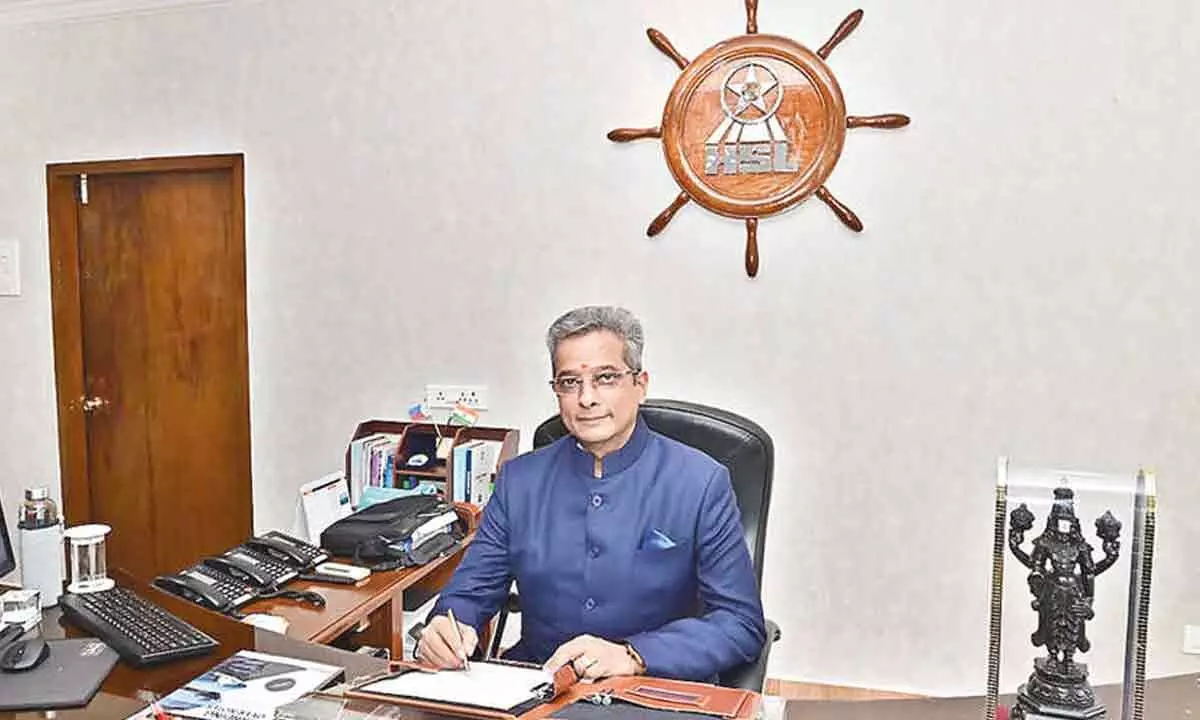
Rear Admiral C. Raghuram, VSM (Retd.) assumes charge as CMD of Hindustan Shipyard Ltd

VISAKHAPATNAM : Hindustan Shipyard Limited (HSL) on Thursday announced that Rear Admiral C. Raghuram, VSM (Retd.) has assumed charge as its Chairman and Managing Director (CMD) with effect from July 2.

Rear Admiral Chandrasekharan Raghuram, who was commissioned into the Indian Navy on November 10, 1989, brings more than three-and-a-half decades of experience in naval engineering, ship maintenance, strategic planning and leadership across key operational and command appointments.

An alumnus of the Naval College of Engineering, Lonavala, Cranfield University, United Kingdom, the Naval War College and the National Defence College, Raghuram has developed extensive expertise in afloat operations, equipment life cycle support, research and development, warship design, combat system integration and instructional assignments.

During his naval career, he served onboard frontline warships INS Gomati and INS Trishul, including as a member of the commissioning crew of INS Trishul. His assignments at the Naval Dockyard, the Afloat Support Team for Talwar-class ships and the Weapons and Electronics Systems Engineering Establishment (WESEE) further strengthened his experience in life cycle support and combat system integration.

Raghuram has also held several key appointments in the Indian Navy, including Commanding Officer of INS Valsura, Principal Director (Electrical Engineering) at the Integrated Headquarters of the Ministry of Defence (Navy), Command Electrical Officer at the Headquarters of the Eastern Naval Command, and Chief Staff Officer (Technical) at the Headquarters of the Western Naval Command. He also served in senior leadership positions at Naval Dockyard, Mumbai, and Naval Headquarters.

Before taking over as CMD of HSL, he was serving as the Assistant Chief of Materiel, overseeing the maintenance of key naval platforms.

In recognition of his distinguished service to the Indian Navy, Rear Admiral Raghuram was awarded the Vishisht Seva Medal (VSM) in 2017.

According to HSL, as Chairman and Managing Director, Rear Admiral Raghuram will lead the defence public sector shipyard in strengthening its position as a strategic defence shipbuilding and ship repair company while contributing to India’s vision of self-reliance in maritime defence capabilities under the Aatmanirbhar Bharat initiative.

CMA CGM deploys world’s largest LNG-powered container ship on Asia-Europe route

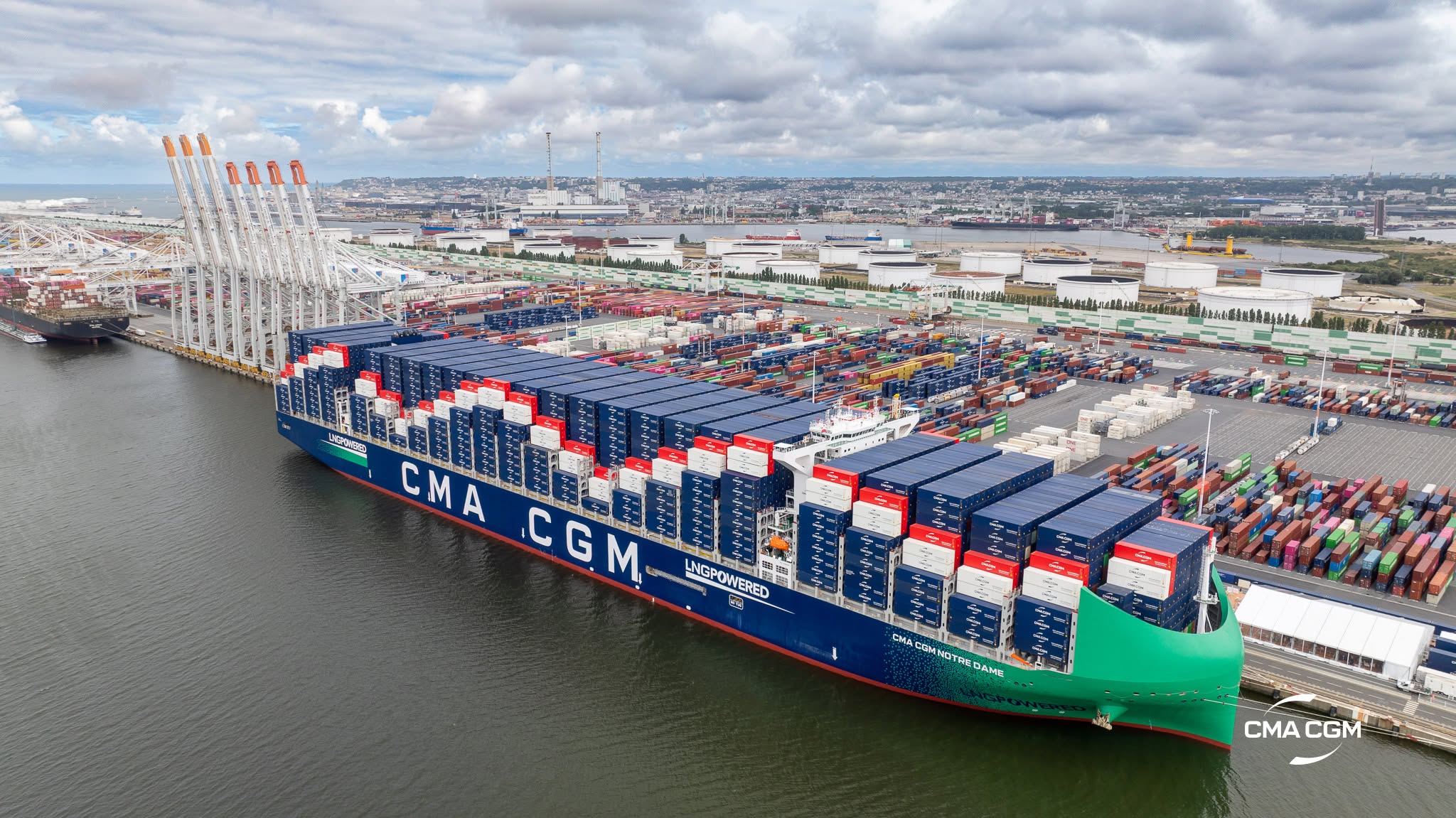
MARSEILLE : Europe is investing in ever larger, cleaner container ships at a time when maritime sovereignty and supply-chain resilience have become strategic priorities. Europe’s strategic push to strengthen maritime trade received a boost on Thursday as French shipping group CMA CGM inaugurated the CMA CGM Notre Dame, the world’s largest LNG-powered container ship and the first of a new fleet that will operate on the company’s flagship Asia-Europe trade route.

Stretching almost 400 metres—roughly the length of four football pitches—the CMA CGM Notre Dame dominates the quayside in Le Havre. Towering stacks of containers rise above the deck, carrying everything from trainers to cars as the vessel prepares to enter service on one of the world’s busiest trade routes.

The vessel, which is more than 62 metres wide and can carry up to 24,000 containers, is powered by liquefied natural gas (LNG) and is the world’s largest container ship using the fuel.

After its inaugural stop in Le Havre, the vessel is due to leave for Asia on Monday. It will call at Rotterdam, Hamburg, Antwerp, Tanger Med, Port Klang, Singapore, Yantian, Shanghai and Ningbo before returning to Europe, completing the round trip in just over 100 days.

On the voyage to Asia, it carries chemicals, food products, wine and spirits, pharmaceuticals, industrial machinery and luxury goods. On the return journey to Europe, it transports electronics, clothing, household appliances and a wide range of consumer goods. Depending on the cargo mix, the value of the goods on board can reach €2.5 billion to €3 billion.

The CMA CGM Notre Dame is the first of ten ultra-large container ships to sail under the French flag, with the remaining sister vessels scheduled for delivery between 2026 and January 2028.

CMA CGM says expanding capacity on the Asia-Europe route is essential to Europe’s economic competitiveness, arguing that recent geopolitical crises have exposed vulnerabilities in global trade.

“There is a real risk that freedom of navigation could be challenged in other major global straits that underpin international trade—and for France, whose prosperity relies heavily on international exchange, this is a matter of competitiveness,” CMA CGM Chairman and CEO Rodolphe Saadé said during the inauguration.

Technology on board
Compared with conventional heavy fuel oil, LNG produces around 20–25% fewer carbon dioxide emissions, almost eliminates sulphur oxide emissions, reduces nitrogen oxide emissions by up to 85% and cuts particulate matter by around 95%.

However, LNG is not without controversy. It can produce so-called methane slip, where unburned methane escapes into the atmosphere, potentially offsetting part of its climate benefit.

The vessel’s 80,000-horsepower engine has also been designed to operate on bio-LNG and synthetic e-LNG once those fuels become commercially viable.

According to Saadé, the ship features one of the “most efficient natural gas propulsion systems available, supporting our ambition to achieve carbon neutrality by 2050.”

CMA CGM has committed to reaching net-zero carbon emissions by 2050, as the shipping industry comes under increasing pressure to decarbonise. For ships calling at EU ports, including the CMA CGM Notre Dame, the EU’s FuelEU Maritime regulation sets progressively stricter limits on the greenhouse-gas intensity of the energy used on board, to reduce it by 80% by 2050.

The vessel also makes extensive use of artificial intelligence, allowing real-time navigation adjustments, optimised energy consumption and improved environmental performance.

Across its fleet, CMA CGM says AI helps save around 600,000 tonnes of CO2 every year by creating digital twins of the vessel, simulating entire routes and selecting the most fuel-efficient options.

Shipping has become a strategic issue for Europe

Recent geopolitical crises, including the Iran war, have served as a reminder that around 80% of global trade by volume travels by sea. When shipping routes are disrupted, supply chains seize up, industries slow down, inflation rises and jobs come under pressure.

In March 2026, the European Union adopted two strategies aimed at strengthening a sector considered vital to the bloc’s trade, economic growth, security and defence: the EU Ports Strategy and the Industrial Maritime Strategy. Together, they seek to reinforce strategic ports as energy, logistics and security hubs, strengthen supply-chain resilience, support the energy transition and digitalisation, and boost Europe’s shipbuilding and maritime technology industries.

“If global trade has a backbone, it is maritime transport. Europe’s ports handle around 75% of the EU’s external trade, and the European maritime economy supports around 4.5 million jobs,” European Commissioner for Sustainable Transport and Tourism Apostolos Tzitzikostas said during a keynote speech at the Transforming Transportation 2026 conference organised by the World Bank.

Although the CMA CGM Notre Dame was built in China using the French company’s expertise, it sails under the French flag, a decision the company sees as reinforcing France’s maritime tradition.

The inauguration was attended by France’s First Lady, Brigitte Macron, alongside the vessel’s godmother, Delphine Arnault, LVMH billionaire Bernard Arnault’s daughter, the chief executive officer of Christian Dior Couture.

Arnaultpraised CMA CGM’s decision “to sail this ship under the French flag. In an increasingly competitive international landscape, this decision reflects a strong conviction: that France must continue to rank among the world’s great maritime powers.”

Hapag-Lloyd announces US$1,000 GRI for Shipments from Indian Subcontinent and Pakistan to North America

HAMBURG : Global container shipping company Hapag-Lloyd has announced a General Rate Increase (GRI)/General Rate Adjustment (GRA) for cargo moving from the Indian Subcontinent and Pakistan to the United States and Canada. The revised rates will come into effect from 1 August 2026.

The rate increase will apply to all cargo transported in 20-foot and 40-foot dry, reefer and special containers, including high cube equipment, covering exports destined for all U.S. and Canadian coasts.

Under the revised tariff, the carrier will implement a US$1,000 per container increase across all applicable container types. According to the company, the revised rates will apply to all containers gated in full on or after 1 August 2026 and will remain effective until further notice.

The latest GRI/GRA forms part of Hapag-Lloyd’s ongoing pricing adjustments in response to prevailing market conditions on the trans-Pacific trade. General Rate Increases are periodically introduced by ocean carriers to align freight rates with changing operating costs, market demand, and capacity dynamics.

The announcement is expected to have implications for exporters across the Indian Subcontinent and Pakistan shipping goods to North American markets. Sectors with significant export volumes to the United States and Canada—including textiles and garments, engineering goods, chemicals, pharmaceuticals, automotive components, agricultural products, and processed food—may experience higher logistics costs as a result of the revised freight rates.

Exporters and freight forwarders are expected to assess the impact of the revised tariff on shipping schedules, contractual commitments, and overall supply chain costs. Industry stakeholders may also explore freight planning and cargo consolidation strategies to optimize transportation expenses amid evolving market conditions.

The announcement underscores the continued volatility in global container shipping markets, where freight pricing remains influenced by changing trade patterns, carrier capacity management, equipment availability, and broader economic developments affecting international commerce.

CULines strengthens India–Northeast Asia connectivity with launch of new KCI weekly service

New Korea–China–India Service to Provide Direct Access Between Northeast Asia and the Indian Subcontinent

SHANGHAI : CULines has announced the launch of its new Korea–China–India (KCI) Service, a weekly liner service designed to strengthen direct maritime connectivity between Northeast Asia and the Indian Subcontinent. The service, scheduled to commence in mid-July 2026, marks another significant step in expanding regional trade links and enhancing supply chain efficiency across Asia.

The KCI service will provide customers with a reliable, direct shipping solution connecting key ports in South Korea, China, Malaysia, India and Pakistan. By integrating this service into its diversified global liner network, CULines will also offer seamless onward connectivity to the Middle East, the Red Sea and the East Mediterranean, creating broader market access for exporters and importers across Northeast Asia and the Indian Subcontinent.

As one of the joint venture partners in the service, CULines will deploy the 6,700 TEU container vessel MV Racine on the weekly rotation, reinforcing its commitment to delivering dependable and efficient shipping solutions to global customers.

The maiden voyage of the KCI service is scheduled to depart Busan on 16 July 2026.

The service will operate on the following port rotation:

Busan – Gwangyang – Shanghai – Ningbo – Shekou – Port Klang (West Port) – Nhava Sheva – Mundra – Karachi – Port Klang (West Port) – Busan

The inclusion of India’s major container gateways—Nhava Sheva and Mundra—will further strengthen the country’s integration with key manufacturing and export hubs in Northeast Asia, while facilitating faster cargo movement, reduced transit times and improved schedule reliability.

The new service is expected to benefit a wide range of industries by supporting the movement of manufactured goods, consumer products, industrial equipment, chemicals and other containerised cargo. It also reflects the growing trade relationship between India and Northeast Asia, supported by increasing demand for resilient, diversified and efficient maritime logistics networks.

With the introduction of the KCI service, CULines continues to expand its regional footprint and enhance customer access to strategic global markets, reaffirming its commitment to delivering flexible, reliable and customer-focused shipping solutions.

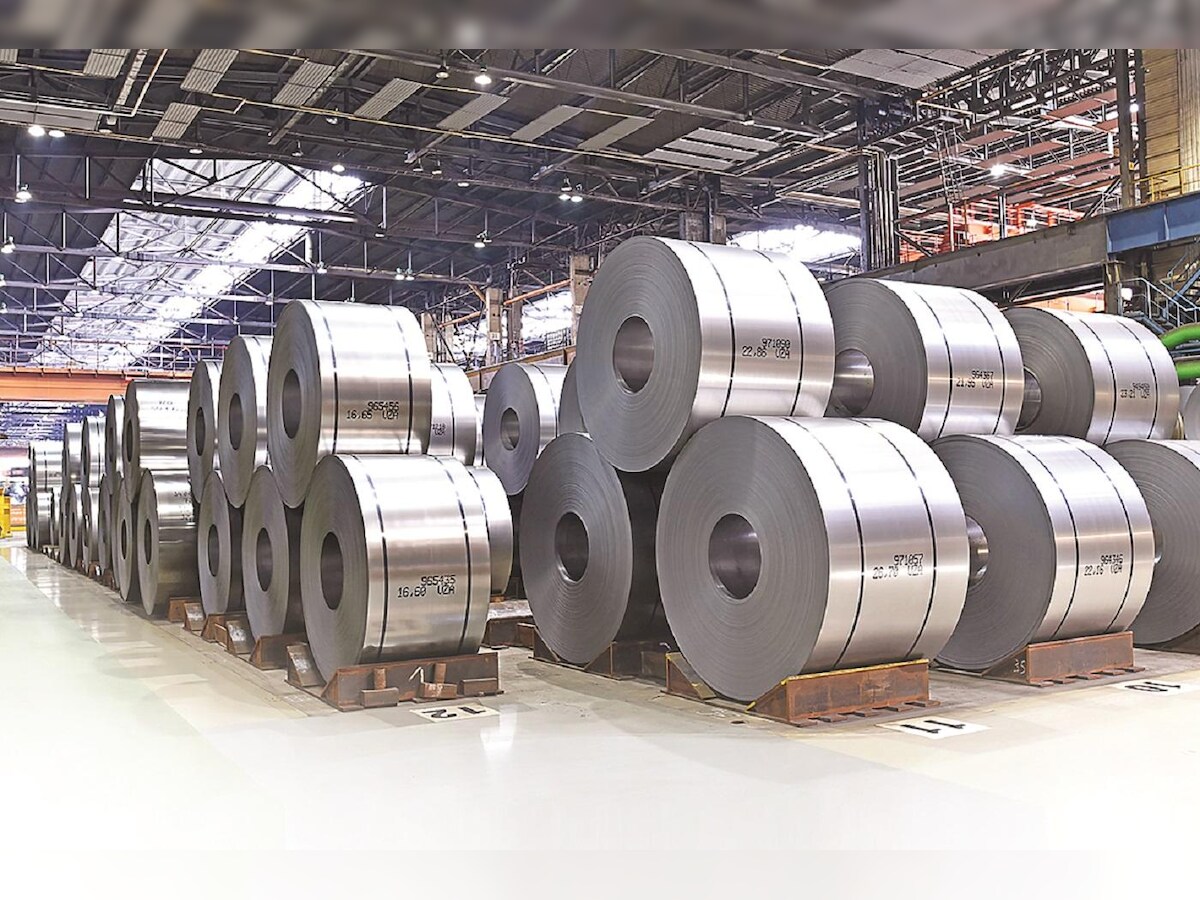
Stainless Steel industry calls for National Policy and Anti-Corrosion Mission to curb corrosion, imports

NEW DELHI : India’s stainless steel industry has urged the Centre to introduce a National Stainless Steel Policy and a National Anti-Corrosion Policy to strengthen domestic manufacturing, secure critical raw materials and accelerate the adoption of corrosion-resistant materials in infrastructure.

This comes after reportedly annual economic losses of nearly ₹12 lakh crore incurred due to corrosion. Rising imports and underutilised manufacturing capacity has added to the concern. 

The demand was raised during the announcement of a strategic partnership between the Indian Stainless Steel Development Association (ISSDA) and the Global Stainless Steel Expo (GSSE), organised by Virgo Communications and Exhibitions (P) Ltd in Mumbai. 

India has an installed stainless steel production capacity of around 7.5 million tonnes, but operates at only 60-65% capacity utilisation, while 25-28% of domestic demand continues to be met through imports, predominantly from China, industry leaders said.

India has the manufacturing capability and technical expertise to emerge as a global stainless steel powerhouse but requires policy support to unlock its full potential, said ISSDA President Rajamani Krishnamurti at an event.

“The stainless steel industry today faces two major challenge, cheap imports and the absence of a dedicated policy framework. Stainless steel continues to be treated under the broader steel category despite having distinct manufacturing processes, raw material requirements and end-use applications,” he said.

“A separate National Stainless Steel Policy is essential to ensure raw material security, encourage investments and enable India to become a leading global producer of value-added stainless steel,” Mr. Krishnamurti added.

The ISSDA president said India consumes only 3.5 kg of stainless steel per capita, nearly half the global average of 6-7 kg, indicating significant headroom for growth.

“Bridging this consumption gap alone would require an additional three to four million tonnes of production capacity. With the government’s continued focus on infrastructure, railways, urban development, renewable energy and manufacturing, stainless steel can play a transformative role in building durable, sustainable assets while generating employment and investments,” he added.

Pointing to corrosion as a silent economic burden, Mr. Krishnamurti said India loses nearly 4% of its GDP, estimated at around ₹12 lakh crore annually, due to corrosion-related damage across public infrastructure, transportation, industrial assets and utilities.

“Much of this loss is avoidable. A National Anti-Corrosion Policy will encourage lifecycle-based infrastructure planning and the adoption of corrosion-resistant materials, particularly in India’s vast coastal regions where stainless steel offers significantly longer service life and lower maintenance costs. Investing in the right material at the construction stage is far more economical than repeatedly replacing damaged infrastructure,” he added.

Anitha Raghunath, Managing Director, Virgo Communications and Exhibitions (P) Ltd., said the collaboration between ISSDA and GSSE would strengthen the industry’s collective efforts by combining technical expertise with a global business platform.

“ISSDA brings the knowledge, technical expertise and industry leadership, while GSSE provides the platform to connect manufacturers, users, technology providers and policymakers. Together, we aim to promote wider adoption of stainless steel across sectors, encourage knowledge sharing and create new opportunities for industry growth in India and overseas,” she said.

Rajeev Garg, Group Head – Marketing & Sales, Jindal Stainless Ltd, said the partnership comes at a crucial time when the domestic industry requires a stronger collective voice to address policy issues and protect investments.

“India is already the world’s second-largest consumer of stainless steel, but our per capita consumption remains significantly below the global average. At the same time, rising imports from countries such as China, Vietnam and others continue to put pressure on domestic manufacturers,” he said.

“A platform like this will enable the industry to engage more effectively with policymakers on issues such as unfair imports, raw material security, lifecycle-based infrastructure planning and sustainable industrial growth,” Mr Garg said.

He added that although stainless steel accounts for only a small share of India’s overall steel production by volume, it contributes significantly in terms of value addition, sustainability, durability and lifecycle savings, warranting greater policy recognition.

Source : The Hindu

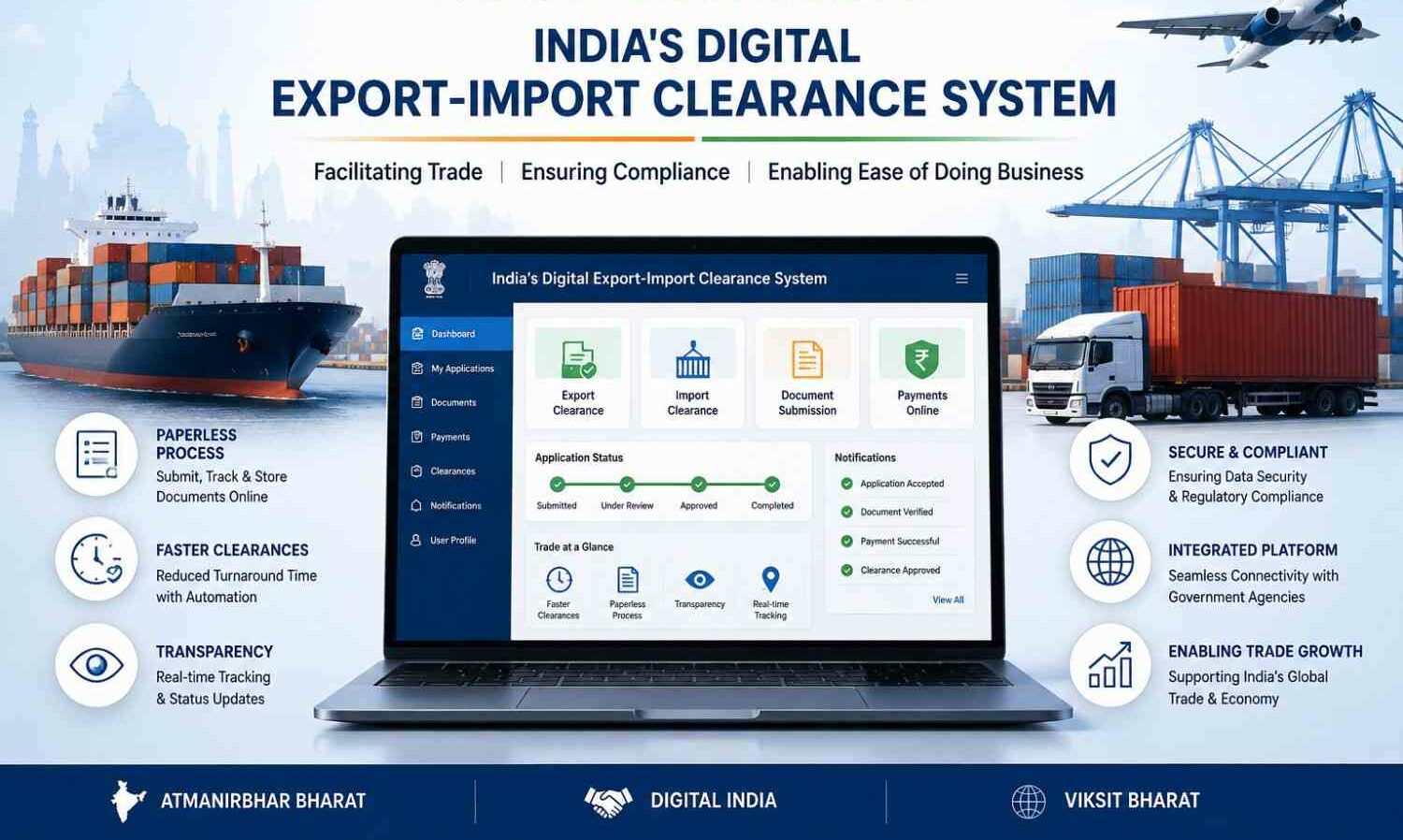
India’s Export-Import Clearance System set for Digital Overhaul as five IT majors eye contract

NEW DELHI : L&T Technology Services, Wipro, IBM India, Tata Consultancy Services and Infosys are reportedly competing for a contract to build India’s new Customs Integrated System, which will combine multiple existing platforms into a single digital interface for cross-border trade.

The central government is expected to invite bids for the project within around 15 days, with a request for proposal to be issued to the five companies shortlisted based on their expressions of interest.

The initiative follows Finance Minister Smt. Nirmala Sitharaman’s announcement in the 2026-27 Budget speech that the government would roll out the Customs Integrated System over the next two years as a single, integrated and scalable platform for all Customs processes.

The proposed platform will integrate existing systems including the Indian Customs Electronic Gateway, the Risk Management System and the Indian Customs Electronic Data Interchange System, which currently operate on different software platforms and do not seamlessly communicate with one another.

The new system aims to make export-import clearances faster and more efficient while reducing the cost of trade.

At present, the fragmented systems lead to duplication of processes, manual intervention and delays in cargo clearance.

Vivek Johri, former chairman of the Central Board of Indirect Taxes and Customs, said the system would enable a seamless interface between Customs authorities and all ports and border management agencies.

Users will have a single interface with Customs regardless of whether the transaction involves import, export or transhipment, or whether the mode is cargo, courier or postal.

The evaluation of technical and financial bids as part of the procurement process may take three to four months before the successful bidder is finalised.

The fully unified system is expected to be rolled out by 1 April 2027, marking it as one of the most significant sovereign digital transformation projects in India’s indirect tax administration.

The government also plans to scale up the use of advanced non-intrusive imaging and artificial intelligence technologies to scan every container across all major ports, enhancing transparency, reducing transaction costs and strengthening India’s competitiveness in global trade.

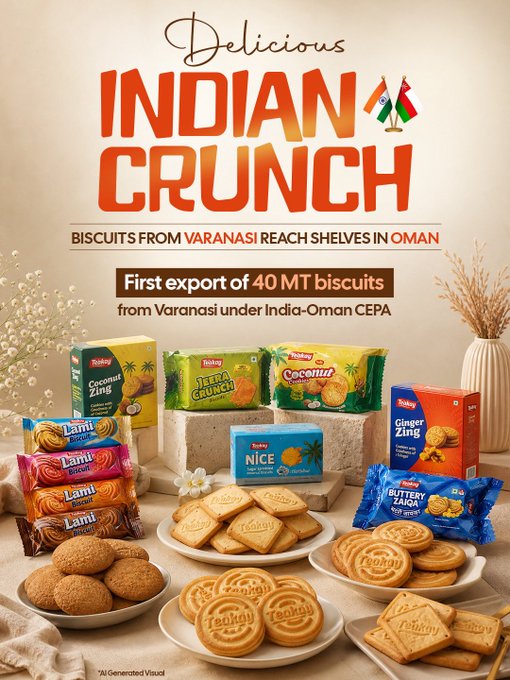
First-ever export of Varanasi-manufactured biscuits to Oman under India–Oman CEPA marks major boost for India’s Food Processing Exports

VARANASI : In a significant milestone for India’s export sector, the first-ever commercial shipment of 40 metric tonnes (MT) of biscuits manufactured in Varanasi has been exported to Oman under the India–Oman Comprehensive Economic Partnership Agreement (CEPA). The landmark export marks another important step towards realizing Hon’ble Prime Minister Shri Narendra Modi’s vision of taking ‘Made in India’ products to global markets while strengthening India’s position as a trusted manufacturing and export hub. Union Minister of Commerce & Industry Shri Piyush Goyal said.

Further reinforcing this achievement, an MoU has been signed for the supply of nearly 700 MT of biscuits to Oman and other Gulf Cooperation Council (GCC) countries during FY 2026–27. The agreement is expected to significantly expand India’s footprint in the Gulf food market and create sustained export opportunities for Indian food manufacturers.

The India–Oman CEPA has enabled duty-free access for biscuits manufactured in India through preferential tariff benefits, making Indian products more competitive in the Omani market compared to products from other exporting countries. The enhanced price competitiveness is expected to lead to increased export volumes, repeat orders from importers, and stronger long-term trade partnerships across the GCC region.

The successful export from Varanasi also highlights the growing integration of India’s manufacturing centres with global value chains and demonstrates the country’s expanding capabilities in value-added food exports.

This development is expected to provide a significant boost to India’s food processing sector by encouraging higher production, creating new employment opportunities across the value chain, and enhancing the income prospects of MSMEs and food manufacturers. It also reflects the growing effectiveness of India’s trade agreements in opening new international markets for domestically manufactured products.

The milestone underscores the Government of India’s continued commitment to promoting exports, improving market access through strategic trade agreements, and positioning Indian products as globally competitive brands under the ‘Made in India’ initiative. As exports to Oman and the wider GCC region gain momentum, the success is expected to pave the way for greater diversification of India’s agricultural and processed food exports in the years ahead.

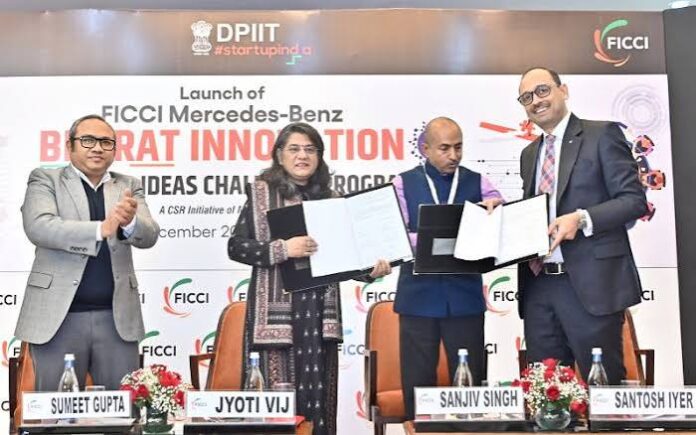
DPIIT engages with startups under FICCI Mercedes-Benz Bharat innovation & business ideas challenge programme

NEW DELHI : Reaffirming its continued commitment to strengthening India’s startup and innovation ecosystem, the Department for Promotion of Industry and Internal Trade (DPIIT) participated in a virtual interaction under the FICCI Mercedes-Benz Bharat Innovation & Business Ideas Challenge Programme.

The FICCI Mercedes-Benz Bharat Innovation & Business Ideas Challenge Programme was launched to identify and support high-potential Indian startups developing innovative and scalable solutions across key sectors, including manufacturing, sustainability, education, decarbonization and automotive/EVs.

Addressing the participants, Additional Secretary, DPIIT, Shri Ateesh Kumar Singh congratulated FICCI and Mercedes-Benz India on the successful implementation of the programme. He said the initiative reflects the growing strength of India’s innovation ecosystem and the immense potential of the country’s young entrepreneurs. He noted that by providing timely mentorship and support, the programme empowers innovators to develop solutions aligned with national priorities. He added that such collaborative efforts are essential for driving innovation-led growth and strengthening India’s position as a global innovation leader.

As part of the programme, a structured post-funding mentoring and handholding framework has been announced for the seven selected startups to accelerate their growth and enhance investment readiness. The initiative will provide targeted support across critical business, regulatory, financial, legal, investment and technology domains, enabling startups to build scalable, resilient and globally competitive ventures.

Under this framework, the selected startups will receive specialised mentoring on regulatory and legal compliance, taxation and fund utilisation, fundraising strategy, valuation fundamentals, term sheet negotiations, data privacy, cybersecurity and intellectual property protection.

The programme will also feature dedicated Demo Days, providing startups with opportunities to showcase their innovations, business models and growth strategies before industry leaders, investors, mentors and ecosystem stakeholders. These interactions will help validate market readiness, strengthen strategic positioning and unlock potential partnerships and funding opportunities.

Additionally, the selected startups will benefit from the “Sounding Board Programme”, a strategic mentorship initiative designed to provide industry insights, expert guidance and leadership perspectives to help refine their business models, sharpen growth strategies and accelerate their journey towards market readiness and long-term success, thereby contributing to Bharat’s vision of becoming a global hub for innovation and entrepreneurship.

Following a nationwide call for applications, startups from across India participated in the programme. After a rigorous multi-stage evaluation by industry experts and ecosystem stakeholders, 32 startups were shortlisted and invited to present their innovations before the jury and leadership team. Based on innovation, scalability, business potential and impact, seven startups were selected to receive funding support of INR 30 lakh each, along with post-funding mentoring and business support.

The interaction highlighted the importance of structured ecosystem support, mentorship and industry collaboration in enabling startups to move beyond early-stage innovation and build globally competitive enterprises, reinforcing DPIIT’s continued focus on fostering a robust startup ecosystem in the country.

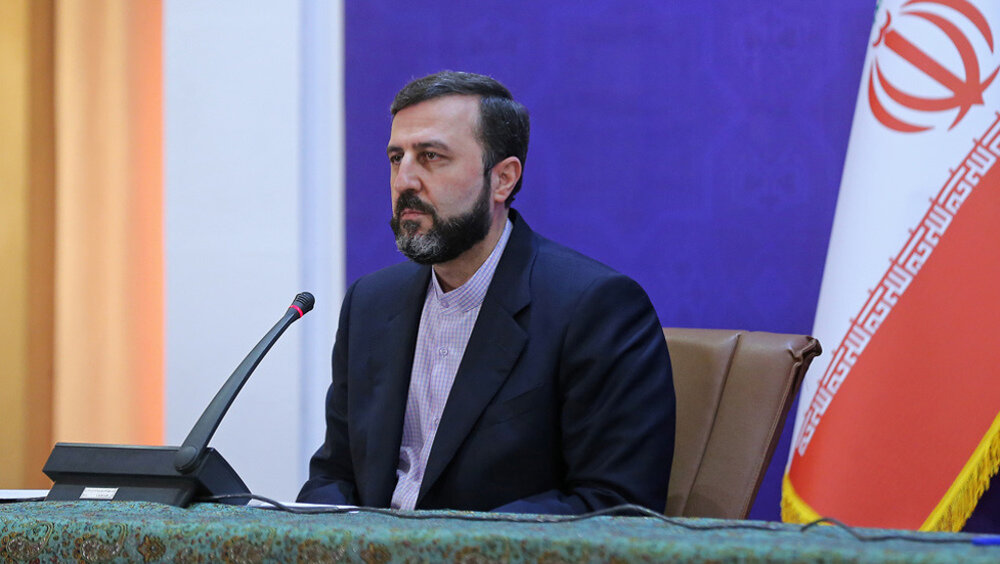
“Hormuz is defined under Iran’s command, not CENTCOM”: Gharibabadi dismisses US security dialogue

TEHRAN: Iran’s Deputy Foreign Minister for Legal and International Affairs Kazem Gharibabadi on Thursday strongly criticised the US-led regional summit in Bahrain, rejecting Western attempts to allegedly dictate security frameworks in the Persian Gulf and the strategic Strait of Hormuz.

In a post on X, Gharibabadi dismissed both the legitimacy of the military summit and the authority of the American command structure in the region, asserting that “Hormuz is defined under Iran’s command, not CENTCOM.” He maintained that a military summit in Bahrain cannot establish “legal order and security for the Persian Gulf”.

The Iranian diplomat emphasised that long-term stability in the Middle East cannot be achieved through foreign military coalitions, affirming that regional security must be managed internally by neighbouring states, “not under the military umbrella of America.”

“Hormuz is defined under Iran’s command, not CENTCOM. A military summit in Bahrain cannot establish legal order and security for the Persian Gulf. The region’s security will be ensured through the end of interventions and the U.S. withdrawal from the area, respect for countries’ sovereignty, and acceptance of new geopolitical realities–not under the military umbrella of America,” he wrote.

His remarks follow the US Central Command (CENTCOM) announcement that top military leaders from a dozen nations, including the United Arab Emirates, Saudi Arabia, Qatar, Lebanon, and Syria, had convened in Bahrain to reinforce their “commitment to the free flow of commerce” through the strategic waterway.
CENTCOM on Wednesday (local time) spearheaded a security dialogue hosted by the Bahrain Defense Force, bringing together top military officials from 12 nations to address the current security landscape in the Middle East.

In a post on X, CENTCOM stated that the high-level conference featured discussions led by Adm. Brad Cooper, commander of CENTCOM, alongside senior military representatives from Bahrain, Egypt, Jordan, Kuwait, Lebanon, Oman, Qatar, Saudi Arabia, Syria, the United Arab Emirates, and Yemen.

A central focus of the meeting was the shared commitment among the nations to safeguard the free flow of commercial shipping through the Strait of Hormuz, a critical global maritime chokepoint.

“Adm. Brad Cooper, CENTCOM commander, and senior military officials from Bahrain, Egypt, Jordan, Kuwait, Lebanon, Oman, Qatar, Saudi Arabia, Syria, the United Arab Emirates, and Yemen discussed the current regional security environment and opportunities for enhancing defense collaboration across the region. Leaders underscored their shared commitment to the free flow of commerce through the Strait of Hormuz,” it wrote on X.

“We continue to stand shoulder to shoulder with our regional partners,” Adm. Cooper said following the talks. “The discussions underscored our shared commitment to regional security and stability,” he added.
The conference marked a significant diplomatic and military milestone, with CENTOM stating that “the security dialogue marked the first time military leaders from Syria and Lebanon participated in a regional defense conference led by the United States.”

The gathering highlighted expanding efforts to protect regional airspace against evolving threats. Furthermore, the CENTCOM reflected on previous efforts made to ensure coordination and information flow regarding the Middle East tensions.

“The United States and regional partners operate the world’s most sophisticated and largest active air and missile defense umbrella across the Middle East. In January, CENTCOM and regional countries established a new Middle Eastern Air Defense coordination cell for sharing information and threat warnings as well as responding to contingencies,” it wrote.

Source: ANI