Home Blog Page 226

DG Shipping highlights India’s Seafarer-Centric reforms at ORF-ISWAN Roundtable ahead of ‘International Day of the Seafarer’

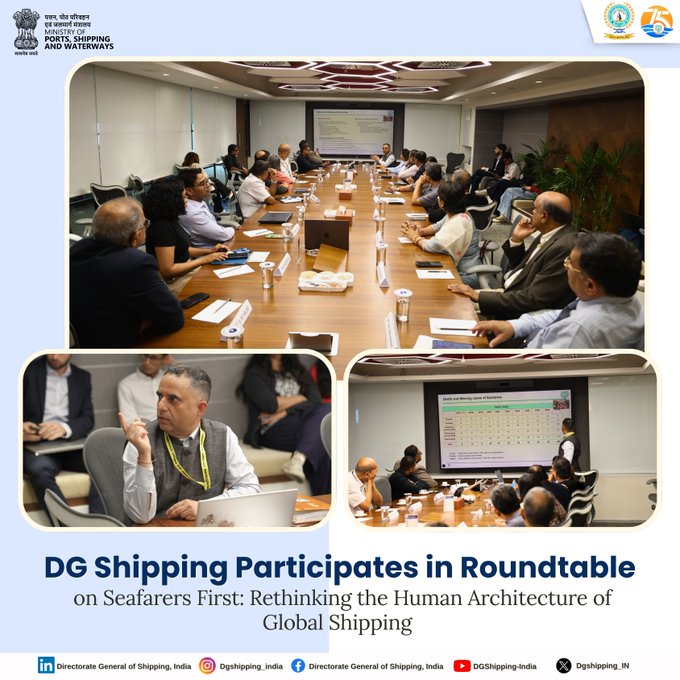
MUMBAI : The Directorate General of Shipping (DGS) reaffirmed India’s commitment to advancing seafarer welfare and strengthening the country’s position as a global maritime workforce leader during a high-level roundtable discussion titled “Seafarers First: Rethinking the Human Architecture of Global Shipping,” organised by the Observer Research Foundation (ORF) in collaboration with the International Seafarers’ Welfare and Assistance Network (ISWAN) at ORF Mumbai ahead of the International Day of the Seafarer.

Representing the Directorate General of Shipping, Capt. Bipin participated in the deliberations alongside senior government officials, maritime unions, welfare organisations, training institutions, policy experts, industry representatives and seafarers. The roundtable served as an important platform to explore policy measures aimed at building a more resilient, inclusive and people-centric maritime sector.

During the discussions, the Directorate General of Shipping highlighted the significant progress made by India in strengthening its maritime workforce and enhancing the welfare ecosystem for Indian seafarers. India continues to consolidate its position as one of the world’s leading suppliers of qualified seafarers, supported by sustained growth in the number of certified maritime professionals. Notably, the participation of women in the seafaring profession has also witnessed a steady increase, reflecting the country’s commitment to promoting diversity and inclusivity within the maritime sector.

The Directorate showcased a series of policy and regulatory reforms undertaken to improve accountability, transparency and seafarer welfare. These include the establishment of a round-the-clock grievance redressal mechanism with a consistently high resolution rate, strengthened measures to address cases of vessel abandonment, stricter regulatory norms for Recruitment and Placement Service License (RPSL) agencies, enhanced bank guarantee requirements to safeguard seafarers’ interests, and expedited compensation processing for affected personnel.

Emphasising the role of digital transformation in maritime governance, the Directorate also highlighted initiatives such as the digitisation of the Continuous Discharge Certificate (CDC) and the Seafarer Identity Document (SID), which have streamlined service delivery, improved accessibility and enhanced convenience for Indian seafarers. Reforms relating to shore leave and other welfare measures were also discussed as part of the Government’s broader efforts to improve the quality of life and working conditions of seafarers.

The roundtable also examined emerging challenges confronting the global maritime workforce. Participants expressed concern over the safety and security of seafarers operating in conflict-prone regions and noted the absence of a comprehensive, binding international framework to address such situations. The discussions underscored the need for institutionalised crisis response mechanisms, including the establishment of an inter-ministerial coordination framework, enhanced cooperation among maritime stakeholders and greater sensitisation of consular authorities to support seafarers during emergencies.

While acknowledging the progress made in expanding shore leave opportunities, participants observed that practical implementation challenges, particularly immigration and port clearance procedures in several jurisdictions, continue to restrict seafarers’ access to shore leave and welfare facilities.

Looking ahead, the discussions focused on the evolving nature of the maritime profession in the era of digitalisation, automation and technological innovation. Participants emphasised the importance of continuous skill development, building resilience, promoting lifelong learning and creating alternative career pathways to equip seafarers for the changing demands of the global shipping industry.

The roundtable concluded with a shared commitment to place seafarers at the centre of maritime policy and governance. The Directorate General of Shipping reaffirmed that safeguarding the welfare, safety and professional growth of seafarers remains fundamental to India’s vision of becoming a leading global maritime nation and to ensuring the sustainable growth and competitiveness of the country’s maritime sector.
MT SANMAR HERALD completes extraordinary voyage through conflict zone, arrives safely at Paradip Port

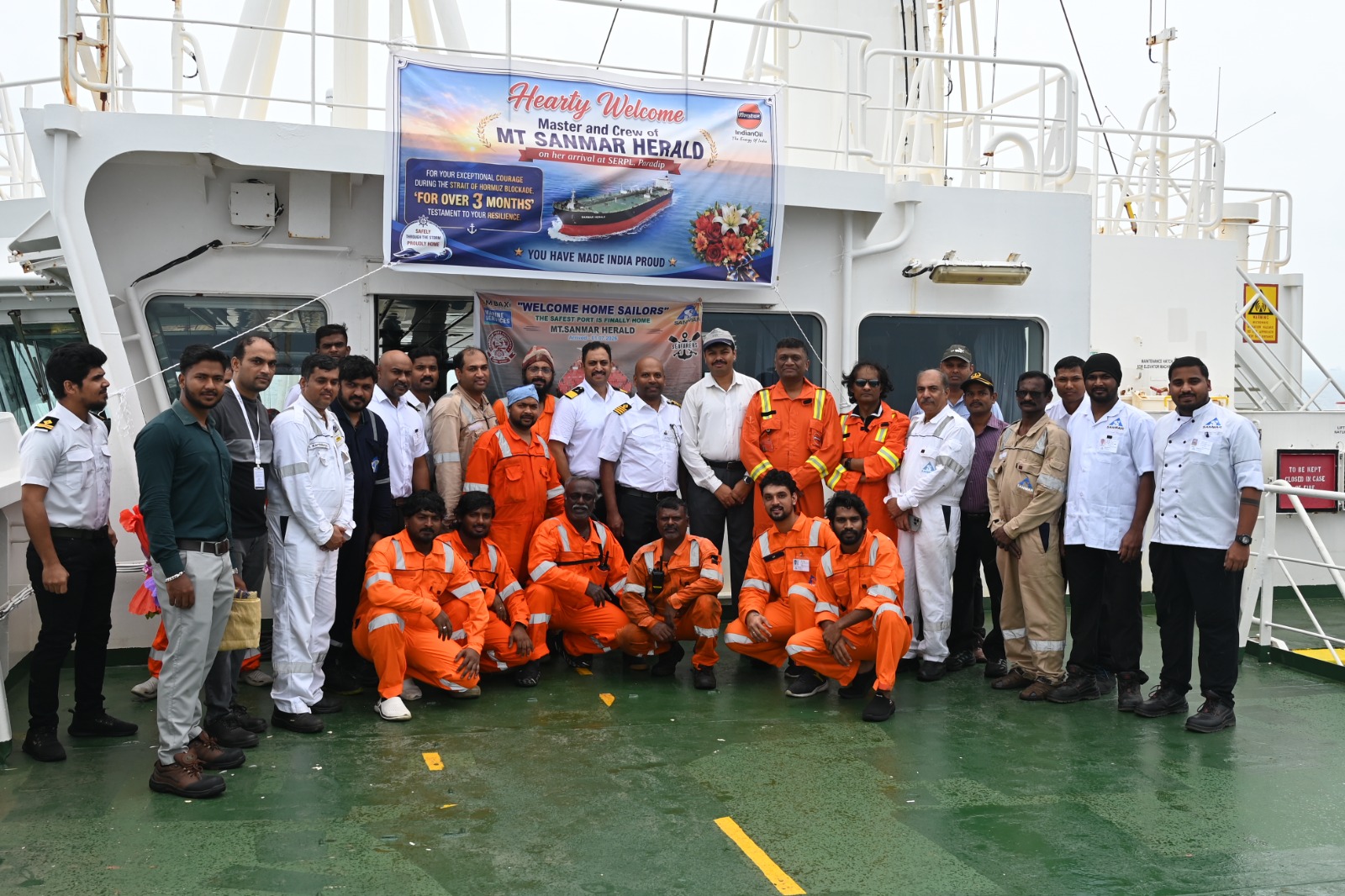
PARADIP : In a remarkable testament to the courage, resilience and professionalism of seafarers, MT SANMAR HERALD safely arrived at Paradip Port on 1 July 2026 after successfully navigating one of the most challenging geopolitical crises in recent history.

The crude oil tanker berthed at Single Point Mooring (SPM-I) at 11:30 hours, completing a voyage that tested the resolve and dedication of her Master and crew under extremely difficult circumstances.

After loading Basrah Medium and Basrah Heavy crude oil at Iraq, the vessel encountered the outbreak of hostilities in the Middle East, leading to significant operational challenges and heightened security risks in the region. Throughout the voyage, the vessel operated under continuous coordination with the Indian Navy, which closely monitored the evolving security situation and facilitated the vessel’s safe passage.

During the crisis, MT SANMAR HERALD experienced prolonged delays while awaiting a safe transit through the Strait of Hormuz. In the course of a hostile engagement in the region, the vessel sustained shrapnel damage to its bridge. Despite these unprecedented challenges, the Master and crew remained calm, demonstrated exceptional seamanship and adhered to the highest standards of safety and operational excellence.

Following the reopening of the Strait of Hormuz, the vessel resumed her voyage and successfully reached Paradip Port without any loss of life or injury. The safe arrival of all officers and crew stands as a tribute to their professionalism, resilience and unwavering commitment to duty under extraordinary circumstances.

On arrival at Paradip Port, the Master and crew received a warm welcome from representatives of the Paradip Port Authority and SERPL. The Harbour Master and senior officials felicitated the crew with bouquets and mementoes in recognition of their courage, dedication and exemplary service in ensuring the safe delivery of vital energy cargo despite adverse conditions.

The successful completion of the voyage highlights the indispensable role played by seafarers in sustaining global trade and energy security, often while operating in some of the world’s most challenging and unpredictable environments. It also underscores the importance of coordinated efforts among maritime authorities, shipping companies and defence agencies in safeguarding the safety and security of merchant shipping.

Paradip Port Authority paid tribute to the indomitable spirit of the Master and crew of MT SANMAR HERALD, acknowledging their remarkable professionalism and resilience in overcoming adversity. The Port Authority extended its best wishes to the vessel and her crew for fair winds, following seas and many more safe voyages in the years ahead.

“China trying to take over Panama Canal”: Trump says “not going to let that happen”

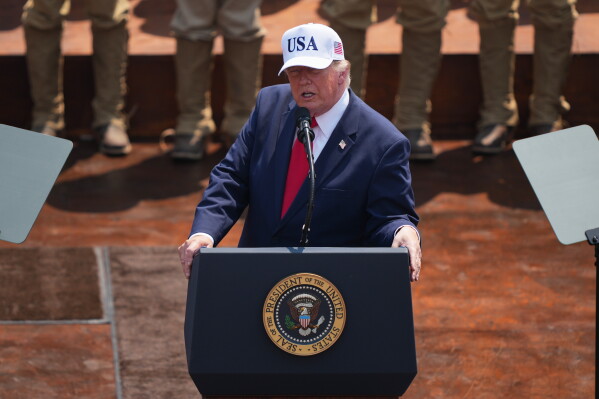
NORTH DAKOTA (US): US President Donald Trump said that the United States should never have handed over control of the Panama Canal, arguing that Panama increased transit fees after taking control and warning that China is seeking to gain influence over the strategic waterway.

Speaking at the opening of the Theodore Roosevelt Presidential Library in Medora on Wednesday (local time), Trump criticised the historical decision to transfer control of the canal and vowed the US would not allow China to take over.

“The Panama Canal, so we gave it away. The first thing they did, you know what they did? They raised the prices for the ships by four times, and they didn’t lose one ship. And then they raised it again twice, and they didn’t lose one ship. All they did was make tremendous amounts of money for years and years. How stupid was that?” Trump said.

“And now China’s trying to take over the Panama Canal, and we’re not going to let that happen, okay? And that was not part of the script because I don’t really have a script because this thing doesn’t work,” he added.

Trump’s remarks referred to the US decision to transfer control of the canal under the 1977 Torrijos-Carter Treaties, a process that culminated with Panama assuming full control of the waterway in 1999.

Meanwhile, Trump renewed his criticism of the Supreme Court’s handling of birthright citizenship while praising recent rulings that he said restored presidential authority and reinforced a merit-based system.
Speaking at the opening of the Theodore Roosevelt Presidential Library, Trump said he believed the court had erred on birthright citizenship but expressed confidence the issue would eventually be resolved.

“We’ll take care of the birthright citizenship because that was not meant for rich people from other countries. It was meant for the babies of slaves. If you look at it, it was a month after the Civil War ended that it went through. That’s because it was meant for the babies of slaves. It wasn’t meant for rich people from China. They came over in Gulfstreams,” Trump said.

“I believe, no, I know they got it wrong, but that’s okay,” he added.

Trump also hailed a recent Supreme Court ruling that he said restored significant authority to the presidency. The US Supreme Court on June 29 significantly expanded President Donald Trump’s authority to remove leaders of executive branch agencies, overturning a 91-year-old precedent that limited the President’s power to dismiss Senate-confirmed officials.

“You know, a little while ago, not in yesterday’s decisions where we actually had a good day except for birthright citizenship, we had something that gives back tremendous power to the President of the United States, and we won that, I think, 6 to 3,” he said.

“It was taken away from another Roosevelt. It was taken away from FDR in 1932. For almost a hundred years, that’s been up for grabs. It was called the Slaughter case, and a lot of people didn’t think it would ever be won. We won it two days ago in the Supreme Court,” Trump said.

“It gives power back to the president at a time when the president really needs power. It was the most important decision of all of them, I think,” he added.

Trump briefed on all-out war options against Iran but sticks with talks: Report

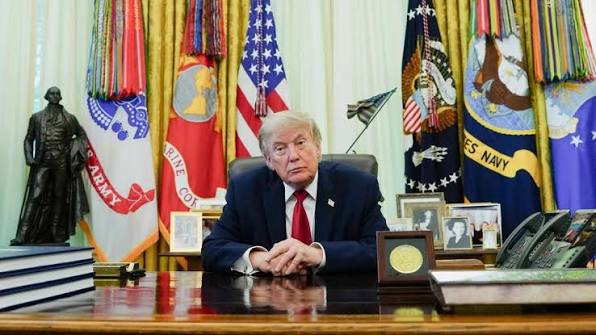
WASHINGTON DC: US President Donald Trump has contemplated the resumption of extensive military strikes against Iran in recent days but has opted, for the time being, to persist with diplomatic negotiations, according to a Wall Street Journal report citing US officials acquainted with the deliberations.

According to the report, Trump conducted several discussions with US Secretary of War Pete Hegseth and Chairman of the Joint Chiefs of Staff General Dan Caine regarding whether the United States should walk away from nuclear talks with Tehran and pivot back to full-scale military action.

The high-level talks reportedly centred on whether Washington ought to “finish the job” by initiating a fresh wave of offensives against Iran.

However, officials indicated that Trump believes launching renewed military operations at this juncture could potentially disrupt the ongoing negotiations and diminish the prospects of clinching a definitive agreement to dismantle Iran’s nuclear programme.

The report further noted that Trump has informed aides of his willingness to allow the negotiations to extend beyond the looming August 18 deadline set for achieving a nuclear pact, thereby granting diplomacy additional time despite the sluggish momentum of the talks.

While discarding a wider military campaign for the present moment, the US President is said to endorse limited retaliatory strikes should Tehran breach the current understanding established between the two nations. This positioning comes on the heels of a recent volley of attacks that briefly jeopardised a fragile ceasefire brokered earlier this month.

“They’re agreeing to everything that I want, and they have to,” Trump told reporters last week. “Otherwise, we just go back and do what we have to do.”

US Vice President JD Vance mirrored this firm stance during an interview with Fox News on Tuesday, stating that the administration would press ahead with negotiations but maintained “a lot of optionality” if diplomatic tracks ultimately collapsed.

Concurrently, Trump’s Middle East envoys Steve Witkoff and Jared Kushner arrived in Doha to participate in another round of indirect negotiations with Iranian delegates via Qatari mediators, the report added.

The diplomatic dialogue remains gridlocked over multiple contentious issues, including Tehran’s demand to levy service fees on maritime vessels traversing the strategic Strait of Hormuz, alongside deep fractures over the exact restrictions to be placed on Iran’s nuclear programme.

The report highlighted that top Pentagon officials have persistently presented Trump with structured military alternatives in the event that diplomacy breaks down entirely. Nevertheless, the President has repeatedly paused before sanctioning another full-scale offensive since consenting to a ceasefire earlier this year, despite his previous public warnings of severe military repercussions if Iran targeted American personnel.

In contrast to the American diplomatic push, Iran on Tuesday stated that it would not hold meetings with the top US envoys who had journeyed to the region following the recent flare-up of hostilities, injecting fresh uncertainty into the prospects of securing a durable peace between the two adversaries.

Source: ANI

“Talks are going well”: JD Vance says technical negotiations with Iran underway in Doha

VIRGINIA (US): US Vice President JD Vance said that negotiations with Iran in Doha, Qatar, are progressing positively, with technical-level discussions underway and talks on the nuclear issue set to begin soon, as per CNN.

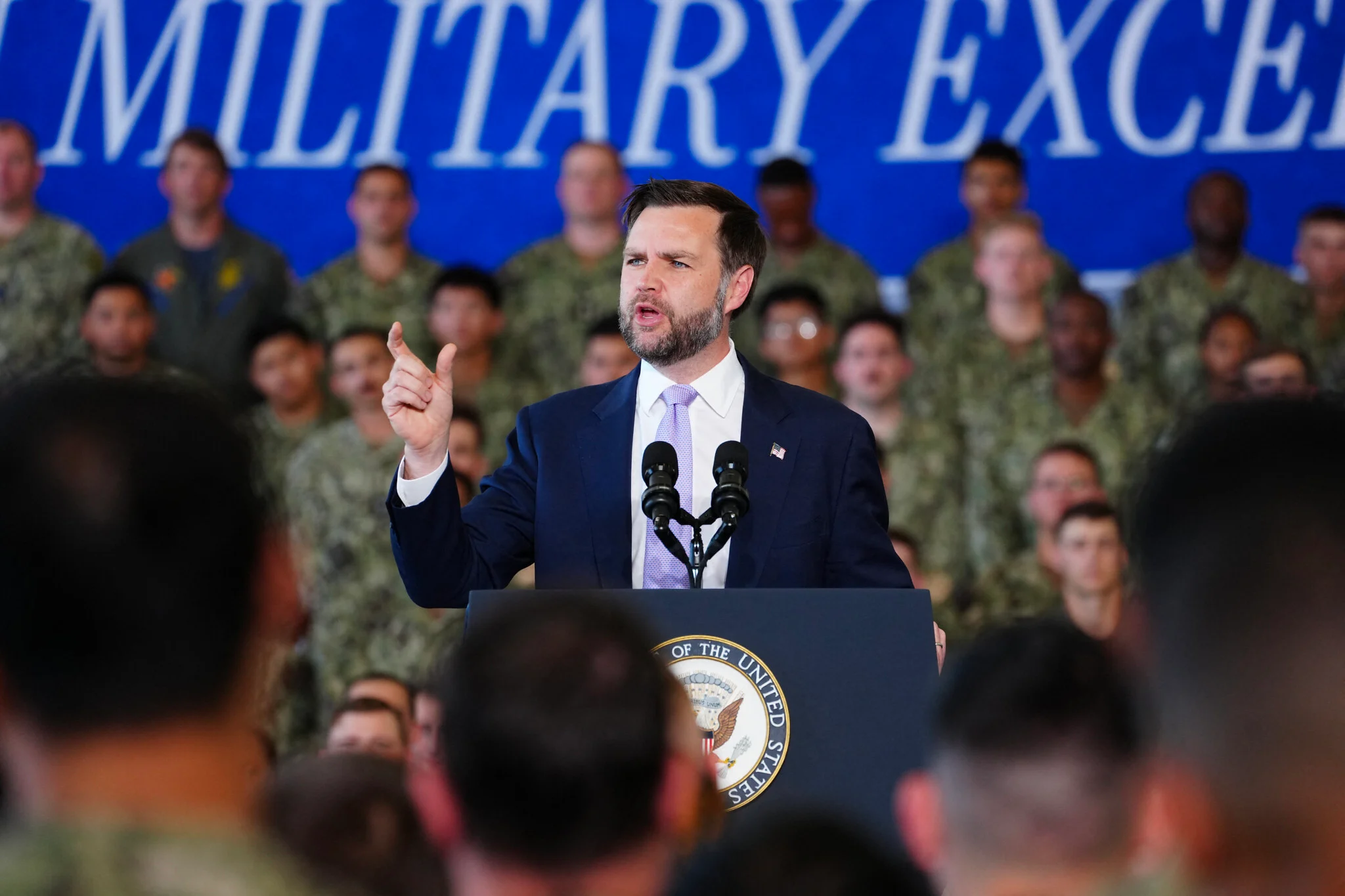
Speaking to CNN on Wednesday (local time) after remarks to US service members in Virginia, Vance said, “It’s still pretty early, but talks are going well.”

“Well, right now, the technical negotiators are sitting down with the Iranians, with the Qataris, and with others in Doha, talking about some of the details here,” he said.

“We’re worried about the nuclear issue. We’re going to start talking about that, so right now the talks are going well,” Vance added.

Meanwhile, speaking at Naval Air Station Oceana in Virginia Beach, Vance thanked US military personnel and said the ongoing negotiations with Iran were taking place from a position of strength.
He said the talks had been possible “not out of weakness” but “out of strength.”

Vance also contrasted the current US approach toward Iran with the wars in Afghanistan and Iraq, arguing that President Donald Trump would only authorise military action with clearly defined objectives.

“[Trump’s] negotiating from a position where Iran’s nuclear program has been destroyed and their conventional military has been destroyed too, and what I notice about the people who are attacking the administration for negotiating is that they’re the very same people who, for example, encouraged us to just go a little bit further and just drop a few more bombs in places like Afghanistan,” Vance said.

“Now, the president of the United States maintains a lot of options today in 2026, but if he ever asks you to go and drop bombs, it’s going to be for something specific,” he added.

Meanwhile, on Wednesday (local time), US President Donald Trump claimed that the “denuclearisation” of Iran was going “well”, expressing optimism about the diplomatic process with the Islamic Republic despite the absence of Iran from direct high-level negotiations involving senior US officials in Qatar.

Speaking to reporters as he departs for North Dakota to visit the newly built Theodore Roosevelt Presidential Library, Trump said discussions on Iran’s nuclear programme had progressed positively following recent military action on the Islamic Republic over strikes on transiting vessels through the Strait of Hormuz.

The US President also asserted that Iran had changed its position following the recent strikes.

“They’ve come a long way. We hit them very hard last week. They’re fine. We’re going to get it. It’s the denuclearisation of Iran,” he said.

Reiterating Washington’s longstanding position on Tehran’s nuclear ambitions, Trump said Iran would not be allowed to possess a nuclear weapon.

“Iran cannot have a nuclear weapon. Otherwise, all of this stuff that we look at, all of these things that we do, the country has never had activity like it’s got right now,” he said.

Trump’s remarks come even as Iranian officials have not participated in direct high-level talks with the United States in Doha, Qatar.

Imported PCBs worth ₹40,000 crore to be manufactured in India; Jewar to emerge as a major electronics manufacturing hub : Ashwini Vaishnaw

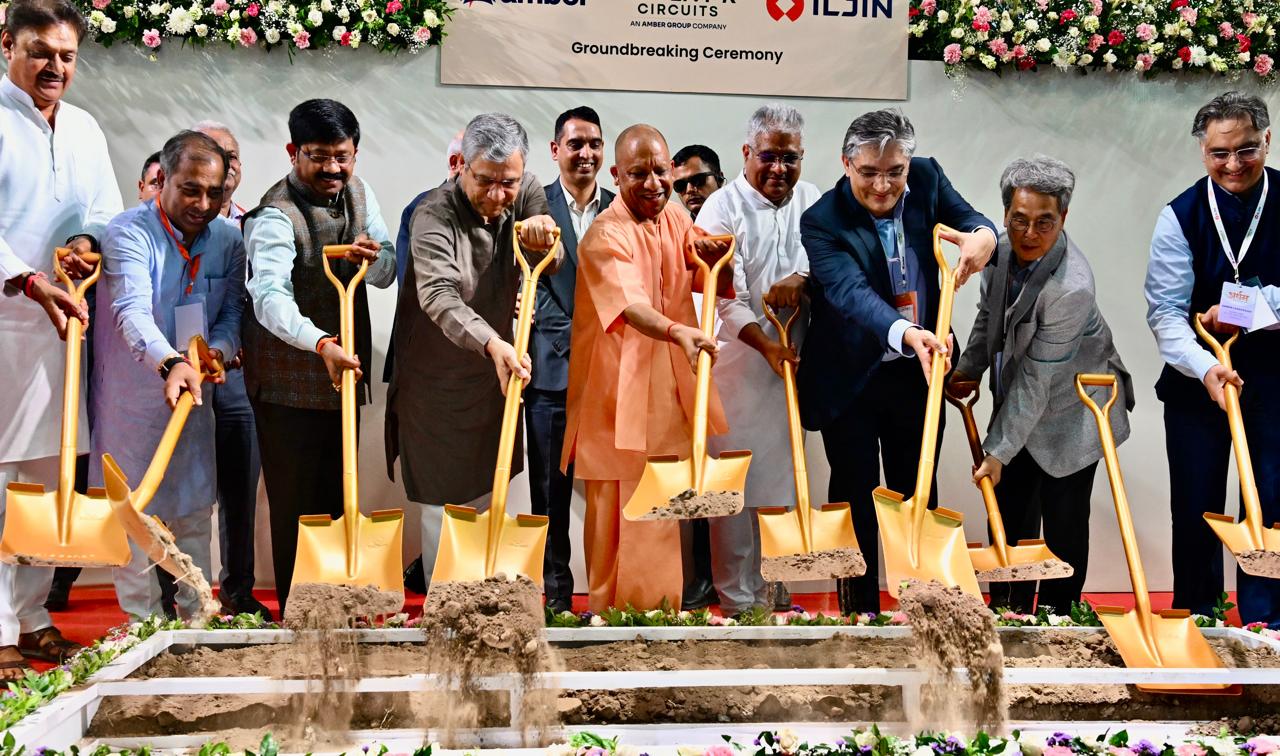
NEW DELHI : Chief Minister of Uttar Pradesh, Shri Yogi Adityanath and Union Minister for Electronics & IT, Railways and Information & Broadcasting, Shri Ashwini Vaishnaw jointly laid the foundation stones for two major electronics manufacturing projects involving an investment of approximately ₹6,750 crore at Yamuna City, Jewar, in Gautam Buddha Nagar district of Uttar Pradesh.

Addressing the gathering, Shri Ashwini Vaishnaw said that Jewar is poised to emerge as one of India’s leading hubs for electronics and semiconductor manufacturing in the coming years.

Explaining the significance of the projects, Shri Ashwini Vaishnaw said that the facilities would manufacture advanced multi-layer Printed Circuit Boards (PCBs), one of the most critical components of modern electronic devices. He noted that these highly sophisticated PCBs, comprising up to 20–22 layers of integrated circuitry within an extremely thin structure, form the backbone of today’s electronics industry. He said that PCBs worth nearly ₹40,000 crore, which were earlier imported into the country, will now be manufactured domestically, with Jewar emerging as a major production centre.

Union Minister further said that, following the development of the semiconductor ecosystem, Jewar is now poised to become a major centre for electronics manufacturing as well. He expressed confidence that several new electronics manufacturing projects would be established in Uttar Pradesh, enabling the State to emerge as one of the country’s leading electronics and semiconductor manufacturing hubs. He said that the projects would strengthen India’s journey towards technological self-reliance and give fresh momentum to the vision of Aatmanirbhar Bharat by expanding domestic manufacturing capabilities across the electronics value chain.

Highlighting the transformative impact of infrastructure, Shri Ashwini Vaishnaw said that the proposed Delhi–Lucknow–Varanasi–Patna–Siliguri Bullet Train corridor will redefine connectivity across Uttar Pradesh and act as a catalyst for industrial and economic growth. He noted that world-class transport infrastructure, coupled with a robust electronics manufacturing ecosystem, will significantly enhance the State’s attractiveness as an investment destination.

During the programme, Chief Minister Shri Yogi Adityanath also laid the foundation stone of the first industrial unit to be established in the Electronics Manufacturing Cluster (EMC) located in Sector-10 of the Yamuna Expressway Industrial Development Authority (YEIDA).

The Electronics Manufacturing Cluster is being developed over an area of 206 acres at an estimated cost of approximately ₹417 crore with the support of the Government of India, including a Central Government contribution of ₹144 crore. The project is expected to strengthen Uttar Pradesh’s position as a leading electronics manufacturing destination and promote investment in high-value electronics manufacturing.

Building India’s Semiconductor Ecosystem
The India Semiconductor Mission (ISM), launched under the Semicon India Programme, is building a comprehensive semiconductor and electronics manufacturing ecosystem in the country. As of June 2026, the Government has approved 12 semiconductor manufacturing projects with an investment pipeline of approximately ₹1.64 lakh crore, comprising one semiconductor fabrication unit, two compound semiconductor fabrication units and nine semiconductor packaging units.

The Mission is also strengthening India’s semiconductor design ecosystem through the Design Linked Incentive (DLI) Scheme. So far, 24 design projects are being supported, 105 companies have received access to advanced Electronic Design Automation (EDA) tools, and 23 chip tape-outs have been completed at various foundries, including advanced technology nodes. Announced in the Union Budget 2026–27, India Semiconductor Mission 2.0 aims to further strengthen the ecosystem by promoting semiconductor equipment and materials, indigenous intellectual property, resilient supply chains and advanced manufacturing capabilities, reinforcing India’s emergence as a trusted global semiconductor hub.

Western Railway invites bids for design consultancy of Sarkhej-Dholera Rail Corridor

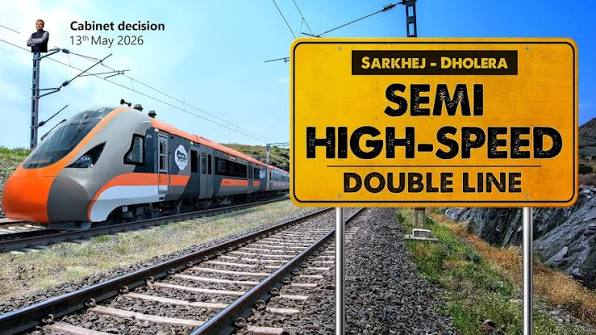
DHOLERA : Western Railway has invited bids to appoint a Detailed Design Consultant (DDC) for a new broad gauge double-line railway corridor between Sarkhej and Dholera in Gujarat. The project will also include rail links to the National Maritime Heritage Complex (NMHC) at Lothal and the upcoming Dholera International Airport.

The proposed rail network will cover a total length of 134.06 km, including the 109.16-km main line between Sarkhej and Dholera and the estimated cost of the project is Rs 22.05 crore.

Scope of work

The selected consultant will prepare a detailed design report for construction of the New BG Double line between Sarkhej to Dholera (109.16 Kms) with Spur lines to Lothal NMHC and Dholera International Airport. Total Length – 134.06 Kms in the jurisdiction of Chief Administrative Officer (Construction), Ahmedabad of Western Railway.

About the project

The proposed railway line aims to improve connectivity between Ahmedabad and Dholera. It is one of India’s largest upcoming smart cities. The project will also provide rail access to the National Maritime Heritage Complex (NMHC) at Lothal, a major cultural and tourism project, and to the upcoming Dholera International Airport. Dholera continues to attract investments as a future industrial and economic hub. Better rail connectivity will support passenger travel, industrial development and future growth in the region.

Govt extends Customs Duty waiver on import of key petrochemical products till July 15

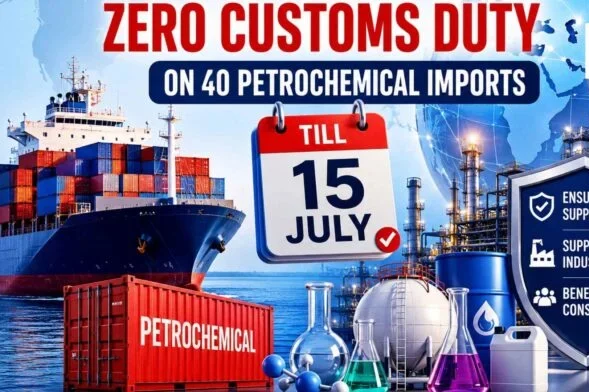
NEW DELHI : The Government on Tuesday extended nil customs duty on import of critical petrochemical products by 15 days till July 15 to ensure continuity of supply stability amid the West Asia crisis.

The full customs duty waiver on about 40 critical petrochemical products provided on April 2 was a “temporary and targeted relief”, and was set to lapse on June 30.

In a notification on Tuesday, the Finance Ministry extended the customs duty exemption to July 15.The import duty exemption was intended to benefit sectors dependent on petrochemical feedstock and intermediates, such as plastics, packaging, textiles, pharmaceuticals, chemicals, automotive components and other manufacturing segments.

On April 2, the Finance Ministry had said that in light of the ongoing conflict in West Asia and the consequent disruptions in global supply chains, the government has decided to provide full customs duty exemption on critical petrochemical products till June 30.

This measure was aimed to ensure the continued availability of critical petrochemical inputs for the domestic industry, reduce cost pressures on downstream sectors, and safeguard supply stability in the country, the ministry had said.

This will also provide relief to consumers of final products, it added.
The goods on which the customs duty has been exempted include Methanol, Anhydrous ammonia, Toluene, Styrene, Dichloromethane (methylene chloride), Vinyl chloride monomer, Poly butadiene, Styrene butadiene and Unsaturated polyester resins.

Disruption in shipping routes amid the West Asia war has raised concerns over imports of fertiliser, crude oil and natural gas. India is a major importer of fertiliser and petroleum.

Source : PTI

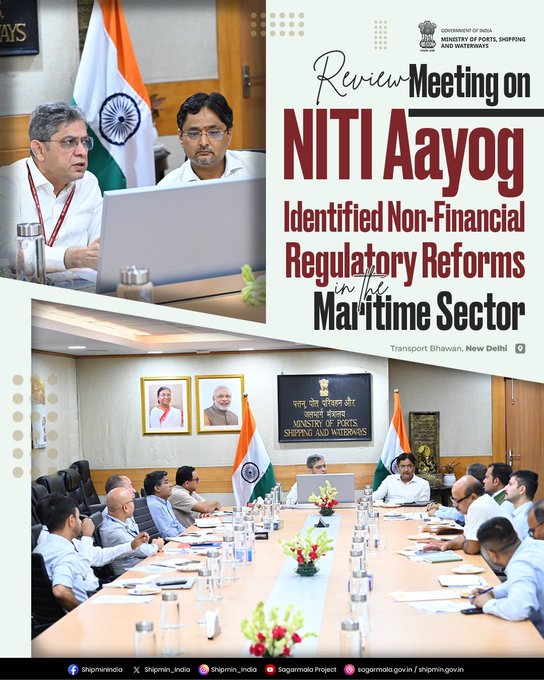
NITI Aayog Review Meeting on ‘Non-Financial Regulatory Reforms’

NEW DELHI : A review meeting was jointly chaired by Shri Vijay Kumar (IAS), Secretary, Ministry of Ports, Shipping and Waterways, and Shri Arvind Shrivastava, Revenue Secretary, Government of India to deliberate on key reforms identified by the NITI Aayog High-Level Committee on Non-Financial Regulatory Reforms pertaining to CBIC. Senior officials from the concerned Ministries and stakeholder departments participated in the discussions.

The meeting focused on streamlining export transshipment procedures, simplifying container movement processes, reducing manual approvals, and advancing digital clearances to improve vessel turnaround time. Deliberations also emphasized the adoption of uniform digital procedures across ports to enhance trade facilitation, strengthen ease of doing business, and improve the efficiency of India’s maritime logistics ecosystem.

CMA CGM nears $1.4bn FedEx Logistics deal in US expansion push

fedex logo.jpg CMA CGM nears $1.4bn FedEx Logistics deal in US expansion push

MARSEILLE : CMA CGM, the French shipping group is close to acquiring FedEx’s third-party logistics operation, extending a strategy that uses container-shipping wealth to build a larger land-based supply-chain business. CMA CGM is nearing a $1.4 billion cash agreement to acquire FedEx’s third-party logistics business, a move that would deepen the Marseille-based company’s presence in US supply chains and further reduce its dependence on volatile container-shipping cycles.

The proposed transaction was reported on 1 July, citing people familiar with the negotiations. The parties had not announced a completed agreement at the time of reporting, so the terms could still change.

The strategic logic is nevertheless clear. CMA CGM has spent several years transforming itself from a container carrier into an integrated transport and logistics group. Buying a FedEx business that manages warehousing, fulfilment and distribution for third-party customers would add capacity on land and place the French company deeper inside corporate supply chains in the world’s largest consumer market.

Moving beyond the shipping cycle
Container shipping can generate extraordinary profits when freight rates rise, but earnings can fall sharply when capacity exceeds demand. Logistics offers a different revenue profile. Warehousing, contract logistics, fulfilment and supply-chain management are tied to longer customer relationships and are less exposed to day-to-day freight-rate movements.

CMA CGM has already pursued this diversification through CEVA Logistics and major acquisitions including Bolloré Logistics. Its own account of the Bolloré transaction described the combination as a strategic expansion of logistics alongside the group’s historic maritime business.

The FedEx unit would extend that strategy in the United States. The attraction is not simply additional warehouses. A third-party logistics provider sits inside customers’ inventory planning, order fulfilment and distribution decisions. Those relationships can create opportunities to sell ocean freight, air cargo, customs services and inland transport as a single package.

Why FedEx may sell
For FedEx, a disposal would fit a broader effort to simplify operations and focus capital on its core express-delivery network. The company completed the separation of FedEx Freight in June and has been pursuing cost reductions while dealing with changing trade patterns and pressure on delivery volumes.

FedEx’s latest results showed stronger revenue and pricing, but also came during a significant corporate restructuring. Selling a non-core logistics operation could raise cash and reduce organisational complexity.

The question is whether the business is more valuable inside an integrated shipping-and-logistics group than inside a parcel carrier. CMA CGM can connect it to CEVA’s network and to ocean capacity; FedEx may prefer to concentrate on express transport, technology and network utilisation.

A European group expands in US infrastructure
The acquisition would also have a geoeconomic dimension. Supply chains are increasingly shaped by tariffs, industrial policy and security concerns. Companies want visibility over inventory and alternative routes, while governments are encouraging domestic or allied production.

CMA CGM has already expanded its US infrastructure exposure. In January it agreed to create a port-terminal joint venture with Stonepeak valued at nearly $10 billion, covering terminals including assets in New York and Los Angeles. That transaction brought in outside capital while leaving the French group with operating control.

Adding a FedEx logistics operation would strengthen the connection between port entry, warehousing and final distribution. That can be commercially powerful, but it also increases integration risk and regulatory attention. Customers may be cautious about giving a carrier too much visibility into their inventory and purchasing data, particularly if it serves competing businesses.

Execution will decide the value
Acquisitions do not automatically create an integrated network. CMA CGM would need to combine technology systems, customer contracts, facilities and staff with CEVA while preserving service quality. Cost savings that look persuasive in a presentation can be difficult to capture without disrupting operations.

Regulators may also examine the effect on competition in particular logistics markets, although third-party logistics remains fragmented and the transaction is far smaller than CMA CGM’s major previous deals.

The proposed $1.4 billion price is significant but manageable for a group that accumulated substantial cash during the pandemic-era shipping boom. The harder question is strategic discipline. Diversification can stabilise earnings, but repeated acquisitions create a larger and more complex organisation.

If completed, the FedEx deal would confirm that CMA CGM no longer sees maritime transport as a self-contained business. It wants to control more of the journey before and after the port, and to turn access to ships, terminals and warehouses into a unified commercial offer.

That ambition places a European company more deeply inside US logistics infrastructure. It also raises the standard by which the strategy will be judged: not by the number of assets acquired, but by whether they produce a coherent network that customers choose to use.