Home Blog Page 249

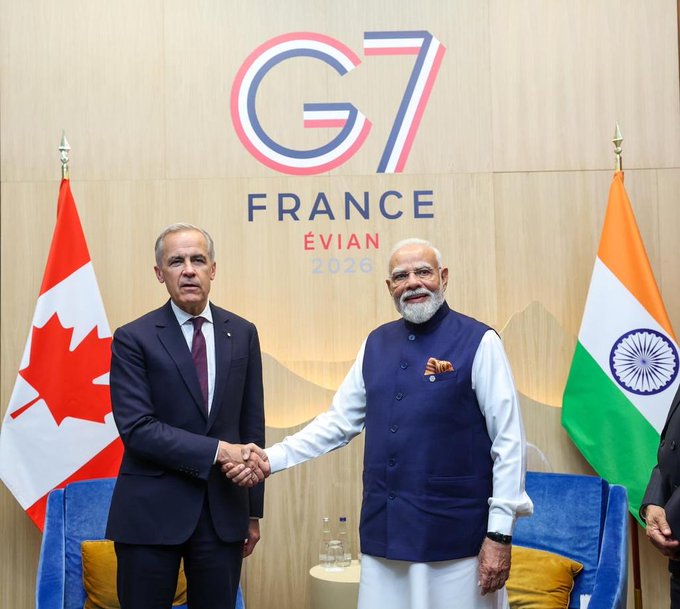
PM Modi meets PM Mark Carney of Canada on the sidelines of the G7 Summit

EVIAN : Prime Minister Shri Narendra Modi and Prime Minister Mark Carney of Canada met on the sidelines of the G7 Summit in Evian, France, on 16 June 2026.

The two Prime Ministers welcomed the positive momentum in India–Canada relations and noted with satisfaction the progress achieved since Prime Minister Carney’s successful visit to India in March 2026.

Reaffirming their commitment to building a forward-looking strategic partnership, the Leaders underscored the complementarities between the Indian and Canadian economies and highlighted the importance of resilient and reliable supply chains in strengthening global energy and food security.

The Leaders reviewed progress in bilateral economic cooperation, including developments in commercial arrangements relating to LNG, LPG and metallurgical coal.

The Prime Ministers welcomed the ongoing momentum in the exchange of high-level visits between the two countries. They noted the recent visit by the Indian Minister of Commerce and Industry, Shri Piyush Goyal to Canada and looked forward to the forthcoming Canadian trade mission to India, to be led by the Minister of International Trade, later in 2026.

Both sides expressed satisfaction with the progress in negotiations towards a Comprehensive Economic Partnership Agreement (CEPA) and reaffirmed their shared objective of concluding the negotiations in 2026.

The Prime Ministers welcomed the strengthening of institutional engagement between the two governments, including the recent meetings of the Joint Science and Technology Committee and the Consular Dialogue. They also looked forward to forthcoming dialogues in the areas of defence, finance and migration.

To further deepen defence and security cooperation, the Prime Ministers agreed to launch negotiations on a General Security of Information Agreement (GSOIA). They also welcomed recent exchanges between defence institutions, including the visit of the National Defence College of India to Canada.

The Leaders noted ongoing collaboration under the Canada–India Talent and Innovation Strategy, including initiatives to strengthen skill development, innovation partnerships, and educational cooperation between institutions in the two countries.

Prime Minister Modi expressed India’s support for Canada becoming a Dialogue Partner of the Indian Ocean Rim Association (IORA).

The Leaders announced the establishment of Raisina Americas as a platform to further strengthen dialogue, exchanges and cooperation.

Prime Minister Modi thanked Prime Minister Carney for his invitation to visit Canada in 2026. Both sides agreed to remain engaged through diplomatic channels to work towards a mutually convenient date for the visit.
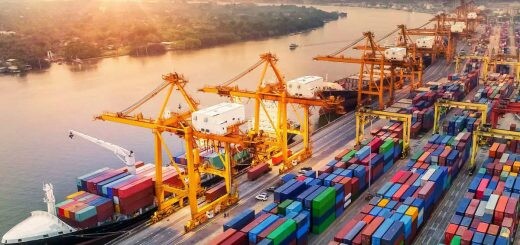
Devendra Fadnavis proposes creation of special rail freight corridor to link ports with Samruddhi Expressway

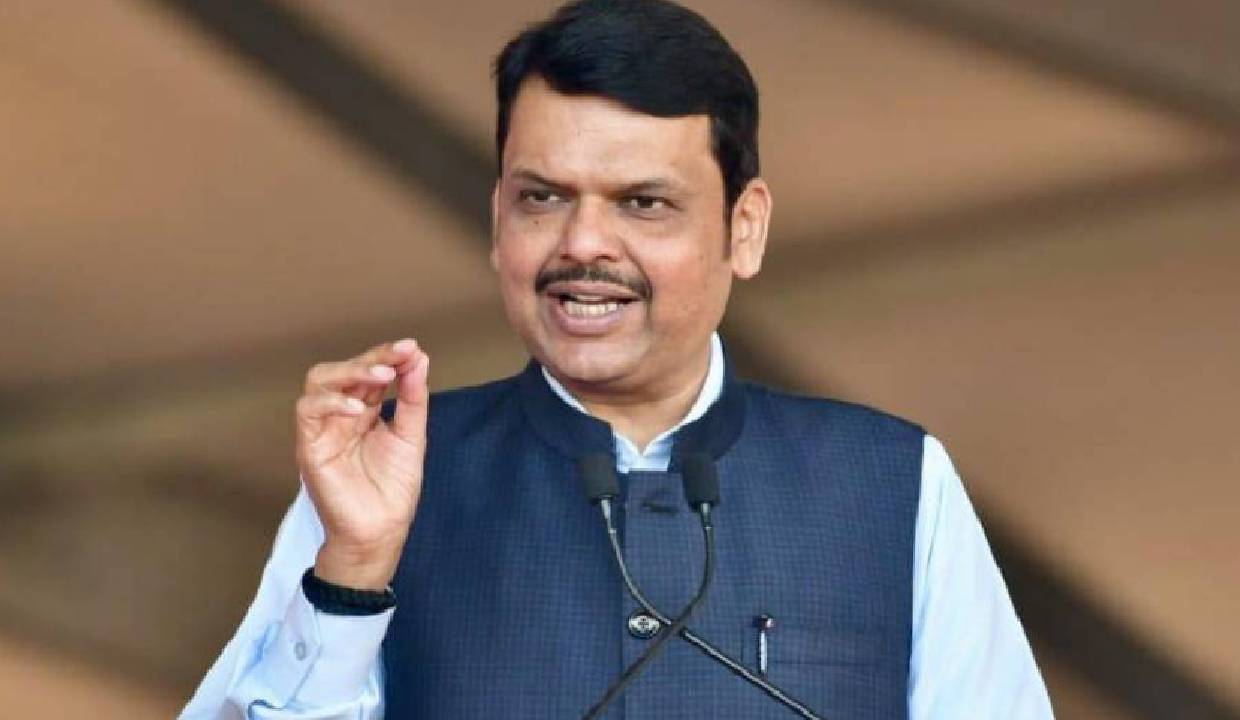
PUNE : Maharashtra Chief Minister Shri Devendra Fadnavis on Wednesday mooted an idea of creating a dedicated rail freight corridor to link ports, such as Jawaharlal Nehru Port Trust (JNPT) and the upcoming Vadhvan Port with the Samruddhi Expressway, saying it would significantly reduce cost of logistics.

Speaking at the inauguration of electronics manufacturing company Jabil’s new manufacturing facility in Pune, Fadnavis said the proposed corridor would connect ports with inland dry ports and industrial hubs across Maharashtra, which will ultimately integrate a larger part of the state into global supply chains.

“Maharashtra has the JNPT, which handles around 60 per cent of India’s container traffic. With the blessings of Prime Minister Shri Narendra Modi, we are also building Vadhvan Port near Mumbai, which will be three times bigger than the JNPT and among the world’s top 10 biggest ports,” he said.

The CM said he discussed the proposal with Railway Minister Shri Ashwini Vaishnaw, who was also present at the event.

“We want to create a dedicated rail freight corridor from JNPT and Vadhvan. The corridor will move along the Samruddhi Highway, where right-of-way for railway has already been kept aside over nearly 701 km,” Fadnavis said.

He said the proposed network would connect the Jalna and Wardha dry ports before extending to Gadchiroli, which he described as “the new steel city of India”.

“This will actually bring down the cost of logistics to eight or seven per cent, which we really want to achieve, and it will make us part of the new global supply chain,” the CM said.

According to Fadnavis, port-led development in Maharashtra has so far largely benefited only about 15 per cent of the state, but the proposed connectivity would extend such advantages to nearly 75 per cent of Maharashtra.

“Put up industry anywhere and you have dedicated port connectivity — that is our dream,” he said.

Highlighting Maharashtra’s economic significance, Fadnavis said the state contributes 14 per cent to the national GDP and accounts for nearly 20 per cent of India’s exports.

He said Maharashtra has emerged as a leading hub for electronics manufacturing and data centres, with nearly 60 per cent of India’s data centre capacity being created in the state.

Describing Mumbai and Pune as India’s emerging “Quantum Valley”, Fadnavis said improved connectivity between the two cities, including the proposed high-speed rail link, would create the country’s biggest economic corridor for technology and innovation.

Praising Jabil’s expansion in Maharashtra, he assured the company of government support and ease of doing business.

“We consider industries as our partners. We are here to partner with you and handhold you. Whatever problems you encounter, just let us know,” he said.

JNPA’s proposal to rezone 100+ Hectares in Uran for industry faces local opposition

URAN : A draft proposal by the Jawaharlal Nehru Port Authority (JNPA) to convert more than 100 hectares of residential and commercial land across four Uran villages into industrial use has triggered strong opposition from villagers and environmentalists, who fear it will worsen the fragile coastal ecology while limiting future housing and employment opportunities.

The draft notification, issued on June 6, covers 122.1 hectares in Funde, Jaskhar, Jasai and Savarkhar villages. It seeks to rezone 105.85 hectares, 54.24 hectares at Funde-Jaskhar (commercial to industrial-commercial), 20.94 hectares at Jasai (residential to industrial), 15.58 hectares at Savarkhar (commercial to industrial), 12.16 hectares at Jaskhar (commercial to industrial), and 2.93 hectares at Funde-Jaskhar (residential to public and semi-public use). JNPA has invited objections and suggestions until June 20.

Explaining the rationale, JNPA Deputy Chairman Ravish Kumar Singh said, “The proposal has two objectives: to release encroached and unauthorised land for productive use and support the emerging port-airport ecosystem around Navi Mumbai International Airport. We also want planned, contiguous land use instead of fragmented development.”

However, residents and environmental groups argue the proposal prioritises industrial expansion over environmental protection, housing needs and the welfare of project-affected communities.

“The land was acquired for port development, not non-port activities. If it is meant for genuine port-related activities that generate employment, we have no objection. Otherwise, it amounts to misuse of the acquired land,” said Bhushan Patil, former JNPA trustee and executive president of Uran Samajik Sanstha (USS).

Patil also questioned the employment promise. “When the JNPA SEZ was launched in 2014, 125,000 jobs were promised. More than a decade later, that promise remains largely unfulfilled. We want secure employment for local youth, not low-paid contractual jobs,” he said.

Residents say the proposal will surround villages with warehouses, logistics parks and industries, increasing pollution, truck traffic and pressure on civic infrastructure. They add that project-affected villages such as Jaskhar, Sonari, Karal and Savarkhar still lack basic roads, playgrounds and public amenities despite nearly 37 years of JNPA operations.

“Instead of earmarking the remaining land for housing and public infrastructure, JNPA is now proposing to convert even residential areas into industrial use,” said Sudhakar Patil, president of USS.

The proposed conversion of 20.94 hectares of residential land in Jasai has emerged as the biggest flashpoint, with residents arguing it will aggravate future housing shortages as the airport region grows.

“Reducing residential land at this stage will only create future housing shortages and put additional pressure on civic infrastructure,” Sudhakar Patil said. Environmentalists also warn the proposal could harm Uran’s mangroves, wetlands and creeks, threatening biodiversity and flood protection. “Any further conversion of residential land must be backed by transparent environmental studies. Development cannot come at the cost of mangroves, biodiversity and the ecological balance of the region,” said Nandakumar Pawar, president of the Maharashtra Small Scale Traditional Fish Workers Union and an environmental activist.

USS, along with several residents, has submitted objections and suggestions to JNPA, while many villagers have also filed individual representations before the June 20 deadline.

Responding to the objections, Singh rejected allegations that JNPA was diverting land for non-port activities. “Not a single piece of land has been given for non-port activities. We are guided by the Ministry’s Sagarmala policy, which focuses on port-led industrialisation, connectivity, trade, logistics and employment,” he said.

On Jasai, Singh said the proposal sought to regularise encroachments and unplanned development through the master plan while leaving the existing Jasai village untouched. He said adjoining CIDCO areas had already been earmarked for future residential growth. “Planned development requires contiguous land use, not mixed land use,” he said.

On rehabilitation, Singh said JNPA remained committed to project-affected communities, was pursuing Koliwada rehabilitation and continued CSR initiatives in surrounding villages.

Responding to environmental concerns, Singh said JNPA, as a government authority, had always complied with statutory environmental regulations. He said environmental safeguards formed part of the master plan and stakeholder feedback would be considered before the proposal was finalised. Singh added that JNPA had increased green cover by around 40% and adopted cleaner technologies, including electric vehicles, to reduce emissions.

On employment, Singh said the proposed development would strengthen the port-led economy and create jobs. He added that concession agreements with terminal operators mandate preference in recruitment for project-affected persons (PAPs) and local residents. “There is no preconceived decision. This is the stage for statutory public consultation. All suggestions and objections will be examined, and modifications, if required, will be made before the proposal is finalised,” Singh said.

Source : HT

CONCOR commences loading of long-haul Pig Iron linking Southern and Northern India

NEW DELHI : In a significant step towards strengthening India’s multimodal freight ecosystem, the Container Corporation of India Ltd. (CONCOR) has successfully commenced the loading and transportation of pig iron from the ACPC Private Siding to the GFPA CONCOR Terminal, establishing a new long-distance logistics stream spanning approximately 2,400 kilometres.

The initiative marks a major milestone for the CONCOR Hyderabad Cluster and reinforces the organisation’s commitment to developing innovative, customer-centric freight solutions that enhance supply chain efficiency across the country.

The newly operational route seamlessly connects key industrial centres in southern India with markets in the north, facilitating the movement of bulk commodities through an integrated multimodal logistics network.

The inaugural movement is being undertaken for Arjas Modern Steel Pvt. Ltd., a leading steel manufacturer located at Jambulapadu, Challavaripalle, in Ananthapur district of Andhra Pradesh, under the Guntakal Division of South Coast Railway.

The successful commencement of operations highlights the growing role of private sidings and terminal infrastructure in improving first- and last-mile connectivity while enabling industries to leverage rail-based logistics for long-haul transportation.

By shifting freight movement to rail-supported multimodal solutions, the initiative is expected to deliver significant benefits, including reduced transit costs, enhanced reliability, lower carbon emissions, and improved supply chain sustainability.

CONCOR expressed its gratitude to Arjas Modern Steel Pvt. Ltd. for placing its trust in the organisation’s logistics capabilities and reaffirmed its commitment to providing seamless, efficient, and end-to-end freight solutions tailored to evolving customer requirements.

The development aligns with the Government of India’s broader vision of increasing rail’s share in freight transportation, promoting multimodal connectivity under the PM Gati Shakti National Master Plan, and strengthening logistics infrastructure to improve the country’s overall ease of doing business.

With its extensive network of terminals, rail services, and multimodal capabilities, CONCOR continues to expand its footprint across key industrial corridors, enabling faster, greener, and more cost-effective cargo movement nationwide.

India launches World’s first Shipbreaking Credit Note under SBFAS 2.0

New initiative links responsible ship recycling with domestic shipbuilding to strengthen India’s maritime ecosystem

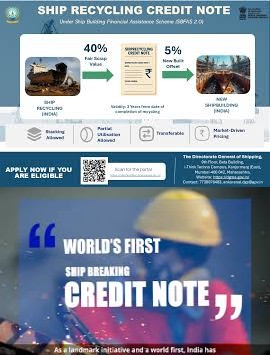
NEW DELHI : India has become the first country in the world to introduce the Shipbreaking Credit Note (SbCN) under the Shipbuilding Financial Assistance Scheme (SBFAS) 2.0, marking a major milestone in the nation’s journey toward becoming a global maritime powerhouse.

The pioneering initiative transforms end-of-life vessel recycling into a catalyst for new ship construction by creating a direct financial link between sustainable ship recycling and domestic shipbuilding.

Under the scheme, vessel owners who recycle their ships at Indian recycling facilities compliant with the Hong Kong International Convention for the Safe and Environmentally Sound Recycling of Ships (HKC) will receive a tradeable Shipbreaking Credit Note. The credit note can be utilized as a subsidy for constructing new vessels at Indian shipyards, encouraging greater investment in the country’s shipbuilding sector.

The SbCN introduces several innovative features designed to maximize industry participation and ease of use:

Tradeable credit notes that can be transferred to eligible stakeholders

Stacking provisions allowing multiple credit notes to be combined

Three-year validity period to provide greater flexibility for shipowners and investors

End-to-end digital processing to ensure transparency, efficiency, and ease of access

The initiative is expected to accelerate the adoption of environmentally responsible ship recycling practices while enhancing the competitiveness of Indian shipyards.

By incentivizing the use of HKC-compliant recycling facilities and promoting reinvestment in domestic shipbuilding, the Shipbreaking Credit Note supports India’s vision of developing a circular maritime economy and emerging as a globally competitive maritime nation.

The launch of SbCN under SBFAS 2.0 underscores the Government of India’s commitment to sustainable growth, innovation, and self-reliance in the maritime sector.

Stakeholders across the shipping and shipbuilding value chain are expected to benefit from the scheme, which aims to generate new economic opportunities, strengthen industrial capabilities, and reinforce India’s position as a leading hub for ship recycling and ship construction.

For more information on the Shipbreaking Credit Note and SBFAS 2.0, stakeholders are encouraged to visit the official channels of the Ministry of Ports, Shipping and Waterways.

Watch the official video to learn how the Shipbreaking Credit Note is promoting sustainable maritime practices, strengthening India’s shipbuilding ecosystem, and supporting the vision of a globally competitive maritime nation.

SBD Scheme to accelerate creation of Greenfield Shipbuilding Clusters across India

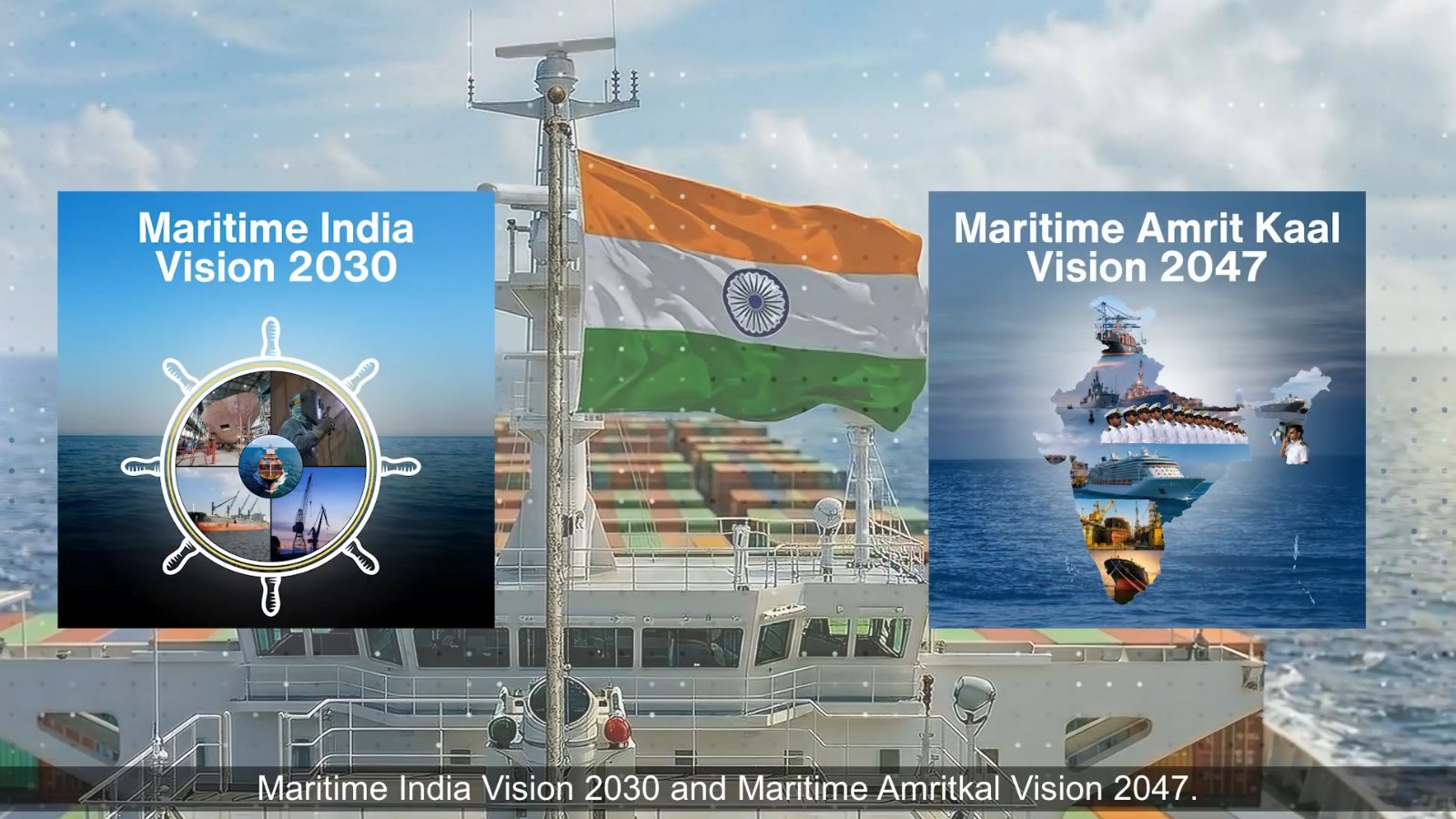
MUMBAI : The Shipbuilding Development Scheme (SBDS) – Greenfield Shipbuilding Clusters Development marks a major milestone in strengthening the maritime manufacturing ecosystem of India and advancing the national vision of emerging as a leading global shipbuilding hub by 2047.

The initiative aims to establish world-class shipbuilding clusters through a collaborative framework involving the Central Government, State Governments, and private sector shipyards. The scheme is designed to create an integrated ecosystem that combines modern maritime infrastructure, dedicated shipyard facilities, and a robust network of ancillary industries.

By fostering a conducive environment for shipbuilding and allied activities, the SBDS seeks to significantly enhance the country’s domestic shipbuilding capacity, attract investments, and strengthen supply chain capabilities across the maritime sector.

The development of Greenfield shipbuilding clusters is expected to generate substantial employment opportunities, encourage technological innovation, and promote skill development, while supporting the growth of micro, small, and medium enterprises associated with the shipbuilding value chain.

The initiative aligns with the Government’s broader objective of positioning India as a globally competitive maritime nation under the vision of Viksit Bharat 2047. Through strategic investments in infrastructure and industry partnerships, the scheme is expected to boost the country’s share in the global shipbuilding market and reinforce its role in international maritime trade.

With a focus on sustainability, efficiency, and long-term industrial growth, the Shipbuilding Development Scheme is set to play a transformative role in shaping the future of India’s maritime sector and unlocking new opportunities for economic development.

UP exports breach Rs 2 lakh crore mark, strengthens Yogi Govt’s $1 trillion economy pitch

LUCKNOW : Uttar Pradesh has achieved a major economic milestone by crossing the Rs 2 lakh crore export mark for the first time, reinforcing the state’s ambition of becoming a $1 trillion economy.

Official data released by the Directorate General of Commercial Intelligence and Statistics (DGCIS) shows that the state’s exports rose to Rs 2,01,241 crore in 2025-26, an increase of 8.16 per cent over Rs 1,86,060 crore in the previous financial year.

The growth is significantly higher than the national average export growth of 5.45 per cent and reflects the state’s expanding manufacturing base, increasing global market access and policy-driven focus on exports. Uttar Pradesh continues to be India’s fifth-largest exporting state after Gujarat, Maharashtra, Tamil Nadu and Karnataka.

“The rise in exports is a positive indicator for Uttar Pradesh’s economy and will contribute significantly to the state’s journey towards becoming a one trillion dollar economy. Strong exports generate employment, attract investments, strengthen MSMEs and enhance the global competitiveness of industries based in Uttar Pradesh,” said Mukesh Singh, Chairman of the Uttar Pradesh Chapter of the Indo-American Chamber of Commerce.

Economists and industry leaders say sustained export growth will play a crucial role in helping Uttar Pradesh achieve its long-term economic target. Higher exports translate into increased industrial production, greater demand for goods manufactured in the state, more employment opportunities, higher foreign exchange earnings and stronger private investment. They also boost the income of MSMEs, artisans and farmers who are linked to global supply chains through export-oriented industries.

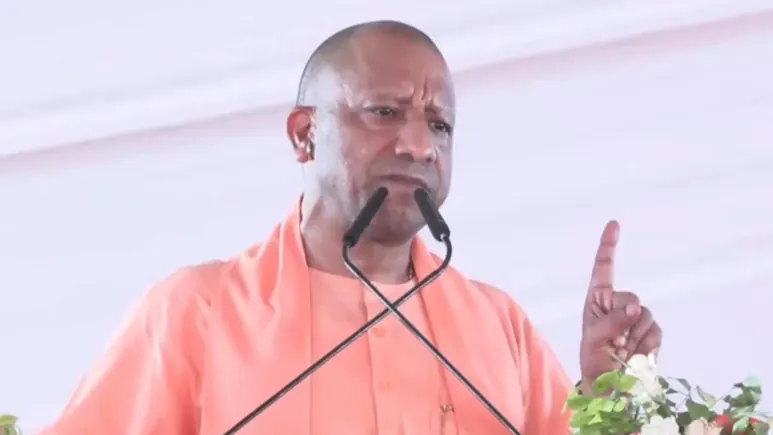
The export growth comes as the Yogi Adityanath government is banking heavily on manufacturing, logistics and infrastructure to accelerate economic expansion. Schemes such as One District One Product (ODOP), the Defence Corridor, electronics manufacturing clusters, data centres and the upcoming Noida International Airport at Jewar are expected to further strengthen the state’s export ecosystem.

Deepak Kumar, Additional Chief Secretary, Department of Finance, UP Government said that crossing the Rs 2 lakh crore mark is an important milestone but say exports will need to grow at a much faster pace to support the state’s $1 trillion economy roadmap. “The government has already set its sights on taking exports beyond Rs 3 lakh crore over the next few years by creating new export hubs, improving logistics infrastructure, expanding air cargo facilities and simplifying procedures for exporters through digital platforms,” he said.

FICCI Uttar Pradesh Chapter Chairman Manoj Gupta and Indian Industries Association National President Dinesh Goyal said enhanced data collection and changes in export reporting have played a major role in the exceptional growth recorded by several states.

Industry representatives, however, say Uttar Pradesh still faces structural challenges. The state lacks direct access to seaports, making logistics more expensive than coastal states. MSME exporters continue to have limited penetration in global markets, while high-value technology and electronics exports remain relatively small compared to leading manufacturing states.

Although several states reported sharper percentage increases in exports during the year, industry experts noted that much of the extraordinary growth in some neighbouring states was driven by changes in export reporting systems, customs-based classification and improved documentation of shipments. In contrast, Uttar Pradesh’s growth reflects a broad-based expansion in exports across sectors while maintaining its position among the country’s top exporting states.

With export-led growth emerging as a key pillar of its economic strategy, Uttar Pradesh is expected to intensify efforts to diversify its export basket, strengthen manufacturing competitiveness and improve connectivity to global markets. Industry leaders say maintaining double-digit export growth over the coming years will be critical if the state is to translate its $1 trillion economy vision into reality.

Trump insists Iran deal will open Strait of Hormuz ‘toll-free’ as he meets world leaders

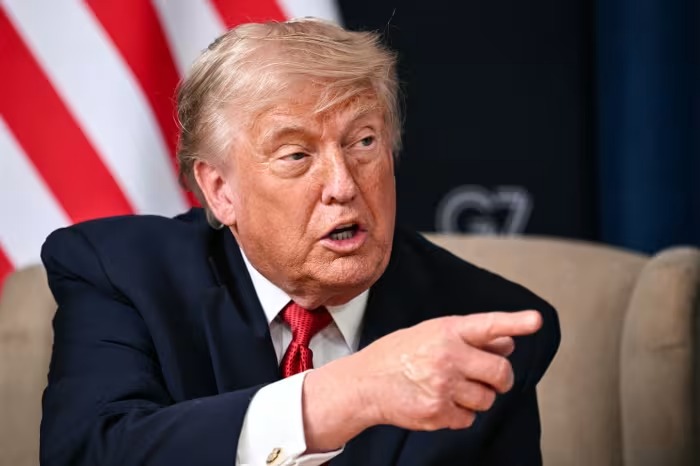
VERSAILLES : US President Donald Trump has laid out the two primary components of his deal to end the war with Iran: Tehran will “never have a nuclear weapon” and the Strait of Hormuz will re-open and be “toll-free” .

Speaking at the G7 Summit in France, Trump said the deal agreed between the two countries was “fair” and “good”. Later Trump said he would likely hold a news conference to publicly read the agreement between the US and Iran “word by word”.

Tehran and Washington are set to sign the deal in the Swiss resort of Burgenstock on Friday. The full details of the agreement have not been made public yet, but in the US, the Wall Street Journal has reported that Iran will be able to immediately start selling oil.

The price of Brent crude oil – the global benchmark for oil prices – has fallen today, with the price falling to $78 (£58) a barrel this evening. Meanwhile, the Israel Defense Forces says it carried out strikes in southern Lebanon today, claiming it intercepted rockets and destroyed a rocket launcher Hezbollah militants fired at its troops. Hezbollah says it has received assurances from Iran that it will demand the IDF withdraws from southern Lebanon.

Trump described the Lebanon conflict as a “minor war” and insisted it would not derail the US’s deal with Iran – but he continued his public criticism of Israeli Prime Minister Benjamin Netanyahu.

Source : BBC

UAE has a plan to cut Hormuz dependency to ‘zero’: ‘It’s going to open but we won’t stop the new plan’

DUBAI : As the world awaits the full reopening of the Strait of Hormuz following the signing of an interim peace deal between Iran and the US, the United Arab Emirates is working on a highly ambitious plan to try to end its dependence on the critical chokepoint.

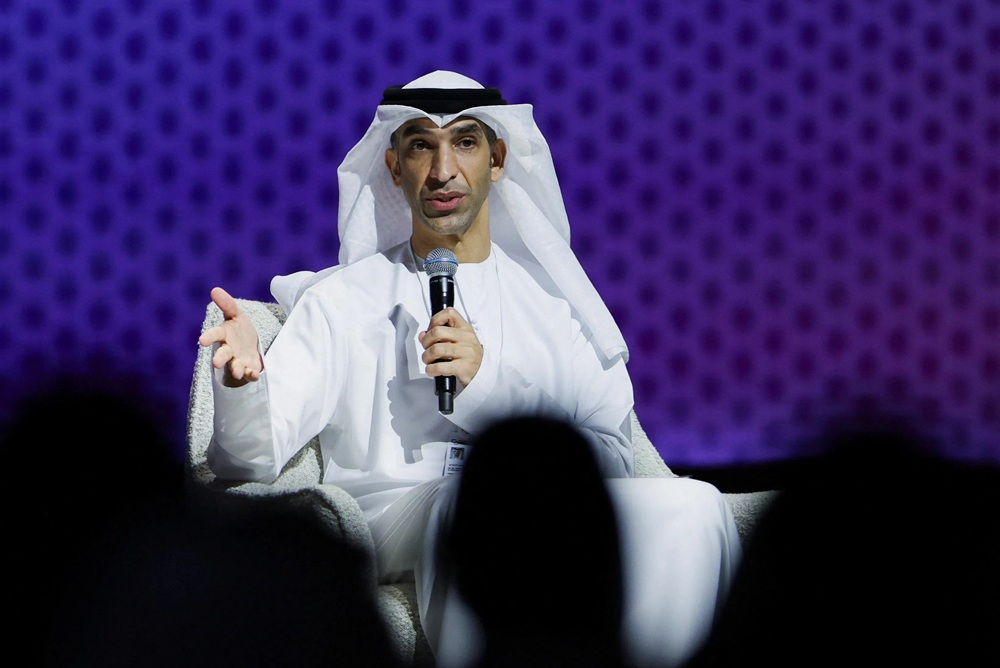
“We’re moving toward having zero Hormuz dependency and that’s regardless of whether it’s open or not,” the UAE’s Minister of Foreign Trade Thani Al Zeyoudi said in an interview. “It’s going to open and we hope that will happen quickly, but we will not stop the new plan.”

The effective shuttering of Hormuz since the US and Israel began bombarding Iran in late February has highlighted the critical importance of the waterway to global supplies of energy and other commodities, from fertilizers and helium to aluminum. The UAE has already benefited from being able to partially bypass the strait, using an existing pipeline to keep some crude moving through ports on its east coast. The country has also managed to move some oil cargoes through Hormuz in recent weeks, with ships going dark to avoid detection.

At the heart of the UAE’s plan, according to Al Zeyoudi, is a major expansion of the eastern ports of Dibba, Fujairah and Khor Fakkan, which sit outside the strait on the Gulf of Oman coast. The UAE will also build at least one other new harbor on the same coastline, he said.

This will be accompanied by a significant investment in new pipelines, as well as rail and road networks, he said, projects that will improve connections between the eastern ports and the country’s oil and gas fields and petroleum facilities.

In addition to fast-tracking construction of a second pipeline to double the amount of crude it is able to export via Fujairah, announced in mid-May, the UAE is looking at building a third petroleum pipeline. The country is exploring further options to ensure the export of petrochemicals, LNG and other energy products, said Al Zeyoudi.

While he didn’t provide the cost and timeline for these projects, saying they were in the planning phase, they would probably require many billions of dollars to be completed.

“The direction is already there, we’re doing the whole feasibility studies to move on,” he said. “During those tough times, you always identify your gaps and you start working on it.”

About a fifth of the world’s crude and liquefied natural gas flowed through Hormuz before the war, and its closure has reverberated through the global economy by pushing up inflation.

Reducing the UAE’s reliance on the strait will be far from easy. Pipelines may eventually enable the former OPEC member to send all or most of its crude and refined oil to eastern ports, but it will be harder to redirect other commodities, such as LNG and aluminum.

Moreover, the UAE is heavily reliant on its Gulf ports such as Jebel Ali — the world’s biggest container hub outside of Asia — for imports. It will be more expensive to truck goods from eastern ports to major cities such as Dubai and Abu Dhabi.

Al Zeyoudi said those costs would be mitigated by a major railway expansion and both Jebel Ali and Abu Dhabi’s Khalifa Port would remain major redistribution hubs.

The UAE currently operates an LNG export terminal inside the Persian Gulf, which Arab states call the Arabian Gulf. The country is building another project, also within the gulf, that will more than double its export capacity.

The US-Israeli strikes on Iran — which prompted Tehran to attack other Gulf states — was an unprecedented shock for a nation that’s built its economy on free trade and navigation, and has been a haven from Middle Eastern wars. Iran fired close to 3,000 drones and ballistic missiles at the UAE, more than any other country. Although the vast majority were intercepted, some damaged critical energy and port facilities, including Fujairah on the east coast.

The UAE has partially offset the closure of the Strait of Hormuz by ramping up cargo imports through Khor Fakkan and oil exports from Fujairah. The existing 1.5 million barrel-a-day link from the oil fields to the latter port proved to be a crucial lifeline.

Al Zeyoudi said air cargo played a major role in moving many commodities — albeit at a much higher cost than by sea. So did the practice of having cargo delivered and cleared at ports in countries like Egypt and India.

Underscoring the importance of Hormuz to the country’s economy, the UAE has consistently said Iran must reopen it and allow free passage. Along with the US, Europe and other Gulf states, it’s resisting Iranian assertions that the Islamic Republic can charge navigation fees even after the war is over.

The “uninterrupted flow of traffic through the Strait of Hormuz” is crucial for “advancing security, stability, and economic prosperity at both the regional and global levels,” the UAE said in a statement this week.

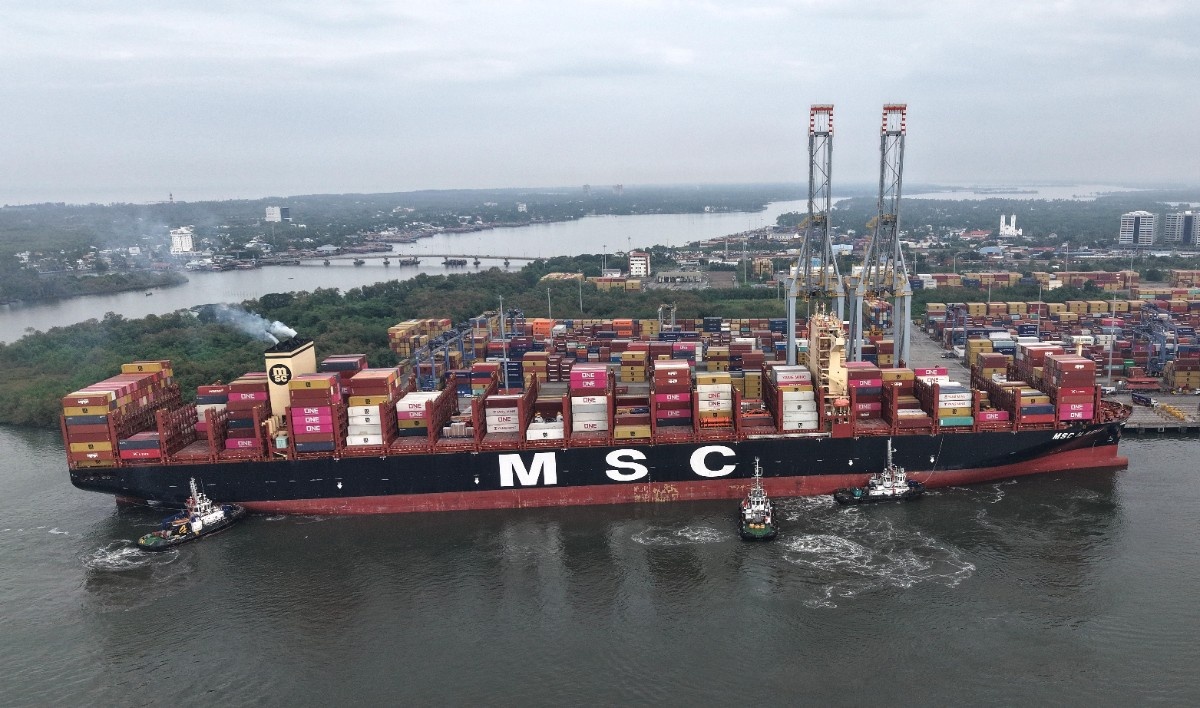
MSC denies media report it looking to buy stake in Hapag-Lloyd

GENEVA : MSC, the ‌world’s largest container shipping company, denied a report by ​Manager Magazin published on ​Wednesday that its Founder and ⁠Executive Chairman Gianluigi Aponte ​is looking to acquire a ​stake in German rival Hapag-Lloyd (HLAG.DE).

“This report is not true,” MSC ​told Reuters. Hapag Lloyd ​declined to comment on the report. Citing ‌sources, ⁠the business magazine had reported that Aponte had been in talks with Hapag-Lloyd’s main ​shareholders for ​some ⁠time despite being brushed off.

German billionaire Klaus-Michael ​Kuehne and Chilean ​shipping ⁠company Compania Sud Americana De Vapores each hold 30% ⁠in ​Hapag-Lloyd, LSEG data ​show.

Source : Reuters