Home Blog Page 255

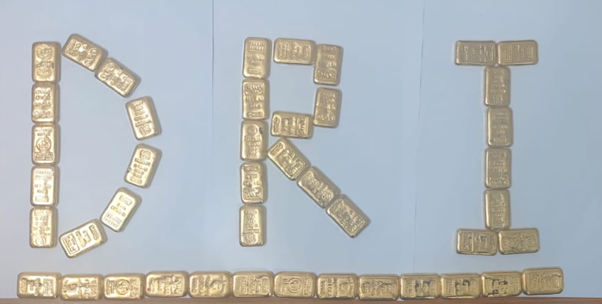
DRI busts organised gold smuggling syndicates in Eastern and North Eastern part of India; seizes around 17 kg smuggled foreign-origin gold worth Rs. 25 crore

NEW DELHI : In a major strike against the organised smuggling of gold, the Directorate of Revenue Intelligence (DRI), carried out coordinated operations in Kolkata and Agartala, and seized aprrox.17 kg foreign origin gold valued cumulatively at Rs. 25 crore (approx.), and arrested 10 persons in connection with the case.

On 12.06.26 in Kolkata, DRI busted a smuggling syndicate while they were attempting to smuggle 11.6 kg of gold from Thailand through Kolkata airport. Seven persons, including one woman, has been arrested in the case. The estimated value of seized gold is Rs. 17 crore approx.

On the same day in Agartala, DRI seized around 5.1 kg foreign-origin gold, valued at approximately Rs 8 crore (approx.), and smuggled through Tripura sector of Indo-Bangladesh border. Three persons were arrested in connection with the case. The operation was conducted in coordination with Railway Protection Force.

US-Iran deal eases uncertainty over the war – but there is much still to play out

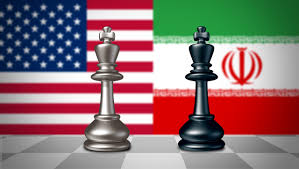
LONDON: Finally, after what have seemed like countless false starts, a deal has been agreed by the US and Iran. Both sides have predictably claimed victory.

President Trump has boldly declared: “This Great Deal will bring Peace and Security to the whole Region.”

Iran’s deputy foreign minister Kazem Gharibabadi hailed what he called his country’s military achievements as he confirmed that the Memorandum of Understanding had been signed.

All sides, including the mediator, Pakistan, are saying that the deal will see the lifting both of Iran’s closure of the Strait of Hormuz and The US blockade of Iranian ports, although this may not be immediate.

That will go some way to relieving pressure on President Trump over the harm to the global economy caused by the former, while Iran’s collapsing economy will gain some relief from the latter.

The Pakistani prime minister Shehbaz Sharif – who was the first to announce the deal – has said that the agreement also calls for the “immediate and permanent termination of military operations on all fronts, including in Lebanon”.

That could be a tall order. Israeli Prime Minister Benjamin Netanyahu has shown no sign so far of being prepared to end Israel’s current offensive against Hezbollah in Lebanon.

Indeed, twice in just the past week, Israeli strikes on the southern suburbs of Beirut in response to Hezbollah rockets crossing into northern Israel have come close to derailing the whole process. Iran only just pulled back from responding with another missile attack on Israel in order to get the deal across the line.

So it’s unclear if the agreement will provide a respite to Lebanon, where two recent ceasefires have failed to take hold.

But for Iran’s Arab Gulf neighbours, there will be a sense of relief that at least for now there could be an end to the threat of Iranian missiles targeting them – a tactic that has raised questions about the very nature of the economic model followed by the UAE, Qatar and Saudi Arabia.

As for the most essential element of any deal from the US perspective, it’s unclear for now how far this agreement goes in providing guarantees and mechanisms that will prevent Iran from ever developing a nuclear weapon.

That was the danger that the US and Israel said they were tackling in going to war. There are indications from what Iranian state media has reported to be in the deal that such a mechanism may have been set up, but that will need to be clarified and is likely to be the subject of intense negotiation after the deal is signed.

That ceremony is still several days away. With all the dramatic twists and turns that this process has taken over recent weeks, no one can be sure that the path towards that day will be straightforward.

But for now, some of the uncertainty over the conflict – which for weeks had wavered between ceasefire and military confrontation – has at least been partially lifted.

Source: BBC

WCO’s Second Webinar on the Theme of the Year Highlights Customs’ Role in Combating Money Laundering

BRUSSELS : Customs is a key player in detecting and combating money laundering across borders.
Strong inter-agency cooperation is essential to tackle evolving financial crime threats.
By disrupting illicit financial flows, Customs helps protect society, economies, and communities from criminal activity.
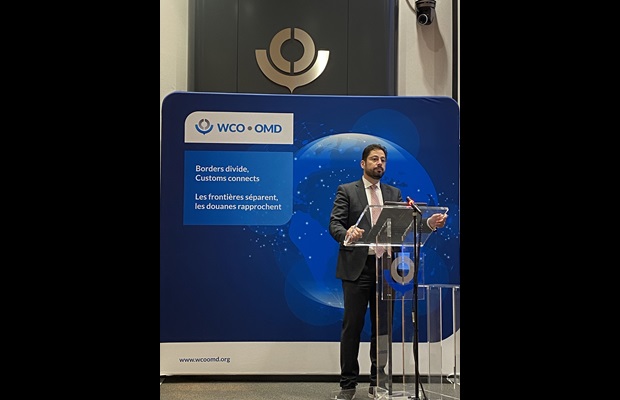
On 12 June 2026, the World Customs Organization (WCO) successfully held the second webinar in its series dedicated to the 2026 theme “Customs Protecting Society through Vigilance and Commitment”. These webinars have been designed to foster dialogue among the Customs community and interested stakeholders on key issues affecting cross-border enforcement activities and initiatives.

“Customs’ hidden efforts: Combatting Money Laundering for a Safer Society”

The second webinar brought together representatives from Customs administrations, international organizations, law enforcement agencies, academia and the private sector to discuss the growing role of Customs in tackling illicit financial flows.

In his opening remarks, Ricardo Trevino Chapa, WCO Deputy Secretary General emphasized the central role of Customs in combating financial crime, stating: “From the WCO’s perspective, Customs is not on the margins of this fight. Customs is right on the operational front lines.” He also stressed that the Organization’s efforts extend well beyond any one initiative: “Our work is broader than any single project. It includes policy support, operational capacity building, knowledge development, intelligence-sharing mechanisms and international partnership-building.”

The webinar underscored the significant threat posed by money laundering to economic stability, public security and good governance.

Keynote Address: “Cash Couriers, Trade-Based Money Laundering (TBML), and the Financial Action Task Force (FATF) Recommendations: What Customs Needs to Know.”

The FATF Secretariat provided a keynote address providing comprehensive insights into linkages between Cash Couriers and Trade-Based Money Laundering (TBML). They emphasized that Customs must be a central actor in the Anti-Money Laundering/Countering the Financing of Terrorism (AML/CFT) system as it operates at both the physical and trade borders, holds critical financial data, and can detect illicit value movements before they enter the financial system.

The FATF – a 40-member body that sets international standards to ensure national authorities can effectively go after illicit funds linked to drugs trafficking, the illicit arms trade, cyber fraud and other serious crimes – shared recommendations for Customs around risk assessment, national and international cooperation, money laundering offences, confiscation, investigative powers, and cross-border currency and bearer negotiable instruments.

They stressed that cash-courier controls should be intelligence-led and linked to investigations, prosecutions and confiscation, while TBML requires cooperation between Customs, FIUs, banks, police, tax authorities and prosecutors because no single agency can detect it alone. Their key message was that Customs should not only be viewed as a border-control authority, but as an essential contributor to financial intelligence, disruption of criminal networks and protection of the financial system.

Panel discussion: “From Cash Couriers to Fictitious Trade: How Customs–FIU Cooperation Turns Detection into Action”

During a highly engaging and insightful panel, representatives from the WCO, Hong Kong Customs and the Egmont Group brought participants into a discussion on the heart of the challenges and opportunities surrounding the fight against financial crime.

Looking at cooperation to tackle exploitation in Cash Couriers and implications of Fictitious Trade, the speakers explored how closer collaboration between Customs administrations and Financial Intelligence Units (FIUs) enhances the detection, analysis and disruption of illicit financial flows.

Drawing on operational experiences and international best practices, the panel highlighted the critical role of information sharing, intelligence-led investigations and cross-border partnerships in transforming suspicious activities into concrete enforcement outcomes.

The webinar provided a valuable platform for sharing knowledge and raising awareness of Customs’ often unseen contribution to combating financial crime. It further demonstrated the WCO’s commitment to supporting its Members in protecting society and strengthening the integrity of the global trading system through enhanced vigilance, cooperation, and enforcement.

Next up in the “Protecting Society” Webinar Series

The third webinar will take place on 22 September 2026 and will focus on a timely and highly relevant topic: “Building Resilient Supply Chains to Protect Society.” The session will explore the role of Customs and its partners in strengthening supply chain resilience, mitigating emerging risks and ensuring the secure and efficient movement of legitimate trade.

Xeneta Weekly Ocean Container Shipping Market Update: Rates Trending Higher

OSLO: The Xeneta Weekly Ocean Container Shipping Market Update provides data and intelligence including the latest freight rate and capacity movements across global trades with supporting insight from Peter Sand, Xeneta Chief Analyst.

Xeneta analyst insight – shippers face doubling freight rates and delays exporting goods out of Asia

Peter Sand, Xeneta Chief Analyst: “Spot rates remain elevated across major fronthaul trades with further increases expected mid-June as disruption from Middle East conflict continues to bite hard. From Far East to US West Coast and US East Coast, spot rates are up 127% and 106% respectively since pre-Strait of Hormuz crisis and could double again before peaking. It is possible rates could get close to the Red Sea crisis peak in 2024, so shippers should act decisively to reduce their exposure to the spot market.

“Shippers are not only paying the price in freight rates, there are also delays exporting goods out of the Far East. Even large volume shippers with valid long term contracts are unable to move containers, with carriers stating services are fully booked into July. But a ship that is fully booked weeks into the future did not become fully booked yesterday – this demand has been building, so what have carriers been waiting for?

“Offered capacity on Far East fronthauls is essentially flat compared to pre-Strait of Hormuz crisis, up +1% to both US West Coast and US East Coast, up +2% into North Europe and down -7% into Mediterranean. Offered capacity is now starting to increase, but rates have already spiralled and containers are being rolled, so it is a case of too little, too late for shippers.

“Carriers driving up freight rates and rolling containers risks damaging relationships with shippers who remember how they are treated during the tough times. But carriers entered 2026 fearing a loss-making position, so they will do what they can to manage capacity and bank every dollar while they have the opportunity. Carriers may be fighting for the volumes of these same shippers when rates eventually soften and capacity loosens, but they will worry about that later.”

Data highlights

Market average spot rates – 12 June 2026

Far East to US West Coast: USD 4 258 per FEU
Far East to US East Coast: USD 5 462 per FEU
Far East to North Europe: USD 3 854 per FEU
Far East to Mediterranean: USD 5 194 per FEU
North Europe to US East Coast: USD 2 315 per FEU

Spot rate changes since the end of February (pre-crisis) – 12 June vs 28 February 2026

Far East to US West Coast: +127%
Far East to US East Coast: +106%
Far East to North Europe: +74%
Far East to Mediterranean: +56%
North Europe to US East Coast: +57%
Offered capacity on major fronthaul trades (4-week rolling average) – w/c 8 June 2026

Far East to US West Coast: +8.7% from a week ago
Far East to US East Coast: +3.3% from a week ago
Far East to North Europe: +9.2% from a week ago
Far East to Mediterranean: +18.1% from a week ago
North Europe to US East Coast: +0.1% from a week ago
Offered capacity compared to pre-Strait of Hormuz crisis – 12 June vs 28 February 2026

Far East to US West Coast: +1%
Far East to US East Coast: +1%
Far East to North Europe: +2%
Far East to Mediterranean: −7%
North Europe to US East Coast: +21%

Source: Xeneta

PM Modi hails India-UK Comprehensive Economic and Trade Agreement to enter into force on 15 July 2026

EVIAN : Prime Minister Shri Narendra Modi has welcomed the coming into force of the India-UK Comprehensive Economic and Trade Agreement (CETA) on 15 July 2026, describing it as a historic milestone in bilateral relations between the two countries.

The Prime Minister stated that the landmark agreement will significantly strengthen trade and investment ties between India and the United Kingdom while creating new opportunities across key sectors of the economy.

According to Shri Modi, the agreement is expected to deliver substantial benefits to Indian farmers, workers, micro, small and medium enterprises (MSMEs), startups, and innovators, while contributing meaningfully towards the vision of Viksit Bharat 2047.

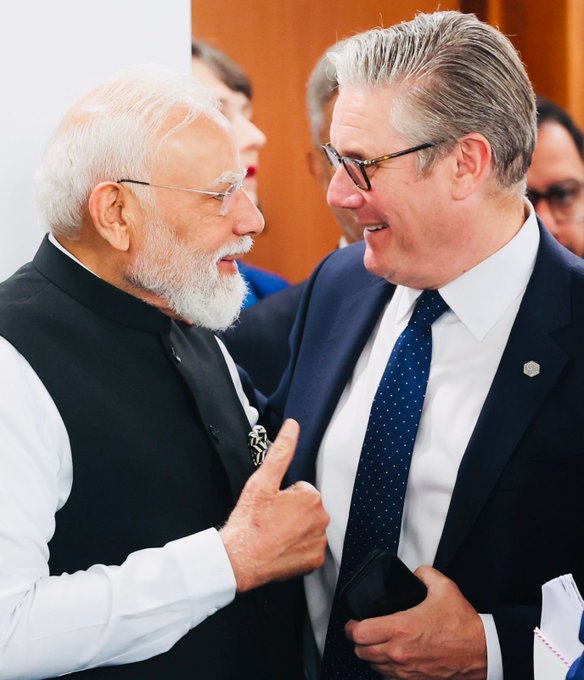
Highlighting the importance of the agreement, the Prime Minister noted that both he and UK Prime Minister Keir Starmer, who are currently in Evian for the G7 Summit, are pleased with the strong momentum being generated in India-UK economic relations.

In a post on X, Prime Minister Modi said:

“A historic milestone for India-UK relations.

Delighted to note that the India-UK Comprehensive Economic and Trade Agreement will enter into force on 15th July 2026.

This agreement will significantly boost our bilateral trade and investment.

It will also unlock numerous opportunities for Indian farmers, workers, MSMEs, startups and innovators and contribute meaningfully to the realisation of Viksit Bharat 2047.

Both PM Starmer and I, who are in Evian for the G7 Summit, are naturally very happy with the significant momentum being added to our economic ties.”

The implementation of the agreement is expected to deepen economic cooperation, facilitate market access, enhance supply chain integration, and further strengthen the strategic partnership between India and the United Kingdom.

The India-UK CETA represents a significant step forward in expanding bilateral engagement and underscores the shared commitment of both nations to fostering inclusive growth, innovation, and long-term economic prosperity.

A Next-Generation Trade Framework

Comprising 30 chapters, CETA establishes a new paradigm for next-generation trade pacts, directly supporting India’s “Viksit Bharat 2047” vision. Beyond traditional tariff-cutting, the agreement modernizes bilateral engagement by integrating traditional goods and services with advanced disciplines like digital trade, telecommunications, financial services, intellectual property, and—for the first time bilaterally—government procurement. It also embeds forward-looking chapters on innovation, SMEs, sustainability, and transparency to ensure inclusive growth. Ultimately, this framework is engineered to secure critical supply chains, accelerate technological collaboration, and establish a transparent, rules-based benchmark for India’s future economic diplomacy.

Key Economic Gains

The operationalization of the Comprehensive Economic Trade Agreement (CETA) and the simultaneous Double Contribution Convention (DCC) will mark a structural transformation in India’s global trade architecture. This comprehensive framework leverages India’s manufacturing prowess, service capabilities, and grassroots production directly into one of the world’s premier consumer arenas.

  1. Transformational Market Access for Indian Exports

With the entry into force, Indian exporters will benefit from the complete elimination of UK tariffs across several key sectors. Tariffs of up to 70% on processed food products, up to 21.5% on marine products, up to 18% on engineering goods and auto components, up to 16% on leather and footwear products, up to 12% on textiles and clothing, and up to 8% on chemicals and pharmaceutical products will be reduced to zero. The immediate duty-free access secured under CETA is expected to significantly enhance the competitiveness of Indian exports in the UK market, generate new opportunities for farmers, fishermen, workers, MSMEs and manufacturers, and strengthen India’s integration into global value chains.

This immediate duty-free window injects immense pricing power into the engine rooms of Indian manufacturing, allowing traditional artisans, large-scale factories, and regional industrial hubs to compete entirely on merit from day one of implementation.

At the same time, India has protected sensitive sectors including dairy products, cereals, millets, edible oils, oilseeds, apples and several vegetable products.

  1. Landmark Services Package and Mobility Provisions

The UK has provided one of its most comprehensive services commitments ever, covering all major services sectors and 137 sub-sectors of export interest to India.

Indian service providers in IT and IT-enabled services, financial services, professional services, healthcare, education, engineering, telecommunications and consultancy services will benefit from enhanced market access and greater regulatory certainty.

The Agreement also provides predictable mobility pathways for:

• Business Visitors
• Intra-Corporate Transferees
• Contractual Service Suppliers
• Independent Professionals
• Investors

In a first-of-its-kind arrangement, 1,800 Indian chefs, yoga instructors and classical musicians will be able to access dedicated mobility opportunities annually under the Agreement.

  1. Agreement on Social Security: A Major Breakthrough

The Agreement on Social Security, entering into force alongside the Agreement, exempts Indian workers and employers from making dual social security contributions in the United Kingdom during temporary assignments. The period of exemption has been increased from 3 years to 5 years.

More than 75,000 Indian professionals and over 900 companies are expected to benefit. The Agreement will support mobility and continued social security coverage of the employees on temporary overseas assignments. This will enhance India-UK partnerships in the service sector, leveraging the high skills and innovative service sectors of both countries.

  1. Interests of Steel Exporters Protected

Demonstrating the collaborative strength of the India-UK Comprehensive Economic Partnership Agreement (CETA), India and the United Kingdom have successfully reached a landmark consensus to safeguard and promote bilateral steel trade. Following constructive deliberations regarding the UK’s upcoming steel measures effective July 1, 2026, both sides mutually agreed to protect commercial interests, minimize market disruptions, and ensure an overall balanced and stable trading environment for exporters.

85% of India’s exports are out of the Steel measures. On the lines under the Steel measures India’s interest has been protected through a mix of CSQ, residual quota and access under Authorised Use Scheme (AUS).

A People-Centric Trade Agreement

The India–UK CETA has been designed as a people-centric agreement that delivers benefits across society.

Farmers gain access to premium export markets. Fisherfolk benefit from enhanced seafood exports. Workers gain new employment opportunities in labour-intensive sectors. Women entrepreneurs, youth, startups and MSMEs receive improved access to global value chains. Professionals benefit from enhanced mobility and recognition opportunities

The implementation of the India–UK CETA and DCC from 15th July 2026 marks a major step in India’s journey towards becoming a globally integrated, resilient and competitive economy and reflects the shared commitment of India and the United Kingdom to deepen their strategic partnership and deliver prosperity for their people.

This historic economic architecture effectively prepares both nations to navigate the complexities of modern international commerce while permanently accelerating India’s trajectory toward an inclusive, prosperous, and self-reliant “Viksit Bharat 2047.

JNPA retains position as India’s best performing Port; Ranks 22nd globally in World Bank’s CPPI 2025

MUMBAI : Jawaharlal Nehru Port Authority (JNPA) – India’s largest container port, has retained its position as India’s best performing port and secured the 22nd rank globally in the Container Port Performance Index (CPPI) 2025, published by the World Bank and S&P Global Market Intelligence.

According to the CPPI 2025 report, JNPA achieved a berth occupancy share of 75% of port hours, with a Statistical Index score of 58.9 and an Administrative Index score of 138.0, resulting in its global ranking of 22nd among container ports worldwide.

The report further highlights that JNPA ranked 14th among the Top 20 Ports Showing the Improvement between 2020 and 2025. JNPA improved its ranking score by 32 points during the period, moving from a score of 66 in 2020 to 98 in 2025, placing it 14th globally in terms of performance improvement.

Commenting on the achievement, Shri Gaurav Dayal, IAS, Chairperson, JNPA, said, “JNPA’s continued recognition as India’s best performing port and its improved global standing in the CPPI 2025 reflect the sustained efforts undertaken to enhance operational efficiency, optimize vessel turnaround times, and strengthen port-led logistics. While this recognition is a matter of pride for the entire port community, it also brings with it a greater responsibility to continuously improve our performance and benchmark ourselves against the best ports in the world. I congratulate all our terminal operators, port users, shipping lines, logistics partners, Customs, employees and every stakeholder associated with the JNPA ecosystem on this achievement.”

The CPPI evaluates container port performance based on observed vessel time spent in port, adjusted for ship size and call characteristics. The assessment is derived primarily from Automatic Identification System (AIS)-based port call records and supplemented with proprietary port and terminal data. The statistical and administrative approaches are combined to generate a single CPPI score for each port.

The CPPI methodology assesses port efficiency through vessel turnaround performance, with time in port decomposed into three standardized components: arrival time, berth time, and departure time. The index calculation is based on arrival and berth times, which serve as key indicators of operational efficiency and service delivery.

As India’s largest container port and best performing port, JNPA remains focused on sustaining its growth trajectory through capacity augmentation, operational efficiencies, sustainable growth and technology-led transformation.

About Jawaharlal Nehru Port Authority (JNPA):

The Jawaharlal Nehru Port Authority (JNPA) is one of the premier container-handling ports in India. Since its inception on May 26, 1989, JNPA has transformed from a bulk cargo terminal into the premier container port in the country.

Currently, JNPA operates five container terminals – NSFT, NSICT, NSIGT, BMCT and APMT. The Port also has a shallow water berth for general cargo operated by Nhava Sheva Distribution Terminal Pvt. Ltd. (NSDT). A Liquid Cargo Terminal present at the JNPA Port is managed by the BPCL-IOCL consortium and the additional liquid cargo terminal developed by JNPA is operated by M/s JSW – JNPT Liquid Terminal Pvt. Ltd. Additionally, the newly constructed coastal berth links other Indian ports and facilitates enhancing the traffic of coastal containers.

Nestled across 277 hectares of land, JNPA also operates a meticulously designed multi-product SEZ, with state-of-the-art infrastructure, to boost export-oriented industries in India.
JNPA is also developing an all-weather, deep-draft, greenfield port at Vadhvan, the 13th Major Port of India in Maharashtra. It is poised to be among the top 10 ports globally and will be a 100% green port since its inception.

AMTOI Western Region Chapter hosts successful Networking & Fellowship Meet 2026 in Mumbai

MUMBAI : The Western Region Chapter of the Association of Multimodal Transport Operators of India (AMTOI) successfully hosted its Networking & Fellowship Meet 2026 at the prestigious Bombay Presidency Golf Club, bringing together prominent leaders, industry experts, and professionals from across the logistics, shipping, freight forwarding, multimodal transport, warehousing, and supply chain sectors.

The annual gathering served as a significant platform for fostering industry collaboration, strengthening professional relationships, and exchanging insights on the rapidly evolving logistics landscape. Participants engaged in meaningful discussions on multimodal transportation, supply chain transformation, operational excellence, digital innovation, and emerging opportunities that are shaping the future of India’s logistics ecosystem.

The event witnessed enthusiastic participation from industry stakeholders, who highlighted the growing importance of integrated logistics solutions, sustainable supply chain practices, and technology-driven operational efficiencies in supporting India’s economic growth and global trade ambitions.

Throughout the evening, attendees had the opportunity to network with peers, explore potential business collaborations, and share perspectives on key industry challenges and opportunities. The interactions reinforced the critical role of partnership and collective action in building a more resilient, efficient, and future-ready logistics sector.

Speaking on the occasion, AMTOI representatives emphasized that collaboration remains the cornerstone of progress in the logistics and transportation industry. As India continues to strengthen its position as a global manufacturing and trading hub, industry forums such as the AMTOI Western Region Chapter Meet provide an essential platform for knowledge sharing, innovation, and stakeholder engagement.

The event also underscored the increasing significance of multimodal transportation in enhancing supply chain efficiency, reducing logistics costs, and supporting the objectives of national initiatives aimed at improving connectivity and trade facilitation.

With insightful discussions, valuable networking opportunities, and the establishment of new business relationships, the AMTOI Western Region Chapter Networking & Fellowship Meet 2026 concluded on a positive note, reaffirming the industry’s shared commitment to driving growth, innovation, and excellence across India’s logistics and supply chain ecosystem.

The successful gathering reflected the strength and unity of the logistics community, demonstrating that the future of the sector will be built through collaboration, innovation, and meaningful industry dialogue.

EAM Jaishankar calls for diversified supply chains and greater international cooperation amid ongoing conflicts

NEW DELHI : External Affairs Minister Dr. S. Jaishankar has stressed the need for resilient and diversified supply chains, sustained diplomatic efforts, and greater international cooperation to deal with the fallout of ongoing conflicts.

Participating in a discussion on “Emerging Powers and the New Geopolitical Competition” at the Kultaranta Talks in Finland, Dr Jaishankar said the impact of conflicts extends far beyond the regions where they occur. He said there is broad agreement that the international community must continue efforts to mitigate the consequences of conflicts and create conditions conducive to diplomacy.

On energy security, Dr Jaishankar reiterated that India’s energy choices are guided by national interest and that purchases are based on considerations of affordability and availability.

The External Affairs Minister said the centrality of the Gulf region in New Delhi’s foreign policy is underpinned by strong people-to-people ties, energy cooperation, and a growing strategic and defence partnership.

Highlighting the growing momentum in India–Europe ties, Dr Jaishankar noted that India and the European Union had this year concluded negotiations on a Free Trade Agreement, signed a Strategic and Defence Partnership, and finalised a Comprehensive Mobility Cooperation Framework. He said these developments reflected the growing depth of the relationship.

Earlier, Dr Jaishankar arrived in Finland from Bulgaria on the concluding leg of his two-nation tour to participate in the Kultaranta Talks. The annual dialogue, hosted by Finnish President Alexander Stubb, brings together senior leaders and policymakers to discuss global and regional security challenges.

The External Affairs Minister and Finnish President Alexander Stubb exchanged views on the evolving geopolitical situation and underscored the importance of diplomacy in navigating an increasingly uncertain global environment. They met on the sidelines of the Kultaranta Talks in Finland.

In a social media post, the Minister said that India and Finland remain committed to advancing their Strategic Partnership in Digitalisation and Sustainability, while strengthening coordination in multilateral fora on issues of shared interest.

On the sidelines of the talks, Dr Jaishankar also met UAE Assistant Foreign Minister Lana Nusseibeh. They reviewed progress in the Comprehensive Strategic Partnership between India and the UAE and exchanged views on regional issues of mutual interest.

Iran-US peace deal expected in Geneva to include Hormuz reopening, ceasefire extension: Reports

WASHINGTON DC: Despite Iranian officials maintaining that reports of a deal with the US to end the conflict in West Asia remain “merely speculation”, a memorandum of understanding between Tehran and Washington is expected to be signed in Geneva, Switzerland, with the proposed agreement reportedly including an extension of the ceasefire, reopening of the Strait of Hormuz and a framework for further talks on the Islamic Republic’s nuclear programme, as reported by CNN citing multiple diplomatic sources.

According to CNN, two sources familiar with the diplomatic negotiations said Geneva was being considered as the venue for the signing ceremony for the deal, with one source stating that the event would mark the beginning of “phase two” of diplomatic engagement, focused on implementing the memorandum of understanding.

The development comes after US President Donald Trump on Thursday spoke of a “great settlement” that could end the conflict with Iran, indicating that the agreement could be finalised in the coming days.
Trump had also suggested that a signing ceremony could take place soon in Europe and may be attended by Vice President JD Vance.

“We just made a great settlement of the war with Iran, and we’re going to be subject to finalisation of documents. We should get done over the next few days. We’ll probably have a signing, maybe in Europe,” Trump told reporters at the Oval Office.

“The Strait will officially open as soon as we sign, which could be soon, very soon, maybe over the weekend in Europe. I won’t be able to be there, but JD will be there, the Vice President, and some of the people. Steve Witkoff did a great job,” he further added.

CNN further reported that the proposed agreement is being referred to by several sources as the “Islamabad Agreement” or “Islamabad Declaration”, acknowledging Pakistan’s role in facilitating discussions, despite them failing to negotiate a deal between the two sides earlier.

However, the report noted that no official confirmation has been issued regarding the name of the deal, while an Iranian source indicated that Vienna, Austria, was also being considered as a possible venue.
Citing a diplomat briefed on the matter, CNN reported that the interim agreement would extend the existing ceasefire, reopen the Strait of Hormuz and create a framework for further discussions on Iran’s nuclear programme.

The diplomat told CNN that both sides had agreed to the text of the memorandum of understanding, although it was still awaiting final approval.

According to details shared by the diplomat and reported by CNN, the agreement envisages a 60-day ceasefire “on all fronts”, including Lebanon, beginning immediately upon signing.

The Strait of Hormuz would be reopened without Iran imposing any transit charges, ensuring the uninterrupted movement of energy supplies and commercial shipments.

Maritime traffic through the strategic waterway would gradually return to pre-conflict levels within 30 days of the agreement’s signing, the report added.

CNN also reported that the proposed arrangement includes lifting the US blockade of Iranian ports and providing limited sanctions relief, with the diplomatic source stating that such relief would be granted “based on the progression of the deal and continued engagement in good faith”, although no specific timeline has been outlined.

On the nuclear front, the diplomat said the agreement “satisfies all US requirements on the nuclear issue”, including Iran’s commitment not to acquire nuclear weapons and addressing concerns related to its stockpile of highly enriched uranium.

However, it did not clarify whether the agreement includes the release of billions of dollars in frozen Iranian assets, a key demand reportedly raised by Tehran during negotiations.

Meanwhile, Iran’s Foreign Ministry spokesperson Esmail Baghaei dismissed reports suggesting that a deal with the United States has been finalised, stating that no final agreement has been reached so far, as reported by Iranian State Media Press TV.

Baghaei said that Qatar and Pakistan continue to play an active mediating role, but noted that the diplomatic process has been complicated by the changing stance of the United States.

According to Press TV, Iran had been aware of the status of the negotiations from the outset and that most of the draft text had already been agreed upon, adding that the US repeatedly altered its position during the talks.

“The status of the negotiations was clear to us from the beginning, and the majority of the text had been finalised, but the Americans kept changing their positions,” Baghaei said as quoted by Press TV.
Reiterating Tehran’s position, Baghaei asserted that Iran would not compromise on issues it considers its “red lines”.

Amid these diplomatic developments, Pakistan’s Ministry of Foreign Affairs on Friday welcomed the “progress” in efforts between the US and Iran, signalling that an interim agreement between the two sides may be nearing fruition.

According to a statement issued by the ministry, Pakistan’s Foreign Minister Muhammad Ishaq Dar discussed the latest developments concerning the Iran-US talks during a telephone conversation with the European Union’s High Representative for Foreign Affairs and Security Policy and Vice-President of the European Commission, Kaja Kallas.

The statement noted that “both sides welcomed the progress achieved through sustained diplomatic engagement and expressed hope that these efforts will soon lead to a durable understanding and peaceful resolution.”

Iran: Araghchi says draft deal covers Strait of Hormuz, Lebanon conflict

TEHRAN: The memorandum of understanding between the United States and Iran will address a range of issues, including Tehran’s nuclear programme, sanctions relief and the status of the Strait of Hormuz, Iranian Foreign Minister Abbas Araghchi said on Friday, according to Iran’s state broadcaster Islamic Republic of Iran Broadcasting (IRIB).

According to IRIB, Araghchi said the agreement consists of two stages and that the nuclear issue was not discussed in the first stage and was deferred to the second phase.

He added that if the provisions of the memorandum of understanding are not met, the final agreement will not be signed.

“The first thing mentioned in the agreement is that the US naval blockade be lifted,” Araghchi said.

“According to international law, not possible to collect tolls from the Strait of Hormuz, but service fees will be collected. Paying compensation to Iran is in plan,” IRIB quoted the Iranian Foreign Minister as saying.

Araghchi further stated that the Strait of Hormuz remains under the sovereignty of Iran and Oman, adding that “the future of the Strait of Hormuz will not be like the past”, and indicated that Iran and Oman would soon issue a joint statement on its management.

On the nuclear issue, he said, “At this stage, we did not discuss nuclear issues. However, in any case, our position regarding enriched materials is that if dilution is to take place, it will happen inside Iran, NOT in another country.”

Araghchi further stated, “The text of the initial memorandum of understanding consists of 2 pages. None of Iran’s frozen assets can remain frozen according to the memorandum of understanding.”

The memorandum would also address other key sources of friction in the Washington-Tehran relationship, including a written assurance from the United States affirming that it “respects Iran’s sovereignty,” according to the foreign minister.

He also stated, “We will never leave Hezbollah in Lebanon alone, and the end of the war in Lebanon will include all fronts.”

This comes after Araghchi said that the “Islamabad Memorandum of Understanding has never been closer”, indicating that it was nearing finalisation.