Home Blog Page 254

Let the oil flow: Trump announces completion of US-Iran peace deal, removes naval blockade on Hormuz

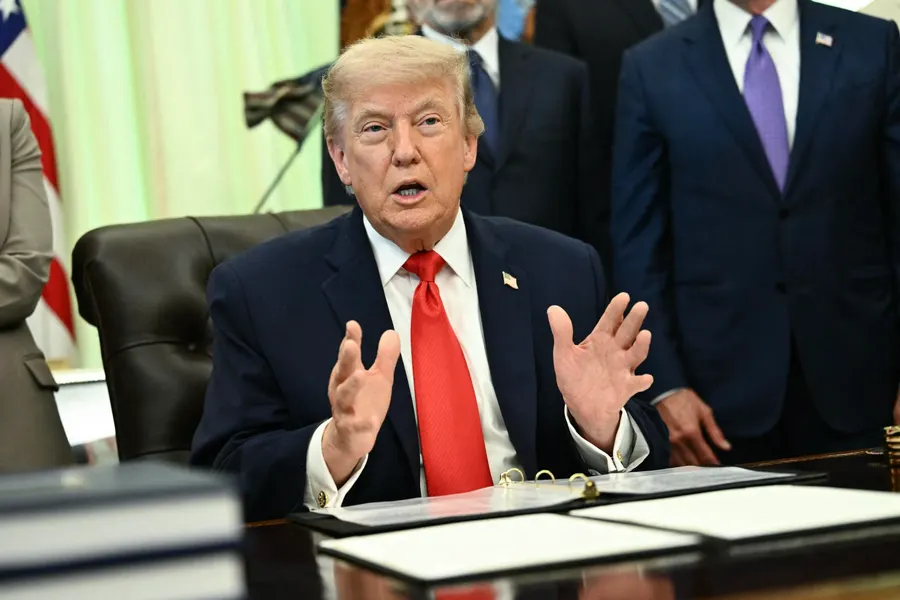
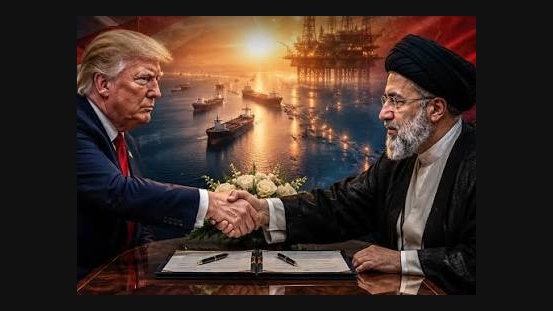
WASHINGTON DC: United States President Donald Trump on Monday announced the completion of the peace deal between the US and Iran, declaring the reopening of the strategically important Strait of Hormuz and the immediate removal of its naval blockade, a move he said would restore the free flow of global energy supplies.

In a post on Truth Social, Trump wrote, “The Deal with the Islamic Republic of Iran is now complete. Congratulations to all! I hereby fully authorise the toll-free opening of the Strait of Hormuz, and, simultaneously herewith, authorise the immediate removal of the United States Naval blockade. Ships of the World, start your engines. Let the oil flow!”

The announcement came amid growing international efforts to end tensions in West Asia and follows days of intense diplomatic engagement involving Pakistan.

Pakistan Prime Minister Shehbaz Sharif also announced that a peace agreement between the United States and Iran had been reached following extensive negotiations. Shehbaz Sharif said that both sides have also declared permanent termination of military operations in Lebanon.

The deal will be officially signed on June 19 in Switzerland.

In a post on X, Sharif stated, “Following intensive talks, we are pleased to announce that the Peace Deal between the United States of America and the Islamic Republic of Iran has been REACHED. Both sides have declared the immediate and permanent termination of military operations on all fronts, including in Lebanon.”

“The official signing ceremony will be on Friday, 19 June in Switzerland. We would like to thank the United States of America and the Islamic Republic of Iran for their commitment to finding a diplomatic solution to the conflict. We would also like to extend our sincere appreciation to our brothers in this mediation effort, the great leadership of the State of Qatar, for their support in reaching this agreement. I would also especially thank the visionary leadership of the Kingdom of Saudi Arabia and the Republic of Turkiye for their immense contributions in this regard,” Sharif said.

“With the agreement now in place, mediators will facilitate a series of meetings this week. These pre-implementation discussions will lay the foundation for the technical talks and the official signing ceremony,” he further added.

Earlier on Sunday, Trump had indicated that the agreement remained on track despite fresh tensions triggered by Israeli strikes in Beirut and threats of retaliation from Iran.

Speaking to Axios, Trump said the agreement, originally expected to be signed earlier in the day, had been delayed by several hours following the escalation in Lebanon.

“It shook it up. It delayed the signing by a few hours,” Trump said, expressing frustration over the timing of the Israeli operation.

According to Axios, the strike in Beirut occurred shortly before the United States and Iran were expected to finalise the agreement. Trump had criticised Israeli Prime Minister Benjamin Netanyahu, saying he was angered by the attack and believed it had complicated ongoing diplomatic efforts.

The US President maintained that the agreement would enhance regional security by preventing Iran from obtaining nuclear weapons and by establishing stronger oversight mechanisms for Tehran’s nuclear programme, including inspections and the disposal of nuclear material.

While Trump and Sharif announced that an agreement had been reached, Iranian officials have not yet publicly confirmed the deal.

The deal marks a potential end to the conflict in the region, which began on February 28, with US and Israel strikes killing Iran’s erstwhile Supreme Leader Ayatollah Ali Khamenei.
World welcomes US-Iran peace deal as major diplomatic breakthrough for regional stability

DOHA: World leaders on Monday welcomed the peace deal announced between the United States and Iran, describing it as a major diplomatic breakthrough that could help restore stability in West Asia, reopen the Strait of Hormuz, and ease economic pressures caused by months of conflict in the region.

The agreement, announced by US President Donald Trump and supported by mediators led by Pakistan, drew praise from Qatar, Turkiye, the United Kingdom, Germany and France, with leaders urging all parties to implement the deal fully and pursue lasting peace through dialogue.

Qatar Prime Minister Sheikh Mohammed bin Abdulrahman bin Jassim Al Thani welcomed the agreement and praised the role played by regional and international actors in facilitating the understanding.

“We welcome the agreement reached on the Memorandum of Understanding between the United States of America and the Islamic Republic of Iran,” he said in a post on X, adding that Qatar looked forward to future negotiations being conducted in a “positive and constructive spirit.”

In a separate statement, Qatar’s Ministry of Foreign Affairs described the memorandum as “an important step towards consolidating sustainable peace and promoting economic growth regionally and internationally.” The ministry also commended Pakistan and other stakeholders for helping de-escalate tensions and bring the two sides closer together.

Turkish President Recep Tayyip Erdogan also hailed the development, calling it “an important development for establishing peace and tranquillity in our region.”

“I sincerely hope that this news, which the entire world has long needed, will pave the way for the establishment of a lasting environment of peace and security in our region,” Erdogan said. He also cautioned against provocations and thanked Pakistan, Qatar and Saudi Arabia for supporting diplomatic efforts.

UK Prime Minister Keir Starmer termed the agreement “a hugely important step forward in ending the war, ensuring regional stability and re-opening the Strait of Hormuz.”

“I congratulate President Trump and the mediators from Pakistan, Qatar and elsewhere who have contributed to this breakthrough,” Starmer said. He stressed the need for full implementation of the memorandum and reiterated that Iran must never obtain a nuclear weapon.

Starmer added that the United Kingdom stood ready to support technical negotiations and maritime security efforts, including mine-clearance operations in coordination with international partners.
German Chancellor Friedrich Merz also welcomed the agreement, describing it as a diplomatic achievement with significant global implications.

“I welcome the agreement between the U.S. and Iran and congratulate President Trump and the Iranian side on this diplomatic breakthrough. This can pave the way towards a reinvigorated global economy and a more secure Middle East,” Merz said.

French President Emmanuel Macron called for the rapid implementation of the agreement and emphasised the importance of reopening the Strait of Hormuz without restrictions.

“This agreement must enable the urgent and unconditional reopening of the Strait of Hormuz,” Macron said, noting that France and the United Kingdom were prepared to support international efforts to restore maritime traffic.

Macron also said the agreement should lead to broader negotiations addressing Iran’s nuclear and ballistic programmes as well as regional security concerns.

The international reaction followed Trump’s announcement that the US-Iran deal had been completed.
“The Deal with the Islamic Republic of Iran is now complete. Congratulations to all!” Trump wrote on Truth Social. “Ships of the World, start your engines. Let the oil flow!”

Pakistan Prime Minister Shehbaz Sharif, whose government played a key mediating role, announced that the peace agreement had been reached after intensive talks and that both sides had agreed to permanently end military operations, including in Lebanon.

“The official signing ceremony will be on Friday, 19 June in Switzerland,” Sharif said, thanking Qatar, Saudi Arabia and Turkiye for their contributions to the diplomatic process.

According to Sharif, mediators will now facilitate a series of pre-implementation meetings before the formal signing, laying the groundwork for technical negotiations and the implementation of the agreement.

The deal, expected to be formally signed later this week, is being viewed by many world leaders as a significant opportunity to reduce tensions in West Asia, revive global trade routes and create conditions for long-term regional peace and stability.

Source: ANI

PM Modi hails India as world’s third-largest startup ecosystem, says “express train of reforms will not stop”

NICE (FRANCE): Prime Minister Shri Narendra Modi on Sunday highlighted India’s emergence as the world’s third-largest startup ecosystem and asserted that the country’s “express train of reforms” would continue unabated as it seeks to strengthen its innovation-driven growth model.

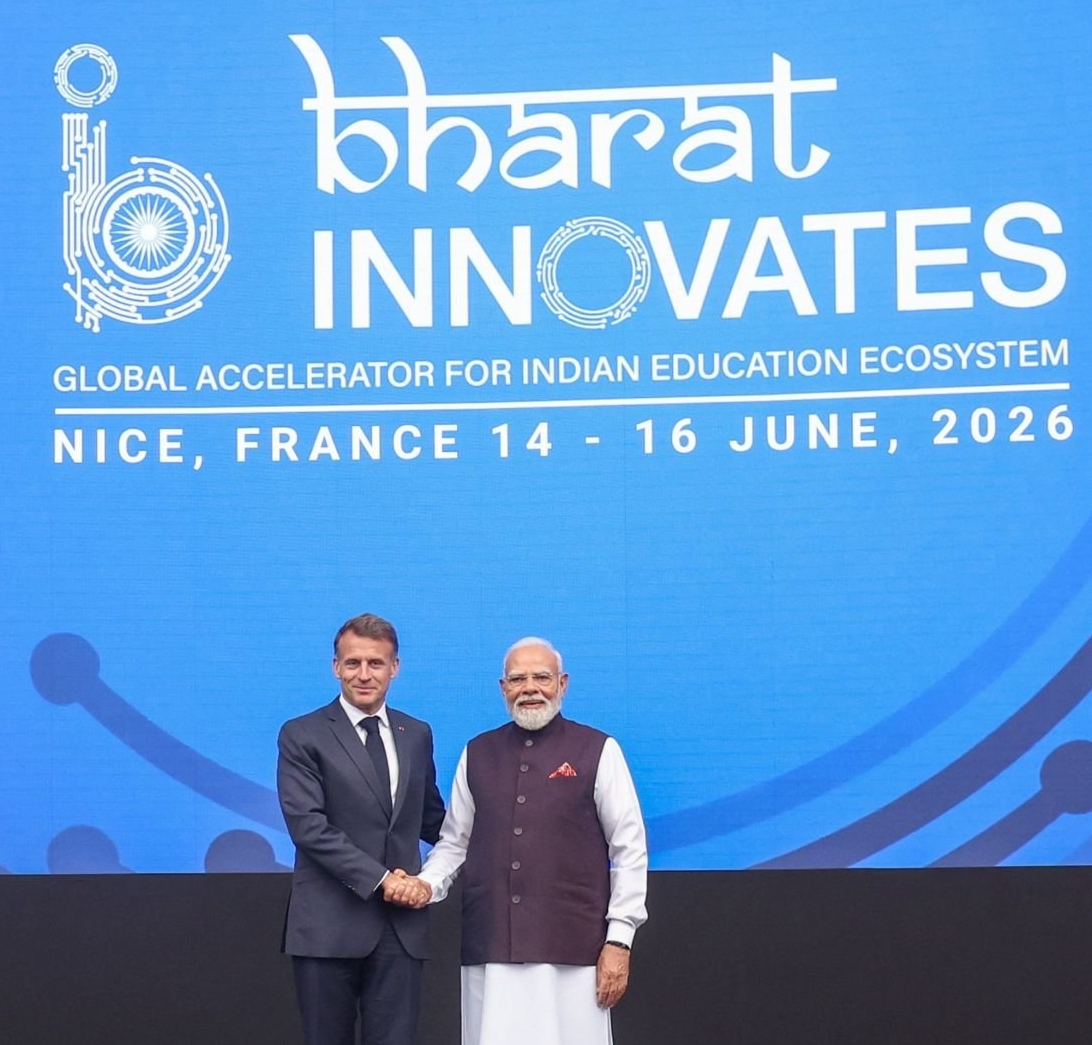
Addressing the inauguration of the Bharat Innovates 2026 conclave in Nice in the presence of French President Emmanuel Macron, PM Modi said India had built a strong innovation ecosystem over the past decade through sustained policy support and institutional initiatives.

“Over the past 11-12 years, India has built a robust ecosystem for innovation. From patent filings to incubation networks, from Startup India to policy support, this entire journey has moved forward in mission mode. Today, India is the third-largest startup ecosystem in the world,” the Prime Minister said.

He noted that India’s innovation agenda extends beyond metropolitan centres and focuses on empowering grassroots innovators across the country.

“But our vision is not limited to major cities alone. We have worked to take innovation to the grassroots level. Atal Tinkering Labs have been established in schools. Young people are being connected through hackathons and innovation challenges. Incubators and research institutions are being expanded across the country. And we are especially linking women innovators with a wide range of emerging technologies,” he said.

Highlighting the growing role of women in India’s entrepreneurial landscape, the Prime Minister said, “As a result of all these efforts, India has witnessed transformational change on a large scale. Today, from Drone Didis to becoming founders of startups, our women power is writing new success stories.”

PM Modi also underscored the government’s efforts to promote innovation in strategic sectors, stating that India’s defence sector had been opened up to harness the energy and talent of young entrepreneurs.

“To further harness the energy of our youth, India’s defence sector has also been opened up for innovation. Today, hundreds of startups associated with the defence and space sectors are doing remarkable work in India,” he said.

The Prime Minister further highlighted recent reforms in the nuclear energy sector, saying they had created fresh opportunities in clean energy and frontier technologies.

“And recently, India has undertaken important reforms in the nuclear energy sector as well. This is creating new possibilities in the areas of clean energy, advanced reactors, and frontier research,” the Prime Minister added.

Emphasising the government’s commitment to sustained reforms, the Prime Minister said, “This express train of reforms will not stop; it will continue to move forward. And the number of startups emerging from India will continue to multiply many times over.”

Bharat Innovates 2026, jointly inaugurated by Prime Minister Modi and French President Macron, brings together startups, investors, innovators and policymakers to explore collaboration in emerging technologies and deepen innovation partnerships between India and France.

Addressing the conclave before PM Modi, Union Minister of Commerce and Industry Shri Piyush Goyal stated that the event serves as a platform to showcase India’s thriving startup ecosystem, now boasting over 230,000 startups, as a reliable partner for global growth.

Source: ANI

Piyush Goyal invites French partners to ‘invest, design, and innovate’ in India at Bharat Innovates 2026

NICE (FRANCE): In a significant push to elevate the Indo-French strategic alliance, Union Minister of Commerce and Industry Shri Piyush Goyal inaugurated Bharat Innovates 2026 in Nice, France, this Sunday.

Shri Goyal made a direct pitch for deeper collaboration between France and India and said, “To our French partners, I urge you to use this opportunity to build meaningful partnerships. And I would invite our French friends to visit India, invest in India, design in India, innovate in India, and manufacture in India, both for the large domestic market and export from India to the rest of the world.”

Against a backdrop of global geopolitical volatility and rapid technological advancement, the event serves as a platform to showcase India’s thriving startup ecosystem, now boasting over 230,000 startups, as a reliable partner for global growth.

Speaking at the inaugural event of Bharat Innovates, the minister set the context amid global volatility. “Friends, we are meeting at a moment of uncertainty, when the churn in the world of geopolitics is meeting the churn of frontier technology. At such moments, the world seeks trusted and reliable partners, and that is what India brings to the table,” he said. “We bring the energy of the world’s youngest large nation, the finest talent pool available, and a scale that few can match.”

He highlighted the ”New India,” adding that innovation is now a culture powered by over 230,000 startups. The gathering, which featured 120 startup champions, underscored the theme of “Global Accelerator.” Minister Goyal highlighted that the current moment requires “trusted and reliable partners,” positioning India as a stable anchor powered by its immense talent pool and youthful energy.

He noted the relationship was elevated to a “special global strategic partnership” this year, recalling that in February 2025 Prime Minister Shri Narendra Modi co-chaired the AI Action Summit in Paris, and in February 2026 President Emmanuel Macron stood “beside us as India hosted the AI Impact Summit.” Their meeting in Nice, he said, “reaffirming their shared vision for a more inclusive and innovative world.”

The initiative is central to the 2026 India-France Year of Innovation, a designation that marks the deepening ties between the two nations. Minister Goyal’s address was a clear invitation to French stakeholders to move beyond traditional cooperation and into deep-tech and manufacturing integration. By leveraging India’s vast domestic market and its expanding role in global supply chains, the Minister emphasised that the goal is not just partnership, but “to concretise our efforts to be the world’s innovation partner.”

As India and France look to expand joint efforts in research, education, and frontier technology, the Bharat Innovates event stands as a testament to a growing synergy designed to navigate the complexities of the modern global landscape.

Source: ANI

Nirmala Sitharaman flags global risks, says PM Modi Govt ensuring supply stability amid crude, Hormuz pressures

BENGALURU: Union Finance Minister Smt. Nirmala Sitharaman on Sunday said India faces risks from crude prices, West Asia tensions and Strait of Hormuz disruptions, but Prime Minister Narendra Modi’s government has ensured there is “not a supply disruption” for households and the economy.

She made the remarks at the Viksit Bharat event in Bengaluru while laying out India’s economic growth story.

Speaking on geopolitical challenges, Sitharaman said, “Even with the Middle East crisis, even with straight-up farmers causing a lot of disruption, and someday during my address, I will tell you the nature of risks and challenges. It is not just the cost of crude, it is not just the cost of LPG, it is also the problems that any country faces.”

She detailed shipping pressures linked to the Hormuz region and said, “You don’t get ships. The liners are not available because they don’t want to come with their costly ships and get it shot at. They don’t have containers to come into the port of others. Insurance companies don’t want to insure. So for an empty vessel to go, insurance has gone up because the ship will be fired at. When it comes filled with crude, again, crude and the ship, insurance premium goes up.”

“Despite all these challenges, Prime Minister Modi is ensuring that there shall not be a supply disruption. So that’s the kind of attention to the economy. That’s the kind of attention towards households,” she noted.

On economic growth, Sitharaman pushed back against criticism of India’s performance. “There is no disaster awaiting India. On the contrary, quarter after quarter, year after year, not just we saying that we are the fastest growing, here is the number, GDP growth, you have IMF saying it once in April, May, which is a springtime assessment, and again in October time, we come up with the data to show why India is still the fastest growing economy, next year too, and so on. Year after year after 2020,” she said.

The Union Finance Minister outlined three “global-standard” revolutions currently reshaping India. The first she said was the Digital Public Infrastructure (DPI) revolution.

Second, she mentioned the ‘formalization revolution’ pointing out that GST registrations have jumped from 66.5 lakh in 2017 to 1.64 crore. Furthermore, 31 crore unorganized sector workers have registered on the e-Shram portal, and Mudra loans worth ₹40 lakh crore have been sanctioned, 66% of which went to women.


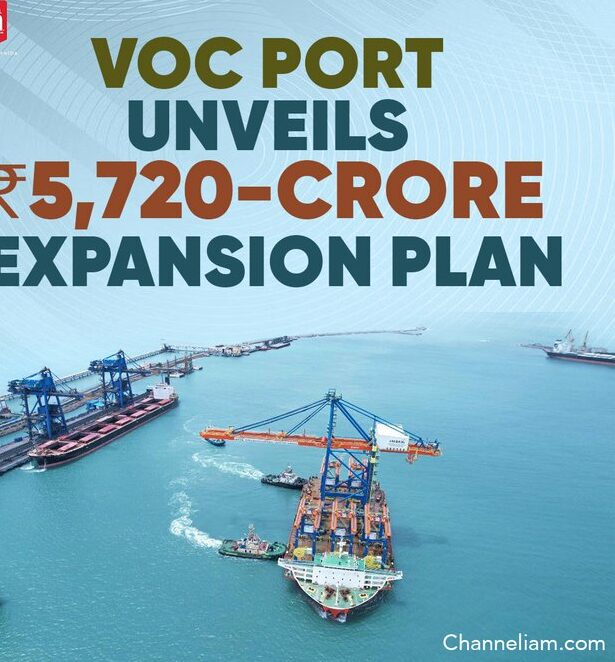
VOC Port to invest ₹5,720 crore to deepen harbour, target larger vessels

THOOTHUKUDI : The VO Chidambaranar Port Authority in Thoothukudi is up a set to take up a ₹5,720-crore project to deepen its harbour basin and approach channel, a move aimed at enabling the VOC port to handle larger container, bulk and tanker vessels and strengthen its competitiveness against regional rivals.

The project will increase the port’s draught —the depth of water required for a ship to float— to 15.2 m from the current 12.8 m. It also includes modification of the port entrance, construction of six new berths and upgradation of existing berths, according to sources.

Once completed, the enhanced depth will allow the port to handle fully laden Panamax vessels carrying up to 85,000-90,000 tonne of dry bulk and general cargo, as well as very large container ships with capacities of up to 14,000 TEUs.

Dredging will be carried out in front of coal jetties, berths, container berths and along the approach channel. The approach channel length will increase from 3.8 km to 10.04 km after the works are completed.

Larger vessels
Industry sources said the project has become critical as global shipping lines increasingly deploy larger vessels. At the current draught levels, the port is unable to accommodate container ships of around 15,000 TEU capacity, they add.

The move is also seen as necessary to remain competitive with nearby transshipment hubs such as Vizhinjam International Seaport and Colombo, both of which have depths exceeding 15 m.

“If we don’t carry out the deepening, we will continue to handle smaller ships and lose the race in future. This project should have been taken up long ago,” an official said.

Vivek Raja of Pearl Shipping in Thoothukudi said that the project will enhance the port’s competitiveness, prevent cargo diversion to other nearby regional ports, and support the growing industrial and export sectors of southern Tamil Nadu. Given Tamil Nadu’s expanding role in global manufacturing and exports, this project is critical to sustaining long-term economic growth and trade competitiveness, he said.

According to Jagannarayan Padmanabhan, Senior Director & Global Head- Consulting, Crisil Intelligence, the development can help accommodate larger container, bulk and tanker vessels. The additional depth will enable the port to attract bigger mainline ships, improve vessel utilisation, lower unit logistics costs and enhance the port’s competitiveness as a gateway for South India, he said.

Given Thoothukudi’s strategic location near the East-West international shipping route, the project can strengthen the port’s ability to attract direct vessel calls, reduce dependence on transshipment hubs and support higher cargo volumes over the long term, he added.

What the Red Sea Crisis teaches Importers and Exporters about Supply Chain Resilience

By Mr. Yogesh Parekh, Director, Parekh Global

For decades, global shipping was guided by a simple assumption: the most efficient route would remain the preferred route. The Red Sea-Suez Canal corridor represented that assumption at its strongest, connecting Asia with Europe through speed, scale and relative predictability. The current Red Sea disruption has challenged that belief and forced global trade to rethink its dependence on a few critical maritime chokepoints.

This is not merely a shipping issue. It is a business continuity issue. When vessels are diverted around the Cape of Good Hope, transit schedules can stretch by nearly 10 to 14 days in many cases. For exporters and importers, the impact goes beyond delayed cargo. Working capital gets locked for longer, delivery commitments become harder to meet, inventory planning becomes uncertain and insurance-linked costs rise.

The larger lesson is clear: the shortest route is no longer always the best route. The more relevant question today is whether a route offers the right balance of safety, predictability, cost and continuity. In a volatile environment, resilience has become as important as efficiency.

Importers and exporters need to view this shift seriously. Sectors such as engineering goods, chemicals, auto components, textiles, pharmaceuticals and consumer products depend on reliable sea movement to Europe and other global markets. Even when demand remains healthy, logistics volatility can quietly erode margins. A delayed vessel may look like an operational problem, but a delayed raw material shipment can affect production, a missed delivery window can damage customer trust and a sudden freight spike can disturb pricing commitments.

One under-discussed impact of rerouting is the pressure on effective vessel capacity. When ships spend more days at sea, they complete fewer voyages over a given period. This affects sailing availability, container circulation, schedule reliability and port planning. The global fleet may remain the same on paper, but its usable capacity tightens.

This is why supply chain visibility alone is no longer enough. Companies need scenario planning. They must identify which cargo, customers, inputs and markets are too important to be exposed to a single logistics plan. For critical shipments, businesses may need diversified routing options, early shipment planning, and stronger coordination with logistics partners, flexible contracts and inventory buffers closer to key markets.

The Red Sea crisis also marks a shift from a “just-in-time” approach to a more balanced “just-in-case” model. This does not mean overstocking everything. It means protecting the parts of the supply chain where disruption can directly affect revenue, reputation or customer relationships.

For India, logistics resilience can become a trade advantage. As Indian companies expand globally, they will need logistics partners who do more than move freight. They will need partners who understand route risk, port dynamics, customs processes, documentation, multimodal options and contingency planning.

Technology will play an important role. Real-time tracking, predictive alerts, digital documentation and trade-lane intelligence can help companies respond faster. But technology must be supported by experienced judgement. In shipping, every delay has a commercial context. A shipment of general cargo and a shipment linked to a production line cannot be treated the same way.

The Red Sea crisis will eventually stabilise. Routes may reopen fully and freight rates may soften. But the lesson will remain. Global trade cannot depend blindly on a few corridors. Logistics has moved from the operations desk to the boardroom. For importers and exporters, the winners will be companies that treat supply chain resilience not as a defensive cost, but as a strategic capability for growth, customer trust and long-term competitiveness.

Author:

Mr. Yogesh Parekh, Director, Parekh Global

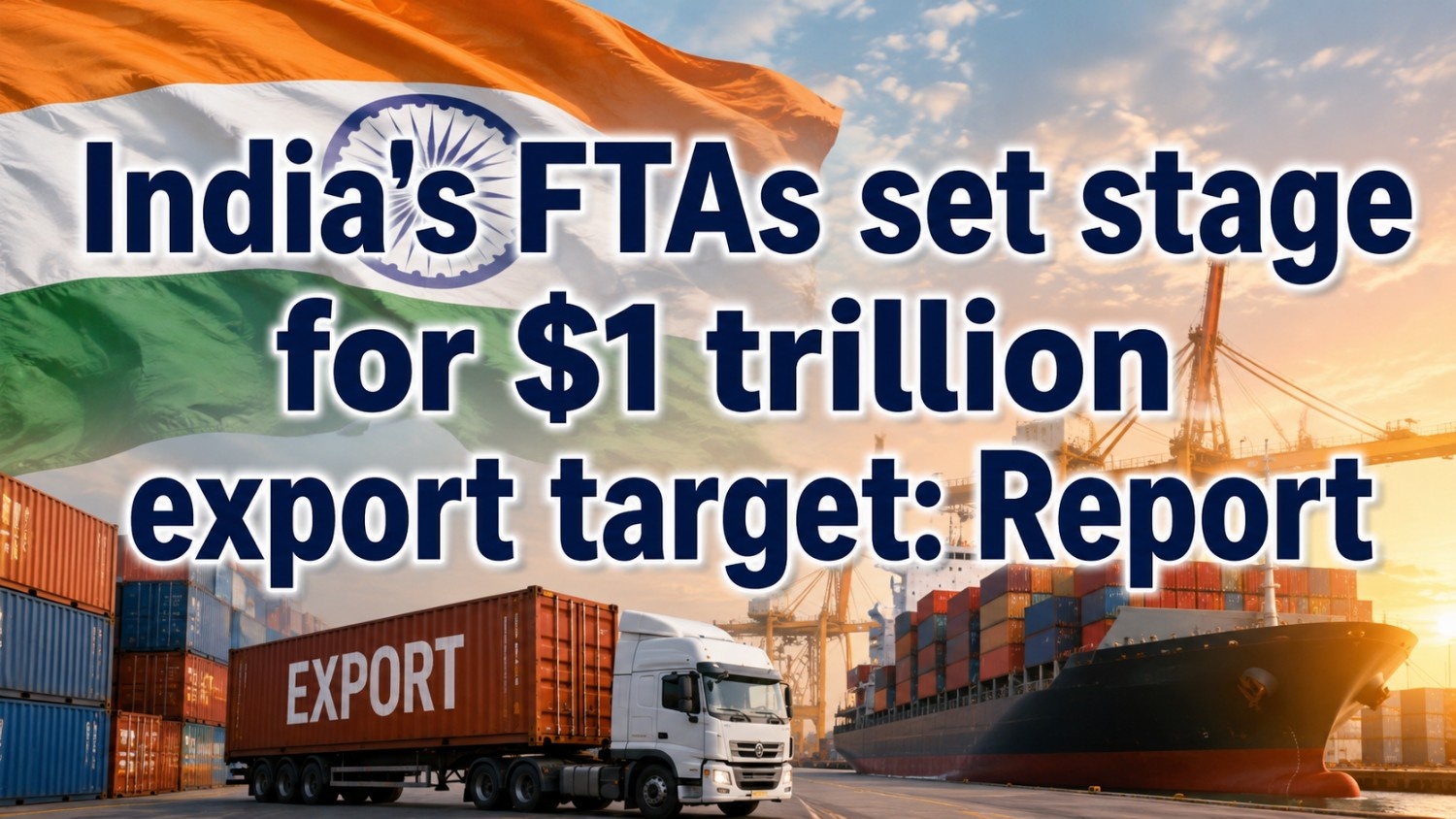
India’s FTAs set stage for $1 trillion export target: Report

NEW DELHI: India‘s new generation of Free Trade Agreements can act as a catalyst for manufacturing expansion, private capex revival and supply-chain integration, with Electronics, Pharmaceuticals and Engineering & Machinery Goods positioned as the strongest beneficiaries. Yes Securities said the agreements, combined with PLI schemes and “China+1” diversification, give India its clearest shot yet at achieving US$1 trillion in merchandise exports by 2030.

“India’s recent wave of FTAs marks a fundamental shift in economic strategy from cautious protectionism toward deeper global trade integration,” Yes Securities said in its report.

The report said FTAs are no longer just about tariffs. “These FTAs are not merely trade agreements but represent the foundation of a multi-year industrial and export-led growth cycle,” Yes Securities noted.

Agreements with the UAE, Australia, UK, EFTA, Oman, New Zealand and the EU are being implemented alongside industrial corridors, port upgrades and supply-chain localization. That mix, the brokerage said, makes India one of the few economies with the scale, labour force and domestic market size to absorb large manufacturing relocation.

The biggest transmission mechanism may be investment. “One of the strongest arguments in favor of FTAs is their potential ability to revive India’s stagnant private investment cycle,” Yes Securities said. With capacity utilization around 75%, companies lack confidence for large capex. Exports through FTAs can provide sustained demand, improve utilization and economies of scale, and eventually trigger stronger private-sector investment, mirroring the East Asian path where exports catalyzed manufacturing expansion and capital formation.

Services are expected to remain a parallel engine. India is targeting US$2 trillion in total exports by 2030, split evenly between merchandise and services. Yes Securities said UK and EU agreements improve access for IT services, consulting, engineering R&D and financial services, reinforcing India’s edge in skilled labour and technology.

But the brokerage cautioned that market access alone is not enough. “The strongest counterargument is that India’s primary challenge lies not in market access but in domestic competitiveness,” it said.

Merchandise exports grew at just 3.5% CAGR over 2015-2025. Structural bottlenecks like high logistics costs, expensive power, compliance complexity and lower labour productivity remain. Without fixing these, FTAs could widen trade deficits if imports rise faster than exports.

Chowgule delivers 11th Ice-Class Hybrid Cargo Vessel ‘Megamar’ to AtoB@C Shipping

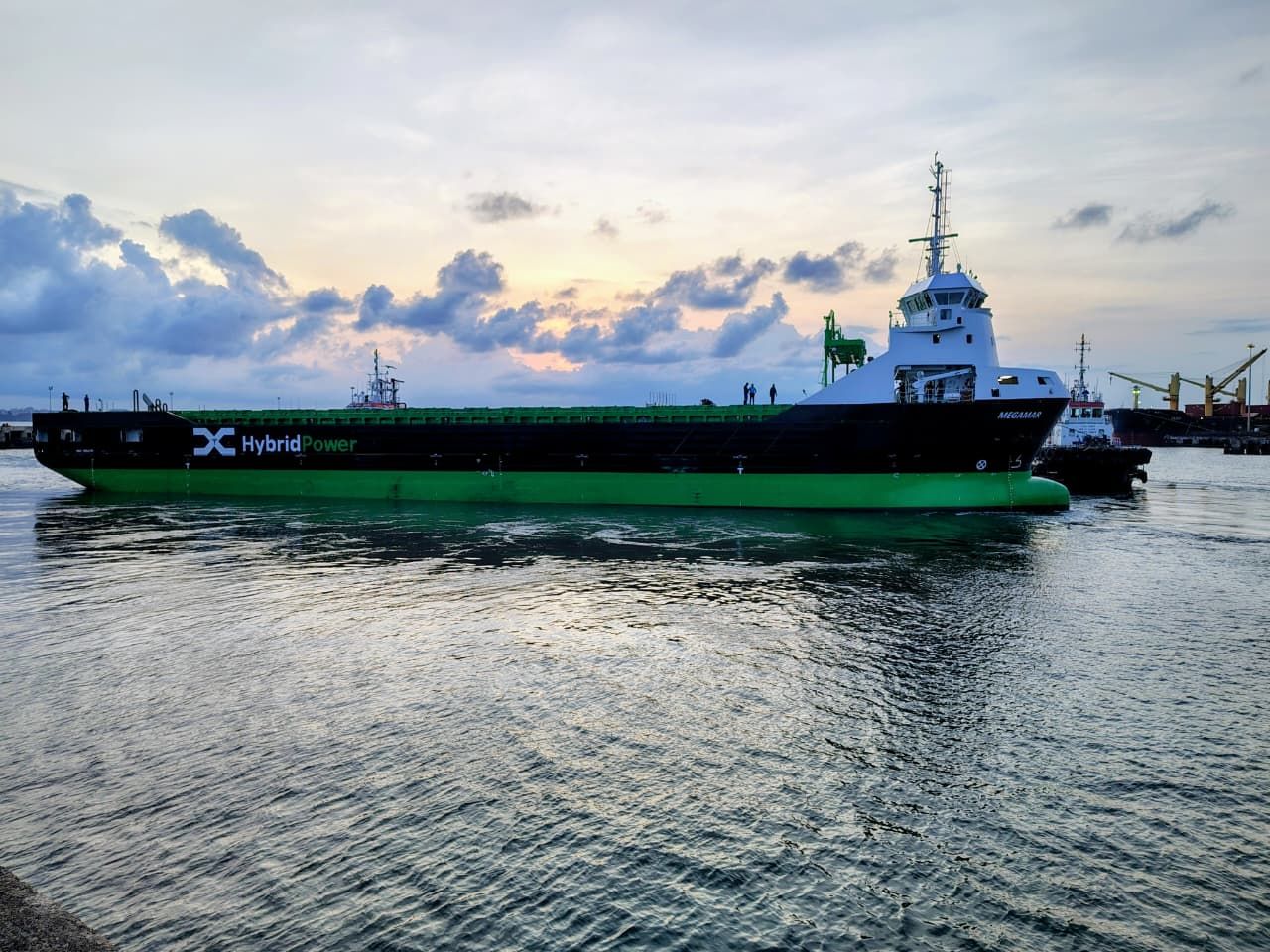
GOA : Reinforcing its position as a leading player in sustainable shipbuilding, Chowgule and Company Pvt. Ltd. has successfully delivered Vessel C-285 ‘Megamar’, the 11th vessel in a series of 12 state-of-the-art 5,350 DWT Ice-Class Hybrid General Cargo Carriers being constructed for AtoB@C Shipping, a subsidiary of Finland-based ESL Shipping.

The delivery marks another significant milestone in the long-standing partnership between Chowgule and AtoB@C Shipping and highlights the Indian shipbuilder’s growing capabilities in designing and constructing environmentally advanced vessels for international markets.

C 285 %E2%80%98Megamar 1 Chowgule delivers 11th Ice-Class Hybrid Cargo Vessel ‘Megamar’ to AtoB@C Shipping

The delivery ceremony was attended by Valtteri Martikainen, Technical Superintendent, ESL Shipping, along with Ashok Chowgule, senior officials from Chowgule and representatives from Lloyd’s Register, who have played a key role in ensuring the vessels meet the highest international safety and quality standards.

The 5,350 DWT Ice-Class Hybrid General Cargo Carrier series has been specifically designed to support sustainable and energy-efficient maritime transportation. Equipped with hybrid propulsion technology, the vessels offer significantly lower fuel consumption and reduced emissions while maintaining high operational efficiency in challenging northern European conditions. Their ice-class certification enables year-round operations in ice-covered waters, making them particularly suited for the Baltic Sea region.

With eleven vessels now delivered and only one remaining in the series, the project stands as a testament to Chowgule’s engineering expertise, adherence to global quality benchmarks, and commitment to green shipbuilding solutions. The successful execution of the program also underscores India’s growing prominence as a reliable hub for technologically advanced ship construction.

Speaking on the occasion, company officials highlighted that the achievement reflects the dedication and teamwork of employees, project partners, classification authorities, and the client team, all of whom contributed to the successful completion of the vessel.

The delivery of ‘Megamar’ further strengthens Chowgule’s reputation in the global shipbuilding sector and demonstrates its continued focus on innovation, sustainability, and delivering world-class vessels that meet the evolving demands of the maritime industry.

With the final vessel in the series now nearing completion, Chowgule is set to conclude one of the most successful export-oriented shipbuilding programs undertaken by an Indian shipyard in recent years.

APEDA Chairman inaugurates new office of Rice Exporters Association in Chhattisgarh, boosting export prospects for Central India

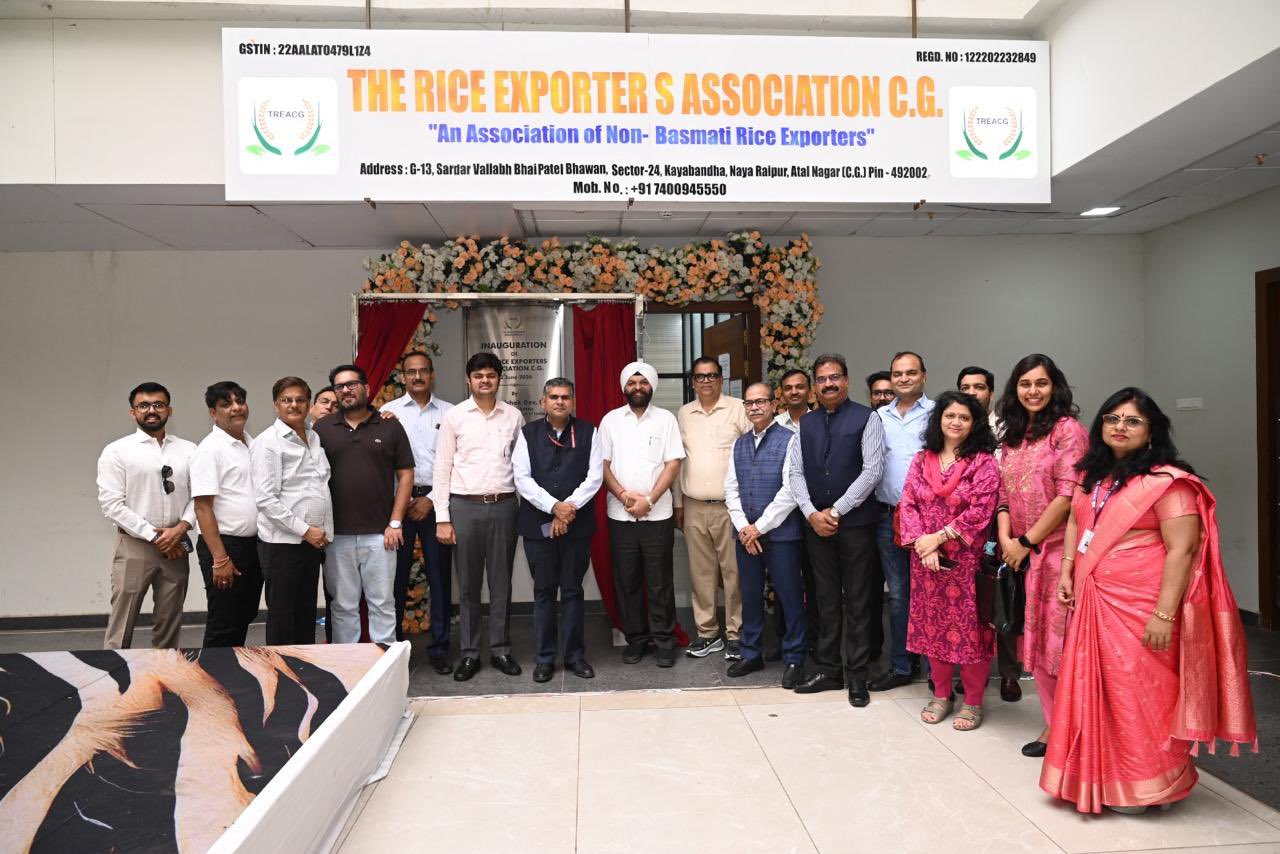
NAVA RAIPUR : In a significant step towards strengthening India’s agricultural export infrastructure, APEDA Chairman Shri Abhishek Dev, IAS, inaugurated the new office of the Rice Exporters Association, Chhattisgarh (CG) at Sardar Vallabhbhai Patel Bhawan, Nava Raipur, on June 12, 2026.

The inauguration ceremony witnessed the participation of senior officials from the Agricultural and Processed Food Products Export Development Authority (APEDA), representatives of the Government of Chhattisgarh, industry stakeholders, and leading rice exporters from across the state and Central India.

The establishment of the new office is expected to provide a dedicated platform for exporters, facilitating closer coordination among industry participants, government agencies, and trade bodies. The facility will play an important role in addressing exporters’ concerns, disseminating market intelligence, promoting quality standards, and supporting businesses in exploring new international markets.

Speaking on the occasion, Shri Abhishek Dev highlighted the growing importance of Chhattisgarh in India’s rice export landscape and emphasized the need for enhanced collaboration between producers, millers, exporters, and policymakers to further increase the state’s contribution to global rice trade. He also reiterated APEDA’s commitment to strengthening export-oriented value chains, improving market access, and supporting exporters through various promotional and capacity-building initiatives.

Chhattisgarh, often referred to as the “Rice Bowl of India,” possesses significant potential for expanding rice exports owing to its extensive paddy cultivation, improving processing infrastructure, and increasing focus on quality production. The new association office is expected to serve as a focal point for driving export growth, encouraging adoption of international standards, and facilitating greater engagement with overseas buyers.

Industry representatives welcomed the initiative, noting that the office would help streamline communication with regulatory authorities, improve awareness of export opportunities, and support the development of a more robust export ecosystem in the region.

The inauguration aligns with the Government of India’s broader objective of enhancing agricultural exports, increasing farmers’ income, and strengthening India’s position as a reliable supplier of high-quality food products in global markets.

With growing international demand for Indian rice and continued support from APEDA and state authorities, the new office is expected to contribute significantly to expanding rice exports from Chhattisgarh and the wider Central Indian region in the years ahead.