Home Blog Page 282

Iranian media reports exchange of fire between Iranian, US forces amidst ceasefire

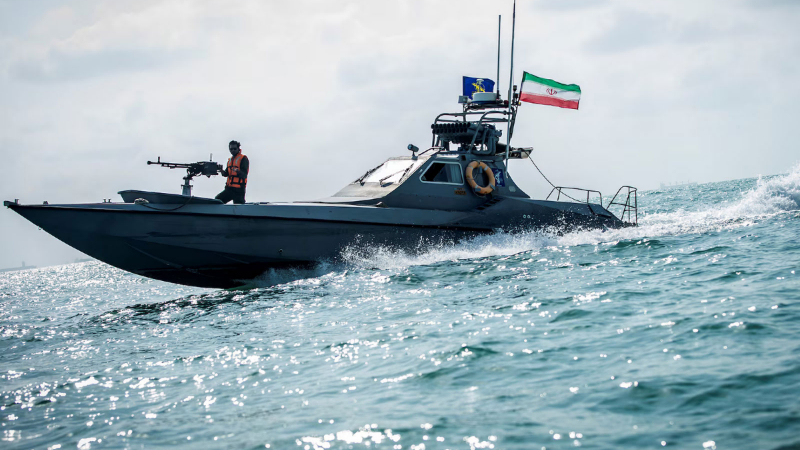
TEHRAN: Iranian media on Thursday reported an exchange of fire between Iranian and US forces near the Strait of Hormuz, with Tehran saying its naval forces confronted vessels attempting to cross the strategic waterway without coordination. The event is reported amidst a shaky ceasefire between the two countries.

Iran’s semi-official Tasnim news agency, citing an “informed military source”, reported that the Iranian Revolutionary Guard Corps (IRGC) navy fired on a US tanker that had “tried to pass through the Strait of Hormuz by turning off its radar system.”

Tasnim further reported that US forces responded by firing “at a scorched area around Bandar Abbas.”

“The sound of the explosions was related to this incident” and “did not cause any casualties or property damage”, Tasnim added in its news report.

In another news report, Tasnim said that Iranian naval forces confronted four vessels attempting to cross the Strait of Hormuz and enter the Gulf “without coordinating with Iranian authorities”.

Citing an informed military official, the agency said the vessels were initially issued warnings by Iranian naval forces. After the ships allegedly ignored the notice, warning shots were fired, forcing them to turn back.

Meanwhile, CBS News reported that the US military carried out another round of strikes on Iran on Wednesday (local time), citing a US official who described the action as “defensive” and aimed at preserving a fragile ceasefire between Washington and Tehran.

According to CBS News, the official said US forces shot down four Iranian drones and struck a ground control station in the port city of Bandar Abbas that was preparing to launch a fifth drone.

The drones “posed a threat near the Strait of Hormuz,” CBS News reported, citing the official.

“These actions were measured, purely defensive, and intended to maintain the ceasefire”, the US official told CBS News.

The official added that despite the latest exchange, the US-Iran ceasefire was still considered to be holding.

Meanwhile, on Wednesday, Trump remained committed to striking a favourable ceasefire deal with Iran, warning that he “won’t be outlasted” as he “doesn’t care about the midterm” elections.

Speaking about the Strait of Hormuz, Trump said tie will be “open to everybody”, adding that this remains part of the ceasefire negotiations.

On Wednesday, the United States also imposed sanctions on Iran’s Persian Gulf Strait Authority (PGSA), accusing Tehran of using the body to “extort” commercial vessels transiting through the Strait of Hormuz and “funnelling” revenue to the Islamic Revolutionary Guard Corps (IRGC).

Northern Railway exploring introduction of AC cargo trains to transport perishable fruits from Kashmir to major markets

JAMMU : In a significant move for the Kashmir Valley’s agriculture sector, Northern Railway is exploring the introduction of air-conditioned cargo trains to transport perishable fruits from Kashmir to major markets across the country. The proposed initiative aims to strengthen the cold-chain logistics network for high-value produce such as apples, cherries, and other seasonal fruits.

By maintaining controlled temperatures during transit, AC cargo trains are expected to drastically reduce spoilage, ensure freshness, and improve shelf life-key challenges that have long affected Kashmiri growers. The faster and more reliable rail-based transport will not only cut post-harvest losses but also help farmers secure better prices by reaching distant markets in optimal condition.

The development is being seen as a major step towards modernizing the horticulture supply chain in Jammu & Kashmir. Improved logistics through Railways could significantly enhance income stability for growers while boosting the region’s competitiveness in national markets. The initiative also aligns with broader efforts to promote agricultural growth, infrastructure development, and farmer welfare in the Union Territory. If implemented, the AC cargo train service could mark a transformative shift in how Kashmir’s fresh produce reaches consumers-faster, safer, and with minimal wastage.

“K” LINE Awarded CDP’s “Supplier Engagement Assessment” A score

TOKYO: Kawasaki Kisen Kaisha, Ltd. (“K“ LINE) is pleased to announce that the company was awarded the “Supplier Engagement Assessment” A score for the eighth consecutive year, the top rating, on “Supplier Engagement Assessment” from CDP, which is a non-profit global organization (NGO) engaged in investigating and disclosing environmental information.

The “Supplier Engagement Assessment“ evaluates the companies’ initiatives for climate change and greenhouse gas emissions throughout the supply chain and ranks the companies in line with their efforts. Our strategies and initiatives were evaluated via the “Supplier Engagement Assessment”. This year 1,945 companies, including about 400 Japanese companies were recognized on the “Supplier Engagement Assessment” A score worldwide.

“K” LINE Group has consistently worked to enhance its information disclosure based on a comprehensive understanding of climate change and natural capital, and will continue to further advance these efforts toward sustainable growth and increased corporate value.

Logistics at the Heart of Defense Operations: Participation of GEODIS at the Eurosatory 2026 Exhibition

PARIS: In line with its ongoing development in the strategic aerospace and defense markets, GEODIS will participate in the international exhibition Eurosatory 2026 from June 15 to 19, 2026, occupying stand B24 in hall 4.

Visitors to Eurosatory 2026 in Paris—a global reference event in the fields of land and air defense and security—will be able to discover GEODIS’ activities in Hall 4 at stand B24.

Aerospace & Defense experts from GEODIS will be present to discuss with visitors the most strategic logistics challenges:

●      Security and compliance
●      Management of critical projects and complex flows
●      Supply and maintenance
●      Agile support for production and innovation
●      Lifecycle optimisation and reverse logistics

Visitors will also be able to discover GEODIS’ innovative solutions through an immersive experience using virtual reality glasses.

Conference:
Furthermore, General Arnaud Weixler, Director of the Aerospace and Defense market at GEODIS, will speak on Wednesday, June 17 at 10:30 am (Exhibitor Corner, Hall 6) during a conference dedicated to our ability as a logistics provider to transform a traditionally ancillary domain into a vector of resilience, agility, and sovereignty.

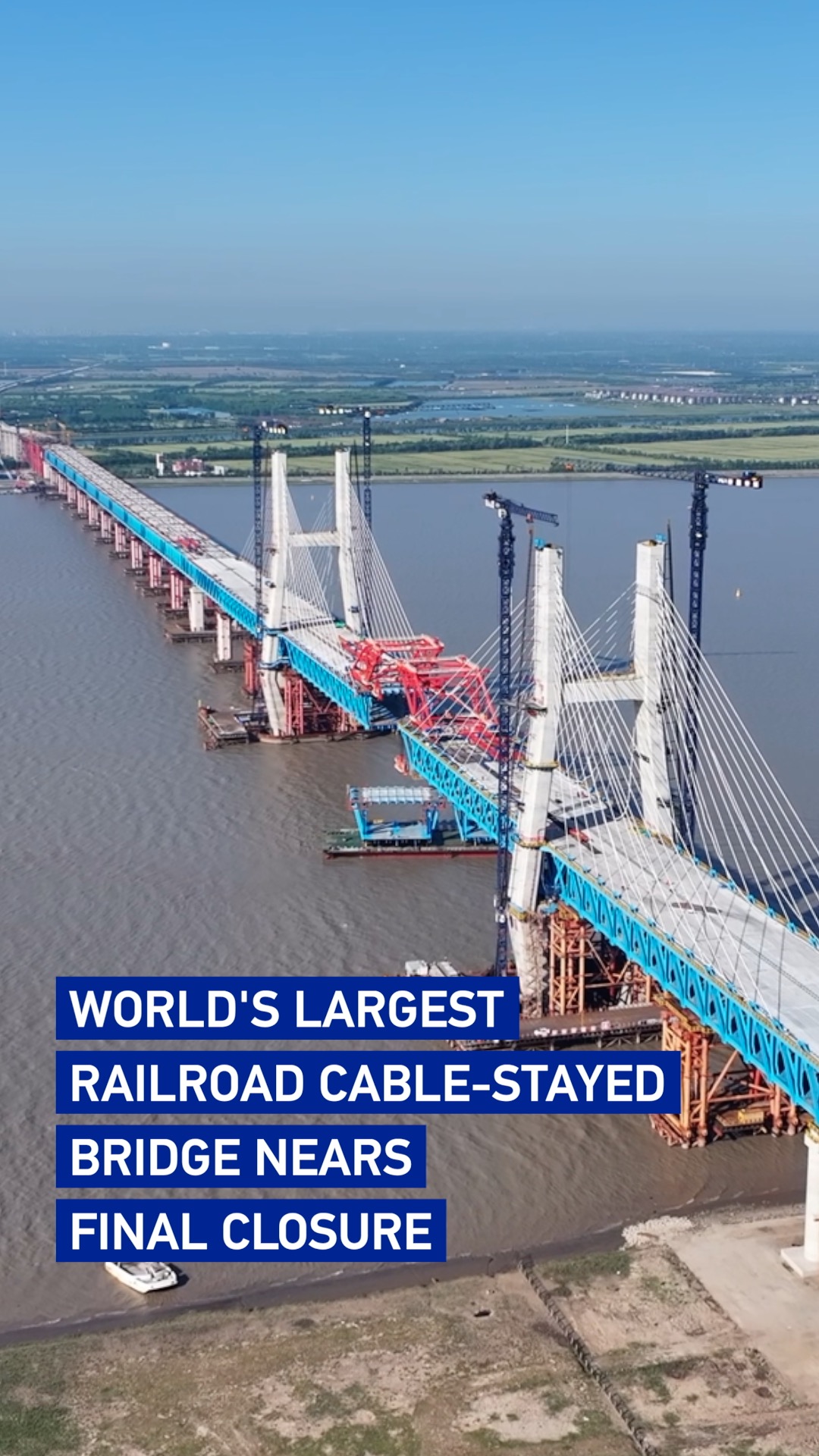
World’s largest railroad cable-stayed bridge nears final closure

SHANGHAI : A record-breaking super bridge in China is entering its final construction stage. The Chongqi Yangtze River Bridge, the world’s largest-span railroad cable-stayed bridge, will complete its main span closure in early June. This 4.09-kilometer dual-layer bridge connects Shanghai to Jiangsu Province.

Its upper deck serves highway traffic, while the lower layer supports high-speed trains running up to 350 kilometers per hour. Once finished, it will become the first Yangtze River crossing to allow full high-speed rail passage. The project will greatly optimize regional transport and boost the integrated development of the Yangtze River Delta.

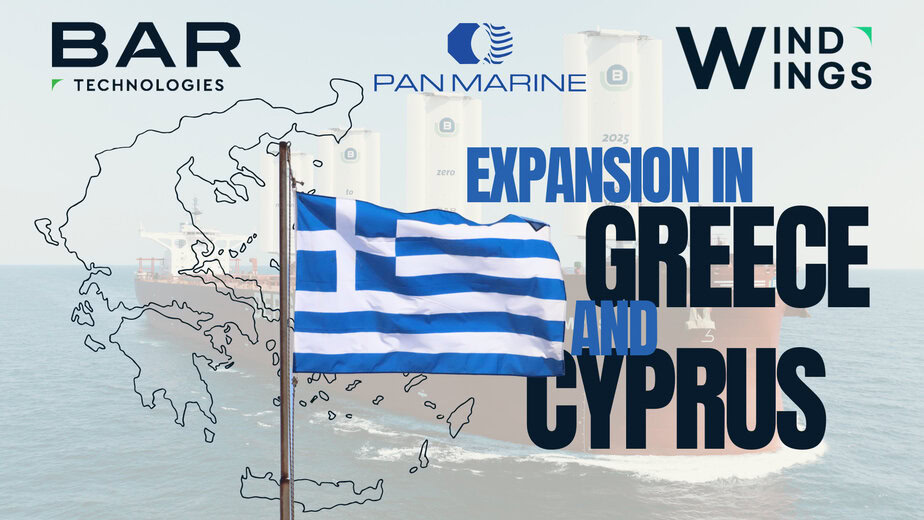
BAR Technologies appoints Panmarine to support WindWings® growth in Greece and Cyprus

PORTSMOUTH: BAR Technologies has appointed Panmarine & Industrial Services Ltd. as its commercial consultant for Greece, Cyprus and connected territories, strengthening its regional presence as wind propulsion moves into wider adoption as a practical fuel-saving and vessel efficiency measure.

The announcement comes ahead of Posidonia 2026, where the global maritime community will gather in Athens against a backdrop of fuel price pressure, regulatory uncertainty and growing interest in practical vessel efficiency technologies.

It also follows the recent WindWings® installations on Union Maritime’s Brands Hatch, Spa and Monza, and comes as BAR Technologies moves from first commercial deployments towards wider market adoption, with 13 WindWings® now fitted across five vessels, and four more WindWings® powered vessels to be launched before the end of 2026

Based in Piraeus, Panmarine & Industrial Services Ltd. is well established in the Greek maritime market, representing international engineering and industrial technology companies across the marine sector. The company will work with BAR Technologies to engage with owners, operators and technical teams across Greece and Cyprus.

John Cooper, CEO at BAR Technologies, said: “WindWings® have moved from concept to proven commercial technology, and the next stage is about helping more shipowners understand where wind propulsion can support their operational and commercial goals.

“Greece is one of the world’s most important maritime markets, with owners known for technical judgement and commercial discipline. Panmarine brings the local knowledge, technical credibility and relationships needed to support discussions with owners and operators across the region.

“As more owners look closely at practical efficiency measures, our focus is on making sure they have the technical and commercial information they need to make informed decisions.”

Vangelis Doussis from Panmarine said: “We are excited to be working with BAR Technologies to bring WindWings® to the Greek and Cypriot markets.

“Greek shipping has always been open to technologies that are technically sound, commercially practical and capable of delivering real operational value. WindWings® fits that profile, with proven performance already demonstrated in service.

“We look forward to introducing the technology to owners and operators across the region and supporting BAR Technologies as wind propulsion moves even wider commercial deployment.”

Developed using BAR Technologies’ expertise in advanced simulation, aerodynamics and high-performance engineering, WindWings® are designed to deliver measurable fuel savings through wind-assisted propulsion.

WindWings® now carry class validation from Bureau Veritas and DNV, alongside Lloyd’s Register approval for its P-Wind power calculation methodology, underlining its readiness for wider retrofit and newbuild deployment.

For shipowners weighing fuel cost, vessel performance and changing regulatory requirements, wind remains the only propulsion source that is free at source, available on the route and requires no new fuel infrastructure. WindWings® turn that available energy into measurable vessel efficiency gains.

Samsung Heavy wins over 1 trillion won worth of orders from Bermuda-based company

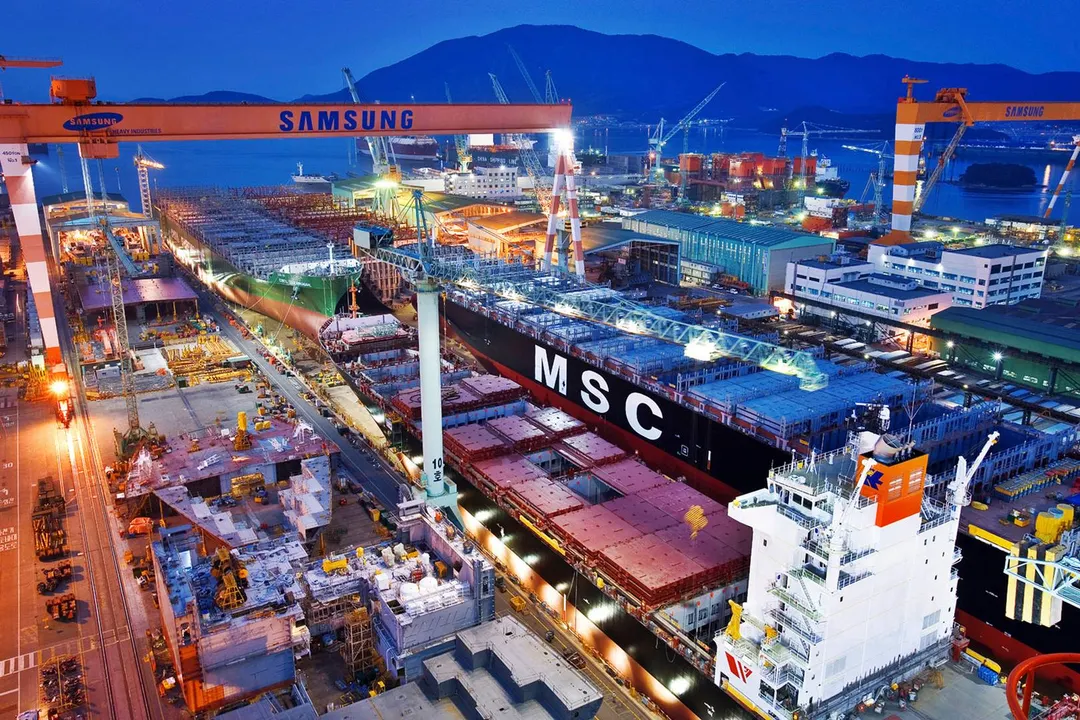
SEOUL : Samsung Heavy Industries secured orders worth over 1 trillion won ($665 million) for five vessels from a Bermuda-based shipping company, the Korean shipbuilder said Wednesday.

The package order includes one liquefied natural gas (LNG) carrier, two very large gas carriers and two crude oil tankers, all commissioned by the same shipowner. The company did not disclose the name of the shipowner.

The deal brings Samsung Heavy Industries’ cumulative orders this year to 27 vessels: 13 LNG carriers, two ethane carriers, four gas carriers, two container ships and six crude oil tankers.

The company has been diversifying its portfolio with a focus on LNG carriers, which are considered among the industry’s highest value-added vessels. Samsung Heavy Industries’ cumulative order value for this year has now reached $5.4 billion, achieving 38.8 percent of its annual order target of $13.9 billion. The figure also amounts to 68.4 percent of the company’s total orders last year, which stood at $7.9 billion.

“It is unusual for a shipowner to place simultaneous orders for multiple types of vessels with a single shipbuilder,” a Samsung Heavy Industries spokesperson said. “High value-added vessels will improve profitability, while standard vessel types will help maximize production stability and efficiency.”

This article was originally written in Korean and translated by a bilingual reporter with the help of generative AI tools. It was then edited by a native English-speaking editor. All AI-assisted translations are reviewed and refined by our newsroom.

NorthStandard reports strong results and strategic momentum

LONDON: NorthStandard reports strong financial results, continued strategic progress and enhanced support for shipowners operating in an increasingly complex and uncertain global environment.  

Global marine insurer NorthStandard has reported a strong set of financial results in its Annual Review 2026, as it pushes forward with its strategy to grow geographic reach and service capability.

The P&I club reported total premium income of US$938m for the 2025/26 insurance year, up 5.8% on the $886m it earned in the previous year. In 2025, investments returned a robust 9.5% and free reserves increased by $123m to reach $923m, strengthening capital coverage above Standard & Poor’s “AAA” level.

NorthStandard’s underwriting performance also improved in 2025, with a combined ratio of 105.5%, against 114% in the previous year, based on an average year for pool claims compared to an extraordinary 2024 and a reduction in the number and value of large NorthStandard claims.

Three years after the merger of North P&I and The Standard Club, NorthStandard has delivered against the objectives set out at the time of the merger, including the strong development of its specialty lines, new offices, expanded resources and new partnerships to further improve its service offering for Members. At the same time, the club has preserved the distinctive Member-centric approach that characterised the clubs in the past. As Managing Director Paul Jennings noted, “Our teams invest time to understand each Member’s world, and we apply our expertise and judgment to find tailored solutions where traditional approaches sometimes fall short.”

Increased scale and deeper financial foundations have allowed the club to respond to a maritime world where geopolitical risk has “increasingly shaped the day to day operating environment for shipowners”, the Club’s Annual Review notes.

“We’ve reevaluated the impact geopolitics make on the business — and reorientated the Club to deal with these complexities as the norm,” said Managing Director Jeremy Grose, reflecting on wars in the Middle East and Ukraine, stop-go tariffs and sanctions.

The position of P&I clubs “at the intersection of commerce, law and geopolitics” had been highlighted by events in the Strait of Hormuz, added Grose. The club provided a vast amount of guidance to Members on a wide range of claims and more general enquiries, while its enhanced war risks capability provided Members with further support.  

On sanctions, the club has also invested to create an even stronger service for Members. “We are a service-based business and Members come first, which is why we’ve built a dedicated sanctions capability reporting into the General Counsel,” commented Paul Jennings. “Sanctions risk is not a front‑line underwriting ‘add‑on’ but a central governance and risk discipline. Some of our most experienced people are in specialist positions where their judgement on high-stakes decisions matters most.”

A collaboration with the Royal United Services Institute also highlighted how EU/G7 sanctions policies had created a growing fleet of sanctioned, elderly, commercially impaired vessels which could not be scrapped, added Jennings. “This unintended consequence raises profound issues around seafarer welfare and of course the environment.”

During 2025, the Club also strengthened its product offering in a number of areas. It consolidated its Coastal & Inland and Sunderland Marine teams under common leadership, and offered a ‘one stop shop’ for small and specialist craft. It established a formal partnership with NIORD in offshore renewables as part of its strategy for growth in the sector. It also established an Upstream Energy and Marine & Energy Liabilities team to drive these distinct areas of focus, building on its experience in Offshore & Renewables.

New partnership agreements were also central to NorthStandard’s ambitions for Loss Prevention where the aim has been to deliver a step change in safety. These included an upfront subsidy for Members adopting Orca AI situational awareness, and a partnership with Signol – the behaviour change platform which engages and motivates crew to implement fuel saving practices. Recent research has demonstrated the operational value of NorthStandard’s partnership investments, with vessels operating with Orca AI experiencing a 52% reduction in high-severity close encounters.

Online tools such as ECDIS Training Assessment, developed with the UK Hydrographic Office, have proved especially impactful as part of NorthStandard’s growing focus on best practice. Other digital innovations this year came through the launch of Port Risks Online, which provides Members automated advice in response to vessel AIS updates.

“The shipping industry is navigating profound change, as technological advancement and the fuel transition reshape how vessels are operated, crewed, and maintained,” commented Grose. “Our loss prevention services are evolving in step, ensuring Members can adopt new fuels, technologies, and operating models with confidence.”

“When risk is persistent, but also nuanced and fast-evolving, the ability to deliver deep expertise at scale and invest in innovation really matter in P&I service provision,” added Jennings. “The volatility seen in investment markets over recent months also demonstrate the importance of holding a sizeable capital buffer.”

LPG highlighted as a practical pathway to accelerate decarbonisation in LR’s latest Fuel for thought report

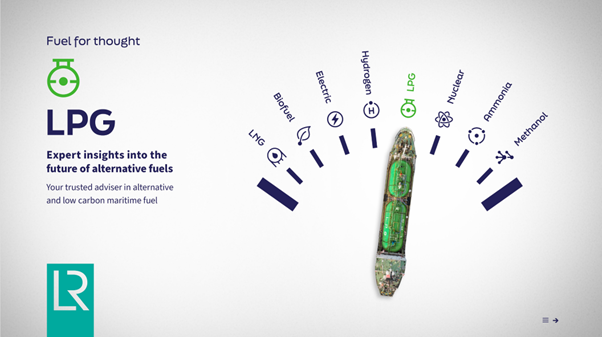
LONDON: Lloyd’s Register (LR) has published an updated edition of its Fuel for Thought: LPG report, produced jointly with the World Liquid Gas Association (WLGA), setting out how LPG can support the maritime sector’s transition to lower carbon propulsion with immediate, scalable impact.

With more than 1,600 LPG carriers already in operation and a mature global supply chain supported by over 1,000 storage facilities and terminals, LPG combines mature technology, global availability and established infrastructure with a practical and credible pathway to lower-emission shipping.

Fuel for thought: LPG shows how LPG can deliver meaningful environmental benefits compared with conventional marine fuels. Fossil LPG emits around 97% less sulphur oxides, 90% less particulate matter and approximately 20% less carbon dioxide than heavy fuel oil, while lifecycle greenhouse gas emissions can be reduced by up to 17% compared with marine gas oil.

The fuel’s lower carbon-to-hydrogen ratio also positions it as a viable route to improving compliance with measures such as EEXI, CII and regional regulation including EU ETS and FuelEU Maritime.

The updated report underscores that LPG is already proven in service. Dual-fuel LPG propulsion is well established in the gas carrier segment, with a growing LPG-fuelled fleet and strong orderbook. Furthermore, gas carriers currently account for only a small share of global shipping emissions, leaving significant potential for cross-segment adoption across container ships, bulk carriers and other vessel types.

Beyond its environmental performance, LPG presents a compelling commercial proposition for shipowners seeking cost-effective decarbonisation solutions. Lower capital expenditure compared to other alternative fuel solutions, combined with competitive fuel pricing in key regions, strengthens its appeal as a transitional fuel. Retrofit pathways are also more accessible, with a significant number of existing cross-segment ship types technically capable of conversion to LPG propulsion.

The report also highlights strong market fundamentals supporting wider uptake. Global seaborne LPG trade reached a record 145 million tonnes in 2025 and is expected to continue growing, supported by rising demand in major import markets and increasing fleet capacity. At the same time, around 500 global LPG terminals could potentially become LPG bunkering points for non-gas carriers as well with minimal new investment, helping to address one of the key barriers facing alternative fuel adoption.

Looking ahead, the report emphasises that LPG’s long-term role will be shaped by the growth of renewable production. Renewable LPG (rLPG) and bio-LPG are chemically identical to conventional LPG and can be used as drop-in fuels without modifications, offering up to 80% emissions reduction depending on feedstock. Industry projections suggest rLPG could meet up to 50% of global demand by 2050, creating a credible long-term pathway towards near-zero-emission shipping operations.

The report also highlights the potential to pair LPG with onboard carbon capture systems to further reduce emissions and extend vessel lifespans. Combining LPG propulsion with carbon capture could deliver significant cost benefits, including reduced carbon pricing exposure and lower onboard storage requirements due to already lower CO2 emissions.

However, barriers remain. The regulatory framework for LPG bunkering is still developing and engine options, particularly beyond two-stroke applications, are not yet fully mature. The report suggests that wider adoption will depend on how quickly these technical and regulatory gaps are addressed.

Constantinos Chaelis, Global Gas Segment Director, Lloyd’s Register, said: “Our latest Fuel for Thought: LPG report reinforces what our industry has long needed—an immediately deployable, commercially viable and technically proven cross-segment pathway to accelerate decarbonisation.

“With mature infrastructure, a growing dual‑fuel fleet and clear emissions advantages over conventional marine fuels, LPG offers shipowners a practical route to compliance and meaningful carbon reduction today. As renewable LPG scales and retrofit options expand, in consideration with onboard carbon capture, LPG stands out as a credible long‑term solution capable of supporting the sector’s transition toward lower, and ultimately near‑zero‑emission operations.”

Nikos Xydas, World Liquid Gas Association (WLGA) Technical Director, said: “LPG has become one of the most widely adopted alternative marine fuels globally in the gas carriers segment.

“Whether for the world’s largest ships or for the smallest outboard motors, LPG offers a low-carbon, low-emissions and cost-effective fuel today, and a credible long-term pathway in the future with drop-in renewable LPG and renewable dimethyl ether into existing fuel systems, for a future-ready solution.”

The Fuel for thought: LPG report can be downloaded at: Fuel for thought LPG report.

Aderco 2055G+ program provides performance monitoring from emissions reduction to carbon credits

NYON (SWITZERLAND): Advanced fuel additive technology specialist Aderco has formally launched 2055G+, an industry-first program to drive verifiable ship emissions reductions and deliver measurable financial returns for ships running on conventional marine fuels.

The solution addresses key pain points in performance monitoring for greater sustainability, including fuel price volatility, the IMO Carbon Intensity Indicator (CII) and EU Emissions Trading System (EU ETS) requirements, while also ensuring that emissions claims are based on verifiable data. Based on more than 100 ships already entered into the 2055G+ programme, fuel savings range between 2% and 5%, including two verified by class societies ABS (Reefer – 4.84%) and RINA (Capesize – 3.25%).

Needing to demonstrate genuine emissions cuts in response to advancing environmental regulations, ship operators, managers and charterers also face resourcing and implementation challenges to navigate the complexities of claiming CO2 offsets. Transparency is critical to assert credibility for carbon credit methodologies in the maritime industry.

The comprehensive 2055G+ solution offers a streamlined methodology for the entire process that covers reducing carbon emissions, proving it with verifiable data and generating revenue through Voluntary Carbon Credits issued by Gold Standard.

Transparency throughout
At the heart of 2055G+ is Aderco’s 2055G fuel additive a 100% vegetal organic, ashless and metal-free fuel treatment which has been proven to enhance combustion efficiency, disperse sludge, stabilise fuel, ensure engine reliability and minimise emissions.

Typically, a ship would trial fuel treatment 2055G for a minimum of six months after establishing baseline fuel consumption and emissions performance based on historical noon reports extracted during a drydocking. This is combined with transparent performance monitoring to provide the basis of the streamlined 2055G+ solution.

Building on the emissions reduction data available from the 2055G+, monitoring and reporting in partnership with the company Adi Terra, the ship’s CO₂ emissions are offset as certified carbon credits using the rigorous Gold Standard methodology, where each verified tonne of CO₂ avoided equals one credit. The customer can then resell credits at a profit or highlight their efforts to safeguard the environment and use them to reduce their carbon footprint.

Aderco has entered into a strategic agreement with Adi Terra, a project developer specialising in carbon and biodiversity projects. Under this agreement, Adi Terra will oversee the monitoring, data integrity, and verification process required to issue Voluntary Carbon Credits through the Gold Standard Retrofit Measure Improving Efficiency Methodology.

Pathway to emissions reduction
“The seamless 2055G+ solution is integral to asset management in an era of unpredictable fuel quality and pressure to decarbonise” comments Esteve Servajean, Head of Marine, Aderco. “The tool creates a bridge between the 2055G technology, data and monetisation. This allows operators and charterers to go beyond mere pledges and show that they have taken the actions necessary to meet global sustainability standards.”

Based on Aderco’s more than 45 years of expertise in marine fuel treatment, treating 40 billion litres of fuel annually, Gérald Baiwir, Head of Environment adds: “Aderco is removing the guesswork from green accreditation and providing shipping with a clear and low risk pathway to emissions reduction”.

About Aderco:

With more than 45 years of expertise in fuel additive innovation, Aderco delivers advanced solutions to the global shipping, transportation, power generation and mining industries. Our formulations are engineered to meet the demands of evolving engine technologies, advancing sustainability goals and the global energy transition.

Launched in 2026, Aderco’s 2055G+ program combines fuel treatment technology with verified emissions reduction data and certified carbon credits. By helping operators improve fuel efficiency, reduce emissions, and lower environmental impact, the program delivers measurable commercial value for ship owners, managers, and charterers while also serving the maritime sector’s needs on decarbonisation.