Home Blog Page 288

UCSL achieves major milestones with new orders, vessel delivery and production progress

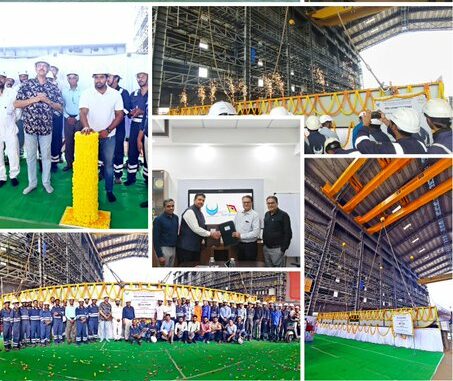
KOCHI : Udupi Cochin Shipyard Limited (UCSL), a subsidiary of Cochin Shipyard Limited under the Ministry of Ports, Shipping and Waterways, has marked a significant month of achievements with the securing of new contracts, successful vessel delivery, and key production milestones, reinforcing its growing role in India’s maritime and shipbuilding sector.

Strengthening its longstanding association with the Adani Group, UCSL has secured contracts for four additional 70 Ton Bollard Pull ASD Tugs, underscoring the continued confidence of industry partners in the shipyard’s technical expertise, operational capabilities, and commitment to quality.

Further adding to its accomplishments, UCSL has successfully delivered a 70T Bollard Pull ASD Tug to Polestar Maritime Ltd, demonstrating its strong execution capabilities and adherence to project timelines and quality standards.

The shipyard also achieved important milestones across its ongoing construction programmes. UCSL laid the keel for the second 6300 Ton General Cargo Vessel for Wilson ASA, marking steady progress in its international commercial shipbuilding portfolio. Simultaneously, steel cutting ceremonies were conducted for two major projects — another 6300 Ton General Cargo Vessel for Wilson ASA and a new 70T Bollard Pull ASD Tug for the Adani Group.

These milestones reflect the coordinated efforts of UCSL’s teams across planning, design, engineering, manufacturing, and project execution, showcasing the organisation’s dedication to operational excellence and customer satisfaction.

The achievements come at a time when India’s maritime and shipbuilding industry is witnessing renewed momentum under the vision of Maritime Amrit Kaal, championed by Hon’ble Prime Minister Narendra Modi. With a strong national focus on self-reliance, industrial growth, and global competitiveness, UCSL continues to play a meaningful role in advancing India’s maritime ambitions.

Commenting on the developments, the company highlighted that the month’s accomplishments represent not only successful business outcomes but also the collective determination, teamwork, and commitment of its workforce and stakeholders.

UCSL expressed gratitude to its clients, partners, and employees for their continued trust and support, while reaffirming its commitment to driving innovation, expanding capabilities, and contributing to the sustained growth of India’s maritime and shipbuilding ecosystem.
Ganga Expressway to cut freight time, unlock Rs 30,000 cr annual savings on logistics

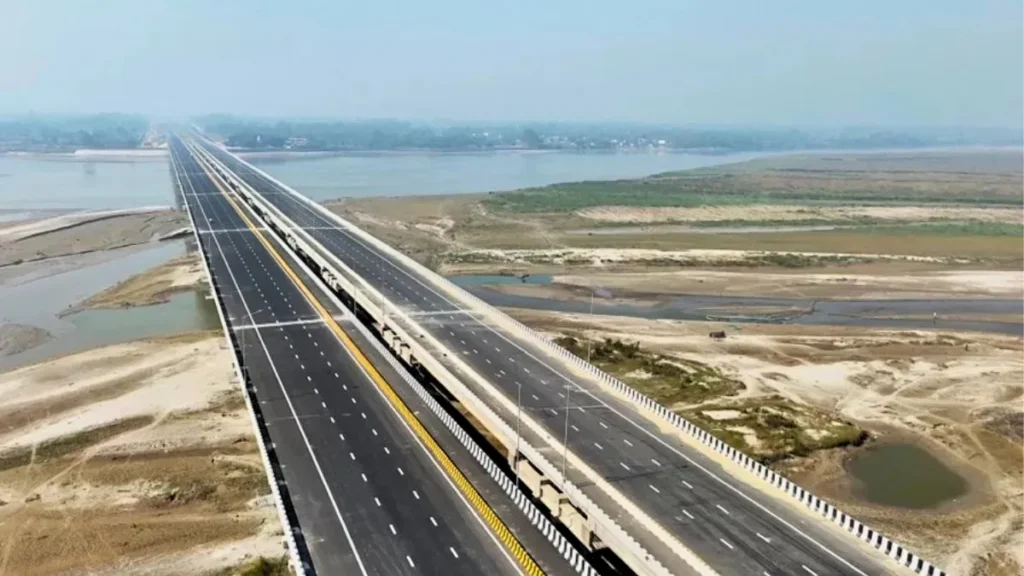
LUCKNOW : The newly-opened 594-km Ganga Expressway is expected to significantly reduce freight transit time across Uttar Pradesh, unlock annual logistics savings of up to Rs 30,000 crore and spur industrial and warehousing growth across more than a dozen districts, according to government estimates and industry players.

The six-lane expressway, expandable to eight lanes, connects Meerut to Prayagraj through 12 districts, and is being projected as a major logistics and industrial corridor linking western and eastern UP.

Industry estimates suggest UP currently handles around 245-260 million tonnes of intra-state freight annually, largely comprising food grains, construction material and retail goods, while outbound freight volumes are estimated at 135-150 million tonnes, driven by electronics, leather and agricultural produce.

UP Industrial Development Minister Nand Gopal Gupta told PTI that the expressway would become “a new chapter” in the state’s economy by accelerating industrial development, logistics, agriculture, tourism and employment generation.

Gupta said the project, inaugurated by Prime Minister Shri Narendra Modi on April 29 in Hardoi, has reduced travel time between Meerut and Prayagraj from around 10-12 hours to nearly 5-8 hours.

“The expressway is not merely a road project but an integrated manufacturing and logistics corridor. Faster freight movement and reduced transportation costs can generate annual logistics savings of Rs 25,000-30,000 crore,” Gupta told PTI.

He said that the state has already received 987 investment proposals worth about Rs 46,660 crore along the corridor, with 12 industrial nodes being developed over 6,507 acres.

Sectors, including manufacturing, textiles, food processing, pharmaceuticals, electronics, warehousing and e-commerce, are expected to benefit, while proposed pharma, textile and IT parks could create large-scale employment opportunities, he said.

Dipanjan Banerjee, Chief Commercial Officer at Blue Dart, said that the expressway would fundamentally reshape logistics operations in UP by reducing dependence on traditional routing hubs.

“The missing link has been a seamless northern corridor connecting the NCR belt directly to eastern districts. The Ganga Expressway effectively bridges that gap,” he told PTI.

Banerjee said the state was emerging as a major logistics market due to rising consumption, industrial clusters and rapid growth in Tier-2 and Tier-3 cities.

He added that sectors such as e-commerce, pharmaceuticals, agri-produce and FMCG would particularly benefit from faster and more predictable freight movement.

Jitendra Srivastava, CEO of Triton Logistics & Maritime, said the expressway would improve supply chain predictability and strengthen links to air cargo and freight corridors.

He said the northern region currently accounts for around 31.3 per cent of India’s air freight movement, and the expressway would help streamline cargo movement towards airports and ports.

“The corridor will improve movement of perishables, textiles and electronics and enhance UP’s global trade competitiveness,” he said.

Nikhil Agarwal, President of CJ Darcl Logistics Ltd, said the expressway was already generating interest among companies looking to establish warehousing and distribution centres in cities such as Prayagraj, Hardoi and Shahjahanpur.

He further said that improved connectivity and relatively lower land costs along the corridor were making outsourced logistics and warehousing models commercially viable.

“The next phase of logistics growth in India will not be driven by metros alone, but by emerging corridors such as this,” Agarwal told PTI.

Officials said the expressway would also strengthen connectivity with other major corridors, including the Agra-Lucknow, Bundelkhand, Purvanchal, Delhi-Mumbai and Ganga expressways, besides supporting future industrial and export-oriented growth in the state.

The expressway passes through Meerut, Hapur, Bulandshahr, Amroha, Sambhal, Budaun, Shahjahanpur, Hardoi, Unnao, Raebareli, Pratapgarh and Prayagraj.

According to Minister Gupta, the project is expected to contribute over Rs 1 lakh crore to the state economy in the long run and support UP’s target of becoming a USD 1 trillion economy.

The expressway is also set for further expansion in future to connect with Uttarakhand.

During the inauguration of the project on April 29, Prime Minister Modi noted that the Ganga Expressway, whose foundation stone was laid in December 2021, has been completed in less than five years and is among the country’s largest expressways.

The prime minister said that work has also begun on its expansion and that the expressway will soon extend beyond Meerut to Haridwar, besides being linked to other expressways through the proposed Farrukhabad Link Expressway.

Source : PTI :

DPIIT releases Guidelines for implementation of BHAVYA Scheme

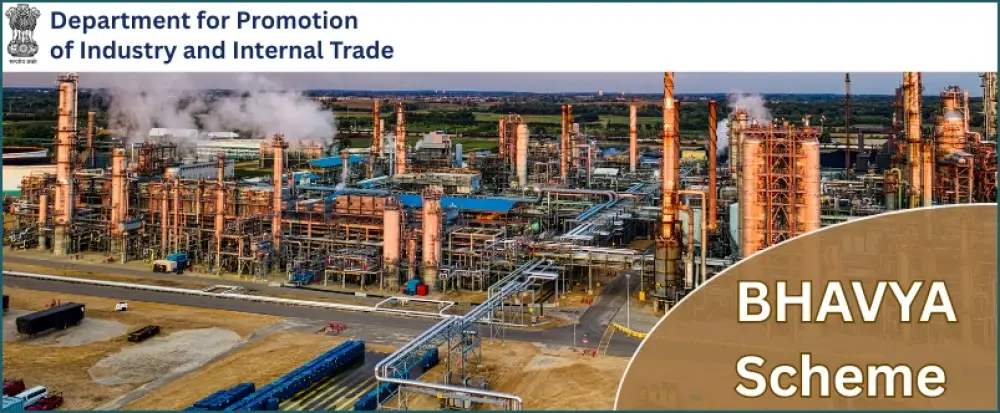
NEW DELHI : The Department for Promotion of Industry and Internal Trade (DPIIT), Ministry of Commerce & Industry, Government of India, has released the detailed operational guidelines for the implementation of the BHAVYA Scheme, a landmark Central Sector Scheme aimed at developing investment-ready, world-class industrial parks across the country.

BHAVYA has been designed to strengthen India’s manufacturing ecosystem through development of integrated industrial infrastructure aligned with the objectives of Make in India, PM Gati Shakti, and the Government’s broader vision of positioning India as a globally competitive manufacturing destination.

The Scheme provides for development of 100 industrial parks over a period of six years from 2026-27 to 2031-32, with a total financial outlay of approximately ₹33,660 crore. In the first phase, up to 50 industrial parks will be taken up through a challenge-based competitive selection process.

The Guidelines lay down a comprehensive framework covering eligibility criteria, project selection methodology, funding structure, governance architecture, monitoring systems, and implementation modalities for industrial parks under the Scheme.

The major focus of the Scheme is on creation of “investment-ready” industrial ecosystems with plug-and-play infrastructure, multimodal logistics connectivity, reliable utility systems, worker-support infrastructure, digital governance systems, and sustainable development features.

The Guidelines provide for development of both greenfield and eligible brownfield industrial parks. Minimum land requirements have been prescribed at 100 acres for non-hilly states and 25 acres for hilly states, northeastern states, Union Territories, and smaller states. The Scheme also permits consideration of larger parks up to 1000 acres.

Under the challenge-based selection framework, proposals will be evaluated on objective parameters including multimodal connectivity, site suitability, quality of infrastructure, industrial ecosystem strength, policy facilitation, digital governance readiness, and long-term sustainability.

The Guidelines provide for evaluation on quality of infrastructure for components such as underground utility systems, water and waste management infrastructure, common effluent treatment systems, renewable energy infrastructure, worker housing, testing laboratories, digital single-window systems, skill development facilities and integrated common infrastructure.

Implementation of projects under BHAVYA will be undertaken through Special Purpose Vehicles (SPVs) incorporated under the Companies Act, 2013. The SPVs will be responsible for project planning, development, operation, management, investor facilitation, and long-term maintenance of assets created under the Scheme.

The Scheme will provide financial assistance in the form of equity contribution linked to the value of land transferred to the SPV and achievement of prescribed project milestones. The National Industrial Corridor Development Corporation (NICDC) has been designated as the Project Management Agency (PMA) for implementation and monitoring of the Scheme.

The Guidelines additionally provide structured provisions for participation of private developers in industrial park development through project-specific SPVs with clearly defined governance frameworks, transparency safeguards, and accountability mechanisms.

To ensure effective implementation and transparency, the Guidelines incorporate GIS-based monitoring systems, periodic progress reporting, audit mechanisms, and oversight by the National Level Steering Committee chaired by the Secretary, DPIIT.

The Scheme guidelines further provide for convergence with relevant Central and State Government initiatives for logistics, skilling, sustainability, renewable energy, utility infrastructure, and industrial development.

The release of the Guidelines marks an important step towards operationalization of BHAVYA and creation of globally benchmarked industrial infrastructure capable of attracting large-scale manufacturing investment, strengthening domestic supply chains, generating employment, and enhancing India’s integration with global value chains.

Kesar Mangoes from Gujarat reach London Heathrow with global demand growing

AHMEDABAD : Boxes of Kesar and Alphonso mangoes arriving from Gujarat to London Heathrow Airport fill the cargo area with their aroma, symbolising pride for many Indians, said importer Digvijaysinh Gohil, who travels annually to Gujarat to oversee purchases.

He added, “For the Gujaratis and Indians living in London, Leicester, and Birmingham, this is not just a fruit, it is a tangible memory of their homeland. People are willing to buy them regardless of the price. Now, even European consumers have developed a taste for Indian mangoes.” Gohil highlighted that while numerous mango varieties exist worldwide, both Gujaratis and foreigners favour the Kesar mango and Maharashtra’s Alphonso, with demand particularly high for Kesar. The distinct aroma and sweetness of these Indian varieties are said to be unparalleled globally, unlike mangoes from South America, Brazil, or Peru, which often appear vibrant but offer less flavour.

Exports are sourced from orchards certified by the Agricultural and Processed Food Products Export Development Authority (APEDA) and processed at accredited high-tech pack houses. Sameer Sapariya, owner of the APEDA-approved Kunj Cold Ware Solution Pack House in Kuvadava, Rajkot, described their process: “We handle the entire export processing pipeline at our pack house. We process and pack mangoes customised to the specific requirements of the USA, UK, UAE, Australia, Canada, European countries, and the Gulf nations. For the US market, we perform a specialised hot water treatment, which has received an outstanding response. For the UK and Canada, we couple the hot water treatment with a controlled ripening process before final packaging. We process Kesar, Rajapuri, and Alphonso varieties. Our Kesar mangoes are sourced from Junagadh, Talala, and Kutch, while the Rajapuri comes from Valsad.”

MISC Group announce Financial Results for the First Quarter of 2026

KUALA LUMPUR: Zahid Osman, MISC President and Group CEO said, “MISC delivered a resilient first quarter in 2026, achieving higher profitability and robust operating cash flows despite continued market volatility across segments. This performance reflects the strength of our diversified business portfolio, disciplined cost management and our ability to capture value across evolving market conditions. We continue to execute our strategic priorities with discipline through fleet modernisation, portfolio optimisation, securing long-term charter contracts and the pursuit of opportunities across both conventional and lower-carbon maritime solutions.

While geopolitical developments and macroeconomic uncertainties continue to shape the operating landscape, our commitment to sustainable growth remains steadfast as we balance operational excellence today with long-term value creation. Guided by our Delivering Progress strategy, we will continue to navigate the changing landscape with agility as we strengthen the Group’s position as a trusted global maritime and energy solutions partner.”

Stronger Profitability and Higher Cash Flows, Driven by our Portfolio and our People

  • Group revenue for the quarter and period ended 31 March 2026 was higher than the corresponding quarter and period ended 31 March 2025.
  • Group operating profit for the quarter and period ended 31 March 2026 were lower than the corresponding quarter and period ended 31 March 2025.
  • Group profit attributable to equity holders of the corporation for the quarter and period ended 31 March 2026 was higher than the corresponding period ended 31 March 2025.
  • Group cash flows generated from operating activities for the period ended 31 March 2026 was higher than the corresponding period ended 31 March 2025.


Group Revenue, Operating Profit, Profit Attributable to Equity Holders of the Corporation and Cash Flows Generated from Operating Activities for the Period Ended 31 March 2026

The Group revenue of RM2,891.4 million was RM75.3 million or 2.7% higher than the revenue for the period ended 31 March 2025 (“corresponding period”) of RM2,816.1 million mainly due to higher revenue from Petroleum and Product Shipping segment primarily driven by higher freight rates and earning days, and higher revenue from Marine and Heavy Engineering segment primarily from the ongoing projects advancing into higher construction phases partially offset by lower revenue from post sail-away projects. The increase in Group’s revenue was, however, offset by lower revenue in the Gas Assets & Solutions segment mainly due to nil construction revenue recognized in the current period and lower earning days resulted from vessels disposal, vessels lay-up and lower charter rates.

The Group operating profit of RM766.8 million was RM90.4 million or 10.5% lower than the corresponding period’s profit of RM857.2 million, due to lower revenue in Gas Assets & Solutions segment, and lower contribution from Offshore segment resulted from operational shutdown of one of the Floating Production, Storage and Offloading (FPSO) units. The decrease in Group’s operating profit was, however, offset by the higher revenue in Petroleum and Product Shipping segment.

The profit attributable to equity holders of the corporation of RM741.4 million was RM35.7 million or 5.1% higher than the corresponding period’s profit of RM705.7 million, notwithstanding a lower Group operating profit. The higher profit was mainly due to a gain on disposal of ships recognized during the period.

The Group recorded cash flows generated from operating activities of RM1,250.4 million for the period ended 31 March 2026, higher by RM477.3 million or 61.7% compared to RM773.1 million in the corresponding period, mainly due to lower payment to suppliers.

Delivering Strategic Growth and Portfolio Rejuvenation

During the quarter, the Group continued strengthening its long-term earnings visibility and future cash flow generation through disciplined execution of its rejuvenation and growth initiatives. Key developments included :

  • Delivery of an LNG carrier for the QatarEnergy project through consortium partnership arrangements;
  • Securing of long-term charter contracts for five LNG carriers with PETRONAS LNG Ltd.;
  • Long-term bareboat charter and operations and maintenance arrangements for an FSO project in Papua New Guinea with ExxonMobil PNG Limited;
  • Extension of the FPSO Ruby II contract with Petrovietnam, as well as
  • MHB securing an EPC contract for a marginal field development platform project. 

The Group also progressed selected new energy initiatives, including the securing of a long-term charter for a liquefied carbon dioxide carrier with Northern Lights JV DA alongside consortium partner K Line, as well as a transition-ready vessel investment through AET’s dual-fuel ethanol-ready dynamic positioning shuttle tanker project.

Moving Forward

LNG Carrier (LNGC) long-term charter rates rose modestly in early March, driven by heightened geopolitical tensions in the Middle East. Looking ahead, LNGC rates are expected to remain elevated relative to the pre-Middle East conflict period, underpinned by robust long-term LNG demand. Meanwhile, steam LNGC rates are expected to remain subdued as charterers continue to favour more efficient and modern tonnage. The segment continues to focus on advancing its fleet rejuvenation strategy through the delivery of modern and efficient LNGCs and securing new long-term charters. In parallel, the segment continues to implement strategic measures for vessels currently off charter, including lay-ups to optimise costs, monetisation of assets to redeploy capital, and the exploration of redeployment opportunities. 

In the Petroleum & Products segment, the crude tanker rates surged in March 2026 following the disruption to Strait of Hormuz before gradually moderating at elevated levels, supported by resilient tonne-mile demand arising from shifting global oil trade flows. Going forward, crude tanker rates are expected to stay above 2025 levels, depending on the duration and evolution of the disruptions in the Middle East. Against this backdrop, our Petroleum & Products segment will continue to prioritise secured and recurring income while progressively rejuvenating its fleet with dual-fuel vessels, expanding its contract portfolio and optimising fleet deployment to maximise earnings.

Meanwhile, the offshore market outlook remains robust, supported by a strong pipeline of Floating Production Storage and Offloading (FPSO) unit awards expected in 2026 across key regions such as South America, Africa and Asia Pacific. At the same time, project start-ups are expected to remain strong driven by persistently high oil prices amid ongoing geopolitical tensions. This positive market outlook presents growth opportunities across high potential markets for the Offshore segment to capitalise on, further reinforcing its strategic position and supporting sustainable long‑term value creation. 

In the Marine & Heavy Engineering segment, the operating environment is expected to remain volatile, shaped by ongoing geopolitical tensions that continue to create trade and economic uncertainties. Despite these challenges, growing demand for offshore floater conversions and LNGC repairs is expected to create opportunities for the segment. Against this backdrop, the Heavy Engineering sub-segment will continue to prioritise project execution excellence and strengthen its order book across conventional and new energy projects, while remaining vigilant in addressing operational challenges. Concurrently, the Marine sub-segment is expected to deliver steady performance, supported by continued demand for repair, maintenance and conversion works, as well as strong project management capabilities and enhanced operational efficiency and project delivery.

U.S. permits Scrap Dealer GMS to Buy Ships Sanctioned for Iran Activity

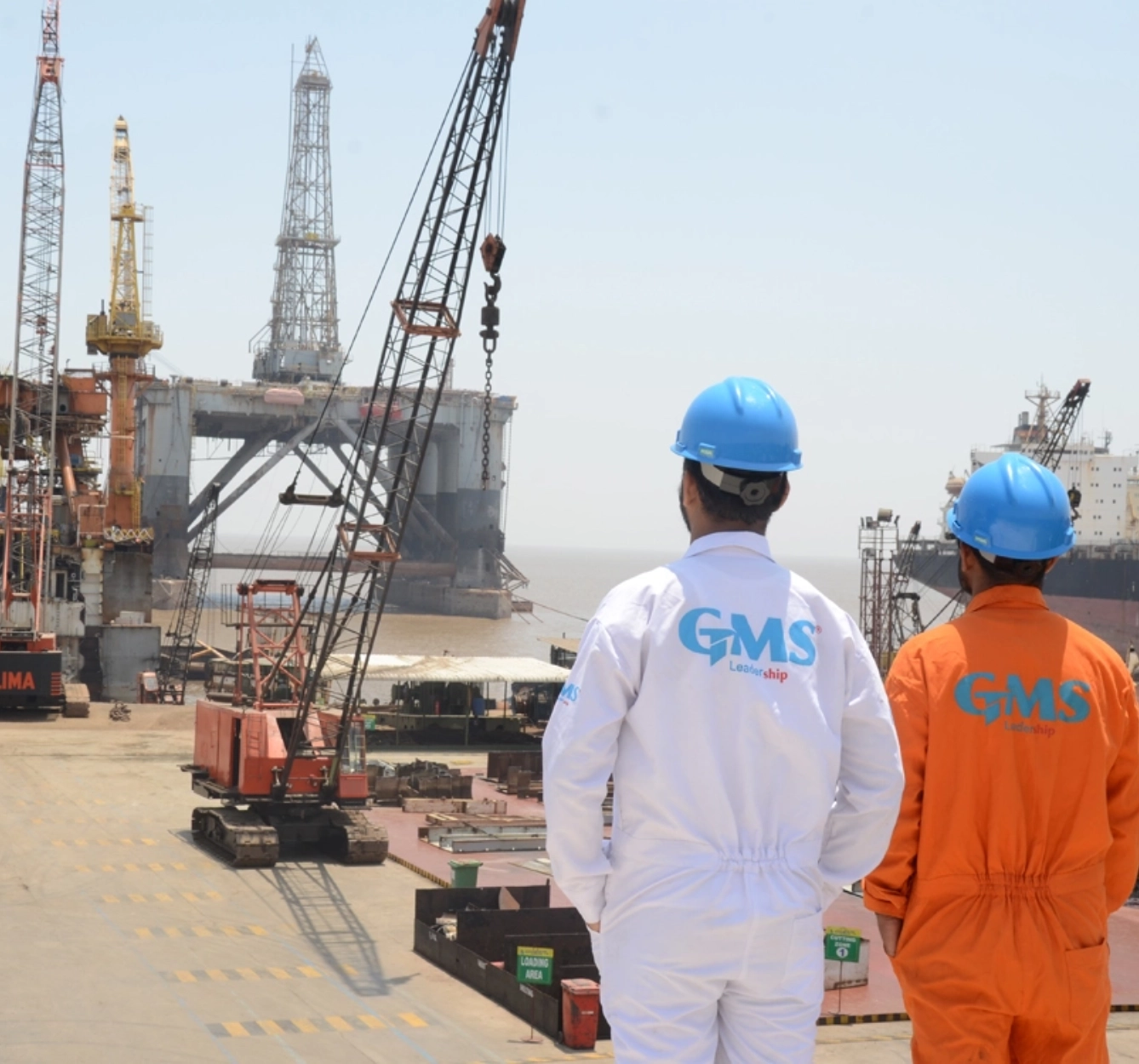
DUBAI : GMS, a major buyer of ships and offshore vessels for recycling, says it has received the first US permit to purchase carriers sanctioned over Iran. The licences, issued in April, will allow four container ships to be scrapped: the Yogi, the Timon, the Rantanplan and the Bigli, according to GMS Chief Executive Officer Anil Sharma. All were named in a Treasury Department notice last July announcing “massive action” against the fleet and entourage of Hossein Shamkhani, a prominent figure whose father was a senior adviser to former Supreme Leader Ayatollah Khamenei.

Shipowners, scrappers and dealers like Dubai-based GMS have long complained about the absence of a safe and legal avenue to remove vessels from the shadow fleet, where carriers are old, poorly maintained and often uninsured. The licences described by Sharma, if repeated, could pave the way for more such ships to end their useful life.

“Sanctions did not eliminate the trade, they eliminated the rules. The business is still going on, but it is not a rule-based thing,” said Sharma. “If you take away this old vessel that’s one less vessel to carry this sanctioned oil.”

The US Treasury did not respond to emailed requests for comment.

The vessels were operated by United Arab Emirates-based Marvise SMC DMCC, which was managed by Shamkhani’s network, the Treasury department said in July. The owner of those vessels was separate from Marvise and not sanctioned, according to Sharma, who did not name the company.

The so-called shadow fleet expanded dramatically after Russia’s invasion of Ukraine in 2022 and has proved remarkably resilient, ferrying barrels of oil from Iran, Russia and Venezuela around the world in spite of sanctions. Ships are often used well past the usual age at which they would normally be retired to avoid posing an environmental or navigational safety hazard.

The US has also added more vessels to the blacklist since beginning strikes on Iran in late February, expanding the pool in an effort to pressure Tehran.

Scrap dealers such as GMS typically buy ships that owners can no longer use. They then cut deals with demolition yards, often in India, Pakistan or Bangladesh, to sell them to those breakers, who in turn dismantle them for steel and other metals, to be recycled.

GMS has begun the process of acquiring the ships, Sharma said, though banks and buyers in the next stage of the deal remain cautious, as the vessels remain sanctioned. The company has asked OFAC to remove the ships from its blacklist, he added.

Iran says conclusions reached on many topics in potential U.S. memorandum but no deal imminent

TEHRAN : Iran’s foreign ministry spokesperson said ​on Monday that conclusions ‌have been reached on many topics ​discussed in a ​potential memorandum of understanding ⁠with the U.S., ​but this does ​not mean Tehran is close to signing an ​agreement.
The spokesperson, Esmaeil ​Baghaei, added that Iran is ‌negotiating ⁠an end to the war and is not currently ​discussing ​nuclear ⁠issues, and repeated that changes ​in the ​positions ⁠of U.S. officials create problems for any ⁠agreement.

A day after US claimed that a deal between the Trump administration and Iran is likely to be reached soon, Iran’s foreign ministry spokesperson said on Monday that there is progress on many topics, but there is still no certainty on reaching an agree…

Read more at: https://www.deccanherald.com/world/rest-of-world/conclusions-reached-on-many-topics-but-no-deal-imminent-iran-on-talks-with-us-4015251.He said that Iran’s current discussions focused on ending the war, and not on nuclear issues. Baghaei further said that “repeated changes” in the position of US officials are creating problems on the way to an agreement.

US Secretary of State Marco Rubio had said on Sunday that there has been “significant” progress in its negotiations with Iran to end the war. He had said that the discussions were moving ahead also on the lines of completely opening the Strait of Hormuz for commercial shipping.

“On the Iran situation, I believe, maybe more news coming out a little bit later today on this topic, and I’ll leave it to the President to make further announcements on it,” the US Secretary of State had said, responding to a question.

US conducts ‘self-defence strikes’ on Iranian boats, missile sites amid ceasefire negotiations

WASHINGTON D.C.: The US military carried out “self-defence strikes” targeting Iranian missile launch sites and boats near the Strait of Hormuz amid an ongoing ceasefire between the two countries, CNN reported, citing US Central Command (CENTCOM).

“U.S. forces conducted self-defence strikes in southern Iran today to protect our troops from threats posed by Iranian forces,” CENTCOM spokesman Timothy Hawkins told CNN in a statement when asked about reports of explosions near the strategic waterway.

He said the targets included missile launch sites and Iranian boats attempting to deploy mines. “US Central Command continues to defend our forces while using restraint during the ongoing ceasefire,” Hawkins told CNN.

US and Iranian forces have previously exchanged fire during the ceasefire period. In early May, US forces had struck Iranian military facilities allegedly involved in “unprovoked” missile, drone and small boat attacks on American warships transiting the Strait of Hormuz.

This development comes hours after the US made headway in the ceasefire negotiations with Trump stating that Iran’s enriched Uranium (Nuclear dust) will be “turned over” to the US to be destroyed or will be destroyed at an acceptable location.

Trump said this decision will be taken in “conjunction and collaboration” with Iran, signalling Tehran’s relaxing its stand as the two countries attempt to reach a peace agreement.

“The Enriched Uranium (Nuclear Dust!) will either be immediately turned over to the United States to be brought home and destroyed or, preferably, in conjunction and coordination with the Islamic Republic of Iran, destroyed in place or, at another acceptable location, with the Atomic Energy Commission, or its equivalent, being witness to this process and event,” Trump said in a post Truth Social.

This also confirms the New York Times report that Iran has agreed in principle to give up its stockpile of highly enriched uranium as part of an emerging, US-led framework aimed at halting regional conflict.

This also resolves the key difference between the two countries, as CNN had earlier reported that the disagreements over “language on Iran’s nuclear program and the lifting of sanctions” have slowed the finalisation of a broader understanding to finalise the deal between Tehran and Washington.

Earlier, Trump had asserted that any forthcoming accord with Tehran would strictly manifest as a “great and meaningful” deal, or the administration would walk away entirely, as diplomatic talks aimed at officially concluding the conflict continue to stretch out.

Iran had signalled that the parties have arrived at a conclusion over a large number of topics, but pointed to the apprehensions over Washington’s frequent changes in positions, complicating the negotiations.

Esmaeil Baqaei, Iranian Foreign Ministry spokesperson, said, “It is correct that we have reached conclusions on a large portion of the discussion topics, but to say that this means the signing of an imminent agreement is something no one can claim. The frequent changes in the positions of American officials complicate every negotiation”.

Source: ANI

Wallem Group reports progress across its ESG priorities

HONG KONG: A new Environmental, Social and Governance (ESG) report from Wallem Group, a leading maritime services provider, highlights how broadening staff wellness initiatives underpin commitments to safe and sustainable practices across the Group’s ship management, ship agency and crewing businesses.

The leading ship manager’s 2025 ESG report shows Wallem enacted 30,480 hours of wellness onboard training for its seafarers alongside 40 senior management vessel visits, during a year when it once again achieved a 96% crew retention rate.

New initiatives included a collaboration with the international SOS company MedSea to deliver a series of mental and physical wellbeing webinars dedicated to supporting the holistic wellbeing of seafarers on board and on leave.

The initiative adds to Wallem’s broader wellbeing framework, which includes Wellness at Sea, Wellness Champions onboard and ashore, Dignity at Sea, SeaVoice, family support programmes, and a strong focus on diversity, inclusion, and gender equality.

The report also provides data showing the steps Wallem is taking to reinforce its position as a leading global maritime partner in line with IMO 2030 and 2050 targets for CO2 emissions reduction, as well as EU ETS and FuelEU Maritime requirements.

Within Wallem’s managed fleet, voyage performance and fuel efficiency is now being measured in real time data across 95% of vessels, while 28% of ships can run on alternative fuels. Nearly 10,000 hours of training has been given on operating the digital platforms that can transform vessel efficiency, including cyber security, the report also discloses.

Wallem gave seafarers 5,733 hours of corporate governance and safety training while at sea to ensure best practices, and to minimise the risk of pollution and environmental impacts by meeting or exceeding regulatory compliance. The efforts reflect the IMO’s World Maritime Day theme for 2026 and 2027 of putting policy into practice in order to power maritime excellence.

“Wallem recognises that healthy, motivated, and supported crew and onshore staff remain the cornerstone of safety and operational excellence,” said John Rowley, CEO, Wallem Group.

“We remain dedicated to fostering a safe, respectful, and supportive environment, both at sea and ashore, with ESG policies that provide transparent, responsible practices for our stakeholders and are critical for the long-term success of our clients.”

Click here to download the full ESG report.

Parliamentary panel to hear views of Shipping Ministry on impact of West Asia crisis on India’s maritime trade today

NEW DELHI: Parliamentary Standing Committee on Transport, Tourism, and Culture, chaired by Janata Dal (United) leader Shri Sanjay Kumar Jha, will meet today.

It will hear views of Secretary, Ministry of Ports, Shipping and Waterways, on the subject ‘Implications of the West Asia Crisis on India’s Maritime Trade, Shipping Infrastructure and Seafarer Safety.’

Representatives from the Ministry of External Affairs (MEA), the Ministry of Commerce, and the Ministry of Petroleum will also attend the meeting.

External Affairs Minister Shri S Jaishankar on Sunday said that India is among the few countries in the world with strong relations and real interests in the Gulf and that it wants peace and stability in the region.

Addressing a joint press conference with US Secretary of State Marco Rubio, Shri Jaishankar said, “India today is one of the very few countries that has very strong relations with the United States, with Israel, with Iran, and with the Gulf countries. We have real interests there. For us, the challenge is how to maintain all these relationships, protect our equities, and advance our interests. We don’t look at it as a zero-sum game. Having said that, there are general principles: we want peace and stability in the region, the welfare of our diaspora is crucial, and as a big importer of energy, keeping prices down for global growth is vital.”

He reiterated India’s strong interest in safe and unimpeded maritime commerce through the region and added, “We want energy markets not to be distorted or constrained because it has a cost implication for our people.”

He added that India’s priorities in the region included peace, stability, protection of the Indian diaspora and secure maritime trade routes.

Source: ANI