Home Blog Page 295

Railway Minister to flag off new Rail Service from Kutch to New Delhi on Friday

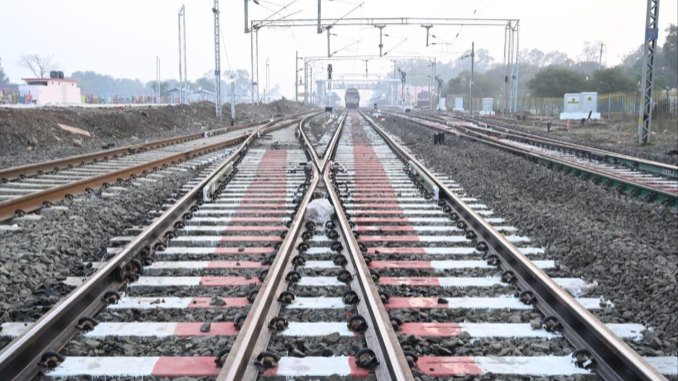
NEW DELHI : A new rail service connecting the border district of Kutch with Rajasthan and the national capital New Delhi is set to begin soon. Following a long-pending demand, Western Railway has completed preparations to launch the new train service. Our correspondent reports that Union Railway Minister Shri Ashwini Vaishnaw will flag off the train on Friday.

According to official sources of Western Railway, the train will originate from Bhuj and travel via Jalore, and Pali in Rajasthan before reaching Delhi. The train is scheduled to depart from Bhuj at 11 a.m. and will reach Delhi around the same time the following day.

The introduction of this service is expected to reduce passenger load on the existing Bhuj-Bareilly and Bhuj-Delhi Sarai Rohilla trains. It will also provide improved rail connectivity from Kutch to several major cities in Rajasthan as well as the national capital.

DFCCIL and CONCOR explore new business opportunities & terminal development across DFCs

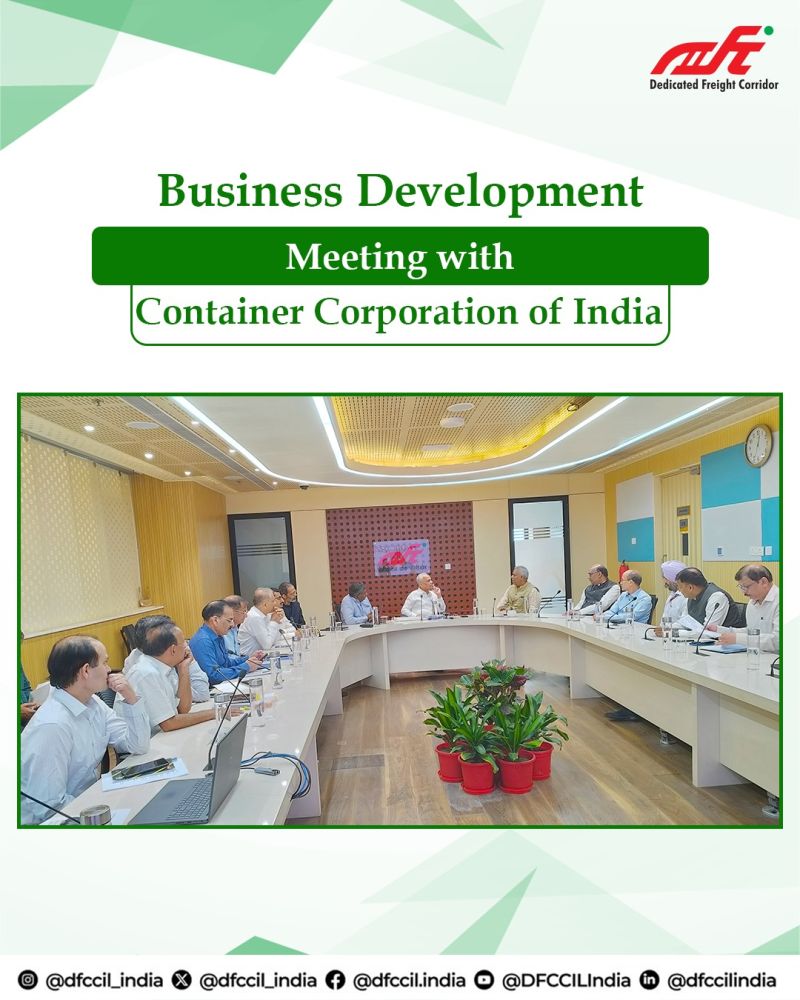
NEW DELHI : In a significant step toward strengthening India’s rail-based logistics ecosystem and enhancing multimodal freight connectivity, Shri Praveen Kumar, Managing Director, DFCCIL, held a high-level meeting with Shri Sanjay Swarup, Chairman & Managing Director, CONCOR, to deliberate on new business opportunities and collaborative terminal development initiatives across the Dedicated Freight Corridor (DFC) network.

The meeting witnessed participation from senior officials of both DFCCIL and CONCOR and focused on expanding logistics infrastructure, improving freight handling capabilities, and unlocking new avenues for cargo movement through integrated rail logistics solutions.

A key agenda of the discussions was the identification of strategic locations for joint development of container terminals along the upcoming East–West Dedicated Freight Corridor, aimed at supporting future freight demand and boosting efficient cargo transportation. The deliberations also covered the development of priority terminals at New Prithala and New Kanpur on the existing Dedicated Freight Corridors.

Both organizations discussed plans to augment terminal infrastructure, foster multimodal logistics integration, and leverage the DFC network to generate new freight business opportunities, reinforcing the shared commitment of DFCCIL and CONCOR towards developing world-class freight logistics infrastructure in the country.

The meeting highlighted the critical role of collaboration between infrastructure providers and logistics operators in driving efficiency, reducing transit time, and enhancing the competitiveness of India’s freight transportation landscape.

Senior DFCCIL officials present during the meeting included Shri Shobhit Bhatnagar, Director (OP&BD); Shri Anurag Sharma, Director (Infrastructure); Shri P.K. Rai, Director (Project Planning); Shri B. Mugunthan, Director (Finance); Shri Sandesh Srivastava, ED (Projects); Shri Ajay Kumar, ED (Asset Management); Shri S.P. Verma, GGM (BD&BA); Shri Nitin Bansal, GGM (OP&BD); Shri Roshan Singh, GM (OP&BD), along with other senior officers.

Representing CONCOR were Shri Ajit Kumar Panda, Director (Projects & Services); Shri Vijoy Kumar Singh, Director (International Marketing & Operations); Shri H.S. Bajwa, Director (Domestic); Shri Vivek Gupta, Director (Finance); Shri Shrikant V. Janbandhu, ED (Strategic Planning & Operations); and Shri Vineet Mathur, Executive Director (Public Relations), among other senior officials.

The collaborative discussions underscore the ongoing efforts of DFCCIL and CONCOR to build a robust, future-ready logistics framework aligned with India’s growing freight and trade requirements.

India prepares to send oil tankers through Strait of Hormuz amid Iran conflict

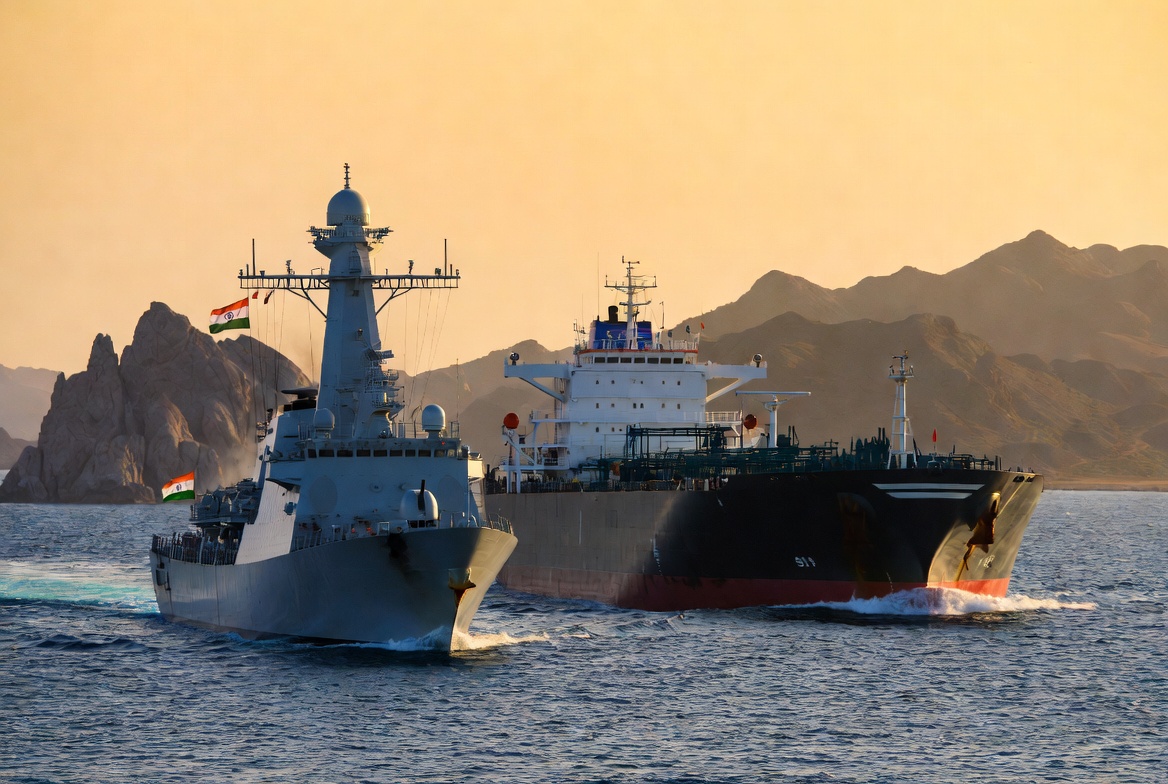
NEW DELHI : India is preparing to send vessels through the Strait of Hormuz to load up energy cargoes from suppliers in the Middle East, according to people familiar with the matter, the first time since the Iran conflict began that the country will do so.

The plans are finalized and ships will start attempting to cross the strait once the government gives its final approval, the people said, asking not to be identified because the discussions are private. They didn’t give details on the timing of the shipments or the volumes involved.

State-owned Shipping Corp. of India is ready to go back to the Persian Gulf once it has approval from the Indian Navy and it has business from oil refiners, one of the people said.

Shipping through Hormuz, which handles roughly a fifth of global oil flows, has been virtually halted since the Iran war began at the end of February, causing major disruptions and price shocks for countries like India, the world’s third-largest crude importer.

It’s unclear whether Iran or the US, which are separately blockading the strait and surrounding waters amid the war, have given India a green light to send ships through the waterway. Their agreement will be critical for the plan to work.

India’s External Affairs Minister Dr. Subrahmanyam Jaishankar met his Iranian counterpart Abbas Araghchi in New Delhi on the sidelines of a BRICS summit last week.

India wants to continue importing energy from its traditional Middle East oil producers because supplies from alternate sources would take a longer time to reach the country and be costlier, people familiar with the matter said.

India’s Navy has doubled the number of warships in the region and increased aerial surveillance to monitor the area, the people said. Warships are escorting Indian-flagged ships and vessels headed to India once they safely exit the strait.

India’s Ministry of Ports, Shipping and Waterways and the Indian Navy didn’t respond to emails seeking further information.

While non-Iranian oil has dribbled out through Hormuz since the war began, the precise conditions allowing those transits have been patchy and unclear. Flows remain at a tiny fraction of their pre-conflict levels.

India’s government recently launched a marine insurance initiative to provide uninterrupted coverage for Indian ships and cargoes operating in high-risk waters, including the Strait of Hormuz.

Although India has stepped up purchases of crude from Russia and other suppliers, it remains heavily reliant on purchases from the Middle East. Russian oil carries the risk of US sanctions as well, although the Trump administration recently issued a new waiver allowing the sale of Russian crude oil and petroleum products already loaded on tankers.

The energy crisis has put a strain on India’s economy. Prime Minister Shri Narendra Modi has urged citizens to save fuel and foreign exchange amid surging oil bills and a plunge in the rupee to a record low.

Source : The Print

Transport body seeks urgent action in parts of Gujarat allegedly hit by diesel shortage

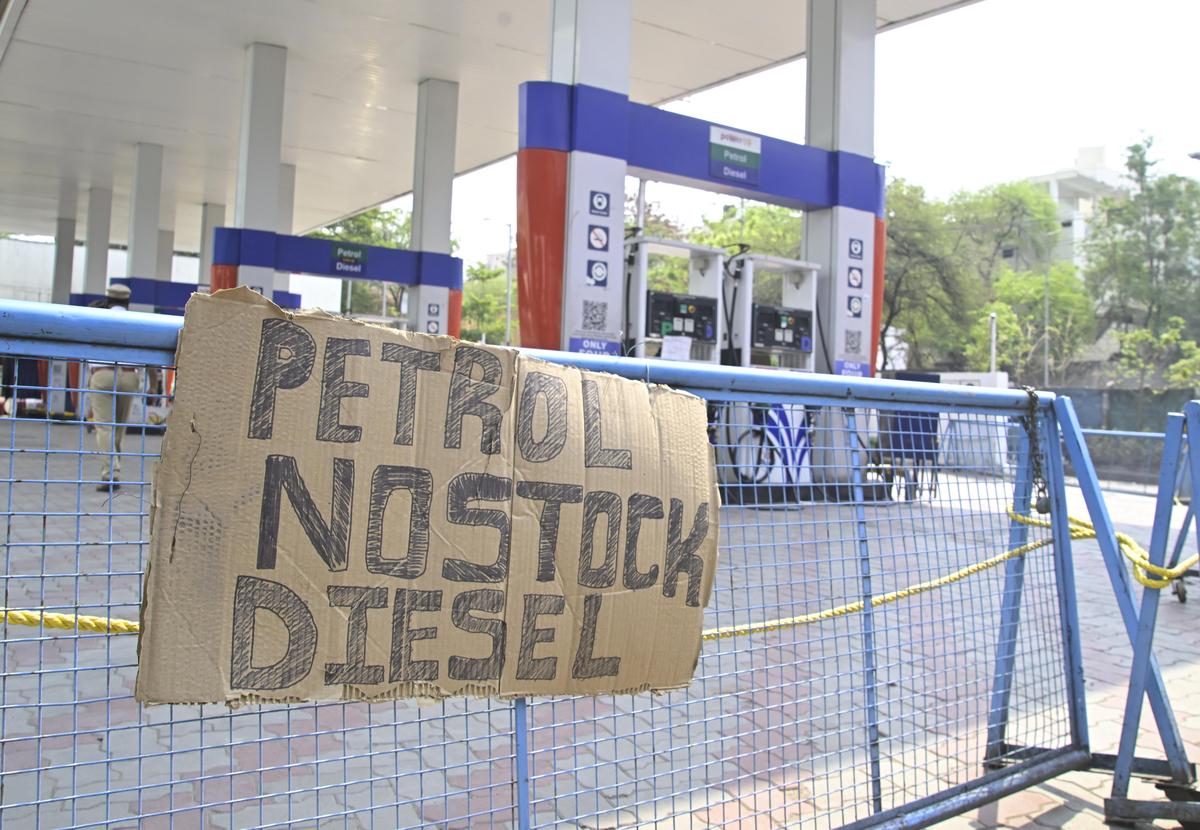
AHMEDABAD: The Akhil Gujarat Truck Transport Association (AGTTA) has written to Gujarat Home and Transport Minister Shri Harsh Sanghavi raising concerns over the reported shortage of petroleum products, particularly diesel, in parts of Kutch, Saurashtra, and North Gujarat.

In the letter, association president Vasand Ahir stated that several pumps, especially in remote villages, are either facing severe shortage or have remained shut due to inadequate supply of diesel.

The association warned that the situation is creating major disruptions in transportation of goods and affecting trade, industry and commerce across the state.

The association, which claims to represent nearly 12 lakh small and large commercial vehicle owners through district-level transport organisations and major transporters across Gujarat, said transportation activities linked to ports and cargo movement have also been severely impacted.

AGTTA urged the state government to ensure adequate supply of petroleum products in the affected regions to restore smooth transportation and avoid further disruption in logistics and business operations.

The letter further highlighted that the transport sector is already facing an economic slowdown and many operators are single-vehicle owners whose livelihoods depend entirely on daily transport activity.

The association stated that even one day of halted vehicle operations could lead to serious financial losses for thousands of transport workers and operators across the state.

Long queues of trucks continued to be seen across Kutch for the third consecutive day as diesel shortages disrupted cargo movement between key logistics hubs such as Gandhidham, Mundra, Bhachau and Samakhiyali. The situation has particularly affected transportation linked to India’s major commercial ports at Kandla Port and Mundra Port.

Transporters say the immediate issue is limited diesel availability, but the larger crisis has emerged due to disruptions in the fuel distribution system and the widening gap between bulk and retail diesel prices following tensions in the Middle East.

Following the recent Iran–Israel conflict and the resulting pressure on fuel supply chains, oil marketing companies reportedly withdrew bulk purchase discounts. As a result, bulk diesel prices rose sharply to nearly Rs 128 to Rs 145 per litre depending on suppliers, while diesel at retail pumps continued to sell at around Rs 95 per litre.

The steep price difference forced many transporters and industries to stop bulk purchases, making consumer pump operations financially impractical. Truck operators instead turned to retail petrol pumps for cheaper fuel.

The situation became more complicated after retail fuel stations were also directed not to supply diesel to vehicles linked to consumer pump operators. Fuel station owners say implementing such restrictions is nearly impossible on the ground.

Industry representatives say the supply issue worsened because oil marketing companies allocate diesel to retail pumps based on their average sales from the previous six months. The sudden spike in demand was therefore not matched with additional allocations.

Around 10,000 container trucks reportedly move between Kutch ports and destinations across the country every day, making uninterrupted fuel supply critical for trade movement.

Gandhidham Chamber of Commerce & Industry president Teja Kanga said, “Kutch is a manufacturing and logistics hub and gateway to northern hinterland with a large spectrum of exim goods. The diesel allocation for the district cannot be treated so casually.”

Transporters claim diesel rationing has now become routine, with many trucks receiving only around 50 litres against the nearly 200 litres required for long-distance operations.

Mini trucks, cranes, loaders and cargo-handling vehicles operating inside port premises are also reportedly facing shortages as mobile diesel bowser services have slowed significantly. In several cases, operators are travelling nearly 20 kilometres outside port areas to refuel vehicles, causing delays in cargo handling and customs clearance.

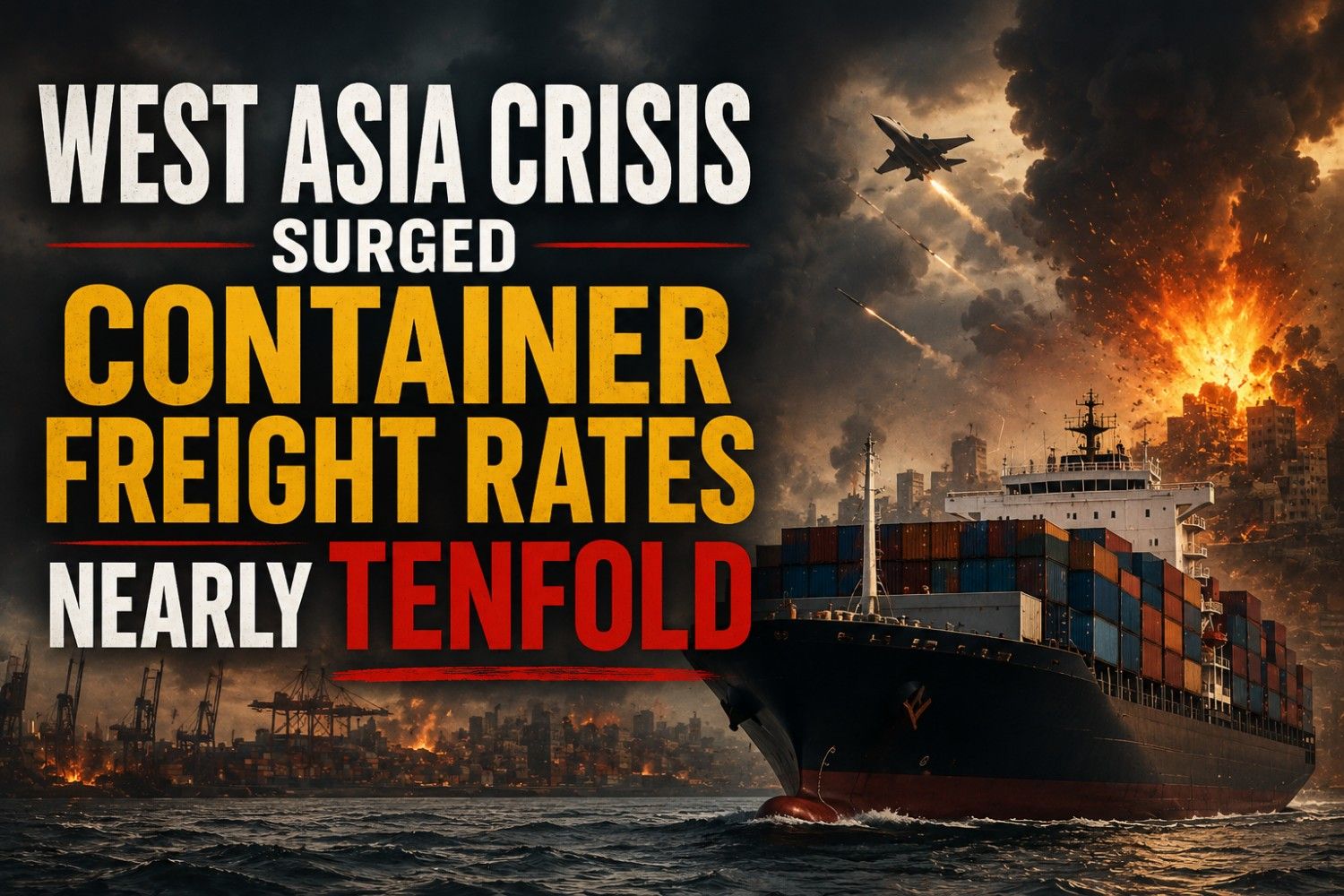
West Asia Crisis surged Container Freight Rates nearly Tenfold

NEW DELHI: Escalating geopolitical tensions in West Asia have significantly disrupted maritime trade flows, resulting in a steep increase in freight charges for cargo shipments to the region. According to officials from the shipping ministry, freight rates for container cargo have surged almost ten times, while transportation costs for LPG and crude oil have more than doubled amid the ongoing conflict.

Government data indicate that average maritime freight rates for LPG cargo have climbed from around $94 per tonne prior to the conflict to nearly $207 per tonne as of May 15. Similarly, crude oil freight charges have risen sharply from approximately $14 per tonne to $28.6 per tonne during the same period.

The container shipping segment has witnessed the most dramatic escalation, with freight costs soaring to nearly $2,000 per twenty-foot equivalent unit (TEU), compared with about $203 per TEU before the outbreak of hostilities.

Officials attributed the sharp rise in shipping costs to growing uncertainty, operational disruptions, elevated insurance premiums, and heightened security risks across key maritime routes in the region. Addressing the media on recent developments in West Asia, shipping ministry Additional Secretary Shri Mukesh Mangal stated that the ministry is closely monitoring freight movements and has also issued an advisory to ensure transparency in shipping charges.

Sources further indicated that the conflict has substantially impacted vessel movement between India and West Asia. Average monthly shipping services operating from Indian ports to the region have reportedly declined from around 444 vessels to nearly 125 since the crisis intensified.

Industry data reveal that freight rates for LPG shipments have continued to climb steadily since the beginning of the conflict, while crude oil and container freight charges touched peak levels towards the end of April before witnessing marginal moderation by mid-May.

Officials emphasized that the situation remains highly fluid and freight trends will continue to depend on geopolitical developments in the region. “The situation remains dynamic and authorities are maintaining close surveillance on developments. Freight rates are expected to ease once stability returns to the region,” an official said.

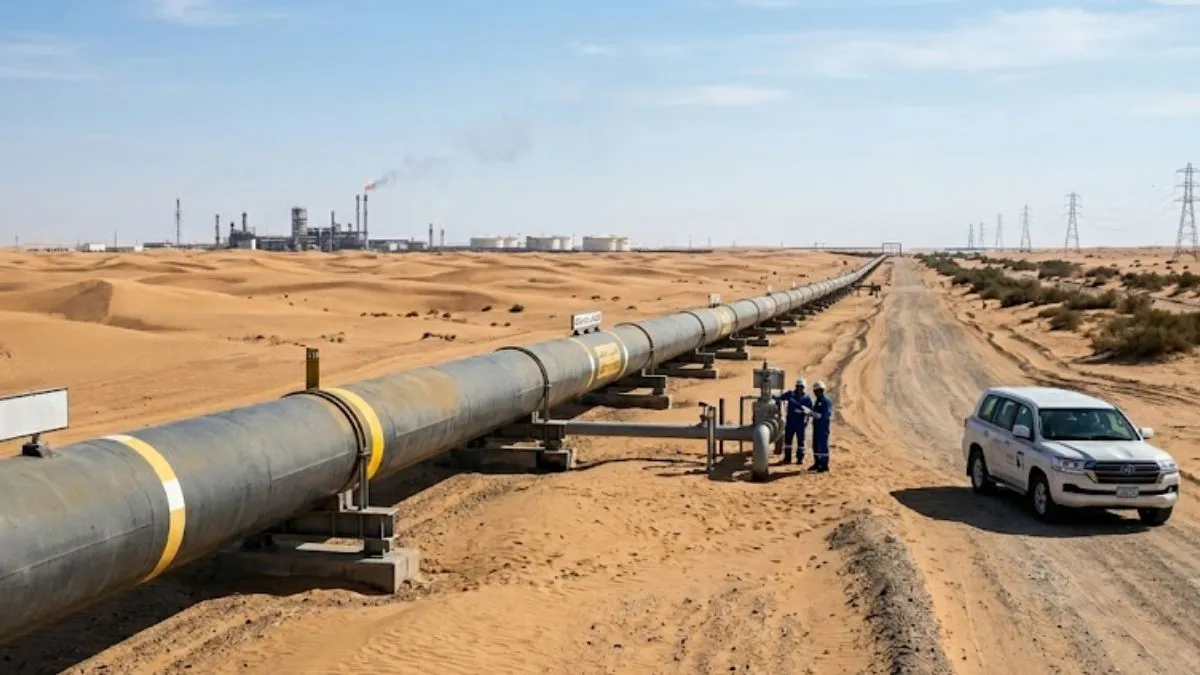
UAE says new pipeline that will bypass Strait of Hormuz is nearly 50% complete

DUBAI : The United Arab Emirates has built nearly 50% of a second pipeline that will bypass the Strait of Hormuz, said the CEO of Abu Dhabi National Oil Co., or ADNOC, on Wednesday.

“Right now, too much of the world’s energy still moves through too few chokepoints,” Sultan Ahmed Al Jaber said in an interview at the Atlantic Council.

The new pipeline will double ADNOC’s export capacity through Fujairah, a port that sits on the Gulf of Oman just beyond Hormuz. The UAE has accelerated the construction of the project due to the Iran war. The pipeline is expected to become operational in 2027.

Iran has blockaded Hormuz since early March, choking off the oil and gas exports of the UAE and the other Gulf Arab producers. The UAE has redirected some oil exports through an existing pipeline to Fujairah, which has a maximum capacity of 1.8 million barrels per day.

The Hormuz blockade has triggered the most severe energy supply disruption in history, al Jaber said. More than 1 billion barrels of oil have been lost due to the strait’s closure, the CEO said. Nearly 100 million additional barrels are lost every week that Hormuz remains closed, he said.

It will take at least four months to ramp oil flows up to 80% of normal levels even if the conflict ends immediately, Al Jaber said. It will take until the first or second quarter of 2027 for oil flows to fully normalize, he said.

“This is not just an economic problem,” Al Jaber said. “In fact, this sets a dangerous precedent once you accept that a single country can hold the world’s most important waterway hostage.”

Iran blockaded Hormuz after the U.S. and Israel launched a massive wave of airstrikes against it on Feb. 28. Those strikes killed top Iranian leaders including head of state Ayatollah Ali Khamenei.

U.S. Energy Secretary Chris Wright told CNBC on Friday that the importance of Hormuz to the global energy market will decline after the Iran war, as Gulf nations build more pipelines to bypass it.

“This is a card you can play once,” Wright said of Iran’s blockade. “There’ll be other routes for energy to get out of the Persian Gulf.”

“We will see a decreasing importance from the Strait of Hormuz, but not a decreasing importance of those nations’ energy production and energy supply,” he said.

Source : CNBC

IRGC warns “war will be extended outside the Middle East” if Iran faces new military action

TEHRAN: The Islamic Revolutionary Guard Corps (IRGC) on Wednesday issued a new statement warning “adversaries” (US and Israel) against any renewed military action targeting Iran, declaring that future conflict could expand beyond West Asia, according to the Iranian state media Islamic Republic of Iran Broadcasting (IRIB).

In the official statement, the Islamic Revolutionary Guard Corps (IRGC) said, “If the aggression against Iran is repeated, the war will be extended outside the Middle East region, and our crushing blows will hit you in places you cannot imagine.”

The warning came amid heightened regional tensions following recent confrontations involving Iran, the United States and Israel.
The IRGC asserted that Iran had not yet deployed the full extent of its military capabilities during the previous phase of fighting.

“Although in the previous round of war, the US-Israel used all their capabilities, we did not use all our capabilities,” the statement said.

“But if an action is taken against Iran, Iran’s new regional and extra-regional capabilities will be activated.”

The IRGC further claimed that the conflict had already spread throughout the region, arguing that Tehran’s previous warnings had proven accurate. “As warned before the US aggression against Iran, the war has engulfed the entire region,” the statement said.

“Unlike the enemy, Iran’s warnings are not empty,” the IRGC said. It added, “We warn that any new aggression will activate Iran’s extra-regional capabilities.”

The IRGC stressed that its military posture would ultimately be demonstrated through direct action rather than rhetoric.”We are men of war, and you will see our power on the battlefield, not in empty statements on social media,” its official statement said, according to IRIB.

Earlier on Tuesday (local time), US President Donald Trump said that Iran wanted to make a deal “so badly” and asserted that the ongoing conflict would end “very quickly.”

Speaking at a press conference, President Trump also said oil prices would decline sharply in the coming period. The US President further stated that global oil prices were expected to fall due to abundant supply.

“There’s so much oil out there, they’re going to come plummeting down..We’re going to end that war very quickly. They want to make a deal so badly…You are going to see oil prices plummet. They’re going to come down. There’s so much oil out there, they’re going to come plummeting down,” he said.


The development comes amidst the US Senate earlier in the day passing a resolution seeking to limit President Donald Trump’s war powers in Iran, according to CBS News.


Senators approved a motion to discharge the resolution from committee in a 50-47 vote, with four Republican lawmakers joining most Democrats in support of the measure, CBS News reported. This was the eighth such attempt by Senate democrats to pass such a resolution.


The resolution, introduced by Democratic Senator Tim Kaine, would direct the President to “remove the United States Armed Forces from hostilities within or against Iran, unless explicitly authorised by a declaration of war or a specific authorisation for use of military force.”


The development follows the ongoing negotiations related to the peace deal between the US and Iran, followed by US President Donald Trump’s earlier announcement to put a “planned attack” on Tehran on hold after appeals from Qatar, Saudi Arabia and the United Arab Emirates (UAE). The US President further mentioned that they are “prepared to go forward with a full, large-scale assault” on Iran.

Source: ANI

Drone attack injures four at Dubai Airport as Iran escalates Gulf operations

DUBAI : West Asia tensions are escalating sharply. Iran has targeted commercial shipping in the Persian Gulf and attempted strikes on aviation infrastructure in the UAE. Abu Dhabi authorities say a fire broke out near the old Abu Dhabi airport after air defence systems intercepted an incoming threat; it was quickly brought under control. Earlier on March 11th, a drone attack on Dubai International Airport injured 4, including an Indian citizen.

Iran’s Revolutionary Guard Corps says its navy fired on and seized two vessels in the Strait of Hormuz, claiming the ships ignored warnings, raising fresh alarm over one of the world’s most critical energy corridors.

The IRGC has also threatened to strike on US and Israeli-linked economic centres and banks in the region, in retaliation for an alleged attack on an Iranian bank.

Energy markets are reacting sharply to the expanding conflict. The International Energy Agency has agreed to release a record 400 million barrels of emergency crude reserves to stabilise global supplies following disruptions linked to the West Asian war.

Oil prices have eased from earlier peaks but remain significantly elevated. Brent crude, the international benchmark, is still trading about twenty percent higher than levels seen at the start of the conflict.

The tensions have also begun affecting financial operations in the region. Several international banks have shifted staff to remote work or offered temporary relocation from Dubai following threats directed at Western financial institutions. Standard Chartered said its operations in Dubai and across West Asia are continuing under work-from-home arrangements, clarifying earlier reports suggesting a full evacuation of offices in the emirate.

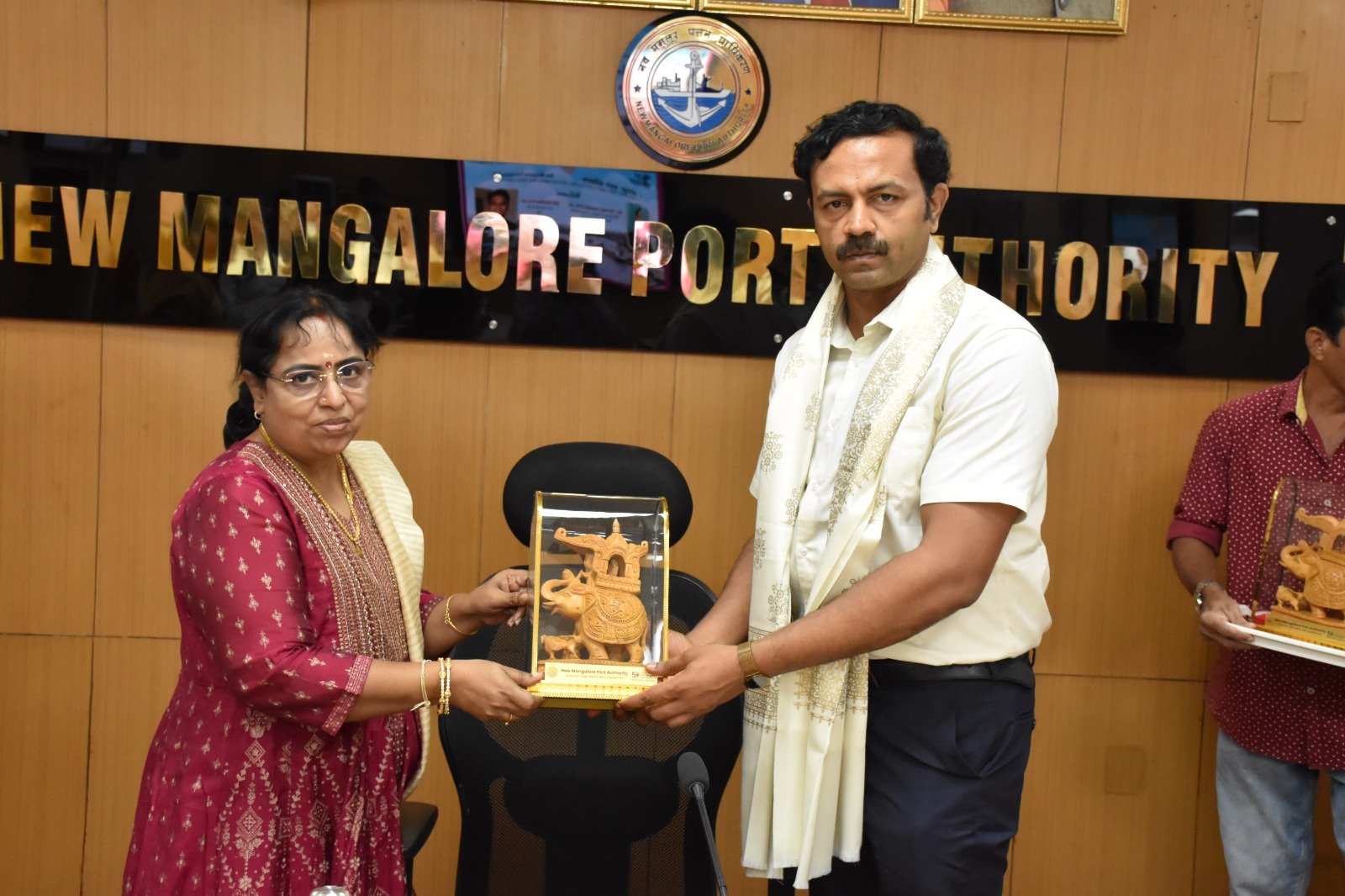
Karnataka Tourism Secretary visits NMPA to review Cruise Tourism initiatives

MANGALURU : New Mangalore Port Authority on Tuesday welcomed Dr. Thrilok Chandra K. V., IAS, Secretary to Government of Karnataka, Tourism Department, along with Shri Darshan H.V., Deputy Commissioner, Dakshina Kannada, during their visit to the Port to review and discuss cruise tourism initiatives and future development prospects at New Mangalore Port. The dignitaries were received by Smt. S. Shanthi, Deputy Chairperson, NMPA, along with senior officers and employees of the Port.

HIsD0 pagAA4vd5 Karnataka Tourism Secretary visits NMPA to review Cruise Tourism initiatives

During the visit, detailed discussions were held on strengthening the cruise tourism potential of New Mangalore Port and enhancing Karnataka’s presence on the national and international cruise tourism map. The Secretary, Tourism Department reviewed passenger handling facilities, immigration and customs arrangements, cruise terminal infrastructure, and other operational facilities available for cruise vessel operations at the Port.

Officials of NMPA highlighted the strategic advantage of New Mangalore Port as a gateway to the major tourist attractions of Coastal Karnataka, including pristine beaches, temples, heritage destinations, eco-tourism locations, cultural circuits, and wellness tourism centres. Discussions were also held on attracting more domestic and international cruise liners to New Mangalore Port during the upcoming tourism seasons.

Dr. Thrilok Chandra K. V., IAS, appreciated the initiatives undertaken by NMPA towards improving passenger experience, strengthening tourism infrastructure, and promoting cruise tourism in the region. Senior officials from the Tourism Department and NMPA participated in the review meeting and discussions.

Coinciding with the visit, NMPA also marked the arrival of the cruise vessel M.S. Seven Seas Navigator, the fifth and final cruise vessel call of the current cruise season at the Port. The Bahamas-flagged luxury cruise vessel, operated by Norwegian Cruise Line, arrived at New Mangalore Port with 427 passengers and 372 crew members onboard as part of its international cruise itinerary connecting Male, Cochin, Mangalore, Goa, and Mumbai. Traditional cultural welcome to the cruise passengers, tourism facilitation arrangements, sightseeing tours and guided meditation sessions were organised by NMPA and associated agencies for the cruise guests during their visit to the Port city.

With the arrival of M.S. Seven Seas Navigator, New Mangalore Port Authority concluded the current cruise tourism season with a total of 5 cruise vessel calls and 2,079 cruise passengers handled during the season, reaffirming NMPA’s growing role as an emerging cruise tourism gateway on India’s western coast.

NMPA continues to work closely with tourism authorities, cruise operators, and stakeholders to further enhance cruise tourism infrastructure and position Coastal Karnataka as a preferred cruise destination in the country.

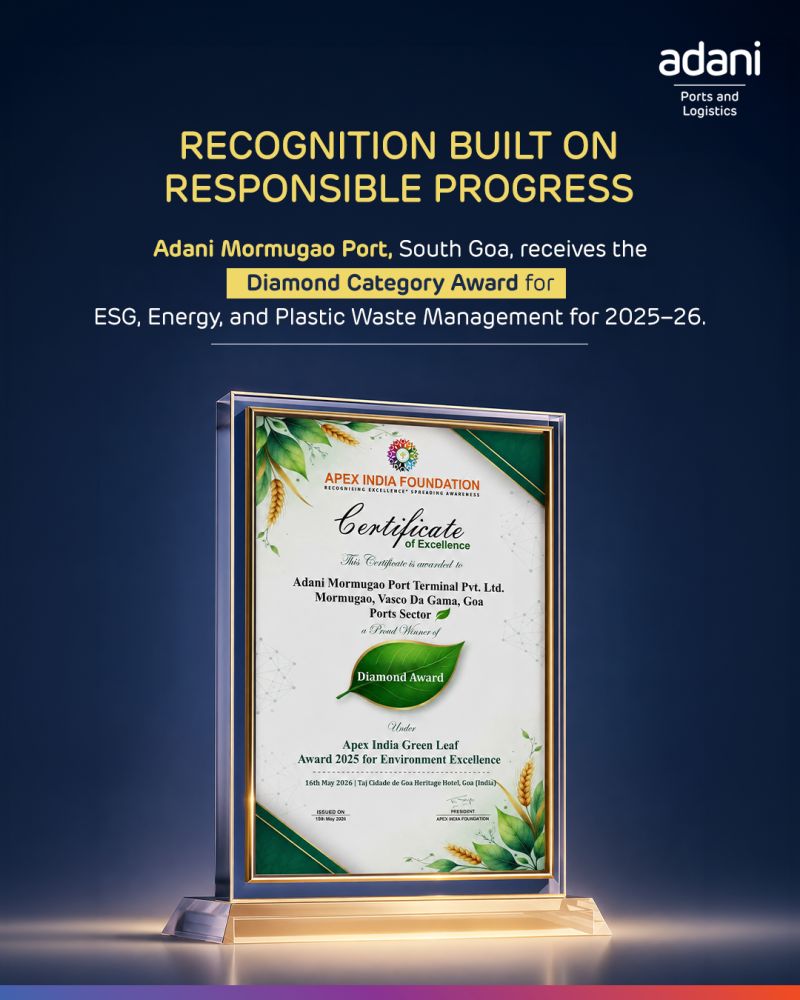
Adani Mormugao Port receives Diamond Category Award for Excellence in ESG, Energy & Plastic Waste Management (2025–26)

GOA : Demonstrating its continued commitment to sustainable and responsible port operations, Adani Mormugao Port has been conferred the prestigious Diamond Category Award for Excellence in ESG, Energy & Plastic Waste Management (2025–26).

The recognition underscores the port’s dedicated efforts towards advancing Environmental, Social and Governance (ESG) excellence, strengthening energy efficiency initiatives, and implementing impactful plastic waste management practices across its operations.

The award highlights Adani Mormugao Port’s focus on integrating sustainability into core business functions through responsible resource utilization, environmental stewardship, and operational best practices. Through targeted measures aimed at reducing environmental impact, optimizing energy consumption, and promoting waste reduction and recycling, the port continues to set benchmarks in sustainable maritime and logistics operations.

Adani Mormugao Port has been actively driving initiatives aligned with cleaner operations, improved environmental compliance, and enhanced awareness around responsible waste management. Its sustained emphasis on reducing plastic footprints and encouraging environmentally conscious practices reflects a broader commitment to supporting India’s sustainability and circular economy goals.

The achievement also recognizes the collective contribution of employees, stakeholders, and operational teams whose collaborative efforts have strengthened the port’s sustainability journey and reinforced a culture of accountability and continuous improvement.

As ports increasingly play a pivotal role in global trade and supply chains, sustainability has become central to long-term operational resilience and growth. This award reaffirms Adani Mormugao Port’s commitment to balancing business excellence with environmental responsibility, while contributing to the development of greener, smarter, and future-ready port infrastructure.

More than an accolade, the Diamond Category Award stands as a testament to responsible action on the ground, innovation in environmental management, and a shared vision for sustainable progress within the maritime and logistics sector.