Home Blog Page 304

Xi agreed that “Iran can’t have nuclear weapons”, Strait of Hormuz must be opened: Trump after China visit

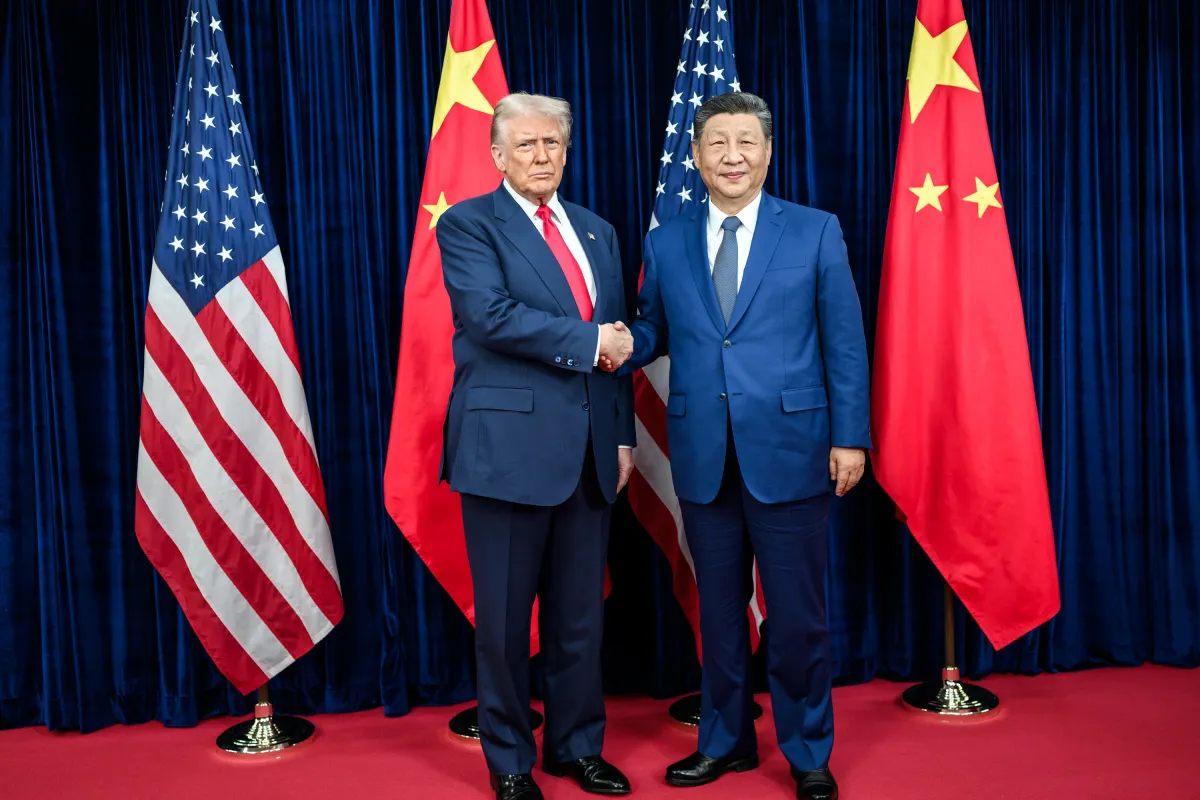
WASHINGTON D.C.: United States and China have agreed that “Iran can’t have nuclear weapons,” and that the Strait of Hormuz must be opened, according to US President Donald Trump. President Trump met with his Chinese conterpart XI Jinping during his three-day state visit to China, where he discussed the ongoing West Asia conflict, and other regional issues.

Speaking to reporters aboard Air Force One following his departure from China, President Trump asserted that the US controls the Strait of Hormuz, while emphasising Iran has been hit with 500 million dollars of loss per day in the past two and half weeks due to US’ naval blockade in the region.

“I have a lot of respect for him. On Iran, he feels strongly that they can’t have a nuclear weapon–said that very strongly, they can’t have a nuclear weapon–and he wants them to open up the strait. But as he said, they close it and you close them. And it’s true, we (US) control the strait, and they (Iran) have done no business in the last two and a half weeks, which is approximately 500 million dollars a day,” said President Trump.

President Trump further stated Chinese President Xi Jinping does not want to see a “fight for independence” in Taiwan because that would be a very strong confrontation.

“We had a great stay; it was an amazing period of time. President Xi is an incredible guy. President Xi and I talked a lot about Taiwan. He thinks they cannot have anything to do with what they’re doing. He’s very much against what they’re doing. We talked about Taiwan and we talked about Iran a lot, and I think we have a very good understanding on both. On Taiwan, he does not want to see a fight for independence because that would be a very strong confrontation. I heard him out. I didn’t make a comment on it, but I heard him out. I have a lot of respect for him,” Trump added.

Trump said that even though he did not say anything about it, Xi had brought it up.

Trump, in his gaggle with the press on Air Force One, was asked about the 1982 assurances former US President Ronald Reagan gave that the United States would not consult with China on arms sales to Taiwan, and if he consulted with them.

He said, “I think 1982 is a long way away. It was a big, far distance. I didn’t say anything about it, but he brought that up. He talked about that being an issue, obviously. So, what am I going to do–say I don’t want to talk to you about it because I have an agreement that was signed in 1982? No, we discussed arms sales too. We discussed Taiwan in great detail, actually. And I’ll be making a decision. The last thing we need right now is a war that’s 9,500 miles away. We’re doing very well.”

Source: ANI

India fails to achieve consensus at BRICS foreign ministers meet as Iran dissents on Palestine, Red Sea

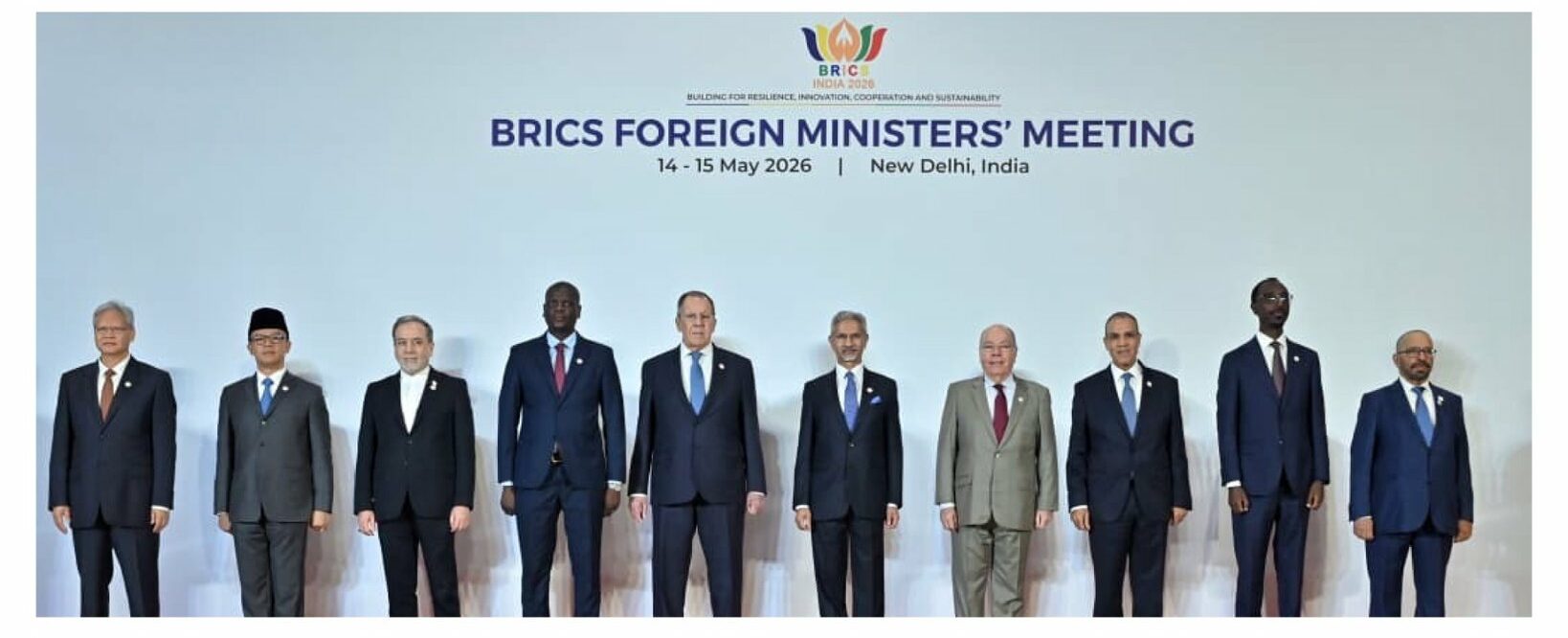
NEW DELHI : The BRICS Foreign Ministers’ Meeting hosted by India failed to reach a consensus because of Iran’s dissent on two paragraphs on Palestine and the Red Sea, it is learnt.A source revealed that Iran had an issue with paragraphs 26 and 29.

However, Iranian Foreign Minister Seyed Abbas Araghchi Friday, without naming the United Arab Emirates (UAE), blamed a country in the “region with a special partnership with Israel” for the lack of consensus during the meeting.

“The ministers recalled that the Gaza Strip is an inseparable part of the Occupied Palestinian Territory. They underlined, in this regard, the importance of unifying the West Bank and the Gaza Strip under the Palestinian Authority, and reaffirmed the right of the Palestinian people to self-determination, including the right to their independent State of Palestine. They called on the international community to support the Palestinian Authority in undergoing reforms to fulfil the Palestinians’ legitimate aspirations for independence and statehood,” paragraph 26 of the outcome document and chair statement published by India said.

It was noted in the document that a “member had reservation on some aspects of this paragraph.” Similarly, paragraph 29 on the situation in Yemen and ensuring free navigation through the Red Sea and Bab Al-Mandab Strait had a member dissenting on the final language being negotiated by the BRICS grouping.

The source confirmed that in both cases the dissent was solely by Iran. Indian diplomacy had focused on bridging the differences between Iran and the United Arab Emirates (UAE), both members of the grouping and on opposite sides of the ongoing conflict in West Asia to ensure a joint outcome document during the foreign ministers meeting.

The other paragraph that saw dissent was paragraph 21 of the outcome document, which spoke on the situation in West Asia. The UAE has faced the brunt of Iran’s retaliation since the US and Israel launched strikes on Tehran on 28 February.

The BRICS has been unable to issue a joint statement on the conflict due to both Tehran and Abu Dhabi sparring over which side’s aggression should be condemned.

Araghchi, while speaking to the Indian media Friday in the national capital, said that “it is a matter of fact that the final statement was blocked by a member-state due to its special relationship with Israel”.While the Iranian foreign minister did not directly name the UAE, he highlighted that it is a country within West Asia and houses American assets including military bases.

Israel also recently deployed an Iron Dome air defence system for the UAE during the active phase of the conflict, highlighting the growing security convergence between Tel Aviv and Abu Dhabi.

Paragraph 21 made it clear that there “were differing views among some members as regard to the situation in the West Asia/Middle East region”.

This is the second time that a BRICS meeting in the last two months under India’s chairship has failed to issue a joint statement.The foreign ministers meeting was held on 14 and 15 May in the national capital. A number of foreign ministers including Araghchi attended the meeting under the stewardship of External Affairs Ministers S. Jaishankar.

Last month during a meeting of the deputy foreign ministers and special envoys on the Middle East and North Africa (MENA), differences between Iran and the UAE, as well as India looking to dilute language on Palestine led to the lack of consensus for a joint outcome document.

This time round within the foreign ministers meeting, India has changed its position regarding the language surrounding Palestine.

‘Two-state solution with East Jerusalem as capital’
India changed its position on the recognition of a two-state solution with East Jerusalem as the capital of an independent Palestine between the meeting in April and the foreign ministers meeting on 14 and 15 May.

During the meeting in April of deputy foreign ministers and special envoys, India had diluted the language on Palestine to roughly two paragraphs, as reported by ThePrint. The earlier position of the BRICS grouping as elucidated by the joint statement under Brazil’s chairship last year had 16 paragraphs on the situation in Palestine alone.

The drastic change in the language had surprised a number of member states, as it was perceived that India was looking to make the language similar to an earlier statement announced during the India-Arab League foreign ministers meeting held in January.

However, the current chair statement published Friday following the foreign ministers meeting had four paragraphs on Palestine including one reverting to recognising a two-state solution with East Jerusalem as the capital of an independent Palestine.

The formulation in the current document published by the Ministry of External Affairs is similar to the 2025 language found in joint statements from the BRICS leadership.

“They reaffirmed their support for the State of Palestine’s full membership in the UN in the context of the unwavering commitment to the two-state solution, in accordance with international law, including relevant UN Security Council and General Assembly resolutions, and the Arab Peace Initiative, that includes the establishment of a sovereign, independent and viable State of Palestine within the internationally recognised 1967 borders, which included the Gaza Strip and the West Bank, with East Jerusalem as its capital, in order to achieve the vision of two States living side by side, in peace and security,” said the agreed language in the chair statement Friday.

Source : The Print

India’s exports hit record USD 863 bn despite global turmoil; on track for USD 2 trillion target by 2030: Piyush Goyal

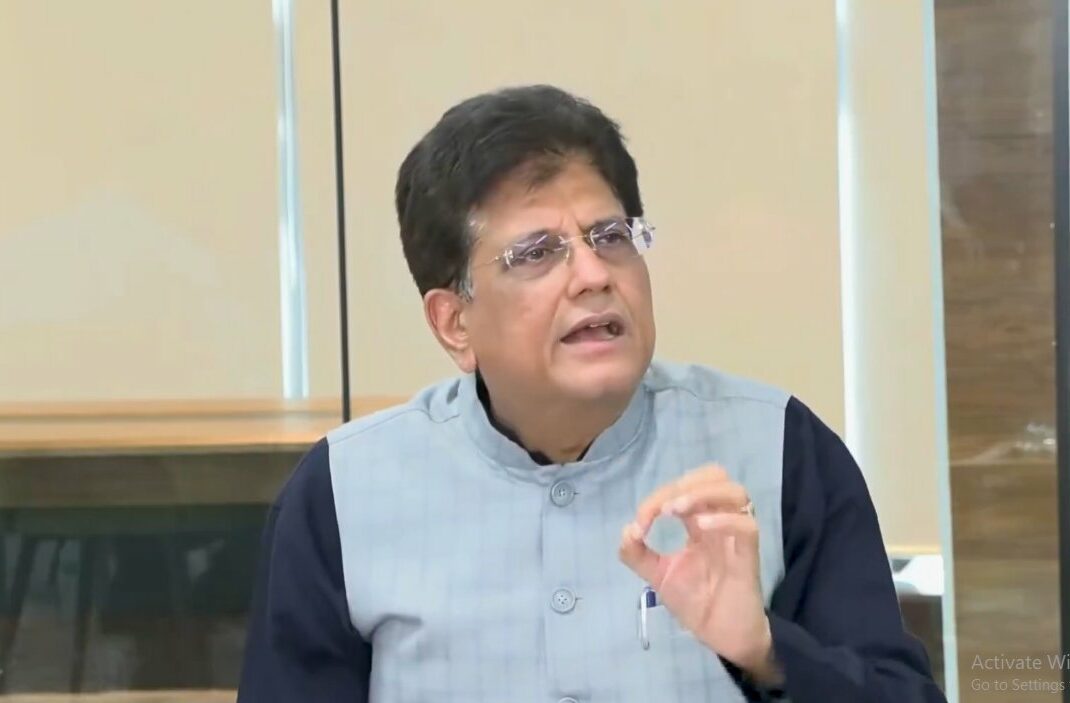
NEW DELHI: India’s exports touched a record USD 863 billion in FY26 despite global geopolitical tensions and disruptions in international trade, Union Commerce and Industry Minister Shri Piyush Goyal said on Friday, asserting that the country remains on track to achieve its USD 2 trillion exports target by 2030.

Speaking to reporters during his visit to the Mega Common Facility Centre (CFC) at SEEPZ in Mumbai, Goyal said India’s exports continued to grow even as several economies faced pressure from wars, tariffs and slowing trade flows.

“This year’s export has been announced in Delhi — 863 billion dollars, record export,” Goyal said. “In the whole world, export is decreasing, international trade is badly affected because of the prevailing situation, but it is increasing in India.“

The minister said the government is targeting USD 2 trillion exports by 2030 and is modernising export infrastructure and expanding market access through free trade agreements (FTAs) to support that goal.

“As it increases to 2 trillion dollars, our processes will improve,” he said.

Shri Goyal said India’s exports remained resilient despite global challenges, including tariff actions by the United States and the ongoing West Asia crisis.

“America had 50% tariff… but we immediately looked for alternate markets. We immediately got cracking on new free trade agreements to open new markets,” he said, referring to the US tariff measures.

According to the minister, India has signed nine FTAs in the past three-and-a-half years, covering 38 developed countries.

“All of these collectively give us an opening on a preferential basis to two-thirds of global trade,” he said.

On the proposed India-US trade agreement, Goyal said negotiations are progressing steadily, and most issues have already been resolved.

“It’s a very significant deal. We are in continuous dialogue with them. We have already settled most of the major terms,” he said.

He added that the agreement is expected to address the US Section 301 investigation against India while also expanding bilateral trade opportunities.

“We are looking at a holistic solution which will sort out the 301 investigations. It will sort out the opening of newer opportunities for export and import on both sides and will ultimately give India preferential access to the US market,” Goyal said.

The minister also said the government had increased import duties recently as a precautionary step to conserve foreign exchange reserves amid global uncertainty.

“We have increased the import duties because we believe that we must conserve foreign resources at this point in time,” he said.

Even so, he stressed that India’s external position remains comfortable.

“We have 700 billion dollars, which is enough to cover 11 months of imports. The IMF says anything above 8 months is very good,” he said.

The minister further said Prime Minister Shri Narendra Modi‘s ongoing diplomatic outreach, including the UAE and Nordic visits, is aimed at strengthening India’s energy security, trade and investment partnerships.

“He has entered into very massive agreements to create a strategic petroleum reserve in India for increasing the LPG supplies to India,” Shri Goyal said.

He also linked India’s improving global standing to higher remittance inflows and stronger economic engagement abroad.
“Today our world has the highest remittances — 135 billion dollars,” he said.

Single integrated hub to connect 46 organizations, Slashing administrative costs and boosting productivity : Piyush Goyal

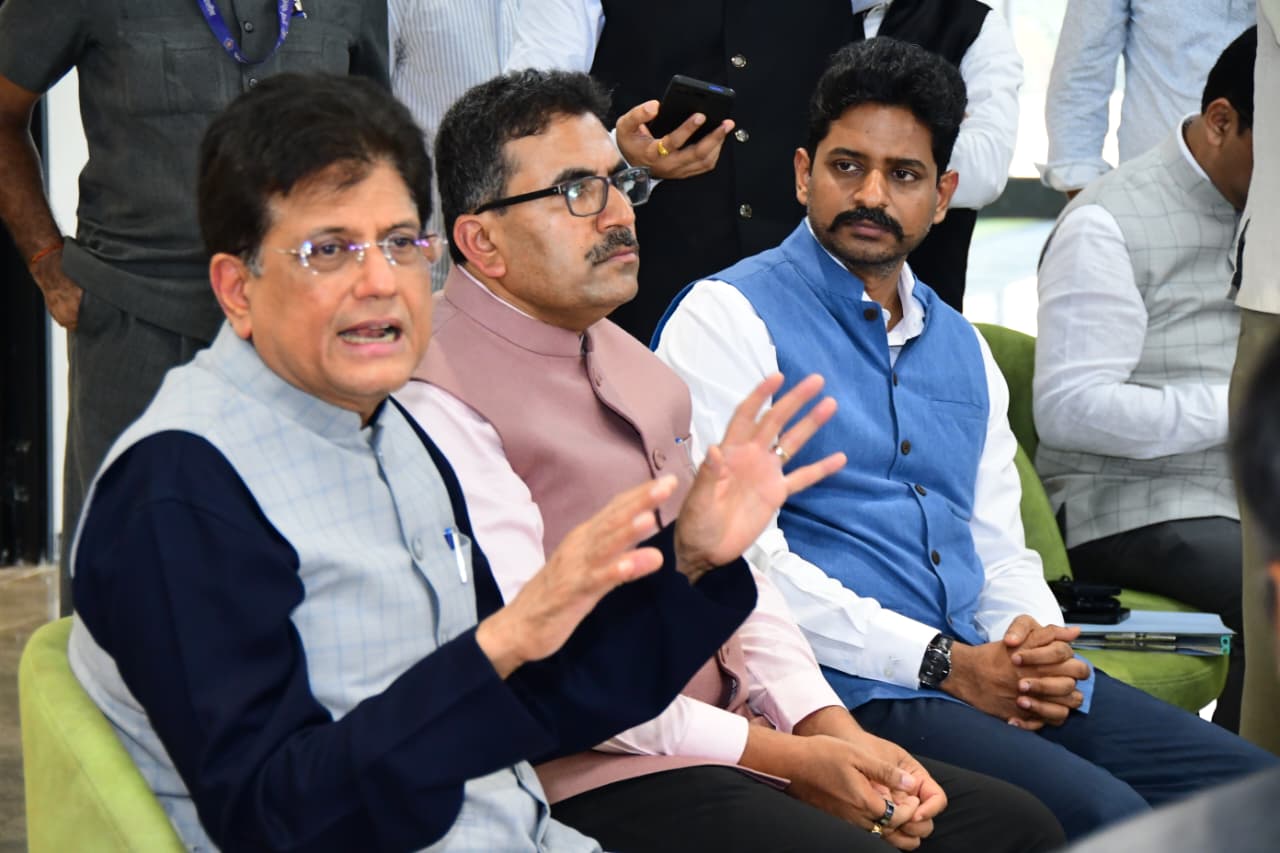
MUMBAI : In a major move towards a more citizen and business-friendly administration, Union Minister for Commerce and Industry, Shri Piyush Goyal, has unveiled a grand vision to co-locate all the various arms and offices of the Ministry into a single, integrated central hub in Mumbai on Friday.

Shri Goyal stated that the initiative aligns directly with Prime Minister Shri Narendra Modi’s vision of ‘Ease of Living’ and ‘Ease of Doing Business.’ He emphasized that India’s 140 crore citizens should find it comfortable, easy, and seamless whenever they need to interface or work with the government.

Reviewing the working of all Ministry offices in Mumbai, the Union Minister noted that in Mumbai alone, there are 20 offices of 12 different organizations scattered across various locations, occupying lakhs of square feet of premium space worth hundreds of crores of rupees. Under the new plan, Shri Goyal announced that the Ministry will bring all these offices together wherever feasible to converge at one single, integrated point. This centralized facility will be equipped with high-quality audio-visual infrastructure, connecting stakeholders to 46 different organizations under the Ministry. Even organizations without dedicated physical branches in Mumbai, such as the Spices Board, will be easily accessible through this integrated system.

The Minister emphasized that this turnaround will fundamentally change the way citizens interact with the Government of India. Dedicated personnel will be stationed at the hub to respond to any stakeholder requirement, which will significantly bring down the cost of administration, improve overall productivity, and make life easier and simpler for businesses and common citizens alike.

Highlighting the environmental benefits of the move, Shri Piyush Goyal stated that the co-location model will actively promote green governance. The consolidation is set to conserve energy, save fuel, and drastically reduce unnecessary travel for both the public and government officials.

The Minister announced that India’s export promotion missions will run directly out of these integrated offices. This structural synergy is designed to aggressively facilitate trade operations and anchor the nation’s ambitious export targets, driving toward $1 trillion for this year and $2 trillion by 2030.

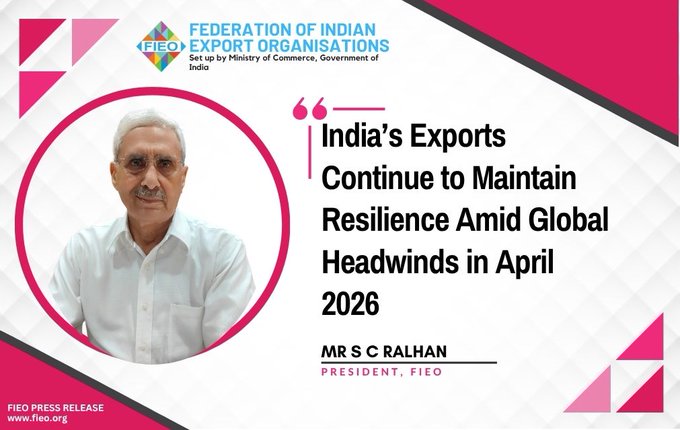
India’s exports continue to maintain resilience amid global headwinds in April 2026 : FIEO President

NEW DELHI : India’s Merchandise Exports registered an impressive increase in April 2026, reflecting the resilience and competitiveness of the country’s export sector despite challenging global economic conditions and geopolitical uncertainties. India’s merchandise exports rose to USD 43.56 billion in April 2026 from USD 38.28 billion in April 2025, while imports increased sharply to USD 71.94 billion from USD 65.38 billion during the same period last year. India’s overall exports of goods and services are estimated at USD 80.80 billion during April 2026.

Commenting on the trade data, Mr S C Ralhan, President of the Federation of Indian Export Organisations (FIEO), said that the growth in merchandise exports in April 2026 demonstrates the underlying strength and adaptability of Indian exporters amid an increasingly uncertain global trade environment. Despite geopolitical tensions, supply chain disruptions and rising logistics costs, Indian exporters have continued to perform strongly across key sectors.

However, India’s merchandise trade deficit widened to USD 28.38 billion in April 2026. FIEO Chief said that the widening deficit has largely been attributed to the ongoing conflict in the Middle East, which disrupted global shipping routes, elevated freight and energy costs, and significantly impacted India’s import bill. Mr Ralhan further added that the sharp rise in imports, particularly petroleum and electronic goods, coupled with elevated energy prices due to the Middle East conflict, has also added to the woes of the widened the trade deficit. However, robust overall exports of goods and services at USD 80.80 billion indicate that India’s external sector continues to remain on a stable footing.

Mr Ralhan emphasized that engineering goods, electronics, pharmaceuticals and textiles continue to drive export growth and reflect India’s growing manufacturing capabilities and diversification in global markets.

India’s top export items during April 2026 included Engineering Goods, Petroleum Products, Electronic Goods, Drugs & Pharmaceuticals, Organic & Inorganic Chemicals, Gems & Jewellery, RMG of All Textiles, Rice, Cotton Yarn/Fabs/Made-ups/Handloom Products and Plastic & Linoleum products. Which India’s major import items included Petroleum Crude & Products, Electronic Goods, Gold, Machinery (Electrical & Non-Electrical), Transport Equipment, Non-Ferrous Metals, Coal/Coke/Briquettes, Organic & Inorganic Chemicals, Artificial Resins/Plastic Materials and Vegetable Oil.

The top export destinations for India during April 2026 were USA, Singapore, UAE, China, Bangladesh, Netherlands, Tanzania, UK, Australia and Sri Lanka, while the leading import sources included China, Russia, USA, UAE, Saudi Arabia, South Korea, Japan, Singapore, Germany and Indonesia.

Mr Ralhan also stressed the need for continued policy support to exporters, stable logistics supply chains and enhanced market access initiatives to sustain export momentum in the coming months. “Going forward, India must continue focusing on export diversification, value addition, trade facilitation and strengthening of strategic trade partnerships to achieve sustained export growth and improve global competitiveness,” he reiterated.

India begins FY27 on Strong Export Note as April Trade Deficit Narrows

NEW DELHI: India began FY27 on a strong trade note, with overall exports rising to USD 80.80 billion in April 2026 and the country’s overall trade deficit narrowing year-on-year to USD 7.81 billion, according to data released by the Commerce Ministry on Friday.

India’s overall exports, including merchandise and services, stood at USD 80.80 billion in April 2026, up from USD 71.13 billion in April 2025, according to data released by the Commerce Ministry on Friday.

India’s overall imports during the month stood at USD 88.61 billion, up from USD 82.29 billion a year ago.

However, despite the rise in imports, the country’s overall trade deficit narrowed sharply to USD 7.81 billion in April 2026 from USD 11.16 billion a year ago, aided by strong growth in exports.

The data showed that merchandise exports increased to USD 43.56 billion in April 2026 from USD 38.28 billion in the same month last year, while services exports rose to USD 37.24 billion from USD 32.85 billion.

On the import side, merchandise imports climbed to USD 71.94 billion in April 2026 against USD 65.38 billion a year ago. Services imports, however, eased slightly to USD 16.66 billion from USD 16.91 billion.

According to the Commerce Ministry data, non-petroleum merchandise exports registered a growth of 9.01 per cent in April 2026 compared to April 2025. Non-petroleum merchandise imports rose 19.33 per cent during the same period.

Among key export sectors, engineering goods exports increased to USD 10.35 billion in April 2026 from USD 9.52 billion a year ago, while electronic goods exports rose sharply to USD 5.18 billion from USD 3.69 billion. Petroleum product exports also increased to USD 9.59 billion from USD 7.12 billion.

On the import front, electronic goods imports rose to USD 12.78 billion from USD 9.25 billion, while gold imports surged to USD 5.63 billion from USD 3.10 billion in April 2025.

The data also showed that India’s exports to the United States rose marginally to USD 8.48 billion in April 2026 from USD 8.38 billion a year earlier. Exports to Singapore jumped to USD 3.20 billion from USD 1.14 billion, while exports to the UAE declined to USD 2.19 billion from USD 3.43 billion.

China remained India’s top import source during the month, with imports rising to USD 11.97 billion from USD 9.91 billion a year ago. Imports from Russia also increased to USD 7.36 billion from USD 6.23 billion.

The Commerce Ministry data further showed that India’s total trade during FY 2025-26 reached a record USD 863.1 billion, compared to USD 825.3 billion in FY 2024-25, registering a growth of 4.6 per cent.

NICDC Strengthening India-Portugal Industrial Partnerships

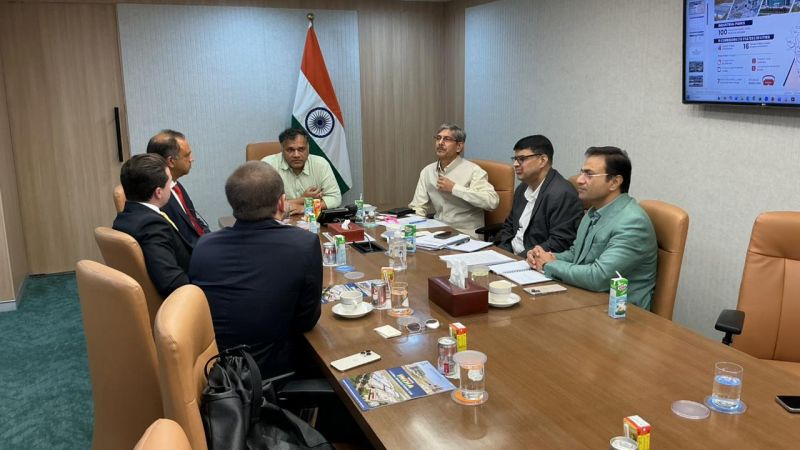
NEW DELHI : India and Portugal are set to deepen industrial and infrastructure cooperation following a high-level meeting between the National Industrial Corridor Development Corporation (NICDC) and leading Portuguese business representatives.

Shri Rajat Kumar Saini, CEO & Managing Director of NICDC, held discussions with Mr. Altino Álvares, President of PIBhub – Portugal India Business Hub, and Mr. Luís Carlos de Sousa Ferreira, CEO of Mota-Engil, to explore new avenues of collaboration in infrastructure, industrial development, and investment facilitation.

The meeting highlighted the growing momentum in India–Portugal bilateral relations and the increasing role of Portuguese enterprises in India’s evolving industrial ecosystem. Discussions focused on strengthening business linkages through PIBhub and leveraging Mota-Engil’s extensive global expertise in engineering, construction, and infrastructure development.

During the interaction, Shri Saini presented NICDC’s vision of developing world-class industrial smart cities across India. He outlined investment opportunities available in 20 Greenfield Industrial Smart Cities being developed under the industrial corridor programme, featuring plug-and-play infrastructure, multimodal connectivity, sustainable urban planning, and investor-ready ecosystems designed to support global manufacturing and logistics growth.

The discussions also explored potential collaboration with Portuguese industries and the possibility of organizing a dedicated Portuguese Conclave in India. The proposed initiative aims to create a stronger engagement platform for Portuguese investors and businesses seeking opportunities in India’s rapidly expanding industrial and infrastructure sectors.

NICDC reiterated its commitment to providing end-to-end facilitation, institutional support, and investor handholding services for international companies. The corporation also extended a warm invitation to Portuguese enterprises to participate in India’s next-generation industrial city development initiatives, reinforcing the shared commitment of both nations toward economic cooperation and sustainable industrial growth.

DG Shipping, ASSOCHAM hold Strategic Talks to Strengthen India’s Maritime Trade Ecosystem

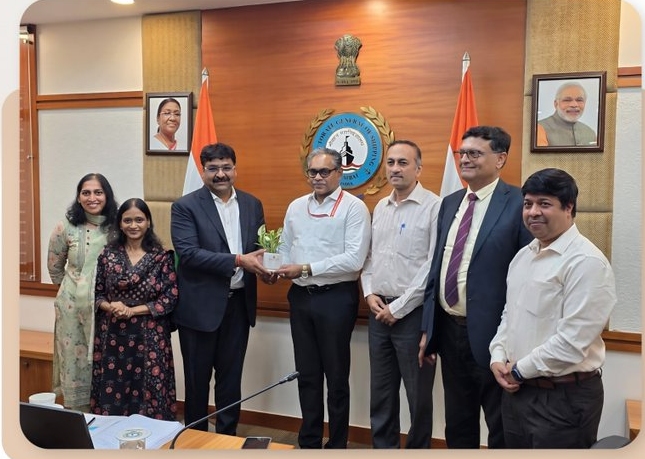
MUMBAI: The Directorate General of Shipping (DG Shipping) welcomed a delegation from ASSOCHAM on Thursday, (14 May 2026) for a constructive interaction focused on strengthening India’s export-import ecosystem and enhancing collaboration between the maritime administration and industry stakeholders. The meeting was held under the leadership of Shri Shyam Jagannathan, IAS, who engaged with industry representatives on key issues impacting the shipping and trade sector.

The interaction featured a courtesy call by Mr. Ravi Gupta, Chair, ASSOCHAM National Council on Exports and Trade,and included detailed discussions on important operational and commercial concerns such as ocean freight trends, fuel surcharges, terminal handling charges across shipping lines, and possible resolution mechanisms amid the evolving global trade environment.

Both sides also explored future avenues of collaboration and partnership between DG Shipping and ASSOCHAM to support trade facilitation, improve maritime efficiency, and strengthen industry engagement. The discussions reflected a shared commitment towards building a resilient and globally competitive maritime logistics ecosystem for India

The interaction underscored the shared commitment of both organisations towards improving trade facilitation, enhancing maritime efficiency, and ensuring a more resilient logistics framework for India’s growing international trade ambitions.

The discussions also explored future avenues of cooperation and partnership between DG Shipping and ASSOCHAM, with a focus on creating stronger industry engagement and addressing operational challenges faced by exporters and importers.

The ASSOCHAM delegation comprised prominent industry representatives, including

Mr. Ravi Gupta – Chair, ASSOCHAM National Council on Exports and Trade & Executive Director, Shree Renuka Sugar Mills, Mr. Milind Hardikar – Chair, ASSOCHAM Maharashtra State Council & Director Group Strategic Initiatives, Welspun World, Mr. Rahul Singh – General Manager, Welspun Group, Ms. Sumita Chakravarty – Regional Director, ASSOCHAM, Ms. Anita Naik – Joint Director, ASSOCHAM

Industry observers view the engagement as a significant step towards fostering stronger public-private collaboration in the maritime and logistics sector at a time when global supply chains continue to face volatility and cost pressures.

The meeting concluded with a reaffirmation of the importance of continuous dialogue between the government and industry bodies to build a robust, efficient, and future-ready maritime trade ecosystem that supports India’s economic growth and export competitiveness.

Allcargo Logistics Limited delivers Stable Q4FY26 Performance with continued improvement in Operational Profitability

MUMBAI: Allcargo Logistics Limited, following the successful completion of its restructuring plan and merger of its domestic supply chain business comprising Express Distribution and Contract Logistics, announced its consolidated financial results for the quarter ended March 31, 2026.

During the quarter, Allcargo Logistics Limited started operating as a consolidated domestic logistics company following the merger, enabling a more integrated approach across its express and contract logistics businesses. Q4FY26 remained focused on driving operational efficiencies, strengthening pricing discipline and enhancing service levels.

Mr. Ketan Kulkarni, Managing Director and Chief Executive Officer of Allcargo Logistics Limited said, “FY26 marked an important phase in Allcargo Logistics’ journey as we brought our domestic logistics businesses together under a more integrated and future-ready framework. Over the year, we focused on building a leaner and more responsive operating model, backed by stronger process alignment, sharper cost management, and consistent service delivery across our Express and Contract Logistics businesses.

Technology continues to play a central role in this transformation. We are strengthening digital capabilities across network planning, shipment visibility, warehouse operations, and customer interfaces to create a more connected and efficient logistics ecosystem. These capabilities are helping us improve execution, drive operational agility, and deliver greater value to customers.

Going ahead, our emphasis will remain on scaling the business sustainably through stronger customer partnerships and deeper market penetration.”

Financial Performance:

  • The company recorded EBITDA growth of 41% year-on-year for Q4FY26, with Profit Before Tax (before Exceptional items) rising by 205.4%, revenue continues to remain stable
  • Express Distribution: Registered stable Revenue growth year-on-year for Q4FY26, driven by improved network utilisation, customer additions and enhanced service quality
  • Contract Logistics (CL): Registered stable Revenue growth year-on-year for Q4FY26, supported by stable client relationships and gradual demand recovery
  • Full Year FY26 Performance: Revenue grew by 5%, EBITDA increased by 16.5%, and PBT rose by 95.9%, reflecting steady improvement in operational efficiency and profitability post integration.
  • Outlook: For FY27, the Company expects both its Express and Consultative Logistics businesses to enter a more growth-oriented phase. The key growth drivers are stabilised operating structure and stronger execution capabilities. Express logistics will focus on network-led scale-up, service-led customer acquisition, and regional penetration. While Contract Logistics will prioritise warehousing productivity, retail logistics expansion, and strategic account growth. With infrastructure, customer readiness, and operating systems in place, the Company aims to drive profitable growth through sharper execution and improved operating leverage across the domestic logistics value chain.

About Allcargo Logistics Limited (Post NCLT Order)

Allcargo Logistics Limited under the composite Scheme of Arrangement has demerged its International Supply Chain (ISC) business and merged its Domestic Supply Chain business.

Domestic supply chain business houses express distribution and consultative logistics. Allcargo Logistics combines legacy, innovation, and customer-centricity with a robust distribution network, deep expertise, and a digital-first approach to provide reliable logistics for MSMEs, retailers, and enterprises. With a nationwide network covering 99% of India’s districts and a growing presence across Asia, the company offers unparalleled reach and service capability. Its key business verticals include Express Distribution, Air Freight, E-commerce Logistics, First and Last Mile Delivery, and more. The company also offers specialized B2C services such as Laabh, Bike Express, and Student Express, designed to meet the evolving needs of diverse customer segments. Allcargo group stays true to its strong commitment to adhere to Environmental, Social, and Governance (ESG) standards and continues to direct efforts towards enhancing its people, technology as well as business processes and operations on a regular basis. The group has set out to achieve 100% carbon neutrality by 2040.

CONCOR and Maersk explore Strategic Collaboration to strengthen Multimodal Logistics Connectivity

NEW DELHI: State-owned logistics major Container Corporation of India Limited (CONCOR) and global integrated logistics leader A.P. Moller – Maersk have initiated discussions to deepen cooperation in the areas of multimodal logistics, integrated supply chains, and seamless cargo connectivity across India.

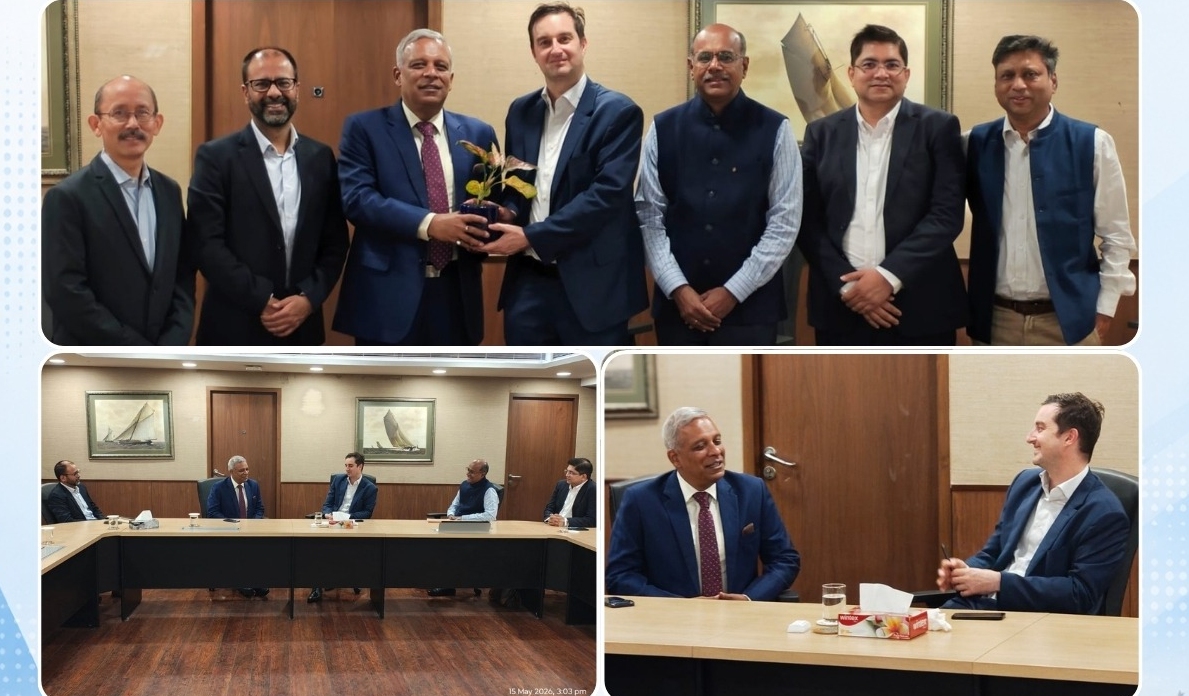
Mr. Thomas Theeuwes, Managing Director – South Asia, A.P. Moller – Maersk, called on Shri Sanjay Swarup, Chairman and Managing Director of CONCOR, at CONCOR Bhawan in New Delhi on Friday, 15 May 2026. The meeting focused on exploring opportunities for mutual collaboration aimed at enhancing efficiency, connectivity, and innovation in India’s logistics ecosystem.

According to a post shared by CONCOR, both sides held productive discussions to strengthen seamless multimodal transportation solutions and identify avenues for future partnership. The engagement reflects the growing emphasis on integrated logistics models that combine rail, road, port, and warehousing infrastructure to support faster and more reliable cargo movement.

Sharing his thoughts on the interaction, Shri Sanjay Swarup stated that “meaningful conversations pave the way for meaningful collaborations,” while highlighting the importance of advancing integrated and efficient logistics solutions. He further emphasized that collaborative efforts between leading logistics players are essential for building smarter supply chains and stronger multimodal connectivity.

The meeting comes at a time when India’s logistics sector is undergoing rapid transformation under initiatives focused on infrastructure modernization, supply chain optimization, and reduction of logistics costs. Partnerships between domestic logistics operators and global shipping companies are expected to play a significant role in enhancing trade competitiveness and supporting India’s growing export-import ecosystem.

Industry observers believe that closer collaboration between CONCOR and Maersk could further strengthen intermodal transportation capabilities, improve cargo visibility, and accelerate the development of technology-driven logistics solutions for customers across sectors.