Home Blog Page 315

4th Korean oil tanker successfully transits through Red Sea

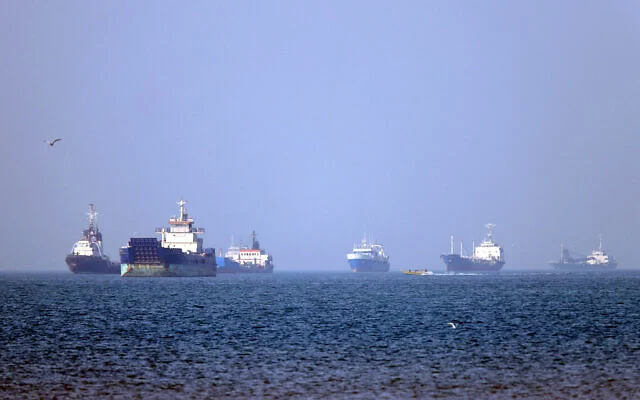
SEOUL : A Korean vessel has successfully passed through the Red Sea and is currently en route home, marking the fourth oil shipment of its kind, the oceans ministry said Friday.

The arrival comes as Seoul has been scrambling to bring in oil through alternative routes amid the ongoing blockade of the Strait of Hormuz.

After loading oil shipments at Saudi Arabia’s Yanbu Port, the ship passed through the Red Sea at around 11:00 a.m., the Ministry of Oceans and Fisheries said. Details of the vessel’s movement were withheld due to safety reasons.

The ship is the fourth Korean oil carrier to transit the waterway that connects the Indian Ocean to the Mediterranean via and Suez Canal since the country began using the waterway to avoid the Strait of Hormuz.

That water lane has effectively been blocked by Iran for over a month.

The first Korean ship to take the alternate route since the war began arrived at a port in the southwestern city of Yeosu on Thursday, carrying some 2 million barrels of oil, according to sources familiar with the matter. The ship had left the Red Sea last month.

Two more Korean oil carriers successfully passed through the Red Sea earlier this week.

The ministry said it will continue efforts to stabilize oil shipments to the country and take steps to ensure the safety of Korean vessels and crew members navigating through the region.

Qatar dispatches first LNG shipment via Strait of Hormuz since start of conflict

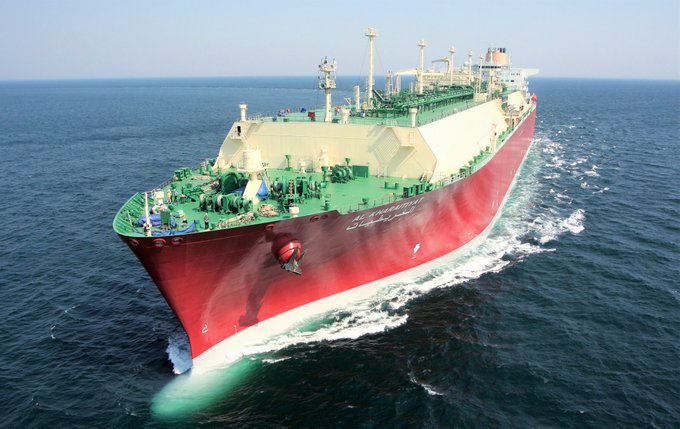
A liquefied natural gas (LNG) tanker from Qatar has successfully transited the Strait of Hormuz, marking the first time the nation has exported the fuel from the region since the outbreak of the Iran war.

According to ship-tracking data compiled by Bloomberg, the vessel Al Kharaitiyat exited the waterway and is currently in the Gulf of Oman. The tanker, which was loaded at the Ras Laffan export plant earlier this month, has listed Pakistan as its next destination.

The journey of the Al Kharaitiyat offers the first tentative signs that energy flows could resume from the Persian Gulf, which has been largely paralyzed since late February. Data indicates the ship utilized a northern route hugging the Iranian coast, a path currently approved by Tehran.

Before the conflict, the region typically saw roughly three LNG shipments per day. While this single transit is a notable development, it remains a fraction of prewar export levels.

The successful passage follows several previous attempts by Qatar to move shipments through the strait, all of which ended with tankers turning back due to security concerns.

The effective blockade of the Strait of Hormuz by both U.S. and Iranian forces has significantly choked global LNG supplies, driving prices higher and causing widespread energy shortages across Asia.

Qatar is a critical player in this global market, having produced nearly one-fifth of the world’s LNG supply last year. While at least two tankers from the Abu Dhabi National Oil Co. have reportedly traversed the strait recently, Qatar’s inability to move product has been a primary driver of recent market tightness.

Nakilat, the shipping arm of Qatar, is the listed owner of the Al Kharaitiyat. Neither Nakilat nor QatarEnergy responded to requests for comment regarding the vessel’s movement.

As the industry watches for further transits, the focus remains on whether the latest transit signifies a reliable reopening of the waterway or remains an isolated event.

For now, the successful exit of the vessel provides a rare moment of relief for energy-hungry markets in Asia that have been grappling with the fallout of the maritime standoff.

SCI reports record-breaking FY 2025–26 financial performance

MUMBAI : Shipping Corporation of India (SCI), has delivered an exceptional financial performance for FY 2025–26, marking one of the strongest years in the company’s history and reinforcing its position as India’s leading maritime shipping enterprise.

Driven by robust operational efficiency, disciplined financial management and resilient business fundamentals, SCI achieved its highest-ever annual Profit Before Tax (PBT) of ₹1,423 crore, reflecting strong growth across key business segments and sustained momentum in global shipping operations.

The company also reported a record quarterly EBITDA of ₹750 crore and an impressive annual EBITDA of ₹2,660 crore, underlining SCI’s strengthened earnings capacity and operational resilience amid evolving global trade and shipping market dynamics.

The stellar performance highlights SCI’s continued focus on fleet optimisation, efficient cost management, improved asset utilisation and strategic deployment across domestic and international trade routes. The company’s diversified portfolio spanning crude oil transportation, bulk cargo, container services, offshore operations and liner services has contributed significantly to its strong financial outcomes.

SCI’s performance also reflects the growing importance of India’s maritime sector in supporting global trade connectivity and national economic growth. As India advances its vision of becoming a major global maritime hub, SCI continues to play a crucial role in strengthening the country’s shipping capabilities and maritime infrastructure ecosystem.

The company reiterated its commitment to creating long-term value for all stakeholders through sustainable growth, operational excellence and customer-centric services. SCI also expressed gratitude to its employees, customers, partners, investors and stakeholders for their continued trust and support throughout the year.

With a strong balance sheet, improved profitability and renewed strategic momentum, SCI is well-positioned to capitalise on emerging opportunities in global shipping and logistics while contributing to India’s broader vision of Viksit Bharat and maritime self-reliance.

As the company sails into the future with renewed confidence, SCI remains focused on enhancing competitiveness, expanding operational capabilities and delivering sustainable growth in the years ahead.

Mundra, Vizhinjam, Dhamra to lead next wave of growth as Adani Ports & SEZ unveils 5-year capex plan

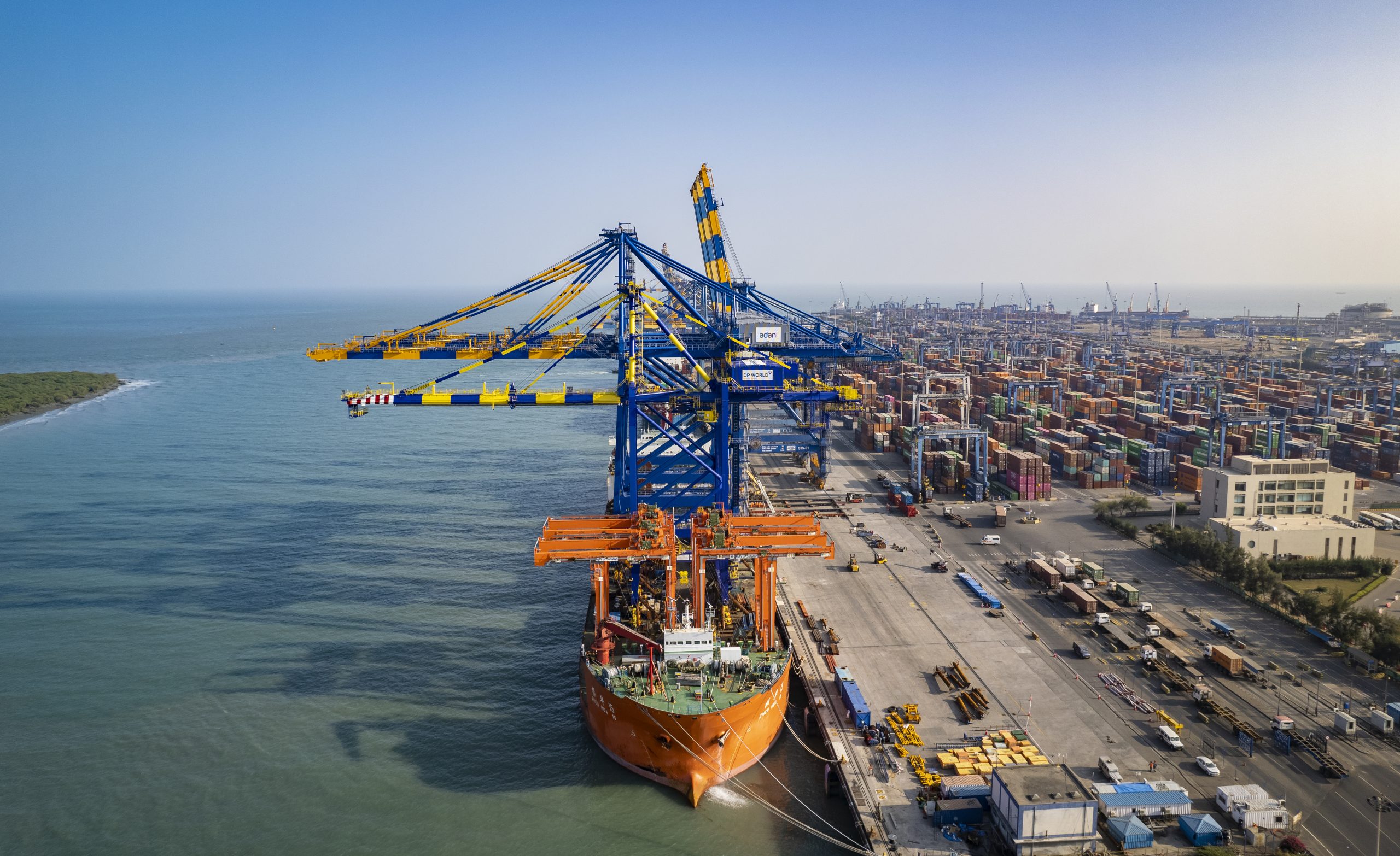
AHMEDABAD : With key ports such as Mundra and Vizhinjam running near full capacity, Adani Ports and Special Economic Zone Ltd (APSEZ) has prepared a ₹90,000 crore–₹1 lakh crore infrastructure blitz over FY27–FY31, accelerating expansion across container terminals, liquid cargo facilities and logistics networks to capture the next wave of India’s trade growth.

The aggressive scale-up will be centred around ports including Mundra, Vizhinjam, Dhamra, Hazira, Krishnapatnam, Ennore and Kattupalli, with over 60 per cent of the planned capex earmarked for domestic ports expansion. During the next five years, the company plans to spend ₹60,000–63,000 crore on domestic ports, with a large part of the investments directed towards expanding container handling infrastructure, liquid terminals and cargo evacuation systems.

A significant portion of the expansion will come from container terminals, with Mundra set to add 94 MTPA of capacity, while expansions are also planned at Vizhinjam, Ennore and Kattupalli. Dhamra will see an additional 49 MTPA capacity expansion driven by rising rail-sea-rail cargo movement, while Hazira’s liquid cargo handling capacity will be expanded by 11 MTPA. APSEZ is also scaling up dry cargo infrastructure at Krishnapatnam.

“We have accelerated the capex in Mundra because we are fully utilised now. CT5 is coming up and we have accelerated future expansion,” said Ashwani Gupta, CEO and whole-time director of APSEZ. Gupta added that the company has also fast-tracked investments in Vizhinjam after the port hit full utilisation levels amid disruptions caused by the West Asia crisis. “Vizhinjam is already at 100% capacity. During the West Asia crisis, we had many vessels waiting outside, so we are not waiting for Phase II and have already kicked it off,” he recently told investors while adding that the next phase is being developed as an automated terminal.

The company said more than 60% of incremental domestic port capacity will focus on container cargo, currently APSEZ’s fastest-growing cargo category with a 16% CAGR in container volumes between FY21 and FY26.

Beyond ports, APSEZ has earmarked around ₹9,000 crore for logistics infrastructure, including rail rakes, multimodal logistics parks, warehouses, agri silos and trucks. Another ₹13,000 crore will go towards marine fleet expansion, while ₹8,000 crore has been allocated for technology upgrades, automation and decarbonisation initiatives.

APSEZ also plans to invest ₹6,000–7,000 crore in international ports, largely centred around Colombo West International Terminal (CWIT) Phase-II. “Our commitment is to deliver twice the growth in five years with a 20% return on capital at the consolidated level,” Gupta said. “If India grows at 7%, we can grow at 10–11%,” he added.

APSEZ currently has a domestic port capacity of 653 MTPA and is targeting a capacity of more than 1 billion tonnes annually by 2031. The company said it also expects to unlock nearly 91 MMT of additional capacity through efficiency improvements at existing infrastructure.

On international operations, Gupta said overseas ports are witnessing strong momentum, particularly in Tanzania and Colombo. Of APSEZ’s international cargo volumes of around 22 million tonnes, North Queensland Export Terminal contributes roughly 11 million tonnes, with the balance coming from Tanzania, Haifa and Colombo.

The company spent around ₹15,000 crore in FY26 and has guided for ₹12,000–14,000 crore capex in FY27.

JSW Infrastructure Q4 & FY26 Results: Net Profit at ₹1,676 Crore

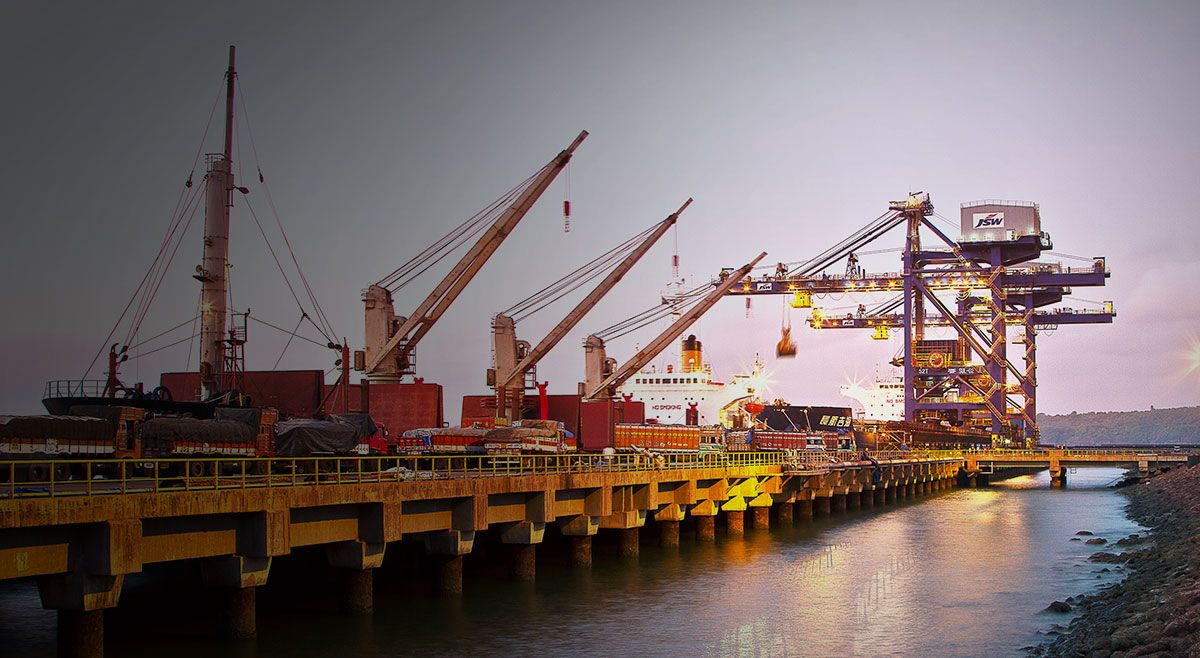
MUMBAI: JSW Infrastructure Limited, a part of the JSW Group and India’s second-largest private commercial port operator, announced its results for the fourth quarter and year ended 31st March2026.

Q4 FY2026 – Key Highlights

  • Cargo Handled Volumes of 31.6 Million Tonnes, up 1% YoY
  • Revenue from operations increased by 19% YoY to ₹1,522 Crore
  • Operating EBITDA of ₹769 Crore an increase of 20% YoY
  • Adjusted PAT1 of ₹528 Crore up 15% YoY

FY2026 – Key Highlights

  • Cargo Handled Volumes of 122 Million Tonnes, up 4% YoY
  • Third Party volumes increased by 3% YoY to 58.8 Million Tonnes
  • Revenue from operations increased by 20% YoY to ₹5,361 Crore
  • Operating EBITDA of ₹2,604 Crore an increase of 15% YoY in line with the Management guidance  
  • Adjusted PAT2 of ₹1,644 Crore up 12% YoY
  • Board has recommended a dividend of ₹0.90/share, subject to shareholder’s approval
  • Strong Balance Sheet
    • Net Debt/Operating EBITDA of 1.2x
    • Gross Debt of ₹6,410 Crore and Cash and Bank balance of ₹3,309 Crore

FY2026 – Key Updates

  • Public hearings successfully concluded for proposed Greenfield ports at Keni (Karnataka) and Murbe (Maharashtra)
  • Kolkata Container Terminal Project (6.3mtpa) Awarded and Concession Agreement signed with interim operations to commence shortly
  • JNPA Liquid Terminal (4.5mtpa) project completed, enabling transition from interim to full‑fledged commercial operations
  • Expanded Cargo Handling Capacity at Ennore Coal Terminal from 9.6mtpa to 11mtpa with enhanced capability to handle Cape‑size vessel
  • Acquisition of 25 rakes marks a significant step in scaling the logistics segment, an order for additional 40 rakes has been placed
  • Acquired brownfield rail siding in Kudathini, Karnataka
  • Commenced operations at Gati Shakti Terminal at Arakkonam, Chennai
  • Rated as “Low Risk” by Sustainalytics for Environmental, Social, and Governance (ESG) and CDP Rating at Management Level “A-”​

Operational & Consolidated Financial Performance

Q4 FY2026

During the quarter, the Company handled cargo volumes of 31.6 million tonnes which is higher by 1% over the last year.

The volume increase was mainly due to strong performance at South West Port, Dharamtar Port and Jaigarh Port on the back of higher volumes of Anchor customer, along with contributions from interim operations at the Tuticorin Terminal and the JNPA Liquid Terminal.

This growth was partly offset by lower volumes at the Fujairah facility due to disruptions arising from the ongoing Middle East conflict, as well as cargo deferments at Indian operations, particularly during the month of March, driven by lower availability of vessel and higher freight cost. However, the situation has improved significantly from April 2026 onwards, with vessel availability normalising and operations stabilising across our Ports and Terminals 

Increased realisations along with higher ancillary services like storage & transportation offered to domestic customers, growth in cargo volumes and INR depreciation led to a 12% year‑on‑year increase in port segment operational revenue, rising from ₹1,152 crore in Q4 FY2025 to ₹1,295 crore in Q4 FY2026. Operational EBITDA increased by 13% to ₹705 crore, compared to ₹626 crore in the corresponding quarter last year.

Navkar Corporation delivered strong operational and financial performance in Q4 FY2026. Total EXIM cargo volumes increased to 86,000 TEUs, reflecting a robust 14% year‑on‑year growth. Domestic cargo volumes rose sharply to 427,000 metric tonnes, a significant 56% increase compared to the same period last year.

The increase in port volumes along with the strong performance of Navkar Corporation’s and consolidation of newly acquired rail rakes business, resulted in a 19% increase in consolidated operational revenue, rising from ₹1,283 crore in Q4 FY2025 to ₹1,522 crore in Q4 FY2026. Operational EBITDA increased by 20%, reaching ₹769 crore compared to ₹641 crore in the corresponding quarter last year. Consequently, adjusted PAT1 stood at ₹528 crore, registering a 15% year‑on‑year growth.

FY2026

During the year, the company handled cargo volumes of 122 million tonnes which is higher by 4% over the last year. The increase in the volume is primarily due to strong performance at South West Port, Dharamtar Port and Jaigarh Port and interim operations at the Tuticorin Terminal and the JNPA Liquid Terminal. Overall growth was impacted by subdued volumes at Paradip Iron Ore Terminal (down 4.2 MT YoY) and lately by the Middle East conflicts impact at Fujairah Terminal.

The third-party volumes stood at 58.8 million tonnes, implying a growth of 3% YoY. As a result, the share of third-party in the overall volumes was 48%.

The higher volumes in ports and Navkar Corp alongwith consolidation of rail rakes operations from Feb 2026 translated to 20% growth in the revenue from operations which stood at ₹5,361 Crore. Increased revenue, the benefit of operating leverage and cost control meant EBITDA of ₹2,604 Crore (+15% YoY). As a result, adjusted PAT2 for the year stood at ₹1,644 Crore (+12% YoY).

Growth Strategy & Guidance

As previously announced the Company has embarked on a growth plan to increase its cargo handling capacity to 400 Million Tonnes Per Annum (MTPA) by FY 2030 or earlier, up from the current capacity of 183 MTPA. To achieve this, it has outlined a comprehensive capital expenditure (capex) plan of ₹30,000 crores. Additionally, the Company has earmarked ₹9,000 crores for expanding its logistics segment. This expansion aims to build on the Navkar acquisition to develop a robust pan-India logistics network. With a strong balance sheet, the Company is well-positioned to pursue both organic and inorganic growth without compromising its leverage ratios.

The Company is targeting consolidated operating revenue of ₹6,850 crore and operating EBITDA of ₹3,000 crore for FY2027. Building on FY2026 base, EBITDA is expected to grow by ~15% in FY2027 and nearly double by FY2028. This outlook reflects strong operational momentum, clear visibility on growth projects in the Ports business, and the transition of rolling assets from capex to EBITDA contribution within the Logistics segment.

NSFT achieves record-breaking monthly throughput in April 2026

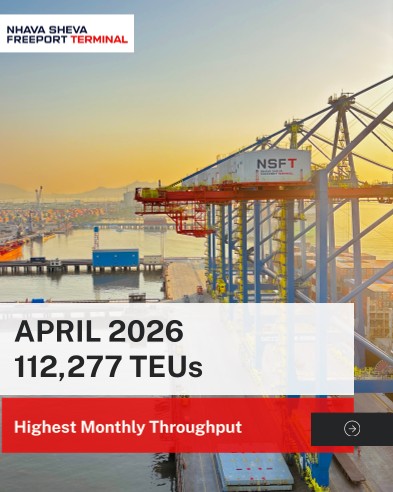
MUMBAI : Nhava Sheva Freeport Container Terminal (NSFT), part of the J M Baxi Group, has commenced FY 2026–27 on a strong note by recording its highest-ever monthly throughput in April 2026. The terminal handled an impressive 112,277 TEUs across 48 vessels, underscoring its growing operational strength, efficiency, and strategic importance within India’s maritime trade ecosystem.

jm baxi nsft NSFT achieves record-breaking monthly throughput in April 2026

The achievement reflects NSFT’s continued focus on operational excellence, seamless vessel handling, faster cargo evacuation, and enhanced terminal productivity. The record throughput demonstrates the terminal’s capability to efficiently manage rising EXIM volumes while maintaining reliability and service consistency for shipping lines, exporters, importers, and logistics stakeholders.

Located at Jawaharlal Nehru Port, India’s premier container gateway, NSFT plays a vital role in facilitating global trade connectivity and supporting the country’s expanding containerized cargo movement. The terminal’s advanced infrastructure, modern cargo handling systems, and integrated logistics capabilities have enabled it to maintain high levels of operational precision even amid increasing trade volumes.

Industry observers note that the strong performance aligns with the broader growth trajectory of India’s port and logistics sector, driven by rising manufacturing activity, export growth, and continued emphasis on multimodal connectivity and supply chain modernization.

The milestone also highlights the collaborative efforts of terminal personnel, shipping partners, transport operators, customs authorities, and various stakeholders who contribute to ensuring smooth cargo movement and vessel turnaround operations.

As trade demand continues to grow, NSFT remains focused on strengthening operational resilience, improving turnaround efficiency, and delivering reliable port services that support India’s vision of becoming a global manufacturing and logistics hub.

The management of J M Baxi Group expressed gratitude to customers, partners, workforce, and stakeholders for their continued trust and cooperation, reaffirming the terminal’s commitment to creating long-term value for the maritime and logistics community while contributing to the growth of the Indian port sector under the aegis of Jawaharlal Nehru Port Authority.

Gujarat ship sinks in US-Iran attack: One Indian killed, 17 crew members rescued; was heading from Dubai to Yemen

DUBAI: A Gujarat cargo ship MSV AL Faiz Noore Soleimani-I , sank in the crossfire between the Iranian and US navies in the Strait of Hormuz on Thursday night.

In the accident, an Indian crew member named Altaf Talab Ker, who was working in the engine room of the ship, died, while the remaining 17 crew members were rescued.

Speaking to Bhaskar, Adam Bhai, General Secretary of the Indian Sailing Vessels Association, shared this information. He also sent an email to the Indian Embassy in Dubai, requesting help.

The cargo ship MSV AL Faiz Noore Soleimani-I was carrying cargo from Dubai to the Yemeni port of Mukalla. A total of 18 crew members, including one gunman, were on board.

Secretary Adam said – after the firing, the ship filled with water

According to Adam Bhai, the ship was passing through the Strait of Hormuz at around 1 a.m. on May 7th. At that time, a firefight broke out between the Iranian and US navies. The Gujarati ship was also caught in the crossfire.

The firing caused extensive damage to the ship, which began to fill with water, leading to its sinking. Altaf Talab Ker, who was in the engine room, was seriously injured and died on the spot.

After the ship sank, the crew began their rescue efforts. Another vessel, MSV Prem Sagar-I, passing by, arrived to help. This ship safely evacuated 17 crew members.

All the rescued crew members arrived safely at Dubai Port late on May 8th. Adam Bhai also provided a video of the crew to Bhaskar. As soon as news of the incident reached Salaya, grief spread throughout the area and the fishing community.

Vessels Association seeks help from Indian Embassy

Following the accident, Adam Bhai, General Secretary of the Indian Sailing Vessels Association, immediately emailed the Indian Embassy in Dubai, informing them of the incident. He appealed for immediate intervention and humanitarian assistance.

The association has demanded the last rites of the deceased crew Altaf Talab Ker, death certificate and safe return of the 17 crew who reached Dubai.

The association has demanded that the necessary administrative procedures for the funeral of the deceased, Altaf Talab Ker, be completed expeditiously. In addition, the death certificate and postmortem report be made available in coordination with the local administration. The process of repatriating the crew to India has been initiated.

Source: Dainik Bhaskar

Iran’s Strait of Hormuz blockade leaves 1,500 ships, 20,000 crew stranded: IMO

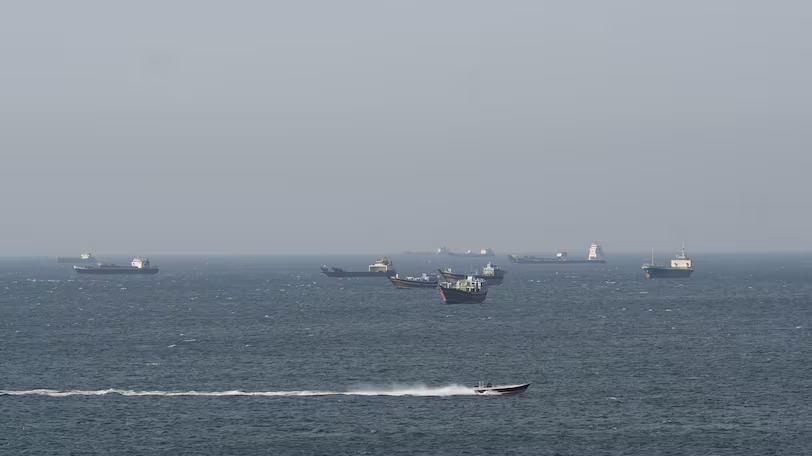
LONDON : The International Maritime Organization (IMO) has warned that nearly 1,500 vessels and about 20,000 crew members remain stranded in the Gulf following Iran’s blockade of the Strait of Hormuz, underscoring mounting risks to global trade and energy markets.

Speaking at the Maritime Convention of the Americas in Panama on Thursday, IMO Secretary-General Arsenio Dominguez said thousands of civilian seafarers are caught in a crisis driven by escalating geopolitical tensions in the Middle East.

“At this moment, around 1,500 ships and close to 20,000 crew members are unable to move,” Dominguez said. He emphasised that the affected sailors are civilians carrying out essential work and should not bear the consequences of international conflict.

He emphasised that the affected sailors are civilians carrying out essential work and should not bear the consequences of international conflict. “These are people simply doing their jobs to support global commerce, yet they are trapped in circumstances completely beyond their control,” he added.

The blockade came after tensions escalated in the region following military strikes by Israel and the United States against Iran on February 28. Tehran subsequently launched retaliatory actions across the region, further intensifying the conflict. The Strait of Hormuz is among the world’s most critical shipping corridors, handling nearly 20 percent of global oil and gas trade before the conflict erupted. This situation has disrupted energy supplies and led to sharp rise in global oil and natural gas prices.

According to Dominguez, “any prolonged disruption to seaborne trade will have a significant effect on global supply chains, given that 80 percent of global commerce is moved via sea.”

Earlier this week, US President Donald Trump announced plans for a naval mission to escort commercial ships through the waterway and help reopen one of the most important strategic water channels. However, the operation was later put on hold amid signs of possible diplomatic engagement. Washington is now awaiting Tehran’s response to proposals aimed at easing tensions and restoring shipping access through the Strait of Hormuz.

Source : Moneycontrol

Cochin Shipyard arm wins ₹100-250 crore tug construction order from Adani Group firm

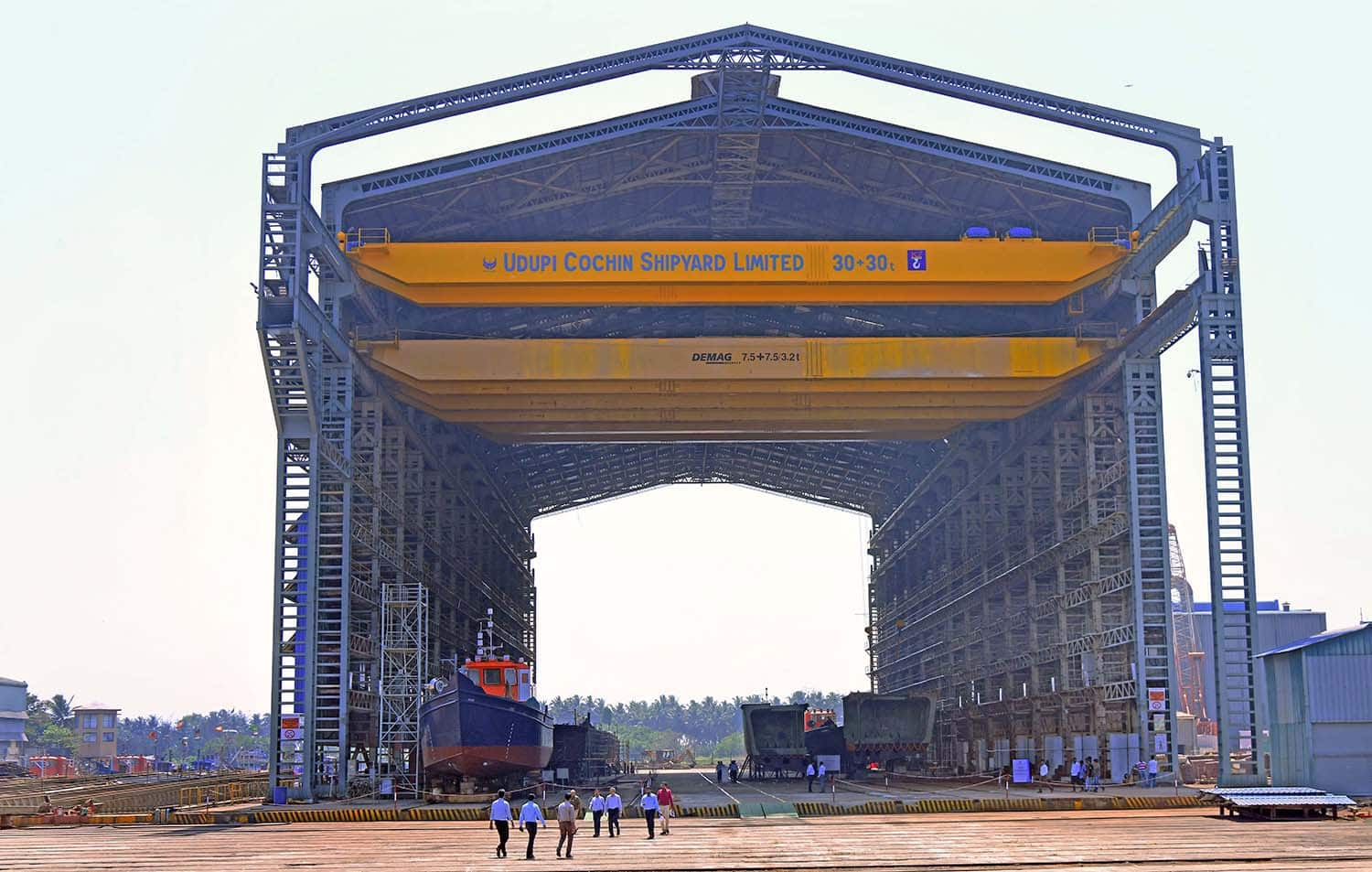
KOCHI : State-owned Cochin Shipyard Ltd on Thursday (May 7) said its wholly owned subsidiary, Udupi Cochin Shipyard Ltd (Udupi-CSL), has secured a notable order from Ocean Sparkle, an Adani Group company, for the construction of four ASD (Azimuthing Stern Drive) tugs with 70-tonne bollard pull power.

The company classified the order under the “Notable” category, indicating an order value between ₹100 crore and ₹250 crore. The tugs will be built in line with the Approved Standard Tug Design and Specifications (ASTDS) issued by the Ministry of Ports, Shipping & Waterways, Government of India.

According to the company, deliveries of the tugs will commence from November 2028 and are scheduled to be completed by June 2029. Cochin Shipyard said none of its promoters, promoter group entities or group companies have any interest in the entity awarding the order. The company also stated that the contract does not qualify as a related-party transaction.

Back in February this year, Cochin Shipyard had emerged as the lowest bidder for a ₹5,000 crore Navy vessel contract as the shipbuilding and maintenance company was declared the lowest bidder (L1) for a tender floated by India’s Ministry of Defence to build five Next Generation Survey Vessels (NGSVs) for the Indian Navy.

However, the company mentioned that the final award of the contract is subject to the completion of necessary formalities. It added that the order does not involve any related party transactions and that its promoter group has no interest in the awarding entity.

Source : CNBC TV18

Capt. Chandran Durai Daniel assumes charge as the new Director (Bulk Carriers & Tankers) of SCI

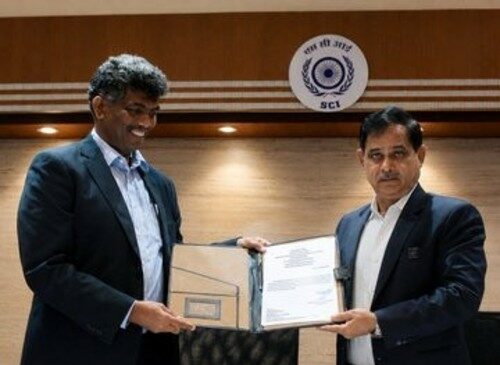
MUMBAI : The Shipping Corporation of India Ltd. (SCI), India’s premier maritime transport company, has announced that Capt. Chandran Durai Daniel has assumed charge as Director (Bulk Carriers & Tankers), pursuant to his appointment by the Ministry of Ports, Shipping and Waterways, Government of India.

With extensive experience in the maritime and shipping sector, Capt. Daniel brings with him deep operational expertise and leadership across tanker operations, bulk cargo transportation, fleet management, marine safety, and commercial shipping activities. Over the years, he has contributed significantly to strengthening operational efficiency, safety standards, and strategic growth initiatives within the shipping industry.

As Director (Bulk Carriers & Tankers), he will play a key role in steering SCI’s bulk and tanker business verticals, enhancing fleet performance, supporting India’s energy transportation requirements, and driving operational excellence in line with the Government of India’s vision for a stronger and self-reliant maritime sector.

SCI’s bulk carrier and tanker segment continues to remain a vital pillar of the company’s operations, facilitating the movement of crude oil, petroleum products, dry bulk commodities, and essential cargoes across domestic and international trade routes. Capt. Daniel’s leadership is expected to further strengthen the corporation’s commitment towards safe, efficient, and sustainable shipping operations.

The Management and employees of SCI warmly welcomed and felicitated Capt. Chandran Durai Daniel on joining the SCI Board and conveyed their best wishes for a successful tenure ahead.

The appointment marks another important step in SCI’s continued efforts to reinforce its leadership position in the Indian maritime industry while contributing towards the growth of the nation’s shipping and logistics ecosystem.